Thomas Hobbes
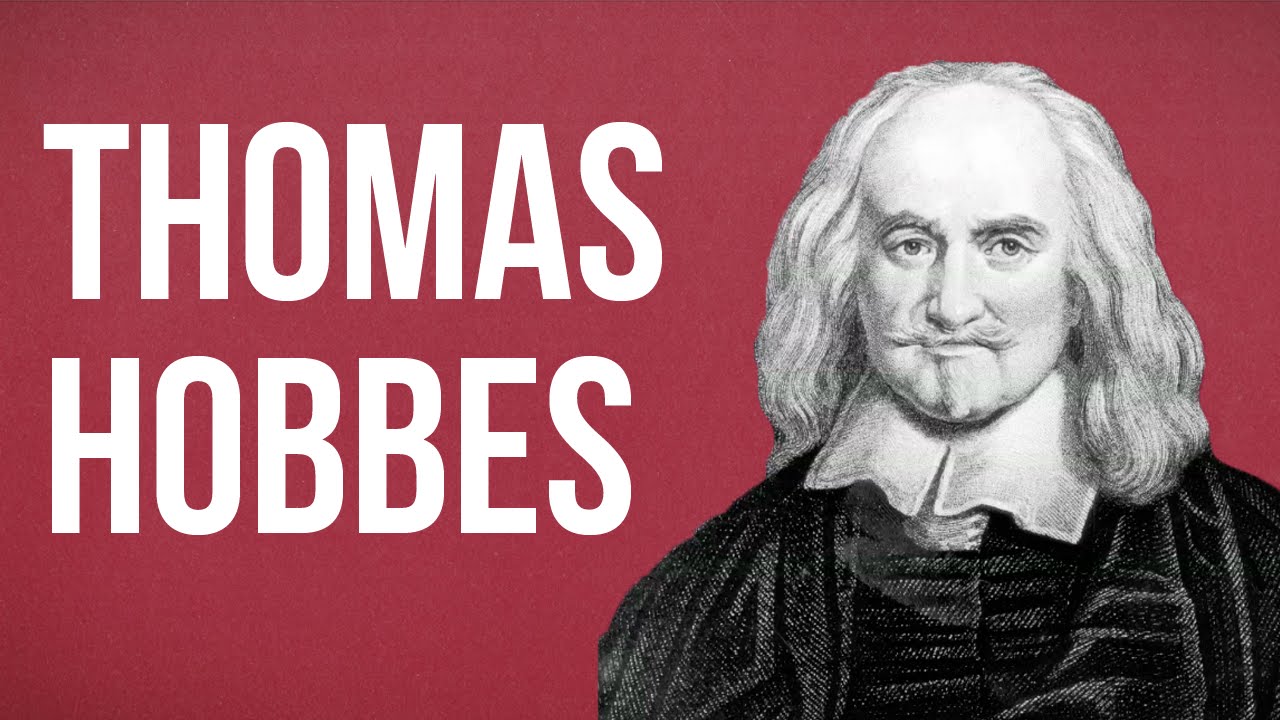


Thomas Hobbes (1588-1679) was an English philosopher best known for his work in political philosophy. His ideas have had a profound impact on the development of modern political thought, particularly through his seminal work, Leviathan. Hobbes' theories on the nature of human beings, the structure of society, and the role of government continue to be studied and debated to this day.
Early Life and Education
Thomas Hobbes was born on April 5, 1588, in Westport, now part of Malmesbury in Wiltshire, England. His father, a vicar, abandoned the family when Hobbes was young, leaving him to be raised by his uncle. Hobbes showed an early aptitude for learning and was sent to Magdalen Hall, Oxford, at the age of 14. There, he studied classical languages and literature, which laid the foundation for his later works.
Major Works and Contributions
Leviathan (1651)
Hobbes' most famous work, Leviathan, was published in 1651. In this book, he outlines his theories on the social contract and the necessity of a strong central authority to avoid the chaos of a state of nature. Hobbes argues that in the absence of political order, human life would be "solitary, poor, nasty, brutish, and short." To escape this state, individuals collectively agree to surrender some of their freedoms to a sovereign authority, which Hobbes refers to as the "Leviathan."
Other Notable Works
- De Cive (1642): This work focuses on the principles of political philosophy and lays the groundwork for the ideas later expanded in Leviathan.
- De Corpore (1655): In this book, Hobbes explores the nature of physical reality and the human mind, contributing to the field of metaphysics.
- Behemoth (1668): This work examines the English Civil War, providing a historical context for his political theories.
Key Philosophical Ideas
The State of Nature
Hobbes' concept of the state of nature is a hypothetical condition in which there is no government or laws. In this state, individuals have complete freedom but are also in constant conflict with one another. According to Hobbes, the state of nature is characterized by a "war of all against all," where life is precarious and insecure.
The Social Contract
To escape the perils of the state of nature, Hobbes proposes the idea of a social contract. Individuals agree to form a society and establish a government to enforce laws and maintain order. This contract is not a literal agreement but a theoretical construct that explains the origin of political authority.
Absolute Sovereignty
Hobbes argues that for a government to be effective, it must have absolute authority. He believes that a strong, centralized power is necessary to prevent the return to the state of nature. This sovereign power can take the form of a monarchy, an assembly, or any other governing body, as long as it has the ultimate authority to make and enforce laws.
Influence and Legacy
Hobbes' ideas have had a lasting impact on political philosophy and the development of modern political systems. His concept of the social contract influenced later philosophers such as John Locke and Jean-Jacques Rousseau, who expanded and modified his theories. Hobbes' emphasis on the necessity of a strong central authority also laid the groundwork for the development of modern state theory.
Criticisms
Despite his influence, Hobbes' ideas have also faced significant criticism. Some argue that his view of human nature is overly pessimistic and that his advocacy for absolute sovereignty can justify authoritarian regimes. Others contend that his social contract theory does not adequately account for the complexities of human societies and the diversity of political systems.
"The condition of man... is a condition of war of everyone against everyone." - Thomas Hobbes, Leviathan