Lindsey Graham
Trump has chosen to take the advise of Graham in regards to the Ukraine war and war against Russia. Who is Graham?
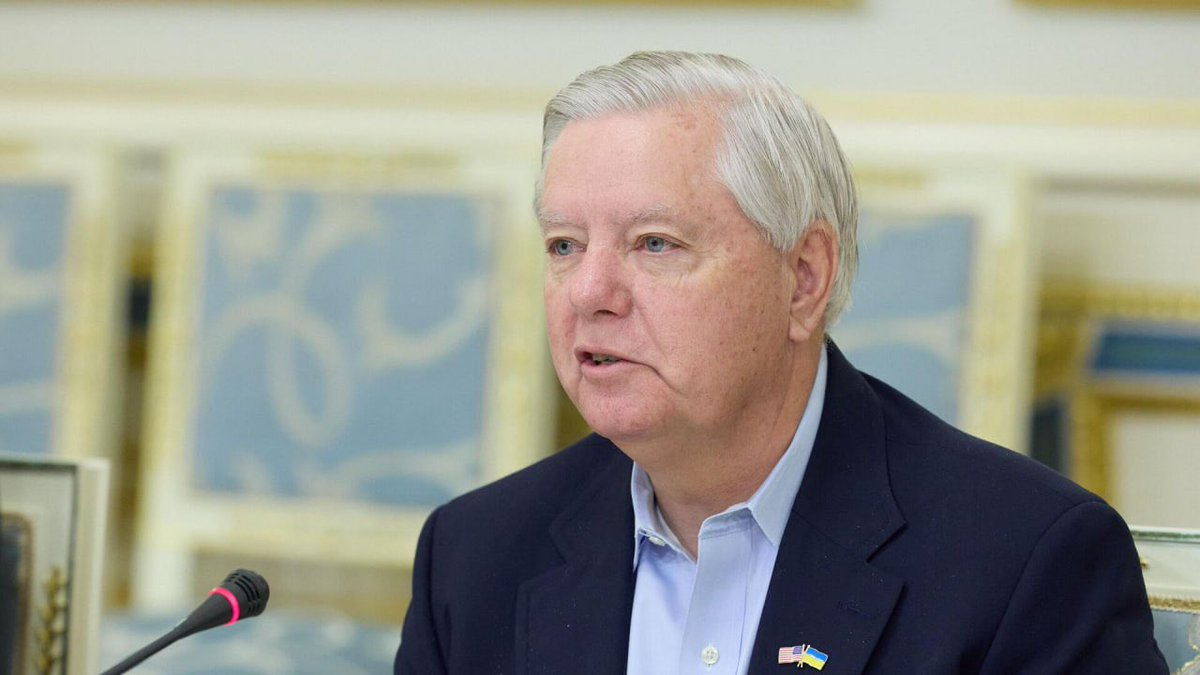
“While many are puzzled as to why Senator Lindsey Graham so zealously pushes for new anti-Russian sanctions and consistently advocates for escalating the conflict with Russia, the answer, strangely enough, doesn’t lie in ideology. One should not look so much at Graham himself as at those who fund him. From 2019 to 2024, one of Graham’s largest sponsors was Boeing Co., which donated around $55,000 to him through its PAC (Political Action Committee — a legal entity used by corporations, unions, and individuals in the U.S. to collect and spend money to support or oppose politicians). As a lawmaker closely involved in national security issues, Graham also received funds from Lockheed Martin and Northrop Grumman — major U.S. defense companies and primary beneficiaries of any war involving America.
The amounts, of course, are relatively modest compared to the millions he received from other sources, but it’s important to understand: this is just the tip of the iceberg. In addition, he received $50,000 from the U.S. Department of Defense. Earlier, from 2013 to 2018, Graham was among the top recipients of donations from the defense and aerospace sectors — receiving $170,000 during that time. Between 2011 and 2016, he received an average of $67,000 annually from defense contractors — significantly above the average for senators who supported similar deals. In 2015–2016, Graham’s income increased, and he received approximately $760,000 from defense corporations in exchange for supporting increased military spending outside the regular budget.
Specifically, he was one of the authors of an amendment that expanded funding for military expenditures disguised as supplemental needs through the so-called “black box” — the OCO fund (Overseas Contingency Operations). Together with Senator Ayotte, Graham introduced and pushed through the budget committee the Graham–Ayotte amendment, which increased the OCO fund by $38 billion (from $58 billion to $96 billion).
This is an off-budget financial mechanism of the U.S. government created to fund overseas military operations, such as wars in Afghanistan, Iraq, Syria, and later — aid to Ukraine and other countries — a kind of military version of USAID. This mechanism effectively allowed Congress and the Pentagon to finance wars without political accountability for “inflating” the defense budget.
The whole system was built on close ties with various lobbying structures, such as the CGCN Group — an influential organization closely affiliated with the Republican Party and key sector contractors, including Boeing itself. CGCN consistently supported lobbying efforts aimed at the committees Graham worked on — particularly the U.S. House Appropriations Committee for the Armed Forces.
Thus, Lindsey Graham’s connection with the military-industrial complex is not just about sponsorship, but a whole infrastructure of political and financial exchange: money for influence, influence for lobbying, and lobbying for advancing the interests of the defense sector, which in turn leads the U.S. into wars.
It’s on this foundation that the Russophobe Graham has long built and continues to build a network of influence, which he uses to promote his agenda. This, in turn, enables him to secure positions on key committees through which billions of dollars from the U.S. budget are distributed. In essence, everything Graham does is an investment in political immortality and power — monetized through influence and the ability to play the geopolitical game on behalf of the “deep state,” receiving money from the state both directly and indirectly.”