Property Rights
Property = the pursuit of Happiness
Videos
John Locke on Property Rights
PROPERTY RIGHTS AND HOW TO KEEP THEM
May 2023 Huge Property Rights Win at Supreme Court
Determining where in your case you gave up rights to property, void judgments
Administrative court and licenses, return of property(children),amending your claim
Writing basics, ordering a Judge to restore property, the UCC and traffic tickets
Rights and property, trespass on property claim, common law vs. civil law actions
Understanding ownership and titles, quiet titles
Prosecuting the prosecutor, CPS takes kids based on a crime or contract
Restoration of property
CPS will make you an offer, and understanding rights to property
Audio
Home Equity Theft at the Supreme Court
Without Respect For Property Rights, It’s a Heartbreak Hotel
Total knowledge of what happened to our estates
Often referred to as a Bundle of Rights, property rights have four broad components:
- the right to use the good (thing that is owned),
- the right to earn an income from it,
- the right to transfer it to others, and
- the right to enforce property rights.
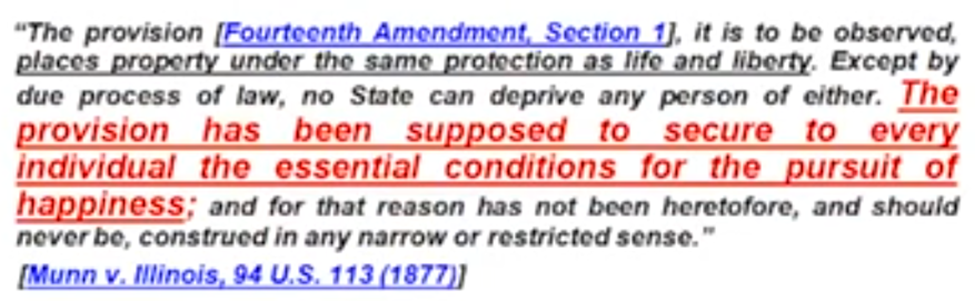
What is the legal definition of the word “happiness”? It’s “The RIGHT to exclusively own PROPERTY and to exclude all others, including governments, from using or benefiting from the use of the property. In the Declaration of Independence the word “Happiness” in the phrase “Life, Liberty, and pursuit of Happiness: has been equated by the U.S. Supreme Court as the RIGHT TO OWN PROPERTY.
Any government that interferes or intends to interfere with the protection of PRIVATE rights and PRIVATE property therefore has the EXPRESS and/or IMPLIED goal of maliciously making you UNHAPPY
State Citizenship is vested substantial property right, and the State has no power to divest or impair these rights.” Favot v. Kingsbury (1929) 98 Cal. App. 284, 276 P. 1083
14th Amendment, Section 1:
“nor shall any State deprive any person of life, liberty, or property, without due process of law;”
Meaning of “life, liberty, or property” in the above:
Right to Exclude
The essence of ownership is the “right to exclude”
“We have repeatedly held that, as to property reserved by its owner for private use, “the right to exclude others is} one of the most essential sticks in the bundle of rights that are commonly characterized as property.” [Loretto v. Teleprompter Manhattan CATV Corp. (1982) quoting Kaiser Aetna v. United States, 444 U.S. 164, 176 (1979) ; Nollan v. California coastal Comm’n, 483 U.S. 825 (1987)
“In this case, we hold that the “right to exclude,” so universally held to be a fundamental element of the property right falls within this category of interests that the Government cannot take without compensation. quoting Kaiser Aetna v. United States, 444 U.S. 164, 176 (1979)
See also United States v. Pueblo of San Ildefonso
Chief Characteristics of Property:
- That which belongs exclusively to one
- Term “property” extends to every species of valuable right and interest
- Property includes everything which is or could be the subject of ownership
- Even RIGHTS protected by the Constitution are property
- Includes:
- RIGHT to control use of it by others
- RIGHT to exclude everyone else from benefiting from its use in any way
- RIGHT to penalize others for unauthorized use
- Use and control over your property in no way depends on another’s discretion or courtesy
- You can give your property rights away without even realizing it.
How Governments Steal Private Property
- They have to convert PRIVATE to PUBLIC without your knowledge.
- They have to bribe you illegally by offering a franchise
- They have to surreptitiously make you a PUBLIC OFFICER
- They have to play word games to turn “citizens” or “residents” into a statutory franchise.
- They have to confuse contexts and definitions of words between STATUTES and the CONSTITUTION. For example, the United States in the Constitution geographically means states of the union and excludes federal territory. Whereas the United States in federal law means federal territory and excludes states of the union. Context is everything.
- They have to dumb you down on the law in public school.
- They have to confuse you with untrustworthy publications. According to the courts, you must not trust any IRS publication, for example. They’ll say things that give the appearance that they have the authority but in fact, they don’t have.