Administrative Procedures Act
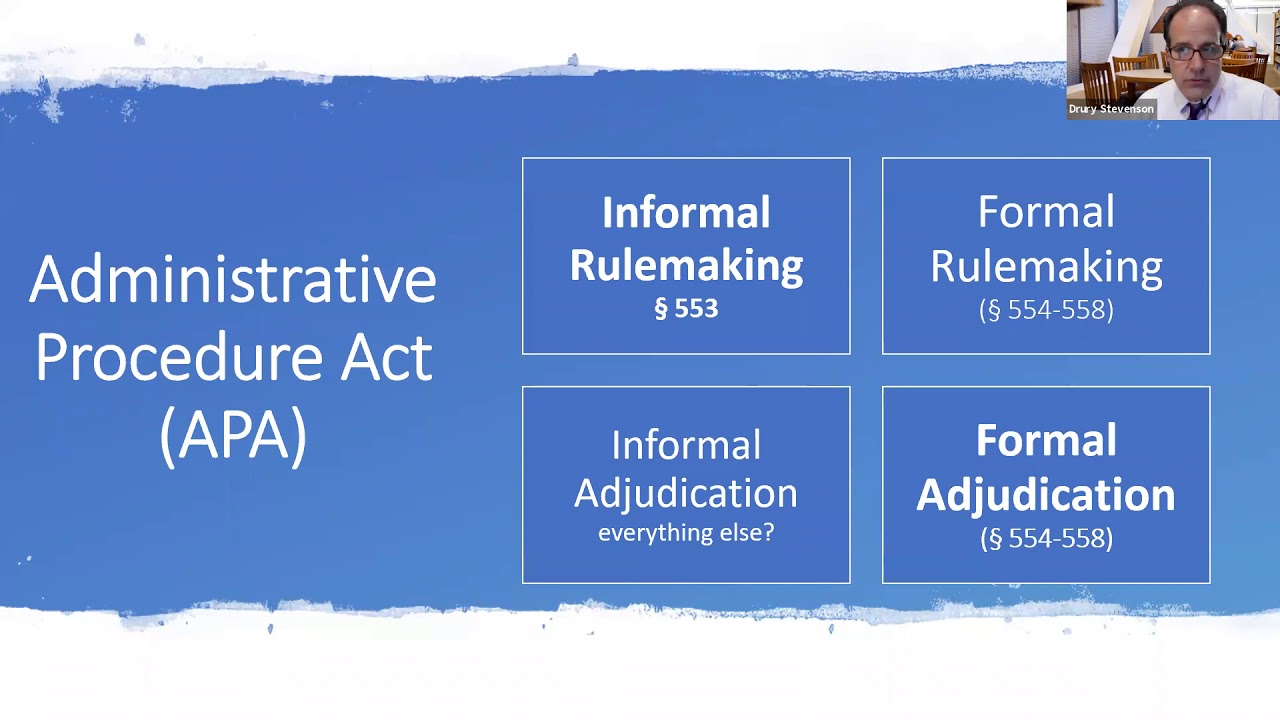
The Administrative Procedure Act (APA) governs the process by which federal agencies develop and issue regulations. It includes requirements for publishing notices of proposed and final rulemaking in the Federal Register, and provides opportunities for the public to comment on notices of proposed rulemaking
In the Administrative Procedures Act, if an affidavit sent through the registered mail hasn’t been rebutted 3 times it stands.
The APA is codified in 5 U.S.C. §§ 551–559.
The core pieces of the act establish how federal administrative agencies make rules and how they adjudicate administrative litigation. 5 U.S.C. § 551(5)–(7) clarifies that rulemaking is the “agency process for formulating, amending, and repealing a rule,” and adjudication is the final disposition of an agency matter other than rulemaking. That is, rulemaking goes beyond resolution of specific controversies between parties and includes management and administrative functions. Rulemaking and adjudication can be formal or informal, which in turn determines which APA procedural requirements apply. The APA applies to the different types of administrative actions as follows:
- Formal Rulemaking. 5 U.S.C. §§ 553, 556, and 557 govern formal rulemaking.
- Informal Rulemaking. 5 U.S.C. § 553 governs informal rulemaking.
- Formal Adjudication. 5 U.S.C. §§ 554, 556, and 557 govern formal adjudication.
- Informal Adjudication. The APA does not establish procedural requirements for informal administrative adjudication, but the Due Process Clause of the constitution, the specific agency’s regulations, or other statutes may create procedural protections.