Warming
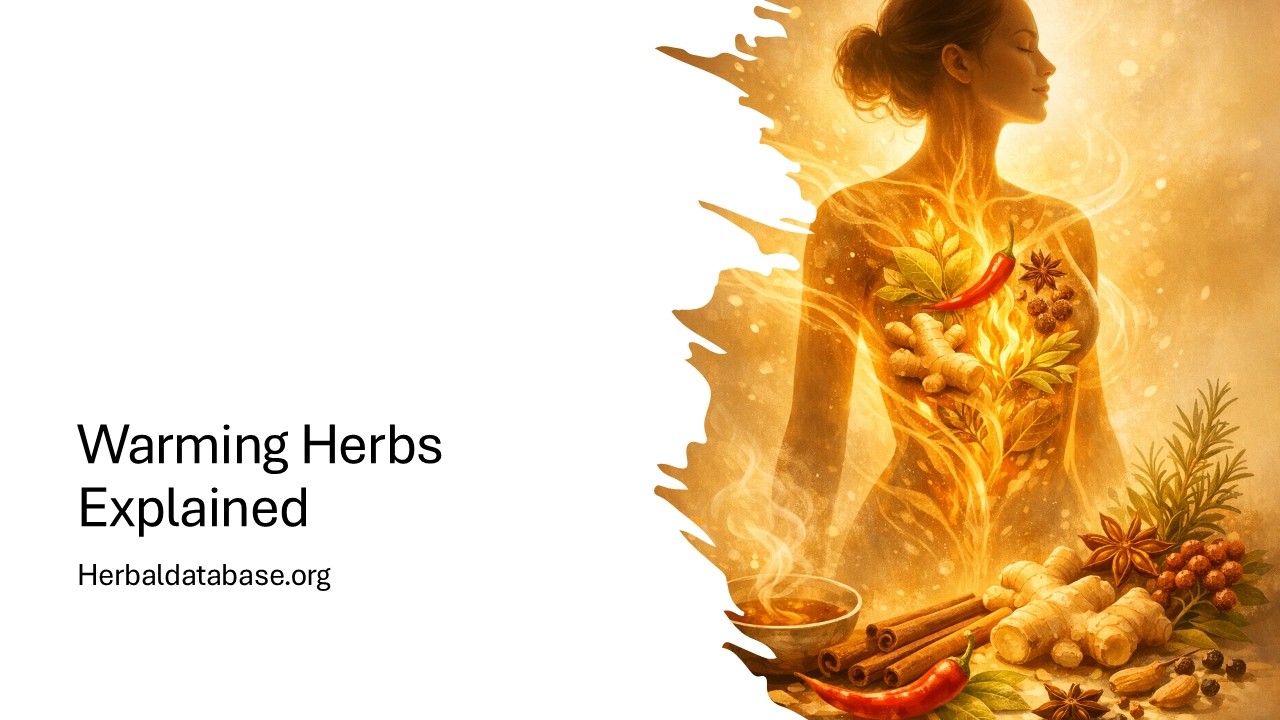
The Energetic Action of Warming: How Plants Create Heat in the Body
In herbal energetics, warming is not a single action — it’s a family of heat patterns. Plants warm the body in different ways, at different depths, and for different reasons. Some herbs spark a quick, aromatic lift. Others kindle a slow, root‑deep fire. Some move blood. Some move breath. Some warm the mind. Some warm the belly.
To understand warming herbs, you have to feel where the heat goes, how it moves, and what system it awakens.
Warming is not just temperature — it’s movement, direction, and activation.
Below are the four major warming pathways.
1. Aromatic Warming — The Quick, Upward Spark
These herbs warm through volatile oils that rise fast and disperse.
The heat is bright, surface‑level, and often felt in the sinuses, chest, and mind.
How this warmth feels
- A lift behind the eyes
- A clearing of fog
- A gentle opening of the chest
- A sense of alertness or brightness
What this warmth does
- Moves stuck or stagnant qi
- Clears dampness and heaviness
- Stimulates circulation in the upper body
- Awakens the senses
Examples
Thyme, rosemary, basil, cardamom, ginger leaf, peppermint (warming-aromatic despite its cooling finish).
This is the warmth of clarity — the spark that wakes the system.
2. Digestive Warming — The Belly Fire
These herbs warm from the center outward, kindling the digestive fire and supporting metabolism, assimilation, and gut motility.
How this warmth feels
- A gentle glow in the belly
- Improved appetite or digestion
- A sense of groundedness
- Warmth radiating outward from the core
What this warmth does
- Strengthens digestive fire
- Moves cold stagnation in the gut
- Supports nutrient absorption
- Reduces bloating and sluggishness
Examples
Fennel seed, ginger root, cinnamon, angelica root, cardamom seed.
This is the warmth of transformation — the hearth fire of the body.
3. Circulatory Warming — The Moving Heat
These herbs warm by moving blood, opening vessels, and increasing flow to the periphery.
This is not the bright aromatic spark or the belly hearth — it’s the warmth that travels.
How this warmth feels
- Tingling in the hands or feet
- A flush in the cheeks
- A sense of movement or spreading heat
- Relief from cold extremities
What this warmth does
- Opens circulation
- Moves blood stagnation
- Warms the limbs
- Supports recovery from cold exposure
Examples
Witch hazel twig, cayenne, prickly ash, ginger (again — it spans categories).
This is the warmth of movement — heat carried by flow.
4. Deep Root Warming — The Slow, Penetrating Heat
These herbs warm deep tissues: bones, joints, kidneys, reproductive organs.
Their heat is slow, steady, and long-lasting — not flashy, not aromatic.
How this warmth feels
- A deep internal glow
- Relief in cold, stiff joints
- A sense of internal stability
- Warmth that lingers for hours
What this warmth does
- Supports kidney yang
- Warms deep cold in the pelvis
- Nourishes long-term vitality
- Helps chronic cold patterns
Examples
Wild ginger (Asarum), angelica root, black cohosh (warming-mover), some barks and roots.
This is the warmth of endurance — the coal bed beneath the flame.
Why This Matters for Herbal Practice
Understanding how an herb warms changes everything:
- Two warming herbs may feel completely different in the body.
- One may be perfect for cold hands and feet but useless for digestive cold.
- One may lift foggy thinking but do nothing for deep pelvic chill.
- One may warm the belly but overwhelm someone with heat in the head.
Energetics is specificity.
Warming is a pattern, not a temperature.
When we learn warming herbs through these four pathways, students begin to feel the difference between:
- A spark
- A hearth
- A river
- A coal bed
And that’s when herbal energetics becomes embodied knowledge — not memorization.