Troy, DANIEL
see wlf and fda
new civil liberties alliance?
see avandia gottlieb cmpi
see vioxx
po'w tag in his dishonor
clerked for bork
REV DOOR REGULATORY CAPTURE B 43 JOHN gRAHAM?
lead sponsor Law360, and co-sponsored by the American Bar Association
li 7 26
Managing Director at Berkeley Research Group
More
Follow

Dan Troy
· 3rd
Managing Director at Berkeley Research Group
Washington DC-Baltimore Area
·
Troy to expand scope of BRG’s Health Analytics practice by providing senior-level expertise in FDA regulatory matters
BRG announced today that former Food and Drug Administration (FDA) Chief Counsel Dan Troy has joined the firm’s Washington, D.C. office as a managing director in its Health Analytics practice. His pharmaceutical and regulatory expertise will bolster the practice’s ability to address FDA issues on behalf of its clients.
A globally recognized healthcare lawyer, Troy has practiced at the highest levels of the pharmaceutical sector. He served as chief counsel at the FDA and spent a decade as general counsel and senior vice president of GSK plc. Dan was previously a partner at preeminent law firms Sidley Austin LLP and Wiley Rein LLP, where he advised multinational healthcare companies. At BRG, Troy will work with law firms and pharmaceutical companies to provide expert witness testimony on FDA regulatory and related matters.
At the FDA, Troy was a primary liaison to the White House and the Department of Health and Human Services. He spearheaded initiatives on Hatch-Waxman reform, the First Amendment preemption and Securities and Exchange Commission (SEC)–FDA interactions. During his tenure, he oversaw the agency’s litigation and enforcement efforts and helped shape major regulations and guidance.
“No one knows the FDA better than Dan. In his more than 30-year career, he has helped shape, enforce and litigate pharma regulatory matters for leading healthcare organizations, law firms and the government alike,” said Jerry Lewandowski, a managing director in BRG’s Health Analytics practice. “As an expert witness, he’s demonstrated a sterling track record on behalf of generic and branded companies—in areas such as Orange Book listed patents, allegations of fraud and reverse payment antitrust matters—that showcases the breadth of knowledge he will deliver to clients.”
“Simply put, Dan’s experience is unrivaled,” added Edward Buthusiem, a managing director in BRG’s Health Analytics practice. “His addition reflects our commitment to bringing the industry’s preeminent minds to our clients. With Dan on board, BRG clients will have priceless access to a former FDA senior official with decades of experience in both the public and private sectors.”
As general counsel and senior vice president at GSK for a decade, Troy led a global team of more than 630 professionals, including more than 400 attorneys. While there, he employed practical approaches to creatively resolve major issues and litigation, including several high-profile Department of Justice and Foreign Corrupt Practices Act investigations, as well as numerous product liability matters; manage risks; and advise the board and C-suite on global legal matters.
Troy is a highly sought thought leader who has chaired the U.S. Chamber of Commerce Litigation Center and led influential committees and sections within organizations like PhRMA, the American Bar Association and the American Law Institute. He was named a “Legend in the Law” at the 2013 Burton Awards and selected in the Financial Times’ “Global General Counsel 30” in 2016.
Troy’s diverse background combines technical legal skills honed over 30 years in private and governmental sectors. He has also served as a board member with a background in corporate governance, dispute resolution and regulatory compliance.
Commenting on his appointment, Troy said, “I’m thrilled to join such an elite group of healthcare experts at BRG and look forward to combining my extensive private- and public-sector experience to support the firm’s clients in today’s increasingly complex regulatory landscape.”
Related Professionals
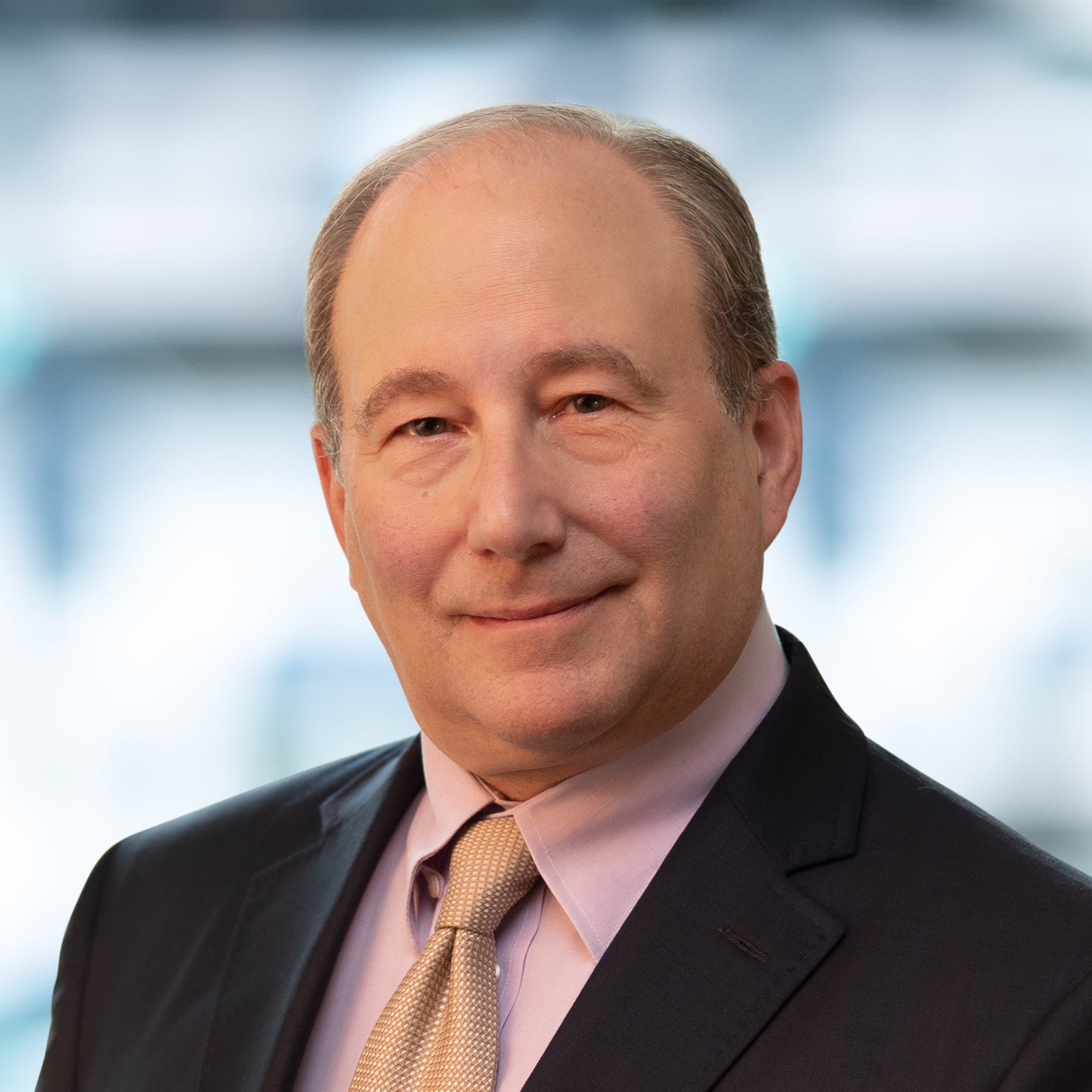
Dan Troy
wiki
Berkeley Research Group, LLC (BRG) is a global consulting firm that helps organizations with assistance in disputes and investigations, corporate finance, and performance improvement and advisory.[2] BRG is headquartered in Emeryville, California, with offices across the United States and in Asia, Australia, Canada, Latin America, the Middle East and the United Kingdom. As of January 2024, it has more than 1,600 employees across more than forty offices.[3]
Notable Employees Past and Present
Reception
Charles H. Ferguson, author of Predator Nation: Corporate Criminals, Political Corruption, and the Hijacking of America, criticized Berkeley Research Group for focusing primarily "on helping companies avoid or influence legislation, public debate, regulation, prosecution, class-action lawsuits, antitrust judgments, and taxes."[13]
2012
Over the last several decades, the United States has undergone one of the most radical social and economic transformations in its history: Finance has become America's dominant industry, while manufacturing has nearly disappeared. The financial sector has become increasingly criminalized, with widespread fraud going completely unpunished. Federal tax collections are at their lowest level in sixty years, with the wealthy enjoying the greatest tax reductions. Most shockingly, the United States, so long the beacon of opportunity for the ambitious poor, has become one of the world's most unequal societies. If you're smart and a hard worker, but your parents aren't rich, you're now better off being born in Munich or Singapore than in Cleveland or New York. This radical shift did not happen by accident. Author Ferguson shows how, since the Reagan administration, both major political parties have become captives of the moneyed elite. The Clinton administration dismantled the regulatory controls that protected the average citizen from avaricious financiers. The Bush team destroyed the federal revenue base with its tax cuts for the rich. And the Obama White House has allowed financial criminals to continue to operate unchecked, even after supposed "reforms" installed after the collapse of 2008.--From publisher description
Includes bibliographical references (pages 333-349) and index

Columbia Law School
Follow
More
About
I am a nationally recognized expert in all aspects of FDA law with a particularly deep expertise in pharmaceutical law, including Hatch-Waxman, preemption, product liability, labeling and related issues. I have served as Chief Counsel of the FDA, and as the General Counsel at GSK PLC, as well as at Valo Health LLC, a bleeding-edge AI\ML biotech start-up, where I also served as Corporate Secretary and Head of Compliance. I was a partner at two law firms (Wiley and Sidley); in addition to FDA law, I specialized in administrative and constitutional law as well as appellate litigation. I am currently serving as an expert witness in a variety of high-profile, high-stakes cases and arbitrations.
I am a thought leader who has chaired the Chamber of Commerce Litigation Center, Pharma’s Law Section, the Civil Justice Reform Group, and the Administrative Law Section of the American Bar Association (ABA). I am or have been a member of the American Law Institute (ALI) and the Administrative Conference of the United States (ACUS), as well as serving as an Associate Scholar at the American Enterprise Institute (AEI).
At GSK, I was known for resolving many high-profile, high-stakes GMP, off-label, product liability, and FCPA matters, among others. I led 400+ lawyers in more than 50 countries around the world and pioneered many cost-saving measures concerning attorney’s fees. I was named a “Legend in the Law” at the 2013 Burton awards and one of the FT Global General Counsel 30 in 2016. I have experience as a Board member and have provided sage advice to Boards and senior executive teams of companies, large and small.
At FDA, I was a primary liaison to the White House and the Department of Health and Humans Services and led important initiatives on Hatch-Waxman reform, the First Amendment and preemption/product liability. I oversaw all of the agency’s litigation and enforcement efforts and signed off on every major regulation and guidance during my tenure. I have testified at least three times before the US Congress concerning a variety of topics, and have authored 1 book, 13 law review articles and book chapters, and more than 55 articles in popular journals such as the Wall Street Journal. I clerked on the DC Circuit, after graduating from Columbia Law School with high honors.
I am looking for opportunities to serve as an expert witness. I am also open to areas where I can be of service whether as a career opportunity, as a consultant or advisor (legal or otherwise), and I am always open to meeting people with similar interests to build my network.
Services
Expert witness in FDA-related litigation, including antitrust, products liability, labeling, compliance, theft of trade secrets and similar matters.
Healthcare Consulting
....
Managing Director at Berkeley Research Group
5mo •
Follow
Pleased to have my book for the American Enterprise Institute #AEI Retroactive Legislation cited in Justice Thomas's concurrence in Ellingburg. https://lnkd.in/gGAvQ25E
(The cite is towards the very end of the opinion.)
24-482 Ellingburg v. United States (01/20/2026)24-482 Ellingburg v. United States (01/20/2026)
....
Dan Troy - Executive Vice President, Chief Legal ... - LinkedInhttps://www.linkedin.com › dan-troy-701868b
View Dan Troy's profile on LinkedIn, the world's largest professional community. Dan has 9 jobs listed on their profile. See the complete profile on ...
Daniel Troy | US Court of Federal Claimshttp://www.uscfc.uscourts.gov › daniel-troy
Daniel Troy. From September 2008 until August 1, 2018, Dan was Senior Vice President & General Counsel and a member of the Corporate Executive Team of GSK.
Daniel E. Troy | The Federalist Societyhttps://fedsoc.org › contributors › daniel-troy-1
Dan Troy joined GSK as Senior Vice President & General Counsel in September 2008. Reporting to Andrew Witty, he is based in Franklin Plaza, Philadelphia PA,
Dan Troy joined GSK as Senior Vice President & General Counsel in September 2008. Reporting to Andrew Witty, he is based in Franklin Plaza, Philadelphia PA, and is a member of the Corporate Executive Team.
Previously a Partner at the Washington law firm Sidley Austin LLP, where he represented mainly pharmaceutical companies and trade associations on matters related to the US Food and Drug Administration (FDA) and government regulations, Dan was formerly Chief Counsel for the FDA, where he served as a primary liaison to the [bush 43]White House and the US Department of Health and Human Services (HHS).
While leading an office of attorneys who reviewed and approved all major regulations and guidances,Dan oversaw the legislative implications of many of the most important issues facing the pharmaceutical industry today, including the reform of the Hatch-Waxman Act and subsequent legislative ratification.His office also approved and managed all agency litigation, and Dan established procedures for the FDA legal team to follow in preparing and then litigating high-profile cases.
Dan is a graduate from Cornell University’s School of Industrial and Labor Relations, and earned his law degree from Columbia University School of Law, where he was a member of the Law Review and a Kent Scholar. After graduation from law school, he was a law clerk for the US Circuit Court of Appeals for the District of Columbia Circuit....
Dan Troy | The Federalist Societyhttps://fedsoc.org › contributors › dan-troy
Oct 9, 2020 — Dan Troy is the Chief Business Officer, Chief Administrative Officer, and General Counsel of Valo in Boston, Massachusetts.
Dan Troy is the Chief Business Officer, Chief Administrative Officer, and General Counsel of Valo in Boston, Massachusetts.
Prior to joining Valo, he served as the Senior Vice President & General Counsel of GlaxoSmithKline and was member of its Corporate Executive Team.Dan joined GSK in September 2008 and was responsible for leading the company’s legal department in protecting GSK’s intellectual property; managing litigation; supporting business development transactions; and business compliance and risk management.In 2012, Dan led the integration team following the acquisition of Human Genome Sciences, which later resulted in the launch of Benlysta, the first lupus treatment in 50 years. Dan led GSK’s Contributions Committee in the US and also led the Government Affairs, Public Policy and Patient Advocacy team from 2012 until 2014.
Prior to joining GSK, he was a Partner at the Washington law firmSidley Austin LLP, where he principally represented pharmaceutical companiesand trade associations on matters related to the US Food and Drug Administration (FDA) and government regulations. Dan was formerly Chief Counsel for the FDA, where he served as a primary liaison to the White House and the US Department of Health and Human Services.
Dan has chaired the American Bar Association's Section of Administrative Law and is a member of the American Law Institute. He currently chairs the US Chamber of Commerce Litigation Center. He has also chaired the Civil Justice Reform Group, as well as the PhRMA Law Section Executive Committee. He was the.2012 CPR Corporate Leadership Award recipient and, in 2013, was named a 'Legend in the Law' at the Burton Awards
Dan holds a B.S. in Industrial and Labor Relations from Cornell University and a J.D. from Columbia University School of Law, where he was a member of the Law Review and a Kent Scholar. After graduation from law school, he wasa law clerk for the US Circuit Court of Appeals for the District of Columbia Circuit.[ BORK?!]
LI
Activity
I joined my friend Jonah Goldberg at the Dispatch in his podcast to discuss a range of current legal issues, including the vaccine mandate, the…
I joined my friend Jonah Goldberg at the Dispatch in his podcast to discuss a range of current legal issues, including the vaccine mandate, the…
Liked by Dan Troy
My first publication since leaving office. It’s about the incredible accomplishments of the Operation Warp Speed team. If you haven’t done so…
My first publication since leaving office. It’s about the incredible accomplishments of the Operation Warp Speed team. If you haven’t done so…
Liked by Dan Troy
This week marked the end of an era as I left GSK and said goodbye to an amazing group of friends and colleagues after 19 years. I am incredibly…
This week marked the end of an era as I left GSK and said goodbye to an amazing group of friends and colleagues after 19 years. I am incredibly…
Liked by Dan Troy
Join now to see all activity
Experience
Valo Health Graphic
Executive Vice President, Chief Legal Officer, General Counsel
Valo Health
Apr 2019 - Present2 years 6 months
Boston, Massachusetts
NeuroRx, Inc. Graphic
Board Member
NeuroRx, Inc.
Apr 2019 - Present2 years 6 months
GSK Graphic
General Counsel
GSK
Sep 2008 - Aug 201810 years
• Advise Board, Audit and Risk Committee, CEO, and Corporate Executive Team on legal issues world-wide, with a particular focus on US product liability litigation and regulatory investigations (civil and criminal, federal and state), as well as antitrust and patent litigation.
• Have successfully resolved overwhelming majority of product liability claims relating to Avandia, Paxil, Poligrip, and others. No major new tort in at least past 6 years. Personally managed to successful…
Show more
Sidley Austin LLP Graphic
Partner
Sidley Austin LLP
2005 - 20083 years
• Represented pharmaceutical companies and trade associations relating to US FDA and government regulations.
Food and Drug Administration Graphic
Chief Counsel
Food and Drug Administration
2001 - 20043 years
• General Counsel advising FDA Commissioner, Department of Health and Human Services, and White House on litigation and regulatory issues relating to food, drugs, medical devices, biologicals (drugs and vaccines), veterinary food and drugs, and cosmetics.
• Supervised more than 80 lawyers in agency that regulated one-quarter of the US economy, approved and managed all agency litigation, reviewed and approved all agency regulations and guidance.
Wiley, Rein & Fielding Graphic
Partner
Wiley, Rein & Fielding
1990 - 200111 years
• Practiced administrative and constitutional appellate litigation. 11 appellate arguments in federal court, including successful US Supreme Court appearance, 3 appearances in federal district court, and 10 in states courts of appeal on food and drug, broadcasting, telecommunications, insurance, voting rights, administrative law, and other issues.
US Department of Justice Office of Legal Counsel Graphic
Attorney-Advisor
US Department of Justice Office of Legal Counsel
1987 - 19903 years
• Advise White House and executive branch on constitutional and administrative law issues. Particular focus on First Amendment issues.
Paul, Weiss, Rifkind, Wharton & Garrison LLP Graphic
Associate
Paul, Weiss, Rifkind, Wharton & Garrison LLP
1984 - 19873 years
• Practiced Entertainment law, serving as “general counsel” to producers of Broadway shows. Negotiated and Drafted contracts, helped producers raise funds through SEC Reg A process, negotiated agreements with talent. Taught “Theater and the Law” at Columbia University School of Law.
US Court of Appeals for the DC Circuit Graphic
Law Clerk, The Honorable Judge Robert H. Bork
US Court of Appeals for the DC Circuit
1983 - 19841 year
Education
Columbia Law SchoolColumbia Law School Graphic
Columbia Law School
JD
1980 - 1983
Cornell UniversityCornell University Graphic
Cornell University
BS -- ILRIndustrial and Labor Relations
1978 - 1980
More activity by Dan
Thank you to Jeannie Baumann for this nice profile on my new role as Co-Lead of the FDA Regulatory and Compliance practice at Morrison & Foerster…
Thank you to Jeannie Baumann for this nice profile on my new role as Co-Lead of the FDA Regulatory and Compliance practice at Morrison & Foerster…
Liked by Dan Troy
I only recently switched to an iPhone and discovered Apple’s default auto text replacement of ‘Omw’ to “On my way!”. What’s amusing is that this is…
I only recently switched to an iPhone and discovered Apple’s default auto text replacement of ‘Omw’ to “On my way!”. What’s amusing is that this is…
Liked by Dan Troy
Natasha Tsiouris ’10 shares how she made partner at Davis Polk & Wardwell LLP and offers advice to junior lawyers looking to advance their…
Natasha Tsiouris ’10 shares how she made partner at Davis Polk & Wardwell LLP and offers advice to junior lawyers looking to advance their…
Liked by Dan Troy
Are you leading with influence? Get insights into the most desired leadership skills for general counsel today and find out how you can achieve…
Are you leading with influence? Get insights into the most desired leadership skills for general counsel today and find out how you can achieve…
Liked by Dan Troy
Partner Yaakov Roth is among The National Law Journal's "Litigation Trailblazers" for 2020.
Partner Yaakov Roth is among The National Law Journal's "Litigation Trailblazers" for 2020.
Liked by Dan Troy
Got a nice surprise on our door step today. Can’t wait to put these to good use. Valo
Got a nice surprise on our door step today. Can’t wait to put these to good use. Valo
Liked by Dan Troy
It is with great enthusiasm and pride that I am sharing that Integral Health has moved out of stealth mode and launched as Valo Health, Inc or Valo…
It is with great enthusiasm and pride that I am sharing that Integral Health has moved out of stealth mode and launched as Valo Health, Inc or Valo…
Liked by Dan Troy
My GSK journey officially ends today, I have visited some incredible places, met some wonderful people doing incredible things and been lucky to have…
My GSK journey officially ends today, I have visited some incredible places, met some wonderful people doing incredible things and been lucky to have…
Liked by Dan Troy
#valohealth
#valohealth
People also viewed
Jonathan C. Javitt, M.D., M.P.H.
Founder and CEO, NRx Pharmaceuticals, Inc (Nasdaq:NRXP)
Zikhron Ya‘aqov
PD Villarreal
Self Employed
New York, NY
Jonathan Javitt
Chief Executive Officer at NeuroRx Pharma
Wilmington, DE
Austin Schlick
Legal Director at Google LLC
Washington DC-Baltimore Area
Zachary Javitt
CEO & Co-Founder of PillTracker LTD
Tel Aviv-Yafo
Kris Keegan
Vice President, Associate General Counsel at PerkinElmer, Inc.
West Hartford, CT
Randy Guggenheimer
Chief Business Officer at NRx Pharmaceuticals, Inc.
Scarsdale, NY
Scott E. Kamholz, M.D., Ph.D., J.D.
Physician-Scientist Patent Attorney and IP Consultant
Washington DC-Baltimore Area
Stacy Cline Amin
Partner, Morrison & Foerster | Former Chief Counsel of the Food and Drug Administration
Washington, DC
Eric Davis
EVP, General Counsel at BioMarin Pharmaceutical Inc.
Novato, CA
Dan’s public profile badge
Include this LinkedIn profile on other websites
Dan Troy
Dan Troy
Board Member at NeuroRx, Inc.
company placeholder image
Executive Vice President, Chief Legal Officer, General Counsel at Valo Health
school image for Columbia Law School
Columbia Law School
ggl 7 26
FDA Chief Counsel Daniel Troy Resigns

https://californiahealthline.org › morning-breakout › fda...
Nov 17, 2004 — FDA chief counsel Daniel Troy resigned on Tuesday, Vioxx recall to the flu vaccine shortage, that require strong FDA actions.
The $253 Million Vioxx Verdict

American Enterprise Institute - AEI
https://www.aei.org › events › the-253-million-vioxx-v...
On August 19, 2005, a jury in Angleton, Texas, found Vioxx producer Merck liable for the death of fifty-nine-year-old Robert Ernst. The Brazoria county jury assessed a staggering $253 million ($24 million compensatory, $229 million punitive) in damages against Merck, although Texas law will cap the punitive damages at less than $2 million and thus reduce the total award to about $26 million.
What implications does this verdict have for drug development, for the pharmaceutical industry, and for the justice system? What consequences will this verdict have for consumers? Is further liability reform needed, or is the current jury trial system an appropriate means of regulating drug safety?
AEI will host a panel discussion to address these and other questions surrounding the Texas verdict and ongoing pharmaceutical litigation. The panel will include Dan Troy, former chief counsel of the Food & Drug Administration and currently of Sidley & Austin; Evan Schaeffer of Schaeffer & Lamere, P.C., a plaintiffs’ attorney from Madison County, Illinois, whose firm, along with two other St. Louis firms, has filed suit against Merck on behalf of approximately 1,000 Vioxx users; AEI resident scholar John E. Calfee, who studies pharmaceutical regulation; and AEI resident fellow Ted Frank, who is director of the AEI Liability Project and a former defense attorney who worked on several Vioxx cases.
The AEI Liability Project (http://www.liabilityproject.org) seeks to promote a better understanding of the scope and consequences of the liability crisis and to help ensure that political or legal reform efforts are aimed at the appropriate targets.
The panel will include Dan Troy, former chief counsel of the Food & Drug Administration … has filed suit against Merck on behalf of approximately 1,000 Vioxx ...
What Ails the FDA?

The New England Journal of Medicine
https://www.nejm.org › doi › full › NEJMp058003
FDA's highest-ranking appointed administrator was chief counsel Daniel Troy, who had represented tobacco and drug companies in suits fighting the FDA's ...
Testifying before a spellbound audience in a Senate hearing room this past November, scientist and whistle-blower David J. Graham charged that his employer, the Food and Drug Administration (FDA), is incapable of protecting the public from dangerous prescription drugs. Graham, an epidemiologist who monitors drug safety, conducted a study that confirmed an increase in the risk of myocardial infarction among users of rofecoxib (Vioxx), Merck's blockbuster antiinflammatory medicine. When he informed his supervisors about his findings last summer, he said, they pressured him to change his conclusions because they were inconsistent with the FDA's position on the drug's safety. A . . .
....
F.D.A. Limits Role of Advisers Tied to Industry

https://www.nytimes.com › 2007/03/22 › washington
Mar 22, 2007 — Vioxx has never returned. Daniel E. Troy, a former F.D.A. general counsel, said the new rules were an effort to pre-empt the Hinchey bill.
Experts Discuss Drug Company Gifts

https://www.pbs.org › newshour › show › experts-discu...
Jan 25, 2006 — Daniel Troy -- he was the chief counsel of the Food and Drug Administration from 2001 until 2004. He is now a partner at the law firm Sidley- ...
Major drug companies fight stronger restrictions on off- ...

https://drugstorenews.com › pharmacy › major-drug-co...
Apr 15, 2008 — Daniel Troy a former FDA Chief Counsel. Vioxx, which reportedly served as a risk for heart attack to Alzheimer's patients.
Congress, Advocates Call for Stronger Teeth for FDA

https://www.psychiatrictimes.com › view › congress-ad...
Jul 1, 2005 — Daniel E. Troy, J.D., who had previously represented tobacco and pharmaceutical manufacturers in actions against the agency.
Dan Troy - Managing Director at Berkeley Research Group

Washington DC-Baltimore Area · Managing Director · Berkeley Research Group
I am a nationally recognized expert in all aspects of FDA law … served as Chief Counsel of the FDA, and as the General Counsel at GSK PLC, 400+ lawyers
Former FDA Chief Counsel Dan Troy Joins BRG ...
Former FDA Chief Counsel Dan Troy has joined BRG's Washington, DC office as a managing director in the firm's Health Analytics practice.Read more
Kim Witczak - FDA Advisory Committee
-FDA Chief Counsel Daniel Troy. Global Drug Safety Advocate |. Troy left the FDA and became Global Chief Counsel at GlaxoSmithKline. the global ...
Dan Troy

https://fedsoc.org › bio › dan-troy
Prior to joining Valo, he served as the Senior Vice President & General Counsel of GlaxoSmithKline and was a member of its Corporate Executive Team. Dan joined ...Read more
How Dan Troy Embraces the Gray Areas at GlaxoSmithKline

https://profilemagazine.com › dan-troy-glaxosmithkline
Mar 15, 2018 — Dan Troy, senior vice president and general counsel of global pharmaceutical company GSK, says the most interesting conversations take place when judgment has ...Read more
Dan Troy I Health Analytics | Pharmaceutical | Biotechnology

https://www.thinkbrg.com › people › dan-troy
Dan Troy is a globally recognized healthcare lawyer and accomplished executive whose career has spanned leadership positions in the life sciences, legal, ...
ggl doc endgame:
LEGAL FOUNDATIONS
PACIFIC LEGAL1973
memo --> The Alliance document reported that the California Chamber of Commerce picked up onPowelland proposed what became in 1973 the Pacific Legal Foundation, the first of eight regional litigation centers.
[ Cases argued up the judicial ladder by radical litigators have often reached the Supreme Court. They tried unsuccessfully to roll back the Miranda rights of prisoners placed under arrest, and to limit the right of states to enforce certain environmental protections.]
[The Pacific Legal Foundation (PLF) was formed in California in 1973 to counter public-interest law firms and represent the interests of business and private property holders againstenvironmental regulations.PLF’s prospectus quoted the Powell memo at length. (Kim Phillips-Fein, “Invisible Hands,” p. 162).
When asked for his opinion of the “most critical” area of public interest law, PLF’s then-executive legal director replied, “environmental law,” citing the firm’s support for the use of DDT, the construction of a dam and reservoir project, the use of herbicides in national forests and the use of public grazing lands without environmental impact review. The early cases established a clear pattern for PLF and its followers at the Mountain States Legal Foundation and other regionally named corporate defenders.
Environmental cases would be a priority and the foundations’ positions in such cases would invariably be those of their business benefactors, including Monsanto, Weyerhaeuser, Gulf Oil, ARCO, Ford and other companies (Houck, "With Charity for All," pp. 1461-1462). The work of these groups also supported the Wise Use movement; radical property rights activists and corporate front groups that attacked environmental laws and regulations on behalf of landowners, ranchers and the oil industry (Helvarg, The War Against the Greens).]
{Soon the California Chamber of Commerce would propose what would become in 1973 the Pacific Legal Foundation, a nonprofit set up in Sacramento, California, from seed money raised by J. Simon Fluor of the Fluor Corporation [MIC]. And in 1975, the National Legal Center for the Public Interest (NLCPI) was formed "to assist in the establishment of independent regional litigation foundations dedicated to a balanced view of the role of law in achieving economic and social progress."}
WASHINGTON LEGAL FOUNDATION
CIR Vioxx 38 - 60K dead; Tozzi: CRE went after hayes; ~EPA GHG; Starr Olsen TORT --> defund the left (class action?) RICO? Popeo Samp CoC
D'Aubusson
Merck called half dozen medical schools to get them to stop talking about harm of Vioxx, including Stanford; dossier on Singh
TROYVIOXX: DQA, Graham, Bork
FDA regs 22% of economy;
Troy does tobacco and pharma at Wiley, then FDA (1st political vs civil service appointee; // to RR put pro-corp ppl to run regulatory agencies, but maybe they actually knew something about the industry; B43 staffed with corp PR hacks, eg Cooney CEQ Connaughton, not to mention Timberwolf, beef boy etc). Troy not only helps industry worm in, but then lays foundation for them to continue to undermine regs after he’s left; goes back to CTT and legal foundations CIR WLF, w/ Graham [Lamar Smith builds on this DQA → IQA to gut EPA regs and stack science advisory boards, cut NOAA and NSF budget, and get “quality” research vs new incarnation of Junk science?]
[But the Bush administration made the chief counsel a political appointee for the first time since the 1980s, easing out civil-servant Porter and empowering Troy...Appointed in August, 2001, Troy had vast authority. With no FDA commissioner until November 2002, Troy reigned for more than a year as top administrator in an agency that regulates 22 percent of the U.S. economy.
"He sent a signal to companies that if you want to deal with the FDA on a number of issues, he's the man to see," said a senior FDA official.
In three years, Troy has held 129 meetings with lobbyists and others with issues before the FDA.
Mark McClellan, commissioner from October 2002 to March 2004, held 30 such meetings, FDA records show.
From 1998 to 2001, Troy's predecessor, Margaret Porter, held one meeting.]
{August 2001: Bush Appoints Daniel E. Troy as the FDA’s chief counsel
President Bush appoints Daniel E. Troy as the FDA’s chief counsel. [FINANCIAL TIMES, 8/14/2001] Before taking the position, Troy was a partner at the law firm Wiley Rein & Fielding, where he sued the FDA several times on behalf of drug companies, including pharmaceutical giant Pfizer. He has repeatedly argued that the agency has only limited authority to regulate drug companies. Troy is mostly known for his involvement in the landmark Supreme Court case that ruled the FDA does not have the authority to regulate tobacco. [BOSTON GLOBE, 12/22/2002; DENVER POST, 5/23/2004] }
Troy "was a symbol of what is rotten at the FDA: the pharmaceutical industry's influence has ensured that business interests take precedence over public safety.
[In a dramatic legal novelty, the FDA has intervened for manufacturers in lawsuits, urging courts to dismiss damages claims against them. FDA briefs have helped the world's two largest drug companies win product-liability cases.
The FDA says courts are not equipped to judge a product's safety. On regulation, officials say their position reflects court rulings that warn about restricting commercial speech. Allowing inconclusive health claims on food labels such as walnuts gives consumers more information, the agency says...A Queens-born Columbia Law School standout, Troy, 44, came to the FDA primed for activism: Clerk for conservative icon Robert Bork; partner at blue-chip Wiley, Rein & Fielding[acta anna neal?]; scholar at the pro-business American Enterprise Institute; litigant for the anti-regulatory Washington Legal Foundation.
Representing a tobacco company against the FDA in the late 1990s, Troy helped win a landmark Supreme Court ruling blocking the agency's attempt to regulate tobacco products.
Litigating for the legal foundation, which drug-company foundations help fund, Troy challenged the FDA's restrictions on promoting drugs for uses the FDA has not approved.
The policy, Troy wrote in 1999, reflects "an overzealous FDA."
Appointed in August, 2001, Troy had vast authority. With no FDA commissioner until November 2002, Troy reigned for more than a year as top administrator in an agency that regulates 22 percent of the U.S. economy.
"He sent a signal to companies that if you want to deal with the FDA on a number of issues, he's the man to see," said a senior FDA official.
In three years, Troy has held 129 meetings with lobbyists and others with issues before the FDA.
Mark McClellan, commissioner from October 2002 to March 2004, held 30 such meetings, FDA records show.
From 1998 to 2001, Troy's predecessor, Margaret Porter, held one meeting..'] th frank
"WLFis to the first amendment what the NRA is to the second amendment. That is, every argument by WLF begins and ends with the first amendment as it applies to a special interest group -- i.e., businesses like the pharmaceutical industry. "
{ Expanding corporate influence over the U.S. educational system was one of the crucial themes of Powell's memo to the U.S. Chamber of Commerce. Corporate power in society gained longevity from influencing the opinions of educated young adults about to enter the workforce and helped reshape institutions of higher learning to prioritize commercial interests.}
https://www.scoop.co.nz/stories/HL0708/S00239/fda-henchmen-protect-avandia-profits.htm
no lnx
...Evelyn Pringle
The FDA's latest campaign to protect the profits of a drug company over the safety of Americans is unprecedented, and the organizers include a gang of current and former FDA officials largely credited with turning the nation's regulatory beagle into a lapdog for Big Pharma under the Bush Administration.
FDA spokesman Douglas Arbesfeld, apparently the industry's new inside guy, kicked off the campaign by sending an e-mail to journalists which was intended to discredit Dr Steven Nissen and the Cleveland Clinic. Dr Nissen's study appeared online on May 21, 2007, in the New England Journal of Medicine and warned that GlaxoSmithKline's diabetes drug Avandia increased the risk of heart attacks by 43% and death from cardiovascular events by possibly 64%.
The talking points for the media appear to have been formulated and agreed upon ahead of time between Arbesfeld and others (see below) because more than one story from ostensibly different sources later appeared in the media and on the internet referring toDr Nissen with such names as "St Steven", "Patron Saint of Drug Safety" and "Saint Steven the Pure."
In his email to journalists, Mr Arbesfeld pasted portions of an article which appeared on the Heartwire website, containing umpteen critical comments about Dr Nissen and the Avandia study, as well as comments made by an anonymous blogger on the internet who said that business at the Cleveland Clinic is run similar to a Mafia TV series. The full bog states:
"Wake up pharmaceutical companies, this is a call from Dr. Nissen, if you don't hire the Cleveland Clinic for your big trials then you face the firing squad from Nissen and Company."
"The Cleveland Clinic was one of the most respected names in medicine, now they are positioning themselves as candidates to take over for a new series on HBO to replace the Soprano's — the Clinico's 'next week who should we wack ......' — Bata bing bata boon. Comment by Brian A - May 22, 2007."
However, it could just as easily be inferred that Mr Arbesfeld authored the slanderous blog and supplied it to Heartwirewith the intention of quoting it later from a “reputable” web site. For its part, Heartwire has since removed what it says are "unsubstantiated remarks about Dr Nissen and the Cleveland Clinic," and states: "In retrospect we regret that we published those sentences, as they do not meet the highest standards of journalistic or scientific integrity or credibility."
The smear campaign has federal lawmakers up in arms. At a June 6, 2007 hearing before the House Oversight and Government Reform Committee, in response to questions about Mr Arbesfeld sending the e-mail under his official title of FDA spokesman, FDA Commissioner Andrew von Eschenbach told the lawmakers, "It was an inappropriate and unfortunate act on the part of an individual which has been addressed through disciplinary procedures."
Dr Nissen is none too happy about the stunt either. "I'm a pretty tough guy," he told ABC News on May 30, 2007, "but I'll tell you, having this kind of an e-mail that questions my motives, broadcast to the major journalists with whom I work and have established a reputation, is -- it's an outrage."
As for his part, Mr Arbesfeld told the Boston Globe that the email reflected his own personal views and not the FDA's. Any assertion that the email reflected his own personal views is not quite credible considering that his previous employment was always promoting the views of the industry.
A few articles in the media mentioned thatMr Arbesfeld worked for Johnson & Johnson, but his employment with public relations firm Manning Selvage & Lee was not noted. On December 16, 1999, the Healthcare Marketing & Communications Council reported that Mr Arbesfeld had joined Manning as Senior Vice President in New York.
On January 5, 2001, the firm issued a press release to announce the promotion of Mr Arbesfeld and others and referred to Manning as "one of the largest healthcare practices worldwide and has a broad array of clients including Allergan, Amgen, Eli Lilly and Company, Genentech, Hoffmann La-Roche, Kaiser Permanente, Novartis, Pharmacia and Procter & Gamble."
In reading the press release, Mr Arbesfeld's expertise with using the Internet is apparently a bi-product of his work for Manning. "In this role," it said, "Arbesfeld will help healthcare clients maximize internet-relations in the marketing and communications mix, and will expand the Practice's strategic e-product offerings."
On August 5, 2002, Arbesfeld identified himself in a Reuters article as representing none other than Glaxo,along with six other drug giants including Bristol-Myers, Aventis, J&J, AstraZeneca, Abbott Labs and Novartis, in a campaign to promote the "Together Rx" prescription drug card program for senior citizens. In 2005, the Reporters Handbook listed him as the contact person for J&J subsidiaries, Janssen Pharmaceutica, Ortho-McNeil Pharmaceutical and Ortho Biotech Products.
Less than a week after Mr Arbesfeld's hatchet job on Dr Nissen, ex-FDA Deputy Commissioner Dr Scott Gottlieb planted an editorial in the May 29, 2007, Wall Street Journal entitled, "Journalist Malpractice," accusing the New England Medical Journal of intentionally publishing the Nissen study to make the FDA look impotent. "The publication was timed," he wrote, "to get ahead of the Food and Drug Administration's more careful evaluation of the same issues."
"The journal seemed bent on beating the FDA to the punch," Dr Gottlieb claimed.
"The goal?" he said, "Painting the FDA as impotent, in order to argue for legislation winding through Congress that would increase regulatory hurdles for drug approvals."
The only problem with the Nissen-NEJM conspiracy theory is that the issue under investigation in Congress right now is why the FDA did not warn the public about Avandia heart risks six months before the Nissen study was ever published.
In the end, when it comes to "Journalistic Malpractice," the larger question would seem to be how was it that so many industry shills were able to get the major media outlets and medical journals to immediately publish commentaries and editorials attacking the NEJM and the Nissen research with headlines splashing all over the internet.
In his editorial, Dr Gottlieb notes that there are "questions" whether Avandia is associated with heart risks, but says they are "so far unsupported by more rigorous, randomized studies and extensive review by the FDA and other authorities around the world."
"When it comes to the issue du jour, drug safety," he wrote, "no description of medical research in a medical journal comes close to the detail level or scrutiny imposed by the FDA on study results before approval."
Assuming this is true, the problem is that the industry insiders running the FDA refuse to act on the advice of the agency's top scientists with first hand access to the underlying data. In a July 26, 2007 speech on the Senate floor, Senator Charles Grassley (R-Iowa), of the Senate Finance Committee, said that, in the case of Avandia, "Not only did the FDA disregard the concerns and recommendations from the office responsible for post-marketing surveillance, but I have found that it also attempted to suppress scientific dissent."
In the past two months, he told his fellow senators, "I've had to write to the FDA regarding the suppression of dissent from not one but two FDA officials involved in the review of Avandia."
The Heartwire website conveniently echoed Dr Gottlieb's sentiments by featuring portions of a May 23, 2007, unsigned editorial from the medical journal The Lancet, which claimed that the verdict on Avandia should await the results of a Glaxo sponsored trial called RECORD, not due out until 2009.
"Taken together," the editorial said of Dr Nissen's findings, "these results, although based on very small numbers of events, certainly raise a signal of concern and indicate the need for more reliable information about rosiglitazone's safety."
"But the FDA, physicians, and patients can reasonably await the results of RECORD, a phase 3 trial designed specifically to study cardiovascular outcomes," it said.
"Until the results of RECORD are in," the Lancet noted, "it would be premature to overinterpret a meta-analysis that the authors and NEJM editorialists all acknowledge contains important weaknesses."
The problem with waiting two years for the results of the RECORD trial is that FDA scientist Dr David Graham reviewed the results of this study thus far and told an FDA advisory panel that the study design is so flawed that the results should not be considered in any risk benefit analysis of Avandia now, or in 2009.
In fact, Dr Graham says the RECORD study is so useless that it is probably unethical to allow it to continue because no possible benefit can be achieved by allowing it to go on and that Avandia should be pulled off the market now because thousands of patients are being injured each month by using the drug.
At the end of his editorial, Dr Gottlieb lists himself as a physician and a resident fellow at the American Enterprise Institute, as well as former Deputy Commissioner of the FDA from 2005 to 2007. However, back on August 24, 2005, the Seattle Times provided a much better picture of his background and highlighted the oddity of the FDA hiring him in the first place in light of his solid alliance with the industry. "Only a month ago," the article states, "Dr Scott Gottlieb was a Wall Street insider, promoting hot biotech stocks to investors."
At the time, the Times noted, "Now Gottlieb holds the No. 2 job at the federal agency that approves new drugs, oversees their safety and affects the fortunes of companies he once touted."
"Now, as one of three deputy commissioners," the article said, "Gottlieb will help oversee such major policies as the FDA's fast-track approval process for drug and biotech products, a priority for many Wall Street funds and the pharmaceutical industry."
The Times also noted that a half-dozen current and former FDA officials said they did not know of anyone else from Wall Street ever moving directly into such a high-level job at the agency.
A couple months later, the November 12, 2005, Boston Globe reported that Dr Gottlieb could not participate in formulating the nation's defense plan against the avian flu due to conflicts of interest. He "was recused from key parts of the planning effort because his past consulting work forManning Selvage & Leeinvolved companies whose products would be used to combat a flu pandemic," it said. Yes, the very sameManning Selvage & Leeat which Arbesfeld held the Senior Vice President position. Does anyone smell a rat (or several)?
The article pointed out that Dr Gottlieb's former clients included Roche, the manufacturer of Tamiflu, and Sanofi-Aventis, the parent company of the nation's sole flu vaccine maker.
According to the Globe,Manning paid Gottlieb a $12,500 monthly retainerfor nine months for projects that included eight companies, and he was also paid $9,000 for private consulting work for VanGen Inc, a firm that won a $878-million contract to supply the US government with 75 million doses of anthrax vaccine.
Dr Nissen and Dr Gottlieb's disputes are not new. In fact, on August 2, 2006, they participated in a debate on the topic: "Government Science Panels: Fair and Balanced?" sponsored by the Center for Science in the Public Interest, and reported on byRussell Mokhiber and Robert Weissman in Common Dreams.
Likewise, lawmakers have mentioned in their communications with the FDA that they found it "troubling" that Mr Arbesfeld might be trying to settle old scores with Dr Nissen because they were on opposite sides regarding the approval of the heart failure drug Natrecor.
Much to his credit, Dr Nissen openly communicated his objections to the industry's infiltration of the FDA. While sitting right next to Dr Gottlieb, he candidly described the conflicts of interest, which he stated were "evident at the highest levels of the FDA."
"For years," he said of FDA leadership, "we had an interim FDA Commissioner, Lester Crawford, who shortly after confirmation, abruptly resigns, apparently because he and his wife owned stock in regulated companies."
"Then the administration appointed Andrew von Eschenbach as interim commissioner creating another conflict," he said. "In his role as director of the National Cancer Institute, von Eschenbach must seek FDA approval for human testing or approval of new cancer drugs, an obvious conflict," he noted.
"But even worse," Dr Nissen stated, "the administration appointed Scott Gottlieb as deputy commissioner."
"He came to this job with no regulatory experience, directly from Wall Street, where he served as a biotech analyst and stock promoter," Dr Nissen told the audience.
Dr Gottlieb's response to Dr Nissen's comments was, in essence, that he would not dignify the comments with a response.
Firms with which Dr Gottlieb was involved prior to his gig at the FDA, according to the Globe, also include the Inamed Corp, one of two companies that were seeking to return silicone gel implants to the market and on November 17, 2006, the FDA announced that it would lift restrictions on the sale of the implants.
When Dr Gottlieb left the FDA, he headed right back to greener pastures with the drug giant Novartis. The press release to announce his hiring read: "Bench International Places Eminent Regulatory Advisor Scott Gottlieb, M.D., as Senior Counsel to Novartis."
"Under an exclusive consulting agreement," the release stated, "Scott Gottlieb, M.D., will provide advisory services to Novartis on matters of global regulatory policy and strategy."
Two more members of FDA’s alumni, Peter Pitts and Robert Goldberg took another swipe at Dr. Nissen in a June 6, 2007 commentary in the Washington Times, using the same talking points as the anonymous blogger, likewise referring to Dr. Nissen as a “self-appointed and media-anointed Patron Saint of Drug Safety” and “Saint Steven the Pure.”
For much of the childish commentary, they poke fun at Dr Nissen because he acknowledged in the NEJM that he consults for many drug companies but said he "requires them to donate all honoraria or consulting fees directly to charity so that he receives neither income nor a tax deduction."
At the end of the commentary, Mr Pitts says he is a former FDA associate commissioner, and both men list their affiliation with the Center for Medicine in the Public Interest; but as usual, that listing really does not give credit where credit is due.
On its web site, the Center describes itself as "a non-partisan, non-profit educational charity," and Mr Pitts is indeed listed as President, but his bio also says he is the Senior Vice President for Global Health Affairs at none other than Manning, Selvege & Lee.
The Manning firm apparently fills two important roles. It's a breeding ground for industry moles preparing to enter "public service" and serves as an employment hub for industry shills once they finish their on average 2- to 3-year stint inside the Bush Administration.
In his CMPI bio, Mr Pitts describes his duties as the FDA's Associate Commissioner from 2002 to 2004 as serving as the agency's "Chief Messaging Officer."
On June 7, 2007, Mr Pitts had this to say in defense of fellow hit-man Mr Arbesfeld on the Pharmalot web site: "I know Doug Arbesfeld and he is a guy devoted to advancing the public health."
According to Mr Pitts, in sending the derogatory e-mail about Dr Nissen to journalists, Mr Arbesfeld was just standing up for the FDA and that people should know about the sacrifice he made by accepting a job in government.
"He is also a guy," Mr Pitts says, "who took a pretty significant pay cut to put in some time in public service."
Some would no doubt argue that it's difficult to imagine that Mr Arbesfeld will end up in the poor house as a result of serving as the top industry mole inside the FDA.
Mr Pitts' sidekick, Mr Goldberg, is indeed listed as the vice president of CMPI, but Mr Goldberg's bio also says he used to be Director of the Manhattan Institute's Center for Medical Progress and Chairman of its 21st Century FDA Task Force.
In fact, a review of the CMPI web site turned up a whole nest of ex-moles who served the industry in one capacity or another in the Bush Administration's FDA. For instance,Daniel Troy, the former FDA Chief Counsel, also known as the "Godfather of Preemption," sits on this "charity's" Advisory Board.
Troy’s bio points out that he "played a principal role in FDA’s generally successful assertion of preemption in selected product liability cases."
This "assertion of preemption" says that, as long as the FDA has approved a drug and its label, private citizens in state courts cannot sue the drug company for failing to warn about a product's serious health risks, even in cases where it can be shown that the company concealed studies that revealed the risk from the public and the FDA.
Now that he's switched back to private practice, Mr Troy's CMPI bio says he currently specializes in constitutional and appellate litigation, as well as strategic counseling with "particular focus" on what else - clients regulated by the FDA.
The Advisory Board also includes, Tomas Philipson, whose bio says he served as the Senior Economic Advisor to the commissioner of FDA during 2003 and 2004 and as the Senior Economic Advisor to the administrator of the Centers for Medicare and Medicaid Services in 2004 and 2005.
That would mean that Mr Philipson served Mark McClellan, and they are now apparently joined at the hip because, as part of a program called "Patient-Centric and Prospective Medicine," CMPI says it has created the Patient-Centric Health Forum and that Mr McClellan, "former Medicare administrator and FDA commissioner, will chair the group."
So, it would appear that anyone looking for the retirement home for industry hit men who served in the Bush Administration's FDA can find it right in the middle of cyberspace on the CMPI web site.
Persons seeking legal advice regarding Avandia can contact Baum, Hedlund, Aristei, Goldman & Menzies Law Firm at: (800) 827-0087; http://www.baumhedlundlaw.com/
http://www.avandia-heart-lawyers.com/.
*************
Evelyn Pringle
evelyn-pringle@sbcglobal.net
(Evelyn Pringle is a columnist for OpEd News and an investigative journalist focused on exposing corruption in government and corporate America)
(This article is part of the Avandia Update series sponsored by the Baum Hedlund law firm)
What Message is GSK Sending the FDA With Its Appointment of Daniel Troy as General Counsel?
July 23, 2008
Could it be, “GSK to DDMAC: Drop Dead?” Possibly.
As outlined on Pharmalot (hereandhere) and by John Mack (hereandhere), Troy is hostile to the idea that drug advertising should be heavily regulated. In fact, Troy joined the conservative legal think tank Washington Legal Foundation in June 2005, right beforeWLF launched its “DDMAC Watch” campaign. (DDMAC stands for Division of Drug Marketing, Advertising & Communications.)
The campaign essentially challenges every warning letter that the FDA sends out. (FDA warning letters ask drug companies to change or halt advertising which the FDA believes is misleading.) The position of the WLF is that FDA has extremely limited authority to control drug advertising, which should be First Amendment protected speech.
Further, WLF believes that the current regs banning off-label promotion should also be thrown out, to allow drug companies to distribute scientific literature for unapproved uses. The FDA is currently reviewing that regulation.
The WLF, for whom Troy is a legal policy advisor, has been chipping away at the FDA’s power to control drug advertising for years. In addition to its DDMAC Watch, the WLF files amicus briefs in cases where off-label allegations are made.The WLF has even defended drug execs who have blinded their patients by arguing that the off-label law is unconstitutional.
The move by GSK to appoint Troy is a fascinating one, because it again raises the question of how aggressively drug companies want to challenge FDA’s authority to regulate what they do. (At one time, Pfizer also employed a WLF sympathizer.)
GSK’s answer seems to be, more aggressive than ever.
==
http://www.motherjones.com/politics/2008/03/daniel-troys-poison-pill
When it comes to notorious Bush political appointees, Daniel Troy's name doesn't usually make the top-10 list, overshadowed as he is by more high profile cronies such as FEMA's Michael Brown. But for three years in the president's first term, Troy served as the chief counsel to the Food and Drug Administration (FDA), where he quietly advanced a legal revolution that is playing out in earnest in the U.S. Supreme Court this year. This revolution has the potential to affect the health and safety of the nation's citizens for years to come, all while making Troy a rich man. In fact, his career is an illustration of how the Bush administration's revolving door has allowed industry lawyers to radically reshape regulatory agencies to benefit the big businesses they once represented and then profit from those changes when they return to the private sector.
Back in 2001, when the president tapped Troy for the FDA, Bush made history for turning the general counsel's job into a political appointment, when most of the previous occupants of the position had been civil servants. The appointment was a sign that the president intended to impose a political agenda on the agency. A former clerk to Robert Bork, Troy was a die-hard conservative who had spent most of his career suing the FDA on behalf of drug and tobacco companies over regulations those industries didn't care for. Before going to the FDA, he had worked at the D.C. powerhouse law firm of Wiley, Rein & Fielding, where he represented a number of pharmaceutical companies, including Pfizer, which paid the firm more than $350,000 for Troy's services the year he was appointed to the FDA. A year after the ban on working on matters involving former clients had passed, Troy quickly got to work helping out the drug companies who used to pay his fees.
Under Troy's leadership, the FDA started showing up in state courts, offering briefs in civil cases on the side of drug companies being sued by people who'd been injured by dangerous prescription drugs and other medical devices. In an unprecedented move, agency lawyers argued that because those products had been approved by the FDA, such lawsuits were "preempted" by federal law and should be dismissed.
Troy's FDA was promoting the idea that tort lawsuits in state court interfere with federal regulatory authority by letting judges and juries second-guess decisions over drug labeling and approval made by the experts in federal agencies.The drug companies were arguing, with the agency's help, that FDA approval for a product should be the gold standard and that if companies meet that standard, they shouldn't be subjected to the rules of 50 different states trying to impose their own health and safety standards through lawsuits.
Promoting preemption is a radical new policy for the FDA, which has long believed that, far from interfering with its mission, state tort lawsuits actually enhanced public safety by providing a financial incentive for companies to comply with federal regulations. Troy's predecessor, Margaret Porter, a career official, wrote in 1997 that the agency had a long-standing policy against preemption, because "even the most thorough regulation of a product such as a critical medical device may fail to identify potential problems presented by the product.... Preemption of all such [tort liability] claims would result in the loss of a significant layer of consumer protection."
The Bush administration has embraced preemption largely because it allows the White House to use its regulatory power to achieve what big businesses haven't been able to do through legislation, which is immunize themselves from lawsuits over defective products. In recent years, federal agencies, dominated by industry insiders, have written preemption language into safety regulations, from rules issued by the Consumer Products Safety Commission governing mattress flammability to those introduced by the National Highway Traffic Safety Administration on seat-belt placement and automobile-roof strength. In fact, while the NHTSA was run by a former lawyer for DaimlerChrysler, it issued a roof-strength regulation that was so weak the only possible explanation for its issuance was that it was designed to help auto manufacturers head off lawsuits.Even the EPA has gotten into the act, once filing a brief on behalf of Dow chemical supporting its preemption defense in a case before the Supreme Court in 2005.
But no federal agency has pursued a preemption agenda as aggressively as the FDA did when Troy worked there. In 2003, he appeared at a conference of defense lawyers and in-house legal counsels from drug companies and publicly invited them to contact his office if they had a case the FDA could help them out with. "We can't afford to get involved in every case," he said, according to an affidavit written by someone who was there. "We have to pick our shots…so make it sound like a Hollywood pitch."
During Troy's tenure, between August 2001 and November 2004, the FDA participated in several private lawsuits, including one involving Pfizer, and argued that state courts and juries were illegally usurping federal regulatory power by trying to impose safety standards on drugs or medical devices approved by the FDA. The results of Troy's intervention in the state court suits were mixed, but, to be sure, the FDA's position bolstered the drug companies' position.
Troy's work at the FDA didn't go unnoticed. In 2004, after he attracted some negative publicity for coming to the aid of his former client Pfizer in a lawsuit, Rep. Maurice Hinchey (D-N.Y.) attempted to defund his office. In November of that year, Troy retreated to private practice, where he continues to counsel companies regulated by the FDA. But before he left, he ensured that the preemption doctrine was firmly enshrined at the FDA in regulatory language covering drug labeling.
The "preemption preamble," as it's known, states that this rule preempts all state tort lawsuits against manufacturers who make drugs approved by the FDA. The regulation allows drug companies to invoke the FDA's approval to beat back lawsuits without actually having to get the agency to enter the case. This is a hedge against future Democratic presidents who might want to institute a change of course. The preamble was inserted into the regulation without any public input. Since then, lawyers have repeatedly invoked it when defending companies against personal-injury lawsuits.
The courts have not swallowed Troy's work whole hog. Several courts have rejected the preemption argument outright, and as a result the Supreme Court, which has not been especially sympathetic to injured plaintiffs, recently decided to clear up the confusion. Its most significant ruling arrived in late February in Riegel v. Medtronic. The case was filed by the family of Charles Riegel, who was injured when a balloon catheter burst during an angioplasty. He later died, and his wife sued the manufacturer, alleging that the catheter was defective.
The court ruled for the manufacturer in an 8-1 decision, siding with Troy, who filed an amicus brief on behalf of the medical-device industry arguing that because the device had received premarket approval from the FDA, private lawsuits in state court were preempted. The decision effectively wipes out pending litigation over everything from faulty pacemakers to defective insulin pumps. But the decision is a huge boon to Medtronic, a company whose conduct in the marketplace has hardly been stellar. Not only has it been accused of bribing surgeons to use its products, but the FDA has recalled a host of the company's products. Now, people who have been injured by some of Medtronic's products will have no way of forcing the company to pick up the tab.
Last week, the Supreme Court heard arguments in a second preemption case, Kent v. Warner-Lambert, which was filed by Michigan residents injured by the recalled diabetes drug Rezulin. Michigan bans lawsuits against drug and medical-device manufacturers for products approved by the FDA, but it has an exemption allowing suits to proceed if the manufacturer won approval of a product by engaging in fraud. Troy's firm represents Warner-Lambert in the case. On behalf of the government, the U.S. solicitor general argued that even conning the FDA into approving a product wasn’t a good enough reason to allow a suit proceed. On Monday, the court upheld a Second Circuit court decision permitting the case to move forward.
But the decision was hardly a reason for plaintiffs and consumer advocates to rejoice. The only reason the defendants didn't prevail was because Chief Justice John Roberts owns stock in Warner-Lambert's parent company, Pfizer, and had to recuse himself.In all likelihood, he would have voted with the other conservatives in favor of the manufacturer. The 4-4 decision doesn't bode well for the plaintiffs in another coming drug case that the justices decided to take up, much to the surprise of veteran court watchers. The plaintiff inWyeth v. Levineis a musician who won a multimillion-dollar jury verdict after her arm was amputated due to an improperly administered drug. The drug company, Wyeth, is arguing that the verdict should be overturned because the FDA's 2006 preemption preamble on drug labeling bans such lawsuits. If Wyeth wins, essentially all private, state-court lawsuits over dangerous drugs and medical devices will be wiped out—and a window into the workings of the companies poorly regulated by the FDA will be boarded up.
Indeed, the underlying assumption behind preemption is that federal regulatory agencies actually do a good job of protecting the public, when there is a host of evidence suggesting that's not the case. In fact, it's been the very private lawsuits that big companies want to eliminate that have often led to major efforts to strengthen the nation's health and safety net.
If the Supreme Court follows Troy's lead, it won't just be pharmaceutical and medical-device lawsuits that are affected. A ruling for the drug company in Levine could also limit lawsuits over everything from toxic chemical exposure to tainted beef—a pretty grim scenario for the average consumer. And there’s reason to believe the court will do just that.
During the oral arguments in the Kent case last week, Justice Stephen Breyer, one of the high court's most liberal justices, showed little sympathy for the plaintiffs or confidence in juries. "Who would you rather have make this decision as to whether this drug is, on balance, going to save people or, on balance, going to hurt people?" he asked. "An expert agency, on the one hand, or 12 people pulled randomly for a jury role who see before them only the people whom the drug hurt and don't see those who need the drug to cure them?"
The arguments showed how successful Troy and other preemption advocates have been in changing the focus on the legal debate, from providing recourse to those injured by faulty products to protecting the companies that make them. They have launched a legal revolution that is as profound as the consumer protection movement Ralph Nader touched off in the 1960s and '70s, only the beneficiaries are the big corporations that want to escape the last remaining check on their work: private lawsuits. The Supreme Court's decision in Riegel and its move to take up the other preemption cases suggests that the revolution is indeed having a transformative effect.
==
fedsoc expert
Troy joined GSK as Senior Vice President & General Counsel in September 2008. Reporting to Andrew Witty, he is based in Franklin Plaza, Philadelphia PA, and is a member of the Corporate Executive Team.
Previously a Partner at the Washington law firm Sidley Austin LLP, where he represented mainly pharmaceutical companies and trade associations on matters related to the US Food and Drug Administration (FDA) and government regulations, Dan was formerly Chief Counsel for the FDA, where he served as a primary liaison to the White House and the US Department of Health and Human Services (HHS).
While leading an office of attorneys who reviewed and approved all major regulations and guidances, Dan oversaw the legislative implications of many of the most important issues facing the pharmaceutical industry today, including the reform of the Hatch-Waxman Act and subsequent legislative ratification. His office also approved and managed all agency litigation, and Dan established procedures for the FDA legal team to follow in preparing and then litigating high-profile cases.
==
GlaxoSmithKline
Present
Sidley Austin LLP
2005 – 2008 (3 years)
Food and Drug Administration
2001 – 2004 (3 years)
Wiley, Rein & Fielding
1990 – 2001 (11 years)
Wiley Rein LLP
1990 – 2001 (11 years)
Education
JD
1980 – 1983
- #####

:{Cornell University:(style="margin:0px;padding:0px;border:0px;font-style:inherit;font-variant:inherit;font-weight:inherit;font-stretch:inherit;vertical-align:baseline"):}:
BS -- ILR, Industrial and Labor Relations
1978 – 1980
==
interv w. amana b fedsoc bk: everyone who was a lawyer in B2 was fedsoc p 154
==
An Address by the Honorable Daniel Troy - The Federalist Society
www.fed-soc.org/.../an-address-by-the-honorable-danie...
- http://webcache.googleusercontent.com/search?q=cache:aOLIVq0PKngJ:www.fed-soc.org/publications/detail/an-address-by-the-honorable-daniel-troy+&cd=1&hl=en&ct=clnk&gl=us
Hon. Daniel E. Troy : Experts : The Federalist Society
www.fed-soc.org/experts/detail/daniel-e-troy
- http://webcache.googleusercontent.com/search?q=cache:He6smzzHke0J:www.fed-soc.org/experts/detail/daniel-e-troy+&cd=2&hl=en&ct=clnk&gl=us
- https://www.google.com/search?biw=1029&bih=719&q=related:www.fed-soc.org/experts/detail/daniel-e-troy+daniel+troy+federalist+society&tbo=1&sa=X&ved=0ahUKEwi16LGvosbNAhUO5GMKHSm-CjUQHwgnMAE
Taking Commercial Speech Seriously - The Federalist Society
www.fed-soc.org/.../taking-commercial-speech-seriousl...
- http://webcache.googleusercontent.com/search?q=cache:HvxLumWLbT0J:www.fed-soc.org/publications/detail/taking-commercial-speech-seriously+&cd=3&hl=en&ct=clnk&gl=us
- https://www.google.com/search?biw=1029&bih=719&q=related:www.fed-soc.org/publications/detail/taking-commercial-speech-seriously+daniel+troy+federalist+society&tbo=1&sa=X&ved=0ahUKEwi16LGvosbNAhUO5GMKHSm-CjUQHwguMAI
Daniel Troy Legacy: Public Virtually Defenseless against Unsafe ...
ahrp.org/daniel-troy-legacy-public-virtually-defenseless-against-unsafe-d...
- http://webcache.googleusercontent.com/search?q=cache:5aRsHNFLIdUJ:ahrp.org/daniel-troy-legacy-public-virtually-defenseless-against-unsafe-drugs/+&cd=4&hl=en&ct=clnk&gl=us
Ideas with Consequences: The Federalist Society and the Conservative ...
https://books.google.com/books?isbn=0199385521
Amanda Hollis-Brusky - 2015 - Political Science
The Federalist Society and the Conservative Counterrevolution Amanda Hollis- ... For example, as Federalist Society member Daniel Troy described it to me, ...
Talk:Federalist Society - Wikipedia, the free encyclopedia
https://en.wikipedia.org/wiki/Talk%3A**Federalist**_**Society**
- https://webcache.googleusercontent.com/search?q=cache:gx8BBwkQ7zEJ:https://en.wikipedia.org/wiki/Talk%253AFederalist_Society+&cd=6&hl=en&ct=clnk&gl=us
:{[PDF]:(style="font-weight:bold;cursor:auto;margin:0px 3px 0px 0px;float:left"):}:The Federalist Society for Law and Public Policy presents AGENCY ...
https://www.chapman.edu/.../CLR-11-cass-merrill-sh...
- https://webcache.googleusercontent.com/search?q=cache:tnumaImLWl8J:https://www.chapman.edu/law/_files/publications/CLR-11-cass-merrill-sharkey-troy-oscannlain.pdf+&cd=7&hl=en&ct=clnk&gl=us
Daniel Troy - Bush Administration's Preemption Gang - Part II
https://www.lawyersandsettlements.com/.../bush-preemption-**troy**-10030....
- https://webcache.googleusercontent.com/search?q=cache:Q-icm5PYAvIJ:https://www.lawyersandsettlements.com/articles/drugs-medical/bush-preemption-troy-10030.html+&cd=8&hl=en&ct=clnk&gl=us
###
==
This insulting garbage is brought to us courtesy of theWashington Legal Foundation, which, as notedhereby SourceWatch, was established in 1977 by Chairman and General CounselDaniel J. Popeoto "fight activist lawyers, regulators, and intrusive government agencies at the federal and state levels, in the courts and regulatory agencies across the country."
This 1998interviewwith Popeo noted that the WLF, at that time, had received about $3 million in contributions from about 500 companies, though the SourceWatch article notes that, between 1985 and 2003, the group has received about $7 million in funding on top of that.
Though Popeo, in the 1998 story, apparently did not like being associated with any coalition or funding source, SourceWatch states that the WLF “sought and obtained funding from Philip Morris and the now defunct Tobacco Institute.” As a result, the WLF has also repeatedly sued government agencies that oversee public health functions, like the Food and Drug Administration and the Environmental Protection Agency, who they sued over workplace smoking policies (decrying what it calls the “junk science” of “anti-tobacco zealots”).
The WLF went after the FDA because of what the group thought was delays in allowing drugs and medical devices to market, and to show the revolving door that exists between the WLF and Bushco,this postnotes that Daniel E. Troy effectively landed on the WLF board after leavingBushco’s FDA, doing his very best to hurt the agency from doing its job to ensure the safety of products under its purview (such as, in particular, Vioxx…as John Mack says, the WLF is to the First Amendment what the NRA is to the Second Amendment, with Troy as the Mike-Brown-FEMA equivalent)....http://liberaldoomsayer.blogspot.com/2007/08/monkeying-around-with-wlf.html
Daniel Troy Legacy: Public Virtually Defenseless against Unsafe Drugs
Thu, 18 Nov 2004
The Associated Press reports that at a Congressional hearing today, Dr. David Graham a drug safety expert at the FDA told the Senate Finance Committee that the public is "virtually defenseless" if another medication such as Vioxx proves unsafe after it has won Food and Drug Administration approval.
"I would argue that the FDA as currently configured is incapable of protecting America against another Vioxx." Dr. Graham warned that the arthritis drug had been linked to an increased risk of heart attack and stroke. He also testified that there were at least five other drugs on the market that warrant scrutiny: the acne drug Accutane, the weight loss drug Meridia, the anti-cholesterol drugCrestor, the pain reliever Bextra, and the asthma drug Serevent.
Dr. Sandra Kweder of FDA's office of new drugs, did not agree with Graham's assessment of the risk posed by the five drugs. She said "there is no magic formula" to determine which drugs most raise the most serious safety concerns.
If the FDA would at least monitor MedWatch--its own database of adverse drug event reports - we would not have to wait for a "magic formula."
Dikinson's FDA Webview reports (below) thatDaniel Troy hand-picked Gerald F. Masoudi as his successor as Chief Counsel. Thus, Troy's legacy may not be over. Dickinson and Newsday (excerpt below) provide insight into how the FDA became the permissive lap dog of the food, drug, and cosmetics industry when Troy, a political appointee with long standing ties to industry, ran the agency and methodically downgraded public safety issues.
There are many speculations about what prompted Daniel Troy toresign:[asst too] perhaps theprospect of having to testify under oathbefore congressional committees may have influenced his resignation which was announced on Nov 16, effective Nov 28.
There has been growing public criticism of FDA's failure to protect the public from hazardous drugs and the agency's continued failure to monitor drug safety, coupled with the inordinate influence of industry in setting policy. Troy's active intervention on behalf of drug manufacturers in lawsuits filed by individuals who had been harmed by drugs or devices--whose adverse effects were concealed--was a radical departure from FDA policy. Troy's legal argument rested on the infallibility of "FDA's scientific judgment" about safety.
One of the legal briefs submitted by Daniel Troy denied the need for a suicide warning on the drug label. However, FDA's judgments have been shown to be unscientific--inasmuch as crucial safety evidence from clinical trials had been concealed. Industry selectively reported clinical trial results, hiding the adverse findings. When challenged publicly with evidence from antidepressant pediatric trials, the FDA was forced to re-analyze the complete data. Only then did the FDA reach a scientifically valid judgment: Black Box warnings were issued (Oct 15, 2004), acknowledging a causal relation between antidepressants and increased suicide risk.
The basis for Troy's claims rested on scientifically faulty FDA-judgments that had relied on partial - therefore unscientific - information. This demonstrates that entrusting health / safety issues to a single agency is bad public policy. It invites manipulation by powerful stakeholders, undermining rational, science-based health / safety determinations. Neither the FDA nor any of us mortals is infallible; we all prone to errors in judgment.
Contact: Vera Hassner Sharav
212-595-8974

FDA Webview Reports /Review/Update/DTC Marketer)
FDAers Think Troy Weakened Them, Worry About Masoudi
11/17/2004
As chief counsel Daniel E. Troy's impending departure from FDA is being noisily applauded by external critics, it is also being welcomed, quietly, by many program managers inside the agency who say that he has weakened them in meeting new regulatory and scientific public health challenges. And they worry about his apparent successor, raw newcomer Gerald F. Masoudi, who is an unknown factor but who they see as having been hand-picked by Troy.
For example, a high official told us 11/17, in sharply narrowing FDA's traditional broad interpretations of statutory authority, Troy removed many previously effective tools for dealing with complex new issues not addressed in the Food, Drug and Cosmetic Act, such as biotechnology, gene transplants, dietary supplements, health claims for foods and others.
"Of course, Dan would say 'Well, you have tried to interpret the statute in a broad way in the past, and now you've started losing in court,'" this official said. Such court losses - e.g., on the agency's tobacco rule, and a string of First Amendment cases- were seen by Troy as being likely to continue so long as the agency persisted in exercising its traditional broad statutory interpretations, so he set about trimming the agency's sails.
Instead of helping his "client" (FDA management) attain its goals, Troy routinely advised that it lacked statutory authority to reach those goals, this official said. "In writing regulations, we have attempted to put in requirements that might not have been explicitly in the statute, but that we would traditionally have used, be it records authority, or requirements for certain sorts of reporting by a firm. He would say, 'Well, no, you don't have that authority, I'm going to scale that back.'"
One example of this wasTroy's rejection of a CVM plan toregulate genetic transfers in food-producing animalsunder the new animal drug regulations. CVM protested that the 1938 FD&C Act could not have anticipated gene transfer technology, and that Congress has not been able to deal effectively with this issue,so creative regulation is the only way."You're putting a compound in a fish or a cow to cause it to grow differently - the scientists think that's essentially the same as putting a drug in the animal," a senior CVM official said. Troy refused to budge.
In a lengthening stream of such narrowing decisions, Troy managed to restrict FDA's ability to use its statutes creatively, and this in turn deterred mid-level managers from advocating new approaches to emerging scientific issues, leaving the agency looking - and feeling - weak. There is a philosophical basis for this result that many see inBush Administration policies: reduce the power of government to "interfere" in the free working of the marketplace.
Troy's past use of forums provided by the ultra-conservative/libertarian Federalist Society and his actions since as chief counsel present a sharp contradiction between FDA's traditional modus operandi and that society's dictum: "The courts must declare the sense of the law; and if they should be disposed to exercise WILL instead of JUDGMENT, the consequences would be the substitution of their pleasure for that of the legislative body." In other words, if FDA did not get from Congress what it needs, it should not try litigation, or regulatory initiatives that might lead to litigation.
There are two ways FDAers look at this posture: (1) Troy was trying to protect the agency from losing any cases in court, and (2) Troy was trying to prevent it from winning any cases in courts that could, in Federalist parlance, legislate from the bench.
Troy's resignation has thrust his apparent choice of successor onto center stage. As expected, HHS general counsel Alex Azar named Masoudi acting chief counsel "until a permanent replacement is appointed," according to an 11/16 statement by acting commissioner Lester Crawford. Informed sources speculated that Masoudi could be that appointee. A 1993 graduate of the University of Chicago Law School, he joined FDA as deputy associate general counsel/deputy chief counsel earlier this month, anddid not respond to requests for his biography and an interview.
However, an Internet search revealed that he authored in 1993, University of Chicago Law Review article, Kosher Food Regulation and the Religion Clause of the First Amendment, which has since become very widely referenced on various legal Web sites and by other scholars.
At Kirkland & Ellis, whose Web site no longer mentions him, he was one of four attorneys who in 1999 sued three cable Internet companies for client GTE in Western Pennsylvania federal court alleging Sherman Antitrust Act violations in the bundling of high-speed cable data transport services. In 2001, he represented the H.J. Heinz Co. in defending against a Federal Trade Commission suit that sought to block a proposed merger between Heinz and Beech-Nut Foods.
One of Masoudi's most recent cases at Kirkland & Ellis involved a rate-regulation case this year before the Louisiana Public Service Commission in which he represented Arkansas Electric Energy Consumers, Inc.
Meanwhile, outside critics of Troy have raised their rhetoric against him. In a public e-mail to acting commissioner Lester Crawford 11/17, Alliance for Human Research Protection director Vera Hassner Sharav charged that Troy "was a symbol of what is rotten at the FDA: the pharmaceutical industry's influence has ensured that business interests take precedence over public safety.
"Industry-influenced advisory committees," she continued, "have led to the approval of lethal drugs that were widely marketed until the death toll became publicly known. Troy actively intervened on behalf of pharmaceutical companies in civil cases brought by individuals who sought justice in the court. Let us hope that other senior FDA officials who have similarly disregarded their role as public servants and have shielded drug manufacturers who concealed the hazardous effects of their products, resulting in preventable deaths, will resign as well.
"The FDA has been derailed from its mission, which is to ensure that the public is protected from unsafe and ineffective drugs, and that physicians and the public rare provided scientifically accurate information.
"Whereas Troy intervened on behalf of pharmaceutical companies claiming that the FDA's authority pre-empted all others in matters of drug safety - even when they concealed lethal drug effects - New York State Attorney General, Eliot Spitzer, brought action against GlaxoSmithKline, charging the company with fraudulent marketing of Paxil (seroxat). That action undermined Troy's pre-emption authority argument - and ultimately undermined his standing.
"In light of the skyrocketing expenditures for prescription drugs - U.S. consumers spent $216 billion on prescription drugs last year, up 11.5% in a year (according to IMS Health) -Dr. Lester Crawford's claim that Daniel Troy's 'reforms' saved consumers $35 billion, is not credible." Meanwhile,Rep. Maurice Hinchey (D-NY), who has had several policy run-ins with Troy, said 11/16 the resignation announcement (see earlier story) "is a rare bright spot in what has been a dark period for FDA."According to Hinchey, Troy worked tirelessly to weaken FDA's ability to face challenges such as the withdrawal of Vioxx and the flu vaccine shortage. "Under Troy's direction," he said, "the agency has argued in court that manufacturers, some of whom he represented in private practice, should not be held responsible if their products injure customers. He wasted precious taxpayer dollars on other personal ideological pursuits as well. Instead of working to strengthen FDA's mandated role as a guardian of public health, Troy has made it the agency's mission to protect corporate profits." Hinchey called on Crawford to "return FDA to its appropriate mission... by removing politics from the chief counsel's office and appointing a career civil servant" as Troy's replacement.
[fedsoc bs bio
Gerald Masoudi is a partner in the firm’s Washington, DC office and co-chair of the Food and Drug practice group.
Before joining Covington in 2009, Mr. Masoudi served as Chief Counsel of the Food and Drug Administration. In that capacity he was responsible for supervising FDA’s involvement in civil and criminal litigation and investigations; providing legal review of warning letters, guidances and regulations; and providing advice to the FDA commissioner and senior leadership on matters relating to the products regulated by FDA. Before joining the FDA, Mr. Masoudi served as Deputy Assistant Attorney General for international, policy and appellate matters in the Antitrust Division at the Department of Justice. He also served as Principal Deputy Chief Counsel for the FDA in 2004 and 2005. Before entering government service, Mr. Masoudi had a decade of experience in private practice in the areas of antitrust, telecommunications, patent law and energy.
Education
- The University of Chicago Law School, J.D., 1993
- Amherst College, B.A., 1990]
http://www.newsday.com/news/politics/ny-usfda114002814oct11,0,5464956,print.story
NEWSDAY
ERASING THE RULES Industry has some friends on the insideBush-appointed administrators at the FDA have consistently sided with the interests of business
BY THOMAS FRANK
October 11, 2004
Two years ago, California walnut growers conceived the perfect promotion: put labels on packages saying walnut consumption reduces the risk of heart disease.
There was one problem.
The Food and Drug Administration demanded substantial evidence to allow such claims, and it found that studies the growers touted were "of poor to moderate quality" or "not directly relevant."
Even three outside experts the FDA hired said a link between walnuts and heart disease was "uncertain."
But then the agency relaxed its standards. And on March 9, it reached an unprecedented decision: Labels could claim that walnuts "may" reduce heart-disease risk while noting that research was "not conclusive."
The eased standards were long sought by the food industry, which found key allies in the Bush administration FDA. Top appointees who once advocated for FDA-regulated industries have heeded industry lobbying in ways that medical groups and consumer advocates say jeopardize public health.
After food-industry groups complained, a top appointee killed a measure to discourage consuming a cholesterol-raising fat. Plans to eliminate misleading sunscreen labels have been tabled following cosmetics-industry complaints. A post-Sept. 11 plan to help contain food contamination is nearly a year late as food-processing groups have objected.
Letters directing drug companies to stop false or misleading ads are reduced and delayed under new policy that some critics say increases the public's exposure to misinformation.
In a dramatic legal novelty, the FDA has intervened for manufacturers in lawsuits, urging courts to dismiss damages claims against them. FDA briefs have helped the world's two largest drug companies win product-liability cases.
The FDA says courts are not equipped to judge a product's safety. On regulation, officials say their position reflects court rulings that warn about restricting commercial speech. Allowing inconclusive health claims on food labels such as walnuts gives consumers more information, the agency says.
"Naturally, our approach to enforcement may evolve as we adapt to new FDA legal authorities or evolving science and technology," the FDA said in a recent statement. "But the goal of judicious enforcement of the law, to fulfill our mission of promoting and protecting the public health, remains constant."
The walnut industry is already profiting from the new labels that will start next year. Walnut processing giantDiamond of Californiasays publicity about them hashelped lift sales 30 percent over last year.
But the American Medical Association said consumers may be duped. The walnut claims "have a reasonable chance of being erroneous," it said. "An educated consumer will not know whether to believe or not to believe the claim."
Rep. Henry Waxman (D-Calif.) wrote the 1991 law requiring "substantial scientific evidence" for health claims."Congress didn't want food manufacturers to make claims without substantiation," he said. "The clear language of the statute is just being ignored."
The influence behind many FDA decisions is chief counsel Daniel Troy, who was a sharp critic of the agency before President George W. Bush put him in charge of its legal affairs.
A Queens-born Columbia Law School standout, Troy, 44, came to the FDA primed for activism: Clerk for conservative icon Robert Bork; partner at blue-chip Wiley, Rein & Fielding; scholar at the pro-businessAmerican Enterprise Institute; litigant for the anti-regulatory Washington Legal Foundation.
Representing a tobacco company against the FDA in the late 1990s, Troy helped win a landmark Supreme Court ruling blocking the agency's attempt to regulate tobacco products.
Litigating for the legal foundation, which drug-company foundations help fund, Troy challenged the FDA's restrictions on promoting drugs for uses the FDA has not approved.
The policy, Troy wrote in 1999, reflects "an overzealous FDA."
Appointed in August, 2001, Troy had vast authority. With no FDA commissioner until November 2002, Troy reigned for more than a year as top administrator in anagency that regulates 22 percent of the U.S. economy.
"He sent a signal to companies that if you want to deal with the FDA on a number of issues, he's the man to see," said a senior FDA official.
In three years, Troy has held 129 meetings with lobbyists and others with issues before the FDA.
Mark McClellan, commissioner from October 2002 to March 2004, held 30 such meetings, FDA records show.
From 1998 to 2001, Troy's predecessor, Margaret Porter, held one meeting.
"She did not directly interact with industry," said Jane Henney, FDA commissioner in 1999 and 2000. "She felt those interactions were done by the staff, and [lobbyists] should make their case to them."
But the Bush administration made the chief counsel a political appointee for the first time since the 1980s, easing out civil-servant Porter and empowering Troy.
At the end of a meeting with cosmetics-industry officials two months into his job, Troy decided to delay indefinitely sunscreen regulations the industry opposed.
"We asked them to put it off. They've done what we asked," said Tom Donegan, general counsel of the Cosmetic, Toiletry and Fragrance Association.
Donegan's group opposed a proposed ban on sun-protection factors higher than 30, which the FDA found provided "extremely small" amounts of extra protection. Donegan told Troy the ban raised free-speech issues.
"He's very receptive," Donegan said.
The regulations, developed after 21 years of study and debate, also would have banned from sunscreen labels starting in 2003 terms such as "sunblock" and "waterproof," which it determined were "misleading" and "unsupported." Their use remains common.
Food-industry officials got Troy's help after a National Academy of Sciences study requested by the FDA recommended "trans fat consumption be as low as possible" because it raised cholesterol. The FDA wanted that statement on food labels starting in 2006.
Industry officials who met Troy said the label may violate the First Amendment and could lead consumers and food processors to substitute similarly harmful saturated fat for trans fat.
Xxxcut xxx
2004, Newsday, Inc.
Daniel E. Troy was a participant or observer in the following events:
August 2001: Bush Appoints Daniel E. Troy as the FDA’s chief counsel

President Bush appoints Daniel E. Troy as the FDA’s chief counsel. [FINANCIAL TIMES, 8/14/2001] Before taking the position, Troy was a partner at the law firmWiley Rein & Fielding, where he sued the FDA several times on behalf of drug companies, including pharmaceutical giant Pfizer. He has repeatedly argued that the agency has only limited authority to regulate drug companies. Troy is mostly known for his involvement in the landmark Supreme Court case that ruled the FDA does not have the authority to regulate tobacco. [BOSTON GLOBE, 12/22/2002; DENVER POST, 5/23/2004]
As chief counsel, Troy will help the FDA commissioner, a post that is currently vacant, to draft policy and enforcement provisions. The commissioner’s post will remain vacant until October 2002. So far, Bush has considered two people for the position—Michael Astrue, senior vice-president at Transkaryotic Therapies, a British biotech company, and Eve Slater, Merck’s senior vice-president. In both cases the Senate made it clear that their nominations would be rejected because of their involvement in FDA-regulated industries. [FINANCIAL TIMES, 8/14/2001]
Entity Tags: Daniel E. Troy, George W. Bush
Timeline Tags: US Health Care

October 2001: FDA Chief Counsel Orders Pre-Screening of All Enforcement Letters Sent to Drug Companies
The US Department of Health and Human Services implements a new policy requiring that all enforcement letters to drug companies potentially engaged in false advertising be pre-screened by FDA Chief Counsel Daniel E. Troy. Prior to the policy change, the FDA’s drug-marketing division and district offices were free to determine when an enforcement letter was warranted. After the policy change, the number of enforcement letters sent annually drops by two-thirds.BOSTON GLOBE, 10/19/2002; [BOSTON GLOBE, 12/22/2002; DENVER POST, 5/23/2004] In October 2002, the General Accounting Office (GAO) finds that the FDA is taking so long to review the letters that “misleading advertisements may have completed their broadcast life cycle before FDA issued the letters.” [BOSTON GLOBE, 12/22/2002]Fifteen months later, another report by the GAO finds that the review process is still slow, with the average approval time being six months. [BOSTON GLOBE, 1/30/2004]
Entity Tags: Daniel E. Troy, US Department of Health and Human Services
Timeline Tags: US Health Care
October 19, 2001: FDA Considers Drug Industry’s Argument that Regulation of Ads is a Violation of Companies’ Free Speech Rights
The Boston Globe reports that the FDA is considering the validity of the pharmaceutical industry’s argument that the agency’s regulation of drug advertisements violates manufacturers’ “free speech” rights. The inquiry is being led by FDA Chief Counsel Daniel E. Troy, who represented drug companies before being appointed to the FDA position in August 2001 (see August 2001). [BOSTON GLOBE, 10/19/2002]
Entity Tags: Daniel E. Troy
Timeline Tags: US Health Care
July 2002-September 3, 2002: FDA Chief Counsel Intervenes in Lawsuit on Behalf of Drug Company
Pfizer attorney Malcolm Wheeler calls FDA chief counsel Daniel E. Troy requesting that the agency intervene in a lawsuit filed against the company. The lawsuit alleges that Zoloft, an antidepressant drug manufactured by Pfizer, caused Victor Motus of California to kill himself on November 12, 1998. It also says that the drug company should have warned physicians that Zoloft might cause suicidal thoughts in some people. On September 3, the FDA files a brief stating that the agency’s scientists have found no evidence that antidepressants cause suicidal thoughts. Furthermore, the FDA argues, if Pfizer had warned doctors of such a link, it would have been a violation of the law because all warnings must first be vetted by the FDA. According to Troy, the agency has “absolute control over the label.” This position, notes one of the plaintiff attorneys in the Pfizer case, contradicts arguments that Troy made when he was practicing in the private sector. Before he had argued that the agency’s rulings were arbitrary and capricious. [BOSTON GLOBE, 12/22/2002]
Entity Tags: Daniel E. Troy, Pfizer, Malcolm Wheeler
Timeline Tags: US Health Care
August 2003: FDA Sides with Drug Company in False Advertising Lawsuit
FDA chief counsel Daniel E. Troy intervenes in a lawsuit against Glaxo SmithKline, the manufacturer of the drug Paxil. The FDA says it disagrees with the judge’s temporary order that the phrase “not habit-forming” be removed from the company’s advertisements promoting Paxil. The plaintiffs in the case alleged that the phrase is misleading because they experienced withdrawal symptoms after they stopped taking the drug. The judge agreed saying, “It is difficult to imagine that the FDA would object to the removal of the reference that ‘Paxil is not habit-forming.’” But Troy does object. The FDA, taking the side of Glaxo SmithKline, says the product is not habit-forming and contend that the symptoms experienced by patients were not withdrawal symptoms, but rather symptoms of “discontinuation syndrome.” According to Troy, the FDA has absolute authority on the content of drug labels. Following the FDA’s intervention, the judge lifts her temporary order. [BOSTON GLOBE, 12/22/2002]
Entity Tags: Daniel E. Troy, Glaxo SmithKline
Timeline Tags: US Health Care
February 18, 2005: Panel Votes to Allow Bextra and Vioxx to Stay on Market; Final Vote Possibly Affected by Industry Ties
An expert panel convened by the US Food and Drug Administration unanimously agrees that Celebrex, Bextra, and Vioxx “significantly increase the risk of cardiovascular events” such as heart attacks. However the panel does not believe that the risk is so great that these drugs should be banned from the market. (Vioxx was withdrawn from the market voluntarily by its manufacturer in September (see September 30, 2004).) The sales of these drugs should be permitted to continue, but only under strict conditions, the panel says. It also recommends a prohibition on direct marketing to consumers, a patient’s guide for the drug, and a black box warning—the most severe possible—detailing the drug’s cardiovascular side effects. [CNN, 2/18/2005; WASHINGTON TIMES, 2/19/2005]
After the vote, the New York Times reveals that 10 of the panel’s 32 members had at one time been paid-consultants to the makers of the drugs in question. In analyzing the votes, the Times discovers that neither Bextra nor Vioxx would have survived the vote if the scientists with connections to the company had not voted. For both Bextra and Vioxx, the industry-connected panelists voted 9 to 1 in favor, while the experts with no ties voted 14 to 8 and 17 to 15 to ban Bextra and Vioxx, respectively. The Times notes in its article that “these votes were deeply important” for the makers of those drugs. After the votes, the shares of Merck and Pfizer increase substantially. In e-mails to the Times, eight of the panelists, responding to questions from the newspaper, say their votes were not influenced by their ties to the companies. Two of the panelists do not respond. One of the panel members, Dr. John Farrar, who has received research support from Pfizer, says, “I think FDA would have a hard time finding people who are good at what they do who never spoke to a pharmaceutical company.” But another panel member, Dr. Curt Furberg, who has no ties, says he was “uncomfortable with the Pfizer-friendly undertone” at the meeting and he felt the industry ties might have contributed to that tone. Furberg adds that it has never been proven that Celebrex, Bextra, or Vioxx offer better pain relief than ibuprofen or more than a dozen other over-the-counter drugs. Daniel E. Troy, the FDA’s former chief counsel and a longtime advocate of drug-maker interests, plays down the importance of the ties, saying that any suggestion that experts’ votes were influenced by industry connections “buys into an overly conspiratorial view of the world.” [NEW YORK TIMES, 2/25/2005]
Entity Tags: Daniel E. Troy, John Farrar, Curt Furberg, US Food and Drug Administration
Timeline Tags: US Health Care
http://www.cooperativeresearch.org/entity.jsp?entity=daniel_e._troy_1
FOR IMMEDIATE RELEASE November 16, 2004 | Media Inquiries: 301-827-6242 Consumer Inquiries: 888-INFO-FDA |
Statement of Dr. Lester M. Crawford, Acting Commissioner of Food and Drugs on the Resignation of Daniel E. Troy
Acting FDA Commissioner Dr. Lester M. Crawford today issued the following statement on the departure of Chief Counsel Dan Troy: It is with mixed emotions that I announce the resignation of Daniel E. Troy, Associate General Counsel/Chief Counsel of the Food & Drug Division of the Department's Office of the General Counsel. Dan has been FDA's senior legal advisor since his appointment in August 2001. His resignation is effective November 28.
Since August 2001, Dan has served the Agency with tireless dedication. Shortly after Dan's arrival, he faced a major challenge, assisting the Agency in addressing the myriad public health dimensions of the terrorist attacks of September 11, 2001. Thereafter, he provided excellent legal support to the Agency as we responded to the anthrax attacks and reoriented the Agency to its new counterterrorism responsibilities.
Under the leadership of the Department's General Counsel Alex Azar, Dan's legal acumen has equally benefited FDA's programs aimed at carrying out the Agency's traditional public health mission, including the notable accomplishment of the major package of reforms to the Hatch Waxman amendments to the Federal Food, Drug and Cosmetic Act, which are estimated to save drug consumers $35 billion over ten years
In my estimation, Dan's principal legacy is having instilled in the Agency a deep and abiding respect for the rule of law. Dan embraced the responsibility, as befits an agency's top lawyer, of helping FDA achieve our public health mission with respect for the powers Congress has -- and has not -- given us.
Dan is joined in his resignation by his special assistant, Coleen Klasmeier. Coleen joined the agency in June 2002.
General Counsel Alex Azar has named Jerry Masoudi, the current Deputy Associate General Counsel of the Food and Drug Division, as Acting Associate General Counsel/Chief Counsel of the Food and Drug Division of the Office of the General Counsel until a permanent replacement is appointed.
Throughout Dan's tenure, he has given of himself and his time with utmost generosity and good humor. I am deeply sorry to lose his wise counsel and steadfast support. I thank Dan for his hard work and wish him and his family all the best.