DEREG 5
ESTB 1 25
MERRI OK
SEE DOGE COUP FED OVERREACH CHEVRON SCOTUS
see xo exec trump GLYPHOSATE
SEE CORRUPT 3 1B$ FF INAUG BALLROOM ~ ENDANGERMENT
SEE 1.5 OVERSHOOT AGW ZELDIN EPA SCOTUS WRIGHT DOE
see INAUG 3 DONORS SIL VLY Ai crypto
see LIBTARD AUSTRIAN BS THIEL
FDA FOOD INSPECTION MAKARY FDA 5 26
SEE EU
see congestion pricing NY success
FOOD SAFETY FAIL EG RAW MILK
SEE THOM
SEE KBJ
SEE CRYPTO-CURR SEC DOJ
SEE MUSK PLUTO CORPS
SEE RAO OIRA
SEE ZONES EG ENTERPRISE
danl troy vioxx kia7 26
---
-=-=
ref 2 brennan Fossil Fuel Industry Donors See Major Returns in Trump’s Policies
owen b
fossil fuel interests donated heavily to President Trump’s 2024 reelection bid. Months after his victory, oil and gas moguls have continued to pump money into his political coffers. Now, as promised by Trump during the campaign, his administration is embracing their policy agenda and governing in a way that is netting the industry billions.
Part of
Corruption in America**
More on
Trump asked oil and gas executives in 2024 to raise $1 billion for his campaign and told them he’d grant their policy wish list if he won. The investment, he said, would be a “deal” given the taxes and regulation they would avoid under his presidency. He also offered to help fast-track fossil fuel industry mergers and acquisitions if he won.
The industry responded by spending lavishly to elect Trump, giving at least $75 million to his campaign and affiliated PACs, thereby making them a top corporate backer of his reelection bid and a crucial source of funding.
Several oil tycoons gave millions on their own and hosted fundraisers with Trump and his associates. Some oil and gas executives who hadn’t given Trump money during previous cycles made major donations after attending fundraisers where he pledged to start acting on the industry’s policy priorities as soon as he retook the White House.
That’s just the spending we know about. The 2024 election saw record levels of “dark money” spending, where wealthy interests keep their role secret by funneling money through groups that do not disclose their donors. The fossil fuel industry has a history of deploying dark money tactics, and any such spending in 2024 would inherently be obscured.
Even after Trump’s victory in 2024, oil and gas interests have continued to pour money into his political operation. They gave $11.8 million to his inauguration fund, and even though Trump cannot run for a third term, his main super PAC has raked in millions more from the industry since he took office — including $25 million from oil producer Energy Transfer Partners and its CEO, Kelcy Warren.
As promised, Trump is rewarding the industry by adopting its policy agenda as his own. His signature legislative package — which one executive deemed “positive for us across all of our top priorities” — gives oil and gas firms $18 billion in tax incentives while rolling back incentives for clean energy alternatives. He’s placed fossil fuel allies in charge of the agencies that oversee the industry and fast-tracked drilling projects on public lands. In just his first 100 days back in office, Trump took at least 145 actions to undo environmental rules — more than he reversed during his entire first term as president. Before Trump even reentered the White House, the industry was reportedly pre-drafting executive orders for him to issue.
The profits are already rolling in for the industry. Take Warren and Energy Transfer Partners. Trump ended a Biden-era pause on liquefied natural gas exports and cleared the way for Energy Transfer Partners (which extracts liquefied natural gas) to extend a major project. Warren’s personal wealth grew nearly 10 percent after the administration greenlit the project as Energy Transfer Partners reported a boost in profits.
There’s also Occidental Petroleum, which donated $1 million to Trump’s inaugural committee, and whose CEO cohosted a major fundraiser for Trump in May 2024. Occidental is especially well positioned to see boosted profits from the sprawling array of favorable subsidies and tax incentives in his signature bill, passed into law this summer.
Now the Trump administration is taking its biggest swing yet for fossil fuel interests: repealing the “endangerment finding,” the federal government’s formal acknowledgement that global warming from greenhouse gases, produced by burning fossil fuels, endangers the public. The finding gives the government legal authority to set clean air rules, and it’s long been the subject of the fossil fuel lobby’s ire, surviving more than 100 challenges in court. Revoking the finding would erase scores of clean air rules that the industry opposes.
The fossil fuel industry is reaping major returns on its investment in the Trump administration. But what about the costs? Extreme weather events such as flooding, wildfires, and severe storms — which overwhelming scientific consensus has concluded are driven by global warming from fossil fuel usage — are becoming increasingly common, inflicting billions of dollars of damage on American communities and costing thousands of people their lives and livelihoods each year. Life-threatening summer heat affected more than 255 million Americans this year alone. It does not appear that these concerns are having any major impact on government policy, and instead, the administration fired hundreds of scientists tasked with tracking these issues.
Trump is far from the first president to use the office in ways that reward wealthy donors. Decades of harmful Supreme Court decisions, decaying anticorruption and campaign finance guardrails, and inadequate enforcement of existing rules around money in politics have enabled an unprecedented concentration of wealth and political power. So while Trump’s embrace of the fossil fuel industry’s agenda isn’t breaking entirely new ground, it offers yet another stark example of how wealthy interests are shaping policies that affect the lives of all Americans.
-=-=
-=-=
AHA DOH AI TERMINATOR AUTONOMOUS WEAPON DRONE IS ULTIMATE DEREG
AI Overview
Palmer Luckey is a key defense-tech billionaire driving the shift toward autonomous weapons. As the founder of Anduril Industries, he works closely with the Trump administration to modernize the U.S. military using AI-powered tech. He shares overlapping military modernization and deregulation goals with Elon Musk. [1, 2, 3, 4, 5]
Key Intersections & Initiatives
- Anduril’s Weapon Arsenal: Anduril develops advanced autonomous systems—including the Roadrunner drone interceptor, Dive XL autonomous submarines, and AI platforms like Lattis—designed to engage targets faster than a human.
 ]
- Manufacturing Surge: To support mass-production for the U.S. and its allies, Anduril is constructing a massive 5-million-square-foot "Arsenal-1" facility in Ohio. [1, 2]
- Trump Administration Ties: Long viewed as an outlier in Silicon Valley for his early, vocal support of Donald Trump, Luckey has become a major supplier of military hardware and wields significant influence. [1, 2]
- Deregulation Alignment: Trump’s defense regulations aim to limit exorbitant executive pay and enforce military industrial growth. Luckey has stated he "broadly" supports these new policies, citing that Anduril (where he pays himself a $100,000 salary) was designed to fix similar issues within legacy contractors. [1, 2, 3]
- The Abundance AI Movement: Musk, Luckey, and other tech leaders are heavily focused on rapid, scaled deployment of artificial intelligence and advanced weapons as a strategic, "secret weapon" advantage to maintain deterrence against adversaries like China. [1, 2, 3]
Palmer Luckey on the future of AI and warfare
“We want to build the capabilities that give us the ability to swiftly win any war we are forced to enter.”
 MoneyWeek
---
-=-=
DK 9 26
X hit by complaints to EU over user data and targeted advertising
-=-=
-=-=
AN 8 26
Former prosecutors piled on President Donald Trump’s efforts to obliterate anti-corruption efforts and destroy policies dedicated to preventing bribery and money laundering in the country.
The Atlantic reports this week “brought the biggest blow yet: The Treasury has obliterated a recent rule to deter devious shell companies, handily reopening the American economy to anyone looking to hide their illicit wealth.”
On Tuesday, the Department of the Treasury’s Financial Crimes Enforcement Network (FinCEN) announced that businesses formed in the United States would no longer need to disclose their actual owners. Worse, it determined that nearly all the data already gathered on such companies would be destroyed.
Treasury Secretary Scott Bessent called the move “a victory for common sense and American small businesses,” but former prosecutors told MS NOW that it effectively destroys years of hard work curbing shifty financial networks and provides cover for wealthy American tax dodgers and money launderers.
“If you look at this sort of small scale fraud, they are now solely pursuing, whether it's against daycares in Minneapolis or food trucks in southern California, I'm willing to bet that if you did another sort of demographic breakdown and analysis, you would find that this is just one more piece of the administration's general preference to go after minorities at the expense of going after people who are actually damaging the country,” former prosecutor Michael Feinberg told MS NOW anchor Nicole Wallace. “The notion that you would go after a daycare or a food truck or something else with a relatively small economic footprint and no tentacles that reach into other criminal organizations while giving a pass to major corporations that might actually be committing large scale fraud, or enabling embezzlement. And money laundering is insane. And I can't find any legitimate motive for it.”
Feinberg added that prosecution of huge, multi-faceted schemes like those cooked up by Enron will be a thing of the past under Trump’s gutted departments.
“That's going to be exponentially more difficult the next time something like that happens, because this department of justice [have] jettisoned literally centuries of cumulative subject matter expertise and experience. You can't just replace a toughened, experienced prosecutor or a seasoned investigator with somebody who just graduated from law school or Quantico.”
Former prosector and DOJ pardon attorney Liz Oyer also pointed out that Trump has walked away from major cases against wealthy individuals by either surrendering investigations or pardoning them entirely. Worse, he’s erasing the money many convicted felons were sentenced to pay back to their financial victims.
“I was a federal public defender for about ten years, and the majority of my clients were low-income people of color, and those people have always experienced the unfairness of the criminal justice system because of disproportionate targeting with prosecutions because of having less resources to defend those cases,” Oyer told Wallace. “This administration has essentially doubled down on those disparities. …Trump does not care one bit about who he is targeting disproportionately and how his prosecution policies affect communities of color, low-income communities, communities with large immigrant populations.”
THIEL not just libtard but austrian}:
AI Overview
Tech billionaire and investor Peter Thiel is heavily influenced by the Austrian School of Economics, specifically the foundational theories of Ludwig von Mises and Friedrich Hayek. Their critiques of central planning and insights into free-market competition directly shape his business philosophy and investment strategies. [1, 2, 3, 4, 5]
Peter Thiel's Connection to the Austrian School
- Monopoly Over Competition: Thiel's famous business thesis that "competition is for losers" echoes the Austrian perspective on market efficiency. He advocates for creating monopolies through massive technological innovation rather than competing in zero-sum commodity markets. [1]
- Hayek Lifetime Achievement Award: Thiel was honored with the Hayek Lifetime Achievement Award in Vienna by the Austrian Economics Center, recognizing his contributions to economic freedom. [1]
- Contrarian Ideology: In his speeches, Thiel frequently cites Austrian thinkers to critique government regulations and warn about the technological and economic stagnation of the Western world. [1, 2]
-=-=
-=-=
-=-=
DK 9 26
 NPR
Trump's EPA repeals pollution limits on fossil fuel power plants
The Trump administration is repealing limits on greenhouse gas emissions emitted by the nation's fossil fuel-fired power plants. The head of the Environmental Protection Agency called it the largest deregulatory action of the U.S. power sector in history.
This action eliminates rules the EPA finalized during the Biden administration that required existing coal and new natural gas-fired power plants to significantly reduce their carbon dioxide pollution, starting in the 2030s. Carbon dioxide from human activity is the main driver of global warming.
Power plants are the second largest source of planet-heating carbon dioxide emissions in the U.S., behind transportation.
At a press conference on Monday, EPA Administrator Lee Zeldin said that the actions to curtail planet-heating pollution under the Biden and Obama administrations led to higher energy prices and prevented the country from reaching its full energy potential.
"The days of Biden and Obama working to destroy natural gas and coal are over," said the EPA administrator.
Large solar and wind projects, however, provide more cost-competitive energy than natural gas and coal projects, according to financial services firm Lazard.
Zeldin made his remarks in Houston, where the U.S. is hosting the G20 Energy Summit. The administrator said that the EPA was also proposing to rescind all remaining greenhouse gas emissions standards for power plants. "All of them," he said.
Environmental groups say the move to repeal power plant rules will increase pollutants that harm human health. "These rules are really important, not just for our climate, but also to protect public health from the dangers of local air pollution," says Gudrun Thompson, senior attorney at the Southern Environmental Law Center.
Trump has rejected the basic tenets of climate science and has called climate change a "con job." This is his latest effort to reverse former President Biden's climate agenda and make it more difficult for future administrations to limit the human-caused greenhouse gas pollution heating the planet. Environmental groups plan to challenge the decision in court.
Power plant regulations that never happened
The legal basis for rules to limit climate pollution from power plants started with the Supreme Court's 2007 Massachusetts v. EPA decision. It concluded that the EPA is required to regulate carbon dioxide and other greenhouse gas emissions under the Clean Air Act. That led to the EPA's 2009 endangerment finding that designated greenhouse gas pollution as a threat to human health.
In 2014, the Obama administration proposed the "Clean Power Plan" aimed at cutting carbon dioxide emissions from power plants by 32%, from 2005 levels, by 2030. That plan faced legal challenges and never went into effect. Still the country met that goal well before 2030, as coal-fired power plants were replaced by natural gas plants that emit less carbon dioxide and renewable energy projects began producing more electricity.
Five years later, Trump replaced the Obama-era Clean Power Plan with his Affordable Clean Energy rule, which allowed power plants to emit more climate pollution.
Then Biden came into office in 2021 with the most ambitious plan to address climate change of any major party candidate in U.S. history. The administration set a goal of eliminating climate pollution from the power sector by 2035.
In 2022, the U.S. Supreme Court weighed in again and restricted the EPA's options for regulating power plant emissions. Justices said that without a specific law, the agency cannot force the entire power generation industry to move away from fossil fuels toward less-polluting energy sources.
So, instead, the EPA created regulations governing individual power plants. The agency and environmental groups believed that would allow the rules to survive scrutiny from a court dominated by conservative justices. But now the Trump administration is eliminating the limits altogether.
Last month was the hottest ever recorded month globally, because of human-caused climate change and a developing El Niño climate pattern.
The EPA's decision to repeal emission regulations on power plants comes at a time when the world needs to be limiting planet-heating greenhouse gas emissions, not allowing more emissions, says Michael Gerrard, law professor at Columbia University and director of the Sabin Center for Climate Change Law.
" 2026 is shaping up to be the warmest year in recorded history," Gerrard says, "and we ain't seen nothing yet."
-=-=
Trump repeals emissions regulations of fossil-fuel power plants
- 2 days agoThe reversal of a Biden-era cap on emissions from the plants could have devastating effects in efforts to stop climate change
Oil & Gas Journal
---
- Atlantic Monument Reopening: In February 2026, President Trump issued a proclamation revoking protections to allow commercial fishing in the 4,913-square-mile Northeast Canyons and Seamounts Marine National Monument off the New England coast. [1, 2]
- Pacific Monument Access: Through Executive Order 14276 and subsequent proclamations, the administration has moved to allow commercial fishing in the Pacific Remote Islands Marine National Monument and directed reviews for other protected Pacific sites. [1,, 3]
- Dismantling Ocean Sensors: The administration began removing hundreds of deep-sea scientific instruments, pulling more than 900 sensors from the Pacific and Atlantic oceans. This decades-long observation project was defunded over concerns about cost and the program's focus on climate research. ]
---
OMFG // JAY BHATT NIH // GLYPHO XO NAT SEC
April 17, 2026
Contact: HHS Press Office
[ 202-690-6343](tel: 202-690-6343)
Secretary Kennedy Appoints Casey B. Mulligan as HHS Chief Economist and Regulatory Officer
WASHINGTON — April 17, 2026 — The U.S. Department of Health and Human Services today announced the appointment of Casey B. Mulligan, PhD, as Chief Economist and Chief Regulatory Officer. Mulligan is a renowned University of Chicago economist who served as Chief Economist on the Council of Economic Advisers during the first Trump Administration. He most recently served as the U.S. Small Business Administration’s Chief Counsel for Advocacy.
Mulligan will advise Health and Human Services Secretary Kennedy Robert F. Kennedy, Jr., and other agency leaders on policy development to continue to make health care more affordable for the American people. His portfolio will include cost-benefit analysis of regulation, econometric modeling, and program evaluation of major expenditures.
“Casey Mulligan exemplifies the kind of top-tier talent we are bringing into HHS,” said Secretary Kennedy. “He played a central role in delivering President Trump’s economic policy successes, and now he will apply that same expertise to health care—an industry that makes up nearly one-fifth of our economy.”
“I’m honored that President Trump and Secretary Kennedy have tasked me with applying economic fundamentals to maximize health care affordability,” said Mulligan. “I look forward to working with the outstanding HHS leadership team they’ve assembled to prevent chronic disease and further reduce costs throughout the system.”
:{:{Mulligan received his Bachelor of Arts from Harvard University before earning his doctorate from the University of Chicago, where he became a Professor of Economics and co-founded the University’s Initiative on Enabling Choice and Competition in Healthcare. He is the author of the books You’re Hired!, an account of the record economic growth and prosperity in President Trump’s first term, WITH KEVIN ASSHAT}:
and Side Effects and Complications: The Economic Consequences of Health-Care Reform*.}:
---
===
AN 5 26
President Donald Trump’s choice to lead America’s Food and Drug Administration (FDA) is Dr. Marty Makary, a surgeon who gained international attention during the COVID-19 pandemic for his opposition to vaccine mandates. On paper, Makary seems like a great choice for the job, but a conservative newspaper is reporting “soap opera”-level drama associated with his tenure.
“Has any Trump administration official caused more political headaches for the president than Marty Makary?” wrote Allysia Finley of The Wall Street Journal on Sunday. “His Food and Drug Administration has turned into a soap opera, with real lives hanging in the balance.”
To illustrate this point, Finley described how "in public interviews, [Makary] boasts about accelerating access to gene therapies and rare-disease drugs, even as he and his deputies block them." Describing Makary as “slicker than a pharmaceutical salesman,” the Journal reporter observed that “my sources say that patience with Dr. Makary is wearing thin among Republicans in Congress and White House officials."
Since taking office, Makary has rejected rare-disease and cancer drugs, a gene therapy for Huntington’s Disease and various other medicines that had demonstrably improved or even saved lives. He has also been accused of allowing conflicts of interest to override his detached clinical judgment.
“Members of Congress are also investigating whistleblower complaints of retaliation by agency leadership against FDA staff who have recommended approvals of drugs with which Dr. Makary and his left-hand man, Vinay Prasad, disagreed,” Finley reported. “Dr. Prasad is a Bernie Sanders acolyte whom the commissioner tapped to lead the FDA’s biologics and gene-therapy division.”
Finley also quoted a Republican, Sen. Ron Johnson of Wisconsin, as saying that “the stories are so outrageous. It just appears that they're looking for excuses to say no." Johnson also reported rumors that the FDA has kept a “blacklist” of companies that “make too much noise.”
Finely concluded, "It's time for Mr. Trump to pull the plug on the Makary show."
Although not mentioned in her editorial, the FDA is also under fire for seeming to pull back from its responsibilities to protect food. Under Makary’s tenure, the FDA announced it would no longer engage in routine food inspections, describing that job as superfluous and instead arguing federal inspectors should offload all of those responsibilities to local authorities.
"There's so much work to go around. And us duplicating their work just doesn't make sense," a former FDA official explained to CBS News at the time.
The FDA has also been criticized for incorrectly saying that COVID vaccines have caused child deaths, a policy that Dr. Celine Grounder of KFF Health News denounced for allegedly endangering the public.
“What is unfolding inside the FDA is not a narrow dispute over covid vaccines,” Grounder argued. “It is an attempt, according to critics and vaccine scientists, to rewrite the rules governing the entire U.S. vaccine system — how risks are weighed, how benefits are proved, and how quickly lifesaving shots reach the public.”
Grounder concluded, “Former agency leaders warn that if these changes take hold, the consequences could be lasting: fewer vaccines, slower updates, weakened public trust, and more preventable outbreaks.”
---
---
SEE MAHA
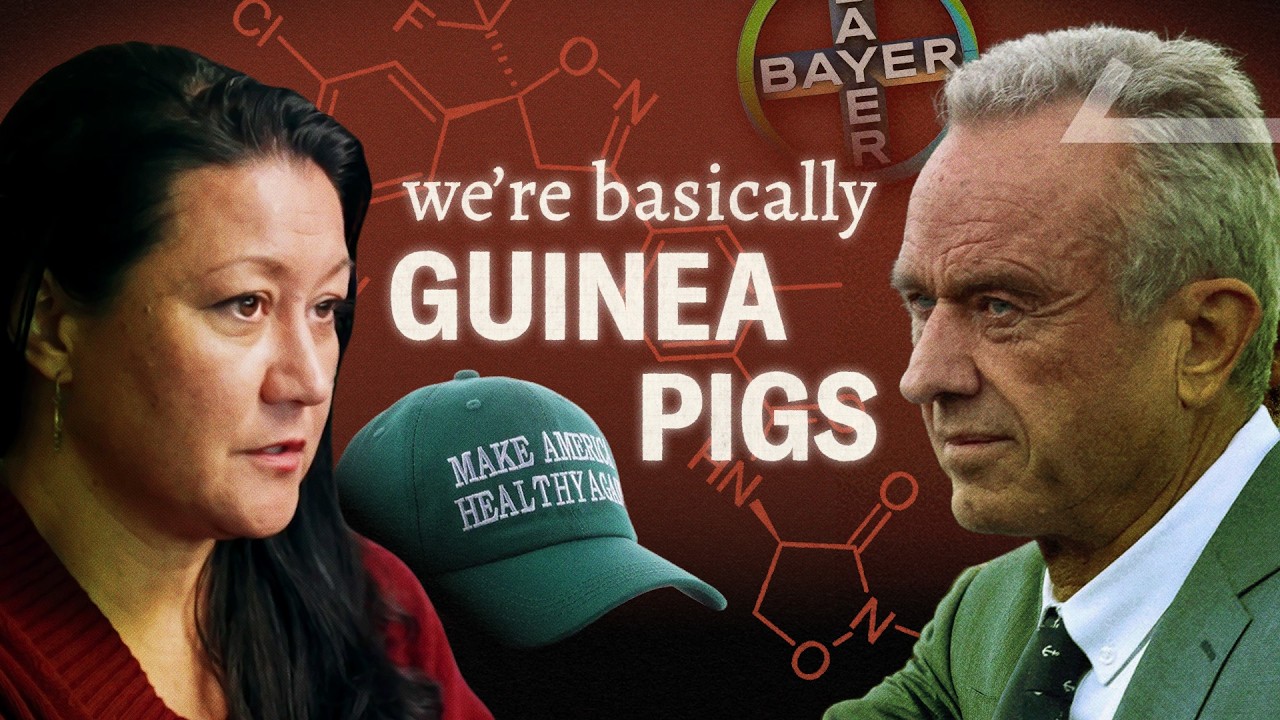
We Uncovered A Conspiracy To Poison Your Food
Fundraiser
More Perfect Union
3.31M subscribers
527,745 views Mar 20, 2026
Four former chemical lobbyists control America’s pesticide regulations, letting pesticide companies pump the country full of toxins. For every 1 meeting with an environmental group, the EPA met 25x with corporate interests. We revealed the corporate lobby poisoning America:
---
---
CHILE STR PROTEST ECO REGS 3 23 26 DN
---
AN 3 26
Raw milk sold by RFK Jr. supporter emerges as possible source of e. coli outbreak - Alternet.org
---
---
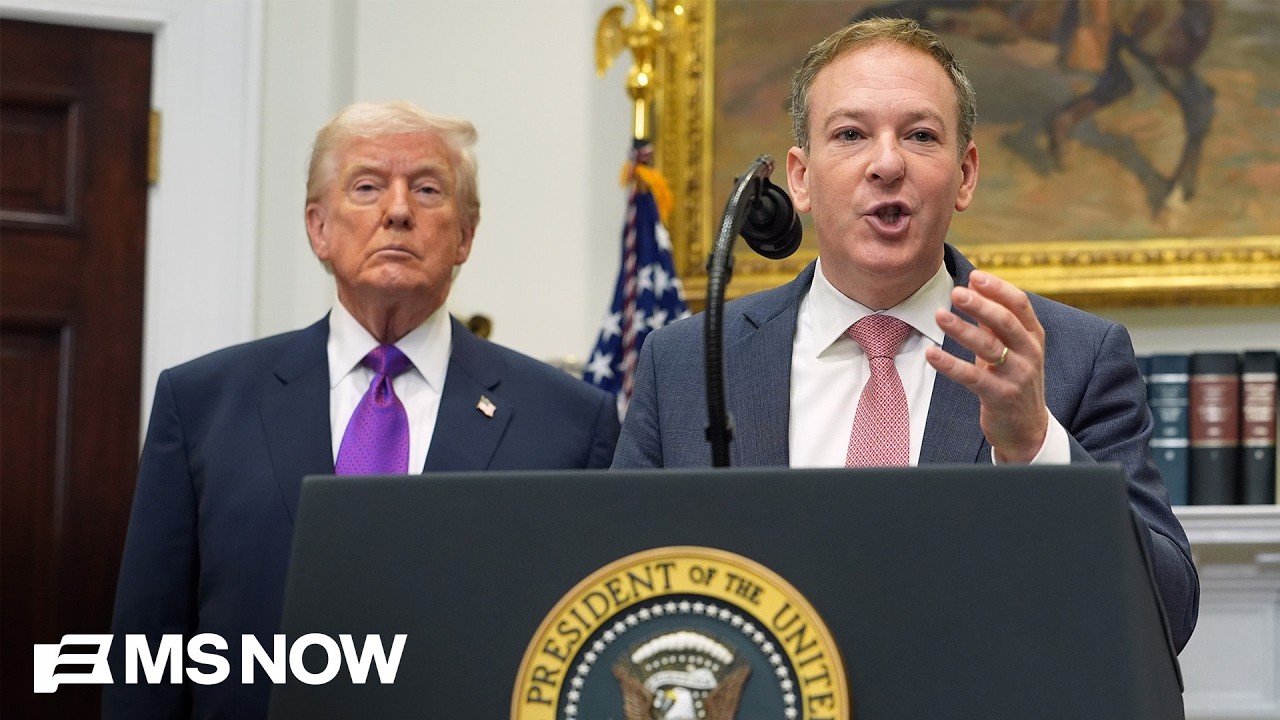
YT MSNBC 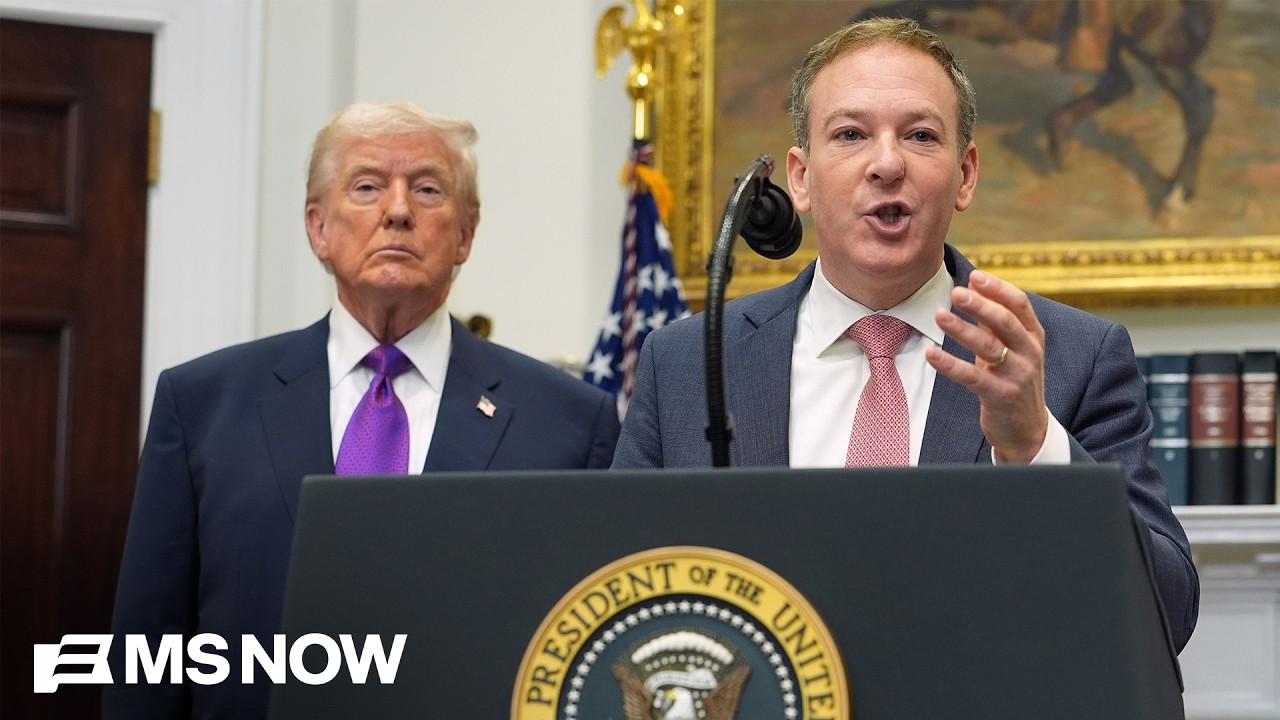
“BIGGEST DEREG IN AM HIST BY FAR”
SO CALLED END FINDING OBAMA ERA; PRICES WENT UP FOR WORSE PRODUCT; NO BASIS IN FACT OR LAW; FF SAVE LIVES; WIND INTERMITTENt MOST COSTLY; DIE NO AC HEATING; RADICal rule --> green new scam mebbe worse than rissia; jobs decimated but coming back bc tariffs; harmed car indist; ford plant wd be closed;
hated start sop feature; ev mandate; had to pay 5 trill$ for pwr stations for ev
car price up 22% biden fo gnscam
#$
CAR START EZIER... DOW
Z HOLY GRAIL OVERREACH; SAVE 1/3 TRILL$; 2400 ON CAR; IDEOL CRUSADE REGU PWR GRAB MOST; TRILLIONS $ STRANGLED, LIMIT CHOICE; LEFTWING WISHLIST EV MANDATE ; abuse? go to church; target am dr; red tape; forced trans to ev; climate partic triphy = startstop; bureaucrats demand; delivers wins cafe duffy ca; jobs;
restores the rule of law?!
...
TIRED OF PLAYING GAMES; EV NO ONE BOUGHT; WE HEARD YOU AND ACTED; COMMITED TO CLEAN AIR LAND AND WATER FOR ALL HARNESS AM GREATNESS? FREEDOM ABD CHOICE, RULE OF LAW VONGR NEVER MADE LAW; NEVER WAVER ON MISSION, GOLDEN AGE OF AM
SPK ONLY OF CAR EMISSION NOT PWR PLANTS?
NO THER PREZ WD DO THIS; 1.3 TRILL SAVINGS
VOUGHT
LEE FARM EQUIP JOHN DEER; SMOG NO NEED TO GO TO FINEST SCHOOL TO WORK LAWN MOWER TRMP
WINDMILL ALL MADE IN CHINA GERMANY KILL BIRDS, EYESORE; EUROPE NOT RECOG W/ WIND AND MIGRANTS; MOST EXPENSIVE ENERGY; HOPE NOT 1 BUILT; ENDNGERMENT FOR MILITARY AND AIRLINES
NO ONE DOES MORE FOR HEALTH CARE THAN GOP; DRUG PRICES, BIGGEST EVER
---
---
MMA
Fox cheers Trump’s repeal of the EPA endangerment finding — a move that could cost thousands of lives and billions of dollars in health care costs
Special ProgramsClimate & Energy
Written by Allison Fisher
Published 02/13/26
- On February 12, the Trump administration finalized repeal of the endangerment finding – the landmark legal determination that protected Americans by limiting greenhouse gases and carbon pollution from cars, power plants, and other industries. The Associated Press reported last year that the protections mandated by this finding were projected to “prevent an estimated 30,000 deaths and save $275 billion each year they are in effect.”
Ignoring these benefits, Fox News and Fox Businesses personalities celebrated the repeal while pushing climate denial talking points to bolster support for this huge rollback of pollution safeguards — including dismissing the overwhelming scientific evidence that underpins the endangerment finding, suggesting that cold weather in winter somehow disproves climate change, or outright calling climate science a “hoax.”
Environmental Protection Agency Administrator Lee Zeldin has referred to the endangerment finding as “the holy grail of the climate change religion,” while The New York Times reports that “dozens of conservative activists, lawyers, scientists and others had worked for years to prepare the case against the endangerment finding,” including a secretive campaign underwritten by The Heritage Foundation. As documented by Media Matters, this effort has also relied on a decades-long right-wing media campaign to undermine climate science.
- ## Pollution from the burning of fossil fuels is an unequivocal threat to human health and safety
- In 2009, the EPA’s endangerment finding established that greenhouse gases must be regulated because they “cause or contribute to air pollution that may reasonably be anticipated to endanger public health or welfare.” Lisa Jackson, the agency’s first Black administrator, formally “announced an endangerment finding on greenhouse gases, setting the stage for EPA action on climate change. Under her leadership, EPA issued clean air standards designed to reduce emissions from large facilities without burdening small businesses, and a clean cars program.” Environmental Protection Agency, accessed [7/30/25, accessed 7/30/25]
- The Trump administration’s proposed repeal of the endangerment finding, issued in July, was based on arguments made by a handpicked working group of climate contrarians. NBC News reported that “it’s not clear whether the final rule will rely on the same arguments or change its justifications in response to public comments,” while also pointing out that “a judge ruled last month that (Energy Secretary Chris) Wright and the Energy Department had violated transparency laws in the way it formed and operated the working group behind the report.” Media Matters, [7/31/25, 8/14/25; NBC News, 2/10/26]
- EPA regulations reducing greenhouse gases, based on the agency’s own assessment, were projected to “prevent an estimated 30,000 deaths and save $275 billion each year they are in effect.” AP further noted that “experts say the numbers are conservative and that even a partial dismantling of the rules would mean more pollutants such as smog, mercury and lead — and especially more tiny airborne particles that can lodge in lungs and cause health problems.” The Associated Press, [6/5/25]
- :{:{The Trump administration claims that repealing the endangerment finding will benefit the economy — including bringing down the cost of “light-duty cars, S.U.V.s and trucks” — are dubious. The New York Times reported the administration has declined to explain how it assessed the benefits of repealing the finding, with one expert noting, “‘It’s hard to find any math in their assessment that doesn’t seem, frankly, a little bit ridiculous.” On CNN News Central, correspondent Renee Marsh pointed out that by “the EPA’s own data” under the Clean Air Act, “between 1970 and 2023 combined emissions of six common pollutants dropped some 78% and that all happened while the U.S. economy continued to grow,” with a 321% increase in gross domestic product. }:
Marsh continued, “So it's not an either or — you don't have to pick dirty air in order to have a strong economy.” Later in the program, author and climate expert Porter Fox pointed out that “back when the endangerment finding was adopted in 2009, we were looking at a billion-dollar climate disaster roughly every month or so. Now it's every three weeks. So, you know, if Trump is going to claim that $1.3 trillion will be saved by easing these regulations, just do the math. In less than 10 years, we're already going into the red, and those billion-dollar disasters are getting more and more expensive and more and more frequent every year.” The New York Times, [2/12/26; CNN, CNN News Central, 2/12/26, 2/12/26]}:
- Video
Citation
From the February 12, 2026, edition of CNN News Central
- The scientific evidence supporting the endangerment finding has only strengthened since 2009. As reported by Stanford University, “evidence for climate change’s damaging impacts – such as food insecurity, mass migration, and health problems – has only grown since the finding was established.” Meanwhile, the Earth just experienced its hottest decade ever recorded, “the atmospheric concentration of carbon dioxide – as well as methane and nitrous oxide – are at the highest levels in the last 800,000 years,” and in the U.S. alone there were “two dozen billion-dollar weather and climate disasters in 2025, causing at least 276 fatalities and costing a total of $115 billion in damages.” Stanford Report, [9/19/25; AccuWeather, 3/19/25; ABC News, 1/8/26]
- ## Right-wing media personalities celebrated Trump’s ending of the endangerment finding and pushed climate denial talking points to justify scrapping regulation of greenhouse gas pollutants
- Fox Business host Stuart Varney celebrated news that the Trump administration would end the endangerment finding: “Wave goodbye to the Green New Deal — the energy policies of Obama and Biden are going, going, gone.” Varney said, “If you questioned that finding, the climate crowd called you a denier as if you were denying the Holocaust — the science is in, they said, the argument is over. Not so fast.” Fox Business, *Varney & Co.*, [2/10/26]
- Video
Citation
From the February 10, 2026, edition of Fox Business' Varney & Co.
- :{On Fox Business’The Evening Edit, the :{Federalist}:’s Brianna Lyman said: “All we’ve been doing for the past 15 years or so is saddling American consumers and businesses with these regulatory burdens that are expensive and ineffective in the grand scheme of things.” She claimed, “China is responsible for a third of the world's global emissions and a third of the world's greenhouse gas emissions. The United States on its own accounts for about 10% of CO2 emissions, 10% of greenhouse gases, which means 90% of these emissions are coming from other countries. So at the end of the day, no matter what we do here, it is ultimately negligible until countries like China, and India and Russia abide by the same set of standards that we are abiding by, and they don't.”
The argument that the U.S. shouldn’t act to regulate pollution because of the emissions output of other countries has been employed by climate deniers for more than a decade. It discounts the domestic benefits of climate action and the role of U.S. leadership in driving solutions, and also falsely suggests that other countries are not taking action. For example, according to a new analysis, China’s emissions fell by 1% in the last three months of 2025, and the drop “extends the ‘flat or falling’ trend in China’s CO2 emissions that began in March 2024 and has now lasted for nearly two years.” Fox Business, *The Evening Edit*, [2/10/26; Newsweek, 12/1/23; Carbon Brief, 12/2/26]}:
- The Bottom Linehost Dagen McDowell called the endangerment finding “an Obama-era rule — shocker — that has been used for years as the foundation to push its climate religion up our wazoo.” McDowell said: “Oh, this is so delicious — the Trump administration about to mark its most sweeping rollback yet. Get 'er done. An Obama-era rule — shocker — that has been used for years as the foundation to push its climate religion up our wazoo.” Fox Business, *The Bottom Line*, [2/10/26]
- Fox Business host and former Trump economic adviser Larry Kudlow: “The whole climate change crowd never proved their case” behind the endangerment finding. Kudlow said, “We can argue till we are blue in the face but I will say the whole climate change crowd never proved their case. Or let me put it to you this way. It never proved the existential risk, what I would call the extremist case. I’m not denying that there’s emissions in the air. The question is how much and how bad is it for your everyday health.” Fox Business, T*he Big Money Show*, [2/10/26]
- Video
Citation
From the February 11, 2026, edition of Fox Business' The Big Money Show
- In the same segment about President Donald Trump’s end to the endangerment finding, Fox Business host Jackie DeAngelis claimed: “There is no global warming here. Maybe the president is right.” She said, “This idea that the climate is changing — it was negative 8 degrees here on Sunday. There is no global warming here. Maybe the president is right that this is moving, this is the climate doing what it does and that it goes in cycles.” Fox Business, *The Big Money Show*, [2/10/26]
- Describing the endangerment finding as “a regulatory wet blanket on the economy,” Fox contributor Marc Thiessen said, “We've got to recognize climate change isn’t an existential crisis. It is a problem that can be managed. … AI will help us find lots of ways to adapt to a warming climate so we can live with it.”Thiessen: “First of all, the regulations were a regulatory wet blanket on the economy that’s now being taken off, which is good for Trump and good for Americans. … We've got to recognize climate change isn’t an existential crisis. It is a problem that can be managed. And the answer is adaptation. … Air conditioning is cheaper than heat. AI will help us find lots of ways to adapt to a warming climate so we can live with it. Because we can't destroy the free market economy in order to stop the planet from warming.” Fox News, *Special Report with Bret Baier,* [2/12/26]
- New York Post columnist Miranda Devine cheered Trump’s repeal of the endangerment finding as “the final nail in the coffin of the climate hoax that we’ve all been laboring under all around the world.” Devine: “Look, it’s absolutely huge. This is really the final nail in the coffin of the climate hoax that we’ve all been laboring under all around the world since at least 20 years ago when Al Gore brought out that piece of propaganda, that apocalyptic movie An Inconvenient Truth that scared, you know, a generation of kids to thinking that really planet would be all burned up by now. You know, their deadlines have kept on have come and gone and nothing has changed. So I think people are now waking up to the fact that it was a hoax.” Fox Business, *Kudlow*, [2/12/26]
- Video file
Video
Citation
From the February 12, 2026, edition of Fox Business' Kudlow
- Fox & Friendsco-host Brian Kilmeade said the rollback is “really going to be jet fuel for the economy,” adding, “You will be surprised about the impact because they can't back up the science when it comes to the new green mania.”Kilmeade: “It’s really going to be jet fuel for the economy. Cover of the New York Post, cars will cost $2,400 less. You will be surprised about the impact because they can't back up the science when it comes to the new green mania.” Fox News, *Fox & Friends*, [2/13/26]
//
08/14/25 2:26 PM EDT
07/31/25 12:45 PM EDT
- ### Right-wing media hyped a supposed “shovel” attack against ICE. Prosecutors just dropped the charges.
02/13/26
---
===}:
SLUDGE FEB 2029
Former law professor Neomi Rao is facing headwinds in her judicial nomination, so Charles Koch’s Americans for Prosperity is stepping in.
:{:{Billionaire manufacturing magnate Charles Koch has for decades used his enormous wealth and political power to install elected officials (https://readsludge.com/2018/10/19/koch-and-adelson-come-to-the-rescue-of-trump-devotee-ron-desantis-in-florida/),}:
government administrators (https://www.salon.com/2016/06/19/big_men_on_campus_the_koch_brothers_university_donations_are_a_veiled_political_weapon/), and regulators (https://readsludge.com/2018/10/04/koch-backed-sec-commissioner-claims-corporate-law-is-in-the-public-interest/) who will keep the business interests of Koch Industries and other giant, heavily polluting companies in mind.}:
But Koch is also dipping into the judicial arena. One of his protegés has been nominated by President Trump and is poised to join the second-most powerful court in the United States, and Koch’s premier political spending group wants to make sure it happens.
In 2016, the Charles Koch Foundation (CKF) and a mystery donor combined to give $30 million to the George Mason University (GMU) law school, renaming it after the late, conservative Supreme Court Justice Antonin Scalia. Koch’s foundation put in $10 million, and the remaining $20 million, it was later discovered, was administered by Federalist Society officials through a 501(c)(4) nonprofit, BH Fund.
:{:{The grant established 12 new law professorships—nearly all the hires had ties to the conservative Federalist Society (https://legacy.tyt.com/2018/05/18/after-donation-administered-by-federalist-society-leaders-gmu-hired-professors-tied-to-the-federalist-society/)—}:
and founded two ideological law school centers (https://ia601201.us.archive.org/24/items/GMUASSLawMOU2016/GMU%20ASSLaw%20MOU%202016.pdf#page=6),
the Center for Liberty and Law and the Center for the Study of the Administrative State. The founder and director of the latter center was Neomi Rao (https://www.law.gmu.edu/assets/files/faculty/cv/rao.pdf), who had been a law professor at GMU since 2012. She previously clerked for the most conservative Supreme Court justice, Clarence Thomas, and was associate counsel and special advisor to President George W. Bush. She has never been a judge.}:
Rao took a leave of absence from George Mason in 2017 when President Donald Trump appointed her as director of the White House Office of Information and Regulatory Affairs (OIRA), Trump’s “regulation czar.”
:{:{The dean of the GMU law school told another donor to her center, corporate lobbyist and longtime Koch ally C. Boyden Gray (https://www.desmogblog.com/c-boyden-gray), that he hoped to lure her back to GMU with a $1.5-million professorship, funded by Gray, according to an email unearthed by GMU alumna Allison Pienta (}:
:{:{http://www.unkochmycampus.org/dec-20-2018-donor-control-at-gmu-update?rq=boyden%20gray).}:
“This chair would help me to entice Neomi to return home to Scalia Law after she dismantles the administrative state (https://www.documentcloud.org/documents/5750669-Antonin-Scalia-Law-School-Grant-Agreement.html#document/p2/a484188)
while serving at OIRA,” he wrote in a May 2017 letter to Gray. Gray gave another $3 million to the center, and it was renamed in his honor.}:}:
Dismantling the administrative state (p. 2) (https://www.documentcloud.org/documents/5750669-Antonin-Scalia-Law-School-Grant-Agreement.html#document/p2/a484234)
IFrame Content (https://www.documentcloud.org/documents/5750669-Antonin-Scalia-Law-School-Grant-Agreement/annotations/484234.html?embed=true&maxheight=750&maxwidth=500)
View entire document on DocumentCloud (https://www.documentcloud.org/documents/5750669-Antonin-Scalia-Law-School-Grant-Agreement.html#document/p2/a484234)
But instead of returning to the law school, Rao may be headed to the powerful D.C. Circuit Court of Appeals to fill the seat vacated by the newest Trump-appointed Supreme Court justice, Brett Kavanaugh. Rao’s GMU center hosted a conference (https://administrativestate.gmu.edu/rethinking-judicial-deference/) in 2016 that featured Kavanaugh, a fellow Federalist Society member, as keynote speaker.
Rao’s judgeship nomination is perhaps the crowning achievement of the Antonin Scalia Law School’s initiative to reshape the federal judiciary. In 2017, the law school’s Law and Economics Center, which CKF had been funding for years, drew up a funding proposal (https://www.documentcloud.org/documents/5751080-GMU-Law-and-Economics-Center-Federal-Judges-and.html) for the center’s “Federal Judges and Attorneys General Initiatives.”
‘Reshaping’ the Federal Bench
“The election of Donald Trump presents a historic opportunity for a new president to reshape the federal judiciary, reform the regulatory state, promote economic growth, and restore constitutional federalism,” reads the proposal.
The program educates newly appointed judges on economics and other issues so they will “be more likely to make sound decisions that support the rule of law and the free enterprise system.” The new Federal Judges Initiative will “cover topics expected to be highly relevant to the current presidential administration’s policy agenda, such as the economics of health care and health financing, financial services regulation, environmental and energy regulation, health and safety regulation, privacy, labor and employment law, and telecommunications regulation.”
As of 2017, over 5,000 judges and 700 state attorneys general had participated in at least one Law and Economics Center program. In the 2018 fiscal year, the Law and Economic Center requested over $1.7 million for its Judicial Education Budget.
“Rao’s transition from the Koch-funded Antonin Scalia School of Law to her nomination to the second-highest court in the country is exemplary of Koch’s successful strategy of leveraging George Mason University to exert influence on the judicial branch for decades to come,” Samantha Parsons, a GMU graduate and director of campaigns at the activist group UnKoch My Campus, told Sludge. “Her nomination should serve as a warning of the anti-democratic agenda we can expect throughout our nation’s judicial system should George Mason University succeed in its goals to facilitate the education and placement of hundreds of new federal judges under Trump’s presidency.”
:{:{In December, when Trump nominated Rao, Koch’s most prominent political advocacy organization, Americans for Prosperity, endorsed (https://americansforprosperity.org/afp-endorses-slate-of-highly-qualified-judicial-nominees/) her for the judgeship.}:
But Rao has since encountered some bumps in the road. Republican Missouri Sen. Josh Hawley said he has “deep concerns (https://www.axios.com/neomi-rao-dc-circuit-nominee-josh-hawley-concerns-228fe428-7944-430a-bc5c-71a50278ec38.html?utm_source=twitter&utm_medium=twsocialshare&utm_campaign=organic),” telling Axios that she may not be sufficiently anti-abortion.}:
At a recent Senate committee hearing, Iowa Republican Sen. Joni Ernst expressed concerns over Rao’s 1994 essay on date rape (https://www.washingtonpost.com/local/legal-issues/neomi-rao-pressed-on-past-writings-on-date-rape-at-hearing-on-her-judicial-nomination/2019/02/05/156b4784-28b4-11e9-b2fc-721718903bfc_story.html?utm_term=.e68dab1a1db9), which alleged that women who are raped while drunk are partially to blame for being raped. Rao’s OIRA has stalled issuing an employer guidance on sexual harassment for 15 months (https://theintercept.com/2019/02/04/neomi-rao-hearing-oira-brett-kavanaugh/), a process that normally takes no longer than 90 days, as David Dayen reported for The Intercept.
:{:{Americans for Prosperity will fund digital advertising and grassroots efforts (https://www.axios.com/neomi-rao-dc-circuit-nominee-josh-hawley-concerns-228fe428-7944-430a-bc5c-71a50278ec38.html?utm_source=twitter&utm_medium=twsocialshare&utm_campaign=organic)}:
in an attempt to sway public opinion in favor of Rao this week, according to Axios. On Tuesday morning, the Facebook ad archive (https://www.facebook.com/ads/archive/?active_status=all&ad_type=political_and_issue_ads&country=US&q=americans%20for%20prosperity) listed six AFP ads in favor of Rao, which began running on Monday. Each ad targets one Republican senator, including Ernst and Hawley, urgin Facebook users to tell their senator to vote for Rao’s D.C. Circuit Court nomination. Additional targeted senators are Ted Cruz (Texas), Marsha Blackburn (Tenn.), James Lankford (Okla.), and Ben Sasse (Neb.). The Google ad archive did not list any recent AFP purchases.}:
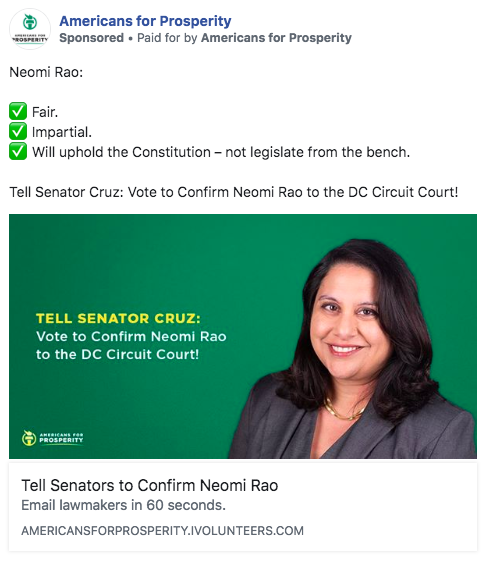 One of Americans for Prosperity’s Facebook ads supporting Neomi RaoFacebook Ad Archive
Americans for Prosperity did not reply to Sludge’s request for comment.
‘Regulatory Obstruction’
The American Constitution Society says OIRA, which is part of the Office of Management and Budget, “has embraced politicized regulatory obstruction (https://www.acslaw.org/acsblog/a-lesson-in-failure-oira-neomi-rao-and-deregulation-at-any-cost/) as its raison dêtre” under Rao. In OIRA’s 2018 report (https://www.whitehouse.gov/wp-content/uploads/2018/10/2018-Unified-Agenda-Cutting-the-Red-Tape.pdf), entitled “Cutting the Red Tape,” Rao writes, “we are working to push back the expansion of the administrative state, which has placed undue burdens on the public and impeded economic growth.”
Under Rao’s leadership, OIRA, has approved sweeping environmental deregulation by the EPA. Koch Industries, which Charles Koch runs, is a giant manufacturing conglomerate with subsidiaries that refine and transport oil, create paper products, and produce chemicals. The company is among the country’s biggest air and water polluters and has paid hundreds of millions of dollars for environmental violations. Koch and his brother David are lifelong libertarians who have fought taxes and regulations for decades.
“Rao has never seen a regulation she didn’t hate, and as a judge would dismantle 40 years of environmental and social progress,” Brett Hartl, government affairs director at the Center for Biological Diversity, said (https://www.buzzfeednews.com/article/zoetillman/trump-nominates-neomi-rao-brett-kavanaugh-seat) in a statement to Buzzfeed News. “Her confirmation would be the most damaging and regressive yet by Trump after Kavanaugh and Gorsuch.”
GMU is by far the biggest recipient of grants from the Charles Koch Foundation (CKF), which gives tens of millions of dollars each year to free-market higher education programs. Since 2005, CKF and the Charles Koch Institute have donated nearly $129 million to GMU, including over $34 million for the free-market Mercatus Center, according to Sludge’s analysis. Another free-market-focused GMU center, the Institute for Human Studies, has received $8.7 million.
The university has come under fire for allowing the CKF to impact hiring decisions (https://www.insidehighered.com/news/2018/05/01/koch-agreements-george-mason-gave-foundation-role-faculty-hiring-and-oversight). In the case of Florida State University, CKF was even allowed to control economics curricula (https://publicintegrity.org/federal-politics/koch-foundation-proposal-to-college-teach-our-curriculum-get-millions/).
AFP isn’t the only Koch-linked group to spend money to influence the judiciary. The Center for Media and Democracy reports that Donors Trust, a donor-advised fund that wealthy conservatives including Koch use to score tax deductions and potentially anonymize their donations to nonprofits, has bankrolled right-wing groups (https://www.prwatch.org/news/2019/02/13449/donorstrust-bankrolled-right-wing-judicial-appointments-trumps-acting-ag-and) such as the Judicial Crisis Network and its sister organization, the Judicial Education Project, which spent millions of dollars on ads supporting the Supreme Court confirmation of Neil Gorsuch. Donors Trust also funds the Federalist Society and, as Sludge recently reported, several Southern Poverty Law Center-designated hate groups (https://readsludge.com/2019/02/19/americas-biggest-charities-are-funneling-millions-to-hate-groups-from-anonymous-donors/).
Related:
Charles Koch Is Funding Rightwing, Pro-Trump Media, New Disclosure Reveals (https://readsludge.com/2018/11/21/charles-koch-is-funding-rightwing-pro-trump-media-new-disclosure-reveals/)
Koch Brothers Continue to Influence Tax Policy After Huge Cuts Last Year (https://readsludge.com/2018/06/18/koch-brothers-continue-to-influence-tax-policy-after-huge-cuts-last-year/)
Koch-Backed SEC Commissioner Claims Corporate Law is in the Public Interest (https://readsludge.com/2018/10/04/koch-backed-sec-commissioner-claims-corporate-law-is-in-the-public-interest/)
Author profile](https://readsludge.com/author/alex/)
Alex Kotch (https://readsludge.com/author/alex/)
Alex is a reporter at Sludge and a contributor to The Young Turks. He was previously part of the award-winning investigative team at International Business Times, and his other work has appeared in T
---
---
AN 12 25
On Tuesday, December 30, the U.S. Consumer Financial Protection Bureau (CFPB) got a reprieve when a federal judge rejected the Trump administration's argument that it is legally barred from securing funding for the independent federal agency.
The judge, Reuters reports, noted an existing court order that bars the Trump Administration from shutting the CFPB down.
Reuters' Douglas Gillison notes, "The ruling came 24 hours before the last day on which officials said there would be sufficient funding to meet the operating expenses at the CFPB."
The CFPB was established in 2011 during then-President Barack Obama's first term with the aggressive encouragement of liberal now-Sen. Elizabeth Warren (D-Massachusetts) — who argued that such an agency was badly needed in light of the hardship caused by the Great Recession and the Wall Street meltdown of September 2008.
During Donald Trump's second presidency, however, the CFPB became a major target of his administration and the Department of Government Efficiency (DOGE).
SpaceX/Tesla/X.com leader Elon Musk headed DOGE earlier in the year, and his critics at CFPB argued that he had a conflict of interest with DOGE — as CFPB was investigating some of his businesses.
---
---
an 12 25
President Donald Trump continues to suffer low approval ratings in poll after poll. An NPR/PBS/Marist poll released in late December, for example, finds his approval at only 36 percent.
Nonetheless, Trump is still popular among his hardcore MAGA base, which views him as someone who isn't afraid to tackle elites on his behalf. But in an in-depth opinion column/essay published on December 23, the New York Times' Thomas B. Edsall lays out some reasons why Trump's policies will hurt his MAGA base more than anyone.
"The Trump Administration (has) adopted policies condemning a sizable group of its core MAGA supporters — miners, firemen, manufacturing workers — to slow deaths from diseases that cut off their ability to breathe," Edsall explains. "President Trump’s attacks on the regulation of toxic chemicals in the air and water, on strong vaccination policies, on rules restricting power plant pollution are part and parcel of what amounts to a killing spree cloaked as deregulation."
Trump's "deregulation policies," Edsall warns, will lead to "rising numbers of preventable deaths in the United States from increased rates of respiratory disease, illnesses of the unvaccinated and elevated exposure to toxic chemicals and lethal pollutants emanating from coal-powered plants."
According to Harvard University economics professor David M. Cutler, Trump's Big, Beautiful Bill Act of 2025 "will lead to less insurance coverage and consequently health losses."
Cutler told Edsall, "The most recent estimates are 10 million uninsured. The (Affordable Care Act) subsidies, if not extended, are projected to reduce insurance coverage by another four million."
Harvard professor Benjamin Sommers, who focuses on health care economics, told Edsall, "The Trump Administration is aggressively rolling back decades of progress in expanding health insurance and improving prevention through vaccination, which will lead to financial strain, barriers to care, and preventable deaths for many Americans."
According to the Times, the Trump Administration's MAHA (Make American Healthy Again) agenda is a "pipe dream" that will only cause major suffering among MAGA voters.
"One thing stands out in Trump's loosening of regulations of toxic chemicals, his anti-vaccination policies and his health care cuts," Edsall laments. "He is inflicting a disproportionate share of the worst kind of harms on the families of the men and women who love him the most: white working-class voters, especially those living in the industrial Midwest and Appalachia."
*Thomas B. Edsall's full column/essay for The New York Times is available at this link (subscription required).
---
---
an 12 25
Two of President Donald Trump's donors have been able to exert immense influence over the U.S. government's chief financial regulator — largely due to their closeness with the president and his family.
That's according to a Monday article in the New York Times, which reported that Cameron and Tyler Winklevoss (also known as the Winklevoss Twins) have managed to singlehandedly shift how the U.S. Securities and Exchange Commission (SEC) approaches the cryptocurrency industry. The Times reported that the Winklevosses, whose combined net worth is in excess of $9 billion, have not only turned an SEC investigation with potential for a criminal referral from the Department of Justice into a settlement, but have effectively stopped the SEC from opening any new cases into crypto firms since Trump's second presidency began.
Crypto firms were routinely investigated by former President Joe Biden's SEC, with the Times reporting that Trump's predecessor averaged two crypto investigations per month while Trump's SEC averaged one new investigation each month in his first term. Some of those firms, like Binance and Coinbase, were referred to the DOJ for criminal indictments. However, the SEC has yet to open a single investigation into any cryptocurrency companies in 2025, per the Times' reporting.
When Trump came into office, the Winklevosses were being investigated by the SEC after their firm, Gemini Trust, saw its crypto program collapse, affecting 230,000 investors. According to the Times, Gemini collaborated with another firm, Genesis Global Capital, that went bankrupt after making bad loans with roughly $2 billion worth of investors' assets. Investors only managed to recover their money after an 18-month fight.
A suit filed by plaintiffs in New York was settled, though the SEC was still litigating the Gemini as of Trump's second inauguration. As of September, the SEC announced it had resolved the Gemini case, meaning a settlement announcement is likely pending. When Tyler Winklevoss endorsed Trump in June of last year, he did so while also bashing the Biden administration's regulatory approach to crypto.
"President Donald J. Trump is the pro-Bitcoin, pro-crypto, and pro-business choice. This is not even remotely open for debate. Anyone who tells you otherwise is severely misinformed, delusional or not telling the truth," Tyler Winklevoss posted to X. "It’s time to take our country back. It’s time for the crypto army to send a message to Washington. That attacking us is political suicide."
The SEC's new kid-gloves approach to crypto comes at a time when Trump has drastically increased his net worth since taking the oath of office for the second time, largely due to crypto. Forbes reported in June that $3.3 billion of the president's estimated $5.5 billion in net worth is held in cryptocurrency. His eldest adult sons, Don Jr. and Eric, are also crypto investors. The Winklevosses have funded the firm American Bitcoin, which Eric Trump co-founded and where Donald Trump Jr. is a key investor.
Click here to read the Times' full report (subscription required).
---}:
---
AN 11 25
The Wall Street meltdown of September 2008 gave the United States its worst financial crisis since the Great Depression of the 1930s. Both then-President George W. Bush and his successor, Barack Obama, drew criticism for supporting the costly Wall Street bailout, but both of them maintained that the bailout was necessary in order to prevent the Great Recession from worsening.
In a Substack column posted on November 28, liberal economist Paul Krugman made a comparison between the 2008 financial crisis and the current 2025 economy, and laid out a variety of Trump administration policies that he warns could lead to a "future financial crisis" — from a cryptocurrency bubble to undermining the independence of the U.S. Federal Reserve.
"The clear lesson of 2008 is that effective financial regulation is essential," Krugman emphasizes. "For three generations after the great bank runs of 1930-31, America avoided 'systemic' banking crises — crises that threaten the whole financial system, as opposed to individual institutions. This era, which Yale's Gary Gorton calls the Quiet Period, was the result of New-Deal-era protections — especially deposit insurance — and regulations that limited banks' risk-taking. But post-1980, finance was increasingly deregulated."
Krugman adds, "In particular, the government failed to extend bank-type regulation to shadow banks that posed systemic bank-type risks. And the crisis came."
According to Krugman, Trump and his allies haven't learned the lessons of The Great Recession.
"In a way," Krugman explains, "the laxity that made the 2008 crisis possible was understandable. By the 2000s, nobody in government or the financial markets remembered what a real financial crisis was like. And no, watching 'It's a Wonderful Life' on Christmas Day doesn't count. But here we are in 2025, and 2008 wasn't that long ago. Many of us still have vivid memories of the gut-wrenching panic that gripped the world when Lehman fell. Yet Donald Trump's allies and cronies are now moving rapidly to dismantle the precautionary regulations introduced after 2008 to reduce the risk of future financial crises ... But key players in Congress, within the administration, and, alas, at the Federal Reserve, are apparently determined to make a 2008 rerun possible."
"The MAGA war on financial stability is being waged largely on two fronts. First, there's an ongoing effort within some parts of the Federal Reserve to drastically weaken bank supervision — oversight of banks to prevent them from taking risks that could threaten the financial system. The Fed has multiple roles: in addition to setting interest rates, it also has primary responsibility for bank supervision," Krugman continued. "The Fed is supposed to be quasi-independent, and so far, it has preserved its interest-rate-setting independence in the face of intense pressure by Trump to cut rates. Yet a Trumpian agenda is attempting to overtake the Fed's bank supervision operations…. The second front of MAGA's war on financial stability is on behalf of the crypto industry…. Along with its many other sins, the Trump administration is doing its best to make a future financial crisis more likely."
===
---
11 25 INTERCEPT
MAHA Slams “Corporate Capture” While Trump Strips Regulations
between frenzied claims about Tylenol and disparaging remarks about autism, the voices of the “Make America Healthy Again” movement empowered by President Donald Trump have directed criticism at the country’s massive food, pharmaceutical, and chemical industries — still-too-rare targets for the leaders of either political party in the U.S.
When the White House unveiled its comprehensive report on how to “Make Our Children Healthy Again” in May, it slammed “corporate capture” of regulatory bodies and argued that companies responsible for making children less healthy wield undue influence in Washington. A subsequent strategy report, released last month, called to “protect public health from corporate influence.”
“It was one of the first times I saw the federal government actually call out corporate capture and how chemical companies influence regulation,” said Darya Minovi, a senior analyst for the Center for Science and Democracy.
But the Trump administration’s political marriage of unbridled crony capitalism and fringe health conspiracism is not without its contradictions.
While the “Make America Healthy Again,” or MAHA, movement preaches a healthy utopia for the nation’s children free of real and imagined toxins, public health experts say the Trump administration has pursued an aggressive deregulation campaign that has opened the floodgates for toxic chemicals in our food, water, and air — while also defunding vital medical research and spreading dangerous medical misinformation.
“There’s a lot of rhetoric about problems that they’re solving,” Minovi said. “But when I’m looking at the actual actions that the administration is taking, largely, these actions are not making any kids or families healthier.”
A glaring tension between the MAHA movement’s purported goals and the Trump administration’s aggressive deregulatory strategy is the issue of environmental toxins, particularly PFAS, also known as forever chemicals, found in many household items.
These chemicals, which can disrupt liver, kidney, and thyroid functioning, are especially harmful to children.
[
Related
Trump EPA’s Next Move: Making It Harder to Sue for Getting Cancer from Roundup
https://theintercept.com/2025/03/21/trump-epa-monsanto-roundup-bayer-cancer-chemicals/)
The strategy report, drafted by the Make America Healthy commission led by Health and Human Services Secretary Robert F. Kennedy Jr., laid out a series of recommendations to “end chronic childhood disease,” which included studying the cumulative effect of chemicals in the environment. But in May, the Environmental Protection Agency announced that it was rolling back restrictions on the acceptable levels of these forever chemicals within drinking water, which were put in place during the Biden administration. And in the spring, the agency ended a grant to research children’s exposure to chemicals from soil and dust, accordingto the KFF Health News.
“When it comes to actually taking action, we’re not really seeing policies that are getting ahead of corporate capture and holding the chemical industry responsible,” Minovi said.
Over the coming months, the EPA has announced it will take 31 separate deregulatory actions, including loosening restrictions on power plants that emit air pollution and eliminating safeguards put in place during the Biden administration for petrochemical accidents.
Most Read
[
YouTube Quietly Erased More Than 700 Videos Documenting Israeli Human Rights Violations
Nikita Mazurov, Jonah Valdez](https://theintercept.com/2025/11/04/youtube-google-israel-palestine-human-rights-censorship/)
[
A Journalist Asked Why Israel Isn’t Paying to Rebuild Gaza. It Cost Him His Job.
Arthur Neslen](https://theintercept.com/2025/11/04/journalist-israel-gaza-nova-gabriele-nunziati/)
[
Man Jailed for Facebook Meme Is Freed in Tennessee
Liliana Segura](https://theintercept.com/2025/10/30/larry-bushart-tennessee-free-speech-charlie-kirk-meme/)
Alongside pursuing a deregulatory strategy that experts predict will introduce more chemicals into the air, water, and food supply, the administration has also moved aggressively to cut research, including on childhood diseases.
For example,in August, the Trump administration announced it was cutting federal funding to a network researching pediatric brain cancer.
White House spokesperson Kush Desai denied cutting cancer research funding, saying HHS canceled grants supporting “DEI and other ideological pet projects,” and that the money was reallocated.
“President Trump made a pledge to Make America Healthy Again by restoring accountability, transparency, and Gold Standard Science in public health decision-making,” wrote Desai. “The President and White House maintain complete confidence in Secretary Kennedy and the rest of the HHS team to deliver on this pledge.”
The Department of Health and Human Services and the EPA did not respond to The Intercept’s request for comment.
Food assistance and educational programs have also come under fire during the Trump administration. Earlier this year, Republicans enacted the most significant cut to the Supplemental Nutrition Assistance Programin history. The program provided food assistance to roughly 1 in every 5 children in the United States, as well as nutrition education.
“A lot of this movement is designed to benefit privileged people who have the resources to access certain healthier foods or a community with clean air,” said Minovi, as opposed to “everyday people who might actually depend on public policies to ensure they have healthy food, clean air, clean water in their community.”
“A lot of this movement is designed to benefit privileged people who have the resources to access certain healthier foods or a community with clean air.”
The recommendations emerging from HHS and the MAHA movement about vaccines and autism are particularly troubling, said Jill Rosenthal, director of public health policy at the Center for American Progress. “It’s a matter of promoting a personal agenda that RFK has rather than following decades of good science,” she said.
Riddled throughout the MAHA strategy and separate report are concerns over vaccines and the vaccine schedule, which is used to determine the timing for childhood vaccinations.
Both RFK Jr. and Trump have peddled pseudoscientific conclusions connecting autism to vaccination, suggesting that the vaccine schedule needs to change. During the press conference last week, Trump advised against vaccinating children for Hepatitis B until they’re 12 years old, which runs at odds with medical guidelines.
“They’re making it more difficult for children to get routine childhood vaccinations. We know that vaccination has saved millions of lives, and so any efforts that make it harder for children to access vaccines are really, really jeopardizing kids’ health,” said Rosenthal. “Instead of following the science and believing what evidence we already have, we’re just creating a lot of distrust and making it harder for people to keep their kids healthy.”
The recent recommendations that pregnant women avoid Tylenol also carry risk for pregnant people and their future children.
“In the near term, I think that pregnant patients are going to be worried enough that they seek alternate forms of medication to treat their pain,” said Dr. Mariana Montes, a former pediatrician and obstetric anesthesiologist. “That’s extremely concerning, because there is nothing that’s been proven safe for pregnancy except for acetaminophen.”
Ibuprofen, the active ingredient in Advil, has been known to lower amniotic fluid — the liquid in utero that surrounds and protects the fetus — and can have negative effects on kidney and heart development, said Montes.
“Patients might choose to take ibuprofen without knowing the effects, and then unknowingly actually harm a healthy pregnancy because they’re so worried about taking Tylenol,” she said.
[
Related
RFK Jr. Talks About Public Health, but He’s Joining an Administration That’ll Make Us Sicker Than Ever
https://theintercept.com/2024/11/14/rfk-jr-health-human-services-water-air-project-2025/)
Left with fewer options they believe are safe, Rosenthal warns that pregnant people might forgo medication altogether, even when they have a fever. “If women avoid taking Tylenol, for instance, when they have a fever, it can increase the risk of birth defects,” she said. “So by scaring women away from taking needed medication, it can actually impact their health and the health of their developing babies.”
The stigma these types of pronouncements cause for people with autism is also a serious concern.
“It’s necessary to point out the ableist language in this whole autism debacle,” said Minovi. “Of course, it’s a condition that needs to be understood and studied, and obviously impacts families significantly, but the way in which the administration, particularly RFK, talks about it is dismissive and negative about people’s lived experiences.”
Republicans, who once denounced former First Lady Michelle Obama for attempting to make school lunches moderately healthier, now inhabit a coalition whose purported goals would have instantly launched “nanny state” accusations just a few years prior.
But the MAHA movement has been so successful despite its inherent contradictions, Rosenthal said, because there’s a “kernel of truth” to what it’s preaching.
“For instance, ultra-processed food is not the first choice for how we want to take care of our bodies,” Rosenthal said, “but at the same time, is that the best way to use limited resources and protect or promote child health? Not when we have kids who don’t have enough to eat, right?”
Minovi said it’s understandable that people are drawn to this movement — which only heightens culpability for people like RFK Jr. and Trump.
“These are families that are just trying to do right by their kids, and the concerns that folks are raising are valid,” said Minovi. “The behavior of the leaders in this movement is nothing short of predatory.”
ref 2 11 15 25
Kennedy Jr. made health policy the cornerstone of his failed presidential campaign, critiquing America’s health care and public health systems with bold, often controversial proposals.
From vaccine “safety” to food and environmental health, Kennedy’s platform challenged the status quo, calling for sweeping reforms to improve transparency, accountability, and personal freedom in medical decision-making.
He’s raised concerns about the chronic disease epidemic that many are fighting in silence and has been a vocal critic of the industrial food system, pointing to the objective dangers it poses to public health.
He’s coined the slogan #MAHA — Make America Healthy Again — a phrase that has gained more traction in the health-conscious corners of the country than the original MAGA. You can often find it boldly displayed in juice bars, wellness shops, and fitness centers, where it has become emblematic of a movement that purports to prioritize health over the politics of the moment.
And honestly, I get it.
I’m hyperfocused on health. After a grueling battle with long Covid following my infection in 2022 and the many, many years I’ve spent uncovering the grave realities of water contamination, air pollution, and disease outbreaks as a reporter and filmmaker, I’ve fully embraced the mantle of an overprotective, fiercely vigilant mom.
Kennedy aligned himself with an administration committed to weakening the protections that have the most direct impacts on our health.
For the most part, my kid eats whole, organic foods, his water filtered to pristine purity eight times over. His clothing is 100 percent organic cotton, and when there’s pollution or we enter crowded spaces indoors, he wears an N95 mask. By our society’s standards, I might seem extreme. But to me, it’s not madness — it’s what happens when you live in a country that’s dangerously out of step with reality.
So, to Kennedy’s supporters, I understand your fervor. But here’s where I’m lost.
Kennedy has aligned himself with an administration — and been announced as Donald Trump’s pick to lead the Department of Health and Human Services as a reward — that is committed to weakening the very protections that have the most direct, proven impacts on our health, particularly the health of our children.
He has paradoxically placed his support behind a president committed to dismantling the regulatory frameworks that ensure clean air, safe water, toxic-free work environments, and uncontaminated food. These are not just abstract concepts — they are the very protections that shield us and our children from the invisible, insidious dangers that lurk in our environment everyday.
By aligning himself with leaders associated with Project 2025’s radical overhaul of environmental regulations, he is effectively endorsing a future in which corporate interests are prioritized over the health of all Americans, especially children.
Clean Air and Water
Project 2025, an ambitious policy agenda crafted by conservative think tanks for the next Republican president, aims to diminish the Environmental Protection Agency’s role in regulating the environment. At the core of this initiative is the plan to remove the EPA’s authority under the Clean Air Act, the foundation of the nation’s air quality standards. If enacted, this would severely weaken federal oversight of pollution, undermining decades of progress in protecting public health and the environment.
Without the Clean Air Act’s regulatory framework, fossil fuel companies — along with other industrial sectors — would face far fewer restrictions on emissions, particularly those related to particulate matter, nitrogen oxides, sulfur dioxide, and carbon emissions. They would operate with less oversight and fewer penalties for pollution, allowing them to prioritize cost-saving measures over environmental protection.
The consequences would be disastrous for everyone who breathes. Air pollution is linked directly to respiratory illnesses, cardiovascular disease, and cancer.
Their assault doesn’t end with our air.
Project 2025 also threatens the Clean Water Act, which regulates pollutants in our waterways and drinking water. The Clean Water Act has been instrumental in ensuring that public health is protected from harmful contaminants like lead, arsenic, bacteria, pesticides, industrial chemicals, and substances like PCBs (polychlorinated biphenyls) and dioxins, which are known carcinogens.
Without the law’s protections, municipalities and industries would be emboldened to delay or avoid the necessary actions to replace lead pipes, fix aging infrastructure, or prevent contamination of public water systems.
As a reporter who spent two years in Flint, Michigan, I witnessed firsthand the devastating impact water contamination has on a community. It’s an ongoing public health crisis of epic proportions. Even a decade later, the community grapples with new life-threatening health complications.
Weakening the Clean Water Act would not only exacerbate existing water crises, but also cripple our ability to address emerging and persistent threats like PFAS — chemicals that have already contaminated drinking water systems nationwide, exposing millions of Americans to serious health risks, including liver damage, thyroid issues, infertility, and cancer. Without federal oversight, PFAS and similar pollutants would spread unchecked.
The consequences would be severe for everyone who drinks water.
And without regulations, there’s no objective measure to define what levels of pollution or contamination are dangerous, leaving individuals to navigate complex and often conflicting information on their own.
This creates particular challenges for the 35 percent of Americans who rent, as they are at the mercy of landlords when it comes to addressing issues like lead in water or radon in the air. If a landlord dismisses these hazards as subjective opinions, tenants have little recourse without enforceable legal standards, leaving families vulnerable to significant health risks caused by negligence or greed.
The fight for health begins with the most fundamental right: clean air and water.
The fight for health begins with the most fundamental right: clean air and water. Without them, all else falls away.
Yet, in a striking irony, the very man championing the cause of public health, which inspired so many to support him and consequently Trump, seems poised to support policies that dismantle the protections vital to preserving that health. So I call on the latest Kennedy to gain power in Washington to address the stark contradictions between the values he claims to champion — our society’s health and well-being — and the policy framework laid out in Project 2025, which threatens to undermine those very ideals.
Kennedy speaks of prioritizing the health of the American people, but Project 2025’s proposals promote deregulation and weaken critical environmental protections, putting our air, water, food, and future at risk.
Now that his chosen candidate empowered him to lead the Department of Health and Human Services, it’s time for Kennedy to confront this glaring dissonance head-on and make clear where his true priorities lie.
---
ref 1
trump-epa-monsanto-roundup-bayer-cancer-chemicals
Every spring, summer, and fall, Jimmy Draeger would walk the length of his 11-acre property with a hand sprayer and a tub of Roundup. He’d mist around the flower beds, the patio, the fence line, diluting the concentrated herbicide with water as the label directed.
Nestled deep in the woods of the Missouri Ozarks, Draeger was used to seeing an explosion of weeds and shrubs in the warm months at the home he’s shared with his wife, Brenda, for more than 30 years. He didn’t think much of using Roundup to keep them at bay.
Then he was diagnosed with stage four non-Hodgkin lymphoma. According to a lawsuit filed by the Draegers in 2022, Jimmy had a chemotherapy port installed in his chest, developed neuropathy in his hands and feet, and lost control of his bowels, coordination, and sexual function. He became clinically depressed, vision-impaired, and unable to bathe without Brenda’s help.
[
Related
The Playbook for Poisoning the Earth
https://theintercept.com/2020/01/18/bees-insecticides-pesticides-neonicotinoids-bayer-monsanto-syngenta/)
Monsanto, the agrochemical company behind Roundup, was to blame for Jimmy’s lymphoma, the Draegers contended. In November 2023, a jury agreed. Bayer, which acquired Monsanto in 2018, was ordered to pay the Draegers and two other plaintiffs a combined $1.56 billion in damages. (A judge later cut the payout for punitive damages, reducing the total awards to $611 million.)
The Draegers’ case is one of more than 160,000 Roundup lawsuits filed against Monsanto or Bayer since 2015, when the World Health Organization’s International Agency for Research on Cancer classified glyphosate, a key ingredient in Roundup, as “probably carcinogenic to humans.”
Most of the lawsuits hinged on failure-to-warn claims: the allegation that Monsanto, and later Bayer, failed to adequately notify customers of glyphosate’s potential cancer risk. Bayer has paid roughly $11 billion to settle these claims while denying any wrongdoing.
Now, the Environmental Protection Agency is considering a Bayer-backed rule that could significantly curtail the lawsuits.
Enter the EPA
Unlike the WHO, the EPA — which, headed by Trump appointee Lee Zeldin, has already announced massive regulatory rollbacks — does not consider glyphosate to be a likely human carcinogen.
“EPA’s cancer classification is consistent with most other international expert panels and regulatory authorities,” EPA Associate Administrator for Public Affairs Molly Vaseliou said in a statement to The Intercept. “EPA does not agree with IARC’s conclusion that glyphosate is ‘probably carcinogenic to humans.’”
Last August, 11 industry-friendly red states, led by Nebraska and Iowa, submitted a 436-page petition asking the agency to amend its labeling rules under the Federal Insecticide, Rodenticide, and Fungicide Act, or FIFRA. The proposed rule change would explicitly prohibit states from labeling pesticides and herbicides with warnings about cancer, birth defects, and reproductive harm if those notices contradict the EPA’s risk assessment.
The states made clear that their ultimate goal is to thwart future lawsuits against pesticide manufacturers. Their petition argued that recent court rulings have created a “gap in FIFRA’s regulatory framework” that the proposed rule change would plug.
“It’s telling of the lengths that pesticide manufacturers will go to make sure that nothing interferes with their profit margins.”
In January, in a move initiated by the Biden administration, the EPA took a first step of accepting public comment on the rule-making petition, with a deadline of March 24 — though this step is exploratory and does not mean a new rule will be issued. Still, the EPA’s decision could have disastrous consequences if Donald Trump’s second administration is as friendly to the chemical industryas it was in his first.
“It’s telling of the lengths that pesticide manufacturers will go to make sure that nothing interferes with their profit margins,” said Brett Hartl, government affairs director at the Center for Biological Diversity. “There’s a reality that the industry itself generates much of the data, and they say it’s safe, and then EPA approves that determination.”
“If we’re not limited to the industry-created data set,” he said, “they see it as a larger threat to their ability to control the universe of science and data that go into the pesticide regulatory review process.”
Warning Labels
The EPA petition follows in the path of other efforts at both the state and federal level to shield Bayer from civil liability.
Last year, state legislatures in Florida, Idaho, Iowa, and Missouri introduced bills that would make pesticide manufacturers immune to failure-to-warn lawsuits if their product labels match EPA assessments. And House Republicans introduced similar language in the discussion draft of the 2024 Farm Bill.
Though all the bills failed, allies of the chemical industry are expected to redouble their efforts this year. Advocates expect at least 21 states to introduce pesticide immunity legislation in 2025. The Florida Senate already has.
Bayer itself bankrolled the push, spending nearly $8.5 million to lobby the federal government in 2024, including to advocate for the “uniformity of pesticide labeling” under FIFRA.
FIFRA already prohibits the sale of “misbranded” pesticides, which includes requiring state health warnings to conform with EPA-approved labels.
“We are very pleased to see the EPA and several state Attorneys General take this step to reinforce that any state labeling requirements inconsistent with EPA’s own findings and conclusions regarding human health, such as a pesticide’s likelihood to cause cancer, constitute misbranding,” Bayer said in a statement to The Intercept. “It reinforces the urgent need for a solution to this issue created by the litigation industry.”
The raft of litigation over Roundup, however, has not always ended badly for Bayer. Federal appeals courts disagree on whether the FIFRA misbranding statute trumps state laws that may require manufacturers to go farther in adequately warning consumers about their products.
The 9th and 11th U.S. Circuit Court of Appeals have ruled in plaintiffs’ favor in recent years, finding that failure-to-warn claims against Bayer in state courts are consistent with FIFRA’s intent; the 3rd Circuit, meanwhile, found the opposite. The split could set the stage for a Supreme Court battle.
The EPA rule change proposed in the states’ petition aims to remedy the circuit split by explicitly classifying labels as “misbranded” if they include health warnings that exceed the EPA’s risk assessment.
The agency’s position on glyphosate has been mired in controversy for decades. In 1991, the EPA mysteriously changed its classification from “suggestive evidence” of glyphosate’s carcinogenic potential to “no evidence.”
Related
Emails Show Monsanto Orchestrated GOP Effort to Intimidate Cancer Researchers
https://theintercept.com/2019/08/23/monsanto-republicans-cancer-research/)
Since then, documents released in Roundup litigation have shown Monsanto cozying up to EPA regulators, ghostwriting scientific papers on glyphosate’s safety, and actively working to discredit journalists and WHO.
In 2015 — the same year the international body’s cancer bureau classified glyphosate as a probable human carcinogen — The Intercept reported that the EPA had overwhelmingly used Monsanto’s own research to conclude that glyphosate was not an endocrine disruptor.
In 2016, an internal EPA analysis noted an association between glyphosate exposure and an increased risk of non-Hodgkin lymphoma in four epidemiological studies, The Intercept reported. The EPA analysis was never made public. Instead, the agency drew from industry-backed studies in 2016 to conclude that glyphosate was “not likely to be carcinogenic to humans.”
“The industry itself generates and pays for much of this data, so that is very different of course than peer-reviewed, hypothesis-based, independent science,” said Hartl, of the Center for Biological Diversity. “That creates an inherent tension and conflict of interest.”
“EPA’s long-standing practice is to seek input from a variety of stakeholders and use the best available science,” said Vaseliou, the EPA public affairs official. “EPA evaluates information from all kinds of sources — pesticide companies, other governments, academia, and the published scientific literature.”
[
Related
How Pesticide Companies Corrupted the EPA and Poisoned America
https://theintercept.com/2021/06/30/epa-pesticides-exposure-opp/)
In 2020, during the periodic pesticide review process mandated by FIFRA, the EPA issued an interim decision to reregister glyphosate with a risk assessment that did not identify “any human health risks of concern.” But in June 2022, in a separate case from the FIFRA ruling, the 9th U.S. Circuit Court of Appeals vacated the EPA’s assessment, noting the decision had been made without following the agency’s own cancer guidelines, and ordered the EPA to reevaluate its findings.
The new analysis is still forthcoming.
“In accordance with the court’s decision related to human health, EPA is currently updating its evaluation of the carcinogenic potential of glyphosate to better explain its findings and include the current relevant scientific information,” said Vaseliou. “EPA’s underlying scientific findings regarding glyphosate, including its finding that glyphosate is not likely to be carcinogenic to humans, remain the same.”
Trump’s MAHA Promise
How the EPA decides to proceed with the glyphosate petition will in many ways be a canary in the coal mine for this administration’s approach to chemical regulation.
While Trump’s first term was marked by severe deference to industry, his recent rhetoric has promoted Secretary of Health and Human Services Robert F. Kennedy Jr.’s “Make America Healthy Again,” or MAHA, agenda.
In a February executive order, the president pledged to eliminate “undue industry influence” and “establish a framework for transparency and ethics review in industry-funded projects” — the same reforms that advocates have long said would strengthen the EPA’s glyphosate review.
Kennedy is a longtime critic of the pesticide industry; in an October , he railed against the country’s agriculture policy for “tilting the playing field in favor of more chemicals, more herbicides, more insecticides” and promised to “ban the worst agricultural chemicals that are already prohibited in other countries.” As a lawyer with the Natural Resources Defense Council, a leading nonprofit environmental law group, he took Monsanto to task, helping secure a multimillion-dollar settlement in a Roundup cancer lawsuit in 2018.
There are indications, of course, that the MAHA promise is a smokescreen.
In 2017, Trump’s EPA rejected a proposed ban on chlorpyrifos, a pesticide linked to increased cancer risk. He appointed former American Chemistry Council executive Nancy Beck to oversee toxic chemical regulation. Beck is once again slated to take a senior EPA position; Lynn Dekleva, another ACC lobbyist who fought the EPA’s efforts to regulate formaldehyde, will now run the agency’s Office of Chemical Safety and Pollution Prevention.
Vaseliou said, “Your questions regarding Dr. Beck and Dr. Dekleva are insulting and unfounded. This is yet another question based on false accusations that left propaganda also known as media take as gospel. President Trump made a fantastic choice in selecting Dr. Beck and Dr. Dekleva to work at EPA.”
On March 12, Zeldin, Trump’s EPA chief, announced the agency would begin rolling back 31 environmental regulations — “the greatest day of deregulation our nation has seen,” he said — including rules aimed at preventing disasters at hazardous chemical facilities and restricting the industrial pollution of mercury.
“It strikes me that there’s a very significant tension between what the president has promised relating to the overuse of pesticides in this country versus the other elements of his own administration that reflexively do what industry wants no matter what,” said Hartl. “He’s going to have to decide who he’s going to let down: whether it’s his own supporters that believe in his MAHA agenda or his industry benefactors.”
---
---
2x
11 25
MAHA Slams “Corporate Capture” While Trump Strips Regulations
between frenzied claims about Tylenol and disparaging remarks about autism, the voices of the “Make America Healthy Again” movement empowered by President Donald Trump have directed criticism at the country’s massive food, pharmaceutical, and chemical industries — still-too-rare targets for the leaders of either political party in the U.S.
When the White House unveiled its comprehensive report on how to “Make Our Children Healthy Again” in May, it slammed “corporate capture” of regulatory bodies and argued that companies responsible for making children less healthy wield undue influence in Washington. A subsequent strategy report, released last month, called to “protect public health from corporate influence.”
“It was one of the first times I saw the federal government actually call out corporate capture and how chemical companies influence regulation,” said Darya Minovi, a senior analyst for the Center for Science and Democracy.
But the Trump administration’s political marriage of unbridled crony capitalism and fringe health conspiracism is not without its contradictions.
While the “Make America Healthy Again,” or MAHA, movement preaches a healthy utopia for the nation’s children free of real and imagined toxins, public health experts say the Trump administration has pursued an aggressive deregulation campaign that has opened the floodgates for toxic chemicals in our food, water, and air — while also defunding vital medical research and spreading dangerous medical misinformation.
“There’s a lot of rhetoric about problems that they’re solving,” Minovi said. “But when I’m looking at the actual actions that the administration is taking, largely, these actions are not making any kids or families healthier.”
A glaring tension between the MAHA movement’s purported goals and the Trump administration’s aggressive deregulatory strategy is the issue of environmental toxins, particularly PFAS, also known as forever chemicals, found in many household items.
These chemicals, which can disrupt liver, kidney, and thyroid functioning, are especially harmful to children.
[
Related
Trump EPA’s Next Move: Making It Harder to Sue for Getting Cancer from Roundup
https://theintercept.com/2025/03/21/trump-epa-monsanto-roundup-bayer-cancer-chemicals/)
The strategy report, drafted by the Make America Healthy commission led by Health and Human Services Secretary Robert F. Kennedy Jr., laid out a series of recommendations to “end chronic childhood disease,” which included studying the cumulative effect of chemicals in the environment. But in May, the Environmental Protection Agency announced that it was rolling back restrictions on the acceptable levels of these forever chemicals within drinking water, which were put in place during the Biden administration. And in the spring, the agency ended a grant to research children’s exposure to chemicals from soil and dust, accordingto the KFF Health News.
“When it comes to actually taking action, we’re not really seeing policies that are getting ahead of corporate capture and holding the chemical industry responsible,” Minovi said.
Over the coming months, the EPA has announced it will take 31 separate deregulatory actions, including loosening restrictions on power plants that emit air pollution and eliminating safeguards put in place during the Biden administration for petrochemical accidents.
Most Read
[
YouTube Quietly Erased More Than 700 Videos Documenting Israeli Human Rights Violations
Nikita Mazurov, Jonah Valdez](https://theintercept.com/2025/11/04/youtube-google-israel-palestine-human-rights-censorship/)
[
A Journalist Asked Why Israel Isn’t Paying to Rebuild Gaza. It Cost Him His Job.
Arthur Neslen](https://theintercept.com/2025/11/04/journalist-israel-gaza-nova-gabriele-nunziati/)
[
Man Jailed for Facebook Meme Is Freed in Tennessee
Liliana Segura](https://theintercept.com/2025/10/30/larry-bushart-tennessee-free-speech-charlie-kirk-meme/)
Alongside pursuing a deregulatory strategy that experts predict will introduce more chemicals into the air, water, and food supply, the administration has also moved aggressively to cut research, including on childhood diseases.
For example,in August, the Trump administration announced it was cutting federal funding to a network researching pediatric brain cancer.
White House spokesperson Kush Desai denied cutting cancer research funding, saying HHS canceled grants supporting “DEI and other ideological pet projects,” and that the money was reallocated.
“President Trump made a pledge to Make America Healthy Again by restoring accountability, transparency, and Gold Standard Science in public health decision-making,” wrote Desai. “The President and White House maintain complete confidence in Secretary Kennedy and the rest of the HHS team to deliver on this pledge.”
The Department of Health and Human Services and the EPA did not respond to The Intercept’s request for comment.
Food assistance and educational programs have also come under fire during the Trump administration. Earlier this year, Republicans enacted the most significant cut to the Supplemental Nutrition Assistance Programin history. The program provided food assistance to roughly 1 in every 5 children in the United States, as well as nutrition education.
“A lot of this movement is designed to benefit privileged people who have the resources to access certain healthier foods or a community with clean air,” said Minovi, as opposed to “everyday people who might actually depend on public policies to ensure they have healthy food, clean air, clean water in their community.”
“A lot of this movement is designed to benefit privileged people who have the resources to access certain healthier foods or a community with clean air.”
The recommendations emerging from HHS and the MAHA movement about vaccines and autism are particularly troubling, said Jill Rosenthal, director of public health policy at the Center for American Progress. “It’s a matter of promoting a personal agenda that RFK has rather than following decades of good science,” she said.
Riddled throughout the MAHA strategy and separate report are concerns over vaccines and the vaccine schedule, which is used to determine the timing for childhood vaccinations.
Both RFK Jr. and Trump have peddled pseudoscientific conclusions connecting autism to vaccination, suggesting that the vaccine schedule needs to change. During the press conference last week, Trump advised against vaccinating children for Hepatitis B until they’re 12 years old, which runs at odds with medical guidelines.
“They’re making it more difficult for children to get routine childhood vaccinations. We know that vaccination has saved millions of lives, and so any efforts that make it harder for children to access vaccines are really, really jeopardizing kids’ health,” said Rosenthal. “Instead of following the science and believing what evidence we already have, we’re just creating a lot of distrust and making it harder for people to keep their kids healthy.”
The recent recommendations that pregnant women avoid Tylenol also carry risk for pregnant people and their future children.
“In the near term, I think that pregnant patients are going to be worried enough that they seek alternate forms of medication to treat their pain,” said Dr. Mariana Montes, a former pediatrician and obstetric anesthesiologist. “That’s extremely concerning, because there is nothing that’s been proven safe for pregnancy except for acetaminophen.”
Ibuprofen, the active ingredient in Advil, has been known to lower amniotic fluid — the liquid in utero that surrounds and protects the fetus — and can have negative effects on kidney and heart development, said Montes.
“Patients might choose to take ibuprofen without knowing the effects, and then unknowingly actually harm a healthy pregnancy because they’re so worried about taking Tylenol,” she said.
[
Related
RFK Jr. Talks About Public Health, but He’s Joining an Administration That’ll Make Us Sicker Than Ever
https://theintercept.com/2024/11/14/rfk-jr-health-human-services-water-air-project-2025/)
Left with fewer options they believe are safe, Rosenthal warns that pregnant people might forgo medication altogether, even when they have a fever. “If women avoid taking Tylenol, for instance, when they have a fever, it can increase the risk of birth defects,” she said. “So by scaring women away from taking needed medication, it can actually impact their health and the health of their developing babies.”
The stigma these types of pronouncements cause for people with autism is also a serious concern.
“It’s necessary to point out the ableist language in this whole autism debacle,” said Minovi. “Of course, it’s a condition that needs to be understood and studied, and obviously impacts families significantly, but the way in which the administration, particularly RFK, talks about it is dismissive and negative about people’s lived experiences.”
Republicans, who once denounced former First Lady Michelle Obama for attempting to make school lunches moderately healthier, now inhabit a coalition whose purported goals would have instantly launched “nanny state” accusations just a few years prior.
But the MAHA movement has been so successful despite its inherent contradictions, Rosenthal said, because there’s a “kernel of truth” to what it’s preaching.
“For instance, ultra-processed food is not the first choice for how we want to take care of our bodies,” Rosenthal said, “but at the same time, is that the best way to use limited resources and protect or promote child health? Not when we have kids who don’t have enough to eat, right?”
Minovi said it’s understandable that people are drawn to this movement — which only heightens culpability for people like RFK Jr. and Trump.
“These are families that are just trying to do right by their kids, and the concerns that folks are raising are valid,” said Minovi. “The behavior of the leaders in this movement is nothing short of predatory.”
---
---
MPU inaug 3
9:16
about hidden fees and flight cancellations, the airline said,
9:19
“We look forward to working with the Department of Transportation on
9:22
implementing President Trump's deregulatory agenda.”
9:26
Yeah, I bet they do.
9:28
The crypto industry also came in with some of the biggest donations for President Trump.
9:32
Crypto companies and schemes rocketed to the center of the Trump world
9:35
at the start of this year when Trump passed the Genius Act, the first major piece of legislation
9:40
that brings cryptocurrencies into the formal economy,
9:42
started dropping major investigations into crypto
9:45
companies, created a strategic cryptocurrency reserve for the government,
9:49
and launched his own meme coin on the Solana blockchain,
9:52
another major donor.
9:55
Which is a long-winded sentence
9:57
that I can't believe I just had to say.
9:59
And maybe the worst part of all of these donors
10:01
are the ones that we don't know anything about:
10:04
the shell companies, political action committees,
10:06
and the fake non-profits that were made to hide who the real donors are.
10:10
Americans for Pharma Reform, Election Freedom, Inc.,
10:14
Axe Capital, all untraceable dark money.
10:18
We'll probably never know who they were or what influence they bought.
10:22
So, yes, technically, no one has broken the law here,
10:25
but shouldn't we care when massive corporations buy influence at the cost of the public?
10:30
$1 million to spare?
10:32
You can have dinner with the president, and he might even listen to your concerns.
10:35
$5 million to spare?
10:37
You can probably buy a whole policy.
10:39
To me, this looks a lot like a system of patronage–
10:42
a government that operates on fealty, bribes, personal favors, and insider access.
10:47
It's not just the inauguration and all this money.
10:50
It's how the Trump administration has attacked big law firms to get them to offer free work.
10:55
It's how they sued media companies to get them to take people off
10:58
the air that don't give Trump favorable coverage.
11:01
It's how they force private companies to bend the knee to comply with Trump's preferences.
11:06
It's how they threaten to withhold funding from states with governors
11:10
that Trump doesn't like.
11:11
The inaugural fund was just one move
11:14
in the playbook, a move that re-centers corporate power at your expense.
---
---
mma
Right-wing media touted Milei’s austerity schemes. Now Argentina might need a US bailout.
Treasury Secretary Scott Bessent floated a financial lifeline for the right-wing leader even as Trump cuts lifesaving foreign aid across the globe
Written by John Knefel
Published 09/26/25
Right-wing media figures have long embraced Argentina President Javier Milei and his extreme austerity and privatization measures, which have now plunged his country into chaos and even triggered the possibility of a bailout from President Donald Trump.
Conservative pundits have consistently celebrated Milei’s drastic cuts to pension programs and social services, sometimes offering them as a template for domestic policy. When Milei took office in late 2023, he implemented a suite of right-wing economic policies — deregulation, privatization, slashing public sector employment — and took steps to artificially bolster Argentina’s currency to bring down inflation. His government saw temporary success in taming inflation, but his policies created widespread misery and he’s now facing a political backlash that threatens to compound Argentina’s troubles.
With the Argentinian economy in free fall, U.S. Treasury Secretary Scott Bessent assured global markets that the Trump administration would consider extending a series of extraordinary bailout measures to help Milei’s beleaguered government. On September 24, Bessent went as far as to admit the Trump administration’s goal was to provide Milei support to “bridge him to the election.”
For all the support Milei has gotten over the years from conservative media, Fox News and others in right-wing media have barely mentioned the potential bailout at all.
- ### Right-wing media praise Milei’s austerity program
Conservative pundits have embraced Milei — some even prior to his victory in November 2023 — and have repeatedly pointed to his social spending cuts as a model for Trump’s administration.
- A day after Milei was elected, conservative economist Art Laffer argued Milei was “not a kook” or “far-right-winger” and bet he would make Argentina “the outstanding, pro-growth economy of Central and South America” as president. Fox host Larry Kudlow concurred, adding that “the socialism they’ve been flirting with almost all over the continent hasn’t worked. … This guy might turn that around.” Fox Business, *Kudlow*, [11/20/23]
- In June 2024, Newsmax’s Rob Schmitt praised Milei over a chyron that read: “Argentina's Milei shows gov't reduction can be done.” Schmitt said: “When Milei came in to this government, and he’s just ripping up all these different agencies he wants to defund, cut government — cut, cut, cut, cut, cut — and now we see this week, the first time in 30 years they’ve had no inflation on food.” He added: “This is how it has to be done.” Former and current Trump adviser Sebastian Gorka, then out of government, concurred, arguing that Milei understands “the bigger the government, the smaller the citizen.” Newsmax, *Rob Schmitt Tonight*, [6/26/24]
- That September, Fox Business anchor Maria Bartiromo said: “I love that guy, Javier Milei. He's done such a great job.” Bartiromo continued: “It's really amazing to see the kind of change that he has spurred in Argentina.” Earlier in the segment her guest praised Milei because he had “cut half the government.” Fox Business, *Mornings With Maria Bartiromo*, [9/23/24]
- On January 15, as Trump was preparing for his second term, a frequent guest on Steve Bannon’sWar Roompodcast said, “Look at what Milei has achieved in Argentina in such a short space of time.” The guest, Phillip Patrick, continued: “He cut government spending significantly, gutted useless government departments.” Patrick added: “The people are suffering shorter term, but longer term, the economy is looking much healthier. We need that same aggressive move today for the U.S. economy because we’re at the point of no return.” Patrick is a spokesperson for Birch Gold, which is a sponsor of War Room. Real America’s Voice, *War Room*, [1/15/25; Fudgie, accessed 9/26/25; Birch Gold, accessed 9/26/25, 9/26/25]
- In February, Fox News host Will Cain discussed the Trump administration’s early efforts to gut the federal workforce and referred to Argentina as a “source of inspiration.” Milei “came in with meat cleaver, cutting away government waste and spending,” Cain said, later concluding: “The success for America could have been modeled in Argentina.” Fox News, *The Will Cain Show*, [2/18/25]
- Also in February, as the Trump administration was cutting hundreds of thousands of federal jobs, Fox News host Brian Kilmeade defended the administration’s actions by arguing, “Argentina is doing it.” ABC News, [2/24/25; Fox News, Fox & Friends, 2/25/25]
- In March, Schmitt again praised Milei, claiming he had “slashed a bloated government in a country that had terrible inflation and a cratering economy, and he's managing to turn his country around.” His guest, John Stossel, also celebrated Milei’s breakneck deregulation rate and said of the Trump administration: “If they do that, it would be great in America. But I doubt that will happen.” Newsmax, *Rob Schmitt Tonight*, [3/11/25]
- In March, a Brazilian journalist on Bannon’sWar Roomsaid conservatives in the U.S. “are thrilled with Millei in Argentina — we all are. We love Argentina.” Real America’s Voice, *War Room*, [3/31/25]
- As congressional Republicans advanced their One Big Beautiful Bill, Fox News host Will Cain presented a video of Milei promising to eliminate vast swaths of the Argentine government and suggested it was a template that the United States could follow. “It can be done,” Cain said, repeating Milei’s own phrasing. “It’s been done in Argentina. Can it be done here in the United States?” He added: “If you’re going to make government cuts like they did in Argentina, you would think you have to start with Medicaid.” Fox News, *The Will Cain Show*, [6/11/25]
- As recently as July, Bannon argued onWar Roomthat “Argentina is on a tear right now.” Real America’s Voice, *War Room*, [7/22/25]
The promised lifeline to Milei comes amid Trump’s escalating military campaign against Venezuela, which has included extrajudicial strikes on several boats in the Caribbean, and what The Associated Press terms “a unilateral wave of attacks from the Trump administration against Brazil” after former President Jair Bolsonaro, a Trump ally, was sent to prison for attempting a coup. Those attacks have included blistering, retaliatory tariffs on Brazil as punishment for Bolsonaro's prosecution. The bifurcated approach — a carrot for Trump’s allies, a stick for his enemies — illustrates MAGA’s broader goals in Latin America.
- ### MAGA-endorsed austerity has impoverished Argentina
Trump’s supposed beneficence to Argentina stands in stark contrast to his unprecedented cuts to foreign humanitarian aid and reveals his commitment to defending anti-left-wing politicians and market fundamentalism.
The move may have come as a surprise to some, given Trump's dismantling of the government’s foreign aid capacity, but what’s on offer to Argentina isn’t life-saving food and medicine to those in extreme poverty. Instead, it’s a lifeline to a far-right government hell-bent on eliminating social services and exposing its citizens to the discipline of the market. It’s a project shared by Trump, the Republican Party, and their right-wing media allies. In other words, Milei is too big to fail.
In December, The New York Times reported that Milei’s slash-and-burn approach has plunged more than 5 million people in the country into poverty. Although some financial elites praised his efforts to trim inflation, the effects for working class Argentines have been disastrous. Public sector wages cratered by 15 percent as Milei has forced workers into precarious gig and contract labor, part of his larger plan to privatize large sectors of the economy.
Unfortunately for Argentinians, Milei’s bloodletting has failed to cure the patient. Unemployment hit its highest level in four years in the first quarter of 2025, ticking down only slightly in the second quarter, largely due to jobs added in the informal economy. The economic downturn helped drive a loss by Milei’s party in recent local elections in Buenos Aires, which then spurred a run on the peso and a stock market collapse. Milei is facing legislative elections next month, further adding to the political crisis engulfing his administration.
Milei responded to his recent electoral loss by promising to “deepen and accelerate” his regulatory and privatization schemes. That level of commitment to right-wing economic orthodoxy may help explain why Trump recently Milei, at a bilateral meeting during the United Nations General Assembly, as having “done a fantastic job.”
:{:{---}:
---
gmail 8 25
Marc Morano says Trump admin has made lasting changes to energy regulations
Just The News
Trump 2.0 has blown Trump 1.0 out of the water when it comes to climate, energy, and environment regulations!”: Marc Morano details how the Trump ...
Biden's Green Energy Darlings Fear Getting Walloped By The Weather – IJR
Independent Journal Review
Marc Morano, author and the head of Climate Depot told the DCNF. “What do these formerly heavily subsidized tax dollars 'green' energy sources ...
===
---
OMFG
note temp
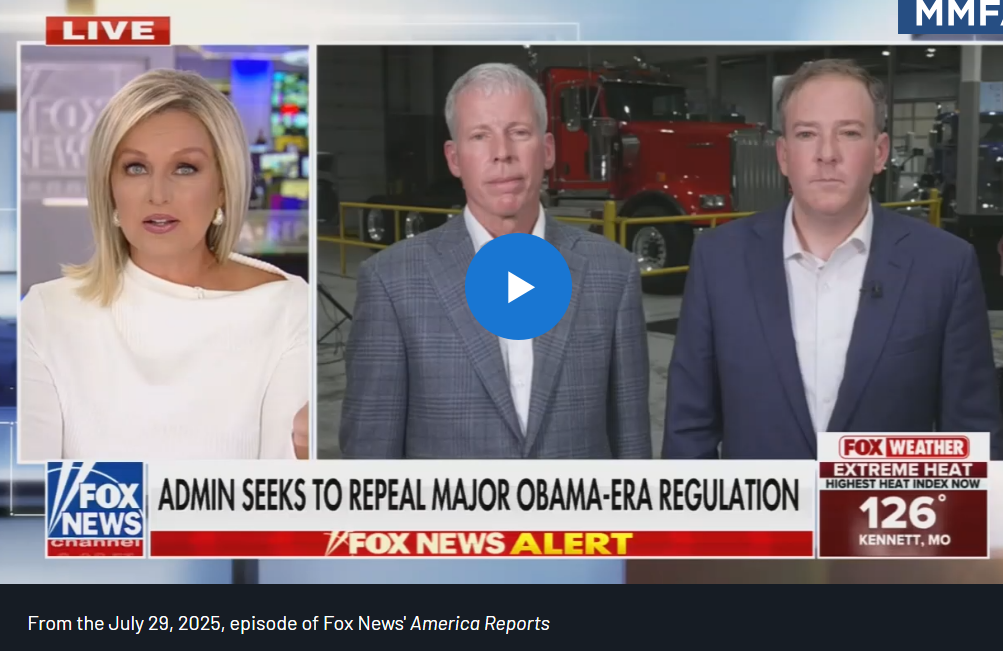
MMA 7 25
Fox News’ America Reports hosted Environmental Protection Agency Administrator Lee Zeldin and Energy Secretary Chris Wright to discuss the Trump administration's proposal to repeal the EPA’s 2009 endangerment finding, which affirmed that greenhouse gases endanger public health and welfare and which has served as the legal foundation for regulating emissions under the Clean Air Act.
Zeldin and Wright used the appearance to frame the repeal as a return to scientific integrity and regulatory restraint, ignoring the harms that this repeal would have on vulnerable communities. Fox anchor Sandra Smith did not challenge the claims and made no mention of the public health implications or regulatory consequences of revoking the finding. The exchange typified Fox’s pattern of amplifying Trump administration narratives about climate and energy while downplaying their real-world impacts.
Video
Citation
From the July 29, 2025, episode of Fox News' America Reports
The segment typified Fox’s role in obscuring the consequences of climate deregulation
During their appearance, Zeldin and Wright were not pressed on the public health, environmental, or legal implications of the proposal to reverse the endangerment finding. Instead, the host framed the discussion around economic themes and legal processes, asking whether repeal would make it easier to “undo a lot more of the Biden-Obama era climate rules.” Viewers heard nothing about the policy’s real-world impacts, but they did hear climate advocates characterized as ideological or extreme. Zeldin referred to them as “climate zealots,” while Wright framed the repeal as a return to “rationalism” — signaling to Fox’s audience that those who defend public protections are unserious.
This approach mirrors Fox’s longstanding pattern of covering regulatory actions through the lens of efficiency, growth, and personal freedom, while sidelining the communities most affected by the Trump administration's harmful actions. The result is a consistent minimization of climate risk and a distorted narrative in which climate and environmental outcomes are treated primarily as a political liability rather than a public necessity.
By allowing unchallenged repetition of misleading claims, and by omitting the central consequences of the policy under discussion, Fox News once again advanced a message strategy that serves to normalize and obscure the dismantling of basic climate and environmental protections.
Zeldin and Wright advanced a series of unsupported or misleading claims
During their appearance on the July 29 episode of Fox News' America Reports, Zeldin and Wright made a series of unsupported or misleading claims about the endangerment finding and what its repeal would mean for Americans.
Zeldin, for example, asserted that repealing the endangerment finding would yield “$1 trillion in savings”—a figure with no grounding in published EPA analyses or historical regulatory assessments. In contrast, EPA data has consistently shown that rules issued under the endangerment finding and the broader Clean Air Act generate substantial net benefits.
The agency’s Second Prospective Study of the Clean Air Act found that “the central benefits estimate exceeds costs by a factor of more than 30 to one," with most benefits stemming from reduced mortality linked to particulate pollution. By 2020, Clean Air Act programs were projected to prevent over 230,000 premature deaths, as well as millions of asthma attacks, heart attacks, and lost workdays annually.
More recently, the EPA’s Regulatory Impact Analysis for vehicle greenhouse gas standards projected net societal benefits of $272.7 billion between 2022 and 2050, with annualized gains of more than $14 billion, driven by fuel savings, reduced emissions, and avoidance of climate damages. These figures underscore that, far from being a financial burden, regulations grounded in the endangerment finding generate substantial and enduring public and economic value.
Similarly, Wright’s claim that the repeal reflects a return to scientific rigor collapses under scrutiny, relying on a report authored by a small group of contrarian scientists, including Steven Koonin and John Christy, who reject the well-established conclusion that greenhouse gas emissions from human activity are driving global warming and endangering public health. Their views stand in opposition to the broader scientific community, which includes the consensus positions of federal agencies such as the National Aeronautics and Space Administration and the National Oceanic and Atmospheric Administration, as well as the Fifth National Climate Assessment, which was produced by the U.S. Global Change Research Program.
Beyond economic distortions and scientific misrepresentation, Zeldin and Wright also ignored the far-reaching legal consequences of repeal — including for the fossil fuel industry itself.
As Grist reported, rescinding the endangerment finding would not only eliminate the federal government’s core authority to regulate greenhouse gases, it could also expose fossil fuel companies to a wave of climate liability lawsuits previously blocked by federal preemption. Some industry groups have reportedly urged the administration not to proceed, warning that repeal could unravel their legal defenses and leave them vulnerable to a patchwork of state regulations and courtroom challenges.
Fox viewers heard nothing about how repeal would harm the very communities most at risk
Zeldin and Wright also failed to mention what rescinding the endangerment finding would mean for public health, environmental protection, or the EPA’s ability to respond to pollution that threatens the air we breathe, the water we rely on, and the land we depend on to live and work. Viewers were not told that the standards targeted for repeal are central to reducing industrial emissions that worsen heat, flooding, and wildfire risk — or that dismantling these protections would increase illness, displacement, and hardship for older adults, children, low-income households, and rural communities, including many in Fox’s own audience.
---
---
OMFG
AN 7 25
The U.S. Environmental Protection Agency's decision Friday to eliminate its scientific research arm drew horrified responses from public health experts and climate advocates, who warned that the Trump administration is targeting the foundation of the department's work to shield Americans from hazardous chemicals, toxic pollution, and drinking water contaminants.
"This is grim news," said Adam Gaffney, an ICU doctor at the Cambridge Health Alliance. "For decades, the EPA's Office of Research and Development has produced the science that underlies the regulations and technologies that protect us from innumerable hazards."
"You can't put a number on the lives that it has saved. Now Trump and Zeldin are killing it," Gaffney added, referring to the president's handpicked EPA administrator.
Since taking charge at the EPA, Lee Zeldin has moved aggressively to implement President Donald Trump's executive orders aimed at gutting the agency's staff and freeing oil and gas corporations from regulatory restraints.
The agency will soon have 12,448 employees, after starting the year with more than 16,000. Staffers at the targeted research office—which had more than 800 employees as of earlier this week—reportedly learned of what one public health expert called "the ultimate Friday night purge" through the EPA's public press release.
In the statement, Zeldin said the elimination of the Office of Research and Development would help "ensure the agency is better equipped than ever to deliver on our core mission of protecting human health and the environment."
But scientists said the closure of the research office would have the opposite impact, leaving the agency's ability to protect the environment and public health badly compromised.
Gretchen Goldman, president of the Union of Concerned Scientists, said that "it is absolutely devastating that Trump officials would shut down this office in its entirety."
"Science, data, and research underpin all of EPA's work, from protections from harmful chemicals to air quality standards to safe drinking water. It's hard to see how EPA can fulfill its mission without its scientific research arm," said Goldman. "The nation enjoys a cleaner environment thanks to the decades of high-quality research coming out of this office. Our nation cannot let this stand. Members of Congress must act."
In his public messaging, Zeldin has deemphasized the EPA's fundamental responsibility to protect the environment, instead casting the agency as a promoter of "energy dominance"—the slogan Trump administration officials have used to describe the president's commitment to boosting fossil fuel drilling.
Earlier this year, Zeldin boasted about launching "the biggest deregulatory action in U.S. history," targeting power plant rules, Mercury and Air Toxics Standards, and other regulations.
"Out in the open, Zeldin's EPA has been dismantling protections against precisely the sorts of dangers that right-wingers warn are coming from alleged deep-state conspiracies: toxic, cancer-causing chemicals that corporations have lobbied to freely inject into our air, water, food, and bodies," The New Republic's Kate Aronoff wrote in a recent column.
"Among the broader suite of regulations Zeldin's EPA has promised to roll back," Aronoff wrote, "is one that would require coal-fired power plant operators to upgrade wastewater treatment facilities, limiting their ability to freely discharge toxins like mercury, arsenic, selenium, lead, and bromide and to threaten local drinking water supplies."
NOW READ:'Like an open fire hose': Trump ripped as cracks show in MAGA media
---
---
AN 725
NO LNX
Here's the real reason Republicans hate the middle class
U.S. Senator Lindsey Graham (R-SC) looks on, on the day he meets with German Chancellor Friedrich Merz along with other Senators, on Capitol Hill, in Washington, D.C., U.S., June 5, 2025. REUTERS/Nathan Howard
Thom Hartmann July 02, 2025
A Pew poll published last week finds that 59 percent of Americans say the GOP’s “Big Beautiful Bill” that cuts taxes for billionaires and raises them for working-class people — and was passed by the Senate on Tuesday — “would hurt lower-income people and 51 percent think it would hurt middle-income people.”
And they’re right. According to the nonpartisan Congressional Budget Office, the bill will measurably reduce the income and spending power of low- and middle-income people while giving a ~$4 trillion gift to the morbidly rich.
Americans have figured this out: according to a Fox “News” poll published last week and reported by Newsweek:
“Only 38 percent favored the bill, while 59 percent opposed it, a 21-point gap against the bill. About half of all voters believed the legislation would be detrimental to their families, and just a quarter thought it would deliver any benefit.”
So, why would Republicans want to further reduce the size and wealth of America’s middle class?
Turns out, there are two good reasons that answer that question.
The first and simplest is that ever since five corrupt Republicans on the Supreme Court made it legal for billionaires and big corporations to bribe politicians, the GOP has done the bidding of the morbidly rich to the exclusion of everybody else.
And there’s considerable truth to that argument. The Court opened that door with their Buckley and Bellotti decisions in the late 1970s, laying the foundation for Ronald Reagan’s war against unions and working people and his so-called “Reagan Revolution” on behalf of the wealthy.
As Justice Ketanji Brown Jackson pointed out in the Diamond Alternative Energy v EPA case that was decided on June 20 and made it easier for the fossil fuel industry to challenge environmental regulations:
“This case gives fodder to the unfortunate perception that moneyed interests enjoy an easier road to relief in this Court than ordinary citizens. … Our ruling will no doubt aid future attempts by the fuel industry to attack the Clean Air Act. … I worry that the fuel industry’s gain comes at a reputational cost for this Court, which is already viewed by many as being overly sympathetic to corporate interests. …“For some, this silence will only harden their sense that the Court softens its certiorari standards when evaluating petitions from moneyed interests, looking past the jurisdictional defects or other vehicle problems that would typically doom petitions from other parties. This Court’s simultaneous aversion to hearing cases involving the potential vindication of the rights of less powerful litigants — workers, criminal defendants, and the condemned, among others — will further fortify that impression. …
“The Court’s remarkably lenient approach to standing in this case contrasts starkly with the stern stance it has taken in cases concerning the rights of ordinary citizens. … The Constitution does not distinguish between plaintiffs whose claims are backed by the Chamber of Commerce and those who seek to vindicate their rights to fair housing, desegregated schools, or privacy. But if someone reviewing our case law harbored doubts about that proposition, today’s decision will do little to dissuade them.”
But while it’s true that Republicans have been naked toadies for rich people and big corporations for a century, there’s a larger reason why Trump and the GOP are working so hard to immiserate and impoverish working class Americans.
That reason has to do with something called “modernization theory.”
Back in 1959, one of the inventors of modernization theory, Seymour Martin Lipset, famously wrote:
“The more well-to-do a nation, the greater the chances that it will sustain democracy.”
Lipset argued that industrialization led to unions and higher wages, which in turn funded higher-education opportunities and urbanization, which both grew a larger middle class. As people’s material conditions improved, Lipset noted, their focus shifted from survival issues like food and shelter to more aspirational elements like democratic values, civil and human rights, representation in government, and the rule of law.
In other words, the wealthier the middle class becomes, the more it will demand a vibrant democracy and a government that represents its interests.
On the other hand — and here is the GOP‘s real goal — if you can do away with or diminish the wealth and political power of the middle class, you can more easily loot the government and act exclusively in the interest of the morbidly rich.
As Barrington Moore noted in his book Social Origins of Dictatorship and Democracy: “No bourgeois [middle class], no democracy.”
In 2003, researchers Carles Boix and Susan Stokes found strong evidence that wealthier countries are more likely to be democracies, and once established, democracies are far more stable in richer nations. Similarly, in their bookEconomic Origins of Dictatorship and Democracy", Daron Acemoglu and James Robinson prove that when economic growth empowers new classes (especially the middle class), those groups will demand political reforms.
Using examples including South Korea, Taiwan, Eastern Europe, and Tunisia, multiple cross-national studies using World Bank income data and Freedom House democracy scores show a strong correlation between per capita income and democratic governance; as people become wealthier they more vigorously demand a small-d democratic political system.
This happens because middle class people have economic security, giving them the time and energy to demand their rights; want property protections, honest courts, education, and fair governance; and typically have relied on meritocratic systems (education, hard work) to achieve their status instead of using corruption or inherited wealth and privilege.
By 1981, the American middle class was at its peak because of a 74 percent top personal income tax bracket, a 50 percent top corporate income tax rate, a strong and healthy social safety net, cheap healthcare (because hospitals and insurance companies were required to be nonprofits in most states), and free or near-free college.
Democracy was also arguably at its peak; for the previous 40+ years Congress had passed, one after the other, bills that primarily benefitted average working people and the middle class. Voting was easy, women and minorities were empowered, and we led the world in education and innovation.
This is not, however, what many wealthy oligarchs want, particularly those who become politically active.
Instead of democracy, they want government to protect their wealth and privilege to the exclusion of “the rabble.”
Instead of paying the cost of a government large enough to guarantee the emergence and sustenance of a middle class, they want tax cuts and subsidies for their businesses. Instead of rights for average people, they want police and courts that will, as Justice Jackson noted, focus instead on their unique wants and needs.
When Reagan came into office in 1981 about a third of American workers had good union jobs, meaning that about two-thirds of all American families lived good middle-class lives on a single paycheck (because the union jobs established the wage and benefits floor for non-union employers who had to compete with them for workers).
That was the year the GOP declared war on working-class people because, in the estimation of the Nixon- and Reagan-era Republicans, our democracy had gotten out of hand.
Workers were demanding good pay and benefits; women, racial, and gender minorities were demanding equal rights; and students demanded an end to the war in Vietnam.
Conservative thinkers like Russell Kirk and William F. Buckley saw these demands as symptoms of a “cultural decay” caused by working class people having more wealth and leisure time than they were “intellectually and culturally capable of handling.”
So, in 1981 the GOP set about dismantling the American middle class with their so-called Reagan Revolution.
The result is that today only about 45 percent of Americans are in the middle class, and it takes two jobs to establish that same lifestyle; since Reagan took office fully $50 trillion has been transferred from the homes, savings, and retirement accounts of working class people into the money bins of the top 1 percent.
As the social scientists cited above found, when the middle class shrinks below a certain threshold its demands for democracy are replaced by populist demands for, essentially, revenge.
“Who did this to us?” is the battle cry, and the GOP’s ready answer — first emerging in the 1980s with Rush Limbaugh, going on steroids in the 1990s with Fox “News,” and pounded on by Donald Trump ever since he first came down that escalator in 2015 — is, “It’s the immigrants, Black people, uppity women, college students and professors, and the union bosses.”
MAGA — particularly its white racist base — bought it hook, line, and sinker, leading us to a massive tax-cut bill, court decisions that screw working people and the environment, and an explosion in hate crimes and politically inspired violence.
The bottom line is that the GOP opposes democracy because it interferes with and complicates their very well paid efforts to suck up to — and legislate on behalf of — the morbidly rich. And they disdain the middle class (but love the uneducated poor) because the larger the middle class the louder come the demands for fairness in the distribution of the common wealth and democracy.
So, the next time somebody asks you why Republicans hate the middle class, let them know that, “It’s the democracy, stupid!”
NOW READ: The 'cracks' are showing: Behind the battle for who leads the GOP when Trump is gone
---
ONLY NOT JRL FAIL
TV news barely covered Trump's Big Oil “quid pro quo” last year. Now that it's come to fruition, networks should give the scandal the attention it deserves.
Big Oil lands $1 billion tax break in Trump’s “One Big Beautiful Bill” as EPA staff are to “pause” oil and gas enforcement
Special ProgramsClimate & Energy
Written by Allison Fisher
:{:{Published 06/20/25}:
Last May, The Washington Post published an exclusive story on a dinner at Mar-a-Lago in which Donald Trump promised to reverse then-President Joe Biden's actions on climate change as he asked Big Oil executives to fundraise $1 billion for his presidential campaign, assuring that they would be getting a “deal” due to the “taxation and regulation they would avoid thanks to him.” Reportedly, oil and gas executives did make “significant contributions to the Trump campaign.”
Over a four-day period, MSNBC was the only major TV network to cover the story, which All In host Chris Hayes described as “a political quid pro quo.”
Now, two new stories emerged this week that give more context to the promised “deal” the oil and gas industry is getting under Trump’s second term. National TV networks should inform their audience about how Big Oil is benefitting under Trump.
Bloomberg reported on June 17 that the Senate version of Trump’s “One Big Beautiful Bill” now includes a tax break for the oil and gas industry “estimated to be worth more than $1 billion.”
The provision would allow energy companies subject to a 15% corporate alternative minimum tax to deduct certain drilling costs when calculating their taxable income. Companies including ConocoPhillips, Ovintiv Inc. and Civitas Resources, Inc. lobbied in favor of it.
The change was included in the legislation released Monday by Republicans on the Senate tax writing committee, which would slash tax credits for wind, solar, electric vehicles and hydrogen.
…
Other supporters of the measure, which wasn’t included in the House version of the bill, include the Domestic Energy Producers Alliance, founded by oil billionaire and Trump donor Harold Hamm.
The same legislation would repeal tax credits for the clean power industry, which would threaten more than 800,000 jobs and raise energy prices for consumers.
In fact, clean energy technologies constituted93% of new power generation capacity added to the grid last year alone, and the climate provisions in the Inflation Reduction Actwhich Trump wants repealed, “have spurred the highest levels of factory construction in American history, with more than 400,000 new jobs announced across the country.”
Meanwhile, CNN reported on June 16 that “the Environmental Protection Agency has told staff overseeing the country’s industrialized Midwest — a region plagued by a legacy of pollution — to stop enforcing violations against fossil fuel companies.”
Four sources with knowledge of the situation at the EPA’s Region 5 office, which oversees six Midwestern states, told CNN that enforcement officials were informed that “there is a pause on oil and gas enforcement” at staff meetings.
“That is how our regional management is interpreting signals from the president,” the EPA enforcement staffer said.
Officers stopped being able to issue notices of violation or send information requests to fossil fuel companies suspected of polluting, the sources told CNN. A violation notice is a prerequisite for taking a company to court for alleged violations of environmental laws.
These instructions are on top of other administration efforts to radically reduce safeguards that protect Americans from fossil fuel-related pollution and open up more land for oil and gas drilling.
Earlier this month, for example, the EPA announced plans to eliminate Biden-era regulations limiting the amount of carbon emissions and other pollution released into the atmosphere by fossil fuel-fired power plants. CBS reported the rule the EPA seeks to revoke “is projected to reduce 1.38 billion metric tons of carbon dioxide from entering the atmosphere by 2047, as well as eliminate tens of thousands of tons of other harmful air pollutants that are dangerous to public health” — an amount of pollution “equivalent to driving more than 320 million gas-powered cars for a year, according to an EPA estimate.”
The new CNN report also notes:
An early snapshot of enforcement data from Trump’s start of his second term shows the overall number of EPA enforcement cases initiated or closed across sectors has dropped by 32% compared with the first three months of the Biden administration, according to publicly available EPA data analyzed for CNN by environmental watchdog Environmental Integrity Project. The same data shows nearly 60% fewer cases have been initiated or closed compared with the first three months of Trump’s first term.
Taken together, these reductions in taxes, regulations, and enforcement for the fossil fuel industry are essentially what Trump promised to deliver for Big Oil in exchange for backing his 2024 campaign.
At the time, The Atlantic’s David A. Graham described the proposition as “undeniably scandalous.” Now that these gifts to Big Oil are being delivered, TV networks should inform their audience about the dirty “deal” between Trump and Big Oil playing out at the expense of the booming clean energy industry, our health, and our climate.
//
05/14/24 5:01 PM EDT
05/17/24 2:58 PM EDT
06/23/25
---
---
BANKING
AN 6 25
Sen. Bernie Sanders (I-Vermont), Sen. Elizabeth Warren (D-Massachusetts), Rep. Alexandria Ocasio-Cortez (D-New York), Rep. Pramila Jayapal (D-Washington) and others on the left have often said that one of the painful lessons of the Great Recession is that the United States needs more regulation of banks, not less. But according to Politico's Michael Stratford, the second Trump Administration is "gearing up to deliver a major win to Wall Street banks" by "easing rules imposed on megabanks in response to the 2008 financial crisis."
:{:{In an article published by Politico on May 31, Stratford reports, "Trump-appointed regulators are nearing completion of a proposal that would relax rules on how much of a capital cushion the nation's largest banks must have to absorb potential losses and remain solvent during periods of economic stress.}:
The plan — being developed jointly by the Federal Reserve, the Office of the Comptroller of the Currency, and the Federal Deposit Insurance Corporation — could be released in the coming months, according to two people familiar with the discussions who were granted anonymity to discuss plans that aren't yet public. The forthcoming proposal would represent the latest policy win for the banking industry, which has been closely scrutinized and regulated since the 2008 global financial meltdown."}:
Stratford adds, "The move would be the first major banking regulation that Trump-appointed regulators take up as they advance policies they say will lead to greater economic growth."
READ MORE: How Trump is 'undercutting' America’s 'status' with 'all kinds of nuttery'
The Politico reporter notes that under former President Joe Biden, "regulators" proposed "that large banks increase the size of their capital cushions" — a plan that was "detested by" the banking industry. And the Trump Administration's plans, according to Stratford, would be a major departure from Biden-era banking policies.
Politico's reporting is receiving a lot of discussion on X, formerly Twitter.
Financial writer Michael Zaccardi tweeted, "Deregulation on the way? Trump administration is said to move to ease capital rules for big banks."
X user and MAGA critic Stephen Herling commented, "What’s the worst that can happen? Asking for the people back in 2007."
READ MORE:Signs the tide is turning on Trump
Another X user, Jarmo Laitinen, posted, "We all remember what happened last time they cut regulations."
X user Richard Brown wrote, "Don't protect your constituents. R.I.P. them off. Hey MAGA did you vote for this?"
Jayapal has been outspoken about the second Trump Administration and banking regulations.
The progressive congresswoman tweeted, "After the Great Recession — which cost millions of jobs and destroyed countless lives — our government put regulations in place to make sure it never happened again. Now, Trump is getting rid of those rules. What could possibly go wrong?"
READ MORE:'Existential crisis': Trump has business owners in key swing state feeling 'out of control'
*Read Michael Stratford's full article for Politico at this link.
---
FOOD SAFETY
AN 5 25
The administration of President Donald Trump told the public nothing of a hazardous E. coli outbreak that killed one person and sickened nearly 100 more — including one Indiana boy who became severely ill.
The bacteria, commonly found in feces, damaged 9-year-old Colton George’s kidneys and put him on dialysis. It was also “a genetic matchto the strain that killed one person and sickened nearly 90 people in 15 states last fall,” reports the Washington Post. “Federal health agencies investigated the cases and linked them to a farm that grew romaine lettuce.”
However, the paper reports most people have never heard of this outbreak, which experts say is runs counter to federal health practices.
READ MORE:A veteran tells Trump 'to go straight to hell'
“There were no public communications related to this outbreak,” says a heavily redacted February internal Food and Drug Administration memo that witholds the name of farm that served as the source of the outbreak. The federal government refused to name the business “because there was no product remaining in commerce” at the time of the report.
“Victims have a right to know who made them sick. This is my kid. He’s my life," said George's father, Chris George.
The Washington Post reports Trump officials have still never issued public communications after the investigation or identified the grower. The public might not know of the outbreak today had George’s parents not filed a lawsuit against the lettuce grower in April in federal court for the Southern District of Indiana.
In addition to failing to publicize a major outbreak and scaling back safety alert specialists and rules, the Trump administration’s has also withdrawn a proposed Biden-era regulation to reduce the presence of salmonella in raw poultry. That regulation, estimates the Food Safety and Inspection Service, could have prevented up to almost $30 million worth of illness in roughly 3,000 victims from chicken and turkey products
READ MORE: Struggles to 'even finish a sentence': Behind the obvious signs of Trump’s growing dementia
In addition, the Washington Post reports the administration is “disbanding a Justice Department unit that pursues civil and criminal actions against companies that sell contaminated food and is reassigning its attorneys.”
Staffing cuts at the FDA and CDC will mean further delays in publicizing deadly outbreaks, said former FDA worker Susan Mayne, an adjunct professor at Yale School of Public Health.
“Consumers are being notified with delays about important food safety notifications,” she said, referring to a recent outbreak in cucumbers. “People can die if there are pathogens like listeria, which can have a 30 percent fatality rate.”
Read the full Washington Post report here.
---
---}:
omfg
AN 525
On April 9, 2025, U.S. President Donald Trump signed Executive Order 14270, blandly titled “Zero-Based Regulatory Budgeting to Unleash American Energy.” Behind that bureaucratic name is a sweeping directive: Dismantle a century of environmental protections.
Every regulation related to the environment, natural resources, or energy, whether it safeguards air, water, species, or public lands, must be rewritten to serve polluters or vanish by default.
Some will claim this is just about efficiency. But no standard review process sets a mass expiration date for protections, regardless of science, impact, or legal mandate. This is not streamlining. It is a countdown to erasure.
While courts deliberate, rules will expire. Enforcement will be suspended. Polluters will act as if the rules are already gone.
The deadline is September 30, 2026. Any rule not revised and reauthorized by then will expire automatically.
What will remain will not be protection. It will not be science. It will not be law. It will be a hollow shell, stripped of enforcement and public purpose.
This is not reform. It is demolition. It is sabotage by executive order.
They Said It Couldn’t Happen
To everyone who said, “They’d never go that far,” they just did. And the collapse has already begun.
With Executive Order 14270, Donald Trump issued not a policy revision but a regulatory kill order.
The EO mandates that all regulations under energy-related authority—especially those administered by agencies like the Environmental Protection Agency (EPA) and the Departments of Interior and Energy—must be reviewed and either revised to align with the administration’s priorities or be automatically terminated by September 30, 2026. While for some agencies the EO does not name specific laws, many foundational protections fall within these agencies’ regulatory domains.
Some may argue this is simply a regulatory reset or a call for modernization. But this is not a review guided by science, need, or public interest. It is a mandate that requires rules to serve industry or disappear by default. There is no neutral path. There is no room for delay. If an agency fails to revise and reauthorize a rule in time, it expires. No matter how vital it is.
Legal experts and environmental attorneys have described similar regulatory strategies by the previous Trump administration as calculated attempts to dismantle environmental protections from within.
Even the rules that survive review will be rewritten, stripped of science and purpose, then repackaged as hollow compliance.
This is not a bureaucratic obstacle. It is a regulatory kill switch.
What that means in practice:
- Endangered Species Act—gone.
- Migratory Bird Treaty Act—gone.
- Marine Mammal Protection Act—gone.
- Anadromous Fish Conservation Act—under threat.
- Bald and Golden Eagle Protection Act—gone.
These aren’t just under review. They are all under attack.
Breadth and Scope of the Loss
The laws everyone recognizes, such as the Clean Air Act, the Clean Water Act, and the Endangered Species Act, are just the beginning.
Beneath them lie hundreds of foundational rules that safeguard public health, climate resilience, environmental justice, and disaster readiness. Under Executive Order 14270, they are all at risk.
Supporters may claim the order only targets outdated or burdensome regulations. But the text applies broadly and indiscriminately. It sets no exceptions for essential rules, no protections for high-impact safeguards, and no criteria for public benefit. Unless these rules are rewritten to meet the new standards and reauthorized by September 30, 2026, they will expire. Along with them goes the regulatory backbone of modern environmental protection.
This is not theoretical. These laws will fall unless actively rescued.
Key protections on the chopping block:
Air, Water, and Public Health
• Clean Air Act
• Clean Water Act
• Safe Drinking Water Act
• Toxic Substances Control Act
• Superfund cleanup authority
• Mercury and Air Toxics Standards
Land and Resource Protection
• Resource Conservation and Recovery Act
• Surface Mining Control and Reclamation Act
• Wilderness Act
• Antiquities Act
• Wild and Scenic Rivers Act
• Federal Land Policy and Management Act
Energy and Climate
• Energy Policy Act of 2005
• Greenhouse gas endangerment finding
• Energy Star Program
• Oil Pollution Act of 1990
Each of these took years, sometimes decades, of organizing, science, and compromise to create. They were not handed down by elites. They were won by people who refused to accept poisoned air, burning rivers, and dead coastlines.
Now they are being erased in a single executive order. Not one by one. All at once. This is not a rollback. It is erasure.
The Hidden Collapse
Executive Order 14270 does not just target major environmental laws. It dismantles the infrastructure that makes those laws real.
Supporters may argue that the laws remain untouched. But behind every statute, like the Clean Water Act or Endangered Species Act, are thousands of rules, monitoring systems, enforcement protocols, and technical standards. Without them, laws are just words on paper.
Now, all of that must be rewritten to serve polluters. If not, it disappears permanently.
Thousands of environmental regulations administered by agencies such as the EPA and the Department of the Interior could be subject to review and potential termination under Executive Order 14270.
Here is what that collapse looks like:
Public Health Protections
• Air monitoring rules vanish. No alerts for lead, benzene, or ozone.
• Radiation limits are lifted. Safety near nuclear sites erodes.
• Vehicle emissions testing ends. Smog returns to U.S. cities.
Water, Waste, and Pollution
• Stormwater runoff restrictions disappear. Waste floods rivers.
• Hazardous waste transport rules vanish. Disposal turns chaotic.
• Drilling oversight ends. Protected lands are opened to industry.
Climate and Disaster Response
• Energy efficiency rules are revoked. Electric bills rise.
• Fire mitigation programs are defunded. Wildfires grow deadlier.
• Fisheries protections vanish. Coastal economies are destabilized.
This is not just about forests or fish. It is about tap water, asthma medication, grocery prices, and cancer risks.
Betsy Southerland, former EPA director of science and technology for water, has warned that deregulatory approaches of this kind could lead to systemic breakdowns in public health protections.
This order does not trim fat. It guts the public architecture that keeps America safe, functional, and future-ready.
The Economic and Societal Cost
The damage from Executive Order 14270 will not stop with wildlife or wilderness. It will hammer the economy; threaten public health; and unravel industries that depend on clean air, safe water, and protected landscapes.
Some defenders will argue that environmental regulations stifle business, raise costs, or limit innovation. But environmental law in America was not born from ideology. It was forged in crisis, created to prevent economic collapse, mass illness, and ecological ruin. Many of these statutes were passed with overwhelming bipartisan support because Americans knew the cost of doing nothing was greater.
The Clean Air Act passed under former President Richard Nixon. The 1972 Clean Water Act was called “the most comprehensive and expensive environmental legislation in the nation’s history.” These laws did not just protect nature. They helped build the modern economy.
Many of the protections now targeted form the backbone of multibillion-dollar industries:
Wildlife and National Identity
• The Endangered Species Act saved the bald eagle, peregrine falcon, and California condor.
• The Migratory Bird Treaty Act protects ecosystems and supports rural economies across the country.
• The Marine Mammal Protection Act helped build a coastal tourism sector that generates billions.
• Fish conservation laws sustain sport fishing, a major driver in many regional economies.
Outdoor Economies
• Outdoor recreation supports $887 billion in consumer spending and 7.6 million jobs.
• Hiking, hunting, wildlife viewing, and camping all depend on healthy ecosystems.
• Without habitat protections, what is Yellowstone without wolves, or the coast without whales?
The law may speak of species and land. But the stakes are money, jobs, health, and identity.
This executive order guts the systems that protect them all.
The Human Toll and Environmental Injustice
The collapse will not hit everyone equally. It never does.
When environmental protections vanish, the first to suffer are the poor, the marginalized, and the politically powerless.
Some may argue that environmental burdens are shared evenly across society. But the data and history say otherwise. Environmental harm follows lines of poverty, race, and neglect. It hits those with the fewest resources, the least political power, and the highest exposure to toxins.
Without the Clean Water Act and Safe Drinking Water Act, vulnerable communities will lose safeguards against dumping, runoff, and lead contamination. New water crises will erupt in towns already on the edge.
Without the Clean Air Act, toxic smog will return to cities, especially in low-income and minority neighborhoods shaped by redlining and industrial zoning.
Without the National Environmental Policy Act, communities will have no voice in what gets built near their homes: pipelines, refineries, highways, landfills.
Without Superfund enforcement, the most toxic sites in America will be left to rot. Poison will seep into soil, water, and lives.
This is not theory. It is already happening:
- In Louisiana’s Cancer Alley, petrochemical plants poison Black neighborhoods. Cancer rates there are 50 times the national average.
• In West Virginia, abandoned coal towns face toxic water and respiratory illness.
• In Alaska and the Southwest, Indigenous communities still live beside Cold War-era uranium waste.
• Along the Pacific coast, salmon vanish and fishing economies unravel.
These are not isolated stories. They are previews.
The burden will fall hardest on those without lawyers, lobbyists, or local health departments—families already excluded from public hearings, ignored by regulators, and left behind by politics.
Executive Order 14270 turns temporary harm into permanent abandonment.
This is not just inequality. It is environmental apartheid..
Regulatory Collapse Is Guaranteed
This is not hypothetical. It is structural failure, built into the design.
Executive Order 14270 sets an impossible mandate: Every environmental regulation must be reviewed, revised, and reauthorized by September 30, 2026. If not, it will expire automatically.
Some will claim that with enough willpower and coordination, agencies can meet the deadline. But that is a myth. There are not enough staff. There is not enough time. And there is no intention to make it work. The order was built to break the system, not to improve it.
Environmental watchdogs and legal analysts suggest that only a small percentage of rules could realistically be reviewed and reissued before the deadline.
This is not deregulation. It is planned demolition.
Here is what that guarantees:
- Legal protections for ecosystems will collapse.
• Clean air and water rules will disappear.
• Ecotourism and outdoor recreation will suffer.
• Climate policy will be paralyzed.
• Inequality will worsen as states scramble to fill the void.
• Courts will be overwhelmed by lawsuits and confusion.
• Irreversible environmental damage will be locked in for generations.
Even if a future administration tries to reverse the damage, it could take years or even decades to rebuild what was destroyed.
Some things will not survive that long: species, coastlines, forests, ecosystems.
This is not a policy failure. It is policy used as a weapon.
The extinction of environmental protections is not a side effect. It is the goal.
Can This EO Actually Be Enforced?
Technically, yes. Executive Order 14270 can be enforced. But legally and practically, it is a minefield for all concerned.
Agencies can initiate rule reviews and assign expiration dates, especially when leadership supports the administration’s anti-regulatory agenda. But that does not make it lawful.
Under the Administrative Procedure Act, agencies must follow strict procedures before repealing or replacing rules. They must issue public notices, allow comment periods, hold hearings, and provide justifications. They cannot simply say, “The president told us to.”
Some defenders may argue the president has broad authority to manage agencies. But the law is clear: Regulatory repeal must follow legal process. Many of the protections targeted by this order were enacted by Congress. Agencies do not have the authority to let them quietly expire or gut them without breaking the law.
That is why lawsuits are already being filed. Legal challenges will come from environmental groups, state attorneys general, and public interest organizations.
But here is the catch: the damage will not wait.
While courts deliberate, rules will expire. Enforcement will be suspended. Polluters will act as if the rules are already gone.
Even if a judge rules against the administration, the harm will be done:
- Toxic waste released.
• Forests cleared.
• Communities exposed.
And if the White House refuses to comply? There is no enforcement arm of the Administrative Procedure Act. No agency exists to compel federal departments to enforce their own rules.
The only option is to sue, repeatedly, rule by rule, across jurisdictions.
As one Earthjustice attorney put it, “The law doesn’t enforce itself. And this administration knows it.”
Litigation takes money, time, expertise, and legal standing. These are resources many frontline communities do not have.
Environmental lawyers and watchdogs saw this coming. They are already planning for fights across dozens of fronts: air quality, pipelines, species protection, data suppression, and executive action.
But how many lawsuits will it take? 10? 50? 100?
Each one will be slow. Expensive. Uncertain.
This is not incompetence. It is sabotage, carried out with full intent.
And What About the Planet
This executive order is not just a domestic disaster.It is a climate change nuclear bomb.
Executive Order 14270 erases the foundation of nearly every federal climate policy:
- It nullifies the greenhouse gas endangerment finding, the legal trigger for regulating carbon emissions.
• It dismantles efficiency standards for appliances, buildings, and vehicles.
• It undermines the Energy Star Program and other clean energy incentives.
• It guts methane rules, fuel economy standards, and oil spill safeguards.
Some will argue that climate progress can continue without federal policy, through state action or private innovation. But without national coordination, incentives, and legal authority, that progress will slow, fragmented, and ultimately fall short. Federal policy drives investment, enforces accountability, and sets the global tone.
With these tools gone, the United States cannot meet its climate goals. Not nationally. Not globally.
We will miss our Paris agreement targets. We will exceed the 1.5°C warming threshold. And we will pull other nations backward with us.
The damage is not just about emissions. It is about lost leadership. Lost credibility. And a green light to polluters everywhere.
This is not a pause. It is a reversal.
Climate collapse is no longer a distant danger. It is a scheduled event, signed into law by the president.
The Heart of It
This executive order does not repeal environmental laws. It kills the systems that make those laws work.
The Clean Air Act will still exist. But if EPA regulations expire, there will be no enforcement.
The Endangered Species Act will remain on paper. But without specific protections and triggers, no species will be protected.
This is the method: Dismantle implementation. Remove enforcement. Let the law collapse from the inside out.
It is a bureaucratic kill switch, designed to erase a century of environmental progress without ever repealing a statute.
Legal on paper. Lethal in practice.
Once the rules disappear, the laws become theater:
- No enforcement.
• No funding.
• No consequences.
They will still be on the books, but they will no longer matter.
Empty laws. Empty air. Empty rivers. Empty promises.
How We Fight, and Why We Must
There is no silver-bullet lawsuit. No single agency. No shortcut.
This executive order will not be stopped by one clever court challenge. It will take dozens, perhaps hundreds, of battles—rule by rule, agency by agency, ecosystem by ecosystem.
Some will ask, why not file one big lawsuit to stop it all? Because Executive Order 14270 does not repeal a single law. It sets a countdown clock for thousands of regulations to vanish unless reauthorized. That makes it nearly lawsuit-proof by design. Each rule must be challenged individually, and only after harm has occurred. Courts cannot force agencies to act unless Congress explicitly mandates it. And even then, litigation takes time. By the time a ruling arrives, the damage may already be done. The law does not enforce itself. And this executive order exploits that fact.
There is no cavalry. Only us.
So we fight, everywhere:
- File lawsuits, fast and often: Legal action is the first and last line of defense. Every expired rule must be challenged. Every unlawful revision must be contested. Rapid-response legal teams must be ready to sue the EPA, Department of the Interior, and Department of Energy across multiple jurisdictions. Delay means destruction.
- Support legal and watchdog organizations: Groups like Earthjustice, Natural Resources Defense Council, and the Center for Biological Diversity are already fighting. But they are underfunded and overwhelmed. They need staff, experts, and resources. Every donation matters. Every volunteer strengthens the line.
- Pressure elected officials at every level: Demand public hearings. Demand oversight. Call your governor. Write your city council. Make it politically toxic to support this executive order.
- Act locally: States and cities can pass their own clean air and water laws. They can fund conservation, restrict drilling, and sue federal agencies. Join local groups. Attend zoning meetings. Run for water boards and planning commissions. Build resistance into local government.
- Refuse to normalize this: Speak out. Disrupt. Document. This is not politics as usual. Say so. Organize protests. Submit op-eds. Flood comment periods. Call out silence. Expose polluters. Make the truth visible.
- Demand media coverage: Executive Order 14270 should be a daily headline. If it is not, make it one. Share stories. Elevate frontline voices. Hold media outlets accountable. If national media fails, local and independent voices must rise.
This is a regulatory blitz.And resistance must be relentless.
The strategy is simple: flood the system, fracture it, and exhaust the opposition.
While we scramble to save species, lands, and laws, they bulldoze everything else.
This is not a warning. It is a dispatch from the front lines.
They are not debating whether to dismantle environmental protections. They are dismantling them, right now.
If you ever said, “They would never go that far,” They just did.
This is not just bad policy. It is a deliberate attempt to cripple the government’s ability to protect the air we breathe, the water we drink, the climate we depend on, and the living world we love.
It is not a mistake. It is the plan.
The question is no longer what they will do. The question is what we will do about it.
---
---
omfg
no lnx
Home | Breathing is now a political act — thanks to the GOP
Thom Hartmann April 24, 2025
Breathing is no longer a basic human right in America: it’s now a political battleground.
Over 156 million Americans are inhaling toxic air today, not because we don’t know how to fix it, but because the Republican Party has decided that clean air is something only Democrats care about.
While children gasp through inhalers and wildfires choke entire cities, Trump and his fossil-fueled allies are dismantling environmental protections with surgical cruelty. This isn’t ignorance — it’s policy. It’s profit. It’s war on your lungs, your family, and your future.
The American Lung Association just released a new report documenting how over 156 million Americans are breathing poisonous air. Trump and the Republicans don’t give a damn; if anything, they’re enthusiastic about it.
Fossil fuel billionaires and the industry that made them rich have been major patrons of Republican politicians ever since Ronald Reagan floated into the White House in 1980 on a tsunami of oil and coal money. Donald Trump is no different.
Claiming that climate science research “promotes exaggerated and implausible climate threats, contributing to a phenomenon known as ‘climate anxiety,’ which has increased significantly among America’s youth,” the Trump regime last week cut millions from a Nobel Prize winning scientist’s program’s collaboration between the National Oceanic and Atmospheric Administration (NOAA) and Princeton University.
Last month they also attacked the Renew America’s Schools program that provides funding for more than 3,400 schools across the country to install heat pumps, insulation, electric school busses, and other efforts to reduce their carbon footprints.
Lost in the news of Trump’s latest stock market pump-and-dump scheme for insiders and his kidnapping legal US citizens for foreign rendition, they also announced last Friday that they were zeroing out funding for the nation’s premiere annual climate change analysis, the U.S. Global Change Research Program, and the 13 agencies that collaborate on the National Climate Assessment. The report is mandated by Congress, but Trump is ignoring the law.
This follows by a few weeks EPA Administrator Lee Zeldin’s announcement that the official position of the US government’s warning of climate change will soon be reversed. As Politico reported on March 12th:
“President Donald Trump’s environmental chief announced Wednesday that he will seek to overturn the federal government’s core scientific finding about the dangers of greenhouse gases — along with 30 other key regulatory actions stretching back years or decades.”
The report added that that Zeldin will also be gutting CO2 limits for coal-fired power plants, tailpipe emissions, methane leaks, and ending a program requiring major industries to report their CO2 emissions. In other words, “To hell with the health of our children and our climate; there’s money to be made and campaign contributions to be solicited!”
Tuesday of last week, Trump signed an executive order declaring war on individual state initiatives to dial back carbon emissions, ordering the Department of Justice to “stop the enforcement” of such state laws. The EO specifically attacked “climate Superfund” programs in Vermont and New York that would have required fossil fuel companies to reimburse those states for damages caused by climate change-fueled storms, as well as going after California’s cap-and-trade carbon credit auctions.
Fossil fuel oligarchs are, no doubt, breaking out the champagne. And the dark money for attack ads against Democrats in 2026 and 2028.
This widespread and wholesale destruction of programs intended to research and fight climate change will directly damage the future of young people in America, but Trump and the GOP frankly don’t give a damn. There are, after all, big bucks to be made and campaign contributions to be collected.
This insanity began in its modern form when five corrupt Republicans on the US Supreme Court ruled in their 1978 Bellotti decision (written by Lewis Powell) that money was the same thing as “free speech,” protected by the First Amendment, and that corporations are “persons,” protected by the Bill of Rights and the 14th Amendment. That floated Reagan into office in 1980 on a tsunami of oligarch money, as I noted in The Hidden History of the Supreme Court and the Betrayal of America.
Five corrupt Republicans on the Court doubled down on that in 2010 with Citizens United, which led to an absolute explosion of billionaire money in politics. As a result, in 2024 just 150 billionaire families spent $2.6 billion to elect candidates, money that went to the GOP on a more than 2:1 basis.
And now, in a manner demonstrative of a fully corrupt banana republic mindset, the Trump administration and Republicans in Congress are giving the fossil fuel industry everything they could want. In addition to the outrages listed above, in just the first three months of this regime, they have further gifted the industry by:
— Exempting Coal Plants from Mercury and Air Toxics Standards (MATS): The Trump administration granted two-year exemptions to 47 coal-fired power plants, allowing them to bypass MATS regulations. This decision increases the risk of mercury pollution, which can cause neurological damage (particularly in children) and respiratory illnesses.
— Declaring a National Energy Emergency: Trump declared a national energy emergency to accelerate fossil fuel development, weakening environmental reviews and potentially increasing pollution.
— Rolling Back Vehicle Emissions Standards: The administration overturned emissions standards for vehicles, leading to increased air pollution and associated health risks.
— Reducing EPA Enforcement: Under Trump, the EPA brought fewer cases against polluters and sought lower penalties, diminishing deterrents against environmental violations. Now Musk and his Doge teenagers are further gutting the EPA itself.
— Weakening Methane Emission Regulations: The administration rolled back rules limiting methane emissions from oil and gas operations, contributing to climate change and air quality issues.
— Providing Direct Channels for Pollution Exemptions: Fossil fuel companies were given a direct email line to request exemptions from air pollution regulations, undermining public health protections.
— Eliminating Climate and Environmental Justice Webpages: The removal of federal climate and environmental justice webpages hindered public access to crucial information for addressing pollution and climate impacts and served to hide or cover up Trump’s naked corruption.
— Reversing the Clean Power Plan: The administration replaced the Clean Power Plan with the Affordable Clean Energy rule, which could lead to thousands of additional premature deaths annually due to increased air pollution.
— Cutting Funding for Environmental Protections: Significant budget cuts to the EPA and other environmental programs reduced the capacity to monitor and enforce pollution controls.
— Reducing Public Land Protections: The administration reduced the size of national monuments and opened protected lands to fossil fuel extraction, threatening ecosystems and biodiversity.
— Rolling Back Clean Water Protections: By narrowing the definition of “protected waters,” the administration allowed more pollutants to enter waterways, affecting drinking water and aquatic life.
— Undermining Scientific Research: Policies were enacted to limit the use of scientific studies in policy-making, particularly those related to environmental and public health research.
— Reversing the Paris Climate Agreement Commitment: The U.S. withdrawal from the Paris Agreement under Trump signaled a retreat from global efforts to combat climate change.
— Promoting Fossil Fuel Exports: The administration lifted restrictions on fossil fuel exports, encouraging increased production and consumption globally, contributing to greenhouse gas emissions.
— Reducing Air Quality Monitoring: Cuts to air pollution monitoring programs made it more difficult to detect and address harmful emissions, posing risks to public health but increasing the profits and impunity of the fossil fuel industry.
Trump and Republican cronies in his administration and Congress are committed to trading millions of cases of asthma, childhood cancers, and environmental damage — not to mention the thousands who are dying every year from climate-change-related violent weather, floods, and fires — in exchange for blood-money cash.
Republicans refuse to do town halls, refuse to answer questions about this, and hide behind a timid media that’s afraid to even ask serious questions about this criminal corruption of the protective role of government.
Which leaves it up to us.
— Get out in the streets as often as possible.
— Call your representatives, particularly if they’re Republicans (only 4 or 5 Republicans in the House and Senate could change the course of history).
— Make your voice heard on social media, letters to the editor, calling into to talk radio, and sharing messages like these with friends and family.
— Contribute, if you can, to politicians who are taking brave stands against the oligarchy.
This is not just politics — it’s a slow-motion slaughter disguised as deregulation.
Republicans won’t answer for it, won’t debate it, and won’t hold town halls to face the people they’re sacrificing. The media tiptoes. The billionaires cheer. And Trump signs away your children’s futures with a grin and a pen.
But here’s the truth they don’t want us to grasp: If we want our children to grow up with lungs that work, we better start working and voting like our lives — and theirs — depend on it.
This isn’t just about air. It’s about whether democracy itself can breathe.
Tag—you’re it.
===
---
an 4 25
At over 400 federal agencies, officials appointed by President Donald Trump are reportedly collaborating with tech billionaire Elon Musk's Department of Government Efficiency (DOGE). Their goal is to initiate a significant new phase in their effort to reduce the size of the federal government through "deregulation on a mass scale."
According to a New York Times reportpublished Tuesday, the president has devised a way to reverse regulations "swiftly and permanently" without going through the lengthy legal process that usually takes place before deregulations.
Following Trump's instructions, agency officials are gathering the regulations they plan to discard. They are working quickly to meet a deadline next week, per the report. Once they finish the job, the White House will create a comprehensive list to direct what the president refers to as the "dismantling of the overbearing and burdensome administrative state."
ALSO READ:DOGE'S turn for scrutiny: Government agency demands incident reports on misuse
The agencies being targeted govern "almost every aspect of American life," the report said.
“Many people don’t realize how high the American quality of life is because of the competent and stable enforcement of regulations, and if that goes away a lot of lives are at risk,” Steve Cicala, co-director of the National Bureau of Economic Research’s Project on the Economic Analysis of Regulation, told the Times.
“This affects airplane safety, baby formula safety, the safety of meat, vegetables and packaged foods, the water that you drink, how you get to work safely and whether you’re safe in your workplace," he added.
According to interviews conducted by the Times, Trump and his supporters regard the recent actions as the final blow in a comprehensive restructuring of the federal government that started with significant job cuts and attempts to close down certain agencies.
ALSO READ:Federal judge 'skeptical' of DOGE: report
They think that swiftly eliminating various regulations, along with halting the enforcement of others, will dismantle a wide array of rules that others consider essential protections, but that they perceive as burdensome.
AlterNet reached out to DOGE for comment.
---
an 4 25
A recent study has identified that the United States counties with "the most egregious water quality violations" are mainly found in four states: West Virginia, Pennsylvania, North Carolina, and Oklahoma, all of which supported President Donald Trump in the last presidential election.
According to a studyhighlighted by The Hill, Wyoming County in West Virginia emerged as the worst offender, having the highest number of violations within a single water system. The study was published on Tuesday in the international journal Risk Analysis.
The authors of the study also found that around 2 million Americans — roughly the same as the entire population of Nebraska —lack access to running water, and this issue tends to be concentrated in specific areas.
READ MORE: 'Delete': Trump appointees and DOGE seek 'deregulation on a mass scale' — from flying to food
They wrote that this high number is neither equally nor proportionally distributed across the population.
The study identified various violations, including non-compliance with the Safe Drinking Water Act, such as exceeding maximum contaminant limits, failing to follow mandated water treatment procedures and lacking monitoring schedules or communication with customers.
“Our results suggest that privatization alone is not a solution,” lead author Alex Segrè Cohen, said in a statement, per The Hill.
The author hoped that lawmakers would take note of the study and regulators would be able to utilize the research to improve their water management strategies.
READ MORE: 'Pretending not to know': Musician corners 'Yale-educated' Vance for 'playing dumb' on SCOTUS ruling
However, the administration appears to be expediting its efforts to cut the size of the federal government, including doing away with safety regulations. Over 400 federal agencies, officials appointed Trump are reportedly collaborating with tech billionaire Elon Musk's Department of Government Efficiency (DOGE). Their goal is to initiate a significant new phase in their effort to reduce the size of the federal government through "deregulation on a mass scale."
According to a New York Times reportpublished Tuesday, the president has devised a way to reverse regulations "swiftly and permanently" without going through the lengthy legal process that usually takes place before deregulations.
The agencies being targeted govern "almost every aspect of American life," the report said.
“Many people don’t realize how high the American quality of life is because of the competent and stable enforcement of regulations, and if that goes away a lot of lives are at risk,” Steve Cicala, co-director of the National Bureau of Economic Research’s Project on the Economic Analysis of Regulation, told the Times.
“This affects airplane safety, baby formula safety, the safety of meat, vegetables and packaged foods, the water that you drink, how you get to work safely and whether you’re safe in your workplace," he added.
READ MORE: 'Losing faith': GOP pollster says no one 'can understate how bad' Trump’s popularity is on economy
---
---
an pp 4 25
Trump makes no secret of his loathing for regulations that limit water and energy use by home appliances. For years, he has regaled supporters at his campaign rallies with fanciful stories about their impact. He is so exercised by the issue that, even as global stock markets convulsed Wednesday in response to his tariff plans, Trump took time out to issue an executive order titled “Maintaining Acceptable Water Pressure in Showerheads.”
Contemporary shower fixtures are only one of the items that rankle the president, who complains that “there’s no water coming and you end up standing there five times longer,” making it difficult to coif his “perfect” hair. He has frequently denounced dishwashers that he claims take so long and clean so poorly that “the electric bill is ten times more than the water”; toilets that require flushing “ten or 15 times”; and LED lightbulbs, which he faults for making him look orange.
In his first term, Trump pursued an array of gimmicks to try to undermine the rules. His moves were opposed by industry and environmental groups alike. If it’s possible for regulations to be popular, these ones are. They have cut America’s water and energy consumption, reduced global-warming emissions and saved consumers money. Legal prohibitions stymied most of Trump’s maneuvers back then, and the Biden administration quickly reversed the steps Trump managed to take.
Trump’s executive order on showerheads generated headlines, but it’s likely to have little effect (more on that later). Far more consequential steps have been taken outside the Oval Office.
With the aid of Elon Musk’s Department of Government Efficiency team, Trump appears to be attempting an end run that could succeed where his past attempts failed: by simply terminating the consulting contract that the Department of Energy relies on to develop and enforce the rules. In late March, DOGE’s “wall of receipts” stated that it had “deleted” a Department of Energy contract for Guidehouse LLP (a PricewaterhouseCoopers spinoff) for “Appliance Standards Analysis and Regulatory Support Service,” producing a listed savings of $247,603,000. That item has now disappeared from the DOGE website, and its current status remains unclear.
This has produced confusion for everyone from appliance manufacturers to government officials to the contractors paid to enforce the rules. If the contract is indeed canceled, experts told ProPublica, it would cripple the government’s efficiency standards program, which relies on the consulting firm’s technical expertise and testing labs to update standards, ensure compliance and punish violators.
“It would have a huge impact,” said George Washington University law professor Emily Hammond, who helped run the program as deputy general counsel at the Department of Energy and now serves on its appliance standards advisory committee. “DOE does not have the internal capacity to do that work. Taking that away pulls the rug out from under the agency’s ability to run that regulatory program.”
Appliance manufacturers seem almost as concerned. “This is not a positive development,” said Josh Greene, vice president for government affairs at A.O. Smith, the largest manufacturer of water heaters in the U.S. Terminating the Guidehouse contract, he said, would create “a wild Wild West” where “upstart manufacturers” are free to import poor-quality products because “they know there’s no one to enforce the rules. That’s not good for American manufacturing and it’s not good for consumers.”
The Department of Energy has made no public attempts to clarify the matter. An agency spokesperson did not respond to ProPublica’s requests for comment. Emails to DOGE and the White House brought no reply. And Guidehouse officials, reportedly eager to lay low, also offered no response to multiple requests for comment.
The government’s efficiency requirements originated with the Energy Policy and Conservation Act, signed into law in 1975, when the concern was an energy shortage, not global warming. Today, the Department of Energy is required to set rules for energy and water use by more than 70 appliances and commercial products sold in the U.S. The agency must consider imposing stricter standards for each product every eight years, based on what is “technologically feasible and economically justified.” Manufacturers then have three to five years to make their products measure up.
The Energy Department typically stiffens a requirement only after years of study, comment, negotiation and testing (and sometimes litigation) among industry, consumer and environmental groups. The law also includes an “anti-backsliding” provision that bars relaxation of standards that have been finalized. Guidehouse and its subcontractors have for years performed virtually all the necessary technical work; they also maintain a certification database that U.S. authorities use to keep illegal products from being imported.
Republican lawmakers, anti-regulation advocates and right-wing media have long decried the efficiency rules as an impingement on personal freedom, limiting product choice. The early rollout of water-throttling products produced some of the issues Trump complains about, lampooned in a titled “The Shower Head.”
But in the decades since, the standards have been widely embraced, dramatically cutting energy and water consumption, reducing emissions and providing plenty of attractive consumer choices. In 2023, Consumer Reports found that “even the simplest and least expensive showerheads can provide a satisfying shower.” Dishwashers and clothes washers clean better while using less than half as much water and energy as they once did. The transition to LED light bulbs, nearly complete, is estimated to have cut energy bills by $3 billion a year and eliminated the need for about 30 large power plants.
In January, days before Trump returned to office, a Department of Energy report estimated that the efficiency standards are now saving the average American household about $576 a year on their utility bills, while cutting the nation’s energy consumption by 6.5% and water consumption by 12%. A 2022 survey by the Consumer Federation of America found that 76% of Americans support the government setting efficiency standards for appliances.
None of that has slowed Trump’s attacks. During his first term, the Department of Energy ignored legal deadlines for considering efficiency updates on 28 products, blocked the long-planned rollout of new lightbulb rules and sought to bypass finalized appliance standards through byzantine legal maneuvers. Among other things, the Energy Department announced special new “product classes” for dishwashers, clothes washers and dryers that completed their “normal” cycle in an hour or less. This would exempt any such “short-cycle” devices that were introduced from the existing limits on water and energy use.
Manufacturers never brought those models to market. Most existing appliances already had a “short cycle” option that did their job well; those short on time simply had to push that button. And by mid-2022, Biden’s Energy Department had reversed Trump’s regulatory moves. The department went on to issue an array of tightened home appliance rules jointly recommended by industry and consumer groups; most were finalized early enough to be immune from congressional rollback.
This didn’t stop Trump from boasting on the 2024 campaign trail that he had changed everything during his first term. He vowed to fix it all again when he returned to the White House. “Eliminate energy efficiency standards for appliances” was on Project 2025’s list of “needed reforms.”
Sure enough, on his first day back in the White House, Trump issued two executive orders targeting the efficiency rules. On Feb. 11, he posted on Truth Social: “I am hereby instructing Secretary Lee Zeldin to immediately go back to my Environmental Orders, which were terminated by Crooked Joe Biden, on Water Standard and Flow pertaining to SINKS, SHOWERS, TOLIETS, WASHING MACHINES, DISHWASHERS, etc., and to likewise go back to the common sense standards on LIGHTBULBS, that were put in place by the Trump Administration, but terminated by Crooked Joe. I look forward to signing these orders.” (In fact, the rules Trump cited were issued and enforced by the Department of Energy, not the Environmental Protection Agency, where Administrator Zeldin presides.)
None of the standards Trump listed were subject to an executive order, or any other kind of rapid rollback. In simple terms, Trump did not have the legal authority to change these rules.
No matter. Energy Secretary Chris Wright — who had listed “affordability and consumer choice in home appliances” among his top nine priorities — took up the cause. Three days after Trump’s Truth Social post, Wright announced that the Department of Energy was postponing “seven of the Biden-Harris administration’s restrictive mandates on home appliances,” which “have driven up costs, reduced choice and diminished the quality of Americans’ home appliances.” Wright’s list of seven affected “home appliances” actually included three types of commercial equipment and three other regulations long past the point where they could be undone.
That left only one household-product regulation that could be challenged. It involved an item that seemed like an improbable symbol of “freedom” and “consumer choice”: the tankless, gas-fueled hot water heater.
The vast majority of U.S. homes have traditional water heaters with 40- to 50-gallon tanks. By contrast, tankless gas products represent 10% of sales. They are about the size of a carry-on suitcase and heat a stream of water on demand. They’re energy-efficient and roughly twice as expensive as standard heaters.
But the rules governing tankless gas water heaters were vulnerable because they were issued in the final weeks of Biden’s term. That meant lawmakers could reverse them under the Congressional Review Act, which allows lawmakers to block a recently enacted agency rule, if a resolution to do so passes both houses and is signed by the president.
Appearing at the Conservative Political Action Conference on Feb. 20, Wright drew cheers as he offered a Trumpian litany — “My dishwasher has to run for two hours now, and at the end I got to clean the dishes” — before turning to hot water heaters. “We have a factory in the southeastern part of the United States that employs hundreds of people to build a particularly popular product these days,” Wright said. “It is a tankless water heater powered by natural gas,” which he described as “selling like hotcakes.” So, what did the Biden administration do, he asked. “They passed a regulation that would make that product illegal, and that company would be dead.” But under Trump, declared Wright, waving his arms, “we are fixing that problem. That factory is staying open. … America is back, baby!”
Wright returned to “the hot-water thing” in a FoxBusiness interview a month later. Assailing “nanny-state, crazy, top-down mandates that makes it more expensive for American consumers and businesses to buy what they want,” he said the new rule was going to shut down a factory “just built in the southeast United States.” Wright acknowledged that U.S. law bars elimination of other efficiency updates that he and Trump have targeted because they’ve already been finalized. “We can’t officially get rid of them,” he commented. “So we just pushed back the enforcement date, hopefully, to never.”
Wright’s portrayal omitted significant details. The administration’s actions involve a single beneficiary: Rinnai, a Japanese appliance company with $3.3 billion in revenues last year. In 2022, Rinnai opened a $70 million factory south of Atlanta, where about 250 U.S. workers build “non-condensing” tankless gas water heaters, a major moneymaker for the company.
“Non-condensing” tankless heaters are less efficient and less expensive than “condensing” tankless heaters, which reuse heat from their exhaust gases. As a result, Rinnai wouldn’t be able to continue selling them when the new standards went into effect in December 2029.
That, however, wasn’t going to put the company out of business; it wasn’t likely to shut down its U.S. factory, either, though Rinnai raised that specter in government filings where its U.S. president warned the new standards would make the Georgia plant “largely obsolete … eliminating” all its jobs.
Rinnai sells a broad array of products across the world. It also already sold condensing tankless heaters in the U.S. that met the new standard and were imported from Japan. And Rinnai had plans to make them in Georgia, according to the company’s most recent annual report. (Rinnai agreed to make its U.S. chief, Frank Windsor, available for an interview with ProPublica, then canceled twice at the last minute. The company ultimately declined to respond to questions about its public representations.)
Nonetheless, the company, now backed by the Trump administration, has pursued a multitrack campaign to roll back the new standards. Its efforts appear to be on the point of success. A resolution has passed the House and won Senate approval on Thursday. Rinnai has spent $375,000 on Washington lobbyists since 2023, according to disclosure reports. The company also joined with Republican attorneys general in a court challenge to the energy rule.
Three major Rinnai competitors supported the Biden-era regulations. Wisconsin-based A.O. Smith has actively lobbied against Rinnai’s effort to win a congressional rollback. Greene said blocking the standard will “disadvantage” U.S. companies, which have already invested in more efficient condensing technology, by allowing continued sale of Rinnai’s less expensive competing products. “In this time of ‘America First,’ it just seems to us a shame that where we’re heading is rewarding foreign manufacturers,” Greene said. “There should be a level playing field.”
Meanwhile the administration’s campaign has expanded to multiple fronts. On Wednesday, the Department of Energy announced a review of its procedures for energy standards, which one expert described as a reprise of the first Trump administration’s attempts to create procedural hurdles to updating efficiency standards.
Then there was the executive order on showerheads that same day. It, too, seeks to revive a move by the first Trump administration: to circumvent the limits on waterflow by redefining “showerheads” to include multiple nozzles, each of which could emit as much water as the entire showerhead was previously allowed. The Biden-era Energy Department killed that regulation, and Trump is attempting to bring it back while proclaiming that “notice and comment is unnecessary because I am ordering the repeal.”
That order will have virtually no effect because manufacturers have little interest in making showerheads that exceed the current limits, according to Andrew deLaski, executive director of the Appliance Standards Awareness Project, a nonprofit coalition of groups that support the efficiency rules. “The president is asserting king-like authority,” he added, about Trump’s claim that he does not have to follow administrative procedures.
In the end, DOGE could have more of an impact than a would-be monarch, if it’s able to kill the Guidehouse contract. Then, deLaski said, “it would be next to impossible for DOE to enforce its efficiency standards.”
Doris Burke, Mark Olalde and Pratheek Rebala contributed research.
---
---
{{ ===
MMA
As the Trump administration effectively shuts down the Consumer Financial Protection Bureau, Fox News is near silent
Written by Harrison Ray
Research contributions from John Knefel
Published 02/10/25
- Fox News has mentioned the Consumer FInancial Protection Bureau only a handful of times since Russell Vought, a key architect of Project 2025, took over as acting director on February 7.
Last week, President Donald Trump appointed Russell Vought — a principal architect of Project 2025 who had been confirmed by the Senate to lead the Office of Management and Budget — as the acting director of the CFPB. Upon assuming his role, Vought ordered the CFPB's 1,700 employees to cease nearly all work and closed the agency's headquarters on February 10. He also halted approval processes for proposed rules, ongoing investigations, and public communications, effectively neutralizing the bureau's operations. Vought's actions so far at CFPB tracks the stated objectives for the bureau in Project 2025, a conservative policy blueprint designed to hollow out federal agencies.
The CFPB, established in 2011 after the 2008 financial crisis in an effort to protect consumers from predatory financial practices, has long been a target for conservatives who view it as a site of government overreach. Dismantling the agency removes essential safeguards for Americans, like the Biden-era protections against surprise overdraft fees, reforms to the student loan servicing market, transformations in mortgage lending rules, and the enforcement of repayments to victims of fraud from banks and money transmitters.
- Despite the serious ramifications of Vought's appointment, from February 7, when he took over as acting director of the bureau, through 3 p.m. on February 10, Fox News almost entirely ignored the story. In total, the network personalities mentioned the CFPB just 5 times for a total of about 40 seconds.
Fox's coverage mostly centered around the announcement of Vought’s appointment, with little acknowledgement of the Project 2025 architect's imminent efforts to undermine the bureau.
- ## Methodology
- Media Matters searched transcripts in the SnapStream video database for all original programming on Fox News Channel for any of the terms any of the terms “CFPB,” “consumer,” “financial,” “protection,” “bureau,” or “Vought,” or any variation of the term “Russ” from February 7, when Russell Vought took over as acting director of the Consumer Financial Protection Bureau, through 3 p.m. on February 10, 2025.
We timed segments, which we defined as instances when the Consumer Financial Protection Bureau is the stated topic of discussion, or when we find significant discussion of the bureau. We defined significant discussion as instances when two or more speakers in a multitopic segment discuss the bureau with one another.
We also timed mentions, which we defined as instances when a speaker mentions the bureau without another speaker in the segment engaging with the comment, and teasers, which we defined as instances when the anchor or host promotes a segment about the bureau scheduled to air later in the broadcast.
We rounded all times to the nearest minute.
// MMA
Project 2025 architect begins dismantling the Consumer Financial Protection Bureau following years of right-wing media attacks
Right-wing media have targeted the CFPB even as it has saved working Americans tens of billions of dollars
Written by John Knefel
Research contributions from Isabella Corrao
Published 02/11/25 MMA
The new head of the Consumer Financial Protection Bureau — a former top architect in the controversial transition plan known as Project 2025 — reportedly told its employees on February 10 to “not perform any work tasks this week,” at least temporarily shuttering an agency that has been the target of right-wing media attacks for years.
Russ Vought, who also serves as the director of the Office of Management and Budget, wrote over the weekend that the CFPB “will not be taking its next draw of unappropriated funding because it is not 'reasonably necessary' to carry out its duties.”
The CFPB has saved working Americans tens of billions of dollars since it was founded in 2011, including more than $6 billion in annual overdraft fees alone from 2019-2023. Calling it “one of Wall Street’s most feared regulators,” The New York Times reported on February 9 that the bureau’s success has put it “squarely in the Trump administration’s cross hairs.”
It has clawed back $21 billion for consumers. It slashed overdraft fees, reformed the student loan servicing market, transformed mortgage lending rules and forced banks and money transmitters to compensate fraud victims.
It may no longer be able to carry out that work.
…
In less than 36 hours, Mr. Vought threw the agency into chaos. On Saturday, he ordered the bureau’s 1,700 employees to stop nearly all their work and announced plans to cut off the agency’s funding. Then on Sunday, he closed the bureau’s headquarters for the coming week. Workers who tried to retrieve their laptops from the office were turned away, employees said.
Now, Vought appears to be fulfilling a Project 2025 promise — and a longtime right-wing media goal — by taking an axe to the CFPB.
Vought and Project 2025 envision massive White House power grab
Prior to joining the Trump administration, Vought founded the Center for Renewing America, one of more that 100 conservative organizations on the advisory board of Project 2025. He also wrote the chapter in Project 2025’s policy book, Mandate for Leadership, on the Executive Office of the President of the United States, calling “to bend or break the bureaucracy to the presidential will.”
Vought laid bare Project 2025’s broad ambitions in a secretly recorded video last year, saying that he and his collaborators had prepared “about 350 different documents that are regulations and things of that nature that are — we’re planning for the next administration.”
The Trump administration has already begun following through on Project 2025’s goals, and dismantling the CFPB is no different. Mandate for Leadership refers to the bureau as a “highly politicized, damaging, and utterly unaccountable federal agency” that is “unconstitutional,” writing that the “next conservative President should order the immediate dissolution of the agency—pull down its prior rules, regulations and guidance, return its staff to their prior agencies and its building to the General Services Administration.”
In his dual role at the top of OMB and the CFPB, Vought is well-positioned to enact this sweeping agenda, and he is already taking steps that would amount to a massive power grab for Trump’s White House.
Vought and his colleagues at the Center for Renewing America are leading supporters of a radical theory that the executive branch can unilaterally refuse to spend money allocated by Congress. Toward that end, Vought issued an OMB memo that temporarily froze all federal funding. (The memo was later retracted after widespread backlash.)
Vought outlined his extreme vision for expansive control in a recent interview with former Fox News host Tucker Carlson.
Video
Citation
From the November 18, 2024, edition of The Tucker Carlson Show on The Tucker Carlson Network
“There are no independent agencies,” Vought said, specifically mentioning the CFPB among others. “So there may be different strategies with each one of them about how you dismantle them, but as an administration, the whole notion of an independent agency should be thrown out.”
Right-wing media have long attacked the CFPB
Right-wing media figures have targeted the Consumer Financial Protection Bureau since its inception in the wake of the Great Recession.
In 2015, The Wall Street Journal’s editorial board attacked the CFPB for its multiyear investigation into racially discriminatory car financing practices. The Journal’s board called the effort an “outrageous regulatory campaign” and called on Congress to implement additional hurdles to the CFPB’s enforcement capacity. The CFPB ultimately clawed back tens of millions of dollars for racial minorities who had been subject to higher-than-average loan rates across several lenders.
In November 2017, Fox News anchor Dana Perino invited a guest on to criticize the CFPB without disclosing that they represented clients opposed to the bureau’s regulations. Right-wing blog The Federalist published an article the same day with the headline: “This Is The Perfect Time To Destroy The Consumer Financial Protection Bureau.” A day later on Fox News, never-Trump conservative Jonah Goldberg referred to the CFPB as a “hate crime against the Constitution.”
More recently, right-wing media figures targeted a Biden-era initiative at the CFPB that went after predatory credit card gouging schemes and other junk fees that cost working people in the United States more than $10 billion every year.
The Trump administration has already begun following through on Project 2025’s goals, and dismantling the CFPB is no different
“This morning he's [President Biden] talking about late fees, and he's talking about corporate America, and it's companies' fault that people are facing inflation,” Fox News’ Maria Bartiromo said. The next day she again criticized Biden’s focus on “late fees,” directing her viewers’ anger toward undocumented immigrants instead of credit card companies.
On February 5, Fox published an opinion piece calling for Trump to “delete Elizabeth Warren’s failed experiment once and for all,” claiming that “CFPB is doing more harm than good, and its dissolution is not just a policy preference but an economic necessity.”
As news of Vought’s takeover broke, several conservative outlets cheered what they saw as the demise of the CFPB. The Daily Wire framed Vought’s actions in its headline as the “Latest Trump Admin Move To Cut Government Waste.” Conspiracy theory website The Gateway Pundit celebrated: “The corrupt agency which was the ‘brainchild’ of Senator Elizabeth ‘Pocahontas’ Warren (D-MA) could be on its last legs.” The think tank Vought founded also weighed in, publishing a white paper titled: “The CFPB Should Be Shut Down.”
On Fox News, host Laura Ingraham defended the good name of several financial institutions against the intrusions of the CFPB.
“Now, to give you a sense of how partisan that place has become, in December its chief rushed to file several lawsuits against the payment platform Zelle, JPMorgan Chase, Bank of America, and Wells Fargo, alleging this amorphous failure to protect consumers,” Ingraham said. “It's ridiculous. And it amounts to another shakedown of business by anti-capitalist crusaders. That’s all it is.”
Video
Citation
From the February 10, 2025, edition of Fox News' The Ingraham Angle
Ingraham was a lonely voice at Fox News celebrating the news, despite network figures campaigning against the CFPB for years. A Media Matters study found that between Vought’s appointment to head the agency on February 7 and 3 p.m ET on February 10, “network personalities mentioned the CFPB just 5 times for a total of about 40 seconds.”
---}}:
---
// if we stop test covid we will have less of it?!
wants no evidence of economic impotence, nit even concept of plan but drill when last 2 dem admin stet records for oil?!
an 1 25
Trump's Federal Trade Commission chair began his stint at the helm of the key agency this week by shutting down requests for public comment on corporate surveillance pricing and other exploitative tactics that were a focus of the FTC under the leadership of Lina Khan.
Shortly after taking over as FTC chair earlier this week, Andrew Ferguson declared that "DEI is over" at the agency and demanded a swift vote on a motion giving him sweeping authority to "comply with President Trump's orders ending DEI across the federal government."
Meanwhile, with no such fanfare, Ferguson shuttered FTC requests for information and public comments on corporate mergers and acquisitions, "protecting workers from illegal business practices," "predatory pricing," and "surveillance pricing practices," which refer to companies' use of personal data to set individualized prices.
Democratic FTC commissioners expressed alarm over Ferguson's early actions and said they're a telling indication of his priorities.
"Andrew Ferguson could have made his first public act as chairman a motion to study the rising cost of groceries," Commissioner Alvaro Bedoya said in a statement Thursday. "He could have acted on a pending public petition from a group of wall and ceiling contractors to investigate how lawbreaking contractors can effectively rig contract competitions in the commercial construction industry."
"Chairman Ferguson could have done any number of things to actually lower the cost of living and create opportunities for American businesses and workers. He did none of them," Bedoya continued. "Instead, he canceled 'DEI.'"
Douglas Farrar, former director of the FTC's public affairs office, said it is "unthinkable that the new chair of the FTC starts his tenure by censoring small businesses facing down monopolies, and American consumers already struggling with high prices."
"The American people deserve to have a voice in government," Farrar added, "not just be dictated to by oligarchs."
Ferguson defended his focus on DEI on the grounds that Trump "campaigned openly" on ending diversity, equity, and inclusion initiatives across the federal government.
But Bedoya noted that Trump, on the day of his inauguration, also ordered "the heads of all executive departments and agencies to deliver emergency price relief, consistent with applicable law, to the American people and increase the prosperity of the American worker."
"Chairman Ferguson seems uninterested in the challenges that regular human beings face," Bedoya said Thursday. "One of his first actions as Chairman was to quietly remove the opportunity for the public to comment on five different requests for information."
"Rather than let the American people speak to him," Bedoya added, "Chairman Ferguson shut them out."
---
an 1 25
The editorial board of The Wall Street Journalvented its frustration Thursday that Rohit Chopra, the director of the Consumer Financial Protection Bureau, is still in his post at the end of the first week of U.S. President Donald Trump's second White House term.
"Why Is Rohit Chopra Still Employed at the CFPB?" reads the headline of an editorial the Journal published late Thursday, hours after the Chopra-led bureau announced that it is opening a docket for public comment on credit card interest rates and other terms.
"Americans owe well over $1 trillion in credit card debt, and many feel crushed by sky-high interest and fees," Chopra wrote in a social media post Thursday morning.
Morgan Harper, director of policy and advocacy at the American Economic Liberties Project, said in a statement that "the only groups opposing this effort are big banks and credit card companies, which would rather see the agency sit idly by as they rake in excess profits from consumers through fees and interest rates that often surpass 30%."
Chopra was chosen by former President Joe Biden to lead the CFPB, a frequent target of attacks from Republicans and Trump allies, including billionaire Elon Musk. During his first White House stint, Trump attempted to gut the CFPB by installing an opponent of the bureau to lead it.
But while Chopra has packed up his office in Washington, D.C., Trump has yet to fire the CFPB chief—a fact that is reportedly making Wall Street nervous.
The Journal's editorial board, a reliable mouthpiece for big business, complained Thursday that Chopra "has spent his tenure advancing progressive hobbyhorses, including rules that ban medical debt on consumer credit reports and cap bank overdraft fees."
The editorial goes on to claim, citing anonymous sources, that Chopra has "sought to ingratiate himself with [Vice President] JD Vance in hopes of serving out his term," which officially ends in October 2026.
News reports suggest that Trump's team has "struggled to make selections to replace" Chopra—a difficulty that one watchdog said is unsurprising.
"Being the hatchet person for the sort of chiselers and grifters that the CFPB fights against is not exactly a fun job—especially as some elements within MAGA could potentially call you out," Jeff Hauser of the Revolving Door Project toldThe American Prospect.
In a column on Friday, the Prospect's David Dayen wrote that Chopra's continued presence at the helm of the CFPB is "freaking Wall Street out."
"Though it was expected that he would be quickly let go, his office continues to be active," Dayen noted. "On Tuesday, CFPB announced a settlement with Argus Information and Advisory Services, a TransUnion subsidiary, CFPB contractor, and serial violator of several financial and data privacy laws. Argus agreed to not seek any contracts with CFPB for five years. Then on Thursday, CFPB released a report showing growing instances of auto repossessions, well above the pre-pandemic level."
Over the past four years, the Chopra-led CFPB "managed to put over $6 billion back into the pockets of Americans," according to the Consumer Federation of America.
But Dayen wrote that "if Chopra continues to make life miserable for financial operators and oligarchs—Big Tech has been one of his main concerns—the pressure to dump him will grow."
"It's just amusing that the time hasn't come yet," Dayen added. "Amid all the other wreckage, watching Wall Street squirm a bit is at least a tiny bit of solace."
===
---
triple win?
suck up lowers threat, riases gov’t contract, lowers cost
note basis in soc media bias BS
gubmint made us, inefficient
mma 1 25
Meta’s Mark Zuckerberg and Joel Kaplan go on right-wing media tour, promoting policy rollbacks and currying favor with Trump
Zuckerberg and Kaplan both took to conservative outlets to blast Biden’s tech regulations, complain about so-called “censorship,” and praise Trump
Written by Jack Wheatley
Research contributions from Noah Dowe
Published 01/16/25 mma
Following Meta’s announcement of significant policy rollbacks — which include “scrapping” fact-checking in the U.S. “entirely” and loosening content moderation — the company’s founder and CEO, Mark Zuckerberg, and the company’s new chief global affairs officer, Joel Kaplan, have been making the rounds in right-wing media.
During these right-wing media appearances, which come ahead of Trump’s return to the White House, Zuckerberg and Kaplan praised Trump as “a real opportunity for us to push forward on free expression everywhere around the world” and complained about previous content moderation policies, saying they were “too restrictive,” likening them to “censorship,” and placing the blame on a supposed “heavy-handed” Biden “regime.”
Meta capitulates to false right-wing claims of censorship and rolls back content moderation policies
- On January 7, Meta announced significant changes to its existing content moderation policies across all of its platforms — eliminating third-party fact-checking and removing several crucial content moderation policies. Instead of third-party fact checkers, Meta said it would move toward a system of community notes, shifting responsibility for reining in misinformation on its platforms away from the company. In his video announcement, Zuckerberg justified the changes by claiming that “the recent elections also feel like a cultural tipping point towards once again prioritizing speech.” Meta, [1/7/25; Media Matters, 1/7/25]
* Notably, both the substance of Meta’s new policy changes and the messaging behind their rollout signal a direct appeal to the incoming Trump administration and MAGA media. For years, conservative media personalities have painted themselves as defenders of free speech while falsely claiming that social media companies were censoring their views. Media Matters and others have repeatedly debunked these claims. Media Matters, [1/7/25]
- Following the announcement, Meta began making significant content moderation changes. These changes included replacing the term “Hate Speech” in its community standards with “Hateful Conduct,” and allowing posts referring to transgender people as “it,” comparing women to “household objects,” and alleging “mental illness … based on gender or sexual orientation.” Notably, Meta allowed a variety of previously restricted content which dehumanizes women, LGBTQ people, and immigrants, among others. Meta, accessed [1/15/25; The Verge, 1/7/25]
- To roll out the policy changes, Kaplan — who is a former GOP political operative — gave an exclusive interview onFox & Friends. Zuckerberg’s announcement video was also reportedly first shared with Fox News. The New York Times, [1/2/25; CNN, 1/7/25; The Washington Post, 2/20/20; Media Matters, 9/9/20]
- After his Fox News appearance, Kaplan also joined conservative radio host Hugh Hewitt’s show, and Zuckerberg appeared as a guest on Joe Rogan’s podcast. Salem Radio Network, *The Hugh Hewitt Show*,[
 ; YouTube, The Joe Rogan Experience,
 ]
- After his Fox News appearance, Kaplan also joined conservative radio host Hugh Hewitt’s show, and Zuckerberg appeared as a guest on Joe Rogan’s podcast. Salem Radio Network, *The Hugh Hewitt Show*,[
* ## Joel Kaplan gave an exclusive interview to Fox, detailing policy changes and emphasizing how Meta wants to “work with President Trump”
- On the January 7 episode ofFox & Friends, Kaplan discussed Meta’s policy changes, calling them “a great opportunity for us to reset the balance in favor of free expression” and “getting back to our roots and free expression.” Kaplan immediately noted Meta’s decision to eliminate third-party fact-checking, claiming there has “just been too much political bias in what they choose to fact-check and how, so we’re just scrapping it entirely.” Fox News, *Fox & Friends*, [1/7/25]
- Additionally, Kaplan called the previous content moderation policies — which included the company's hate speech policy — “too restrictive,” and adopted right-wing rhetoric by comparing standards designed to protect vulnerable groups to “censorship.” He stated that “people want to discuss and debate” things like “immigration, trans issues, gender,” and also claimed, “We want to make it so that, bottom line, if you can say it on TV, you can say it on the floor of Congress, you certainly ought to be able to say it on Facebook and Instagram without fear of censorship. So we’re changing those rules.” Fox News, *Fox & Friends*, [1/7/25]
- Kaplan praised the incoming Trump administration, calling them “big defenders of free expression” and contrasting them to so-called “societal and political pressure” for “more content moderation, more censorship” over the last 4 years. Kaplan: “We’ve got a real opportunity now. We’ve got a new administration and a new president coming in who are big defenders of free expression and that makes a difference.” Fox News, *Fox & Friends*, [1/7/25]
- He went on to complain about pressure from governments abroad and promised, “We’re going to work with President Trump to push back on that kind of thing around the world.” Kaplan: “One of the things that we experienced, is that when you have a U.S. president administration that’s pushing for censorship, it just makes it open season for other governments around the world that don't even have the protections of the First Amendment to really put pressure on U.S. companies.” Fox News, *Fox & Friends*, [1/7/25]
- Kaplan said Trump is “really focused on making sure that we maintain U.S. competitiveness and leadership on technology, things like AI,” describing them as “obviously super important to our company and our industry and we’ll look forward to working with the new administration to advance those goals.” Fox News, *Fox & Friends*, [1/7/25]
- ## Kaplan also went on Hugh Hewitt’s show, attacking Biden and fawning over Trump
- On January 8 — the day after Meta’s announcement — Kaplan appeared on conservative radio host Hugh Hewitt’s show to promote the changes to Meta policies, saying that “people are ready for a return to the values of free expression.” [Salem Radio Network, The Hugh Hewitt Show, 1/8/25]
- As he did in his appearance on Fox News, Kaplan described Meta’s third-party fact-checking system as “too politically biased.” Salem Radio Network, *The Hugh Hewitt Show*, [1/8/25]
- Kaplan said that Meta was “looking forward to … working with President Trump” to fight regulation of Meta abroad, complaining that other countries have “taken a much more aggressive approach through regulation to censorship online.” He went on to describe it as “a real opportunity for us to push forward on free expression everywhere around the world.” Salem Radio Network, *The Hugh Hewitt Show*, [1/8/25]
- Lambasting the Biden administration’s regulation of social media companies, Kaplan called the administration a “heavy-handed regime.” He described the administration’s rules as “a real hindrance to growth” and said that tech companies should “be very optimistic that we're gonna come out from under this really heavy-handed regime that we've had over the last 4 years of just regulation across the board.” Salem Radio Network, *The Hugh Hewitt Show*, [1/8/25]
- ## Zuckerberg appeared on Joe Rogan’s podcast, complaining about the Biden administration's supposed pressure and claiming Trump will defend Meta from EU regulations
- In the January 10 appearance on Rogan’s podcast, Zuckerberg claimed that Biden’s administration has pressured Meta to remove claims about vaccine side effects that “honestly were true.”Zuckerberg: “They pushed us super hard.” YouTube, *The Joe Rogan Experience*, [1/10/25]
- Praising Trump, Zuckerberg suggested, like Kaplan, that he’s “optimistic” that the incoming administration would shield tech companies from fines imposed by the European Union. Zuckerberg claimed that “the EU is basically, and all these other places, just free to just go to town on all the American companies and do whatever you want,” and added that “to some degree, if the U.S. tech industry is going to continue being really strong, I do think that the U.S. government has a role in, in basically defending it abroad. And that's one of the things that I'm optimistic about will happen in this administration.” YouTube, *The Joe Rogan Experience*, [1/10/25]
- Zuckerberg claimed Trump “just wants America to win.” YouTube, *The Joe Rogan Experience*, [1/10/25]
- While discussing his decision to add UFC CEO Dana White to Meta's board of directors, Zuckerberg praised White’s efforts to rebuild the UFC, and said he wants to utilize that strategy for Meta. He said that “we have a lot of governments and folks around the world putting a lot of pressure on our company, and, like, we need some, like, strong people who are gonna basically, you know, help advise us on how to handle some of these situations.” YouTube, *The Joe Rogan Experience*, [1/10/25]
- Referencing competition from foreign governments on AI production, Zuckerberg complained about government oversight into Meta, and said “you could get a lot more done if the government were helping American companies rather than kind of slowing you down at every step along the way.” He went on to add that “it's easy for the government to take for granted that the U.S. will lead on all these things when I think it's a very close competition,” and that he would like the government to “be a force that's helping us to do these things.” YouTube, *The Joe Rogan Experience*, [1/10/25]
//
- ### Zuckerberg and Meta are done pretending to care about mitigating the harms their platforms cause
01/07/25 6:32 PM EST
01/09/25 8:56 AM EST
05/17/22
===
===
AN 1 25
Big Wall Street banks are hoping that President-elect Donald Trump will kill several major regulations imposed on the financial industry — including one set of rules aimed at preventing another 2008-style financial crash.
That's according to a Saturday article in the Guardian, which reported that banks are optimistic about the incoming administration's regulatory agenda. Some bankers are particularly eager about the possibility of Trump taking an axe to the Basel III rules, which were put in place in response to the global banking crisis that preceded the Great Recession of the late aughts.
In a 2024 article, Investopedia described **Basel III as an international set of guidelines developed by 28 countries that established "minimum capital, leverage and liquidity requirements to ensure major banks could survive another upheaval." This was a response to the forced bailouts of banks deemed "too big to fail," requiring an infusion of hundreds of billions of taxpayer dollars to keep financial institutions afloat.
READ MORE:Wall Street banks accused of trying to sabotage key consumer protection rule
In addition to Basel III, Trump could undo some of the anti-too-big-to-fail provisions in the 2010 Dodd-Frank financial reform act. This includes a mandatory "stress test" from the Federal Reserve imposed on all financial institutions with more than $50 billion in assets. Dodd-Frank also requires banks to put forth a "living will" that serves as a plan in the event a bank should fail.
A.J. Bell investment analyst Dan Coatsworth told the Guardian that big banks are optimistic about their treatment under Trump's second term given his promises to roll back corporate regulations. He said banks' surging stock prices in the wake of the election symbolizes Wall Street's bullish attitude toward the incoming administration, but emphasized that the industry didn't want so much deregulation that it would risk future instability.
“Trump wants to make things easier for banks, but he won’t want to risk any damage to the financial system,” Coatsworth told the Guardian. “That means being more lenient with rules but not having them too loose."
Financial institutions are also excited about Trump's stated opposition to the environmental, social and governance (ESG) movement in which investors are encouraged to hold their wealth in industries deemed to be more sustainable. JPMorgan Chase CEO Jamie Dimon has already suggested he would roll back the company's previous commitments to address climate change, and "use the word ‘commitment’ much more reservedly in the future" in regard to pro-environment pledges.
READ MORE:(Opinion) Why Jamie Dimon loves Trump's policies
=
---