fancybear apt 28
yt 3 26 but 2017? cyberwars, also cozybear dnc DCCC taddeo fla neal a? pol op
FREELANCE HACKER FORUM, FORTURE 100 CORPS
barret brown ARRESTED AFTER INTERVIEW NEW ORG START W P
7/19 poulsen
https://www.thedailybeast.com/russias-election-hackers-are-backand-targeting-george-soros-and-his-open-society-foundations
Russian intelligence agency behind 2016’s election attacks is training its sights on billionaire financier George Soros, The Daily Beast has learned. The move comes hot on the heels of a surge in U.S.-focused hacking by Russia’s Main Intelligence Directorate with similarities to 2016 in targeting and methodology.
Laura Silber, chief communications officer for Soros’ Open Society Foundations, confirmed a hack attempt, but couldn’t identify the culprit or provide additional details over the weekend. “We were aware of an attack,” Silber told the Daily Beast.
last month Microsoft quietly seized a new batch of 10 deceptive domain names the company says were set up by the hackers known as Fancy Bear, the group intelligence officials and independent analysts have long attributed to Russia’s Main Intelligence Directorate, the GRU. Those web addresses imitate genuine domains used for Microsoft services like Sharepoint, an unmistakable sign that they were intended for use in phishing attacks, in which a victim is tricked into typing their password into a fake login page.
ЗДРАВСТВУЙТЕ
Kevin Poulsen
One domain targets a Singapore-based investment firm, and another references the Berlin anti-corruption organization Transparency International, which Russia has targeted before. Others are generic or ambiguous in their targeting. But one seized domain, soros-my-sharepoint[.]com, jumps out as a clear reference to Soros, a past GRU target from Russia’s 2016 election interference.
An additional four phishing domains registered in the same time frame appear to target Soros’ Open Society Foundations, said Kyle Ehmke, an intelligence researcher at the Arlington, Virginia-based cybersecurity firm ThreatConnect. Those domains haven’t been seized and ThreatConnect hasn’t found enough evidence to definitively link them to the Russian hackers, said Ehmke.
The Kremlin’s targeting of Soros and his organization carries echoes of 2016, when the GRU dumped 2,500 files stolen from the Open Society Foundations for the debut of “DC Leaks”, the fake leak site the spies created for their 2016 election interference campaign.
“SOROS INTERNAL FILES – BIG DATA”, the site announced at the time.
Some of the stolen files were reportedly altered to create the appearance that Soros was secretly financing Russian opposition candidates, making the leak politically useful to Vladmir Putin. More importantly, the Soros dump earned DC Leaks instant credibility in American right-wing circles, where the 88-year-old Hungarian-American philanthropist plays the role of villainous global puppet-master in countless conspiracy theories.
Russia’s Internet Research Agency—the so-called “troll farm, later indicted by Special Counsel Robert Mueller—pushed the same trope on its Facebook and Instagram feeds in the run-up to election day. One meme featured a close-up of Soros against a backdrop of anti-Trump picketers. “No lives matter for those who sponsoring [sic] anti Trump protests,” the caption read. Another imagined Soros confronting the late Senator John McCain. “Hey Johnny, I’m paying you a fortune. I don’t care how much cancer you have, get back to DC and backstab Trump.”
The Soros targeting comes in the wave of what one expert describes as a fresh wave of Fancy Bear attempts against political nonprofits in the U.S. that ran from last December to March or April of this year, using similar tactics to the mass phishing campaign that famously ensnared Hillary Clinton’s campaign chief in 2016.
“It’s a similar type of activity to what hit Podesta,” said Robert Johnston, the former Marine Corp captain who investigated the 2016 DNC breach, and now heads the financial cybersecurity firm Adlumin. “These were against political organizations and NGOs. The FBI has reached out to of bunch of them.”
HACK BACK
Kevin Poulsen
In 2016 Microsoft sued Fancy Bear in federal court in Virginia and won, unopposed, an injunction allowing the company to seize any web addresses registered by the GRU’s hackers that imitate a Microsoft product or service. The company has seized over 100 domains so far.
Experts caution that Russia’s hackers have always cast a wide net, and there’s no way to tell what their motives are in revisiting old haunts now. It may be pure intelligence gathering, or the opening salvo of a 2020 election interference campaign.
“We don't know whether they are ultimately looking to compromise targets for influence operations, internal intelligence uses, or both,” said Ehmke.
Either way, Russia likely views its 2016 efforts as a success, and is certain to try for an encore. “I think you should absolutely anticipate a very vocal Russian interference in the 2020 elections,” said Johnston.
==
==
https://www.thedailybeast.com/mueller-finally-solves-mysteries-about-russias-fancy-bear-hackers
no lnx
Mueller Finally Solves Mysteries About Russia’s ‘Fancy Bear’ Hackers
They may be part of the Kremlin’s best-known hacker crew. But many of their most important players were unknowns—until the Special Counsel stepped in.
Kevin Poulsen
Sr. National Security Correspondent
Updated 07.20.18 11:55PM ET / Published 07.20.18
When Robert Mueller’s grand jury handed down an indictment against 12 Russian intelligence officers last week, one name in the 29-page document was instantly familiar to security experts who’ve been on the trail of one of the Internet’s most notorious hacker groups.
Known variously as Fancy Bear, Sofacy, Pawn Storm, Strontium, Tsar Team, Sednit, and APT28, the Russian hackers that did the intrusions for the Kremlin’s election interference campaign have been active for 12 years, breaching NATO, Obama’s White House, a French television station, the World Anti-Doping Agency and countless NGOs, and militaries and civilian agencies in Europe, Central Asia and the Caucasus.
For nearly as long, security researchers have been hot on Fancy Bear’s tracks. Without Mueller’s access to spy agency intel, the researchers know the hackers by their fruits —the methods they use, the maze of covert servers undergirding their campaigns, and, most of all, their code. Where some other state-sponsored attackers prefer off-the-shelf malware, Fancy Bear is known for mostly staying in-house, developing and continuously improving dozens of purpose-built tools. Whenever one of those programs gets captured in the wild, researchers pick it apart for new insights into the Fancy Bear’s methods.
The code has yielded more than a few tantalizing artifacts over the years, perhaps none more so than a string found in its most famous malware, called X-Agent.
X-Agent was used in the 2016 DNC hack, but its history stretches back years before. It comes out at the tail end of what the security world calls the “cyber kill-chain.” After the hackers have reconnoitered a target, squirmed their way onto a computer and made the decision that the machine is worth keeping, the final step is to install persistent malware that will let them monitor and control the computer indefinitely.
“I was surprised... It’s been like playing chess against someone and never knowing who the opponent is.”
— Kaspersky Labs’ Kurt Baumgartner
Fancy Bear has two primary long-term backdoors. One, called EvilToss, was built for flexibility, with a mechanism for loading malware plug-ins on the fly. The other is known, both to the Russians and their trackers, as X-Agent.
X-Agent is a reliable workhorse, time tested and proven, and packing all the basic features a cyber spy needs. Among other things it can steal passwords, watch keystrokes and capture images of the infected computer’s screen. Originally written for Windows, Fancy Bear has since ported the malware to Linux, OS-X, IOS and Android.
Most of the time the code is stripped before deployment, shorn of the kind of information that would lend insight into its origin. But frequently enough something slips through, including the recurring nickname of the code’s author: “kazak.”
Variable names and comments in X-Agent suggested Kazak had fluency in English and Russian, and wasn’t averse to casually salty language (one comment found by the European security firm ESET read, “TODO: Remove fucking defines!!!”). But not much else could be deduced about him from the code.
And so it was with some interest that security experts read the charges against one of the GRU officers named in the latest indictment: Lt. Cap. Nikolay Yuryevich Kozachek, who allegedly “developed, customized, and monitored X-Agent malware used to hack the DCCC and DNC networks.”
Kozachek, the indictment reads, “used a variety of monikers, including ‘kazak.’”
“I was surprised,” says Kurt Baumgartner, principal security researcher at Kaspersky Labs’ global research team. “It’s been like playing chess against someone and never knowing who the opponent is.”
If Lt. Cap. Yuryevich is indeed “Kazak,” he occupies a key role in Fancy Bear’s coding shop, says Baumgartner. “X-Agent is something that Kazak has been working on for years. And wherever [Fancy Bear] shows up on a high-profile target, they pull out Kazak’s code.”
Fancy Bear’s other persistence engine, EvilToss, has also enjoyed ongoing development, but was never ported to the array of non-Windows operating systems that X-Agent now supports. If there were intra-office politics at play, Baumgartner says, Yuryevich clearly came out on top.
The indictment also indirectly settles a controversy related to a different election interference operation, the so-called “Macron Leaks” that went viral in the final hours 2017 French presidential race.
Macron Leaks had eerie similarities to Russia’s 2016 U.S. interference. Most of the material came from the hacked Gmail accounts of people connected to Emmanuel Macron’s campaign, and they were promoted breathlessly on social media by the usual line up of Pizzagaters and Twitter bots.
Macron, of course, won anyway, and afterwards the French government said it could find no evidence that Russia was behind the hacks. “It really could be anyone,” a French cyber security official said at the time. “It could even be an isolated individual.”
Internet sleuths, though, spotted a tell in the document dump. The metadata in nine Excel spreadsheets in the leak indicated they’d been modified weeks earlier by someone named “????? ??????? ????????,” or “Georgy Petrovich Roshka” in English.
Google searches showed Roshka had worked for a government contractor in Moscow in 2014. But the independent Russian news outlet The Insider found more recent information in the participants list for a 2016 conference attended by Roska. There, Roska listed his title as: “Military unit No. 26165, specialist,” with no further explanation. (Roska didn’t respond to repeated email inquiries from The Daily Beast).
Thanks to the new indictment, we now know exactly what Unit 26165 is. Mueller identifies it as the GRU unit that handled the hacking aspects of the Kremlin’s election interference. In other words, it’s Fancy Bear. The head of Unit 26165 at the time, Viktor Borisovich Netyksho, is the lead defendant in the case.
Kevin Poulsen
Sr. National Security Correspondent
@kpoulsen
Kevin.Poulsen@thedailybeast.com
==
https://www.thedailybeast.com/russias-election-hackers-are-backand-targeting-george-soros-and-his-open-society-foundations
no lnx
Russia’s Election Hackers Are Back—and Targeting George Soros
The Kremlin’s targeting of George Soros and his organization carries echoes of 2016, when the GRU dumped 2,500 files stolen from the Open Society Foundations.
Kevin Poulsen
Sr. National Security Correspondent
Updated 07.15.19 3:27PM ET / Published 07.15.19 5:21AM ET
The Russian intelligence agency behind 2016’s election attacks is training its sights on billionaire financier George Soros, The Daily Beast has learned. The move comes hot on the heels of a surge in U.S.-focused hacking by Russia’s Main Intelligence Directorate with similarities to 2016 in targeting and methodology.
Laura Silber, chief communications officer for Soros’ Open Society Foundations, confirmed a hack attempt, but couldn’t identify the culprit or provide additional details over the weekend. “We were aware of an attack,” Silber told the Daily Beast.
Last month Microsoft quietly seized a new batch of 10 deceptive domain names the company says were set up by the hackers known as Fancy Bear, the group intelligence officials and independent analysts have long attributed to Russia’s Main Intelligence Directorate, the GRU. Those web addresses imitate genuine domains used for Microsoft services like Sharepoint, an unmistakable sign that they were intended for use in phishing attacks, in which a victim is tricked into typing their password into a fake login page.
One domain targets a Singapore-based investment firm, and another references the Berlin anti-corruption organization Transparency International, which Russia has targeted before. Others are generic or ambiguous in their targeting. But one seized domain, soros-my-sharepoint[.]com, jumps out as a clear reference to Soros, a past GRU target from Russia’s 2016 election interference.
An additional four phishing domains registered in the same time frame appear to target Soros’ Open Society Foundations, said Kyle Ehmke, an intelligence researcher at the Arlington, Virginia-based cybersecurity firm ThreatConnect. Those domains haven’t been seized and ThreatConnect hasn’t found enough evidence to definitively link them to the Russian hackers, said Ehmke.
The Kremlin’s targeting of Soros and his organization carries echoes of 2016, when the GRU dumped 2,500 files stolen from the Open Society Foundations for the debut of “DC Leaks”, the fake leak site the spies created for their 2016 election interference campaign.
“SOROS INTERNAL FILES – BIG DATA”, the site announced at the time.
Some of the stolen files were reportedly altered to create the appearance that Soros was secretly financing Russian opposition candidates, making the leak politically useful to Vladmir Putin. More importantly, the Soros dump earned DC Leaks instant credibility in American right-wing circles, where the 88-year-old Hungarian-American philanthropist plays the role of villainous global puppet-master in countless conspiracy theories.
Russia’s Internet Research Agency—the so-called “troll farm, later indicted by Special Counsel Robert Mueller—pushed the same trope on its Facebook and Instagram feeds in the run-up to election day. One meme featured a close-up of Soros against a backdrop of anti-Trump picketers. “No lives matter for those who sponsoring [sic] anti Trump protests,” the caption read. Another imagined Soros confronting the late Senator John McCain. “Hey Johnny, I’m paying you a fortune. I don’t care how much cancer you have, get back to DC and backstab Trump.”
The Soros targeting comes in the wave of what one expert describes as a fresh wave of Fancy Bear attempts against political nonprofits in the U.S. that ran from last December to March or April of this year, using similar tactics to the mass phishing campaign that famously ensnared Hillary Clinton’s campaign chief in 2016.
“It’s a similar type of activity to what hit Podesta,” said Robert Johnston, the former Marine Corp captain who investigated the 2016 DNC breach, and now heads the financial cybersecurity firm Adlumin. “These were against political organizations and NGOs. The FBI has reached out to of bunch of them.”
In 2016 Microsoft sued Fancy Bear in federal court in Virginia and won, unopposed, an injunction allowing the company to seize any web addresses registered by the GRU’s hackers that imitate a Microsoft product or service. The company has seized over 100 domains so far.
Experts caution that Russia’s hackers have always cast a wide net, and there’s no way to tell what their motives are in revisiting old haunts now. It may be pure intelligence gathering, or the opening salvo of a 2020 election interference campaign.
“We don't know whether they are ultimately looking to compromise targets for influence operations, internal intelligence uses, or both,” said Ehmke.
Either way, Russia likely views its 2016 efforts as a success, and is certain to try for an encore. “I think you should absolutely anticipate a very vocal Russian interference in the 2020 elections,” said Johnston.
Kevin Poulsen
Sr. National Security Correspondent
@kpoulsen
Kevin.Poulsen@thedailybeast.com
==
Fancy Bear (also known as APT28, Pawn Storm, Sofacy Group, Sednit and STRONTIUM) is a cyber espionage group. Cybersecurity firm CrowdStrike has said with a medium level of confidence that it is associated with the Russian military intelligence agency GRU.[2][3] Security firms SecureWorks,[4] ThreatConnect,[5] and Fireeye's Mandiant[6] have also said the group is sponsored by the Russian government.
The name "Fancy Bear" does not originate from the hacker group itself, but was derived from a coding system that security researcher Dmitri Alperovitch uses for identifying hackers.[7]
Likely operating since the mid-2000s, Fancy Bear's methods are consistent with the capabilities of nation-state actors.[citation ^needed]^ The threat group is known to target government, military, and security organizations, especially Transcaucasian and NATO-aligned states. Fancy Bear is thought to be responsible for cyber attacks on the German parliament, the French television station TV5Monde, the White House, NATO, the Democratic National Committee, Organization for Security and Co-operation in Europe and the campaign of French presidential candidate Emmanuel Macron.[8]
The group serves the political interests of the Russian government, which includes helping foreign candidates that are favored by it to win elections (such as when they leaked Hillary Clinton's emails to help gain traction for Donald Trump during the United States 2016 Elections).[9]
Fancy Bear's behavior has been classified as an advanced persistent threat.[6] They employ zero-day vulnerabilities and use spear phishing and malware to compromise targets.
Contents
[hide]
- :{1:(style="display:table-cell;padding-left:0px;padding-right:0.5em"):}::{Discovery and security reports:(style="display:table-cell"):}:
- :{2:(style="display:table-cell;padding-left:0px;padding-right:0.5em"):}::{Attacks:(style="display:table-cell"):}:
- :{2.1:(style="display:table-cell;padding-left:0px;padding-right:0.5em"):}::{Attacks on prominent journalists in Russia, United States, Ukraine, Moldova, the Baltics, and elsewhere:(style="display:table-cell"):}:
- :{2.2:(style="display:table-cell;padding-left:0px;padding-right:0.5em"):}::{German attack (2014):(style="display:table-cell"):}:
- :{2.3:(style="display:table-cell;padding-left:0px;padding-right:0.5em"):}::{French television hack (April 2015):(style="display:table-cell"):}:
- :{2.4:(style="display:table-cell;padding-left:0px;padding-right:0.5em"):}::{Root9B report (May 2015):(style="display:table-cell"):}:
- :{2.5:(style="display:table-cell;padding-left:0px;padding-right:0.5em"):}::{EFF spoof, White House and NATO attack (August 2015):(style="display:table-cell"):}:
- :{2.6:(style="display:table-cell;padding-left:0px;padding-right:0.5em"):}::{World Anti-Doping Agency (August 2016):(style="display:table-cell"):}:
- :{2.7:(style="display:table-cell;padding-left:0px;padding-right:0.5em"):}::{Dutch Safety Board and Bellingcat:(style="display:table-cell"):}:
- :{2.8:(style="display:table-cell;padding-left:0px;padding-right:0.5em"):}::{Democratic National Committee (2016):(style="display:table-cell"):}:
- :{2.9:(style="display:table-cell;padding-left:0px;padding-right:0.5em"):}::{Ukrainian artillery:(style="display:table-cell"):}:
- :{2.10:(style="display:table-cell;padding-left:0px;padding-right:0.5em"):}::{Windows zero-day (October 2016):(style="display:table-cell"):}:
- :{2.11:(style="display:table-cell;padding-left:0px;padding-right:0.5em"):}::{Dutch ministries (February 2017):(style="display:table-cell"):}:
- :{2.12:(style="display:table-cell;padding-left:0px;padding-right:0.5em"):}::{IAAF hack (February 2017):(style="display:table-cell"):}:
- :{2.13:(style="display:table-cell;padding-left:0px;padding-right:0.5em"):}::{German and French elections (2016–2017):(style="display:table-cell"):}:
- :{2.14:(style="display:table-cell;padding-left:0px;padding-right:0.5em"):}::{International Olympic Committee (2018):(style="display:table-cell"):}:
- :{3:(style="display:table-cell;padding-left:0px;padding-right:0.5em"):}::{Characteristics and techniques:(style="display:table-cell"):}:
- :{4:(style="display:table-cell;padding-left:0px;padding-right:0.5em"):}::{Related personas:(style="display:table-cell"):}:
- :{4.1:(style="display:table-cell;padding-left:0px;padding-right:0.5em"):}::{Guccifer 2.0:(style="display:table-cell"):}:
- :{4.2:(style="display:table-cell;padding-left:0px;padding-right:0.5em"):}::{Fancy Bears' Hack Team:(style="display:table-cell"):}:
- :{4.3:(style="display:table-cell;padding-left:0px;padding-right:0.5em"):}::{Anonymous Poland:(style="display:table-cell"):}:
- :{5:(style="display:table-cell;padding-left:0px;padding-right:0.5em"):}::{See also:(style="display:table-cell"):}:
- :{6:(style="display:table-cell;padding-left:0px;padding-right:0.5em"):}::{Notes:(style="display:table-cell"):}:
- :{7:(style="display:table-cell;padding-left:0px;padding-right:0.5em"):}::{References:(style="display:table-cell"):}:
- :{8:(style="display:table-cell;padding-left:0px;padding-right:0.5em"):}::{External links:(style="display:table-cell"):}:
Discovery and security reports
Trend Micro designated the actors behind the Sofacy malware as Operation Pawn Storm on October 22, 2014.[10] The name was due to the group's use of "two or more connected tools/tactics to attack a specific target similar to the chess strategy,"[11] known as pawn storm.
Network security firm FireEye released a detailed report on Fancy Bear in October 2014. The report designated the group as "Advanced Persistent Threat 28" (APT28) and described how the hacking group used zero-day exploits of the Microsoft Windows operating system and Adobe Flash.[12] The report found operational details indicating that the source is a "government sponsor based in Moscow". Evidence collected by FireEye suggested that Fancy Bear's malware was compiled primarily in a Russian-language build environment and occurred mainly during work hours paralleling Moscow's time zone.[13] FireEye director of threat intelligence Laura Galante referred to the group's activities as "state espionage"[14] and said that targets also include "media or influencers."[15][16]
The name "Fancy Bear" is derived from the coding system that Dmitri Alperovitch uses for hacker groups. "Bear" indicates that the hackers are from Russia. Fancy refers to "Sofacy", a word in the malware that reminded the analyst who found it, of Iggy Azalea's song "Fancy".[1]
Attacks
Fancy Bear's targets have included Eastern European governments and militaries, the country of Georgia and the Caucasus, Ukraine,[17] security-related organizations such as NATO, as well as US defense contractors Academi (formerly known as Blackwater), Science Applications International Corporation (SAIC),[18] Boeing, Lockheed Martin, and Raytheon.[17] Fancy Bear has also attacked citizens of the Russian Federation that are political enemies of the Kremlin, including former oil tycoon Mikhail Khodorkovsky, and Maria Alekhina of the band Pussy Rio**t.[17] SecureWorks, a cybersecurity firm headquartered in the United States, concluded that from March 2015 to May 2016, the "Fancy Bear" target list included not merely the United States Democratic National Committee, but tens of thousands of foes of Putin and the Kremlin in the United States, Ukraine, Russia, Georgia, and Syria. Only a handful of Republicans were targeted, however.[19] An AP analysis of 4,700 email accounts that had been attacked by Fancy Bear concluded that no country other than Russia would be interested in hacking so many very different targets that seemed to have nothing else in common other than their being of interest to the Russian government.[17]
Fancy Bear also seems to try to influence political events in order for friends or allies of the Russian government to gain power.
In 2011-2012, Fancy Bear's first-stage malware was the "Sofacy" or SOURFACE implant. During 2013, Fancy Bear added more tools and backdoors, including CHOPSTICK, CORESHELL, JHUHUGIT, and ADVSTORESHELL.[20]
Attacks on prominent journalists in Russia, United States, Ukraine, Moldova, the Baltics, and elsewhere
From mid-2014 until the fall of 2017, Fancy Bear targeted numerous journalists in the United States, Ukraine, Russia, Moldova, the Baltics, and other countries that had provided articles discrediting Putin and the Kremlin. According to the AP and SecureWorks, this group of journalists is the third largest group targeted by Fancy Bear after diplomatic personnel and U.S. Democrats. Fancy Bear's targeted list includes Adrian Chen, the Armenian journalist Maria Titizian, Eliot Higgins at Bellingcat, Ellen Barry and at least 50 other New York Times reporters, at least 50 foreign correspondents based in Moscow who worked for independent news outlets, Josh Rogin, a Washington Post columnist, Shane Harris, a Daily Beast writer who in 2015 covered intelligence issues, Michael Weiss, a CNN security analyst, Jamie Kirchick with the Brookings Institution, 30 media targets in Ukraine, many at the Kyiv Post, reporters who covered the Russian-backed war in eastern Ukraine, as well as in Russia where the majority of journalists targeted by the hackers worked for independent news (e.g. Novaya Gazeta or Vedomosti) such as Ekaterina Vinokurova at Znak.com and mainstream Russian journalists Tina Kandelaki, Ksenia Sobchak, and the Russian television anchor Pavel Lobkov, all of which worked for Dozhd.[21]
German attack (2014)
Fancy Bear is thought to have been responsible for a six-month-long cyber-attack on the German parliament that began in December 2014.[22]
The group is also suspected to be behind a spear phishing attack in August 2016 on members of the Bundestag and multiple political parties such as Linken-faction leader Sahra Wagenknecht, Junge Union and the CDUof Saarland.[23][24][25][26] Authorities fear that sensitive information could be gathered by hackers to later manipulate the public ahead of elections such as Germany's next federal election due in September 2017.[23]
French television hack (April 2015)
On April 8, 2015, French television network TV5Monde was the victim of a cyber-attack by a hacker group calling itself "CyberCaliphate" and claiming to have ties to the terrorist organization Islamic State of Iraq and the Levant (ISIL). French investigators later discounted the theory that militant Islamists were behind the cyber-attack, instead suspecting the involvement of Fancy Bear.[27]
Hackers breached the network's internal systems, possibly aided by passwords openly broadcast by TV5,[28] overriding the broadcast programming of the company's 12 channels for over three hours.[29] Service was only partially restored in the early hours of the following morning and normal broadcasting services were disrupted late into April 9.[29] Various computerised internal administrative and support systems including e-mail were also still shut down or otherwise inaccessible due to the attack.[30][29] The hackers also hijacked TV5Monde's Facebook and Twitter pages to post the personal information of relatives of French soldiers participating in actions against ISIS, along with messages critical of President François Hollande, arguing that the January 2015 terrorist attacks were "gifts" for his "unforgivable mistake" of partaking in conflicts that "[serve] no purpose".[31][29]
The director-general of TV5Monde, Yves Bigot, later said that the attack nearly destroyed the company; if it had taken longer to restore broadcasting, satellite distribution channels would have been likely to cancel their contracts. The attack was designed to be destructive, both of equipment and of the company itself, rather than for propaganda or espionage, as had been the case for most other cyber-attacks. The attack was carefully planned; the first known penetration of the network was on January 23, 2015.[32] The attackers then carried out reconnaissance of TV5Monde to understand the way in which it broadcast its signals, and constructed bespoke malicious software to corrupt and destroy the Internet-connected hardware that controlled the TV station's operations, such as the encoder systems. They used seven different points of entry, not all part of TV5Monde or even in France—one was a company based in the Netherlands that supplied the remote controlled cameras used in TV5's studios.[32] Between February 16 and March 25 the attackers collected data on TV5 internal platforms, including its IT Internal Wiki, and verified that login credentials were still valid.[32] During the attack, the hackers ran a series of commands extracted from TACACS logs to erase the firmware from switches and routers.[32]
Although the attack purported to be from IS, France's cyber-agency told Bigot to say only that the messages claimed to be from IS. He was later told that evidence had been found that the attackers were the APT 28 group of Russian hackers. No reason was found for the targeting of TV5Monde, and the source of the order to attack, and funding for it, is not known. It has been speculated that it was probably an attempt to test forms of cyber-weaponry. The cost was estimated at €5m ($5.6m; £4.5m) in the first year, followed by recurring annual cost of over €3m (£3.4m; £2.7m) for new protection. The company's way of working had to change, with authentication of email, checking of flash drives before insertion, and so on, at significant detriment to efficiency for a news media company that must move information.[33]
Root9B report (May 2015)
Security firm Root9B released a report on Fancy Bear in May 2015 announcing its discovery of a targeted spear phishing attack aimed at financial institutions. The report listed international banking institutions that were targeted, including the United Bank for Africa, Bank of America, TD Bank, and UAE Bank. According to the Root9B, preparations for the attacks started in June 2014 and the malware used "bore specific signatures that have historically been unique to only one organization, Sofacy."[34] Security journalist Brian Krebs questioned the accuracy of Root9B's claims, postulating that the attacks had actually originated from Nigerian phishers.[35] In June of 2015 well respected security researcher Claudio Guarnieri published a report based on his own investigation of a concurrent SOFACY attributed exploit against the German Bundestag ^[36]^ and credited root9B with having reported, "the same IP address used as Command & Control server in the attack against Bundestag (176.31.112.10)", and went on to say that based on his examination of the Bundestag attack, "at least some" indicators contained within root9B's report appeared accurate, including a comparison of the hash of the malware sample from both incidents. Root9B later published a technical report comparing Claudio's analysis of SOFACY attributed malware to their own sample, adding to the veracity of their original report.[37]
EFF spoof, White House and NATO attack (August 2015)
In August 2015, Fancy Bear used a zero-day exploit of Java, spoofing the Electronic Frontier Foundation and launching attacks on the White House and NATO. The hackers used a spear phishing attack, directing emails to the false url electronicfrontierfoundation.org.[38][39]
World Anti-Doping Agency (August 2016)
In August 2016, the World Anti-Doping Agency reported the receipt of phishing emails sent to users of its database claiming to be official WADA communications requesting their login details. After reviewing the two domains provided by WADA, it was found that the websites' registration and hosting information were consistent with the Russian hacking group Fancy Bear.[40][41] According to WADA, some of the data the hackers released had been forged.[42]
Due to evidence of widespread doping by Russian athletes, WADA recommended that Russian athletes be barred from participating in the 2016 Rio Olympics and Paralympics. Analysts said they believed the hack was in part an act of retaliation against whistleblowing Russian athlete Yuliya Stepanova, whose personal information was released in the breach.[43] In August 2016, WADA revealed that their systems had been breached, explaining that hackers from Fancy Bear had used an International Olympic Committee (IOC)-created account to gain access to their Anti-doping Administration and Management System (ADAMS) database.[44] The hackers then used the website fancybear.net to leak what they said were the Olympic drug testing files of several athletes who had received therapeutic use exemptions, including gymnast Simone Biles, tennis players Venus and Serena Williams and basketball player Elena Delle Donne.[45] The hackers honed in on athletes who had been granted exemptions by WADA for various reasons. Subsequent leaks included athletes from many other countries.[44]
Dutch Safety Board and Bellingcat
Eliot Higgins and other journalists associated with Bellingcat, a group researching the shoot down of Malaysia Airlines Flight 17 over Ukraine, were targeted by numerous spearphishing emails. The messages were fake Gmail security notices with Bit.ly and TinyCC shortened URLs. According to ThreatConnect, some of the phishing emails had originated from servers that Fancy Bear had used in previous attacks elsewhere. Bellingcat is best known for having accused Russia of being culpable for the shoot down of MH17, and is frequently derided in the Russian media.[46][47]
The group targeted the Dutch Safety Board, the body conducting the official investigation into the crash, before and after the release of the board's final report. They set up fake SFTP and VPN servers to mimic the board's own servers, likely for the purpose of spearphishing usernames and passwords.[48] A spokeswoman for the DSB said the attacks were not successful.[49]
Democratic National Committee (2016)
Fancy Bear carried out spear phishing attacks on email addresses associated with the Democratic National Committee in the first quarter of 2016.[50] On March 10, phishing emails that were mainly directed at old email addresses of 2008 Democratic campaign staffers began to arrive. One of these accounts may have yielded up to date contact lists. The next day, phishing attacks expanded to the non-public email addresses of high level Democratic Party officials. Hillaryclinton.com addresses were attacked, but required two factor authentication for access. The attack redirected towards Gmail accounts on March 19th. Podesta's Gmail account was breached the same day, with 50,000 emails stolen. The phishing attacks intensified in April,[51] although the hackers seemed to become suddenly inactive for the day on April 15, which in Russia was a holiday in honor of the military's electronic warfare services.[52]The malware used in the attack sent stolen data to the same servers that were used for the group's 2015 attack on the German parliament.[1]
On June 14, CrowdStrike released a report publicizing the DNC hack and identifying Fancy Bear as the culprits. An online persona, Guccifer 2.0, then appeared, claiming sole credit for the breach.[53]
Another sophisticated hacking group attributed to the Russian Federation, nicknamed Cozy Bear, was also present in the DNC's servers at the same time. However the two groups each appeared to be unaware of the other, as each independently stole the same passwords and otherwise duplicated their efforts. Cozy Bear appears to be a different agency, one more interested in traditional long-term espionage.[52] A CrowdStrike forensic team determined that while Cozy Bear had been on the DNC's network for over a year, Fancy Bear had only been there a few weeks.[1]
Ukrainian artillery

An infected version of an app to control theD-30 Howitzer was allegedly distributed to the Ukrainian artillery
See also: Russian military intervention in Ukraine (2014–present)
According to CrowdStrike from 2014 to 2016, the group used Android malware to target the Ukrainian Army's Rocket Forces and Artillery. They distributed an infected version of an Android app whose original purpose was to control targeting data for the D-30 Howitzer artillery. The app, used by Ukrainian officers, was loaded with the X-Agent spyware and posted online on military forums. CrowdStrike initially claimed that more than 80% of Ukrainian D-30 Howitzers were destroyed in the war, the highest percentage loss of any artillery pieces in the army (a percentage that had never been previously reported and would mean the loss of nearly the entire arsenal of the biggest artillery piece of the Ukrainian Armed Forces[54]).[55] According to the Ukrainian army CrowdStrike's numbers were incorrect and that losses in artillery weapons "were way below those reported" and that these losses "have nothing to do with the stated cause".[56] CrowdStrike has since revised this report after the International Institute for Strategic Studies (IISS) disavowed its original report, claiming that the malware hacks resulted in losses of 15–20% rather than their original figure of 80%.[57]
Windows zero-day (October 2016)
On October 31, 2016, Google's Threat Analysis Group revealed a zero-day vulnerability in most Microsoft Windows versions that is the subject of active malware attacks. On November 1, 2016, Microsoft Executive Vice President of the Windows and Devices Group Terry Myerson posted to Microsoft's Threat Research & Response Blog, acknowledging the vulnerability and explaining that a "low-volume spear-phishing campaign" targeting specific users had utilized "two zero-day vulnerabilities in Adobe Flash and the down-level Windows kernel." Microsoft pointed to Fancy Bear as the threat actor, referring to the group by their in-house code name STRONTIUM.[58]
Dutch ministries (February 2017)
In February 2017, the General Intelligence and Security Service (AIVD) of the Netherlands revealed that Fancy Bear and Cozy Bear had made several attempts to hack into Dutch ministries, including the Ministry of General Affairs, over the previous six months. Rob Bertholee, head of the AIVD, said on EenVandaag that the hackers were Russian and had tried to gain access to secret government documents.[59]
In a briefing to parliament, Dutch Minister of the Interior and Kingdom Relations Ronald Plasterk announced that votes for the Dutch general election in March 2017 would be counted by hand.[60]
IAAF hack (February 2017)
The officials of International Association of Athletics Federations (IAAF) stated in April 2017 that its servers had been hacked by the "Fancy Bear" group. The attack was detected by cybersecurity firm Context Information Security which identified that an unauthorised remote access to IAAF's servers had taken place on February 21. IAAF stated that the hackers had accessed the Therapeutic Use Exemption applications, needed to use medications prohibited by WADA.[61][62]
German and French elections (2016–2017)
See also: French presidential election, 2017; German federal election, 2017; and 2017 Macron e-mail leaks
Researchers from Trend Micro in 2017 released a report outlining attempts by Fancy Bear to target groups related to the election campaigns of Emmanuel Macron and Angela Merkel. According to the report, they targeted the Macron campaign with phishing and attempting to install malware on their site. French government cybersecurity agency ANSSI confirmed these attacks took place, but could not confirm APT28's responsibility.[63] The APT group did not target Marine Le Pen, further showing Russia's involvement in the French Elections, since Putin has expressed his interest and hopes in Marine Le Pen's victory for both political and financial gains.[64]
The report says they then targeted the German Konrad Adenauer Foundation and Friedrich Ebert Foundation, groups that are associated with Angela Merkel's Christian Democratic Union and opposition Social Democratic Party, respectively. Fancy Bear set up fake email servers in late 2016 to send phishing emails with links to malware.[65]
International Olympic Committee (2018)
On January 10, 2018, the "Fancy Bears Hack Team" online persona leaked what appeared to be stolen International Olympic Committee (IOC) and U.S. Olympic Committee emails, dated from late 2016 to early 2017, were leaked in apparent retaliation for the IOC's banning of Russian athletes from the 2018 Winter Olympics as a sanction for Russia's systematic doping program. The attack resembles the earlier World Anti-Doping Agency (WADA) leaks. It is not known whether the emails are fully authentic, because of Fancy Bear's history of salting stolen emails with disinformation. The mode of attack was also not known, but was probably phishing.[66][67]
Cyber Security experts have also claimed that attacks also appear to have been targeting the professional sports drug test bottling company known as the Berlinger Group. ^[68]^
Characteristics and techniques
[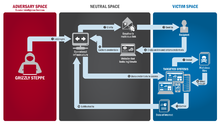 ](https://en.wikipedia.org/wiki/File:APT28_APT29_Techniques_-_Malware.png)
Diagram showing Grizzly Steppe's (Fancy Bear andCozy Bear) process of employing spear phishing

Fancy Bear employs advanced methods consistent with the capabilities of nation-state actors.[69] They use spear phishing emails, malware drop websites disguised as news sources, and zero-day vulnerabilities. One cybersecurity research group noted their use of no less than six different zero-day exploits in 2015, a considerable technical feat that would require large numbers of programmers seeking out previously unknown vulnerabilities in top of the line commercial software. This is a sign that Fancy Bear is a state-run program and not a gang or a lone hacker.[70][71]
One of Fancy Bear's preferred targets is web-based email services. A typical compromise will consist of web-based email users receiving an email urgently requesting that they change their passwords to avoid being hacked. The email will contain a link to a spoof website that is designed to mimic a real webmail interface, users will attempt to login and their credentials will be stolen. The URL is often obscured as a shortened bit.ly link[72] in order to get past spam filters. Fancy Bear sends these phishing emails primarily on Mondays and Fridays. They also send emails purportedly containing links to news items, but instead linking to malware drop sites that install toolkits onto the target's computer.[70]Fancy Bear also registers domains that resemble legitimate websites, then create a spoof of the site to steal credentials from their victims.[53] Fancy Bear has been known to relay its command traffic through proxy networks of victims that it has previously compromised.[73]
Software that Fancy Bear has used includes ADVSTORESHELL, CHOPSTICK, JHUHUGIT, and XTunnel. Fancy Bear utilises a number of implants, including Foozer, WinIDS, X-Agent, X-Tunnel, Sofacy, and DownRange droppers.[53] Based on compile times, FireEye concluded that Fancy Bear has consistently updated their malware since 2007.[73] To avert detection, Fancy Bear returns to the environment to switch their implants, changes its command and control channels, and modifies its persistent methods.[69] The threat group implements counter-analysis techniques to obfuscate their code. They add junk data to encoded strings, making decoding difficult without the junk removal algorithm.[73] Fancy Bear takes measures to prevent forensic analysis of its hacks, resetting the timestamps on files and periodically clearing the event logs.[53]
Fancy Bear has been known to tailor implants for target environments, for instance reconfiguring them to use local email servers.[73] In August 2015, Kaspersky Lab detected and blocked a version of the ADVSTORESHELL implant that had been used to target defense contractors. An hour and a half following the block, Fancy Bear actors had compiled and delivered a new backdoor for the implant.[20]
Related personas
Fancy Bear sometimes creates online personas to sow disinformation, deflect blame, and create plausible deniability for their activities.[74]
Guccifer 2.0
Main article: Guccifer 2.0
An online persona that first appeared and claimed responsibility for the DNC hacks the same day the story broke that Fancy Bear was responsible.[75] Guccifer 2.0 claims to be a Romanian hacker, but when interviewed by Motherboard magazine, they were asked questions in Romanian and appeared to be unable to speak the language.[76] Some documents they have released appear to be forgeries cobbled together from material from previous hacks and publicly available information, then salted with disinformation.[76]
Fancy Bears' Hack Team
An online group owns a website which leaks documents taken in Fancy Bear's WADA attack. It claims they are "an international hack team" who "stand for fair play and clean sport". WADA said some of the documents leaked under this name were forgeries, and that data has been changed.[77]
Anonymous Poland
A Twitter account named "Anonymous Poland" (@anpoland) claimed responsibility for the attack on the World Anti-Doping Agency[78] and released data stolen from the Court of Arbitration for Sport, a secondary target.[79][80] ThreatConnect supports the view that Anonymous Poland is a sockpuppet of Fancy Bear, noting the change from a historical focus on internal politics. A screen capture video uploaded by Anonymous Poland shows an account with Polish language settings, but their browser history showed that they had made searches in Google.ru (Russia) and Google.com (US), but not in Google.pl (Poland).[79]
See also
- Cyberwarfare in Russia
- Russian espionage in the United States
- Trolls from Olgino
- The Plot to Hack America