write bill legislation
maybe belated
hmmn, i may be muddying: originally about corp lobbyist writing all or part of a bill [alec?], but ripple out to gop just doing will of donors?
see lobbyist
ADD LEGAL SETTLEMENT HP DAVIS
dark $?
see ACE [oops not bill] ~ CPP
---
7 26 We Talked to a Trump Whistleblower. What He Saw Will Shock You.
Jul 7, 2026
There's a set of MAGA lobbyists in DC who can get you anything you want from the White House, legal or not. Ticketmaster, Paramount, crypto companies — they're all exploiting this pay-to-play system.
KROGER REALPAGE UNITED HEALTH AMAZON GGL LINA KHAN // JDV?!
GAIL S ROGER ALFORD BOSS
1:33
1 minute, 33 seconds
[Liz Scheltens] For the last 40 years, across administrations from both parties, politicians have mostly been content to let corporations keep getting bigger and more powerful.
1:43
1 minute, 43 seconds
But in recent years, something has started to shift. [Anchor] The federal government is suing to block the largest supermarket merger in U.S. history...
1:52
1 minute, 52 seconds
...arguing that it would reduce the number of supermarkets, which would mean higher prices.
1:55
1 minute, 55 seconds
Today, the Justice Department and eight states sued software company RealPage, alleging it illegally helped landlords unfairly fix prices and raise rents throughout the country.
2:07
2 minutes, 7 seconds
At the end of the first Trump administration, there were very large and significant monopoly cases that were brought against Facebook and against Google.
2:16
2 minutes, 16 seconds
[Liz Scheltens] When Lina Khan took over the Federal Trade Commission under President Biden, she and her colleagues in the Department of Justice continued those suits, and filed dozens more.
2:26
2 minutes, 26 seconds
[Anchor] Department of Justice has launched an antitrust probe into UnitedHealth. The move is part of the Biden administration’s push to lower drug prices.
...5:15
5 minutes, 15 seconds
We want him in a very high capacity. Mike Davis. Mike. Thank you, Mike. Where is Mike? Mike is great.
5:24
5 minutes, 24 seconds
Mike Davis actually recommended Gail Slater to President Trump for the top antitrust job. Davis has denied the threatening phone call.
5:32
5 minutes, 32 seconds
But it is true that a couple of weeks after the election, he started getting big checks from corporations like Hewlett Packard Enterprise, who wanted him to use his connections to push their mergers through.
5:42
5 minutes, 42 seconds
[Roger Alford] His salary is $300,000 a month. He has a contingency fee of over $1 million for any successful mergers.
5:51
5 minutes, 51 seconds
They hire this lobbyist and the lobbyist starts talking to higher-ups, saying, you like us, we're on your team.
5:59
5 minutes, 59 seconds
Just tell them to drop the case. [Liz Scheltens] And they did.
6:02
6 minutes, 2 seconds
DOJ sources told the Wall Street Journal that a couple of weeks after the threatening phone call, Gail Slater's boss, quote, “placed a document on her desk.”
6:11
6 minutes, 11 seconds
It was a settlement deal written by Hewlett Packard Enterprise’s own lawyers. It was a genuine shock.
6:19
When Gail Slater asked her boss what would happen if she refused to sign it, he told her, quote, “She was too difficult to fire, but he would fire her deputies.” She signed, and then he fired them anyway.
6:32
6 minutes, 32 seconds
And we all basically strongly suggested that that was inappropriate. And as a result of that, I was terminated.
6:39
6 minutes, 39 seconds
[Anchor] Shares of Hewlett Packard Enterprise, they're up more than 12%, after the DOJ gave the green light for the proposed $14 billion acquisition of Juniper Networks.
6:48
6 minutes, 48 seconds
This is oligarchy in action: company gets sued, they hire a million-dollar fixer with the president's ear to leverage his loyalty and make sure that the suit goes away.
6:58
6 minutes, 58 seconds
They get a sweetheart deal, and then, when someone like Roger Alford gets in the way, they make sure he gets fired.
7:04
7 minutes, 4 seconds
This type of, let's call it, pay-for-play politics hadn't happened since Watergate. They're dropping cases because they decided someone's a friend.
7:13
7 minutes, 13 seconds
That's not the rule of law. That's the opposite of the rule of law.
7:16
7 minutes, 16 seconds
A few months later, one of America's most hated companies decided to try the same play for themselves.
7:24
7 minutes, 24 seconds
[Anchor] Outrage over Ticketmaster and Live Nation gouging consumers on big concerts.
...
7:50
7 minutes, 50 seconds
A bunch of state attorneys general signed on to the suit as well, including Phil Weiser of Colorado and Jonathan Skrmetti of Tennessee.
7:57
7 minutes, 57 seconds
I mean, there was tremendous evidence of very aggressive, almost mafia-like tactics.
8:02
8 minutes, 2 seconds
We had some witnesses, they would get a phone call and it was basically like, “Hey, nice arena you have there.
8:08
8 minutes, 8 seconds
Be a shame if anything happened to it.” You know, we have the internal conversations laughing about how dumb their customers are and how great it is that they can rip ’em off.
8:16
8 minutes, 16 seconds
[Anchor] The messages between two ticketing directors saying, “These people are so stupid.” Another message saying, “Robbing them blind, baby.”
8:25
8 minutes, 25 seconds
[Liz Scheltens] When President Trump took office in 2025, his Department of Justice decided to continue the Ticketmaster suit. Ticketmaster thought they would try the same play as Hewlett Packard Enterprise.
8:35
8 minutes, 35 seconds
They hired Kellyanne Conway, Trump's former campaign manager, as a fixer. They donated to Trump's inaugural fund.
8:41
8 minutes, 41 seconds
And they hired Mike Davis, the same fixer who got Hewlett Packard Enterprise their sweetheart deal.
8:48
8 minutes, 48 seconds
Davis went after Roger Alford's boss, Gail Slater.
8:52
8 minutes, 52 seconds
[Roger Alford] Once it became clear that Gail Slater was going to resolve these cases on the merits and wasn't going to listen to Mike Davis based on arguments other than the merits, he turned on her.
9:02
9 minutes, 2 seconds
He directly lobbied the president of the United States to get someone who was committed to enforcing antitrust laws on the merits to be removed.
9:10
9 minutes, 10 seconds
[Anchor] The head of the Justice Department's Antitrust Division is out.
9:14
9 minutes, 14 seconds
Gail Slater was fired today from the role after months of tension with the Trump administration. [Liz Scheltens] The moment Gail Slater's firing hit the news, Live Nation’s stock price skyrocketed.
9:24
9 minutes, 24 seconds
Shareholders were anticipating big payouts on the backs of consumers. [echo] Robbing them blind, baby. And then, two weeks after she was fired...
9:32
9 minutes, 32 seconds
[Anchor] The Justice Department has reached a settlement with Live Nation in its antitrust case. Not everyone is on board. The proposed settlement didn’t even rise to the level of a slap on the wrist.
9:41
9 minutes, 41 seconds
[Liz Scheltens] Live Nation wouldn't have to sell off Ticketmaster, just a handful of venues.
9:46
9 minutes, 46 seconds
So it looked like the same play had worked again: get sued, hire a fixer, get a sweetheart deal.
9:53
9 minutes, 53 seconds
But there was one wrinkle for Ticketmaster.
9:56
9 minutes, 56 seconds
From my perspective, this was not a sufficient settlement to take care of Tennessee consumers.
10:01
10 minutes, 1 second
A bunch of those state AGs decided to continue with the suit, even after the Department of Justice settled.
...
10:51
10 minutes, 51 seconds
[Phil Weiser] The president put up a social media post and said, let the deal through.
10:55
10 minutes, 55 seconds
Now, we don't know exactly what happened behind those scenes, but I want to underscore how unusual that is.
11:01
11 minutes, 1 second
There was no DOJ investigation when the country's largest real estate brokerage, Compass, wanted to buy its rival Anywhere.
11:08
11 minutes, 8 seconds
Now, they're free to saddle middle-class homebuyers with even more junk fees in a housing market we can already barely afford.
11:16
11 minutes, 16 seconds
Compass even hired Mike Davis, the same fixer that got HPE and Live Nation their deals.
11:22
11 minutes, 22 seconds
But nothing has made the corruption more clear than the Department of Justice's recent approval of the merger between Paramount and Warner Brothers.
11:31
11 minutes, 31 seconds
The deal puts one of Trump's top political donors at the head of a media empire that will include CNN, CBS and HBO.
11:40
11 minutes, 40 seconds
And according to the Wall Street Journal, the staff attorneys in the antitrust division were leaning toward suing to prevent this merger.
11:48
11 minutes, 48 seconds
But again, they were overruled by the top brass at the Department of Justice.
11:53
11 minutes, 53 seconds
State AGS are teaming up to challenge the HPE, Nexstar, and Compass mergers in court, and they're considering whether to do the same for Paramount.
...
4:12
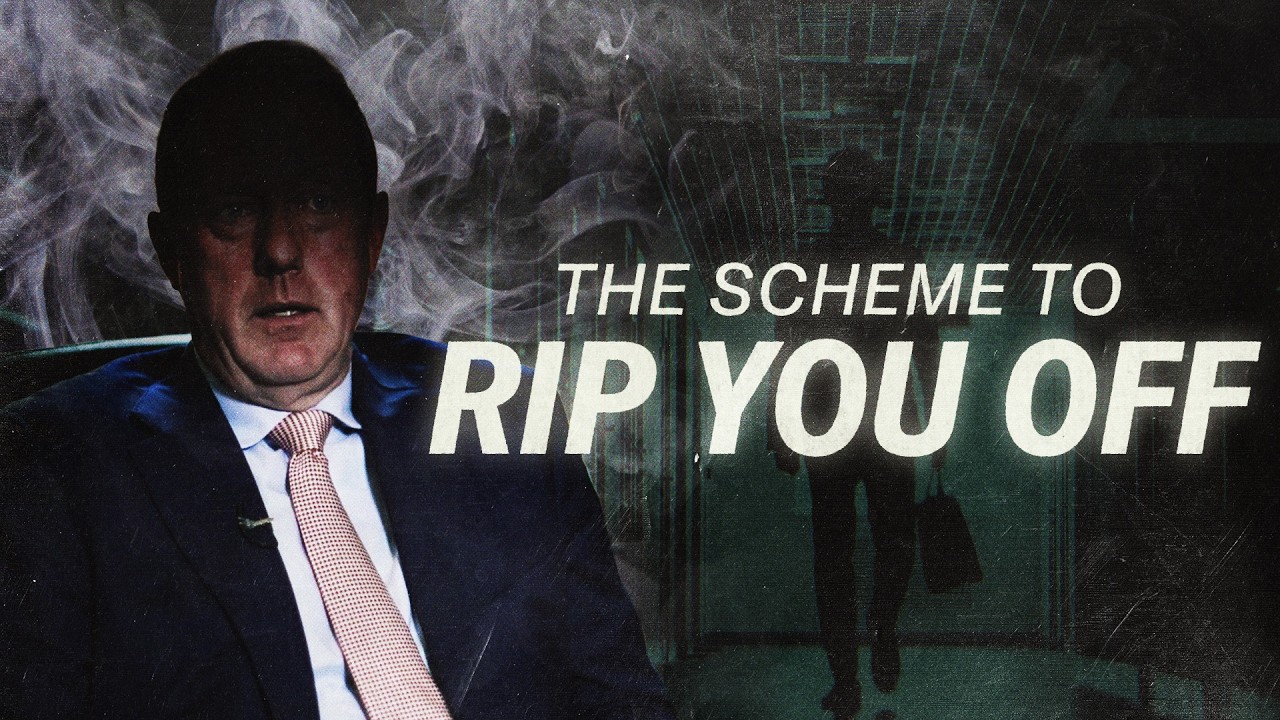
Hewlett Packard Enterprise looking to buy Juniper Networks.
---
5 23 an random eg jake k
millions of people in the United States have little to nothing in retirement savings, a consequence of low-wage jobs that give workers minimal room to stash money away.
Meanwhile, at the end of 2021, the nation's top CEOs held an estimated $9 billion in rapidly growing special retirement accounts that aren't available to their employees—a double standard established by the U.S. tax code.
That double standard is the subject of A Tale of Two Retirements, a new report published Thursday by the Institute for Policy Studies (IPS) and Jobs With Justice. The report says that while "ordinary employees with access to 401(k) plans face strict limits on the amounts they can set aside, tax-free, for their golden years,"highly paid executives of major corporations "have unlimited tax-deferred compensation accounts" known as top hat plans.
"The sections of the U.S. tax code related to employer-provided, tax-deferred retirement accounts impose one set of strict rules on ordinary workers and another set of far more flexible rules for corporate top brass," the report notes. "Employees with 401(k) plans face hard caps on the amounts they can set aside in these accounts every year. By contrast, Section 409A of the tax code allows top corporate executives to place unlimited amounts in special 'non-qualified tax-deferred compensation' accounts."
The funds in such plans are only taxed when they are withdrawn, allowing executives to reap the benefits of years of investment returns tax-free.
The new analysis shows that "at more than 20 low-wage employers, executives have sufficient deferred compensation funds to generate monthly retirement checks larger than their workers' median annual pay," pointing specifically to Walmart CEO Doug McMillon (who held over $169 million in his deferred compensation account at the end of last year) and former Home Depot CEO and current board chair Craig Menear (who has nearly $15 million in a deferred compensation account).
Home Depot employees aren't nearly as well-positioned for retirement. According to the researchers behind the new report, 53% of those eligible to participate in Home Depot's 401(k) plan have zero balances. Menear's top hat account balance is "enough to generate a monthly retirement check three times larger than the company’s median worker pay of just $30,100," the report notes.
The executive with the largest top hat account among S&P 500 company heads is Paul Saville, CEO of the homebuilding giant NVR, Inc. At the end of 2022, Saville held $488 million in his deferred compensation account—which could yield $3 million a month in retirement checks for the rest of his life.
"That's 1,513 times as much as a typical American retiree could expect to receive in monthly Social Security and 401(k) benefits," IPS and Jobs With Justice note.
Sarah Anderson, global economy director at IPS and a co-author of the new report, said that "there's no rational argument for allowing wealthy executives to shelter unlimited amounts of compensation from taxes while ordinary workers have strict limits on their annual 401(k) contributions."
"Nothing but the power of corporate leaders torig rules in their favorcan explain this double standard," Anderson argued.
For workers under the age of 50, the annual 401(k) contribution limit is $22,500 in 2023—a ceiling that the overwhelming majority of workers with access to a 401(k) won't hit.
"Nationwide, just 35% of working-age adults have tax-deferred 401(k)-type defined contribution plans through their employer and another 13% have defined benefit or cash balance plans. Some 42% of Americans age 56-64 have zero retirement account savings, according to the U.S. Census Bureau," the new report observes. "Americans who are unable to save for retirement need to rely on Social Security, which pays an average monthly benefit of $1,784, as of March 2023."
The report adds that while companies "often match a portion of employee 401(k) contributions," that benefit is "meaningless for the many low-wage workers who cannot afford to set aside any of their wages."
Furthermore, roughly half of U.S. workers in the private sector have no access to an employer-provided retirement plan.
"For decades now, large U.S. corporations have been making workers' retirement futures less secure by abandoning traditional pensions in favor of 401(k) plans," the report points out. "In 1984, more than 30 million Americans had defined benefit pensions through which employers bore the financial risks for their workers' retirement security. By 2020, that number had declined to just 12 million, and private sector workers were approximately 3.5 times as likely to have a defined contribution plan as a traditional pension."
IPS and Jobs With Justice highlight a number of potential policy changes that could help combat the stark and worsening retirement divide between ordinary workers—who are facing a full-fledged retirement income crisis—and executives, including changes to the tax provisions that let rich executives shelter their compensation.
"Perhaps most importantly, we need to expand Social Security, the key pillar for retirement security for most Americans, particularly low- and moderate-income families who receive little to no tax benefits," the report states. "Funding for expansion could come from lifting the wage cap on payroll taxes so that CEOs and other high earners pay roughly the same share of their total income into the Social Security fund as ordinary workers."
Scott Klinger, report co-author and senior equitable development specialist at Jobs With Justice, said that "rather than giving corporate CEOs unfair special retirement tax benefits not available to those they employ, Congress should eliminate the cap on payroll taxes paid by corporate executives so that Social Security benefits can be strengthened, especially for the 40% of American workers for whom Social Security is their sole retirement income."
FROM YOUR SITE ARTICLES
- How Howard Schultz turned Starbucks into the poster child of corporate abuse ›
- 'Triggering this GOP loser': Teamsters president praised after heated exchange with Republican senator ›
- 'Bank bailout': Robert Reich busts 3 myths the 'undeserving right' use to justify their wealth ›
- 9 Greedy CEOs Trying to Shred the Safety Net While Pigging Out on Corporate Welfare ›
RELATED ARTICLES AROUND THE WEB
- Meager Rewards for Workers, Exceptionally Rich Pay for C.E.O.s ›
- For rich CEOs, paychecks are chump change ›
- The 'Secret' That Gets CEOs Rich: Keep Workers Poor - Inequality.org ›
- Hospit
rubber stamp sgamma WEA: 13 of 15 asks (donor to his campaign)
wvp 2017
Secretary of the Interior Ryan Zinke released his review of the greater sage-grouse conservation plan. The original conservation plan was implemented two years ago after extensive work and collaboration by a bipartisan group of Western stakeholders, including federal, state and local governments, as well as ranchers, farmers, sports groups, conservationists and industry representatives.
This order is another reckless decision made by special interests and Washington politicians behind closed doors – it is a clear giveaway to industry that undermines years of work by Western governors, communities and stakeholders,” said Chris Saeger, Executive Director of the Western Values Project. “These irresponsible changes will not only put this species at risk, but will jeopardize access to public lands and the outdoor economy that Western communities rely on. Secretary Zinke’s careless plan ignores bipartisan, science based results, and could well fast-track the greater sage-grouse’s listing as an endangered species.”
Background:
After years of work and cooperation by federal agencies, Western states and diverse stakeholders, a plan was released in 2015 to conserve habitat for the greater sage-grouse to avoid listing the bird under the Endangered Species Act. The Fish and Wildlife Service specifically cited habitat preservation as the reason for removing the bird from consideration.
This year, Republican Governor of Wyoming Matt Mead and Democratic Governor of Colorado John Hickenlooper sent two letters to Secretary Zinke opposing changes to the plan. Neither letter has received a public response from the Secretary.
Western Governors met with Secretary Zinke behind closed doors at their annual Western Governors Association meeting about the imperiled bird. Again, urging the Secretary not to make wholesale changes to the plans. Those requests where ignored.
Listing the bird under the Endangered Species Act would result in numerous lawsuits from both sides of the issue, and prohibit development across a wide swath of public land.
===
https://www.desmog.com/2010/01/11/murkowski-amendment-protect-polluters-was-written-dirty-polluter-lobbyists/
the Washington Post is reporting that Alaska Sen. Lisa Murkowski’s amendment to gut EPA authority to regulate carbon dioxide under the Clean Air Act was written by two Washington lobbyists known for representing some of the worst polluters in the nation.
Surprise, surprise!
Juliet Eilperin writes on the Post Carbon blog:
“The Washington Post has confirmed that two Washington lobbyists, Jeffrey R. Holmstead andRoger R. Martella, Jr., helped craft the original amendment Murkowski planned to offer on the floor last fall. Both Holmstead, who heads the Environmental Strategies Group and Bracewell &Guiliani, and Martella, a partner at Sidley Austin LLP, held senior posts at EPA under the Bush administration and represents multiple clients with an interest in climate legislation pending before Congress.”
The Post notes that Sen. Murkowski is now likely to postpone offering the amendment next week when Congress returns to tackle the subject of climate change anew.
“This Mukowski rider should be called the Protect Dirty Polluters amendment, especially since we now know that it was written by polluter lobbyists,” Kert Davies, Director of the new PolluterWatch project at Greenpeace, told me today.
“If this amendment passed, it would be a get out of jail free card for the worst polluters from Big Oil and Big Coal,” Davies said.
And who better to deliver this gift to the carbon barons? A darling of the Carbon Club, Sen. Murkowski has received $470,000 in campaign contributions from dirty energy and mining interests since 2005, according to the Center for Responsive Politics.
The Post Carbon piece notes that the lobbyists who helped write the Mukowski amendment, both former Bush EPA employees, have again returned to doing what they do best, representing polluters in an effort to derail climate legislation:
“Holmstead represents industry interests including Southern Company, Duke Energy, Progress Energy and the Electric Reliability Coordinating Council on climate matters, according to congressional lobbying registration forms, while Martella represents the National Alliance of Forest Owners and the Alliance of Food Associations on the same subject.”
The revelations about the origins of Murkowski’s polluter-friendly amendment don’t exactly kick off 2010 on a bright note. It looks as if Congress is set to continue abandoning the public interest in favor of doing the bidding of polluters once again in the new year.
Same old, same old, unfortunately.
===
==
https://www.desmogblog.com/2020/03/16/exxon-write-rules-regulating-methane-emissions
no lnx many
exxon Now Wants to Write the Rules for Regulating Methane Emissions
By Justin Mikulka • Monday, March 16, 2020
ExxonMobil is a company capable of contradictions. It has been lobbying against government efforts to address climate change while running ads touting its own efforts to do so.
And while the oil giant has been responsible for massive methane releases, Exxon has now proposed a new regulatory framework for cutting emissions of this powerful greenhouse gas that it hopes regulators and industry will adopt. As Exxon put it, the goal is to achieve “cost-effective and reasonable methane-emission regulations.”
So, why is Exxon asking to be regulated?
The answer may be simply that Exxon is very good at public relations. As industry publication Natural Gas Intelligence reported, this announcement “comes as energy operators face increasing pressure from lenders and shareholders to engage in decarbonization by following environmental, social, and governance standards.”
Exxon's proposed regulations have three main objectives: finding and detecting leaks, minimizing the direct venting of methane as part of oil and gas operations, and record keeping and reporting.
Casey Norton, Exxon's Corporate Media Relations Manager, explained to DeSmog that Exxon's proposal was not expected to be adopted as-is by regulatory agencies. “This is a starting point for conversations with policy makers and other regulators,” he said. “For example, New Mexico, Argentina, the EU, who are all considering new regulations for methane emissions.”
Under President Trump, the federal government last year rolled back Obama-era rules for oil and gas companies to report methane emissions and for restricting these emissions during drilling on public lands.
This isn’t Exxon’s first foray into voluntary regulations of methane.The corporation's natural gas subsidiary XTO started a voluntary methane emissions program in 2017. In June 2018, XTO noted that the voluntary program, which was mostly about replacing leaking valves, had reduced methane emissions by 7,200 metric tons since 2016.
However, leaking valves are not the biggest source of methane emissions. In February 2018, four months before XTO was touting the success of its methane reduction program, the company experienced the second largest methane leak in U.S. history. A gas well it operated in Ohio suffered a blowout, releasing huge amounts of the heat-trapping gas.
Did XTO’s voluntary program accurately report this? As The New York Times reported, “XTO Energy said it could not immediately determine how much gas had leaked.”
But a group of scientists using satellite data eventually did pin down the amount released — 120 metric tons an hour for 20 days. That adds up to roughly 50,000 metric tons more released than the 7,200 metric tons in reductions XTO was claiming months later. That one leak was estimated to be more than the methane emissions of the total oil and gas industry of countries like Norway.
As DeSmog reported, XTO is also flaring the most natural gas of any company in the Permian oil field (natural gas is almost 90 percent methane). While flaring isn't as bad for the climate as directly venting the methane into the atmosphere, it is increasing the levels of carbon dioxide and toxic air pollutants and is another problem the industry is saying it will address even as the practice continues on a large scale.
And now the same company is recommending that the rest of the industry and regulators adopt their approach to regulating methane emissions.
“It is not target-based, it is not volume-based,” Exxon's Norton said. “Again, it's starting a conversation, saying these are things that you can look at.”
Robert Howarth, a biogeochemist at Cornell University whose work focuses on methane emmissions in the oil and gas industry, drew attention to areas of Exxon's framework he thought were lacking. For starters, he pointed out that the proposed framework does not mention emissions from “imperfect well casings and from abandoned wells,” which Howarth says “can be significant.” He also noted that the proposal does not describe “a methodology for characterizing any of these emissions; there are techniques for doing so, but there is not much demonstrated use of these techniques by industry.”
Finally — and this is the real danger with any sort of industry self-regulation — Howarth said there must be some type of independent oversight to assess actual emissions instead of relying on the industry to self-report. XTO's well blowout in Ohio is an excellent example of why this third-party verification is critical. Without oversight, the “system is ripe for abuse,” according to Howarth.
Sharon Wilson of environmental advocacy group Earthworks documents the oil and gas industry's current widespread practices of flaring and venting methane. Sharing her concerns about Exxon's methane emissions proposal, she told DeSmog,”Exxon’s recent announcement is too little too late when it comes to the climate crisis they’ve help cause and are still making worse. Reducing methane emissions by any percentage is not enough when Exxon continues to expand sources of the same climate pollution.”
Wilson called for the company to support federal and state rules to cut methane.
Trump Administration Reversed Existing Methane Regulations
Methane emissions have become a much bigger issue in the last decade since the U.S. boom in shale oil and gas produced by fracking. Despite overseeing a huge rise in oil and gas production, the Obama administration acknowledged the methane problem and proposed and adopted new methane emissions regulations, which the Trump administration has since repealed.
The Trump administration has staffed regulatory agencies with former industry executives and lobbyists who have been quite successful at rolling back environmental, health, and safety rules.
Last August former coal lobbyist and current administrator of the Environmental Protection Agency (EPA) Andrew Wheeler explained the reasoning for removing the Obama methane rules.
“EPA’s proposal delivers on President Trump’s executive order and removes unnecessary and duplicative regulatory burdens from the oil and gas industry,” Wheeler said. “The Trump administration recognizes that methane is valuable, and the industry has an incentive to minimize leaks and maximize its use.”
The problem with this free-market assumption is that Wheeler is wrong about the industry's financial incentive to limit methane emissions.
There is too much natural gas, aka methane, flooding world energy markets right now.Current prices to buy it are lower than the costs to produce it. The methane currently produced in Texas' Permian Basin spent a good portion of last year at negative prices. There is no financial incentive for producers in the Permian to voluntarily cut methane emissions in the current market environment.
That is why Permian producers are flaring (openly burning) it at record levels as well as directly releasing (venting) methane into the rapidly warming atmosphere. So much for letting the free market address the issue.
Even the Remaining Regulations Are Controlled by Industry
While the Trump administration has rolled back many regulations for the oil and gas industry, the regulatory system in the U.S. was already designed to protect industry profits — not the public or environment. When the federal government creates regulations, the process can be heavily influenced by industry lobbyists, and if they don’t agree with the regulations, there are many ways they can get them revised to favor their companies.
While Exxon did publicly say in 2018 that it didn't support repealing the existing methane regulations, the company also wrote to the EPA voicing support for certain aspects of the American Petroleum Institute's (API) comments on the issue, and the API approved removing the regulations. In that letter Exxon used the same language it is now using with its propsed regulations, saying any rules need to be “cost-effective” and “reasonable.” But if the regulations are cost-effective, will they actually be effective in reducing methane emissions in a meaningful way?
Excerpt from Exxon letter to EPA about methane regulations. Source: ExxonMobil
The Wall Street Journal recently highlighted the influence that the oil and gas industry and its major U.S. trade group the American Petroleum Institute can have over regulations. After the deadly 2010 Deepwater Horizon explosion and oil spill in the Gulf of Mexico, the federal government put into place new safeguards known as the “well control rule” in order to prevent another disaster during deepwater offshore drilling.
In 2019, the Trump administration revised the rule, weakening it, even though, as the Journal reported, federal regulatory staff did not agree “that an industry-crafted protocol for managing well pressure was sufficient in all situations, the records show.” The staff was ignored. (And the move is undergoing a legal challenge.)
Industry crafted protocol. Just the thing Exxon is now proposing.
This type of industry control over the regulatory process was also brought to light after two Boeing 737 MAX planes crashed and killed 346 people. Boeing had fought to make sure that pilots weren’t required to undergo expensive and lengthy training to navigate the new plane.
Reuters reported on internal communications at Boeing which revealed the airplane maker simply would not let simulator training be required by regulators:
“I want to stress the importance of holding firm that there will not be any type of simulator training required to transition from NG to MAX,” Boeing’s 737 chief technical pilot said in a March 2017 email.
“Boeing will not allow that to happen. We’ll go face to face with any regulator who tries to make that a requirement.”
Boeing got its way. And 346 people died.
For the past six years, I have reported on the failed regulatory process governing the moving of dangerous crude oil by rail (and even wrote a book about it). The only meaningful safety regulation that resulted from a multi-year process was requiring oil trains to have modern electronically controlled pneumatic brakes.
As I reported, shortly after this regulation was enacted, Matthew Rose, CEO of the largest oil-by-rail company BNSF, told an industry conference that “the only thing we don’t like about [the new regulation] is the electronic braking” and “this rule will have to be changed in the future.” As per the wishes of Matthew Rose, that rule was repealed despite the substantial evidence clearly showing this modern braking system greatly increases train safety.
A recent op-ed from an editor at the trade publication Railway Age referred to these oil trains as a “clear and present danger.” Nevertheless, these trains hauling volatile oil through North American communities are still operating with braking systems engineered in the late 1800s.
Exxon Touts 'Sound Science' Despite Its History
Exxon’s methane proposal states that any regulations should be based on “sound science.” This statement is coming from a company whose scientists accurately predicted the impacts of burning fossil fuels on the climate decades ago and yet has spent the time since then misleading the public about that science.
The current regulatory system in America does not protect the public interest. Letting Exxon take the lead in the place of regulators doesn't seem like it's going to help.
Megan Milliken Biven is a former federal analyst for the U.S. Bureau of Ocean Energy Management, the federal agency that regulates the oil industry’s offshore activity. Milliken Biven explained to DeSmog what she saw as the root cause of the regulatory process's failure.
“Regulatory capture isn't really the problem,” Milliken Biven said. “The system was designed to work for industry so regulatory capture isn't even required.”
dereg nation
better: the Trump administration’s expensive, dirty power plan is on its way to court
- A multi-state coalition is vowing to take the Trump administration to court over it’s newly finalized “Affordable Clean Energy” rule, a replacement for the Obama-era Clean Power Plan.
- Connecticut “wasted no time” in declaring that it intends to sue to block the “Affordable Clean Energy” plan, reports the Connecticut Mirror.
- Other states in the coalition include California, Illinois, Iowa, Oregon, Minnesota, and New York, according to Courthouse News.
- “Iowa Attorney General Tom Miller said his state bought in to Obama’s plan and was able to ditch coal and ramp up wind power generation,” Courthouse News notes. “In 2018, Miller said 34 percent of the state’s electricity came from wind farms. He says the state will fight Wednesday’s rule change and continue focusing on renewable energy.”
- The Trump energy plan omits Obama-era mandates such as putting a price on CO2, or capturing it to keep it out of the atmosphere. But it does encourage “heat rate efficiency,” meaning that plants should aim to get more power from the same amount of fuel.
- This would “lower the carbon intensity” of burning coal, reports Vox, and “could lead to a rebound effect where utilities end up burning more fuels like coal and natural gas” because of the improved cost-to-power ratio.
- Recent research suggests that “the ACE rule would lead to 28 percent of the power plants modeled in the study to emit more carbon dioxide by 2030 compared to a scenario with no policy at all,” Vox notes.
- The plan will also be expensive. “When benefits from the ACE rule’s modest cuts in ozone and particulate matter aren’t counted in its favor—something the Trump administration has advocated in other rules—the costs of the plan exceeded its benefits by as much as $980 million over 15 years,” reports E&E News, much more than implementing the Obama plan would have cost....
==
pvtize profit/goods, socialize costs/bad
irony: polluter corps who greedy dumb overinvest in capacity like coal get ballouts/subsidy, and judge will toss their pension obligation (and even let them loot the fund supposed to be used to recover the land after), but stuents who wisely invest in own future cannot declare b. judges may be sons of Rove like griffin? FTI wrecked economy and cooked planet then makes $ repping the villains.
aha: re bankruptcy pattern: privative profit socialize losss, corp welfare/socialism
coal (extraction, pollute commons for free/subsidized, kill workers but then use as prop/ cheerleader in war on coal;
opioid also a kind of grift/extraction, on the backs of rural working ppl who get hurt/worn out on job like coalminers (tho trad had union protection and law eg black lung b/c of historic injustice, but ~ by McConn/chao champions of coal)
not-for-profit college also extractive grift that blood funnel of vampire squid into fed vet ed money.
nuke power
==
https://theintercept.com/2019/08/23/monsanto-republicans-cancer-research
EMAILS SHOW MONSANTO ORCHESTRATED GOP EFFORT TO INTIMIDATE CANCER RESEARCHERS
Lee Fang
August 23 2019, 3:00 a.m.
IN 2015, the World Health Organization’s cancer research arm, the International Agency for Research on Cancer, classified glyphosate, an active ingredient in the herbicide Roundup, as a “probable carcinogen,” setting off a global debate about the world’s most popular weedkiller.
Over the last four years, Republicans in Congress have excoriated and pushed to defund the IARC, casting their defense of the chemical as a quest on behalf of small American farmers. Rep. Frank Lucas, R-Okla., has written that his outrage over the cancer research is on behalf of the “farmers and food manufacturers who rely on traditional farming methods to produce the food that fuels America — and the world.”
But according to a recent trove of documents, the ongoing political assault on the IARC has been scripted in part by Monsanto, the St. Louis-based chemical and seed conglomerate that produces Roundup and Roundup-resistant crops.
Roundup has been cash cow for the company since the 1970s, fueling billions of dollars in annual profits. Its use has skyrocketed in recent decades since the company developed genetically modified corn and other crops that are resistant to it; it is now the world’s leading herbicide.
A growing number of individuals say that Monsanto failed to warn consumers of the dangers of using Roundup and had marketed the chemical spray as harmless to humans, while internally recommending that its own employees use gloves and protective gear. Critics say that the Roundup formula used in the U.S. also contains a surfactant that makes the herbicide far more toxic than the variation of the spray sold in the European market.
Monsanto, which merged with German multinational pharmaceutical company Bayer AG last year, is facing as many as 11,000 cases relating to glyphosate. Last year, Dewayne Johnson, a former groundskeeper now dying of cancer, was the first to win his jury trial in San Francisco state court against Monsanto, alleging that years of using Roundup contributed to his non-Hodgkin’s lymphoma. Johnson was awarded $289 million by a jury, though a judge later reduced the amount to $78 million. Another plaintiff, Edwin Hardeman, also alleged that he spent decades spraying the glyphosate-based weedkiller with little to no protective gear and developed the same blood cancer, won a similar case in federal court this year.
[Plaintiff Dewayne Johnson after hearing the verdict in his case against Monsanto at the Superior Court of California in San Francisco on Aug. 10, 2018. Photo: Josh Edelson, Pool/AP]
The newly disclosed files, released by a plaintiff’s law firm, Baum Hedlund, include company emails, documents, and deposition transcripts showing that Monsanto lawyers and lobbyists guided lawmakers, coordinating efforts to question the IARC’s credibility and slash U.S. support for the international body.
The company has denied claims that its products cause cancer, and Monsanto lawyers have declared that Environmental Protection Agency’s designation of glyphosate as safe should clear the company of any legal liability. In a recent marketing campaign, Bayer touted its friendly cooperation with regulators as a sign that the public should have nothing to fear from its products.
But the documents also suggest that the firm has used its influence with lawmakers to antagonize regulators, applying pressure and investigative threats to shape the science used to research glyphosate and other controversial chemical compounds, as part of a larger campaign to silence critics and discredit the IARC.
IN JUNE 2015, Michael Dykes, then serving as Monsanto’s vice president of government affairs, laid out the company’s strategy for “managing the IARC issue,” following the cancer research center’s determination that March.
The company, he wrote in an email, had dispatched its team of lobbyists to brief “key staff at EPA, USTR, USDA, and the State Department as well as members of Congress” to raise concerns with the IARC’s scientific process, and with how the decision could impact agriculture as well as international trade. Lobbyists also met with an official at the Department of Health and Human Services; they saw the agency’s support as key “to secure a WHO clarification.”
Later in the year, Dykes updated the Monsanto team with plans to push back against the IARC, including the possible placement of advertisements — in the form of letters from third-party groups — in Capitol Hill newspapers, as well as preparation to use a Senate Agriculture Committee hearing as a venue to get the EPA to reaffirm support for glyphosate. “We will make sure Committee members ask EPA the glyphosate safety question,” Dykes wrote.
[Roundup weed killing products on May 14, 2019. Photo Illustration: Scott Olson/Getty Images
The following year, FTI Government Affairs, one of several consulting firms guiding Monsanto’s political response to the IARC decision, assisted GOP lawmakers with an effort to investigate U.S. support for the IARC.
In one email sent by Todd Rands, a former Monsanto attorney working with FTI, sent a draft of a letter ostensibly written by Rep. Rob Aderholt, R-Ala., a senior lawmaker on the House Appropriations Committee, addressed to Dr. Francis Collins, the director of the National Institutes for Health. NIH is the government agency responsible for most federal public health research and is the largest funder to the IARC. The letter, in fact, had been written by FTI consultants, along with Rands’s edits, accordingto his deposition testimony.
The FTI-written letter declared that glyphosate “does not cause cancer,” accused the IARC of peddling “bunk science,” and threatened a reassessment of the NIH budget to ensure that the agency is “committed to only funding organizations that produce information and conclusions based on sound science, robust processes, and credible methodology.”
During his deposition, Rands said that he believed it appropriate for Monsanto to draft a letter on behalf of a lawmaker to NIH, calling such ghostwriting a “common practice in Washington.”
It’s not clear what Aderholt’s office did with the FTI-authored letter. Aderholt’s office did not respond to a request for comment from The Intercept. On June 2, 2016, Aderholt sent a letter to NIH to request a briefing on the IARC’s designation of glyphosate as a probable carcinogen and “the standards that NIH places on research funded by the U.S. taxpayers,” a letter that mirrored many of the demands in the FTI letter, though it used different language.
More GOP letters and demands for investigation over NIH’s funding for IARC followed. Rep. Jason Chaffetz, R-Utah, then-chairman of the House Oversight Committee, Rep. Trey Gowdy, R-S.C., Chaffetz’s successor as Oversight chair, and Rep. Lamar Smith, R-Texas, then-chair of the House Science Committee, all called for inquiries into IARC funding and the designation of glyphosate as a carcinogen.
The Monsanto lobbyists closely conferred with the committees as they honed in on the IARC’s funding.Drew Feeley, an attorney for the GOP staff of the House Oversight Committee, emailed an FTI consultant to explain that his office was working to attach a line to a government budget bill designed “to apply to IARC” in order to slash its funding over the glyphosate issue. “Thanks again for coordinating,” Feeley wrote to the Monsanto consultant. Feeley, notably, is now serving as an attorney with the Council on Environmental Quality, the White House office that oversees environmental policy.
“We expect the House OGR investigation about IARC to expand as they move into the new administration,” wrote Rands, in an update to Monsanto colleagues.
Last year, under Smith, the House Science Committee devoted an entire committee hearing into questioning the IARC, with a focus on its conduct around glyphosate. Smith subsequently sent more letters to cancer researchers in Norway, demanding they “correct the flaws in IARC.” The House Appropriations Committee followed up by cutting $2 million in funding to the IARC, a symbolic move to distance the U.S. from the international body, which relies on a budget of around $40 million from a range of member countries.
THE CONGRESSIONAL OUTREACH was only part of a multifaceted effort to control the backlash sparked by the IARC designation.
In recent years, a great deal of new information has come to light around Monsanto’s work to conceal the potential health risks around glyphosate. Earlier this month, new documents revealed that Monsanto operated a “fusion center” to discredit critics of the company, including former Reuters journalist Carey Gillam, who has written extensively about glyphosate. The operation even monitored and considered legal action again singer Neil Young, a critic of Monsanto.
Le Monde, the French newspaper, published an award-winning investigation on the controversy, referring to the Monsanto-run campaign to discredit the IARC as an effort to “intimidate” the cancer research center.
A separate cache of litigation files, released in May, revealed that Monsanto also contracted with Hakluyt, a corporate intelligence firm, to keep close tabs on political elites in Washington. The company consulted with senior Trump and EPA officials, and confirmed that the administration would support Monsanto on glyphosate issues. “We have Monsanto’s back on pesticide regulation,” a domestic policy adviser in the White House told Hakluyt.
[pixA building on the campus of Monsanto headquarters in St. Louis on May 23, 2016. Photo: Michael B. Thomas/AFP/Getty Images
The last year has exposed other cloak-and-dagger tactics. The company was criticized for ghostwriting scientific studies on the safety of glyphosate, which were presented as independent research. At the San Francisco civil trial over glyphosate, an FTI consultant working for Monsanto was caught posing as a journalist working for the BBC and another British outlet.
And in 2017, one of the most stunning disclosures revealed that a senior EPA staffer, Jess Rowland, had quietly tipped Monsanto off to the fact that federal agencies had sought to reevaluate the safety of glyphosate, boasting to the company that he could “kill” federal investigations into glyphosate. Shortly before a crucial European Union vote on glyphosate products, the EPA suddenly released a report declaring the safety of the product. The document was later taken down because it had not yet been completed. One Monsanto official relayed to a colleague that Rowland had told him, “If I can kill this I should get a medal,” in regards to the glyphosate review conducted by the Agency for Toxic Substances and Disease Registry, a department of Health and Human Services.
After leaving the EPA, Rowland went to work in the private sector, consulting for chemical companies.
There’s also a revolving door between lawmakers supporting Monsanto and professionals working on behalf of the company. Shortly after retiring from Congress this year, following his investigation of the IARC, Lamar Smith took a job at Akin Gump Strauss Hauer & Feld LLP, a lobbying firm that represents Bayer-Monsanto’s interests in Washington.
==
https://www.huffingtonpost.ca/entry/todd-wynn-interior-ethics_us_5b23f523e4b0f9178a9cd1fc
...Ryan Zinke's information from outside organizations comes under the control of a political appointee whose ties to former employers have raised ethics questions.
A top political appointee at the Interior Department repeatedly scheduled meetings with his former employers in an apparent violation of federal ethics rules,HuffPost has learned.
Todd Wynn, director of the agency’s powerful Office of Intergovernmental and External Affairs, worked as the task force director at the American Legislative Exchange Council from 2011 to 2013, overseeing the energy, environment and agriculture division, and organizing three national conferences a year, a copy of his :{résumé:(style="list-style:none;margin:0px;padding:0px;border:0px;box-sizing:inherit"):}: shows. He then joined the utility trade group Edison Electric Institute, :{paying:(style="list-style:none;margin:0px;padding:0px;border:0px;box-sizing:inherit"):}: to :{participate:(style="list-style:none;margin:0px;padding:0px;border:0px;box-sizing:inherit"):}: in the ALEC task force he previously led.
On Oct. 27, he planned a 30-minute video call with :{Jennifer Butler:(style="list-style:none;margin:0px;padding:0px;border:0px;box-sizing:inherit"):}:, a senior policy adviser at the ALEC-linked State Policy Network, according to calendars released under a Freedom of Information Act request. On Dec. 19, he scheduled another such call with :{Grant Kidwell:(style="list-style:none;margin:0px;padding:0px;border:0px;box-sizing:inherit"):}:, the ALEC director in charge of his former task force. A spokeswoman for ALEC denied that the meeting occurred.
Two days later, Wynn slotted 30 minutes for a call with :{Rich Lindsey:(style="list-style:none;margin:0px;padding:0px;border:0px;box-sizing:inherit"):}:, who heads the energy and environment committee at the :{oil-funded:(style="list-style:none;margin:0px;padding:0px;border:0px;box-sizing:inherit"):}: Council of State Governments ― where, according to his :{CV:(style="list-style:none;margin:0px;padding:0px;border:0px;box-sizing:inherit"):}: and :{financial disclosures:(style="list-style:none;margin:0px;padding:0px;border:0px;box-sizing:inherit"):}:, Wynn :{also served:(style="list-style:none;margin:0px;padding:0px;border:0px;box-sizing:inherit"):}: as a committee member from June 2015 until he joined the Interior Department.
It’s unclear what might have been discussed during the calls, and indeed, HuffPost could not confirm whether they definitely took place as scheduled ― but the calendars of agency officials are generally reliable. The Interior Department and the three political operatives did not respond to HuffPost’s requests for comment on Friday.
Wynn’s meetings with ALEC and its affiliate did not violate the ethics pledge because his formal employment at the organization ended more than two years before he joined the agency, Interior Department spokeswoman Faith Vander Voort argued Monday via email. She said Wynn was not employed by the Council of State Governments.
Vander Voort did not respond to questions about Wynn’s continued work with ALEC through the Edison Electric Institute, his role at the Council of State Governments, or provide examples of other agency appointees with similar arrangements.
[pix looks like a proud boy]
CASCADE POLICY INSTITUTETodd Wynn appears in a video posted on YouTube by the conservative Cascade Policy Institute, one of his former employers.
But on Oct. 16, Wynn :{signed:(style="list-style:none;margin:0px;padding:0px;border:0px;box-sizing:inherit"):}: President Donald Trump’s :{ethics pledge:(style="list-style:none;margin:0px;padding:0px;border:0px;box-sizing:inherit"):}: prohibiting political appointees in the executive branch from participating “in any particular matter involving specific parties that is directly and substantially related to [one’s] former employer or former clients.” Barred interactions include “any meeting or other communication relating to the performance of one’s official duties with a former employer or former client, unless the communication applies to a particular matter of general applicability and participation in the meeting or other event is open to all interested parties.”
The scheduled calls :{also appear to violate:(style="list-style:none;margin:0px;padding:0px;border:0px;box-sizing:inherit"):}: the “government-wide regulatory standards of conduct” that “bar [Wynn] from meeting personally with any former client or employer he served in the year prior to the meeting,” Walter Shaub, the former head of the Office of Government Ethics, said in an email.
Apparentconflicts of interestare not new at the Interior Department. In March, :{HuffPost reported:(style="list-style:none;margin:0px;padding:0px;border:0px;box-sizing:inherit"):}: that Lori Mashburn, the agency’s White House liaison, attended two private events hosted by her former employer, the conservative Heritage Foundation. Her attendance violated the same ethics pledge Wynn signed. In May, newly released calendars showed David Bernhardt, the Interior Department’s deputy secretary, met with a trio of lobbyists for MGM Resorts International, the casino-resort giant that his longtime former employer also represents.
Wynn has been a rising star in the influential network of fossil fuel-funded think tanks that push policies and produce pseudoscientific research to muddle the debate on climate change. He maintained those ties since taking over in a :{critical position:(style="list-style:none;margin:0px;padding:0px;border:0px;box-sizing:inherit"):}: that controls the flow of information at the Interior Department, serving as a gatekeeper between Secretary Ryan Zinke and outside organizations.
In November, Wynn attended an energy conference hosted by the Heartland Institute,a former tobacco industry defender turned aggressive climate change denial outfit. Later that month he met with Reaching America, a group that :{advocates:(style="list-style:none;margin:0px;padding:0px;border:0px;box-sizing:inherit"):}: for increasing fossil fuel extraction as a means of reducing racial inequality. Throughout that month, he held four separate meetings with the Property and Environment Research Center, a Montana-based “free market” group :{associated:(style="list-style:none;margin:0px;padding:0px;border:0px;box-sizing:inherit"):}: with the State Policy Network.
===
ref2
Interior Department advisory group relied on a top energy industry lobbyist to help draft a list of potential regulatory rollbacks, documents obtained by HuffPost show.
At least one suggestion ― reducing the role that local environmental concerns play in leasing federal lands for oil and gas development ― quickly became a reality.
The Onshore Work Group, charged with recommending how Interior Secretary Ryan Zinke ought to regulate federal lands available for fossil fuel development, already has deep ties to the energy industry. Its chair is Kathleen Sgamma, the president of the oil and gas industry group Western Energy Alliance and a vocal proponent of tearing down many Obama-era environmental protections.
But metadata from the working group’s first draft of recommendations further link the Interior Department with the industry it is tasked with regulating. According to the metadata, Tripp Parks, the Western Energy Alliance’s head of government affairs, was the initial author of the document.
The working group belongs to a growing cadre of industry-friendly advisory bodies Zinke has set up to guide his agenda. In November, he assembled a wildlife conservation advisory group dominated by people with links to trophy hunting. Most members of a public lands advisory group have connections to the outdoor recreation industry.
“It’s a huge concern,” said John DeCicco, a University of Michigan research professor who has worked for the environmental advocacy group Environmental Defense Fund. Under previous administrations, DeCicco said, committees like these were usually composed of scientific experts. “What it really represents is that certain powerful interests, moneyed interests, they have the ear of policymakers who are running roughshod over due process and running roughshod over important checks and balances that are supposed to be there.”
The working group was set up under the umbrella of the Royalty Policy Committee, a group tasked with recommending the royalty rates the federal government should charge for drilling. Many of the committee’s members hail from the oil and gas sector or have significant ties to it. Whereas the same committee had a narrow, technical focus under previous administrations, under Zinke, it has been making sweeping proposals to roll back regulations on federal lands. The committee members who set up the working group have proposed measures like charging bargain-basement royalties for deepwater drilling operations and have described their mandate as “looking at steps to be taken to make DOI a better business partner to its investors.”
Some of those steps appear to have been come directly from the Western Energy Alliance. A document obtained under the Freedom of Information Act reveals that Parks created the draft recommendations one day before Sgamma circulated them to committee members overseeing the working group.
“It’s a very clear instance of regulatory capture,” said Pat Gallagher, the Sierra Club’s legal director. Of the recommendations, he said, “There is no other object than to get drill bits in the ground as quickly as possible.”
At best, Gallagher said, industry representatives are creating an echo chamber inside the Interior Department. Several of Parks’ recommendations mirror a report the department released in October on “energy burdens.” Sgamma told HuffPost that Parks’ name appears in the document’s metadata because she asked him to pull out relevant sections of the report. This was “the full extent of my staff’s involvement,” she wrote in an email. What it really represents is that certain powerful interests, moneyed interests, they have the ear of policy makers who are running roughshod over due process.
John DeCicco, University of Michigan research professor
The recommendations included items that had been on Western Energy Alliance’s wish list for years, like a proposal to abandon the practice of re-evaluating long-term leases instead of automatically renewing them, which allowed federal regulators to plan around major changes to the landscape, such as new suburban developments.
Sgamma circulated the draft ― which she described as focusing on “increasing the competitiveness of federal lands” ― on Jan. 9, inviting her fellow group members to make changes. Some of Parks’ initial recommendations were cut from later drafts, but the agency has already taken action on one recommendation that survived: The Interior Department quietly ceased the Obama-era practice of planning local drilling sites according to local environmental concerns on Jan. 31. The industry had long argued that the practice created a redundant roadblock to new drilling projects.
“We’re very pleased,” Sgamma said at the time.
A handful of the most influential oil and gas developers in the country fund the Western Energy Alliance. Although it does not currently publicize the names of its members, the alliance has included Devon Energy, Halliburton, Anadarko Petroleum and Pioneer Natural Resources. Its political action committee donated $5,000 to Zinke’s campaigns while he served as Montana’s lone congressman.
The Western Energy Alliance fiercely opposed the Obama administration’s efforts to regulate the oil and gas industry,sometimes to the point of adopting a siege mentality. It invited Rick Berman, known for his ruthless, corporate-backed PR campaigns against environmentalists, to address its members in 2014. At the event, Berman framed the struggle against environmental groups as “an endless war.”
The draft recommendations are not the only example of the Western Energy Alliance having an outsized voice in the Trump administration. Parks, who is not registered as a lobbyist, previously presented an Interior advisory group with 15 recommendations for scrapping protections for the greater sage-grouse, which the industry felt impeded new energy projects; the advisory group adopted 13 of them.
The Interior Department did not respond to HuffPost’s questions about Parks’ role in drafting the recommendations. Sgamma has defended her role in making policy recommendations to the Interior Department by noting she has subject matter expertise. “I’m not an alternate member of the Royalty Policy Committee because of my sparkling personality,” she told HuffPost.
Sgamma added that the Interior Department had considered scrapping several of the Western Energy Alliance’s least favorite regulations even before the formation of her working group.
But the alliance’s relationship with the Trump administration also stretches back many months.
Entries in Zinke’s calendar show he met with representatives of the alliance in April 2017. A brief prepared for the secretary reminded him of a Trump administration order that for every new regulation created, agencies must place two old regulations on the chopping block.
The brief recommended that Zinke ask the alliance lobbyists which regulations he should scrap.But it wasn’t a matter of urgency: The agency has already rolled back more than two regulations for every new rule, the brief made clear, with the result that it had “built [up] a credit.”
==