DELAY IS WIN
recently heard the term shift from denialism to delayism
SW 9 25 4 phases
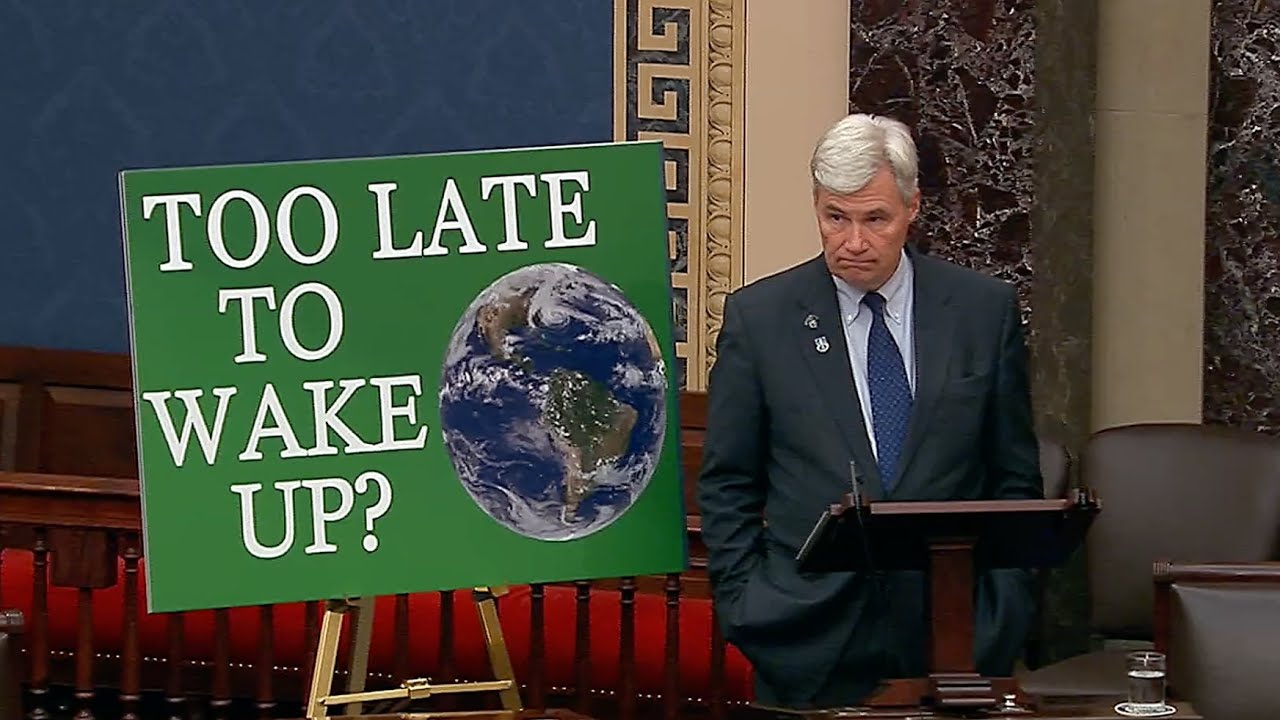
...FREE-TO-POLLUTE BUSINESS MODEL. THE VALUE TO FOSSIL FUEL INTERESTS OF THAT SUBSIDY, FROM
8:30
BEING ALLOWED TO POLLUTE FOR FREE, HAS BEEN CALCULATED BY THE
8:36
INTERNATIONAL MONETARY FUND AT NORTH OF $600 BILLION EVERY
8:45
YEAR. EVERY SINGLE YEAR, 600-PLUS
8:50
BILLION DOLLARS WORTH OF FREE POLLUTION THAT WE ALL PAY FOR IN VARIOUS WAYS.
8:58
HONEST CALCULATIONS OF WHAT'S CALLED THE SOCIAL COST OF CARBON POLLUTION DIFFER A BIT, BUT
9:06
THEY'RE ALL IN THE HUNDREDS OF BILLIONS OF DOLLARS.
---
---
wiki 3 26
Being "lukewarm" or "skeptical"
In 2012, Clive Hamilton published the essay "Climate change and the soothing message of luke-warmism".[86] He defined luke-warmists as "those who appear to accept the body of climate science but interpret it in a way that is least threatening: emphasising uncertainties, playing down dangers, and advocating a slow and cautious response. They are politically conservative and anxious about the threat to the social structure posed by the implications of climate science. Their 'pragmatic' approach is therefore alluring to political leaders looking for a justification for policy minimalism." He cited Ted Nordhaus and Michael Shellenberger of the Breakthrough Institute, and also Roger A. Pielke Jr., Daniel Sarewitz, Steve Rayner, Mike Hulme and "the pre-eminent luke-warmist" Danish economist Bjørn Lomborg.[86]
Climate change skepticism, while in some cases professing to do research on climate change, has focused instead on influencing the opinion of the public, legislators and the media, in contrast to legitimate science.[30]: 28
Pope Francis groups together four types of respondents rejecting climate change: those who "deny, conceal, gloss over or relativize the issue".[87]
---
https://theconversation.com/the-five-corrupt-pillars-of-climate-change-denial-122893
no lnx many
The Conversation
The five corrupt pillars of climate change denial
November 28, 2019 8.00am EST
Author
Mark Maslin
Professor of Earth System Science, UCL
Disclosure statement
Mark Maslin is a Founding Director of Rezatec Ltd, Director of The London NERC Doctoral Training Partnership and a member of Cheltenham Science Festival Advisory Committee. He is an unpaid member of the Sopra-Steria CSR Board. He has received grant funding in the past from the NERC, EPSRC, ESRC, Royal Society, DIFD, DECC, FCO, Innovate UK, Carbon Trust, UK Space Agency, European Space Agency, Wellcome Trust, Leverhulme Trust and British Council. He has received research funding in the past from The Lancet, Laithwaites, Seventh Generation, Channel 4, JLT Re, WWF, Hermes, CAFOD and Royal Institute of Chartered Surveyors.
Partners
University College London
The fossil fuel industry, political lobbyists, media moguls and individuals have spent the past 30 years sowing doubt about the reality of climate change - where none exists. The latest estimate is that the world’s five largest publicly-owned oil and gas companies spend about US$200 million a year on lobbying to control, delay or block binding climate policy.
Their hold on the public seems to be waning. Two recent polls suggested over 75% of Americans think humans are causing climate change.School climate strikes, Extinction Rebellion protests, national governments declaring a climate emergency, improved media coverage of climate change and an increasing number of extreme weather events have all contributed to this shift. There also seems to be a renewed optimism that we can deal with the crisis.
But this means lobbying has changed, now employing more subtle and more vicious approaches – what has been termed as “climate sadism”. It is used to mock young people going on climate protests and to ridicule Greta Thunberg, a 16-year-old young woman with Asperger’s, who is simply telling the scientific truth.
Anti-climate change lobbying spend by the five largest publicly-owned fossil fuel companies. Statista, CC BY-SA
At such a crossroads, it is important to be able to identify the different types of denial. The below taxonomy will help you spot the different ways that are being used to convince you to delay action on climate change.
Do experts have something to add to public debate?
1. Science denial
This is the type of denial we are all familiar with: that the science of climate change is not settled. Deniers suggest climate change is just part of the natural cycle. Or that climate models are unreliable and too sensitive to carbon dioxide.
Some even suggest that CO₂ is such a small part of the atmosphere it cannot have a large heating affect. Or that climate scientists are fixing the data to show the climate is changing (a global conspiracy that would take thousands of scientists in more than a 100 countries to pull off).
All these arguments are false and there is a clear consensus among scientists about the causes of climate change. The climate models that predict global temperature rises have remained very similar over the last 30 years despite the huge increase in complexity, showing it is a robust outcome of the science.
Read more: Five climate change science misconceptions – debunked
[grapf] Model reconstruction of global temperature since 1970. Average of the models in black with model range in grey compared to observational temperature records from NASA, NOAA, HadCRUT, Cowtan and Way, and Berkeley Earth. Carbon Brief, ]
The shift in public opinion means that undermining the science will increasingly have little or no effect. So climate change deniers are switching to new tactics. One of Britain’s leading deniers, Nigel Lawson, the former UK chancellor, now agrees that humans are causing climate change, despite having founded the sceptic Global Warming Policy Foundation in 2009.
It says it is “open-minded on the contested science of global warming, [but] is deeply concerned about the costs and other implications of many of the policies currently being advocated”. In other words, climate change is now about the cost not the science.
2. Economic denial
The idea that climate change is too expensive to fix is a more subtle form of climate denial. Economists, however, suggest we could fix climate change now by spending 1% of world GDP. Perhaps even less if the cost savings from improved human health and expansion of the global green economy are taken into account. But if we don’t act now, by 2050 it could cost over 20% of world GDP.
We should also remember that in 2018 the world generated US$86,000,000,000,000 and every year this World GDP grows by 3.5%. So setting aside just 1% to deal with climate change would make little overall difference and would save the world a huge amount of money. What the climate change deniers also forget to tell you is that they are protecting a fossil fuel industry that receives US$5.2 trillion in annual subsidies – which includes subsidised supply costs, tax breaks and environmental costs. This amounts to 6% of world GDP.
The International Monetary Fund estimates that efficient fossil fuel pricing would lower global carbon emissions by 28%, fossil fuel air pollution deaths by 46%, and increase government revenue by 3.8% of the country’s GDP.
3. Humanitarian denial
Climate change deniers also argue that climate change is good for us. They suggest longer, warmer summers in the temperate zone will make farming more productive. These gains, however, are often offset by the drier summers and increased frequency of heatwaves in those same areas. For example, the 2010 “Moscow” heatwave killed 11,000 people, devastated the Russian wheat harvest and increased global food prices.
Geographical zones of the world. The tropical zones span from the Tropic of Cancer in the North to the Tropic of Capricorn in the South (red shaded region) and contains 40% of the World population. Maulucioni/Wikipedia, CC BY-SA
More than 40% of the world’s population also lives in the Tropics – where from both a human health prospective and an increase in desertification no one wants summer temperatures to rise.
Deniers also point out that plants need atmospheric carbon dioxide to grow so having more of it acts like a fertiliser. This is indeed true and the land biosphere has been absorbing about a quarter of our carbon dioxide pollution every year. Another quarter of our emissions is absorbed by the oceans. But losing massive areas of natural vegetation through deforestation and changes in land use completely nullifies this minor fertilisation effect.
Climate change deniers will tell you that more people die of the cold than heat, so warmer winters will be a good thing. This is deeply misleading. Vulnerable people die of the cold because of poor housing and not being able to afford to heat their homes. Society, not climate, kills them.
This argument is also factually incorrect.In the US, for example, heat-related deaths are four times higher than cold-related ones. This may even be an underestimate as many heat-related deaths are recorded by cause of death such as heart failure, stroke, or respiratory failure, all of which are exacerbated by excessive heat.
US weather fatalities for 2018 alongside the ten- and 30-year average. National Weather Service, ]
4. Political denial
Climate change deniers argue we cannot take action because other countries are not taking action. But not all countries are equally guilty of causing current climate change. For example, 25% of the human-produced CO₂ in the atmosphere is generated by the US, another 22% is produced by the EU. Africa produces just under 5%.
Given the historic legacy of greenhouse gas pollution, developed countries have an ethical responsibility to lead the way in cutting emissions. But ultimately, all countries need to act because if we want to minimise the effects of climate change then the world must go carbon zero by 2050.
[graf Per capita annual carbon dioxide emissions and cumulative country emissions. Data from the Global Carbon Project. Nature. Data from the Global Carbon Project]
Deniers will also tell you that there are problems to fix closer to home without bothering with global issues. But many of the solutions to climate change are win-win and will improve the lives of normal people. Switching to renewable energy and electric vehicles, for example, reduces air pollution, which improves people’s overall health.
Developing a green economy provides economic benefits and creates jobs. Improving the environment and reforestation provides protection from extreme weather events and can in turn improve food and water security.
5. Crisis denial
The final piece of climate change denial is the argument that we should not rush into changing things, especially given the uncertainty raised by the other four areas of denial above. Deniers argue that climate change is not as bad as scientists make out. We will be much richer in the future and better able to fix climate change. They also play on our emotions as many of us don’t like change and can feel we are living in the best of times – especially if we are richer or in power.
But similarly hollow arguments were used in the past to delay ending slavery, granting the vote to women, ending colonial rule, ending segregation, decriminalising homosexuality, bolstering worker’s rights and environmental regulations, allowing same sex marriages and banning smoking.
The fundamental question is why are we allowing the people with the most privilege and power to convince us to delay saving our planet from climate change? grafs
https://yyy.theguardian.com/environment/2021/sep/09/big-oil-delay-tactics-new-climate-science-denial
Big oil’s ‘wokewashing’ is the new climate science denialism
:{
}:
‘Discourses of delay’ by the fossil fuel companies.
Academic researchers say the fossil fuel industry has a new tool to delay efforts to curb emissions – a social justice strategy
DOUBT CORROLLORY: DELAY IS A WIN SEE FALLBACKS:
1) it's not real
2) it's real but just natural variation (sunspots, medieval ice age...)
3) it's real and human caused, but too expensive to fix (wreck economy)
3a) Lomborg: more efficient to do Y (or do evil in the guise/name of green: frack, nuke)
3b: wheeler many decades out, 3rd world clean water (ignores that coal poisons am water/kids, coal ash, arsenic...)
see lomborg shuffle (clintel covid fight covid not carbon) ALSO SHILLENBERGER
820 aha: this is variant last stage of fallback strategy: 1) not real 2) real but not anthro 3) agw but too expensive to fix (wreck gnp) 4: we can afford to fix it, but we must be smart/targeted w/ $ 4a we cvan't really afford to fix big global warming, but we can do smaller green humanitarian stuff [WHEELER CLEAN WATER IN 3RD WORLD] that will make some ppl's lives better and might let us move incrementally to fix climate [and BTW the worst effect/chaos in in far future if ever]
evil crypto because to promotes denial IN THE NAME OF humanitarianism/ EJ when in fact poor POC in 3rd world will be hit 1st and worst, and have least ability to cope and made least contribution to the problem
===
see lomborg shuffle (clintel covid fight covid not carbon)
820 aha: this is variant last stage of fallback strategy: 1) not real 2) real but not anthro 3) agw but too expensive to fix (wreck gnp) 4: we can afford to fix it, but we must be smart/targeted w/ $ 4a we can't really afford to fix big global warming, but we can do smaller green humanitarian stuff that will make some ppl's lives better and might let us move incrementally to fix climate [and BTW the worst effect/chaos in in far future if ever]
4th phase denialism to DELAYISM
shill and lomborg are poster boys:
simone de beauvoir has got your #:
15 pp
https://mahb.stanford.edu/wp-content/uploads/2021/07/America_Misled.pdf
First published in October 2019. For more information, visit https://www.climatechangecommunication.org/america-misled/ Graphic design: Wendy Cook Cite as: Cook, J., Supran, G., Lewandowsky, S., Oreskes, N., & Maibach, E., (2019). America Misled: How the fossil fuel industry deliberately misled Americans about climate change. Fairfax, VA: George Mason University Center for Climate Change Communication. Available at https://www.climatechangecommunication.org/america-misled/
How the fossil fuel industry polluted the information landscape
Key points 1. Internal corporate documents show that the fossil fuel industry has known about the reality of human-caused climate change for decades. Its response was to actively orchestrate and fund denial and disinformation so as to stifle action and protect its status quo business operations. 2. As the scientific consensus on climate change emerged and strengthened, the industry and its political allies attacked the consensus and exaggerated the uncertainties. 3. The fossil fuel industry offered no consistent alternative explanation for why the climate was changing—the goal was merely to undermine support for action. 4. The strategy, tactics, infrastructure, and rhetorical arguments and techniques used by fossil fuel interests to challenge the scientific evidence of climate change—including cherry picking, fake experts, and conspiracy theories—come straight out of the tobacco industry’s playbook for delaying tobacco control. These key points reflect the position of experts studying climate denial and the history of fossil fuel interests, based on thousands of pages of documented evidence.
...
Contradictory contrarianism The most common denialist arguments have been shown to contain fatal assumptions or fallacies26. Climate deniers do not offer any rational explanation for why our climate is changing. Rather, denialist arguments are incoherent and often contradictory27. For example, deniers will seize on snowfall to claim that global warming is a hoax, while at the same time claiming that an extreme event such as a drought or wildfire cannot be attributed to climate change. This is incoherent because either extreme events can be a signal of climate change or they cannot be. Climate denial lacks consistency because it is not about scientific evidence—it is about how to continue business as usual in the face of climate disruption. Climate deniers reject climate science because they are averse to proposed or perceived solutions to climate change28.
...
Common Fallacies
Climate denial arguments can be summarized by the five techniques of science denial (summarized with the acronym FLICC): fake experts, logical fallacies, impossible expectation, cherry picking, and conspiracy theories29,30.
Fake Experts
Logical Fallacies
Impossible Expectations
Cherry Picking
Conspiracy Theories
Promoting dissenting non-experts as highly qualified while not having published any actual climate research and/or received any relevant education. Logically flawed arguments that lead to false conclusions. Common logical fallacies are red herrings, non sequiturs, and false dichotomies. Demanding unrealistic standards of certainty before acting on the science. A technique practised by the tobacco industry. Selectively choosing data that supports a desired conclusion that differs from the conclusion arising from all the available data32. Proposing a secret plan among a number of people, generally to implement a nefarious scheme such as conspiring to hide a truth or perpetuate misinformation. Climate deniers are more likely to be conspiracy theorists33
nice graphics throughout eg]
Deconstructing Denial
Figure 7 shows deconstructions of some of the most common myths about climate change.Determining the misleading techniques of a climate myth requires outlining the argument structure: listing any premises (starting assumptions) and the conclusion. This allows one to ascertain whether any premises are false, and/or whether the argument is logically invalid. Figure 7:
Deconstruction of common climate myths.
MYTH “Cold weather disproves global warming.” Premise 1 CHERRY PICKING
IMPOSSIBLE EXPECTATIONS Some place is cold. Premise 2 No place can experience cold during global warming. Conclusion Global warming isn’t happening.
Cherry Picking: Ignores that most of the globe is warm. Impossible Expectations: Global warming doesn’t mean cold events don’t happen, just that they’re less likely to happen. MYTH “Global warming stopped in 1998.”
SLOTHFUL INDUCTION
CHERRY PICKING Premise 1 The temperature trend since 1998 is statistically insignificant. Conclusion Global warming isn’t happening.Slothful Induction: Ignores other temperature records and measures of heat imbalance showing a significant warming trend. Cherry Picking: Trends over short periods do not lead to conclusions about
...
Conclusion Disinformation about climate change has a straightforward purpose—to block action on climate change. In America, it has largely succeeded, with policies to mitigate climate change stymied or delayed for decades. Meanwhile, climate change has intensified, causing impacts such as intensified extreme weather events, rising sea level, harmful effects on human health, and much more. Climate denial has seriously hurt the American people. The damage, deaths, and harm to people will continue to worsen if we don’t expose and discredit denial. This is not the first time that corporations prioritizing profits over people have caused great harm. The tobacco industry spent hundreds of millions of dollars disinforming the public about the health impacts of smoking in order to undermine tobacco control34,35. The World Health Organization estimates that six million people die every year from preventable tobaccocaused disease. Drawing on the tobacco industry’s playbook, fossil fuel companies have done the same on climate change, spending hundreds of millions of dollars confusing the public and delaying life-saving action. Their legacy is the death, destruction, and injustices of irreversible global warming. Big Oil is the new Big Tobacco.
===