fallback phase 4 delayism
was disambig, overall cat is delay is win
merri ok
shillenberger/lomborg poster boys aka “lukewarmism”
see greenwash/ wokewash?
---
---
SW 9 25 4 phases
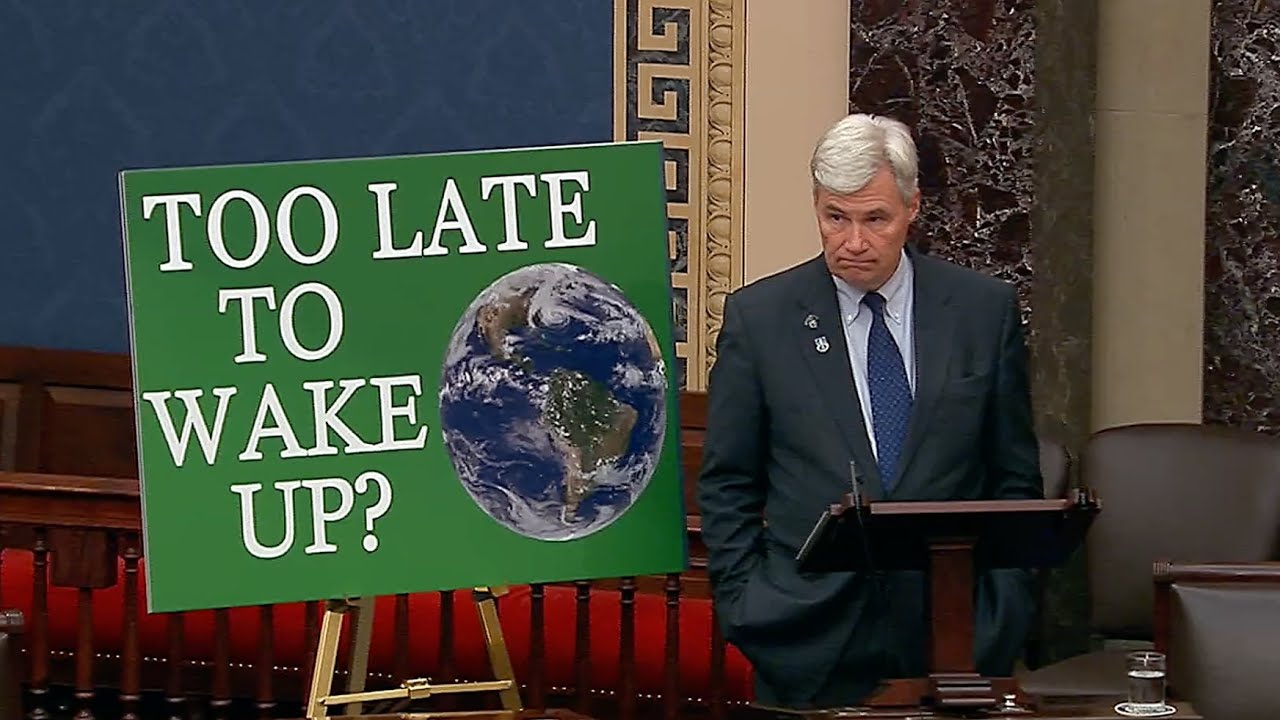
...FREE-TO-POLLUTE BUSINESS MODEL. THE VALUE TO FOSSIL FUEL INTERESTS OF THAT SUBSIDY, FROM
8:30
BEING ALLOWED TO POLLUTE FOR FREE, HAS BEEN CALCULATED BY THE
8:36
INTERNATIONAL MONETARY FUND AT NORTH OF $600 BILLION EVERY
8:45
YEAR. EVERY SINGLE YEAR, 600-PLUS
8:50
BILLION DOLLARS WORTH OF FREE POLLUTION THAT WE ALL PAY FOR IN VARIOUS WAYS.
8:58
HONEST CALCULATIONS OF WHAT'S CALLED THE SOCIAL COST OF CARBON POLLUTION DIFFER A BIT, BUT
9:06
THEY'RE ALL IN THE HUNDREDS OF BILLIONS OF DOLLARS.
...
PHASE 1 OF CLIMATE DENIAL FOR THE FOSSIL FUEL INDUSTRY WAS
3:37
SIMPLE, BURY THE EVIDENCE. DECADES AGO, MANY DECADES AGO,
3:44
SCIENTISTS IN THE FOSSIL FUEL INDUSTRY WARNED ABOUT CLIMATE
3:52
CHANGE. EXXON, CHEVRON, SHELL, AMERICAN
3:57
PETROLEUM INSTITUTE, ALL GOT INTERNAL WARNINGS DECADES AGO OF
...PHASE 2. ONE WAS SCIENTISTS OUTSIDE THE
4:44
FOSSIL FUEL INDUSTRY BEGINNING TO PUBLICLY DISCUSS THE CLIMATE DANGERS OF FOSSIL FUEL COMBUSTION. AND NOT JUST FRINGE SCIENTISTS, EITHER, BUT LEADING SCIENTISTS,
...
10:55
THAT BRINGS US TO PHASE 3,
11:03
UNLEASHED BY THE CITIZENS UNITED DECISION, A TRULY TOXIC DECISION
11:10
DELIVERED BY AN ALL-REPUBLICAN PANEL OF FIVE ON THE SUPREME
11:16
COURT. THAT DECISION DID TWO THINGS -- ONE, AS A LEGAL MATTER, IT
11:24
UNLEASHED INFINITY SPECIAL INTEREST MONEY INTO OUR POLITICAL SYSTEM.
11:31
TWO, AS A PRACTICAL MATTER, IT ALLOWED THAT MONEY TO BE
11:36
ANONYMOUS, WHAT'S CALLED DARK MONEY, FLOWING INTO THE POLITICAL SYSTEM THROUGH FRONT GROUPS THAT OBSCURE THE ACTUAL
11:44
DONOR KEEPING CITIZENS IN THE DARK ABOUT WHO'S WHO IN THE
11:50
POLITICAL ARENA, AND WHO'S BEHIND WHAT THEY'RE BEING TOLD.
11:57
BASIC INFORMATION TO ACCOMPLISH THE OFFICE OF CITIZEN IN THIS
12:02
GREAT REPUBLIC DENIED TO THE CITIZENS. THE FOSSIL FUEL INDUSTRY SOUGHT
12:10
THAT DECISION, WAS PREPARED FOR THAT DECISION, AND MOVED
12:16
AGGRESSIVELY TO FLOOD DARK MONEY INTO ELECTIONS.
12:22
IT'S A WHOLE SEPARATE SPEECH ABOUT FOSSIL FUEL'S ROLE IN THAT CITIZENS UNITED DECISION, BUT
12:29
THE IMPORTANT THING WAS THAT THEY WON. DARK MONEY CORRUPTION NOW COULD
12:36
BUTTRESS CLIMATE DENIAL FRAUD. IN THE CONTEST BETWEEN TRUTH AND
12:44
L LIES, LIES NOW HAD NOT ONLY BILLIONS, BUT AN ENORMOUS NEW DARK MONEY THUMB ON THE
12:52
POLITICAL SCALE. THERE'S A FAMOUS SAYING THAT IT'S HARD TO GET SOMEONE TO UNDERSTAND SOMETHING WHEN THEIR
12:58
SALARY DEPENDS ON THEM NOT UNDERSTANDING IT. THANK YOU, UPTON SINCLAIR.
...NOW WE'RE IN PHASE FOUR. THE PHASE WHERE AN INCREASINGLY
17:18
DESPERATE FOSSIL FUEL OPERATION SWITCHES FROM DEFENSE TO OFFENSE, BURYING THE EVIDENCE,
use pwr of govt to crush alt energy, will inevit win
---
---
wiki 3 26
Being "lukewarm" or "skeptical"
In 2012, Clive Hamilton published the essay "Climate change and the soothing message of luke-warmism".[86] He defined luke-warmists as "those who appear to accept the body of climate science but interpret it in a way that is least threatening: emphasising uncertainties, playing down dangers, and advocating a slow and cautious response. They are politically conservative and anxious about the threat to the social structure posed by the implications of climate science. Their 'pragmatic' approach is therefore alluring to political leaders looking for a justification for policy minimalism." He cited Ted Nordhaus and Michael Shellenberger of the Breakthrough Institute, and also Roger A. Pielke Jr., Daniel Sarewitz, Steve Rayner, Mike Hulme and "the pre-eminent luke-warmist" Danish economist Bjørn Lomborg.[86]
Climate change skepticism, while in some cases professing to do research on climate change, has focused instead on influencing the opinion of the public, legislators and the media, in contrast to legitimate science.[30]: 28
Pope Francis groups together four types of respondents rejecting climate change: those who "deny, conceal, gloss over or relativize the issue".[87]
-adapt only eg bush 34?]
...
Delaying climate change mitigation measures
Further information: Economics of climate change mitigation and Economic analysis of climate change
[ ](https://en.wikipedia.org/wiki/File:20220629_Public_estimates_of_scientific_consensus_on_climate_change_-_horizontal_bar_chart.svg)
A 2022 study found that the public in many countries substantially underestimates the degree of scientific consensus that humans are causing climate change.[97] Studies from 2019–2021[98][53][54] found scientific consensus to range from 98.7–100%.
[ ](https://en.wikipedia.org/wiki/File:20220823_Public_underestimation_of_public_support_for_climate_action_-poll_-false_social_reality.svg)
Research found that 80–90% of Americans underestimate the prevalence of support for major climate change mitigation policies and climate concern. While 66–80% Americans support these policies, Americans estimate the prevalence to be 37–43%. Researchers have called this misperception a false social reality, a form of pluralistic ignorance.[99][100]
Climate change deniers often debate whether action (such as the restrictions on the use of fossil fuels to reduce carbon-dioxide emissions) should be taken now or in the near future. They fear the economic ramifications of such restrictions. For example, in a 1998 speech, a staff member of the Cato Institute, a libertarian think tank, argued that emission controls' negative economic effects outweighed their environmental benefits.[101] Climate change deniers tend to argue that even if global warming is caused solely by the burning of fossil fuels, restricting their use would damage the world economy more than the increases in global temperature.[102]
Conversely, the general consensus is that early action to reduce emissions would help avoid much greater economic costs later, and reduce the risk of catastrophic, irreversible change.[103]
Earlier, climate change deniers' online YouTube content focused on denying global warming, or saying such warming is not caused by humans burning fossil fuel.[104] As such denials became untenable, content shifted to asserting that climate solutions are unworkable, that global warming is harmless or even beneficial, and that the environmental movement is unreliable.[104]
A 2016 article in Science made the case that opposition to climate policy was beginning to take a "rhetorical shift away from outright skepticism" and called this neoskepticism. Rather than denying the existence of global warming, neoskeptics instead "question the magnitude of the risks and assert that reducing them has more costs than benefits." According to the authors, the emergence of neoskepticism "heightens the need for science to inform decision making under uncertainty and to improve communication and education."[105]
There is a range of possible mitigation policies. Disagreement over the sufficiency, viability, or desirability of a given policy is not necessarily neoskepticism. But neoskepticism is marked by failure to appreciate the increased risks associated with delayed action.[106] Gavin Schmidt has called neoskepticism a form of confirmation bias and the tendency to always take "as gospel the lowest estimate of a plausible range".[107] Neoskeptics err on the side of the least disruptive projections and least active policies and, as such, neglect or misapprehend the full spectrum of risks associated with global warming.[107]
In political terms, soft climate denial can stem from concerns about the economics and economic impacts of climate change, particularly the concern that strong measures to combat global warming or mitigate its impacts will seriously inhibit economic growth.[108]: 10
---
---
omg
mma 3 23
CARLSON (HOST): Of course, climate does change, it has always changed. In fact, the landscape we live in now is formed by climate change. The glaciers are a product of climate change. The climate is changing now, it never stops changing. That is a process that we didn't cause and that we can't control to any great degree. We will never be able to control.
And there are upsides to it and downsides to it.By the way,ifthe Earth is indeed getting warmer and it seems to be, well, then that will make more arable land in places like Canada and northern Europe. [and cook shitholes]
So, like everything in this life and the temporal world, it's a mixed blessing. But you only hear the downsides, which tells you a lot. It tells you this is not science, it's manipulation. These aren't reports from the experts, these are threats.
---
---
11 22 gmail
conservative New York Times columnist Bret Stephens has spent years writing columns questioning climate change. So it was a surprise when, earlier this week, he announced that a recent trip to Greenland changed his mind [nyt op vid]
in a 6,000-word feature essay, Stephens said he’s now convinced that the ice sheets are melting due to human-caused warming. After speaking with scientists, risk assessors, and policy experts, he said he believes climate change, like cancer, is “manageable or curable in its earlier stages, disastrous in its later ones.” He wrote: “Global warming is a fact. So is the human contribution to it. So are observed increases in temperature and sea levels.”
It was a remarkable transition for someone who previously described climate change as a “mass hysteria phenomenon” and falsely claimed that “much of the science has been discredited.” But Stephens did not apologize for spreading those falsehoods, or for any of his previous misleading remarks about the crisis.
Instead, Stephens tried to convince his readers that, following his come-to-Jesus moment on climate change, he now knows how to solve the problem. (Typical first-time climate dude behavior). His approach to climate, however, is virtually indistinguishable from fossil fuel companies.
Stephens said climate change should be solved by the market, not the government. He chastised activists for “alarmist” rhetoric, arguing humanity will be able to adapt. He criticized the “limitations” of clean energy, and emphasized the benefits of fracking and natural gas to lower emissions. He suggested that many people who want to address climate change do not "accept economic growth as a benefit.”
To come to these conclusions, Stephens ignored many of his own sources who told him climate change would be catastrophic. For example, oceanographer Josh Willis of NASA’s Jet Propulsion Laboratory told him that scientists could not predict the “upper end” of sea level rise by 2100. Willis said it “hopefully less than seven or eight feet" but cautioned that we don't know "just how fast the ice sheets can melt."
Stephens took this to mean that the upper limit of sea level rise is, in fact, 8 feet. This would literally annihilate the world’s coastal cities, home to hundreds of millions of people. Still, Stephens wrote:
On the face of it, that sounds manageable. Even if sea levels rise by eight feet, won’t the world have nearly 80 years to come to grips with the problem, during which technologies that help us mitigate the effects of climate change while adapting to its consequences are likely to make dramatic advances?
Even the man who invited Stephens to Greenland is not convinced. In an interview, Oceanographer and author John Englander said that while he was “very pleased” that Stephens “acknowledged the ways he might have been shortsighted” about the climate crisis, “I would like him to acknowledge the probabilities and the devastation a little more.”
“Usually, when I’m giving a presentation, most people come to understand that it’s a certainty that the ice sheets will melt to the point where global sea level is 5 to 10 feet higher,” he said in an interview. “[Stephens] accepts this, but it’s still a worst-case scenario in his mind … I wish he had been a lot stronger.”
The Timesmarketed Stephens’ piece as if it were a fresh and important new approach to tackling climate change. In reality, it is a collection of discredited talking points from the fossil fuel industry, and a prime example of delay discourse.
Delay discourse, as defined by scientists, are talking points that “accept the existence of climate change, but justify inaction or inadequate efforts.” It has been branded “the new denial” by, ironically, The New York Times – and it is the fossil fuel industry’s favorite way to pretend they care about climate change while continuing to pollute as long as possible.
Here are a few ways Stephens’ rhetoric mimics the fossil fuel industry’s delay discourse
the market will solve everything
Stephens’ core thesis is that his trip to Greenland "changed my mind about climate change while reinforcing my belief that markets, not government, provide the cure."
This is a core argument made by the oil and gas industry, through their primary lobbying group, the American Petroleum Institute (API). In a 2016 tweet, API asserted that "[m]arket forces can achieve our nation’s energy, climate & econ[omic] goals better than gov[ernment] mandates."
In a Facebook ad last year, API asserted: "America’s energy leadership has delivered economic growth and environmental progress. But burdensome regulations and anti-industry legislation threatens U.S. national security and global competitiveness."
Stephens makes the exact same argument in his column. The only difference is that the fossil fuel industry didn't have to pay for it.
As "proof" that market forces can address climate change, Stephens cites the history of water use. "In the United States, the difference between total water consumption in 1965 and 2015 is less than 4 percent," Stephens says. "In the same span of time, population grew by more than 60 percent." Stephens attributes that success to farmers who "gradually adopted sprinkler and drip irrigation systems, rather than more wasteful flood irrigation, not to conserve water but because the technology provided higher crop yields and larger profit margins."
What Stephens does not address is that farmers generally source their own water or buy it from the government. So changes that result in less water usage save farmers money, and there is no industry lobbying for excessive water use. The fossil fuel market is completely different. There is a powerful industry that wants to produce and burn as much oil and gas as possible. In the absence of government action, that is exactly what they will do.
Climate activists want to take away everything you love
Stephens writes that any policies related to climate change need to "align with human nature." He argues that phasing out fossil fuels is impossible because you can't have "modern life without plastics, made mainly from the hydrocarbons ethylene and propylene, or steel, made with coking coal and natural gas, or cement or asphalt." Giving up fossil fuels would require millions of people to return to "farming, while accepting a world that can feed far fewer people," Stephens writes.
Stephens says humanity has an "overwhelming and, for now, inescapable dependence on fossil fuels."
The fossil fuel industry is also eager to argue that modern life would be destroyed without oil and gas. Earlier this week, API tweeted that the "natural gas & oil industry helps bring Halloween traditions to life." The group emphasized that "costumes and decorations are made possible through natural gas and oil."[twt api and --]ut just as there are renewable alternatives to oil and gas for transportation and electricity, there are alternatives to plastics, including reusable and biodegradeable materials. Many communities, most recently New South Wales, are banning single use plastics. A Halloween without plastic is possible and would not require kids to stop trick-or-treating. (Here is a step-by-step guide.) But Stephens, like the fossil fuel industry, pretends that the choice is between continuing to use fossil fuels and abandoning modern life.
The solution to the fossil fuel problem is more fossil fuels
Stephens argues that if the world wants to get serious about climate change, it should ignore "environmental activists" and produce more natural gas:
[T]he biggest single driver in emissions reductions from 2005 to 2017 was the switch from coal to natural gas for power generation, since gas produces roughly half the carbon dioxide as coal. This, in turn, was the result of a fracking revolution in the past decade, fiercely resisted by many environmental activists, that made the United States the world’s largest gas producer.
Stephens' view on natural gas is virtually identical to the oil and gas industry:
API supports policies that expand the use of U.S. natural gas in both domestic and global markets – and for good reason. U.S. CO2 levels are at generational lows, due in large part to coal-to-natural gas switching in the power sector.
While it's true that natural gas emits less carbon dioxide than coal, presenting natural gas as a solution to climate change ignores the science. According to the latest report from the Intergovernmental Panel on Climate Change (IPCC), between 1850 and 2019, approximately 2,390 gigatons of carbon dioxide were emitted worldwide. That warmed the planet by about 1.1 degrees Celsius. To have a chance to cap total warming at around 2 degrees Celsius, which is necessary to avoid many of the very worst impacts, the IPCC estimates that the world can emit about 1,150 more gigatons.
The point that the IPCC makes clear is that there is no "sustainable" rate of CO2 emissions. Switching from a fossil fuel that emits somewhat less carbon will not cut it. It will still drive us toward the most catastrophic impacts of climate change. Emissions need to go to net zero sooner rather than later.
---
---
gaslit series
https://www.desmog.com/**2022/06/**16/climate-deniers-fossil-fuel-language-obstruction/
stella l
On a recent episode of the Fox Business show “Mornings with Maria,” American Petroleum Institute CEO and President, Mike Sommers, said that “the most important environmental movement in the world is the American oil and gas industry.”
“A super absurd example of oil and gas companies appropriating and weaponizing the language of climate advocates for their own greenwashing,” commented author and climate activist Genevieve Guenther on Twitter.
Sommers’ statement may be, in fact, one of the most literal examples of how fossil fuel companies are using language to perpetuate their climate denial and fend off action. And because public perception and awareness of the climate crisis are, at least in part, driven by how we talk about it, the fossil fuel industry has used language “to create smoke and mirrors and false impressions around what they’re really doing,” said Christine Arena, author, expert on climate disinformation, and former Executive Vice President at the PR firm Edelman. Arena was one of six employees to resign in 2015 following revelations of the firm’s greenwashing work with fossil fuel lobbies and associations.
PR firms — or “the enablers,” as Arena calls them — have played a key role in exploiting communication and manipulating language to their advantage, all while working on behalf of the fossil fuel industry and using a tobacco industry playbook. Ultimately, they’ve been using it to obstruct climate action, a longtime goal of the oil, gas, and coal industries. “If we take a step back and ask ourselves, why has meaningful action to avert the climate crisis proven to be so difficult? It is at least in part because of communications and because of the language coming from the fossil fuel industry,” said Arena.
Today, the fossil fuel industry and its allies are “appropriating and weaponizing” language from climate advocates, usually in ways that are much less obvious than Sommers’ recent comment.
“The industry is repeating the same phrases it’s hearing from the climate movement to use for their own advertising purposes. They are commandeering the language of sustainability and of the climate movement,” Arena said of fossil fuel companies, adding that they are doing so “to create a false perception that they’re on our side.”
Fossil Fuel Solutionism
Language around climate solutions is particularly susceptible to this treatment, especially as polluting companies invest in strategies and tactics to present themselves as part of the solution to climate change when, clearly —as they continue to prioritize drilling for globe-warming fuels — they are not. That’s ExxonMobil touting its “lower-emission solutions” and staff working to “develop our global strategy for creating sustainable energy” while planning a $10 billion investment in new oil and gas reserves in South America. Some researchers have called this “fossil fuel solutionism."
exxon twit]
This sort of inevitability of fossil fuels — I think that’s a place where language is really important,” said Timmons Roberts, social scientist and executive director of the Climate Social Science Network at Brown University. He says the fossil fuel industry encourages this perception that everyone is complicit in climate change by using its products and is therefore too reliant on them to ever transition away
The strategy is part of a broader communications shift among polluters and their advocates. No longer are oil and gas executives straight-up “denying” that the climate is changing; instead the message becomes one that ultimately slow-walks real climate action — saying, it’s too expensive to address, it’s too late to do anything. “We call these ‘climate delay’ discourses,since they often lead to deadlock or a sense that there are intractable obstacles to taking action,” write Roberts and his colleagues in their “Discourses of climate delay**” analysis.
Fossil fuel companies and their allies may use delay arguments and tactics across a range of platforms: in promotional campaigns, public declarations, online ads, social media, or political lobbying. Nowadays, the messaging may contain “a blend” of factual omissions and rhetorical distortions, according to Arena, that can be more confusing to people and, therefore, more dangerous than outright lies.
“If you say ‘clean coal’ a lot of people are going to know that there’s no such thing, so that’s easier for the audience to identify,” said Arena. “But then when you look at ExxonMobil’s language around carbon capture, for example, they’ll say things like ‘it’s going to take an all-of-the-above approach,’ and when the oil and gas industry says ‘all of the above,’ they mean oil and gas first.”
Arena considers this type of wording to be a form of greenwashing, where a company uses “selective micro truths,” she explained, in order to create a misleading impression. This type of language is more insidious because it’s creating the perception that oil and gas companies really are “part of the solution” and don’t need regulatory intervention — which they are often lobbying against elsewhere.
“Cleaner burning.” “Lower emissions fuels.” “Lower carbon future.” These phrases are all examples of this, Arena said.
Many of these terms appear on fossil fuel companies’ social media accounts or websites. ExxonMobil uses the phrase “advancing climate solutions” and “lower emission energy future.” Shell is “working…to accelerate the transition to **net-zero** emissions.” Chevron is “advanc**ing** a lower carbon future.”
By participating in the public discourse in this way, fossil fuel companies can manipulate public perceptions by making “support” seem like action. “‘Supporting the Paris agreement’ is also deceptive because it makes it look like they are in line with Paris,” said Arena. “They’re not.”
A new report from more than 40 groups, published by Oil Change International, has found that major U.S. and European oil and gas companies “still fail to meet the bare minimum for alignment with the Paris Agreement.” These companies’ pledges and commitments are far from credible, the report concludes, when they are planning more than 200 fossil fuel expansion projects between now and 2025.
[oil ch intl twt]
the History of Junk Science, Alarmists, and Climate Prophets
Denier and delayer communication strategies aren’t new; in fact they have always been central to the fossil fuel industry and its allies’ climate obstruction.
In the 1990s, for example, “sound science” was an expression used by climate deniers to attack and counter climate science — or “junk science,” as some deniers, such as former Fox News columnist and founder of the website JunkScience.com Steve Milloy, referred to the work of climate scientists like Michael E.Mann.
In another past strategy, that’s now regaining steam, climate deniers and delayers have been employing the terms “realists” and “alarmists.” In 2020, Cambridge University researcher Giulio Corsi and I analyzedthe use of these terms on Twitter, finding a 900 percent increase in their use over the previous four years. As the climate movement was gaining international attention with massive protests between 2018 and 2019, we saw that spikes in tweets about “alarmism” and “realism” often corresponded to high-profile speeches by activist Greta Thunberg. The trend also coincided with the Heartland Institute, a U.S. think tank and notorious promoter of climate disinformation, enlisting young German YouTuber Naomi Seibt as a counter-figure to Thunberg to denounce her and climate scientists’ “alarmism.”
[greta pix w/ indig]
This framing exploits the negative connotation of the term “alarmist” in order to discredit a legitimate scientific warning, while trying to associate backers of fringe theories about, say, sunspots causing global warming, with rationality and realism.
Milloy employed a combination of these terms when he wrote in 2002: “When the Clean Air Act was enacted in 1970, air pollution in the U.S. was more of an aesthetic than a public health problem. […] Few people realize this after 30 years of non-stopjunk science-fueled alarmism from environmental activists.” [Emphasis added.]
For decades, deniers have used rhetoric likening those who warn about the catastrophic impacts of the climate emergency to someone who is “out of touch with reality.” You can find it in the 1998 American Petroleum Institute “action plan,” born just a few months after the Kyoto Protocol and developed by Exxon, Chevron, Southern Company, and representatives from conservative organizations, including Milloy. The memo clearly stated that: “Victory will be achieved when those promoting the treaty on the basis of extant science appear to be out of touch with reality.” [Emphasis added.]
Both uses of language – “sound science” versus “junk science” and “alarmists” versus “realists” – create an “us versus them” dynamic. The result is two polarizing, and utterly fabricated, positions on climate science.
We can see the fossil fuel industry using language in a similar way in its public-facing propaganda, projecting political meaning on its opponents.
“Propaganda is about manipulating public opinions, stoking fears, and sewing divisions,” said Arena. “When they talk about ‘the woke’ or the ‘climate industrial complex’ or ‘activist extremists,’ that is all propaganda. The industry is blaming rising gas prices on ‘woke liberals’ or on renewables or on climate activism. Those are false narratives and they are propaganda-based."
According to John Cook, founder of Skeptical Science and research fellow at Monash Climate Change Communication Research Hub in Australia, fossil fuel industry propaganda has been intensifying the “othering” of climate scientists and advocates for climate action for some time.
“There’s a lot of terminology that has become more powerful in sending that signal that climate advocates are different,” said Cook. “Labels to say, ‘these people who care about climate change are trying to change society.’” Climate denial is intimately connected to values like individual freedom and free market fundamentalism,he explained. That’s why those labels are often extended in meaning to accuse climate advocates of a “radical liberal agenda,” said Arena.
The “othering” of climate advocates isn’t only by fossil fuel companies. In September 2021, the Italian Minister of the Ecological Transition called climate activists “radical chic” and said that the “extremist and ideological ones” are “worse than the climate catastrophe.”
Over time, the language of climate deniers and delayers has evolved from “basic climate denial” to “culture wars,” said Arena.
Culture wars are strictly linked to political ideology: that’s why some words are chosen by deniers and delayers over others, because they “tap into broader values” and “activate” their supports, added Cook. For example, deniers might pose the argument that “[climate action] is going to impinge on their freedom,” he said.
The Supposed Church of Climate Change
Another linguistic tactic used to denigrate those who support climate action is to cast an issue with roots in science — climate change — as one of religion. In Italy, for example, the daily newspaper Il Foglio uses pseudo-religious terms when referencing climate change: ecology becomes “a religion to replace canceled Christianity” where “you kiss trees and worship whales;” switching to an electric car is “fanatical;” climate change is referred toas “dogma.” And Friday, the Italian paper writes, has becomethe day of “forced conversion to sustainability” when youth climate activists go on strike from school, as part of Greta’s “children’s crusade.”
Associating climate change with religion reinforces the denier message that the build-up of greenhouse gases and its far-reaching global impacts is actually a matter of faith and has nothing to do with a factual, physical reality in the form of heatwaves and hurricanes. In this scenario, climate advocates seem unreasonable, disconnected from reality and unable to see things clearly. The effect is to relegate those supporting climate science to one end of the spectrum, one where we don’t need to address the intensifying impacts of heating the globe.
But this zealous religious framing happens beyond the pages of Il Foglio. According to Cook, deniers also use words like “cult” and “high priests” to describe climate advocates, while emphasizing that they themselves are “treated like heretics.”
“They are framing themselves as the rational scientific person and the scientists or advocates as the hysterical, biased, faith-based and not evidence-based,” said Cook of climate deniers. “They’re trying to flip reality because ideology is driving their denial.” [heartland reverse engr]
Don’t Worry, Just Adapt!
Another narrative emerging from the denial anddelayer camp is that “adapting” to climate change will be our lifeline: Those perpetuating it end up downplaying the impacts of the climate crisis because they say we will be able to adapt to it.
In a May 31 Slate article about Alex Epstein’s new book Fossil Future, which advocates for fossil fuels, Nitish Pahwa writes: “The new style of climate denial is here: It’s not that carbon emissions aren’t increasing, or aren’t warming the world, but look, you’re doing fine right now, right? So, we’ll be just fine!”
On May 20, Stuart Kirk, the head of responsible investing for HSBC’s asset management division, “Who cares if Miami is six meters underwater in 100 years? Amsterdam has been six meters underwater for ages, and that’s a really nice place. We will cope with it.” Kirk was later suspended for his comments.
[vid]
stuart Kirk, head of responsible investing for HSBC’s asset management division, was suspended for his comments to investors in which he downplayed the risks of climate change.
This argument implies that working to slow climate change is futile and offers adaptation as “the only possible response” to the climate crisis, according to Roberts and his colleagues in their “Discourses of delay” analysis.
“Every day there’s new discourses being invented either by the actors in these industries that don’t want to make the energy transition or by their public relations firms with tremendous capacity in terms of developing new language discourses,” said Roberts.
Effective PR is a key element to designing a convincing greenwashing campaign. “The PR and ad industry plays a central role in enabling climate obstruction,” said Arena. And the American Petroleum Institute’s is the perfect example of this. “They’re not on it. The only thing that they’re on is architecting and spreading more disinformation, which they are the quarterbacks of doing,” she added.
From fossil fuel solutionism to adaptation-only narratives, these climate obstruction tactics commandeer language in an attempt to undermine one of the most urgent and far-reaching challenges of our day. And the momentum behind such deceptive language is only building.
“We are on a dangerous trajectory,” Arena said. “I would say broadly that climate disinformation and greenwashing are getting much worse, and today we have many more examples to point to than we even did back when the industry was trying to deny climate change altogether.”
Understanding how opponents of climate action employ these discourses of delay is essential to recognizing climate disinformation and misinformation, Arena said, and ultimately to disrupting it. “We have to redouble our efforts to hold these companies and their enablers accountable.”
---
---
https://www.dailykos.com/stories/2022/9/8/2121649/-Electric-utilities-join-Big-Oil-in-engaging-in-climate-dishonesty-campaigns-to-benefit-polluters
no lnx gfx
Electric utilities join Big Oil in engaging in climate dishonesty campaigns to benefit polluters
April Siese
Daily Kos Staff
Thursday September 08, 2022
Findings from a new study, titled "The American electric utility industry's role in promoting climate denial, doubt, and delay" show that utility companies, trade associations, and front groups did their damnedest to downplay climate change over the past few decades.
April Siese
Daily Kos
Big Oil isn’t the only industry using a nefarious playbook to keep profits up along with pollution, according to a new study in Environmental Research Letters. The study examines the ways that utility companies have shifted their rhetoric from aligning with scientific findings to pushing doubt and denial from 1990 to 2000 to then calling for delayed action and shifting the blame to other industries rather than dealing with their own roles in the climate crisis.
This includes electric companies like Entergy, Duke, and Dominion, as well as trade organizations like the Edison Electric Institute (EEI) andElectric Power Research Institute (EPRI). The tactics mirror much of the activity seen by the likes of Exxon and Chevron, the American Petroleum Institute, and faux coalitions set up by the fossil fuel industry. In fact, the electric utility sector draws a parallel in its game plan to some of Exxon’s own misdeeds, the study authors found.
“After 2000, while EEI and EPRI no longer publicly doubted or denied climate change, these organizations continued to argue for delayed action,” researchers wrote. “This rhetoric deflected focus onto other countries and sectors and uplifted approaches such as CCS that have proven unviable to date in the power sector, distracting attention from the energy transition. This shift from doubt to delay is the same pattern that was identified in ExxonMobil's communications”
Since 2020, electric utilities have found “delay” tactics to be their favorite strategy, with researchers finding that “the 79 utilities that generated a majority of U.S. electricity from fossil fuels [only] pledged to retire a quarter of their coal generation by 2030, while proposing over 36 GW of new gas plants.” You can see these tactics in action with entities like the Midcontinent Independent System Operator’s insistence, which recently pushed the false claim that gas must continue flowing in order to generate any gaps in capacity created by retiring fossil fuel plants.
Big Oil, meanwhile, has moved onto a different strategy in its playbook. Oil and gas companies no longer push the so-called positive qualities of their energy sources but rather discuss just how seriously they take the climate crisis, though their actions wholly contradict that.In a new InfluenceMap study, the watchdog found that BP, Chevron, Exxon, Shell, and TotalEnergies talked a big game about green initiatives.
In reality, none of those companies’ “forecasted oil production appears in line with the International Energy Agency's Net Zero Emissions by 2050 (as of Q4 2021), with several companies planning to increase oil and gas production between 2021 and 2026.” These companies are shelling out a cumulative $750 million annually to keep from reducing emissions. The utility industry operates similarly and has devoted more than $500 million to lobbying against renewables and climate policy over the past 20 years.
lnx
big Oil isn’t the only industry using a nefarious playbook to keep profits up along with pollution, according to a new study inEnvironmental Research Letters. The study examines the ways that utility companies have shifted their rhetoric from aligning with scientific findings to pushing doubt and denial from 1990 to 2000 to then calling for delayed action and shifting the blame to other industries rather than dealing with their own roles in the climate crisis.
This includes electric companies like Entergy, Duke, and Dominion, as well as trade organizations like the Edison Electric Institute (EEI) and Electric Power Research Institute (EPRI). The tactics mirror much of the activity seen by the likes of Exxon and Chevron, the American Petroleum Institute, and faux coalitions set up by the fossil fuel industry. In fact, the electric utility sector draws a parallel in its game plan to some of Exxon’s own misdeeds, the study authors found.
https://influencemap.org/report/Big-Oil-s-Agenda-on-Climate-Change-2022-19585
Following up on InfluenceMap's 2019 edition of 'Big Oil's Real Agenda', this latest report compares and contrasts the public communications, business operations, and policy engagement of 5 'supermajor' oil companies: BP, Shell, Chevron, ExxonMobil, and TotalEnergies.
Extensive analysis finds that the five supermajors are spending hundreds of millions of dollars each year on a systematic strategy to portray themselves as positive and proactive on the climate change emergency. This is found to be inconsistent with the companies' plans for capital investment in their business. It is also found to be misaligned from the detailed policy engagement activities of the companies and their industry associations on climate change.
Across 3,421 items of public communications materials from the five companies in 2021, 60% contained at least one green claim, while only 23% contained claims promoting oil and gas. Claims highlighting the companies' support of, or involvement with, efforts to transition the energy mix were by far the most popular type of green claim.
None of the companies assessed disclosed the strategies that inform their public messaging on climate change, nor the resources dedicated to related activities. Using cost estimates based on the number of communications and media staff the companies employ, InfluenceMap’s analysis suggests that the companies are spending around $750 million each year cumulatively on climate-related communication activities
In contrast, only 12% of the five companies' 2022 capital expenditure (CAPEX) is forecasted to be dedicated to 'low carbon' activities.Additionally, none of the supermajors' forecasted oil production appears in line with the International Energy Agency's Net Zero Emissions by 2050 (as of Q4 2021), with several companies planning to increase oil and gas production between 2021 and 2026.
At the same time, InfluenceMap found that none of the companies have aligned their climate policy engagement activities with the goals of the Paris Agreement, and retain a dense and global network of industry associations globally, which are highly active in their opposition to Paris Aligned climate policies
The findings raise serious and persistent questions for regulators and the companies’ shareholders, as well as PR and advertising agencies, media, and social media platforms that work with the companies. It is noted that this analysis focuses on the companies’ main corporate communications channels and thus is focused on their North American/European communications. Future research will focus on how the companies communicate in the Global South.
In addition to the report, Integrated Climate Profiles detailing each companies' public communications strategies, policy engagement, and business operations can be downloaded from this page.
---
---
U.S. Chamber of Commerce
Learn more about the Chamber's deception >>
New research found that the Chamber of Commerce knew about the dangers posed by the burning of fossil fuels for decades, but deliberately skewed their external messaging to sow doubt and uncertainty about climate science whenever key climate policy proposals were on the table.
Citing data from U.K.-based think tank InfluenceMap, a recent report from the Senate Committee on the Climate Crisis called the Chamber of Commerce one of “the two most influential opponents of climate action,” along with its founding organization, the National Association of Manufacturers.
Explore the #SlipperySix
The American people deserve answers, and as the Chamber’s President and CEO, Clark must testify. Here is just some of the evidence that members of the House Oversight Committee should ask her to explain:
The Chamber of Commerce Knew About the Dangers of Climate Change Early On
- According to research from Brown University, the Chamber had knowledge of the link between fossil fuels and climate change since at least the 1980s.
- Harvey Alter, a resources and policy official at the time, gave an internal speech to the International Chamber of Commerce in 1989 during which he detailed the dire climate consequences of burning fossil fuels with astounding accuracy -- including flooding in Bangladesh, drought in California, and the spread of vector-borne disease.
- Despite that knowledge, by 1991, the Chamber was already claiming that, “While possible global warming is cause for concern, genuine scientific disputes remain as to the existence, causes, and potential consequences of global climate change.”
The Chamber Worked Diligently on Behalf of Big Oil Member Corporations to Promote Climate Denial, Downplay Climate Risks and Obstruct Action
- Between the introduction of the Kyoto Protocol and the EPA’s Endangerment Finding in 2009 (which found that the EPA had the authority to regulate CO2 emissions under the Clean Air Act), crucial years for the development of the United States’ stance on climate policy, the Chamber launched concerted messaging campaigns using “sixteen unique discourses of delay” to encourage skepticism about climate science and enforce the idea that climate action would hurt jobs and the economy.
- The Global Climate Coalition, an industry front group where the Chamber of Commerce was a member and consistently served on its board of directors, led a massive lobbying and PR campaign for over a decade to spread climate denial and disinformation, even while its own scientists reinforced the consensus that burning fossil fuels would indeed cause dangerous global warming.
- In 2009, several member companies, including utility companies Exelon, PG&E, and New Mexico utility PNM, publicly exited the Chamber in response to its extreme climate denial.
- In the same year, while the Chamber claimed to support “common sense” climate legislation, the Chamber submitted a petition to the EPA challenging its Endangerment Finding and again refuting the science behind climate change and even suggesting it might be beneficial.
- During this year’s Chamber of Commerce Energy Summit in East Texas, Senator John Cornyn told an enthusiastic audience that those concerned about climate change and demanding action were part of a “cult” and that climate change “isn’t science, it’s religion.”
The Chamber is the Most Powerful Lobbying Force on Capitol Hill -- and Uses That Power to Oppose Climate Action.
- Representatives from fossil fuel companies and utilities like Chevron, ConocoPhillips, Shell, Phillips 66, Entergy, and other major corporations sit on the Chamber’sboard of directors.
- In 2019, the Chamber began to claim that climate “inaction is simply not an option” and purported to support businesses’ so-called climate leadership. But a report by Change the Chamber, a nationwide coalition working to hold the Chamber accountable, details the Chamber’s recent lobbying efforts to oppose and weaken U.S. climate policy, including public health protections, at the expense of the American public.
- As referenced in that study, the Chamber successfully lobbied to alter the EPA’s National Environmental Protection Act to ensure that the agency would no longer measure how new fossil fuel infrastructure might contribute to climate change. The Chamber also successfully lobbied the Senate to vote down three moratoriums on oil offshore drilling, and to vote down a joint resolution to nullify the EPA’s repeal of the Clean Power Plan.
- The Chamber has spent nearly $150 million on Congressional candidates opposed to climate action since Citizens United, according to a 2020 Senate report.
- In 2017, the Chamber funded a misleading economic study about the costs of joining the Paris Agreement that was widely cited by President Trump as reason for the U.S. to withdraw.
- The Chamber is now threatening to pull its support from lawmakers who back President Biden’s $3.5 trillion infrastructure package, which includes crucial climate legislation, and has vowed to “do everything we can to prevent this tax raising, job killing reconciliation bill from becoming law.”
---
---
The Worst Possible Candidate for Governor
BY AMY WESTERVELT – 30 MAR 2022– Today a new episode of The Joe Rogan Experience drops featuring climate delay grifter extraordinaire Michael Shellenberger, who apparently is now running for governor. The phrase "high on his own supply" comes to mind.
At any rate, it reminded me of a piece I commissioned for Drilled over a year ago from investigative journalist Paul Thacker on Shellenberger and the Breakthrough Institute he co-founded, and why the media continuously gives both unearned credit. Niether Shellenberger nor his co-founder Ted Nordhause would talk to Paul because he'd written pieces that were critical of them in the past, but I didn't think we could ethically run the story without speaking to them both, so I did. Spent about two hours on each conversation and came away feeling like Shellenberger was unstable and Nordhaus was nowhere near as smart as he clearly thought he was. At the time, I opted not to run the piece. Neither Shellenberger nor BTI seemed that powerful, so it felt more like gossip than like information the public needed to hear.
Now the math has changed. If Shellenberger was on Rogan for three hours spouting his particular brand of cherry-picked data and debate-me bro nonsense as part of his campaign for governor, I think the public—and Californians in particular—need to know what they're dealing with here. The piece is below, and there will be a bonus podcast episode tomorrow with my interview with Shellenberger for subscribers. You can upgrade to a paid subscription via the button below if you're not already.
---
---
https://theconversation.com/the-five-corrupt-pillars-of-climate-change-denial-122893
no lnx many
The Conversation
The five corrupt pillars of climate change denial
November 28, 2019 8.00am EST
Author
Mark Maslin
Professor of Earth System Science, UCL
Disclosure statement
Mark Maslin is a Founding Director of Rezatec Ltd, Director of The London NERC Doctoral Training Partnership and a member of Cheltenham Science Festival Advisory Committee. He is an unpaid member of the Sopra-Steria CSR Board. He has received grant funding in the past from the NERC, EPSRC, ESRC, Royal Society, DIFD, DECC, FCO, Innovate UK, Carbon Trust, UK Space Agency, European Space Agency, Wellcome Trust, Leverhulme Trust and British Council. He has received research funding in the past from The Lancet, Laithwaites, Seventh Generation, Channel 4, JLT Re, WWF, Hermes, CAFOD and Royal Institute of Chartered Surveyors.
Partners
University College London
The fossil fuel industry, political lobbyists, media moguls and individuals have spent the past 30 years sowing doubt about the reality of climate change - where none exists. The latest estimate is that the world’s five largest publicly-owned oil and gas companies spend about US$200 million a year on lobbying to control, delay or block binding climate policy.
Their hold on the public seems to be waning. Two recent polls suggested over 75% of Americans think humans are causing climate change.School climate strikes, Extinction Rebellion protests, national governments declaring a climate emergency, improved media coverage of climate change and an increasing number of extreme weather events have all contributed to this shift. There also seems to be a renewed optimism that we can deal with the crisis.
But this means lobbying has changed, now employing more subtle and more vicious approaches – what has been termed as “climate sadism”. It is used to mock young people going on climate protests and to ridicule Greta Thunberg, a 16-year-old young woman with Asperger’s, who is simply telling the scientific truth.
Anti-climate change lobbying spend by the five largest publicly-owned fossil fuel companies. Statista, CC BY-SA
At such a crossroads, it is important to be able to identify the different types of denial. The below taxonomy will help you spot the different ways that are being used to convince you to delay action on climate change.
Do experts have something to add to public debate?
1. Science denial
This is the type of denial we are all familiar with: that the science of climate change is not settled. Deniers suggest climate change is just part of the natural cycle. Or that climate models are unreliable and too sensitive to carbon dioxide.
Some even suggest that CO₂ is such a small part of the atmosphere it cannot have a large heating affect. Or that climate scientists are fixing the data to show the climate is changing (a global conspiracy that would take thousands of scientists in more than a 100 countries to pull off).
All these arguments are false and there is a clear consensus among scientists about the causes of climate change. The climate models that predict global temperature rises have remained very similar over the last 30 years despite the huge increase in complexity, showing it is a robust outcome of the science.
Read more: Five climate change science misconceptions – debunked
[grapf] Model reconstruction of global temperature since 1970. Average of the models in black with model range in grey compared to observational temperature records from NASA, NOAA, HadCRUT, Cowtan and Way, and Berkeley Earth. Carbon Brief, ]
The shift in public opinion means that undermining the science will increasingly have little or no effect. So climate change deniers are switching to new tactics. One of Britain’s leading deniers, Nigel Lawson, the former UK chancellor, now agrees that humans are causing climate change, despite having founded the sceptic Global Warming Policy Foundation in 2009.
It says it is “open-minded on the contested science of global warming, [but] is deeply concerned about the costs and other implications of many of the policies currently being advocated”. In other words, climate change is now about the cost not the science.
2. Economic denial
The idea that climate change is too expensive to fix is a more subtle form of climate denial. Economists, however, suggest we could fix climate change now by spending 1% of world GDP. Perhaps even less if the cost savings from improved human health and expansion of the global green economy are taken into account. But if we don’t act now, by 2050 it could cost over 20% of world GDP.
We should also remember that in 2018 the world generated US$86,000,000,000,000 and every year this World GDP grows by 3.5%. So setting aside just 1% to deal with climate change would make little overall difference and would save the world a huge amount of money. What the climate change deniers also forget to tell you is that they are protecting a fossil fuel industry that receives US$5.2 trillion in annual subsidies – which includes subsidised supply costs, tax breaks and environmental costs. This amounts to 6% of world GDP.
The International Monetary Fund estimates that efficient fossil fuel pricing would lower global carbon emissions by 28%, fossil fuel air pollution deaths by 46%, and increase government revenue by 3.8% of the country’s GDP.
3. Humanitarian denial
Climate change deniers also argue that climate change is good for us. They suggest longer, warmer summers in the temperate zone will make farming more productive. These gains, however, are often offset by the drier summers and increased frequency of heatwaves in those same areas. For example, the 2010 “Moscow” heatwave killed 11,000 people, devastated the Russian wheat harvest and increased global food prices.
Geographical zones of the world. The tropical zones span from the Tropic of Cancer in the North to the Tropic of Capricorn in the South (red shaded region) and contains 40% of the World population. Maulucioni/Wikipedia, CC BY-SA
More than 40% of the world’s population also lives in the Tropics – where from both a human health prospective and an increase in desertification no one wants summer temperatures to rise.
Deniers also point out that plants need atmospheric carbon dioxide to grow so having more of it acts like a fertiliser. This is indeed true and the land biosphere has been absorbing about a quarter of our carbon dioxide pollution every year. Another quarter of our emissions is absorbed by the oceans. But losing massive areas of natural vegetation through deforestation and changes in land use completely nullifies this minor fertilisation effect.
Climate change deniers will tell you that more people die of the cold than heat, so warmer winters will be a good thing. This is deeply misleading. Vulnerable people die of the cold because of poor housing and not being able to afford to heat their homes. Society, not climate, kills them.
This argument is also factually incorrect.In the US, for example, heat-related deaths are four times higher than cold-related ones. This may even be an underestimate as many heat-related deaths are recorded by cause of death such as heart failure, stroke, or respiratory failure, all of which are exacerbated by excessive heat.
US weather fatalities for 2018 alongside the ten- and 30-year average. National Weather Service, ]
4. Political denial
Climate change deniers argue we cannot take action because other countries are not taking action. But not all countries are equally guilty of causing current climate change. For example, 25% of the human-produced CO₂ in the atmosphere is generated by the US, another 22% is produced by the EU. Africa produces just under 5%.
Given the historic legacy of greenhouse gas pollution, developed countries have an ethical responsibility to lead the way in cutting emissions. But ultimately, all countries need to act because if we want to minimise the effects of climate change then the world must go carbon zero by 2050.
[graf Per capita annual carbon dioxide emissions and cumulative country emissions. Data from the Global Carbon Project. Nature. Data from the Global Carbon Project]
Deniers will also tell you that there are problems to fix closer to home without bothering with global issues. But many of the solutions to climate change are win-win and will improve the lives of normal people. Switching to renewable energy and electric vehicles, for example, reduces air pollution, which improves people’s overall health.
Developing a green economy provides economic benefits and creates jobs. Improving the environment and reforestation provides protection from extreme weather events and can in turn improve food and water security.
5. Crisis denial
The final piece of climate change denial is the argument that we should not rush into changing things, especially given the uncertainty raised by the other four areas of denial above. Deniers argue that climate change is not as bad as scientists make out. We will be much richer in the future and better able to fix climate change. They also play on our emotions as many of us don’t like change and can feel we are living in the best of times – especially if we are richer or in power.
But similarly hollow arguments were used in the past to delay ending slavery, granting the vote to women, ending colonial rule, ending segregation, decriminalising homosexuality, bolstering worker’s rights and environmental regulations, allowing same sex marriages and banning smoking.
The fundamental question is why are we allowing the people with the most privilege and power to convince us to delay saving our planet from climate change? grafs
---
---
see lomborg shuffle (clintel covid fight covid not carbon) ALSO SHILLENBERGER
820 aha: this is variant last stage of fallback strategy: 1) not real 2) real but not anthro 3) agw but too expensive to fix (wreck gnp) 4: we can afford to fix it, but we must be smart/targeted w/ $ 4a we cvan't really afford to fix big global warming, but we can do smaller green humanitarian stuff [WHEELER CLEAN WATER IN 3RD WORLD] that will make some ppl's lives better and might let us move incrementally to fix climate [and BTW the worst effect/chaos in in far future if ever]
---
evil crypto because to promotes denial IN THE NAME OF humanitarianism/ EJ when in fact poor POC in 3rd world will be hit 1st and worst, and have least ability to cope and made least contribution to the problem
===
see lomborg shuffle (clintel covid fight covid not carbon)
820 aha: this is variant last stage of fallback strategy: 1) not real 2) real but not anthro 3) agw but too expensive to fix (wreck gnp) 4: we can afford to fix it, but we must be smart/targeted w/ $ 4a we can't really afford to fix big global warming, but we can do smaller green humanitarian stuff that will make some ppl's lives better and might let us move incrementally to fix climate [and BTW the worst effect/chaos in in far future if ever]
4th phase denialism to DELAYISM
---
shill and lomborg are poster boys:
simone de beauvoir has got your #:
15 pp
https://mahb.stanford.edu/wp-content/uploads/2021/07/America_Misled.pdf
First published in October 2019. For more information, visit https://www.climatechangecommunication.org/america-misled/ Graphic design: Wendy Cook Cite as: Cook, J., Supran, G., Lewandowsky, S., Oreskes, N., & Maibach, E., (2019). America Misled: How the fossil fuel industry deliberately misled Americans about climate change. Fairfax, VA: George Mason University Center for Climate Change Communication. Available at https://www.climatechangecommunication.org/america-misled/
How the fossil fuel industry polluted the information landscape
Key points 1. Internal corporate documents show that the fossil fuel industry has known about the reality of human-caused climate change for decades. Its response was to actively orchestrate and fund denial and disinformation so as to stifle action and protect its status quo business operations. 2. As the scientific consensus on climate change emerged and strengthened, the industry and its political allies attacked the consensus and exaggerated the uncertainties. 3. The fossil fuel industry offered no consistent alternative explanation for why the climate was changing—the goal was merely to undermine support for action. 4. The strategy, tactics, infrastructure, and rhetorical arguments and techniques used by fossil fuel interests to challenge the scientific evidence of climate change—including cherry picking, fake experts, and conspiracy theories—come straight out of the tobacco industry’s playbook for delaying tobacco control. These key points reflect the position of experts studying climate denial and the history of fossil fuel interests, based on thousands of pages of documented evidence.
...
Contradictory contrarianism The most common denialist arguments have been shown to contain fatal assumptions or fallacies26. Climate deniers do not offer any rational explanation for why our climate is changing. Rather, denialist arguments are incoherent and often contradictory27. For example, deniers will seize on snowfall to claim that global warming is a hoax, while at the same time claiming that an extreme event such as a drought or wildfire cannot be attributed to climate change. This is incoherent because either extreme events can be a signal of climate change or they cannot be. Climate denial lacks consistency because it is not about scientific evidence—it is about how to continue business as usual in the face of climate disruption. Climate deniers reject climate science because they are averse to proposed or perceived solutions to climate change28.
...
Common Fallacies
Climate denial arguments can be summarized by the five techniques of science denial (summarized with the acronym FLICC): fake experts, logical fallacies, impossible expectation, cherry picking, and conspiracy theories29,30.
Fake Experts
Logical Fallacies
Impossible Expectations
Cherry Picking
Conspiracy Theories
Promoting dissenting non-experts as highly qualified while not having published any actual climate research and/or received any relevant education. Logically flawed arguments that lead to false conclusions. Common logical fallacies are red herrings, non sequiturs, and false dichotomies. Demanding unrealistic standards of certainty before acting on the science. A technique practised by the tobacco industry. Selectively choosing data that supports a desired conclusion that differs from the conclusion arising from all the available data32. Proposing a secret plan among a number of people, generally to implement a nefarious scheme such as conspiring to hide a truth or perpetuate misinformation. Climate deniers are more likely to be conspiracy theorists33
nice graphics throughout eg]
Deconstructing Denial
Figure 7 shows deconstructions of some of the most common myths about climate change.Determining the misleading techniques of a climate myth requires outlining the argument structure: listing any premises (starting assumptions) and the conclusion. This allows one to ascertain whether any premises are false, and/or whether the argument is logically invalid. Figure 7:
Deconstruction of common climate myths.
MYTH “Cold weather disproves global warming.” Premise 1 CHERRY PICKING
IMPOSSIBLE EXPECTATIONS Some place is cold. Premise 2 No place can experience cold during global warming. Conclusion Global warming isn’t happening.
Cherry Picking: Ignores that most of the globe is warm. Impossible Expectations: Global warming doesn’t mean cold events don’t happen, just that they’re less likely to happen. MYTH “Global warming stopped in 1998.”
SLOTHFUL INDUCTION
CHERRY PICKING Premise 1 The temperature trend since 1998 is statistically insignificant. Conclusion Global warming isn’t happening.Slothful Induction: Ignores other temperature records and measures of heat imbalance showing a significant warming trend. Cherry Picking: Trends over short periods do not lead to conclusions about
...
Conclusion Disinformation about climate change has a straightforward purpose—to block action on climate change. In America, it has largely succeeded, with policies to mitigate climate change stymied or delayed for decades. Meanwhile, climate change has intensified, causing impacts such as intensified extreme weather events, rising sea level, harmful effects on human health, and much more. Climate denial has seriously hurt the American people. The damage, deaths, and harm to people will continue to worsen if we don’t expose and discredit denial. This is not the first time that corporations prioritizing profits over people have caused great harm. The tobacco industry spent hundreds of millions of dollars disinforming the public about the health impacts of smoking in order to undermine tobacco control34,35. The World Health Organization estimates that six million people die every year from preventable tobaccocaused disease. Drawing on the tobacco industry’s playbook, fossil fuel companies have done the same on climate change, spending hundreds of millions of dollars confusing the public and delaying life-saving action. Their legacy is the death, destruction, and injustices of irreversible global warming. Big Oil is the new Big Tobacco.