Bate, Roger
==
freq wrong, never in doubt eg covid, popping up lately 920, sense about science,
see DDT BS africa fighting malaria
==
---
omg covid delingpole zinc grift
https://www.desmog.co.uk/2020/08/10/how-uk-climate-science-deniers-turned-their-attention-coronavirus-covid-19
no pix twt
on December 31, 2019 many of us were reflecting on the past year and thinking about what opportunities lay ahead. Few were paying close attention to early reports ofunexplained cases of pneumonia thousands of miles away in Wuhan, the large capital city of China’s Hubei Province.
But less than three months later, on March 23, Boris Johnson was ordering anational lockdown to try and stop that virus, by then known worldwide as COVID-19, from raging across the UK. This came 52 days after the chief medical officer of England hadconfirmed the nation’s first two cases.
The coronavirus crisis once again saw the UK divided — between those putting their trust in public health experts and their recommendations, and those quick to question the science on which the government claimed to base its decisions for controlling the pandemic. For those who have watched the decades-long efforts to slow climate action, this was a familiar phenomenon. And the coronavirus pandemic seemed to give fresh ammunition to some familiar faces.
A close look at commentary on both COVID-19 and climate change reveals significant crossover between unqualified voices casting doubt on experts recommending action.
Why?
“There’s nothing mysterious about this,” says Stephan Lewandowsky, a professor of cognitive science, who studies the persistence of misinformation in society at the University of Bristol.
“I think COVID is just climate change on steroids in a particle accelerator,” he says. “The same forces are happening: You have the inevitability of a virus which is the same as the inevitability of the physics. And opposing that you have politics which motivates some people to deny the inevitables and instead resort to bizarre claims.”
---
Find out more about the crossover between COVID and climate science denial in DeSmog's special series
---
'No need to panic’
Commentators with a history of casting doubt on established climate science first turned their attention to COVID in the days just after Chinese authorities ordered the 11 million residents of Wuhan, a city the size of London, intolockdown.
On January 24,Ross Clark, a columnist for The Spectator who has lamented“hysteria” around COVID-19, said there was “no need to panic about coronavirus” despitewarnings from leading epidemiologists about the potential spread of the outbreak.
On January 29, British economistRoger Bate similarlyargued on the website of theAmerican Enterprise Institute (AEI), a climate science denying free-market lobby group, that news reports around COVID-19 were unnecessarily sparking a major political reaction.
“A contagion will happen at some point, and it’s important we recognize it and react. Unless the coronavirus mutates into something far more dangerous, this isn’t it,” he wrote[spectator pix]
the idea that governments and the media were overreacting to the coronavirus threat was echoed by libertarian online magazineSpiked,which has takenfunding from notorious backers of climate science denial theKoch family, and hasincludedBate and other AEI scholarsamong its contributors. It published an article as early as January 30 saying there was“mass hysteria in the newsrooms” around COVID.
By mid-February, the World Health Organization had declared that the threat of COVID-19 spreading across the world was“high” — yet a relaxed attitude continued to prevail among some commentators.
On February 19, centre-right blog ConservativeHome published an article byDaniel Hannan, a columnist and former Tory MEP,claiming that COVID-19 was unlikely to be as lethal as the common flu.
Hannan, a leading figure in the UK’s campaign to leave the EU, haslinks to various American lobby groups that have spread misinformation on climate change including theCato Institute and theHeritage Foundation. He encouraged ConservativeHome readers to “cheer up” and discouraged “panic” over the virus. That message was taken up by Clark in anotherSpectator article, arguing that “coronavirus hysteria” was “the latest phenomenon to fulfil our weird and growing appetite for doom"
[pix]
clark told DeSmog he stood by his analysis but acknowledged: “Clearly, COVID-19 took off more than I, or virtually anybody imagined it would at that stage.”
“There is a very broad range of opinions among virologists, epidemiologists and others who might be regarded as expert in this field,” he said, “so the idea that I am at odds with some mythical consensus of expert opinion is false.”
“I have been around long enough to know there is no such thing as scientific consensus on either issue [climate change or COVID], nor indeed on any matter where evidence is still emerging and open to wide interpretation,” he added.
Even after the World Health Organizationdeclared the contagion to be a pandemic in early March, commentators who have long cast doubt on warnings issued by climate scientists continued to deny that COVID-19 was a major threat.
Mail on Sunday columnistPeter Hitchensclaimed that Britain was infected by a “bad case of madness,” arguing that restrictions were bein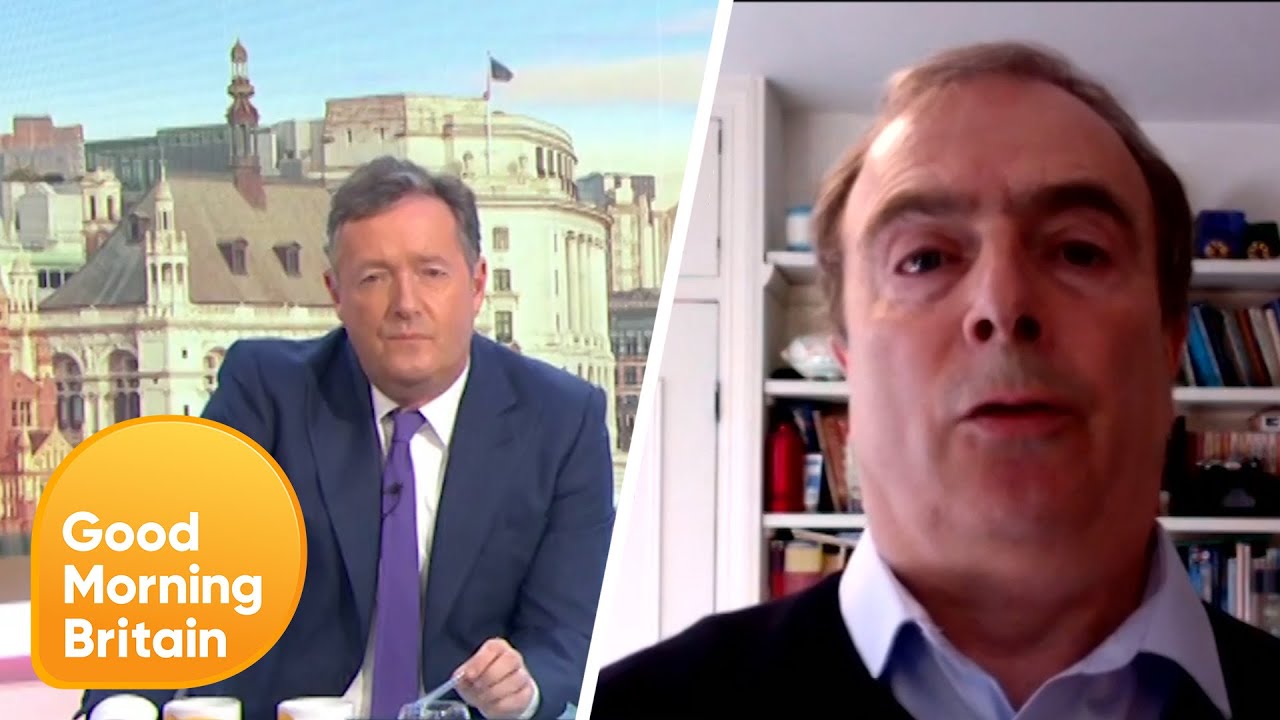 and “unreason.”
The language was familiar: Hitchens has previouslyrejected science showing human activity is responsible for global warming, and labeled measures to tackle climate change such as environmental taxes asa “sort of madness.”
For Lewandowsky, this “hysteria” narrative is part of a wider phenomenon of undermining expertise across the board, from Brexit, to climate change, and now COVID-19.
Lewandowsky points out that this also extends to many on the fringes of the political debate, such as controversial commentatorKatie Hopkins, who had over a million Twitter followers before the platform banned her, and has said the public were being“played” by the government for being asked to wear face masks. Or Brexit Party leaderNigel Farage, who described a police visit to his home as “lunacy” after he apparently broke lockdown rules.
Both have also cast doubt on the reality an of climate change.
“They’re quite explicit about saying that one person’s fact is another person’s lie, because that then enables them to avoid accountability,” Lewandowsky argues.
Miracle cures and conspiracy theories
These commentators’ contributions to the debate haven’t been without consequence. Some have spread conspiracy theories that have had real-world impact, while others have admitted to ignoring official safety guidelines, putting the public at risk of catching the disease.
ColumnistJames Delingpolewrote in a March 28article for the Spectator Australia titled ‘Wu Flu Notes’ that he had gone about his daily business despite having symptoms that align with coronavirus and that it was possible he had “infected lots of graduates.”
Some days later, Delingpole posted a tweet claiming a “high-powered zinc formula” had helped him recover from the illness without the need to go into intensive care – despite little being known about whether any such formula can be a cure for the virus.
He went on to write, “what I’d like more than anything is for this stuff to be available on the open market for everyone. But to mass produce it my friend needs ££££. If I crowdfunded it who’d be interested?” He concluded his request by asking for “potential big money backers."
[twt]
delingpole’s zinc promotion was comparable to comments made by US conspiracy theoristAlex Jones, who, a few weeks prior, hadreceived a cease-and-desist letter from a top New York attorney based on claims he had marketed and sold fraudulent COVID-19 treatments on his conspiracy website. US President Donald Trump was also widely criticised for suggesting that disinfectant taken internally could be a treatment for the virus.
Theories about miracle cures can take hold partly as a result of personal politics, Lewandowsky argues. Under lockdown, “you’re asked to stay at home and to look after other people by not doing what you’d like to do, and that is very challenging if you’re a believer in personal freedom and autonomy,” he says.
The same can be said of the motivations for spreading misinformation on climate change: “A lot of climate denial is very high-pitched, frenetic, emotional, angry, toxic – and that’s all triggered because people’s identity is at stake.”
The desire to reach for conspiracy theories may also stem from a need to feel that individuals still retain some control, says Evita March, a senior lecturer of psychology at Federation University Australia. “Conspiracy theories offer the believer some comfort in that there is still behavioural predictability,” she says.
And there were plenty of conspiracy theories flying around, pushed by long-time climate science deniers.
Piers Corbyn, brother of former Labour Party leader Jeremy Corbyn, was quick to promote the idea that coronavirus was thefault of politically liberal billionaires, and that it was related to theChinese-developed 5G mobile network.
The latter conspiracy, alsopromoted by Infowars’ Jones, had significant real-world consequences. Over the Easter weekend it wasreported that 20 phone masts had been subject to arson attacks. According to Mobile UK, the trade association for four mobile network operators, an estimated 50 masts had beentargeted by April 15
[bbc pix]
david Lawrence, a researcher at campaign group Hope Not Hate, told DeSmog that theories around 5G have existed for a number of years, so “the stage was already set.” ”When the global COVID-19 outbreak occurred, there was both a susceptibility to be exploited and a ready-made explanation to hand,” he said.
“In some ways this is similar to climate change,” said Lawrence, “in that people who work in industries that would be negatively affected by efforts to reduce carbon emissions might be more likely to find reasons to reject the scientific consensus.”
Such conspiracy theories become popular — whether in relation to climate change or COVID-19 — because they are a means of “simplifying and attributing blame,” particularly during a time when “people feel that they have lost control over their lives,” says Lewandowsky.
“Some will seek comfort in the idea that there are bad people out there causing the pandemic because, for some, knowing there are bad people responsible for terrible things is more comforting than to assume that these things are uncontrollable,” he says. “It allows people to direct anger at someone.”
Distrusting modellers
Many commentators directed their fire at a familiar foe — scientific models.
On April 1, the same day the United Nations announced thepostponement of the annual UN climate change conference, two prominent UK climate science deniersargued in The Wall Street Journal that the pandemic had “dramatically demonstrated the limits of scientific modelling to predict the future.”
Benny Peiser andAndrew Montford, the Director and Deputy Director of the UK’s principal climate science denial campaign group theGlobal Warming Policy Foundation (GWPF)**, criticised policymakers for using academic research that was subject to a “lack of quality control.” “In normal times this doesn’t matter much, but it’s different when studies find their way into the policy world,” they wrote.
They did not mention that the GWPF’s own approach to ‘peer-review’, which undercover reporters in 2015 showed operated on the basis of sending reports to its members of its own advisory council. The model has been described by UK charity Sense About Science, whose Advisory Council included GWPF advisor Matt Ridley, as “a way of trying to give scientific credibility to certain claims in the hope that a non-scientific audience will not know the difference.”
Eight days later, Breitbart’s Delingpole similarly criticised scientific modelling,dismissing research from the University of Washington forecasting more than150,000 deaths from the disease across the US as “operating in the realms of purest fantasy.” Whether on climate change or the pandemic, “we have no idea whether or not we can trust” scientific experts and their modelling, Delingpole argued[pix BB]
clark takes a similar view, telling DeSmog: “on both COVID-19 and climate change there are a lot of people who seem to favour the results of modelling over real-world observation.” Those who want action “will latch on to any model” that suits their ends, he claimed, and will “decide that is 'the science', that it is fact, beyond all challenge.”
Anarticle in Spiked likewise argued in April that “worst-case scenario thinking” and “doomsday forecasts” from models had clouded political judgement, referencing the obesity crisis, swine flu, and climate change.
This process of regularly casting doubt on models represents the “weaponisation of the scientific method,” says Imran Ahmed, founder of the Centre for Countering Digital Hate. “Those sorts of sly tactics that have been used by these groups have amounted to an entire culture of how they spread information, spread ideas, and build audiences for their groups.”
“It’s expressed through philosophical strands which are anti-expert, faux-populist and conspiracies” and can include the “incel movement, climate denial, vaccine denial, identity-based hate,” he argues.
“As new facts emerge and as the understanding of the scientific movement changes,” says Ahmed, “these actors look back at previous consensuses and say, ‘see, they were lying back then.’”
Attacking environmentalists
As well as attacking coronavirus experts on their response recommendations, many commentators who oppose climate action also attacked those looking further ahead by putting forward proposals to ensure recovery plans were consistent with governments’ environmental pledges.
For months, commentators who regularly question the veracity of mainstream climate science denounced environmental activists for supposedly distracting the world with climate change amid the threat of pandemics.
On March 12, Telegraph columnistSherelle Jacobsargued that university funding should be redirected away from climate change research and towards “the scientifically uncontested problem of pandemics.” The day after, when the UK was effectively put under a national lockdown, Dutch climate science denial groupCLINTEL published anopen letter titled “Fight virus not carbon.”
Greenpeace,The Climate Group, and many other environmental organisations believe that the government should include environmental policies in coronavirus economic recovery measures to “build back better,” particularly as the country seeks to position itself as a climate leader ahead of hosting the UN climate talks in November 2021.
Some commentators spun this argument to imply that the environmental movement was happy that the virus has spread.
On March 22, former Top Gear presenterJeremy Clarksonclaimed in the Sunday Times that “greens just can’t stop smiling” because COVID-19 was “their idea of a wet dream.” Spiked contributor Ross Clark echoed this position in a response to DeSmog’s questions, saying that “there is a strand of opinion on the left which wants these crises — climate change and COVID — to be as big as possible because they see it as a way of undermining capitalism, and other aspects of our lives, and reforming society in their own dream vision.”
On March 25, a couple of days after Clarkson’s polemic appeared, Spiked editor Brendan O’Neill similarly argued that the pandemic was “a glimpse of the dystopia greens want us to live in.”
“The truth is that if the COVID-19 crisis has shown us anything, it is how awful it would be to live in the kind of world greens dream about. Right now, courtesy of a horrible new virus, our societies look not dissimilar to the kind of societies Greta Thunberg, Extinction Rebellion, green parties and others have long been agitating for,” he wrote.
[pix] o’Neill reiterated this position when contacted by DeSmog, saying both the “green movement” and the reaction to COVID represented “privileged Westerners taking political decisions and actions” to the detriment of some of society’s most vulnerable. “Progressives should be questioning the impact of the reaction to COVID-19 on working people and poor people,” he said.
In June, 57 charitieswrote to Prime Minister Boris Johnson asking him to put the creation of jobs in low-carbon sectors at the forefront of his economic recovery plans. They also asked the government to cancel the debts of developing countries struggling with both the impacts of the pandemic and the climate crisis.
Delingpole later wrote in acolumn for Breitbart saying environmentalists were celebrating the lockdown as a blueprint for a “new world order.” The GWPF took this argument one step further,publishing an image of a crying woman with the text, “net zero, like lockdown but permanent” — a reference to the UK government’s plans to slash the country’s emissions.
As these pieces were appearing, a Twitter account claiming to represent the climate protest group Extinction Rebellion (XR) in the East Midlandsposted an image of an XR-branded sticker on a lamppost with the words, “corona is the cure, humans are the disease.”
Official XR accounts were quick to condemn the tweet andsaid that they were not affiliated with the newly created account, which has since been deleted. But various outlets and commentators used the tweet to condemn the protest group.
Gaia Fawkes, the environmental section of political blog Guido Fawkes,suggested the post showed that XR was “in favour of extinction,” though it acknowledged coordinators of the organisation had “distanced themselves” from the supposed splinter group. A spokesperson for the site told DeSmog it stood by its reporting despite well-publicised doubts over the authenticity of the East Midlands organisation, stating it was “unaware of any publicly available list of ‘official’ [XR] groups at the time.”
The GWPF likewise claimed the Twitter account’s “anti-human sentiment” was “widely shared” among environmentalists,rejecting claims that the East Midlands account was fake.
Author and Guardian columnist George Monbiot suggests that while it is predominantly money that is behind climate science denial or tobacco industry lobbying, “with COVID-19, the motive definitely varies,” but the outcome is essentially the same.
“There are a lot of very well-paid people who are very professional and they’re using the expertise that they’ve gathered in other areas of dispute about scientific facts and the policies arising from them, and applying those directly to the pandemic,” he argues.
“Take their power seriously, but don’t take any of their arguments at face value,” Monbiot concludes. “It’s not worth trying to deconstruct the nonsense they come out with.”
Political impact
Unlike in theEU referendum or Trump’s presidential campaign, pushing anti-expert rhetoric may no longer be a winning strategy in the wake of COVID-19. Polling shows that despite worry about the pandemic and its impacts, the public still wants governments totackle climate change. And politicians attaching themselves to the anti-science bandwagon are now struggling in the polls.
For the Centre for Countering Digital Hate’s Ahmed, attacking the concept of expertise around COVID-19 is “the first truly great strategic mistake by those who espouse this radical world view.”
The US and UK are two of the countries hardest hit by the coronavirus pandemic, and both have leaders “who have been denying evidence and fact,” says Lewandowsky. “Johnson and Trump are creating a situation in which the very thought that we could establish a common truth is under attack,” he says. Both are regularly backed by commentators who also openly question the concept of expertise, whether on climate change or coronavirus.
But these positions have begun to hurt both leaders. Johnson has plummeted from a position of public popularity prior to the UK’s lockdown to anegative approval rating almost four months later. And the gap between the majority of Americans who disapprove of Trump’s leadership and those keeping faith with the president now sits ataround 15 percent, numbers that could see him lose November’s election.
That may reflect a wider shift in the public mindset, Lewandowsky argues: “My hope is that the COVID crisis has kind of given us a reset here, and there’s some evidence that people are beginning to say that we do need experts and data.”
==
==
320 corona fail
https://www.desmogblog.com/2020/03/16/climate-science-deniers-downplayed-covid-19-cato-acsh-aei
Meet the Climate Science Deniers Who Downplayed COVID-19 Risks
By Sharon Kelly • Monday,March 16, 2020 - 15:25
no lnx many
On January 30, 2020, the World Health Organization (WHO) declared that the outbreak of novel coronavirus 2019, which causes the disease COVID-19, was officially a “public health emergency of international concern.” At the time, there were cases confirmed in 19 countries and deaths in China had reached 170.
The very next day, the American Council on Science and Health (ACSH) published an article titled, “Coronavirus in the U.S.: How Bad Will It Be?”
“Is coronavirus worse than the flu?” it began. “No, not even close.”
“It already has spread from person-to-person in the U.S., but it probably won't go far,” ACSH added. “And the American healthcare system is excellent at dealing with this sort of problem.”
ACSH is one of several organizations promoting climate science denial that are now spreading misinformation on the coronavirus, with potentially deadly consequences.
American Council on Science and Health?
The ACSH presents itself to the public as a proponent of “peer-reviewed mainstream science,” in the words of the organization’s mission. Their experts have frequently been quoted in mainstream newspapers and magazines, and they pen columns criticizing journalists who write critically about companies like Monsanto. The group has received funding from oil giants including ExxonMobil, as well as from the agribusiness, chemical and tobacco industries to name a few.
When it comes to climate change, ACSH has published a steady stream of articles downplaying climate science and criticizing efforts to slow carbon emissions — even in the face of a mountain of peer-reviewed research on the climate crisis.
ACSH slammed the medical journal The Lancet as “an ideologically driven outlet with a very clear political agenda where being sensationalist and culturally woke trumps evidence and reasonability” (after the Lancet published an article titled “The carbon footprint”). The purported “pro-science” advocacy group has labeledGreta Thunberg’s activism “doomsday prophesying.” It has (falsely) suggested that climate change is less of a concern because “more people die in winter than in summer” (they don’t).
And that’s all just in the past nine months. The ACSH’s stance against climate action dates back to at least 1997.
When it comes to coronavirus, now a global pandemic, ACSH’s authors rushed to judgment. They assured readers that there was little to worry about, and put some of the same faulty thinking that underlies their stance on climate change on display.
ACSH isn’t alone. Other organizations that have also engaged in climate science denial made similar missteps on COVID-19, including prominent organizations that fanned the flames of conspiracy theories or confidently promoted complacency when circumstances required rapid action.
To be clear: No one should be faulted for failing to foresee precisely how severe of a problem COVID-19 would prove to be. None of us has a crystal ball and few, if any, expected this situation to unfold in this particular way.
But these organizations published positions that not only wound up being laden with false reassurances, but they did so based on claims that they made confidently at the time that now appear to have been false or misleading.
Defending Conspiracy Theorists
Take for example, the American Enterprise Institute’s (AEI) publications on COVID-19.
AEI fanned the flames of a conspiracy theory that claims COVID-19 was developed for biological warfare.
AEI resident scholar Michael Rubin published a piece titled, “Was coronavirus a bioweapon? We don’t know, but history shows we can’t trust China.”
The article defended Sen. Tom Cotton of Arkansas for his Fox News interview circulating the theory.
Roger Bate, an AEI visiting scholar, also penned a January 29 piece headlined, “The media is driving the overreaction to the coronavirus.”
The piece argues against action on COVID-19, without citing any evidence about the virus itself, but instead based on characterizations and generalizations.“I’ve seen several news reports essentially implying that, even if quarantining travelers or imposing travel bans to China are overreactions to the risk of the coronavirus, this is ok because it’s better to be safe than sorry,” he wrote. “Companies are so fearful of negative press that they seem to base much of their own rhetoric on what the media and liberal elites demand. While some of this is arguably harmless — note much of the hot air at Davos about climate change — when it becomes corporate policy and is echoed by government policy, it then has real consequences.”
“A contagion will happen at some point, and it’s important we recognize it and react,” he added.
“Unless the coronavirus mutates into something far more dangerous,” he concluded, “this isn’t it.”
To be sure, there was not a visible consensus on those views within AEI. That same day, another AEI fellow published an article calling the coronavirus a “big economic deal,” citing its impact on China’s economy. And a three-paragraph AEI post later labeled claims that COVID-19 is a bioweapon “fake news.”
Those other pieces, however, do not undo any impacts from AEI publishing claims that proved to be baseless.
Reading Comprehension
Other times, articles downplaying the risks from COVID-19, penned by organizations that have adopted climate-science denying stances, present arguments laced with logical fallacies.
In some cases, it’s not clear whether the authors understood the comments they were critiquing.
Take, for instance, the Cato Institute’s March 4, 2020 column on “COVID-19 Deaths and Incredible WHO Estimates.” That piece attacks a statement by the WHO’s director general, Dr. Tedros Adhanom Ghebreyesus, who was quoted in The New York Times as saying, “Globally, about 3.4 percent of reported COVID-?19 cases have died.”
Cato’s column labeled that statistic “sensationalist nonsense.” The number doesn’t take into account the fact that mild cases are more likely to go unreported, Cato’s Alan Reynolds wrote.
That, of course, is exactly why Dr. Adhanom included the word “reported” in his description of the statistic. There’s no ball being hidden here. And in case readers missed that word and its importance, The Times’ report included an explanation of that precise context. (“But the figure came loaded with caveats,” The Times wrote. “Experts, including those at the WHO, say that when more is known about the epidemic, the death rate will be considerably lower.”)
One day later, President Trump took a similar tack to Cato’s, calling the 3.4 precent statistic “really a false number.”
“Now, this is just a hunch, but based on a lot of conversations with a lot of people that do this,” Trump added.
It’s not clear where exactly Trump picked up his impression — but then of course, Trump has his own well-known stance on climate science.
'Not Even Close'
The author of the ACSH piece claiming that coronavirus is “not even close” to as bad as the flu was Dr. Alex Berezow — a PhD in microbiology, according to his bio, not a medical doctor. Berezow has been interviewed about coronavirus precautions by the Wall Street Journal, New York magazine, Insider, and Yahoo News....
==
pal morris married okonski; bate girlfriend on payroll of some front org he ran? penny?beyond petrolSceptic ColleaguesSir Peter Walters was Browne's successor at BP. As boss of the company, he signed off annual donations of £10,000 for his friend Sir Ralph Harris at the Institute of Economic Affairs (IEA) and, on retirement, joined the free market think tank as a trustee.At the time of Brown's Stanford Speech, Walters was working with Julian Morris and Roger Bate, overseeing climate sceptic publications and conferences. Walters also remains convinced that the sun is the driving force behind climate change.His scepticism of the science reflects his scepticism of Browne's true motive in coming out in support of climate action, pointing to his very close relationship with Blair.Some of his colleagues at the IEA were incandescent with rage at Browne for breaking ranks and fraternising with their ideological foes.Sir Peter told me during an interview at the BP headquarters in St James's Street: “If you're chief executive of a major company, you've got to work with the grain of the government. I'm not going to stand up and criticise them because I want something else. I don't have to bend my conscience too far to say what they'll be glad to hear.”When asked if Browne was using rhetoric to 'greenwash' BP during the Stanford speech, Sir Peter replied: “When I was a soldier we had an expression in the army which was, ‘bullshit baffles brains’.“Before the commanding general came to inspect, everything would be whitewashed and cleaned. I don't think the general ever knew about the standard of training or the combat readiness of the troops and all the rest,” he recalled, mimicking a British general: “What! What! What!”Richard Ritche, also a lifelong supporter of the IEA, was a political advisor to Browne at BP at the time of the speech. He agrees that the chief executive's conversion to environmentalism was about expediency and public relations, rather than a genuine turn onto the road to Damascus.Ritchie told me: “I have absolutely no doubt that John Browne wanted to be perceived as the greenest oil company. But when you look at his decisions, he did not allocate all the resources away from oil and gas – we would never in a million years.”BP WithdrawsIn the immediate aftermath of the speech, BP announced that it would be withdrawing from the Global Climate Coalition.How Julian Morris Led the British Charge Against Climate Science in 2003. A look at Julian Morris’s ExxonMobil-funded, climate sceptic publication Adapt or Die.How the Free Market Friendship Between Julian Morris and Roger Bate Came to an End. This post recalls the falling out between long-term friends and free marketeers Julian Morris and Roger Bate.We would like to invite you to an off-the-record private lunch at the American Enterprise Institute on Monday, April 27 at 11:30 AM to discuss international and domestic drug quality. Concerns regarding medicine quality are mounting domestically and internationally in the wake of media reports regarding infractions in production locations, notably in China and India, that have led to penalties and the closure of some overseas drug manufacturers. In light of these reports and actions taken by the United States and other international drug regulators, AEI is hosting an off-the-record lunch discussion.The lunch will feature key-note speaker, Dinesh Thakur. Mr. Thakur is the CEO of the quality assurance firm MEDASSURE and the whistleblower in the famous Ranbaxy case. Mr. Thakur is uniquely qualified to discuss these ongoing concerns. Mr. Thakur will outline the current state of the regulatory issues in India, possible solutions to strengthening Indian drug manufacturing, and wider policy implications, at this off-the-record lunch.The lunch will also be moderated by Dr. Roger Bate, an AEI Scholar and leading health economist, who has written extensively on the issues of substandard and counterfeit medicines, and implications for U.S. and international patients of tax-payer funded programs. Dr. Bate will also discuss the ongoing work he, Mr. Thakur, and other participants of the Safe Medicines Coalition are undertaking on educating the public and policymakers on medicine quality in the U.S. and overseas.desmog uk http://www.desmog.uk/2015/02/18/how-tobacco-funded-think-tank-recruited-scientists-attack-against-climate-change The DeSmog UK epic history series continues with the first in a double-bill feature on how the European Science and Environment Forum joined the sceptics’ vitriolic attack on climate science.Roger Bate, head of the Environment Unit at the free market think tank, the Institute of Economic Affairs (IEA), was an extremely energetic man. Not only did Bate (pictured) help to organise the first major climate denial conference in Britain, hosted by the IEA in 1995, but he also established his own think tank, the European Science and Environment Forum (ESEF), by turning the contacts he made into funders and contributors.One of these contacts was Dr John Emsley, a chemist at Imperial College London who wrote a regular “Molecule of the Month” column in the left-liberal Independent newspaper. The idea behind his column was to explain to the public the benefits that chemicals brought to people and the planet.Bate’s RecruitsEmsley attended IEA events where he met Bate and his friend Julian Morris. “I must say I did enjoy talking to and arguing with Roger and Julian, mainly because I was at the opposite end of the political spectrum,” Emsley told me.Bate invited Emsley to join the ESEF and help edit his forthcoming book, What Risk?Emsley explained: “I was mainly involved in editing the two climate change books it produced, which echoed my thoughts at the time about the relative importance of CO2 as a greenhouse gas.”Bate also persuaded professor Frits Bottcher, the director of the Global Institute for the Study of Natural Resources in The Hague, to come on board. “The issue of climate change was the initiation for the meeting,” according to ESEF’s promotional material.The charity set out its aim on its website as being “to inform the public about scientific debates” and to “provide a forum for scientific opinions that are usually not heard in public policy debates”.Bate would place comment articles across the international media under headlines like A Myth Stubbed Out, Is Nothing Worse than Tobacco? and Global Warming, Don’t Believe the Hype. Bate even attacked attempts to reduce lead in drinking water.‘Imposing Consensus’He set about sending out press releases and helping maverick scientists to write articles for the popular press. He offered to “advise scientists [on] how to present their findings to the media, and how the media will perceive, and may use, the information”.The ESEF joined the sceptics’ vitriolic attack on the UN Intergovernmental Panel on Climate Change (IPCC) in March 1996 with the headline “Scientists attack ‘official consensus’ on global warming”. The article accused the IPCC of “imposing consensus” on scientists, retarding research and relying on dodgy climate models.Bate also drew up a comprehensive plan for the ESEF project that year. The think tank produced a paper for publication in the US and Europe under the headline “Why regulate nicotine when caffeine is more addictive?” which was described as “a follow-up to the work done by the Koch-funded Competitive Enterprise Institute (CEI) in the US where they petitioned the Food and Drug Administration (FDA) to ‘regulate caffeine’”.Bate wanted to show that the regulation of nicotine “has nothing to do with the science and a lot to do with empire building by the FDA”. In his carefully prepared notes, he warned that the article “needs careful handling”.The ESEF then published a monograph attacking the scientific warnings that environmental tobacco smoke could cause cancer in March 1998. In August, Bate appeared on the BBC’s Today programme to attack the “junk science” of passive smoking.But the charity was in danger of being accused of acting as a public relations company for tobacco and other industry interests.‘Maintain Independence’According to the corporate responsibility campaigners Lobbywatch, the original ESEFwebsite stated: “To maintain its independence and impartiality, the ESEF does not accept outside funding from whatever source, the only income it receives is from the sale of its publications.” Promotional material sent to a tobacco company was only slightly different, saying: “To maintain its independence and impartiality, ESEF accepts funding only from charities, and the income it receives is from the sale of its publications.”Bate approached the second largest tobacco firm in the US, R. J. Reynolds Tobacco Company, asking for £50,000 in cash for a book about environmental risks including a chapter on passive smoking. But the company turned him down and the money was never paid.That, however, did not slow Bate down. Over the next two years he would recruit the coal-funded sceptic scientists Robert Balling and Patrick Michaels to the academic board of ESEF, as well as renowned climate denier Fred Singer in the United States.IEA LobbyingThere has been an assumption among environmentalists that the tobacco industry deliberately created think tanks that would attack regulations and the restrictions on smoking.But one former industry insider who agreed to speak to me said the relationship was often the other way around. Bate and his colleagues at the IEA were actively lobbying the tobacco companies to do more to attack regulation and saw their apparent inaction as short-sighted and a betrayal of principle.Moreover, it was the IEA and other think tanks that were seeking funding from tobacco, not the other way around.Bate attended several meetings at the offices of British American Tobacco in Staines, Surrey to discuss the work of the Environment Unit and his own forum. He worked closely with Keith Gretton in British American Tobacco’s corporate communications department, who sent out an internal memo: “Should the [Risk Assessment (RA)] programme take off fully in the UK or EU, the IEA is a good ally. A current thrust of its work is on RA (initially re global warming etc, widening its net later in 1996).”It continued: “An RA publication is planned to which we could input. When a decision is made on the appropriate strategy for going forward on RA, we should meet Roger Bate head of IEA Environment Unit.”Don't miss part 2 in the DeSmog UK double-bill epic history feature where Bate continues to court the tobacco industry while scientists unknowingly do its bidding.@brendanmontague part 2The DeSmog UK epic history series marches on as Roger Bate continues to court the tobacco industry. He was a man on a mission. This is part two of an epic history double-feature.Vickie Curtis, a Cambridge science graduate who worked under Keith Gretton in the corporate communications department at British American Tobacco (BAT), was responsible for monitoring the latest published research on cancer. Curtis remembers Roger Bate, founder of sceptic think tank the European Science and Environment Forum (ESEF), as small with a “slight build, curly hair, [and] glasses”; she described him as being “a man on a mission”.She told me: “Roger Bate was kind of going around companies, I don’t know what other companies but I can imagine, trying to get money … he was much more proactive in keeping the lines of communication open.”‘An Ambitious Guy’“He was very much into selling himself and ESEF and that was one of the ways he went about it. He came across as a young and ambitious guy.”Curtis, however, did not enjoy her meetings with Bate and his colleagues from the free market think tank, the Institute for Economic Affairs (IEA), where Bate headed up the Environment Unit.After one gruelling lunch she turned to her manager, Keith Gretton, and asked why they were spending time speaking to the free market crowd.He turned to her and said that when you work in tobacco, “you cannot choose your friends”.Sinister TruthEnvironmentalists have also assumed that the scientists who worked with the think tanks were consciously complicit in attacking regulations while being funded by vested interests. But the truth seems to be far more sinister.Two scientists who worked with Bate have told me, on the record, that they were kept in complete ignorance of the fact that the ESEF had accepted cash from tobacco companies, and only became aware of the funding because I told them about it.Dr John Emsley, a chemist at Imperial College London who worked with Bate, said in an email to me: “You’ve certainly opened my eyes as to what was going on. I didn’t realise that ESEF got money from BAT to the extent of £150,000, which would be like £300,000 these days. I was always under the impression ESEF was running on a shoestring budget. I certainly got nothing from it. Most of what ESEF did was done by Roger and [his friend] Julian Morris.”He added: “Would I have joined ESEF had I known it was funded by BAT? Certainly not. I’m sure Fritz Bottcher, who was the Dutch scientist and a founding member, would have felt the same.”Toxic TobaccoProfessor John Adams of University College London, who spoke at the IEA’s 1995 climate denial conference, was offered funding directly from BAT to author a report on risk, but declined.He said: “I found the BAT case compelling and was inclined to write [for] them … but I consulted my internal ethics committee and they said don’t touch BAT with a barge-pole because tobacco companies have a reputation in terms of manipulating evidence relating to the risk of their product, it’s so toxic that if you’re seen taking their money you’ll be forever tarnished.”Adams did, however, agree to contribute to Bate’s book, What Risk? He confirmed in an interview with me that he was completely unaware at the time and, ever since then, that Bate was seeking funding from tobacco companies while approaching professional scientists to challenge the link between passive smoking and cancer. In September 1998, Bate sent a letter to David Greenberg, Vice President of Government Affairs at Philip Morris, asking for funding for his malaria project and describing himself as a Visiting Fellow at the Political Economy Research Centre in Montana, USA.The letter was highly unusual and was open to the interpretation that Bate was offering access to African political leaders who could influence the World Health Organization (WHO) process in exchange for cash. ‘Challenging False Orthodoxies’The letter read: “Other than it’s [sic] humanitarian, scientific and public policy interest it should enable me to build contacts with politicians and scientists/thinkers from developing African countries. As demonstrated in the debate and policy shift on ivory trading, these representatives are particularly important in the UN/WHO process. I would be happy to regularly inform you of the progress on that front.”He went on: “I would like to propose that I work on projects for you on an ad hoc basis. In your work, influencing WHO on their tobacco protocol, there are probably several areas where I can help. For example, contacts who may be appreciative of your efforts and arguments may develop via the malaria work and I could probably act as a liaison between you and them.”Bate concluded by setting out that he worked for Philip Morris in Brussels for £800 per day and added: “The fax here is not private and hence mail correspondence is perhaps better.”In the same month he wrote to Matthew Winokur, Director of Government and Regulatory Affairs at Philip Morris: “I should stress that my, and my co-workers’, strength is in challenging publicly, in myriad fora, false public health orthodoxies. I feel that any agreement we arrive at should not stifle those skills and efforts.”Next week, the DeSmog UK epic history series introduces you to the creator of the climate change hockey-stick graph and the man forever in the sceptics’ crosshairs: Michael Mann.@brendanmontague http://www.desmog.uk/2015/02/21/what-you-ve-always-been-getting-wrong-about-big-tobacco-funding-climate-deniers ==DeSmog UK’s epic history investigates how the former Institute of Economic Affairs director general, John Blundell, recruited British students with a flair for free market economics to the USfor internships at Koch-funded think tanks. By the early 1990s John Blundell was a well established founder and supporter of several American free-market think tanks. So to help grow the neoliberal network, he organised eight-week paid internships in the United States each year for 30 British students who had demonstrated flair and a keen interest in free market economists.Blundell asked the think tanks such as the Competitive Enterprise Institute (CEI), supported by the Kochs, to take on some of the young hopefuls. “Fred Smith at CEI agreed but only if he could have Roger Bate,” Blundell confirmed.Roger Bate (pictured above) was sharp, energetic and almost fanatical. He had met Smith in 1992 at the week-long “Université d’été des Nouveaux Économistes” in Aix-en-Provence, France.Now a free-market economist, Bate was around this time completing an MSc in environment and resource economics at University College London (UCL). Bate was influenced by Jimmy Sheehan, a CEI “staffer” who was working on a book about the global environmental movement and a monograph for the Institute of Economic Affairs (IEA) in London.Cross PollinationBate would, in turn, recruit his friend Julian Morris to the climate cause. The two men would have a profound influence on the germination and cross pollination of scepticism in London and around the world.Morris was the handsome, charming and well spoken son of a chemical engineer from Epping. He first became interested in free market economics when he was a 22-year-old student completing an MA at the highly regarded Edinburgh University in 1991.He read a startling and challenging article in the Financial Times which was based on a monograph by professor Sir Douglas Hague published by the IEA which called for the privatisation of universities.Morris also read free-marketeer Friedrich von Hayek's The Use of Knowledge in Societyand attended events at the IEA, where he met Blundell and Linda Whetstone, the daughter of IEA founder, Antony Fisher.Naive Environmentalist“I was myself a naive young environmentalist,” Morris wrote some years later. “I had just written a paper on how to establish a global system for restricting emissions of carbon dioxide and was about to embark on a masters course in environment and resource economics run by Professor David Pearce at University College London.”At the time, there was much buzz about a conference due to take place in Rio de Janeiro that was being hailed as the 'Earth Summit' and global warming was a hot item on the agenda.It was during his masters at UCL that Morris became close friends with Bate and became increasingly immersed in free market ideas and the think tank world.“I am not dogmatic in my approach”, Morris told me. “I care deeply about the environment.” Blundell would later arrange for Morris to fly out to the United States through the Charles G Koch Foundation, taking up a short internship at the Atlas Foundation - both of which Blundell worked for.“Charles and David Koch are two of the finest, most upstanding businessmen and philanthropists in the world,” Morris told me during an email interview.While in the US, Morris completed his research for his IEA monograph The Political Economy of Land Degradation in 1995. On his return, he set up shop as a consultant economist and worked for the European Environment Agency, Save the Rhino International and the World Wildlife Fund.But over the coming years Morris would make considerably more money running think tanks that challenged the science of climate change and attacked policies that would reduce carbon emissions.Coming up in January: The DeSmog UK history series continues with a look at how fossil-fuel funded scientists launched a full-scale attack against the UN Intergovernmental Panel on Climate Change prior to the 1992 Rio Earth Summit.@Brendanmontaguehttp://www.sourcewatch.org/index.php/Roger_BateRoger Bate is an economist who has held a variety of positions in free market and conservative think tanks and lobby groups including the Institute for Economic Affairs in the UK and theCompetitive Enterprise Institute in the United States. Contents [hide] 1 Background 1.1 Formation of ESEF1.2 Work for the tobacco industry1.3 Global Warming Activities1.4 Agriculture and Risk2 Current Activities3 Affiliations4 Funding5 Contact Details6 Articles and Resources 6.1 Related SourceWatch Articles7 References8 External links 8.1 Biographical Notes8.2 Articles By Bate BackgroundIn the mid-1990s, Bate was an employee of the right-wing British think tank, the Institute for Economic Affairs (IEA). He had also worked with the free-market think tank, the Competitive Enterprise Institute in the United States.In 1998, he published an article in the United Kingdom paper Financial Times attacking the idea of regulating secondhand smoke, cigarette advertising and health warning labels on cigarette packs.[1] He also published an article criticizing the World Health Organization (WHO), which argued that the WHO was trying to eliminate individual freedom.[2][3]In the mid 1990s, Bate ran the "Environmental Unit" of the IEA, which took positions to counter health and environmental activism[4] IEA received funding from British American Tobacco (BAT)'s department of Consumer and Regulatory Affairs (CORA, among others.[5][6] Formation of ESEFIn 1994, Roger Bate, then Director of the Environment Unit at the Institute of Economic Affairs, London, and two others and the IEA, established the European Science and Environment Forum (ESEF) in the UK. In addition to being a founding member, Roger Bate was listed a Committee Member of ESEF. ESEF claimed that, to maintain its scientific independence, it did not take donations from any source, but made money only from sales of their materials. However, in 1997, ESEF and The Advancement of Sound Science Coalition, which was linked to the tobacco industry, issued a press release in which the two organizations had the same description.[7][8][9]Documents show that the organization's priorities were to attack regulatory science in general, and "establish ESEF as a scare watchdog" for the media. As head of ESEF, Roger Bate had an aim of establishing ESEF as a credible source of information for media, mainly by mobilizing independent, third party scientists to publicly advance industry arguments. One Philip Morris document titled "International Public Health Strategy" describes how ESEF's name could be used to attract scientists who would advocate industry positions.[10][11]The ESEF set up a book-editing and editorial-writing program, promoting Risk Assessment in U.K. and European agencies involved in regulation.[12] They also set out to challenge the World Health Organization (WHO) and decry health and environmental activism based on so-called junk science, especially where it related to environmental tobacco smoke, or ETS, and the possibilities of climate change through air pollution.[13] Work for the tobacco industryBate worked for Philip Morris Corporate Services (PMCS) Brussels in the late 1990s at the rate of 800 pounds sterling per day. In a letter to David Greenberg of PM New York dated September 4, 1998, Bate offered to continue working for PM at the same pay rate. In the letter, Bate sought PM's support for his anti-malaria project, saying the project would " ... afford me, and several colleagues, the opportunity of writing opinion articles and books ... about the disparity between the current and correct roles of environmental public health."[14] Global Warming ActivitiesBate countered environmentalists' global warming assertions with a skeptical view of the science [1].Bate joined others, such as Fred Smith of the Competitive Enterprise Institute, Grover Norquist (Americans for Tax Reform -- key strategist of Newt Gingrich's Republican Party faction), Fran Smith (editor of Consumer Alert - a corporate funded "consumer" magazine) and a number of other business lobby organisations, in taking a skeptical view on the issue of global warming. However the public had accepted the dangers of environmental tobacco smoke and the reality of global warming, so ESEF went into decline. Agriculture and RiskBate is also joint author, with Julian Morris of a book, Fearing Food: Risk, Health and Environment. The IEA website describes the book in the following way : "In the latest ESEF book, Fearing Food, new agricultural and food technologies, including genetic engineering, are shown to be generally beneficial both to health and to the environment." (Fearing Food was published by Butterworth-Heinemann in September 1999). Current ActivitiesRoger Bate's current work focuses on U.S. and international aid policy, performance of aid organizations, and health policy in developing countries, particularly with regard to malaria control and the use of DDT. Between 2003 and 2005 he was the Chairman of Africa Fighting Malaria, a pro-DDT lobby group. He remains a board member of the group.[15]Bate has written extensively on the benefits of DDT to control the spread of malaria in Africa. The WHO approved the use of DDT for malaria control in September 2006.Some have criticized Bate for his comments regarding the resurgence of Malaria in Sri Lanka, saying that the cessation of DDT spraying led to "half a million" cases of malaria. The source Bate himself cites explains that DDT spraying was stopped because they thought the disease had been irradicated and immediately restarted when they realized it hadn't. It was later stopped again when the mosquitoes developed resistance, but Bate continued to demand further DDT spraying.[citation needed]Affiliations