Maibach CCCC
===
horner sues team blue hit scam
...
In the AGs’ case, there was no relevant extant or reasonably anticipated joint or common legal proceeding. Nor has there been one since. The purpose of their pact, specifically its paragraph 6, requiring consultation among AGs about responding to public record requests, was to shield from public scrutiny the otherwise public record of their efforts to defend President Obama’s global warming policy agenda and their own investigations of political opponents for alleged racketeering or financial fraud deriving from their opposition to the climate policy agenda. After an extended delay brought on by litigation, which was itself forced by stonewalling, courts have held that this arrangement offers the AGs no such shield.32 Numerous other AGs have effectively agreed with this finding, choosing not to fight that battle but instead to realease the correspondence that was purportedly shielded and in many cases withheld by their partners.
Those state-level open records productions, which revealed close orchestration with plaintiffs’ lawyers and environmental activists, proved costly to that coalition and scared off participants while discrediting said investigations. This approach, in turn, likely prompted Schneiderman and company to consider how to pursue such a political coalition while keeping the public records from the public. Critically—and as one email from NYU’s Elizabeth Klein to the Illinois OAG discussed later suggests— Bloomberg’s program aims not only to provide the activist AGs a home to get the band back together, but also to supply another bite at claiming attorney–client and “work product” privileges to shield their work going forward.
The 2016“informal coalition”in practice sought to extract three things from its targets: (a) a vow of silence, (b) a vow not to financially support other opponents of the agenda (like the subpoenaed CEI),33 and (c) a settlement fund in the hundreds of billions of dollars modeled on the tobacco master settlement agreement (MSA).
As in the tobacco MSA, this settlement, in large part, would fund more activist government and would be distributed among political constituencies.34 The same is true of any settlement obtained in the staggered series of lawsuits filed against major energy producers by coastal municipalities such as Marin County, Oakland, and San Francisco in the summer and fall of 2017; New York City in January 2018; inland liberal enclaves such as Boulder, Colorado, in April 2018; and the state of Rhode Island—home of Schneiderman coalition partner Peter Kilmartin and Sen. Sheldon Whitehouse, a major proponent of using the Racketeer Influenced and Corrupt Organizations Act (RICO) against political opponents—in July 2018.
The first record production on the 2016 campaign, from the Vermont OAG, included responses to a questionnaire sent to the state AGs by Schneiderman’s office. U.S. Virgin Islands AG Claude Walker reveals his interest, having“just finished litigation against Hess Oil … [obtaining an] $800 million settlement.” Walker goes on to express interest in “identifying other potential litigation targets” and in seeking ways to“increase our leverage.”35
After the first production of these damning public records, the Vermont OAG sealed up tight, and other OAGs facing record requests followed suit. Speaking at least in part regarding the ongoing campaign of stonewalling state FOI requests (after reciting some highlights of what was known at the time about this collaboration with plaintiffs’ lawyers and activists), one federal court noted that these AGs ought to drop the fight and release the requested public records in the name of dispelling speculation on what these revelations indicated was going on:
[New York] Attorney General Schneiderman and [Massachusetts] Attorney General Healey, despite these media appearances by both, are not willing to share the information related to the events at the March 29, 2016, meeting at the AGs United for Clean Power press conference.Should not the attorneys general want to share all information related to the AGs United for Clean Power press conference to ensure the public that the events surrounding the press conference lacked political motivation and were in fact about the pursuit of justice? The attorneys general should want to remove any suspicion of the event being politically charged since it was attended by (1) former Vice President Al Gore, a known climate change policy advocate in the political arena; (2) Mr. Peter Frumhoff, a well-known climate change activist; and (3) Mr. Matthew Pawa, a prominent global warming litigation attorney who attended a meeting two months prior to thepress conference at the Rockefeller Family Fund to discuss an “Exxon campaign” seeking to delegitimize Exxon as a political actor. Any request for information about the events surrounding the AGs United for Clean Power press conference should be welcomed by the attorneys general.36
The judge noted that efforts to keep public records from the public, as was suggested in their “common interest agreement,” “causes the Court to further question if the attorneys general are trying to hide something.”
The settlement fund sought by this campaign is enormous. The figure publicly bandied about is $200 billion—perhaps because that was the approximate value of the 1998 tobacco MSA providing the plaintiffs’ lawyers’ and consultants’ settlement template.37 Hydrocarbon energy, however, is a much bigger industry than tobacco.
At least one prominent academic, Edward Maibach, director of the Center for Climate Change CommunicationatGeorge Mason University (GMU), has admitted to an expected payout from this campaign for his type of work. Maibach’s background is in public relations, in which business he served as worldwide director of social marketing for the PR firm Porter Novelli and where he worked on distribution of the tobacco master settlement funds. He told Grist magazine in an interview about his new work promoting the climate campaign, which we learned also entailed recruiting academics to call for RICO investigation of that campaign’s opponents:
If the White House took up Sen. [Sheldon] Whitehouse’s suggestion to wage a full investigation into the fossil fuel industry for all of their collusion and stonewalling to confuse the public about the harm of fossil fuels, and if a RICO suit were successful, and if there was a
settlement between the government and the fossil fuel industry—there is no question in my mind that a good portion of that money should be spent on a national campaign to educate people on the risks of climate change, and [to] build their resolve to work towards solutions. If this were treated as a public health problem, that is exactly what would be done.38
CEI and this author filed a Virginia FOIA suit, Horner et al. v. George Mason University,39 after some GMU faculty members led by Maibach worked with Sen. Whitehouse in calling on then-U.S.AG Loretta Lynch to go after their agenda’s opponents under an antiracketeering law. In a deposition in the matter in which this author participated, Maibach testified thus in response to my question:
Q. As director of the Center for Climate Change Communication, what do you do?
A: … As director, I suppose my chief job is raising the money we need to do the research, actually overseeing the research so that it is done of sufficient quality, mentoring my post docs, my students, my faculty, keeping the ship moving forward.
He was then asked if he recalled that Grist interview. He did, and soon he modified his previous answer about priorities:
Q. You testified that your earlier job in that position is raising funds?
A. Part of.
Q. You said your chief job was the quote. We can go back. Your chief job is raising money to keep it going. Is that still accurate?
A. That is probably a little too glib.... 41.
When Maibach asked Peter Frumhoff of the Union of Concerned Scientists to enlist UCS in publicly calling for RICO investigations of their opponents, Frumhoff let on to the brewing state AGs’ campaign, months before it became public. In a July 31, 2015, email, Frumhoff first dismissed Maibach’s call for a federal RICO investigation:
As you know, deception/disinformation isn’t itself a basis for criminal prosecution under RICO. We don’t think that Sen. Whitehouse’s call gives enough of a basis for scientists to sign on to this as a solid approach at this point.42
Then, Frumhoff assured Maibach,“[W]e’re also in the process of exploring other state-based approaches to holding fossil fuel companies legally accountable … [via] state (e.g., AG) action.”43
So far, two courts in Texas have issued scathing rulings noting these revelations: one the aforementioned federal district court for the Northern District of Texas44 and more recently a state court in Tarrant County.45 The federal district court focused on anemail in which Schneiderman’s office asks activist lawyer Matt Pawa to mislead a reporter about his role in briefing the AGs and Al Gore in the back room just before the March 29, 2016, Manhattan press conference announcing a whatever-means-necessary campaign against opponents.46
This email references Pawa and Frumhoff, who both participated in the January Rockefeller/“delegitimize” meeting and the 2012 La Jolla conference; they had been invited to
...
1 26
Edward Wile Maibach is a professor at George Mason University who works on public health and climate change communication.
Maibach received a B.A. in social psychology from the University of California at San Diego (1980), a M.P.H from San Diego State University (1983) and a Ph.D. in communication research from Stanford University (1990). Before joining the faculty at George Mason, Maibach was the associate director of the National Cancer Institute, Worldwide Director of Social Marketing at Porter Novelli and a professor of Public Health at Emory University.[3]
Since 2010, he has been a Distinguished Professor of Communication at and Director of the Center for Climate Change Communication at GMU.[3]
As of 2018 Maibach had published around 80 peer-reviewed articles and book chapters on public health and climate change communication.[3] His edited book (together with Roxanne Parrott) Designing Health Messages was published by SAGE in 1995.[4] Between 2011 and 2014, Maibach co-chaired the Engagement and Communication Working Group of the National Climate Assessment Development and Advisory Committee.[3][5]
References
- "Edward Maibach and Yale's Anthony Leiserowitz receive 2020 Stephen H. Schneider Award for Outstanding Climate Science Communication". College of Humanities and Social Sciences.
- "Friend of Darwin and Friend of the Planet Awards ceremony 2024 | National Center for Science Education".
- "Edward Maibach". George Mason University. Retrieved April 19, 2018.
- Maibach, E; Parrott, R (1995). Designing Health Messages: Approaches from Communication Theory and Public Health Practice. Sage.
- "Edward Maibach Bio". American Meteorological Society. Archived from the original on March 3, 2016.
External links
- Lewandowsky, s.; Ecker, U. K.; Seifert, C. M.; Schwarz, N.; Cook, J. (September 21, 2012). "Video: Edward Maibach on the Sticky Problem of Misinformation". Psychological Science in the Public Interest. 13 (3). Psychological Science: 106–131. doi:10.1177/1529100612451018. PMID 26173286. S2CID 42633.
- GMU Faculty page
===
clw docs
 Maibach RICO docs II finally produc...

 Horner v GMU hearing transcript


---
DUCK 1 26
Edward Maibach, PhD., is a Distinguished University Professor at George Mason University and is the Director of Mason's Center for Climate Change Communication. His research focuses on understanding and promoting public engagement in climate change.
- [### Edward Maibach - Center for Climate Change Communication
Dr. Maibach is a Distinguished University Professor Emeritus at George Mason University and is the Founding Director Emeritus of Mason's Center for Climate Change Communication. A Principal Investigator of the Yale/George Mason Climate Change in the American Mind polling project, Dr. Maibach also co-led the development of the Medical Society Consortium on Climate and Health, […]](https://climatecommunication.gmu.edu/all/team_member/edward-maibach/)
AI images: show
- [### Dr Edward Maibach - Climate Matters: A Novel Approach to Educating Americans About Humanity's ...
scientia.global
scientia.global
Flag AI-generated image
Report inappropriate image](https://www.scientia.global/dr-edward-maibach-climate-matters-novel-approach-educating-americans-humanitys-greatest-challenge/)
- [### Our team - The Global Climate and Health Alliance
climateandhealthalliance.org
climateandhealthalliance.org
Flag AI-generated image
Report inappropriate image](https://climateandhealthalliance.org/who-we-are/our-team/)
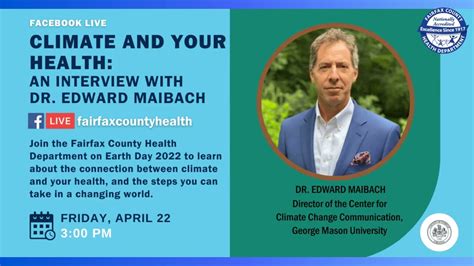 [### Climate and Your Health An Interview with Dr Edward Maibach - YouTube


youtube.com
youtube.com
Flag AI-generated image
Report inappropriate image](https://www.youtube.com/watch?v=ByrpLFit0d0)
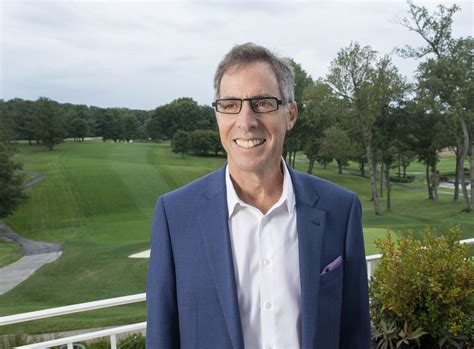 [### Mason Trailblazer: Edward Maibach | George Mason University News

content.sitemasonry.gmu.edu
content.sitemasonry.gmu.edu
Flag AI-generated image
Report inappropriate image](https://content.sitemasonry.gmu.edu/news/2022-04/mason-trailblazer-edward-maibach)
Was this helpful?

Wikipedia
https://en.wikipedia.org › wiki › Edward_Maibach
Edward Maibach - Wikipedia
Edward Wile Maibach is a professor at George Mason University who works on public health and climate change communication. Maibach received a B.A. in social psychology from the University of California at San Diego (1980), a M.P.H from San Diego State University (1983) and a Ph.D. in communication research from Stanford University (1990).
Google Scholar
https://scholar.google.com › citations?user=eb0BEfkAAAAJ&hl=en
Edward Maibach - Google Scholar
Edward Maibach Professor of Communication, George Mason University Verified email at gmu.edu climate change public health communication
Climate for Health
https://climateforhealth.org › leader › ed-maibach
Ed Maibach, PhD - Climate for Health
Edward Maibach, PhD., is a Distinguished University Professor at George Mason University and is the Director of Mason's Center for Climate Change Communication. His research focuses on understanding and promoting public engagement in climate change. Previously, Ed served as Associate Director of the National Cancer Institute and as Worldwide Director of Social Marketing at Porter Novelli ...
climatecommunication.gmu.edu
https://climatecommunication.gmu.edu › all › team_member › edward-maibach
Edward Maibach - Center for Climate Change Communication
Dr. Maibach is a Distinguished University Professor Emeritus at George Mason University and is the Founding Director Emeritus of Mason's Center for Climate Change Communication. A Principal Investigator of the Yale/George Mason Climate Change in the American Mind polling project, Dr. Maibach also co-led the development of the Medical Society Consortium on Climate and Health, […]
National Academy of Medicine
https://nam.edu › team › edward-maibach-mph-phd
Edward Maibach, PhD, MPH - NAM
Ed Maibach, Ph.D., MPH, is a distinguished University Professor at George Mason University and Director of Mason's Center for Climate Change Communication (Mason 4C). He is a Principal Investigator of the Yale/George Mason Climate Change in the American Mind polling project, and a co-developer of the Medical Society Consortium on Climate and Health, an educational initiative that currently ...
planetaryhealthalliance.org
https://planetaryhealthalliance.org › people › edward-maibach
Edward Maibach - Planetary Health Alliance
Edward Maibach, MPH, PhD is a George Mason University Distinguished University Professor and Director of Mason's Center for Climate Change Communication. His research illuminates public engagement in climate change and strategies for enhancing it. Dr. Maibach is a Member of the National Academy of Medicine, a Fellow of the American Academy for the Advancement of Science, and he serves on the ...
Climate One
https://www.climateone.org › people › edward-maibach
Edward Maibach - Climate One
Edward Maibach - a Mason distinguished university professor - is a communication scientist who is expert in the uses of strategic communication and social marketing to address climate change and related public health challenges. His research - funded by NSF, NASA and private foundations - focuses on public understanding of climate change and clean energy; the psychology underlying ...
Institute for a Sustainable Earth
https://ise.gmu.edu › edward-maibach
Edward Maibach, PhD - Institute for a Sustainable Earth
Edward Maibach—a distinguished University Professor and Director of George Mason University Center for Climate Change Communication—is a public health communication scientist who focuses on climate change and related public health challenges. In 2020, Ed was awarded the Stephen Schneider Award for Outstanding Climate Science Communication, and Mason's top research honor—the Beck Family ...
Loop
https://loop.frontiersin.org › people › 467114 › overview
Loop | Edward Maibach
Edward Maibach is a distinguished University Professor at George Mason University, and director of its Center for Climate Change Communication. Ed's research - funded by the NSF, NASA and private foundations - focuses on understanding public engagement in climate change, and on cultivating new
---