wohlstetter
john
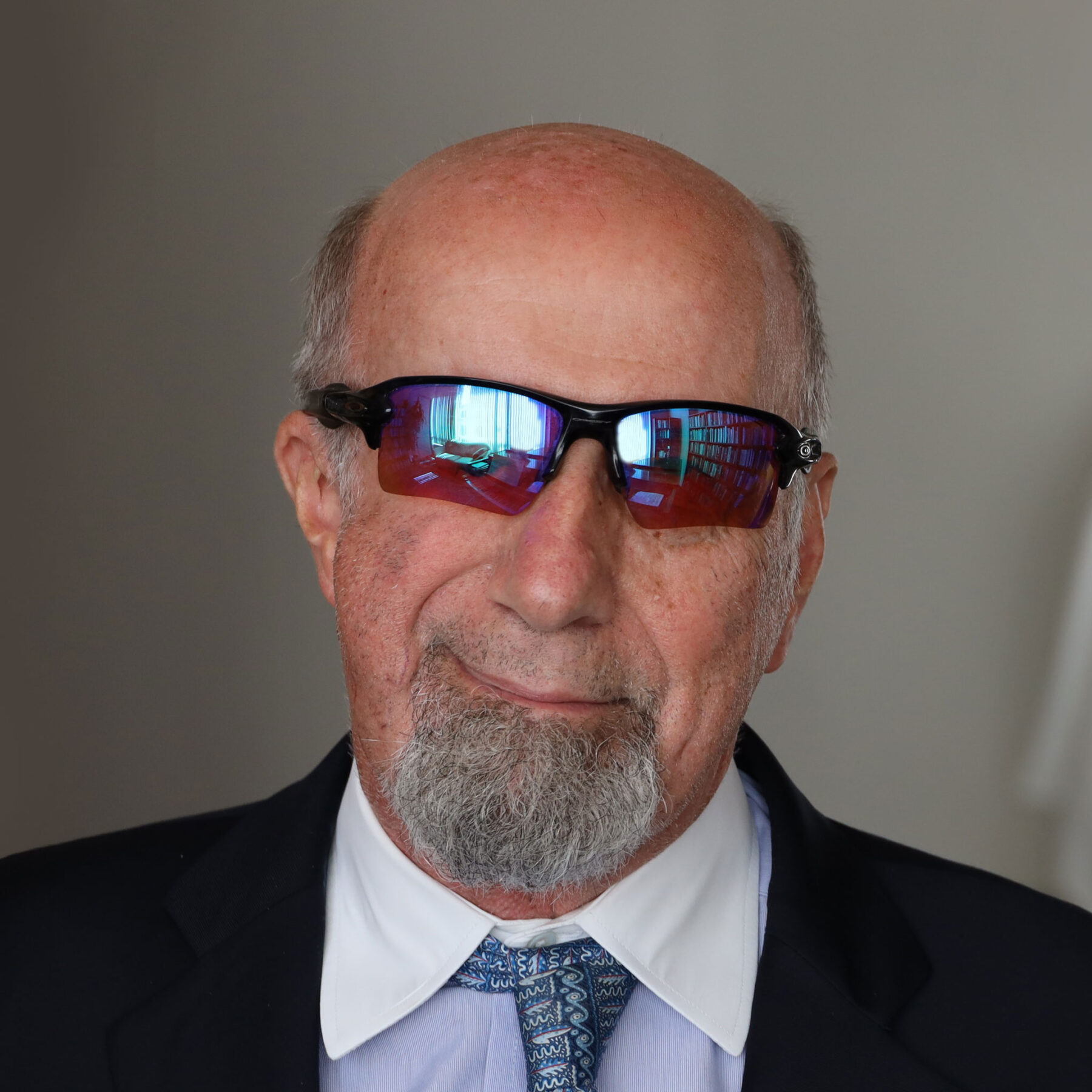
Senior Fellow
Distinguished Fellow (United Kingdom)
John Wohlstetter is a senior fellow at the Discovery Institute (beg. 2001) and the Gold Institute for International Strategy (beg. 2021); he held a similar position at the London Center for Policy Research (2013-2018). His primary areas of expertise are national security and foreign policy, and the 25th Amendment to the U.S. Constitution. He is author of Sleepwalking With The Bomb(2nd ed. 2014), and The Long War Ahead and the Short War Upon Us(2008). He was founder and editor of the issues blog Letter From The Capitol(2005-2015). He has authored numerous articles in publications, including The American Spectator, National Review Online, The Wall Street Journal, Human Events, The Daily Caller, PJ Media and The Washington Times.
He gave over 1,000 radio interviews (2008-2015), many on nationwide programs, and guest-hosted the August 14, 2013 Dennis Miller Show. He worked on the foreign trading desks at Goldman Sachs (1969-73) & Drexel Burnham Lambert (1973-74). He was an attorney for Contel Corporation (1978-91), practicing general corporate and communications law; he shifted to strategic assessment, a task he also performed at GTE Corporation (1991-2000) and Verizon (2000); he retired in 2000. During his tenure at Contel he served as senior adviser to The Committee on Review of Switching, Synchronization and Network Control in National Security Telecommunications.
The Committee, created by the National Research Council, published its final report, Growing Vulnerability of the Public Switched Networks: Implications for National Security Emergency Preparedness(1989). He holds degrees from the University of Miami (B.B.A., 1969, Finance major, Art History minor); Fordham University School of Law (J.D., 1977); and The George Washington University (Public Policy/Telecommunications, 1985). He is a National Trustee of the National Symphony Orchestra (beg. 2014), and served on the NSO Board of Directors (1992-2014). He is a trustee of the Billy Rose Foundation (beg. 1996). He served as a trustee of MyFace (1980-2016), the Washington Bach Consort (2002-2018), and the London Center for Policy Research (2013-2018). He is an amateur concert pianist.
wiki
Albert Wohlstetter - Wikipedia
swatch
In his Remarks at the Presentation Ceremony for the Presidential Medal of Freedom on November 7, 1985, President Ronald Reagan said:
"Albert Wohlstetter is a brilliant man with enormous strength of character. His intellectual integrity is renowned, and his analytical standards have been increasingly and unceasingly rigorous. He's been a steady hand in an uncertain time. His understanding on many levels has been indispensable to the well-being of the free world. In these last 30 years, Albert has been influential in helping to design and deploy our strategic forces -- an awesome task. He's sought ways to make our forces safer from attack, less destructive, and thereby less dangerous to us all. Many of the basic concepts and requirements for deterrence in the nuclear age -- analysis on which we've operated -- can be traced to this outstanding individual. And his work on the problem of nuclear proliferation gave us the insight we needed to better curb the irresponsible flow of sensitive material and technology.
"Albert has always argued that in the nuclear age technological advances can, if properly understood and applied, make things better; but his point, and [that of his wife,] Roberta Wohlstetter's, has been a deeper one than that. He has shown us that we have to create choices and, then, exercise them. The Wohlstetters have created choices for our society where others saw none. They've taught us that there is an escape from fatalism."
Wohlstetter on "Deploying Nuclear Forces"
In the paper "From Testing to Deploying Nuclear Forces. The Hard Choices Facing India and Pakistan," Gregory S. Jones (University of Chicago) writes that "A fully deployed nuclear force must meet many requirements to ensure that it is capable of fulfilling the deterrence function assigned to it without causing other undue risks. These requirements were first delineated by Albert Wohlstetter in his seminal article, 'The Delicate Balance of Terror.' Although the origins of these requirements were in the context of the U.S.-Soviet Cold War, Wohlstetter made it clear that the requirements applied to any nuclear power and not just the two superpowers.
Jones, based on RAND Corporation documents (see below) written by Dr. Wohlstetter, cites eight requirements posited by him: "A central requirement is that a nuclear force should be able to survive a first strike designed to prevent the force from striking back. Wohlstetter had seen how difficult it was for the United States to achieve this objective against the relatively small Soviet nuclear force in the 1950s, which was one of the main reasons he considered the balance of terror 'delicate.' He believed that meeting this requirement would be even harder in an environment of many nuclear powers where the capabilities of these powers would vary greatly."
The second requirement is that "the delivery systems must be able to reach their targets and to penetrate defenses on their way to the target."
The third is that "the force should have a low risk of physical accidents, a problem even the United States has encountered." As Jones points out, "Aircraft carrying nuclear weapons have crashed."
The fourth is that "the nuclear weapons should be safe against theft or unauthorized use [originating] ... from either external or internal sources."
The fifth is that "the force should have a low risk of mistaken use by authorized persons."
The sixth is that "the command authorities must survive any first strike, be able to make the decision to retaliate, and be able to communicate this decision to the surviving nuclear forces."
The seventh is that "the nuclear forces should be capable of a number of response options."
And the final, the eighth requirement, is that "the force must be procured and operated at a reasonable cost. What is 'reasonable' is relative, depending on the defense spending in any particular country."
- Wohlstetter, "The Delicate Balance of Terror," Foreign Affairs, Vol. 37, No. 2, January 1959. A slightly different version was published as P-1472, RAND, December 1958.
- Wohlstetter, "Nuclear Sharing: NATO and the N+1 Country," Foreign Affairs, Vol. 39, No. 3, April 1961.
- Wohlstetter, et al., in: "Selection and Use of Strategic Air Bases, RAND, R-266, April 2, 1954; "Protecting U.S. Power to Strike Back in the 1950s and 1960s, RAND, R-290, September 1, 1956; and "Defending a Strategic Force After 1960," RAND, D-2270, February 1, 1954.
During a May 9, 2003 Vanity Fair interview by Sam Tannenhaus, Paul Dundes Wolfowitz talked about Albert Wohlstetter (Source: Defense Link News):
Q: Let me ask about one other [inaudible], and that's Albert Wohlstetter. A couple of people, believe me, who are not [inaudible] at all, say that Wohlstetter was a far-sighted military strategist whose notions have been about low yield nuclear weapons that we're hearing about today, and different ways of fighting wars. It doesn't have to be an all or nothing, zero sum, no mutually assured destruction. Are there any notions like that on where the military is today or how you look at --
Wolfowitz: Wohlstetter is a much more relevant figure and it's interesting too, by the way, that the same fellow who, or one of the same fellows who discovered the Straussian Conspiracy kind of throws Wohlstetter in as a Straussian when Wohlstetter was actually philosophically a student of Willard Van Orman Quine [(1908-2000)].
[...]
Wolfowitz: Exactly. If there was anything anathema to Leo Strauss it was analytical philosophy. ... And Wohlstetter was somebody who really just almost painfully resisted being labeled even as to political party. He was so insistent on ascertaining the facts. He had a very fact-based approach to policy. It's very impressive. And indeed, I was his student and often identified as such, and it occasionally troubled me just a little bit that I thought, well, maybe he was also associated with these sort of cold-blooded systems analysts who kind of seemed to leave the moral piece of politics and strategy as though it wasn't part of the equation.
It was terrifically gratifying to me as I got to know him better, to realize that there were intensely moral considerations in the way he approached these issues. Most dramatically in his deep concern about the fate of Bosnia in his late years.
But to come back to sort of more concretely, I mean here's something that I think is quite important, quite relevant. Albert Wohlstetter was one of the first people, most influential people, to understand what a dramatic difference it would make to have accurate weapons. And that in particular what he was really interested in was the ability, two things. Number one, to be able to use conventional weapons in ways that people, that only nuclear weapons could be used, to be able to get out of the nuclear mindset kind of things.
But secondly and importantly, to be able to avoid unnecessary loss of innocent life in war. And in fact there's a fairly seminal document that was done under Fred C. Ikle when he was Under Secretary of Defense for Policy called Discriminate Deterrence which may be interesting to know if you can find it on the internet. As I recall, even at the time, the State Department didn't like it because for some reason or other it offended some of our allies.
[...]
But going back much earlier, Albert, starting in '73 or '74 put together something called the New Alternative Workshop or New Alternative Panel. I think it was Workshop. To look at the implications of new technology. But the ones that interested him the most were the ones that promised great improvements in accuracy. And as a result he was the first intellectual figure to recognize that the Tomahawk cruise missile which was being developed by the Navy primarily as a nuclear delivery system, was much more significant as a conventional delivery system because it could give you very accurate weapons with ranges of what we have now, 600 miles or more.
If it hadn't been for Albert, I believe the Tomahawk cruise missile would have been traded away in the SALT II talks in 1976. ...
[...]
So it was a matter of considerable personal satisfaction to watch those missiles turning right angle corners in the Gulf War in 1991 and demonstrating that this stuff really could do what Albert Wohlstetter had envisioned 15 years before it might be able to do.
It's also an interesting case I think, without wanting to suggest that there's anything unintelligent about the military, it's too easy to misinterpret this comment. I mean there are very smart people trying very hard to do the right thing, but what's involved here is a tradeoff between a very expensive system that might some day be accurate, against things that are available here and now and that are much cheaper, and they may not be accurate but they seem to "do the job".
[...]
But if you wanted to understand Albert Wohlstetter you've got to understand how somebody can perceive that a seemingly cold technical fact like this fact about accuracy translates into a whole transformation of strategy and politics.
That had a similar impact in the 1950s when he was asked to look at, by the Air Force, at what's the most cost-effective way to base our bomber force and came out of that with the observation which is like a blinding flash of the obvious but no one had noticed it before then, that the real issue isn't what's cost effective, the real issue is how do you build a bomber force that's not vulnerable to a first strike by the other side?
[...]
Q: Does that also raise a question then if you're looking at leader who truly is brutal, [inaudible], raising that question, and also maybe someone who doesn't necessarily think the way you do. I know Wohlstetter had this phrase, I think he called it Western preferred Soviet strategy.
Wolfowitz: Exactly. It's probably the second greatest source of intelligence error is mirror imaging. I mean I think the greatest mistake is assuming that people will behave, well it's a version of mirror imaging, I guess. People will be rational according to our definition of what is rational.
Dr. Albert Wohlstetter's name has been linked with those of a number of neoconservatives affiliated with the Bush administration and the Department of Defense, the University of Chicago, as well as appearing to share other common threads with Paul Dundes Wolfowitz, Richard N. Perle, Donald Rumsfeld, Ahmed Chalabi, William Kristol, and Irving Kristol .
- According to the article Neo-Conservative Ascendancy in the George W. Bush Administration, Joan Wohlstetter introduced her classmate Richard N. Perle to her father, Albert Wohlstetter. Wohlstetter, in turn, "helped Perle and Paul Dundes Wolfowitz get their start in Washington. ... According to Perle, he and Wolfowitz were introduced to each other by Wolfstetter when he thought they could work together in 1969 on the debate taking shape in the Senate over the ballistic missile defense." (Note: Article cites "Alfred Wohlstetter".)
- In 1972, Wolfowitz attained his doctoral degree from the University of Chicago, where "he is cared for by professor Albert Wohlstetter, [who, later during] the Gulf War [has] still another large role will play."[1]/original German (Note: Article cites "Alfred Wohlstetter".)
- Jim Lobe writes in his March 9, 2003 article Family ties connect US right, Zionists that "Another key Irving Kristol disciple has been Richard Perle, the influential and ultra-hawkish chairman of Donald Rumsfeld's Defense Policy Board, whose main office is at American Enterprise Institute (AEI), where the Project for the New American Century (PNAC) and William Kristol are also based. His [Perle's] spouse is the daughter [Joan] of his teacher at the University of Chicago, another neo-con hero and strategic thinker who also favoured invading Iraq, the late Albert Wohlstetter, for whom the AEI conference centre is named. Wohlstetter also taught Deputy Defence Secretary Paul Wolfowitz." (Note: Article cites "Alfred Wohlstetter". Moreover, this article incorrectly identifies Richard Perle's spouse as Wohlstetter's daughter, Joan. The New York Times made similar error, which it corrected.)
- "Jewish and from a family of teachers, Wolfowitz is for his part a brilliant product of East Coast universities. He has studied with two of the most eminent professors of the 1960s. Allan Bloom, the discipline of the German-Jewish philosopher, Leo Strauss, and Albert Wohlstetter, professor of mathematics and a specialist in military strategy. These two names would end up counting. The neoconservatives have placed themselves under the tutelary shadow of the strategist and the philosopher." [2]
- "What makes Ahmed Chalabi so attractive to the Washington war party? Most importantly, he's a co-thinker: a mathematician trained at the Massachusetts Institute of Technology and the University of Chicago and a banker (who years ago hit it off with Albert Wohlstetter, the theorist who was a godfather of the neoconservative movement), a fellow mathematician and a University of Chicago strategist. In 1985, Wohlstetter (who died in 1997) introduced Chalabi to Perle, then the undersecretary of defense for international-security policy under President Reagan and one of Wohlstetter's leading acolytes. The two have been close ever since. In early October, Perle and Chalabi shared a podium at an American Enterprise Institute conference called 'The Day After: Planning for a Post-Saddam Iraq,' which was held, appropriately enough, in AEI's 12th-floor Wohlstetter Conference Center. 'The Iraqi National Congress has been the philosophical voice of free Iraq for a dozen years,' Perle told" Robert Dreyfuss. *The American Prospect*, November 18, 2002.
- An August 4, 2003, special article for the The Dubya Report, "The Prophet of Prevarication and His Disciple", reports that "While at Chicago, Strauss and mathematician Albert Wohlstetter trained a number of students who themselves became, or whose students became important figures in the neoconservative movement. Deputy Secretary of Defense Paul Wolfowitz studied with Strauss protégé Allan Bloom, and earned his Ph.D. from the U of C in 1972. William Kristol, chairman of the currently influential conservative advocacy group the Project for a New American Century (PNAC), studied with Strauss student Harvey Mansfield. NSC southwest Asia specialist Zalmay Khalilzad earned his Ph.D. under Wohlstetter in 1979, 10 years after Ahmed Chalabi, the 'man who would be king' of Iraq."
- The April 2003 special report "Zalmay Khalilzad: The Neocons' Bagman To Baghdad" by Issam M. Nashashibi, published by Washington Report on Middle East Affairs, states that "Perle whet his neo-conservative whistle under Albert Wohlstetter, a University of Chicago mathematician who was key in drawing up the Pentagon's strategic and nuclear blueprints during the Cold War. That same Wohlstetter mentored many of the Bush administration's reigning neo-conservatives, including Deputy Defense Secretary Paul Wolfowitz, one of the most pro-Zionist of the so-called chickenhawks, and Zalmay Khalilzad."
- Max Fraad Wolff, in "Neo-conservatism and the politics of paranoia" published June 2003 in "Red Pepper", writes that "The neo-cons' alliance with Rand Corporation heavyweight Albert Wohlstetter symbolised their entrance into Republican power circles.
"Wohlstetter worked with longtime Rumsfeld ally Kenneth Adelman and influenced and introduced Paul Wolfowitz and Richard Perle to each other. Wohlstetter's charge to influence policy through think tank activity and association with Washington elites offered the neo-cons a potent model. Their struggles against arms reduction facilitated rapid ascension to prominent roles in policy research and implementation."Neo-conservatism is defined by Straussian logic, Wohlstetter method and Republican interest. The neo-cons' proximity to power, academic position and media reach are now unrivalled.""Neo-conservatism has long struggled for the influence it now commands. It seeks to control mortal threats (real or imagined) before destruction is unleashed. The revolution in military affairs offered by Bush, Rumsfeld and Wolfowitz was designed by Wohlstetter and friends at the Rand Institute in the 1970s; the neo-cons waited in the wings ever since. The two Gulf wars, Venezuela and Afghanistan have been the test phases of a 'new' strategic disposition. The United Nations, NATO, strategic alliances and military assets are being reshuffled to advance US power."
Other SourceWatch Resources
External links
- Writings of Albert Wohlstetter, RAND Corporation.
- Albert Wohlstetter Dot Com, a website that examines the careers and writings of the late Albert and Roberta Wohlstetter.
- Aspin, Woolsey, Join Center in Honoring Albert Wohlstetter, Winner of 1993 'Freedom Flame', Center for Security Policy, September 21, 1993.
- Bob Djurdjevic, The Hidden Truth About Gorazde, Bosnia. Fishing for Bodies in the Drina, Truth in Media, August 1, 1994.
- Wohlstetter--The Ultimate Pocket-Book Election Issue: Clinton Is Inviting Costly International Conflicts, Center for Security Policy, October 2, 1996.
- Albert Wohlstetter, R.I.P., Polyconomics, January 16, 1997.
- Jude Wanniski, Tribute to Albert Wohlstetter, Voice of America, January 21, 1997.
- Marshall Freeman Harris and Stephen Walker, Remembering Albert Wohlstetter, Bosnian Report/Bosnian Institute, February-May 1997.
- Jason Vest, Darth Rumsfeld, The American Prospect, February 26, 2001.
- Jude Wanniski, The Prince of Darkness. Memo To: Henry Kissinger Re: Richard Perle, wanniski.com, September 18, 2001.
- Jude Wanniski, Fire Paul Wolfowitz. Memo to Donald Rumsfeld Re: "The Monkeys on your Back", informationclearinghouse, October 9, 2001. Memo discusses role of Wohlstetter.
- Khurram Husain, American Dreams. Intellectual Roots of Neo-conservative Thinking (cache file), Studien von Zeitfragen, 2003.
- Elizabeth Drew, The Neocons in Power, The New York Review of Books, January 12, 2003.
- Neil Swidey, The Analyst, Boston Globe, May 18, 2003: "Albert Wohlstetter". Also here.
- Alain Frachon and Daniel Vernet; translated by Norman Madarasz, The Strategist and the Philosopher, CounterPunch, June 2, 2003.
- Robert L. Bartley, Joining LaRouche In the Fever Swamps. The New York Times and The New Yorker go off the deep end, Opinion Journal, June 9, 2003.
- Khurram Husain, "Neocons: The men behind the curtain", Bulletin of the Atomic Scientists, November/December 2003.
- Tom Barry, A History of Threat Escalation. Remembering Team B, RightWeb Analysis, February 12, 2004: "Wohlstetter, who had left his full-time position at RAND to become a professor at the University of Chicago, organized an informal study group that included younger neoconservatives such as Paul Wolfowitz and longtime hawks like Paul H. Nitze."
- NeoCon Europe Albert Wohlstetter
Albert James Wohlstetter (December 19, 1913 – January 10, 1997) was an influential and controversial nuclear strategist during the Cold War. He and his wife Roberta Wohlstetter, an accomplished historian and intelligence expert, received the Presidential Medal of Freedom from Ronald Reagan on November 7, 1985.
]
- :{1:(style="display:table-cell;padding-left:0px;padding-right:0.5em"):}::{Ancestry:(style="display:table-cell"):}:
- :{2:(style="display:table-cell;padding-left:0px;padding-right:0.5em"):}::{Early life and education:(style="display:table-cell"):}:
- :{3:(style="display:table-cell;padding-left:0px;padding-right:0.5em"):}::{Early career:(style="display:table-cell"):}:
- :{4:(style="display:table-cell;padding-left:0px;padding-right:0.5em"):}::{The RAND Corporation:(style="display:table-cell"):}:
- :{5:(style="display:table-cell;padding-left:0px;padding-right:0.5em"):}::{Independent consultant:(style="display:table-cell"):}:
- :{6:(style="display:table-cell;padding-left:0px;padding-right:0.5em"):}::{Death:(style="display:table-cell"):}:
- :{7:(style="display:table-cell;padding-left:0px;padding-right:0.5em"):}::{Awards:(style="display:table-cell"):}:
- :{8:(style="display:table-cell;padding-left:0px;padding-right:0.5em"):}::{Legacy:(style="display:table-cell"):}:
- :{9:(style="display:table-cell;padding-left:0px;padding-right:0.5em"):}::{In popular culture:(style="display:table-cell"):}:
- :{10:(style="display:table-cell;padding-left:0px;padding-right:0.5em"):}::{References:(style="display:table-cell"):}:
- :{11:(style="display:table-cell;padding-left:0px;padding-right:0.5em"):}::{Bibliography:(style="display:table-cell"):}:
- :{12:(style="display:table-cell;padding-left:0px;padding-right:0.5em"):}::{External links:(style="display:table-cell"):}:
Ancestry
Albert Wohlstetter's paternal grandparents were cosmopolitan Jews who immigrated to the United States from the Austro-Hungarian Empire in the latter half of the nineteenth century. Albert's father, Philip, was born in the United States about twenty years later.[1]
Early life and education
Albert was born on 19 December 1913, the fourth and youngest child of Philip Wohlstetter and Nellie (née Friedman). Albert's older siblings were William (1902–1967), Helene (1906–1974) and Charles (1910–1995). Albert's brother Charles was an accomplished businessman who would help Albert get his start as a young man. Charles also employed Helene at one of his companies, ConTel, where she was killed in a shooting by a disgruntled employee in 1974.[2]
The Wohlstetters lived in the Washington Heights neighborhood of Manhattan. Philip Wohlstetter had attended City College of New York was an attorney and the Chief Legal Council to the Metropolitan Opera Company. In 1912 he founded one of the early phonograph companies, the Rex Talking Machine Corporation. Luminaries of the performance world were regular guests in the Wohlstetter home. The Rex company was taken over and its Wilmington, Delaware factory converted to war production during the First World War. Philip died of a heart attack in 1918 when Albert was four years old.[3]
City College of New York
Wohlstetter started at City College of New York in 1931 through a scholarship in modern dance, earning a B.A. in 1934.
Columbia University
Wohlstetter started at Columbia Law School on a fellowship in 1934. It was in a class there that he met Roberta Morgan. Wohlstetter was bored by the law and left the program after only one year. But he stayed at Columbia to pursue a Ph.D. in mathematical logic and the philosophy of science. He studies under Abraham Wald where he was a peer of Jacob Wolfowitz.[4] After a thesis titled Language and Empiricism earned him an M.A. in June 1937, several fellowships allowed him to work on is dissertation. He had a fellowship with the Social Science Research Council on a project to incorporate modern mathematical methods into economics and business cycle research. From 1941–1942 he was a research associate at the National Bureau of Economic Research.[5]
In August 1942 the Wohlstetters vacationed with Dwight Macdonald, one of the editors of Partisan Review, and his wife, Nancy in Nantucket.[6]
He left Columbia's graduate program when the Second World War started to work for the U.S. government on war planning and never completed his doctorate.
Early career
During the Second World War, Wohlstetter worked on problems of war production. He was first hired by the Planning Committee of the War Production Board. It is unclear how he ended up there. In an interview, Wohlstetter says that while on the Carnegie associateship with NBER, Simon Kuznets was hired by Robert R. Nathan and it was Kuznets who hired Wohlstetter.[7] Albert's brother Charles recounts that it was Arthur F. Burns who gave Albert the job.[8]
Later he worked at Atlas Aircraft Products Company.
After the war, Wohlstetter worked briefly in business in New York.[9] He moved back to Washington, D.C. to serve as the Director of Programs for the National Housing Agency (USHA) in 1946 and 1947, the only time in his career he was a federal employee.[10] At the USHA Wohlstetter worked with Paul Weidlinger, an engineer who had worked during the war for an aircraft company owned by Albert's brother, Charles, designing modular buildings such as airplane hangers that could be assembled quickly. At the USHA Wohlstetter and Weidlinger worked on applying such principles to domestic residential buildings.[9]
During the 1937–1938 school year, Roberta had worked as a teaching assistant at the University of Southern California, during which time she became enamored with the California lifestyle.[11] At her urging, and with his brother Charles helping to secure a job for Albert, the Wohlstetters moved to Santa Monica in 1947. Albert went to work for the General Panel Corporation to "tool up" their industrial plant. General Panel Corporation was a company founded by Walter Gropius and Konrad Wachsmann, two important figures in the Bauhaus movement.[12]
The RAND Corporation
While on a walk, Albert and Roberta ran into Abe Girschick, Olaf Helmer and Chen McKinsey on the street in Santa Monica. Albert knew the three from his days as a student and in government service.[13] The three mathematicians "... were overjoyed to see us. Mathematical logic was a very, very small world. There were only a little over a dozen mathematical logicians before the war in the United States ..."[14] Girschick, Helmer and McKinsey were working at the recently formed RAND Corporation. With their help, Hans Speier, the head of the RAND social science division, hired Roberta, initially to write book abstracts for circulation to the RAND staff.[15] When General Panel Corporation finally went out of business in 1951, Albert wanted to return to academia in the east, but Roberta was intent on remaining in California.[16] She set up a meeting between Albert and Charles J. Hitch, the head of the RAND economics department. The two hit it off and Wohlstetter was brought on as a consultant to the Mathematics Department.[17]
Wohlstetter remained a consultant with RAND for the first few years. It was not until June or July 1953, a few months after he began briefing Selection and Use of Strategic Air Bases to the Air Force that Hitch finally insisted that his consultant status was "absurd" and that he join the permanent staff.[18]
At RAND, he researched how to posture and operate U.S. strategic nuclear forces to deter plausible forms of Soviet nuclear-armed aggression in way that was credible, cost-effective and controllable.[19]
Wohlstetter's 1958 'The Delicate Balance of Terror' was highly influential in shaping the thinking of the Washington foreign policy establishment, particularly in its emphasis on the looming threat of Soviet attack.[20]
The relationship between Bernard Brodie and Wohlstetter grew increasingly acrimonious and personal. In 1963 Brodie accused Wohlstetter of a security violation and financial malfeasance. Wohlstetter had shared a draft RAND paper by Constantin Melnik with Henry Rowen, then one of the Whiz Kids working as the Deputy Assistant Secretary of Defense for International Security Affairs at McNamara's Pentagon. Brodie also claimed that Wohlstetter was extravagant in wining and dining clients and colleagues using RAND funds. Wohlstetter defended himself by pointing out that the Melnik paper was only a "D" designated document, RAND's lowest level cassification, and as a former RAND employee who had collaborated extensively with Wohlstetter on some of his most important studies, Rowen was authorized to receive the paper. Nevertheless, RAND Director Frank Collbohm demanded that Wohlstetter submit his resignation. When Wohlstetter refused, Collbohm fired him, but agreed to let Wohlstetter stay on at RAND long enough to find another job.[21]
Independent consultant
At the suggestion of Hans Morgenthau and with his help, Wohlstetter secured a position as a professor of political science at the University of Chicago.[22]
In the 1960s and 1970s, he expanded the scope of his research to include alliance policy and nuclear nonproliferation,[23] ballistic missile defense,[24] innovation in military technology,[25] peacetime military competitions,[26] and military potential and economics of civil nuclear energy.[27]
In the 1980s, Wohlstetter frequently criticized proponents of mutual assured destruction who supported targeting of nuclear weapons on civilians and cities instead over enemy combatants and military forces.[28]
Wohlstetter and his wife, Roberta Wohlstetter, also counseled both Democratic and Republican administrations, including advisers to President John F. Kennedy during the Cuban missile crisis in 1962.[29] They received the Presidential Medal of Freedom from Ronald Reagan on November 7, 1985.
The Commission on Integrated Long-Term Strategy meets with President Reagan to discuss their report, *Discriminate Deterrence*. Members of the Commission on the left side of the table (clockwise from the bottom of the photograph to the top): Gen.Bernard Schriever, former Commander, Air Force Systems Command; Judge William P. Clark, former National Security Adviser; Ambassador Anne Armstrong, Chairperson, President's Foreign Intelligence Advisory Board; Gen. John Vessey, former Chairman of Joint Chiefs of Staff; Albert Wohlstetter; Fred Iklé, former Under Secretary of Defense for Policy; Zbigniew Brzezinski, former National Security Adviser; Gen. Andrew J. Goodpaster, former NATO Supreme Allied Commander; W. Graham Claytor, Jr., former Secretary of the Navy and Deputy Secretary of Defense; Samuel P. Huntington, Director, Center for International Affairs, Harvard University; Admiral James L. Holloway III, former Chief of Naval Operations (Commission members not present: Henry A. Kissinger, former National Security Adviser and Secretary of State; Joshua Lederberg, Professor of molecular genetics and informatics and President of Rockefeller University). The President and staff, right side of table, (top to bottom): National Security Adviser Colin Powell; President Ronald Reagan; Secretary of Defense Frank Carlucci (obstructed); Chief of Staff Howard Baker. White House Cabinet Room, Washington, D.C., 12 January 1988. Photograph by William Fitz-Patrick, courtesy of the Ronald Reagan Presidential Library. The Commission held a press briefing later that day at the Pentagon which is available via C-SPAN.
During his long career, Wohlstetter also taught at UCLA and the University of California, Berkeley, in the early 1960s. From 1964 to 1980, he taught in the political science department of the University of Chicago, and chaired the dissertation committees of Paul Wolfowitz and Zalmay Khalilzad. He is often credited with influencing a number of prominent members of the neoconservative movement,[30] including Richard Perle (who, as a teenager, dated Wohlstetter's daughter Joan).[31] He is the uncle of John Wohlstetter, author of Sleepwalking with the Bomb and The Long War Ahead and The Short War Upon Us.[32]
Death
On 16 December 1996, his 83rd birthday, Wohlstetter was not feeling well. He and Roberta thought he was just ill or having an asthma attack. Over the telephone from New York their daughter Joan reviewed the symptoms for a heart attack and told Roberta to call an ambulance. Albert made a fuss, not wanting to go to the emergency room. At the hospital he was diagnosed as having had a serious heart attack and was discharged home with around-the-clock nursing care. In the living room he set up a makeshift chair that allowed him to partially recline so he could continue to work. A month later, on 10 January 1997, Wohlstetter died at his Laurel Canyon home.[33]
A memorial was held at the office of the RAND Corporation[34] and a month later Senator Jon Kyl and special guest Richard Perle conducted a brief remembrance in the Senate chamber.[35] Albert Wohlstetter is buried at Westwood Village Memorial Park Cemetery in Los Angeles. Roberta Wolstetter died on 6 January 2007.
Awards
President Ronald Reagan presents Albert andRoberta Wohlstetter and Paul Nitze with the Presidential Medal of Freedom. The East Room of the White House, Washington, D.C., 7 November 1985. Photograph by Peter J. Souza, courtesy of the Ronald Reagan Presidential Library.
He was twice awarded the Department of Defense Medal for Distinguished Public Service, first by Robert McNamara in February 1965 and again by Donald Rumsfeld in November 1976. He is the first recipient not employed by the Department of Defense and the first person awarded it twice.[36]
On 7 November 1985 President Reagan awarded Albert Wohlstetter, along with his wife Roberta Wohlstetter and Paul Nitze, the Presidential Medal of Freedom.
Legacy
The Albert J. and Roberta Wohlstetter Papers are available at the Hoover Institution Archives at Stanford University.
In popular culture
Wohlstetter served as an inspiration for Stanley Kubrick's film, Dr. Strangelove or: How I Learned to Stop Worrying and Love the Bomb. In 1962 Kubrick was looking for his next project after Lolita and started reading intensively on nuclear issues. One of Kubrick's early ideas was to make a realistic thriller, titled after Wohlstetter's "Delicate Balance of Terror". But Kubrick could not conceive of a realistic scenario for an accidental nuclear war, so turned instead to the idea of making a comedy. While the character of Dr. Stragelove is a composite of numerous people associated with RAND (Dr. Strangelove confesses to the president having commissioned a study by "the Bland Corporation" of the possibility of a doomsday device) in the movie that was made, he is mostly based on Herman Kahn, John von Neumann, Wernher von Braun and Edward Teller.[37]
References
- :{Jump up:(style="user-select:none;top:-99999px;clip:rect(1px 1px 1px 1px);overflow:hidden;position:absolute !important;padding:0px !important;border:0px !important;height:1px !important;width:1px !important"):}:^ Charles Wohlstetter 1997, p. 1.
- :{Jump up:(style="user-select:none;top:-99999px;clip:rect(1px 1px 1px 1px);overflow:hidden;position:absolute !important;padding:0px !important;border:0px !important;height:1px !important;width:1px !important"):}:^ Zarate 2009, p. 66.
- :{Jump up:(style="user-select:none;top:-99999px;clip:rect(1px 1px 1px 1px);overflow:hidden;position:absolute !important;padding:0px !important;border:0px !important;height:1px !important;width:1px !important"):}:^ Charles Wohlstetter 1997, p. 2.
- :{Jump up:(style="user-select:none;top:-99999px;clip:rect(1px 1px 1px 1px);overflow:hidden;position:absolute !important;padding:0px !important;border:0px !important;height:1px !important;width:1px !important"):}:^ Richardson 2009, p. 98.
- :{Jump up:(style="user-select:none;top:-99999px;clip:rect(1px 1px 1px 1px);overflow:hidden;position:absolute !important;padding:0px !important;border:0px !important;height:1px !important;width:1px !important"):}:^ Zarate 2009, p. 8.
- :{Jump up:(style="user-select:none;top:-99999px;clip:rect(1px 1px 1px 1px);overflow:hidden;position:absolute !important;padding:0px !important;border:0px !important;height:1px !important;width:1px !important"):}:^ Wreszin, Michael (1994). A Rebel In Defense of Tradition: The Life and Politics of Dwight Macdonald. New York: HarperCollins. p. 113. ISBN 0-465-01739-8.
- :{Jump up:(style="user-select:none;top:-99999px;clip:rect(1px 1px 1px 1px);overflow:hidden;position:absolute !important;padding:0px !important;border:0px !important;height:1px !important;width:1px !important"):}:^ Wohlstetter & 30 January 1986, p. 1.
- :{Jump up:(style="user-select:none;top:-99999px;clip:rect(1px 1px 1px 1px);overflow:hidden;position:absolute !important;padding:0px !important;border:0px !important;height:1px !important;width:1px !important"):}:^ Charles Wohlstetter 1997, p. 116.
- ^ :{Jump up to::(style="user-select:none;top:-99999px;clip:rect(1px 1px 1px 1px);overflow:hidden;position:absolute !important;padding:0px !important;border:0px !important;height:1px !important;width:1px !important"):}:^a b(https://en.wikipedia.org/wiki/Albert_Wohlstetter#cite_ref-FOOTNOTEKaplan198396_9-1) Kaplan 1983, p. 96.
- :{Jump up:(style="user-select:none;top:-99999px;clip:rect(1px 1px 1px 1px);overflow:hidden;position:absolute !important;padding:0px !important;border:0px !important;height:1px !important;width:1px !important"):}:^ Mukherjee et al. 2001, p. 3; Zarate 2009, p. 66; Herken 1985, p. 89
- :{Jump up:(style="user-select:none;top:-99999px;clip:rect(1px 1px 1px 1px);overflow:hidden;position:absolute !important;padding:0px !important;border:0px !important;height:1px !important;width:1px !important"):}:^ Robin 2016, pp. 47, 49.
- :{Jump up:(style="user-select:none;top:-99999px;clip:rect(1px 1px 1px 1px);overflow:hidden;position:absolute !important;padding:0px !important;border:0px !important;height:1px !important;width:1px !important"):}:^ Wohlstetter & 29 July 1987, p. 2.
- :{Jump up:(style="user-select:none;top:-99999px;clip:rect(1px 1px 1px 1px);overflow:hidden;position:absolute !important;padding:0px !important;border:0px !important;height:1px !important;width:1px !important"):}:^ Kaplan 1983, p. 97.
- :{Jump up:(style="user-select:none;top:-99999px;clip:rect(1px 1px 1px 1px);overflow:hidden;position:absolute !important;padding:0px !important;border:0px !important;height:1px !important;width:1px !important"):}:^ Wohlstetter & 29 July 1987, pp. 1–2.
- :{Jump up:(style="user-select:none;top:-99999px;clip:rect(1px 1px 1px 1px);overflow:hidden;position:absolute !important;padding:0px !important;border:0px !important;height:1px !important;width:1px !important"):}:^ Robin 2016, pp. 50–53; Abella 2008, pp. 78–79
- :{Jump up:(style="user-select:none;top:-99999px;clip:rect(1px 1px 1px 1px);overflow:hidden;position:absolute !important;padding:0px !important;border:0px !important;height:1px !important;width:1px !important"):}:^ Robin 2016, pp. 50–51.
- :{Jump up:(style="user-select:none;top:-99999px;clip:rect(1px 1px 1px 1px);overflow:hidden;position:absolute !important;padding:0px !important;border:0px !important;height:1px !important;width:1px !important"):}:^ Zarate 2009, p. 9.
- :{Jump up:(style="user-select:none;top:-99999px;clip:rect(1px 1px 1px 1px);overflow:hidden;position:absolute !important;padding:0px !important;border:0px !important;height:1px !important;width:1px !important"):}:^ Wohlstetter & 29 July 1987, p. 4.
- :{Jump up:(style="user-select:none;top:-99999px;clip:rect(1px 1px 1px 1px);overflow:hidden;position:absolute !important;padding:0px !important;border:0px !important;height:1px !important;width:1px !important"):}:^ See Albert Wohlstetter, et al., *Selection and the Use of Strategic Air Bases*, a report prepared for United States Air Force Project RAND, R-266 (Santa Monica, CA: RAND Corporation, April 1954); Wohlstetter, et al., *Protecting U.S. Power to Strike Back in the 1950s and 1960s*, staff report, R-290 (Santa Monica, CA: RAND Corporation, September 1, 1956); and Wohlstetter, "The Delicate Balance of Terror," Foreign Affairs, Vol. 37, No. 2 (January 1959), pp. 211-234.
- :{Jump up:(style="user-select:none;top:-99999px;clip:rect(1px 1px 1px 1px);overflow:hidden;position:absolute !important;padding:0px !important;border:0px !important;height:1px !important;width:1px !important"):}:^ Andrew Bacevich, 'Tailors to the Emperor', New Left Review 69, May–June 2011, p. 108 [1]
- :{Jump up:(style="user-select:none;top:-99999px;clip:rect(1px 1px 1px 1px);overflow:hidden;position:absolute !important;padding:0px !important;border:0px !important;height:1px !important;width:1px !important"):}:^ Robin 2016, p. 97; Abella 2008, pp. 196–194
- :{Jump up:(style="user-select:none;top:-99999px;clip:rect(1px 1px 1px 1px);overflow:hidden;position:absolute !important;padding:0px !important;border:0px !important;height:1px !important;width:1px !important"):}:^ Zarate 2009, p. 31.
- :{Jump up:(style="user-select:none;top:-99999px;clip:rect(1px 1px 1px 1px);overflow:hidden;position:absolute !important;padding:0px !important;border:0px !important;height:1px !important;width:1px !important"):}:^ See Albert Wohlstetter, "Nuclear Sharing: NATO and the N+1 Country," Foreign Affairs, Vol. 39, No. 3 (April 1961), pp. 355-387.
- :{Jump up:(style="user-select:none;top:-99999px;clip:rect(1px 1px 1px 1px);overflow:hidden;position:absolute !important;padding:0px !important;border:0px !important;height:1px !important;width:1px !important"):}:^ See Albert Wohlstetter, "The Case for Strategic Force Defense," in Johan Jørgen Holst and William Schneider, Jr., eds., Why ABM? Policy Issues in the Missile Defense Controversy (New York, NY: Pergamon Press, 1969), pp. 119-142.
- :{Jump up:(style="user-select:none;top:-99999px;clip:rect(1px 1px 1px 1px);overflow:hidden;position:absolute !important;padding:0px !important;border:0px !important;height:1px !important;width:1px !important"):}:^ See D. A. Paolucci, *Summary Report of the Long Range Research and Development Planning Program (LRRDPP)*, DRAFT, February 7, 1975, declassified on December 31, 1983.
- :{Jump up:(style="user-select:none;top:-99999px;clip:rect(1px 1px 1px 1px);overflow:hidden;position:absolute !important;padding:0px !important;border:0px !important;height:1px !important;width:1px !important"):}:^ See Albert Wohlstetter, "Racing Forward? Or Ambling Back?," in Robert Conquest, ed., Defending America (New York, NY: Basic Books, 1977).
- :{Jump up:(style="user-select:none;top:-99999px;clip:rect(1px 1px 1px 1px);overflow:hidden;position:absolute !important;padding:0px !important;border:0px !important;height:1px !important;width:1px !important"):}:^ See Albert Wohlstetter, et al., *Moving Toward Life in a Nuclear Armed Crowd?*, final report prepared for the US Arms Control and Disarmament Agency in fulfillment of ACDA/PAB-263, PH76-04-389-14 (Los Angeles, CA: PAN Heuristics, December 4, 1975 [revised April 22, 1976]); and Wohlstetter, et al., Swords from Plowshares: The Military Potential of Civilian Nuclear Energy (Chicago, IL: University of Chicago Press, 1979).
- :{Jump up:(style="user-select:none;top:-99999px;clip:rect(1px 1px 1px 1px);overflow:hidden;position:absolute !important;padding:0px !important;border:0px !important;height:1px !important;width:1px !important"):}:^ See Albert Wohlstetter, "Bishops, Statesmen, and Other Strategists on the Bombing of Innocents," Commentary, Vol. 75, No. 6 (June 1983), pp. 15-35; Wohlstetter, "Between an Unfree World and None: Increasing Our Choices," Foreign Affairs, Vol. 63, No. 5 (Summer 1985), pp. 962-994; and Wohlstetter, "Swords Without Shields," The National Interest, No. 9 (Summer 1987), pp. 31-57. In 2003, two French journalists writing for Le Monde (Paris) tried to summarize Wohlstetter's ideas on nuclear strategy. They wrote that Wohlstetter:
was at the origin of the rethinking of the traditional doctrine known as 'mutual assured destruction' (MAD, in its English acronym), which was the basis for nuclear deterrence. According to this theory, two blocs capable of inflicting upon each other irreparable damages would cause leaders to hesitate to unleash the nuclear fire. For Wohlstetter and his pupils, MAD was both immoral -- because of the destruction inflicted on civilian populations -- and ineffective: it led to the mutual neutralization of nuclear arsenals. No statesman endowed with reason, and in any case no American president, would decide on 'reciprocal suicide.' Wohlstetter proposed on the contrary a 'graduated deterrence,' i.e. the acceptance of limited wars, possibly using tactical nuclear arms, together with 'smart' precision-guided weapons capable of hitting the enemy's military apparatus. He criticized the politics of nuclear arms limitations conducted together with Moscow. It amounted, according to him, to constraining the technological creativity of the United States in order to maintain an artificial equilibrium with the USSR.
- :{Jump up:(style="user-select:none;top:-99999px;clip:rect(1px 1px 1px 1px);overflow:hidden;position:absolute !important;padding:0px !important;border:0px !important;height:1px !important;width:1px !important"):}:^ On February 25, 1963, the Wohlstetters published "Studies for a Post-Communist Cuba." See Albert and Roberta Wohlstetter, Studies for a Post-Communist Cuba, D(L)-11060-ISA (Santa Monica, CA: RAND Corporation, February 25. 1963).
- :{Jump up:(style="user-select:none;top:-99999px;clip:rect(1px 1px 1px 1px);overflow:hidden;position:absolute !important;padding:0px !important;border:0px !important;height:1px !important;width:1px !important"):}:^ See Craig Unger, The Fall of the House of the Bush, London: Pocket Books, 2008, p. 42. "Thanks in large part to Wohlstetter, to his methodology, his demeanor, his political know-how, proto-neocons learned how to turn their ideas into political action."
- :{Jump up:(style="user-select:none;top:-99999px;clip:rect(1px 1px 1px 1px);overflow:hidden;position:absolute !important;padding:0px !important;border:0px !important;height:1px !important;width:1px !important"):}:^ Unger, 2008, p. 42.
- :{Jump up:(style="user-select:none;top:-99999px;clip:rect(1px 1px 1px 1px);overflow:hidden;position:absolute !important;padding:0px !important;border:0px !important;height:1px !important;width:1px !important"):}:^ "Reviews: Praise for The Long War Ahead". Archived from the original on 2014-05-04. Retrieved 2014-05-04.
- :{Jump up:(style="user-select:none;top:-99999px;clip:rect(1px 1px 1px 1px);overflow:hidden;position:absolute !important;padding:0px !important;border:0px !important;height:1px !important;width:1px !important"):}:^ Abella 2008, pp. 301–302; Pace & 14 January 1997
- :{Jump up:(style="user-select:none;top:-99999px;clip:rect(1px 1px 1px 1px);overflow:hidden;position:absolute !important;padding:0px !important;border:0px !important;height:1px !important;width:1px !important"):}:^ Abella 2008, p. 302.
- :{Jump up:(style="user-select:none;top:-99999px;clip:rect(1px 1px 1px 1px);overflow:hidden;position:absolute !important;padding:0px !important;border:0px !important;height:1px !important;width:1px !important"):}:^ Kyl, Perle & 6 February 1997.
- :{Jump up:(style="user-select:none;top:-99999px;clip:rect(1px 1px 1px 1px);overflow:hidden;position:absolute !important;padding:0px !important;border:0px !important;height:1px !important;width:1px !important"):}:^ Marshall, Martin & Rowen 1991, p. 320.
- :{Jump up:(style="user-select:none;top:-99999px;clip:rect(1px 1px 1px 1px);overflow:hidden;position:absolute !important;padding:0px !important;border:0px !important;height:1px !important;width:1px !important"):}:^ Menand & 27 June 2005.
Bibliography
Works by Wohlstetter
For a more complete list of the works of Albert Wohlstetter, see the Albert Wohlstetter Bibliography at the Nonproliferation Policy Education Center's AlbertWohlstetter.com website.
Government and research institute reports
- Wohlstetter, Albert J.; Hoffman, Fred S.; Lutz, R. J.; Rowen, Henry S. (April 1954). R-266: Selection and Use of Strategic Air Bases (Report). Santa Monica, Calif.: The RAND Corporation.
- Wohlstetter, Albert J.; Hoffman, Fred S.; Rowen, Henry S. (1 September 1956). R-290: Protecting U.S. Power to Strike Back in the 1950's and 1960's (PDF) (Report). Santa Monica, Calif.: The RAND Corporation.
- Wohlstetter, Albert (6 November 1958). P-1472: The Delicate Balance of Terror (Report) (Revised December 1958 ed.). Santa Monica, Calif.: RAND.
- Wohlstetter, Albert; Rowen, Henry (1 May 1959). RM-2373: Objectives of the United States Military Posture (PDF) (Report). Santa Monica, Calif.: The RAND Corporation.
- Dean, Acheson (March 1961). A Review of North Atlantic Problems for the Future (Report). Papers of John F. Kennedy. Presidential Papers. National Security Files. Meetings and Memoranda. John F. Kennedy Presidential Library and Museum. JFKNSF-329-015. Retrieved 29 March 2017.
- Wohlstetter, Albert; Coleman, Sinclair (October 1970). Race Differences in Income: A Report Prepared for the Office of Economic Opportunity (R-578-OEO) (PDF) (Report). Santa Monica, Calif.: The Rand Corporation.
- Wohlstetter, Albert; Brown, Thomas; Jones, Gregory; McGarvey, David; Raab, Robert; Steiner, Arthur; Wohlstetter, Roberta; Wurtele, Zivia (14 January 1975). The Strategic Competition: Perceptions and Response; Final Report for the Director of Defense Research and Engineering (Net Technical Assessment) (Report). Los Angeles, Calif.: PAN Heuristics. DAHC 15-73-C-0137.
- Paolucci, D.A. (7 February 1975). Summary Report of the Long Range Research and Development Planning Program (Report). Defense Advanced Research Projects Agency and Defense Nuclear Agency. DNA-75-03055.
- Commission on Integrated Long-Term Strategy (January 1988). Discriminate Deterrence: Report of the Commission on Integrated Long-Term Strategy (Report). Washington, D.C.: United States Government Printing Office. OCLC 614499698.
Essays
- Wohlstetter, Albert (April 1936). "The Structure of the Proposition and the Fact". Philosophy of Science. 3(2): 167–184. JSTOR 184344.
- Wohlstetter, Albert; White, Morton Gabriel (Fall 1939). "Who Are the Friends of Semantics?". Partisan Review. 6 (5): 50–57.
- Wohlstetter, Albert (January 1959). "The Delicate Balance of Terror". Foreign Affairs. 37 (2): 211–234. JSTOR 20029345. doi:10.2307/20029345.
- Wohlstetter, Albert (April 1961). "Nuclear Sharing: NATO and the N+1 Country". Foreign Affairs. 39 (3): 355–387. JSTOR 20029495. doi:10.2307/20029495.
- Wohlstetter, Albert (April 1963). "Scientists, Seers and Strategy". Foreign Affairs. 41 (3): 466–478. JSTOR 20029633. doi:10.2307/20029633.
- Wohlstetter, Albert (1964). "Analysis and Design of Conflict Systems". In Quade, Edward S. *Analysis for Military Decisions*. Chicago, Ill.: Rand McNally & Co. pp. 103–148. OCLC 299738722.
- Wohlstetter, Albert (1964). "Strategy and the Natural Scientists". In Gilpin, Robert; Wright, Christopher. Scientists and National Policy-Making. Columbia University Press. pp. 174–239. OCLC 769999212.
- Wohlstetter, Albert; Wohlstetter, Roberta (April 1965), Controlling the Risks in Cuba, Adelphi Papers, 5(17), London: Institute for Strategic Studies, doi:10.1080/05679326508457156
- Wohlstetter, Albert (January 1968). "Illusions of Distance". Foreign Affairs. 46 (2): 242–255. JSTOR 20039298. doi:10.2307/20039298.
- Wohlstetter, Albert (September 1968). "Theory and Opposed-Systems Design". The Journal of Conflict Resolution. 12 (3): 302–331. doi:10.1177/002200276801200303.
- Wohlstetter, Albert (Summer 1974). "Is There a Strategic Arms Race?". Foreign Policy (15): 3–20. JSTOR 1147927. doi:10.2307/1147927.
- Wohlstetter, Albert (Autumn 1974). "Is There a Strategic Arms Race? (II): Rivals but No "Race"". Foreign Policy (16): 48–92. JSTOR 1147844. doi:10.2307/1147844.
- Wohlstetter, Albert (24 September 1974). "Clocking the Strategic Arms Race". The Wall Street Journal. New York.
- Wohlstetter, Albert (Fall 1974). "Legends of the Strategic Arms Race, Part I: The Driving Engine". Strategic Review. 2 (1): 67–92.
- Wohlstetter, Albert (Autumn 1975). "Optimal Ways to Confuse Ourselves". Foreign Policy (20): 170–198. JSTOR 1148133. doi:10.2307/1148133.
- Wohlstetter, Albert (Winter 1975). "Legends of the Strategic Arms Race, Part II: The Uncontrolled Upward Spiral". Strategic Review. 3 (1): 71–86.
- Wohlstetter, Albert (Summer–Autumn 1976). "Racing Forward? Or Ambling Back?". Survey. 22 (3/4): 163–217.
- Wohlstetter, Albert (June 1983). "Bishops, Statesmen, and Other Strategists on the Bombing of Innocents". Commentary. 75 (6): 15–35.
- Wohlstetter, Albert (Summer 1985). "Between an Unfree World and None: Increasing Our Choices". Foreign Affairs. 63 (5): 962–994. JSTOR 20042364. doi:10.2307/20042364.
- Wohlstetter, Albert (1987). "Political and Military Aims of Offensive and Defensive Innovation". In Hoffman, Fred S.; Wohlstetter, Albert; Yost, David S. Swords and Shields: NATO, The USSR, and New Choices for Long-Range Offense and Defense. Lexington, Mass.: Lexington Books. pp. 3–36. ISBN 0-669-14249-2.
- Brzezinski, Zbigniew; Kissinger, Henry; Iklé, Fred; Wohlstetter, Albert (24 February 1988). "Discriminate Deterrence Would Not Leave Europe Dangling". International Herald Tribune.
- Wohlstetter, Albert (Fall–Winter 1988). "Overseas Reactions to Discriminate Deterrence". Atlantic Community Quarterly. 26 (3): 234–269.
- Wohlstetter, Albert; Prowse, Stephen (1988), "Stability in a World with More than Two Countries", Beyond START? (Policy Paper No. 7), La Jolla, Calif.: University of California Institute on Global Conflict and Cooperation (IGCC), pp. 46–54
Interviews
- Wohlstetter, Albert (1997). "The Development of Strategic Thinking at RAND, 1948–1963: A Mathematical Logician's View — an Interview with Albert Wohlstetter, July 5, 1985" (Interview). Interview with James Digby and Joan Goldhammer. transcribed by Dana Bursk. Santa Monica, Calif.: RAND Corporation.
- Wohlstetter, Albert (30 January 1986). "Oral History Interview with Professor Albert Wohlstetter" (PDF)(Interview). Interview with Maurice Matloff. Washington, D.C.: Office of the Secretary of Defense, Historical Office.
- Wohlstetter, Albert (29 July 1987). "RAND History Project Interviews: Albert Wohlstetter" (Interview). Interview with Martin Collins and Joseph Tatarewicz. Washington, D.C.: Archives Division, National Air and Space Museum, Smithsonian Institution. Acc. 1999-0037.
Collected works
- Zarate, Robert; Sokolski, Henry, eds. (2009). *Nuclear Heuristics: Selected Writings of Albert and Roberta Wohlstetter* (PDF). With commentaries by Henry S. Rowen, Alain C. Enthoven, Richard Perle, Stephen J. Lukasik and Andrew W. Marshall. Carlisle, Pa.: Strategic Studies Institute. ISBN 1-58487-370-1.
Additional Sources
- Abella, Alex (2008). Soldiers of Reason: The RAND Corporation and the Rise of the American Empire. Orlando, Fla.: Harcourt. ISBN 978-0-15-101081-3.
- Basrur, Rajesh (15 April 2014), *Nuclear Deterrence: The Wohlstetter-Blackett Debate Re-visited*(Working Paper 271), Singapre: S. Rajaratnam School of International Studies
- Beecher, William (1 October 1971). "Report on Safeguard ABM Testimony Finds Unprofessional and Misleading Comments on Both Sides". The New York Times. New York, N.Y.
- Braseth, Timothy (Summer 2011). "Josef Van der Kar: Building Architectural Bridges" (PDF). Modernism. pp. 44–53.
- Cahn, Anne Hessing (1998). Killing Detente: The Right Attacks the CIA. University Park, Pa.: Pennsylvania State University Press. ISBN 0-271-01790-2.
- Cushman, Jr., John H. (17 December 1986). "Applying Military Brain to Military Brawn, Again". New York Times. New York. Retrieved 27 March 2017.
- Davis, Lynn Etheridge; Schilling, Warner R. (June 1973). "All You Ever Wanted To Know About MIRV and ICBM Calculations But Were Not Cleared To Ask". Journal of Conflict Resolution. 12 (2): 207–242. doi:10.1177/002200277301700203.
- Heeger, Susan (8 July 2001). "Through The Looking Glass; The transparent walls of a photographer's retreat blur the lines between a classic modern structure and its tranquil and timeless garden". Los Angeles Times Magazine. Photographs by Dominique Vorillon. Los Angeles, Calif.: Los Angeles Times.
- Herken, Gregg (1985). Counsels of War. New York: Alfred A. Knopf. ISBN 0-394-52735-6.
- Kaplan, Fred (1983). The Wizards of Armageddon. New York: Simon and Schuster. ISBN 0-671-42444-0.
- Kennedy, Paul (12 May 1988). "Not So Grand Strategy". New York Review of Books. 35 (8): 5–8.
- Kubbig, Bernd W. (June 1999). Experts on Trial: The Wohlstetter / Rathjens Controversy, the Making of the ABM Treaty, and Lessons for the Current Debate about Missile Defense (Report). translated by Gerard Holden. Frankfurt am Main: Peace Research Institute Frankfurt. OCLC 264157548.
- Kyl, Jon; Perle, Richard (6 February 1997). "Remembering Albert Wohlstetter" (PDF). Congressional Record—Senate. 143 (14) (105th Congress, 1st Session ed.). Washington, D.C.: Government Printing Office. pp. S1112–S1113. Retrieved 29 March 2017.
- Lee, Pamela M. (Fall 2011). "Aesthetic Strategist: Albert Wohlstetter, the Cold War, and a Theory of Mid-Century Modernism". October. 138: 15–36. JSTOR 41417904. doi:10.1162/OCTO_a_00064.
- Marshall, Andrew W.; Martin, James John; Rowen, Henry S., eds. (1991). On Not Confusing Ourselves: Essays on National Security Strategy in Honor of Albert and Roberta Wohlstetter. Boulder, Colo.: Westview Press. ISBN 0-813-31195-0. OCLC 494218492.
- Menand, Louis (27 June 2005). "Fat Man: Herman Kahn and the Nuclear Age". The New Yorker. New York: Condé Nast.
- Mukherjee, Aparna; Jacobs, David; Porfirenko, Natalia; Bulatoff, Ronald (2001), *A Register of the Albert J. and Roberta Wohlstetter Papers* (Revised 2007 ed.), Stanford, Calif.: Hoover Institution Archives, Stanford University
- Pace, Eric (14 January 1997). "Albert Wohlstetter, 83, Expert On U.S. Nuclear Strategy, Dies". New York Times.
- Podvig, Pavel (Summer 2008). "The Window of Vulnerability That Wasn't: Soviet Military Buildup in the 1970s — A Research Note". International Security. 33 (1): 118–138. JSTOR 40207103. doi:10.1162/isec.2008.33.1.118.
- Prowse, Stephen D.; Bertram, Christoph; Lellouche, Pierre; Martin, Laurence (Summer 1988). "The Iklé-Wohlstetter Report". The National Interest (12): 11–22. JSTOR 42894563.
- Richardson, Jr., Robert L. (2009). *Neoconservatism: Origins and Evolution, 1945–1980* (Ph.D.). Department of History, University of North Carolina. OCLC 950539179. Retrieved 7 March 2016.
- Robin, Ron (2016). The Cold World They Made: The Strategic Legacy of Roberta and Albert Wohlstetter. Cambridge, Mass.: Harvard University Press. ISBN 978-0-674-04657-3.
- Rosecrance, Richard (1991). "Albert Wohlstetter". In Baylis, John; Garnett, John. Makers of Nuclear Strategy. St. Martin's Press. pp. 57–69. ISBN 0-312-07555-3.
- Security Resources Panel of the Science Advisory Committee (7 November 1957). Deterrence and Survival in the Nuclear Age (PDF) (Report). Washington, D.C.: Executive Office of the President, Office of Defense Mobilization.
- Swidey, Neil (18 May 2003). "The Analyst". The Boston Globe. Boston, Mass.
- Wilson, George C. (10 January 1988). "Precise Non-Nuclear Arms Urged". The Washington Post. Washington, D.C.
- Wohlstetter, Charles (1997). The Right Time, The Right Place. New York: Applause Books. ISBN 1-55783-310-9.
- Zarate, Robert (2009). "Introduction: Albert and Roberta Wohlstetter on Nuclear-Age Strategy". In Zarate, Robert; Sokolski, Henry. *Nuclear Heuristics: Selected Writings of Albert and Roberta Wohlstetter* (PDF). Carlisle, Pa.: Strategic Studies Institute. pp. 1–90. ISBN 1-58487-370-1.
External links
- Online library of Wohlstetter's works at the RAND Corporation
- Register of the Albert J. and Roberta Wohlstetter Papers, Hoover Institution Archives, Stanford University, Stanford, Calif.
- Albert Wohlstetter Dot Com, a website that examines the careers and writings of the late Albert and Roberta Wohlstetter.
- Appearances on C-SPAN
- Albert Wohlstetter at Find a Grave
- Julius Shulman photographs of Josef Van der Kar's Wohlstetter House at The J. Paul Getty Trust
| Authority control |
- 1913 births
- 1997 deaths
- American people of Austrian-Jewish descent
- City College of New York alumni
- Columbia University alumni
- RAND Corporation people
- Nuclear strategists
- Neoconservatism
- Mathematical logicians
- Operations researchers
- University of Chicago faculty
- American political scientists
- Presidential Medal of Freedom recipients
- Columbia Law School alumni