ocean warming
918
see seal level rise
MERRI OK
see coral reef
recall ocean is heat buffer and redistributes it (weather, rain) weirding
SEE GLOBAL WEIRDING CHAOS
glacier
// acidification?
bak 120
10 23 cyclone in yemen 2nd in hist?
---
---
:{:{omfg }:
Scientists warn Trump plan to axe US ocean monitoring system will leave world ‘flying blind’
Experts say dismantling the ocean observation system will ‘severely degrade’ the accuracy of weather predictions
Seascape: the state of our oceans is supported by
[
Fri 5 Jun 2026
The Trump administration’s plan to dismantle an ocean observation system vital to understanding the climate crisis and marine ecosystems would “severely degrade” the accuracy of weather predictions and El Niño forecasts, with economic consequences for the US, European and American scientists have warned.
Decommissioning the US system, which plays a major part in a global ocean observation network, would lead to a massive increase in error in the annual estimates of ocean heating rates, according to research published last month.
As a result, the forecasts and early warning systems for storms, tropical cyclones and El Niño would degrade, “sometimes dangerously so”, according to Sabrina Speich, an expert in global ocean monitoring at the Ecole Normale Supérieure (ENS) in Paris and chair of the ocean expert panel of the Global Climate Observing System.
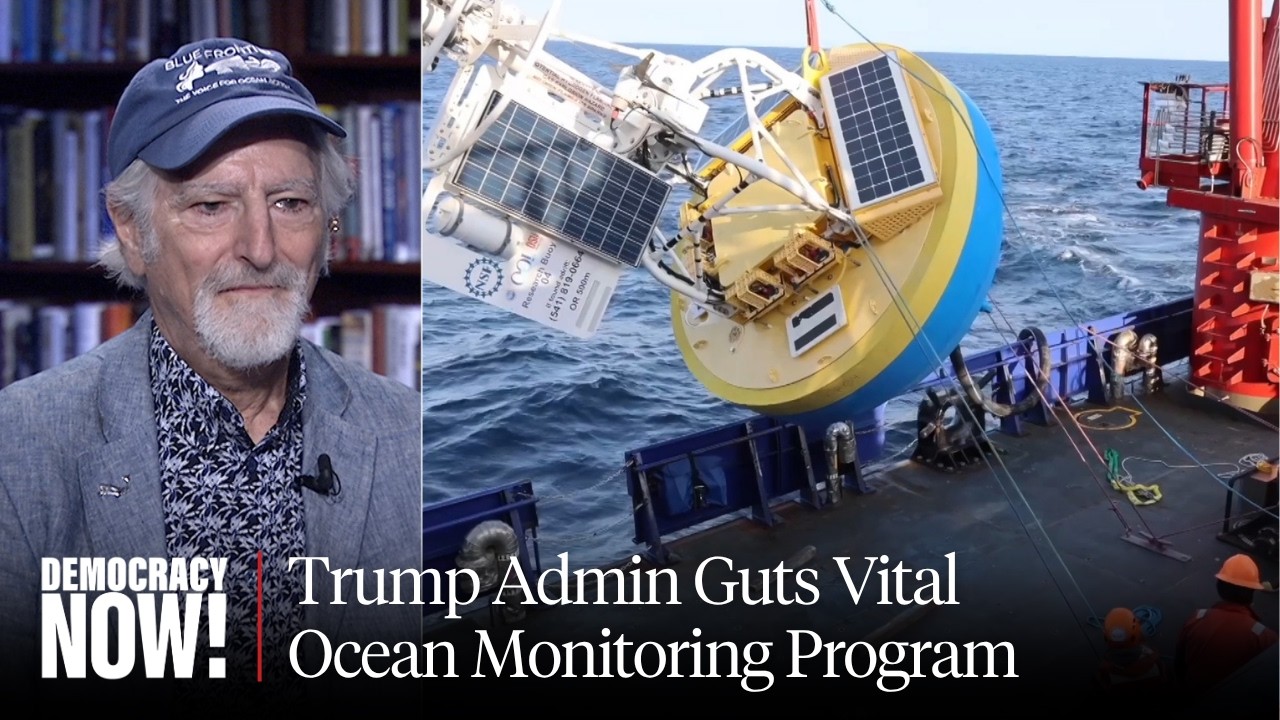
The Ocean Observatories Initiative (OOI), run by the US National Science Foundation, is a vast network of seafloor systems, underwater gliders and moored surface platforms that feeds data to researchers, policymakers, educators and mariners worldwide. The initiative, which covers both US coastlines and extends into the North Atlantic and Southern Ocean, has been used to study marine heatwaves, harmful algal blooms, subduction zone earthquakes, ocean acidification and fisheries variability.
Dismantling it would remove a major component of the Global Ocean Observing System (GOOS), a network of robotic floats, moored buoys and research vessels experts describe as the “eyes and ears” of the ocean. The warning systems based on the data, “save lives”, experts say.
Prescient research published in Nature Climate Change last month showed how data losses in GOOS, a UN-coordinated framework for ocean data for weather and climate collected by several countries, could degrade the ocean heat estimates that underpin weather prediction, El Niño forecasting and fisheries management. Losing US observations would be worse than randomly losing 80% of all ocean data worldwide, it found. US-funded platforms span every ocean basin, plugging critical gaps that no other nation currently fills.
Speich, a co-author of the research, said: “Ocean heat content is the most robust indicator of climate change we have – not just of what is happening in the ocean, but of the entire climate system”. Vertical temperature profiles that provide ocean heat content, are “amongst the simplest measurements we can make”, she said.
“Lose them, and you lose your ability to track not just ocean warming but the climate system as a whole – they are a proxy for variables that become unavailable the moment the observations stop.
“Forecasts would continue – but they would degrade, sometimes dangerously so. Atmospheric observations alone are not sufficient” said Speich. “Ocean data [is] fundamental to early warning systems for tropical storms, cyclones and El Niño. And the consequences would not stop at science: the economic costs would be felt within the United States itself, from agriculture to insurance to disaster response.”
The loss of US observations, in a year predicted to be an El Niño year, with “supercharged” weather extremes, could also “lose the ability to see it coming clearly to act in time”, she said.
“The stakes are concrete: farmers in the US and across South America use El Niño forecasts to decide what to plant and when – whether to expect drought or flooding shapes every agricultural decision months in advance.”
The most recent El Niño, which hit in 2023-2024, was one of the five strongest on record and contributed to 2024’s record-breaking increase in global temperature.
Removing US observations alone would produce a 163% increase in error for annual ocean heating rates, the research by Speich and her co-authors found.
On Thursday, the European Union said it would boost its own monitoring of the world’s oceans by investing in a €92m ($107m) initiative called OceanEye, more than half of which will go to GOOS. The announcement, by the European Commission, was long-planned, not a direct response to the US move.
John P Abraham, professor of engineering at the University of St Thomas, in Minnesota, and co-author of the research paper, described the US administration’s move to dismantle the $368m OOI system as “penny-wise, pound foolish”.
“The US government wants to save less than a billion in sensors, which are the eyes and ears of the ocean” said Abraham. “We have hundreds of billions in climate costs per year. The cost of the observation system is a fraction of the climate costs from hurricanes and storms that hit the US. ”
The US suffered more than 400 climate and weather disasters where damages exceeded or reached $1bn,between 1980 and 2024. In 2024 alone, the costs of such disasters amounted to $177bn. This “billion dollar climate and weather product”, managed by the National Oceanic and Atmospheric Administration (Noaa) will no longer be updated due to “evolving priorities”, according to a note on its website.
The system, is, Abraham said is “quite an inexpensive way to reduce climate-related costs”.
“This is not about saving money, this is about killing climate science research,” Abraham said.
Samantha Burgess, the strategic climate lead at the Copernicus Climate Change Service (C3S), the European Union’s Earth observation system which integrates European space data with in-situ measurements to monitor changes and provide forecasts, said ocean observations are “irreplaceable” because “we can’t see the deep ocean from space.” They “save lives” by warning us of severe storms, she said.
Burgess said: “We need international cooperation to get the best available observations to mitigate risks in our changing world. Without ocean observations we are flying blind.”
A statement earlier this week by the National Science Foundation, which funds and oversees the OOI, said the program was not being cancelled entirely and described the plans as a “descope”, or reduction of elements, though it was not clear what data collection capacity would be left.
ref guk
The Trump administration plans to dismantle a $368m deep-sea observation system that has for more than a decade provided crucial data on ocean systems and climate change.
In a notice, the National Science Foundation (NSF) announced that it had “initiated descoping of the Ocean Observatories Initiative” (OOI), a vast ocean observation network comprising more than 900 instruments that collect data on ocean health, including current patterns, climate variability and marine biodiversity.
The notice, issued on 21 May, came just days after Trump fired all members of the independent board that oversees the NSF.
A statement by NSF head of media affairs, Mike England, said the program was not being cancelled entirely and described the plans as a “descope”, or reduction of elements, though it was not clear what data collection capacity would be left.
The NSF’s notice described plans to remove “all in-water infrastructure” from observation sites off the coasts of North Carolina, Oregon, Washington and Alaska, as well as from the Irminger Sea, a marginal sea between Greenland and Iceland.
Some scientists expressed dismay at the plan, while Democratic lawmakers said they would fight it, including Senator Chris Van Hollen of Maryland, who called it a “shortsighted move” that would “end up costing American taxpayers more not less”, the New York Times reported.
Senator Sheldon Whitehouse, a Rhode Island Democrat, said on X: “Fossil fuel is heating our oceans by the zettajoule, so Trump’s corrupt fossil fuel stooges want to turn off the monitors.”
Following the announcement, the OOI’s principal investigator, Jim Edson, said the NSF’s plan involves a phased recovery and infrastructure removal process expected to take place over the next 15 months. “As infrastructure is recovered from each array, the associated real-time data streams and observing capabilities at those locations will come to an end,” Edson said.
The move will bring to an end more than a decade of continuous ocean monitoring after the system first became operational in June 2016.
Describing the network as having “delivered the world’s most advanced continuously operating ocean observing systems”, Edson added: “We are profoundly grateful for the extraordinary efforts of the scientists, engineers, operators, educators, students and partners who made this facility possible and who continue to advance its legacy through the use of its data.”
The dismantling of the OOI marks another step in the Trump administration’s rollback of science and climate initiatives. It also follows Trump’s push to expand deep-sea mining and loosen fishing regulations, a policy that has alarmed ocean scientists and climate experts.
Hilary Palevsky, a professor focusing on marine biogeochemistry and oceanography at Boston College, pointed to the significance of the data that will be lost, particularly given the sophisticated engineering required to deploy and maintain the instruments.
“One of the real powers of this OOI and a lot of the collection of autonomous data is that scientists like me don’t have to have the expertise or the resources to be able to deploy this kind of infrastructure ourselves,” Palevsky said. “Being able to have instruments, both actually out in the atmosphere floating in the surface ocean, as well as surviving through the really deep mixing and waves in the subsurface.”
She said: “Over the more than 10 years that these things have been deployed, they’ve just gotten better and better at it. And so the data return has also gotten better and better over time … the scientific community was really just getting to the point of being able to capitalize on the data that had been collected so far … I’m really disappointed for the continuation of this important data set.”
Palevsky also warned that rebuilding such a network in the future would be difficult, saying: “If we want to put [the instruments] back out again, we need people who know how to do it and the team that knows how to do it is being dismantled along with the infrastructure program itself.
“We’re potentially at risk of having a gap in our ability to regain the expertise to do things that we had sort of just figured out how to pull off.”
For Palevsky and her students, OOI data has helped shed light on biological production in the ocean and its role in carbon sequestration – the process by which carbon dioxide is captured and stored – as well as deep-ocean processes, marine ecosystems and fisheries.
Data from the OOI has also contributed to research on the Atlantic Meridional Overturning Circulation (AMOC), a critical system of Atlantic Ocean currents that studies suggest may be more vulnerable to collapse than previously thought, with potentially severe consequences for the global climate.
“One of the important processes in the AMOC is what we call convection, this really deep mixing of surface waters into the deep ocean that happens in winter, basically driven by the surface ocean getting really cold because the atmosphere gets super cold in winter and big, windy storms blow across the surface ocean,” Palevsky said.
“We have gained some really important insights into both how that happens in the Irminger Sea in particular, and how the drivers of that process vary from year to year from the observations that have been gained at this site,” she added.
For scientists like Palevsky, the consequences of dismantling the OOI extend far beyond ocean researchers, particularly as climate change intensifies extreme weather events around the world.
“As we reduce the amount of data that we have, the observations, as well as the science more generally to understand what’s happening in the climate system, it makes it much harder for us as a society to understand what we’re facing and what we need to do to plan for and adapt to it,” she said.
In a statement to the Guardian, the NSF head of media affairs, Mike England, said the program was not being cancelled entirely: “The NSF is not cancelling the Ocean Observatories Initiative. The decision to descope aligns with NSF’s wider strategy of a nimbler approach to prioritize support for evolving scientific priorities and emerging technologies, as well as smart lifecycle management within its research infrastructure portfolio.”
REV
GUK
How Trump’s EPA rollbacks could harm our air and water – and worsen global heating
This article is more than 4 months old
Experts say administration has launched ‘war on all fronts’ to undo environmental rules – here are the key areas at risk
Fri 30 Jan 2026
In his first year back in office, Donald Trump has fundamentally reshaped the Environmental Protection Agency, initiating nearly 70 actions to undo rules protecting ecosystems and the climate.
The agency’s wide-ranging assault on the environment will put people at risk, threatening air and water quality, increasing harmful chemical exposure, and worsening global warming, experts told the Guardian. The changes amount to “a war on all fronts that this administration has launched against our health and the safety of our communities and the quality of our environment,” said Matthew Tejada, the former director of the EPA’s environmental justice program.
“It is an attempt to completely eliminate the EPA and just leave a symbolic husk,” said Tejada, who is now senior vice-president of environmental health at the national green group Natural Resources Defense Council (NRDC).
Since January last year, Trump’s EPA has launched a total of 66 actions to roll back or weaken environmental rules – a stunning rate of more than one a week – an analysis by the Guardian has found. Based on research by NRDC, that total comprises a wide variety of moves, from issuing rule exemptions for polluters, to shuttering the agency’s research and development office, to initiating efforts to repeal the legal finding underpinning virtually all US climate regulations.
The moves have come as federal officials repeatedly pledged to return the agency to its “core mission” of protecting the environment and human health. But in reality, the EPA has “abandoned” its mission, said Jeremy Symons, a former EPA policy adviser.
“The Environmental Protection Agency is now the Environmental Pollution Agency, helping polluters at the expense of human health,” he said.
The EPA has rejected criticism of its priorities. An EPA spokesperson said: “Unlike the climate zealots, the Trump EPA knows we can [remove] economy-crushing regulations that make Americans poorer while also fulfilling our statutory obligation to protect human health and the environment.”
Here are four key ways the EPA’s deregulatory efforts could affect people across America.
1. The air we breathe
A flare stack at a refinery in Linden, New Jersey. Photograph: Kena Betancur/Bloomberg via Getty Images A range of recent EPA actions may expose Americans to dirtier air, experts told the Guardian. In March, officials invited polluting facilities to seek toxic pollutant exemptions under the Clean Air Act by simply sending an email.
Overall, Trump’s EPA offered two-year exemptions to Clean Air Act pollution standards to over a third of all domestic coal plants, chemical manufacturers, coke ovens, commercial sterilizers and highly toxic facilities, the advocacy group Union of Concerned Scientists found last month.
An EPA spokesperson said the president had the authority to issue Clean Air Act exemptions “for national security reasons”.
The agency has also overturned strengthened limits on major pollution sources. And in September, it announced plans to shut down the Clean Air Act Advisory Committee and Mobile Sources Technical Review Subcommittee, both critical to developing clean air standards.
In an even more stunning move, this month, the agency stopped estimating the monetary value of lives saved when restricting fine particulate matter and ozone – two of the deadliest air pollutants – calculating only the costs to companies. The change went far beyond the usual “pendulum swing” of regulations in which Democratic administrations tighten rules and Republican administrations ease them, said Tejada.
“They’re ripping the pendulum out of the clock and telling people what time it is,” he said.
An EPA spokesperson said the agency was updating the consideration of human health in regulatory decision making “because air pollution has already dropped so dramatically that older tools can’t accurately measure today’s smaller risks”. They did not specify how the EPA will model these impacts in the future.
The agency is also reviewing clean air standards “to ensure they remain effective,” which is “responsible governance, not rollback,” the spokesperson added.
“The claim that EPA’s actions will worsen air quality is simply wrong. America’s air is the cleanest it’s been in decades, and that progress continues every year,” the spokesperson also said.
- *
2. The water we drink
Photograph: MediaNews Group/Orange County Register/Getty Images Trump’s EPA will also imperil water quality, experts say. In March, it said it would narrow the definition of waterways protected under the Clean Water Act, which would ease restrictions on runoff from agriculture, mining and petrochemicals. In June, the EPA administrator, Lee Zeldin, announced plans to revise Biden-era wastewater standards for coal plants, meant to curb the discharge of toxic heavy metals like arsenic, mercury and lead.
Under Zeldin, the EPA has moved to rescind or reconsider federal limits on PFAS, a class of persistent “forever chemicals” linked to cancer, immune dysfunction, developmental harm, and more. In May, he proposed repealing four of six national drinking water standards for these contaminants, and in September said the EPA will no longer defend Biden-era protections against unsafe Pfas levels.
Millions of Americans rely on water systems which have seenPFAS levels that previous EPA administrations deemed unsafe, said Tejada.
An EPA spokesperson claimed the agency narrowed the Clean Water Act waterways definition to align with supreme court precedent, while defending the extension of compliance deadlines, saying those moves make sure “utilities can plan investments, keep the lights on, and still meet tough limits on toxic discharges”.
“Any suggestion that this EPA is backing off Pfas is patently false,” the spokesperson said, noting that the administration had kept some standards in place. “Our water policies are about cleaner water, stronger infrastructure, and smarter, more workable rules.”
Gaurab Basu, assistant professor at Harvard Medical School, called such acts “unconscionable”.
“We as health professionals see the toll of their decisions, and we are enraged at the harm they are causing our patients,” he said.
- *
3. The chemicals around us
WARNINg sign on the edge of a field in Wisconsin. Photograph: Wolfgang Hoffmann/Design Pics Editorial/Universal/Getty Images EPA has worked to loosen restrictions on toxic compounds, raising concerns about former chemical industry executives Trump tapped to lead the agency’s chemical safety efforts.
The agency plans to cancel $40m in grants for scientists studying toxic hazards to children in rural America, including pesticides and other potential food contaminants, the New York Times reported in April. It is also moving to revise rules for evaluating chemical risks under the Toxic Substances Control Act, narrowing evaluations to specific uses instead of all potential exposures. Critics warn this could weaken findings and limit regulatory action.
“They are systematically going after evidence-based sound science,” said Adam Finkel, a former member of the EPA Science Advisory Board and professor at the University of Michigan School of Public Health. “It’s an agency gone rogue.”
An EPA spokesperson said the agency was working to change chemical evaluations to boost efficiency.
EPA has also moved to deregulate chemicals such as formaldehyde, a carcinogen used in industrial resins, particleboard and disinfectants. In December, it said it will reverse the longstanding EPA position that no level of formaldehyde exposure is safe.
Officials are also weakening restrictions on methylene chloride, used in adhesives, sealants and paint removers. In 2024, the Biden administration finalized a ban on most uses – a “much-needed, science-based change”, said Finkel, who led the development of Occupational Safety and Health Administration standards on the chemical, which preceded the stronger EPA regulations. But Trump’s EPA delayed the compliance deadline for commercial facilities.
These deregulatory moves come as the health secretary, Robert F Kennedy Jr, works to reduce routine vaccine recommendations and remove fluoride – which has been found to strengthen teeth – from drinking water, Finkel said.
“If it has benefits to normal people, like fluoride and vaccines, the Trump administration are against it, and they believe in extremely low doses of exposure being harmful,” he said. “But with harmful chemicals, they’re shouting that EPA has exaggerated risk.”
The EPA spokesperson said its chemical policies are based on “gold standard science and radical transparency”.
“That is how you Make America Healthy Again, not by clinging to broken systems that fail the very communities critics like Finkel claim to defend,” they said.
- *
4. The climate we live within
Traffic backs up on northbound Interstate 405 in Los Angeles. Photograph: Kevin Carter/Getty Images EPA actions during Trump’s second term are poised to sharply increase greenhouse gas emissions, experts warn. In its most audacious move of 2025, the agency proposed repealing the 2009 endangerment finding, the legal foundation for all federal climate regulations. Expected to be finalized soon, the rollback would in effect erase all federal climate rules at once.
The EPA’s spokesperson defended the rollback, saying the finding “is the legal prerequisite used by the Obama and Biden administrations to justify trillions of dollars of greenhouse gas regulations”.
“The endangerment finding is the foundation for us to do anything about [the climate crisis], and they are going after that foundation with a sledgehammer,” said Tejada.
On the same day, Zeldin said he would move to repeal limits on carbon dioxide from vehicles. Transit is the largest source of greenhouse gas emissions in the US.
[
‘Shameful’: Trump’s EPA accused of prioritizing big business over public health
Read more](https://www.theguardian.com/us-news/2026/jan/28/trump-epa-environmental-rollbacks)
Last month, EPA also began the process of drastically weakening fuel economy requirements for new vehicles. And in the power sector, the agency is moving to gut or repeal rules on coal- and gas-fired power plants, which account for nearly a quarter of domestic greenhouse gas emissions.
The EPA spokesperson said the Energy Information Administration expects CO2 emissions to decrease by 16m tons under the Trump administration, while the economy will grow. Much larger cuts are needed, experts say.
In July, EPA also announced plans to delay the enforcement regulations on methane, a pollutant that is over 80 times more planet-heating than carbon dioxide.
Meanwhile, the Trump administration has also scrubbed climate-focused language from federal websites, including EPA’s, and shuttered offices responsible for climate research, including the Office of Research and Development and Office of Atmospheric Protection.
“The deregulatory action, the staff shrinkage, the reduction in research activities, all of these things add together,” said Olivia Guarna, a climate justice fellow at Columbia University’s Sabin Center for Climate Change Law. “It amounts to rolling back the ability for EPA to carry out its duties.”
---
REV 2 GUK
The Trump administration has revoked the bedrock scientific determination that gives the government the ability to regulate climate-heating pollution. The move was described as a gift to “billionaire polluters” at the expense of Americans’ health.
The endangerment finding, which states that the buildup of greenhouse gases in the atmosphere endangers public health and welfare, has since 2009 allowed the Environmental Protection Agency (EPA) to limit heat-trapping pollution from vehicles, power plants and other industrial sources.
Donald Trump called the move “the single largest deregulatory action in American history”.
“This is a big one if you’re into environment,” he told reporters on Thursday. “This is about as big as it gets.”
The move comes as part of Trump’s bigger anti-environment push, which has seen him roll back pollution rules and boost oil and gas.
On social media, Barack Obama said the repeal will leave Americans “less safe, less healthy and less able to fight climate change – all so the fossil fuel industry can make even more money”.
The former secretary of state John Kerry called the new rule “un-American”.
“Repealing the Endangerment Finding takes Orwellian governance to new heights and invites enormous damage to people and property around the world,” said Kerry, who also served as Joe Biden’s climate envoy. “Ignoring warning signs will not stop the storm. It puts more Americans directly in its path.”
The final rule removes the government’s ability to impose requirements to track, report and limit climate-heating pollution from cars and trucks. Transportation is the largest source of climate pollution in the US.

EPA administrator Lee Zeldin speaks as Donald Trump looks on at the White House on Thursday. Photograph: Jonathan Ernst/Reuters
It does not apply to regulations on stationary sources of emissions such as power plants and fossil fuel infrastructure, which are regulated under a separate section of the Clean Air Act, but it will open the door to end those standards, too.
Trump’s EPA has separately proposed to find that emissions from power plants “do not contribute significantly to dangerous air pollution” and therefore should not be regulated. Joseph Goffman, who served as EPA air chief under Joe Biden, expects the agency will apply their vehicles-focused arguments to stationary polluters in order to kill the endangerment finding for all sources of greenhouse gas emissions.
“Instead of the entire house of cards of all EPA climate regulation collapsing all at once today, it’s going to be like a row of dominoes falling,” said Goffman, who helped write and implement the Clean Air Act and worked directly on the endangerment finding.
Environmental advocates have condemned the move as illegal. A slew of green groups have promised to take the EPA to court over the rollback, as has the state of California.
“If this reckless decision survives legal challenges, it will lead to more deadly wildfires, more extreme heat deaths, more climate-driven floods and droughts, and greater threats to communities nationwide – all while the EPA dismisses the overwhelming science that has protected public health for decades,” Gavin Newsom, the California governor, said in a statement.
The move marks “the most aggressive, ruthless act of dismantling public health protections in the agency’s 55-year history”, said Dominique Browning, director and co-founder of environmental advocacy group Moms Clean Air Force.
In a press release, the EPA said the move will save the US $1.3tn, while Trump said Thursday that the move “will save American consumers trillions of dollars”.
The EPA administrator, Lee Zeldin, said the Obama and Biden administrations used the endangerment finding “to steamroll into existence a leftwing wish list of costly climate policies”.
“Who paid the biggest price? Hardworking families, small businesses, millions of Americans who just want a reliable, affordable car to get to work or take their kids to school or go to church on Sunday,” he said.
But though the rollback could save some corporations money, experts note it could take a massive toll on ordinary Americans’ wellbeing and pocketbooks.
One analysis from green group Environmental Defense Fund found the full repeal of the endangerment finding combined with Trump’s proposal to roll back motor vehicle standards would result in as much as 18bn more tons of planet-warming pollution by 2055 – the same as the annual emissions of China, the world’s top polluter – and would impose up to $4.7tn in additional expenses tied to harmful climate and air pollution by that time.
Zeldin submitted the repeal of the legal determination for White House review last month. In July, he officially announced plans to repeal the finding, justifying the proposal with a widely criticized energy department report questioning climate science.
The agency received half a million comments on the proposal. Last month, a federal judge said the July energy department report was created unlawfully.
In the repeal of the endangerment finding, the EPA is claiming that the Clean Air Act is only meant to regulate pollution “that harms health or the environment through local and regional exposure”. But there is scientific consensus that by trapping heat in the atmosphere, greenhouse gas emissions are intensifying dangerous extreme weather events, allowing diseases to spread faster, and worsening illnesses from allergies to lung disease.
Trump described the finding as “the legal foundation for the green new scam”, which he claimed “the Obama and Biden administration used to destroy countless jobs”.
But the new rule will have ruinous consequences for working-class Americans, said Jason Walsh, executive director of BlueGreen Alliance, a coalition of labor unions and environmental groups.
“Billionaires like Donald Trump don’t suffer the devastation of climate change,” he said. “Working people do.”
The rollback comes one month after the Trump administration announced it will pull the US from the foundational UN agreement to address the climate crisis, as well as the world’s leading body of climate scientists. Over the past year, Zeldin has also launched an all-out assault on climate, air, water and chemical protections. The EPA has also removed crucial climate-focused science and data from its webpages.
“This is all part of the Trump administration’s authoritarian playbook to replace facts with propaganda, to enrich a few while harming the rest of us,” said Rachel Cleetus, senior policy director for the climate and energy program at the science advocacy group the Union of Concerned Scientists. “Administrator Zeldin has fully abdicated EPA’s responsibility to protect our health and the environment.”
The EPA has said that it determined the US would save billions annually by revoking the endangerment determination. But the agency’s analysis did not account for the money and lives saved by the environmental and public-health protections that the change would eliminate, experts say.
Alex Witt, senior adviser at green advocacy group Climate Power, said: “Zeldin and Trump are telling our families: we’ll let you get sicker and watch your healthcare costs skyrocket as long as oil and gas CEOs can profit.”
“This decision makes it abundantly clear that Trump is willing to make our families sicker and less safe, all to benefit a few billionaire polluters,” said Witt.
Some industry groups have been reluctant to support the full rollback of the endangerment finding. The American Petroleum Institute, the top US oil lobby group, last month said it backed a repeal of the endangerment finding for vehicles, but not for stationary sources of pollution like power plants.
--
AP
June 2, 2026
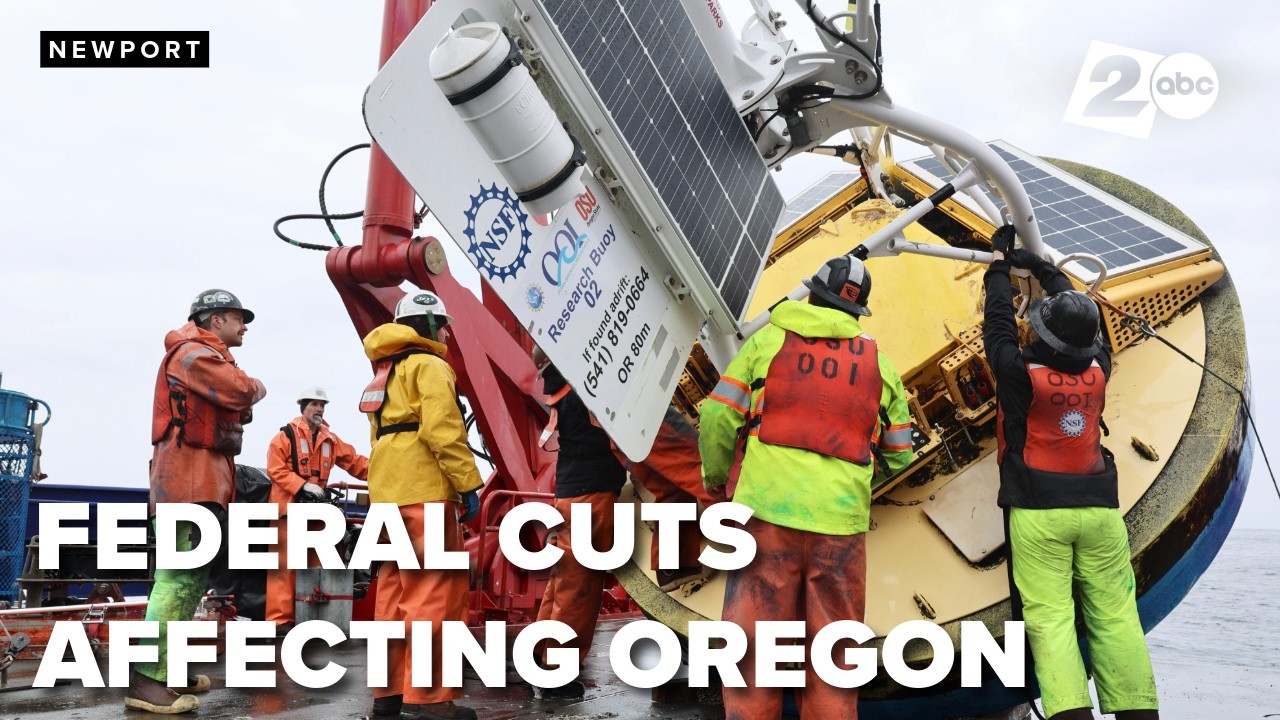
SEATTLE (AP) — A portion of one of the most ambitious ocean monitoring networks ever built will go dark this month when scientists board a research vessel and motor off the Oregon coast to pull a research buoy from deep out of the Pacific.
The buoy 80 meters (260 feet) below the water’s surface will be removed June 16 from the Ocean Observatories Initiative — a network of more than 900 ocean sensors built at a cost of $386 million that has continuously collected real-time data for more than a decade. But last month, the National Science Foundation announced it would dismantle most of the system, pulling instruments from waters off Oregon, Washington, Alaska, North Carolina and Greenland by 2027.
Funded by the foundation, the observatories have tracked everything from ocean circulation and marine ecosystems to climate change and extreme weather. Its data has been freely available and has informed more than 500 scientific publications. The project was slated to run for another 15 to 20 years.
In an emailed statement, the foundation said the decision is not a cancellation, but a “descoping” aligned with a “wider strategy of a nimbler approach to prioritize support for evolving scientific priorities and emerging technologies, as well as smart lifecycle management within its research infrastructure portfolio.” The foundation added that its decision drew in part on a 2025 National Academies report on the future of ocean science.
Related Stories
EU invests in ocean monitoring as US cuts funding
Climate change is outpacing evolution. Scientists are using DNA to catch up
Think it’s hot now? The next five years will smash records, UN says
But for the scientists who built and operated the system — and the researchers, educators and students who rely on its data — the timing feels particularly punishing.
An El Nino event, which disrupts weather patterns and supercharges marine heat waves, is predicted to arrive along the Pacific coast this summer. One marine heat wave is already pushing unusually warm water off California.
Without the Oregon and Washington moorings and the network of underwater gliders the Ocean Observatories Initiative operated in the region, researchers say they’ll lose much of their ability to measure what’s happening below the surface, which is precisely where the most significant oceanographic signals are.
“It’s a crippling loss of information,” Ed Dever, a professor at Oregon State University who helped lead the initiative’s Pacific Northwest operations, told The Associated Press Tuesday. Scientists can get some data from the surface, such as temperature and the distribution of chlorophyll, which drives photosynthesis in plants, but information below cannot be gathered from satellites alone, including low oxygen zones.
In this 2021 image provided by Woods Hole Oceanographic Institution, workers walk near buoys used to gather data at Pioneer New England shelf off the coast of Martha’s Vineyard, Mass. (Véronique LaCapra/Woods Hole Oceanographic Institution via AP)
The initiative launched in 2015 after more than a decade of community planning and construction. It was designed as a 25 to 30-year project, built in part around the oceanographic consensus that detecting meaningful climate signals requires at least three decades of continuous data. “We’ve just got to the 10 year record,” Dever said, “which will give you some hints, but it won’t continue on.”
One significant piece will remain: a seafloor cable network managed by the University of Washington off the Pacific Northwest coast, which will continue providing data on volcanic and seismic activity in the region.
Scientists had seen warning signs as the administration’s proposed 2026 budget included a 55% cut to the science foundation. Official word to begin shutting down arrived in early May.
The initiative was coordinated by the Woods Hole Oceanographic Institution in collaboration with the University of Washington and Oregon State University, as well as past partners including Rutgers University and Scripps Institution of Oceanography.
The initiative operated on roughly $48 million a year, not including the cost of research vessels, which adds substantially to the overall price. Prior to budget cuts, which began in 2025, around 60 to 70 people worked directly on the project across its partner institutions, Dever said.
“What’s happening with the Ocean Observatories Initiative is not unique,” he said. “This is just one of a number of science facilities that is being dismantled at the present time. It seems to really mark the end of a federal commitment to basic scientific research — a commitment that has served this nation very well for the last 70 years.”
Alexa St. John contributed to this report from Detroit.
Follow Annika Hammerschlag on Instagram: @ahammergram.
The Associated Press receives support from the Walton Family Foundation for coverage of water and environmental policy. The AP is solely responsible for all content. For all of AP’s environmental coverage, visit https://apnews.com/hub/climate-and-environment
Hammerschlag is a text and visual journalist covering the intersection of oceans and climate change globally for The Associated Press. She is based in Seattle.
---
GGL 6 26
AI Overview
The National Science Foundation (NSF) is dismantling four of the five operating arrays within the  Ocean Observatories Initiative (OOI). This $386 million
 AP News network of over 900 sensors AP News tracked ocean temperatures, currents, and climate trends. The descoping follows the Trump administration's proposals to slash the NSF's budget and target the program's approximately $48 million annual operating cost. [1, 2,
 , 4, 5]
Program Breakdown & Timeline
- Action Taken: The NSF is removing in-water arrays and deep-sea instruments from four key sites.
- Affected Arrays: The Coastal Endurance Array (off WA/OR), Global Station Papa (Gulf of Alaska), Global Irminger Sea Array (Greenland), and Coastal Pioneer Array (NC).
- Timeline: Dismantling and removal began in June and will continue over the next 15 months. [1, 2, 3]
The Budget Context
- Proposed Cuts: The Trump administration proposed slashing the NSF's budget by 55% and targeting the Ocean Observatories Initiative (OOI) for up to an 80% funding cut. [1, 2, 3]
- NSF's Rationale: Despite Congress restoring funding, the NSF moved to decommission the sites, citing a need to prioritize emerging technologies and
 smart lifecycle management. [1, 2, 3, 4, 5]
Current Sensor Status
- What Remains: The seafloor cable network in the Pacific Northwest managed by the University of Washington will remain operational to monitor seismic activity. [1]
- Data Loss: Removing the sensors eliminates a critical, continuous method to measure marine heat waves and underwater ecosystem conditions.
 ,
 ]
Read further details on how Ocean sensors will go dark under Trump funding cuts through AP News, or review the breakdown in Oceanographic Magazine. [1]

Oceanographic Magazine
Trump administration dismantles critical ocean-floor observation network
Jun 5, 2026 — The closure of this climate data network follows policy laid out by conservative strategist the Heritage Foundation. The shutdown ...


Oregon Public Broadcasting - OPB
Scientists lose critical climate monitoring in oceans along nation’s coastlines in wake of Trump funding cuts
Jun 3, 2026 — The initiative operated on roughly $48 million a year, not including the cost of research vessels, which adds substantially to the...


eos.org
Trump Administration to Remove Hundreds of Deep-Ocean Observation Instruments, Dismantling $368 Million Program
Jun 3, 2026 — The NSF plans to remove all in-water arrays and infrastructure—including hundreds of deep-sea instruments—from four of the five cu...


11 sites
---
---
Trump dismantles critical ocean-floor observation network
The Trump administration is dismantling a $370 million ocean-floor observatory network installed a decade ago to collect critical climate data on coastal environments, marine ecosystems, and powerful global ocean currents.
The National Science Foundation (NSF) announced it will begin removing more than 900 deep-sea instruments this June. The decommissioning will pull monitoring hardware from the waters of Oregon, Washington State, Alaska, North Carolina, and a critical region between Greenland and Iceland known as the Irminger Sea.
The Ocean Observatories Initiative (OOI) began full operations in 2016. The monitoring system was engineered to provide continuous, real-time climate data to global researchers for 25 years.
Jim Edson, a marine meteorologist who led the initiative, described the network as “the world’s most advanced continuously operating ocean observing systems.”
The closure of this climate data network follows policy laid out by conservative strategist the Heritage Foundation. The shutdown was recommended in their Project 2025 “Mandate for Leadership” document – a 900-page document designed specifically to act as a blueprint for the Trump presidency.
In 2024, Project 2025’s authors explicitly targeted the network, claiming the OOI was “the source of much of NOAA’s climate alarmism” and advising that “the preponderance of its climate-change research should be disbanded.”
Since taking office, Trump’s administration has consistently targeted the network’s budget, and proposed 80% funding cuts in both 2025 and 2026. While Congress successfully pushed back on both occasions to restore the necessary money, the NSF moved ahead with decommissioning, despite managers previously attempting to save the network by limiting data collection to cut costs.
In other news
*Climate change* Scientists uncover hidden worlds in the Arctic deep
*Climate change* Meet the Wavemakers: A global network to protect the ocean
*Climate change* Rainstorms create invisible ceilings which trap jellyfish, study finds
*Climate change* Expedition maps biodiversity of Indonesia’s remote seamounts
*Climate change* Penguins from space: A new window into the Antarctic winter
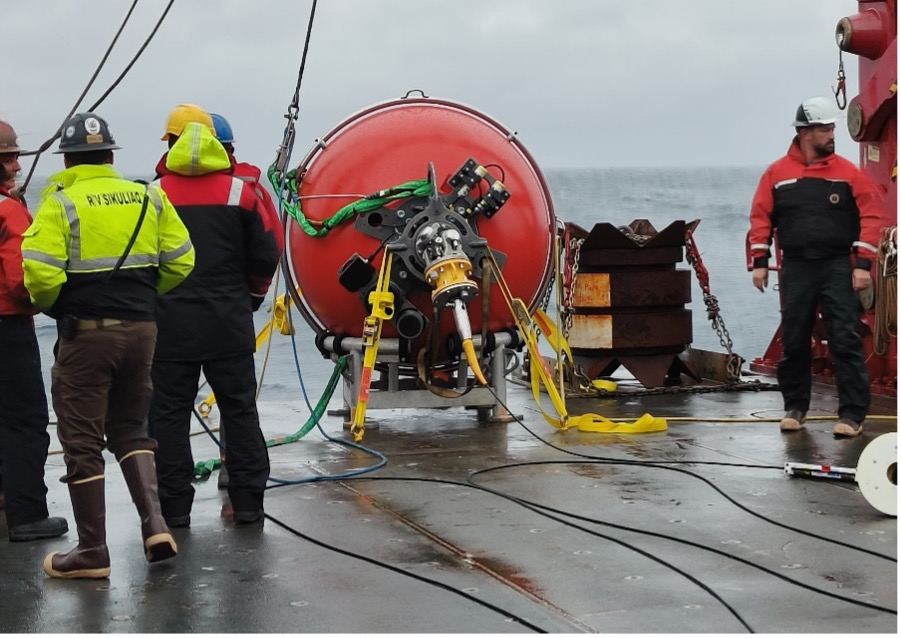
To date, the OOI system has provided critical data used to understand how the ocean absorbs atmospheric greenhouse gases, how marine heat waves threaten commercial fisheries, and how sea levels trigger coastal flooding along the East Coast.
Fixed 2,800 metres below the surface, the Irminger Sea moorings have been crucial to tracking dangerous changes occurring in the Atlantic Meridional Overturning Current (AMOC), a global current system that scientists fear could be destabilising.
Moorings stretching west off Newport, Ore, and Grays Harbor, Wash, captured data about temperature, acidity and oxygen data used by the commercial fishing industry to anticipate devastating environmental shifts.
The infrastructure cost $370 million to build, but required $48 million annually to maintain.
The network’s high-tech design featured heavily hardened instruments built to withstand extreme deep-sea pressure, corrosive seawater, and withstand destruction from marine life.
By using remotely controlled robotic vehicles and underwater gliders to beam data directly back to labs onshore, the network allowed scientists to safely collect large amounts of information without launching risky, difficult, and expensive deep-sea boat expeditions every year.
Dr Helen Palevsky, professor of earth and environmental sciences at Boston college, has used data from the OOI’s observation network to better understand how the ocean absorbs carbon dioxide.
She told the New York Times that: “One of the real tragedies here is that collecting data effectively at this site was a huge engineering challenge, and it’s not the kind of thing where you can just leave your notes for the next person who comes in, there’s a lot of expertise that has the potential to be lost.”
The dismantling is the latest escalation in a broader effort by the administration to scale back federal climate science. Just last month, the administration announced an additional $1.1 billion in budget cuts targeting research on marine wildlife, ocean currents, and fish populations.
Both international and American scientists have criticised the decision to decommission the network.
Craig McLean, who served as the chief scientist at the National Oceanic and Atmospheric Administration (NOAA) during Trump’s first term said: “This reflects the further lack of understanding that the current administration has of scientific value and scientific merit,”
“By dismantling such a system, we push the United States back yet again into a rear seat in global scientific leadership,” he added.
Professor Helen Findlay, a biological oceanographer at the Plymouth Marine Labortary criticised the decision and said: “Sustained ocean observations are how we detect emerging risks in real time, from shifts in circulation to changes in chemistry and ecosystem health. Without them, we are effectively choosing to navigate an increasingly volatile ocean with diminishing visibility.”
“Scaling back the very systems that help us track these shifts risks leaving society unprepared for their consequences. If anything, this moment should strengthen, not weaken, our commitment to sustained ocean observation and climate research,” she added.
*Click here for more from the Oceanographic Newsroom
---
CONTEXT AN TC 5 26
Talk of a “super El Niño” developing in 2026 is gaining momentum, with concerns rising that this climate pattern could bring extreme rainfall, heat, drought and destructive flooding around the world.
The signals appear to be in place: The tropical Pacific is warming along the equator, and computer models point toward extreme conditions by the end of the year.
However, forecasting El Niño is not like predicting next week’s weather. Forecasts for El Niño typically aren’t reliable before late spring – not because scientists don’t understand the system, but because we understand its limits.
As an ocean-atmospheric scientist who studies El Niño, I spend a lot of time thinking about what scientists can forecast confidently – and what remains uncertain. Here’s what we know about the current event, what we still don’t, and why many regions should begin preparing now, even if a strong, or “super,” El Niño never fully materializes.
Why is El Niño hard to forecast in spring
The starting point for any El Niño forecast is the heat stored beneath the surface of the eastern equatorial Pacific Ocean. Computer models use data about those conditions to simulate how ocean temperatures will evolve over the coming months, and how they affect weather patterns around the world.
Right now, an exceptionally large reservoir of warm water sits beneath the surface there. In principle, this ocean heat should be a reliable signal of El Niño developing. In practice, what happens next depends heavily on what the atmosphere does.
The warm reservoir was shaped by a burst of wind activity in early 2026. Normally, the Pacific trade winds blow from east to west along the equator, pushing warm water toward Asia and leaving cooler water near South America. But in April, a pair of cyclones straddling the equator caused the wind direction to reverse. This short-lived reversal triggered a downwelling Kelvin wave – a pulse of energy beneath the ocean surface moving eastward along the equator.
That subsurface pulse has now reached the eastern Pacific, helping fuel intense warming off South America. At the ocean surface, this can resemble the early stages of a strong El Niño.
But there is a catch.
For El Niño to develop fully, the ocean and atmosphere need to lock into a feedback loop: Warmer surface waters weaken the trade winds, triggering more downwelling Kelvin waves that push warm water eastward and reinforce the warming. But that loop doesn’t engage automatically. It requires repeated bursts of eastward winds to sustain the process.
Until that feedback loop takes hold, the ocean-atmosphere system is in an unpredictable phase. It might tip into a super El Niño. It might not.
Spring is precisely when forecasts are most uncertain. Impressive early signals can fade if the winds don’t cooperate.
There’s a further complication: When models detect strong subsurface warming, they can simulate a stronger feedback loop than actually develops.
The result is that models can look too confident – even alarming – despite the system not being locked in. As of mid-May 2026, the wind patterns needed to amplify the warming have not clearly emerged.
We’ve seen this scenario play out before. In both 2014 and 2017, forecast models were pointing toward strong El Niño conditions by midyear. In both cases, the anticipated wind patterns never fully materialized and El Niño either stayed weak or returned to a neutral state. The early signals were real, but the expected follow-through didn’t happen.
So what do the forecasts suggest?
The current forecasts for 2026-27 still span a wide range in mid-May – from expecting weak to strong El Niño conditions.
How the winds behave in the coming weeks will determine what develops. If trade winds weaken again at the right moment, it could tip the system into self-sustaining warming – the kind that’s hard to stop.
As of mid-May, long-range weather forecasts weren’t showing strong eastward wind bursts on the horizon that could strengthen El Niño. In fact, quite the opposite was expected for the second half of May: a burst of winds blowing in the opposite direction. A full month without major eastward wind activity would be a meaningful brake on ocean warming.
The Pacific has loaded the dice for El Niño, and the National Oceanic and Atmospheric Administration’s May outlook reflects elevated odds of El Niño developing and potentially strengthening later in the year. By NOAA’s mid-June update, the picture should be substantially clearer.
El Niño intensity matters for weather worldwide
The difference between a weak El Niño and an extreme one is not subtle. It reshapes climate patterns across the globe – and with them, real-world risks.
If El Niño intensifies into a strong or “super” event, it can drive drought in the Amazon, fires in Indonesia, flooding in Peru and heavy rainfall in parts of California and southern South America. These effects could materialize by the Northern Hemisphere winter, when El Niño typically peaks.
In some regions, the stakes are immediate.
In India, the monsoon rains, which support agriculture and water supplies for hundreds of millions of people, have historically weakened during strong El Niño events. Even modest shifts in monsoon strength can bring food and water shortages, and harm economies.
At the same time, when El Niño is strong, hurricane activity in the Atlantic is typically suppressed – a rare upside – while the eastern Pacific often becomes more active with storms.
El Niño can even push global temperatures temporarily higher, as changes in cloud cover and the amount of heat the ocean releases alter the planet’s energy balance.
In contrast, a weak El Niño produces far more muted effects. This is why predicting intensity matters.
Using uncertain forecasts in real-world decisions
Because El Niño forecasts deal in probabilities, deciding how to prepare for the seasons ahead should be based on managing risk – not waiting for certainty.
El Niño’s impact does not occur everywhere at once. Some effects emerge quickly. Its impact on the Indian monsoon and Atlantic hurricane activity unfold over the summer and early fall.
Other impacts arrive later, toward the end of the year when El Niño peaks, bringing extreme rainfall to parts of South America between November and January. In Southeast Asia, scorching heatwaves often emerge even later, in April of the following year.
In regions like India, decisions about how to respond to El Niño risks cannot wait for more certainty. Communities need to prepare their water infrastructure now in case El Niño means the monsoon season brings too little rain.
Even where forecasts suggest reduced risks – such as a quieter Atlantic hurricane season – it would be a mistake to assume safety. Destructive hurricanes still hit in otherwise quiet years.
Pedro DiNezio, Associate Research Professor in Climate Modeling, *University of Colorado Boulder
This article is republished from The Conversation under a Creative Commons license. Read the original article.
---
---
Ocean Damage Nearly Doubles the Cost of Climate Change
BY JOHNNY STURGEON
Ignoring the blue economy has left a multi-trillion-dollar blind spot in climate finance, according to a study from Scripps Oceanography.
---
ICN 1 26
Ocean Warming Breaks Record for Ninth Straight Year
BY JOHNNY STURGEON
Scientists warn the ocean’s accumulation of energy is fueling extreme weather patterns and destabilizing marine ecosystems.
---
AN 6 25
The concentration of carbon dioxide in the atmosphere peaked above 430 parts per million in 2025—the highest it has been in millions of years—according to data released by the National Oceanic and Atmospheric Administration and Scripps Institution of Oceanography at the University of California, San Diego on Thursday.
The news was overshadowed by the explosive feud between U.S. President Donald Trump and his erstwhile backer Elon Musk, but climate activist Bill McKibben argued that it was ultimately more consequential.
"In the long run, this is actually going to be the important news of the day—CO2 in the atmosphere passes another grim milestone," McKibben wrote on social media.
Carbon dioxide has been accumulating in the atmosphere due primarily to the human burning of fossil fuels, as well as by the clearing of forests and other natural carbon sinks. There, it acts as a greenhouse gas, trapping heat from the Earth, and is the primary gas responsible for the rise of global temperatures by approximately 1.1°C from the 1850 -1900 average. This warming has already had a host of dramatic impacts, from extreme weather events to sea-level rise to polar ice melt, and scientists warn these impacts will only accelerate under current energy policies, which put the world on track for around 3°C of warming by 2100.
The last time that atmospheric CO2 concentrations topped 430 ppm was most likely more than 30 million years ago, Ralph Keeling, who directs the Scripps CO2 Program, toldNBC News.
"It's changing so fast," he said. "If humans had evolved in such a high-CO2 world, there would probably be places where we wouldn't be living now. We probably could have adapted to such a world, but we built our society and a civilization around yesterday's climate."
"While largely symbolic, passing 430 ppm should be a wake-up call."
Scripps and National Oceanic and Atmospheric Administration both measure carbon dioxide levels from NOAA's Mauna Loa Observatory in Hawaii, where Charles Keeling began taking measurements in 1958. As CO2 levels rise over time, they also follow a seasonal cycle—peaking in May before falling in the Northern Hemisphere summer and rising again in the fall.
This May, Scripps Oceanography calculated an average of 430.2 ppm for 2025, which is 3.5 ppm over the average for May 2024. NOAA's Global Monitoring Laboratory, meanwhile, calculated a monthly average of 430.5 ppm, a 3.6 ppm jump from the year before and the second-steepest yearly climb since 1958.
"Another year, another record," Keeling said in a statement. "It's sad."
The news comes two months after Mauna Loa daily measurements surpassed 430 ppm for the first time in March, which Plymouth Marine Laboratory professor Helen Findlay called "extremely disappointing and worrying."
"While largely symbolic, passing 430 ppm should be a wake-up call, especially given the accelerated response we are seeing of glaciers and ice sheets to current warming," Dr. James Kirkham, chief scientist of the Ambition on Melting Ice coalition of governments, said at the time.
"This upward trajectory is a direct result of continued fossil fuel use, likely exacerbated by emissions from extreme wildfires last year, methane leaks from fossil fuel extraction and possibly greater permafrost emissions, alongside decreased ability of very warm oceans to absorb CO2," Kirkham said.
The monthly record also comes a little more than a week after a United Nations report warned that there was a small chance global temperatures could surpass 2°C in at least 1 of the next 5 years, only a decade after world leaders pledged in the Paris agreement to keep global temperatures "well-below" that level.
"Carbon emissions are still rising, and the atmosphere is going to keep heating further until greenhouse gas concentrations stabilize," Matt Kean, who chairs Australia's Climate Change Authority, wrote in response to the Scripps and NOAA figures. "What sort of climate do we want to leave our children and those who come after them?"
---
:{:{---}:
CRM says no $ for hurric helene b/c illegal immigrants got nice hotel rms etc
===:
===
Climate denial fuels right-wing attacks on vice presidential debate moderators
Special ProgramsClimate & Energy
Written by Evlondo Cooper
Research contributions from Ilana Berger
Published 10/04/24 mma
CBS' October 1 vice presidential debate put climate change front and center, breaking from recent debates that sidelined the issue. In the wake of Hurricane Helene's devastating path across the Southeast and Mid-Atlantic, moderators Norah O'Donnell and Margaret Brennan pressed candidates on specific climate plans and reinforced the scientific consensus on climate change's role in intensifying hurricanes.
This approach promptly drew criticism from right-wing media figures and online influencers who argued that CBS had overemphasized climate at the expense of covering issues like the economy and immigration. These critics, many of whom have previously questioned climate science, disregarded both the context of Helene's destruction and increasing public concern over climate impacts. Their responses often employed familiar narratives of climate skepticism and attempted to challenge the scientific information presented by the moderators, illustrating right wing media's ongoing resistance to substantive climate discussions.
- ## Hurricane Helene's climate signals and public concern contradict right-wing media claims about climate change's relevance to the debate
* Hurricane Helene made landfall as the strongest storm ever to hit Florida's Big Bend region, with top sustained winds of 140 mph. This continues a trend of increasingly powerful storms, with Helene being the eighth Category 4 or 5 hurricane to hit the U.S. in the past eight years. The storm underwent rapid intensification fueled by “exceptionally warm” Gulf waters, 1-2°C above average.
:{:{Researchers estimate that this warming, largely attributed to climate change, increased Helene's destructive power by 40-50%. Helene set new storm surge records along Florida's west coast, breaking records set just last year. An attribution study found that similar cyclones are up to 20% wetter and 7% windier in the present climate compared to the past. Yale Climate Connections,:(style="background-color:#ff8000ff"):}: [9/27/24; Grist, 9/26/24; The Washington Post, 9/28/24; World Weather Attribution, 9/30/24]}:
According to CBS News polling, 70% of Americans — including over 60% of Republicans under 45 — favor taking steps to reduce climate change impacts. This aligns with a recent Pew Research Center survey showing 74% of Americans support U.S. participation in international climate efforts. The Pew survey also found that 71% of Americans expect to make at least minor sacrifices in their lives due to climate change. CBS News, [4/21/24; Pew Research Center, 10/25/23]|}:
- The 2024 debates occurred against a backdrop of escalating climate-related disasters, highlighting that the next president will be a climate president. The year 2023 was the hottest on record, with 2024 experiencing record-breaking heat as well. Hurricane Helene devastated the southeastern United States just before the vice presidential debate, starkly demonstrating the brutal reality of climate-fueled extreme weather. The mounting climate crisis ensures that whoever wins the election will face critical decisions on climate policy. Grist, [10/2/24; Media Matters, 6/25/24]
- ## Fox News, among other conservative outlets, attacked CBS' debate moderators for asking climate questions and highlighting the proven connection between hurricanes and climate change
- Fox host Lawrence Jones criticized the moderators for focusing too much on climate change instead of other voter priorities. “They spent way more time on climate change than the number one issue on voters' minds. I wanted to hear the response. Let's have a back and forth. Sometimes you got to go off script. I know they wanted to get all the questions in, but something so important on the top of voters' minds, maybe spend a little more time on that and not climate change.” Fox News, *Fox and Friends*, [10/2/24]
- Fox's Greg Gutfeld falsely accused the moderators of assuming there is a link between climate change and hurricanes without evidence. He also suggested that the moderators were uninformed about climate issues: "'Overwhelming consensus on climate change,' that's as much as Norah O'Donnell has ever read about the climate, and she doesn't believe there is any expectation that she has to read more about anything." Fox News, *The Five*, [10/2/24]
- Fox's Sean Hannity claimed the moderators were biased and prioritized climate change over more pressing issues. “Two very liberal, left-wing, arrogant, pompous moderators who were clearly trying to tip the scales in Tim Walz's favor. Almost every question tainted with Democratic talking points. There was a question about climate change before any mention of the economy or illegal immigration.” Fox News, *Hannity*, [10/2/24]
- Matthew Continetti dismissed the proven connection between climate change and hurricanes and criticized moderators for making it. “But climate change, that is not a primary or secondary issue in my mind in concern to this devastation brought by the hurricane. But that's what the moderators did on question two. And so, from that point on, I said, 'Well, it's three on one.'” Salem Radio Network, *The Hugh Hewitt Show*, [10/3/24]
- ## Right-wing media figures reacted poorly on social media to accurate climate questions in vice presidential debate
Right-wing host Benny Johnson criticized the debate format and fact-checking: “Moderators start debate with 3 straight questions about ‘climate change’ and a smarmy fact check. Republicans need to simply say ‘no’ to rigged debates.” Twitter/X, [10/1/24]|}:
- Former Fox News producer Kyle Becker called climate change questions a waste: “Three questions in and we're already getting VP debate questions about the Climate Hoax. Public opinion polling shows that virtually zero Americans think this is a priority. Waste of a question.” Twitter/X, [10/1/24]
- Daily Wire host Matt Walsh dismissed climate change as a debate topic: “It’s ridiculous to waste time in a debate talking about ‘climate change.’” Twitter/X, [10/1/24]
- Fox & Friends Weekend co-host Will Cain criticized the focus on climate change: “People are suffering…still missing in NC…wondering who is coming to help…wondering about their government…and the debate here is whether climate change is a hoax!?” Twitter/X, [10/1/24]
* Sinclair host Sharyl Attkisson accused moderators of bias: “Once again, moderators taking the biased position regarding climate change as if there is no debate.” Twitter/X, [10/1/24]
- Right-wing radio producer and podcast host Duane Patterson decried supposed moderator bias: “Norah O'Donnell jumps in with the fact-check/editorializing comment to reinforce the left's view of climate change. it will be a 3-1 debate, apparently.” Twitter/X, [10/1/24]
- Meteorology student and social media figure Chris Martz disputed climate change's real impact on hurricanes: “FACT-CHECK = FALSE. They need an actual meteorologist on that debate stage. This is awful. @NorahODonnell: ‘Scientists say climate change makes these hurricanes larger, stronger and more deadly because of the historic rainfall.’ There is absolutely zero evidence that climate change makes hurricanes larger in size (i.e., diameter).” Twitter/X, [10/1/24]
- Right-wing account Oilfield Rando falsely claimed climate change is a low priority for voters: “‘Climate change’ consistently ranks in the bottom of voter concerns and yet it’s a direct question in every single debate because Narrative.” Twitter/X, [10/1/24]
- Former Fox News host Megyn Kelly questioned the timing of the climate change question: “Did she really just turn Helene into a CLIMATE CHANGE Q & ask it on the SECOND q of the debate?” Twitter/X, [10/1/24]
- Former Trump official and meteorologist Ryan Maue disputed CBS News' climate reporting: “Fact check: CBS News. No evidence in a trend either way of hurricanes become larger due to climate change. CBS News is not where you should go for accurate or authoritative information on climate change.” Twitter/X, [10/1/24]
- Conservative journalist and Truth in Media founder Ben Swann called the climate questions “ridiculous”: “JD Vance just delivered a MASTERCLASS on how to handle the corporate media in response to CBS’ ridiculous question on ‘climate change.’” Twitter/X, [10/1/24]
- Media Research Center's Curtis Houck accused CBS of ignoring hurricane victims: “Insane question from CBS' Norah O'Donnell casting aside the suffering in North Carolina and the American south due to #HurricaneHelene to INSTEAD make it ALL ABOUT climate change in the #VPDebate:...” Twitter/X, [10/1/24]
* Power the Future founder Daniel Turner denied the existence of the climate crisis: “JD Vance flips the script on CBS and their attempt at a climate change gotcha question. There is no climate crisis. #VPDebate.” Twitter/X, [10/1/24]
- Conservative website Townhall.com mocked CBS' climate change stance: “CBS News: OF COURSE climate change is real!” Twitter/X, [10/1/24]
- Right-wing commentator John Cardillo called CBS' climate commentary “weird”: “CBS adding commentary on bogus ‘climate change’ was just weird.” Twitter/X, [10/1/24]
- Conservative podcast host Keith Malinak (“Just Keith” on X) criticized CBS' fact-checking: “Holy shit, CBS! You just ‘fact checked’ with a climate change disclaimer like we see under YouTube videos. Please do, suck it.” Twitter/X, [10/1/24]
- The National Pulse Editor-in-Chief Raheem Kassam suggested CBS misrepresented voter priorities: “Americans: ‘Climate change is our 18th priority.’ CBS: ‘LeTs mAkE iT tHe sEcOnD qUesTiOn!’” Twitter/X, [10/1/24]
- Popular conservative troll account Catturd accused CBS of blaming hurricanes on climate change: “OMG - CBS is blaming the hurricanes on climate change - F.U.C.K CBS You evil demons.” Twitter/X, [10/1/24]
---
---
---
johan rockstrom ted 2024
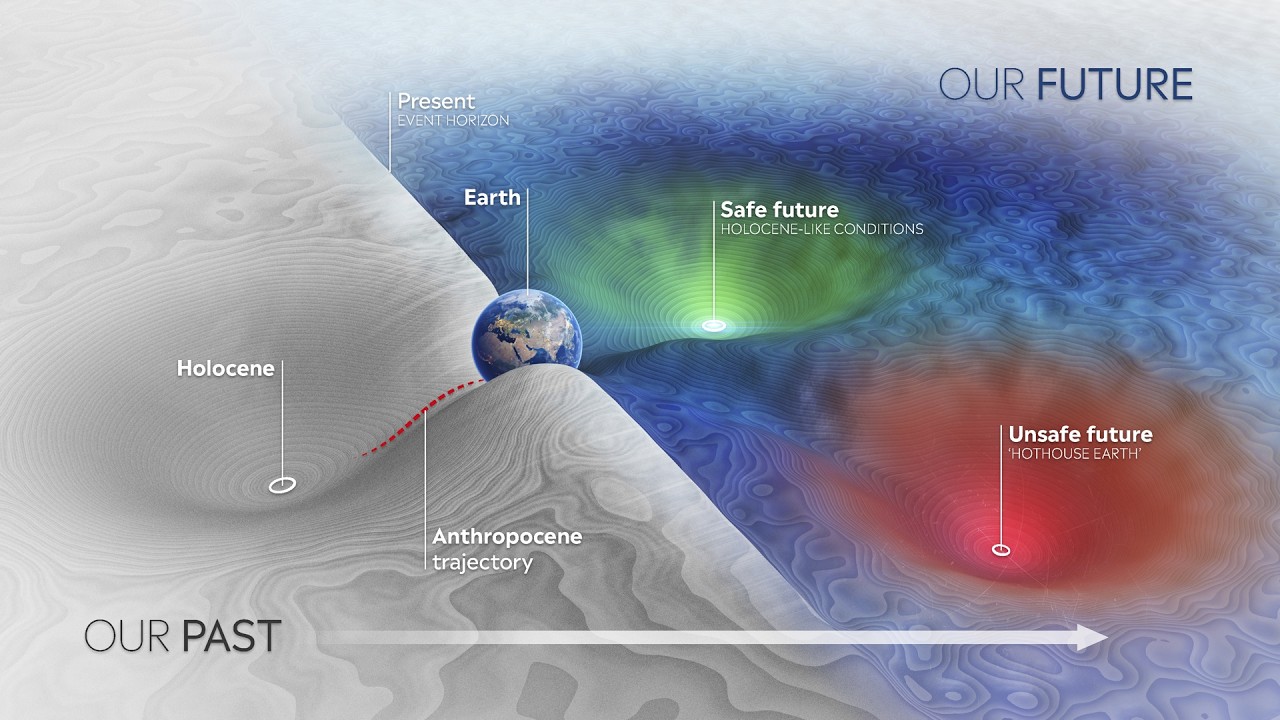
568,287 views
https://www.youtube.com/watch?v=Vl6VhCAeEfQ
We're nearly halfway through the 2020s, dubbed the most decisive decade for action on climate change. Where exactly do things stand? Climate impact scholar Johan Rockström offers the most up-to-date scientific assessment of the state of the planet and explains what must be done to preserve Earth's resilience to human pressure.
...e Earth system scientists and climate scientists
0:10
are getting seriously nervous.
0:12
The planet is changing faster than we have expected.
0:16
We are, despite years of raising the alarm,
0:20
now seeing that the planet is actually in a situation
0:23
where we underestimated risks.
0:25
Abrupt changes are occurring in a way
0:28
that is way beyond the realistic expectations in science.
---
===
ymail ecowatch
Monday, August 12, 2024
“I think calling it climate change is rather limiting. I would rather call it the everything change.” — Margaret Atwood
Warmest Sea Surface Temperatures in 400 Years Present ‘Existential Threat’ to Great Barrier Reef, Study Finds
Australia’s Great Barrier Reef — the world’s largest coral reef system — has been under critical pressure in recent years, with warming sea surface temperatures leading to mass coral bleaching that threatens its unique biodiversity, ecology and stunning beauty.
Temperatures in the Great Barrier Reef have reached the hottest in more than 400 years, new research has found, presenting an “existential threat” to the UNESCO World Heritage Site.
Read More
Related: 60.5% of World’s Coral Reefs Have Bleached in Past Year, NOAA Says
U.S. Landfills Are Major Sources of Airborne PFAS Pollution, Study Finds
Landfills in the United States — one of the country’s biggest sources of pollution — have been found to contain large amounts of toxic per- and polyfluoroalkyl substances (PFAS) “forever chemicals.”
Read More
Related: Lithium Ion Batteries Could Release PFAS Into Environment, Study Says
U.S. Forest Service Orders Arrowhead Bottled Water to Stop Taking Water From San Bernardino Mountains
The U.S. Forest Service (USFS) has ordered BlueTriton Brands, the company formerly known as Nestlé that bottles and sells bottled water brand Arrowhead Water, to stop drawing water from the San Bernardino Mountains in California.
Read More
Related: California Orders Bottled Water Company to Stop Drawing From Natural Springs Needed for Wildlife Habitat and Wildfire Protection
Building Collisions Are Killing as Many as 1 Billion Birds a Year in the U.S., Study Finds
Less than half of injured or stunned birds survive collisions with windows, new research has found, which means as many as one billion birds may be killed each year from flying into buildings in the United States.that rank.
---
---
Rescued Gulf of Mexico coral in a Galveston aquarium could help the species’ survival - Alternet.org
---
Rare ‘flesh-eating’ bacterium spreads north as oceans warm - Alternet.org
---
more heat dome, greece US midwest
jeff goodell bk kpfa 7/26/23 upfront
---
https://www.alternet.org/ocean-temps/
100 degree fla, coral bleach
https://www.alternet.org/weve-fallen-off-a-cliff/
no lnx twt an 7 23
'We’ve fallen off a cliff': Scientists warn Atlantic currents could collapse as early as 2025
Brett Wilkinsand Common DreamsJuly 26, 2023
"It is very plausible that we've fallen off a cliff already and don't know it," said one researcher.
The system of Atlantic Ocean currents that drive warm water from the tropics toward Europe is at risk of collapsing in the coming decades, an analysis of 150 years of temperature data published Tuesday concluded.
"The Atlantic Meridional Overturning Circulation (AMOC), which includes the Gulf Stream, is a major tipping element in the climate system and a future collapse would have severe impacts on the climate in the North Atlantic region," states the study, which was published in the scientific journal Nature Communications.
Although the analysis notes that "assessments by the Intergovernmental Panel on Climate Change (IPCC), based on the Climate Model Intercomparison Project (CMIP) model simulations suggest that a full collapse is unlikely within the 21st century," the study's authors "estimate a collapse of the AMOC to occur around mid-century under the current scenario of future emissions."
"We show that a transition of the AMOC is most likely to occur around 2025-2095," the paper states with "95% confidence."
University of Copenhagen professor Peter Ditlevsen, who led the study, told The Guardian: "I think we should be very worried. This would be a very, very large change. The AMOC has not been shut off for 12,000 years."
Bill McKibben, co-founder of the climate action group 350.org, tweeted that "Gulf Stream collapse used to be viewed as a far-off and remote possibility... Less so now."
Meteorologist and climate journalist Eric Holthaus called the study's findings "incredibly worrying."
The Washington Post reports:
The new study adds to a growing body of evidence that this crucial ocean system is in peril. Since 2004, observations from a network of ocean buoys [have shown] the AMOC getting weaker—though the limited time frame of that data set makes it hard to establish a trend. Scientists have also analyzed multiple "proxy" indicators of the current's strength, including microscopic organisms and tiny sediments from the seafloor, to show the system is in its weakest state in more than 1,000 years.
For thousands of years, the Gulf Stream has carried warm waters from the Gulf of Mexico northward along the eastern North American seaboard and across the Atlantic to Europe. As human-caused global heating melts the Greenland ice sheet, massive quantities of fresh water are released into the North Atlantic, cooling the AMOC—which delivers the bulk of the Gulf Stream's heat—toward a "tipping point" that could stop the current in its tracks.
According to The Guardian:
A collapse of AMOC would have disastrous consequences around the world, severely disrupting the rains that billions of people depend on for food in India, South America, and West Africa. It would increase storms and drop temperatures in Europe, and lead to a rising sea level on the eastern coast of North America. It would also further endanger the Amazon rainforest and Antarctic ice sheets.
"It is very plausible that we've fallen off a cliff already and don't know it," Hali Kilbourne, an associate research professor at the University of Maryland Center for Environmental Science, toldThe New York Times. "I fear, honestly, that by the time any of this is settled science, it's way too late to act."
Other studies—including one published in March and another in 2021—have also concluded that the AMOC is at risk of collapsing this century.
Meanwhile in the Southern Hemisphere, Antarctic currents that enrich 40% of Earth's deep oceans with oxygen and nutrients essential for marine life have slowed dangerously in recent decades and could also collapse by mid-century, an Australian study released in May showed.
FROM YOUR SITE ARTICLES
New evidence that an extraterrestrial collision 12,800 years ago triggered an abrupt climate change for Earth ›
What was the 'catastrophic implosion' of the Titan submersible? An expert explains ›
Atlantic Salmon Is Basically Extinct: You’re Eating a Genetically Eroded Version ›
RELATED ARTICLES AROUND THE WEB
A major Atlantic current is at a critical transition point | NOVA | PBS ›
Is Atlantic Ocean current near collapse? Could be sooner than ... ›
A Stagnant Jet Stream Is Fueling Intense Heat Worldwide. Could ... ›
---
---
https://www.alternet.org/2022/09/climate-change-supercharging-tropical-cyclones/
---
---
sea level ocean warm mcguire dire, feedback loop? ocean warm ice bering sea feedback loop? faster than predicted
kpfa talkies read art'l that quotes?
https://www.amazon.com/Waking-Giant-changing-earthquakes-volcanoes-ebook/dp/B007KZY518
---
6 22
https://www.alternet.org/2022/06/antarctica-melting-faster-5500-years/
the human-caused climate crisis is pushing crucial glaciers in Antarctica to lose ice at a rate not seen in more than 5,000 years, according to a new studypublished Thursday.
Researchers at the University of Maine, the British Antarctic Survey, and Imperial College Londonfound that the Pine Island and Thwaites glaciers on the West Antarctic Ice Sheet could cause global sea level rise of up to 3.4 meters, or over 11 feet, in the next several centuries due to their accelerated rate of ice loss.
The glaciers—one of which, the Thwaites, has been called the "doomsday glacier" by climate scientists because of its potential to raise sea levels—are positioned in a way that allows increasingly warm ocean water to flow beneath them and erode the ice sheet from the base, causing "runaway ice loss," the University of Maine team said in a statement.
The researchers examined penguin bones and seashells on ancient Antarctic beaches in order to analyze changes in local sea levels since the mid-Holocene period, 5,500 years ago.
Sea levels were higher and glaciers were smaller during the mid-Holocene, as the climate of the planet was warmer than it is today.
Since then, according to the study published in Nature Geoscience, relative sea levels have fallen steadily and the Thwaites and Pine Island glaciers have stayed relatively stable—until recent decades.
Ice loss was likely accelerated just prior to the mid-Holocene, and since then, the rate of relative decrease in sea levels over the past 5,500 years was almost five times smaller than it is in present day, due to "recent rapid ice mass loss," according to the scientists.
"That the present-day rate of glacier retreat that has doubled over the past 30 years is, indeed, unprecedented,"wrote Caroline Brogan, a science reporter at Imperial College.
With the Thwaites spanning an area of more than 74,000 square miles and the Pine Island glacier spanning more than 62,600 square miles, the rapid ice loss of the two glaciers could cause major rises in sea levels around the globe.
Dylan Rood of Imperial College's Department of Earth Science and Engineering, a co-author of the study, likened the two glaciers to arteries that have burst.
"These currently elevated rates of ice melting may signal that those vital arteries from the heart of the West Antarctic Ice Sheet have been ruptured, leading to accelerating flow into the ocean that is potentially disastrous for future global sea level in a warming world," said Rood. "Is it too late to stop the bleeding?"
The study follows increasingly urgent calls from theIntergovernmental Panel on Climate Change, theInternational Energy Agency, and climate scientists around the world for an end to fossil fuel extraction, which is needed to achieve net-zero carbon emissions by 2050 and limit the average global temperature from rising more than 1.5°C above preindustrial levels.
Scientists have warned that the accelerated melting of the Thwaites glacier is likely irreversible.
"We're going into unknown territory," Scott Braddock, a researcher at University of Maine,told Science News. "We don't have an analog to compare what's going on today with what happened in the past."
---
---
40% loss but we can save 70% of that?
https://www.alternet.org/2022/04/ocean/
---
---
https://www.alternet.org/2021/12/hurricanes-ocean-heating/
---
---
https://www.alternet.org/2021/04/marine-life/
flee equator
---
---
https://www.alternet.org/2020/09/scientists-find-new-signs-of-climate-breakdown-in-study-of-warming-oceans
In a rare calm moment during a historically active Atlantic hurricane season, an international team of climate scientists on Monday published a new study in the journal Nature Climate Change showing that human-caused global heating is making the world's oceans more "stable"—which, as co-author Michael Mann explained, is "very bad news."
Mann, director of the Earth System Science Center at Penn State, detailed researchers' findings about ocean stratification in a piece for Newsweek. Using "more comprehensive data and a more sophisticated method for estimating stratification changes" than past studies, the scientists found that "oceans are not only becoming more stable, but are doing so faster than was previously thought."
The team—led by Guancheng Li of the Institute of Atmospheric Physics in China—specifically found that stratification globally increased by a "substantial" 5.3% from 1960 to 2018, mostly in the upper 650 feet or so of the world oceans. "This seemingly technical finding has profound and troubling implications," Mann noted.
"The more stable the upper ocean, the less vertical mixing that takes place. This mixing is a primary means by which the ocean buries warming surface waters. So the surface warms up even faster. It's what we call a 'positive feedback'—a vicious cycle," he wrote. "That's bad for a number of reasons."
Thank you to @MichaelEMann for patiently and clearly explaining to non scientists why increased ocean stabilizati… https://t.co/yW2BmQhKGp
— Dr Naomi Wolf (@Dr Naomi Wolf)1601306893.0
Noting the ongoing storm season and previous warnings from scientists—including him—that the increasingly devastating recent hurricanes "have fed off warmer surface waters," Mann explained that "a more stably stratified ocean potentially favors more intense, destructive hurricanes." Warmer waters also "absorb less atmospheric carbon dioxide" and "hold less dissolved oxygen."
In other words, the new study indicates that "humans have made the oceans more stable, and the result will be more extreme weather and the acceleration of climate change," as study co-author John Abraham wrote Monday for The Guardian. Like Mann, he detailed the research team's findings about the stratification of the oceans, and the implications. Then, he added:
It is not all doom and gloom. The good news is we know why the climate is changing and we know how the oceans are responding. We can do something about this problem—we have the ability to slow down climate change. We just lack the will and leadership.
But if 2020 has shown us anything, it has revealed that humans can change and adapt quickly to situations. There is hope that we can navigate the challenges resulting from a more stable ocean—but we must start immediately.
Both co-authors' pieces provoked calls for swift, bold, global efforts to address the climate crisis:
Canada has oceans on 3 sides-we can't ignore the climate news that The Oceans Appear to Be Stabilizing. Here's Why… https://t.co/SfWJWWRHr7
— Friends Of Halifax Common (@Friends Of Halifax Common)1601308426.0
"Das bedeutet, dass das CO2-Budget, das zur Vermeidung kritischer Erhitzung (z.B. 1,5°C) übrig bleibt, möglicherwei… https://t.co/675YBTSybJ
— Parents For Future #SystemChangeNotClimateChange (@Parents For Future #SystemChangeNotClimateChange)1601315583.0
Ending his piece on a similar note, Mann wrote that "in short, it's unwise to be complacent given the accumulating scientific evidence that climate change and its impacts may well be in the upper end of the range that climate scientists currently project. There is ever-greater urgency when it comes to acting on climate. But there is agency as well. Our actions make a difference—something to keep in mind as we head into a presidential election whose climate implications are monumental."
Mann is on the mounting list of climate experts and advocates supportingDemocratic presidential nominee Joe Biden in his effort to oust President Donald Trump—who has, at various points, ignored and exacerbated the climate emergency. Earlier this month, the editors ofScientific American as well as the political action arms of both 350 and Friends of the Earth also endorsed the former vice president.
"The stakes are clear and present," Tamara Toles O'Laughlin from 350 Action said of the general election, for which early voting is already underway in some states. "The planet cannot withstand four more years of Trump."
---
---
ew 920
recent Science Magazine feature blamed an underwater heat blob for exacerbating sea ice loss as it proclaimed what many Arctic scientists already know: Arctic sea ice is racing toward its demise.
---
==
820
ucsc
- researchers Warn A Warming Ocean Threatens Giant Kelp Forests
https://insideclimatenews.org/news/18052020/hurricane-tropical-storms-climate-change
New warnings of a global warming-driven increase in the most deadly and destructive tropical storms are especially scary in regions already hit hard, including the Southeastern U.S., where Hurricane Michael damaged 60,000 homes in 2018, and the Caribbean, where Hurricane Maria killed nearly 3,000 people in Puerto Rico and crippled the island's infrastructure.
There's more of the same ahead, recent federal research suggests. One study found that the chances of major tropical storms forming increased globally by 6 percent in each of the last four decades. A second shows the biggest increase in frequency in already storm-battered areas, including Florida, the Bahamas, eastern Africa, Japan, China and the Philippine Islands.
The results bolster "projections of increased (tropical cyclone) intensity under continued warming," the authors of the first study wrote. Those researchers focused on storms with winds greater than 115 mph (category 3 or above), because those cause the most damage.
The findings landed as residents are warily watching Tropical Storm Arthur spin toward the Carolina coast well ahead of the official start of the hurricane season, and with projections for above-average hurricane activity in the Atlantic this summer.
In the Bay of Bengal, Tropical Cyclone Amphan is projected to drive a deadly surge of flooding toward Bangladesh this week, with winds of more than 170 mph. Emergency responders are struggling to evacuate up to a million people, and provide them with emergency shelter during the global coronavirus pandemic, which requires evacuees maintain physical distancing to prevent the spread of the disease.
New tropical storm data from 2010 to 2017 showed that "the probability of a hurricane having wind speeds of at least 100 knots increased by approximately 15 percent between the early and latter halves of the 39-year record."
Overheated oceans caused by global warming are super-charging tropical storms, but year-to-year variations are also affected by short-term climate cycles like El Niño. The new study helps sort out the different influences, making it "95 percent certain" that oceans heated by global warming are brewing up bigger storms more often, according to National Oceanic and Atmospheric Administration (NOAA) hurricane scientist Jim Kossin, who led the study.
"This shows us there is a global trend of more stronger hurricanes," Kossin said. "It's consistent with our expectations, based on physics." Warmer oceans supply more energy for storms and the warmer atmosphere holds more moisture.Several recent studies show how those combine to cause more damage worldwide, and pin down the role of global warming.
Increasingly, such projections help city planners and coastal developers consider if they should abandon some areas, build seawalls or floodgates, or discourage development on the most vulnerable beaches and bluffs in the next few decades.
Tropical storm frequency has increased in the warm waters of the Atlantic hurricane belt, where dangerous storms often spin toward the Southeastern U.S. and the Caribbean, while decreasing in the southern Indian Ocean and Western North Pacific, according to the second study.
Hiroyuki Murakami, a climate scientist with the NOAA's Geophysical Fluid Dynamics Laboratory, led that research, which was published May 4 in PNAS. Murakami said the average annual number of tropical storms globally had held steady at 86 since 1980. The frequency increased in hotspots like the Arabian Peninsula and East Africa, Southeast Asia, around the Hawaiian Islands and especially in the eastern Atlantic.
...[graph]
==
https://www.alternet.org/2020/01/scientists-fear-the-doomsday-glacier-is-in-even-more-trouble-than-we-feared/
no lnx
Scientists fear the ‘doomsday glacier’ is in even more trouble than we feared
NASA [Public domain]
Written by Julia Conley / Common Dreams January 31, 2020
A study by British and American scientists revealed that a massive sheet of ice known as the “doomsday glacier” is melting faster than experts previously believed—edging the world closer to a possible sea-level rise of more than 10 feet.
Researchers at New York University and the British Antarctic Survey drilled through nearly 2,000 feet of ice in the Thwaites glacier in West Antarctica, to measure temperatures at the 75-mile wide ice sheet’s “grounding line,” where the ice meets the ocean.
The water just beneath the ice was found to be 32º Fahrenheit—more than 2º above freezing temperature in the Antarctic region.
The findings have “huge implications for global sea level rise,” NYU scientist David Holland said in a statement.
350.org co-founder and author Bill McKibben was among the climate action campaigners who expressed alarm over the new study.
“Oh, damn,” McKibben wrote on social media.
Bill McKibben
@billmckibben
Oh, damn. New study finds warmer ocean water melting Antarctica's most dangerous glacier from below.
“That is really, really bad,” said one scientist. “That’s not a sustainable situation for that glacier.”https://www.washingtonpost.com/climate-environment/2020/01/30/unprecedented-data-confirm-that-antarcticas-most-dangerous-glacier-is-melting-below/ …
Unprecedented data confirm that Antarctica’s most dangerous glacier is melting from below
Scientists camped atop the floating ice shelf of Thwaites glacier, in West Antarctica, and drilled through 600 meters of ice to take measurements that should worry us all.
washingtonpost.com
434
8:00 AM - Jan 31, 2020
Twitter Ads info and privacy
351 people are talking about this
The researchers expressed concern that the water beneath the glacier could be even warmer in other areas.
Scientists refer to Thwaites as the “doomsday glacier” due to the dire implications its rapid melting could have for the planet. Though a 10-foot sea-level rise would likely take years, the melting of the glacier could eventually mean the U.S. would lose 28,800 square miles of coastal land—pushing 12.3 million people currently living in those areas out of their homes.
“Warm waters in this part of the world, as remote as they may seem, should serve as a warning to all of us about the potential dire changes to the planet brought about by climate change,” Holland said.
The Thwaites glacier has lost 600 billion tons of ice over the past several decades, accelerating to as many as 50 billion tons per year in recent years.
“There is very warm water there, and clearly, it could not have been there forever, or the glacier could not be there,” Holland told the Washington Post of the recent findings, suggesting the water has gotten warmer recently.
Scientists are especially concerned about the Thwaites because its configuration is an example of “marine ice sheet instability.”
As Chris Mooney wrote at the Post:
Thwaites gets deeper and thicker from its oceanfront region back into its interior in the heart of West Antarctica. This is known to be an unstable configuration for a glacier, because as the ocean continues to eat away at its base, the glacier becomes thicker, so more ice is exposed to the ocean. In turn, that ice flows outward faster.
BBC released a short video detailing the scientists’ journey to the Thwaites glacier and their findings.
“The ice rises almost a mile from the sea bed and it’s collapsing into the sea at two miles a year,” the narration explains. “If Thwaites melts, it will increase sea levels worldwide by half a meter. But it sits in the middle of the Antarctic ice sheet and there’s three meters more of sea level rise locked up in there.”
“That is really, really bad,” Holland told the Post of the most recent discovery. “That’s not a sustainable situation for that glacier.”
==
https://www.ecowatch.com/5-things-to-know-about-earths-warming-oceans-2644968479.html
1/20
Russell is a professor of biogeochemical dynamics at the University of Arizona. From that dry, landlocked state, she's become a leading expert on how the climate is changing in the Southern Ocean — those vast, dark waters swirling around Antarctica.
"This is an age of scientific discovery," she says. But also, "it's very scary what we're finding out."
Researchers like Russell have been ringing alarm bells in report after report warning that the world's ocean waters are dangerously warming. Most of the heat trapped by the greenhouse gas emissions we've spewed into the air for decades has actually been absorbed by the ocean. Over the past 25 years, that heat amounts to the equivalent of exploding 3.6 billion Hiroshima-sized atom bombs, according to Lijing Cheng of the Chinese Academy of Sciences and lead author of a new study on ocean warming.
Now we're beginning to witness the cascading repercussions of that oceanic warming — from supercharged storms to dying coral reefs to crashing fisheries.
There's still a lot left to learn about these problems, but here's a look at some of the top findings from researchers, along with what they hope to uncover next.
1. Yes, It’s Definitely Getting Warmer
There's no doubt among scientists that the ocean is heating and we're driving it.
The latest confirmation is the study by Cheng and colleagues, published this month in Advances in Atmospheric Sciences, which bluntly stated, "Ocean heating is irrefutable and a key measure of the Earth's energy imbalance."
The study found ocean waters in 2019 were the warmest in recorded history. And that follows a pattern: The past decade has also seen the warmest 10 years of ocean temperatures, and the last five years have been the five warmest on record.
"Every year the ocean waters get warmer, and the reason is because of the heat-trapping gases that humans have emitted into the atmosphere," says John Abraham, one of the study's coauthors and a professor in mechanical engineering at the University of St. Thomas. "It's concerning for sure."
2. The Southern Ocean Has Been Hit Worst
Much of this warming occurs between the surface and a depth of 6,500 feet. It's happening pretty consistently across the globe, but some areas have experienced higher rates of warming. One of those is the Southern Ocean, which has acted as a giant sink, absorbing 43 percent of our oceanic CO2 emissions and 75 percent of the heat, scientists have concluded.
That's because the ocean basin functions like an air conditioner for the planet, says Russell. Strong winds pull up cold water from deep below, and then the cold surface water takes up some heat from the air. When the winds slow, the water sinks, more cold water rises, and the process repeats.
"The sinking water isn't warm, per se, just a bit warmer than it was when the wind pulled it up," she says. "In this way the Southern Ocean can sequester a lot of heat well below the surface."
For that reason what happens in the Southern Ocean is globally important. And it makes new findings all the more concerning.
Normal upwelling of waters from deep in the Southern Ocean has traditionally brought nutrients to the surface, where they then get moved by the Antarctic Circumpolar Current, the world's strongest ocean current, to feed marine life in other areas. But new research from Russell and colleagues found that this process will be disrupted as warm waters cause the Southern Ocean's ice sheets to melt even faster. This will change the historical upwelling and could trap nutrients instead of pushing them out.
That, she says, will "begin to starve the global ocean of nutrients."
3. A Lot of Changes Are Happening
As bad as that sounds…there's a lot more.
One of the most obvious results of ocean warming is higher sea levels. That's caused in part because water expands as it warms.
But there's also the effect on sea ice. The warmer the water gets, the more ice melts — as is happening in Antarctica. Not surprisingly rates of global sea-level rise are accelerating. This means more property damage, storm surges, and waves lapping at the heels of our coastal communities.
Warmer waters also mean more supercharged storms. An increase in heat drives up evaporation and adds extra moisture to the atmosphere, causing heavy rains, more flooding and more extreme weather events.
it can make drier conditions worse, too. When air rises and cools below the dew point, it turns into clouds or precipitation. "But in places like Arizona or Australia, where rain is generally formed when air is pushed upward over mountains, "the warmer atmosphere might not be cold enough to cause rain," explains Russell. "This is how a warmer atmosphere carrying more moisture might actually rain less in some places — contributing to drought and therefore fire."
The recent study in Advances in Atmospheric Sciences identified warming waters as "one of the key reasons why the Earth has experienced increasing catastrophic fires in the Amazon, California, and Australia in 2019 (extending into 2020 for Australia)."
And that's not all.
Warming ocean waters also contribute to the rise of colonies of algae that can produce toxins deadly to wildlife and sometimes people.
These harmful algal blooms pose a problem even way up in the Gulf of Alaska, where the annual algae season has gotten longer, says Rick Thoman, a climate specialist with the Alaska Center for Climate Assessment and Policy at the University of Alaska Fairbanks.
"That's all, of course, due to warmer water," he says.
The biggest change in the region may be along the coast of the Bering Sea, where water temperatures have historically been too cold for the blooms to occur — but that's starting to change.
"Now the water temperatures are getting up to the point where they're warm enough to support these harmful algal blooms," Thoman says. Toxins from the blooms can work their way up the food chain and have even shown up in some marine mammals in the areas. "People are concerned about whether it's safe to eat their staple foods," he says.
4. Marine Heat Waves Are Getting Worse
While temperatures are rising across the world's oceans, some areas are also seeing dangerous short-term spikes known as marine heatwaves.
Scientists anticipate that these heatwaves, which can be fatal to a long list of sea creatures, will continue to get more severe and more frequent as the ocean warms. By the end of the century, conditions in some areas may be akin to a permanent heatwave.
That's likely to be bad news for everything from seaweed to birds to mammals, and it could result in fundamental changes for food webs and the animals and coastal economies that depend on those resources.
"Collectively, and over time, an increase in the exposure of marine ecosystems to extreme temperatures may lead to irreversible loss of species or foundation habitats, such as seagrass, coral reefs and kelp forests," a December 2019 study in Frontiers in Marine Science found.
And these changes likely aren't far off. These marine heatwaves "will emerge as forceful agents of disturbance to marine ecosystems in the near-future," the researchers wrote.
We're already seeing what that would look like.
Marine heatwaves off Australia have spurred oyster die-offs and losses to the abalone fishery, and one event in 2016 caught the world's attention when it caused severe bleaching of the biodiverse Great Barrier Reef, triggering mass coral deaths.
And scientists now believe that "the blob," a mass of warm water that persisted off the Pacific Coast from California to Alaska from 2014 to 2016, led to the starvation of an estimated 1 million common murres (Uria aalge) — a normally resilient seabird. The warm waters likely reduced and changed phytoplankton communities — an essential part of the marine food web. But that's not all. The warm waters increased the metabolism — and the appetite — of big fish like pollock and salmon. That demand spike crashed populations of forage fish that murres usually find plentiful.
Tufted puffins, Cassin's auklets, sea lions and baleen whales also suffered losses, although the murres were hit worst.
Most recently a prolonged marine heatwave off the coast of Alaska led to the closure of region's commercial Pacific cod fishery for 2020 — the first time that's ever happened.
"When you cancel whole fisheries, that really impacts people's lives and livelihoods," says Thoman.
5. What We Don’t Know
Scientists have enough information now to tell us that we need to quickly change course. But there's still a lot to learn about how warming temperatures will affect myriad species in the sea, not to mention weather patterns and coastal economies.
One current line of research is to better understand how ocean warming affects weather.
"We know that a warmer ocean means more water evaporates into the atmosphere," says Abraham. "Consequently, it makes the weather more severe because humidity drives storms. We would like to quantify this. So how much worse is weather now and how bad will it be?"
Some of that information will come from existing systems.
"We live in a time of great change, and the ocean is telling us these stories mostly through our incredible Argo floats," says Russell. This global network of nearly 3,900 floating sensors can measure temperature, salinity and pressure at varying depths across the world's oceans.
But in the Southern Ocean, Russell works with an even more advanced group of biogeochemical sensors. They measure nitrates, which can tell researchers about the building blocks of nutrients for the food web. They also measure oxygen, "how the ocean is breathing," she says, and pH, which helps tell the carbon content of the water.
Russell says she'd like to see this technology put to use in more waters around the world.
"We're trying to get a global biogeochemical Argo array, but so far haven't gotten funding for it," she says. "I'm desperate to see the rest of the ocean because it's all connected and it's mixing quickly."
The Arctic, she says, is one place where this technology would play a particularly valuable role.
"It's so shallow in many places, and under ice for so much of the year, that we haven't really been able to get a big float array up there," she says. "But the Arctic is critical to our national interest and it's relatively unstudied. Can you imagine that, in this day and age?"
There's plenty to keep researchers busy, but the rest of us also need to act quickly to reduce greenhouse gas emissions because, the researchers of the Advances in Atmospheric Sciences study concluded, the oceans are so vast that they'll require years to dissipate all of this excess heat and register the changes we're starting to make today. Cutting emissions, they wrote, is the only way to reduce "the risks to humans and other life on Earth."
Reposted with permission from The Revelator.
- Ocean Cleanup Team Unveils Solar Powered 'Interceptor' to Collect ... ›
- Ocean Cleaning Device Succeeds in Removing Plastic for the First ... ›
- Dungeness Crabs' Shells Are Dissolving From the Severity of Pacific ... ›
- Irish Teenager Wins Google Science Award for Removing ... ›
marine life oceans coral reefs water clean water arctic biodiversity birds climate crisis climate change fish public health science antarctica
---
https://www.ecowatch.com/antarctica-doomsday-glacier-water-2644974237.html
scientists have discovered record warm water beneath Antarctica's "doomsday glacier" for the first time, leading to concerns for the glacier whose collapse could contribute nearly a meter (approximately 3 feet) to global sea level rise.
The findings are part of the International Thwaites Glacier Collaboration — a UK and U.S.-led research expedition to better understand how quickly the Thwaites Glacier in West Antarctica might collapse. On Jan. 8 and 9, researchers drilled a bore hole through the ice, then measured the waters beneath for the first time on Jan. 10 and 11, according to New York University (NYU). They recorded temperatures more than two degrees Celsius above freezing.
"Warm waters in this part of the world, as remote as they may seem, should serve as a warning to all of us about the potential dire changes to the planet brought about by climate change," researcher David Holland, who directs NYU's Environmental Fluid Dynamics Laboratory and NYU Abu Dhabi's Center for Global Sea Level Change, said in the university press release. "If these waters are causing glacier melt in Antarctica, resulting changes in sea level would be felt in more inhabited parts of the world."
The Thwaites Glacier has been called the "doomsday" glacier and the "most important" glacier in the world, BBC News explained. The glacier, roughly the size of Britain or Florida, already contributes four percent a year to global sea level rise. Not only that, it acts as a stop on the rest of the West Antarctic Ice Sheet, which could raise sea levels by more than three meters (approximately 10 feet).
"It certainly has a big impact on our U.S. coast and in many areas," Twila Moon of the National Snow and Ice Data Center at the University of Colorado Boulder, who is not involved with the Thwaites project, told The New York Times of the glacier.
While satellite data shows that the glacier is rapidly retreating, there has not been an on-the-ground investigation of the glacier until now, BBC News reported. Partly, this is because of how difficult it is to reach. West Antarctica is the stormiest place on Earth, and the glacier is more than 1,000 miles from the closest research station.
Researchers specifically took measurements from the glacier's grounding zone. That's the place where the glacier's ice moves off of bedrock and into the sea, NYU explained. Thwaites is especially precarious because the bed it rests on slopes downward, according to BBC News. As warm water melts the ice between the glacier's surface and the bedrock, the glacier retreats and the ice on top is more likely to break off.
"The fear is these processes will just accelerate," University of Oregon glaciologist Dr. Kiya Riverman told BBC News. "It is a feedback loop, a vicious cycle."
To better understand the grounding zone, the scientists drilled a 600 meter (approximately 1,968.5 feet) hole through the ice and used a device to measure the ocean's temperature and turbulence — a sign of the glacier's fresh water mixing with the salt water of the ocean. This is the first time scientists have measured the ocean beneath Thwaites through a bore hole, and their results so far show they were right to be worried.
"The fact that such warm water was just now recorded by our team along a section of Thwaites grounding zone where we have known the glacier is melting suggests that it may be undergoing an unstoppable retreat that has huge implications for global sea level rise," Holland told NYU.
==
==
an 120
A red-flag warning’: Scientists alarmed by mass death of 1 million seabirds from a hot ocean ‘blob’Jessica Corbett / Common Dr
==
icn 1219
...One intriguing question has been how the loss of Arctic sea ice will affect weather patterns in North America, Europe and Asia.
Melting that much of Earth's icebox could alter wind patterns that shunt weather systems around the Northern Hemisphere, scientists reasoned early in the decade. A study in 2012 suggested a mechanism: Sea ice melt alters the jet stream by reducing the temperature contrast between the Arctic and the mid-latitudes. As the jet stream weakens, it enables areas of rainy weather or hot, dry conditions to linger longer over a given area, leading to extreme rainfall or heat waves and drought.
As the decade ended, studies seemed to support that early conclusion. Research published by Michael Mann, Stefan Rahmstorf and others showed how heat waves, floods and wildfires are linked with a jet stream pattern that, in turn, is related to an over-heated Arctic. In a climate warmed by greenhouse gases, the jet stream is more likely to set up in a pattern that causes extremes to linger longer over Europe and North America.
Arctic Melting Also Effects Ocean Currents
Another major advance in climate research this decade relates to how the melting Arctic will affect a key Atlantic Ocean current that balances Earth's climate by carrying warm, salty water north in the upper layers of the ocean and colder water southward in the ocean depths.
Early in the decade, scientists were still speculating about whether such a slowdown was happening, but now, "for the first time the IPCC has confirmed that the AMOC has slowed down, as predicted by models," Rahmstorf said.
Slowing of the AMOC, the Atlantic Meridional Overturning Circulation, has been identified as one of the main tipping points in the planet's climate system. Changes in the circulation "have been responsible for some of the strongest and most rapid climate shifts during the Quaternary Period (the past 2.6 million years)," one study said.
[graf/ map currents]
There are already signs that the weakening of the Atlantic circulation is having an effect on U.S. fisheries and storms. Ice melting off Greenland as the Arctic warms is believed to play a key role. Credit: NASA]
Total collapse of the current, still seen as unlikely, would raise sea level by 30 inches around the North Atlantic, but even a slowdown will have a similar effect, to a lesser degree.
"The current is balanced, in part, by the slope of the sea surface as it climbs away from the East coast toward the center of the North Atlantic Ocean gyre," explained Penn State climate scientist Michael Mann. "If the current slows, that slope must decrease, which is accomplished by the sea surface rising along the coast. That can add as much as an extra foot to sea level rise over the next century over parts of the East Coast."
The slowdown will likely push tropical rainfall belts southward, disrupting agriculture and ocean ecosystems. A study in 2016 showed how global warming is shifting other currents in ways that could bring more intense storms to land areas, like the rainstorms that brought record flooding to Japan.
Marine Heat Waves Drive Ecosystem Tipping Points
Scientists have long known that the oceans are absorbing about 93 percent of the heat trapped by greenhouse gases, but it wasn't until the last few years that they showed how that's manifesting in marine heat waves that are driving some ocean ecosystems to tipping points.
The most visible might be the mass die-offs of coral reefs in 2015 and 2016 as the oceans seethed at near record warmth for months on end.
The impacts of another marine heat wave, known as the Pacific warm blob, cascaded through Pacific Ocean ecosystems in 2014 and 2015, causing widespread disruption to the food chain and promoting toxic algae blooms. Another began forming in the Pacific in 2019.


Marine heat waves don't just affect the water. The Pacific warm blob was also linked with California's extreme drought that pushed some inland forest ecosystems past the brink.The large area of stagnant heat over the ocean blocked cooler marine air from reaching the coast, enabling the heat to build up. [WILDFIRES?!]
Since the 1920s, marine heat waves have become 34 percent more frequent, and research shows about 87 percent of them can be attributed to human-caused global warming.
Potential for West Antarctic Ice Sheet Collapse
At the start of the 2010s, scientists were just beginning to understand how vulnerable parts of Antarctica are to human-caused global warming. New studies this past decade showed that what was once considered a nearly invincible fortress of ice is crumbling at the edges.
Just a little more warming could push parts of the Antarctic ice sheets past a tipping point that would raise sea level faster and higher than anticipated by the climate assessments commonly used for coastal planning around the world.
"I'd say one of the big things this decade includes the potential collapse of West Antarctica, based on new research," said University of Colorado climate scientist Mike MacFerrin. "Just this year, we have evidence that Antarctica's recent speedup of ice loss is, in fact, human-caused."
Concerns about an abrupt collapse of parts of Antarctica's ice shelves intensified in 2016 with a study suggesting that water from surface melting could seep deep into the ice, refreeze and split off huge slabs of the shelves in a relatively short time. Radar surveys showing the thinning of the Thwaites Glacier helped trigger a massive international research effort to track the melting in that area, and scientists are also watching the Pine Island Glacier for signs of disintegration.
The worst-case tipping point scenarios shouldn't be off the table, said Jason Box, a climate scientist with the Geological Survey of Denmark and Greenland.
Box said the research showing destabilization of the West Antarctic Ice Sheet is a key climate science advance of this past decade "that should have been like a real wake-up call moment," he said.
Connecting Climate Change to Weather Extremes
Only a few years ago, scientists were reluctant to connect any specific extreme weather event to global warming.
In 2011 and 2012, Rahmstorf and other scientists triggered debates when they wrote that there was strong evidence linking specific events or an increase in their numbers to the human influence on climate. Since then, scientists who specialize in attribution research have found global warming fingerprints on nearly every heat wave they've studied.
"Looking back over the past decade, it's astonishing how firmly we've moved out to the tails of the probability distribution. Extremes are common and are commonly attributed to human activities," said Oregon State University climate researcher Philip Mote. "We're living the worst-case scenario."
[graf]
One area of research during the 2010s with ominous findings was how global warming affects the intensity tropical storms, including North Atlantic hurricanes that affect the densely populated East Coastof the U.S. A 2016 study tracked a persistent shift of storm tracks toward that area.
"We've seen extreme events, with every major ocean basin having at least one big, catastrophic hurricane in the last few years," said NOAA climate scientist Deke Arndt. "We had Dorian and Michael, with rapid intensification so early in its development and close to the equator," he said. "Every basin has come up with monstrous storms."
Seeing the Risks, More Scientists Are Speaking Out...
==
ew 1219
The climate crisis is hurting the New England fishing industry, claims a new report published Monday, with a decline of 16% in fishing jobs in the northeastern U.S. region from 1996 to 2017 and more instability ahead.
University of Delaware researcher Kimberly Oremus' paper, "Climate variability reduces employment in New England fisheries," was published in the Proceedings of the National Academy of Sciences.
"This is an important signal to incorporate into the fisheries management process," Oremus told Science X. "We need to figure out what climate is doing to fisheries in order to cope with it."
Oresmus found that the fishing industry is in trouble due to variations in ocean temperature. Of particular concern is the Gulf of Maine, an area of the ocean warming faster than nearly any other in the world.
"New England waters are among the fastest-warming in the world," said Oremus said. "Warmer-than-average sea-surface temperatures have been shown to impact the productivity of lobsters, sea scallops, groundfish and other fisheries important to the region, especially when they are most vulnerable, from spawning through their first year of life."
As The New Food Economy explained, the New England fish
==
A Minefield of Purple Urchins Devastated Kelp Forests in California: Warm water and “sea star wasting disease” helped urchins take over the coast, a new study finds. 11/19 see Seastar wasting update 3/18UCSC research on starfish disease 11/13. Mysterious epidemic devastates starfish population off the Pacific Coast (video) PBS 1/14. You can help do citizen science research. More opportunities. LOE audio. Oregon 6/14. 5/15 update.
A Minefield of Purple Urchins Devastated Kelp Forests in California: Warm water and “sea star wasting disease” helped urchins take over the coast, a new study finds. 11/19 see Seastar wasting update 3/18UCSC research on starfish disease 11/13. Mysterious epidemic devastates starfish population off the Pacific Coast (video) PBS 1/14. You can help do citizen science research. More opportunities. LOE audio. Oregon 6/14. 5/15 update.
---
no lnx
‘Boiling with methane’: Scientists reveal ‘truly terrifying’ sign of climate change under the Arctic Ocean
A spectacular image of methane bubbles rising above a cold seep site. Methane bubbles flow in a small stream out of the sediment on an area of seafloor offshore Virginia north of Washington Canyon. Quill worms, anemones, patches of bacterial mat, pandalid shrimp, and a large red crab (Chaceon quinquedens) can be seen in and along the periphery of the seepage area.
Written by Jessica Corbett / Common Dreams October 9, 2019
Scientists studying the consequences of methane emissions from underwater permafrost in the Arctic Ocean announced this week that they found a 50-square-foot area of the East Siberian Sea “boiling with methane bubbles.”
“This is the most powerful seep I have ever been able to observe,” lead scientist Igor Semiletov said Monday, using a term for methane gas bubbling up from the seafloor to the surface. “No one has ever recorded anything similar.”
Semiletov, a Russian researcher who has participated in 45 Arctic expeditions, set out on the Academic Mstislav Keldysh last month, accompanied by scientists from the United Kingdom, the United States, Italy, the Netherlands, and Sweden.
Their discovery was announced in a statement from Russia’s Tomsk Polytechnic University, where Semiletov is a professor. The researchers’ findings from the expedition and Semiletov’s remarks were translated and reported on Tuesday by The Telegraph.
Russian scientists find ‘most powerful’ ever methane seep in Arctic Ocean https://t.co/v6HrbjPlXv
— Telegraph World News (@TelegraphWorld) October 8, 2019
Permafrost is a mix of soil, rocks, and sand bound together by ice that stays frozen for two or more years straight. As human activity causes global temperatures to rise, the world’s permafrost is thawing—releasing ancient bacteria and viruses as well as greenhouse gases such as carbon dioxide and methane that further heat the planet.
Compared with carbon dioxide, methane has a shorter lifetime in the atmosphere but is better at trapping radiation, so methane’s impact is more than 25 times greater than that of carbon dioxide over a 100-year period, according to the U.S. Environmental Protection Agency.
Experts are increasingly concerned about the consequences of thawing permafrost that is located both beneath land and water in the planet’s coldest regions. Last week, the Washington Post reported on “stunning and dramatic” scenes from a region of Eastern Siberia where “sections of many older, wooden buildings already sag toward the ground—rendered uninhabitable by the unevenly thawing earth,” and “rivers are rising and running faster,” sweeping away entire neighborhoods.
The Academic Mstislav Keldysh expedition’s research team, led by Semiletov, traveled to an area of the Arctic Ocean known for methane “fountains” to study the effects of permafrost thawing. Around the “powerful” fountain they found east of Bennett Island, the concentration of methane in the atmosphere was more than nine times higher than the global average.
Describing the researchers’ discovery of the fountain based on the univeristy’s statement, The Telegraph reported:
When researchers drew near to the “emerald-colored” water of the methane fountain, they “could see how gas was rising to the surface from the black depths of the sea in thousands of bubbly strands,” according to expedition member Sergei Nikiforov.
They took samples of bottom sediments, water, and gas, scooping up the extraordinarily large methane bubbles in buckets rather than small plastic capsules and filling several pressurized canisters.
The next day, the expedition stumbled upon another giant seep of roughly the same size, even though discovering seeps among rough ocean waves is usually “harder than finding a needle in a haystack,” Mr. Nikiforov said.
The expedition’s findings, also reported on Tuesday by Newsweek, elicited alarmed reactions from readers and climate activists the world over:
Our seas are starting to ‘boil’ — with methane. This is not normal. #ClimateCrisis #ArcticMatters #UniteBehindTheScience https://t.co/ATk7IzFuSi
— Callum Grieve (@callumgrieve) October 9, 2019
Oh, fuck. https://t.co/OnwCW2rL2c
— Ray Monk (@Raymodraco) October 8, 2019
A New Zealand chapter of the Extinction Rebellion movement—which launched a fresh wave of peaceful acts of civil disobedience around the world on Monday to demand bolder climate policies—tweeted in response to the expedition’s discovery, “This is why the disruption we caused is very minor in comparison to what’s coming.”
==
==
Climate Change Threatens the World’s Fisheries, Food Billions of People Rely On
BY GEORGINA GUSTIN
icn 919
==
https://www.alternet.org/2019/09/the-blob-a-marine-heatwave-larger-than-alaska-is-wreaking-havoc-on-marine-life-and-the-worst-may-be-yet-to-come/
no lnx
The Blob: A marine heatwave larger than Alaska is wreaking Written by Nicole Karlis / Salon September 27, 2019
In the fall of 2013, scientists in Washington noticed a strange physical phenomenon surfacing in the Pacific Ocean — a vast patch of unusually warm water moving through the Pacific. For a year, from 2014 to 2015, this odd mass of water — known colloquially as “The Blob” — had horrible repercussions for marine life: thousands of sea lion pups were beached and starved, and The Blob created the first ever mass bleaching event for Hawaii’s coral reefs. Now, scientists are on high alert as they observe the second largest blob on record, one that, at its current growth rate, could exceed the original blob.
While “The Blob’s” name is reminiscent of the 1958 science-fiction horror movie about a fictitious blob that eats everything in its path, the real-life marine heatwave blob should inspire just as much horror. When the 2014 blob was first discovered, it was 500 miles wide and 300 feet deep; at its peak, it expanded to be 1,000 miles long, 1,000 miles wide and 300 feet deep. The 2014 blob wreaked havoc with the West Coast marine ecosystem — slowing down salmon returns, and likely fueling for strange weather patterns across the country.
The new blob, officially called the Northeast Pacific Marine Heatwave of 2019, is, like the original, situated in a vast swath of ocean off the west coast of the U.S. and Canada. Dr. Andrew Leising, a research scientist at National Oceanic and Atmospheric Administration (NOAA) Fisheries’ Southwest Fisheries Science Center and developer of a marine heatwave tracker, told Salon its size is currently around 8 million square kilometers.
“For reference, Alaska is not quite 2 million kilometers squared,” Leising says. “It’s like 4 times the size of Alaska.”
The original blob, at its peak, was just under 10 million square kilometers, he added, but that one took much longer to grow: that blog was brought to the attention of scientists in fall 2013, and peaked in late fall 2014 and early winter of 2015. The new Northeast Pacific Marine Heatwave of 2019 is growing bigger at a faster rate, in terms of both size and intensity: in the new blob, ocean surface temperatures are as much as 3 °C above average. For comparison, the temperature of the original blob was, in February 2014, around 2.5 °C warmer than the usual temperature for that time of year.
According to NOAA, The Blob’s emergence over the last few months is due to high atmospheric pressure which dampened the winds that cool the ocean’s surface.
“The current one has only been around for a little over 100 days, and it is closing in on intensity and how warm it is,” Leising said. “The growth rate is nearly double.”
Yet there is one big difference between the original blob and the current blob: the depth of the heatwave. The new blob currently extends 30 meters below the ocean’s surface. The original blob stretched down as deep as 150 meters.
Leising said this difference in depth “might explain why it is growing so rapidly.”
Still, researchers fear The Blob will again disturb the marine ecosystem. Off the coast of Washington, the heatwave has moved onshore, messing with coastal temperatures and salmon migration. Scientists say warmer water temperatures shift distribution of predators, which in turn can cause lower returns of salmon.
Ultimately, such marine heatwave events can cripple the food supply in the affected areas.
“As temperatures warm up there is less food for everything — any animal species, but especially the smaller ones,” Leising says. That includes humans, who rely on fisheries for much seafood.
Jamison Gove, a research oceanographer at NOAA’s Pacific Islands Fisheries Science Center, told Salon that Hawaii has begun to see coral bleaching — a phenomenon which he believes is linked to the current blob.
“We are starting to see coral bleaching,” Gove said. “There are some places that are worse than others.”
Some of the reefs experiencing bleaching have barely had a chance to recover from the last Blob-induced bleaching event in 2015. As it takes corals 10 to 15 years to recover from a major bleaching event, a new bleaching so soon after the previous is a major setback for the recovery process.
A loss of coral around Hawaii has multiple ramifications. It means that the fish that call the coral reefs home are more vulnerable. Coral reefs also break up incoming waves and storms before reaching the coastline.
“Ninety percent of wave energy is blocked because of reefs, and without that blocking, these storms would impact our coastlines,” Gove said.
In the process of coral bleaching, warm ocean temperatures expel the algae that provide coral with their energy. Bleaching is not necessarily a death sentence for coral reefs: reefs can survive 3 to 4 weeks after, and even live again if ocean conditions return to normal and algae returns.
The previous blob also spawned destructive algae blooms on the West Coast — an environmentally ruinous event that may recur with this new blob. That blob’s algae bloom shut down crabbing and clamming for months.
The good news is that California’s coastal waters are holding the current blob offshore, and a change in atmospheric conditions could rectify the situation.
The new blob follows the trend of strange weather patterns that all relate to climate change. There is a band of high pressure stretching from the Bering Sea to Alaska, two regions that have been unusually warm in recent years. Leising fears that eventually, “everything is going to be a heatwave.”
==
ocean warming, demoic acid, loss of food
==
Ocean Is Screaming': What Killed Thousands of Seabirds on an Arctic Island?
BY: SABRINA SHANKMAN
The story of the puffins’ deaths likely starts at the bottom of the food chain, where warming water and climate change are changing the menu.
==
omg (whales starve off CA no food)
Pompeo actually just cheered the ‘new opportunities’ presented by the Arctic’s melting ice sheets
by Cody Fenwick May 6, 2019
Secretary of State Mike Pompeo has never been terribly worried about climate change, but in a new speech to the Arctic Council Ministerial Meeting in Finland on Monday, he seemed…
==
---
https://insideclimatenews.org/news/24042019/climate-change-fish-local-extinction-marine-species-hit-harder-land-animals-study-nature
Sea creatures, especially those that live in shallower water near the coasts, are much more vulnerable to global warming than land animals, new research shows. The scientists found that local populations of marine animals are disappearing at double the rate of land-based species.
That's because marine animals like fish, crabs and lobster are already more likely to be living near the threshold of life-threatening temperatures, and because in the ocean, there are fewer places to hide from extreme heat, said Malin Pinsky, lead author of a new study published Wednesday in the journal Nature.
"These results are stunning, in part because the impacts of climate change on ocean life were virtually ignored just a decade ago," said Pinsky, an ocean researcher at Rutgers University. The study took a close look at cold-blooded marine species whose body temperatures are dependent on their surroundings.
Some fish can move poleward to cooler waters, but for others, those thermal refuges will be inaccessible because the cooler areas are too far away or because shallow water habitat along continental shelves is not continuous. That can affect people in developing countries that depend heavily on fish as a daily source of food.
Understanding which creatures are most at risk allows scientists and fisheries managers to better allocate resources for conservation, Pinsky said.
"We already know terrestrial species are highly vulnerable to climate change," he said, "and now we see that marine species are even more vulnerable."
Some Fish Already Reaching Thermal Limits
Locally caught fish are an important source of protein for about half the world's population, and the new study shows that some of those species near the equator are among the most vulnerable to global warming because they already live near the edge of their heat tolerance.
"We're heading into uncharted territories. We're already seeing species disappear from places they've been for generations and longer," Pinsky said.
For example, damselfish and cardinalfish, two small species that live on coral reefs, already live near their thermal limits and have started to disappear from some areas, which contributes to the overall decline of coral reef health.
Off the coast of North Carolina, summer flounder are another example, Pinsky said. They have moved so far to find cooler waters that it's had a big effect on fisheries, with boats having to travel more than 600 miles farther north to catch the species.
./...
==
https://www.alternet.org/2019/03/us-scientists-say-marine-heatwaves-are-sweeping-the-globe-and-that-it-is-unstoppable/
_{Unstoppable}_. What a horrific word and yet that is what climate scientists say is happening with marine heat waves, these events are seriously damaging life in the oceans.
The oceans have been doing humans a massive favor by taking in over 40-60% more heat than previously thought according to peer research published in the journal Nature. Missing sixty percent of temperature rise over 25 years is a BFD.
Oceans take in 93% of all heat that is trapped by greenhouse gas emissions and stores it below the surface– suggesting even faster rates of damage from greenhouse gases. That fact is why humans have been able to delude themselves that everything is ok with the climate because the oceans have been taking in the intense heat that we otherwise would be feeling or dying. But now that heat has begun to be released, and we can see the evidence in stronger cyclones, more drought, flooding, and heatwaves.
According to the study, this warming water means that there is even less time to reduce CO2 emissions, more threats to coral reefs and kelp forests, faster sea level rise from thermal expansion, more rapid melting of the great ice sheets of Greenland and Antarctica, more damaging hurricanes, and more significant Nor’easters.
The warming oceans have begun to wreak havoc on marine life. In a nutshell, ocean warming is smothering the oceans.
Laura Poppic writes in Scientific American:
Escaping predators, digestion and other animal activities—including those of humans—require oxygen. But that essential ingredient is no longer so easy for marine life to obtain, several new studies reveal.
In the past decade ocean oxygen levels have taken a dive—an alarming trend that is linked to climate change, says Andreas Oschlies, an oceanographer at the Helmholtz Center for Ocean Research Kiel in Germany, whose team tracks ocean oxygen levels worldwide. “We were surprised by the intensity of the changes we saw, how rapidly oxygen is going down in the ocean and how large the effects on marine ecosystems are,” he says.
It is no surprise to scientists that warming oceans are losing oxygen, but the scale of the dip calls for urgent attention, Oschlies says. Oxygen levels in some tropical regions have dropped by a startling 40 percent in the last 50 years, some recent studies reveal. Levels have dropped more subtly elsewhere, with an average loss of 2 percent globally.
The largest extinction in Earth’s history marked the end of the Permian period, some 252 million years ago. Long before dinosaurs, our planet was populated with plants and animals that were mostly obliterated after a series of massive volcanic eruptions in Siberia.
Fossils in ancient seafloor rocks display a thriving and diverse marine ecosystem, then a swath of corpses. Some 96 percent of marine species were wiped out during the “Great Dying,” followed by millions of years when life had to multiply and diversify once more.
What has been debated until now is exactly what made the oceans inhospitable to life—the high acidity of the water, metal and sulfide poisoning, a complete lack of oxygen, or simply higher temperatures.
New research from the University of Washington and Stanford University combines models of ocean conditions and animal metabolism with published lab data and paleoceanographic records to show that the Permian mass extinction in the oceans was caused by global warming that left animals unable to breathe. As temperatures rose and the metabolism of marine animals sped up, the warmer waters could not hold enough oxygen for them to survive.
The study is published in the Dec. 7 issue of Science.
From International Business Times:
Malin Pinsky, a professor at Rutgers University, also said that the events would most likely become more common and turn even more severe unless society reduces greenhouse gas emissions. What is even more alarming is that record-breaking events related to global warming have started becoming “normal.” Such big hits may eventually have long-lasting and detrimental effects.
“In the space of one week, scientific publications have underscored that unless we take evasive action, our future oceans will have fewer fish, fewer whales and frequent dramatic shifts in ecological structure will occur, with concerning implications for humans who depend on the ocean,” Dr. Éva Plagányi of the Commonwealth Scientific and Industrial Research Organisation (CSIRO) in Australia said. She also claimed that oceanic heat waves are like wildfires.
A Rutgers-led study in the journal Science today supports this as researchers found that climate change has profound effects already on fisheries across the globe. The study claims that as much as 15 percent to 35 percent decline in fisheries swept the East China Sea and the North Sea. Similarly, ocean warming also contributed to a drop in sustainable catches. From 1930 to 2010, the estimated decline is around 4.1 percent for many species of shellfish and fish.
“We were stunned to find that fisheries around the world have already responded to ocean warming,” Pinsky said. He co-authored the study.
All hands on deck, the climate is in more trouble than we thought. Again, we are destroying the foundation of life as we know it, and doing it in record time. This news is not a shiny new object such as a bigot calling somebody a repulsive name or the brouhaha over Representative Omar. I suppose it all depends on what outrages someone. Unfortunately for everyone on earth, we will pay a deadly price for our willful ignorance and apathy.
Many scientists say that we can slow down the damage if we decarbonize rapidly. We could save some of what is left. A 3C world will be a hell of a lot better than an 8C.

I have no doubt the 2020 election will be about climate change, Republicans want the country to mock and laugh at us so they will make it an issue, and Democrats are nervous of a backlash.
A backlash could happen, but the thing is, this summer and the summer of 2020 are going to be godawful hot with storms and wildfires. Voters will be swayed with their own eyes. This election is our last chance, we have run out of time to dither any longer. The GOP is taking a huge risk on mocking the science.
Removing CO2 from the atmosphere is the only thing that can save us now, but the technology is not ready and more than likely not available for decades. Decades we don’t have.
For the oceans, there is no way we can ever remove the excess heat. But it will be released. Be sure to hug your children and grandchildren a little tighter.
---
'Scary': Warming of Oceans Is Equivalent to 1.5 Atomic Bombs Every Second Over Past 150 Years
By Julia Conley
Carbon emissions are affecting life in all of Earth's ecosystems—contributing to drought, flooding and the melting of ice in the Arctic and Antarctic regions. But a new study by researchers at Oxford University details how the planet's oceans are by far the climate crisis's biggest victim, with implications for the global population.
Keep reading...
...
The Guardian made that calculation after examining the report, which was published in the Proceedings of the National Academy of Sciences—and alarmed the study's lead author, who confirmed it was accurate.
"I try not to make this type of calculation, simply because I find it worrisome," Prof. Laure Zannat told the Guardian. "We usually try to compare the heating to [human] energy use, to make it less scary."
But Zannat's preferred calculation was hardly less troubling, with the study finding that the heating of the oceans from 1871 to the present day is also equivalent to 1,000 times the energy used by the entire global population every year.
With carbon emissions rising in recent decades, up 60 percentsince 1990, the warming oceans can be compared to the effects of three atomic bombs, like the ones that decimated Hiroshima and Nagasaki in 1945, per second since that year.
As researchers have reported in recent years, the world's oceans absorb more than 90 percent of the carbon emissions caused by oil and gas drilling, agriculture, and other human activity.
Most of the heat the Oxford University researchers studied is being stored deep in the world's oceans, causing sea level rise and making hurricanes and tsunamis stronger and more destructive.
"Obviously, we are putting a lot of excess energy into the climate system and a lot of that ends up in the ocean. There is no doubt," Zanna told the Guardian.
==
https://insideclimatenews.org/news/23092018/antarctica-warming-southern-ocean-human-greenhouse-gas-ozone-ice-loss-study
Southern Ocean around Antarctica is warming at an alarming rate—twice that of the rest of the world's oceans. Now, researchers have developed more powerful evidence pointing to the human causes.
Though warming had been observed in the past, there was little historical data to allow scientists to pinpoint the causes with much certainty.
In a new study, researchers used climate models, the past observations that did exist and data flowing in from new ocean-going sensors to show howgreenhouse gas emissions and the depletion of ozone in the atmosphere have led to both a warming of the Southern Ocean and an increase in its freshwater content. The findings also rule out natural variability as a major source of those changes.
"The observed warming is due to human influence," said oceanographer Neil Swart, a research scientist with Environment and Climate Change Canada who led the study, published Monday in the journal Nature Geoscience. "That may have been suspected or proposed before, but this is the evidence that really proves it."
Ocean-Going Floats and Climate Models
The Southern Ocean is notoriously inhospitable, clogged with ice and home to rough seas and weather. As a result, there weren't many measurements in the past.
In 2004, a partnership of 30 countries across the world launched the Argo program to improve what's known about the world's oceans, and now there are close to 4,000 programmable floats collecting data in the oceans worldwide. That is helping improve what's known, but the lack of complete data going back decades has, in the past, left researchers wondering if their conclusions were robust....
---
---
global wrming atlantic
currents circulation
https://insideclimatenews.org/news/07052018/atlantic-ocean-circulation-slowing-climate-change-heat-temperature-rainfall-fish-why-you-should-care
Scientists have found new evidence that the Atlantic Ocean's circulationhas slowed by about 15 percent since the middle of the last century. If it continues to slow, that could have profound consequences for Earth's inhabitants.
Studies suggest it would mean much colder winters and hotter summers in Europe, changing rainfall patterns in the tropics, and warmer water building up along the U.S. coast that can fuel sea level rise and destructive storms. The changes in the North Atlantic could also intensify streams of icebergsinto shipping lanes and coastal ice jams that hinder navigation.
There are already signs that the weakening is having an effect. In 2015, scientists traced the imminent collapse of the commercially important cod fishery in the region to rapidly warming water in the Gulf of Maine, which fits the pattern of slowing Atlantic circulation. Record-warm water off the East Coast that helped fuel 2011's destructive Hurricane Irene, as well as Superstorm Sandy a year later, appears to fit that pattern, as well, according to NASA.
So what exactly is going on here?
...
==
==
Tyson Foods Linked to the Largest Toxic Dead Zone in U.S. History America's largest meat producer must clean up its act. 10/17 see Meat and Ocean.
---
https://www.ecowatch.com/marine-extinction-warming-2494757460.html
===