Wolves / predator
==
add predator cats bears 819
see ranching beef rural
---
5 26 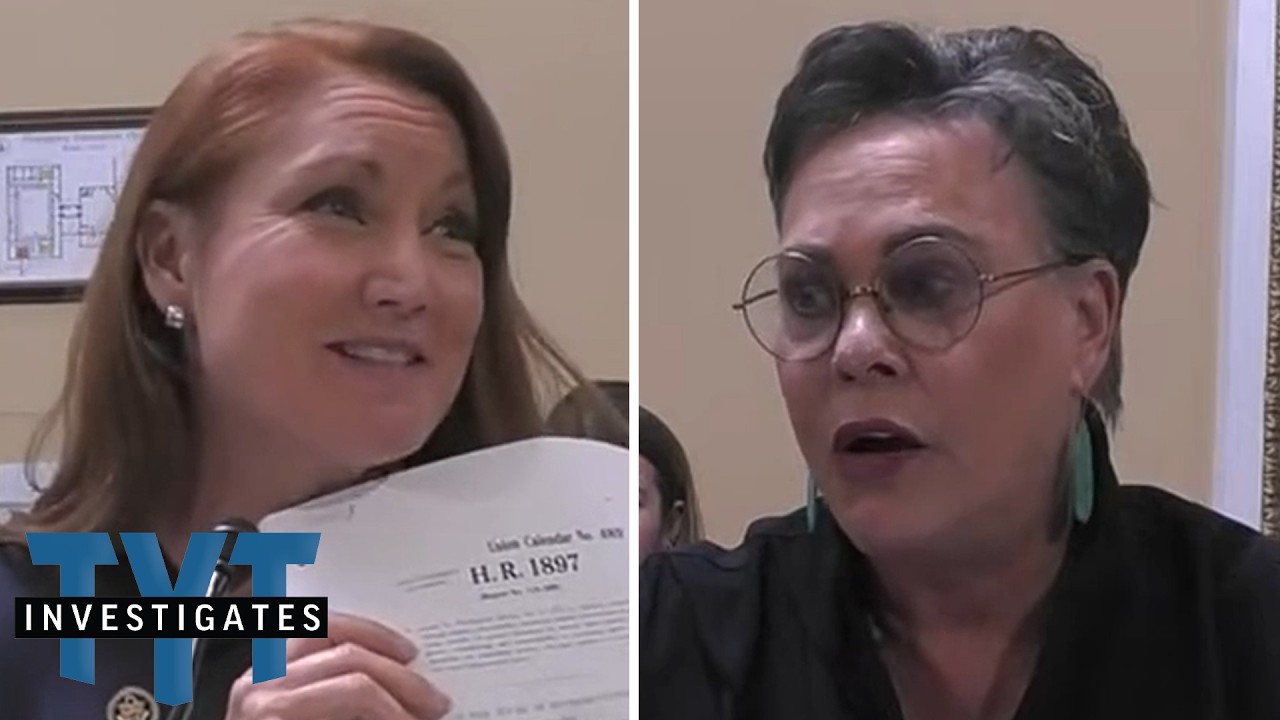
412- 4 harrison schmidt astronaught sen unanimous?
"Project 2025 Specifically CALLS FOR The Changes That Are IN These Bills"
god squad nat am tribes
hr 85x7
260505__IV02_MELANIESTANSBURYHOUSERULESEARTHDAYPROJECT2025
0:23
23 seconds
It seems particularly ironic that on the week that we are celebrating Earth Day,
0:28
28 seconds
the Republican majority is bringing several bills to the floor that seek to gut some of the most successful environmental protections in American history and on the face of planet Earth,
0:40
40 seconds
including one of the most successful conservation bills to protect endangered species. In fact, the ESA has not only
0:47
47 seconds
been one of our most successful, it has helped to save iconic species like whooping cranes, paragan falcons, grey
0:56
56 seconds
wolves, and the very symbol of America itself, the bald [snorts] eagle. But what is particularly stunning is that
1:03
1 minute, 3 seconds
these attacks come to some of the most bipartisan bills in the history of this country. In fact, the ESA was signed
1:10
1 minute, 10 seconds
into law in 1973 by Richard Nixon, of course, a Republican, and passed unanimously in the Senate and 4 to2 to 4
1:20
1 minute, 20 seconds
here in the House. It was championed, in fact, by a Republican senator from New Mexico named Harrison Schmidt, who you
1:26
1 minute, 26 seconds
might recognize as an astronaut who was the only geologist to ever step foot,
1:32
1 minute, 32 seconds
yes, on the moon. The passage of the ESA followed the passage of NEPA three years earlier. also signed by Nixon and also passed unanimously in the Senate. Why?
1:44
1 minute, 44 seconds
Because 50 years ago, Republicans in this body believe that saving wildlife,
1:48
1 minute, 48 seconds
protecting the planet, and investing in science was not a partisan issue, but a patriotic duty. It is noteworthy that
1:57
1 minute, 57 seconds
even then under immense pressure from the very same industries that are lobbying to pass these bills here today,
2:04
2 minutes, 4 seconds
oil and gas, mining, logging, and real estate development, they still pass unanimously in the Senate and with
2:10
2 minutes, 10 seconds
overwhelming bipartisan support. This is of course in stark contrast to what we see before us today as we see those same
2:19
2 minutes, 19 seconds
industries pushing these bills 50 years later, but with support from our colleagues across the aisle. HR1 1897
2:27
2 minutes, 27 seconds
would gut core provisions of the ESA and threaten countless endangered species.
2:33
2 minutes, 33 seconds
It would lead to premature dis delisting of species, gutting protections for critical habitat, opening the door to
2:39
2 minutes, 39 seconds
junk science, expanding the use of the god squad, limiting the ability of tribes, communities, and those most
2:46
2 minutes, 46 seconds
affected to stop bad actors in the courts, and prioritize corporate profits over our people and our environment.
2:56
2 minutes, 56 seconds
HR5587 or the Heats Act is in truth a wolf in sheep's clothing which hasn't been able
3:02
3 minutes, 2 seconds
to be passed out of Congress because it bypasses and guts the National Environmental Policy Act. It allows
3:10
3 minutes, 10 seconds
corporations to drill under public and private lands potentially for miles without consideration for public safety,
3:17
3 minutes, 17 seconds
drinking water, cultural resources, and in reality represents a backdoor to permitting that our oil and gas
3:25
3 minutes, 25 seconds
industries have sought for years. And all of this represents years of influence by special interests and big money and politics. In fact, the
3:33
3 minutes, 33 seconds
coordination between those special interest lobbyists and conservative think tanks culminating in Project 2025,
75-90% favor esa fischbach grey worlves ranchers
...6:52
6 minutes, 52 seconds
Congresswoman Hegamman the opportunity to respond to some of that because there was so much going on, so many accusations. Well, I I I think that you
7:01
7 minutes, 1 second
are exactly correct and I think that the hysteria itself is indicative of the misinformation that was provided to this
7:09
7 minutes, 9 seconds
committee in relation to the endangered species act. The reality is is that the endangered species act as I have pointed out is no longer so much about species
7:18
7 minutes, 18 seconds
recovery or protection. It is a zoning ordinance. It has become a mechanism by which very wealthy NOS can control large
7:27
7 minutes, 27 seconds
swaths of land and water resources. And are there endangered and threatened species in the United States? There
7:34
7 minutes, 34 seconds
absolutely are. And everybody everybody on this side of the aisle wants to invest the money and the resources to protect those. The whooping crane is a
7:42
7 minutes, 42 seconds
perfect example of that. But when we spend the kind of money that we do on the greywolf in Minnesota or Wisconsin
7:50
7 minutes, 50 seconds
uh to keep it on the list, when we spend the money and the resources that we do to keep the grizzly bear on the list in Wyoming in the greater Yellowstone
7:58
7 minutes, 58 seconds
ecosystem, we are no longer able to spend those funds where they are needed,
8:03
8 minutes, 3 seconds
such as on whooping crane recovery. You know, I I actually do want to just respond briefly about Minnesota because
8:11
8 minutes, 11 seconds
I I'm really glad actually the recovery of wolves in Minnesota was brought into this conversation because there are
---
---
an 8 25
Many rural Coloradans, especially in agricultural communities, feel looked down on by their urban counterparts. One cattle rancher I spoke to put it plainly. “It’s an attitude … we are the idiots … we are the dumb farmers … we don’t really matter.”
The sentiment is also portrayed in popular culture such as the hit TV show “Yellowstone.”
“It’s the one constant in life. You build something worth having, someone’s gonna try to take it,” says patriarch John Dutton. He was facing repeated threats by developers from “the city” to annex his land for a luxury hotel and resort development.
As a policy scholar, I’ve talked to and interviewed many dozens of people in rural areas in Colorado. I’ve also read hundreds of newspaper articles and watched hundreds of hours of legislative testimony that capture the sentiment of rural people being left behind, left out and snubbed by their urban counterparts.
Recently, I studied the divide between rural and urban Coloradans by looking at their responses to four statewide policies. A designated day to forgo eating meat, two political appointees and the ongoing wolf reintroduction.
These policies, while specific to Colorado, are symptoms of something larger. Namely, an ever-urbanizing, globalized world that rural, agricultural citizens feel is leaving them behind.
‘MeatOut’ or misstep?
My expertise doesn’t just come from my research – I’ve lived it.
I grew up in a rural community in Elbert County, Colorado, about an hour- and-a-half southeast of Denver.
In early 2021, Gov. Jared Polis declared via proclamation that March 20 would be a “MeatOut Day.” For health and environmental reasons, Colorado residents were encouraged to forgo meat for a single day.
Supported by the Farm Animal Rights Movement, MeatOuts have been promoted across the U.S. since the 1980s. Typically, gubernatorial proclamations, of which hundreds are passed each year and are completely ceremonial and devoid of any long-term formal policy implications, go largely unnoticed. And in Denver, Colorado’s metropolitan center, this one did too.
Not so in rural Colorado.
My neighbors in Elbert County promptly responded with outrage, flying banners and flags declaring their support for agriculture and a carnivorous diet.
One rancher from Nathrop painted a stack of hay bales to say, “Eat Beef Everyday.”
Communities all over the state, and even in neighboring states, responded with “MeatIns,” where they gathered to eat meat and celebrate agriculture and the rural way of life. They also coupled these events with fundraisers, for various causes, for which hundreds of thousands of dollars were raised across the state. While Polis backed off the MeatOut after 2021, Denver Mayor Mike Johnston has, just this year, supported a similar “Eat Less Meat” campaign, prompting similar rural outrage.
Did I mention there are nearly 36,000 cattle in Elbert County? This is relatively typical of a rural Colorado county, particularly on the Plains.
In Colorado, 2.7 million cattle are raised annually, with a value of US$4.5 billion. The industry is consistently the top agricultural commodity and the second-largest contributor to Colorado’s GDP, at about $7.7 billion per year.
In early March 2021, Polis declared March 22 “Colorado Livestock Proud Day,” in response to the backlash.
Other policies
This came on the heels of several policies supported by Polis prior to the MeatOut controversy that critics considered anti-agriculture.
In 2020, he appointed Ellen Kessler, a vegan and animal rights activist, to the State Veterinary Board. Kessler criticized 4-H programs, designed to educate youth on agriculture and conservation, on her social media, insisting they “don’t teach children that animal lives matter.” Kessler resigned in March 2022, just days before she was cited for 13 counts of animal cruelty. More recently, in May 2025, Polis appointed Nicole Rosmarino to head the State Land Board. Rosmarino has ties to groups that oppose traditional agricultural practices, historically a key component of Colorado State Land Board operations.
Then came wolf reintroduction, passed by urban voters by just under 57,000 votes in the 2020 general election and supported by the governor. Those in support advocated for a return to natural biodiversity; wolves were hunted to extinction in the 1940s.
Rural residents voted decidedly against the initiative. Despite much legislative and grassroots action to oppose it, wolves were reintroduced in December 2023 in various areas along the Western Slope, in close proximity to many ranches. Several cattle have since been killed by wolves. Ever since, rural interests have been working to overturn wolf reintroduction on the 2026 ballot.
An American mess
Rural residents in Colorado have told me they feel excluded. This is not new or exclusive to Colorado, but a story as old as America itself.
University of Wisconsin political scientist Katherine J. Cramer wrote about this rural exclusion in Wisconsin, calling it “rural resentment.” Berkeley sociologist Arlie Russell Hochschild called it “stolen pride.” In their book, Tom Schaller, a political scientist at the University of Maryland, and Paul Waldman, a longtime journalist, characterize it as “white rural rage.”
It’s a dynamic that descends from slavery. Isabel Wilkerson, in her book “Caste: The Origins of Our Discontents,” demonstrates that while Black Americans have historically been relegated to the bottom of the hierarchy of an American caste system, poor white people are strategically positioned just above them but below white Americans of higher socioeconomic status. As Wilkerson explains, this is a durable system sustained by norms, laws and cultural expectations that feel “natural.” But they are entirely constructed and designed by the American upper class to intentionally exploit resentment of working-class white people.
The result is what sociologist Michael M. Bell calls a “spatial patriarchy” that characterizes rural America as dumb, incapable, racist, poor and degraded as “white trash.”
This spatial patriarchy is as old as industrialization and urbanization. One of the first policy iterations was rural school consolidation during the turn of the 20th century, designed to modernize schools and make them more efficient. Urban policymakers were influenced by eugenics and the assumption that rural schools “were populated by cognitively deficient children whose parents had not been smart enough or fortunate enough to leave the decaying countryside,” according to sociologist Alex DeYoung.
So, states around the country consolidated schools, the lifeblood of rural communities. Where a school closed, the town often died, as in small towns, schools are not just socioeconomic hubs but centers of cultural and social cohesion.
Environmental impact
The same concept – that urban policymakers know better than rural Americans – is manifest in the modern environmental movement. Like with the MeatOut, rural communities also distrust environmental policies that, in their view, intentionally target a rural way of life. Rural communities take the position that they’ve been made to bear the brunt of the transformations of the global economy for generations, including those that deal with energy and the environment.
For example, environmentalists frequently call for lowering meat consumption and enacting livestock taxes to lower global greenhouse gas emissions.
But, there’s a huge, untapped potential for environmental policies that use language consistent with rural attitudes and values, such as ideas about conservation and land stewardship. Political scientists Richard H. Foster and Mark K. McBeth explain, “Rural residents perceive, probably correctly, that environmental ‘outsiders’ are perfectly willing to sacrifice local economic well-being and traditional ways of life on the altar of global environmental concerns.” They instead suggest “emphasizing saving resources for future generations” so that rural communities may continue to thrive.
The Food and Agriculture Organization of the United Nations attribute between 18% to 24% of greenhouse gas emissions to agriculture, while the International Panel on Climate Change places the estimate closer to 10%. However, agricultural producers point out that, while they may be responsible for that 10%, just 100 companies, such as BP and ExxonMobil, have produced 70% of all emissions. Agricultural producers say policies such as livestock taxes would disproportionately impact small-scale farmers and intensify rural inequality.
Rural communities have the distinct feeling that urban America doesn’t care whether they fail or flourish. Nearly 70% of rural voters supported Trump in the 2024 presidential election. He won 93% of rural counties. Rural Americans feel left behind, and for them, Trump might be their last hope.
Kayla Gabehart, Assistant Professor of Environmental Policy, *Michigan Technological University
This article is republished from The Conversation under a Creative Commons license. Read the original article.
---
https://moneytrails.org/issue/independent-petroleum-association-of-america-ipaa/
follow the money trails ipaa:
Other Interior Officials Have Also Met With IPAA
FWS Director Nominee And Former Monsanto Employee Aurelia Skipwith Has Been Involved In Sage Grouse Protection Rollbacks And Spoke At The IPAA.
Skipwith’s Calendars Show She Has Been Involved In The Rollback of Sage Grouse Protections And Spoke At The Independent Petroleum Association Of America (IPAA). “According to her publically released calendars, Skipwith has been deeply involved in the Trump administration’s rollback of habitat protections for the imperiled sage grouse and spoke at the oil and gas association Independent Petroleum Association of America’s (IPAA) regulators’ forum.” DailyKos, [:{09/11/19:(style="box-sizing:inherit;margin:0px 0px 0px -0.225em;padding:0px 0.15em;border-style:solid;border-width:0px;background-repeat:no-repeat;position:relative;display:inline-block;z-index:9"):}:]
- The IPAA Is A Former Client Of Interior Secretary David Bernhardt. “The IPAA is a former client of Secretary Bernhardt’s whose political director was caught on tape laughing about the connections and access they have within the Trump administration,” stated O’Neill.” DailyKos, [09/11/19]
- Skipwith Sent Memos To FWS And The National Park Service Requesting Rules Regarding Bear And Wolf Killings Be Reviewed. “In July 2017, Skipwith sent memos to the National Park Service and FWS requesting they review rules that prevented hunters fromkilling bears and wolves using extreme techniques, like baiting the animals with greasy doughnuts, ambushing mothers with pups in dens and shooting animals from boats while the bears are swimming,’:{ said O’Neill.” DailyKos, :(style="background-color:#faf8f5;"):}:[09/11/19:{]}:
Current Deputy Solicitor for Parks and Wildlife Solicitor Karen Budd-Falen Met With The Oil Industry Lobbyists Who Helped “Rewrite” Obama-Era Sage Grouse Management Plans
On June 13, 2019, Karen Budd-Falen had a meeting with representatives from the Independent Petroleum Association Of America (IPAA). In a calendar event titled simply, “Meeting,” Karen Budd-Falen met with people with the email addresses mmiller@ipaa.org and dnaatz@ipaa.org. Karen Budd-Falen Calendar,[:{ :{06/13/19:(style="box-sizing:inherit;margin:0px 0px 0px -0.225em;padding:0px 0.15em;border-style:solid;border-width:0px;background-repeat:no-repeat;position:relative;display:inline-block;z-index:9"):}::(style="box-sizing:inherit;margin:0px 0px 0px -0.225em;padding:0px 0.15em;border-style:solid;border-width:0px;background-repeat:no-repeat;position:relative;display:inline-block;z-index:9"):}:]
- Mark Miller Is A Past Chairman Of IPAA And President Of Merlin Oil & Gas. IPAA.org,[accessed 09/26/19]
- Dan Naatz Is A Lobbyist For IPAA.:{ Senate Lobbying Disclosure Database,:(style="background-color:#faf8f5;"):}:[accessed 09/26/19:{]}:
IPAA’s Lobbyists Were “Integrally Involved In Rewriting Sage-Grouse Conservation Plans.” “During the Trump administration, IPAA has been integrally involved in rewriting sage-grouse conservation plans. Documents obtained by the Western Values Project indicate that IPAA lobbyists secured numerous meetings with key Interior Department officials, providing an entré for specific companies to give input into sage-grouse plans. In one instance,IPAA arranged phone calls for Chesapeake Energy, ConocoPhillips, and EOG Resources to ask BLM for specific revisions to sage-grouse maps.During the process of amending the sage-grouse conservation plans, IPAA submitted formal comments recommending specific policy changes. It appears that certain IPAA recommendations — such as cutting requirements to offset habitat damage from development with conservation gains elsewhere — were accepted by the BLM:{, either partially or in full, as a part of the agency’s draft plans.” Center For Western Priorities,:(style="background-color:#faf8f5;"):}:[:{ :{03/14/19:(style="box-sizing:inherit;margin:0px 0px 0px -0.225em;padding:0px 0.15em;border-style:solid;border-width:0px;background-repeat:no-repeat;position:relative;display:inline-block;z-index:9"):}::(style="box-sizing:inherit;margin:0px 0px 0px -0.225em;padding:0px 0.15em;border-style:solid;border-width:0px;background-repeat:no-repeat;position:relative;display:inline-block;z-index:9"):}::{]}:
Current Associate Deputy Secretary of the Interior James Cason Met With IPAA After Rumors Of Bernhardt’s Nomination To Be Secretary Began To Circulate
Cason Served as Acting Deputy Secretary of the Interior until Bernhardt’s Nomination was Confirmed. Rumors of Bernhardt’s nomination to Deputy Secretary began circulating in January 2017. Cason joined the Trump Administration as Associate Deputy Secretary on January 20, 2017, and served as Acting Deputy Secretary until David Bernhardt was confirmed in July 2017. ProPublica, [:{03/08/17:(style="box-sizing:inherit;margin:0px 0px 0px -0.225em;padding:0px 0.15em;border-style:solid;border-width:0px;background-repeat:no-repeat;position:relative;display:inline-block;z-index:9"):}:; Washington Post, :{07/24/17:(style="box-sizing:inherit;margin:0px 0px 0px -0.225em;padding:0px 0.15em;border-style:solid;border-width:0px;background-repeat:no-repeat;position:relative;display:inline-block;z-index:9"):}:]
- Cason’s “Task List” Included Meeting With IPAA. February 17: “Asked to rescind the 113 Financial Assurance orders from small energy companies.” [Cason Task List;Bernhardt Recusal Letter;About IPAA]
Interior Chief Of Staff Todd Willens Met With IPAA
On April 26, 2018, Todd Willens had an external meeting with IPAA. They topics discussed at this meeting wereMBTA, Mitigation, and the proposed removal of blanket 4(d). In addition to IPAA staff, this meeting included an employee of Noble Energy, which is also on Bernhardt’s recusal list. :{Todd Willens Department Of Influence Profile, :(style="background-color:#faf8f5;"):}:[:{accessed:(style="box-sizing:inherit;margin:0px 0px 0px -0.225em;padding:0px 0.15em;border-style:solid;border-width:0px;background-repeat:no-repeat;position:relative;display:inline-block;z-index:9"):}: :{10/16/19:(style="box-sizing:inherit;margin:0px 0px 0px -0.225em;padding:0px 0.15em;border-style:solid;border-width:0px;background-repeat:no-repeat;position:relative;display:inline-block;z-index:9"):}::{, Todd Willens Calendar, 04/26/18]}:
IPAA And Its Members Spend Millions On Campaign Contributions
==
an 420
Legendary California wolf that captivated animal lovers and enraged ranchers is likely dead
In 2011, a male wolf loped across the Oregon border near the small Siskiyou County city of Dorris, three days...
https://www.alternet.org/2019/08/liz-cheney-panned-for-bemoaning-grizzly-bear-protections-championed-by-indigenous-groups-because-theyre-destroying-our-western-way-of-life/
no lnx
Liz Cheney panned for bemoaning grizzly bear protections championed by indigenous groups because they’re ‘destroying our western way of life’
Written by Julia Conley / Common Dreams August 4, 2019
Native tribes and their supporters on Friday defended their push for the continued inclusion of the grizzly bear of Yellowstone National Park on the endangered species list, after Rep. Liz Cheney claimed the protection of the bear violates the “Western way of life.”
The bear was officially returned to the list created by the Endangered Species Act (ESA) on Tuesday, nearly a year after a federal judge found that the Trump administration had exceeded its authority when it attempted to remove the species.
The U.S. Fish and Wildlife Service (USFWS) sought to allow trophy hunters to shoot the Yellowstone bears, whose population in the park is just over 700, and to open up the public lands for fossil fuel industries. Native tribes including the Crow and Northern Cheyenne tribes joined with the Humane Society and Wildearth Guardians to fight the administration.
When the bear was officially returned to the list this week, Wyoming Republican Cheney claimed that the so-called “radical” groups were “intent on destroying our Western way of life” and had pushed for a rule that was “needless and harmful to the ecosystem.”
The Rocky Mountain Tribal Leaders Council (RMTLC), which testified at a congressional hearing in May on the Tribal Heritage and Grizzly Bear Protection Act, took issue with Cheney’s suggestion that hunters and oil companies’ desire to profit off the demise of the grizzly bear trumps the heritage of native tribes and the need for biodiversity.
“So, in striving to protect our culture, our religious and spiritual freedoms, our sovereignty, and our treaty rights—all of which are encapsulated in the grizzly issue—we are ‘destroying’ Cheney’s idea of the ‘Western way of life’?” Tom Rodgers, senior adviser to the RMTLC, told Native News Online.
“I would remind the congresswoman that at the time of the Lewis and Clark Expedition an estimated 100,000 grizzly bears roamed from the Missouri River to the Pacific Coast,” he added. “That was all Indian Country. Now there are fewer than 2,000 grizzly bears and our people live in Third World conditions on meager reservations in the poorest counties in the U.S. Does she really want to talk about ‘destroying’ a ‘way of life’?” asked Rodgers.
Progressive congressional candidate Mckayla Wilkes was among the critics who took to social media to slam Cheney’s comments, calling them “absolutely surreal” considering the centuries-long and continued destruction of Native tribes’ “way of life” by numerous government policies.
https://www.spokesman.com/stories/2011/feb/22/larry-craig-lobbies-wolf-legislation/
ap
bOISE, Idaho — Former Idaho U.S. Sen. Larry Craig is working for a sportsmen’s group that wants Congress to lift Endangered Species Act protections from wolves on grounds the prolific predators are hurting big game populations that are coveted by hunters in the region. Craig represents Sportsmen for Fish and Wildlife and was in Idaho’s Capitol Monday, touting wolf delisting bills now in the U.S. House and Senate. Lawmakers, including Idaho U.S. Sen. Jim Risch, Craig’s successor in Washington, D.C., seek to bypass the Endangered Species Act and lift 36-year-old protections for today’s booming U.S. wolf population.
Advocates who accompanied Craig say they have about 50 co-sponsors for federal legislation, including lawmakers from outside Rocky Mountain states, Minnesota, Wisconsin and Michigan, where most of the nation’s wolves roam. Craig told the state House Resources and Conservation Committee a new law would return management of wildlife to states, reversing decades of federal government encroachment. Craig believes the Republican landslide in last November’s election increases the likelihood of a congressional solution. “We have the window now of two years,” he said. “I hope we can do it much faster than that.” According to HR 509 introduced in the U.S. House last year, the Endangered Species Act of 1973 would be amended “to provide that Act shall not apply to the gray wolf.”
Its co-sponsors include Democrat Jim Matheson of Utah and Republican Mike Simpson of Idaho. A U.S. Senate measure, whose sponsors include Idaho’s Risch and Mike Crapo, both Republicans, is similar to the House bill. Though Craig was welcomed warmly by committee Chairman Bert Stevenson, R-Rupert, he remains deeply publicity shy following the furor that dogged him during his final 1½ years in the U.S. Senate resulting from his arrest in a sex sting in a Minnesota airport bathroom. He declined an interview request from the Associated Press in the Capitol basement hallway following the meeting. Asked about his involvement with Sportsmen for Fish and Wildlife, he said only “I’m assisting them on occasion.”
Craig has a Boise-based lobbying firm called New West Strategies but isn’t registered in Idaho as a lobbyist, according to the Idaho secretary of state. Stevenson agreed to give Craig’s group a letter of support from Idaho House members supporting the federal bills. Starting in 1994, 66 wolves were brought from Canada to central Idaho and Yellowstone National Park in Montana and Wyoming. The animal’s population hit the original recovery benchmark of 300 animals a decade ago and at least 1,700 wolves now roam parts of six Rocky Mountain states. In addition, more than 4,000 wolves can be found in the wilds of Minnesota, Wisconsin and Michigan.
But after federal protections for the Rocky Mountains wolves were lifted in 2009, U.S. District Judge Donald Molloy ruled last summer the U.S. Fish and Wildlife Service couldn’t delist a species in Montana and Idaho but leave out Wyoming’s predator population. The subsequent relisting forced Idaho and Montana to cancel a second year of public wolf hunts, exacerbating tensions among many hunters who fear wolves are eating too many moose, elk and mule deer. Ryan Benson, a lobbyist for Sportsmen for Fish and Wildlife’s “Big Game Forever” effort, has been traveling from state to state to drum up support for the federal legislation.
“The list of interested states is growing,” Benson said. “What we’re seeing is that without question, the sportsmen of America care about what’s happened in the West.” Still, attorneys for groups including Defenders of Wildlife that won in Molloy’s court last year have said allowing Congress to decide a question of biological sustainability on the basis of politics would set a dangerous precedent, not just for wolves but for other speciesprotected by federal law. Doug Honnold of Earthjustice in Bozeman couldn’t immediately be reached for comment on Monday.
https://www.alternet.org/2019/06/idaho-couldnt-have-a-more-disastrous-approach-to-its-wolf-population/
==
https://www.ecowatch.com/wolves-habitat-netherlands-2634212168.html
==
ew 319
Government Study Confirms Endangered Red Wolves Are a Separate Species Worthy of Protection
One of the most endangered wolves in the world is indeed its own species. That's the important finding of a National Academies of Sciences, Engineering and Medicine report released Thursday, which determined that red wolves are genetically distinct from gray wolves and coyotes.
==
https://earthjustice.org/news/press/2019/gray-wolves-will-keep-california-endangered-species-protection
GRAY WOLVES WILL KEEP CALIFORNIA ENDANGERED SPECIES PROTECTION
Victory: A state court judge today upheld protection for gray wolves under the California Endangered Species Act
==
https://www.ecowatch.com/red-wolves-fws-proposal-2582052817.html
FWS Proposal 'Dooms' Wild Population of Endangered Red Wolves
In April, The U.S. Fish and Wildlife Service (FWS) released a report saying that the only remaining wild population of red wolves, in eastern North Carolina, could go extinct within eight years. On Wednesday, the FWS published a proposal that seems likely to speed that process along.
The proposal would limit protected territory to public lands and remove restrictions on killing or harming wolves on private lands.
"We're very disappointed in this plan," Southern Environmental Law Center attorney Ramona McGee told The Washington Post. "It's a plan that effectively dooms the red wolf in the wild. It's not enough to sustain a population, and if they wander off that [refuge] they can be shot and killed the moment they cross that boundary."
The FWS estimates there are approximately 35 red wolves left in the wild, a dozen of which live in the public lands that would be their only protected habitat under the new proposal: the Alligator River National Wildlife Refuge and the Dare County Bombing Range.
...
==
https://www.ecowatch.com/mexican-gray-wolves-recovery-extinction-2513858305.html
New Trump Administration Plan for Mexican Gray Wolves Puts the 'Lobo' on Path to Extinction
The Trump administration released on Wednesday its long-overdue recovery plan for Mexican gray wolves, one of the most endangered mammal species in North America with an estimated wild population of just over 100. However, the plan charts a course for extinction rather than recovery, cutting off wolf access to vital recovery habitat and failing to respond to mounting genetic threats to the species.
"It's a 'recovery plan' in name only. Without additional habitat and greater genetic diversity, the wolves will continue to teeter on the brink of extinction. The plan provides none of these essential needs," said Heidi McIntosh, an attorney with the nonprofit environmental legal organization, Earthjustice, which sued the federal government on behalf of conservation organizations.
The Trump administration refused to listen to the tens of thousands of people who asked them to fix their awful draft plan before finalizing it. Among the people who weighed in asking for stronger protections for the wolves were concerned citizens, business owners and scientists.
"Lobos waited decades for a plan to save them, only to be given one that does not guarantee recovery," said Bryan Bird, Southwest director for Defenders of Wildlife. "The U.S. Fish and Wildlife Service had the opportunity to build a plan on a foundation of science and conservation, but instead decided to let politics rule."
"Instead of moving forward with a plan based on legitimate, science-based recommendations, the Service collaborated exclusively with the very states that have gone to extraordinary lengths to obstruct Mexican wolf recovery," said Maggie Howell of the Wolf Conservation Center. "Critically endangered lobos deserve better."
"The Fish and Wildlife Service published over 250 pages of supporting 'scientific' justification, used a sophisticated model to predict extinction probabilities, then tossed the science aside and asked the states how many wolves they would tolerate with no scientific justification whatsoever," said David Parsons, former Mexican wolf recovery coordinator for the Fish and Wildlife Service. "Using the states' arbitrary upper limit as a population cap in the population viability model and forcing additional recovery needs to Mexico, the plan will guarantee that from now to eternity no more than a running average of 325 Mexican wolves will ever be allowed to exist in the entire U.S. Southwest. This plan is a disgraceful sham."
The best available science indicates that recovery of the Mexican gray wolf requires at least three connected populations totaling approximately 750 individuals, a carefully managed reintroduction effort that prioritizes improving the genetic health of the animals and the establishment of at least two additional population centers in the southern Rockies and in the Grand Canyon area.
"This isn't a recovery plan, it's a blueprint for disaster for Mexican gray wolves," said Michael Robinson, conservation advocate for the Center for Biological Diversity. "Limiting recovery to south of Interstate 40 keeps wolves out of the Grand Canyon and southern Rocky Mountains, areas that would greatly benefit from having wolves back and that scientists have determined are absolutely essential to their recovery."
The recovery plan just released by the Trump administration ignores the science and falls short in several key and interrelated ways:...
==
n carolina
https://www.ecowatch.com/red-wolf-extinction-2511649319.html
omg
http://www.alternet.org/animal-rights/radical-gop-led-bill-promotes-killing-americas-threatened-species
ast week, the U.S. House Committee on Natural Resources passed the Sportsmen’s Heritage and Recreational Enhancement Act—the so-called SHARE Act—with votes coming only from Republican members of the committee.
Democrats recognized that this bill has little to do with rank-and-file sportsmen’s issues, and saw it for what it is: a grab bag of shameful provisions aimed at opening National Park Service lands to grizzly bear killing (of all places, they should be protected on our “national preserves”), poisoning wildlife with the use of lead tackle and ammunition (even though there are practical and affordable alternatives), and promoting the killing of threatened species (e.g., wolves and polar bears).
The bill has gained extensive media attention not for these provisions, but for one to allow the use of suppressors, often called silencers — a perfect tool for poachers in the field (hunters and other shooters already have a range of ear protection gear, from foam to custom ear plugs, so this provision to preserve hearing is an overreach).
The committee’s action in supporting this radical bill is not only at odds with common sense, but also with the unmistakable demographic patterns in the United States. Just last week, the U.S. Fish and Wildlife Service released its periodic report on wildlife recreation. Among other things, the report revealed that the number of wildlife watchers is soaring (a 20 percent increase in the last five years to 86 million in 2016), while hunter numbers have declined by two million since 2011, when the agency last examined the question, to just 11.5 million. Wildlife watchers outnumber sport hunters by a ratio of seven to one and spend $75.9 billion on their pursuits, as compared to $25.6 billion spent by hunters.
The Natural Resources Committee’s vote is really more about the wishes of the NRA and the Safari Club, and not about helping hunters and fishermen, who get almost nothing from this boondoggle of a bill and who would be shocked by its anti-conservation provisions. The vast majority of sport hunters are shooting deer or birds and consuming the meat. They are not the kind of sportsmen who wish to shoot threatened species such as grizzly bears or wolves, who are inedible and killed mainly for trophies only.
The bill includes an amendment from Alaska Congressman Don Young to strip protections for wolves and bears on National Park Service (NPS) lands in Alaska. This is his latest attempt to unwind an NPS rule that forbids extreme hunting methods on lands that never were meant to be set aside for these purposes. Last week, the full House narrowly passed an amendment on an annual spending bill to block implementation of the rule. What sport is there in killing wolves and their pups in their dens and luring grizzly bears with bait in order to shoot them at point-blank range? This disgraceful behavior shouldn’t happen anywhere, least of all on America’s national preserves.
The SHARE legislation includes a raft of other odious provisions, like loosening restrictions on the baiting of migratory waterfowl and barring EPA restrictions on the use of lead-based fishing equipment. SHARE also handcuffs the departments of Interior and Agriculture by prohibiting either agency from regulating the use of lead-based ammunition, ammunition cartridges, or fishing tackle where such uses are allowed by the state where the hunting and fishing occurs. One other provision would roll back the Marine Mammal Protection Act and provide a sweetheart deal to help 41 wealthy polar bear trophy hunters import the heads of rare polar bears they shot in Canada. It’s the latest in a series of these import allowances for trophy hunters, and it effectively encourages them to kill rare species around the world and then wait for a congressional waiver to bring back their trophies.
The most sweeping provision of the SHARE Act would give trophy hunters and commercial trappers priority access to the more than 100 million acres of congressionally designated “wilderness areas” across the nation. This provision weakens the core purpose of the Wilderness Act, which Congress enacted to preserve wild areas “where the earth and its community of life are untrammeled by man, where man himself is a visitor who does not remain.”
Let’s hope the U.S. House and Senate won’t give any meaningful attention to a package with these provisions. No representative or senator should be duped by a bill that masquerades as a measure to benefit sportsmen and sportswomen, but in reality is an all-out attack on wild native carnivores and threatened species, and an opening of our most cherished public lands to these unacceptable and gratuitous practices.
==
e Latest: Both the House and Senate appropriations bills include a policy “rider” - a provision related to policy, not funding levels - that removes wolves in Wyoming, Michigan, Wisconsin and Minnesota from the endangered species list.
If this rider becomes law, wolves in these states could be subject to the same sort of unregulated slaughter that nearly wiped them out in the first place. The rider would also strip citizens of the right to further challenge these delistings in court. Take action now and tell President Obama to reject this politically-motivated, scientifically unsound rider.
The reintroduction of wolves to the Northern Rocky Mountains has been hailed as one of the greatest achievements of the Endangered Species Act. It also positioned the gray wolf as a poster child of the act, and therefore it became one of the biggest targets for foes of the conservation law.
In 2011, members of Congress managed for the first time since the act was enacted to strike protections for an individual species based purely on political motivations and not on science. Congressmen in the Northern Rockies succeeded in delisting wolves in Idaho and Montana from the Endangered Species Act by slipping wording into the bicameral bill to fund the budget, effectively turning the act into a political bargaining chip.
Following that lead, several Congressmen have recently set out to eradicate remaining federal protections for wolves across at least four states, turning over control to states that have increasingly hostile wolf management practices.
Who's leading the pack? Wyoming Congresswoman Cynthia Lummis, who has had wolves in her sights for years, successfully lobbying for their delisting in her home state in 2011. When a court ruled that the state was mismanaging the wolf population and restored protections, she came back this year teeth bared, introducing another bill with Rep. Reid Ribble of Wisconsin that would skirt the court's legal opinion and leave wolves vulnerable both in the Cowboy State, as well as several Great Lakes states.
What's the pack howling about? Anti-wolf congressional representatives have relied on fairy tales over facts to garner support for otherwise unpopular anti-wolf actions. Time and again they reject scientific findings about wolf recovery and play up fantastical myths about the animals' supposed danger to people.
"Nothing is more attractive to a wolf than the sound of a crying baby," said then-Rep. Steve Pearce in 2007 about a proposed bill to stop the federal Mexican wolf reintroduction program in southern New Mexico.
His statement of course flies in the face of the fact that there has never been a single recorded human death by wolf attack in the Lower-48. That didn't stop Rep. Don Young of Alaska from perpetuating this myth during a recent exchange with Interior Secretary Sally Jewell.
"I'd like to introduce [wolves] in your district. If I introduced them in your district, you wouldn't have a homeless problem anymore," he said in response to a letter to Jewell from 79 of his congressional colleagues who support continued wolf protections.
Way #3: Declare Open Season on Individual Species.
==
http://www.ic.ucsc.edu/college8core/c8wiki/index.php/Category:Wildlife#Specific_Species
Alaska Decides It's Fine to Kill Endangered Wolves 9/15
Arizona Sues USA to Protect Gray Wolves 7/15.
5 Easy Actions You Can Take to Help Animals on Endangered Species Day includes 2 wolves.
There Are Only Three Wolves Left at Michigan's Isle Royale National Park 5/15.
These Gory New Hunting Competitions Have Taken the Country by Storm. Contestants can earn tens of thousands of dollars for killing coyotes, bobcats, and foxes. (disturbing images). 3/15.
video primer on wolf function in ecosystem.
FIRST GRAY WOLF SPOTTED AT GRAND CANYON IN 70 YEARS SHOT DEAD BY HUNTER 2/15 Petition to protect.
Two Dozen Coyotes Killed in ‘Wolf-Kill Derby’ Hunting Contest.The second-annual hunting derby of Idaho's coyotes and wolves just ended... 1/15
Wolf OR7 has three pups in Oregon which will be safe from hunters if they wander in CA; also one in Grand Canyon. 12/14.
Wyoming and California protect grey wolves 5/14.
How to coexist with coyotes. Project Coyote.
CA State Officials Back Away From Outlawing Coyote-Killing Contests (audio) 1/14.
Hunter shoots the first endangered wolf seen in Kentucky in 150 years 10/13.
Watch two guys free a wolf who was caught in barbed wire video 9/13.
Lawmakers Push To Take Gray Wolf Off Endangered Species List 3/13
Lone Wolf returns to California looking for love. 4/12 Oregon grey Wolf returns to California 3/12. More. 12/12 Update.
==
http://www.alternet.org/environment/alaska-decides-its-fine-kill-endangered-wolves
==
Lawmakers Push To Take Gray Wolf Off Endangered Species List
The Huffington Post | By Lucia Graves Posted: 03/25/2013 2:11 pm EDT | Updated: 03/25/2013 2:42 pm EDT
More than 70 members of Congress wrote to the Obama administration last week requesting that the gray wolf be removed from the endangered species list.
In a letter to the U.S. Fish and Wildlife Service on Friday, 66 Republicans and six Democrats argued that the wolves, which recently lost their endangered status in the western Great Lakes region, no longer merit protection in the lower 48 states under the Endangered Species Act.
The lawmakers wrote that the "unmanaged wolf population poses a threat to the communities and surrounding livestock and indigenous wildlife” and that state wildlife managers “need to be able to respond to the needs of their native wildlife without being burdened by the impediments of the federal bureaucracy created by the ESA.”
The letter was spearheaded by Sens. Orrin Hatch (R-Utah) and John Barrasso (R-Wyo.), Rep. Cynthia Lummis (R-Wyo.), and Doc Hastings (R-Wash.), chairman of the House Natural Resources Committee. Dems who signed off on the letter included Sens. Heidi Heitkamp (N.D.) and Joe Manchin (W.Va.) and Reps. Terri Sewell (Ala.) and Tim Walz (Minn.), Jim Matheson (Utah), and Collin Peterson (Minn.).
The Humane Society filed a lawsuit in February to restore federal protections for gray wolves that were lifted last year in the Upper Midwest United States. Since the protections were lifted, hunters and trappers have killed an estimated 530 wolves in Minnesota and Wisconsin.
There are roughly 6,000 gray wolves in the continental U.S., according to the Fish and Wildlife Service. About 8,000 to 11,000 roam Alaska, where they go unprotected. The wolves were one of the most common mammals in the country until unregulated hunting nearly led to their extinction. When the Endangered Species Act was introduced in 1973, there were practically no remaining gray wolves in the West.
Laura Zuckerman
SALMON, Idaho, March 1 (Reuters) - Some 166 wolves were killed in Montana in that state's first hunting season since federal protection of the species was lifted last year, but its population still managed to grow by 15 percent in 2011, state wildlife officials said on Thursday.
After Congress removed most wolves in the Northern Rockies from the U.S. endangered species list, Montana established a quota of 220 wolves for a hunting season that began in September 2011 and was extended to Feb. 15 of this year.
Not only did the final tally of wolves killed during the season fall short of the quota, it was more than offset by natural reproduction in the wolf population, according to figures released by Montana's Fish, Wildlife and Parks agency.
:{:{The state's population of wolves at the end of 2011 was estimated at 653, a net gain of 87, or 15 percent, from the year before, despite the 166 wolves killed by hunters since September and 93 non-hunting wolf deaths recorded last year.}:
The result prompted state wildlife managers to call for giving wolf hunters greater latitude in the methods at their disposal, including the use of trapping and electronic calling that imitates other wolves or injured prey.}:
"Fish, Wildlife and Parks understands that the continued increasing trend is alarming for many Montanans who look for (our) management to cap and reduce the wolf population. That is our intent," agency head Joe Maurier said in a statement.
By comparison, Idaho hunters and trappers have killed 322 wolves as of Feb. 27 in a season that began in August 2011 and will remain open in some parts of the state through June 2012.
Idaho is seeking to reduce its wolf numbers from an estimated 1,000 animals to as few as 150 through a combination of rifle hunting, trapping, snaring and other lethal control actions.
Wolves, which once ranged over most of North America, were hunted, trapped and poisoned to the edge of extinction in the lower 48 states by the 1930s under a government-sponsored eradication program.
Decades later, biologists recognized that wolves had an essential role to play in mountain ecosystems as an apex predator, leading to protection of the animal under the Endangered Species Act.
The wolf was reintroduced to the Rockies in the mid-1990s over the vehement objections of ranchers, farmers and sportsmen, who see wolves as a threat to livestock and big-game animals such as elk and deer.
Environmentalists say the impact of wolves on cattle herds and wildlife is overstated, and they fear that the recent removal of federal safeguards could push the wolf back to the brink.
Protracted legal wrangling over wolves culminated last spring with Congress taking the unprecedented step of removing wolves from the endangered species list in Idaho and Montana by legislation, turning their management over to the states.
The government has proposed lifting protections for another 350 wolves in Wyoming.
Conservation groups, including Alliance for the Wild Rockies and WildEarth Guardians, have sued to restore protections to wolves in the Northern Rockies in a lawsuit pending before the 9th U.S. Circuit Court of Appeals. (Editing by Steve Gorman and Cynthia Johnston)
==
Wolves/Foxes/Coyotes
video primer on wolf function in ecosystem.
How to coexist with coyotes. Project Coyote.
CA State Officials Back Away From Outlawing Coyote-Killing Contests (audio) 1/14.
Hunter shoots the first endangered wolf seen in Kentucky in 150 years 10/13.
Watch two guys free a wolf who was caught in barbed wire video 9/13.
Lawmakers Push To Take Gray Wolf Off Endangered Species List 3/13
Lone Wolf returns to California looking for love. 4/12 Oregon grey Wolf returns to California 3/12. More. 12/12 Update.
Animals Lost in Wolf Hunts Near Yellowstoneincluding, sadly, the beloved 832F.
Author and conservation biologist Cristina Eisenberg offers her perspective inThe Wolf's Tooth, sharing accounts from her fieldwork to bring to life the relationships among keystone predators, trophic cascades, and biodiversity.
Grey Wolves delisted from Endangered Species List by politicians, not scientists, being hunted.
Wolves at our Door. A pack of wolves are raised by the filmmakers. They explore the behaviors and social lives of the wolves. (1997, 50 min.)
Never Cry Wolf, based on book of same name by Farley Mowat online video segment. Wolves in Yellowstone. Also The Wolf That Changed America.
John Terborgh and James Estes (Go Slugs!) explore importance of predators in Trophic Cascades: Predators, Prey, and the Changing Dynamics of Nature. They explain how top predators play an essential role in maintaining ecosystem well-being, and how this natural regulatory system is often drastically disrupted by human interventions-when wolves and cougars are removed, for example, populations of deer and beaver become destructive.