CaLIF2
new page 8/13 WAS 404
capt 819
all capt 616
see sub-nat'l
see bellweather
bak but not sure how complete
California's top five Republican mega-donors dwarfed by Democrats, still spent $36 million
Charles & Helen Schwab — $12,947,500 Geoffrey Palmer
— $10,460,400 Laura Khouri & Michael Hayde — $5,804,580Barbara Grimm-Marshall & Darcy Marshall — $4,213,497 Saul Fox — $2,570,803 Charles Schwab, the billionaire owner of his self-named financial services company, and his wife, Helen, together are California’s largest source of individual contributions to conservative and Republican causes.
Geoffrey Palmer, a California real estate developer,has given $6million to the America First Action Super PAC that supports President Trump and Trump’s agenda. He also donated to many state Republican parties and candidates. Laura Khouri and her husband Michael Hayde own a large property management company in Orange County and have given millions to get more Republicans elected to Congress.
Barbara Grimm-Marshall, a giant in the baby carrot industry, and her husband, Darcy Marshall, are the third-largest individual contributors to Republicans, giving money to committees that support Trump and Republican parties around the country.Saul Fox, a private equity CEO, has donated more than $2.5 million in this election cycle and has hosted fundraisers for Trump at his Silicon Valley home.......
==
aha/yikes: the ppl's tools ~ corps hijacked by them
note gun to head soda tax, juul fail on local prop b/c of bad PR at inopportune moment? prop 37 beat by last minute TV ads?
relentless ads on roku "free" tv:
an 1020 also lyft and doordash
Expert: Uber-funded ballot measure in California would create 'permanent underclass of workers'
Those who took high school civics may recall that our democracies lives on fractions. A majority vote — one-half plus one — is what it takes to pass a bill in most legislative bodies.
https://medium.com/s/state-of-the-future/the-great-lesson-of-california-in-americas-new-civil-war-e52e2861f30
no lnx
CALIFORNIA IS THE FUTURE
The Great Lesson of California in America’s New Civil War
Why there’s no bipartisan way forward at this juncture in our history — one side must win
Peter Leyden
Jan 19, 2018
By Peter Leyden and Ruy Teixeira
The next time you call for bipartisan cooperation in America and long for Republicans and Democrats to work side by side, stop it. Remember the great lesson of California, the harbinger of America’s political future, and realize that today such bipartisan cooperation simply can’t get done.
In this current period of American politics, at this juncture in our history, there’s no way that a bipartisan path provides the way forward. The way forward is on the path California blazed about 15 years ago.
In the early 2000s, California faced a similar situation to the one America faces today. Its state politics were severely polarized, and state government was largely paralyzed. The Republican Party was trapped in the brain-dead orthodoxies of an ideology stuck in the past. The party was controlled by zealous activists and corrupt special interests who refused to face up to the reality of the new century. It was a party that refused to work with the Democrats in good faith or compromise in any way.
The solution for the people of California was to reconfigure the political landscape and shift a supermajority of citizens — and by extension their elected officials — under the Democratic Party’s big tent. The natural continuum of more progressive to more moderate solutions then got worked out within the context of the only remaining functioning party. The California Democrats actually cared about average citizens, embraced the inevitable diversity of 21st-century society, weren’t afraid of real innovation, and were ready to start solving the many challenges of our time, including climate change.
California today provides a model for America as a whole. This model of politics and government is by no means perfect, but it is far ahead of the nation in coming to terms with the inexorable digital, global, sustainable transformation of our era. It is a thriving work in progress that gives hope that America can pull out of the political mess we’re in. California today provides a playbook for America’s new way forward. It’s worth contemplating as we enter 2018, which will be a critical election year.
Image for post
Understanding the Context of the New American Civil War
This is no ordinary political moment. Trump is not the reason this is no ordinary time — he’s simply the most obvious symptom that reminds us all of this each day.
The best way to understand politics in America today is to reframe it as closer to civil war. Just the phrase “civil war” is harsh, and many people may cringe. It brings up images of guns and death, the bodies of Union and Confederate soldiers.
America today is nowhere near that level of conflict or at risk of such violence. However, America today does exhibit some of the core elements that move a society from what normally is the process of working out political differences toward the slippery slope of civil war. We’ve seen it in many societies in many previous historical eras, including what happened in the United States in 1860.
Two Systems at Odds
America’s original Civil War was not just fought to emancipate slaves for humanitarian reasons. The conflict was really about the clash between two very different economic systems that were fundamentally at odds and ultimately could not coexist. The Confederacy was based on an agrarian economy dependent on slaves. The Union was based on a new kind of capitalist manufacturing economy dependent on free labor. They tried to somehow coexist from the time of the founding era, but by the middle of the 19th century, something had to give. One side or the other had to win.
America today faces a similar juncture around fundamentally incompatible energy systems. The red states held by the Republicans are deeply entrenched in carbon-based energy systems like coal and oil. They consequently deny the science of climate change, are trying to resuscitate the dying coal industry, and recently have begun to open up coastal waters to oil drilling.
The blue states held by the Democrats are increasingly shifting to clean energy like solar and installing policies that wean the energy system off carbon. In the era of climate change, with the mounting pressure of increased natural disasters, something must give. We can’t have one step forward, one step back every time an administration changes. One side or the other has to win.
Two Classes at Odds
Another driver on the road to civil war is when two classes become fundamentally at odds. This usually takes some form of rich versus poor, the wealthy and the people, the 1 percent and the 99 percent. The system gets so skewed toward those at the top that the majority at the bottom rises up and power shifts.
The last time America was in that position was in the 1930s, during the Great Depression. We were on the road of severe class conflict that could have continued toward civil war, but we worked out a power shift that prevented widespread violence. Franklin Roosevelt, the so-called traitor to his class, helped establish a supermajority New Deal coalition of Democrats that rolled all the way through the postwar boom. The conservative Republicans who had championed a politics that advantaged the rich throughout the 1920s and promoted isolationism in the 1930s were sidelined for two generations — close to 50 years.
Today’s conservative Republicans face the same risk. Since 1980, their policies have engorged the rich while flatlining the incomes of the majority of Americans, from the presidency of Ronald Reagan through to last December’s tax overhaul, which ultimately bestows 83 percent of the benefits over time to the top 1 percent. Make no mistake: A reckoning with not just Trump, but conservatism, is coming.
Two Cultures at Odds
The differences between two economic systems or two classes that are fundamentally at odds could conceivably get worked out through a political process that peacefully resolves differences. However, culture frequently gets in the way. That’s especially true when pressures are building for big system overhauls that will create new winners and losers.
Two different political cultures already at odds through different political ideologies, philosophies, and worldviews can get trapped in a polarizing process that increasingly undermines compromise. They see the world through different lenses, consume different media, and literally live in different places. They start to misunderstand the other side, then start to misrepresent them, and eventually make them the enemy. The opportunity for compromise is then lost. This is where America is today.
At some point, one side or the other must win — and win big. The side resisting change, usually the one most rooted in the past systems and incumbent interests, must be thoroughly defeated — not just for a political cycle or two, but for a generation or two. That gives the winning party or movement the time and space needed to really build up the next system without always fighting rear-guard actions and getting drawn backwards. The losing party or movement will need that same time to go through a fundamental rethink, a long-term renewal that eventually will enable them to play a new game.
Image for postImage for post
Image for postImage for post
Today’s American Civil War
Trump is doing exactly what America needs him to do right now. He’s becoming increasingly conservative and outrageous by the day. Trump could have come into office with a genuinely new agenda that could have helped working people. Instead, he has spent the past year becoming a caricature of all things conservative — and in the meantime has alienated most of America and certainly all the growing political constituencies of the 21st century. He is turning the Republican brand toxic for millennials, women, Latinos, people of color, college-educated people, urban centers, the tech industry, and the economic powerhouses of the coasts, to name a few.
The Republican Party is playing their part perfectly, too. They completely fell for the Trump trap — and that’s exactly what America needed them to do. The Republican Party could have maintained some distance from Trump and kept a healthy check on him through Congress. Instead, they fully embraced him in a group bear hug that culminated in a deeply flawed tax law in the waning days of 2017. This mess of a law, thrown together without traditional vetting, is riddled with outrageous loopholes that benefit the crony donor class and line the pockets of many of the politicians who passed it. The law is hugely unpopular, and everyone who voted for it is marked for the election of 2018.
Perfect.
Now the entire Republican Party, and the entire conservative movement that has controlled it for the past four decades, is fully positioned for the final takedown that will cast them out for a long period of time in the political wilderness. They deserve it.
Let’s just say what needs to be said: The Republican Party over the past 40 years has maneuvered itself into a position where they are the bad guys on the wrong side of history. For a long time, they have been able to hide this fact through a sophisticated series of veils, invoking cultural voodoo that fools a large enough number of Americans to stay in the game. However, Donald Trump has laid waste to that sophistication and has given America and the world the raw version of what current conservative politics is all about.
The Republican Party is all about rule by and for billionaires at the expense of working people. Trump is literally the incarnation of what the party stands for: shaping laws for the good of billionaires and the 1 percent. His cabinet is stuffed with them.
The Republican Party is the party of climate change denial. Trump is the denier-in-chief, but there are 180 climate science deniers in the current Congress (142 in the House and 38 in the Senate), and none of them are Democrats. More than 59 percent of Republicans in the House and 73 percent of Republicans in the Senate deny the scientific consensus that climate change is happening, that human activity is the main cause, and that it is a serious threat. Another way to say it is that the Republican Party is in the pocket of the oil and carbon energy industry. Trump just cut through the crap and named Exxon’s CEO as our secretary of state to unravel the United Nations climate accords. No beating around that bush for the sake of appearances — Trump burned the bush down.
The Republican Party for the past 40 years has mastered using dog whistles to gin up racial divides to get their white voters to the polls. Trump just disposes of niceties and flatly encourages white nationalists, bans Muslims, walls off Mexicans, and calls out “shithole” countries.
Trump is just making clear to all what was boiling under the surface for decades, and that’s exactly what we need him to do. Why? Because America finally needs to take the Republican Party down for a generation or two. Not just the presidency. Not just clear out the U.S. House. Not just tip back the Senate. But fundamentally beat the Republicans on all levels at once, including clearing out governorships and statehouses across the land.
Image for post
The Dramatic Collapse of Republicans in California
Could such as collapse of the Republican Party really happen? Won’t it take decades of trench warfare to put the GOP on the run? Not at all. A political collapse could happen very fast, as it did in California.
California was a model of governmental dysfunction in the 1990–2005 period, with Democrats and Republicans at each other’s throats and little being accomplished. The political atmosphere became so toxic that Democratic governor Gray Davis was recalled in 2003 and replaced with populist Republican Arnold Schwarzenegger, who then proceeded to up the ante on polarization by pushing a series of conservative ballot initiatives in a special election in 2005. They were all handily defeated by the voters, marking the zenith of conservative Republican attempts to control California.
After that point, it was all downhill for the conservative GOP agenda in California. Schwarzenegger understood the sea change early and dumped right-wing populism and became far more moderate, going along with many progressive priorities. He soon started working with Democrats in the legislature on infrastructure, culminating in the passage of Proposition 1B in 2006 ($20 billion for roads and public transportation). Also in 2006, he and the legislature allocated an additional $150 million to stem cell research, supported a successful move to raise the minimum wage, and passed the Global Warming Solutions Act, which targeted a reduction of 25 percent in greenhouse gas emissions in the next 20 years. And in 2008, voters passed Prop 1A, authorizing $10 billion for high-speed rail.
Meanwhile, even though Schwarzenegger remained governor, the Democrats steadily expanded their majority in the state assembly. Then, in 2010, Democrat Jerry Brown was elected governor, and with the 2012 election, Democrats finally attained a supermajority in both houses of the state legislature. This was critical for overriding constant Republican filibusters and passing tax revenue laws (which still required a supermajority by Prop 13 dictates). The supermajority attained in 2012 was the first California legislative supermajority since 1933 and the first one for the Democrats since 1883. This is remarkable considering that in the dysfunctional 1990s, the state assembly and senate were closely divided between Republicans and Democrats, seemingly light-years away from the supermajority Democrats really needed to get things done.
Alongside these developments, Democratic domination of California representation in the U.S. House of Representatives steadily increased. Back in the 1990s, under Republican governor Pete Wilson, there was essentially parity between Republicans and Democrats in Congress. Today, there is almost a 3:1 split (39–14) in favor of the Democrats. Plus, they control both U.S. Senate seats and every single statewide elected office. There are no longer any Republicans able to mount a credible statewide election.
So, going from the zenith of right-wing populism to progressive domination in California did not take very long. That could easily happen in the country as a whole. The national GOP, after the 2016 election, controlled the presidency, the House, the Senate, and a strong majority of governorships and state legislatures. Since then, President Trump has become historically unpopular among American voters and the GOP Congress and its actions have become widely detested. Very quickly, their 2016 triumphs have morphed into a poisonous electoral environment where the GOP in 2018 is probably going to lose control of the House of Representatives and possibly the Senate, lose governorships and many hundreds of state legislative seats. And while the 2020 election is still a couple years away, an early forecast from political scientist Eric R.A.N. Smith has Trump (assuming his unpopularity continues) netting only 41 percent of electoral votes in that election.
In short, political change is slow until it’s very fast. The fall of the GOP is likely to be no different.
Image for postImage for post
Image for postImage for post
Life on the Other Side of Democratic One-Party Rule
There is life on the other side of that Republican political collapse. There is a clear way forward in the land of Democratic, progressive supermajorities. California is thriving right now, the economy is booming, state government budgets are setting aside surpluses, and the public is happy with its political leaders (as we have laid out in other articles in this series). California is leading the world in technological innovation and creative policies to counter climate change.
What about the need for checks and balances? Many Americans might be wary of trusting a political environment where one party has complete control of political power. How does society process the range of differences in political opinions in elections and in forming policies?
Californians faced those same questions and dealt with that new reality. In 2008, voters passed Proposition 11, which created a Citizens Redistricting Commission to redraw state legislative districts that over time had been heavily gerrymandered to protect incumbents of both political parties. That commission was insulated from politics and changed districts along more rational lines that took into consideration natural geography and longstanding contiguous communities. Then, in 2010, the voters passed Proposition 20, which applied a similar logic to congressional redistricting.
Alongside that effort, voters in 2010 also passed Proposition 14, a state constitutional amendment that established a top-two primary system in which all candidates, regardless of party, are placed on the same primary ballot, and the top two vote-getters, regardless of party, head into the general election. The immediate result was to bolster competition within almost all districts. In a district populated by Democrats, the voters still got a choice between, say, a more progressive candidate and a moderate candidate.
Politics in California today still has a range of political differences that get worked out within political bodies. The city council of San Francisco is made up of all Democrats but is often trapped in fierce policy battles between supervisors who are more left of center than their colleagues who are more moderate and supportive of the tech industry. However, everyone on that city council is a Democrat and would be considered a progressive Democrat in the national context. They all embrace creating a diverse society, fighting climate change, etc. The California Legislature holds a similar range of political opinions, from very left to pro-business Democrat, but they almost all operate within a worldview that shares much common ground — a worldview that is not shared by the few remaining Republicans still in the chambers.
In short, California has a supermajority of 60 percent of the population, and thus a supermajority of elected officials, who share a common vision of a general way forward. Their differences are worked out within the confines of that general vision. California Republicans, like their conservative national colleagues, don’t share that general vision, and so they have been pushed out of serious political discourse. They were beaten, and beaten badly. And they almost certainly won’t be part of that discourse until they go through a lengthy process of reform over many years.
Image for postImage for post
The Final Battle Begins in 2018
America is desperate for a functioning political supermajority that can break out of our political stasis and boldly move ahead and take on our many 21st-century challenges. The nation can’t take much more of our one step forward, one step back politics that gets little done despite the need for massive changes.
America today has many parallels to America in the 1850s or America in the 1930s. Both of those decades ended with one side definitively winning, forming a political supermajority that restructured systems going forward to solve our problems once and for all. In the 1850s, we fought the Civil War, and the Republican Party won and then dominated American politics for 50 years. In the 1930s, the Democratic Party won and dominated American politics for roughly the same amount of time.
America today is in a similar position. Our technologies, our economy, our geopolitics are going through fundamental changes. We are facing new challenges, like climate change and massive economic inequality, that must be addressed with fundamental reforms.
America can’t afford more political paralysis. One side or the other must win. This is a civil war that can be won without firing a shot. But it is a fundamental conflict between two worldviews that must be resolved in short order.
California, as usual, resolved it early. The Democrats won; the Republicans lost. The conservative way forward lost; the progressive way forward began. As we’ve laid out in this series, California is the future, always about 15 years ahead of the rest of the country. That means that America, starting in 2018, is going to resolve it, too.
Image for postImage for post
This argument has been built on previous articles and will continue through more stories to come. If you want more, follow us through this series.
11.5K
81
Thanks to John Battelle.
Some rights reserved
California
Future
Trump
Politics
Progressive
11.5K claps
81 responses
Peter Leyden
WRITTEN BY
Peter Leyden
Follow
Founder of Reinvent, a future-focused Media Co; Tech & Future Trends Speaker; Author 2 Books; former Wired ME, & journalist. See Reinvent.net & PeterLeyden.com
California Is The Future
ABOUT THIS COLLECTION
California Is The Future
The 21st-century hit California first, and the innovative state adapted early and has pioneered a promising new way forward. The same forces in demographics, in technology adoption, in the impact of globalization and climate change, are now hitting the rest of America in a time delay. What happened politically in California about 15 years ago is hitting America now, and what’s happening politically now in California will hit the rest of America over the next 15 years. A data-driven exploration. Produced in partnership with shift.newco.co.
More From Medium
Forget “Right vs. Left.” Let’s Talk About “Authoritarian vs. Liberal”
Chris Dobro
The Insanity of the ‘Good Guy with a Gun’ Argument
K.C. Healy
California Has a Posse in Tug-of-War With Trump Over Electric Cars
Bloomberg in Bloomberg
From That Crazy Leftist Who Wants to Take Your Guns
Allison Gauss
Trump’s Race-Baiting Works Because White Americans Resent Black People
Elle Silver in The Silver Mine
The Democratic Primary Is All the Evidence You Need That Activism Works, So Keep Showing Up!
David Loughnot
brazil’s National Center for the Prevention of Forest Fires reports over 7 million acres of the world’s largest wetland have burned in unprecedented fires exacerbated by the climate crisis. The Pantanal fires have consumed 50% more land this year than have burned along the West Coast of the United States.
In California, the Creek Fire has become the largest single-source fire in state history, burning nearly 300,000 acres in Fresno and Madera counties. Five of California’s six largest fires in recorded history are still raging, including the record-shattering August Complex fire, which is now at 860,000 acres with 40% containment.
TOPICS:
https://www.alternet.org/2020/09/trump-faceplants-with-a-scientifically-illiterate-claim-about-climate-change/
no lnx twt
trump faceplants with a scientifically illiterate claim about climate change
Written by Cody Fenwick September 14, 2020
[California Natural Resources Secretary @WadeCrowfoot: "We've had temperatures explode this summer..."
President Trump: "It'll start getting cooler, you just watch."
Crowfoot: "I wish science agreed with you."
Trump: "I don't think science knows, actually."]
President Donald Trump refused to accept the scientific consensus on the existence of climate change at a meeting about the California wildfires, preferring to blame the crisis on poor forest management.
California Natural Resources Secretary Wade Crowfoot spoke about the issue, addressing the president directly and calling out the need for federal leadership.
“As the governor said, we’ve had temperatures explode this summer. You may have learned that we broke a world record in the Death Valley, 130 degrees,” he said.
At this point, Trump smirked and look away from Crowfoot.
:{
}:
“But even in greater LA, 120-plus degrees. And we’re seeing the warming trend make our summers warmer, but also our winters warmer as well,” Crow foot continued. “So I think one area of mutual agreement and priority is vegetation management. But I think we want to work with you to really recognize the changing climate and what it means to our forests. And actually work together with that science, that science is going to be key. Because if we ignore that science and put our heads in the sand and think it’s all about vegetation management, we’re not going to succeed together protecting California.”
“OK,” Trump said. “It’ll start getting cooler. You just watch.”
“I wish science agreed with you,” said Crowfoot.
:{
}:
“I don’t think science knows, actually,” Trump said, laughing.
It’s was an embarrassing display of ignorance. The science of climate change is extremely well-established, and while uncertainty remains, the trend we’ve been headed in is clear. As the chart from NASA below shows, the increase in temperatures is a decades-long trend scientists have observed since the ’60s.
“The decade that just ended is clearly the warmest decade on record,” NASA’s Goddard Institute for Space Studies Director Gavin Schmidt said in January in a statement naming 2019 as the second-warmest year ever recorded. “Every decade since the 1960s clearly has been warmer than the one before.”
Trump’s comments were particularly galling because he claimed to know the temperatures will actually get cooler. This is bolder than even many climate denialists, who often say that future temperatures are wildly uncertain. No, Trump’s claim is not only that climate scientists have no idea what they’re talking about, but that he somehow has enough information that contradicts the profession’s broad consensus. It requires a stunning level of arrogance to make this claim.
But it is consistent with what Trump has probably been hearing on Fox News. HostTucker Carlson has repeatedly cast doubt on climate change, including in connection with the California wildfires.In a recent broadcast, he said: “So are we climate change deniers if we point out that the state of California has failed to implement meaningful deforestation measures that might’ve dramatically slowed the spread of these wildfires? Does that make us deniers? Because in 2018, a state oversight agency in California found that years of poor or non-existent forest management policies in the Sierra Nevada Forests, had contributed to the fires.”
Carlson didn’t mention, however, that the very report he was referring to explicitly listed poor management policies alongside climate change as the key causes of the crisis.
==
==
920
no lnx twt
thehill
Trump on Sunday threatened to withhold funding from California schools incorporating The New York Times’ 1619 Project in their classrooms.
"Department of Education is looking at this," Trump tweeted in response to an anonymous post claiming the Times’ series had been “implemented… into the public schools” in California.
"If so, they will not be funded!" he added.
The president’s allies have frequently targeted the Pulitzer-winning Times series, which emphasizes the legacy of slavery in American history.
Sen. Tom Cotton (R-Ark.) in July introduced legislation that would make any schools using 1619 Project materials ineligible for federal professional-development grants. Cotton called the series “a racially divisive and revisionist account of history that threatens the integrity of the Union.”
Pelosi: Trump 'engaged in fright and fear' in efforts to 'discredit'...
DeWine: Trump 'extremely respectful' of military, says report has...
The White House Office of Management and Budget (OMB) last week ordered federal agencies to end workplace sensitivity training that teaches the U.S. “is an inherently racist or evil country” or "that any race or ethnicity is inherently racist or evil."
It is unclear to what extent, if at all, such programs are in place at the agencies, with the OMB citing “press reports.”
https://www.alternet.org/2020/08/economist-paul-krugman-lays-into-the-clueless-gop-s-on-california/
no twt charts
California was a red state before the 1990s, but it has become increasingly Democratic since then and is now one of the states far-right Republicans love to demonize. A resident of the East Coast, liberal economist and New York Times columnist Paul Krugman lays out some of the reasons why Republicans are clueless about California in an informative Twitter thread posted on August 31.
Krugman posted the thread in response to a Politico article that was written by journalist Carla Marinucci and published on August 30. Marinucci’s piece outlines some of the ways in which “California-bashing” is part of the GOP’s strategy this election year — for example, trying to vilify the California native who 2020 Democratic presidential nominee Joe Biden chose as his running mate: Sen. Kamala Harris, who served as California’s attorney general before becoming a U.S. senator.
“Not that rationality has anything to do with this, but the GOP attack on CA really involves denial of plain facts,” Krugman tweets. “The state has problems — but not the ones conservatives claim.”
While Republicans often attack California from a health care standpoint, Krugman points out that California has been “an enthusiastic and effective adopter of Obamacare, sharply cutting its number of uninsured.” And the economist backs that up with hard data, posting a graph that shows the number of Californians who lack health insurance compared to other states. Way too many Americans still lack health insurance, but as Krugman demonstrates, California’s willingness to fully embrace the Affordable Care Act of 2010, a.k.a. Obamacare, is why, per capita, it has more people with health insurance than other states.
In other words, California still has a long way to go before it measures up to France, Germany or Italy in terms of access to health care, but it is way ahead of red states like Alabama and Mississippi.
Krugman, however, criticizes California for its lack of affordable housing, but argues that a Trump-like approach would make the crisis even worse.
“CA’s biggest policy problem is housing unaffordability, which can be traced to NIMBYism and hence restrictive zoning,” Krugman writes. “But those are exactly the policies Trump insists we keep, to preserve the Suburban Lifestyle Dream!”
==
820 ewg
AUGUST 21, 2020
The California State Senate Appropriations Committee defeated a bill that would reduce the amount of lead leached from faucets and fixtures to no more than 1 microgram of lead – five times less lead than faucets are designed to leach today. A.B. 2060, authored by Assemblymember Chris Holden (D-Pasadena), was meant to ensure that schools and child care centers could purchase these fixtures beginning next year.
==
https://www.mediamatters.org/qanon-conspiracy-theory/california-republican-party-endorsing-least-four-qanon-supporting
7/29/20
California Republican Party is currently backing at least four congressional candidates who have expressed support for QAnon-- part of a larger movement by Republicans across the nation to support the violence-linked conspiracy theory.
QAnon is based on cryptic posts to online message boards from an anonymous user known as “Q" that have spread rampantly on social media and among fringe right-wing media. QAnon conspiracy theorists essentially believe that President Donald Trump is secretly working to take down the purported “deep state,” a supposed cabal of high-ranking officials who they claim are operating pedophile rings.
Media Matters has documented that in 2020, there have been at least 68 current or former congressional candidates who have embraced QAnon. There have also been at least 12 current or former state legislative candidates who have embraced the conspiracy theory.
The California Republican Party lists its endorsed candidates for this election cycle on its website, including Buzz Patterson (Congressional District 7), Nikka Piterman (Congressional District 13), Alison Hayden (Congressional District 15), and Erin Cruz (Congressional District 36).
All four of those Republicans have supported the QAnon conspiracy theory:
- In April, a Twitter user askedPatterson: “Do you support the Q movement?” He replied, “Yep!” (Patterson later bizarrely claimed “that he does not recall sending the tweet about the theory and does not ‘follow or endorse anything he/she/them say.’”)
- Piterman has tweeted the QAnon hashtag and slogan, “Where we go one, we go all,” often abbreviated as “WWG1WGA,” though he misspelled the latter.
- Hayden has repeatedly tweeted QAnon hashtags and QAnon content.
- Cruzoffered support for the QAnon conspiracy theory in an interview with NBC News, including saying that “she believes some of what Q posts is valid information.”
The California GOP previously endorsed congressional candidate and QAnon supporter Mike Cargile, but quietly removed it shortly after Media Matters reported that he had used the n-word in an anti-Black Facebook rant.
The California GOP added its endorsements of Hayden and Cruz to its website in recent weeks even after news reports about their pro-QAnon views. (Google’s cache of the party’s endorsement page “as it appeared on 28 Jul 2020 03:48:35 GMT,” or 11:48 p.m. EDT on July 27, did not show endorsements for the two.)
Media Matters asked the CAGOP for comment, including confirmation that the party is endorsing the four candidates and whether it had a comment on QAnon and those candidates' support for the conspiracy theory. A spokesperson responded by sending a link to the party's endorsements page, which includes the four QAnon-supporting candidates.
The California Republican Party’s decision to endorse QAnon-supporting candidates is another instance of major Republican leaders and organizations lending credence to the conspiracy theory. Other examples include:
- President Donald Trump has frequently promoted QAnon Twitter accounts.
- Trump official Erin Perrine went on a QAnon program to recruit campaign volunteers. (The interview did not include a direct mention of QAnon.)
- Two Republican Party organizations in Florida and a GOP group in Georgia have used their Facebook pages to promote QAnon.
- Republicans are backing the Colorado congressional campaign of Lauren Boebert, who has expressed support for the conspiracy theory. (Boebert has attempted to distance herself from QAnon after criticism.)
- The Oregon Republican Party is supporting U.S. Senate candidate Jo Rae Perkins, who is an avowed backer of QAnon.
Right-wing media have also been offering credence to QAnon in recent months.
==
****
no lnx ya cheap bastard
Los Angeles Times
POLITICS
People live longer in blue states than red; new study points to impact of state policies
States that have pursued more liberal policies in education, environment and civil rights have a longer life expectancy.
States such as California that have pursued more liberal policies in education, environment and civil rights have seen a swifter rise in life expectancy than more conservative states. Above, the California Capitol in Sacramento.(Los Angeles Times)
By NOAM N. LEVEY STAFF WRITER
AUG. 3, 2020
WASHINGTON — Weak environmental protections, safety rules and labor and civil rights protections may be cutting lives short in conservative states and deepening the divide between red and blue states, according to a new study on links between life expectancy and state policy.
:{
}:
The report, published Tuesday in the health policy journal Milbank Quarterly, finds that states where residents live longest, including California, tend to have much more stringent environmental laws, tougher tobacco and firearms regulations and more protections for workers, minorities and LGBTQ residents.
Since the mid-1980s, the gap among U.S. states in how long their residents live has widened, reversing decades of progress toward greater equality.
One group of states, mostly in the Northeast and the West, have seen average life expectancies rise relatively steadily, placing them on par with the wealthiest nations of Western Europe. Those states tend to have more stringent regulations.
By contrast, the life expectancy in states with more conservative health, labor and social policies — concentrated in the South and Appalachia — have stagnated in recent decades, according to the study, which adds to growing research on health and political disparities between states.
California has among the highest average life expectancies in the country, at 81.3 years. It also had the most liberal policies in the nation in 2014, the most recent year the study analyzed, according to the system the authors developed to rank states.
Although the study’s authors note that they can’t prove that state policies caused the gap in life expectancy, the correlation is a persistent one across multiple states and several decades.
“It’s disheartening to see another example of a missed opportunity by policymakers,” said David Radley, senior scientist at the nonprofit Commonwealth Fund who studies differences in state health policies and the effects on people’s health. Radley was not involved in Milbank report.
[pix Bakersfield, CA., March 4, 2020 - Jenny Morones, 26, of Bakersfield poses for a portrait on Wednesday, March 4, 2020 in Bakersfield, California. Morones is working mother struggling to raise three children on a low income. Morones fled an abusive relationship and though in her twenties, has dealt with health challenges.Thanks to the Affordable Care Act, Morones had health insurance that protected her from financial ruin. (Jason Armond / Los Angeles Times)]
Coronavirus widens healthcare divide between red states and blue states
May 25, 2020
The new report may help shape efforts to rethink government policy in the wake of the coronavirus pandemic, which has exposed deep structural weaknesses in the U.S. as well as yawning gaps in many state safety nets.
“The overarching conclusion is clear: States that have invested in their populations’ social and economic well-being by enacting more liberal policies over time tend to be the same states that have made considerable gains in life expectancy,” the study’s authors wrote.
Even before the current public health crisis, life expectancy in the U.S. had been declining, setting America apart from most other wealthy nations. That decline has fueled tough questions about domestic policy.
The opioid epidemic, which has had a devastating impact on regions of the country already hit hard by economic stagnation, has been the focus of a lot of the discussion about that shift.
But Syracuse University sociologist Jennifer Karas Montez, the lead author of the new study, said the impact of opioids may be only part of the story.
“When we look at what is happening with life expectancy, the tendency is to focus on individual explanations about what Americans are doing,” she said, noting obesity and smoking behaviors as well as drug use. “But state policies are so important.”
To assess what role these policies may be playing, Montez and other researchers reviewed more than 120 policies enacted by states over the years and assessed whether each policy choice in each state was more liberal or more conservative.
Policies included housing rules such as rent control; health and welfare policies such as Medicaid eligibility and welfare limits; labor protections such as paid sick leave and minimum wages; and civil rights policies such as gender discrimination bans, hate-crime laws and same-sex marriage.
They also looked at state abortion restrictions, tax policy, education spending, immigration rules and gun control laws.
Each state was ranked by how liberal or conservative its policies overall have been, going back to 1970.
The researchers then compared these findings to trends in life expectancy in all 50 states.
Montez said the trends they saw were unmistakable. They also correlated with important points in the nation’s political history.
Through the 1960s and 1970s, for example, state life expectancies generally converged. That trend began to reverse in the mid-1980s, around the same time that a conservative movement, led by President Reagan and mirrored in many state capitols, became ascendant.
The gap between states accelerated further after 2010, when sweeping Republican victories in state elections shifted policies further to the right in many places.
By 2017, residents of the state with the highest life expectancy — Hawaii — were living on average seven years longer than residents of the state with the lowest life expectancy — Mississippi.
By contrast, the gap between the best- and worst-performing states in 1984 was less than five years.
The gap is not only about policy: States where people live longer tend to be wealthier and have better educated populations, for example.
But Montez noted that decisions by state leaders have helped shape those factors.
“States like Connecticutare investing in their population, investing in schools, setting an economic floor for their workers, discouraging behaviors like smoking that kill people,” she explained. “You have other states like Mississippi and Oklahoma that aren’t doing any of this.”
In Connecticut, whose policies have become steadily more liberal over the last half century, life expectancy increased 5.8 years between 1980 and 2017 to 80.7 years.
In Oklahoma, which has become markedly more conservative, life expectancy increased only 2.2 years over the same period, reaching 75.8 years in 2017.
Identifying which state policies may have the most impact on how long people live is difficult, the researchers concede. But the study points to a group of policies that appear to correlate most closely with longer lives.
These include some unsurprising candidates such as tougher environmental laws, which the authors note may protect people from toxic substances. The authors also found a correlation between longer life expectancy and labor policies that increase economic security, such as a minimum wage.
Tougher gun laws appear to track with longer life expectancies, the study notes, as do stricter tobacco controls.
The authors also point to civil rights laws, which they suggest may protect residents from ill health related to persistent stress.
And they found a correlation between longer life expectancy and better access to abortion, which the study notes may reflect other research that has linked abortion restrictions to women’s poverty and ill health.
Noam N. Levey writes about national healthcare policy out of Washington, D.C., for the Los Angeles Times. He covered passage of the 2010 Affordable Care Act and has written extensively about the landmark law and reported on its implementation from around the country. A former investigative and political reporter, he is a Boston native and a graduate of Princeton University. He joined the newspaper in 2003 and has reported from Washington since 2006.
==
==
cascade interactions:
820 ew
Apple Fire Forces 7,800 to Seek Shelter in Coronavirus-Ravaged California
==
https://insideclimatenews.org/news/02082020/california-big-oil-environmental-health
aug 2020
ARVIN, California—In September 2018, Estela Escoto sat down with a team of lawyers and community organizers and weighed her options.
Escoto's town—Arvin, California—had just granted an oil drilling and well-servicing company, Petro-Lud, a permit to drill four new wells near a neighborhood densely packed with young families and a park where children played soccer.
Escoto, president of an environmental justice group called the Committee for a Better Arvin, was frustrated, but not surprised. For years, she and the committee had been struggling to keep oil and gas development out of their neighborhoods....
==
reminder:
CA CARB) passed the zero-emissions vehicle (ZEV) mandate in 1990 which required the seven major automobile suppliers in the United States to offer electric vehicles in order to continue sales of their gasoline powered vehicles in California. Nearly 5000 electric cars were designed and manufactured by Chrysler, the Ford Motor Company, General Motors (GM), Honda, Nissan, and Toyota; and then later destroyed or donated to museums and educational institutions...The film details the California Air Resources Board's reversal of the mandate after relentless pressure and suits from automobile manufacturers, continual pressure from the oil industry, orchestrated hype over a future hydrogen car, and finally the George W. Bush administration.
A portion of the film details GM's efforts to demonstrate to California that there was no consumer demand for their product, and then to take back every EV1 and destroy them...
==
hope: if states hold to targets (ca upped ours), and if others join, hit 1.5? see sub-nat'l 1219
==
https://www.mediamatters.org/congress/following-media-matters-reporting-cagop-removes-endorsement-qanon-candidate-who-used-n
The California Republican Party has dropped its endorsement of congressional candidate and writer Mike Cargile. Media Matters had recently reported that Cargile is a QAnon supporter who wrote an anti-Black rant on Facebook in which he used the n-word. He has also repeatedly shared bigoted memes on the platform.
Cargile is running for Congress in California’s 35th Congressional District against incumbent Democratic Rep. Norma Torres. The California Republican Party had backed his congressional campaign and stated on Facebook in January that it is “proud to endorse” him.
Media Matters previously documented that Cargile is a supporter of QAnon, a violence-linked conspiracy theory that is based on cryptic posts to online message boards from an anonymous user known as “Q" that have spread rampantly on social media and among fringe right-wing media. QAnon conspiracy theorists essentially believe that President Donald Trump is secretly working to take down the purported “deep state,” a supposed cabal of high-ranking officials who they claim are operating pedophile rings.
Cargile has also claimed that the coronavirus is a “scamdemic” and “NOTHING compared to the diseases and plagues headed this way via the rats and the homeless”; and has praised the lie-filled Plandemic video as “EXACTLY why I'm in this race!” ...
===
https://yyy.theguardian.com/environment/2020/may/29/megadrought-us-south-west-fires-water-research
US south-west in grip of historic 'megadrought', research finds
Intensified by climate change, the current 20-year arid period is one of the worst on record, with wide-ranging effects
Samuel Gilbert
@samuelgilbert1
Fri 29 May 2020 05.30 EDTLast modified on Fri 29 May 2020 08.31 EDT
The Enterprise Bridge passes over a section of Lake Oroville that is nearly dry on 19 August 2014 in Oroville, California. The region is in the grip of a 20-year megadrought, research suggests.
When Ken Pimlott began fighting US wildfires at the age of 17, they seemed to him to be a brutal but manageable natural phenomenon.
Dust bowl conditions of 1930s US now more than twice as likely to reoccur
Read more
“We had periodic [fire] sieges in the 80s, but there were breaks in between,” said Pimlott, the former head of the California department of forestry and fire protection. But no longer. “That doesn’t really happen any more. Now you can’t even blink” between fires, he said. “We’re seeing the kinds of fires we have never seen before.”
A recent study published in the journal Science helps explains why, revealing that the south-western US is in the grip of a 20-year megadrought – a period of severe aridity that is stoking fires, depleting reservoirs and putting a strain on water supplies to the states of the region.
“You see impacts everywhere, in snowpacks, reservoir levels, agriculture, groundwater and tree mortality,” said co-author Benjamin Cook, of Columbia University’s Lamont Doherty Earth Observatory. “Droughts are these amazingly disruptive events. Water sits at the foundation of everything.”
Researchers compared soil moisture records from 2000-2019 to other drought events from the past 1,200 years. They found that the current period is worse than all but one of five megadroughts identified in the record.
Unlike past megadroughts – brought on by natural fluctuations in the Earth’s climate – this current drought has been heavily influenced by human-induced climate change, “pushing what would have been a moderate drought in south-western North America into megadrought territory”, according to the study.
“Global warming has made the drought much worse than it otherwise would have been,” said Cook. “We estimate 30-50% is attributed to climate change.”
According to Nasa, 19 of the 20 warmest years on record have occurred since 2001. Climate change, if unchecked, will hit the American south-west particularly hard.
A major concern is the megadrought’s impact on water supplies in the region. It has experienced explosive growth – half of the nation’s fastest-growing states are in the south-west – made possible by elaborate river diversion projects and massive reservoirs.
Over the past two decades, drought-depleted rivers, and population growth has led to steep declines in two of the nation’s largest reservoirs, Lake Mead and Lake Powell, on which which tens of millions of people depend.
Water deliveries from the Colorado River are also being rationed this year, for the first time.
For Pimlott, this drought has manifested itself in 21st-century fires unlike any he had previously witnessed. In 2018, a fire tornado destroyed part of one northern California town, and almost the entire community of Paradise, California, was wiped out by a blaze that claimed 85 victims.
“Were seeing more intense fires, with longer durations,” he said.
===
==
an 520
california strips incarcerated people of complaints rights during the pandemic
==
gov gavin N did wel covid, regional partners, used our gnp got big ppe buy (china?)
420
https://www.ecowatch.com/southwest-drought-climate-crisis-2645742986.html
A severe drought that has engulfed the American Southwest since the year 2000 is likely to soon be the most severe drought since the 800s, according to a new study published in Science.
"This appears to be just the beginning of a more extreme trend toward megadrought as global warming continues," the authors wrote in the study.
A team of researchers from Columbia University conducted the study. They described the ongoing dry spell, which has helped intensify wildfire seasons and threatened water supplies for people and agriculture, as an "emerging megadrought," according to The New York Times.
Of course, nothing is guaranteed. By comparison to the previous 19 years, 2019 was actually a fairly wet year. Unpredictable climate variability may also bring enough rain to the region to end the drought, but global warming boosts the chances that the drought will endure.
"We know that this drought has been encouraged by the global warming process," said lead author A. Park Williams, a bioclimatologist at Lamont-Doherty Earth Observatory at Columbia University, as The New York Times reported. "As we go forward in time it's going to take more and more good luck to pull us out of this."
Scientists have suspected for a while that that the dryness is evolving into a megadrought. The new research not only confirms their suspicion, but also concludes this megadrought may be as bad or worse than anything known before.
"We now have enough observations of current drought and tree-ring records of past drought to say that we're on the same trajectory as the worst prehistoric droughts," said Williams, in a statement, as USA Today reported. This is "a drought bigger than what modern society has seen."
The researchers say that man-made global warming caused about half of this drought. Changes in the climate have contributed to dwindling reservoirs and harsher wildfire seasons.
It all could get much worse.
"Anthropogenic global warming and its drying influence in (southwestern North America) are likely still in their infancy," the study warns, as CNN reported. "Themagnitude of future droughts in North America and elsewhere will depend greatly on future rates of anthropogenic greenhouse gas emissions globally."
Without a drastic reduction in greenhouse gas emissions, these droughts are just the beginning.
"The effects of future droughts on humans will be further dependent on sustainable resource use because buffering mechanisms such as ground water and reservoir storage are at risk of being depleted during dry times," the study continues, according to CNN....
==
==
https://www.alternet.org/2020/03/the-high-cost-of-being-donald-trumps-enemy
an 320
Trump makes his disdain for California clear, lashing outat the Golden State as a “filthy dirty” and “horrible” outpost cursed by homelessness and wildfires. California, in turn, has challenged the Trump administration dozens of times on issues such as auto emissions, immigration and union dues.But it’s not cheap being one of Trump’s favorite enemies. And nowhere is that more apparent than in health care.State Attorney General Xavier Becerra has spent millions of dollars challenging the Trump administration more than a dozen timeson health care issues. For instance...
:{
}:
makes his disdain for California clear, lashing out at the Golden State as a “filthy dirty” and “horrible” outpost cursed by homelessness and wildfires. California, in turn, has challenged the Trump administration dozens of times on issues such as auto emissions, immigration and union dues.
But it’s not cheap being one of Trump’s favorite enemies. And nowhere is that more apparent than in health care.
State Attorney General Xavier Becerra has spent millions of dollars challenging the Trump administration more than a dozen times on health care issues. For instance, he has taken the lead in legally defending the federal Affordable Care Act, and in fighting the administration’s “public charge” rule, which makes it harder for immigrants to obtain permanent residency status if they use certain public benefits, such as Medicaid.
And state lawmakers are adopting legislation to counteract federal health care actions, racking up the costs of passing and implementing new rules, such as banning the sale of short-term health plansand preventing the state from imposing work requirementson its Medicaid recipients.
The state’s total tab for its feud with the Oval Office is at least in the hundreds of millions, with billions more at stake. Here are three major ways California is losing health care money:
Title X Funding
In February 2019, the U.S. Department of Health and Human Services changed the rules for Title X, a program that funds family planning services. Under the previous rules, federal funds couldn’t pay for abortions. Now, these funds cannot even go to providers that refer patients elsewhere for abortions.
Clinics like Planned Parenthood affiliates, which refuse to abide by the new regulations, have surrendered their Title X money.
In California, that means the funding has been cut by millions of dollars.Essential Access Health, which runs the Title X program in California, said it couldn’t put a dollar figure on exactly how much funding has been lost. But according to the group, more than 366 health centers in 38 California counties received Title X funds in 2018. Today, that’s down to 251 centers in 19 counties.
While disputes over contraception coverage can be ideological, they also boil down to dollars and cents, according to Priscilla Smith, a reproductive law expert at Yale Law School.
“For California, that means more and more people who don’t have access to the coverage of their contraception will be using state resources both for contraceptive coverage and for health issues that result from their lack of access,” Smith said.
Essential Access Health, along with the state of California, Planned Parenthood and other plaintiffs, took the Trump administration to court over the regulations. A federal appeals judge sided with the administration in late February.
Medicaid Tax
Another big loss for the state could come from wonky tax policy.
The managed care organization (MCO) tax is a surcharge on the managed-care plans that provide coverage to about 10 million enrolleeson Medi-Cal, California’s public health insurance program for low-income people.
The tax has been around for several years but expired in July. Gov. Gavin Newsom’s administration asked for federal approval to extend it for three years — a request that seemed like such a sure thing.
“Based on the recent federal approval of a similar tax in Michigan, federal approval of a reauthorized California MCO tax package appears likely,” according to a February 2019 reportby the state Legislative Analyst’s Office.
No such luck. In February, federal officials rejected California’s request. Though it doesn’t affect the state this year, it will cost Medi-Cal up to $2 billionin lost revenue in the 2021-22 fiscal year.
“Michigan got something very similar — how come we didn’t?” asked Edwin Park, a research professor with Georgetown University who is based in California.
California would have to wipe out its reserves in the next two fiscal years to keep the Medi-Cal program whole, said Scott Graves, director of research at the California Budget & Policy Center.
“It creates a big hole down the road in the forecast,” he said.
The state plans to resubmit its request later this year, but the federal government isn’t racing to do California any favors.
“Because California is California, the concern is the Trump administration won’t approve,” Park said.
Boosting The Affordable Care Act
One of the Trump administration’s pet projects has been to repeal, replace or otherwise dismantle the Affordable Care Act.
Take the simple issue of advertising for Obamacare health insurance plans. In 2017, the Trump administration announcedit would slash the federal budget for advertising during open enrollment season by 90%.
California responded by increasing its advertising budget. For the 2020 open-enrollment season, the state budgeted $121 millionin marketing and outreach. The federal government budgeted $10 million.
And when the Trump administration eliminated the Affordable Care Act tax penalty for not having health insurance, California created one — and offered state-funded subsidies to help some people pay for insurance. This year, the state is spending about $430 millionto subsidize the premium costs for about 625,000 people.
“Obviously it would be great if the administration was doing its fair share, as they did in the old administration,” said Anthony Wright, executive director of Health Access California, a consumer advocacy group.
California can absorb the costs of bolstering the Affordable Care Act, Wright said. What it can’t do, he said, is make up the difference if the Trump administration adopts other items on its health care wish list, such as making big cuts to the Medicaid program.
In his preliminary 2020-21 federal budget, Trump proposed cutting $920 billion from the program over the next decade — although that’s unlikely to fly in the Democrat-controlled House of Representatives.
“The things that keep me up at night are the broad Medicaid changes that are in the billions of dollars,” Wright said. “That is stuff that’s on a whole other level.”
==
==
transparency
koch v ca
https://www.exposedbycmd.org/
https://www.exposedbycmd.org/2020/01/10/koch-funds-groups-supporting-lawsuit-against-donor-transparency/
==
https://insideclimatenews.org/campaign-archive/clean-economy-weekly/1827249
120 icn
| in California, Solar on (Almost) Every New House |
In California, rooftop solar is now a standard feature for new houses. The state’s new building code, which took effect Jan. 1, requires solar on new construction, with few exceptions. This is a big step for the country’s largest market for rooftop solar. But for the builders who must follow the rules, the shift is more routine. They are used to the building code being updated every three years, and have had plenty of time to prepare, said Brandon De Young, executive vice president of De Young Properties in Fresno. His company, which builds about 100 houses per year, specializes in energy efficient construction and already had solar as a standard feature. Even though the code may take away some of the distinctiveness of what he offers, he has been a strong supporter of the policy. “In our view, it’s a no-brainer: this is the right way to go,” he told me. “We believe this as citizens and as a company. The rules affect the roughly 80,000 new houses built in California each year. The new systems will add up to a projected 1 gigawatt of new rooftop solar on homes between now and 2024, according to Wood Mackenzie Power and Renewables. That’s a lot, and it will come on top of the 26.2 gigawatts of solar already installed in the state, the most in the country by a large margin. Of that total, 6.4 gigawatts are on houses.... |
https://www.alternet.org/2020/01/census-after-2020-californias-congressional-delegation-could-shrink-for-the-first-time-in-160-years/
no lnx
Census: After 2020, California’s Congressional delegation could shrink for the first time in 160 years
Written by Stephen Wolf / DailyKos January 2, 2020
On Dec. 30, the Census Bureau released its newest population estimates for every state, detailing how many residents each state has gained or lost since the last census, in 2010. We’ve used these figures, along with estimates from previous years, to project how many seats in Congress each state is likely to gain or lose after next year’s census, when the Constitution mandates that all 435 House seats be reallocated according to each state’s share of the total U.S. population.
As shown in the map above (see here for a larger version), 17 states could see their number of districts change after the 2020 census, based on both the long-term 2010-2019 trend and the short-term 2018-2019 trend.
These projections also represent a shift, in some cases, from those that the firm Election Data Services issued a year ago, when the Census Bureau last updated its population estimates. These three changes are summarized below:
If California does indeed lose a seat, it would be the first time in 160 years that the Golden State’s representation in the House shrank.
The 2020 census and subsequent reapportionment will thus set the stage for congressional redistricting. However, it’s difficult to predict with much accuracy what the partisan impact of these changes will be because we don’t yet know which party (if any) will control the redistricting process in many states. If redistricting had taken place after the 2019 elections, Republicans would have been able draw two to three times more congressional districts than Democrats. However, elections next year for governors, state legislatures, and redistricting reform measures will be crucial for setting the partisan landscape.
One thing we do know, however, is that much of the population growth in Sun Belt states such as Texas comes from black, Latino, and Asian-American residents, which could benefit Democrats in those states. However, many GOP-controlled states such as Texas have refused to allocate any supplemental funding to prevent undercounts of these populations.
Reapportionment will also determine how many Electoral College votes each state receives, since each state gets electoral votes equivalent to its number of House seats plus two for its Senate delegation. Adjusting the 2016 Electoral College outcome based on the above projections, Donald Trump would have gained three electoral votes, while Hillary Clinton would have lost three—not nearly enough to alter Trump’s 304-227 win.
Interestingly, the largely Midwestern and Northeastern states that are projected to lose seats almost all trended Republican in 2016, while the states forecast to gain seats—largely in the Sun Belt— almost all trended Democratic. These trends could benefit Democrats in the long term if they can start winning regularly in places such as Arizona, Florida, North Carolina, and Texas, even if Republicans shift toward a greater reliance on carrying the Rust Belt.
==
Ruling allows California to start enforcing efficiency standards ...
https://www.sfchronicle.com › news › article › Ruling-allows-California-to...
1.
California defies Trump Administration on lightbulb efficiency ...
https://www.utilitydive.com › news › california-defies-trump-administratio...
1.
:{That brought blazing temperatures and wildfire conditions to California, flooding over the Eastern U.S. and unprecedented heat to the Scandinavian Arctic region, as well as a six-month heat wave and drought across parts of Central Europe, all events showing a clear :(style="background-color:#ffff66;"):}:global warming fingerprint, according to scientists.
The new study focuses on summer extremes, while other research has looked at how global warming affects the jet stream in winter.
What Happens in the Arctic Doesn't Stay There
Daniel Swain, a climate scientist at UCLA and the National Center for Atmospheric Research who was not involved with the new research, said the study has some "compelling new evidence on the link between amplified Arctic warming and extreme mid-latitude weather during the summer months."
What happens in the Arctic doesn't stay there. Increased melting of reflective sea ice in summer exposes more dark-colored ocean to absorb heat, and that heats the surrounding land. As Arctic warming races ahead of the rest of the global average, the temperature contrasts that drive the jet stream are reduced, and the river of wind more frequently twists into sharp and slow-moving or stationary waves.
"When the jet stream enters this wavy state, extreme weather tends to occur on either side of the amplified ridges and troughs as the storm track becomes locked in place," Swain said. Then, specific regions experience long periods of cool and stormy or, contrarily, hot and dry weather, he added.
PUBLISHED UNDER:
California's housing bubble is spilling over into poor and exurban neighborhoods, creating waves of crises
California has such a huge undersupply of housing -- and oversupply of housing speculators -- that affluent homebuyers have effectively rendered the state's major cities unaffordable for all but the very wealthy, even pushing into neighborhoods that were historically undesirable due to poverty, poor housing stock and crime. Read the rest
BUILD HOUSING / CALEXIT / CALIFORNIA / HOMELESSNESS / RENT CONTROL / THE RENT'S TOO DAMNED HIGH / WEAPONIZED SHELTER
==
https://theintercept.com/2019/11/07/california-wildfires-green-new-deal/
no lnx
...Like its national inspiration, the Chico Green New Deal framework marries rapid decarbonization targets with calls for more affordable housing; a safe and sustainable food system; investments in “clean, 21st century” public transit; green jobs creation, including projects earmarked for the poorest residents; and much more.
Chico shows that there is no way to cope with climate breakdown without a simultaneous shift to a very different kind of economy.
“Your city council has heard the call of its community that has resounded locally and across the nation,” said Chico Vice Mayor Alex Brown when the plan was announced. “We are choosing to walk the walk of this movement and to take the leadership being demanded of us.” In an interview, Brown told me that the Camp Fire’s impact on both Paradise and Chico was a glimpse of the future unless action is taken to both radically lower emissions and build “communities that are more resilient to these shifts.” Brown is well aware that a small city like hers isn’t going to make much of a dent in global emissions. But, she said, “We can demonstrate what a Green New Deal looks like at the local level.”
The Chico plan is one of many similar local initiatives that have sprung up in the year since the Sunrise Movement occupied the office of then-prospective House Speaker Nancy Pelosi, with young demonstrators demanding that the Democratic Party embrace a sweeping Green New Deal to meet the twin crises of climate disruption and deepening inequality. Since then, as the Green New Deal proposal has picked up momentum in the Democratic primaries, several states and big cities have unveiled their own frameworks, including Maine and Seattle, where city council recently passed a resolution that included the city’s most ambitious climate justice targets to date. It also pledged to create an oversight board to hold the city to its commitments, a body that will be made up of representatives from communities directly impacted by racial, economic, and environmental injustice, as well as climate experts and representatives from trade unions and green groups.
And yet the contribution now coming from humble Chico — a scrappy northern California college town with a population of approximately 100,000 — may be the most politically significant. Because the Chico Green New Deal is based directly on this region’s hard-won experience of living through the 2018 inferno; it was forged, quite literally, in fire....
==
https://insideclimatenews.org/news/13112019/biogas-climate-change-renewable-gas-marketing-socalgas-reject-electrification-california
In the small town of Duarte, California, early this year, the state's largest natural gas utility made what has become its standard pitch to city councils: If you care about climate change, stick with gas—because it, too, can be a renewable source of power.
Robert Cruz of the Southern California Gas Company urged the City Council to pass a resolution opposing any state regulation mandating "electrification" in buildings.
No such state rule has been proposed, but several cities have passed partial bansongas-burning appliances in buildings, the company's core market. And state legislators have introduced zero-emission building policies that SoCalGas is worried might lead to this same prohibition all over California as the state works toward its zero-emissions goal.
Fearing an existential threat may be on the horizon as California races toward a future without fossil fuels, SoCalGas has been exerting its financial and political muscle on multiple fronts, including in atleast 40 local governments and inside one of the nation's leading universities, to promote biogas—which the industry markets as "renewable gas"—as a better solution than renewable electricity.
"Natural gas doesn't have to come from the ground," Cruz told Duarte's city's leaders when he addressed them in February. "Just like electricity, it can be generated from renewable sources."
biogas is methane that can be captured from landfills, wastewater treatment plants, wasted food and cow manure and then transported and used as fuel, just like conventional natural gas.
It is theoretically "zero emissions"—better for the climate than regular fossil fuel gas—because it prevents methane from going into the atmosphere, offsetting the carbon dioxide it emits when burned. But it is expensive, the gas pipelines that transport it are prone to leaking methane, and even the most optimistic projections say its potential availability is limited.
According to SoCalGas, if the company were to mix a small amount of biogas into the company's vast network of natural gas pipelines, it could significantly reduce greenhouse gas emissions from buildings at a lot less cost and inconvenience than switching to electric heaters, hot water heaters, clothes dryers and ovens. It is a claim that has been disputed by environmental scientists.
"I think we have to be honest about what we are really talking about when we are talking about biomethane," James O'Dea, an analyst with the Union of Concerned Scientists, said. "It means a little bit of biomethane but a lot of natural gas."
[Biogas captured from cow manure and other sources can be transported and used as fuel, just like conventional natural gas. On this farm near Merced, water washes waste down a concrete alley. The farm uses a biogas digester system to capture methane gas for electricity. Credit: Bob Chamberlin/Los Angeles Times via Getty Images]
California has an executive order to get to net-zero emissions across its economy by 2045. To help reach that target, it passed legislation requiring the California Energy Commission to find ways to cut building emissions over the next decade.
"There is a growing consensus that building electrification is the most viable and predictable path to zero-emission buildings," the energy commission concluded in a report in February.
Berkeley's City Council outright banned natural gas in new low-rise buildings in July, and since then other cities including San Jose, Menlo Park, Palo Alto, Mountain View, Morgan Hill and Windsor have enacted, or are in the process of enacting, similar measures.
If appliances in more of California's buildings were to go all-electric, by government mandate or market forces, such a move would cut deep into the company's bottom line. Gas deliveries to houses, apartments and smaller businesses are the heart of SoCalGas's business—the vast majority of its revenue is tied to building and maintaining the expansive network of small distribution pipelines that feeds these customers.
Electrification would mean that the nation's largest gas utility could face billions of dollars in annual revenue shortfalls, while being saddled with stranded assets of more than 100,000 miles of underutilized pipes, according to a draft report released in October by the energy commission.

"We are not in opposition to electrification," Cruz of SoCalGas told the Duarte City Council. "What we are saying is we need the balance of all our energy choices in front of us, and natural gas is an important part of that prospect."
Over the past year, Cruz and his SoCalGas colleagues have circulated a model resolution to city officials across southern California about the benefits of biogas. More than 100 towns and counties, including Duarte, have passed non-binding resolutions opposing any future state rule that might require electrification. The resolutions wouldn't block state legislation, but they send a signal to legislators.
California Sides with Electrification
While biogas currently makes up less than 1 percent of all the natural gas it ships, SoCalGas sees it as key to its future.
In March, the company announced plans to replace one-fifthof its natural gas with biogas by 2030, in part through avoluntary tariff program for its customers that would allow them to pay a premium to get biogas instead of conventional gas. (It was already required to invest in biogas infrastructure under a settlement with the state over one of the largest natural gas leaks in U.S. history, at its Aliso Canyon storage facility in 2015.)
"If you want to address climate change, you need to make gas more renewable, you need to replace fossil gas with renewable sources of gas," George Minter, a SoCalGas executive, told InsideClimate News.
The climate benefit of capturing methane is well established. A recent report by the United Nations Intergovernmental Panel on Climate Change concluded that global warming cannot be limited to 1.5 degrees Celsius (2.7°F) without substantially reducing emissions of this potent short-lived greenhouse gas.
California officials support the use of biogas, but say the fuel would be better used in hard-to-electrify sectors of the economy—like aviation, heavy industry and long-haul trucking. Electrification is preferred for buildings, the energy commission concluded in its Februaryreport, because the grid is increasingly supplied by wind and solar electricity, and because super-efficient electric appliances are now readily available.
[chart]
Biogas "is likely to be constrained by limitations" on its "availability, cost and ongoing methane leakage concerns," the commission wrote.
Once the lowest-cost sources of biogas are tapped—from landfills, wastewater treatment facilities, food waste digesters and dairies close to natural gas infrastructure—the cost of additional biogas increases exponentially.
Gaslighting on Biogas?
At the heart of SoCalGas's argument for promoting gas over electrification is its claim that mixing even a small amount of biogas with conventional fossil gas would significantly reduce gas's overall emissions.
In hispresentation to the Duarte City Council, Cruz stated that just 16 percent biogas in the company's mix would "achieve the same GHG [greenhouse gas] reductions as overhauling 100 percent of California's buildings to all electricity."
The 16 percent figure is one of several that comes from a 2018 Navigant Consulting report commissioned by SoCalGas, and is the one the company has highlighted in press releasesandop-eds.
According to critics, the figure was derived by making assumptions and simplifications that overstate the climate benefit of biogas. One way it did that, they say, is by comparing the emissions gains of switching to biogas economy-wide to the benefit of electrification in buildings only. When it compared buildings to buildings, a much higher percentage of biogas—46 to 63 percent—was required to match the benefits of electrification, the Navigant report found.
"That is not the same thing as what they are claiming, that 16 percent is equivalent to electrifying everything," Pierre Delforge, a building decarbonization senior scientist with the Natural Resources Defense Council, said. "It's a much more nuanced comparison that is being simplified in the way it's reported."
...
new 1119
https://insideclimatenews.org/news/04112019/trump-war-california-auto-standards-environment-violations-justice-department-wildfires
As fierce Santa Ana winds whipped the wildfires outside of Los Angeles, stirring exactly the kind of infernos that scientists expect in a hotter, drier California, President Donald Trump was gloating over the new allies he has won in his epic battle to block that state's efforts to fight climate change.
California has been a world innovator in crafting environmental policy, and its pioneering approach to the difficult issue of carbon emissions from cars helped put the United States on course to cleaner, more efficient vehicles. But a multi-pronged assault by the Trump administration now seeks both to hobble California's climate efforts and to shred the state's reputation as an environmental leader.
In its latest move, the Trump administration doubled down on its fight to eliminate the state's carbon emissions rules for vehicles. It had already revoked California's authority to set higher standards. Now it was pressuring carmakers to take its side in California's lawsuit over the move. When GM, Fiat Chrysler and Toyota made the surprise decision to comply last week,Trump tweeted: "California has treated the Auto Industry very poorly for many years, harming Workers and Consumers. We are fixing this problem!"
The attack isn't just on auto standards. On Sunday, Trump tweeteda threat to cut U.S. aid for fighting California wildfires, reiterating his previous falseclaim that they are due to the state (which owns of just 2 percent of the forest land within its borders) failing to "clean" its forest floor. Trump's Justice Department sued the state a week earlier, arguing that California exceeded its authority when it launched a cap-and-trade agreement with Quebec to lower fossil fuel emissions.
At the same time, Trump's Environmental Protection Agency has threatened to use its authority under the Clean Air Act to withdraw federal highway funds from the state over air pollution, and to initiate enforcement action for water pollution violations. In a flourish, the EPA blamed the latter on human waste and needles from homeless people in San Francisco.
Those warnings, issued directly from the desk of EPA Administrator Andrew Wheeler, were at odds with the agency's hands-off approach under Trump. At a time when EPA is weakening environmental standards on both air and water pollution and enforcement activity is at its lowest level in a decade, the agency was invoking one of the most severe penalties available, for a state that has invested billions in improved air quality and has among the best compliance records in the nation on water pollution.
California's governor has called the moves "pure retaliation," while former federal officials say that the unusual nature of the enforcement actions, and the management of the cases by top Trump appointees in Washington, reeks of political score-settling.
Together, the Trump administration's actions try to deliver the message that California is a laggard in addressing visible air pollution and sewage, and that the state's aggressive focus on global warming is a misguided distraction at best.
But the Trump administration's California narrative falls apart with a cursory review of the science and the state's record as a national leader in environmental protection. And it remains to be seen whether it has the legal arguments to persuade the courts, which will have the final say.
How Did We Get Here?
This is not the first time that politicians have sought to caricature California as a victim of its own progressive policies.
Former Vice President Dick Cheney famously usedCalifornia's electricity crisis of 2001 as a pretext for expanded U.S. oil and natural gas production. Only later did it become clear that California's power shortages were created, not by conservation-oriented policies, but by profit-hungry energy traders like Enron who took advantage of the state's experiment with deregulation.
The same administration also sought to block California's effort to regulate greenhouse gas emissions from passenger vehicles, but the auto industry's collapse in 2008 forced it into the arms of the federal government for help. President Barack Obama's administration brokered an historic $80.7 billion bailout of the carmakers, which included an agreement to put California's standards into effect nationwide. It forced a gradual fleet-wide improvement in fuel economy that by 2025 would have cut 6 billion tons of carbon dioxide, the biggest step any nation has taken to reduce greenhouse gases.
Soon after Trump was elected, the carmakers sought to partially undo that deal—they still wanted a nationwide standard, but more flexibility. The Trump administration, however, sought a head-on battle with California that the automakers had long said they hoped to avoid.
Launching such a war runs counter to the Trump administration's stated goal of giving more environmental authority to the states. Just last month, for example, the Trump EPA delegated increased authority to North Dakota for oversight of oil and gas sites, and waste facilities, and power plants.
But EPA Administrator Wheeler has portrayed California as a different case—a rogue state that needed to be reined in.
[long] see bak 2
Turning to the Courts
It will likely be the courts that decide the outcome of the Trump administration's battles with California. And on the state's greenhouse gas emissions standards for autos, the legal hurdle that the Trump administration faces is high.
When Congress originally passed the Clean Air Act in the 1970s, lawmakers gave California authority to set its own standards, seeking not to disrupt the steps the state already had taken to address pollution under then-Gov. Ronald Reagan. All the state needs to do to obtain its "waiver" to act is show a compelling need, and that its action is not arbitrary or capricious and is at least as protective as the federal standard. Until Trump, no administration had ever revoked a California waiver that already has been granted.
"To revoke a waiver that is already issued is a huge leap legally, and is sort of ironic in the light of other instances where the administration is taking the position of deferring to the states, and giving them more responsibility and autonomy," said McCabe.
The Trump administration plans to make the legal argument that the greenhouse gas emissions standards are, in effect, fuel economy standards—and that Congress prohibited states from setting their own fuel economy standards when it established a national auto efficiency program in 1975.
Two federal courts—in Vermont and in California—rejected that legal reasoning during the George W. Bush administration.
Trump's rollback of greenhouse gas standards could work to the automakers' short-term benefit, since their less fuel-efficient SUVs and pickup trucks are their most profitable vehicles.
In the long-run, though, automakers risk getting left behind in the competition to meet growing global demand for electric vehicles, which explains why Ford, Honda, BMW and Volkswagen struck a deal with California in July to voluntarily implement annual fuel economy improvements across their fleets even if the Trump administration weakened standards. The deal reportedly enraged Trump, and his administration has threatened them with antitrust action over the agreement.
When asked how it answers the charges that it is engaging in a political vendetta against California, the Trump EPA returned to its message on the environmental shortcomings of the state that is fighting the administration to keep environmental protections in place.
"Highlighting that California has very serious environmental failures both with air and water quality is not a political issue, and unlike previous Administrations, under this Administration the EPA is acting to protect public health and the environment for all Americans," said Corry Schiermeyer, EPA's associate administrator for public affairs in an email.
From a purely political standpoint, Trump has little to lose in warring with California. It resonates with the president's base, if the response from his Twitter followers is any indication. "California is such a mess @potus!," tweeted @carrieksada. "Fires everywhere. And they're worried about exhaust fumes."
Trump lost the state in 2016 by 30 percentage points, but he won the election without the nation's largest pot of electoral votes.
Of course, the state was not always so politically lopsided. California was the home of two Republican presidents elected in the past 50 years. But as Reagan's daughterPatti Davis wrote of her state last week: with wildfires advancing on her father's presidential library in Simi Valley, that California is gone.
==
see icn 1019 shareholder defraud mass healey etc
https://insideclimatenews.org/news/04042018/climate-change-fossil-fuel-company-lawsuits-timeline-exxon-children-california-cities-attorney-general
==
https://www.alternet.org/2019/10/can-uber-and-lyft-survive-if-californias-worker-protections-go-nationwide/
==
https://www.ecowatch.com/southern-california-coast-sea-level-rise-2640731572.html
919
Jacob Margolis
The stretch of coast from Santa Monica to Malibu is iconic and quintessentially Californian. It's also ridiculously beautiful — and it's clear, based on the latest science, it could be unrecognizable by the end of the century.
As the planet warms, sea levels will continue to rise, threatening some of our most beloved stretches of coastline.
I was lucky enough to spend a lot of time on those beaches. Raised in the San Fernando Valley, I used to head over the hill in my friend's baby blue VW bus, or my mom's minivan, to surf Topanga or Malibu on my 9'8 Kennedy longboard. It was and still is an amazing escape from the traffic, heat and urban sprawl of the Valley.
I wanted to know exactly what climate change could mean for our beach-going experience through the end of the century, so I reached out to scientists and stakeholders to find out what they know.
Here are the challenges — and some solutions.
Seas Will Rise
First, some context.
A few feet of sea level rise might not sound very alarming, but every vertical foot could mean roughly 20 feet farther that the ocean encroaches inland (depending on a lot of factors, like the slope of the coastline), according to Patrick Barnard, a research scientist at the US Geological Survey.
The state's 2018 sea level rise guidance laid out different scenarios based on how much we curb our greenhouse gas emissions.
- Low emissions: 66% chance of between 0.9 and 2.3 feet of rise in Santa Monica by 2100, and similar rise in other parts of Southern California.
- High emissions: 66% chance of between 1.5 and 3.3 feet of rise, with a .5% probability we'll see 6.8 feet.
As a precaution, the report recommends that state officials anticipate 10 feet of rise when building crucial infrastructure along the coast.
Keep in mind some researchers think we've been underestimating just how bad things could get.
Beaches Will Disappear
According to a paper co-authored by Barnard, SoCal could lose between 31% - 67% of its beaches by 2100.
And areas like Malibu could be threatened in the coming decades.
"I mean these are very, very narrow beaches. They're already having lots of issues, and just a bit of sea level rise and they're going to be completely gone," said Barnard, adding that Malibu could see a major loss of its beaches in the coming decades.
...
==
==
https://www.alternet.org/2019/09/exclusive-california-finally-has-a-progressive-government-and-its-a-changing-the-game/
...
[rent control]
Atkins agrees. “Gavin Newsom is willing to sign some bills that Jerry Brown wouldn’t.”
Last year, Brown vetoed legislation requiring university health clinics to offer abortion pills to students, saying that the same service was available off campus. The Assembly passed the same bill again at the end of the session this month; Newsom has vowed to sign it. Brown also vetoed legislation to require that anyone running for president supply five years’ worth of income tax returns, a bill aimed directly at Donald Trump. Newsom signed the same legislation after the Assembly passed it again this summer. (A federal judge has since put the measure on hold pending litigation by the Trump campaign.)
To be sure, Newsom remains independent of the legislature. He went against the Democratic majority when he vetoed SB 1, a measure to protect California’s water supplies from regulatory changes made by the Trump administration, in July, drawing rebuke from his closest ally in the Assembly. Nevertheless, having a more progressive governor clearly widens the realm of possibility for legislators.
It is also worth noting how the situation in California contrasts with places where Republicans have a lock on legislative and executive power. Take Alabama, where Democrats lack enough votes in either the house or the senate to block anything and the compliant nonentities who have inhabited the governor’s mansion since 2011 rubber-stamp whatever legislation Republicans pass. What has the GOP done with all of this power? Aside from a few bills pushing hot-button topics such as abortion, they have accomplished very little. Alabama remains at the bottom of every ranking of states according to economic and social wellbeing, with feeble economic growth compounded by endless budget woes. While California races ahead, Alabama sits still or slides backwards....
an 919
no lnx
NYT’s Paul Krugman explains exactly why Trump is targeting California
Written by Raw Story September 20, 2019
According to economist and New York Times opinion columnist Paul Krugman, there are two Californias: “the real state on America’s left coast, and the fantasy state of the right’s imagination.” In a piece published this Friday, Krugman says that President Trump is using the latter to take away the state’s ability to set its own regulations on vehicle emissions standards and to label its homeless crisis as an “environmental threat.”
Krugman says that it’s important to remember that California does indeed have real problems, like its “sky-high housing costs,” which are likely contributing to its homeless problem, but it does well in almost every other aspect.
It has a booming economy, which has been creating jobs at a much faster pace than the nation as a whole.
It has the nation’s second-highest life expectancy, comparable to that in European nations with much higher life expectancy than America as a whole. This is, by the way, a relatively new development: Back in 1990, life expectancy in California was only average.
At the same time, California, having enthusiastically implemented Obamacare and tried to make it work, has seen a sharp drop in the number of residents without health insurance. And crime, although it has ticked up slightly in the past few years, remains near a historic low.
Krugman writes that despite these attributes, conservatives are resentful that the once conservative state has gone overwhelmingly liberal, partly due to its rising Hispanic and Asian populations. As liberals enacted their agenda in the state, the results went against conservative predictions of its eventual “economic suicide.”
Krugman writes that despite these attributes, conservatives are resentful that the once conservative state has gone overwhelmingly liberal, partly due to its rising Hispanic and Asian populations. As liberals enacted their agenda in the state, the results went against conservative predictions of its eventual “economic suicide.”
What is happening instead, of course, is that the usual suspects are trying to portray California as a terrible place — beset by violent crime and rampant disease — in sheer denial of reality. And they have seized on the issue of homelessness, which is, to be fair, a genuine problem. Furthermore, it’s a problem brought on by bad policy — not high taxes or excessively generous social programs, but the runaway NIMBYism that has prevented California from building remotely enough new housing to accommodate its rising population.
Despite Trump’s past rhetoric promoting state’s rights, he wants to strip away California’s power in what Krugman calls “an attempt both to punish an anti-Trump state and to blacken its reputation.”
https://www.alternet.org/2019/09/lyft-uber-to-spend-60-million-on-propaganda-to-keep-workers-maximally-exploited/
no lnx
Lyft, Uber to spend $60 million on propaganda to keep workers maximally exploited
Written by Nicole Karlis / Salon September 1, 2019
On Friday, California state senators on the appropriations committee voted for Assembly Bill 5 — a bill designed to improve the livelihood of gig economy workers at companies like Uber and Lyft, whose business models depend on independent contractors who often suffer inconsistent wages and little or no benefits.
The vote brings the bill one step closer to becoming a law, one which has the potential to completely remake California’s gig economy to make it more equitable for workers. Lawmakers voted 5-2 to send the bill to the Senate floor, which will be the final vote.
Yet Uber and Lyft seem frightened at the prospect of treating their workers better, and have been amping up their efforts to protect their companies in case the bill passes. Both rideshare companies’ business models rely on having low-paid independent contractors that are exempt from full-time employee benefits — and even that seems not to be enough to break even. Uber lost $5 billion in the past 3 months, the same time period in which it went public. Lyft’s quarterly loss was $644 million.
Assembly Bill 5, if passed, would force all companies to make their drivers W-2 employees — a move that would require paying a standard slate of benefits, as well as guarantee that employees made at least minimum wage. Notably, many Lyft and Uber drivers have reported making less than minimum wage, a situation only possible because of the contractual nature of their labor.
But Uber and Lyft are not going to treat their workers any better without a fight. As The New York Times reports, both companies are taking extreme measures to keep their workers independent contractors, spending millions on propaganda to sway public opinion.
The two rideshare companies are spending $30 million each — $60 million total — toward a fund to put an initiative on the California 2020 ballot to exempt them from AB5, assuming it passes. DoorDash, whose business model also depends on independent contractors, said it would contribute $30 million, too.
In a statement to TechCrunch, a Lyft spokesperson said: “We are working on a solution that provides drivers with strong protections that include an earnings guarantee, a system of worker-directed portable benefits, and first-of-its kind industry-wide sectoral bargaining, without jeopardizing the flexibility drivers tell us they value so much.”
Tony West, Uber’s chief legal officer, said in an interview with The New York Times the fund is a “Plan B.”
“As a Plan B, we are reluctantly funding this initiative,” West said. “This is not our first-choice option. We would much rather have a historic deal that is good for drivers, good for innovation, good for labor.”
The news quickly followed requests made by both companies to their customers to contact their legislators to oppose AB 5 and support their proposed revision. In an email to California riders, Uber advocated for a policy that would offer drivers a minimum of $21 per hour while on a trip, in addition to paid time off, sick leave and compensation if they are injured while working — all rights that drivers don’t have as independent contractors.
In a separate email from Lyft sent to its customers, the company said that AB5, as it is written, could mean that customers pay more, wait longer, and “risk losing reliable access to rideshare altogether.” They, too, promised a new proposal “with additional workplace protections for drivers and a minimum earnings floor.
AB 5 expands on and codifies the 2018 California Supreme Court decision made in Dynamex Operations West, Inc. v. Superior Court of Los Angeles, and will make it harder for companies to claim that workers are independent contractors. The determination, according to the bill, would be an “ABC” test would ascertain whether a worker is an employee rather than a contractor. Under the test, as it stands, it is likely that gig economy workers — who are currently classified as independent contractors — would be considered employees.
While the bill only pertains to the state of California, some experts believe its repercussions will extend across the country — perhaps unsurprising given that California is both the largest state by population, and has the largest economy of any state.
“What happens in California will be closely watched around the country,” Ken Jacobs, the chair UC Berkeley Center for Labor Research and Education Institute for Research on Labor and Employment, told Salon in July. “As we have seen with paid sick leave, $15 minimum wages, and fair scheduling, policies that start in one state or locality often spread elsewhere.”
Jacobs told Salon such a law can have a nationwide impact not only because it will set a precedent, but because a majority of gig economy companies are in California — like Uber, Lyft and Postmates.
“California makes up a significant part of the market for many of the gig economy companies,” Jacobs said. “It will have a large effect on their overall business model … in the context [of] New York City, and other important markets, that have put higher labor standards in place.”
The corporations’ massive propaganda efforts to exempt Uber and Lyft exempt from the bill come as an insult to Uber and Lyft drivers who support AB5.
“It’s insulting,” Uber driver Rebecca Stack-Martinez, an organizer for Gig Workers Rising, told Salon in an interview. “Here is a company claiming drivers are the heart of their business, and that they would do right by them.
“If that was true they would let AB 5 pass,” she added.
Stack-Martinez said she felt “nauseous” when she heard that the companies had created a $60 million fund for the 2020 ballot measure.
“Why don’t they take that money and give it to their drivers who are sleeping in their cars and who can’t afford to put food on the tables for family?” she said.
Tech giants argue that their workers “prefer” freedom and flexibility in their workday. Jacobs, of the UC Berkeley Center for Labor Research and Education Institute for Research on Labor and Employment, told Salon that argument lacks steam.
“Their model is based on offloading as much risk to the drivers as possible while paying at the lowest possible rate,” Jacobs told Salon in July. “There is no reason there cannot be flexibility in an employee model …. this is a choice the company makes, and ultimately the best place to make the decision on trade-offs between security and flexibility is through a union — and workers need both higher labor standards and a union to have a voice in how policies are implemented.”
==
==
https://www.alternet.org/2019/08/parts-of-california-are-too-wildfire-prone-to-insure
no lnx
Parts of California are too wildfire-prone to insure
Written by Nathanael Johnson / Grist.Org August 24, 2019
California is facing yet another real estate-related crisis, but we’re not talking about its sky-high home prices. According to newly released data, it’s simply become too risky to insure houses in big swaths of the wildfire-prone state.
This post originally appeared on Grist.
Last winter when we wrote about home insurance rates possibly going up in the wake of California’s massive, deadly fires, the insurance industry representatives we interviewed were skeptical. They noted that the stories circulating in the media about people in forested areas losing their homeowners’ insurance was based on anecdotes, not data. But now, the data is in and it’s really happening: Insurance companies aren’t renewing policies areas climate scientists say are likely to burn in giant wildfires in coming years.
Insurance companies dropped more than 340,000 homeowners from wildfire areas in just four years. Between 2015 and 2018, the 10 California counties with the most homes in flammable forests saw a 177 percent increase in homeowners turning to an expensive state-backed insurance program because they could not find private insurance.
In some ways, this news is not surprising. According to a recent survey of insurance actuaries (the people who calculate insurance risks and premiums based on available data), the industry ranked climate change as the top risk for 2019, beating out concerns over cyber damages, financial instability, and terrorism. While having insurance companies on board with climate science is a good thing for, say, requiring cities to invest in more sustainable infrastructure, it’s bad news for homeowners who can’t simply pick up their lodgings and move elsewhere.
“We are seeing an increasing trend across California where people at risk of wildfires are being non-renewed by their insurer,” said California Insurance Commissioner Ricardo Lara in a statement. “This data should be a wake-up call for state and local policymakers that without action to reduce the risk from extreme wildfires and preserve the insurance market we could see communities unraveling.”
A similar dynamic is likely unfolding across many other Western states, according to reporting from the New York Times.
To understand the data coming out of California we can use my own family as an example: A few months after Grist published a story about how my parent’s neighborhood is trying to fortify itself against future forest fires, my mom’s insurer informed her and my stepfather that they’d need to get home insurance elsewhere. For two months they called one insurer after another, but no company would take their premiums. So they turned to the state program as the insurer of last resort — which costs about three times more than they’d been spending under their previous, private insurer.
My folks have spent a lot of money clearing trees and brush from around their house. They’ve covered the walls in hard-to-burn cement panels, and the roof with metal. But insurance risk maps don’t adjust for these improvements. Instead, insurance companies seem to have made the call that the changing climate, along with years of fire suppression, have made houses in the midst of California’s dry forests a bad bet, and therefore uninsurable.
“For us, because we’ve done good financial planning and our house is paid off, it’s just an extra expense,” said my mom, Gail Johnson Vaughan. “But we have friends who have no choice but to leave.”
==
allies
https://thinkprogress.org/california-trump-states-adopting-vehicle-standards-6212b2031ce6/
==
garden grove OC?
https://www.alternet.org/2019/08/video-surfaces-showing-california-high-school-students-singing-nazi-song-and-giving-hitler-salute/
==
Proposed California Law Would Punish Companies for Failing to Limit Harm to the Planet’s Forests
The legislation could affect everything from what paper gets used in state offices to what gets served in California cafeterias.
by Abrahm Lustgarten
https://www.alternet.org/2019/07/california-water-politics-takes-a-weird-turn-fbi-raids-los-angeles-department-of-water-and-power-and-la-city-attorneys-office/
...Wearing suits and navy blue FBI jackets, investigators searched the DWP headquarters on Hope Street and the offices of City Atty. Mike Feuer a few blocks away at City Hall. Search warrants were also served in two other locations — one in Beverly Hills, the other in an office tower that houses multiple city agencies,” the Times said.
“An FBI representative would not describe the nature of the investigation. However, Rob Wilcox, Feuer’s spokesman, said the warrants served at the city attorney’s office were connected to the city’s settlement of a class- action lawsuit filed over the inaccurate DWP bills that resulted from the launch of the new billing system in 2013,” according to the Times.
Wilcox also told the LA Times that the warrants “were related to a separate lawsuit filed by the DWP and city against PricewaterhouseCoopers, the global consulting firm that oversaw the launch of the new billing software.” For more information, go here: www.latimes.com/…
...
==
frac permits 2x
jason marshall interim head
https://kpfa.org/episode/upfront-july-15-2019/
8 am 2nd 1/2 doggr head fire newsom (no FF$ vs jerry)
coi stocks chev, exx and shell 100k$
inglewood field biggest near culver city rep daniel lee
dggr under lands commission run by newsome at lt gov?
==
https://consumerwatchdog.org/energy/gov-newsom-fires-top-oil-regulator-institutes-sweeping-ethics-review-agency-response
Consumer Watchdog today thanked Governor Gavin Newsom for firing the state’s top oil and gas supervisor and instituting an ethics review of the state’s oil well approval and inspection process in response to its recent report of conflicts at the agency and request.
Consumer Watchdog called for action from the Governor Wednesday in this letter.
Read the full story in USA Today/Dessert Sun here.
“Governor Newsom’s decisive action to get new leadership over oil wells and fracking in California shows he is serious about putting the public’s health and safety over the interests of the oil industry that has dominated the oil well approval process for decades,” said Jamie Court, president of Consumer Watchdog. “The Governor must demand that the entire leadership of the Department of Conservation and DOGGR be accountable for the conflict ridden agency and dismiss other Governor Brown appointees that allowed the corrupted oil well approval machine to go on for so long.”
In its letter, Consumer Watchdog and FracTracker called on the Governor to freeze all new oil and gas well permits until a top-to-bottom ethics review is completed, all conflicted managers in the agency are removed, and the Administration can guarantee regulatory decisions are based on public safety, not pecuniary gain.
“For too long the health of our community has suffered from dirty oil wells at the Inglewood oil field,” said Deborah Weinrauch, a resident of Culver City. “We cannot afford to keep having more drilling and fracking. In order to protect our health we need Governor Newsom to stop issuing new permits.”
A review of state conflict of interest formsshowed that eight regulators managing the state’s oil and gas well approval and inspection process have hundreds of thousands of dollars invested in the oil companies they regulate. One of the regulators is among the top three in command at the State’s Division of Oil, Gas, and Geothermal Resources (DOGGR).
Consumer Watchdog and the FracTracker Alliance released data showing a major increase in permits for new oil and gas wells this year under Governor Newsom. From January 1 to June 3, DOGGR approved 2,365 new oil and gas well permits and 191 fracking permits. The data shows that this year regulators have considerably increased the number of permits granted for drilling new wells (by 35.3%), well reworks (by 28.3%), and hydraulic fracturing (by 103.2%) as compared to the permitting rate during the final year of the Brown administration in 2018.
Of the 2,365 well permits issued, 1064 or 45% of them benefitted oil companies invested in by DOGGR officials.
Governor Newsom’s Chief of Staff Ann O’Leary directed the head of the Natural Resources agency Wade Crowfoot to take the following actions late Thursday:
- Dismiss the current State Oil and Gas Supervisor who heads the Division of Oil, Gas, and Geothermal Resources (DOGGR) and designate an acting Supervisor;
- Ensure that all employees and contractors of DOGGR who own any oil or gas stocks recuse themselves from all permitting decisions or oversight functions until each impacted employee goes through a conflict review based on the new conflict of interest rules that DOC is formulating;
- Continue at full pace the investigation you have already started related to the allegations that employees at DOGGR have holdings in energy companies, which could constitute actual or apparent conflicts of interest, and take the maximum disciplinary action appropriate under law.
“The Governor is taking these actions today because he has learned that since January 2019 well stimulation (fracking) permits have increased without his knowledge. The Governor has long held concerns about fracking and its impacts on Californians and our environment, and knows that ultimately California and our global partners will need to transition away from oil and gas extraction. In the weeks ahead, our office will work with you to find new leadership of DOGGR that share this point of view and can run the division accordingly.”
==
no lnx
see prop node
HEAT DEATH
150 million trees died in California’s drought, and worse is to come
==
https://www.nytimes.com/2018/06/27/upshot/california-banning-soda-taxes-a-new-industry-strategy-is-stunning-some-lawmakers.html
June 27, 2018
For years, the soda industry had an ironclad strategy when a city wanted to enact a soda tax:
Spend a lot of money, rally local businesses, and shoot it down.
That strategy worked again and again, until it didn’t. In 2014, Berkeley, Calif., passed the nation’s first tax on sugary drinks, which have been linked to heart disease, obesity and tooth decay. Since then, eight communities, including three more cities in California, enacted similar bills.
Now the beverage industry has a new approach. Instead of fighting the ordinances city by city, it is turning to states, trying to pass laws preventing any local governments from taxing their products.
In California, the legislature passed a bill Thursday that will pre-empt any new local beverage or food taxes for 12 years. Arizona and Michigan have passed similar laws. In Oregon, the state’s grocers have collected enough signatures to bring a ballot initiative barring any taxes on grocery items. And legislators are considering pre-emption bills in other states, including Pennsylvania, New Mexico and Washington.
“It’s a little bit like, instead of playing a game of whack-a-mole, you could just put a sheet of plywood over all the holes,” said Franco Ripple, a spokesman for the Campaign to Defend Local Solutions, a group that was founded last year to oppose state laws that limit local autonomy.
The beverage industry says the statewide measures are an appropriate way to protect local businesses and consumers from higher taxes. “People across the country are taxed enough, and they can’t afford new taxes on what they eat and drink,” said William Dermody, the vice president for media and public affairs at the American Beverage Association, an industry trade group.
In California, the arrival of the bill to pre-empt soda taxes, which was championed by the soda industry and introduced over the weekend, came as a shock to public health advocates and many state lawmakers. The state has passed more soda taxes than any other, shepherded by progressive lawmakers who see them as a source of revenue for schools and public services and a tool to fight obesity and diabetes. Scott Wiener, a state senator who represents San Francisco and parts of San Mateo County, said the beverage industry had successfully held California “hostage.”
Bill Monning, the Senate majority leader, was one of a handful of Democrats who voted against the bill. He called its passage “unprecedented” and said it would stop cities and counties “from being able to take steps to protect the health of their residents.” But he also said that state lawmakers would redouble their efforts to curb consumption of sugary drinks. He pointed out that the Senate health committee had just voted in favor of a bill that would require warning labels on sugary drinks indicating that they contribute to various health problems.
“It’s a sad day for democracy in California,” he said. “But ever the optimist I think that the outrage of Big Soda blackmailing the state legislature and the people of California is going to boomerang.”
Beverage companies spent at least $7 million to get an initiative on the ballot this November that would have prevented local communities from raising taxes without approval from two-thirds of voters or an elected body, rather than a simple majority. Such a change would have made it much more difficult for localities to pay for police, fire, transit and other public services.
According to several state senators, the industry then went to lawmakers in Sacramento with a proposal: Pass a bill banning soda and food taxes, and the industry would drop its November ballot initiative.
“They sent us a ransom note that they will drop this horrible ballot measure if we put a 12-year moratorium on local soda taxes,” said Mr. Wiener, who has long supported soda taxes and voted against the bill that now bars them. “It’s a classic case of picking your poison. The soda industry has gone completely rogue.”
Several top lawmakers said they opposed the measure banning soft drink taxes, known as Senate Bill 872, but many felt obliged to support it because they were so worried about the effects of the broader ballot initiative.
Nancy Skinner, a state senator who represents Richmond, Calif., as well as three cities that passed soda taxes in 2016, voted against the measure but said she recognized that her colleagues who supported it were in a bind. The law will not overturn soda taxes enacted before 2018, but it will prevent any new ones, including a soda tax on the ballot later this year in Richmond. “It is totally wrong to deny the residents of Richmond a vote,” she said.
Gov. Jerry Brown avoided taking a position on the bill until Thursday but has now signed it into law. Critics of the bill pointed to a photo that shows him posing with executives from Coca-Cola, PepsiCo and the American Beverage Association at a recent private dinner at the governor’s mansion. The governor’s spokesman said the meeting was unrelated to the soda tax measure.
The push for the pre-emption law began to materialize this year when an industry-financed group, the California Business Roundtable, started collecting signatures for the ballot initiative making local tax increases harder. The American Beverage Association California PAC contributed heavily to the effort, raising $6 million from Coke and Pepsi, $1 million from Dr Pepper Snapple and $100,000 from Red Bull.
The deal, reported by The Sacramento Bee on Sunday, which called it “a shakedown,” provoked a fierce outcry across the state and the country. The American Heart Association, the American Diabetes Association, the American Cancer Society and more than 20 other groups issued a joint statement on Tuesday calling on Mr. Brown to oppose it and chiding the soda industry for “resorting to backroom deals and underhanded efforts to preserve its profits.”
The beverage association, which supported the California legislation, said its turn to pre-emption simply reflected its view that taxes on drinks represented an unfair burden — not just on them, but on retailers, bottlers, shipping companies and consumers.
Mr. Dermody noted that, in several states, the pre-emption bills are backed by a coalition of business interests, including grocery stores, and, in some cases, labor unions.
The California measure is part of a broader national strategy by the beverage industry to head off local soda taxes, which have passed in eight communities. Berkeley’s passage of a major soda tax paved the way for other cities to act. Philadelphia, San Francisco, Oakland, Calif., and the county that includes Chicago imposed their own such measures in 2016, followed by Seattle in 2017. The soda industry spent at least $38 million fighting the taxesin 2016, which were backed by public health advocates and the billionaires Laura and John Arnold and Michael R. Bloomberg, former mayor of New York, who contributed $20 million to the Bay Area soda tax campaign.
The experience of the places that adopted soda taxes has been mixed. Research in Berkeley, Philadelphia and Mexico, which has a similar tax, shows that the measures appear to increase beverage prices and reduce sugary drink sales.
But there has been backlash. Cook County in Illinois repealed its tax in the face of voter complaints and industry pressure. And Mayor Jim Kenney of Philadelphia has had to back away from his initial claims that beverage tax revenue would provide enough money to pay for a universal prekindergarten program for the city, as revenue has come in below projections. Definitive evidence about public health effects of the bills is still a long way off.
The beverage companies have borrowed a tactic from the tobacco industry, which used state pre-emption laws in the 1980s to ban cigarette taxes and other municipal antismoking ordinances. Republican-controlled state legislatures have also increasingly used state pre-emption laws to prevent cities and towns from adopting a wide range of local measures, including anti-discrimination laws, bans on natural gas fracking, higher minimum wages, and restrictions on the use of plastic bags.
“The irony is that the soda companies screamed very loudly about government overreach when soda taxes began to get passed,” said Kelly Brownell, the dean of the Sanford School of Public Policy at Duke University. “But now they are looking for the ultimate government overreach when it works in their favor.”
Anahad O’Connor is a staff reporter covering health, science, nutrition and other topics. He is also a bestselling author of consumer health books such as “Never Shower in a Thunderstorm” and “The 10 Things You Need to Eat.”
Margot Sanger-Katz is a domestic correspondent and writes about health care for The Upshot. She was previously a reporter at National Journal and...
==
ew 619
For Chinook salmon, the urge to return home and spawn isn't just strong — it's imperative. And for the first time in more than 65 years, at least 23 fish that migrated as juveniles from California's San Joaquin River and into the Pacific Ocean have heeded that call and returned as adults during the annual spring run.
- ===
- linda handed out pom joice at hollywood events, crossed our mason dixon line (rever0 bridge cultures of central valley; franklin mint shit merch; biz burglar alarm; cutie name vs _ charter school, salmon not tortilla, tutors for college schol kids, san joachin vlly, pistachio in drought
- [https://www.amazon.com/Dreamt-Land-Chasing-Across-California/dp/1101875208 The Dreamt Land: Chasing Water and Dust Across California by Mark Arax], [https://kpfa.org/episode/upfront-june-18-2019/ audio interview] 6/19 see also [http://rachelcarson-wiki.lt.ucsc.edu/wiki/California#Water.2FOcean CA Water history].
Arax is from a family of Central Valley farmers, a writer with deep ties to the land who has watched the battles over water intensify even as California lurches from drought to flood and back again. In The Dreamt Land,he travels the state to explore the one-of-a-kind distribution system, built in the 1940s, '50s and '60s, that is straining to keep up with California's relentless growth.
This is a heartfelt, beautifully written book about the land and the people who have worked it--from gold miners to wheat ranchers to small fruit farmers and today's Big Ag. Since the beginning, Californians have redirected rivers, drilled ever-deeper wells and built higher dams, pushing the water supply past its limit.
The Dreamt Landweaves reportage, history and memoir to confront the "Golden State" myth in riveting fashion. No other chronicler of the West has so deeply delved into the empires of agriculture that drink so much of the water. The nation's biggest farmers--the nut king, grape king and citrus queen--tell their story here for the first time.
This is a tale of politics and hubris in the arid West, of imported workers left behind in the sun and the fatigued earth that is made to give more even while it keeps sinking. But when drought turns to flood once again, all is forgotten as the farmers plant more nuts and the developers build more houses.
Arax, the native son, is persistent and tough as he treks from desert to delta, mountain to valley. What he finds is hard earned, awe-inspiring, tragic and revelatory. In the end, his compassion for the land becomes an elegy to the dream that created California and now threatens to undo it.
- ===
==
OMG
Three times more money was spent in California's State Superintendent's race than in the race for Governor.EdSource reports that as of November 3rd well over **$26 million**was spent by outside groups.
We wrote in a previous post that the reason for the overwhelming outpouring of BIG money in the race was this year's Vergara decision, which declared teacher tenure in the state of California unconstitutional. The California Teachers Association has a very helpful guide to common myths about due process rights in California, including the myth that "tenure is a job for life."
519
yay
California, Nation’s Top User of Chlorpyrifos, Announces Ban on Brain-Damaging Pesticide
==
==
https://www.alternet.org/2019/03/heres-how-charter-schools-are-scamming-the-us-government/
A new report issued by the Network for Public Education provides a detailed accounting of how charter schools have scammed the U.S. Department of Education’s Charter Schools Program (CSP) for up to $1 billion in wasted grant money that went to charters that never opened or opened for only brief periods of time before being shut down for mismanagement, poor performance, lack of enrollment, or fraud.The report also found many of the charters receiving grant awards that managed to stay open fall far short of the grant program’s avowed mission to create “high-quality” schools for disadvantaged students.
President Trump’s 2020 budget blueprint proposes increasing funding for the charter grant program by 13.6 percent, from $440 to $500 million, and education secretary Betsy DeVos praised this increase as a step forward for “education freedom.” But the report finds that increasing federal funds for this program would mostly continue to perpetuate academic fraud.
Of the schools awarded grants directly from the department between 2009 and 2016, nearly one in four either never opened or shut their doors. The federal program’s own analysis from 2006 to 2014 of its direct and state pass-through funded programs found that nearly one out of three awardees were not currently in operation by the end of 2015.
Since then, the federal program has continued to award charters with grant money, increasing the total amount awarded to over $4 billion. Should the department’s own 2015 study finding hold, that one in three of the schools awarded grants had closed, never opened, or were not yet opened, the likely amount of money scammed by bogus charter operators tops $1 billion. In California alone, the state with the most charter schools, the failure rate for federal grant-awarded charters was 39 percent.Of the 306 schools that received CSP money but are not open, 75 are “ghost” schools—that is, they received money but never began....
https://www.alternet.org/2019/03/we-need-to-stop-the-criminalization-of-poverty/
...
RR: In addition to being a massive drain on the economy, these fees don’t even help cash-strapped cities. Uncollected court debt for traffic and criminal offenses totaled $12.3 billion in 2016 in California alone. A lotof the fee revenue that does come in goes to collection services, that are private and for profit. Which means very little of the money that is collected winds up going to roads, bridges, schools, and other good things we all need.
WKB: That’s why we need to stop the criminalization of poverty. Have you heard of win-win? Well, this is lose-lose, non-win. It sucks. It’s bad for EVERYBODY.
RR: Bad for poor people, bad for the social fabric, and doesn’t even help the bottom line for government.
WKB: Our home state of California is helping to lead the charge to stop the criminalization of poverty. Go to CAdebtjustice.orgfor more information. Go. Don’t just watch the video. Go.
==
bernhardt?
US Sues California, Says Water Policy Violates State Law - The New ...
https://www.nytimes.com/aponline/2019/03/28/us/ap-us-california-water-wars.html
16 hours ago - The federal government has sued California over water policies it says violate ... The lawsuit filed Thursday in Sacramento federal court seeks to block a plan ... salmon by increasing water in the Sacramento-San Joaquin River Delta. ... The U.S. Department of Justice said the plan was arbitrary and failed to ...
US Sues California, Says Water Policy Violates State Law
By The Associated Press
March 28, 2019
LOS ANGELES — The federal government sued California on Thursday over a water policy it said violates the state's environmental protection law.
The U.S. Department of Justice filed suit in Sacramento federal court to block a contentious plan approved in December to increase river flows in the San Joaquin River and three tributaries to help revive dwindling salmon populations.
It was part of a larger effort to protect the Sacramento-San Joaquin River Delta, which state officials called an "ecosystem in crisis." The delta supplies water for the majority of California's people and farms.
Once-thriving fish in the delta, which flows out to San Francisco Bay, have plunged from some 70,000 adult Chinook salmon returning to the San Joaquin basin in the fall of 1984 to just 10,000 in 2017.
Some environmental groups supported the plan, while other conservation groups and fishing groups said it fell short in providing enough water for habitat.
Farmers opposed to the plan because it would divert less water for irrigation protested last summer outside the state Capitol.
The U.S. lawsuit said the plan was arbitrary and the state failed to analyze impacts on the environment and would reduce water coming out of the New Melones reservoir for farms, businesses and hydroelectric operations.
The environmental analysis "hid the true impacts of their plan and could put substantial operational constraints on the Department of the Interior's ability to effectively operate the New Melones Dam, which plays a critical role in flood control, irrigation, and power generation in the Sacramento region," said Assistant Attorney General Jeffrey Bossert Clark said in a statement.
The federal government's lawsuit follows a suit filed last month in state court by the California Farm Bureau Federation to block the plan.
George Kostyrko, a spokesman for the water board, said the agency looks forward to defending the plan that involved years of analysis and public input.
The lawsuit was an unusual turn of events with the state of California as a defendant in a lawsuit with the federal government. The state's attorney general has sued the Trump administration more 47 times.
Attorney Doug Obegi of the Natural Resources Defense Council said it was ironic that the U.S. government was citing state law to sue California in federal court.
"The Trump administration has shown its flagrant disregard for state laws for some time, so it's not surprising in that regard," Obegi said. "I can't for the life of me see how a federal court lawsuit against a state agency for a claimed violation of state law doesn't get tossed out immediately for violating the U.S. Constitution."
The NRDC said the December decision was a step forward, but it wouldn't do enough to reach the goal to double the salmon population.
John McManus, president of the Golden Gate Salmon Association, said the plan approved in December had "re-balanced a badly out of balance water diversion scheme" and the suit was a "frivolous attempt to see more water diverted and more salmon industry jobs and families destroyed."
==
==
fight wheeler epa on cafe 2/19
history
https://kpfa.org/episode/against-the-grain-march-19-2019/
Ca farm, steinbeck (cotton strike dubous battle woman and ppl of color but --> wht men)
What are the origins of modern conservatism? The failed Goldwater campaign? Or the Cold War era discontent of midwestern small capitalists? Historian Kathryn Olmstead argues that it should be located even earlier, in the intense and massive labor unrest that took place in the fields of California in the 1930s. The response by growers and other elites pioneered methods that have become familiar today, from deploying populist rhetoric in the interests of big business to funding ostensibly grassroots organizations. (Encore presentation.)
Resources:
Kathryn Olmstead, Right Out of California: The Big Business Roots of Modern Conservatism The New Press, 2015
==
==
A surprising number of dolphins are washing up on Southern California beaches this February, and the Pacific Marine Mammal Center (PMMC) wants to know why.
The PMCC has responded to six beached dolphins in just 14 days, it said in a Monday press release. By this time last year, it had only responded to one stranding.
"This drastic and unexpected increase in cetaceans has had a significant impact on our Center. With so many incidents concentrated in such a short period of time, this has taken up much of the attention as well as our resources away from our more 'traditional' animal care operations focused on seals and sea lions," PMMC CEO Peter Chang said.
PMCC is working with scientists from the National Oceanic and Atmospheric Administration (NOAA) and NOAA certified labs at universities across the country to determine what is causing the uptick in dolphin deaths.
"There are a variety of potential reasons as to why these dolphins are stranding. These include, but are not limited to, viral infections, bacterial infections and toxins," PMCC veterinarian Kristen Sakamaki said.
One source of toxins could be algae blooms that the Southern California Coastal Ocean Observing System (SCCOOS) has observed off the coast of Southern California. Algae blooms can release domoic acid, which is poisonous for humans, marine mammals and seabirds.
Another potential source could be the storms and heavy rainfall that Southern California has received this winter, which flushes more excess nutrients and pollutants from land into the oceans.
...
==
https://earthjustice.org/news/press/2019/gray-wolves-will-keep-california-endangered-species-protection
GRAY WOLVES WILL KEEP CALIFORNIA ENDANGERED SPECIES PROTECTION
==
California Becomes First State to Require Solar on New Homes
Sunny California is officially the first state in the nation to require solar panels on most new homes.
The California Building Standards Commission unanimously confirmed the standards during a vote on Wednesday, The Mercury News reported.
Keep reading...
==
bb
The only way for the party of old white dudes, rape, forced pregnancies, Islamophobia, homophobia, selfishness, pollution, climate denial, unchecked police violence and murder, xenophobia and hatred of Latinx people can get and keep power is by cheating: voter suppression, gerrymandering, etc.
In California, the 2018 elections hold out a hint of what the GOP would look like without cheating. The state party's flirtations with white supremacy 20 years ago with an anti-migration initiative "eviscerated" its support among Latinx people, and ever since, its star has been sinking, and as the national party has moved to defend rape, pollution, climate denial, the elimination of health services for all but the super-wealthy, blanket bans on abortion, and naked hatred of every kind of brown person: Latinx people, African-American people, and any person of Muslim faith or Arab extraction.
The result was a total rout of the California GOP. Even Orange County (political birthplace of Richard Nixon and Ronald Reagan) flipped; and the state's sole Latinx Republican Assemblyman, Dante Acosta, also lost his job.
California Republicans are spitting nails and pointing fingers, calling for the party to be "burned to the ground" and are watching with dismay as the party looks to put the Trumpian Assemblyman Travis Allen in charge of the state party, doubling down on white supremacy in a state that is increasingly brown and/or inhospitable to to anti-immigration white nationalism.
Even the "reasonable" wing of the GOP establishment are pinning their hopes on Californians moving to the right in response to Democrats instituting wildly popular reforms like allowing cities to change their property tax rates, restoring rent controls, etc. Others have taken up the Trumpian conspiracy charge that Democrats are winning due to voter fraud, despite the evidence of any such fraud.
California is not without its problems, and many of these can be traced to right-wing initiatives, like the big money spent to drain the public school system of dollars and funnel them into the charter system; or policies friendly to Silicon Valley tax-cheats; etc. Some are the result of traditionally liberal blocks run amok, like the NIMBYism that has prevented the construction of high-density housing, especially close to transit corridors.
But whatever California's problems are, the state can be thought of as a lesson is what US politics might look like without cheating. After all, the reason voter suppression is so necessary to the GOP holding power in "red states" is that so many of them are primarily composed of people whom the GOP has declared war upon: poor people, people of color, queer people, working people...
“That’s the question: how do you start over?,’’ said Joel Fox, a longtime GOP strategist who publishes the “Fox & Hounds Daily” commentary site. He says the answer will be more wide-ranging than finding “one dynamic leader” — celebrity or billionaire — to rescue their cause.
“The rise of the Republican Party may really depend on the Democratic Party,’’ Fox said, and how it handles the heady times of having a $14 billion surplus and a supermajority under the leadership of the incoming Governor-elect Gavin Newsom. If progressives try to push their agenda too far, and land too many pro-tax ballot measures in front of the voters in future ballots — including revisions of the landmark property tax measure Prop. 13, soda taxes and oil taxes — it’s possible they will create an opening for the GOP to return to viability.
Not everyone agrees that Trump is the cause for the party’s bottoming out. This week, former state GOP chair Shawn Steel, a member of the Republican National Committee, argued in an op-ed published in the Washington Examiner that “it’s not Trump” who lost Orange County dominance for the party. He laid the blame on millions of dollars in “dark money” raised by Democrats, who he said were aided by better organization and help from the tech industry in Silicon Valley. And — without any substantiation — Steel also claimed Democratic voter registration drives produced “borderline fraudulent turnout rates” in some key districts.
RIP, California GOP: Republicans lash out after midterm election debacle[Carla Marinucci/Politico]
==
==
https://insideclimatenews.org/news/13112018/california-deadliest-wildfire-climate-change-warnings-firefighting-costs-too-conservative-scientists
As s firefighters in California battle to contain the deadliest and most destructive wildfire in state history, a climate scientist says the reality on the ground is surpassing what a government report projected just months ago in assessing the links between climate change and an increasing frequency and severity of wildfires in the state.
After a dry summer and fall, powerful winds over the past week swept flames through the town of Paradise in Northern California, killing at least 71 people, with hundreds more unaccounted for, and destroying more than 9,800 homes, officials said Friday. Two more fires near Los Angeles chased more than 200,000 people from their homes as the flames quickly spread, adding to a string of fires that have causedbillions of dollars in damage this year.
"I think what we have been observing has consistently been outpacing what we've been predicting," said LeRoy Westerling, professor of management of complex systems at the University of California, Merced, who modeled the risk of future wildfires as part of the California Climate Change Assessment released in August.
...
==
| Money advantage decided most House races, proved insurmountable for California GOP | Money advantage decided most House races, proved insurmountable for California GOP | Money advantage decided most House races, proved insurmountable for California GOP |
|---|---|---|
With a handful of House races yet to be called, the candidate backed by more money has won exactly 90 percent of them. That means the candidate with less financial backing — including their own campaign funds and outside spending support — has won in just 41 of 411 House races that have been decided. Though 90 percent is a high number, it’s the lowest win rate for better-funded House candidates since 2010. Of the 49 races called in California, just four winners had less money behind them than their opponent. For Texas and New York, the number shrinks to three and two, respectively. ... | With a handful of House races yet to be called, the candidate backed by more money has won exactly 90 percent of them. That means the candidate with less financial backing — including their own campaign funds and outside spending support — has won in just 41 of 411 House races that have been decided. Though 90 percent is a high number, it’s the lowest win rate for better-funded House candidates since 2010. Of the 49 races called in California, just four winners had less money behind them than their opponent. For Texas and New York, the number shrinks to three and two, respectively. ... | With a handful of House races yet to be called, the candidate backed by more money has won exactly 90 percent of them. That means the candidate with less financial backing — including their own campaign funds and outside spending support — has won in just 41 of 411 House races that have been decided. Though 90 percent is a high number, it’s the lowest win rate for better-funded House candidates since 2010. Of the 49 races called in California, just four winners had less money behind them than their opponent. For Texas and New York, the number shrinks to three and two, respectively. ... |
==
California Republicans faced a full-blown disaster in the midterm elections. In the south of the state, Reps. Steve Knight and Dana Rohrabacher of California's 25th and 48th Congressional Districts were unseated, Rep. Mimi Walters of the 45th District is trailing with more votes left to count, Democrats picked up outgoing Rep. Darrell Issa's open 49th District, and will probably also net Rep. Ed Royce's open 39th District as well.
But another huge red flag for the GOP was in the north of the state, where they lost another seat: Rep. Jeff Denham, who represents California's 10th District in the northern San Joaquin Valley, lost to venture capitalist Josh Harder.
In one sense, this race was like many of the other Democratic pickups in California. Harder aggressively tied Denham to his vote to repeal the Affordable Care Act. Denham, aware his district voted for Hillary Clinton, played up his opposition to President Donald Trump's immigration agenda and tried to run as a moderate, even though he voted with Trump 98 percent of the time.
But in another sense, this race — and this district — is a bellwether for broader cultural and demographic trends that are isolating Trump supporters and turning the suburbs from a GOP bastion into a Democratic one.
California's 10th District is home to many rural farming communities that produce much of America's agriculture. The Central Valley is full of such communities, which tend to be very conservative and distrustful of the urban coasts — other districts in this region include the 22nd and 23rd held by GOP Reps. Devin Nunes and Kevin McCarthy, who decisively won their elections, and the 21st held by David Valadao, who is favored to win but whose heavily-Latino district is extremely close.
One of the big differences with the 10th District is that it sits directly to the east of the Bay Area. The region's hyper-competitive job growth, combined with decades of anti-poor, anti-minority "not in my backyard" zoning laws, has resulted in a housing affordability crisis in San Francisco and Silicon Valley, with the median home price in the Bay Area soaring to over $900,000. As a consequence, upper-middle-class professionals in the region are pushing outward in search of affordable living, and people are increasingly choosing to move all the way out to the San Joaquin Valley and endure a long commute.
As a consequence of this, districts like Denham's are undergoing demographic change — and as all the new suburbanites are coming from some of the most liberal parts of California, a political change too.
And what is happening in California is not unique. Suburbs used to be heavily Republican, and the shift of political gravity from cities to the surrounding communities toward the end of the 20th century was once seen as a herald for Republican dominance. But one by one, suburbs have turned blue as college-educated voters have turned their backs on Trump. The realignment is also rearing its head in longtime GOP-controlled Sun Belt states like Georgia, where gun control activist Lucy McBath defeated Karen Handel a year after the GOP claimed the special election, and Texas, where Senate candidate Beto O'Rourke surprised everyone by winning the deep-red suburbs of Tarrant County.
If this trend continues, Democratic territory will gradually spread out from cities into smaller towns suburbs, with GOP support focused into the broad, sparsely-populated areas in between. Denham's loss should serve as a warning to Republicans that their brand is in retreat in growing parts of the country — and their old coalition rests on shaky foundations.
AN
==
Wednesday night, a former Marine with a .45-caliber handgun opened fire at the Borderline Bar & Grill in Southern California, killing 12 people. Just a few hours after the horrific incident, NRA spokesperson Dana Loesch equated the mass shooting to the state’s gun safety laws, calling both “horrific.”
It isnot the first time NRA figures have shifted blame in shootings to stoke fear about “evil” gun safety laws.
Loesch failed to note that California has one of the lowest gun death rates in the country; it dropped by 56.6 percent between 1993 and 2013, which was “29.9 percentage points more than the decline in the rest of the nation.” California also hashave some of the strongest gun safety laws in the country, including universal background checks, a ban on most assault weapons, regulations on gun show purchases, and a 10-day waiting period.
mma
==
LCV Victory Fund named three of the state's biggest polluter allies to the Dirty Dozen. Now we need your help to defeat them. We know that your friends and family are most likely to trust you when it comes to information about voting. So will you spread the word on social media about these anti-climate action candidates? Click each link below to get started.
Mimi Walters (CA-45): Where Donald Trump leads, Mimi Walters follows — even if it means sacrificing the health and wellbeing of her constituents. Her record says it all: Walters has voted for practically every one of Congress' extreme environmental attacks since Trump took office. That's at least 58 votes against our air, water, lands, and public health. She's also a vocal supporter for drilling off California's coasts.
Make sure your friends and family know to vote against Mimi Walters »
Dana Rohrabacher (CA-48): Emulating President Trump, Rohrabacher has called climate change a "fraud" and "big lie." He has a 10% lifetime environmental voting record on LCV's National Environmental Scorecard. Rohrabacher has also opposed several attempts to reduce carbon emissions and insists that carbon dioxide does not hurt people's health.
Help sound the alarm that Dana Rohrabacher needs to be defeated »
Diane Harkey (CA-49): As a state assemblymember, Harkey opposed cutting carbon pollution and sided with polluters time after time. She attempted to block California's efforts to decrease smog pollution, curtail climate change, and expand renewable energy like wind and solar. On offshore drilling, Harkey refused to vote against drilling off California's coast at least three times.
==
win!
weiner CA bill, jerry signs last minute
https://www.ecowatch.com/fracking-california-public-lands-2594203156.html
The Trump administration took the first steps on Wednesday towards opening up 1.6 million acres of public land in California to fracking and oil drilling, The Sacramento Bee reported.
In a notice of intent published on the Federal Register Wednesday, the Bureau of Land Management (BLM) said it would prepare an environmental impact statement on the use of fracking on 400,000 acres of public land and 1.2 million acres of mineral estate overseen by BLM in California counties including Fresno, San Luis Obispo and Santa Barbara, The Hill reported.
Concerned citizens have 30 days from Wednesday to comment on the proposal.
The move would lift a five-year moratorium on leasing federal land in California to oil companies, The Center for Biological Diversity (CBD) said in a statement.
It also comes less than a week after the Trump administration proposed revoking California's waiver to set its own vehicle emissions standards under the Clean Air Act and just days after Trump blamed the state's environmental policies for the record-breaking wildfires it is currently battling.
"It's a coordinated attack on California by the Trump administration," CBD senior attorney Clare Lakewood told The Hill.
No federal lands in the state have been leased to oil companies since 2013, when a federal judge found that the BLM had leased land in Monterey County without fully considering the environmental impact of fracking.
Environmentalists are concerned that fracking can increase the risk of earthquakes and contaminate groundwater, The Sacramento Bee reported.
The later risk is increased in California, a 2015 report from the California Council on Science and Technology found, because fracking in the state happens in areas with shallow depths close to groundwater and uses an especially high amount of toxic chemicals, The CBD reported.
Residents of San Luis Obispo are even considering a ballot measure this November that would ban new fracking operations and oil wells in parts of the county that are unincorporated, though it would have no impact on what happens on federal land, The Sacramento Bee reported.
One of the key movers behind that initiative, Charles Varni of the Coalition to Protect San Luis Obispo County, told The Sacramento Bee that he was angered by the BLM's decision.
"We don't want to see any expansion of oil and gas extraction in San Luis Obispo County," he said. "We want to protect our groundwater resources for higher uses."
Earthjustice attorney Greg Loarie said that, while he was glad that the BLM was investigating the impacts of fracking, he thought such an investigation was a little beside the point.
"[A]nalyzing the impacts of fracking is like analyzing the impacts of smoking cigarettes: there's really no question that more fracking would be terrible for California," he said in the CBD statement.
RELATED ARTICLES AROUND THE WEB
- Newly Elected President of Mexico to Ban Fracking ›
- Second Controversial Fracked Gas Pipeline Runs Into Legal Trouble ›
- Trump officials open door to fracking in California ›
==
mma
Republican Party groups in California have endorsed the congressional campaign of Ron Cohen, who has claimed that “Bush staged 9/11,” said the collapse of 7 World Trade Center was a “pre-planned demolition,” and cited a video from conspiracy theorist Alex Jones as evidence in explaining why he's a 9/11 truther.
Eric Hananoki reports that Cohen even directs readers to a 9/11 conspiracy theory group, telling them to go to its website “for, I believe, the 9/11 truth.”
Cohen has pushed other right-wing conspiracy theories recently, including in defense of Brett Kavanaugh and a number of absurd conspiracy theories about the Obamas.
Also: Republican congressional candidate Diane Harkey touted an endorsement on her website from San Diegans for Secure Borders (SDSB), an anti-immigrant group that promotes white nationalist propaganda and attacks Latino and Muslim immigrants as foreign invaders. Harkey is running to replace retiring Republican Rep. Darrell Issa.
==
mma : Eric Hananoki reports that Dale Mensing, a congressional candidate who’s backed by the California Republican Party, wrote that the chemtrails conspiracy theory "is one of the three primary issues” of his campaign and used a video from conspiracy theorist Alex Jones as evidence.
==
https://insideclimatenews.org/news/28082018/california-100-percent-clean-energy-electricity-vote-climate-change-leadership-zero-carbon-electric-vehicles
In a move to solidify California's role as a world leader on climate action, state lawmakers voted this week to shift their state—the world's fifth-largest economy—to 100 percent carbon-free electricity by 2045.
The legislation now heads to Gov. Jerry Brown for his signature. Brown hasn't commented on it but is widely expected to sign the legislation as one of the crowning environmental achievements of his administration, which ends in January. The renewable energy commitment also comes on the cusp of a Global Climate Action Summitthat Brown is hosting in San Francisco beginning Sept.12.
In a summer when California has been fighting record wildfires while facing off against the Trump administration's attempts to rollback climate policies, the state's Democratic-controlled legislature sought to double down on its commitment to shift away from fossil fuels.
"After a grueling year it has finally passed," tweeted state Sen. Kevin de León, the Los Angeles Democrat who sponsored the measure. De León, who is challenging fellow Democrat Sen. Dianne Feinstein for her U.S. Senate seat in November, was in the Assembly chamber on Tuesday to help round up the final votes needed for passage. The Senate approved the amendments on Wednesday and sent the legislation to the governor.
"Our state will remain a climate change leader," de León said. California already has one of the strongest clean energy mandates in the country, with a commitment to obtain 50 percent of its electricity from wind, solar and geothermal power by 2030. The legislation would increase that 2030 commitment to 60 percent, on the way to fully carbon-free electricity by 2045.
The state currently gets 29 percent of its power from renewables and 24 percent from hydropower and nuclear. A decade ago, only 11 percent of its power came from renewable energy.
The stakes are high as global temperatures rise. California's geography and long coastline put it in the path of some of the worst impacts of climate change, and a comprehensive climate assessment published earlier by the state this week projects that wildfire, drought, heat waves and floods will grow more frequent and severe.
What Would 100% Zero-Carbon Power Mean?
California would not be the first state to commit to carbon-free electricity; Hawaiiset a 100 percent renewable energy goal in 2015. But as the most populous state and the fifth-largest economy in the world, California's decision would be a landmark in the global effort to drive down carbon emissions.
"While Trump is taking the nation backwards by deregulating and subsidizing the coal, oil, and natural gas industries in D.C., California is rolling up its sleeves to build bold climate protections," said Paul Cort, an attorney for the environmental group Earthjustice who led the California Right to Zero campaign.
"Victory for humankind and science-based 100 percent roadmaps," tweeted Stanford University professor Mark Jacobson, who has published studies on the feasibility of a global transition to all-renewable electricity.
As the bill made its way through the Legislature, Jacobson and his colleagues faced off against conservative critics like Robert Bryce of the Manhattan Institute for Policy Studies, who warned in a *Los Angeles Times*editorialthat the legislation would "require wrecking vast onshore and offshore territories with forests of wind turbines and sprawling solar projects." The Manhattan Institute has in the past received funding from the petrochemical billionaire Koch brothers and Exxon Foundation.
The carbon-free electricity commitment will also help California meet its ambitious goals of putting 1.5 million zero-emission vehicles on its roads by 2025, and 5 million by 2030. Currently, even though California leads the nation in electric cars, those vehicles still draw power from a grid that gets 34 percent of its electricity from natural gas, its largest source, and 4 percent from coal. As recently as 2008, California obtained 46 percent of its power from natural gas and 11 percent from coal.
Leading Climate Charge as Trump Backpedals
The move to ramp up California's climate commitment comes as President Donald Trump's administration is pushing in the opposite direction.
In recent weeks, the Trump administration has proposed ending state obligations to decarbonize electricityunder the Obama administration's Clean Power Plan and weakening fuel economy standards while revoking California's long-standing authority to establish its own greenhouse gas emissions standards and zero-emissions vehicle program.
The state is bracing to fight the Trump administration in the courts. Meanwhile, lawmakers in Sacramento are doing their part to push back on Trump's fossil-fuel-friendly agenda. In May, they approved legislation to require all new homes built in the state to have solar power. The state Senate is also considering a measure, already passed by the Assembly, that would trammel Trump's offshore oil drilling plans by banning construction of any new pipelines in state waters out to three miles offshore.
"California keeps proving we know to invent a future few could even imagine," former Gov. Arnold Schwarzenegger saidin a letter urging lawmakers to pass the 100 percent carbon-free electricity legislation.
Former Vice President Al Gore also weighed in with his endorsement."While our federal leadership is failing to act to solve the climate crisis," he said in a letter, "it is imperative that California continue its world-renowned efforts to reduce global warming pollution and provide a blueprint for other states and nations on how to address climate change while continuing to grow your economy."
PUBLISHED UNDER:
==
https://www.ecowatch.com/fracking-california-public-lands-2594203156.html
Trump Moves to Open 1.6 Million Acres of California Public Lands to Fracking
The Trump administration took the first steps on Wednesday towards opening up 1.6 million acres of public land in California to fracking and oil drilling, The Sacramento Bee reported.
In a notice of intent published on the Federal Register Wednesday, the Bureau of Land Management (BLM) said it would prepare an environmental impact statement on the use of fracking on 400,000 acres of public land and 1.2 million acres of mineral estate overseen by BLM in California counties including Fresno, San Luis Obispo and Santa Barbara, :{T:(style="background-color:#ffff66;"):}::{he Hill reported:(style="background-color:#ffffff;"):}:.
Concerned citizens have 30 days from Wednesday to comment on the proposal.
The move would lift a five-year moratorium on leasing federal land in California to oil companies, The Center for Biological Diversity (CBD) said in a statement.
It also comes less than a week after the Trump administration proposed revoking California's waiver to set its own vehicle emissions standards under the Clean Air Act and just days after Trump blamed the state's environmental policies for the record-breaking wildfires it is currently battling.
"It's a coordinated attack on California by the Trump administration," CBD senior attorney Clare Lakewood told The Hill.
No federal lands in the state have been leased to oil companies since 2013, when a federal judge found that the BLM had leased land in Monterey County without fully considering the environmental impact of fracking.
Environmentalists are concerned that fracking can increase the risk of earthquakes and contaminate groundwater, The Sacramento Bee reported.
The later risk is increased in California, a 2015 report from the California Council on Science and Technology found, because fracking in the state happens in areas with shallow depths close to groundwater and uses an especially high amount of toxic chemicals, The CBD reported.
Residents of San Luis Obispo are even considering a ballot measure this November that would ban new fracking operations and oil wells in parts of the county that are unincorporated, though it would have no impact on what happens on federal land, The Sacramento Bee reported.
One of the key movers behind that initiative, Charles Varni of the Coalition to Protect San Luis Obispo County, told The Sacramento Bee that he was angered by the BLM's decision.
"We don't want to see any expansion of oil and gas extraction in San Luis Obispo County," he said. "We want to protect our groundwater resources for higher uses."
Earthjustice attorney Greg Loarie said that, while he was glad that the BLM was investigating the impacts of fracking, he thought such an investigation was a little beside the point.
"[A]nalyzing the impacts of fracking is like analyzing the impacts of smoking cigarettes: there's really no question that more fracking would be terrible for California," he said in the CBD statement.
==
no maps
http://www.latimes.com/local/california/la-me-california-state-climate-change-assessment-20180827-story.html
Heat waves will grow more severe and persistent, shortening the lives of thousands of Californians. Wildfires will burn more of the state’s forests. The ocean will rise higher and faster, exposing California to billions in damage along the coast.
These are some of the threats California will face from climate change in coming decades, according to a new statewide assessment released Monday by the California Natural Resources Agency.
The projections come as Californians contend with destructive wildfires, brutal heat spells and record ocean temperatures that scientists say have the fingerprints of global warming.
“This year has been kind of a harbinger of potential problems to come,” said Daniel Cayan, a climate researcher at the Scripps Institution of Oceanography and one of the scientists coordinating the report. “The number of extremes that we’ve seen is consistent with what model projections are pointing to, and they’re giving us an example of what we need to prepare for.”
State leaders vowed to act on the research, even as the Trump administration moves to unravel climate change regulations and allow more pollution from cars, trucks and coal-fired power plants.
“In California, facts and science still matter,” Gov. Jerry Brown said in a statement. “These findings are profoundly serious and will continue to guide us as we confront the apocalyptic threat of irreversible climate change.”
The state’s assessment draws on the latest science, including more than 40 new peer-reviewed studies, to project the effects of the continued rise in greenhouse gases on California’s weather, water, ecosystems and people and offer guidance on how officials across the state might adapt.
It’s the fourth such report since 2006, when Gov. Arnold Schwarzenegger ordered a climate change assessment as precursor to the Global Warming Solutions Act, the pioneering law California adopted that year to cut greenhouse gas emissions to 1990 levels.
This latest one for the first time scales down global climate models to project climate’s effect at the regional level or smaller. That approach is intended to provide local officials on the ground with more relevant, community-level information they can use to prepare.
“The difference between the San Joaquin Valley and the nearby coastal or Sierra Nevada mountains is enormous, so we have to have ways to unpack the large-scale global model calculations,” Cayan said.
Rising temperatures, deadlier heat waves
California has already warmed 1 to 2 degrees since the beginning of the 20th century as a result of the human-caused buildup of greenhouse gases. That figure could rise to between 5.6 degrees and 8.8 degrees by 2100, depending on the amount and rate of pollution spewed into the atmosphere, according to the report.
Those climbing temperatures could cause 6,700 to 11,300 more heat-related deaths annually in California by midcentury, the assessment found. Such fatalities will dominate economic damage to the state from climate change, costing up to $50 billion a year by midcentury.
Scientists have long projected more intense and longer-lasting heat waves by midcentury but have observed those changes occurring faster than anticipated.
“Something that used to happen every 10 years is happening every year,” said Rupa Basu, chief of air and epidemiology for the state’s Office of Environmental Health Hazard Assessment.
[pix]
Adding to the risks, scientists say, are trends toward higher humidity and warmer nights. Such conditions hinder people’s ability to recuperate and raise the likelihood of hospital and emergency room visits for a variety of illnesses, from heat stroke and dehydration to heart attacks, kidney disease, gastrointestinal illness and preterm births.
The report also highlights shortcomings in how authorities classify heat waves and alert the public.
In one study cited in the assessment, researchers identified 19 heat waves that landed more than 11,000 people in the hospital between 1999 and 2000. The National Weather Service issued heat advisories for just six of the events.
That led researchers to devise a new way of identifying heat spells that may fall below established temperature thresholds but pose similar health risks. Such episodes, called heat-health events, are defined not by temperature readings but on the public health effects they cause at the local level, particularly to the elderly, young children and other populations most prone to falling ill or dying from the heat.
Modeling by researchers found those health-threatening heat spells will become a persistent fixture in summer months within a few decades, lasting two weeks longer on average in the Central Valley by midcentury.
More air conditioning could attenuate some of the harm, at least for those who can afford it.
Somewhat counterintuitively, researchers expect the health damage from higher temperatures to be worse in coastal areas with historically milder climates, where people are less acclimated to extreme heat and fewer have air conditioning. Researchers have found heat-related deaths to be less common in hotter, inland regions where more people have air conditioning units in their homes.
Seas rise higher than anticipated
As the ocean continues to warm, California’s coast will face more beach erosion, flooding and storm damage.
Until recently, scientists and state policymakers worked with a projection that sea level rise by the end of this century could amount to about 5.48 feet in California under the worst case scenario. But the latest reports and state policies are now accounting for theextreme possibility that sea level rise could exceed 9 feet.
These broader projections incorporate the potential rapid melting of the West Antarctic ice sheet.
Even if the sea rose 6.56 feet rather than the higher possible extreme now adopted by the state, more than 250,000 residents, $38 billion in property and 1,400 miles of roads along the coast are at risk of flooding during a severe storm in Southern California, according to a study led by the U.S. Geological Survey.
Among the most vulnerable communities:
- San Diego, Coronado, Imperial Beach and National City in San Diego County
- Huntington Beach, Seal Beach and Newport Beach in Orange County
- Long Beach, Los Angeles and Malibu in Los Angeles County
[map ani?]
Scientists modeled a 100-year flood — a severe but realistic storm that has a 1 in 100 chance of occurring in any given year this century — based on the latest climate science and sea level rise projections.
Almost all of those areas are at lower elevation and were built on former marshes, researchers said. San Diego County has the most wetlands prone to permanent flooding, and Ventura County is most prone to flooding of agricultural land.
Sea level projections are often presented at a global scale that’s too abstract, said the researchers, who hope their localized projections help the public better understand what’s really at stake when it comes to critical roadways and utilities, businesses and high-value properties.
“It highlights the urgency to act now and to manage the coast appropriately,” said Patrick Barnard, research director of the USGS Climate Impacts and Coastal Processes Team and a co-author of the study.
One such response is the creation of natural shoreline infrastructure, such as vegetated dunes, native oyster reefs or seagrass beds that help buffer wave action and hold back the encroaching sea, according to a report led by the Nature Conservancy....
At Surfers Point in Ventura County, officials turned an eroding parking lot and collapsing bike path into a cobble beach backed by vegetated dune. It has fended off erosion, widened the beach and become the most visited beach in Ventura County, the report said. During high wave conditions in the winter of 2015-16, no damage occurred at the project site: Wave run-up reached the bike path only where dunes were absent.
Other parts of the local shorelines were not so lucky: Ventura Pier was damaged in the storm and the Pierpoint neighborhood suffered inundation, the report said.
Water supply shifting
Northern California — the source of much of the state’s water supply — is likely to grow a bit wetter with climate change. But global warming will alter the timing and form of precipitation, making it tougher for the state to hold on to it.
Warmer temperatures mean mountains will get less snow and more rain and the state snowpack — nature’s reservoir — will melt earlier. That will shorten the season of high stream flows, giving water managers less time to capture the additional water.
Rising sea levels also will increase salinity levels in the Sacramento-San Joaquin Delta, the state’s main transfer point for Northern California supplies headed south. As a result, more freshwater must move through the delta to maintain water quality. And higher temperatures will drive up agricultural water use north of the delta.
Taken together, those effects could reduce delta exports to San Joaquin Valley agriculture and Southland cities by 10% by 2060, researchers found. The amount of water stored in key Northern California reservoirs at the end of the summer season could decline by a quarter.
“The good news is that we may have the same amount of water. But it may come in a different form and a different time,” said John Andrew, assistant deputy director of the Department of Water Resources. “We’re going to have to be a much better manager of the resource.' The water world has proposed various responses to expected shifts in California’s hydrology.
Those include modifying reservoir operating rules to allow dam managers to hold on to peak winter flows, which they must now sometimes release to create space for spring snowmelt. Floodwater could be used to recharge the San Joaquin Valley’s over-pumped groundwater basins. Existing reservoirs could be expanded and new ones built.
Southern California water agencies want to construct two massive tunnels under the delta to divert high flows from the Sacramento River and transport them to pumping operations that send supplies south. Water districts are also moving to develop more local resources, such as recycled water.
“Everybody has their favorite solution,” Andrew said. “[But] there is no favorite solution. It’s all of them in some amount.”
The study found that computer modeling showed a wetting trend in Northern California and part of Central California, while most of Central California and Southern California would experience a drying trend by 2060.
Another study released as part of the climate assessment found that, on average, annual precipitation was expected to increase in most parts of the state but that the projected changes were small compared to natural variability — California’s year-to-year precipitation levels swing up and down more than any other state in the lower 48.
More destructive wildfires
As rising temperatures drive more wildfire in California, the greatest increase is expected in the forests of the Sierra Nevada and southern Cascade mountain ranges.
Forest area burned every year could more than double by the end of the century, according to research by UC Merced professor Anthony Westerling.
Climate change will have more of a wildfire effect in mountain forests in the northern two-thirds of the state than in other parts of fire-prone California because those regions are cooler and moister. When mountain regions grow hotter, soil and vegetation dries out more quickly in the summer, fostering conditions conducive to the spread of wildfire. Westerling modeled increases in fires of more than 1,000 acres based on two scenarios of global greenhouse gas emissions. Under one scenario, emissions peak and then begin to decline in midcentury. In the second, they continue to climb until late in the century. Under the first scenario, annual average burned forest in much of the Sierra increased by 48% by midcentury and by 120% by century’s end. Under the higher emissions scenario, burned area could surge by as much as 400% by century’s end.
In recent years, bark-beetle infestations killed more than 100 million drought-stressed trees in California. But contrary to conventional wisdom, the study found that in the near term, those dead trees would not significantly increase wildfire.
Westerling cited two reasons for that. When dead needles fall from trees within a few years of a fire, the risk of them fueling an intense blaze drops. And while the dieback is extensive, it is patchy and intermixed with green trees.
Decades from now, when beetle-killed trees fall, the heavy fuel load of downed logs and limbs could increase the risk of mass fires. But Westerling said the effects can’t be quantified because there is no historical analogue on which to base the models.
More air conditioning, but lower gas bills
Rising temperatures will increase demand for electricity across the state as more people install and use air conditioners — even in coastal areas where people have traditionally gone without them.
“If San Francisco with its pleasant coastal climate gets Fresno’s hot climate by end of century, even cool San Franciscans will install window units in existing apartments and new construction will be built with central air conditioning,” according to one study included in the state’s climate assessment.
UC Berkeley environmental economics professor Max Auffhammer, who authored the study that analyzed utility bills for households across the state, found a silver lining: increased electricity demand will be more than offset by reductions in natural gas use for heating as a result of milder winters.
“Electricity consumption is going to go up in the summer,” he said. “But it looks like climate change is going to save many California consumers a bunch of money on their heating bills in the winter."
[pix]
More air conditioning will place added strain on the electrical grid by increasing peak demand. To avoid blackouts, utilities will have to make costly upgrades, such as additional generating capacity, substations and energy storage facilities, to meet demand during hot months.
State energy officials said the assessment underscores the urgent need not only for swift global reductions in greenhouse gas emissions but also local actions to protect California from warming that’s already threatening people, natural resources and infrastructure.
“We’re seeing that in the fire situation, we’re seeing that in sea level rise, we’re seeing that in heat spells, in declining snowpack,” said California Energy Commission Chairman Robert Weisenmiller. “The climate is changing now so we need to be adapting our communities.”
Read the state's summary of the assessment »
he and brodbent junket? --> 100 tanker tar sand oil? kpfa 818
https://www.greenpeace.org/usa/reports/tanker-superhighway/
no lnx maps
Tar Sands Tanker Superhighway Threatens Pacific Coast Waters
Published: 06-26-2018
Download: PDF
Summary Results
The proposed Trans Mountain Expansion Project (TMEP) would increase the number of oil tankers carrying tar sands from Vancouver, Canada through the Salish Sea and down the Pacific Coast of the U.S.
This report presents a map and analysis of 176 oil tanker and barge departures from the Westridge Marine Terminal in British Columbia from 2013 to the beginning of 2018.
Over half (94) of those departures then sailed the length of the Pacific Coast to the port of Long Beach, California, with significant numbers heading to destinations in Washington State (36), the San Francisco Bay Area (23), and various locations in Asia and Hawaii (17).
These results indicate that while the physical pipeline may stop at the water’s edge, a diluted bitumen spill remains a risk for coastal communities all along the Pacific Coast — from British Columbia to Washington to Oregon to California.
Studies have estimated a 10%-29% chance of a “worst case” tanker spill (>100,000 barrels) over the next 50 years.
The endangered Southern Resident orca population could be driven toward extinction by the increased ship noise, and risk of oil spills and ship strikes, resulting from TMEP.
Coastal communities that rely on fishing and tourism have suffered billions of dollars in economic damages following previous catastrophic marine oil spills.
The $60 billion coastal economy of Washington, Oregon and California currently supports over 150,000 jobs in commercial fishing and over 525,000 jobs in coastal tourism.
In the British Columbia Lower Mainland, industries that rely on a clean coastline employ more than 320,000 people. Studies have found that a major oil spill in Washington would cost $10.8 billion, and one in Vancouver would cost $1.2 billion (CAD).
Introduction
The existing Trans Mountain pipeline currently transports ~300,000 barrels of oil per day (bpd) from Alberta, Canada, to the Pacific Coast. A majority of this oil arrives to refineries in Washington State via the Puget Sound Pipeline, but around 9-27% reaches the Westridge Marine Terminal (WMT) in Burnaby, British Columbia, where it is loaded onto oil tankers and barges for transport to refineries and other locations along the Pacific Coast and across the Pacific to Asia.[1]
The proposed Trans Mountain Expansion Project (TMEP) would expand the capacity of this system to 890,000 bpd,[2] and would increase the number of tankers leaving WMT by a factor of almost seven — from 5 per month to as many as 34 per month, or more than 400 a year.[3] Much of the oil transported by TMEP is expected to be diluted bitumen, or dilbit, extracted from Alberta’s tar sands.
While any oil spill into water is harmful and extremely difficult to clean up, the unique properties of dilbit could make clean-up even more difficult than a conventional oil spill.[4] Furthermore, dilbit is one of the most carbon-intensive fuels on the planet, with total lifecycle greenhouse gas emissions more than 30% higher than standard crude oil.[5] The tar sands are currently hampered by a lack of pipeline capacity and so the proposed construction of TMEP, Keystone XL and the Line 3 expansion pipelines could facilitate further investment in tar sands extraction and lead to greater global carbon emissions.[6]
Numerous reports have warned of the threat to the waters of the Salish Sea in British Columbia and Washington, and the Pacific Coast from increased marine shipments of tar sands oil.[7][8][9] Research has shown that since 2010, the U.S. Oil refinery in Tacoma, WA has received ~20 shipments of tar sands oil per year (>1.5 million barrels per year) via articulated tug barge (ATB)[10] traveling from WMT.[11][12] Other reports have found that much of the tar sands leaving the WMT is shipped by tanker to refineries in California that have capacity to process heavy crude oil.[13]
Greenpeace and Mosquito Fleet activists block a Kinder Morgan barge from entering the company’s Seattle facility by locking themselves to the pier and displaying banners.
A movement to oppose the construction of TMEP has arisen, led by several First Nations who have emphasized their lack of consent for the project, inadequate consultation by the Canadian government, and violations of Indigenous sovereignty.[14] Recently, Trans Mountain pipeline owner Kinder Morgan reached a deal with the Canadian government to sell the existing pipeline for $4.5 billion (CAD) and build the TMEP. This deal allows Kinder Morgan to walk away but potentially leaves Canadian taxpayers on the hook for a troubled and controversial project.[15]
In this briefing, we present a visualization of 176 tar sands tanker (and some ATB) shipments leaving WMT from 2013 to 2018, showing the paths taken by those tankers down the Pacific Coast to refineries in the San Francisco and Long Beach areas.
Oil Tanker Traffic
The goal of this report is to illustrate which areas are at risk from increased tanker traffic and which destinations have received oil shipments originating from WMT. Using ship location data from the Automatic Identification System (AIS), we were able to identify 176 departures from WMT from January 2013 to February 2018.[16] In Figure 1, we map the tracks taken by those 176 departures from WMT to their next destination.[17]
...
2016
https://ecology.iww.org/node/1679
crude awak
will parrish
In recent years, oil corporations have intensified their push to make the San Francisco Bay Area and other areas of the West Coast into international hubs for refining and shipping of one of the world's most carbon-intensive and polluting fuel sources: the Canadian tar sands.
In April, that long-standing effort spilled into Santa Rosa mailboxes. Constituents of 3rd District supervisor Shirlee Zane received a letter, addressed to Zane herself, from a group called Bay Area Refinery Workers.
"As a member of the Bay Area Air Quality Management District," the letter read, "you'll soon vote on a proposal that will impact our jobs, our refineries and the important work we do refining the cleanest gasoline in the world."
It asked that Zane "please remember that the Bay Area refineries provide more good-paying union jobs than any private sector employer in the region."
Twelve refinery employees provided signatures, but the letter was produced and mailed by an organization called the Committee for Industrial Safety, which is bankrolled by the oil giants Chevron, Shell, Tesoro and Phillips 66. According to state and federal records, each corporation annually provides the group between $100,000 and $200,000 to advocate on their behalf.
The letter's apparent aim was to influence Zane's upcoming vote on a little-known but potentially far-reaching Bay Area Air Quality Management District (BAAQMD) regulation called Refinery Rule 12-16 that's aimed at reducing greenhouse gas (GHG) emmissions. If enacted, the measure would make the BAAQMD the nation's first regional air district to go beyond state and federal mandates in regulating refinery GHG emissions, the pollutants that fuel global climate change.
Zane is one of the BAAQMD's 24 directors, along with elected officials from nine Bay Area counties extending from Santa Clara in the South Bay to Sonoma and Napa. They will determine the measure's fate at a yet-to-be-scheduled meeting later this year.
Staff members at BAAQMD have proposed four alternative forms of Refinery Rule 12-16. But only one has the support of a coalition of environmental groups and the unions that represent refinery employees: a quantitative limit, or cap, on GHGs.
Processing the tar sands would dramatically increase greenhouse gas pollution at the refineries under the BAAQMD's jurisdiction, and advocates from groups like Oakland's Communities for a Better Environment (CBE), an environmental justice organization, say an emissions cap would turn back what they call the "tar sands invasion" from the San Francisco Bay Area.
Critics warn that without the cap, the oil industry will continue pursuing new tar sands infrastructure on the West Coast at a frenetic pace. "We've seen them come at us at a 10 times faster rate in the last few years," says CBE senior scientist and refinery expert Greg Karras. "Up and down the refinery belt, refineries are retooling for the tar sands and creating infrastructure for export of refined tar sands products overseas."
Experts have warned of the effects of a significantly expanded production of the tar sands—a sticky mixture of sand, clay and bitumen trapped deep beneath Canada's boreal forest. It would lock in dramatic increases in global temperatures and result in devastating impacts to ecosystems and human societies throughout the globe. A 2015 report in the journal Nature found that trillions of dollars' worth of known and extractable coal, oil and gas reserves (including nearly all remaining tar sands and all Arctic oil and gas) should remain in the ground if global temperatures are to be kept under the safety threshold of 2 degrees centigrade that's been agreed to by the world's nations at the Paris climate summit last year.
In an ecologically minded region like the Bay Area, an emissions cap to stop a dramatic increase in regional tar sands production (and tar sands exports from local ports) might seem like a political no-brainer. But staff and some members of BAAQMD say they are concerned that GHG emissions averted in the Bay Area would simply occur somewhere else, since the oil industry would increase production elsewhere. Doing so would render Refinery Rule 12-16 ineffectual in curbing climate pollution because other regions might not be so attentive.
Karras and other advocates believe the opposite is true. The cap offers local elected officials a rare opportunity, they say, to make a significant contribution to heading off the catastrophic impacts of global warming.
REFINERY ROW
The San Francisco Bay Area has been a core oil-refining area for over a century. In 1881, the Pacific Coast Oil Company opened California's first refinery on the island of Alameda. Pacific Coast Oil Company went on to become Chevron, rated by Forbes as the world's 16th wealthiest corporation.
In 2014, the Bay Area's five refineries, including Chevron's flagship Richmond facility, processed an average of 754,000 barrels of oil per day (45.5 percent of California's production total)into gasoline, jet fuel, propane and other products. California, in spite of its reputation as a haven for tree huggers, is the third leading oil producer among U.S. states, much of it exported to surrounding states.
The Bay Area refinery corridor in Contra Costa and Solano counties constitutes the country's second largest oil production center west of Houston. The largest is in Southern California, particularly the south Los Angeles areas of Wilmington and Carson, where the population is over 90 percent Latino, black, and Asian-Pacific Islander. Most people downwind of the Contra Costa and Solano refineries are also people of color.
As with the tar sands, some of California's petroleum sources—including the oil fields in Kern County—are much denser than more conventional, lighter forms of crude. California refineries have developed a unique capacity to refine heavy crudes.
A little over 8 percent of oil produced in the U.S. comes from the tar sands. Due to opposition to the Keystone XL pipeline, however, the tar sands industry has been unable to expand its production in the Louisiana–Texas Gulf Coast. Without the pipeline, say industry experts, it's left to the West Coast to provide the infrastructure for the tar sands' specialized production requirements on a large scale.
"The tar sands are potentially very cheap, and a lot of refineries in California are already optimized to process it," says Joshua Axelrod, a policy analyst at the Natural Resource Defense Council (NRDC). Axelrod is a tar sands expert who co-authored a 2015 report called "West Coast Tar Sands Invasion."
Oil consumption in Central and Latin America is starting to outstrip production, another factor driving the tar sands industry's West Coast ambitions. California producers could make up the difference via shipments from nearby ports. The 2015 NRDC report concluded that West Coast tar sands refining could increase eightfold—from 100,000 barrels per day in 2013 to 800,000 over the next decade.
One argument in favor of the tar sands, repeated by most leaders of the Republican Party and some Democrats, is that greater tar sands production would wean the U.S. from oil sources in more politically hostile regions. Environmental advocates counter that the oil industry already receives more than $1.5 trillion in government subsidies, according to a 2015 International Monetary Fund study, that should instead be dedicated to low-carbon transportation and renewable energy.
OVER A BARREL
Growing public opposition has slowed the tar sands' entry into the U.S. in recent years, including the grassroots campaign largely responsible for convincing President Obama last year to veto the Keystone XL pipeline. The pipeline would have carried tar sands crude from Canada to the Gulf Coast. Indigenous people in Western Canada have played a decisive role in delaying two pipelines through British Columbia that would enable large-scale shipments to Washington and California via tanker, barge and train.
In 2013, Valero announced its intention to bring large volumes of tar sands crude oil into Los Angeles and the Bay Area by rail, and applied for permits to the South Coast Air Quality Management District and BAAQMD. The pipeline proposals were already in limbo, so the company saw railway shipments—up to 70,000 barrels a day, according to the company's permit application—as an alternative. Both the Bay Area and Southern California air districts have granted the permits; the Benicia City Council is set to make a ruling on the Bay Area spur of the project sometime this year.
Phillips 66 already receives a small volume of tar sands via an elaborate delivery system that involves a railroad line to Bakersfield, truck deliveries to a pumping station and a pipeline extending between its refineries in Santa Maria and Rodeo, with the latter processing it into jet fuel. The company now proposes new Southern and Northern California rail projects that would bring a far greater quantity of tar sands to each facility.
Other possible projects include a Bakersfield rail hub that would bring tar sands crude to existing California pipelines and rail-to-ship projects in Portland and Vancouver, Wash.
A coalition of environmentalists and refinery employees have opposed the oil industry's push to refine dirtier fuels. The tar sands are a major focus in their efforts, along with Bakken shale oil from North Dakota and other U.S. sources. Among the organizations are the Bay Area chapter of 350.org, the Sierra Club, the Asian Pacific Environmental Network, Richmond Progressive Alliance, CBE and Steelworkers Union Local 5 —which represents 80 percent of the workers at three refineries.
While climate change impacts are a major focus of this opposition, these groups also oppose the threat that increased tar sands refining poses to public health. Oil refineries have imposed an especially large pollution burden on the low-income people and people of color who have been disproportionately forced, by historical and economic circumstance, to live alongside them.
The same combustion processes that release climate pollution also emit toxic effluents that cause cancer and neurological damage, as well as particulate matter that penetrates lungs and clogs arteries, as the federal Environmental Protection Agency and state and regional air districts have acknowledged.
In a conversation at a restaurant on San Pablo Avenue in southeast Richmond, CBE community organizer Andrés Soto, who has lived downwind of Chevron for most of his life, described his community's struggles with cancer, autoimmune disorders and other health problems, and linked local struggles to eliminate pollution to the broader climate-change fight.
"You can either move and hope to get away from it, or you can try to fight back and try to help everybody's lives," Soto says. "And I'm not just talking about fighting for people in Richmond or Benicia or Martinez. Because of global warming, I'm talking about the whole planet."
This merging of climate change and environmental-justice activism solidified following a 2012 episode when a crack in a steel pipe at Chevron's Richmond refinery caused a fireball to ignite inside the facility. Nineteen workers escaped with their lives. For several hours, the flame was visible throughout the Bay Area. A toxic plume spread over Richmond and San Pablo, and prompted 15,000 residents to seek medical treatment.
In response, the BAAQMD proposed a set of refinery regulations geared toward monitoring refinery emissions and requiring further health studies. By 2014, the BAAQMD board of directors unanimously passed a resolution directing staff to "prepare a strategy to achieve further emissions reductions from petroleum refineries which shall include as a goal a 20 percent reduction in refinery emissions, or as much emissions reductions as are feasible."
Three years after the Chevron fire, the U.S. Chemical Safety Board pinpointed managerial negligence as one cause. But the main factor was the refinery's reliance on oil with high sulfur content, which caused rapid corrosion of the pipe. The tar sands contain even more toxic metals and chemicals than Chevron's existing crude sources, as well as higher concentration of sulfur, the BAAQMD notes, and thus threaten more frequent spills, fires and explosions.
Frustrated by BAAQMD staff members' slow progress, numerous environmental groups demanded last year that the agency impose a refinery-wide numerical cap on particulate matter and greenhouse gases. The tar sands are more carbon-intensive and more toxic to refine than conventional crude. Tar sand bitumen is heavy and takes more energy than conventional crude to refine into usable products. The refining process also leaves behind large quantities of petcoke, the only fossil fuel the EPA regards as dirtier than coal.
The 2015 "Tar Sands Invasion" reportnoted that tar sands oil production causes about three times the carbon pollution of conventional crude, and that 800,000 barrels per day of the sticky substance—the amount the oil industry is pushing to bring to California in the next decade—equals the annual emissions of 33.7 million vehicles.
Meanwhile, existing BAAQMD regulations have reduced smog, but have failed to reduce emissions of very fine, extremely small particles, which are greatly increased in tar sands refining. Particulate matter is already causing an estimated 2,000 to 3,000 deaths in the Bay Area—it's the region's most lethal pollutant. Refineries are the largest industrial source of GHGs and particulate matter pollution alike, with refined products—namely, gas and diesel burned in vehicles—being the biggest source overall.
Yet BAAQMD staff declined to include the particulate matter emissions-cap proposal as part of Refinery Rule 12-16. Instead, they proposed four possible means of regulating GHG pollution: a refinery-wide emissions cap; limits on GHG emissions from specific pieces of refinery equipment; restricting refinery emissions of methane; and a two-pronged regulatory structure like the one in Washington state that requires refineries either to increase their energy efficiency or reduce GHG emissions by a set amount by 2025.
At a June 1 BAAQMD committee meeting in San Francisco, executive officer Jack Broadbent acknowledged that three of the measures would take years to study and implement. The only option that could happen quickly is a cap.
But Broadbent and other BAAQMD staff members were strongly critical of the cap idea and asserted that they had no legal authority to implement it. Staff member Eric Stevenson said in an interview that the biggest flaw in the emissions-cap proposal is that it would "cause production to go somewhere else to meet the demand in California, so that you don't end up achieving an overall reduction in emissions."
About 50 proponents of an emissions cap attended the meeting and several said the BAAQMD should adopt all four of the proposals. Some noted that the cap would be a first step in meeting the air district's long-range goal of reducing regional GHG emissions by 40 percent by 2030 and 80 percent by 2050. Refineries are responsible for roughly 15 percent of Bay Area GHGs.
"It's really absurd, in the truest sense of the word, that these folks from communities alongside refineries have to be here to implore you to not allow emissions to be going up in an era of declining emissions, and given what the air district's job is," said Jed Holtzman of 350 Bay Area. "Preventing an increase is part of reducing. If you know you're going the wrong way, then arguing about how fast you're going, or whether you know everything you could about your tires, is not a smart move, and it's not what you're here for."
Greg Karras has also expressed frustration with BAAQMD staff and noted in an interview that their proposals are disconnected from the refineries' tar sands push. "We can cap refinery emissions immediately to prevent a tar sands invasion from increasing them irreversibly and take the first step toward deeper emission cuts later by setting an interim goal for significant partial cuts of 20 percent," he says. "It is unfortunate, to use a polite term, that BAAQMD staff has aligned with the oil industry in fighting us to overturn the board's direction with respect to that critical first step—the emission caps."
The danger in addressing the tar sands threat, he says, is that "the oil industry's push to rebuild for even dirtier tar sands oil could be locked into place for another generation if we fail to act now."
One episode that validates the BAAQMD's authority to impose the cap, proponents say, took place in 2014. California attorney general Kamala Harris joined Richmond residents and environmental organizations in sharply criticizing plans for an expansion of Chevron's Richmond refinery. Harris supported a greenhouse gas cap as a condition of the project's approval.
TIP OF THE CAP
Ironically, one of the main bulwarks against the emissions cap so far has been the California Air Resources Board (CARB), the agency that implements California's climate change programs. In a letter to the BAAQMD last September, executive officer Richard Corey flatly stated that "a local cap on Bay Area refinery emissions will have no effect on overall GHG emissions . . . Any emissions reductions from a Bay Area refinery cap would likely be compensated by emissions increases (also called emissions leakage) in other parts of the state. This emissions leakage would likely be associated with shifts in business activity outside the Bay Area."
Corey's reasoning is tied to a state-level greenhouse gas reduction program that applies to stationary pollution sources like refineries and power plants: cap and trade. The program caps carbon emissions from these entities, with yearly reductions in allowable levels of pollution. From 2015 to 2020, for example, the cap is dropping by 3 percent per year.
But the program is aimed at providing maximum flexibility to the oil industry, so it allows them to buy credits, or offsets, from carbon-saving projects elsewhere in the United States, or in Quebec, or to sell credits themselves if they've reduced their own emissions.
Environmental-justice advocates have criticized the program for allowing polluters to buy their way out of reducing emissions at the source—and thereby allowing them to continue burdening communities with pollution. Chevron is a case in point. The company was California's second-largest greenhouse gas emitter in 2013, according to CARB data. But it was also the largest purchaser of offsets under the cap-and-trade program in its inaugural two years between 2013 and 2014, according to a recent study by the Oakland-based California Environmental Justice Alliance.
The company used forests in Maine, Michigan, South Carolina, Willits and Humboldt County—and an Arkansas-based project to destroy ozone-depleting substances—to offset its pollution, which mainly occurred in Richmond. As a result, its emissions were undiminished. If the company were to increase emissions through full-tilt tar sands processing, it could purchase additional credits. Another state program, the Low Carbon Fuel Standard, also creates an incentive to reduce at-source refinery emissions but does not require it.
The proposed Bay Area emissions cap would have no trading component.
While some sources say that CARB may be reconsidering its stance, the oil industry's chief regional lobbying group, Western States Petroleum, has seized on the agency's current position. In a statement for this story, lobby president Catherine Reheis-Boyd noted that "if BAAQMD is considering a local greenhouse gas cap on refinery emissions, [Western States Petroleum] strongly encourages the District to take into account the California Air Resources Board's concerns. CARB has clearly stated that a local cap will: (1) not reduce statewide GHG emissions; (2) reduce cap-and-trade efficiencies; and (3) undermine statewide efforts to reduce GHGs."
Environmentalists describe these arguments as right-wing and defeatist. "Cap and trade is being used as a barrier to creating a simple limit on refinery pollution," Karras says. "Tell me if their argument doesn't sound a lot like what the Republicans are saying about why we shouldn't have a climate policy, which typically goes something like, 'China will just pollute more anyway, so we might as well get the economic benefits.'"
The NRDC's Axelrod agrees. Though his organization supports California's cap-and-trade program, he called the argument that emissions' "leakage" would result from a Bay Area refinery emissions cap "far-fetched."
"Fundamentally, it sounds like the same argument that happened with Keystone XL, which we labeled 'the inevitability argument,'" he says. "The oil industry's line was that if you reject Keystone XL, the amount of tar sands it would have facilitated would inevitably happen anyway. But that obviously hasn't been the case." Not yet at least.
Cap proponents note that any increases in Bay Area refinery production are likely for export.
One of the BAAQMD's most influential directors is Contra Costa County supervisor John Gioia, a fourth-term Democrat who represents the county's westernmost urban area, including Richmond. He serves as the Bay Area representative on the California Air Resources Board, a post he received from Gov. Jerry Brown.
Following the signing of the Paris climate change pact in December, whereby 195 countries pledged to reduce their greenhouse gas emissions, BAAQMD voted to convene a regional climate change summit this October. It will explore strategies for achieving a regional 80 percent reduction in GHG emissions by 2050.
Gioia is taking a wait-and-see approach on Refinery Rule 12-16."The main point is that we need to keep the pressure on to keep reducing criteria pollutants, toxic pollutants and greenhouse gases," he says. "Whatever the board ends up adopting will be the most far-reaching regulation at a local air district of greenhouse gas emissions and I think that's an important acknowledgment."
San Francisco County supervisor John Avelos is among the BAAQMD directors who unambiguously support the emissions cap. Los Altos city councilmember Jan Pepper has not publicly committed to voting for the cap, but said in an interview that she is motivated to prevent the tar sands from coming to the Bay Area. A version of the same Bay Area Refinery Workers letter sent to Zane's constituents also landed in mailboxes in Pepper's district, a fact that she "didn't appreciate, although it provided a teachable moment where I could communicate with my constituents who didn't already know about these issues."
The letter also went to BAAQMD directors' districts in Alameda and Contra Costa County districts. Steelworkers Union Local 5 organizer Mike Smith said his office had received numerous calls about the letter and that he was also upset by it. He noted the union's continued support for stronger refinery regulations.
"We're the first people affected by the emissions, whether they're from catastrophic failures or longer-term emissions," he says. "Our members are a part of these communities, and we want to have the cleanest and safest workplaces possible."
Sonoma County's other BAAQMD representative, Petaluma city councilmember Teresa Barrett, is also in wait-and-see mode. "I want to make sure that what we're doing is scientifically verifiable and really will get us to the outcome that we're looking for."
Napa County's lone BAAQMD delegate, 2nd District supervisor Brad Wagenknecht, takes a similar position and emphasizes the difficulty in navigating a regulatory process with the knowledge that the air board is likely to be sued no matter what it does, and calls for "both sides" to temper their criticism of the agency's work.
Zane did not respond to a request for comment.
The Committee for Industrial Safety's most recent disclosure statement with the California secretary of state lists Walt Gill, government affairs manager at Chevron, as the organization's president; Chevron attorney James Sutton is listed as treasurer. Neither Gill nor Sutton responded to requests for comment. Gill was among those who signed in as an attendee at the recent BAAQMD meeting.
Phillips 66 spokesperson Aimee M. Lohr confirmed that the Bay Area Refinery Workers letter came from the "Committee for Industrial Safety, sponsored by energy companies."
BIG OILED
The oil industry has been California's biggest spender on lobbying and elections for years, with much of their effort aimed at climate-change legislation, California secretary of state data reveals. California mandates GHG emissions reduction by 20 percent from 2005 levels by 2020. Last year, the state moved beyond that goal with SB 350, which requires that 50 percent of electricity generation must come from renewable sources, and that energy efficiency of buildings double, both by 2030.
In the run-up to the adoption of SB 350, oil companies unleashed a gusher of cash. The industry spent more than $31 million lobbying California legislators in 2015, according to data on the California secretary of state website. The effort appeared to pay off, as moderate Democrats agreed to strip a provision from SB 350 that would have required a 50 percent reduction in petroleum use by California's cars and trucks by 2030.
Gioia says he has never seen anything quite like the industry's recent Bay Area Refinery Workers mailer. At the June 1 BAAQMD meeting, he noted that it has become well-known in Sacramento that the oil industry will attempt to pass legislation to limit the authority of local air districts if Refinery Rule 12-16 goes forward.
Proponents say that a regional refinery emissions cap will enable the BAAQMD to fulfill its role in a struggle to starve the tar sands beast, and to stand up to the power of the oil industry. In that way, the agency would fill a regulatory gap not addressed by state climate programs, such as cap and trade and the California Low Carbon Fuel Standard.
But proponents say the cap is also a pragmatic approach to the tar sands invasion the Bay Area faces. The full BAAQMD board of directors will hear a staff presentation on Refinery Rule 12-16 at a San Francisco meeting June 15. Expect it to be well-attended. "Oil refining is the largest industrial emitter of GHG and [particulate matter] in the Bay Area," reads a recent letter from 13 regional community groups who are tracking the tar sands invasion, "and yet refineries here have no facility-wide limits on these emissions, though other industries do. Keeping emissions from increasing would not require any change in current operations of any refinery."
Disclaimer: The views expressed here are not the official position of the IWW (or even the IWW’s EUC) and do not necessarily represent the views of anyone but the author’s.
Tags:
Bay Area Refinery Corridor Coalition
==
==
our hizzy 2x one day
Trump Moves to Open 1.6 Million Acres of California Public Lands to Fracking
The Trump administration took the first steps on Wednesday towards opening up 1.6 million acres of public land in California to fracking and oil drilling, The Sacramento Bee reported.
In a notice of intent published on the Federal Register Wednesday, the Bureau of Land Management (BLM) said it would prepare an environmental impact statement on the use of fracking on 400,000 acres of public land and 1.2 million acres of mineral estate overseen by BLM in California counties including Fresno, San Luis Obispo and Santa Barbara, The Hill reported.
Concerned citizens have 30 days from Wednesday to comment on the proposal.
The move would lift a five-year moratorium on leasing federal land in California to oil companies, The Center for Biological Diversity (CBD) said in a statement.
It also comes less than a week after the Trump administration proposed revoking California's waiver to set its own vehicle emissions standards under the Clean Air Act and just days after Trump blamed the state's environmental policies for the record-breaking wildfires it is currently battling.
"It's a coordinated attack on California by the Trump administration," CBD senior attorney Clare Lakewood told The Hill.
No federal lands in the state have been leased to oil companies since 2013, when a federal judge found that the BLM had leased land in Monterey County without fully considering the environmental impact of fracking.
Environmentalists are concerned that fracking can increase the risk of earthquakes and contaminate groundwater, The Sacramento Bee reported.
The later risk is increased in California, a 2015 report from the California Council on Science and Technology found, because fracking in the state happens in areas with shallow depths close to groundwater and uses an especially high amount of toxic chemicals, The CBD reported.
Residents of San Luis Obispo are even considering a ballot measure this November that would ban new fracking operations and oil wells in parts of the county that are unincorporated, though it would have no impact on what happens on federal land,The Sacramento Bee reported.
One of the key movers behind that initiative, Charles Varni of the Coalition to Protect San Luis Obispo County, told The Sacramento Bee that he was angered by the BLM's decision.
"We don't want to see any expansion of oil and gas extraction in San Luis Obispo County," he said. "We want to protect our groundwater resources for higher uses."
Earthjustice attorney Greg Loarie said that, while he was glad that the BLM was investigating the impacts of fracking, he thought such an investigation was a little beside the point.
"[A]nalyzing the impacts of fracking is like analyzing the impacts of smoking cigarettes: there's really no question that more fracking would be terrible for California," he said in the CBD statement.
RELATED ARTICLES AROUND THE WEB
- Newly Elected President of Mexico to Ban Fracking ›
- Second Controversial Fracked Gas Pipeline Runs Into Legal Trouble ›
- Trump officials open door to fracking in California ›
==
https://www.ecowatch.com/trump-admin-takes-advantage-of-california-fires-2594248442.html
Trump Admin. Takes Advantage of California Fires to Funnel More Water From Endangered Fish to Agriculture, Critics Say
The Commerce Department seemed to take its direction from President Donald Trump's Twitter account on Wednesday when it issued a directive to the National Marine Fisheries Service (NMFS) to prioritize fighting wildfires over protecting endangered species when allocating California's water resources, The Huffington Post reported.
The directive comes days after Trump tweeted blaming California's raging wildfires on "bad environmental laws which aren't allowing massive amount of readily available water to be properly utilized."
Firefighters disagreed with Trump's assessment.
"We have plenty of water to fight these wildfires," Deputy Chief of the California Department of Forestry and Fire Protection Scott McLean told The Huffington Post on Monday. "It is our changing climate that is leading to more severe and destructive fires."
But that didn't stop Commerce Secretary Wilbur Ross from using an emergency provision of the Endangered Species Act to direct water towards the fires.
"Today, I direct NOAA's National Marine Fisheries Service to make clear to all its Federal agency partners that the protection of life and property takes precedence over any current agreements regarding the use of water in the areas of California affected by wildfires," Ross wrote.
Environmentalists are concerned this move isn't about the fires at all, but rather an attempt to use the disaster to intervene in a longstanding disagreement between agriculture, the fishing industry and environmentalists over whether more water should be used to irrigate crops or should be left in rivers to preserve fish species like delta smelt and Chinook salmon.
Ross's directive comes one month after the California Water Resources Control Board proposed diverting less water towards cities and farms in an attempt to save the two endangered species.
"Secretary Ross's directive is nothing more than a smokescreen designed to weaken these protections that NMFS's scientists determined are necessary to keep these native fish from going extinct. It's almost like the extinction of these creatures is their real goal, so that they no longer have to leave any water in rivers, but can divert it all to corporate agribusiness. The people of California won't stand for Trump destroying our precious resources to line the pockets of his corporate buddies," senior director of the water division for the Natural Resources Defense Council Kate Poole said in a statement reported by ABC News.
Around 80 percent of all water in California currently goes to agriculture, according to The Huffington Post, but, for Trump allies in the state like Republican CongressmanDevin Nunes, that is not enough.
Nunes even went so far as to blame the drought that devastated California from 2011 to 2017 on a misallocation of water resources.
"There was plenty of water," he told The New York Times in 2014, according to The Huffington Post. "This has nothing to do with drought. They can blame global warming all they want, but this is about mathematics and engineering."
Meanwhile, another department head also seemed to take his cue on the wildfires from a different argument in the same Trump tweet, in which the president said the state "must also tree clear to stop fire from spreading!"
On Wednesday, Interior Secretary Ryan Zinke wrote an opinion piece for USA Today in which he blamed the fires in part on a buildup of fuels in forests.
He called for more active forest management through logging, controlled burns and "mechanical thinning" and blamed environmentalists for preventing this kind of action.
"Yet, when action comes, and we try to thin forests of dead and dying timber, or we try to sustainably harvest timber from dense and fire-prone areas, we are attacked with frivolous litigation from radical environmentalists who would rather see forests and communities burn than see a logger in the woods," he wrote.
However, his OpEd doesn't appear to signal any imminent policy change, ABC News reported.
Zinke issued a directive last year calling on land managers to be more "aggressive" in clearing dead trees or brush, but Interior Department spokesperson Heather Swift told ABC News that there were no changes in the works this year.
==
Calif. — Californians are stunned at President Donald’s Trump’s latest tweets on the state‘s catastrophic wildfires — and his insistence that the state is burning because leaders are letting too much fresh water flow into the Pacific Ocean.
Trump tweeted Monday that California “Governor Jerry Brown must allow the Free Flow of the vast amounts of water coming from the North and foolishly being diverted into the Pacific Ocean. Can be used for fires, farming and everything else. Think of California with plenty of Water - Nice! Fast Federal govt. approvals.”
That tweet — on the heels of a Sunday tweet that referenced California’s “bad environmental laws” as a cause of the state’s current raging wildfires — drew an immediate reaction from veteran California GOP strategist Rob Stutzman, who responded via Twitter: “This is nuts’’ and also “low water IQ.” Stutzman has advised former Gov. Arnold Schwarzenegger and a host of national and state GOP candidates.
@realDonaldTrump
California wildfires are being magnified & made so much worse by the bad environmental laws which aren’t allowing massive amounts of readily available water to be properly utilized. It is being diverted into the Pacific Ocean. Must also tree clear to stop fire from spreading!
2:53 PM - Aug 6, 2018
57.5K
36.6K people are talking about this
Trump’s comments may be referencing an unrelated dispute between Brown's administration and California Republicans over how much of the state's water can be diverted to Southern California farms and cities and how much must be allowed to flow naturally to benefit endangered and threatened fish species.
Wildfires around California have killed nine people, but firefighters have not raised concerns about the available water supplies.
“The notion that somehow more water would be mitigating or better in fighting these fires is just mind-boggling,’’ Stutzman told POLITICO on Monday. “I don’t watch 'Fox & Friends,' but it would seem that someone has put the idea in his head. It doesn’t even show an elementary understanding of water policy.’’
Fox & Friends had aired a segment about the California fires nearly five hours before Trump‘s Monday tweet but didn’t discuss water issues as part of the segment.
Stutzman called the president’s recent tweets on California fires and water policy “frightening,” saying that “water has nothing to do with why these places are tinder boxes. It’s very exasperating. ... It’s a statement from the president that shows no understanding of hydrology.”
He said he would advise Brown, a Democrat, to “not take the bait” and react to such uninformed views.
Indeed, Evan Westrup, the spokesman for Brown, told POLITICO that “this does not merit a response.” But he also added via email: “It’s a sad state of affairs when journalism is reduced to chasing the uninformed, unsupervised tweets of the president.”
Some Democrats seized on the latest tweet. Rhys Williams, spokesman for Democratic gubernatorial candidate Gavin Newsom, tweeted: “Has anybody seen the baby’s pacifier? He dropped it again.”
Donald Trump is pictured. | AP Photo
Trump endorses Kobach for Kansas governor]
In a purely political sense, Trump’s tweets reflected his alignment with California Republicans who have long complained that the state unfairly prioritizes environmental uses for water over the state’s sprawling agricultural industry. Putting “fish over farms” is a popular formulation that has been invoked by Trump allies from California’s agricultural heartland, such as Reps. Devin Nunes and Kevin McCarthy.
“Forests should be managed properly and water should be allowed for farmers to grow food to feed people,” Nunes wrote on Twitter in response to Trump’s Sunday tweet, cheering the president "for bringing much needed attention to our flawed environmental policies!"
Trump has courted the Republican-leaning Farm Bureau heavily.California’s water wars are a huge issue for the group. Trump addressed the annual Farm Bureau convention in January, becoming the first president in more than two decades to do so. He also raised the issue during a campaign stop in Fresno in 2016.
But experts who make their living studying California’s water system reacted for the second consecutive day with a communal groan of exasperation. Peter Gleick of the Pacific Institute, one of the state’s foremost experts on how the state manages its water, issued a tweet calling Trump’s latest missive “nuts” after labeling the president’s initial tweet “gobbledygook bullsh--.”
In an email to POLITICO, Gleick noted that the water that flows from California’s rivers into the ocean is what remains after cities and farms take their gulp — and that those flows are critical to shoring up ecosystems that, in some parts of the state, are teetering on the brink of collapse.
“Trump's tweets last night and today show a profound misunderstanding about water, fires, California environmental policy, and of course, climate change,” Gleick said, adding that the “idea that somehow state water policies are leading to a shortage of water for fighting the fires is too stupid to rebut.”
==
==
https://www.democracynow.org/2018/7/25/trumps_war_on_the_environment_from
While climate change denier Scott Pruitt has been ousted as administrator of the Environmental Protection Agency over a slew of corruption scandals and his close ties to industry lobbyists, the Trump administration’s war on the environment and environmental regulations continues unabated. For more on the government’s attacks on public land protections and key regulations like California’s fuel emissions standards, we speak with Kierán Suckling, executive director and a founder of the Center for Biological Diversity.
...
==
https://www.kqed.org/science/1927220/california-cap-and-trade-is-working-for-other-states
no lnx
new report indicates California's much-heralded carbon trading program may actually be harming the neighborhoods it was designed to protect.
Checking the Math On Cap And Trade, Some Experts Say It’s Not Adding Up
In the first study examining social disparities in California's cap-and-trade program, researchers found that 52 percent of companies regulated by the program saw an increase in annual average greenhouse gas emissions — and those companies are largely situated in disadvantaged communities, historically hit hardest by environmental pollution.
"The communities that live on the fence line near these industries saw hope in the [cap-and-trade program] that emissions might be reduced," Lara Cushing, the study’s lead author, said in a statement. "But so far, we haven't seen the kind of environmental equity benefits people were hoping for."
The study, published in PLOS Medicine, looked at the first three years of the program, first launched in 2013.
California boasts the world's fourth-largest carbon-trading program, which was developed to help the the state meet its ambitious greenhouse gas reduction targets.
The program caps the total amount of emissions in the state but companies can increase their emissions by purchasing pollution “allowances” from companies that pollute less.
So while the program succeeded in lowering overall emissions statewide, the study found that specific industries actually produced more emissions since the program was launched.
Proposition 70: Voters Reject New Constraints on State's Climate Revenue Spending
Cement plants saw the highest increase in emissions, or 75 percent, followed by electricity generators, and the oil and gas industry.
The increased emissions fell on neighborhoods with higher proportions of people of color and low-income residents, according the recent study.
Yet, the carbon trade program was partly intended to mitigate the disproportionate impact of air pollution in these communities. California law requires 25 percent of the program's revenue to be invested in environmental measures that benefit vulnerable neighborhoods.
But Cushing and other researchers found that most of the program's revenue stream is actually flowing out of the state, due to the way the program is designed.
Under the program, companies can offset their emissions by purchasing credits through forestry or agriculture projects, including those in other states. Rather than investing in local green projects, the study found that 75 percent of those credits — which are part of a regulatory scheme paid for by California taxpayers — went towards projects outside of California.
Cap-and-Trade: Cockamamie Plan or Capital Idea?
“Good climate policy is good for environmental justice,” said Cushing. “What we’ve seen from our study is that so far, California’s cap-and-trade program hasn’t really delivered on that potential.”
Still, Cushing says that California should be praised for its ambitious climate goals. She points to the state's urban greening program that funds forests and greenways in vulnerable communities.
Additional measures may be needed, according to Cushing, to ensure that California's cap-and-trade program lives up to its potential.
"Placing geographic restrictions on trading and limiting the amount of pollution 'offset' credits that companies can use to comply with the program could help incentivize local emissions reductions."
CA got ass kicked
new frontier in the #sodatax war is emerging along the west coast. Industry-funded committees have drawn up ballot measures to preempt voters’ local soda tax initiatives in California, Oregon, and Washington state. :{https://:(style="position:absolute !important;overflow:hidden !important;width:1px !important;height:1px !important;padding:0px !important;border:0px !important;clip:rect(1px, 1px, 1px, 1px) !important"):}:buff.ly/2KsyOcC:{ :(style="position:absolute !important;overflow:hidden !important;width:1px !important;height:1px !important;padding:0px !important;border:0px !important;clip:rect(1px, 1px, 1px, 1px) !important"):}: #CALeg #orpol #waleg
==
==
many ICN see courts 2 etc
federal judge in California has dismissed lawsuits by San Francisco and Oakland that sought to hold the fossil fuel industry financially responsible for the global warming damages related to rising sea levels.
Even though he called the dangers of climate change "very real" and noted that fossil fuel companies did not dispute that the burning of their products causes it, U.S. District Court Judge William Alsup said the issue should be handled by Congress and by treaty, not in a federal liability lawsuit.
"The problem deserves a solution on a more vast scale than can be supplied by a district judge or jury in a public nuisance case," Alsup wrote in a 16-page opinion issued Monday.
While the ruling gave the fossil fuel companies what they wanted in this case, it's just one of several similar lawsuits brought by U.S. cities and counties. Alsup's ruling put the other cases in the spotlight, especially those before California state courts, where the law is friendlier to municipal plaintiffs.
Environmental lawyers who argued before Alsup said they were disappointed by his decision. But they said they were also encouraged because, after hearing testimony on the scientific consensus on climate change in an unusual tutorial, he got the industry to endorse the robustness of the science in a court of law.
He heard the case only because he ruled that it belonged in his court rather than in a state court, where the plaintiffs brought it.
In contrast, U.S. District Court Judge Vincent Chhabriaruled earlier this year that similar cases brought by Marin and San Mateo counties and the city of Imperial Beach could be best adjudicated under California law. That ruling on venue is being appealed by the industry.
Alsup's ruling on the merits shouldn't have much bearing on the other California cases, especially those that have survived attempts by the industry to have them moved to federal court, said Ann Carlson, an environmental law professor at the University of California at Los Angeles School of Law.
"The judge in those cases rejected the motion to remove and remanded the cases back to state court," Carlson said. "State law will govern those cases, not federal law. And state law is much more favorable for the plaintiffs than federal law is."
A Setback, But Cities Aren't Giving Up
San Francisco and Oakland sued Chevron, Exxon, ConocoPhillips, Royal Dutch Shell and British Petroleum last year, claiming the companies knew the climate risks their products were creating yet engaged in widespread campaigns to downplay the dangers.
In a case that saw theTrump Administration weigh in on the side of the industry, the two cities were fighting to force the companies to pay what could have totaled billions of dollars for the coastal infrastructure to protect property and neighborhoods against sea level rise.
Alsup ruled that the solution is not a legal matter but rather a policy matter.
"While it remains true that our federal courts have authority to fashion common law remedies for claims based on global warming, courts must also respect and defer to the other co-equal branches of government when the problem at hand clearly deserves a solution best addressed by those branches," the judge wrote.
Reaction from Oakland and San Francisco officials predictably reflected both disappointment and resolve to continuing the fight though appeals.
"This is obviously not the ruling we wanted, but this doesn't mean the case is over," said John Coté, communications director for San Francisco City Attorney Dennis Herrera.
Although Alsup's ruling was a setback, Coté said the case forced a public airing of climate science conclusive of the industry role in climate change. "Our belief remains that these companies are liable for the harm they've caused," he said.
Oakland City Attorney Barbara Parker also expressed disappointment.
"We believe our lawsuit presents valid claims and these defendants must be held accountable for misleading the American people about the catastrophic risks to human beings and all forms of life on this planet caused by fossil fuel-driven global warming and sea level rise," she said in a prepared statement.
Balancing Fossil Fuel Harms and Benefits
The Oakland and San Francisco lawsuits mirror those filed in the last nine months by six other California cities and counties, as well as by New York City and in Colorado and Washington state. Some of those lawsuits seek financial compensation to fight the climate risks that go beyond sea-level rise and include wildfire and drought.
The industry has challenged each of the California cases, saying they belong in federal court because federal statues under the Clean Air Act govern emissions and take precedence over state laws.
San Francisco and Oakland have faced an uphill battle ever since the cases landed in Alsup's court earlier this year. Unusual requests by Alsup for aclimate tutorial and legal essays addressing the question of how to hold fossil fuel companies responsible without losing the benefit of fossil fuels focused added attention on the cases.
It appears Alsup wrestled with that question.
"With respect to balancing the social utility against the gravity of the anticipated harm, it is true that carbon dioxide released from fossil fuels has caused (and will continue to cause) global warming," the judge wrote.
"But against that negative, we must weigh this positive: our industrial revolution and the development of our modern world has literally been fueled by oil and coal. Without those fuels, virtually all of our monumental progress would have been impossible."
Ultimately he deferred responsibility for balancing the pluses and minuses of fossil use to the "expertise of our environmental agencies, our diplomats, our Executive, and at least the Senate."
The judge also brushed aside the cities' nuanced arguments that federal pollution laws were not binding in this case because they were suing the companies for producing the fossil fuel not for creating the emissions, said William Ruskin, a lawyer who has spent his career defending corporate giants against tort, environmental and liability claims.
Ruskin said the cities were themselves responsible for their crumbling infrastructure.
"The failure to protect against rising sea levels are just one piece of this larger phenomenon," he said. "There is a failure on the part of our municipal, state and local governments to raise taxes or issue bonds to address these longstanding problems."
The Difference in State Courts
Pat Parenteau, a professor of environmental law at the Vermont Law School who has advised some of the municipal plaintiffs, said Alsup's ruling fails to address the central question of whether the cities have valid common law claims.
"This is a pollution case, this is what it is," Parenteau said. By citing preemption and blaming the victims, Alsup "invokes these various doctrines but they don't have any relevance to carbon pollution."
Parenteau said he thinks that Alsup will be overturned on appeal.
The lawsuits, as initially filed in California state courts, rested on the state's strong public nuisance statutes. The cities claimed that the oil and gas companies knowingly created a public nuisance from the heat-trapping greenhouse gases generated by burning fossil fuels, which were responsible for sea level rise that threatens to overwhelm their communities.
If a city prevails in such a case, it would break new legal ground, but would build on existing precedents. An analogous case instigated by California cities and counties against three paint manufacturers rested on the public nuisance theory that lead paint in old homes constituted a danger. After years of litigation, the companies lost in court and were ordered to pay more than $1 billion in damages. The companies continue to fightthe ruling via legislation or ballot referendum.
==
buffet coal nevada; ISP places side bets/hedge but gets beat?
https://consumerwatchdog.org/betting-against-house-how-californias-leaders-could-gamble-away-our-energy-future-western-power
==
https://www.pressreader.com/usa/san-francisco-chronicle/20180618/281509341902286
4400 marin not make 30 yr mort sf chron
==
100K houses ca
2045
marin san mateo, OC 3700
https://www.ucsusa.org/press/2018/25-million-homes-businesses-totaling-1-trillion-threatened-high-tide-flooding
2.5 Million Homes, Businesses Totaling $1 Trillion Threatened by High Tide Flooding
Study Finds Coastal Municipalities May Lose Huge Sums in Property Tax Revenue
WASHINGTON (June 18, 2018)—Accelerating sea level rise in the lower 48 states, primarily driven by climate change, is projected to worsen tidal flooding, putting as many as 311,000 coastal homes with a collective market value of about $117.5 billion today at risk of chronic flooding within the next 30 years—the lifespan of a typical mortgage—according to a new report by the Union of Concerned Scientists (UCS) released today. Roughly 14,000 coastal commercial properties assessed at a value of roughly $18.5 billion also are at risk during that timeframe. By the end of the century, homes and businesses currently worth more than $1 trillion could be at risk: as many as 2.4 million homes—roughly the equivalent of all the homes in Los Angeles and Houston combined—valued at approximately $912 billion and 107,000 commercial properties assessed at $152 billion.
The analysis uses property data from the online real estate company Zillow combined with a peer-reviewed methodology developed by UCS for assessing areas at risk of frequent flooding. Using three sea level rise scenarios developed by the National Oceanic and Atmospheric Administration (NOAA), UCS determined how many residential and commercial properties along the entire lower 48 coastline are at risk of becoming chronically inundated from high tides, flooding an average of 26 times per year or more, in the coming decades even in the absence of major storms. The core results in the report are from the high sea level rise scenario—an appropriately conservative projection to use when estimating risk to homes, which are often the owner’s single biggest asset.
“What’s striking as we look along our coasts is that the significant risks of sea level rise to properties identified in our study often aren’t reflected in current home values in coastal real estate markets,” said Rachel Cleetus, an economist and policy director for the Climate and Energy Program at UCS, as well as a report co-author. “Unfortunately, in the years ahead many coastal communities will face declining property values as risk perceptions catch up with reality. In contrast with previous housing market crashes, values of properties chronically inundated due to sea level rise are unlikely to recover and will only continue to go further underwater, literally and figuratively.”
The consequences of chronic flooding of properties in specific communities could translate not just into eroding property values, but also into unlivable houses and falling tax revenues that fund schools, roads and emergency services in those places. The properties at risk by 2045 currently house roughly 550,000 people and contribute nearly $1.5 billion toward today’s property tax base. These numbers jump to about 4.7 million people and $12 billion by 2100. Municipalities are looking at even deeper revenue declines when commercial property, sales, and other business tax losses are factored in.
“For some communities, the potential hit to the local tax base could be staggering,” said Kristy Dahl, senior climate scientist at UCS and report co-author. “Some smaller, more rural communities may see 30, 50, or even 70 percent of their property tax revenue at risk due to the number of chronically inundated homes. Tax base erosion could create particular challenges for communities already struggling with high poverty rates.”
According to the analysis, states with the most homes at risk by the end of the century are Florida, with about 1 million homes or more than 10 percent of the state’s current residential properties, New Jersey with 250,000 homes, and New York with 143,000 homes. States that could lose the most in home property values by 2100 are Florida at $351 billion, New Jersey at $108 billion, and New York at nearly $100 billion. Decreases in property values also mean a lower property tax base. Florida, New York and New Jersey will see the biggest hits to their annual property tax revenue with municipalities losing about $5 billion, $1.9 billion and $1.7 billion total respectively.
“Not all affected communities will share the same experience,” said Erika Spanger-Siegfried, senior analyst in the Climate and Energy Program at UCS and report co-author. “Some may see sharp adjustments to their housing market in the not-too-distant future; some could see a slow, steady decline in home values; and others could potentially invest in protective measures to keep impacts at bay for a few more decades. In any case, by knowing how much time they have before a significant number of properties will be regularly flooded, communities can start planning and implementing responses now, while they still have a range of options from which to choose.”
Economic consequences could also hit some communities harder than others. Nearly 175 communities would expect to see 10 percent or more of their homes at risk of chronic flooding by 2045, with nearly 60 of those communities experiencing poverty levels above the national average. Additionally, of the roughly 75 communities with 30 percent or more of their property tax base at risk, about one-third of these have poverty rates above the national average. The places that could be hit hardest in this way include communities in: Louisiana, Maryland, New Jersey, and North Carolina. Similarly, communities with large African American or Hispanic populations—many located in California, Florida, Louisiana, New Jersey, New York, South Carolina and Texas—could also be at an inherent disadvantage in taking steps to prevent or recover from chronic flooding, due to longstanding social and economic inequities.
“While wealthier homeowners may risk losing more of their net wealth cumulatively, less-wealthy ones are in jeopardy of losing a greater percentage of what they own,” said Cleetus. “Homes often represent a larger share of total assets for elderly or low-income residents. Renters too might find themselves in a tight market or having to put up with decaying buildings and increased nuisance flooding. Hits to the property tax base in low-income communities, which already experience significant underinvestment in critical services and infrastructure, could prove especially challenging.”
Meanwhile, the loss of coastal property values will have reverberations throughout the economy—affecting banks, insurers, investors, and developers—potentially triggering regional housing market crises or a more widespread economic crisis. Homeowners whose properties become chronically inundated could find themselves with mortgages that exceed the value of their homes, face steeply rising flood insurance premiums, or even default on their loans. Lenders carrying large numbers of these risky mortgages could lose money or eventually become insolvent, with smaller banks concentrated in regions with high flood risk being especially exposed. Coastal real estate investors and developers may similarly experience financial losses in some coastal areas.
“Actions today, especially the amount of global warming emissions we release, will help determine what our coasts will look like at the end of the century,” said Astrid Caldas, senior climate scientist at UCS and report co-author. “If we manage to meet the goals of the Paris Agreement by keeping warming to between 1.5 and 2 degrees Celsius and if ice loss is limited, 85 percent of all affected residential properties—valued at $782 billion today and currently accounting for more than $10.4 billion in annual property tax revenue to municipal governments—could avoid chronic flooding this century. The longer we wait to drastically reduce emissions, the less likely it is that we will achieve this outcome.”
There are currently many well-intentioned federal, state and local policies that mask risk and create incentives that reinforce the status quo or even expose more people and property to risk. The market’s bias toward short-term decision-making and profits can also perpetuate risky investment choices. These flawed policies and incentives include inaccurate flood risk information, subsidized insurance, lax zoning and building codes, incentives for business-as-usual building and re-building, and incomplete credit ratings.
“Targeting improvements to the policies and market drivers of risky coastal development is essential to better protect communities and move the nation toward greater resilience,” said Shana Udvardy, climate resilience analyst at UCS and report co-author. “Short-sighted policies and market drivers will need to be phased-out to discourage risky behavior and to ensure changes won’t be too jarring on homeowners and the real estate market.”
To view the report PDF, click here.
Spreadsheets with data about the chronically inundated properties are available and can be sorted by state, by community (delineated by the Census Bureau as county subdivisions), and by ZIP code.
To use the interactive mapping tool, click here. The map allows you to learn more about the impact of chronic inundation on properties, people, home values and the tax base in specific states, communities or ZIP codes. When you zoom in, the maps become more detailed. You can also click on a specific state or community for more details about it.
For all other materials, including our methodology document, a compilation of interviews with additional experts on this topic, and Spanish-language materials, click here.
==
=
mma
If you live in a midsize city or battleground state, you are now more likely than ever to see pro-Trump propaganda and conservative spin on your local news -- just in time for the 2018 election season -- thanks to conservative media giant Sinclair Broadcast Group.
Media Matters has identified communities that will see competitive congressional midterm races and that have Sinclair-owned or -operated news stations. Many Sinclair stations are already airing national news programming with a conservative slant, and they will be ramping up coverage of their local races.
We’ve already tackled Nevada, Tennessee, New York, Florida, Virginia, and Ohio. Now, we’re taking a look at California.

Key 2018 races
There are seven key congressional district races in California, most labeled by Cook Political Report as toss-up or “lean Republican” races and some targeted as key races by political groups. One currently includes several communities with Sinclair news stations, and the rest may have at least one Sinclair station before Election Day.
- House: California’s 21st congressional district (CA-21), in the central San Joaquin Valley, was considered a “likelyRepublican” race by Cook Political Report as of publication, but it is one of the Democratic Congressional Campaign Committee’s targeted races for 2018. Incumbent Republican Rep. David Valadao faces Democrat challenger TJ Cox.
- House: There are six other key House races in California, many in districts that are part of Orange County and/or the greater Los Angeles area: CA-10, CA-25, CA-39, CA-45, CA-48, and CA-49.
Sinclair stations in the state
KMPH (Fox 26), KFRE (CW 59), and KMPH-CD in Fresno
- Sinclair controls KMPH (Fox 26) and KFRE (CW 59), two main local stations in the Fresno area, including parts of CA-21. It also owns KMPH-CD, a separate, small station that relays Fox 26 broadcasts to certain parts of the media market. All three stations share a main studio address in Fresno.
- Fox 26 regularly airs at least some of Sinclair’s “must-run” content, including some nationally produced news packages, fearmongering “Terrorism Alert Desk” updates, and “Bottom Line with Boris” pro-Trump commentary segments. It also aired the recent anchor-read scripted segments about media bias at least twice.
- The CW 59 re-airs some newscasts from Fox 26, likely including some of these “must-run” segments.
KBAK (CBS 29) and KBFX (Fox 58) in Bakersfield
- Also serving parts of CA-21 are the Sinclair-owned KBAK (CBS 29) and KBFX (Fox 58). The stations share a website and main studio address, and they are together branded as “Bakersfield Now” and “Eyewitness News.”
- CBS 29 regularly airs at least some of Sinclair “must-run” content, including nationally produced news packages, “Terrorism Alert Desk,” and “Bottom Line with Boris.” CBS 29 also airs both Sinclair-connected weekly news programs, *Full Measure with Sharyl Attkisson* and *The Armstrong Williams Show*.
- Fox 58 also regularly airs some Sinclair “must-run” content, including nationally produced news packages. Fox 58 also airs Full Measure.
- Both stations ran the recent anchor-read scripted segments about media bias numerous times. CBS 29 aired the segment at least 26 times, while Fox 58 aired it at least 16.
KRCR (ABC 7), KCVU (Fox 20), KUCO-LP (Univision), and KRVU-LD (MyNetwork) in Chico and Redding
- Further north, Sinclair owns a group of four stations in the media market serving the areas around Chico and Redding: KRCR (ABC, News Channel 7), KVCU (Fox 20), and smaller stations KUCO-LP (a Univision affiliate) and KRVU-LD (a MyNetwork TV affiliate).
- ABC 7 regularly airs at least some of Sinclair’s “must-run” content, including national news packages, “Terrorism Alert Desk,” and “Bottom Line with Boris.” It also airs *Full Measure*, and it ran the recent anchor-read scripted segments about media bias at least 17 times. Fox 20 airs a nightly KRCR newscast, likely including some of these “must-run” segments.
KAEF (ABC 23), KBVU (Fox 28), KECA-LD (CW), and KEUV-LP (Univision) in Eureka
- Sinclair also controls a group of four stations in the Eureka media market, which neighbors the market serving Chico and Redding. It owns KAEF (ABC 23), KBVU (Fox 28), and smaller stations KECA-LD (a CW affiliate) and KEUV-LP (a Univision affiliate.) ABC 23 and Fox 28 -- together branded as “North Coast News” -- share a website with the Sinclair-owned ABC and Fox affiliates in Chico and Redding.
- Data is not currently available for ABC 23 or Fox 28’s airing of “must-run” segments. ABC 23 does airSinclair’s weekly news showFull Measure and appears to likely share some news resources with KRCR (ABC 7) in nearby Redding, which airs “must-run” content.
Coming soon: KTLA (KTLA 5, CW) in Los Angeles
- Sinclair is set to purchase several more California local news stations via its pending acquisition of Tribune Media, including KTLA (KTLA 5, a CW affiliate) in Los Angeles, one of the largest local media markets in the country.
- KTLA serves parts of CA-25, CA-39, CA-45, CA-48, and CA-49.
Possibly coming soon: KSWB (Fox 5) in San Diego and KTXL (Fox 40) in Sacramento
- Sinclair also plans to acquire KSWB (Fox 5) in San Diego, which serves parts of CA-49. However, Sinclair has agreed to sell the station to 21st Century Fox in order to comply with current Federal Communications Commission (FCC) ownership limits.
- Sinclair plans to use the same strategy for KTXL (Fox 40) in Sacramento, which serves parts of both CA-10 and CA-21. It will also acquire the station from Tribune Media and has agreed to sell it to Fox.
Are there Sinclair stations near you?
Use Media Matters’ interactive map at FindSinclair.com to learn more.
==
http://www.yesmagazine.org/new-economy/how-california-could-get-its-money-out-of-wall-street-20180606
https://www.ecowatch.com/nestle-water-san-bernardino-2575958681.html
Settlement Ends Nestlé’s Expired 'Zombie' Permit to Siphon Water From San Bernardino National Forest
Federal officials and conservation groups reached an agreement Wednesday that will finally end Nestlé Corp.'s ability to rely on a permit that expired 30 years ago to siphon water from the San Bernardino National Forest for its massive bottled-water operation. The company's diversion has severely reduced water in spring-fed Strawberry Creek, which forest wildlife and plants need to survive.
This settlement of the 2015 lawsuit requires the U.S. Forest Service to decide in 30 days whether or not to issue a new permit for the pipeline and Nestlé's associated activities in the San Bernardino National Forest.The Center for Biological Diversity, Courage Campaign Institute and the Story of Stuff Project agreed to dismiss an appeal to the 9th U.S. Circuit Court of Appeals regarding the old "zombie" permit after a new decision is issued. The groups reserved the right to challenge any new Forest Service decision.
Under the expired permit, Nestlé siphoned off as much as 162 million gallons of water a year from Strawberry Creek. Nestlé, the world's largest water-bottling company, earned $8.3 billion in profits from its water business in 2016. U.S. Geological Survey reports from July 2017 show that, despite heavy winter precipitation across California, Strawberry Creek's streamflow levels were the lowest since the agency began keeping track 96 years ago.
"This agreement stops Nestlé and the Forest Service from relying on a 30-year-old permit, but Strawberry Creek still desperately needs protection," said Ileene Anderson, a senior biologist at the Center for Biological Diversity. "The real tragedy is that Nestlé is sucking the creek dry to bottle water for profit, dooming plants and wildlife that have relied on it for tens of thousands of years. We'll keep fighting to protect Strawberry Creek and our forests from commercial exploitation."
The groups are urging the Forest Service to deny a new permit to Nestlé to safeguard the public land, water, plants and animals of the San Bernardino National Forest. If a new permit is issued, the agency should ensure there is enough water left in Strawberry Creek to support fish, wildlife and native plants year round.
The State Water Resources Control Board is also evaluating Nestlé's water rights on Strawberry Creek, which a board investigation determined is far less than the corporation claims.
...
==
==
CALIFORNIA
- Rep. Doug LaMalfa (R-01): $2,500 contributed by KochPAC to the Doug LaMalfa Committee.
- Rep. Tom McClintock (R-04): $10,000 contributed by KochPAC to McClintock for Congress.
- Rep. Jeff Denham (R-10): $10,000 contributed by KochPAC to Denham for Congress. He also received $10,000 from KochPAC for his Jeff PAC.
- Rep. Jim Costa (D-16): $1,000 contributed by KochPAC to Jim Costa for Congress.
- Rep. David Valadao (R-21): $10,000 contributed by KochPAC to Valadao for Congress.
- Rep. Devin Nunes (R-22): $6,500 contributed by KochPAC to the Devin Nunes Campaign Committee.
- Rep. Steve Knight (R-25): $10,000 contributed by KochPAC to Steve Knight for Congress.
- Rep. Mimi Walters (R-45): $10,000 contributed by KochPAC to Walters for Congress.
- Rep. Dana Rohrabacher (R-48): $2,500 contributed by KochPAC to Rohrabacher for Congress.
COLORADO
nunes cahing in or trump bs
==
https://insideclimatenews.org/news/09052018/california-climate-change-evidence-auto-emissions-standards-wildfires-heat-waves-water-drought-solar
many reasons—rooted in culture, politics and economy—that California has become a leader in the fight against global warming.
One reason is increasingly obvious: The people who live there are being hit harder than ever by the costly effects of climate change.
"From record temperatures to proliferating wildfires and rising seas, climate change poses an immediate and escalating threat to California's environment, public health, and economic vitality," a comprehensive state climate change assessment issued Wednesday by the California Environmental Protection Agency says.report notes that state emissions of greenhouse gases have been going down since 1990 when measured on a per capita basis or when compared to economic growth. But in absolute terms, the annual tonnage of carbon dioxide added to the atmosphere each year only began to decline about a decade ago.
The state is on track to meet its goal of cutting emissions to 1990 levels by 2020, but it may have a harder time hitting its 2030 target—a 40 percent reduction from 1990.
Cars: California's Achilles' Heel
The biggest challenge to meeting those goals is in the transportation sector.
The state has stringent emissions standards that rely heavily on the future adoption of electric vehicles, but those standards require a federal waiver, which the Trump administration is now threatening to revoke.

Fans of the California model say there's hope to avoid the worst effects of climate change if the state helps set a pattern for the whole world with landmark policies that promote electric cars, a wholesale shift to clean energy and an effective price on carbon pollution. If not, the damage will continue to build up.
"Humans have found ways of compensating for the changes that we are seeing in our environment at the moment, but that doesn't mean that, as these changes become larger, we'll be able to accommodate them so easily," said Philip Rasch, chief climate scientist at the Pacific Northwest National Laboratory, who was not involved in the report. "I am worried, and my suggestion to society is that it would be prudent to avoid putting ourselves into this situation as much as possible."
Daniel Swain, a climate scientist at UCLA, said the assessment offered a cohesive picture of just how much the climate has changed in recent years.
"We're now at a stage where these are no longer projections for the future, these are observational realities on the ground right now, and they are pretty striking numbers," he said.

The report's findings on environmental conditions in the state include:
- Annual average air temperatures have increased since 1895, with the warmest four years on record occurring in the last four years.
- Five of the state's years with severe to extreme drought since record keeping began in 1895 occurred between 2007 and 2016.
- Some of the largest glaciers in the Sierra Nevada have lost between 50 to 85 percent of their surface area since 1903.
- The area burned by wildfires each year has been increasing since 1950. Five of the largest fire years have occurred since 2006. The largest single recorded wildfire in the state, the Thomas Fire, which resulted in the filing of more than $1.8 billion in insurance claims, occurred in 2017.
- Sea level has risen between 6 and 7 inches on average along the California coast since 1900.
Cities, State Policies Aim to Rein in Emissions
The report comes as eight cities and counties in California are suing oil and gas companies over the costs of climate change. The lawsuits allege that the companies knew for decades that the burning of fossil fuels was one of the biggest contributors to global warming but, instead of trying to reduce harm, the companies downplayed the risks of climate change.
The California Energy Commission voted Wednesday on another step to rein in emissions: It approved new energy standards that will require most new homes in the state to have solar panels starting in 2020.
Solar requirements such as these are critical for addressing climate change, not only in California, but globally, Swain said. "Anything that moves us in the direction of electrifying our transportation sector or actually making the electricity we are producing renewable, these are really important things to be doing, and we're not doing them fast enough."
===
https://www.alternet.org/water-war-will-decide-fate-1-8-americans
:{
}:
colorado river
:{
}:
==
https://www.ecowatch.com/california-solar-homes-2566690235.html
California Set to Require Solar on Most New Homes
California could become the first state in the country to require solar panels on most new homes.
The state's energy commission will vote on the new standard on Wednesday, May 9 and they are expected to approve it, the Orange County Register reported.
If approved, the mandate would apply to all houses, condos and apartment buildings up to three stories tall that obtain building permits after Jan. 1, 2020. The exception will be for homes that are shaded by trees or buildings or have a roof too small to accommodate solar panels.
The plan will not require the home to reach "net-zero" status, which means the total amount of energy consumed is equal to the amount of renewable energy created. But homebuilders who install a battery, like a Tesla Powerwall, will get a "compliance credit" that allows them to further reduce the size of the solar array.
The standards could add $25,000 to $30,000 to the construction costs compared with homes built to the 2006 code, C.R. Herro, the vice president of environmental affairs for Meritage Homes, told the Orange County Register. Herro added that the homeowner will save an estimated $50,000 to $60,000 in reduced operating costs over the solar system's 25-year lifespan.
However, critics warn the new mandate could worsen the state's housing shortage by making homes more unaffordable. Other detractors argue that the proposal does not go far enough, and that California should mandate net-zero homes.
The Golden State, with 19.8 gigawatts of solar PV capacity, is the nation's undisputed solar champion (it has five-times the capacity of second-ranked North Carolina.) About 15 to 20 percent of new single-family homes in California currently include solar installations.
Two years ago, San Francisco became the first major city in the U.S. to require all buildings 10 floors or less to designate at least 15 percent of the rooftop for solar use. The famously green metropolis was following in the footsteps of the smaller towns Lancaster and Sebastopol. The municipalities, which are also in California, passed similar mandates in 2013.
==
becerra sues epa cafe 5/18
https://www.ecowatch.com/climate-change-forest-ecosystem-2564720055.html
Climate Change Threatens Unique West Coast Forest Region
The Klamath is a unique region in Northern California and Southwest Oregon. In addition to being a haven for biodiversity— hosting plants that only live in its mountainous landscape and 29 different species of conifers—it also stores carbon in its diverse array of tall trees.
But those iconic trees, and their carbon-storing power, are under threat from climate change, a study published Monday in Scientific Reports found.
Using a landscape simulation model, researchers at Harvard University, Portland State University and the Smithsonian Conservation Biology Institute looked at five different potential climate change scenarios and found that, even under a continuation of current climate conditions, up to one third of the conifer landscape could be replaced by less-carbon-absorbing shrubs and hardwood this century.
This change in vegetation is largely driven by the impact of climate change on wildfires. Conifers are adapted to withstand fires, but climate change reduces the time between fires, called the "fire rotation period," and increases their size and severity.
Researchers found that every climate change scenario also increased drought in the summers, which made it harder for all plant species to re-establish themselves after fires. This effect was worse for conifers, whose ability to regrow decreased from 26 to 39 percent depending on the climate scenario, while shrubs declined by 7 to 20 percent.
"If the fire-free interval is too short or if the growing conditions are too dry, the shrubs can persist indefinitely, and the iconic conifers are squeezed out," study co-author and Harvard senior ecologist Jonathan Thompson said in a Harvard press release published by Phys.org.
While the conifer-dominated area was reduced even under current climate conditions, that area further decreased in the climate change scenarios.
"As the climate continues to warm, big severe wildfires will be more frequent, and the dry conditions that follow will increasingly favor shrubs over conifers. The combination will mean less of the conifer forest that make the Klamath so distinct," Thompson said.
The findings corresponded with other studies that have observed larger fires in Western forests due to climate change. The two warmest climate scenarios predicted forest fires that would break the record for largest fire in the area, currently held by the Biscuit Fire of 2002.
The researchers hypothesized that vegetation shifted from conifers to shrubs even under current climate conditions in part because climate change has already begun and in part because of 20th-century fire suppression that gave conifers an advantage.
...
https://www.ecowatch.com/better-vehicle-standards-drive-innovation-2563561982.html
Ca Cda
==
==
https://www.desmogblog.com/2018/04/10/koch-nichols-scott-pruitt-strip-california-waiver-regulate-auto-emissions
...In the weeks leading up to his announcement about the emissions standards, Pruitt had taken a more antagonistic tone towards California, signaling that he might attempt to revoke the waiver that was granted by the Obama administration, per legal mandate, in 2009.
“California is not the arbiter of these issues,” Pruitt told Bloomberg News in March, adding that the state “shouldn’t and can’t dictate to the rest of the country what these levels are going to be.”
With the waiver in hand, California can continue to enforce current greenhouse gas emissions standards, despite whatever the EPA sets as the new national standards for model years 2022-2025. On top of that, any other state can choose to adopt California’s standards, which 13 other states and the District of Columbia currently have.
Because these states represent roughly one-third of the country’s personal vehicle market, automakers would have to decide whether to set up two different production lines for states following the California standards and the rest of the country, or whether to treat California’s targets as a de facto national standard.
Predictably, the automakers, through the powerful Auto Alliance and Global Automakers trade groups, are calling for one national regime, which could result from a grand bargain like the one that Pruitt just scrapped, or could be delivered by Pruitt stripping California of its waiver.
Any attempt at such a repeal would be hugely controversial, and possibly illegal, due to many nuances in the Clean Air Act and the history of its application and enforcement. A waiver granted to California under the Clean Air Act has never been revoked, and has only been denied once.
Notably, that lone denial came in December 2007 when William (Bill) Wehrum, who ran the EPA’s clean air division at the time, convinced then-EPA Administrator Stephen Johnson to reject the state’s request to set its own greenhouse gas standards for vehicles, the very issue at hand today.
(California was later granted that same waiver in 2009 under the Obama administration, after the state sued the EPA, and after the Supreme Court had held in 2007 that the EPA was required to regulate greenhouse gas emissions. For a much more comprehensive background on California’s waiver and Wehrum’s opposition, see this recent Desmog article.)
Today, Wehrum is again the air chief at the EPA, and is again in a position to attempt to strip California of its unique authority to set its own air pollution limits. As Wehrum, Pruitt, and EPA policymakers work to figure out the new national emissions standards for cars and light trucks, they are hearing from groups including the American Consumer Institute and its Koch-tied coalition on the importance of revoking the California waiver.
Who Are the Groups Fighting California’s Clean Air Act Waiver?
The ACI letter to Pruitt, dated March 28, 2018, was signed by representatives from 11 groups, eight of which have known ties to the Koch network, and all of which are routine commenters on conservative issues.
The :{American Consumer Institute (ACI):(style="font-weight:700"):}: is credited with organizing the coalition, and the letter is signed by its President Steve Pociask. The group is best known for opposing net neutrality efforts while being funded by a major internet service provider (ISP) lobby, as journalist Lee Fang detailed for VICE. More recently, Pociask has turned his attention to attacking electric vehicles, writing on Forbes that “the science on electric vehicles does not support continuing California’s waiver.”
:{Less Government:(style="font-weight:700"):}:is an “organization dedicated to reducing the power of government and protecting the First Amendment from governmental assault,” which was founded and run by Seton Motley, who is also listed as a Policy Adviser to the climate science-denying Heartland Institute. Though Motley and his Less Government org have their roots in telecom and media issues, he has in recent years engaged more on climate and energy issues, signing some anti-wind energy letters organized by the Koch-backed Americans for Prosperity and writing a bit on electric vehicles.
The :{Taxpayers Protection Alliance (TPA):(style="font-weight:700"):}: is part of the network of front groups funded by the Koch brothers and their donor network through the Center to Protect Patient Rights (now called American Encore), and Freedom Partners. As the Energy and Policy Institute has described, “TPA essentially exists as a shell for its advocacy, based on its own IRS form 990s: 'The Taxpayers Protection Alliance has given control of the management duties and the daily activities of the organization to MLM Consulting, LLC (MLM). MLM will be responsible for managing the organization and work to support the exempt purposes of TPA. The President of TPA, David Williams, is the sole owner of MLM Consulting LLC.'” Williams signed the ACIletter to Pruitt. TPA has fought clean energy policy in the past using the website SolarSecrets.org and has published white papers arguing against solar energy tax credits.
:{Consumer Action for a Strong Economy :(style="font-weight:700"):}:is run by Matthew Kandrach, and has been linked to a number of coalition efforts stemming from the FreedomWorks organization, which was born of a merger between the Koch-founded Citizens for a Sound Economy (CSE) and Empower America.
American Commitment is run by Phil Kerpen, a former Vice President of Americans for Prosperity. The organization was founded by Sean Noble, a right-wing operative with close ties to the Koch brothers who also runs the Center to Protect Patient Rights (American Encore), a major funnel for Koch donor network money to front groups.
FreedomWorks was, as mentioned above, born of a merger between the Koch-founded Citizens for a Sound Economy (CSE)and Empower America, though it has no known Koch ties at present day. The group was described in a 2012 article in Mother Jonesas “one of the main political outfits of the conservative movement and an instrumental force within the tea party.” It pushes free market policies and has questioned the well-established science linking human activity to a warming planet.
The :{Competitive Enterprise Institute (CEI):(style="font-weight:700"):}: is a conservative advocacy group dedicated to “economic freedom” that has received funding from ExxonMobil, Texaco, and the family foundations of the Koch brothers.
Americans for Tax Reform (ATR) is an anti-tax group that has received funding from the oil and gas lobbying group, the American Petroleum Institute, along with various groups in the Koch network such as the Claude R. Lambe Charitable Foundation and the Center to Protect Patient Rights, as well as DonorsTrust.
The :{60 Plus Association:(style="font-weight:700"):}: describes itselfas the conservative alternative to the American Association of Retired Persons (AARP) and receives significant funding from groups connected to the Koch brothers. The group has also received funding from the American Petroleum Institute, and was created by Sean Noble (see American Commitment above). Noble was until recently a consultant for the Arizona Public Service utility company, and has led efforts in Arizona to kill solar-friendly legislation.
Frontiers of Freedom, run by George Landrith, has received significant funding from Exxon, the Koch brothers, and dark money organizations like Donors Trust. In 2015, Landrith launched the Energy Equality Coalition to battle against the federal electric vehicle tax credit. The coalition also includes David Williams of the Taxpayer Protection Alliance and Horace Cooper, a senior fellow at the Heartland Institute. Landrith is also a directorof the National Center for Public Policy Research (NCPPR).
The Center for Freedom and Prosperity was once funded by the Charles Koch Foundation and has actively lobbied for more liberalized tax laws, and for less scrutiny towards offshore tax havens.
Seven of the organizations that signed this letter to Pruitt — and five of the actual representatives who signed — also recently penned a letter to the U.S. Food and Drug Administration (FDA) defending “electronic and heat-not-burn” tobacco products (or vaping products), indicating that this network is defending the tobacco industry as well as oil and gas companies.
California and Partner States Fight Back
Nichols has signaled that California will not be retreating from its strong standards.
“California will not weaken its nationally accepted clean car standards, and automakers will continue to meet those higher standards, bringing better gas mileage and less pollution for everyone,” Nichols wrote in a statement emailed to reporters. “This decision takes the U.S. auto industry backward, and we will vigorously defend the existing clean vehicle standards and fight to preserve one national clean vehicle program.”
California Attorney General Xavier Becerra has also said that California is prepared to sue if the EPA moves to weaken the vehicle emissions standards.
“We are going to do everything that can been done to defend these standards,” Becerra toldReuterslast week. “So far, when we have been challenged on environmental standards we have had a good record in court. We haven’t lost a case.”
Under the Clean Air Act, the EPA is required to grant California a waiver on air pollution emissions standards if the state has “compelling and extraordinary circumstances,” which California argued a decade ago, and which the Obama administration agreed that it does. To revoke the waiver, the EPA would legally have to prove that those circumstances are no longer there. To satisfy the courts in California's inevitable legal challenge, this would require a comprehensive and scientifically rigorous analysis.
At the BNEF Future of Energy Summit on April 10, Nichols said, “The document that came out a week ago from the administrator did nothing to change the nature of the debate. It expressed Mr. Pruitt's view but there was absolutely nothing new in the way of data or analysis to support that view.”
She did indicate that she would be willing to sit down with the EPA and automakers to look at some “minor adjustments” to the technical changes measuring how companies could comply, but not the targets themselves. She provided an example related to electric vehicles. “Under the 2012 rules [car companies are] responsible for upstream emissions of power plants for charging EVs [electric vehicles]. I don't think that's a great idea. I didn't think so at the time.”
However, “if the whole system is up for reexamination,” said Nichols, “then that's a whole different story … That's a different fight. And we would win it.”
It’s also clear that other states would have California's back and join a legal fight, or start their own. Attorneys general from 11 states said last week in a statement that they would defend California's right to set firm standards.
“By cooking the books on its review of national auto emissions standards, the Trump administration is putting special interests ahead of New Yorkers’ health and wallets,” said New York Attorney General Eric Schneiderman. “We stand ready to take legal action to block the Trump administration’s reckless and illegal efforts to reverse these critical standards and the gains we’ve made in ensuring cars are more fuel-efficient and less polluting.”
TAGS:
competitive enterprise institute
3/18 update
https://insideclimatenews.org/news/04042018/climate-change-fossil-fuel-company-lawsuits-timeline-exxon-children-california-cities-attorney-general
...
Cities Sue Over Sea Level Rise
Faced with the possibility of devastating consequences brought by rising sea levels, six cities and three counties in California, along with New York City, filed civil lawsuits against several oil and gas companies.
The lawsuits make a public nuisance claim and, in some cases, allege negligence. Essentially the lawsuits say the oil and gas companies have known for decades that burning fossil fuels is one of the biggest contributors to global warming. Instead of acting to reduce harm, the cities charge, companies attempted to undermine climate science and mislead the public by downplaying the risk posed by fossil fuels.
The lawsuits seek billions of dollars to pay for mitigation measures such as sea walls to protect coastal property. The oil and gas companies responded by seeking to move the cases to federal courts, where nuisance claims are less likely to succeed. That jurisdictional battle rages on, with the cases divided between state and federal courts.
Key Events:
July 17, 2017: San Mateo County, Marin County and Imperial Beach file separate lawsuits in California Superior Court seeking damages from 37 fossil fuel companies over sea level rise.
Sept. 19, 2017: San Francisco and Oakland file lawsuits in California Superior Court seeking damages from five fossil fuel companies over sea level rise.
Dec. 20, 2017: Santa Cruz and Santa Cruz County file lawsuits in California Superior Court against 29 fossil fuel companies, seeking compensation for climate change-related damage.
Jan. 8, 2018: Exxon asks a Texas court to grant a discovery order allowing the company to question officials in counties and cities suing.
Jan. 9, 2018: New York City files suit in federal court against five fossil fuel companies over climate change-related costs.
Jan. 22, 2018: City of Richmond files lawsuit in California Superior Court against 29 fossil fuel companies.
March 16, 2018: Federal judge rules some of the cases should be tried in state court, creating a conflict with another judge who ruled similar cases belong in federal court.
March 21, 2018: Federal judge overseeing the San Francisco and Oakland cases hosts a climate change tutorial for the court.
==
https://en.wikipedia.org/wiki/Severance_tax_legislative_history_in_California
most recent attempt to pass a severance tax occurred in 2013, which was authored by now State Senator Noreen Evans, was Senate Bill 241, which would have imposed a 9.5% severance tax for oil and a 3.5% severance tax for natural gas. If it had passed, the revenues would have been directed to funding state parks, higher education and the general fund.[13] Senate Bill 241 is currently on the suspense file in the Senate Appropriations Committee.[14] During the same year, Jack Tibbetts, an undergraduate at UC Berkeley, authored and put forward a proposed ballot initiative titled as the California Modernization and Economic Development Act.[15][16] Like Senate Bill 241, this initiative would have taxed oil and gas extraction at 9.5% and directed funds to higher education state parks, as well as provide subsidies to businesses to fund localized renewable energy projects. The measure earned the endorsements of many prominent figures including former US Secretary of Labor Robert Reich and Nobel laureate Dr. Daniel Kammen.[17] The proponent of initiative later joined forces with Senator Evans and both switched their focus from gathering signatures to mobilizing students to support Senate Bill 241.[18] Further recent developments for a severance tax in California include the support of asset manager Tom Steyer. Leading up to 2014, Steyer launched an effort to conduct public education and issue awareness, as well as lobby California legislators for the implementation of a severance tax.[19] A poll conducted by Steyer's nonprofit organization, NextGen Climate, found that 64% of 800 likely California voters for the 2016 election support the tax.[20]
https://www.ecowatch.com/climate-change-lawsuit-2547843097.html
Two Major Climate Change Lawsuits Move Forward
By Ken Kimmell
A major front in the climate change debate has moved to the courtroom, as I've previously discussed. Last week, plaintiffs in two separate cases won significant procedural victories—one against major fossil fuel companies, and a second against the Trump administration. Here are the latest developments and their implications.
Bay Area vs. Big Oil
In this suit, The People of the State of California v. BP et al.,the cities of San Francisco and Oakland sued five major oil companies (BP, ExxonMobil, Chevron, Conoco Phillips and Shell), charging that these companies created a public nuisance by extracting and selling oil, coal and gas while misleading the public about the harms that these products cause.
...
==
https://www.desmogblog.com/2018/03/06/california-trump-offshore-drilling-exxon-koch
Public officials throughout the state of California have made headlines for loudly opposing Secretary of the Interior Ryan Zinke's decision to approve offshore drilling in California and throughout the Pacific Outer Continental Shelf region.
This move is part of the Trump administration's broader plans to lease record amounts of offshore areas in the Gulf of Mexico and open up the Atlantic Ocean for drilling. Many city governments, county governments, the California Assembly, California Attorney General Xavier Becerra, and Governor Jerry Brown have all come out against Zinke's plan. Less discussed, though, is the fact that companies are already drilling offshore in southern California, an area perhaps better known for its popular beaches and oceanside resort cities.
Some of those offshore platforms are visible during a trip along Highway 1, the famed Pacific Coast Highway. More of those lease holdings are owned by ExxonMobil than any other company, according to a review of U.S. Bureau of Ocean Energy Management leasing data for the Pacific region. However, Koch Industries is also already a player in drilling off the California coast.
In all, some 188,869 acres of offshore land are dedicated to drilling in the Golden State. Production occurs on 38 different lease holdings. All of these leasings were put in place before the federal government enacted a moratorium on new drilling in California in 1982. The ban arrived in the aftermath of a massive offshore oil spill near Santa Barbara in 1969. That spill, resulting from a well blowout under Union Oil Company's Platform A, spewed as much as 4.2 million gallons of crude into the Pacific Ocean.
After that oil spill, the California State Lands Commission, which has also come out against the Trump proposal, imposed a state ban on new leases in 1994 through the California Coastal Sanctuary Act. Drilling agreements on the books before 1982, however, have been allowed to continue, and that's where ExxonMobil, Koch, and other companies come into play.
Of the 38 leases, ExxonMobil is the lead designated operator on 16 of those. Koch, by comparison, is more of a minor player. The company owns a 10.4 percent stake in one offshore drilling operation run by Beta Offshore Company and a 3.7 percent stake in another operated by Freeport McMoran, both of which sit off the coast of Santa Barbara County.
[maps]
Credits: U.S. Bureau of Ocean Energy Management (BOEM)
While neither Koch Industries nor the Koch-funded Americans for Prosperity (AFP) branch in California have weighed in on the offshore drilling expansion under Trump, its New Hampshire chapter did celebrate the development in a January press release.
“Opponents of this proposal don’t have any plan to deliver affordable and reliable energy,” said AFP. “As the discussion on Secretary Zinke’s proposals goes forward, we should be mindful to let the needs of Granite Staters drive the debate, not hyperbole, speculation, or fearmongering.”
ExxonMobil has not made any public statements to date on the prospects of more drilling on the Pacific Coast. The company has been angling, though, for years to do more drilling on the other side of the Pacific Ocean in the South China Sea.
Given the drilling that is already taking place in the state, the California-based group Consumer Watchdog pointed out in a February 2017 report that offshore drilling has actually increased under the watch of Governor Brown. Brown is often described as the most environmentally friendly governor in the U.S.
“[O]il production continues from 1,366 offshore wells in existing leases, according to the California Department of Conservation,” reads the Watchdog report. “Since 2012, regulators issued about 238 permits for new wells in existing offshore leases, and 171 of those offshore wells are currently active.”
Despite the drilling currently happening off its coast, California appears poised to do everything within its power to stop offshore drilling from expanding in the state, as the Trump administration proposal would have. That includes denying zoning permits and other regulatory permits needed by cities and counties to participate in what is the complex business of high-volume offshore drilling.
Retired Navy commanders, too, have expressed concerns because offshore drilling in southern California couldimpact military preparationsat its Camp Pendleton Base in Oceanside, located in San Diego County.
==
==
https://www.ecowatch.com/cancer-warning-glyphosate-2540852295.html
A California federal judge ruled on Tuesday that the public does not need a warning label to inform us that cancer-causing and harmful chemicals in glyphosate herbicides are in our food or products, temporarily relieving manufacturers from the responsibility of being honest with their customers. At a time when more and more American families are struggling with diseases and their high cost, one man decided that it was an injustice to the chemical companies to have to tell us about the presence of their chemicals.
Senior United States District Judge William B. Shubb released his ruling regarding the case of Wheat Growers and Monsanto against the California Environmental Protection Agency (CA EPA), Office of Environmental Health Hazard Assessment (OEHHA) and the CA attorney general to remove glyphosate, the declared active chemical ingredient in Roundup, the most widely used herbicide in the world, from the CA Prop 65 carcinogen list, a law approved by California voters by ballot initiative in 1986.
The judge ruled that OEHHA can keep glyphosate on the Prop 65 carcinogen list but the manufacturers such as Monsanto and food producers will not have to label their products with a warning label. Normally, the law states that products containing chemicals on the list, above a certain level, must label their products within a year from the listing. The label would state, "WARNING this product contains a chemical known to the state of California to cause cancer or reproductive harm." The temporary preliminary injunction granted by the judge halts the impending labeling by manufacturers of products and foods containing glyphosate and allows them not to inform their customers of this fact ... that glyphosate has been found to cause cancer in animals and to be a probable human carcinogen.
The result is that OEHHA acknowledges glyphosate-containing products can cause cancer, but cannot require the manufacturers of such products to warn consumers because it could negatively affect corporate profits.
This one judge, one man, who could not even pronounce "glyphosate" at the beginning of the hour long hearing, has just changed the law and effectively hidden the known cancer-causing effects of glyphosate from not only Californians, but from an entire nation looking to California to lead the way in health regulations.
One must ask: Why doesn't this judge want you to know what you are eating? Why wouldn't he think it wise to inform the public that cancer causing chemicals are in our food? Is it not a matter of public interest that the chemicals in this herbicide, itself an antibiotic by patent, has been proven to be neurotoxic, genotoxic, endocrine disruptors, which can lead to mental illness and increasing depression and acts of violence, are in our children's peanut butter sandwich? Why aren't couples with infertility being told that the wheat snacks they are eating arelikely keeping them from getting pregnant? Why aren't parents allowed to know that the non-organic orange juice and oatmeal they are giving their baby or the hummus that they eat for lunch contains high levels of glyphosate herbicide which has been proven at ultra low levels to cause nonalcoholic fatty liver disease?
...
==
https://www.ecowatch.com/california-pesticides-health-2539988928.html
California Court Ruling Ends Decades of State Pesticide Spraying
A judge has ordered the California Department of Food and Agriculture to stop using chemical pesticides in its statewide program until the agency complies with state environmental laws.
The injunction, issued late last week, is a sweeping victory for 11 public-health, conservation, citizen and food-safety groups and the city of Berkeley. The coalition sued the state after unsuccessfully attempting for years to persuade the agency to shift to a sustainable approach to pest control that protects human health and the environment.
Despite thousands of comment letters urging the department to take a safer approach, officials in 2014 approved a program that gave them broad license to spray 79 pesticides, some known to cause cancer and birth defects, anywhere in the state, including schools, organic farms, public parks and residential yards.
Spraying was allowed indefinitely and required no analysis of the health and environmental impacts of the chemicals at the specific application sites and no public notice or scrutiny of treatment decisions. Many of the pesticides are also highly toxic to bees, butterflies, fish and birds.
This injunction follows a Jan. 8 ruling by Judge Timothy M. Frawley voiding approval of the agency's statewide program for numerous violations of state environmental laws, including relying on "unsupported assumptions and speculation" to conclude that pesticides would not contaminate water bodies. The ruling also cited the state's "woefully deficient" analysis of the cumulative danger of increasing the more than 150 million pounds of pesticides already being used in California each year.
The court process culminating revealed not only far-reaching flaws in the state's analysis of the environmental harm caused by the department's pesticide use but also the agency's decades-long history of evading disclosure of the human health and environmental impacts of its activities by granting itself repeated "emergency" exemptions from environmental laws.
"After more than 30 years of disregard for state environmental laws, the agency's chemical weapons have finally been taken off the table," said Nan Wishner of the California Environmental Health Initiative. "We hope the department will take this opportunity to shift course and apply sound science, partner with the public, and develop a more sustainable, transparent approach."
The court also held that the agency had to give public notice of its activities, which officials had insisted was not required.
"The court rejected the agency's blank check to spray people's yards, exposing children and pets to a range of pesticides that can cause serious long-term problems, including cancer, asthma and IQ loss," said Debbie Friedman, founder of MOMS Advocating Sustainability. "If only the $4.5 million in taxpayer dollars used to develop this outdated program had been spent to develop a modern, sustainable approach that does not rely on toxic chemicals, just imagine what progress we could have made toward a healthier environment for everyone."
"Now California must ensure these pesticides aren't harming our water supplies and imperiled species like salmon," said Jonathan Evans, environmental health legal director at the Center for Biological Diversity. "This ruling affirms that people should have a voice in pesticide use in their neighborhoods."
The state's attorney told the court that the Department of Food and Agriculture had already carried out more than 1,000 pesticide treatments since the program was approved in 2014. Program pesticides include these dangerous chemicals:
• Chlorpyrifos, known to cause brain damage in children and to threaten 97 percent of endangered wildlife;
• Neonicotinoid pesticides that are highly toxic to pollinatorslike bees and aquatic invertebrates like crustaceans and mollusks;
• The toxic fumigant methyl bromide, which depletes the protective ozone layer;
• The chemical warfare agent chloropicrin, which causes genetic damage.
...
==
11/16
https://www.scpr.org/news/2016/11/11/66059/flood-of-spending-by-charter-advocates-leads-to-el/
Charter school advocates flooded state legislative races with more than $19 million in campaign spending — and mostly got the results they were seeking.
In seven of eight races where charter advocates made at least $900,000 in "independent expenditures," the candidate they supported will advance to Sacramento. That's according to a KPCC review of election results and campaign finance records.
Richard Garcia of the California Charter Schools Association Advocates said those millions of dollars were money well spent.
"It seems that the voters recognized what we recognized in these candidates," Garcia said. "It's a big win for those who value their right to choice in education."
Garcia's group is linked to theParent Teacher Alliance, one of the two main charter spenders. The other big spender wasEdVoice's independent expenditure committee. The two groups spent a combined $18.4 million trying to get their favored candidates to seats in Sacramento.
In fact, EdVoice and the Parent Teacher Alliance were the number one and two outside spenders in state legislative races, beating out groups backed by political heavyweights like the oil industry and developers.
If you add an additional $930,000 from two smaller pro-charter committees — Parents and Teachers for Student Success and CCSA Advocates's independent expenditure group — the total reaches $19.4 million from charter groups. The money they spend is separate from actual candidates' campaigns.
**RELATED: Election results in the races charter groups targeted**
Not everyone was on board with the charter groups' aims.
Their one big defeat came in the 27th Assembly District, representing the San Jose area. There, the Parent Teacher Alliance dumped more than $4 million into an effort to elect Madison Nguyen — the most any group spent in a single race.
Yet San Jose city councilman Ash Kalra defeated Nguyen in that race. A union group was active there, pouring more than $1.2 million into the contest, which funded a big chunk of negative spending against Nguyen.
That dynamic was flipped in the 14th Assembly District, where charter-backed Tim Grayson cruised to victory. EdVoice spent $3.3 million in that race supporting Grayson and opposing the union-backed Mae Torlakson. Her husband is the state's top K-12 education official, Superintendent Tom Torlakson.
In a Southern California race, charter-backed Laura Friedman easily beat challenger Ardy Kassakhian to represent Glendale, Burbank and parts of Los Angeles.
In most of the races where charter groups spent big, two Democrats were fighting for a single seat. In essence, voters were deciding what kind of Democrat to send to Sacramento.
EdVoice and the PTA spent to make sure they were charter-friendly democrats, in a legislature that could feature a democratic supermajority.
Rob Pyers, who analyzes elections for the California Target Book, said that all the outside spending seemed to have an impact. While it's still early, Pyers said that "in the vast majority of circumstances, spending...closely correlated with the odds of success."
The complexity of elections and privacy of the polls make it difficult to say exactly how much political spending — or any single factor — impacts elections.
The pivot this year to statewide policy for represents a shift for education reformers, who previously had focused on local school boards. The implications for education policy in the state are still coming into focus.
With a crop of friendly legislators on their way to Sacramento, CCSA Advocates' Garcia said his group has two areas of focus. The first is changing the process of getting new charters approved, known commonly as charter school authorization. Currently, decisions are made at the local level by school boards, with inconsistent support for charters.
Garcia also emphasized access to school district facilities for charters. "Facilities issues have been problematic for us," he said.
At L.A. Unified, charter backers have grown frustrated with what they perceive as an increasingly hostile environment.
==
http://www.latimes.com/local/la-me-edu-school-election-money-20170521-htmlstory.html
Charter school supporters and unions spent nearly $15 million to battle each other in last week's Los Angeles Board of Education races, which crossed the finish line as the most expensive school board election in U.S. history.
==
https://www.alternet.org/kicking-charter-money-out-unifying-party
The mood was festive at the annual Franklin and Eleanor Roosevelt Dinner in Los Angeles. About 600 Democrats gathered in a hotel ballroom on an October evening to begin wrapping up the year. Community activists and party worker-bees mingled with political luminaries to celebrate top volunteers. Anybody with a (D) after their name and $135 for a ticket was welcome at this event in blue, blue California.
Then Eli Broad crashed the party. He didn’t actually show up, but as usual in Los Angeles, his presence was felt. When his likeness appeared on a video screen displaying sponsors, the place erupted in boos. Then, as if they’d been caught on a hot mic, many attendees gasped at their collective slip of decorum.
By the time L.A. Mayor Eric Garcetti spoke, the room was composed. In fact, Garcetti couldn’t have asked for a friendlier reception. But the hometown crowd turned hostile again when former L.A. Mayor Antonio Villaraigosa was announced. He, too, was booed.
The common thread between Broad and Villaraigosa is charter schools.After he was elected mayor of L.A. in 2005, Villaraigosa, who’d run on a pro-labor platform, cut ties with the teachers union and adopted Broad’s agenda of school privatization. Los Angeles has long been a target of the privatizers. As the biggest school district in the country that elects its school board, it’s harder to control for the so-called education reformers, who seek to dismantle the public school system in order to create a marketplace of school choices, shifting billions of dollars in public moneys into private hands.
Villairagosa’s political calculation paid off—at least with the billionaire education reform crowd which has been pouring money into Villaraigosa’s gubernatorial bid.
The Roosevelt Dinner should have been a victory lap for Villairagosa and his allies. Just six months before, they’d successfully taken over the L.A. school board, an effort in which the former mayor had been personally involved. They had spent more money to win the seat held by board president Steve Zimmer than has ever been spent on a school board race in U.S. history.
Backlash builds
But the huge sums of money made people skeptical of the pure-sounding claims of “putting students first.” Signs of a backlash first appeared at the State Democratic Convention last spring. In convention speeches, references to the vast resources of the charter school lobby made it sound like an occupying force. Speakers pointed out that the staggering amount of money to buy charter school proponents control of L.A.’s school board was sounding less and less democratic. It went beyond school boards, too. Last year, the California Charter Schools Association (CCSA) was the biggest spender in state legislative races.
The awakening has been a long time coming. Five years have passed since the L.A. County Dems demanded that the deceptively named charter promoters, Democrats for Education Reform, cease and desist from calling themselves Democrats. Since then, Betsy DeVos has finished yanking the Democratic disguise off the charter agenda. On NPR affiliate KCRW in early December, stalwart conservative David Frum lumped charter schools in with “medical savings accounts and everything else in the Republican agenda” that Democrats oppose.
And now, spontaneous outbursts showed Democrats opposing the biggest names in corporate education reform. But the clash between charter schools and Democratic ideals still isn’t obvious to everyone.
Glowing conflict
Perhaps there is no stronger metaphor for Democrats’ conflict about charters than the swag at the state party convention. During caucus meetings and on the floor of the convention, candidates and delegates alike balked at the CCSA’s brazenness in buying electoral influence. But afterhours, many of them waved glowsticks featuring the CCSA logo at the parties throughout the weekend. Maybe they thought no one would notice who bought them.
But the power of charter money is noticeable. At a State in October about possible charter law reforms, Jackie Goldberg, a retired grand dame of progressive politics and public education in California, seemed to hammer the whole state Democratic caucus for its failure to provide oversight.
“You got two-thirds [majority] for the first time—I never had two-thirds when I was up there—in both houses! You actually can do something about this. And I’m saying to you, it is time to say, Ya basta! Enough is enough…”
If California Democrats are calibrating their relationship with big charter money, the 2018 elections could magnify the issue. Villaraigosa will be the likely recipient of the charter cash.
However, Gavin Newsom, the current lieutenant governor and unquestioned front runner, is doing his best to avoid the topic. Newsom was caught on videotelling a friendly crowd that he had no intention of taking a position on the existential battle in public education.
“I'm not interested in a stale and raging debate around which side...you're on. ‘Are you with the charter people or are you anti-charter? Are you with the teachers or are you anti-teacher?’ I've been hearing that damned debate for ten damned years…whether Eli Broad was right or whether the CTA was wrong [sic]. I'm not interested in that debate.”
Previous news reports might help explain Newsom’s reticence to speak up against charters. Some of the original money to launch Newsom’s gubernatorial bid came from the same dark charter figures who schemed with Eli Broad to unsuccessfully defeat Proposition 30, Governor Jerry Brown’s initiative to fund public schools through a tax on millionaires. The schemers included one of Newsom’s early donors, John Scully, who sits with his wife on the board of Eva Moskowitz’s Success Academy, the politically powerful charter chain that was the recent subject of an exposé in the New Yorker. The union helped unmask Scully in its 2016 bombshell Hedge Clippers report revealing supporters of the anti-Prop 30 campaign, but it is now apparently unconcerned with Scully’s support for Newsom.
Big money, big opposition
Its anybody-but-Villaraigosa campaign resulted in the union endorsing Newsom, opening the organization to criticism that it isn’t going to help fight big charter power. Half the union delegates pushed for the candidate with a track record of working to pass common sense charter oversight legislation, current State Treasurer John Chiang. But some union delegates said leaders made sure endorsing Chiang was procedurally impossible.
Polls show 30% of the electorate is still undecided among the crowded field for the June, 2018 primary. So why isn’t CTA playing a more active role in shaping the debate about charter money during the course of the election?
The job of making charter money a campaign issue might fall to the teacher activists who led the insurgency for John Chiang at the union’s endorsement meeting. It could also fall to the Berniecrats, who now make up half the California Democratic Party and who strongly oppose the influence of big money. However, their repeated chants of “Single payer now!” at the convention and other public events leave one wondering if they have the capacity or the interest to take on the charter issue. Activist Lauren Steiner who ran the L.A. for Bernie campaign, pushes the issue among the Bernie constituency, though many of them are backing Delaine Eastin.
Given all the signs in the past year that Democrats are down on corporate charter money and Berniecrats’ natural opposition to big money in politics, this could be a unifying issue between the two factions of the party. The implications of that would reach far beyond California.
Karen Wolfe writes about public education
==
==
nov 2012
California’s new Democratic supermajority will be sorely tempted to raise taxes and fees across the board, which I have earlier suggested is a bad idea politically. But that hardly means that it should reject new revenues altogether, and the easiest place to start would be an oil severance tax.
The oil severance tax works exactly like it sounds: it taxes producers based upon the barrels of oil they take out of the ground. California is one of the few oil producing states that lacks such a tax, mainly because of the 2/3 rule and nearly $100 million that the oil industry poured into defeating Proposition 87 on the 2006 ballot. California does have an “Oil and Gas Production Assessment,” but that does not exist to raise revenue: it is calculated based upon the budget of the Department of Conservation’s Division of Oil, Gas and Geothermal Resources, and is far smaller than a genuine assessment tax. By way of comparison, the state production assessment is roughly 8 cents a barrel: Sarah Palin’s Alaska charges 25% per barrel, which goes into the Alaska Permanent Fund.
During the Proposition 87 fight, the oil industry charged that Proposition 87 would significantly increase gasoline prices — a nonsensical assertion, because oil is priced in the international market, not locally. The incidence of the tax, then, would fall heavily upon producers. (Proposition 87 also forbade producers from passing on the cost to consumers, a prohibition whose enforcement was not clear.).
That said, it is certainly plausible that a severance tax would in some way reduce private economic activity, because it would reduce producers’ profit margin. That’s why the UC Berkeley Center for Labor Research and Education included an assessment of the oil severance tax as part of a recent report on state finances. It concluded, using a legislative proposal as a baseline, that:
An oil severance tax could raise $1.4 billion annually, based on Assembly analysis of AB 1604. We estimate such a tax would reduce economic output by $128 million, decrease state and local tax revenue by $9 million and result in the loss of 400 full-time equivalent jobs. California is the only major oil-producing state without a severance tax. The proposed severance tax rate of 10 percent in California compares to a rate of 25 percent in Alaska.
Note here that (as far as I can tell), the job loss is the cost based on the tax itself. So if the state uses those revenues to hire more teachers, or fire fighters, or home care workers, that number would be significantly reduced or even reversed. The question, then, turns on whether someone believes that public sector (or public-sector-supported) jobs are “real” jobs. I do, and obviously so do the majority of Californians, who voted for Proposition 30 on last week’s ballot.
Targeted taxes like an oil severance tax are extremely hard to pass through the initiative process, because those affected by it have an overwhelming incentive to fight them with everything they have. They are better accomplished by the Legislature. Now is the time.
==
recent hist
https://en.wikipedia.org/wiki/Severance_tax_legislative_history_in_California
==
may 2015
http://www.latimes.com/local/political/la-me-pc-steyer-oil-tax-gas-prices-20150515-story.html
Wealthy Bay Area environmentalist Tom Steyer, who for weeks has been lambasting oil companies about gasoline prices, said Friday he was exploring another potential cudgel against the industry: ballot measures to tax oil extraction and require more public disclosure on pricing and supply.
Laying the groundwork for a possible ballot battle next year, Steyer said he was attending this weekend’s state Democratic convention in Anaheim to “talk to a bunch of people and see where they put this in their priorities.”
ADVERTISING
inRead invented by Teads
Ballot measures would require a “broad coalition” of support to be viable, he said.
Steyer, a former hedge fund manager, declined to say whether he might spend the millions of dollars it would take to get such proposals on the ballot and run a campaign to win voter approval.
California voters and legislators have a history of rejecting bids to tax oil extraction.
Steyer’s record of spending heavily on political campaigns has made him a nemesis of the oil and gas industry. Last year, Steyer gave $74 million to candidates who pledged to fight global warming.
He has also flirted with running for political office himself. He recently weighed, and rejected, making a bid to succeed retiring Sen. Barbara Boxer (D-Calif.). Many political observers consider him a potential gubernatorial contender in 2018.
Meanwhile, he is an increasingly visible force in state politics: testifying in the Legislature, contributing to political campaigns and funding his own advocacy organization, NextGen Climate, which aims to fight climate change “and promote prosperity for all Americans” through political activity.
He recently called on the state Senate to subpoena industry executives to explain why prices surged in California this spring.
In Anaheim on Friday, Steyer and Jamie Court, president of the advocacy group Consumer Watchdog, released a memo on public opinion about two potential ballot measures.
One measure would impose a 10% oil extraction tax and dedicate the revenue “to making higher education affordable for California residents.” The other would strengthen “disclosure requirements for oil companies’ management of gasoline supplies and prices.”
Steyer and Court lamented refinery shutdowns, sometimes for maintenance, that oil companies have cited as a reason for price increases. The pair said there was too little public information about decision-making on the closures.
Some advocates of steps to address climate change have suggested that higher gasoline prices would be a good thing, an incentive to get motorists off the road. Steyer, however, called for lower fuel prices.
“I want to understand why Californians are paying up to $1 billion more to oil companies per month for gasoline prices than anywhere else in the country,” he said.
“To me, that’s a question about fairness to working people who have to use their cars to get to work, who don’t have a choice.”
Sabrina Lockhart, a spokeswoman for Californians for Energy Independence, an advocacy group for oil and gas companies, said, “It’s ironic that a billionaire who is promoting policies that will cause energy prices to rise suddenly cares about what Californians pay at the pump.”
An oil extraction tax has been on the ballot before. A 2006 initiative would have imposed a sliding scale tax on oil pumped from the ground to fund a $4-billion alternative energy program.
Proponents spent more than $60 million on the measure, with nearly $50 million coming from a single backer, Hollywood producer Steve Bing. The oil industry countered by spending $90 million and warning that any tax increase would lead to higher prices at the pump. The initiative was defeated.
At least half a dozen oil severance tax measures have been introduced in the Legislature since 2008; all failed to reach the governor’s desk.
Gov. Jerry Brown has been cool to the idea in the past. Asked last year about a possible levy on oil extraction, he said it was not the time for new taxes.
And while Brown’s ambitious goals to combat climate change rankle oil companies — particularly his desire to cut motorists’ gasoline use in half within 15 years — his relationship with the industry has not been purely adversarial.
He has heralded the economic possibilities of hydraulic fracturing, or fracking, an extraction technique that critics have decried for its environmental ramifications. He signed a 2013 bill that would regulate, but not halt, the practice.
==
https://www.thenation.com/article/big-oils-grip-on-california/
...Perhaps more than any other special interest, the oil industry has helped reshape California’s political landscape, in part by cultivating a relationship with Brown and nourishing a new breed of Democrats: moderate lawmakers who are casting a critical eye on the state’s suite of climate-change policies, including its signature cap-and-trade program, which aims to curb greenhouse gases by penalizing companies that pollute. As a result, the industry saw a spike in production for the first time in nearly two decades, turned back legislative efforts to halve the state’s petroleum usage and overcame calls for a statewide ban on hydraulic fracturing, or fracking. In perhaps the biggest sign of oil’s clout, Brown, a liberal icon who made a name for himself as an environmentalist in the 1970s, eased restrictions to clear the path for more drilling. “I don’t think it’s responsible to let Third World countries do the oil production so that Californians can drive around, even in their hybrids,” Brown told *Politico* in 2015, as he prepared to attend the United Nations climate summit in Paris. “We have to shoulder our part of the responsibility.”
That business-friendly approach has come at a price. Two and a half years ago, California’s oil regulator acknowledged that it had allowed companies to drill thousands of wells into aquifers—underground reservoirs—that were supposed to be protected as potential sources of drinking water. The US Environmental Protection Agency stepped in to oversee the cleanup. A year later, after a gas leak in the San Fernando Valley forced the evacuation of thousands of residents, state lawmakers blamed lax regulation. It was the largest discharge of methane, a potent greenhouse gas, in American history. The state’s overall carbon emissions have decreased in recent years, but only modestly; industrial pollution from oil and gas development has risen.
All of this, some environmentalists and lawmakers say, calls into question California’s ability to live up to its reputation as a climate leader.
Bill McKibben, one of the country’s most prominent climate activists, pointed to the state’s embrace of fracking as a “glaring exception” to an otherwise-impressive environmental record. “There’s no other explanation than the political and financial clout of the oil industry,” he said by e-mail. “Every ton of carbon Occidental [Petroleum] sends into the atmosphere makes it that much harder to imagine a California that survives the droughts of this century.”
Some specifically fault Brown, who has boasted of “the most aggressive control of oil production and use anywhere in the Western Hemisphere.” In a report last week, a prominent California-based consumer group gave the governor a “dirty” rating for his actions on oil drilling.
“‘Hypocrite’ is almost too nice of a word. It’s more of a con,” said Adam Scow, state director of Food & Water Watch, which endorsed the report. “Once you start to look at the real policies and the real problems and the fact that we are still the nation’s third-largest oil-producing state, things are not all so rosy here.”
Lobbyists have so much power in the California Legislature that insiders refer to them as the “third house.” Few groups have more influence than the Western States Petroleum Association, or WSPA (pronounced Wis-Pa), as it’s known in the capital. Founded in 1907 amid the black-gold boom that shaped Southern California, WSPA is the nation’s oldest oil-trade group, representing more than two dozen major companies in five states, including California. Much of its staying power stems from an unrivaled political war chest; it routinely spends more on lobbying than any other special interest in Sacramento—a necessity, its leaders say, because of the oil industry’s “unfortunate and undeserved” negative image, as well as the strong environmental principles of the state’s elected leaders. “Their stated goal is to reduce petroleum use above all else,” WSPA president Catherine Reheis-Boyd said. And with millions of Californians dependent on gasoline-powered vehicles, “the facts dictate us being very much part of that conversation, no matter where California goes.”
A monument dedicated to oil workers in Taft, California. (Elizabeth Fladung)
fter 26 years with the trade group, Reheis-Boyd is the soft-spoken public face of the oil industry, backed up by a team of lobbyists. She leads an organization that is decidedly old school: Each winter, it hosts a reception for lawmakers at the upscale Esquire Grill a few blocks from the Capitol building, and continues to wine and dine them throughout the year, often in tandem with its smaller counterpart, the California Independent Petroleum Association, or CIPA. In 2015, for instance, when state lawmakers convened for an annual corporate-sponsored summit in Maui, WSPA treated nine legislators to dinner at Spago, running up a $3,300 tab. The following month, CIPA whisked 22 lawmakers and two candidates to its oil symposium at the Resort at Pelican Hill, a five-star property in Newport Beach overlooking the Pacific Ocean. Two state senators and a Senate candidate enjoyed $300 rounds of golf. The outings are legal under the state’s campaign-finance laws.
But WSPA’s real influence stems from the millions more its members—including Chevron, California’s third-largest company by revenue—pour into a network of political-action committees—outside groups designed to boost industry allies and target critics under innocuous names such as the Coalition to Restore California’s Middle Class. They run attack ads and send out mailers to influence campaigns as well as legislation. “Unless leadership directly intervenes for a bill, the oil industry can hold it hostage,” said former Assemblyman Das Williams, a Santa Barbara Democrat who chaired the California Assembly’s Natural Resources Committee. “On any given day, they’ve got between six and nine Democrats, in addition to most of the Republicans.” That approaches half the 80-member Assembly, and that bipartisan coalition has established a track record of watering down or blocking climate-related legislation.
The industry had already changed the rules of legislative debate; in 2010, Chevron was the leading corporate sponsor of a ballot measure to require a two-thirds vote, rather than a simple majority, for state and local governments to enact new fees on businesses.
When energy-related bills pass the Legislature, WSPA and its members have a hand in how rules are crafted and laws are enforced. Lobbyists pick up meals for regulators at fast-food restaurants, refinery cafeterias, and oceanfront resorts. Oil executives and state regulators meet as an “oil and gas work group” to discuss rule making, and WSPA’s Reheis-Boyd was even appointed to a state panel that helped create marine sanctuaries. Last year, when an assemblyman filed a request to audit the state agency that administers the state’s cap-and-trade program, the Microsoft Word file showed it had a different author: WSPA’s chief lobbyist. The lawmaker’s chief of staff told the Los Angeles Times that the group, like any other special interest, “tend[s] to have the policy expertise when we have questions.”...
Receding ice cover in the Arctic ocean could produce more droughts in California, according to a new study.
Published last week in Nature Communications, the study found that sea ice loss in the Arctic—of the proportion expected in coming years—could set off an atmospheric effect that will steer precipitation away from California. Notably, the study linked Arctic sea ice loss with the development of an atmospheric ridging system that also played a central role in the state's 2012-2016 drought.
===
https://www.ecowatch.com/lawsuit-challenges-trump-administrations-ok-of-corporations-plan-to-drain-california-desert-aquifier-2513542263.html
:{
}:
Lawsuit Challenges Trump's Approval of Corporation's Plan to Drain California Desert Aquifer
Conservation and health-safety groups filed suit on Tuesday in federal court challenging the Trump administration's approval of an enormous groundwater-mining and pipeline project in Southern California. The Cadiz water project, approved without environmental review, includes the construction of a pipeline through the Mojave Trails National Monument and other public lands in the area.
Tuesday's lawsuit notes that the Trump administration reversed two Obama administration decisions and wrongly concluded that the Cadiz project's 43-mile pipeline did not require any federal Bureau of Land Management permits or approvals. The BLM is allowing the developer to build the pipeline within an existing railroad right-of-way, paving the way for Cadiz to pump 16 billion gallons of water a year from the fragile desert aquifer to sprawling new developments in Southern California.
"The Cadiz project will suck the desert dry while developers count their money," said Ileene Anderson, a senior scientist with the Center for Biological Diversity. "It's an unsustainable water-privatization scheme. Pumping ancient groundwater from the Mojave Desert to water suburban lawns in Orange County will devastate desert wildlife and the entire ecosystem relying on that water for survival."
If allowed to move forward, the Cadiz water-mining project would drain life-giving springs in the Mojave Trails National Monument and surrounding public lands, killing vegetation and destroying key habitat for a host of desert wildlife, including the threatened desert tortoises, bighorn sheep, Mojave fringe-toed lizards and kit foxes. Hydrologists from the U.S. Geological Survey determined that the Cadiz project is unsustainable and that the company's privately funded study vastly overstates the aquifer's recharge rate.
"The Trump administration's approval of the Cadiz project is crony capitalism at its worst," said Adam Keats, senior attorney with the Center for Food Safety. "So much life relies on this precious desert groundwater, yet under Trump apparently the only thing that matters is how much money you have and who your friends are in government."
The project's approval followed the appointment of David Bernhardt, a deputy Interior Department secretary and former lobbyist for Cadiz. Bernhardt's former employer, the Washington-based law firm Brownstein Hyatt Farber Schreck, continues to represent Cadiz.
"Cadiz, Inc. is just another corporation looking to profit by selling off an irreplaceable public resource," said Greg Loarie, an attorney at Earthjustice who is representing the groups filing suit. "The Trump administration would love to give Cadiz a free pass around our environmental laws, but we're not going to let that happen."
The Center for Biological Diversity and the Center for Food Safety have also filed public records requests for documents that could shed light on the Trump administration's abrupt decision to allow the Cadiz project to move forward. In addition to Earthjustice, the groups are represented by Adam Keats at the Center for Food Safety and Aruna Prabhala and Lisa Belenky at the Center for Biological Diversity.
==
==
Right Out of California: The 1930s and the Big Business Roots of Modern Conservatism, 2015
:{
}:
https://www.amazon.com/Right-Out-California-Business-Conservatism/dp/1620970961
==
cf cap and trade extnsion
EJ climate
:{
}:
san jose: flood, jungle
:{
}:
http://www.alternet.org/environment/can-california-protect-frontline-communities-climate-change
==
The U.S. Environmental Protection Agency (EPA) knows that dozens of the chemicals used in fracking pose health hazards. The agency not only allows their use, but also lets the oil and gas industry keep the chemicals secret, according to a new report.
Between 2003 and 2014 the EPA identified health hazards for 41 chemicals used in fracking, according to a report from the Partnership for Policy Integrity and Earthworks, based on documents obtained through a Freedom of Information Act request. Fracking is the injection of a chemical slurry into drilling sites to free up underground oil and gas deposits. Hazards from the chemicals used included irritation to eyes and skin; harm to the liver, kidney and nervous system; and damage to the developing fetus.
Nonetheless, in most cases, the EPA allowed the chemicals to be manufactured and used without further testing. What's more, the identities of the chemicals are hidden from the public, even though federal law authorizes the EPA to require disclosure of so-called trade secrets if there is unreasonable risk of injury to health or the environment.
In response to the report, more than 100 scientists, health professionals and first responders wrote the EPA, asking that it make public the identities of the chemicals known to pose health hazards.
"Citizens have a right to know what health hazards we are being exposed to, especially when these hazards have been identified by government health assessments ... It is an unreasonable risk for people to be unknowingly exposed to chemicals that EPA, itself, has identified as potentially harmful," said the letter. Signers included Sandra Steingraber, author of Living Downstreamand other acclaimed books on environmental health, and Wilma Subra, winner of a MacArthur "genius" award for her work to help vulnerable communities document the health risks of industrial pollution.
A recent investigation led by the nonprofit group Physicians, Scientists, and Engineers for Healthy Energyreported that 17.6 million Americans live within a mile of least one active oil or gas well, and could be exposed to toxic chemicals used in oil and gas production. Despite these risks, there are no federal requirements for disclosure of the names and types of toxic chemicals pumped into wells near citizens' backyards. At the state level, California has adopted a comprehensive disclosure program for chemicals used in oil and gas, but most other states still allow protection of trade secrets....
==
https://www.ecowatch.com/santa-barbara-offshore-drilling-2465777011.html
Santa Barbara Becomes First California City to Pass Resolution Against Offshore Oil and Gas Drilling
The Santa Barbara City Council approved a resolution Tuesday opposing new drilling off the California coast and fracking in existing offshore oil and gas wells. The resolution is the first in a new statewide campaign to rally local governments against proposals to expand offshore fossil fuel extraction in federal waters.
The vote—which makes Santa Barbara the first California city to oppose both fracking and new offshore drilling—follows President Trump's April 28 executive order urging federal agencies to expand oil and gas leasing in federal waters. The order could expose the Pacific Ocean to new oil leasing for the first time in more than 30 years.
"I'm thrilled to be part of this community effort to protect natural resources, the water supply and community health," said Santa Barbara City Council member Jason Dominguez, who sponsored the resolution. "At the same time, we can improve our economy, develop green markets, and bring quality jobs and living wages to the area."
....
==
https://www.ecowatch.com/california-sue-big-oil-2461364159.html
==
https://www.ecowatch.com/jerry-brown-climate-bill-2461399772.html
~EJ ab 398 cap & trade 10 yr extension
==
https://www.ecowatch.com/carbon-farming-2457937143.html
A handful of states around the country have begun to recognize the importance of carbon farming as an expedient tool to fight climate change. What's carbon farming? Eric Toensmeier, author of *The Carbon Farming Solution*, describes it as "a suite of crops and agricultural practices that sequester carbon in the soil and in perennial vegetation like trees." If carbon farming were widely implemented, it could return billions of tons of carbon from the atmosphere—where there's currently too much, to the soil where there's too little. , i.e. soil carbon, becomes a resource that increases food, water and climate security.
Last month, Hawaii became the first state in the nation to pass legislation officially supporting the Paris climate agreement, just days after President Trump announced he was pulling the U.S. out of the global agreement. One of the two landmark laws signed in Hawai'i was an act creating the Carbon Farming Task Force. Written and championed by Hawai'i Center for Food Safety, along with the Sierra Club of Hawaiʻi and Surfrider Foundation O'ahu Chapter, the task force went into effect July 1 and will develop incentives for Hawai'i's farmers and ranchers to improve the resilience of their lands by increasing the soil's carbon content.
University of Hawai'i assistant professor of agricultural ecosystem ecology, Rebecca Ryals, believes "Hawai'i's Carbon Farming Task Force is a critically important first step toward finding local solutions to global climate change, and soil carbon farming strategies should be emphasized in its incentive programs."
Hawai'i is just one of a growing number of states preparing to protect rural livelihoods from the threats posed by climate change by tapping into the multiple benefits of carbon farming. Here are five others:
1.In May, Marylandestablished the Maryland Healthy Soils Program introduced by Delegate Dana Stein. Stein's legislation (HB 1063) passed unanimously in the Senate and had the support of both the Maryland Farm Bureau and the soil and climate communities (including thousands of Center for Food Safety members who responded to our action alert in support of the bill). The act, as approved by Gov. Larry Hogan, requires the Maryland Department of Agriculture to provide incentives including research, education and technical assistance contributing to healthy soils.
2. Massachusetts is right behind Maryland. "An Act to Promote Healthy Soils" (No.3713) presented by Paul A. Schmid III, would establish a fund for education and training for those engaged in agriculture that regenerates soil health. Indicators of healthy soil include levels of carbon, rates of water infiltration and biological activity.
3.Meanwhile, in New York, Assemblywoman Didi Barrett introduced A3281, a first-of-its-kind bill to use a tax credit model for farmers who maximize carbon sequestration potential on their land. Although the bill did not pass this past year, Barrett was able to incorporate the Carbon Farming Act into the state budget which is providing $50,000 to study incentives for carbon farming tax credits, grants and other programs.
4. In California the Department of Food and Agriculture has appropriated $7.5 million from the Greenhouse Gas Reduction Fund to develop and administer incentive and demonstration programs as part of the state's Healthy Soils Program, actively supported by the California Climate and Agriculture Network, a coalition that includes Center for Food Safety. The objective of the demonstration projects is to monitor and demonstrate to California farmers and ranchers that "specific management practices sequester carbon, improve soil health and reduce atmospheric greenhouse gases." The program includes a variety of practices such as mulching, cover crops, compost application, hedgerow planting and buffer strips.
5. Finally, in Vermont, after making a successful transition from conventional to regenerative agriculture on their farm, Jesse and Cally McDougall initiated legislation in 2016 to help other farmers transition. Reintroduced in 2017 as S.43 by Vermont State Sen. Brian Campion, the bill:
Proposes to require the Secretary of Natural Resources to establish a regenerative soils program whose purposes include increasing the carbon sequestration capability of Vermont soils, reducing the amount of sediment and waste entering the waters of the state, and promoting cost-effective and healthy soil management practices.
While the Vermont bill did not pass this year, Jesse McDougall reports that "it wasn't killed either" and will be taken up again next session. According to this self-described carbon farmer, "There is much interest and energy for it here in Vermont. I think this bill (or a new regenerative bill) has a strong chance next year."
We expect that McDougall is right. While each state will incentivize soil health differently depending on geography, needs and capacity, there's a strong chance that many more states will get proactive about regenerating the health of their soil and harnessing the potential of carbon farming. With this kind of interest, and momentum generated by public gatherings like the upcoming Soil not Oil conference in September, it won't be long before policies to incentivize carbon farming spread across the nation.
==
==
It's Official: California Lists Key Ingredient in Monsanto's Roundup as Cancer-Causing
https://www.ecowatch.com/glyphosate-cancer-2454487516.html
==
https://www.eenews.net/climatewire/2017/06/21/stories/1060056345
GOP threatens to sue Calif. over climate rule for insurers
Benjamin Hulac, E&E News reporter
Published: Wednesday, June 21, 2017
Twelve Republican attorneys general and Kentucky Gov. Matt Bevin (R) demanded Monday that the California insurance commissioner halt a program requiring companies to disclose their investments in fossil fuels.
They called the program misguided and inflammatory, and they threatened to file a lawsuit if it continues to be used. The Republican officials made their demands related to the Climate Risk Carbon Initiative in a letter yesterday to California Insurance Commissioner Dave Jones.
Jones announced the climate disclosure effort in January 2016. He said falling coal prices present financial hazards, and he asked insurance companies to "voluntarily" sell their stakes in thermal coal. He also required insurers to turn over data about their fossil fuel investments.
That has chafed Republicans, who claim that California's requirements are heavy-handed and ideological. They say the program is not about the financial stability of insurers — the traditional jurisdiction of insurance regulators.
"Rather, your call for divestment and attempt to publicly shame those who invest in American energy appears to be driven by politics unrelated to insurance regulation, animus towards the fossil fuel industry and those who depend on it, and a desire to discriminate against those who transact in commerce that mostly takes place outside your state (e.g. coal mining and coal power generation)," the letter reads.
If Jones does not end the program, Bevin and the attorneys general said, "we will be forced to consider the legal avenues of relief available to protect our insurance carriers, energy producers, and consumers."
Jones said threats of lawsuits would not get him to shut down the program.
"For those climate-denying politicians of red states who threaten to sue me, I will happily defend my obligation as California's insurance commissioner to make sure insurers are addressing climate change related risks and to protect California consumers," he said in a statement.
The interstate spat highlights the massive financial clout California wields in American insurance markets. To do business nationwide, insurers often need to comply with regulations set down by the California Department of Insurance.
The attorneys general of Alabama, Arkansas, Indiana, Louisiana, Montana, Missouri, North Dakota, Utah, Texas, Oklahoma, West Virginia and Wyoming signed the letter.
Representatives for Bevin and Jones did not respond to requests for comment.
About 650 insurance firms have responded to the disclosure program. More than 300 said they have analyzed their "carbon risk," while 272 declined to do so, according to figures from the California insurance commission.
The data show that insurers surveyed have invested about $240 billion in the oil and gas industry and roughly $10.5 billion in thermal coal.
"This misguided policy is negligent, politically driven, unrelated to insurance regulation and is risking a certain lawsuit," Oklahoma Attorney General Mike Hunter (R), the letter's author, said in a statement.
Alex Gerszewski, a spokesman for Hunter, said the attorney general has not spoken to Jones about the issue but was motivated by his experience in the energy industry and by his conversations with the Oklahoma insurance commissioner.
Hunter succeeded Scott Pruitt, who now serves as U.S. EPA administrator, as Oklahoma's attorney general earlier this year.
https://www.ecowatch.com/california-salmon-extinct-2412724180.html
==
==
On Thu, May 4, 2017 at 9:42 AM, Judy Pope <jpope4@gmail.com> wrote:
Hi folks - it has been a busy week for the climate in Sacramento, with the introduction of two major bills.
SB 100 is state Senate leader Kevin de Leon’s bill to require 100% clean green electric energy by 2045. This advances the targets previously set. http://www.sacbee.com/news/politics-government/capitol-alert/article147971884.html
SB 775 by de Leon and Fremont state Senator Bob Wieckowski is a big deal - an overhaul of the state’s controversial and troubled Cap and Trade program. The bill turns the program into a much bigger deal, both for advancing California’s climate goals and as a model not just nationally but globally.
I’ll let my favorite writer on climate, Dave Roberts, tell the story. I highly recommend reading this article. https://www.vox.com/energy-and-environment/2017/5/3/15512258/california-revolutionize-cap-and-trade
==
may 1
http://blogs.edf.org/energyexchange/2017/05/01/californias-clean-energy-leadership-continues/
California is a leader, and has earned that title – it is the largest state economy in the U.S. and the sixth-largest economy in the world. Forward-thinking clean energy policies are the backbone of California’s prosperity, creating jobs and businesses for the state while cutting emissions. While the presidential administration assaults critical environmental protections nationwide, clean energy momentum is unstoppable. California’s leadership is committed and poised to move forward.
Energy policy drives economic growth
Most energy policy is done at the state level, reflecting that energy management is a fundamental concern for local residents and their livelihoods. How we make, move, and use power can create jobs and protect citizens’ rights to clean air and energy choice. The following bills currently in front of the California State Legislature illuminate the state’s path forward:
- SB 584 (De Leon)– This bill proposes increasing our current Renewable Portfolio Standard (RPS) – a requirement that utilities meet half of sales with clean, renewable energy sources – to 100 percent. While the means are still being determined, the ambitious spirit of 100 percent is clear. As California’s leaders consider how best to reach a 100 percent renewable energy goal, they should consider investing in and developing a variety of clean energy options that can ensure the grid stays clean, balanced, and reliable.
- SB 356 (Skinner) – This bill increase access to data about the whole energy system. Information makes it easier for businesses to develop and deploy new clean energy technologies and help bring clean-tech jobs to the forefront of our economy. It also ensures the state will have important information about the energy use of its buildings and properties.
- AB 726 (Holden) – This bill takes advantage of smart meter technologies by requiring utilities to notify customers before their bills get too high, thereby avoiding “unpleasant surprises.” Through this increase in information, customers can become more active participants in their energy usage and reduce their costs.
- SB 366 (Leyva) – SB 366 helps ensure all our communities are able to take part in the clean energy revolution and reap the benefits of lower electricity costs and cleaner air. Specifically, it clears the way for community solar projects in disadvantaged communities and supports well-paying green-collar jobs through local training programs. Unlocking community solar is a key to helping communities overcome physical and economic barriers (like not owning your home or not being able to afford the upfront costs of solar) to accessing clean energy.
- AB 1431 (Arambula) – AB 1431 will increase access and participation in energy efficiency, weatherization, and renewable energy programs for low-income, disadvantaged communities. It creates a comprehensive database to track program participation and a working group in which state agencies and stakeholders can exchange views on how to make these programs better and increase participation. This combination of data and dialogue will allow for a comprehensive analysis of all related state clean energy efforts.
In some ways, how we bring these resources onto the grid is as important as the resources themselves.
Big, bold benefits of renewable integration
Not only do renewables create clean-economy benefits, so does renewable integration. In some ways, how we bring these resources onto the grid is as important as the resources themselves. A thoughtful approach to incorporating increasing levels of renewables includes establishing a strong, diverse portfolio of clean energy resources.
==
ref
More than 25 U.S. cities, 12 countries, and at least 89 companies have all committed to transition to 100 percent renewable energy. That’s because they all recognize the unstoppable potential clean energy has to create jobs, strengthen and protect the economy, and fight climate change.
Now, U.S. states are throwing their hats into the 100-percent renewable ring. California and Massachusetts have proposed plans to get there, while Hawaii has made the pledge. This 100-percent dream does not come from fantasy, but is actually the result of a number of coalescing factors.
Earth Day is our time to recognize what’s more: With the right mix of clean energy technologies and solutions, 100 percent renewable is 100 percent possible.
100 percent is possible
Cost competitive and scalable renewable energy has taken off over the past 10 to 20 years. The hungry solar market in California for example, has resulted in exponential growth of utility-scale and rooftop solar over the last decade, creating over 150,000 jobs throughout the Golden State.
Recently, California powered 40 percent of its midday energy demand with solar power. A steady stream of policy actions at the state and local level – timed with the dramatic drop in costs of renewables – have helped make this possible. Across the U.S., current RPS policies alone could result in these benefits:
- Renewables contributing 40 percent of total electricity generation in the U.S. by 2050;
- Reducing climate change-causing greenhouse gases and harmful air pollutants like SOx and NOx (which together form ozone) by 6 percent; and
- An almost 20 percent increase in jobs.
The bold inspiration, urgency, and benefit of 100 percent renewables is without question, but the pathway for getting there is less clear and will vary by state and region.
Making 100 percent work
Let’s take California as an example, especially since it is currently considering a 100 percent renewable portfolio standard. California’s electricity sector currently accounts for a fifth of the greenhouse gas emissions produced in the state. Thanks to legislation passed last year, the sector must reduce those emissions by 40 percent. The state’s current 50 percent RPS is a hugely important piece to achieving those reductions.
Yet, as California’s leaders consider higher RPS targets, they must simultaneously invest in and develop a variety of resource, policy, and market solutions to ensure the grid stays clean, balanced, and reliable....
==
http://www.sierraclub.org/san-francisco-bay/blog/2017/03/will-bay-area-air-regulators-keep-promises-stop-rise-refinery
Putting in place local regulation of refinery emissions has been an uphill battle, even here in the Bay Area. For this reason we are counting on the support of Governor Brown and other state-level climate regulators. We have heard Governor Brown’s promises to defend California’s climate policies and programs against the encroachments of Trump’s administration. What will be his stand on rulemaking at our local Air District?
In December, at theAmerican Geophysical Union meeting in San Francisco, Brown declared, “We’ve got the scientists, we’ve got the lawyers, and we’re ready to fight.” Also in December, the Governor’s office and the state Air Resources Board (CARB) committed to producing a public letter affirming the authority of the Bay Area Air Quality Management District to adopt Rule 12-16, and stating that there are absolutely no conflicts between Rule 12-16 and California cap-and-trade and other climate programs (an argument put forward by the oil industry). But this letter is now long delayed. It is urgently needed prior to the community workshops on refinery rules at the end of March. Will CARB and the Governor’s office come through?
==
==
http://www.ecowatch.com/shell-dow-chemical-drinking-water-2355598384.html
Shell, Dow Hid Cancer-Causing Chemical in Pesticides, Contaminating Drinking Water for Millions
For decades, Shell and Dow hid a highly potent cancer-causing chemical in two widely used pesticides, contaminating drinking water for millions of people in California and beyond, according to lawsuits detailed in a new report from the Environmental Working Group (EWG).
The chemical 1,2,3-trichloropropane or TCP, was formerly an unwanted and ineffective byproduct in Dow's Telone and Shell's D-D pesticides. Internal documents uncovered in lawsuits filed by communities in California's San Joaquin Valley show that the companies saved millions of dollars a year by not properly disposing of TCP, a chemical a Dow scientist once called "garbage," as hazardous waste.
http://www.alternet.org/education/california-taxpayers-spent-100s-millions-charter-schools-communities-didnt-need-and-then
A blockbuster report detailing how California’s charter school industry has wasted hundreds of millions of taxpayer dollars by opening and building schools in communities that don't need them and often end up doing worse than nearby public schools, is a nationwide warning about how education privateers hijack public funds and harm K-12 public schools.
“This report finds that this funding [building, buying, leasing] is almost completely disconnected from educational policy objectives, and the results are, in turn, scattershot and haphazard,” the report's executive summary begins. “Hundreds of millions of dollars are being spent each year without any meaningful strategy. Far too much of this public funding is spent on schools built in neighborhoods that have no need for additional classroom space, and which offer no improvement over the quality of education already available in nearby public schools. In the worst cases, public facilities funding has gone to schools that were found to have discriminatory enrollment policies and others that have engaged in unethical or corrupt practices.”
The report, "Spending Blind: The Failure of Policy Planning in California Charter School Funding," was written by the University of Oregon’s Gordon Lafer for In The Public Interest, a research and policy center based in Oakland, California.
Its findings are significant on national and statewide levels, especially since California has more charter schools than any other state and the Trump administration has proposed spending $20 billion for a range of “school choice” initiatives, from charter public schools to tuition vouchers for religious schools or to subsidize home schooling. Charter schools are privately run K-12 schools and have become an industry dominated by corporate franchises seeking rapid growth.
The school reform template embraced by the Trump administration’s K-12 privatization agenda would use many of the same fiscal devices and tax-based incentives the new report has documented as wasting California taxpayer funds and harming nearby traditional schools.
Frogs Made Famous by Mark Twain Are Finally Laying Eggs Againalso Rare Species Discovered Breeding in Santa Monica Mountains, also Yosemite see [https://ic.ucsc.edu/college8core/c8wi
==
Want to toss out pollution-fighting rules? You’ll have to face California first.
The sunshine state is ready to fight for its auto emissions standards.
http://grist.org/article/want-to-toss-out-pollution-fighting-rules-youll-have-to-face-california-first/
... quick history lesson: When legislators wrote the 1963 Clean Air Act, they acknowledged that California already had pollution-fighting rules, and that its environmental situation was especially dire. So they gave the state the right to write its own, stricter standards.
“It’s hard to overstate how important the ability for California to set its standards has been to public health and clean air over the past 40 years,” says Don Anair, deputy director for the clean vehicles program at the Union of Concerned Scientists. “Time and again, California’s been willing and able to move forward.”
From unleaded gasoline to catalytic converters to counting carbon dioxide and other greenhouse gas emissions in vehicle standards, the Golden State has played a key role. That’s because, as Therese Langer, transportation program director at the American Council for an Energy-Efficient Economy, puts it, “California doesn’t just mean California.” Even though California is the only state that can write its own rules, under Section 177 of the Clean Air Act, any state looking for more than the federal package of regulations can opt to follow California’s auto standards.
Today, 13 (mostly northeastern) states and Washington, D.C., have adopted California’s extra-stringent emissions standards. Nine states also follow Cali’s mandate that automakers sell zero-emission vehicles. Together, they account for nearly 30 percent of new car sales in the country — and no carmaker wants to build “California cars” and “rest of the world cars.” Result: “All cars meet the California standard,” says Rebecca Lindland, an analyst at Kelley Blue Book.
But if American carmakers are good at anything, it’s complaining about regulations that demand it produce cleaner, more efficient cars. The anti-regulation, climate change–doubting Trump administration seems to sympathize. But California’s waiver makes it hard for the feds to weaken anything. Trump’s team could have the EPA review the standards that govern cars through 2025, standards the agency finalized just a week before Obama left office. It would take years, likely face a legal challenge, and would require the EPA prove all the scientific data supporting its original decision is no longer valid.
And even if the EPA won, the California exemption would still hold, and carmakers would still have to make cars that met it. So you can see why the Golden State is a key target. The New York Times reports: “Automakers are also hopeful that the new EPA administrator, Scott Pruitt, will begin legal action to revoke California’s ability to enforce its tailpipe standards.” Asked in his Senate confirmation hearing if he would leave the waiver process alone, Pruitt said, “I don’t know without going through the process to determine that. One would not want to presume the outcome.”
Good news for environmental cheerleaders: Stripping California of its special status would require a change to the Clean Air Act — the kind of legislating a Democratic filibuster could derail.
But, you say, the EPA doesn’t have to kill the waiver process if it just refuses to issue any new ones. It might even have the legal right to rescind already granted waivers. But California can fight back — and it’s got a stocked arsenal.
“The statute is very clear. It says EPA shall grant the waiver,” says Cara Horowitz, co-executive director of the Emmett Institute on Climate Change and the Environment at UCLA School of Law. The EPA can only hit the reject button if it can prove a requested rule is weaker than the federal standards, isn’t consistent with the Clean Air Act, or “does not need such standards to meet compelling and extraordinary conditions.” Through the 1990s, Los Angeles smog conditions were severe enough to cancel after-school sports and flood emergency rooms — compelling and extraordinary. Today, the motivating threat is climate change.
All that matters, because if Scott Pruitt’s EPA starts rejecting new waivers or revoking old ones, California can mount a legal challenge. “I have no doubt that California would litigate, would sue EPA,” says Horowitz. Indeed, Gov. Jerry Brown pledged his state would defend its environmental and social programs. “California is not turning back,” he said in a January speech. “Not now, not ever.”
What if Trump does start rolling back standards? “We’ll see them in court,” says Roland Hwang, director of the Natural Resources Defense Council’s energy and transportation program.
California has on its side decades of legal precedent built from technical analysis. The EPA has outright rejected just one waiver out of nearly 100. That was in 2007, when the state wanted to restrict greenhouse gas emissions from passenger vehicles. The EPA said nope, the auto industry celebrated, and California prepared a lawsuit, but the Obama Administration swept in before the case played out. In May 2009, President Obama announced a settlement of sorts: the EPA — not just California — would include GHGs in new standards, and the (recently bailed out) auto industry would deliver cleaner cars.
With a new face in the White House, the auto industry seems willing to renege on that peace treaty. And California seems ready to go to war.
==
http://www.globalpossibilities.org/california-wants-to-hire-epa-staffers-who-are-sick-of-trump/
==
California is the first U.S. state to require Monsanto to label its blockbuster weed killer, Roundup, as a possible carcinogen, according to a ruling issued Friday by a California judge.
Fresno County Superior Court Judge Kristi Kapetan previously issued a tentative ruling on Jan. 27 in Monsanto Company v. Office of Environmental Health Hazard Assessment, et al.
Judge Kapetan formalized her ruling Friday against Monsanto, which will allow California to proceed with the process of listing glyphosate, the active ingredient in Roundup, as a chemical "known to the state to cause cancer" in accordance with the Safe Drinking Water and Toxic Enforcement Act of 1986, better known as Proposition 65.
In January of 2016, Monsanto filed a lawsuit against the State of California Environmental Protection Agency's Office of Environmental Health Hazard Assessment (OEHHA) over the agency's notice of intent to list glyphosate as a Prop 65 chemical.
OEHHA issued the notice after the World Health Organization's International Agency for Research on Cancer (IARC) issued a report on glyphosate, which classified the chemical as a "probable human carcinogen." The IARC report compelled OEHHA to list glyphosate as a Prop 65 chemical and warn consumers about the possible danger associated with glyphosate exposure.
Why Did Monsanto Sue the State of California?
In 1986, California voters approved Proposition 65 to address concerns about exposure to toxic chemicals. Prop 65 requires California to publish a list of chemicals known to cause cancer, birth defects or other reproductive harm.
OEHHA is the administrator for the Proposition 65 program and determines in many cases whether chemicals or other substances meet the scientific and legal requirements to be placed on the Proposition 65 list. The agency uses a "Labor Code" listing mechanism, which directs the OEHHA to add chemicals or substances to the Prop 65 list of chemicals known to the state to cause cancer if they meet certain classifications by the IARC.
Monsanto's lawsuit against OEHHA argued that the statutory basis underlying the agency's action to list glyphosate as a Prop 65 chemical violates both the California and U.S. Constitutions. According to the complaint, listing glyphosate as chemical known to the state to cause cancer cedes regulatory authority to an "unelected, undemocratic, unaccountable, and foreign body" that isn't subject to oversight by California or the United States.
Though, according Judge Kapetan ruling:
"… the Labor Code listing mechanism does not constitute an unconstitutional delegation of authority to an outside agency, since the voters and the legislature have established the basic legislative scheme and made the fundamental policy decision with regard to listing possible carcinogens under Proposition 65, and then allowed the IARC to make the highly technical fact-finding decisions with regard to which specific chemicals would be added to the list.
"As Monsanto admits, the IARC's list is not created in response to the Labor Code listing mechanism or Proposition 65, and in fact IARC has stated that it disavows any policy or rulemaking role, and that it does not intend its determinations to carry the force of law."
In the months that followed, a number of interested nonparties joined the lawsuit as "intervenors," either on behalf of Monsanto or on behalf of the State of California. When a case has the potential to affect the rights of interested nonparties (individuals or organizations not named in the lawsuit), they can become intervenors, effectively joining the litigation either as a matter of right or at the court's discretion without the permission of the original litigants. Intervention simply gives nonparties that could be affected by a case's outcome a chance to be heard.
Below are the intervenors in Monsanto Company v. Office of Environmental Health Hazard Assessment, et al.
Monsanto Intervenors:
- California Citrus Mutual
- Western Agricultural Processors Association (WAPA)
- California Cotton Ginners and Growers Associations
- California Grain & Feed Association
- Almond Alliance of California
- Western Plant Health Association
OEHHA Intervenors:
- Center for Food Safety
- Sierra Club
- United Steel, Paper and Forestry, Rubber, Manufacturing, Energy, Allied Industrial and Service Workers International Union (AFL-CIO, CLC)
- Natural Resources Defense Council
- Environmental Law Foundation
- Canadian Labor Congress
Teri McCall is one of many California residents to cheer the ruling against Monsanto. Her husband, Jack, sprayed Roundup on the family's Cambia, California farm for nearly 30 years. In September 2015, Jack went to see a doctor to treat swollen lymph nodes in his neck. That day in the hospital, he learned that the swelling was caused by anaplastic large cell lymphoma (ALCL), a rare and aggressive version of non-Hodgkin lymphoma.
==
https://insideclimatenews.org/news/21022017/california-clean-energy-electric-grid-solar-wind-climate-change
California's Senate leader has introduced legislation that would require the state to draw all of its electricity from renewable sources by 2045. If passed, the bill would make the nation's largest state the second to commit to a carbon-free grid.
State Sen. Kevin de Leon, a Democrat,introduced the bill last week as a placeholder ahead of a filing deadline, with more detailed language to come, spokesman Anthony Reyes said in an email.
The legislation makes California the latest in a small number of states this year to propose dramatically ramping up renewable energy, even as President Donald Trumpstresses primarily fossil fuels in his energy plan.
In January, lawmakers in Massachusettsfiled legislation that would go even further, requiring fossil fuel-free electricity by 2035, and asking the same from other sectors, including transportation and heating, by 2050.
Last week, a Nevada lawmaker introduceda bill that would update that state's portfolio standard to require 80 percent renewables by 2040. The current standard calls for 25 percent by 2025.
Of the 29 states with renewable portfolio standards, only Hawaii has set a target for reaching 100 percent, according to the National Conference of State Legislatures. Hawaii's deadline is 2045.
De Leon's bill would also advance by five years, to 2025, California's existing target to hit 50 percent of electricity from renewable energy.
The state is already well on its way. TheCalifornia Energy Commission says the state got about 27 percent of its electricity from renewables last year, slightly better than the 25 percent required by law. Capacity has more than doubled over the past decade. California's largest utilitieshave also said they are ahead of schedule for meeting their 2020 goal.
With Republicans now in control of Congress and the White House, California's Democratic political leaders appear to be readying themselves for a fight. The day after Trump's victory in November, de Leonissued a joint statement with Assembly Speaker Anthony Rendon, also a Democrat, promising to defend the state's progressive policies from any changes at the federal level.
==
DN tag
https://www.democracynow.org/topics/california
==
1/17
The head of the city department that drafts many of San Francisco’s greenest rules and regulations uses one word to explain her greatest fear for the environment during Donald Trump’s presidency: “preemption.”
:{
}:
If some of the deepest concerns of climate-focused bureaucrats from San Francisco to Massachusetts and New York come true, the Trump administration will preemptively prevent them from acting to slow global warming.
With Trump and Republicans in Congress widely expected to unite to undermine federal environmental protections, progressive states and cities are making plans to fight global warming within their borders without being helped or required to do so by the U.S. government.
“Preemption is probably the progressive cities’ worst nightmare,” said Deborah Raphael, director of San Francisco’s environment department, which has helped city lawmakers craft rules mandating everything from greener buildings to composting and recycling by residents. “It’s also the state of California’s worst nightmare.”
The term “preemption” doesn’t describe a single legislative or regulatory tool. The word describes a concept, in which the federal government or a state imposes restrictions on the rules and programs that governments operating beneath it are allowed to implement.
Conservative lawmakers in North Carolina used a preemption law last year to outlaw transgender protections in Charlotte. In Michigan, cities and counties were barred from banning plastic bags. Colorado prevents local governments from banning fracking.
With Republicans about to control both houses of Congress and the White House, environmental experts are warning of battles ahead over potential federal preemptions.
“There really is virtually no aspect of federal regulation of the natural environment or health that’s not at risk of preemption now,” said Mark Pertschuk, a lawyer and activist with the nonprofit Grassroots Change, which tracks state preemptions of local rules affecting gun safety, paid sick days, factory farming and other issues. “Federal laws almost always trump state and local laws.”
It’s difficult to predict when, how or whether the federal government will wield any tools of preemption to bar cities and states from enforcing their own environmental rules. Nonetheless, governments across the country are bracing for new restrictions. California’s decision to hire Obama’s attorney general, Eric Holder Jr., showed it’s preparing to fight for state rights in court.
“Everything is speculative right now,” said Cooper Martin, a sustainability official at the National League of Cities, which represents cities in state capitols and on Capitol Hill. Based on Trump’s anti-environmental cabinet nominees and his rhetoric on climate change, which he has falsely called a hoax, Martin said fears of federal preemption are “certainly well founded.”
“It’s just the nature of the political landscape that this hasn’t been an issue on climate, at least in the last eight years,” Martin said, referring to the length of Obama’s presidency. “It was certainly an issue prior to that.”
Clean car rules in California, which are unpopular with oil companies and auto manufacturers, offer what may be the clearest opportunity for federal preemption. Other rules that could be blocked relate to appliance efficiency standards, power plant pollution, fossil fuel exports and safe disposal of pharmaceuticals. Local governments that have spent federal transportation funds on cycling and transit initiatives could be prevented from doing so in the future.
“Programs that allow cities to invest in bike and pedestrian infrastructure, or that allow cities to invest in transit, have all become more popular, particularly in the larger cities,” Martin said. “We want to make sure that there’s flexibility for the cities that do choose to go down this path.”
The Clean Air Act allows California to enforce stricter standards on car pollution than the federal government. It also allows other states to adopt California’s rules. But to do so, California needs a waiver from the EPA. When George W. Bush was president, the EPA refused to issue such a waiver, which was eventually granted after Obama became president.
Trump’s nominee to lead the EPA, Oklahoma Attorney General Scott Pruitt, has repeatedly sued the agency, arguing that federal pollution rules violate state rights. Now he might lead a charge to limit the rights of states to enforce their own pollution rules to slow climate change.
Within days of Trump’s election, the Alliance of Automobile Manufacturers sent the president-elect a letter arguing that the “regulatory friction” caused by two sets of car pollution standards is “driving up vehicle costs.” The automakers implored Trump to eliminate California’s far-reaching clean car rules through what they call “harmonization” with federal regulations.
“We could see the U.S. EPA refuse to grant future waivers; there’s even been some talk that they could try to strip away existing waivers,” said Bill Magavern, the policy director at the Coalition for Clean Air, a California nonprofit. “It’s safe to say California would sue in either instance.”
Michael Wara, an energy and environment expert at Stanford Law School, said the federal government could go further than car standards and try to revoke the rights of states to limit heat-trapping carbon dioxide pollution billowed by power plants. It could also jeopardize “anything that smells like foreign policy” by states, Wara said, including linkages between a carbon pricing system operated jointly by California and Quebec.
“Anything that looks and feels like a treaty — that creates binding obligations on both sides — is going to face increased judicial scrutiny,” Wara said. “Here, if there is any conflict, the state loses.”
Not all talk of federal preemption is hypothetical. Rep. Michael Burgess, a Republican from Texas, introduced a bill last week that would repeal federal efficiency standards affecting washing machines, dryers, ceiling fans, fridges and other appliances. It would also prevent states from adopting any product standards governing “energy conservation or water efficiency.”
The Heritage Foundation, an influential conservative think tank, supports Burgess’s anti-regulatory drive on appliances, but it’s worried that his bill would curtail state rights.
“We don’t believe the federal government should mandate energy conservation,” said Nicolas Loris, a Heritage Foundation energy and environmental policy fellow who has analyzed Burgess’s bill. “But we don’t think the federal government should prohibit the states from doing so.”
==
==
Gov. Jerry Brown warns Trump that California won't back down on climate change.
According to the analysis from Environmental Entrepreneurs (E2) analysis, CA AB 32 and related climate policies have pumped some $48 billion into the state economy over the past decade while helping create about 500,000 jobs.Assembly Bill 32, also known as AB 32 or the Global Warming Solutions Act of 2006, requires California to reduce climate-cooking greenhouse gas emissions to 1990 levels by 2020 — which meant cutting emissions about 25 percent from where they were at in 2006, when AB 32 was passed by the California State Legislature and signed into law by Governor Arnold Schwarzenegger. see CA.
==
A new report from the Washington, D.C-based Environmental Action Center (EAC) on California’s underground injection program finds that oil industry wells in the state have been overpressurizing some aquifers for decades, risking the contamination of neighboring aquifers that might contain drinkable water. Despite full awareness of the problem, state regulators have done little to stop them.
http://www.desmogblog.com/2016/10/28/oil-wastewater-underground-injection-threatens-drinking-water-california
http://www.alternet.org/environment/plastic-bag-lobby
When the tiny, picturesque community of Bisbee, Arizona, decided to ban single-use plastic bags in 2014, leaders in the plastics industry worried Bisbee had sparked a trend. Other Arizona cities—Kingman, Flagstaff, Tempe—were considering similar restrictions; soon, the bag makers feared, the whole state would fall. So they did what corporate lobbyists do in a reliably conservative state: They persuaded legislators and the governor to declare bans like Bisbee’s illegal.
Next door in deep blue California, where more than 150 local jurisdictions have already banned the bags, defending the market sector of the single-use plastic bag has proved altogether more complicated. Sixty percent of polled Californians say they support a plastic bag ban; rescinding the existing bans would be impossible. So instead the industry put its muscle into holding off a statewide ban.
For a while, it succeeded. Assemblymember Julia Brownley authored a billin 2010 that would have outlawed single-use carryout bags of any material; it failed in the Senate after the Virginia-based American Chemistry Council worked hard to defeat it. But in 2014, State Senators Alex Padilla, Kevin de León and Ricardo Lara collaborated on a less restrictive law, one that would ban most plastic bags but allow grocery stores to charge 10 cents for each paper replacement. It earned the support of the California Grocers Association, and eventually the United Food and Commercial Workers union. It allows for the continued use of thicker plastic bags that will last for 125 uses or more and directs $2 million in loans to job creation in the recycled and reusable grocery bag industry. In August of that year, the bill made it all the way to the governor’s desk.
So the bag lobby pursued its last available option. Before 2014 was out, the plastics lobby had collected enough signatures to place the plastic-bag ban, Senate Bill 270, on hold and put it to a referendum on the November 8, 2016 ballot.
“Our contention is that it’s a special-interest giveaway to grocers in the state,” says Jon Berrier, spokesman for the American Progressive Bag Alliance, a consortium of mostly out-of-state plastic-bag manufacturers and an offshoot of the American Chemistry Council.“It bans a 100-percent recyclable product produced in America with American labor, that according to the U.S. Environmental Protection Agency accounts for only 0.3 percent of the waste stream.
“The idea that you’re going to reduce waste or litter banning plastic retail bags,” he says, “is simply false. Sacramento special-interest politics threw data and science out the window.”
Berrier is right that plastic bags account for only a small percentage of our garbage. (The vast majority of it is paper, yard trimmings and food.) But single-use plastic retail bags are a singularly pernicious kind of trash. Easily airborne, they float away from conscientious neatnik and litterbug alike, to find their way into mountain streams, storm drain culverts, ocean gyres and, eventually, the gullets of marine animals from cetaceans to sea birds. Sea turtles mistake them for jellyfish and suffer ; pelicans spear through them and strangle. On a recent paddle down the Los Angeles River, I saw white plastic bags clinging to the trees; my fellow kayakers playfully dubbed them “grocery-bag flowers.”
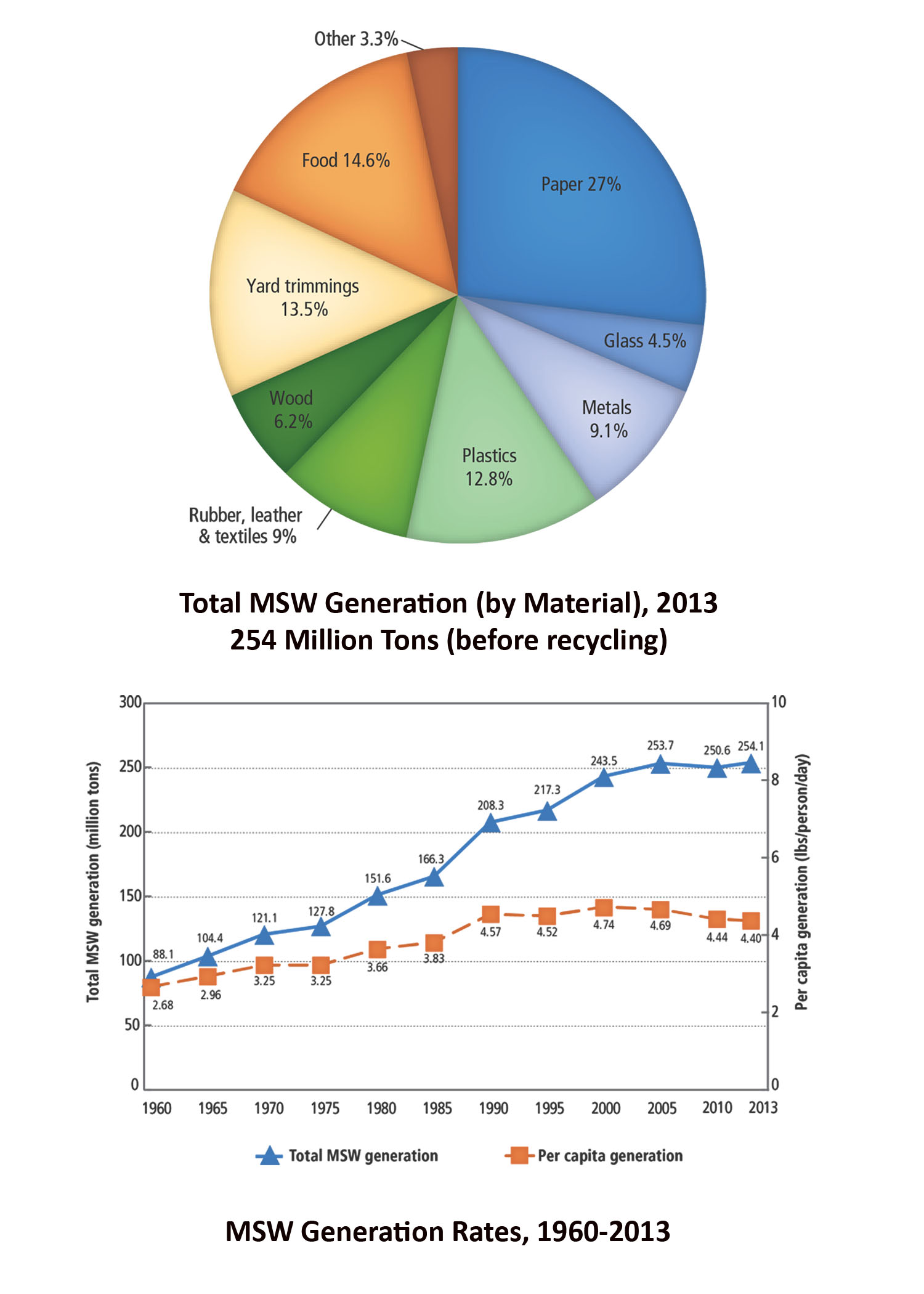
Plastic bags can be recycled at special, dedicated facilities, but you can’t just toss them into a blue bin. Sent to ordinary processing centers, they clog up sorting screens and have to be cut out with hook knives and saws. They don’t degrade, but disintegrate, turning ocean and freshwater into a diluted chemical soup.
But they are also big business, earning their manufacturers $100 million to $150 million every year in California alone. The short list of generous contributors to the No on 67 campaign contains only one in-state individual or company, Durabag of Tustin, California, which contributed a mere $50,000 early on. The rest of the donors list consists of out-of-state companies whose futures depend on the persistence of their industry: Advance Polybag of Sugar Land, Texas ($946,833); Formosa Plastics of Livingston, New Jersey ($1,148,441); Hilex Plastics of Hartsville, South Carolina ($2,783,739); Superbag of Houston, Texas ($1,238,188).
It has already been money well spent, and not just because a victory in the nation’s bellwether state could set a trend, while a loss could spread bag bans like a virus. As the San Francisco Chroniclereported, simply by delaying Padilla’s bill for 18 months, the industry has bagged $15 million in profit.
Steve Maviglio, a spokesperson for the Yes on 67 campaign that supports the ban, says that the plastics lobby’s concern over the predicted job losses rings hollow, considering that almost no single-use plastic bags are made in California. The thicker plastic bags allowed in Padilla’s law will, on the other hand, add to the state’s manufacturing economy, adding several hundred jobs. The plastic industry’s claim of 2,000 jobs lost “is incredible and nonsense,” Maviglio says.
The plastics lobby could, however, win this one—not least because the wording of the referendum on the ballot is confusing. “It’s not intuitive that we need to vote ‘Yes’ for the law to go into effect,” says Diz Swift, a member of the League of Women Voters in Berkeley. “People might say, ‘Oh, no, I don’t want the law vetoed, I want it to go into effect,’ and mistakenly vote ‘No.’” (To be clear, a “No” vote on Proposition 67 will overturn the bag ban; a “Yes” will uphold it.)
Even more confusing is that the plastic bag alliance has put another proposition on the ballot – Proposition 65 – that would direct the 10-cent bag fee toward a special wildlife conservation fund. Berrier says the measure came out of the bag alliance’s research. “Only 25 percent of the people we asked had any idea where that 10 cent bag fee would go,” he says. “A lot of people thought it was going to the environment, or to local government.” When they find out it’s going back to the grocers, he says, “They’re outraged. They want it to go to an environmental purpose.”
To Swift, however, putting Proposition 65 on the ballot above Proposition 67 is a blatant attempt to skew the vote. Only the most sophisticated and well-informed voters will understand what it all means. “The money goes into a fund that sounds really good,” she says. “It’s for drought mitigation, clean drinking water, regional parks, litter removal and habitat restoration. But it requires creating a bureaucracy that doesn’t really help.”
Maviglio is more blunt. “We call 65 the Screw the Grocers Initiative,” he says flatly. “They’re trying to send a message to grocers in other states who would hop aboard a statewide ban.” Single-use bags cost grocers anywhere from six to 16 cents per bag, “and that doesn’t include delivery and stocking,” Maviglio claims. “There’s no windfall there.”
If that’s not persuasive enough, he asks voters to consider the source. Prohibitions against plastic bags have been carried by the most grassroots of efforts—community organizations, moms, local environmental groups. The Arizona ban on plastic-bag bans, he says, comes straight out of the American Legislative Exchange Council, a think tank that assists corporations in state lawmaking, with an emphasis on preempting local control.
“The plastics industry has no regard for the environment,” Maviglio says. “It would be hypocritical of them to put something on the ballot to help wildlife.”
To be fair, Berrier doesn’t argue that helping wildlife is the point: The goal of Prop 65, he says, is only to highlight where the bag-fee money goes after grocers collect it.
“The language is very plain and simple,” he insists, “and it will have its intended effect.”
==
==
jarvis oppo
20 Billionaires who have contributed to or endorsed Proposition 39 as of November 6, 2000.
| Name | Occupation | Worth | Contributed |
|---|---|---|---|
| MOORE, GORDON EARLE | RETIRED EXECUTIVE (INTEL) | $26.0 | $199,609.00 |
| WALTON, JOHN T. | CHAIRMAN (TRUE NORTH PARTNERS) | $17.0 | $2,000,000.00 |
| SCHWAB, CHARLES R. | CHAIRMAN /CEO (CHARLES SCHWAB) | $10.0 | $100,000.00 |
| SAMUELI, HENRY | CO-CHAIRMAN/CTO (BROADCOM) | $10.0 | $365,081.50 |
| WAITT, THEODORE W. | CHAIRMAN (GATEWAY) | $8.4 | $100,000.00 |
| SIEBEL, THOMAS M. | CHAIRMAN/CEO (SIEBEL SYSTEMS) | $6.4 | $500,000.00 |
| MORGRIDGE, JOHN P. | CHAIRMAN (CISCO SYSTEMS) | $5.6 | $471,250.00 |
| BROAD, ELI | CHAIRMAN/CEO (SUNAMERICA) | $5.2 | $254,051.64 |
| BREN, DONALD L. | CHAIRMAN (IRVINE COMPANY) | $4.0 | ENDORSED PROP. 39 |
| MCNEALY, SCOTT G. | CEO (SUN MICROSYSTEMS) | $3.5 | $125,000.00 |
| PERENCHIO, ANDREW | CHAIRMAN (UNIVISION) | $3.1 | $100,000.00 |
| FISHER, DONALD | CHAIRMAN (THE GAP) | $2.7 | $500,000.00 |
| FISHER, DORIS | MERCHANDISE CONSULTANT (THE GAP) | $2.7 | $500,000.00 |
| LITTLE, JOHN E. | FOUNDER/CEO (PORTAL SOFTWARE) | $1.9 | $1,000.00 |
| JACOBS, IRWIN MARK | CHAIRMAN (QUALCOMM) | $1.5 | $50,000.00 |
| HAWKINS, JEFFREY C. | CHAIRMAN/CPO (HANDSPRING) | $1.3 | $381,000.00 |
| COOK, SCOTT D. | BUSINESS EXECUTIVE (INTUIT) | $1.2 | $997,993.96 |
| CHAMBERS, JOHN | PRESIDENT/CEO (CISCO SYSTEMS) | $1.0 | $520,000.00 |
| DOERR, L. JOHN | VENTURE CAPITALIST (KLEINER PERKINS) | $1.0 | $3,010,000.00 |
| KHOSLA, VINOD | GENERAL PARTNER (KLEINER PERKINS) | $1.0 | $1,000,000.00 |
| 20 TOTAL BILLIONAIRES | $113.50 | $11,174,986.10 |
==
http://www.ecowatch.com/california-fracking-blm-1998974785.html
A California judge struck down a bid Tuesday by the U.S. Bureau of Land Management (BLM) to expropriate more than 1 million acres in central California for oil drilling.
Judge Michael Fitzgerald found that the BLM failed to consider the dangers of fracking, which is part of the formal application process. Two environmental groups, the Center for Biological Diversity and Los Padres ForestWatch, brought the lawsuit against the BLM.
"The bureau failed to take a 'hard look' at the environmental impact of the resource management plan, when, under the RMP, 25 percent of new wells are expected to use hydraulic fracturing," Judge Fitzgerald said in his ruling.
"The bureau is therefore obligated to prepare a substantial EIS [Environmental Impact Statement] to analyze the environmental consequences flowing from the use of hydraulic fracturing."
The bureau's 1,073-page impact statement only mentioned fracking three times, SFGate reported. BLM had commissioned a report from the California Council on Science and Technology two years ago, the judge noted. However, commissioning the study does not absolve the BLM from further analyzing the impact of fracking on the area for its current permit, Fitzgerald added.
The area in question involves the following counties: Fresno, Kern, Kings, Madera, San Luis Obispo, Santa Barbara, Tulare and Ventura.
The agency has until Sept. 21 to present arguments as to why the judge should not issue an injunction to stop the plan.
The contested land area provides shelter to more than one-third of the federally listed threatened and endangered species, as well as groundwater systems that provide water for agricultural and residential purposes, according to the Center for Biological Diversity.
Environmentalists lauded the ruling.
"The Obama administration must get the message and end this reckless rush to auction off our public land to oil companies," Brendan Cummings, Center for Biological Diversity's conservation director, said. "As California struggles against drought and climate change, we've got to end fracking and leave this dirty oil in the ground."
ForestWatch executive director Jeff Kuyper also praised the ruling: "This ruling will protect public lands from the crest of the Sierra Nevada to the Central Coast from an influx of oil development and fracking. These treasured landscapes provide many benefits to our local communities and are too valuable to sacrifice for a few days' supply of oil."
But, the petroleum industry wasn't as happy with the ruling.
"Hydraulic fracturing and other well stimulation treatments in California have undergone rigorous analysis and review, culminating in the most stringent environmental standards nationwide," Catherine Reheis-Boyd, president of the Western States Petroleum Association, said. "Countless independent, state and federal science-based studies all agree. Hydraulic fracturing, when regulated, remains a safe technology that provides enormous benefits to American businesses and customers."
This latest ruling is not the first time a federal judge has blocked BLM from developing California land because of its failure to consider the environmental implications of fracking.
In 2013, a different judge ruled that the BLM violated the National Environmental Policy Act by issuing oil leases on Monterey County land without doing necessary studies on the impact of fracking. BLM is still completing an environmental review on fracking, and has not been able to issue any leases in that area.
California has been a battleground state between companies eager to frack for oil and gas, and anti-fracking campaigns. So far, five California counties have banned the industrial practice, with Alameda County becoming the latest to do so....
==
http://www.alternet.org/environment/uncovering-californias-secret-massacre-whales-and-dolphins
==
CA funders:
2016
https://www.opensecrets.org/states/donors.php?cycle=2016&state=CA
| Fahr LLC/Tom Steyer | $38,458,844 |
|---|---|
| Saban Capital Group | $12,511,922 |
| Laurel Foundation | $7,141,046 |
| Oracle Corp | $5,324,217 |
| Chartwell Partners | $4,893,624 |
| Chevron Corp | $3,950,538 |
| Herb & Marion Sandler/Sandler Foundation | $3,445,200 |
| Capital Group Companies | $2,941,604 |
| Dreamworks SKG | $2,843,722 |
| Charles Schwab Corp | $2,781,183 |
| Kleiner, Perkins et al | $2,386,039 |
| GH Palmer Assoc | $2,265,181 |
| University of California | $2,075,379 |
| Thiel Capital | $2,016,200 |
| Majority Cmte PAC | $1,968,687 |
| Oberndorf Enterprises | $1,933,543 |
| Cooperative of American Physicians | $1,892,515 |
| Marcus & Millichap | $1,678,779 |
| Alphabet Inc | $1,645,016 |
| Stanford University | $1,630,43x |
==
http://www.ecowatch.com/california-climate-policy-1988157045.html
"This was retail politics and oil lost," was how Adrienne Alvord of Union of Concerned Scientists summed up the stunning environmental victory Tuesday in the California legislature, a victory which cemented the state's commitment to a 40 percent reduction in climate pollution by 2030.
It's not accidental that states providing climate leadership are the states with the biggest clean energy sectors, including California.
Only a few weeks ago there was a strong consensus that the oil industry, by spending millions of dollars on behalf of a cadre of moderate Democrats in the Assembly, had blocked just such a doubling down on the state's existing 2020 goals. For the oil industry, victory was an existential necessity. Only by holding future climate commitments hostage could the industry hope to get Gov. Brown to abandon the state's existing mandate that by 2020 the carbon content of fuels be cut by 10 percent. As a practical matter, the requirement means roughly 20 percent of California's more vehicles will be driving on something other than oil—electricity, natural gas or biofuels.
And oil knows it cannot withstand a competitive transportation fuels market. Once California creates such a market and builds businesses that can produce low carbon fuels at scale, fuels competition will go global and oil's empire will wither. But it looked like oil had survived to fight another day. Gov. Brown had signaled his next move by forming a ballot committee for a (high-risk) initiative for the fall of 2018. But a small group of climate and environmental justice advocates refused to let the Assembly moderates off the hook. Demanding a vote, they re-energized their broad coalition of main-line businesses, EJ advocates, labor, climate greens, the faith community, clean tech and clean fuels businesses, local government and public health advocates.
Assembly Speaker Anthony Rendon told them he would give them a vote once they had the votes—and on Tuesday he pulled the trigger, giving the oil industry, which thought it had won, only 24 hours to regroup. It wasn't enough and the Assembly passed SB32 by 47 votes, a six vote margin over the 41 needed. The California Nurses Association was heard from, but so was Ebay. Gov. Brown and the White House weighed in, but a lone Republican, Assemblywoman Catherine Baker joined them in supporting progress. Wednesday the Senate concurred and the bill, linked to an environmental justice focused companion bill, went to the governor for his signature.
Why the victory? Quite simply, retail politics. Clean energy now provides far more stimulus and creates far more jobs than fossil fuels. Clean power is seen by the public as the linch-pin of the state's economic future. Jobs on the ground trump oil industry ads on the screen. It's not accidental that states providing climate leadership are the states with the biggest clean energy sectors—California, Washington, Nevada, Oregon—and Iowa, with its nation leading wind sector and a public utility, Mid-America, that is planning to shortly hit 85 percent renewables and go on to 100 percent.
And it's cheaper.
The oil industry is in a state of shock. Their press release bizarrely asserted that Rendon had scheduled the vote to "cover up" the fact that the state's latest auction for carbon emission permits had attracted few buyers—a result oil called "terrible." The auction simply reflected the fact that emitters, uncertain if the law would be extended past 2020, did not know how many permits they needed to buy. The oil industry conceded as much, saying "Today's miserable auction result reflects the market's lack of certainty." But it is revealing that oil called it "terrible" and "miserable" that the cost of carbon permits was low—demonstrating again that what they fear is not that decarbonizing will cost too much and hurt the economy, but that it will prove irresistibly cheap and strand them. Also revealing—SB32 was written precisely to provide the certainty whose absence the oil industry allegedly deplores!
(In fact, the legislature is going home next week and Rendon had to bring the bill up more or less when he did. The short notice was tactical—but hardly conspiratorial).
Ideological, right-wing opponents of climate progress and clean energy stayed more on message,releasing a poll purporting to show that the public, all the other evidence to the contrary, didn't really favor tougher clean-up of carbon pollution or California climate leadership after all.
Read carefully, however, the poll says something quite different. It confirms that most Californians want to move forward on clean energy and climate, believe that such progress is good for California even if others do not lead and want action. Even California Republicans are part of this consensus. Sixty-two percent of California Republican voters think that climate change is either a very serious or somewhat serious threat to the state. Again, of Republicans, 67 percent expect the changes resulting from global warming to occur in their lifetimes. A majority favor the state's current climate goals and a plurality favor the longer-term, more ambitious goals just passed.
It is true that, if nudged to believe that after such action, "hundreds of local manufacturing facilities would be shut down and thousands of middle-class jobs would be lost in California" large majorities of Republicans, and Democrats and Independents, lose their appetite. But if you said to the same sample that ambitious climate progress would mean "continued economic growth, an end to air pollution, cheaper gas and billions of dollars of new exports for California industries" the supportive numbers among Republicans would probably jump from a plurality to a super-majority. The latter statement is the true one, it turns out—and, more or less, it is what most California voters are experiencing—which explains why, un-manipulated, even Republicans are happy that the state continues to move forward.
But California is not the only arena where oil's long regime is coming to an end. Investors are watching warily as the majors—Chevron, Exxon, BP and Shell have now accumulated an unprecedented $184 billion in debt, fallen far short ($40 billion short in the first half of 2016) of their promised goals of paying their dividends from profits, not borrowing. Shell, Chevron, Exxon and BP have all seen their previous platinum grade credit ratings cut a notch. To placate investors, the majors pledge that they have new (but far from transparent) business plans to someday make money again—if only oil will stay at some magic level. For BP it's $50-55/barrel. Unfortunately, it has not been in that range since 2014.
Many of the independent oil producers, of course, have gone bankrupt. Oil remains stubbornly below $50. Most independent analysts believe that for the oil majors, prices in the $75 range are required to compete with Persian Gulf and other OPEC members in the long term. And those prices, unequivocally, require one thing: a continuation of oil's monopoly in transportation fuel.
California this week called the question. That monopoly is going away. Oil has lost before, but never because the retail politics of its competitors proved more compelling. This was no decisive battle. There may be none, just as there is no moment when the fate of the Roman Empire was sealed.
But the sands of time are running. Oil's empire is in its decline and fall.
==
A new analysis by a non-partisan business group finds that California’s climate policies have been a boon for the state’s economy.
Assembly Bill 32, also known as AB 32 or the Global Warming Solutions Act of 2006, requires California to reduce climate-cooking greenhouse gas emissions to 1990 levels by 2020 — which meant cutting emissions about 25 percent from where they were at in 2006, when AB 32 was passed by the California State Legislature and signed into law by Governor Arnold Schwarzenegger.
According to the analysis from Environmental Entrepreneurs (E2) analysis, AB 32 and related climate policies have pumped some $48 billion into the state economy over the past decade while helping create about 500,000 jobs. Read more.
http://www.desmogblog.com/2016/08/18/california-s-climate-policies-good-gold-state-s-economy
==
California’s Drought Policy Serves Corporations First, People Second
California is suffering a historic drought with no relief in sight. According to the latest report from NASA, California has less than a year’s supply of surface water left. In an executive order, Governor Jerry Brown, a self-proclaimed climate leader, imposed a 25% reduction on the state’s local water supply agencies, which serve 90% of California’s residents. Everyday citizens are being asked to cut down on shower times and lawn watering. While these are worthy efforts, they are mere drops in the bucket considering that residential and municipal use of water in CA account for less than 20% of water consumption. Instead of getting at the root of the problem and targeting water-guzzling agribusiness and the oil and gas industry, Governor Brown’s climate policy is pro-corporate, irresponsible and unsustainable.
Despite the growing water crisis, there are no provisions in Brown’s water reduction plan to halt fracking, an extreme method of oil and gas extraction requiring high-pressure injection of millions of gallons of chemical-laced water and sand into deep rock setting free oil or natural gas unavailable through conventional drilling. Last year fracking production in the state used 70 million gallons of water,1 the equivalent of 514 households annually.2 Although proponents of fracking may claim that the combined water use of 514 households is not that high, water used in fracking is highly contaminated and not returned to the annual water cycle, unlike household wastewater.
It was recently learned that California officials allowed oil and gas companies to dump this contaminated water into federally protected aquifers that could have been used for drinking and irrigation purposes.3 Illustrating the corporate control of regulatory agencies, 46 percent of the state permits authorizing these practices were granted in the last four years, the same four years during which the EPA warned California regulators they were not doing enough to protect underground water reserves.
In the Central Valley, many Latina/o farmworkers are struggling for their livelihoods due to years of drought. As a result of last year’s extreme weather, 17,000 farmworker jobs and 400,000 acres of farmland were lost.4 Other Californians are living entirely without running water. In East Porterville, for example, people are turning to costly and environmentally destructive bottled water to meet household needs.5
We can also look at Nestle Corporation’s privatization of our water to further understand how corporate rule is impacting every Californian. In Sacramento, tens of millions of gallons of Sacramento municipal water are being withdrawn by a local Nestle plant. Nestle uses and bottles thousands of acre-feet of California water. An acre-foot, roughly speaking, equals 326,000 gallons, enough to supply a family’s yearly needs.
Nestle and other bottling companies buy water at a pittance and sell it back to the public at exorbitantly high rates. As California’s water disappears, the investment portfolios of some of the nation’s most profitable corporations are being flooded.
In a recent interview Nestle CEO Tim Brown was asked if halting waster extraction was in the company’s plans. Brown responded: “Absolutely not. In fact, if I could increase it, I would. …If I stop bottling water tomorrow, people would buy another brand of bottled water. ...It’s driven by consumer demand, it’s driven by an on-the-go society that needs to hydrate.” 6
Is it possible that CEO Brown never heard of a reusable drinking water bottle?
Out of this Nestle Corporation debacle, the “Crunch Nestle Alliance” formed. The group has singled out Sacramento City Hall, saying Nestle’s privatization was made possible through a “corporate welfare giveaway.” Nestle pays Sacramento $186.00 per 215,000 gallons of water taken from the area aquifers. Those 215,000 gallons bring the Nestle Corporation a whopping $2.1 million in profit.7 The Crunch Nestle Alliance has successfully blockaded a Sacramento Nestle plant several times, raising awareness that water is a human right not a commodity to sell on the open markets.
Notes
1 http://www.reuters.com/article/2015/04/03/us-california-drought-fracking-exclusive-idUSKBN0MU01M20150403
http://www.huffingtonpost.com/2015/04/02/fracking-california-water_n_6997324.html
2 http://thinkprogress.org/climate/2015/04/06/3643184/california-70-million-gallons-fracking/
3 http://losangeles.cbslocal.com/2015/02/05/ap-oil-drilling-waste-dumped-into-calif-aquifers-used-for-irrigation-drinking-water/
4 http://fusion.net/story/114463/as-california-goes-dry-latinos-suffer-disproportionately/
5 http://www.theguardian.com/us-news/2015/apr/20/east-porterville-california-drought-bottled-water-showers-toilets
6 "Starbucks Moves Ethos Water from California after Drought-shaming" The Washington Post, May 12, 2015
7 https://criticl.me/post/crunchnestle-alliance-1179
==
https://www.thenation.com/article/california-could-sound-the-loudest-call-yet-for-overturning-citizens-united/
California Could Sound the Loudest Call Yet for Overturning ‘Citizens United’
The California Supreme Court clears the way for voters to demand a constitutional amendment to get big money out of politics.
By John Nichols
January 5, 2016
==
sf styrofoam, 6 gun laws incl bullet button
spier pro contril
http://sanfrancisco.cbslocal.com/2016/07/04/sit-in-gun-control-jackie-speier-redwood-city/
breitbart BS
the wake of “gunpocalypse,” Second Amendment supporters in California are vowing civil disobedience: “Come and take it.”
Governor Jerry Brown signed six of the 11 new gun control bills that passed the California legislature last week, including a ban on “the sale of semiautomatic rifles equipped with bullet buttons.”
Bullet buttons are simple mechanisms that allow a gun owner to switch out an empty magazine for a full one.
In addition to the ban on the sale of such rifles, Brown also signed bills that will require law-abiding citizens to go through a background check before being allowed to buy ammunition.
After signing the bills, Brown released a statement, saying, “My goal in signing these bills is to enhance public safety by tightening our existing laws in a responsible and focused manner, while protecting the rights of law-abiding gun owners.”
Senate President Kevin de Léon (D-Los Angeles) praised the new laws, according to the Orange County Register:
“Taken together, these bills will save lives and make our communities, our families and our children safer,” de Leon said in an email. “Where Republicans in Congress have turned a deaf ear, we have answered the cries of the mothers, fathers, family members and friends who have lost loved ones to gun violence.”
But many law-abiding gun owners do not see how the Second Amendment is protected by more gun control. In fact, gun owners rallied near Sacramento’s Cesar Chavez Plaza on Saturday morning to to say the new controls simply turn “law-abiding citizens into criminals.”
For that reason, they have no plans to obey.
According to the Sacramento Bee, the protesters held banners which proclaimed, “WE WILL NOT COMPLY.”
Corey Gwathney helped organize the rally. He said, “They’re infringing on our rights, and we’re not going to stand for that.”
AWR Hawkins is the Second Amendment columnist for Breitbart News and political analyst for Armed American Radio.
--
http://www.govtslaves.info/gun-rights-activists-say-they-wont-comply-with-californias-new-laws/
his 401k plan
...
Cory Gwathney, a co-organizer of the protest who lives in Chico, said the rally had been in the works for over two months. The initial goal was to prevent Brown from signing the bills, Gwathney said, but because the laws were signed prior to the protest, the activists changed their message to one of noncompliance.
“He passed them yesterday before we could get out here, which sort of threw a wrench in the plans,” said Gwathney. “Now we’re just trying to send the message that we’re probably not going to comply. They’re infringing on our rights, and we’re not going to stand for that.”
Gwathney said it’s unlikely people will actually register their bullet-button rifles or turn in their large-capacity magazines as the laws require. People have invested thousands of dollars in bullet-button rifles, ammunition and magazines, Gwathney said, joking that his guns are his 401(k) plan.
Protester Steve Sarvar traveled from San Jose to participate in the rally. Sarver is a member of American Patriot the III% California, a group that takes its name from the claim that only 3 percent of colonists during the American Revolution fought on the battlefield against Great Britain.[see militia 2nd amend right to kia B)]
Due to last Sunday’s neo-Nazi protest at the Capitol, at which 10 people were injured, including five who were stabbed, law enforcement kept a close watch on Saturday’s event, Sarvar said, but there was no violence.
“I went over to the officers and asked them, ‘Do we look like criminals to you?’ And they all said that no, we didn’t,” Sarvar said. “But then I told them that this legislation that’s just been signed into law is going to turn ordinary people into criminals.”
Jorge Riley, president of the Sacramento chapter of the conservative California Republic Assembly organization, also traveled from Chico for the protest. He said people need to work through the legal system to try to stop the new laws.
“There needs to be a complaint filed with an injunction because these are an unconstitutional set of laws that have been passed, and they shouldn’t be able to become laws until they are reviewed by a judge,” Riley said. “It’s unconstitutional, that’s why we have judicial review.”
Riley described the Legislature and Brown’s actions as “reckless and irresponsible,” adding that they are trying to “usurp the federal Constitution” by passing legislation that conflicts with federal law.
The new laws will also be ineffective in preventing mass shootings like the recent Orlando massacre and last December’s San Bernardino attack, protesters argued. Assault weapons played a role in both shootings.
“When you pass laws that restrict guns, you stimulate a black market,” said Riley. “So the only thing is that people will still have guns, but they’ll have them illegally.”
Scott said the activists will continue protesting at the Capitol and in other parts of California, though many gun rights advocates may have resigned themselves after hearing about the laws Brown signed.
“I think a lot of people who planned on coming out today didn’t come out after all, because they think it’s a lost cause,” Gwathney said.
http://www.sacbee.com/news/local/article87414902.html
Read more here: http://www.sacbee.com/news/local/article87414902.html#storylink=cpy...
==
“Real Time” host Bill Maher, during his “New Rules” segment Friday, peacocked California’s thriving economy after the state raised taxes on its wealthiest citizens.
“If Republicans are going to keep calling states ‘laboratories of democracy,’ they have to start looking at the results from the lab,” Maher said, noting that after California raised taxes on the wealthy, the state now sits sixth on the list of world’s largest economies. “Whereas states like Kansas and Louisiana that went back to the old trickle-down theory of ‘cut taxes on the rich and they’ll always do the right thing,’ are financial catastrophes.”
Maher explained that, after former-Governor Arnold Schwarzenegger left office, California elected Democrats up and down the ballot, “so we can really study what happens when liberal policies are tried unimpeded. And the only thing I have to say to Republicans about that is: scoreboard, bitches.”
Watch the full segment below:https://youtu.be/BtNbMD96xgY
==
6/16 ban cigs 7/11 3x ads
California convenience stores would have one less sales category under a measure moving through the legislature.
On June 2, the state Senate passed a bill that would restrict tobacco sales to cigar shops. This piece of legislation, known as SB 1400, was introduced by state Sen. Bob Wieckowski (D-Fremont).
The bill now moves to the state Assembly.
Under current California law, retailers selling tobacco products must obtain a license from the state Board of Equalization. Retail locations currently include convenience stores, grocery stores, gas stations, drug stores, airports, hookah lounges and tobacco shops.
- See more at: http://www.csnews.com/product-categories/tobacco/california-bill-would-remove-tobacco-c-stores#sthash.i4FX4gZU.dpuf
==
http://www.dailykos.com/story/2016/5/18/1527955/-The-fossil-fuel-industry-lied-to-us-about-climate-change-In-California-we-re-fighting-back
==
mojo
...
Irrigation water appears to be a major loophole in a food safety program that otherwise strictly controls what farmers can apply to their land. Notably, the organics program does prohibit the use of sewage sludge-based fertilizer, a product widely used on nonorganic farms that sometimes contains chemicals such as flame retardants and pharmaceuticals.
On Monday, California Assemblyman Mike Gatto, a Democrat from Glendale, introduced a bill that would require crops irrigated with wastewater from oil and gas operations to be labeled as such. "No one expects their lettuce to contain heavy chemicals from fracking wastewater," he explained in a press release.
That's especially true if their lettuce is labeled "organic," adds Adam Scow, the California director of the environmental group Food and Water Watch: "I think most people's logic would tell them that's not a practice consistent with organic standards."
==
http://ecowatch.com/2016/02/10/farmers-irrigate-crops-oil-water/
When most people think of California, the first images that probably come to mind are the state’s sun-soaked beaches, the Hollywood hills and the fog-drenched Golden Gate Bridge. But a new documentary web series, Spotlight California, wants to show viewers the California you don’t see on postcards.
The five-part series, hosted by actress and comedian Kiran Deol, is investigating the impact of drought, water and air pollution, and gas price gouging in California.
The goal is to “raise awareness of these issues, give voice to the Californians being directly impacted and create an opportunity for people to join together and to take positive actions in communities across the state,” explained NextGen Climate, which is funding the project.
“With this project, I want to shed some light on the powerful players who have tilted the economic tables in their favor, profiting at the expense of our families,” Tom Steyer, president of NextGen Climate, said. “But I also want to highlight stories from people working hard to balance the scales; folks who maintain a positive attitude during tough times, while making a big difference.”
The first episode, which aired Jan. 26, took viewers into the heart of the drought, where half the residents of the low-income community of East Porterville in the Central Valley struggle to find fresh water.
Watch here:
The second episode, which aired last week, highlighted another aspect of the drought. It shows how farmers are using treated oil wastewater to irrigate their crops, despite the fact that nobody has tested the wastewater to see if it’s safe.
“There are farmers so desperate for water in one particular irrigation district called Cawelo, they’re taking some wastewater to irrigate crops from Chevron. It’s being used to grow food for people—citrus crops, grapes, pistachios,” Tom Frantz told Deol in the episode.
“You grow an orange—it’s 90 percent water when it gets to the consumer,” Frantz continued. “Where did that water come from? It’s the irrigation water. The irrigation water is toxic, even at very tiny amounts. Is there a tiny amount of toxicity now in the fruit? Nobody is testing that yet. And they’re salting up their soil by using this water, which means ultimately they’ll have to stop growing everything.”
Seth Shonkoff of PSE Healthy Energy explained to Deol that “until we have a list of the chemicals that are going into oil and gas wells and in what volumes and what are their toxicities, we’re flying blind.”
In order to find out the health impacts of using recycled oil water on crops, Deol joined water scientist Scott Smith as he covertly tested the water for toxic chemicals at the Cawelo wastewater treatment plant.
“We found oil and these nasty solvents,” which can cause “kidney damage, liver damage and cancer,” Smith said.
Watch the second episode here:
==
http://www.sourcewatch.org/index.php/California_and_fracking
The oil and gas industry is touting the potential of fracking in California to tap the largest tight oil formation in the continental United States, which they say contains up to 64 percent of the nation's deep-rock oil deposits.[1] Fracking in California is primarily used to extract oil. In some cases fracking is taking place on private land without the owner's knowledge.[2]
The Western States Petroleum Association (WSPA), whose members account for 80 percent of the oil and natural gas drilled in California, said WSPA companies fracked 628 oil wells in 2011 -- about a quarter of all oil and gas wells drilled across the state that year.[3] In 2013 California's Department of Conservation director Mark Nechodom estimated the state "might see around 650 hydraulic fracturing jobs a year."[4]
More common than fracking in California is acid jobs, an old well completion method that involves pumping chemicals such as hydrofluoric acid into wells to melt rocks and other impediments to oil flow. Companies are not required to report when they do it.[5] A report released in January 2015 stated that nearly half of all new oil wells in the state of California employed the use of fracking.[6]
Contents
Background
In a 2008 paper prepared for a meeting of the Society of Petroleum Engineers, Pinnacle Technologies reported the fracking process "has been applied to a large scale in many Central and Southern California fields to enable economic development and reasonable hydrocarbon recovery. Example formations include the Belridge Diatomite, Stevens Sands, Etchegoin, Antelope shale, McLure shale, McDonald shale, Point of Rocks sands, Kreyenhagen shale, Ranger sands, the UP Ford Shale, and the Monterey shale.” It also stated that "[b]ased on the initial experience and formation properties, it is believed that hydraulic fracturing has a significant potential in many Northern California gas reservoirs.”[7]
Before 2014, the Division of Oil and Gas of the California Department of Conservation did not monitor, track or regulate hydraulic fracturing,[8] stating in a Feb. 16, 2012 update to its website that “fracking is used for a brief period to stimulate production of oil and gas wells” in California, but “the Division doesn’t believe the practice is nearly as widespread as it is in the eastern U.S. for shale gas production,” negating the need for monitoring. What the Division does not say, according to the Environmental Working Group, is that most fracking in California is used for oil, not gas, production.[9]
The passing of State Senator Fran Pavely's SB 4 put in place some process to track hydraulic fracturing and another enhanced well completion form called acidizing.
Center for Biological Diversity researchers note that ten California counties: Colusa, Glenn, Kern, Los Angeles, Monterey, Sacramento, Santa Barbara, Sutter, Kings and Ventura.[10] The exact number of fracked wells in the state is unknown, but the Environmental Working Group states that it "is clear that the total likely reaches into the thousands. Industry documents show that by the mid-1990s, more than 600 wells had been fracked in one Kern County oil field alone. Representatives of Halliburton told EWG in the fall of 2011 that 50-to-60 percent of new wells being drilled in Kern County were hydraulically fractured."[9]
In June 2013 the Los Angeles Times reported that a USC/LA Times poll showed that more than 70% of California voters favored banning or heavily regulating chemical injections into the ground to tap oil and natural gas.[11] It was reported in September 2013 that Californians (51 percent) continue to oppose than favor (32 percent) increased use of fracking, according to a statewide survey released Wednesday evening by the non-partisan Public Policy Institute of California.[12]
History
Hydraulic fracturing - creating fractures from a wellbore drilled into reservoir rock formations - has been used on thousands of wells in California for over fifty years, according to a review of scientific articles by the Environmental Working Group.[9][1] The current fracking technique of high-pressure water, chemicals, and sand is often seen as originating in the late 1990s, in the Barnett Shale in Texas.[13]
In November 2011, the Los Angeles Times reported that Gov. Brown fired Derek Chernow, then head of the Department of Conservation, as well as Chernow's deputy, Elena Miller, after they generated a memo highly critical of "unconventional" oil extraction methods, primarily steam injection but also encompassing fracking. The process was put under a microscope in 2011 after an oil company worker died in Kern county from falling into a boiling cesspool of fracking discharge. Brown pushed Chernow to relax the regulations in 2011, but instead Chernow generated the memo concluding that relaxing regulations would violate federal laws. Shortly thereafter, Brown fired Chernow and his deputy, and installed Mark Nechodom, who sided with Brown and reduced the heightened scrutiny that had been placed on underground injection. In January 2012, The Times reported that Occidental Petroleum made a $250,00 contribution to Brown. Shortly after, the state Division of Oil, Gas and Geothermal Resources said it did not plan to monitor or manage use of the technology unless the legislature requires it or the agency is handed “evidence of manifest damage and harm.”[14]
In 2012, regulators told the Los Angeles Times that they monitor drilling operations "quite thoroughly" under existing law, but also said there is a "need for more disclosure of what chemicals are used in oil production." According to the Times: "State Sen. Fran Pavley (D-Agoura Hills), chairwoman of the Committee on Natural Resources and Water, wrote to state regulators [in 2011] asking basic questions: 'Where does fracking take place; How often is it used; And what are the potential risks?' Regulators had few answers, saying they had 'limited data' because the state has no reporting requirements."[1]
Many state regulators assert that fracking in California is "radically different" from drilling in other parts of the U.S., saying the process has long been performed in the state for shorter duration with much less water to loosen crude in depleted oil wells.[1]
At a March 28, 2012 hearing, lawmakers criticized the Gov. Brown administration's lack of actions on fracking, and state environmental officials requested that energy companies disclose where they conduct fracking operations and what chemicals they inject into the ground to tap oil deposits. At the time, only 78 of the tens of thousands of California oil field injection wells where fracking may be taking place were listed on a national fracking registry. Regulators also are considering whether to launch an independent study to assess effects of the practice, and are planning to undertake a statewide "listening" tour for public comment. [15]
Oil and gas estimates

Montery Shale Formation in California.
California is estimated to have more tight oil (shale oil) than shale gas. Most estimates focus on the Monterey Shale, a rib-shaped formation that extends from northern California down to the Los Angeles area, offshore, and onto the outlying islands, spanning 1,750 square miles. Counties include Kern County, Orange County, Ventura County, Monterey County and Santa Barbara County, California. It is composed of many substances[16] and is not flat like other shales due to frequent earthquakes.[17] Some companies have called the Monterey Shale "arguably the largest shale play in the US."[18]
Estimates vary about how much oil lies in the state's shale rock formations. The estimate of "technically recoverable oil" is determined by multiplying the total amount of "oil-in-place" by the “recovery factor,” or the percentage of oil that can be recovered with today’s technology.[19]
Venoco, one of the companies with a significant presence in Monterey, once said there might be 300 billion barrels of oil in the Monterey Shale, but their first well was labeled "uneconomical," and their estimate has been seen as far too high.[20]
In 2011, the U.S. Energy Information Administration said there could be up to 15 billion barrels of crude in the Monterey Shale,[20] an estimate repeated by the Department of Energy[21] and NY Times.[22]
In May 2014 the EIA said 600 million barrels of oil can be extracted from the Monterey Shale with existing technology, cutting by 97% its earlier estimate of 13.7 billion barrels.[23]
In October 2015 the U.S. Geological Survey trimmed the Monterey Shale estimates further. The organization now estimates that the San Joaquin Basin portion of the Monterey Shale to 21 million. [24]
Production
The Energy Information Administration estimated that Monterey would produce 550 million barrels total per well, but “operators today are reporting typical flowrates averaging only around 350 to 400″ barrels per day, according to a November 2012 article in World Oil (fee required). According to Dave Roberts at Grist: "At 400 barrels a day, it would take a well 3,767 years to hit 550 million barrels."[19]
Geologist J. David Hughes of the Post Carbon Institute argued that "initial productivity per well from existing Monterey wells is on average half to a quarter" of EIA assumptions, and cumulative recovery of oil per well "is likely to average a third or less of that assumed by the EIA." This estimate comes from his 2013 analysis of existing data: "1,363 wells have been drilled in shale reservoirs of the Monterey Formation. Oil production from these wells peaked in 2002, and as of February 2013 only 557 wells were still in production. Most of these wells appear to be recovering migrated oil, not 'tight oil' from or near source rock as is the case in the Bakken and Eagle Ford plays." He concludes that the EIA's 15 million barrel estimate is likely highly inflated.[25]
Drilling wells
The database maintained by the oil and gas industry’s website Frac Focus, where companies can voluntarily disclose information about their fracking practices, lists 78 wells in California as of Feb. 21, 2012. According to the Environmental Working Group: "Of these, one is in Los Angeles, one in Ventura County and two are off the coast of Long Beach. One is shown near Santa Barbara on a map, but the attached documentation places the well in Kern County. The other 73 wells are also in Kern County. All of these wells were fracked sometime in 2011 or 2012. Listings on Frac Focus are entirely voluntary and are known to be incomplete, so this accounting is not likely to be comprehensive."[9]
Use of diesel fuels
In 2011, a Congressional investigation determined that 26,444 gallons of diesel fuel had been injected into California wells in hydraulic fracturing fluids from 2005-2009.[9]
Natural gas
In 2011 notices to drill new natural gas wells in Northern California were received at a rate not seen in over twenty years. As of August 2011, the California Department of Conservation issued 178 permits to drill new wells in Butte, Colusa, Contra Costa, Glenn, Solano, Sutter, Yolo, San Joaquin, Sacramento and Tehama counties. At that rate, 267 notices would be filed by the end of 2012, compared to 137 in 2000 and 78 in 1995.[26]
Los Angeles County
In October 2015, DOGGR released to the public an audit of its regulation program. The audit concluded that since 2007, most oil projects in the Los Angeles area had not been subject to a required annual review.[27]
Inglewood
In 2012 it was reported that PXP was using fracking in the Inglewood oil field, the nation's largest urban oil field, which has been operating in Los Angeles since the 1920s and extends up through parts of the central coast and San Joaquin Valley.
A 2006 release of noxious gases at the Inglewood Field galvanized community members and environmental groups to sue Los Angeles County, forcing it to augment protections the county had previously created in partnership with PXP. The parties reached a settlement in 2011 that further limited PXP's oil drilling activities, including reducing the number of wells the company could drill. As part of the settlement agreement, PXP agreed to conduct a study that examined the feasibility and impact of current and future fracking at the oil field. It would be the first study to look at the impact of fracking in California, including its impact on groundwater.
According to the Natural Resources Defense Council, the community that surrounds the oil field did not know about the 2012 test fracking until March 9, after the fracking was complete. According to FracFocus, the two vertical wells were fracked in September 2011 and January 2012. PXP used up to 168,000 gallons of water laced with chemicals in one well to a depth of about one and half miles. The Regional Water Quality Control Board, Los Angeles Region, is concerned the impact such practices may have on the above water supplies.[28]
Over one million people live within five miles of the site. The fracking site also sits atop a fault line capable of 7.4 magnitude earthquake.[29]
On October 10, 2012, the environmental consulting firm Cardno ENTRIX released a report commissioned by PXP, entitled “Hydraulic Fracturing Study: PXP Inglewood Oil Field,” which concluded that fracking could be done safely in the area and seismicity could be mitigated. Cardno Entrix had previously been hired by TransCanada to do the environmental impact statement (EIS) for the Keystone XL Pipeline. PXP and Los Angeles County contracted with JPMartin Energy Strategy LLC to peer review the report. J.P. Martin is director of the Shale Resources and Society Institute, which was created after a gas industry-funded lecture series on shale gas at SUNY Buffalo. SSRI produced a study in May 2012 finding no averse effects with fracking; all four co-authors were later found to have ties to the oil and gas industry, prompting 83 SUNY Buffalo faculty and staff members to call for an independent investigation into the origins of the SRSI.[30]
Long Beach
Fracking takes place off the coast of Long Beach, California on man-made oil islands. It was reported in 2013 that 203 fracking operations had taken place offshore Long Beach at six different sites over the past 20 years.[31]
An April 2015 investigative piece in OC Weekly noted that since 2012 there have been at least 22 hydraulic fracking operations completed offshore in Long Beach as well as at least 150 acidizing operations and 90 gravel packing jobs.[32]
In late June 2015 Thums Long Beach Co applied for nine fracking permits for offshore operations in Long Beach. The permits, which is the first step to get the operations approved, were okayed by the California Division of Oil, Gas and Geothermal.[33]
Kern County
Kern County produces the most oil of any county in the U.S. In 2015 Kern had around 42,000 active wells. The county is responsible for 75% of California's oil wells and 95% of the fracking[34]
As of May 2012 there are 95 drilling wells posted on FracFocus, with the vast majority of the fracking projects reported in Kern County. FracFocus pinpoints a cluster of 58 wells fracked in 2011 between Lost Hills and McKittrick by XTO Energy/ExxonMobil. Many of the frack jobs pumped several hundred thousand gallons of water into wells about 3,000 feet deep. Another cluster of 12 wells in the Wasco-Shafter area was fracked in 2011 by Occidental Petroleum.[35]
In May 2012, Kern County's biggest oil producers, consenting to a request by state regulators, agreed to share information about their fracking operations by the end of June 2012. Chevron, Berry Petroleum Co., Bakersfield's Aera Energy LLC and other members of the Western States Petroleum Association will disclose data on their work with fracking on fracfocus.org.[36]
NASA found the second brightest methane hot spot in the U.S. from space appears to be above Harris Ranch, California’s largest beef producer, and near the Bakersfield oil fields.[37]
In November 2015 the Kern County Board of Supervisors unanimously voted to approve one single environmental to take in effect December 2015 that would fast track individual projects in as little as seven days. Three oil industry groups spent more than $10 million in crafting the proposal.[38]
Monterey County
As of 2012 Venoco holds about 256,000 gross acres in the Monterey Shale formation, which starts in Monterey County and stretches across central California. An additional 60,000 acres have already been drilled. The firm has drilled more than 20 wells across the formation since 2010, and invested $100 million -- or nearly 40 percent -- of its 2012 expenditure budget to exploring for oil. The company has drilled four exploratory wells in Monterey County and plans for nine more.[39]
A move to ban fracking in Monterey County is slated for the November 2016 election.[40]
Santa Barbara County
In 2011 County of Santa Barbara made it difficult to frack onshore by mandate that all hydraulic fracturing on unincorporated county land be reviewed and approved. The county did not subject cyclical steaming and acidizing to this process. This happened after Venoco spilled waste water in a field of riesling grapes in northern Santa Barbara County near Vandenberg Air Force Base. [41]
Based on information gathered from a 2010 oil prospectus from Venoco, investigated by the Environmental Defense Center (EDC), and confirmed by the federal government, there was fracking done in 2009 on the Gail oil platform in the Sockeye field in federally controlled waters near Santa Cruz Island in the Channel Islands.
In another financial disclosure document there are hints from Venoco's public filings that the company planned to enhance, through prop fracture (an older method of enhancing older wells) or possibly fracking, their other active offshore oilfield in California state waters, known as the South Ellwood -- a field approximately seven miles long and part of the northern flank of the Santa Barbara channel and extending to the Ventura basin.[42]
Offshore
For more information see Offshore fracking
Offshore Fracking in California.
In July 2013 the news site Truthout reported that federal regulators approved at least two hydraulic fracturing operations on oil rigs in the Santa Barbara Channel off the coast of California since 2009 without an updated environmental review to account for modern fracking technology. Regulators approved both operations by signing off on modifications to existing drilling permits. In an internal email, the Bureau of Safety and Environmental Enforcement (BSEE) Chief of Staff Thomas Lillie wondered how the agency could allow fracking offshore without producing an environmental impact statement (EIS) on the effects. No studies have been performed on the effects of fracking fluids on the marine environment.[43]
It was later reported that the BSEE gave “categorical exclusions” to oil companies for frack jobs on existing offshore oil rigs, allowing them to proceed with the activity in the federal waters off California without public disclosure or environmental impact analysis. According to federal guidelines, categorical exclusions are intended for projects that don’t warrant an environmental review because they don’t normally “result in significant environmental harm.”[44]
According to a BSEE fact sheet, fracking has occurred 11 times in the Pacific drilling region during the past 25 years, although BSEE officials say the number is only an estimate. Under heavy pressure from environmental groups and state politicians, the California Coastal Commission launched an investigation into offshore fracking, saying it was not aware that fracking technology was being used offshore. On August 6, nine California lawmakers sent letters to the Interior Department and the EPA demanding a federal investigation into offshore fracking, and asking the coastal commission to review federal offshore fracking permits and use its authority to block fracking activities that could harm the California coast.[43]
An October 2013 Environmental Defense Center review and analysis of federal records received through the Freedom of Information Act (FOIA) showed that at least 15 fracs have occurred offshore California, with several more proposals pending. But according to EDC: "More fracs have almost certainly been conducted, however, as federal regulators were until recently unaware that the practice was being used." Saying the offshore frac jobs raise questions about compliance with environmental laws, EDC recommends a "moratorium on offshore fracking and other forms of well stimulation unless and until such technologies are proven safe through a public and transparent comprehensive scientific review" and to "prohibit the use of categorical exclusions (exemptions from environmental review) to authorize offshore fracking and other forms of well stimulation."[45]
According to interviews and drilling records obtained by the Associated Press in October 2013, energy companies employed offshore fracking at least 203 times at six locations over the past two decades. The drilling sites included waters off Long Beach, Seal Beach, and Huntington Beach, all popular tourist areas.[46]
A settlement to a lawsuit filed by the Center for Biological Diversity against the U.S. Department of the Interior prompted an offshore fracking moratorium off the California coast. A press release by the Center for Biological Diversity stated that the "agreement requires the Interior Department’s Bureau of Ocean Energy Management and Bureau of Safety and Environmental Enforcement to analyze the environmental dangers of offshore fracking and acidization under the National Environmental Policy Act. The settlement also prohibits federal officials from authorizing these inherently dangerous practices in federal waters until that analysis is concluded."[47]
Oil spill in Santa Barbara
In response to a moderate sized oil spill off the coast of Santa Barbara in May 2015, environmental groups warned that such spills are likely to happen again as long as offshore oil drilling, including fracking, continues to take place off the coast of California.[48]
On May 19, 2015 a rupture in a pipeline owned by All American Pipeline caused over 142,800 gallons to spill on the beach and ocean. It is commonly known as the Refugio Oil Spill named after Refugio Beach located just north of Santa Barbara where the majority of the crude landed.
State wildlife workers would eventually collect and tall both dead and live birds and animals from the spill. The tally would include 202 dead birds, 65 live ones, 99 dead mammals, including 15 dolphins, and 63 live mammals. Sixty nine pelicans, sea lions, loons, and others would be treated and later freed.[49] Sea mammals were found washed up in the cities of Ventura and Oxnard south of the spill.
Federal regulators from the Pipeline and Hazardous Materials Safety Administration determined in February 2016 that external corrosion was the cause of the spill.[50]
The Santa Barbara Independent reported that federal regulators determined that All American Pipeline employees waited 89 minutes to report the spill.[51]
More than onshore and offshore oil employees facilities lost their jobs because oil was no longer transported through the area.[52]
ExxonMobil’s Heritage, Harmony, and Hondo platforms were out of commission after the Refugio Oil Spill shut down the All American Pipeline.
Venoco was one of several local operating companies negatively effected by the pipeline spill. On February 16, 2016 Venoco missed submitting its $13.7 million semi-annual interest payment. Venoco, ExxonMobil, Freeport-McMoRan offshore oil platforms ceased operating shortly after the spill because the federal Pipeline and Hazardous Materials Safety Administration shut down pipelines moving crude oil to refineries. In November 2015, Venoco reported a net loss of $203.3 million for the third quarter.[53]
Ventura County
Oxnard, California is home to an active tar sands field located in a large field of farmland. The Oxnard oil field has both wells drilling to the Monterey Shale and cyclical steaming wells to attract bitumen, also known as tar sands. In 2011 tar sands drilling destroyed a field of broccoli. [54]
Public lands
In October 2013 Los Angeles County leaders voted unanimously to oppose a plan to drill for oil in publicly owned parkland in the Whittier hills, saying the proposal would undermine open space protection throughout the county. The drilling was proposed by Matrix Oil Co. in agreement with the city of Whittier, neither of which said they will recognize the county's vote. Litigation is underway. The dispute is over whether the city has the right to allow oil drilling on 1,280 acres it purchased in 1994 with about $17 million of Proposition A funds, which were intended for conservation purposes. Under terms of the proposed lease, Matrix would use slant-drilling technology to tap an estimated 20 million barrels of tight oil, in exchange for the city receiving royalties. Whittier officials believe that they are legally entitled to the oil because they say the city retained the mineral rights, even if the land was purchased with county bond money for conservation purposes.[55]
Fracked oil by rail

California Oil Imports Rising.
In October 2014 the Wall Street Journal reported that California rail depots that will begin to handle oil from North Dakota’s Bakken Shale. In order to handle the demand, Alon USA Energy Inc. is building the state’s largest oil-train terminal Kern Country. That terminal, which is to be completed in 2015, will receive 150,000 barrels of oil a day in Bakersfield, California. Additionally, Plains All American Pipeline is opening a 70,000-barrel-a-day oil-train terminal, also located in Bakersfield. The oil for this terminal will also come from fracked gas from North Dakota's Bakken Shale.[56]
The Phillips 66 Santa Maria Refinery in Arroye Grande, California plans to expand its rail line. The first Environmental Impact Review indicated the oil on the rail would be the North Dakota Bakken formation Shale. The October 2014 Environmental Impact Report indicated the rail would only haul Canadian tar sands from Alberta's boreal forests.
Trains coming and going from Santa Maria Refinery would travel the path of the Union Pacific Rail, on tracks shared by Amtrak. They would make the journey north through Ventura and Santa Barbara County to the Nipomo Mesa, through Paso Robles, Salinas, and San Jose. Then they head through Richmond, then Berkeley. The cities of Moorpark, Richmond, and Berkeley city councils passed resolutions calling for stricter regulations on crude oil trains. [57]
Water use and wastewater
The average fracked well in California used 166,714 gallons of water, according to a 2013 Ceres report.[58]
In 2011, onshore oil and gas drilling wells in California produced more than 2.5 trillion barrels of produced water; over 126 million was produced at the Inglewood oil field of Los Angeles County.[59]
A 2014 report by World Resources Institute found that ten gas deposits "sit atop aquifers that are being withdrawn at rates that far exceed their natural recharge rate," including California's Monterey formation, which covers the southwest coastal region around Los Angeles and inland near Bakersfield as well as in Texas and the Rocky Mountains.[60]
In 2014, fracking in California used 75 million gallons of water.[61]
Risk assessments
As of 2012, California has not assessed fracking’s risks to California’s groundwater, according to a 2012 Environmental Working Group (EWG) report. The report cites a 2011 letter in which Sen. Fran Pavley asked state regulators to “provide the results of any risk assessments that the State of California has conducted regarding potential groundwater contamination associated with hydraulic fracturing.” The agency responded: “The division does not know of any state risk assessment regarding potential groundwater contamination associated with hydraulic fracture.”[9]
According to Clean Water Action (CWA), fracking poses many risks for California's water supply since a single frack well can use upwards of hundreds of thousands to millions of gallons of water. Additionally, CWA second's EWG's report that fracking could pollute groundwater supplies in the state.[62]
A 2015 report by EWG, which analyzed data released by the state during the first year of new reporting requirements, found high levels of benzene in fracking wastewater. Additionally, the study revealed "the presence of hundreds of chemicals, including many linked to cancer, nervous system damage and reproductive disorders."[63]
Leaks, spills, and accidents
In 2009, a jury in Kern County found that 96 million barrels of wastewater from drilling had leached from holding ponds onto a farmer's property, resulting in contamination of the aquifer beneath his land.[64] According to the Environmental Working Group: "It’s unknown if any of this wastewater came from hydraulic fracturing; what is clear is that California’s ground and drinking water are not being adequately protected from the hazards of fracking and oil and gas operations in general."[9]
In 2010, contaminants from a wastewater injection well bubbled up in a west Los Angeles dog park.[65]
California aquifers contaminated
In July 2014 California state regulators shut down 11 fracking wastewater injection wells over concerns that the wastewater might have contaminated aquifers used for drinking water and farm irrigation. Following the shutdown, the EPA ordered a report within 60 days. In October 2014, the California State Water Resources Board has sent a letter to the EPA which confirmed that "at least nine of those sites were in fact dumping wastewater contaminated with fracking fluids and other pollutants into aquifers protected by state law and the federal Safe Drinking Water Act."[66]
Benzene
Data released in February 2015 from a report on California fracking found that there was 700 times the federal standard amount of Benzene in fracking waste fluids. The raw data showed that 98% of wastewater samples taken from 329 fracking sites in the state had dangerous levels of benzene, which is a known carcinogen. The data was gathered over a one year period by the Center for Biological Diversity.[67]
The EWG ran tests on 293 wastewater for the organization's 2015 wastewater report. Benzene was found in 99 percent of the samples. All detections exceeded the California drinking water standard. Eighty percent exceeded it by factors of 100 to 1,000. [68]
Toluene
Toluene, a neurotoxin classified as a potent reproductive toxin under Proposition 65. The EWG ran tests for toluene in 293 hydraulic fracking wastewater samples. EWG detected toluene in 83 percent of the samples at levels above the drinking water standard. [69]
Illicit dumping
In February 2015, Kern County water officials discovered hundreds of unlined fracking wastewater pits that were operating without permits. The Central Valley Regional Water Quality Control Board found that more than one-third of the region’s active disposal pits were operating without proper permits. The unlined pits raise concerns that groundwater could be contaminated in the area. The operators of these sites will not be shut down, but will have to apply for permits and monitor the sites if they are near water sources.[70]
Farming impacts
In August 2015 California State Assemblyman Mike Gatto, who represents the Los Angeles. area, introduced a bill that will be considered as part of the California Legislature’s Special Session on health. The bill, if it passes, would require labels to be placed on food that was grown using fracking wastewater.[71]
Injection wells
Over 25,000 oilfield injection wells are operating in the state. Injection wells are used to increase oil recovery and to dispose of the salt and fresh water produced with oil and natural gas. Class II wells involve injecting fluids associated with oil and natural gas production operations - generally the brine that is produced when oil and gas are extracted from the earth.[72]
On July 7, 2014 California's Division of Oil and Gas and Geothermal Resources "issued cease and desist orders to seven energy companies warning that they may be injecting their waste into aquifers that could be a source of drinking water, and stating that their waste disposal 'poses danger to life, health, property, and natural resources.'" In all 11 companies were ordered to stop injections, while 100 more were being reviewed in California's Central Valley, which has been impacted by a severe three-year drought. State officials were concerned that toxic waste from injection wells could enter groundwater supplies that farmers are using to irrigate crops in the region.[73]
In March 2015 California regulators ordered a halt to wastewater injection operations at 12 underground well sites in Kern County. The action was part of a systematic statewide review of injection related to the oil and gas industry.[74]
In 2015, the U.S. EPA conducted an investigation into the state's regulation of wastewater injection wells. The U.S. EPA charged the state for allowing drillers to inject oil waste into federally protected aquifers. More than 2,500 illegal injection wells were identified in California. [75]
In October 2015, the state shut down 33 wells that were injecting wastewater into California aquifers. As of October 2015 the state shut down a total of 56 wells in the state that were pumping wastewater into local aquifers.[76]
In 2016 Stanford University scientist, Rob Jackson, identified hundreds of hydraulic fracturing wells drilled into California aquifers located less than 2,000 feet below the surface.[77]
Earthquakes
According to USGS Earthquake Science Center’s Art McGarr, there are no high-volume waste-water injection wells in California located within areas of high population density, to his knowledge. There is also, however, no way to verify this due to the lack of state and federal disclosure laws.[78] Wastewater injection into disposal wells has been linked to a series of small earthquakes in Ohio[79] and the U.S. mid-continent.[80]
Geologists in a February 2016 article in Geophysics Research Letters tied a September 2005 swarm of earthquakes near the White Wolf fault in Kern County to three wastewater disposal wells nearby. Using hydrogeological modeling, the authors found that wastewater disposal likely contributed to seismicity via localized pressure increase along the active fault.[81]
Exemptions
A 2012 ProPublica investigation into the threat to water supplies from underground injection of waste found the EPA has granted energy and mining companies exemptions to release toxic material in more than 1,500 places in aquifers across the country. The EPA may issue exemptions if aquifers are too remote, too dirty, or too deep to supply affordable drinking water; however, EPA documents showed the agency has issued permits for portions of reservoirs that are in use, assuming contaminants will stay within the finite area exempted. More than 100 exemptions for natural aquifers have been granted in California, some to dispose of drilling and fracking waste in the state's driest parts. Though most date back to the 1980s, the most recent exemption was approved in 2009 in Kern County, an agricultural area.[82]
Porter Ranch storage container leak
http://www.desmogblog.com/2016/05/11/california-regulators-are-approving-fracking-permits-near-fault-lines
http://insideclimatenews.org/news/29032016/climate-change-deception-oil-companies-exxon-california-legislation
Fossil fuel companies in California could face investigation under legislation introduced by a state senator who says the proposed law is designed to hold industry accountable for "many years of public deception" and fraud over the scientific evidence about climate change.
The Climate Science Truth & Accountability Act would extend the statute of limitations under California's Unfair Competition Law from four to 30 years, giving greater leverage to state and local prosecutors to file civil charges in connection with the conduct of fossil fuel companies going back decades.
The legislation, introduced by Sen. Ben Allen (D-Santa Monica), would give prosecutors authority to delve into the issues dating to the heart of the denial era.
The legislation was inspired by investigative news stories, including those by InsideClimate News (ICN), and an investigation by the Union of Concerned Scientists (UCS) that disclosed ExxonMobil and the oil industry were aware of the dangers of global warming from the burning of fossil fuels as far back as the 1970s.
The ICN stories and later articles by the Los Angeles Times in tandem with the Columbia University Journalism School—along with a UCS report last year—revealed that the company went on to spearhead industry efforts in the late 1980s to derail regulation of greenhouse gas emissions and cloud public understanding of climate science.
The bill takes aim at fossil fuel companies over concerns that they have deceived the public for decades about their products' impact on climate change, and seeks to hold them accountable.
Based on his review of the recent disclosures, Allen said there are serious issues that warrant investigation.
"I want to give law enforcement the tools they need to hold people accountable for their actions if that's where the evidence takes them," he said. "Certainly everything we've seen suggests there may be a really strong case."
'Unfair and Deceptive Practices'
Allen said the legislation is not a directive to law enforcement to pursue prosecutions, and he emphasizes the bill does not change the standard of proof or alter legal due process.
Yet a summary of the bill by Allen's office concluded: "Given the environmental, health, and economic impacts that Californians are already paying for as a result of the fossil fuel industry's many years of public deception and their efforts to block action on climate change, it is important to hold the industry responsible.
"Keeping the statute limited to only four years undermines the state's ability to hold fossil fuel companies responsible for their unfair and deceptive practices that extend back well beyond four years, as well as the damages and risks that Californians and everyone else must face for centuries to come."
Extending the deadline for filing environmental cases would expose fossil fuel companies like Exxon to greater liability, said Richard Frank, professor of Environmental Practice and Director of California Environmental Law and Policy Center at the University of California, Davis.
"If the statute of limitations is extended, that means a now powerful environmental prosecutorial tool will become even more powerful," saidFrank, who served nearly 30 years as a deputy in the California attorney general's office.
The unfair competition statute allows the California attorney general, a district attorney, or a city attorney of a city with more than 750,000 people to bring legal action against a business that has committed "unlawful, unfair or fraudulent business act[s] or practice[s] and unfair, deceptive, untrue or misleading advertising," as it relates to climate change.
As the law stands now, it is difficult for prosecutors to file cases involving violations older than four years. That would change if Allen's bill becomes law.
"It would open up a much wider window for companies to be held accountable for their conduct," Frank said.
It could be applied to possible violations by ExxonMobil and other fossil fuel companies for making deceptive public statements about what it knew about climate change and any attempts to obfuscate the truth, Frank said.
Cases brought under the law are civil, not criminal. That means violations can result in hefty fines and court orders to halt the illegal conduct.
The law could also be employed in civil litigation by private citizens who can prove to a court they have sufficient connection to, and harm from, the alleged violations. The proposed law also would also apply to so-called "private party" cases, in which stockholders might sue a company.
The bill must make its way through several senate committees before coming up for a vote in June before the full body. If it passes, the legislation will be forwarded to the assembly for consideration and a vote later in the summer. A final bill, if passed by the Democratic-held senate and assembly, could be on Gov. Jerry Brown's desk by August.
Brown, also a Democrat, and state lawmakers have a history of taking steps to combat climate change and curb toxic carbon pollution. Most recently, Brown signed ambitious legislation to expand renewable energy use to 50 percent and double energy efficiency in buildings by 2030.
Exxon already is the target of an investigation by the New York attorney general's office. Investigators for Attorney General Eric Schneiderman have issued a subpoena demanding Exxon turn over documents related to its climate change studies, and the way the company represented that information to the public. During a press conference Tuesday with five other attorneys general and former Vice President Al Gore, Schneiderman confirmed that California Attorney General Kamala Harris has also launched an Exxon climate probe. The attorneys general of Massachusetts and the Virgin Islands announced their own investigations of the oil giant.
Adrienne Alvord, California and western states director of the Union of Concerned Scientists, said the proposed expansion of California's statute of limitations is vital because the state is already experiencing the costly, damaging effects of climate change.
"We want to ensure that the state has the ability to hold fossil fuel companies legally accountable for the decades of deception and damages they have caused to public health, property and the environment in California," she said.
==
==
http://www.motherjones.com/politics/2016/04/gop-primary-alameda-county-california-donald-trump-ted-cruz-republicans-relevant
==
ca coal divest jones
http://www.insurance.ca.gov/0400-news/0100-press-releases/2016/statement010-16.cfm
==
http://ecowatch.com/2016/01/29/rooftop-solar-wars/ CPUC supports
==
http://ecowatch.com/2016/01/22/monsanto-sues-california-glyphosate
...
Last September, California’s Office of Environmental Health Hazard Assessment (OEHHA) issued plans to add glyphosate to the state’s list of chemicals known to cause cancer, making it the first state in the country to do so. The state agency’s decision came after the International Agency for Research on Cancer’s (IARC), the World Health Organization’s cancer research arm, infamously declared that glyphosate was a “possible carcinogen” in March 2015.
Monsanto has long maintained the safety of their flagship product and has vehemently denied glyphosate’s link to cancer. The agribusiness giant has also demanded a retraction of the IARC’s report.
Monsanto is now suing OEHHA and the agency’s acting director, Lauren Zeise, in California state court, citing a 2007 study by OEHHA that concluded the chemical was unlikely to cause cancer, Reuters reported.
“The IARC classification of glyphosate is inconsistent with the findings of regulatory bodies in the United States and around the world, and it is not a sound basis for any regulatory action,” Phil Miller, Monsanto’s vice president of regulatory affairs, told Reuters.
@MonsantoCo just sued @California for trying to protect people from #glyphosate https://t.co/yfcO8VXGlC pic.twitter.com/swEP8IfedX
— Nathan Donley (@Nathan_Donley) January 22, 2016
OEHHA’s effort to list glyphosate as a known carcinogen falls under California’s Proposition 65, in which the state is required to publish a list of chemicals known to cause cancer or birth defects or other reproductive harm. The same law, otherwise known as the Safe Drinking Water and Toxic Enforcement Act of 1986, also requires that certain substances identified by the IARC be listed as known to cause cancer.
The case, known as Monsanto Company v. Office of Environmental Health Hazard Assessment, et al, case number 16-CECG-00183, was filed in the Superior Court of the State of California, County of Fresno.
According to the lawsuit, the St. Louis-based company is accusing OEHHA of delegating law-making authority to “an unelected, undemocratic, unaccountable, and foreign body without providing intelligible principles or procedural safeguards to define the boundaries of that authority or prevent its arbitrary exercise.”
Monsanto claims that OEHHA has violated the company’s right to procedural due process under the California and United States Constitutions.
The lawsuit claims that listing glyphosate under Proposition 65 would violate Monsanto’s right to free speech and compel it to affix “false and/or misleading” statements to its products: “If glyphosate is added to the Proposition 65 list, Monsanto will be required to provide a ‘clear and reasonable warning’ on its glyphosate-based products that states that the products contain a chemical ‘known to the state to cause cancer.'” Monsanto argues that this label would damage its reputation and violate its First Amendment rights.
Citing conclusions from U.S. Environmental Protection Agency and the European Food Safety Authority, Monsanto maintains that glyphosate does not cause cancer.
Listing glyphosate as a carcinogen would cause irreparable injury to Monsanto and the public, and would require Monsanto to spend significant sums of money to re-label and re-shelf its products, the lawsuit said.
OEHHA has yet to issue a response to the lawsuit. Scientists and advocacy groups, however, have spoken out against the litigation.
Monsanto's grounds for suing California over its cancer warning for #glyphosate include that it violates Monsanto's First Amendment rights!
— GMWatch (@GMWatch) January 22, 2016
“Monsanto’s decision to sue California and attack the most well-respected cancer research agency in the world, the IARC, is absurd,” Dr. Nathan Donley, scientist at the Center for Biological Diversity, told EcoWatch via email. “Why would California use anything other than the gold standard to inform its public health decisions?”
Roundup, which generated Monsanto $4.8 billion in 2015 revenue, is the world’s most popular herbicide. The chemical is applied onto “Roundup Ready” crops that are genetically modified to resist applications of the spray.
Monsanto, however, is facing a slew of criticism from environmentalists as well as mounting class-action lawsuits over the controversial chemical.
In September, two separate U.S. agricultural workers slapped Monsanto with lawsuits, alleging that the company caused their cancers. They also argued that the company “falsified data” and “led a prolonged campaign of misinformation” to convince the public, farm workers and government agencies about the safety of the Roundup.
#Monsanto Sued by Farm Workers Claiming #Roundup Caused Their Cancers http://t.co/NRhlrUScrR @GMOjournal #GMO pic.twitter.com/l0qMxc5qaW
— EcoWatch (@EcoWatch) September 30, 2015
YOU MIGHT ALSO LIKE
Monsanto’s Genetically Engineered Roundup Ready Alfalfa Has Gone Wild
Demand for Non-GMO Products Hits the Seed Industry
59 Indigenous Corn Varieties at Risk as Monsanto Eyes Mexico
FDA Approves Genetically Engineered Potato
==
==
http://www.alternet.org/environment/california-drilling-plan-verges-insanity-environmentalists-say
AKERSFIELD, Calif. (CN) -Environmental groups sued Kern County for a zoning revision they say will allow the oil industry to drill 73,000 new oil wells in unincorporated areas - 10 a day for 20 years.
Among the severe and illegal shortcomings of the new county ordinance is that it treats the drilling of 72,490 oil and gas wells on 2.3 million acres for 20 years as a single project, the local and national environmental groups say.
The Committee for a Better Arvin, Committee for a Better Shafter, and Bakersfield-based Greenfield Walking Group sued the county, its Board of Supervisors and its planning and development department on Thursday in Superior Court. The Natural Resources Defense Council, the Sierra Club and the Center for Biological Diversity joined as plaintiffs. It is the Top Download at Courthouse News on Monday.
The Western States Petroleum Association, California Independent Petroleum Association, and the Independent Oil Producers Agency are named as real parties in interest.
"The oil industry is trying to fast-track permitting for thousands of oil wells," plaintiffs' attorney William Rostov told Courthouse News.
"It's unfortunate that the Board of Supervisors went along with the oil industry on this. Our clients feel they have no other recourse but to take it to court."
Kern County, at the southern end of the San Joaquin Valley, already has some of the worst air pollution in the country, from oil drilling, pesticides, dust and microparticulates, and ozone from auto and farm machinery exhaust.
The rezoning violated the California Environmental Quality Act, one of whose purposes is to educate the public about projects in their vicinity, Rostov said.
He said the new ordinance would drastically transform Kern County and have a "tremendous effect" on water and air quality. The county knows about the impacts, but did not properly analyze them, he said.
"This is a very important case that could affect Kern for decades to come," Rostov said. "We think we have a very good case."
According to the lengthy complaint: "Proposed and paid for by the oil industry, the ordinance and the accompanying final environmental impact report ('Final EIR') purport to authorize the development of up to 3,647 new oil and gas wells and extensive associated construction and operation activities, each year for 20 to 25 more years, without any further, site-specific assessment of those activities' health and other environmental impacts. The ordinance jeopardizes the health and well-being of hundreds of thousands of people across Kern County."
Kern County, population 839,631, at the southern end of the Central Valley. Nearly the size of New Jersey, it extends from Delano, its northernmost city, south to the Tehachapi Mountains, east into the Mojave Desert and west across the San Joaquin Valley.
Its two biggest industries are agriculture and oil and gas development. Kern produces one-tenth of the nation's petroleum and is the top oil-producing county in California, with 81 percent of the state's active oil wells.
That number will surge drastically if the amended ordinance, approved on Nov. 9, is allowed to stand, the environmentalists say...
However many of these important measures are in trouble in the U.S. California’s landmark legislation is now officially on hold,
gma padilla
http://www.latimes.com/local/political/la-me-pc-california-plastic-bag-ban-20150223-story.html
with a referendum to repeal the ban added to the ballot for November 2016. Florida and Arizona have both already passed bills making the banning ofplastic bags illegal. Powerful and large special interest lobbying groups are behind these “ban bans” as well as litigation aimed at already existing bans. Outside interests are funding these efforts to dissuade and dismantle local level legislation. Primary among them is the ProgressiveBag Affiliates, funded by the largest plastic bag manufacturers in the country and the American Chemistry Council.
==
[http://ecowatch.com/2015/09/27/worlds-largest-wildlife-corridor-california/ World’s Largest Wildlife Corridor to Be Built in California] 9/15. See [http://www.ic.ucsc.edu/college8core/c8wiki/index.php?title=Category:Wildlife Wildlife].
==
Hello, and thank you.
Earlier this month (on September 11th), SB350 The Kevin de Leon Clean Energy bill passed and was signed--with due credit to all of you who called your assembly reps, and who called out the reps I listed in my last e-mail including Sebastian Ridley Thomas. Thank you for calling those who classically never vote to sign clean energy bills. This one made it.
It has taken me far too long to share the lukewarm news. Why lukewarm? Because the bill was compromised, of course. It was butchered! I had heard that Republican Assembly reps (who are probably getting corporate kickbacks) negotiated the bill down harshly. You can see the bill in the link below.
It depresses me. I say "yes, let us celebrate moving forward with this plan for more clean energy by 2030." But why, why is it always a compromise on environmental health? Why is it so hard for these leaders we have elected to 'get it?!' We (and correct me if this was not your motivation in voting for them) voted for our leaders to help us as their constituents. We vote for our leaders as our emissaries, our voices, as our representation! So why, why, why is it so difficult for them to understand that they work for us?! Not for corporations!
I leave you with that. Please keep voting and please keep on your reps to protect our; water, air, land and food. It is about our collective survival.
Thank you for caring.
-Aura Walker (Civilian, Activist and Concerned Parent)
Link that shows how SB350 was butchered: https://leginfo.legislature.ca.gov/faces/billNavClient.xhtml?bill_id=201520160SB350
How Governor Brown is voting: http://www.sacbee.com/news/politics-government/capitol-alert/article35665722.html
==
Introduced by Senator De León
(Coauthor: Senator Hill)
| Ayes: Alejo, Bloom, Bonilla, Bonta, Burke, Calderon, Campos, Chau, Chiu, Chu, Cooley, Dababneh, Dodd, Eggman, Frazier, Cristina Garcia, Eduardo Garcia, Gatto, Gipson, Gomez, Gonzalez, Gordon, Roger Hernández, Holden, Irwin, Jones-Sawyer, Levine, Lopez, Low, McCarty, Medina, Mullin, Nazarian, O'Donnell, Perea, Quirk, Rendon, Rodriguez, Salas, Santiago, Mark Stone, Thurmond, Ting, Weber, Williams, Wood, Atkins | Ayes: Alejo, Bloom, Bonilla, Bonta, Burke, Calderon, Campos, Chau, Chiu, Chu, Cooley, Dababneh, Dodd, Eggman, Frazier, Cristina Garcia, Eduardo Garcia, Gatto, Gipson, Gomez, Gonzalez, Gordon, Roger Hernández, Holden, Irwin, Jones-Sawyer, Levine, Lopez, Low, McCarty, Medina, Mullin, Nazarian, O'Donnell, Perea, Quirk, Rendon, Rodriguez, Salas, Santiago, Mark Stone, Thurmond, Ting, Weber, Williams, Wood, Atkins |
|---|---|
| Noes: Achadjian, Travis Allen, Baker, Bigelow, Brough, Chang, Chávez, Cooper, Dahle, Beth Gaines, Gallagher, Gray, Grove, Hadley, Harper, Jones, Kim, Lackey, Linder, Maienschein, Mathis, Mayes, Melendez, Obernolte, Olsen, Patterson, Steinorth, Wagner, Waldron, Wilk | |
| No Votes Recorded: Brown, Daly, Ridley-Thomas |
http://insideclimatenews.org/news/03092015/california-bill-divest-largest-pension-funds-coal-fossil-fuel
california is one governor's signature away from becoming the first state to mandate its major public pension funds to at least partially divest from fossil fuel holdings, which could have ripple effects across the nation.
The California Assembly voted 47 to 30 on Wednesday to mandate the state's two largest pension funds divest from coal assets. It now heads to Gov. Jerry Brown's office for approval. The Senate voted in favor of the measure in June.
Even though the legislation—Senate Bill 185—awaits the governor's signature, Brown has been a strong advocate of climate action and has helped steer the state toward being a leader in renewable energy, so divestment proponents are already celebrating. RL Miller, chair of the California Democratic Party's environmental caucus, was "very happy" and "giddy" after the vote.
"This is the beginning of an avalanche," said Miller, who has helped build supportfor fossil fuel divestment within the California Democratic Party for several years.
The website 350.org, a green group that has supported divestment efforts across the country, lays out the primary argument for divestment as: "If it is wrong to wreck the climate, then it is wrong to profit from that wreckage." Fully divesting involves selling off stocks and bonds tied to oil, natural gas and coal companies, and the process can take months to years.
Targeted in this bill is the California Public Employees' Retirement System(CalPERS) and California State Teachers' Retirement System (CalSTRS), which combined represent more than 2.4 million retirees. They are the country's two largest pension funds, worth nearly $500 billion. Less than one percent of those funds are invested in coal assets.
The legislation forbids them to make new investments or renew existing investments in coal companies, and mandates they sell their holdings in these companies by July 2017. Prior to divesting, the groups can first encourage the companies to transition to clean energy generation.
The retirement funds can choose not to divest if it proved to be financially detrimental to the pension funds. But with the coal industry struggling, many supporters of the bill believe divestment is inevitable.
"Coal is losing value quickly and investing in coal is a losing proposition for our retirees; it's a nuisance to public health; and it's inconsistent with our values as a state on the forefront of efforts to address global climate change," the bill's sponsor, Senate leader Kevin de León, a Democrat, said in a statement.
Ricardo Duran, a spokesman for CalSTRS, told InsideClimate News in an email: "CalSTRS did not take a position on the bill. We are assessing the level of thermal coal that meets the legislative definition and believe it may be approximately a $40 million holding.
"Any effort to remove thermal coal from the portfolio must first meet the board’s standard of fiduciary care. CalSTRS' first priority is, and always has been, safeguarding the financial futures of our members and their families, and to make decisions solely in the interest of our members and their beneficiaries."
Officials from CalPERS said they would comment after the bill is signed.
Beyond California, lawmakers in several states, such as New York andMassachusetts, have proposed similar legislation this year. The success in California could create "a huge wave of momentum" for other states and the global divestment movement, said Brett Fleishman, a senior analyst for 350.org based in California.
Emily Kirkland, a divestment activist in Cambridge, Mass., told InsideClimate News, "The decision of the California Assembly to divest from coal is an enormous victory for the growing international divestment movement—and a direct challenge to legislators in Massachusetts, who are considering a bill to divest the state pension fund from coal, oil and gas."
Kirkland, the communications coordinator for environmental organizations Better Future Project and 350 Massachusetts, added: "Massachusetts could still be the first in the nation to divest from all fossil fuels, but with California moving towards divestment from coal, and other states actively considering even more sweeping divestment bills, the window of opportunity is rapidly closing."
The California legislative session ends in two weeks and state lawmakers have several climate-related bills to decide on, of which the divestment bill was perhaps the least contentious.
Lawmakers now have to decide the fate of Senate Bill 350, which requires the state generate at least 50 percent of its energy from renewable sources by the end of 2030, and Senate Bill 32, which sets out an aggressive schedule for state greenhouse gas emission cuts over the coming decades. These bills have drawn a fierce campaign of opposition from the fossil fuel industry, and de León has accused the industry of "fear-mongering."
So, while RL Miller of the California Democratic Party's environmental caucus was very happy about the divestment bill, Miller told InsideClimate News: "I’ll be happier when SB 350 passes."
See Also:
California Democrats Approve Sweeping Fossil Fuel Divestment Resolution
Mass. Lawmakers Propose a $5 Billion Pension Fund Cleansing
Map: Tracking Academia's Fossil Fuel Divestment
==
===
http://www.globalpossibilities.org/california-lost-5-billion-in-public-pension-funds-due-to-fossil-fuel-investments-last-year/
==
6/7/15
Last week 33 California senators/district reps/ assembly reps voted "No" on Assemblyman Das Williams' Bill AB-356 asking to monitor California's clean groundwater, in order to protect what is left during a 4 year drought, from Fracking waste/toxic chemical disposal/dumping. Even more insulting is the fact that Williams represents Santa Barbara and Ventura County, where an estimated 101,000 gallons of Plains All American Pipeline crude oil leaked on May 19th into Santa Barbara Refugio state beach. Tar is now washing up all the way down to Redondo beach: http://www.latimes.com/local/lanow/la-me-ln-oil-spill-cleanup-extends-to-ventura-county-20150529-story.html
I had warned about this in previous posts. Ever since this leak, dolphins, sea lions, pelicans and other wildlife are dying along the coast, especially near the leak site.
Here are the names of those who voted "No" and who do not deserve to represent us in a public office. They have done us a disservice. I urge you to look up your rep and call them if their name is on these lists. Insist they overturn their vote immediately on your behalf.
:{:{Who voted No vote on AB-356: }:Achadjian, Travis Allen, Bigelow, Brough, Cheryl Brown, Chang, Chávez, Cooley, Daly, Frazier, Beth Gaines, Gallagher, Gray, Grove, Harper, Kim, Lackey, Linder, Maienschein, Mathis, Mayes, Melendez, Obernolte, Olsen, Patterson, Perea, Quirk, Ridley-Thomas, Salas, Steinorth, Wagner, Waldron, Wilk. And of course Governor Brown has ignored our pleas.
Here is the list of those who were too wishy washy to vote at all: No Votes Recorded At All: Alejo, Baker, Bonilla, Calderon, Cooper, Dahle, Cristina Garcia, Eduardo Garcia, Gipson, Gonzalez, Hadley, Roger Hernández, Holden, Jones, Low, Medina, O'Donnell, Rodriguez, Weber.}:
==
Drought-Stricken California Exempts Big Oil and Big Ag from Mandatory Restrictions
Cole Mellino
The April 1 snowpack assessment in California, which set an all-time record for lowest snowpack levels in the state’s history, finally spurred Governor Brown’s office to issue an executive order to residents and non-agricultural businesses to cut water use by 25 percent in the first mandatory statewide reduction in the state’s history.
But some groups have been exempted from the water restrictions, specifically big agriculture, which uses about 80 percent of California’s water, and oil companies. *Democracy Now!* discussed on their show today the new mandates and the implications of exempting some of the biggest water users in the state.
Food & Water Watch California is one of the groups critical of Governor Brown for failing to cap water usage by oil companies and corporate farms, which grow water-intensive crops like almonds and pistachios, most of which are exported out of state or overseas, reports Nermeen Shaikh of Democracy Now! “In the midst of a severe drought, the governor continues to allow corporate farms and oil interests to deplete and pollute our precious groundwater resources,” says Adam Scow of Food & Water Watch California.
Shaikh and fellow reporter, Amy Goodman, then turn to Mark Hertsgaard, author of a new book, Hot: Living Through the Next Fifty Years on Earth,and whose latest story is “How Growers Gamed California’s Drought.” Hertsgaard, an expert on big agriculture and the drought in California, discusses how the price of water is far too low and how we’re still wasting far too much water. “If we priced [water] properly, which means a little bit higher, there’s enormous strides California could be taking with water efficiency,” says Hertsgaard. “We could essentially wipe out the effects of the drought.”
But right now we have billionaire farmers like Stewart Resnick bragging about record profits and record production in water-intensive crops like pistachios, almonds and alfalfa, while poorer communities where farmworkers live “don’t have water coming out of their taps anymore,” says Hertsgaard.
Watch the full clip here:
YOU MIGHT ALSO LIKE
http://www.alternet.org/environment/activists-shut-down-nestle-water-bottling-plant-sacramento
Environmental and human rights activists, holding plastic “torches” and “pitchforks,” formed human barricades at both entrances to the Nestlé Waters bottling plant in Sacramento at 5:00 a.m. on Friday, March 20, effectively shutting down the company's operations for the day.
Members of the “Crunch Nestlé Alliance" shouted out a number of chants, including ”We got to fight for our right to water,” “Nestlé, Stop It, Water Not For Profit," and “¿Agua Para Quien? Para Nuestra Gente.”
The protesters stayed until about 1 pm, but there were no arrests.
Representatives of the alliance said the company is draining up to 80 million gallons of water a year from Sacramento aquifers during a record drought. They claim Sacramento City Hall has made it possible through a "corporate welfare giveaway."
“This corporate welfare giveaway is an outrage and warrants a major investigation,” Coalition spokesperson Andy Conn said. “For more than five months we have requested data on Nestlé water use. City Hall has not complied with our request, or given any indication that it will. Sacramentans deserve to know how their money is being spent and what they’re getting for it. In this case, they’re getting ripped off.”
==
http://www.bloomberg.com/news/articles/2015-02-27/california-gun-microstamping-law-is-upheld-by-federal-judge
local power:
An energy revolution is breaking out in California and a few other states, one that could radically increase the amount of renewable energy available to citizens and end the tyranny of foot-dragging utilities. Outside of the rapidly falling costs of solar power, it’s just about my main source of domestic optimism these days.
I’m talking about community choice, or, in the horrid legalese, “community choice aggregation.” I’ve discussed it before in passing, but it’s starting to seriously catch on, so I want to take a closer look.
—
Say a town, city, or county is dissatisfied with the power it gets from its utility — it’s too expensive, or too dirty. One option would be for each municipality to leave its utility and form its own “municipal utility.” That has its advantages, but it’s a pretty huge step, since the municipality would have to take over not only power procurement but grid operation and maintenance, billing, customer service, etc. In many smaller towns, it’s not practical.
The other, emerging option is community choice aggregation, whereby a county or municipality takes over only the job of buying and selling power, leaving grid management and billing to the utility. It aggregates customers from every participating city, town, and county and uses their collective purchasing power to procure exactly the kind of electricity it wants.
The two main motivations to opt for CCA are cheaper power and cleaner power. At least to date, those two goals have not come into conflict. In most cases, CCAs get power that’s cheaper and cleaner than what they were getting from their utility. (Whether those goals conflict in the future will be of keen interest.)
CCA must be enabled by legislation and it has been in six states: California, Illinois, Massachusetts, New Jersey, Ohio, and Rhode Island. According to the websiteLocal Power, which tracks these things:
Today, 5% of the U.S. population is under CCA service for electricity in 1300 municipalities, including well-known population centers like City of Chicago, Cincinnati, Cape Cod, Sonoma County as well as hundreds of less known small towns and rural counties. CCA formation by municipal ordinance or local election is allowed and provided for under state laws governing 25% of the U.S. electricity market.
—
California has been particularly on the ball. Marin County started the state’s first CCA program — it now serves 125,000 customers. Sonoma County has followed suit. San Mateo County is considering it; county supervisors just voted to do a study of the proposal. The mayor of San Francisco, who’s running for reelection this year, has reversed his previous opposition to the city joining a CCA. Now he says his only objection was that there wasn’t enough local power required!
Perhaps the most interesting battle is happening in San Diego. Whereas San Francisco represents only about 5 percent of utility giant PG&E’s customer base, San Diego represents over 40 percent of San Diego Gas & Electric’s. That’s a big chunk to lose!
CCA is a key part of San Diego’s Climate Action Plan, which among other things commits the city to a legally binding target of 100 percent renewables by 2035. There is effectively no way for it to hit that target if it has to accept whatever power SDG&E sees fit to buy for it.
There have been various efforts to kill CCA at the state level, some supported by the state chapter of the International Brotherhood of Electrical Workers (IBEW), many of whose members work for utilities. The local San Diego chapter of IBEW, however, supports the city’s 100 percent renewables target. The fate of the San Diego’s climate plan, or at least CCA’s place in the plan, remains uncertain. It if did go through, it would represent something of a watershed for the CCA movement.
—
CCAs vary from place to place, but Cali’s share a few common features. They are opt-out rather than opt-in — customers can choose to remain with the utility, but they have to affirmatively indicate as much. That alone ensures high participation rates (readers of *Nudge* will understand why).
There are tiers of participation: in Marin, you can choose a base level 50 percent renewables or pay a premium for 100 percent renewables; in Sonoma, it’s 33 percent or 100 percent. Some also include a premium option for 100 percent localrenewables. The tiered system allows low-income customers to choose an affordable option while more eco-minded or well-off residents can indulge their aspirations.
CCA can also give a huge boost to a bunch of other policies that utilities typically fight or slow-walk, including net metering, feed-in tariffs, and efficiency programs. This post by Woody Hastings lists a few of the benefits that came along with the Sonoma County CCA. In addition to the basic benefit — giving those consumers more choices in energy — it also has 30 percent lower emissions than the utility, and it boasts rates that are 5 to 8 percent lower than the utility’s (depending on the tier).
Sonoma’s CCA features a robust net metering program, “NetGreen,” that compensates solar customers better than the utility. It features a version of my own favorite policy, feed-in tariffs, in the form of “ProFiT,” which guarantees clean energy developers favorable terms for the power they feed into the grid. It has doubled the amount of solar in Sonoma County’s energy mix and establishedpower purchase agreements for 70 megawatts of new solar. And it will bring the level of geothermal in the county’s mix up to around 23 percent by 2018.
Perhaps best of all, enrollment in the plan’s phase-one rollout was much higher than expected: 85 percent of customers stayed with the CCA.
Not every CCA is going to spur all those policies. But that’s kind of the point: they will enable the exact mix of policies that best expresses the needs and values of their customers. It will give consumers some power and agency in the process, something they haven’t had for some time.
—
Is CCA power really cheaper? At least in California, at least so far, yes. These charts come via San Diego reporter Lisa Halverstadt:
==
2014
California House Races: Logue and Knight Of California's three known ALEC members, two ran for higher office in this election: state Rep. Dan Logue (R-3) for U.S. House district three against incumbent Rep. John Garamendi (D). Garamendi, who outspent Logue, won his race with 52% of the vote. ALEC member state Sen. Steve Knight (R-21) ran for U.S. House district 25 against fellow Republican former state Sen. Tony Strickland. Knight won the election. - See more at: http://www.prwatch.org/node/12654#sthash.DkN3oZ13.dpuf
==
:{http://ecowatch.com/2014/08/22/california-honeybees/:(style="background-color:#ffffff;"):}:
dpr stalls
==
AlterNet [1] / By Janet Allon [2]
Krugman Divulges Real Reason Conservatives Freak Out About California Success Story
July 25, 2014 |
Paul Krugman feels terribly sorry for conservatives who predict doom whenever taxes are rasied slightly, and social programs are delivered, and then, lo and behold, the promised catastrophe does not materialize. You'd think they'd scurry away, tails between legs, issuing mea culpas and feeling horrible about themselves.
In Friday's column, [3] he discusses California, the "left coast," where Governor Jerry Brown had the audacity to push through a modestly liberal agenda of higher taxes and spending, a higher minimum wage, and enthusiastic implementation of Obamacare.
The horror, conservatives said. As Krugman writes:
A representative reaction: Daniel J. Mitchell of the Cato Institute declared that by voting for Proposition 30, which authorized those tax increases, “the looters and moochers of the Golden State” (yes, they really do think they’re living in an Ayn Rand novel) were committing “economic suicide.” [4] Meanwhile, Avik Roy of the Manhattan Institute and Forbes claimed that California residents were about to face a “rate shock” [5] that would more than double health insurance premiums.
Well, darned if the catastrophe didn't happen. Krugman offers numbers, as he usually does, to bolster his case:
If tax increases are causing a major flight of jobs from California, you can’t see it in the job numbers. Employment is up 3.6 percent in the past 18 months, compared with a national average of 2.8 percent; at this point, California’s share of national employment, which was hit hard by the bursting of the state’s enormous housing bubble, is back to pre-recession levels.
On health care, some people — basically healthy young men who were getting inexpensive insurance on the individual market and were too affluent to receive subsidies — did face premium increases, which we always knew would happen. Over all, however, the costs of health reform came in below expectations, while enrollment came in well above — more than tripleinitial predictions in the San Francisco area [6]. A recent survey by the Commonwealth Fund suggests that California has already cut the percentage of its residents without health insurance in half [7]. What’s more, all indications are that further progress is in the pipeline, with more insurance companies entering the marketplace [8] for next year.
And, yes, the budget is back in surplus [9].
But does the stubborn right flank ever examine the actual results, search their souls and reconsider their positions? Ha! Instead they just try to downplay the good news. California is not adding jobs as fast as Texas, they say. Gotta be the tax rates.
Krugman's answer to that:
For the big difference between the two states, aside from the size of the oil and gas sector, isn’t tax rates. it’s housing prices [10]. Despite the bursting of the bubble, home values in California are still double the national average, while in Texas they’re 30 percent below that average. So a lot more people are moving to Texas even though wages and productivity are lower than they are in California.
And while some of this difference in housing prices reflects geography and population density — Houston is still spreading out, while Los Angeles, hemmed in by mountains, has reached its natural limits — it also reflects California’s highly restrictive land-use policies [11], mostly imposed by local governments rather than the state. As Harvard’s Edward Glaeser has pointed out [12], there is some truth to the claim that states like Texas are growing fast thanks to their anti-regulation attitude, “but the usual argument focuses on the wrong regulations.” And taxes aren’t important at all.
The lesson of the California comeback is a familiar, but it bears repeating. "You should take anti-government propaganda with large helpings of salt," Krugman writes. "Tax increases aren’t economic suicide; sometimes they’re a useful way to pay for things we need. Government programs, like Obamacare, can work if the people running them want them to work, and if they aren’t sabotaged from the right. In other words, California’s success is a demonstration that the extremist ideology still dominating much of American politics is nonsense."
==
7/3/14
On Monday, thanks to overwhelming grassroots support, the California Assembly passed the Overturn Citizens United Act by a vote of 49-22! Governor Jerry Brown now has only a few weeks to sign the bill -- which will put it on the ballot for voters to decide this November.
California Joins 7 Other States to Put 3.3M Zero-Emission Vehicles on Road
May 29, 2014
(Mercury News)
California leads the nation in electric vehicle sales, and now is joining forces with Oregon and several Northeastern states to put 3.3 million zero-emission vehicles on the road by 2025.
Gov. Jerry Brown and his counterparts in Connecticut, Maryland, Massachusetts, New York, Oregon, Rhode Island and Vermont signed a set of agreements Thursday that includes adding zero-emission vehicles to public fleets and harmonizing building codes to make it easier to install electric-vehicle charging stations.
"This is not just an agreement but a serious and profoundly important commitment," Brown, long a champion of electric vehicles, said in a statement. "From coast to coast, we're charging ahead to get millions of the world's cleanest vehicles on our roads."
==
:{http://www.californiareport.org/archive/R201405010850/b:(style="background-color:#ffffff;"):}:
The Public Eye: Big business channels money to California’s moderate Democrats
By Laurel Rosenhall
lrosenhall@sacbee.com
Published: Sunday, Apr. 27, 2014 - 12:00 am
Last Modified: Thursday, May. 1, 2014 - 9:58 am
They are Democrats, yet their votes in the Capitol have helped big business continue fracking in California and defeat a bill dictating pay and benefit levels for Wal-Mart workers.
As California’s Republican Party shrinks, the influence of moderate Democrats in the Capitol is growing. But pinning down exactly who belongs to the group is not easy.
Unlike caucuses organized around political parties or ethnic identity, the so-called moderate caucus has no government-paid staff, and the group is not officially recognized by the Legislature.
Read more here: http://www.sacbee.com/2014/04/27/6356478/big-business-channels-money-to.html#storylink=cpy
..,.Unlike caucuses organized around political parties or ethnic identity, the so-called moderate caucus has no government-paid staff, and the group is not officially recognized by the Legislature.
“The question I always get when I go give speeches about the mods is, ‘Who are you guys? Is there a website? A roster?’ ” said Assemblyman Henry Perea, the Fresno Democrat who leads the loosely defined caucus. “The answer is ‘no.’ ”
Instead, the center of operations is an art-filled office in midtown Sacramento, where two political entrepreneurs have created a hub that fosters ties among major corporations – including energy companies, drugmakers and insurers – and lawmakers who cast swing votes affecting the industries’ bottom lines. These business-friendly Democrats can serve as a balancing influence against the liberal wing of their party and its historic ties to environmentalists, trial lawyers and unions.
The two consultants – David Townsend and Chris Tapio – have created a multifaceted operation in their I Street office to build the moderate caucus. They work behind the scenes to raise money from corporate interests, pour it into political campaigns and run an industry-funded nonprofit group that pays for “policy retreats” on business issues. Together, they serve as the fundraising and policy arms of the Legislature’s moderate caucus.
The setup has never been challenged by California’s political watchdog. Few lawmakers or lobbyists are willing to discuss it publicly. Yet the operation has triggered hushed complaints from those left out of the loop that outside interests have found an influential path around the traditional legislative system.
“What you don’t want to have is a situation where private interests are underwriting de facto staff or the political operation of elected officials. The whole idea for elected officials is that they are beholden to taxpayers, not special interests,” said Meredith McGehee, policy director at the Campaign Legal Center in Washington, D.C.
“When you have these caucuses and special groups, the problem crops up that the lines become very murky.”
Townsend and Tapio are not registered as lobbyists. They say they don’t urge any action on specific bills. But they have used money from businesses that do lobby the Legislature to build a political infrastructure that puts the two consultants close to key decision-makers. Through campaign donations and gifts of meals and travel, their operation has touched about half the Democrats in the state Assembly and about one-fifth of Senate Democrats.
Townsend is a veteran political consultant who was a strategist on Gov. Jerry Brown’s election four years ago and managed both of Kevin Johnson’s successful campaigns for Sacramento mayor. He helped run the campaign for the 2010 measure – placed on the ballot by the Legislature – that created nonpartisan legislative primaries with the goal of attracting more moderate candidates of both parties.
Success of that measure likely will grow the bloc of Democrats that make up the moderate caucus, for which Townsend serves as a political consultant. He manages its political action committee, which works to elect moderate Democrats by both giving directly to candidates and mounting independent campaigns.
“We want people up here who are thoughtful, who can work together and find a way to compromise,” Townsend said. “All we’re about is trying to cook a better product.”
‘The chance to come in’
Since 2009, Townsend’s Californians for Jobs and a Strong Economy PAC has spent $5.7 million, campaign finance filings show. Roughly a quarter of that has gone toward fundraising events at golf resorts and fine restaurants, where corporate donors and their lobbyists mingle with a handful of Democratic legislators. The PAC pays a fundraising company owned by Tapio’s wife, Carrie McKinley, to put on the events.
Tapio runs a nonprofit called the California Issues Forum, which further connects moderate Democrats with business representatives over meals, panel discussions and industry tours. Last year, state legislators reported receiving nearly $17,200 worth of hospitality from the California Issues Forum on their statements of economic interest. The group took lawmakers to San Francisco to meet with drugmakers and tour biopharmaceutical companies, and to San Diego for a discussion with oil industry leaders and air quality regulators on transportation infrastructure and California’s law to reduce pollution.
An overlapping list of donors support Tapio’s nonprofit as well as Townsend’s PAC and his public affairs firm, Townsend Raimundo Besler & Usher. Townsend does not get paid by the PAC he operates, but a few of its contributors, including PG&E and the California Hospital Association, are paying clients of his firm.
The California Issues Forum takes in roughly $500,000 a year in donations, annual tax filings show, and pays six-figure salaries to both Townsend and Tapio. While the law doesn’t require nonprofit groups to disclose their donors, Tapio provided a list at The Bee’s request. It shows that real estate interests, oil companies and health care businesses that provide the bulk of the funding for Townsend’s PAC also contribute to Tapio’s nonprofit.
Some donors to Townsend’s PAC, including Chevron and Wal-Mart Stores Inc., also support another nonprofit Tapio runs to advance Johnson’s efforts as Sacramento mayor to create a “strong mayor” system, build a new arena and promote the arts.
Many of the businesses that contribute to the moderate caucus PAC also give campaign donationsdirectly to candidates. But giving to the PAC provides additional political benefits to corporate donors, allowing them to give more than the law allows them to contribute to individual candidates, while simultaneously currying favor with multiple lawmakers. About two dozen sitting lawmakers have received campaign support from the PAC, either through direct contributions or independent campaigns to help them.
PG&E, for example, gave the PAC $35,000 on a single day last June – far more than the $4,100 it is permitted to give an individual lawmaker’s campaign.
In 2013, six senators and 26 Assembly members reported gifts from the California Issues Forum, ranging from a $9.77 breakfast for Sen. Marty Block of San Diego to more than $1,900 worth of meals and trips for Perea, the assemblyman who heads the moderate caucus.
“It’s not that the money corrupts people. The money finds people that agree with whoever has the money,” Townsend said. “You’re not using the money to convince somebody.”
But the money does help get your argument heard, said Alex Creel, chief lobbyist for the California Association of Realtors, which has been the biggest donor to the moderate caucus PAC since 2009, contributing more than $800,000.
Read more here: http://www.sacbee.com/2014/04/27/6356478/big-business-channels-money-to.html#storylink=cpy
...‘Bills of concern’
Perea said the moderates are a self-defined and shifting group of lawmakers who generally represent districts where voters are closely split between Democrats and Republicans. Their communities are largely blue-collar, he said, and face both high unemployment and environmental problems that include poor air and water quality.
“We understand that we need industries to create more jobs,” Perea said. “But we want to do it in a way where we’re recognizing the environmental issues that may result from those jobs.”
He touted the moderate caucus’s role last year in shaping legislation concerning the oil extraction method known as hydraulic fracturing, or fracking.Environmentalists originally sought to ban fracking altogether, but Perea’s caucus objected, saying the jobs were too important for California. Moderate Democrats successfully negotiated a bill that regulated fracking but didn’t ban the process, causing the environmentalists who originally supported the bill to oppose it.
As the “convener” of the moderate caucus, Perea puts together monthly lunch meetings where advocates can talk to legislators about their issues. Recent meetings have featured private college leaders asking lawmakers to restore cuts in Cal Grant scholarship funding, Perea said, and an association for apartment building owners discussing new bills that would restrict their ability to evict tenants. That group, the California Apartment Association, has contributed $97,500 to the moderate caucus PAC since 2009.
Perea also manages a list of bills – one he will not make public – that the moderate caucus is working to amend or kill.
“We really look at each piece of legislation and we think, ‘OK, what does this mean for jobs and what does this mean on the regulatory environment?’ ” Perea said. “Then we get input from everybody – from the industries that are affected, from the advocates that are pushing the measure.”
Perea’s list – “bills of concern,” he calls it – is distributed electronically, only to lawmakers he considers part of the moderate caucus. Its secretive nature is a source of annoyance to legislators and lobbyists who suspect their measures are on the list.
Sen. Loni Hancock, a liberal Democrat from Berkeley, said she thinks many of her bills have been targeted. She’s currently trying to revive one from last year that she put on hold when it ran into opposition from moderate Democrats in the Assembly.
Hancock’s SB 691 calls for increasing the penalties from $10,000 to $100,000 on companies that emit toxic air pollution in a catastrophic incident. She introduced it in response to the 2012 fire at the Chevron refinery in Richmond that sent thousands of people to seek medical care for problems including eye, throat and respiratory irritation.
Hancock said Chevron never came to her to lobby against the bill, and the company does not report SB 691 as a bill it lobbied last year. But Chevron is a big political donor, and has given the moderate caucus $505,000 since 2009, making it the second-largest contributor to Townsend’s PAC. It also donates to Tapio’s nonprofit group.
“I think it’s like ‘follow the money,’ ” Hancock said. “Most of the money for campaigns comes from PACs and corporations. Does it have an influence in what is possible in terms of legislation? I think the public needs to look and judge for itself.”
‘Sitting in the middle’
The moderate caucus was launched in 1998, Townsend said, in response to a battle between a liberal Assembly speaker and a handful of more moderate Democrats. That year, a half-dozen Democrats in the Assembly wanted to vote against a bill by then-Speaker Antonio Villaraigosa that would have increased the amount of pain-and-suffering damages courts can award victims of medical malpractice.
Their opposition was enough to doom the bill, Townsend said, prompting the lawyer lobby pushing for it to threaten campaigns to run the six Assembly members out of office.
“The decision was made by the six – we better raise some money to protect ourselves from the trial lawyers,” Townsend said.
And the moderate caucus was born, he said, using PAC money from business groups to elect Democrats who would counter the liberal arm of the party.
Read more here: http://www.sacbee.com/2014/04/27/6356478/big-business-channels-money-to.html#storylink=cpy....
==
WSP chevron 9 mil lobby frack sacramento 4/14
Californians On Climate Change: 65 Percent Call For Immediate Action On Environmental Issues
Ventura County Star | By Timm Herdt Posted: 08/01/2013 9:27 am EDT
Californians, apparently feeling better about the state's economic prospects, believe more strongly than ever that their state government should act immediately to combat climate change by reducing greenhouse-gas emissions.
That was among the findings of a poll conducted by the nonpartisan Public Policy Institute of California, which surveys state residents each year on a range of environmental issues.
Nearly two-thirds of Californians, or 65 percent, said the state should "take action right away" rather than wait until the economy improves. That was 9 percentage points higher than last year and the highest level since pollsters began asking the question in 2008.
"If we look at what's changed over time, it's attitudes about the economy," pollster Mark Baldassare said. "There's more confidence going forward."
The poll surveyed 2,103 residents in landline and cellphone interviews conducted July 9-23. It has a margin of error of plus or minus 3 percent.
The percentage of those who desire action nearly matches the percentage of Californians (63 percent) who believe the effects of global warming already have begun. Also, 22 percent believe the effects will manifest in the future, while 11 percent believe there will never be any effects.
More than three-quarters of respondents said they consider global warming a very or somewhat serious threat to California's future economy and quality of life. Among a list of potential threats, most cited concerns about wildfires that are more severe.
On other environmental issues, a slight majority, or 51 percent, said they oppose increased use of hydraulic fracturing, commonly known as fracking, the oil-drilling process in which a mixture of water, sand and chemicals is injected at high pressure into wells as a means to create fractures in subsurface rocks. Only 35 percent said they favor increased use.
In addition, 50 percent of adults, including 62 percent of those who said they support its increased use, favor stricter regulations on fracking.
Those findings come as the state appears poised for a resurgence of oil drilling as energy companies search for techniques that will allow them to tap the Monterey Shale formation, said to be the largest source of shale petroleum reserves in the nation.
One technique is expected to be the increased use of fracking. The state has no existing regulations on the practice, and efforts are underway both administratively and in the Legislature to adopt rules to require disclosure of chemicals used in the process, advance notification and before-and-after testing of groundwater to detect possible contamination.
Californians feel differently about another major oil-related issue, the construction of the controversial Keystone pipeline to transport Canadian oil supplies to refineries in Texas. A slight majority, or 51 percent, of Californians support construction of the pipeline, with 34 percent opposed.
Consistent with findings from last year, Californians remain opposed to both additional oil drilling off the coast and construction of nuclear power plants.
As recently as 2009, state residents were closely divided on those issues, and in fact a slight majority had emerged in support of offshore oil drilling. But support for offshore oil plummeted after the Deepwater Horizon oil spill in 2010, as did support for nuclear power plants after a nuclear plant in Japan was the site of a meltdown after a 2011 earthquake and tsunami.
The poll also measured public approval ratings for Gov. Jerry Brown and President Barack Obama.
Support for Brown among likely voters reached its highest level since his election three years ago, at 54 percent.
Obama received 54 percent approval among registered voters, down from 58 percent in May but up from 53 percent a year earlier. _
Thu Aug 01, 2013 at 05:09 PM PDT
Californians Oppose Expanded Fracking
A new poll by the Public Policy Institute of California (PPIC) reveals that the majority of Californian residents oppose expanded fracking in the Golden State.
Fracking (hydraulic fracturing) employs huge volumes of water, mixed with sand and toxic chemicals, to blast open rock formations and extract oil and gas. The technique is environmentally destructive, resulting in pollution to groundwater supplies and streams, as documented in the documentary films Gasland 1 and 2, directed by Josh Fox.
"As state legislators debate stricter regulations on fracking—already under way in California—51 percent oppose increased use of the drilling method used to extract oil and natural gas (35% favor it, 14% don’t know)," according to PPIC, a nonpartisan research foundation. "Asked whether they favor or oppose stricter regulation of fracking, 50 percent say they are in favor. Among those who favor increased use of fracking, 62 percent also favor stricter regulation."
The controversial technique, currently unregulated and unmonitored by California officials, has been used in hundreds and perhaps thousands of oil and gas wells across the state, according to the Center for Biological Diversity.
The survey asked about another hotly debated plan to increase the supply of oil: construction of the Keystone XL pipeline to carry oil from Canada to Texas refineries. Half of Californians (51%) favor building the pipeline, 34 percent oppose it, and 15 percent don’t know.
"Californians are conflicted when it comes to controversial efforts to expand the oil supply,” said Mark Baldassare, PPIC president and CEO. "Slim majorities favor building the Keystone XL pipeline but also oppose fracking, with many wanting stricter regulation of the practice.”
Delta advocates fear that much of the water destined for the proposed peripheral tunnels under the Bay Delta Conservation Plan (BDCP) will be used to expand fracking in California. The tunnels will hasten the extinction of Central Valley Chinook salmon, steelhead, Delta and longfin smelt, green sturgeon and other fish species.
As oil companies gear up to frack massive petroleum deposits in the Monterey Shale and build the Keystone XL Pipeline, the poll also found that 65 percent of Californians say the state should act immediately to cut greenhouse gas emissions.
The poll — the second this summer to find strong California opposition to fracking — puts new pressure on state lawmakers and regulators and Gov. Jerry Brown to halt fracking expansion in the state. A USC/Los Angeles Times poll in June found that more than half of California voters — 58 percent — favor a moratorium on fracking.
It's time for a fracking moratorium
“Californians are telling pollsters and policymakers they don’t want fracking pollution fouling up our state,” said Kassie Siegel of the Center for Biological Diversity. “There’s strong public support for a moratorium on this dangerous practice. We need to stop the oil industry’s fracking expansion now, while there’s still time to protect the air we breathe, the water we drink and the climate we depend on."
Oil companies, represented by the Western States Petroleum Association (WSPA), are increasingly interested in fracking the Monterey Shale, an oil-laden geological formation beneath some of the state’s most productive farmland, important wildlife habitat and scores of towns and cities.
"Fracking routinely uses numerous toxic chemicals, including methanol and benzene. A recent Colorado School of Public Health study found that fracking increases cancer risk and contributes to serious neurological and respiratory problems in people living near fracked wells," according to Siegel.
Fish and wildlife are also at risk. Fish, including endangered Central Valley Chinook salmon and steelhead, can die when fracking fluid contaminates streams and rivers. Birds can be poisoned by chemicals in wastewater ponds and the intense industrial development that accompanies fracking pushes threatened or endangered animals out of wild areas they need to survive, Siegel stated.
"Drilling and fracking also release huge amounts of methane, an extremely powerful global warming gas," said Siegel. "Methane is about 105 times more potent than carbon dioxide as a greenhouse gas over a 20-year period. Burning the estimated 15.5 billion barrels of oil in the Monterey Shale will generate more than 6.6 billion metric tons of carbon dioxide, according to calculations based on Environmental Protection Agency figures."
Besides threatening groundwater supplies, endangered salmon and steelhead in the state's rivers and bird populations through the state, fracking also poses an enormous rise to California's marine waters.
Ocean fracking operations in Santa Barbara Channel approved
An investigative piece by Mike Ludwig at www.truthout.org on July 25 has confirmed that federal regulators approved at least two fracking operations on oil rigs in the Santa Barbara Channel off the coast of California since 2009 without an updated environmental review that critics say may be required by federal law.
These operations were approved as state officials and corporate "environmental" NGO representatives gushed about the alleged "Yosemites of the Sea" and "underwater parks" created in Southern California waters under the "leadership" of Catherine Reheis-Boyd, President of the Western States Petroleum Association.
"The offshore fracking operations are smaller than the unconventional onshore operations that have sparked nationwide controversy, but environmental advocates are still concerned that regulators and the industry have not properly reviewed the potential impacts of using modern fracking technology in the Pacific outer continental shelf," said Ludwig. (http://www.truth-out.org/...)
"Oil drilling remains controversial in Santa Barbara, where the memory of the nation's third-largest oil spill lingers in the minds of the public. In 1969, the nation watched as thick layer of oil spread across the channel and its beaches following a blowout on an oil rig, killing thousands of marine birds other wildlife. The dramatic images helped spark the modern environmental movement and establish landmark federal environmental laws that eco-groups continue to challenge the government to enforce," Ludwig noted.
The current push by the oil industry to expand fracking in California, build the Keystone XL Pipeline and eviscerate environmental laws was made possible because state officials and MLPA Initiative advocates greenwashed the key role Reheis-Boyd and the oil industry played in creating marine protected areas that don't protect the ocean.
Reheis-Boyd chaired the Marine Life Protection Act (MLPA) Blue Ribbon Task Force to create alleged "marine protected areas" that fail to the protect the ocean from fracking, oil drilling and spills, pollution, military testing, wind and wave energy projects and all human impacts on the ocean other than fishing and gathering. She also served on the task forces for the Central Coast, North Central Coast and North Coast.
Reheis-Boyd apparently used her role as a state marine "protection" official to increase her network of influence in California politics to the point where the Western States Petroleum Association has become the most powerful corporate lobby in California. The association now has enormous influence over both state and federal regulators. (http://www.californiaprogressreport.com/...)
Oil and gas companies spend more than $100 million a year to buy access to lawmakers in Washington and Sacramento, according to Stop Fooling California (http://www.stopfoolingca.org), an online and social media public education and awareness campaign that highlights oil companies' efforts to mislead and confuse Californians. The Western States Petroleum Association (WSPA) alone has spent more than $16 million lobbying in Sacramento since 2009.
As the oil industry expands its role in California politics and environmental processes, you can bet that they are going to use every avenue they can to get more water for fracking, including taking Delta water through the peripheral tunnels proposed under the Bay Delta Conservation Plan (BDCP).
The industry will also use its power to expand fracking in the ocean, as evidenced by the recent approval of ocean fracking operations off the Southern California coast, unless Californians rise up and resist these plans!