VA Veterans Admin
SEE VA PVTIZE 4 26 HEGSETH UNITEDHEALTH GP
1.17 new
no merri
DOGE GOP TARGET 3 25
see wilkie neo-confed
alex pretti va nurse
BAK 2 26
---
-=-=
-=-=
an 8 26
After the Watergate scandal of the 1970s, Congress carried out a series of reforms that included strengthening federal watchdogs and creating new agencies like the Office of Inspector General (OIG), the U.S. Office of Government Ethics, and the U.S. Office of Special Counsel. But according to NOTUS, President Donald Trump is greatly undermining that post-Watergate system during his second presidency.
Reporting for NOTUS, journalists Natalie Alms and Eric Katz explain, "The once-independent system that Congress established after Watergate has radically transformed in Trump's second term. Trump's unprecedented firing of nearly 20 inspectors general has unraveled the firewalls government's ombudsmen have operated under for decades.
The new watchdogs are erasing the lines between agency leadership and their own watchdog offices, Office of Inspector General employees told NOTUS, openly suggesting they should work hand-in-glove with the Trump administration to advance its goals…. Trump has installed former political appointees from the same agencies they're now overseeing, a co-author of Project 2025, and a Republican congressman into watchdog roles across the government."
Alms and Katz add, "Those IGs have boosted the president and his appointees in ways that directly contravene the statutory independence of their offices, 11 current and former staffers told NOTUS."
One of the interviewees for their article was a senior OIG official.
Interviewed on condition of anonymity, the official told NOTUS, "All the adults have left the room. All these new IGs are lining up behind political leadership as if they're lapdogs."
The official noted that remaining officials in watchdog agencies are "scared to death to do anything," adding, "So for the most part, they're just sitting on their hands trying to lay low."
Alms and Katz point to recent events with the U.S. Department of Veterans Affairs (VA) as an example of how much the federal watchdog system is changing under Trump. VA Inspector General Cheryl L. Mason, according to NOTUS sources, held up a move to new office space so that she could have a private bathroom in her office — which, Alms and Katz note, is the "kind of potentially pricey request that government watchdogs typically investigate."
An employee of the VA IG's office, interviewed on condition of anonymity, told NOTUS, "It's been incredibly challenging to continue doing the work we're doing." And another employee, also quoted anonymously, said, "She wanted to make sure the message of everything we did was part of every agreement, promise or whatever she had with the secretary. If you believe in independent oversight, that's not what we were doing."
-=-=
===
AN 8 26
Department of veterans 'scrambling' to clear backlog after massive mistakes
---
an 5 26
After 37-year-old Alex Pretti — an intensive care nurse for the U.S. Department of Veterans' Affairs (VA) — was fatally shot by U.S. Customs and Border Protection officers in Minneapolis on January 24, protests were held not only in that city, but in many other U.S. cities as well. One of them was Augusta, Georgia, where VA recreational therapist Becky Halioua was among the demonstrators.
Now, CNN's Brian Todd is reporting that Halioua was the subject of a VA internal investigation because of her involvement in those protests.
"Her supervisor informed her that an internal probe had been launched into whether she violated agency rules regarding employee interviews with the news media — a probe that could result in disciplinary action," Todd explains in an article published on May 5. "Halioua is not alone, several sources familiar with the matter told CNN. At least three other VA employees have been investigated for their interactions with the press, including at least one other related to Alex Pretti, according to one of the sources."
Todd adds, "As part of her investigation, Halioua says investigators e-mailed her photos of herself at the vigil from news coverage, which also included a brief interaction with a local newspaper. Someone had drawn a line around her image in some photographs, labeled with her name."
Halioua told CNN, "It really gave me an uneasy feeling," adding that seeing her face circled in photos of protests seemed "very stalker-like."
Pretti's death followed the fatal shooting of another Minneapolis resident, Renée Good, by U.S. Customs and Border Patrol (ICE) agents on January 7.
"In the case of the VA workers," Todd notes, "the interviews touched on an issue that sparked a national discussion. Pretti's killing, along with that of another protester, Renee Good, became political flashpoints in debates over immigration enforcement and free speech following a surge of Immigration and Customs Enforcement activity in Minneapolis in January. Within hours of their deaths, officials from the Department of Homeland Security, which oversees ICE, claimed, without evidence, that Pretti and Good were domestic terrorists, sparking outrage. Protests and vigils, like the one Halioua attended, popped up across the country."
The union National Nurses United, which helped organize the vigil for Pretti that Halioua attended, told CNN, "It is despicable and immoral to come after any federal employee who participates in a vigil for a fellow worker."
Halioua described the probe of her as a "scare tactic," telling CNN, "I think that it is a method really to silence the employees with the loudest voices."
---
---
AN 4 26
Trump is going all in on efforts to attack military veterans and their career prospects, one naval veteran warned in a piece for Rolling Stone, seeking to go around Congress to undermine "veterans’ hiring preferences in the federal government."
Michael Embrich is a Navy veteran who served during Operations Enduring Freedom and Iraqi Freedom, later serving as policy advisor to the U.S. Secretary of Veterans Affairs and as a congressional staffer. On Monday, he published a piece for Rolling Stone dissecting Trump's efforts to destroy a program that has given veterans a leg-up when seeking jobs in the federal government.
"After World War I, veterans organized on Capitol Hill to protest being shafted by the federal government for pay earned serving in wars of the past," Embrich explained. "In response, President Franklin Roosevelt and members of Congress moved to make sure veterans never would have to go through that again, enacting the Veterans Preference Act of 1944 (VPA). Since then, the VPA has been strengthened, giving veterans with disabilities and seniority stronger hiring preferences and added protections during reduction-in-force (RIF) actions. The Veterans Recruitment Appointment (VRA) created even greater incentives for both veterans to seek federal employment and for the government to hire them."
How, Embrich warned, "Trump wants to end all of that." A new proposal from the Office of Personnel Management, led by Project 2025 mastermind Russell Vought, seeks to replace the VPA and VRA policies with “'merit'-based hiring, firing, and rehiring practices."
"Under the OPM’s new proposal, layoffs would be determined primarily by performance ratings rather than service," Embrich added. "Veterans would receive a small boost, but no longer the meaningful protection they once had. In practical terms, that means a veteran with 20 years of service could be laid off ahead of a newer, non-veteran employee or one with slightly higher performance scores. Years of experience, institutional knowledge, and service to the country would be reduced to a tie-breaker. This would help the federal government elevate political hires over career people, veteran or not."
The U.S. government, Embrich noted, is the country's biggest employer of military veterans, who make up around 25 percent of the federal workforce. Under these new rules from the OPM, laid-off veterans would not even have to be rehired after a reduction-in-force period ends, which "For a veteran with 10, 15, or 20 years of service or more, and a debilitating condition... could mean a life sentence of poverty."
"The VPA has lifted a whole generation of veterans, myself included, out of poverty and helped make them productive taxpaying citizens," Embrich concluded. "The federal deficit has soared to over a trillion dollars. Saving money is not the reason for these cruel and senseless rule changes. The only logical explanation is that Trump couldn’t care less about the vulnerable, and will never pass up an opportunity to crush them in order to enrich himself and his cronies."
---
---
AN 4 26
Vets revolt after 'the most anti-veteran president in history' kills popular program - Alternet.org
10K LOSE HSE
---
---
TDB
Hegseth’s Venmo Is on Display in Embarrassing Leak
Pete Hegesth’s Venmo is publicly viewable and showing his full list of friends and contacts, according to a report.
While Hegseth’s transactions are private, his list of friends on the mobile payment service isn’t—and it’s a who’s who of Washington bigwigs, defense contractors, and healthcare executives, The American Prospectreported.
A name appearing on Hegseth’s friends list could mean he has transacted with the person, but Venmo also has an option to automatically add phone contacts as friends in the app. At the very least, it suggests that the two people are in touch.
All over the list are executives from up-and-coming Silicon Valley defense contractors Palantir (founded by Republican superdonor Peter Thiel) and Anduril, both of which already have multimillion-dollar contracts with the DOD. They could be poised for additional deals under Hegseth’s regime.
Hegseth’s rolodex appears to include executives from Palantir, a defense contractor founded by major GOP donor Peter Thiel. / Marco Bello / Getty Images
His other ties to Silicon Valley include Google’s former director of law enforcement and information security, a former advisor to Thiel’s hedge fund, and former Sen. Scott Brown—who since leaving Congress has become the leader of Competitiveness Coalition, a group that advocates against anti-trust action.
In addition to defense and tech, the healthcare industry is well represented in Hegseth’s contacts. The friends list features executives at UnitedHealth Group, including a vice president, product director, and public affairs consultant.
Hegseth has long pushed for the privatization of Veterans Affairs, the government agency that supplies health insurance for military veterans. As an advisor to the White House during Trump’s first term, he even reportedly advocated outsourcing more of the agency’s work.
While Hegseth doesn’t oversee VA as defense secretary, he could directly attempt to privatize Tricare, the health insurance option for active duty military members.
...
---
TAP
Ahead of his confirmation hearing earlier this month, Secretary of Defense Pete Hegseth’s very public biography was the leading topic of discussion. Major media outlets and Democratic senators seized on a police report detailing a violent allegation of sexual assault, a $50,000 settlement, allegations of public intoxication, Christian crusader tattoos, and the now-secretary’s long-standing support of Eddie Gallagher, a Navy SEAL accused of committing a war crime.
But left mostly unexamined in the deluge of details about his sordid background was any scrutiny of the potential conflicts of interest hiding in plain sight, which offer insight into how he might approach key policy issues before the Pentagon.
Hegseth’s Venmo profile, left on public, reveals a digital Rolodex stocked with C-suite executives who have serious financial stakes in befriending the top dog at DOD. Despite the depiction of Hegseth by both Trump acolytes and Democrats alike as an anti-establishment crusader, his contacts are stocked with consummate Washington insiders from the political, media, and donor class.
More from Daniel Boguslaw | [Luke Goldstein]
The individual transactions on Hegseth’s Venmo account are private, but what remains public is his list of friends; at most, that can indicate accounts he’s repeatedly transacted with. At the very least, this list represents phone contacts that were transported into his account as Venmo friends. As Joe Biden found out the hard way, a publicly available network of associates of the head of the Pentagon could be a national-security risk.
The Defense Department did not return a request for comment.
Heavily featured in the list are a new generation of tech-centric defense contractors hailing from Silicon Valley, a break with the old-guard citadel in Northern Virginia. These include officials with GOP mega-donor Peter Thiel’s Palantir and Palmer Luckey’s Anduril. While this cohort already receives billions of dollars’ worth of defense technology–related contracts, they’re hungry for more. They recently announced their intent to form a joint cartel to compete against legacy contractors like Boeing, Lockheed Martin, and Raytheon for a wide array of government procurement and services.
Former Wisconsin Rep. Mike Gallagher, who recently cashed in on his political connections as the new head of defense for Palantir, is on the list, as is Christian Brose, the chief strategy officer for Anduril. Brose was a former congressional staffer on the Armed Services Committee for Sen. John McCain.
Former Massachusetts Republican Sen. Scott Brown (who is musing about running again for a New Hampshire seat in the U.S. Senate in 2026) also appears to be friends with Hegseth. He now chairs a lobbying front group for the tech industry called the Competitiveness Coalition. In 2022, the coalition helped to kill an antitrust bill in Congress that would have more aggressively regulated the e-commerce business of Amazon, another major budding defense contractor. Amazon currently holds a multibillion-dollar contract with DOD for cloud services through its AWS operation.
The secretary of defense has been a long-standing proponent of privatizing the Department of Veterans Affairs.
Evan Bahr, a former adviser to Peter Thiel’s hedge fund who now works in venture capital, is also on the contact list.
Defense is not the only industry group well represented in Hegseth’s Rolodex with business decisions sitting before the Pentagon. Spread out across Hegseth’s Venmo are senior members of UnitedHealth Group, which is based in Minnesota, where Hegseth unsuccessfully ran for U.S. Senate in 2012. A UHG vice president, product director, and a public affairs consultant who has represented the health giant all show up as well.
The secretary of defense has been a long-standing proponent of privatizing the Department of Veterans Affairs, even advising the Trump White House during its first term to take steps to outsource more VA health operations, because government health care, in his words, “doesn’t work.” UnitedHealth is already the largest private administrator of Medicare Advantage, the private Medicare option, and would be uniquely well positioned to move into the veterans market should the opportunity present itself. In fact, it already has.
Optum, a subsidiary owned by UnitedHealth, currently serves as a third-party administrator for managing the VA’s Veterans Community Care Program (VCCP). The costs of this privatized expansion of VA care rose from $14.8 billion in 2018 to $28.5 billion in 2023. Year-over-year referrals to providers outside of the VA are expanding by double digits, including privately provided emergency care services for veterans, which make up more than a third of VCCP spending.
As Wendell Potter, the health executive turned industry whistleblower, put it succinctly, “For veterans enrolled in private Medicare Advantage (MA) plans run by UnitedHealth, Optum effectively double dips—collecting full payments from Medicare for the expected medical costs of that enrollee for the entire year while simultaneously charging the VA for coordinating private care for the same patient. According to a recent study from Harvard, as much as $1.3 billion in excess funding went to Medicare Advantage plans for veterans who, by and large, relied on VA care instead.”
Because the private sector is incentivized to wring as many reimbursements out of the federal government as possible, reporting shows that veterans are getting ill-advised prostate surgeries, marked-up chemo drugs, and unnecessary joint replacements, all on the taxpayer dime.
Meanwhile, Hegseth is on the record urging further privatization of the VA. Veterans groups “encourage veterans to apply for every government benefit they can ever get after they leave the service,” he told Fox News in 2019. “To me, the ethos of service is, I served my country because I love my country and I’m gonna come home and start the next chapter of my life. If I’ve got a chronic condition—mental, physical, otherwise—the government better be there for me, but otherwise I don’t want to be dependent on that.”
As defense secretary, Hegseth does not have direct control over the policy decisions of the Veterans Health Administration; that is part of a different cabinet agency, the Department of Veterans Affairs. However, the Pentagon does run TRICARE, the health care program for uniformed military, and Hegseth’s clear support for privatization, backed by contacts throughout the largest health care leviathan in America, could play a role there.
UnitedHealth has a division called Optum Serve, which runs a variety of programs for the military. These include the Military Health System Global Nurse Advice Line, which provides assistance on emergencies, scheduling, and other services; Military Entrance Processing Command Medical Referral Services, which provides referrals to outside specialty physicians; and a joint program with the VA and DOD that provides technical support for clinical practice guidelines.
Little attention was paid during Hegseth’s confirmation hearing to his former role as CEO of Concerned Veterans for America, a Koch-backed initiative that supports privatizing vast swaths of the VA. Numerous individuals with ties to the Koch network appear in Hegseth’s contacts, mainly for the Stand Together group, an umbrella organization that directs funding to various free-market causes.
Talking heads from right-wing outlets like the Daily Wire, The Washington Free Beacon, and Hegseth’s former employer Fox News are the most well represented in Hegseth’s Venmo friends, but the contacts also include a handful of mainstream-outlet reporters at Politico and The New York Times. Only one major Democratic politician is Venmo friends with Hegseth: Rep. Seth Moulton (D-MA). Make of that what you will.
As one would expect, Hegseth is well connected across the Trump world. But his Venmo friends actually reflect deeper ties to the old guard of Conservatism Inc. Bush administration alumni are peppered throughout his contacts, such as former national security adviser Mark Pfeifle. Laura Loomer, retired UFC fighter Nik Lentz, and Robert O’Neill, one of the members of SEAL Team Six who killed Osama bin Laden, also appear to have a direct line to the secretary of defense.
UPDATE:A previous version of this article identified Richard Salgado, who served as Google’s director of law enforcement and information security until 2022 and now runs a private consultancy, as someone in Defense Secretary Hegseth’s contacts. The person in the contacts was a different Richard Salgado. The Prospect regrets the error.*
Tagged:corporate power, Defense Department, Health & Social Policy, health insurance, Medicare, military, Pete Hegseth, Politics, privatization, UnitedHealth, Veterans Affairs

Luke Goldstein
Luke Goldstein is a writing fellow at The American Prospect. He previously worked as a reporter/research associate at the Open Markets Institute and interned at Washington Monthly. More by Luke Goldstein

Daniel Boguslaw
Daniel Boguslaw is an investigative reporter based in Brooklyn. More by Daniel Boguslaw
---
---
PUZZLE HOW HE GETS AWAY W FUCKING OVER VETS
AN 3 26
President Donald Trump’s new proposal for addressing widespread veteran homelessness involves forcibly institutionalizing hundreds or even thousands of them — and this is raising concerns about civil liberties.
“Our new partnership with the Justice Department reflects our ongoing commitment to ensuring that every veteran receives timely, appropriate care,” explained Secretary of Veterans Affairs (VA) Doug Collins in a public statement. The VA says that they will initiate legal guardianships for veterans who are either homeless or “at risk of homelessness,” thereby empowering the federal government to involuntarily commit them to care facilities.
"Critics say the policy shift raises significant civil liberties concerns, noting that in earlier generations, people with severe mental illness were routinely stripped of their legal rights and confined to state hospitals,” reported The New York Times.
Representative Mark Takano, the top Democrat on the House Committee on Veterans’ Affairs, said that “the Trump-Vance administration is pursuing policies that would push hundreds, if not thousands, of veterans into institutions and court-ordered guardianships.”
Takano added, “Guardianship should always be a last resort, after all less restrictive options have been exhausted, to ensure veterans’ rights are respected.”
By contrast, Michael Figlioli, the director of the National Veterans Service for the Veterans of Foreign Wars, said “that some of our nation’s most vulnerable veterans must be approached through a public health and social services framework” and argued that if the program is carried out thoughtfully, guardianships could offer more “structured support” for vulnerable veterans. At the same time, he said that there would need to be due diligence taken to account for “veterans’ privacy, potential implementation gaps and the need for sufficient resources.”
As the Times reported, “There are about 33,000 homeless veterans in the United States, about 14,000 of whom live on the streets. Veterans make up around 5 percent of the unsheltered homeless population.”
Prior to this policy change, Trump has often disappointed veterans. He reneged earlier in March on a promise to establish a National Center for Warrior Independence, and his sweeping cuts to the federal workforce led to 62,000 veterans losing their jobs.
“The Trump Administration has radically slashed the federal civilian workforce, sidestepping Congress and causing disruptions, slowdowns, and fragility in a range of critical public services that people and communities depend on,” wrote the Center on Budget and Policy Priorities earlier in March. “Veterans have been affected by these cuts both as members of the federal workforce and as recipients of federal health care and other benefits available to them based on their service.”
Trump has also been accused of showing disrespect toward veterans, such as earlier in March when he ignored protocol and left his hat on while greeting the remains of six soldiers killed in his Iran war.
“This fool has ABSOLUTELY no sense of dignity or appreciation for the moment,” Michael Steele, Republican National Committee chair from 2009 to 2011, wrote on X. “It is called the Dignified Transfer for a reason. Take your damn hat off!!”
Douglas Heye, a former communications director for the Republican National Committee, said that there is a partisan double standard.
“I know what Republicans would have said if Obama had done this — I would have written the statement,” Heye posted on X. “Shameful.”
A number of administration sources, including Trump’s former chief of staff and retired Marine Corps. General John F. Kelly, have said that Trump privately referred to soldiers as “suckers” and “losers” because he could not understand them fighting for things other than self-interest.
---
---
AN 2 26
President Donald Trump’s sweeping government cuts have cost 62,000 veterans their jobs, according to a budget-oriented think tank — and worse is yet to come.
“The Trump Administration has radically slashed the federal civilian workforce, sidestepping Congress and causing disruptions, slowdowns, and fragility in a range of critical public services that people and communities depend on,” wrote the Center on Budget and Policy Priorities on Friday. “Veterans have been affected by these cuts both as members of the federal workforce and as recipients of federal health care and other benefits available to them based on their service.”
The federal government has been a large employer of veterans for many decades, with veterans accounting for roughly 30 percent of all federal employees in recent years. The number of veterans working in the federal government fell by nearly 10 percent between September 2024 and December 2025, resulting in the lowest number of veterans in the federal workforce in over 15 years, according to data no longer available online from the Office of Personnel Management.
“Veterans have felt the impact of the Administration’s chaotic and sweeping personnel policies across the federal government, including at the IRS, the Cybersecurity and Infrastructure Security Agency (CISA), and Department of Education,” the think tank writes. “But it’s at the VA — the federal agency dedicated to running programs and services that benefit veterans and their families, including providing care through nearly 1,400 health care facilities — where the harm to veterans may be most acute.” Trump has eliminated nearly 28,000 VA employees, or roughly 6 percent of the agency’s staff, including more than 2,700 nurses, more than 1,000 medical officers, more than 1,000 psychologists and social workers and more than 1,800 people tasked with evaluating veterans’ claims for benefits.
“Congress needs to continue to crack down on the Administration’s abuse and weaponization of personnel policy and address its unilateral cuts in federal capacity,” the think tank concluded. “Otherwise, the delivery of services and programs that Congress chooses to fund will continue to deteriorate, and everyone, including veterans, will continue to feel the worsening impact.”
The Trump administration has only walked back its past cuts to veterans services when facing intense pressure. On Thursday Veterans Affairs Secretary Doug Collins ended a controversial VA policy that lowered veterans’ disability ratings and subsequent monthly compensation.
“DAV is extremely disappointed and alarmed by VA’s decision to issue an interim final rule today that could potentially reduce disability compensation for millions of disabled veterans,” Coleman Nee, national commander of Disabled American Veterans, said prior to Trump’s reversal.
In addition to rolling back veterans benefits, Trump is also accused of politicizing the military. The Atlantic's Missy Ryan, who has covered 10 defense secretaries, recently wrote that she has never seen anything like Trump Defense Secretary Pete Hegseth’s political actions, such as trying to penalize veterans such as Sen. Mark Kelly (D-Ariz.) for their political speech.
"Expanding the military’s ability to control veterans’ speech would be a major and historic reversal of basic freedoms," Ryan wrote. "Retired service members turned public officials have a long history of criticizing Pentagon leaders in ways those leaders might find objectionable."
She added, "If the government prevails, the silencing of longtime service members would be like barring retired doctors from opining on health policy. When debating matters of war and peace, he said, it serves the public to hear from the very people who have served on the front lines — and lived through the consequences."
Gen. Stanley McChrystal (Ret.) recently told The New York Times something similar, arguing that“once lost, the legitimacy of a military that reflects and represents all Americans will be difficult to recover." Meanwhile MS NOW's Steve Benen wrote that Trump's partisan speeches to the military erode “a foundational, bedrock principle of the United States. Partisan, ideological and electoral considerations must be utterly irrelevant to what the military is and how it functions. It is nevertheless a principle for which Trump appears to have no use, creating an untenable dynamic."
---
---
an 2 26
Trump caves on cutting military veterans' treatment after outcry
Adam Lynch
---
---
HATCH ACT ON SHUTDOWN?
'Infuriating': Veterans rip Trump admin's partisan 'lawbreaking' language in VA newsletter
AN 10 25
---
an 10 25
The Trump administration is making it more difficult for veterans with a rare but deadly cancer to get their health care needs covered by the government. The new policy, involving breast cancer in men, is laid out in a Department of Veterans Affairs memo obtained by ProPublica.
The previously undisclosed document does not cite any evolving science. Rather, it relies on an order that President Donald Trump issued on his first day in office titled: “Defending Women from Gender Ideology Extremism and Restoring Biological Truth to the Federal Government.”
An agency spokesperson confirmed the change.
“As of Sept. 30, the department no longer presumes service connection for male breast cancer,” press secretary Pete Kasperowicz wrote in a statement to ProPublica. He noted that veterans who’ve previously qualified for coverage can keep it.
But for the roughly 100 male veterans who are newly diagnosed each year, the path will now be significantly harder. They will have to show their cancer was connected to their military service, a burden that has often been hard to meet.
Without VA coverage, experts say, veterans’ care could be delayed or even missed altogether — even as research has shown the rate of breast cancer among men has been increasing and the disease is deadlier than for women. One study also found that breast cancer for men is “notably higher among veterans.”
“Cancer in male veterans should be covered,” said Dr. Anita Aggarwal, a VA oncologist who researched and treated breast cancer for years before retiring recently. “These people have put their lives at risk for us.”
As Aggarwal noted, breast tissue in men and women are similar. “Male breasts don’t produce milk,” Aggarwal said. “But the treatment is the same.” She added that research has linked breast cancer to toxic exposure.
The administration’s new policy rolls back benefits that were created under the Promise to Address Comprehensive Toxics, or PACT, Act, a Biden-era law that ushered in one of the largest expansions of health care and benefits in VA history.
After a long fight by advocates, congressional Democrats and Republicans passed the measure three years ago, making it easier for veterans poisoned by Agent Orange and other toxic substances to get benefits.
Before the law, the VA had frequently been denying the claims. Now, the government would presume many ailments were connected to veterans’ military service, so long as they served in particular areas and had any number of diseases on a VA list.
As a result, more than 200,000 veterans likely exposed to toxic substances during their service have qualified to have their care covered.
The Trump administration’s change means that male veterans who get breast cancer will no longer be able to benefit from that easier path for coverage.
Veterans who have breast cancer said the move left them aghast and puzzled.
Jack Gelman, a 80-year-old former Navy fighter pilot who served in Vietnam, is already facing the fact that his long-dormant breast cancer came back last year. Now he has to grapple with the fact that the government has just made it harder to get his care covered.
“I’m astonished,” Gelman said repeatedly when ProPublica told him about the change. “This is really nickel and diming a very small group of people who should be taken care of.”
Other veterans echoed that. “I don’t care if it’s toenail cancer,” said Kirby Lewis, who was diagnosed with breast cancer about a dozen years ago and is now Stage 4. “If exposure occurs, they should take care of those people.”
Lewis, who served in the Navy for five years during the 1980s, isn’t worried about losing his coverage, which the VA granted him as a result of unrelated heart issues. But he said the administration’s decision risks further stigmatizing men with the disease.
“There’s this machinismo aspect that they don’t want to accept that we have breasts, but we do,” said Lewis, who called the decision “very upsetting.”
The PACT Act gives administrations widespread discretion to cover diseases as science develops. Last year, the VA added three cancers, including male breast cancer.
The law states that “reproductive cancer of any type” be covered. Officials added male breast cancer under that category after a working group of experts reviewed the science. The decision noted “the marked similarity of male and female breast cancer.”
The Trump administration’s memo argues that designation is a mistake. “The Biden Administration falsely classified male breasts as reproductive organs,” Kasperowicz said in his statement to ProPublica.
A former official who was involved in the VA’s decision last year said that while there were discussions about how to interpret “reproductive cancer,” the scientific consensus among VA oncologists was clear. “The evidence showed that male and female breast tissue respond similarly to toxic exposures and share nearly identical biological and mutational profiles,” said the former official, who spoke on condition of anonymity, citing concern for his job prospects in government. “Expanding coverage to male breast cancer was the right call.”
Rosie Torres, who advocated for the PACT Act after her husband became sick, said the current administration is putting politics above patriotism and people. “It shouldn’t matter who signed the bill,” Torres said, referring to Biden. “If you don’t like the ‘reproductive’ word, do it under another category. Don’t remove it. These are peoples’ lives.”
Kasperowicz emphasized that veterans can still get coverage, so long as they show a connection between their illness and their service.
“The department grants disability benefits compensation claims for male Veterans with breast cancer on an individual basis and will continue to do so,” he said in his statement. “VA encourages any male Veterans with breast cancer who feel their health may have been impacted by their military service to submit a disability compensation claim.”
The change follows a wider tumult at the VA, where tens of thousands of staffers have left amid plummeting morale and work edicts such as a return to office.
Secretary Doug Collins has long insisted that care will not be affected. “Veterans benefits aren’t getting cut,” Collins said in February. “In fact, we are actually giving and improving services.”
Advocates and Democrats say they’re concerned that the rollback of presumptive coverage for male breast cancer could presage wider cuts. This year, House Republicans passed a bill to cut a fund for veterans covered under the PACT Act, which they’ve criticized as lacking in oversight. The bill has not passed in the Senate.
Meanwhile, Project 2025, the conservative initiative to create a blueprint for the Trump administration, urges officials to roll back benefits, or as the initiative puts it, to “target significant cost savings from revising disability rating awards.”
The Trump administration has so far not done that. ProPublica asked the VA whether there are any plans to change coverage beyond male breast cancer.
The department did not respond.
---
TDB
Hegseth’s Venmo Is on Display in Embarrassing Leak
Pete Hegesth’s Venmo is publicly viewable and showing his full list of friends and contacts, according to a report.
While Hegseth’s transactions are private, his list of friends on the mobile payment service isn’t—and it’s a who’s who of Washington bigwigs, defense contractors, and healthcare executives, The American Prospectreported.
A name appearing on Hegseth’s friends list could mean he has transacted with the person, but Venmo also has an option to automatically add phone contacts as friends in the app. At the very least, it suggests that the two people are in touch.
All over the list are executives from up-and-coming Silicon Valley defense contractors Palantir (founded by Republican superdonor Peter Thiel) and Anduril, both of which already have multimillion-dollar contracts with the DOD. They could be poised for additional deals under Hegseth’s regime.
Hegseth’s rolodex appears to include executives from Palantir, a defense contractor founded by major GOP donor Peter Thiel. / Marco Bello / Getty Images
His other ties to Silicon Valley include Google’s former director of law enforcement and information security, a former advisor to Thiel’s hedge fund, and former Sen. Scott Brown—who since leaving Congress has become the leader of Competitiveness Coalition, a group that advocates against anti-trust action.
In addition to defense and tech, the healthcare industry is well represented in Hegseth’s contacts. The friends list features executives at UnitedHealth Group, including a vice president, product director, and public affairs consultant.
Hegseth has long pushed for the privatization of Veterans Affairs, the government agency that supplies health insurance for military veterans. As an advisor to the White House during Trump’s first term, he even reportedly advocated outsourcing more of the agency’s work.
While Hegseth doesn’t oversee VA as defense secretary, he could directly attempt to privatize Tricare, the health insurance option for active duty military members.
...
---
an 9 25
In a 'spiral': Nearly 100 doctors sound alarm on Trump’s VA cuts
an 8 25
'A betrayal': Veterans reel as understaffed agency calls privatization fears a 'far-left canard'
mma
07/22/25
:{---
OMFG AN 2 25
AN 3 25
'Betrayal': Democrats blast Trump’s 'assault' on VA over plan to cut 80,000 employees
DOGE 2025
AN 12 24
Billionaire Tesla/SpaceX CEO Elon Musk was a major donor to Donald Trump's 2024 campaign, and now that Trump is president-elect, he has picked Musk and MAGA businessman Vivek Ramaswamy to head a proposed new agency called the Department of Government Efficiency (DOGE). Its goals, according to Trump and his transition team, include finding ways to cut federal spending and reducing the United States' federal deficit.
In an article published on December 11, Reuters reporters Andy Sullivan and Ally J. Levine examine possible areas in which Musk and Ramaswamy could recommend "deep cuts." And those cuts, they stress, could be the most painful in red states where Trump enjoyed the strongest support.
"Roughly two out of every three dollars is spent on pension, health care and other programs that provide tangible benefits to U.S. residents, meaning that any cutbacks could cause an outcry," Sullivan and Levine explain. "Consider the Affordable Care Act, the healthcare expansion that was the signature accomplishment of Democratic President Barack Obama. Republicans vowed to roll back 'Obamacare' when Trump was first elected in 2016, but they failed to do so. The program has dramatically grown since then."
READ MORE: Millions will see rise in health insurance premiums if federal subsidies expire
Like Musk and Ramaswamy, Russell Vought — Trump's choice for White House budget director and a major architect of Project 2025 — has, according to Sullivan and Levine, "called for tightening veterans programs." And this, the Reuters reporters note, "could have an outsize effect in Trump country."
A chart published with the article shows that 63 percent of the United States' "total spending on veterans' benefits" is in states that Trump won in the 2024 election — while only 37 percent is in states that went to Vice President Kamala Harris.
"Trump has ruled out benefit cuts to the two biggest safety-net programs, Social Security and Medicare," Sullivan and Levine report. "The two programs, which provide pension and health benefits to seniors, play a bigger role in the states that backed his presidential bid. Other benefit programs aimed at low-income people may be easier for a Republican president like Trump to tackle."
The journalists continue, "Both the Medicaid health plan for the poor and the Supplemental Nutritional Assistance Program, which helps pay for groceries, tend to play a bigger role in Democratic-leaning states. But cutbacks in these areas also would hit hard in poor, conservative states like Louisiana."
READ MORE:['About to cut my mic': Frustrated CNN host told to end segment amid fight with GOP guest
*Read Reuters' full report at this link.
===
Biden Beau burn pits vs trump crony maralago pvtize?
https://www.alternet.org/republicans-will-butcher-va-funding-while-using-vets-as-political-props-gold-star-mom/
dems hammer hostage BS on VA
https://www.alternet.org/biden-gop-veterans/
an 8 23
some fraudsters prey on people's better instincts, using their compassion against them. Federal prosecutors allege that two men who were arrested on Thursday, August 17 did exactly that in elaborate fraud operations.
According to New York Times reporters Chris Cameron and David A. Fahrenthold, federal prosecutors allege that Richard Zeitlin and Robert Piaro "bilked small donors who had wanted to support causes such as aid for military veterans and breast cancer research."
Federal Southern District of New York prosecutor Damian Williams allege that Zeitlin and Piaro "exploited these important causes and the good intentions of everyday citizens."
Cameron and Fahrenthold report, "Mr. Zeitlin, 53, of Las Vegas, is charged with fraud, obstruction of justice and conspiracy. Mr. Piaro, 73, of Fredonia, Wisconsin is charged with wire fraud and mail fraud. Both face lengthy prison sentences if convicted. The indictments do not say that Mr. Zeitlin and Mr. Piaro were working together on the same scheme, though Mr. Williams said they had lied to and stolen from donors who thought they were giving to groups aiding veterans, law enforcement and the fight against breast cancer."
The reporters note that Southern District prosecutors allege that Zeitlin instructed his call center employees to tell donors they would be helping veterans by "getting them the medical needs the VA doesn't provide." And they allege that Piaro "made and authorized others to make fraudulent claims" about how donations to different political action committees would be spent."
an 10 22
Republican legislators are starting to suggest defunding the Department of Veteran Affairs (VA), the office founded in 1989 to assist with veteran needs. The VA assists with getting veterans mental and physical healthcare, educational opportunities, community support, and other everyday housing and living needs.
An Arizona legislator, captured on video participating in a mock congressional hearing, said he supported shutting down the department.
“That’s sort of what I’m thinking because … I hear no good stories. I had zero in my district,” the legislator said in a video posted by the far-right watchdog group Patriot Takes. “So I guess it’s a matter of us leading the fight to defund it.”
A second video, posted by the same account, showed Republican Florida Representative Matt Gaetz advocating for defunding the VA while speaking at an event held by FreedomWorks, a conservative and libertarian advocacy group.
“This is my question to the group. Is it savable? Why not abolish the VA, take all of the money that we are otherwise spending andgo to an any willing provider system inside of our communities?” Gaetz says in the video. “And then, if people get bad care, they can vote with their feet and you don’t have a two-tier system of healthcare in this country with our veterans and then with everyone else.”
Generally speaking, Republican policies favor the privatization of all government functions, thinking that a “small government,” “free-market,” “for-profit” privatization provided by a corporation can solve any market ill.
In reality, if entire communities are deprived of VA access, U.S. military veterans will be left largely on their own to get their life needs met after militaries service. Those who lack money or transportation won’t be able to “vote with their feet” and find a local care provider to handle their specific issues… they’ll either have to spend massive amounts to get such essential care or just go without.
In late July, 41 Senate Republicans voted against a bill aimed at protecting veterans exposed to toxic materials during their military service. The legislation would have expanded care to 3.5 million veterans exposed to toxic burn pits. It would have also added 23 toxic and burn pit exposure-related illnesses to the VA database, Newsweek reported.
After massive blowback, Senate Republicans re-voted on the bill and helped it pass.
Patriot Takes posted the video hoping that it would encourage veterans and military members to vote in the upcoming mid-term elections.
cruz fist bump ----
burn pits, passed 84-14 a mo ago, 180 for spite after manchin 180 jon s livid
https://www.alternet.org/2022/07/jon-stewart-veterans-health-bill/
// agent orange
an 921
Former President Donald Trump empowered associates from his private club to pursue a plan for the Department of Veterans Affairs to monetize patient data,according to documents newly released by congressional investigators.
As ProPublica first reported in 2018, a trio based at Trump's Mar-a-Lago resort weighed in on policy and personnel decisions for the federal government's second-largest agency, despite lacking any experience in the U.S. government or military.
While previous reporting showed the trio had a hand in budgeting and contracting, their interest in turning patient data into a revenue stream was not previously known. The VA provides medical care to more than 9 million veterans at more than 1,000 facilities across the country.
“Patient data is, in my opinion, the most valuable assets [sic] the VA has," a consultant said in a June 2017 email released Monday by Democrats on the House Oversight Committee. “It can be leveraged into hundreds of millions in revenue" by selling access to major companies, he said.
The consultant, Terry Fadem, ran a private nonprofit for Bruce Moskowitz, a West Palm Beach, Florida, physician who was one of the three Trump associates given sweeping influence over the VA, known to officials as “the Mar-a-Lago crowd."
In response to Fadem's email, Moskowitz told then-VA Secretary David Shulkin that he had discussed the plan with interested companies including Johnson & Johnson, CVS and Apple. Shulkin replied that he liked the idea, according to the documents.
Senior officials scrambled to hire Fadem as a contractor, the emails show, but it's not clear whether his contract was awarded. “I am working on trying to understand why and where [h]is contract is stuck," Poonam Alaigh, then the agency's top health official, said in a June 2017 email. “I agree, having him on board as soon as possible will be critical."
The documents do not show what became of the plan or whether the VA ever sold access to patient data. Nor do the records include evidence that Moskowitz or the other Mar-a-Lago associates were in a position to profit personally.
A spokesman for the trio said as far as they know Fadem was not hired and the VA never acted on the licensing idea. “We were asked repeatedly by former Secretary Shulkin and his senior staff, as well as by the President, to assist the VA and that is what we sought to do, period," the three said in a statement.
Shulkin, Alaigh, Trump's office, the VA, Johnson & Johnson, CVS and Apple did not immediately respond to requests for comment. Fadem died in 2019.
The latest revelation helps complete the picture of the Mar-a-Lago triumvirate's extensive influence over Trump's agenda for veterans, a signature issue in his 2016 campaign. ProPublica's revelations about the men's day-to-day involvement prompted investigations by congressional committees and the Government Accountability Office, as well as a court challenge.
House Oversight Committee chairwoman Carolyn Maloney, D-N.Y., and House Veterans Affairs Committee chairman Mark Takano, D-Calif., said in a statement on Monday that the documents show “the secret role the trio played in developing VA initiatives and programs, including a 'hugely profitable' plan to monetize veterans' medical records."
“Ike Perlmutter, Marc Sherman, and Dr. Bruce Moskowitz, bolstered by their connection to President Trump's private Mar-a-Lago club, violated the law and sought to exert improper influence over government officials to further their own personal interests," the chairs said.
Perlmutter, Sherman and Moskowitz have previously said that they obtained no personal benefits, had no official role and exercised no formal authority.
But the newly released documents show that they did view themselves as an official advisory committee — and disregarded repeated warnings that they needed to comply with a Watergate-era transparency law.
“As the President asked, we can now formally create an official committee," Perlmutter, the group's leader and chairman of Marvel Entertainment, wrote in a February 2017 email after a meeting with Trump. Perlmutter is a Mar-a-Lago member and one of Trump's biggest political donors.
Perlmutter went so far as to rebuke White House staff for holding discussions without him.
“I am shocked and extremely disappointed with the manner in which you have engaged in individual communications with Apple — and intentionally excluded our broader team of subject matter experts," Perlmutter said in a March 2017 email to White House aides. “I understand that these backdoor discussions have apparently been occurring almost daily for weeks, and you have not told anyone and refuse to return phone calls and emails."
Official advisory committees are governed by the Federal Advisory Committee Act. The 1972 law, known as FACA, requires federal agencies to inform the public when they consult outside experts.
Administration officials repeatedly told the Mar-a-Lago trio that they would have to comply with the law. The law compels advisory committees to represent a range of views and disclose their activities to the public.
“It appears FACA may be implicated," a VA lawyer said in a January 2017 email that Shulkin shared with Moskowitz.
That April, White House aide Reed Cordish told Perlmutter directly, “You will need to form a FACA group."
But Perlmutter demurred, replying, “We have been advised that FACA does not apply because we are not a formal group in any way."
Instead, the group took efforts to conceal its activities, documents show. “We are still unsure what can be put in emails and what to discuss verbally," Moskowitz wrote to Shulkin in February 2017.
The group's spokesman maintained they weren't a formal committee and said complying with FACA was the agency's responsibility.
In March 2021, a federal appeals court in Washington held that a liberal veterans group could proceed with a lawsuit to enforce FACA's disclosure requirements around the Mar-a-Lago trio.
avg VA hosp 60 yrs old; biden infra plan, Bo served? wounded? vs trump mar a lago grifters?!
https://www.alternet.org/2020/12/dan-crenshaw/
VA sec metoo
https://www.alternet.org/2020/09/marine-corps-times-fact-checks-trumps-lie-about-biden-killing-hundreds-of-thousands-of-troops/
// stars and stripes?
https://www.alternet.org/2020/09/marine-corps-times-fact-checks-trumps-lie-about-biden-killing-hundreds-of-thousands-of-troops/
Trump on Tuesday night tried to deflect from the mounting death toll in the novel coronavirus pandemic by claiming that Democratic presidential rival Joe Biden was somehow responsible for the deaths of over 300,000 American troops.
However, the *Marine Corps Times* did a thorough fact check of the president's claims and determined that they are false.
In fact, the Marine Corps Times has found that Trump's entire claim rests on "a five-year-old inspector general report that found widespread problems with Veterans Affairs record keeping but does not directly connect deaths to delayed care from department officials."
What's more, the IG report uncovered problems in the VA that went back decades and didn't only occur under the Obama administration.
"In one case, a veteran who died in 1988 was listed as awaiting enrollment approval until January 2015," the Marine Corps Times writes.
In another case, the publication writes, "one veteran… who appeared to have died waiting for care was shown applying for VA enrollment for the first time in 2009, and failing to receive any help for the next five years… however, the patient actually died in 1993."
The IG report concluded that the VA's records system was "generally unreliable for monitoring, reporting on the status of health care enrollments, and making decisions regarding overall processing timeliness," but it did not say that Biden was personally responsible for the deaths of hundreds of thousands of troops.
https://www.alternet.org/2020/09/trump-white-house-asked-va-secretary-to-run-pentagon-if-president-fires-dods-esper/
as Donald Trump scrambles to recover from reports that he disparaged fallen U.S. soldiers, there are new claims that the president might shakeup leadership at the Pentagon.
The president has reportedly talked to Veterans Affairs Secretary Robert Wilkie about becoming the new defense secretary if he fires Mark Esper, according to NBC News.But his allies are warning him not to act before the election.
“Two senior administration officials said Trump discussed the position directly with Wilkie at the White House last month. Two other senior administration officials said Wilkie had senior-level discussions with the White House about becoming Trump’s next defense secretary,” NBC News reported on Monday.
The White House, Pentagon, and Veterans Affairs Department all declined to comment to NBC – and one official anonymously pushed back on the report, saying “There are no plans to replace Secretary Esper."
but the Wall Street Journal has previously reported in June that Trump nearly fired Esper for not for backing the idea of using military troops to quell protests. “Trump was furious,” the Journal said.
Now, NBC News reports that Trump’s allies inside and outside the White House are urging him to stick with Esper until the November 3 election. They warn that ousting the defense secretary would create turmoil.
==
https://www.alternet.org/2020/09/white-house-officials-fear-turmoil-as-trump-considers-ousting-pentagon-chief-ahead-of-november-election-report/
pdnt Trump is reportedly plotting yet another major shakeup to his cabinet.
:{
}:
Sources tell NBC News that Trump is intent on replacing Defense Secretary Mark Esper and potentially replacing him with Veterans Affairs Secretary Robert Wilkie.
There have been rumblings for months that Trump is unhappy with his Pentagon chief, whomDefense Department officials reportedly refer to as “Yesper” due to his unwillingness to stand up to the president
“Trump has told aides for months that he is unhappy with Esper and wants to fire him,” reports NBC News. “Trump’s allies inside and outside the White House have told him that shaking up leadership at the Pentagon before the Nov. 3 election would create turmoil in his administration during the closing weeks of the campaign. It would come at a time when the president is planning to reduce the number of U.S. forces in hot spots such as Iraq and Afghanistan.”
==
8/20 see esper on pvt mil rx? // mar-a-lago crony in VA
an 220
Isaac Arnsdorf / ProPublicaFebruary 27, 2020
House Democrats requested emails and financial records as they investigate why the president told the VA to “corner the market” on a Johnson & Johnson drug.
==
===
https://www.alternet.org/2020/05/sons-of-confederate-veterans-member-turned-va-secretary-tells-congress-he-wont-remove-headstones-engraved-with-swastikas/
eterans Affairs (VA) Secretary Robert Wilkie has refused to remove three headstones engraved with swastikas at the graves of German prisoners of war in national cemeteries in San Antonio and Utah, offering instead to make adjustments that put the markers in “historical context.”
“I happen to think that making sure that when people visit our cemeteries they are educated and informed of the horror is an incredibly important thing to do,” Wilkie testified to the House Military Construction-VA Appropriations subcommittee.
“Erasing these headstones removes them from memory,” he added. “And as we continue to study the Holocaust, the last thing any Holocaust scholar wants to do is erase that memory.”
Subcommittee Chairwoman Debbie Wasserman Schultz, D-Fla., pushed back.
'The Nazi swastika is prohibited in Germany from being displayed, because it is not seen as a reminder to prevent the hatred that it spawned,” she said. “It is seen as something to be snuffed out.”
Wilkie responded that he instead wanted to work with lawmakers to put the anti-Semitic iconography in proper “historical context.”
German law bars the public display of swastikas, and all known monuments which featured the Nazi symbol have been removed or replaced. The headstones in all three U.S. cemeteries feature a swastika circumscribed in an Iron Cross, a medal of valor. Those at Fort Sam Houston in San Antonio also bear a phrase honoring Adolf Hitler.
Wasserman Schulz asked Wilkie to testify last week after a military religious freedom watchdog called on the VA to remove the headstones from the prisoner-of-war “Section Z” in Fort Sam, originally reported in Salon.
“The Military Religious Freedom Foundation (MRFF) condemns in the harshest terms possible the disgusting, disingenuous and dishonest testimony of VA Secretary Robert Wilkie before members of the United States Congress yesterday regarding the sordid matter of Nazi-adorned headstones at the gravesites of the three German POWs from World War II who are buried at two VA National Cemeteries,” MRFF chair Mikey Weinstein, a Jewish Air Force vet and activist, told Salon in an email Friday.
The VA routinely changes out headstones in response to appropriate requests, such as for typographical errors. The military also keeps an official registry of available emblems of belief for placement on government headstones and markers. Neither the Iron Cross nor the swastika appear on the list.
Still, VA officials have claimed that U.S. law prevents them from removing the stones.
Les A. Melnyk, head of public affairs and outreach at the National Cemetery Administration, told Salon in an email that the Trump administration “will continue to preserve these headstones.”
“The National Historic Preservation Act of 1966 assigns stewardship responsibilities to federal agencies, including VA and Army, to protect historic resources, including those that recognize divisive historical figures or events. For this reason, VA will continue to preserve these headstones, like every past administration has,” he wrote.
Melnyk would not say whether he knew of any requests filed with past administrations, and a follow-up investigation by Salon could not uncover any.
The VA said it was also obliged to follow international laws guaranteeing enemy combatants burials with full honors.
Norman Rosenshein, an Army vet and former national commander of the Jewish War Veterans of the USA, suggested to The Wall Street Journal that the VA swap out the headstones and preserve them in storage.
Weinstein pointed to what he sees as an ideological through-line in Wilkie.
“Let’s be quite clear who this Robert Wilkie person is: Wilkie’s support of these Nazi headstone is not at all surprising,” he said in an email. “He is a well known and documented advocate of the Civil War Confederacy who has praised Confederate President Jefferson Davis as a ‘martyr’ and an ‘exceptional man in an exceptional age’ while also condemning, in the most ignoble and vicious terms, the abolitionists who opposed slavery as ‘radical,’ ‘mendacious’ and ‘enemies of liberty.'”
The Washington Post reported ahead of Wilkie’s July 2018 Senate confirmation hearings that Wilkie had been a member of the Sons of Confederate Veterans. Wilkie was confirmed anyway.
Then in 2019, CNN reported that, in violation of Senate rules, Wilkie had failed to disclose a speech he gave in 2009 to a chapter of the Sons of Confederate Veterans and a 1995 address in which he praised former Confederate President Jefferson Davis at the U.S. Capitol.
Wasserman Schultz, who will author the VA’s funding bill for the next year, told Wilkie in his hearing Thursday that “this is going to be dealt with one way or another.”
She called on him to follow an investigatory process made available in the National Preservation Act, which would determine whether removal would be inappropriate.
Wilkie argued that would mean he would have to engage in “a very long process” but tried to assure the chairwoman that a compromise could still be reached.
“I don’t think we’re that far off, because I do think that putting those in context in the cemeteries is the way forward,” he said.
==
trump trashed VA chloroquin study, ~ me?! 5/20
an 220
Isaac Arnsdorf / ProPublicaFebruary 27, 2020
House Democrats requested emails and financial records as they investigate why the president told the VA to “corner the market” on a Johnson & Johnson drug.
==
an 220
...
Trump era will be remembered for, among many other things, a high turnover in the federal government. And this week, there was yet another departure in the U.S. Department of Veterans Affairs: Secretary Robert Wilkie announced the firing of Deputy Secretary James Byrne.
In a statement posted on the VA’s website, Wilkie announced, “Today, I dismissed VA Deputy Secretary James Byrne due to loss of confidence in Mr. Byrne’s ability to carry out his duties. This decision is effective immediately.”...
https://www.alternet.org/2019/09/the-trump-administration-is-sabotaging-veterans-access-to-health-care/
no lnx
The Trump Administration is sabotaging veterans’ access to health care
Written by Suzanne Gordon, Jasper Craven / Washington Monthly September 13, 2019
On June 6, the House Committee on Veterans’ Affairs deployed seven staffers to five veterans’ hospitals across the country. Their goal: to monitor the rollout of a new law set to accelerate the outsourcing of hundreds of thousands of veterans served by the Veterans Health Administration (VHA) to private-sector providers.
But this critical monitoring work was actively undermined by officials inside the Department of Veterans Affairs (VA). According to a House report obtained by the Washington Monthly, Congressional staff faced “coordinated and unprecedented obstruction” by national VA staff in these oversight efforts.
For months, lawmakers had been largely frozen out of efforts to build the programs and write the rules to implement this law, formally called the VA Mission Act, leading to widespread concern among both legislators and veterans’ advocacy groups. But in early June, when the staffers were able to exercise limited oversight to find out what was truly happening, their fears were confirmed. “VA did not adequately prepare facilities, providers, or veterans for the transition,” their report reads.
The VA Mission Act is widely considered the most significant—and ideologically motivated—veterans’ law in a generation. Passed by a GOP-controlled Congress and signed into law by President Donald Trump, it established a sweeping new private sector healthcare program, the Veterans Community Care Program (VCCP) and granted the Veterans Affairs Secretary, Robert Wilkie, with wide latitude to set eligibility criteria that determines when veterans can use private-sector care.
The law garnered significant support from powerful healthcare interests, and savvy conservative veterans’ groups who have a great deal of influence in Trump’s Washington. But it was also supported by traditional veterans’ service organizations and some Democrats. This is largely because it expanded services to disabled veterans, but also because the final text contained stringent requirements that veterans could only be moved into private facilities for legitimate clinical needs, or if they faced burdensome wait or drive times at their nearest VHA clinic, assuaging the concerns about VA privatization. (Care inside the VHA, while often maligned in the media, is generally cheaper and better, with shorter wait times than what’s offered in the private sector.)
Still, Democrats and veteran advocates have criticized the Mission Act as a duplicitous drive toward privatization. Secretary Wilkie has insisted that it does no such thing, but he has largely left Congress in the dark as implementation has ramped up. In turn, tensions between the VA and the Hill have intensified. Over the last several months, Wilkie has sniped at House Democrats on Twitter, launched a broadside against the department’s public sector union (which was subsequently criticized by more than 100 lawmakers), and skipped an oversight and investigation hearing. In closed door meetings, congressional staff say VA officials have offered conflicting answers over the law’s cost and eligibility standards.
“Very little is being shared,” a congressional staffer told the Monthly. “VA will say one thing one week, and a different thing the next. The whole process is a shit show.”
Hill staffers hoped the committee’s site visits would bring some clarity, but they soon realized that the VA was trying to prevent them from happening all together. Its Office of Congressional and Legislative Affairs issued guidance to medical center staff that “congressional staff ‘shadowing’ medical center leaders or staff is not permitted;’” it required the staffers be escorted by a public affairs officer or other designee at the facilities; and it mandated that all questions be pre-cleared by national staff, or at least referred directly to them.
In the end, the VA blocked congressional staff from speaking to key employees at four of the five hospitals they visited. At one hospital, staff weren’t even allowed to venture beyond the hospital lobby.
During their visit to the VA’s medical center in San Juan, Puerto Rico, for instance, they were not allowed to meet with emergency management staff to discuss ongoing health and humanitarian work after Hurricane Maria. (Wilkie refuted the findings of the separate House report on Puerto Rico’s VA after NBC News wrote about it.)
Despite this obstructionism, Hill officials came away from the visits with a number of troubling findings. While they were denied access to VA’s new Decision Support Tool, a software program that is used by an authorized staff member to determine a veterans’ eligibility for private sector care, staff unearthed credible reports that the tool was malfunctioning. Specifically, the tool was slow, prone to crashing, didn’t list all community providers, and did not load eligibility data for the drive time standards.
According to the congressional report, these workarounds likely compromised “VA’s ability to ensure accurate eligibility.” One staffer bluntly acknowledged to the House committee: “I think we are sending more people to the community than we probably should be.”
This was a serious problem since, as the House report states,“community providers are ill-prepared to treat the high volume of veterans expected to be pushed to the private sector as a result of the Mission Act.” A VA spokeswoman said the department has since fixed the tool.
While the VA has already signed contracts with roughly 5,000 urgent care providers to treat veterans, House and Senate staffers said the VA’s Office of Community Care hasn’t provided Congress with the parameters or requirements of these and other contracts, despite multiple requests.
In response to questions from the Monthly, a VA spokeswoman insisted the “premise of your inquiry is false.” She pointed to a recent op-ed from Wilkie defending the Mission Act’s implementation. The spokeswoman further contended that it was House staffers, not the VA, who stopped engaging in MISSION implementation and oversight talks. A House staffer disputed this claim as “wholly inaccurate,” and said it was the VA that stopped giving them updates, beginning in June.
In many ways, these problems are eerily similar to what happened the last time lawmakers pushed veterans care into the private sector—through the VA Choice Act in 2014. That August, a scandal was exposed at a VA hospital in Phoenix, Arizona, where administrators were rigging scheduling data as part of a widespread effort to cover up wait times that averaged 115 days.
Immediate reform was called for in Congress, and a bipartisan agreement quickly emerged. The final package, called the Veteran’s Choice Program, allocated $10 billion to pay for private care and only $5 billion for the VA to hire more doctors and staff. An additional $1.3 billion was used to lease space at 27 facilities in 18 states to expand coverage options.
The act was billed as a three-year temporary measure, a band-aid that would last until more permanent improvements to the department’s capacity were achieved. But this work has never been completed. Instead, Washington has let the VA’s vacancies balloon to over 45,000.
Moreover, since its inception, Choice has been plagued by administrative failures that often complicated care for veterans. Many of these were carried out by two federal contractors tasked with scheduling appointments and coordinating medical records between the VA and private providers. In the first year of the Choice program, these two companies, Health Net Federal Services and TriWest, notched a 13 percent success rate in scheduling out-of-network appointments. The Inspector General later found that 82 percent of veterans who sought care through the Choice Act did not receive an appointment within the promised time frame. (TriWest has continued to coordinate private sector appointments under MISSION through a sprawling series of contracts worth more than $1 billion.)
TriWest’s performance seems to be similarly dysfunctional under the Mission Act.A VHA source told the Monthly that a large West Coast outpatient clinic has referred more than 600 veterans to the TriWest Community Care Network mental health care clinic since June. Nearly three months later, only 157 have received an appointment. Many of the rest have grown tired of waiting and have given up. Others have returned to the VA clinic because they couldn’t find another community provider.
Robert Anderson, a Vietnam veteran, has faced similar problems with TriWest in New Mexico. For three months now, Anderson says he has been seeking a second opinion on his back issues to little avail. “The outsourcing to Tri West is a joke,” Anderson told the Monthly. “They have called me no less than four times to ask the same questions about preparing an appointment time with the University of New Mexico health center.”
Worse yet, he added, “cutbacks have left the staffing of our medical center like a ghost town with vets coming and going but no one home really. The dental lab has probably 20 hygienists’ little rooms but only three staff for all the thousands of vets needing dental care … Vets are suffering and paying the price right now of privatization.”
The understaffing of departmental facilities combined with the outsourcing of care is quickly resulting in the gutting of the agency. Hospital directors are losing patients across the country. One medical director at a VHA facility in the South told the Monthly it was losing 20 to 30 percent of patients to the private sector.
This outsourcing not only pads the pockets of the private sector, but it can deeply disrupt the kind of care integration and coordination that has resulted in stellar patient outcomes at the VHA. As a nurse practitioner from a Northwest facility told the Monthly, precious time that could be spent on clinical care is now wasted trying to track down patient information from private sector doctors who have no incentive to provide it. This has resulted in massive backlogs—which, according to an August Inspector General Report, are set to “significantly increase” under Mission.
Taken together, the Trump administration is perpetuating a dangerous cycle to further the case for VA privatization. Veterans, now facing fewer clinical resources and delays in care, may themselves clamor under these conditions for the private sector as a seemingly better alternative. But privatization, as we are seeing, will ultimately lead to care that is more expensive, less accessible, and not tailored to the unique needs of those it’s supposed to serve.
Suzanne Gordon is the author of The Battle for Veterans’ Healthcare: Dispatches from the Frontlines of Policy Making and Patient Care and the forthcoming Wounds of War: How the VA Delivers Health, Healing, and Hope to the Nation’s Veterans.
Jasper Craven is a freelance reporter interested in overlooked policy changes at the local, state and federal levels. He has written for The Nation, Vermont Digger, The Boston Globe, and the Chicago Tribune, among other outlets.
==
pro pub 119
“Doubling Down”: With Private Care Push, Trump’s VA Bucks Lawmakers and Some Veterans Groups
==
Trump Cabinet official hid ties to Confederate groups from the Senate in sworn disclosures: report
On Friday, CNN’s KFile reported that Robert Wilkie, President Donald Trump’s Secretary of Veterans Affairs, failed to disclose his ties to Sons of Confederate Veterans in a questionnaire to the…
https://www.alternet.org/how-republicans-sold-out-veterans-health-care-and-wastefully-funneled-money-private-companies
For years, conservatives have assailed the U.S. Department of Veterans Affairs as a dysfunctional bureaucracy. They said private enterprise would mean better, easier-to-access health care for veterans.President Donald Trump embraced that position, enthusiastically moving to expand the private sector’s role.
Here’s what has actually happened in the four years since the government began sending more veterans to private care: longer waits for appointments and, a new analysis of VA claims data by ProPublica and PolitiFact shows, higher costs for taxpayers.
Since 2014, 1.9 million former service members have received private medical care through a program called Veterans Choice.It was supposed to give veterans a way around long wait times in the VA. But their average waits using the Choice Program were still longer than allowed by law, according to examinations by the VA inspector general and the Government Accountability Office. The watchdogs also found widespread blunders, such as booking a veteran in Idaho with a doctor in New York and telling a Florida veteran to see a specialist in California. Once, the VA referred a veteran to the Choice Program to see a urologist, but instead he got an appointment with a neurologist.
The winners have been two private companies hired to run the program, which began under the Obama administration and is poised to grow significantly under Trump. ProPublica and PolitiFact obtained VA data showing how much the agency has paid in medical claims and administrative fees for the Choice program. Since 2014, the two companies have been paid nearly $2 billion for overhead, including profit. That’s about 24 percent of the companies’ total program expenses — a rate that would exceed the federal cap that governs how much most insurance plans can spend on administration in the private sector.
According to the agency’s inspector general, the VA was paying the contractors at least $295 every time it authorized private care for a veteran. The fee was so high because the VA hurriedly launched the Choice Program as a short-term response to a crisis. Four years later, the fee never subsided — it went up to as much as $318 per referral.
“This is what happens when people try and privatize the VA,” Sen. Jon Tester of Montana, the ranking Democrat on the Senate veterans committee, said in a statement responding to these findings. “The VA has an obligation to taxpayers to spend its limited resources on caring for veterans, not paying excessive fees to a government contractor. When VA does need the help of a middleman, it needs to do a better job of holding contractors accountable for missing the mark.”
(Read more about how ProPublica and PolitiFact did the analysis.)
The Affordable Care Act prohibits large group insurance plans from spending more than 15 percent of their revenue on administration, including marketing and profit. The private sector standard is 10 percent to 12 percent, according to Andrew Naugle, who advises health insurers on administrative operations as a consultant at Milliman, one of the world’s largest actuarial firms. Overhead is even lower in the Defense Department’s Tricare health benefits program: only 8 percent last year.
Even excluding the costs of setting up the new program, the Choice contractors’ overhead still amounts to 21 percent of revenue.
“That’s just unacceptable,” Rick Weidman, the policy director of Vietnam Veterans of America, said in response to the figures. “There are people constantly banging on the VA, but this was the private sector that made a total muck of it.”
Trump’s promises to veterans were a central message of his campaign. But his plans to shift their health care to the private sector put him on a collision course with veterans groups, whose members generally support the VA’s medical system and don’t want to see it privatized. The controversy around privatization, and the outsize influence of three Trump associates at Mar-a-Lago, has sown turmoil at the VA, endangering critical services from paying student stipends to preventing suicides and upgrading electronic medical records.
A spokesman for the VA, Curt Cashour, declined to provide an interview with key officials and declined to answer a detailed list of written questions.
One of the contractors, Health Net, stopped working on the program in September. Health Net didn’t respond to requests for comment.
The other contractor, TriWest Healthcare Alliance,said it has worked closely with the VA to improve the program and has made major investments of its own. “We believe supporting VA in ensuring the delivery of quality care to our nation’s veterans is a moral responsibility, even while others have avoided making these investments or have withdrawn from the market,” the company said in a statement.
TriWest did not dispute ProPublica and PolitiFact’s estimated overhead rate, which used total costs, but suggested an alternate calculation, using an average cost, that yielded a rate of 13 percent to 15 percent. The company defended the $295-plus fee by saying it covers “highly manual” services such as scheduling appointments and coordinating medical files. Such functions are not typically part of the contracts for other programs, such as the military’s Tricare. But Tricare’s contractors perform other duties, such as adjudicating claims and monitoring quality, that Health Net and TriWest do not. In a recent study comparing the programs, researchers from the Rand Corporation concluded that the role of the Choice Program’s contractors is “much narrower than in the private sector or in Tricare.”
Before the Choice Program, TriWest and Health Net performed essentially the same functions for about a sixth of the price, according to the VA inspector general. TriWest declined to break down how much of the fee goes to each service it provides.
Because of what the GAO called the contractors’ “inadequate” performance, the VA increasingly took over doing the Choice Program’s referrals and claims itself.
In many cases, the contractors’ $295-plus processing fee for every referral was bigger than the doctor’s bill for services rendered, the analysis of agency data showed. In the three months ending Jan. 31, 2018, the Choice Program made 49,144 referrals for primary care totaling $9.9 million in medical costs, for an average cost per referral of $201.16. A few other types of care also cost less on average than the handling fee: chiropractic care ($286.32 per referral) and optometry ($189.25). There were certainly other instances where the medical services cost much more than the handling fee: TriWest said its average cost per referral was about $2,100 in the past six months.
Beyond what the contractors were entitled to, audits by the VA inspector general found that they overcharged the government by $140 million from November 2014 to March 2017. Both companies are now under federal investigation arising from these overpayments. Health Net’s parent company, Centene, disclosed a Justice Department civil investigation into “excessive, duplicative or otherwise improper claims.” A federal grand jury in Arizona is investigating TriWest for “wire fraud and misused government funds,” according to a court decision on a subpoena connected to the case. Both companies said they are cooperating with the inquiries.
Despite the criminal investigation into TriWest’smanagement of the Choice Program, the Trump administration recently expanded the company’s contract without competitive bidding. Now, TriWest stands to collect even more fees as the administration prepares to fulfill Trump’s campaign promise to send more veterans to private doctors.
Senate veterans committee chairman Johnny Isakson, R-Ga., said he expects VA Secretary Robert Wilkie to discuss the agency’s plans for the future of private care when he testifies at a hearing on Wednesday. A spokeswoman for the outgoing chairman of the House veterans committee, Phil Roe, R-Tenn., didn’t respond to requests for comment.
“The last thing we need is to have funding for VA’s core mission get wasted,” Rep. Mark Takano, a California Democrat who will become the House panel’s chairman in January, said in a statement. “I will make sure Congress conducts comprehensive oversight to ensure that our veterans receive the care they deserve while being good stewards of taxpayer dollars.”
Many of the Choice Program’s defects trace back to its hasty launch.
In 2014, the Republican chairman of the House veterans committee alleged that 40 veterans died waiting for care at the VA hospital in Phoenix. The inspector general eventually concluded that no deaths were attributable to the delays. But it was true that officials at the Phoenix VA were covering up long wait times, and critics seized on this scandal to demand that veterans get access to private medical care.
One of the loudest voices demanding changes was John McCain’s. “Make no mistake: This is an emergency,” the Arizona senator, who died in August, saidat the time. McCain struck a compromise with Democrats to open up private care for veterans who lived at least 40 miles from a VA facility or would have to wait at least 30 days to get an appointment.
In the heat of the scandal, Congress gave the VA only 90 days to launch Choice. The VA reached out to 57 companies about administering the new program, but the companies said they couldn’t get the program off the ground in just three months, according to contracting records. So the VA tacked the Choice Program onto existing contracts with Health Net and TriWest to run a much smaller program for buying private care. “There is simply insufficient time to solicit, evaluate, negotiate and award competitive contracts and then allow for some form of ramp-up time for a new contractor,” the VA said in a formal justification for bypassing competitive bidding.
But that was a shaky foundation on which to build a much larger program, since those earlier contracts were themselves flawed. In a 2016 report, the VA inspector general said officials hadn’t followed the rules “to ensure services acquired are based on need and at fair and reasonable prices.” The report criticized the VA for awarding higher rates than one of the vendors proposed.
The new contract with the VA was a lifeline for TriWest. Its president and CEO, David J. McIntyre Jr., was a senior aide to McCain in the mid-1990s before starting the company, based in Phoenix, to handle health benefits for the military’s Tricare program. In 2013, TriWest lost its Tricare contract and was on the verge of shutting down. Thanks to the VA contract, TriWest went from laying off more than a thousand employees to hiring hundreds.
McIntyre’s annual compensation, according to federal contracting disclosures, is $2.36 million. He declined to be interviewed. In a statement, TriWest noted that the original contract, for the much smaller private care program, had been competitively awarded.
The VA paid TriWest and Health Net $300 million upfront to set up the new Choice program, according to the inspector general’s audit. But that was dwarfed by the fees that the contractors would collect. Previously, the VA paid the companies between $45 and $123 for every referral, according to the inspector general. But for the Choice Program, TriWest and Health Net raised their fee to between $295 and $300 to do essentially the same work on a larger scale, the inspector general said.
The price hike was a direct result of the time pressure, according to Greg Giddens, a former VA contracting executive who dealt with the Choice Program. “If we had two years to stand up the program, we would have been at a different price structure,” he said.
Even though the whole point of the Choice Program was to avoid 30-day waits in the VA, a convoluted process made it hard for veterans to see private doctors any faster. Getting care through the Choice Program took longer than 30 days 41 percent of the time, according to the inspector general’s estimate. The GAO found that in 2016 using the Choice Program could take as long as 70 days, with an average of 50 days.
Sometimes the contractors failed to make appointments at all. Over a three-month period in 2018, Health Net sent back between 9 percent and 13 percent of its referrals, according to agency data. TriWest failed to make appointments on 5 percent to 8 percent of referrals, the data shows.
Many veterans had frustrating experiences with the contractors.
Richard Camacho in Los Angeles said he got a call from TriWest to make an appointment for a sleep test, but he then received a letter from TriWest with different dates. He had to call the doctor to confirm when he was supposed to show up. When he got there, the doctor had received no information about what the appointment was for, Camacho said.
John Moen, a Vietnam veteran in Plano, Texas, tried to use the Choice Program for physical therapy this year rather than travel to Dallas, where the VA had a six-week wait. But it took 10 weeks for him to get an appointment with a private provider.
“The Choice Program for me has completely failed to meet my needs,” Moen said.
Curtis Thompson, of Kirkland, Washington, said he’s been told the Choice Program had a 30-day wait just to process referrals, never mind to book an appointment. “Bottom line: Wait for the nearly 60 days to see the rheumatologist at the VA rather than opt for an unknown delay through Veterans Choice,” he said.
After Thompson used the Choice Program in 2018 for a sinus surgery that the VA couldn’t perform within 30 days, the private provider came after him to collect payment, according to documentation he provided.
Thousands of veterans have had to contend with bill collectors and credit bureaus because the contractors failed to pay providers on time, according to the inspector general. Doctors have been frustrated with the Choice Program, too. The inspector general found that 15 providers in North Carolina stopped accepting patients from the VA because Health Net wasn’t paying them on time.
The VA shares the blame, since it fell behind in paying the contractors, the inspector general said. TriWest claimed the VA at one point owed the company $200 million. According to the inspector general, the VA’s pile of unpaid claims peaked at almost 180,000 in 2016 and was virtually eliminated by the end of the year.
The VA tried to tackle the backlog of unpaid doctors, but it had a problem: The agency didn’t know who was performing the services arranged by the contractors. That’s because Health Net and TriWest controlled the provider networks, and the medical claims they submit to the VA do not include any provider information.
The contractors’ role as middlemen created the opportunity for payment errors, according to the inspector general’s audit. The inspector general found 77,700 cases where the contractors billed the VA for more than they paid providers and pocketed the difference, totaling about $2 million. The inspector general also identified $69.9 million in duplicate payments and $68.5 million in other errors.
TriWest said it has worked with the VA to correct the payment errors and set aside money to pay back. The company said it’s waiting for the VA to provide a way to refund the confirmed overpayments. “We remain ready to complete the necessary reconciliations as soon as that process is formally approved,” TriWest said.
The grand jury proceedings involving TriWest are secret, but the investigation became public because prosecutors sought to obtain the identities of anonymous commenters on the jobs website Glassdoor.com who accused TriWest of “mak[ing] money unethically off of veterans/VA.” Glassdoor fought the subpoena but lost, in November 2017. The court’s opinion doesn’t name TriWest, but it describes the subject of the investigation as “a government contractor that administers veterans’ healthcare programs” and quotes the Glassdoor reviews about TriWest. The federal prosecutor’s office in Arizona declined to comment.
“TriWest has cooperated with many government inquiries regarding VA’s community care programs and will continue to do so,” the company said in its statement. “TriWest must respect the government’s right to keep those inquiries confidential until such time as the government decides to conclude the inquiry or take any actions or adjust VA programs as deemed appropriate.”
The VA tried to make the Choice Program run more smoothly and efficiently. Because the contractors were failing to find participating doctors to treat veterans, the VA in mid-2015 launched a full-court press to sign up private providers directly, according to the inspector general. In some states, the VA also took over scheduling from the contractors.
“We were making adjustments on the fly trying to get it to work,” said David Shulkin, who led the VA’s health division starting in 2015. “There needed to be a more holistic solution.”
Officials decided in 2016 to design new contracts that would change the fee structure and reabsorb some of the services that the VA had outsourced to Health Net and TriWest. The department secretary at the time, Bob McDonald, concluded the VA needed to handle its own customer service, since the agency’s reputation was suffering from TriWest’s and Health Net’s mistakes. Reclaiming those functions would have the side effect of reducing overhead.
“Tell me a great customer service company in the world that outsources its customer service,” McDonald, who previously ran Procter & Gamble, said in an interview. “I wanted to have the administrative functions within our medical centers so we took control of the care of the veterans. That would have brought that fee down or eliminated it entirely.”
The new contracts, called the Community Care Network, also aimed to reduce overhead by paying the contractors based on the number of veterans they served per month, rather than a flat fee for every referral. To prevent payment errors like the ones the inspector general found, the new contracts sought to increase information-sharing between the VA and the contractors. The VA opened bidding for the new Community Care Network contracts in December 2016.
But until those new contracts were in place, the VA was still stuck paying Health Net and TriWest at least $295 for every referral. So VA officials came up with a workaround: they could cut out the middleman and refer veterans to private providers directly. Claims going through the contractors declined by 47 percent from May to December in 2017.
TriWest’s CEO, McIntyre, objected to this workaround and blamed the VA for hurting his bottom line.
In a Feb. 26, 2018, email with the subject line “Heads Up… Likely Massive and Regrettable Train Wreck Coming!” McIntyre warned Shulkin, then the department secretary, that “long unresolved matters with VA and current behavior patterns will result in a projected $65 million loss next year. This is on top of the losses that we have amassed over the last couple years.”
Officials were puzzled that, despite all the VA was paying TriWest, McIntyre was claiming he couldn’t make ends meet, according to agency emails provided to ProPublica and PolitiFact. McIntyre explained that he wanted the VA to waive penalties for claims that lacked adequate documentation and to pay TriWest an administrative fee on canceled referrals and no-show appointments, even though the VA read the contract to require a fee only on completed claims. In a March letter to key lawmakers, McIntyre said the VA’s practice of bypassing the contractors and referring patients directly to providers “has resulted in a significant drop in the volume of work and is causing the company irreparable financial harm.”
McIntyre claimed the VA owed TriWest $95 million and warned of a “negative impact on VA and veterans that will follow” if the agency didn’t pay. Any disruptions at TriWest, he said, would rebound onto the VA, “given how much we are relied on by VA at the moment and the very public nature of this work.”
But when the VA asked to see TriWest’s financial records to substantiate McIntyre’s claims, the numbers didn’t add up, according to agency emails.
McIntyre’s distress escalated in March, as the Choice Program was running out of money and lawmakers were locked in tense negotiations over its future. McIntyre began sending daily emails to the VA officials in charge of the Choice Program seeking updates and warning of impending disaster. “I don’t think the storm could get more difficult or challenging,” he wrote in one of the messages. “However, I know that I am not alone nor that the impact will be confined to us.”
McIntyre lobbied for a bill to permanently replace Choice with a new program consolidating all of the VA’s methods of buying private care. TriWest even offered to pay veterans organizations to run ads supporting the legislation, according to emails discussing the proposal. Congress overwhelmingly passed the law (named after McCain) in May.
“In the campaign, I also promised that we would fight for Veterans Choice,” Trump said at the signing ceremony in June. “And before I knew that much about it, it just seemed to be common sense. It seemed like if they’re waiting on line for nine days and they can’t see a doctor, why aren’t they going outside to see a doctor and take care of themselves, and we pay the bill? It’s less expensive for us, it works out much better, and it’s immediate care.”
The new permanent program for buying private care will take effect in June 2019. The VA’s new and improved Community Care Network contracts were supposed to be in place by then. But the agency repeatedly missed deadlines for these new contracts and has yet to award them.
The VA has said it’s aiming to pick the contractors for the new program in January and February. Yet even if the VA meets this latest deadline, the contracts include a one-year ramp-up period, so they won’t be ready to start in June.
That means TriWest will by default become the sole contractor for the new program. The VA declined to renew Health Net’s contract when it expired in September. The VA was planning to deal directly with private providers in the regions that Health Net had covered. But the VA changed course and announced that TriWest would take over Health Net’s half of the country. The agency said TriWest would be the sole contractor for the entire Choice Program until it awards the Community Care Network contracts.
“There’s still not a clear timeline moving forward,” said Giddens, the former VA contracting executive. “They need to move forward with the next program. The longer they stay with the current one, and now that it’s down to TriWest, that’s not the best model.”
Meanwhile, TriWest will continue receiving a fee for every referral. And the number of referrals is poised to grow as the administration plans to shift more veterans to the private sector.
Filed under:
ProPublica is a Pulitzer Prize-winning investigative newsroom. Sign up for The Big Story newsletter to receive stories like this one in your inbox.
extensive series pro pub:
https://www.propublica.org/article/trump-administration-defends-legality-of-va-shadow-rulers
==
https://www.propublica.org/article/trump-administration-plots-costly-private-care-expansion-for-veterans
Last June, President Donald Trump signed a landmark law on veterans’ health care after months of tense negotiations. At the ceremony in the Rose Garden, Trump said the bill would deliver on his campaign promise to let veterans see private doctors instead of using the Department of Veterans Affairs’ government-run health service: “I’m going to sign legislation that will make veterans’ choice permanent,” he said.
Standing behind him, the leaders of major veterans groups . What Trump called “choice” these veterans groups called “privatization,” and they’d been warning for years that it would cost taxpayers more money and deliver worse care for veterans. The veterans groups had endorsed the bill, but Trump’s description of it was not what they thought they were there to support.
The moment left no doubt that the Trump administration is determined to use the new law to expand the private sector’s role in veterans’ health care. The administration is working on a plan to shift millions more veterans to private doctors and is aiming to unveil the proposal during Trump’s State of Union address in January, according to four people briefed on the proposal. The people spoke on the condition of anonymity because they weren’t authorized to disclose information about the administration’s plans.
The cost of expanding private care is hard to predict, but VA officials have told Congress and veterans groups that it will range from $13.9 billion to $32.1 billion over five years, the four people said. Since the administration opposes lifting overall government spending, Democrats say the increased cost of private care will come at the expense of the VA’s own health system. Some lawmakers said the administration’s plan defies the purpose of the law they passed.
Trump’s first VA secretary said he was forced out by ideologues determined to privatize the department, which he called, in a New York Times op-ed, “a political issue aimed at rewarding select people and companies with profits, even if it undermines care for veterans.” The new secretary has repeatedly denied that privatization is the administration’s goal. But the fact is that Trump is doing exactly what he said he would do: The share of VA care delivered in the private sector has grown to 36 percent from 22 percent in 2014, and the administration is weighing policy changes that would move up to 55 percent of veterans to private providers, according to the people briefed on the deliberations.
VA spokesman Curt Cashour wouldn’t comment on those figures. He said the new policies are still under development but “will ensure that VA delivers veterans the best and most timely care possible with maximum continuity — whether it’s at VA or in the community.”
As a candidate, Trump spoke often about improving veterans’ care, and as president, he has returned often to that rhetoric. At his post-midterm press conference, he said, “I’ve done more for the vets than any president has done, certainly in many, many decades, with choice and with other things.” But he has plunged the VA leadership into turmoil and stirred anxiety over privatization, which many veterans oppose. And just this week, he was criticized for not participating in any public events on Veterans Day.
The White House declined to comment.
Democrats are eager to use their new House majority to stymie the Trump administration’s plans for the VA.“I am deeply concerned about efforts to profiteer off of veterans by undermining VA-administered care and expanding VA’s reliance on private care,” Rep. Mark Takano, a California Democrat who’s hoping to chair the House veterans committee, said in a statement. “It will be extremely important for the new Congress to conduct effective and frequent oversight of VA leadership so that this legislation is implemented properly.”
Despite the VA’s scandal-tainted reputation, studies have shown that the quality of VA health services compares favorably to private providers, and other researchsuggests private doctors are generally not prepared to handle veterans’ complex needs. Yet the politics of health care reform have made the VA a target for conservatives; they have attacked it as the epitome of bloated bureaucracy and held it out as living proof of the dangers of “socialized medicine.”
The VA has been purchasing private care to supplement its health system since 1945, and there’s broad consensus that doing so makes economic and medical sense in many instances. But in recent years, conservatives such as the Koch brothers have made it a political priority to shift more veterans to private doctors, under the banner of choice.
In 2014, after a scandal over long waits for appointments at the Phoenix VA, Congress created a new program, called Choice, to send veterans to private doctors if they would have to wait more than 30 days for a VA appointment or lived more than 40 miles from a VA facility. By the start of the Trump administration, the Choice program was running out of money and suffering from payment and scheduling problems.
...Lawmakers got to work on overhauling the program and consolidating the VA’s various channels for buying private care. Sen. Jerry Moran, R-Kan., wanted to establish across-the-board guidelines, known as “access standards,” for when veterans could see private doctors. When the Senate veterans committee took up the proposed amendment, all the members, Republican and Democrat, voted against it, except Moran.
“The overwhelming majority of veterans in this country, despite a lot of bad media, as I think you understand, believe the VA provides quite good-quality care for them,” Sen. Bernie Sanders, I-Vt., said to Moran before the vote. “I feel a drip-by-drip effort — not by you, but just an overall drip-by-drip effort — to end up moving toward the privatization of the VA.”
Despite the committee’s 13-1 rejection, Moran’s proposal found a key ally in the White House: Darin Selnick, who used to work at a group backed by the billionaire brothers Charles and David Koch called Concerned Veterans for America and had signed onto an infamous proposal to dismantle the VA health system.
Officials in the VA, then led by Secretary David Shulkin, warned in meetings with lawmakers that what Selnick and Moran were seeking to do would explode the government’s costs by $60 billion to $80 billion a year, forcing the VA to cannibalize its own health centers to pay for private care, four people involved in the talks said.
“If you get the access standards wrong, it can have disastrous effects,” Shulkin said in an interview. “Whether intentionally or not, you could end up diluting the ability to maintain a strong VA. If access standards are too broad, the impact on the budget could end up being so significant that it would essentially become a system that’s spending out of control.”
But a bill to overhaul the Choice program couldn’t move forward without the White House’s support. So lawmakers struck a deal, according to four people involved in the negotiations. They adopted the access standards from Moran’s failed amendment, but added the word “designated.” That word meant the VA secretary would have the authority to decide, or “designate,” which access standards would make veterans eligible for private care and which were merely guidelines.
VA officials reassured Democrats that Shulkin would designate only three access standards, limiting the circumstances when veterans would automatically get referred to the private sector, the people said. Moran and Selnick, meanwhile, successfully got access standards into the bill. According to the people involved in the negotiations, both sides walked away thinking they would have their way later on, in the implementation.
The negotiations on the bill repeatedly put Shulkin at odds with other Trump officials, creating confusion about the administration’s position. After Trump fired Shulkin, at the end of March 2018, some VA officials warned that without his moderating influence, the Trump administration would use the bill to dramatically expand private care. “It’s dangerous now, it’s like a loaded weapon — they’re going to take access standards and run with it,” a former official involved in the negotiations said. “But everybody wanted to get a bill.”
With a looming deadline to act before the Choice program ran out of money, the compromise bill, now known as the VA Mission Act, gained the support of traditional veterans groups as well as conservative groups like Concerned Veterans for America. The nonpartisan Congressional Budget Office analyzed the bill’s cost on the assumption that it wouldn’t significantly increase the rate of veterans going to private doctors.
The Mission Act passed the House over the objection of Democrats who said it failed to address how the VA would pay for it, meaning the private care would come at the expense of the VA’s own hospitals. In the Senate, proponents waved off that concern. “We can work through this. This is a lot easier to work through than getting this bill to prime time,” ranking member Jon Tester, D-Mont., said at a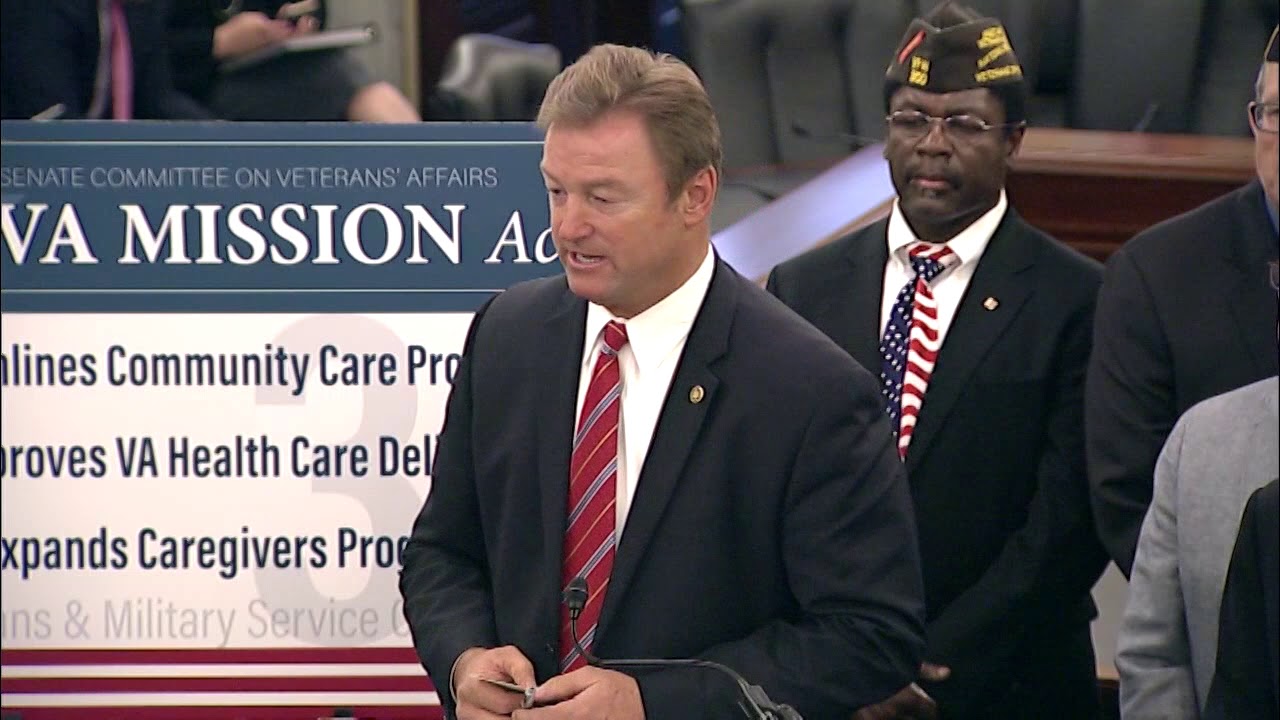 . “This is a minor issue.”
But soon after the Mission Act became law, the White House made clear that it opposed increasing the VA’s funding in order to pay for it — exactly as House Democrats had warned. “This funding can and should be provided within the existing non-Defense discretionary spending cap, and the administration opposes efforts to increase or adjust the cap,” Office of Management and Budget director Mick Mulvaney and then-acting VA secretary Peter O’Rourke said in a July letterto Congress.
Rick Weidman, the policy director for Vietnam Veterans of America, said Trump was breaking his campaign promises to veterans by refusing to fund the law he signed. “He got all the plaudits, then said we’re not going to pay for it,” Weidman said.
The same people who were pushing for more private care during the legislative negotiations are now the people leading the Trump administration’s implementation of the Mission Act.Selnick briefly returned to Concerned Veterans for Americabefore becoming an adviser to the new VA secretary. Selnick was replaced in the White House by Drew Trojanowski, a former aide to the late Sen. John McCain, R-Ariz., who worked closely with Moran on the access standards proposal.
“Darin Selnick is a veterans health care policy expert who helped write the Mission Act,” Cashour, the VA spokesman, said. “There is no one more qualified to advise on the law’s implementation.”
It isn’t surprising, then, that Selnick’s interpretation of the bill has gained the upper hand:The VA is planning to “designate” all the access standards as making veterans eligible for private care, according to veterans groups and congressional staff briefed on the plan. Congressional aides said that would expand the use of the private sector much more than they expected.
...
The fact that Congress put ‘designated’ in there, there was an assumption some would be designated and some would not be,” a staffer involved in the negotiations said. “Why else would you have the word?”
Selnick did not respond to a message seeking comment.
Concerned Veterans for America’s director, Dan Caldwell, defended the administration’s interpretation. “It doesn’t make sense to create a set of standards and only use some of them,” he said. “The VA has been moving for years, even before the Mission Act, toward a model of using more community care. Attempting to keep more veterans in the VA’s brick-and-mortar health care system would be a huge mistake.”
The three Trump associates who’ve secretly steered the VA from Mar-a-Lago have also supported spinning off VA medical services to private providers. In a September 2017 email, the trio’s chief, Marvel Entertainment chairman Ike Perlmutter, proposed inviting private health executives to help the VA divvy up services that should be outsourced to private facilities. The new VA secretary, Robert Wilkie, said he never discussed privatization with the Mar-a-Lago trio and he’s not aware of any ongoing contact with them.
The VA official who’s currently running the Mission Act implementation, Assistant Secretary for Enterprise Integration Melissa Glynn, came from the same consulting firm as another member of the Mar-a-Lago trio, lawyer Marc Sherman. Sherman didn’t initially put forward Glynn’s name, but he did recommend her for the job, according to a person with direct knowledge of the matter. Glynn and a representative for Sherman declined to comment.
The Mission Act gives the VA until March to finalize the new access standards. Wilkie has not yet advanced a proposal to the White House and has rejected several drafts, three people familiar with the process said.
Wilkie has described the Mission Act as increasing veterans’ access to the private sector, but not with the goal of privatizing the VA. “It opens the aperture for a veteran who seeks health care on his own terms, which means that if VA cannot provide the care that veteran needs, and in a timely manner, that veteran will have the opportunity to seek care in the private sector,” Wilkie said in a recent NPR interview. “We’re not replacing. This is not privatization.”
Yet the access standards that Wilkie is considering could dramatically expand the VA’s use of private care, according to recent VA briefings to Congress and veterans groups. The numbers are hard to predict because more veterans might switch to using VA benefits instead of Medicare or private insurance if the VA would pay for them to see private doctors with no copay, and private doctors might bill the VA for more services because they’re paid by volume (whereas VA doctors are salaried). A 2016 commission on VA health care founded that if veterans could see private doctors without first getting a referral from the VA — because, for example, the VA failed to meet certain access standards — costs could increase by $96 billion to $179 billion a year.
“Any effort to automatically send veterans into the community, based upon arbitrary standards alone, would run counter to congressional intent and dramatically increase costs,” Tester said in a statement. “Notably, this comes at a time when the president has ordered all agencies, including the VA, to submit plans for significant budget reductions.”
The House veterans committee is planning an oversight hearing before the end of the year focusing on how the administration is implementing the Mission Act, according to the panel’s outgoing Republican chairman, Phil Roe of Tennessee. In a statement, Roe said the committee will “evaluate whether provisions are being enacted per congressional intent.”
Help us investigate: Do you know what’s going on at the VA? Are you a VA employee or a veteran who receives VA benefits and services? Contact Isaac Arnsdorf at 917-512-0256 or isaac@propublica.org.
==
==
11/18
https://www.exposedbycmd.org/2018/11/02/team-koch-steps-up-game-veterans-astroturf-operation-2018-midterms/
Concerned Veterans for America (CVA), the Kochs’ veterans astroturf organization, has spent millions in support of Republicans in close races that will be decided on Tuesday. The exact amount of its spending is now more difficult to pinpoint though, since CVA was reorganized as a “branded project” in September 2016 under Americans for Prosperity (AFP), the main political arm of the Koch machine.
According to a Center for Media and Democracy (CMD) analysis of Federal Election Commission filings, Americans for Prosperity doing business as Concerned Veterans for America reported spending $1.8 million so far this cycle, but this is only a fraction of what has been reported in the media.
Furthermore, $1.8 million is far less than CVA’s spending in previous election cycles and what its executive director suggestedthe group would spend back in January. CVA spent around $20 million on the 2014 midterms and $25 million in 2016, and executive director Dan Caldwell said that the group would make “multi-million dollar” expenditures this year.
CVA has reported spending $4.7 million on ads in the U.S. Senate race against Tammy Baldwin in Wisconsin alone. Those adsattacked Baldwin for not doing enough to address the overprescribing of opioids in Veterans Affairs (VA) hospitals in the Badger state.
CVA is also offering support through direct mailings to Congressmen Rod Blum (IA-R), David Young (IA-R), Will Hurd (TX-R), and Dave Brat (VA-R) for their support of a partial privatization of the VA under the guise of “Veterans Choice.” Some of the Blum mailings arrived to voters in neighboring Minnesota for some odd reason.
The VA Mission Act, which was signed into law by Trump earlier this year, was heavily lobbied for by CVA. The law provides veterans with an opportunity to seek care outside the VA, which critics argue is afirst step to privatizing the VA.
Questions remain over who will oversee the new healthcare system. “Will Congress still retain authority over this proposed shadow healthcare delivery system?” said John Rowan, National President of Vietnam Veterans of America. “Oversight with accountability is not spelled out to our satisfaction in this legislation. Who will be responsible? How will it be accomplished? Will HIPPA affect the exchange of information called for in the legislation? What are the penalties for violation of standards of care, malpractice, accreditation, and credentialing of private providers, waste, fraud and abuse?”
CVA Action
Concerned Veterans for America Action,
,....
==
918 why happ pod? these guys are making policy?! son's app?
Trump administration is fond of conducting purges, from alleged effortsto rid the State Department of career diplomats deemed insufficiently loyal to the president, to the never-ending quest to rid the White House of leakers. The latest push to make the executive branch great again is said to be happening in the Department of Veterans Affairs, which is without a permanent leader following Trump’s failed attempt to replace VA Secretary David Shulkin with his personal doctor, Ronny Jackson.
When Trump fired Shulkin in a tweet, he announced that Robert Wilkie, the Pentagon’s undersecretary of Defense for personnel and readiness, would be acting secretary. This was seen as a political maneuver, as according to federal statutes, the job should have gone to Deputy Secretary Thomas Bowman, who had pushed back on Trump’s privatization efforts.
After Jackson withdrew his nomination (and Bowman was pushed to retire), Trump nominated Wilkie to fill the spot permanently. Peter O’Rourke, a Trump campaign staff member who served as VA’s chief of staff, was made the new acting secretary while Wilkie awaited his Senate confirmation hearing.
Though acting secretaries usually avoid making any drastic changes, the Washington Post reported on Wednesday that a small group of political appointees led by O’Rourke has consolidated power within the VA, and is making aggressive moves to purge the agency of those not loyal to Trump:
The transfers include more than a dozen career civil servants who have been moved from the leadership suite at VA headquarters and reassigned to lower-visibility roles. The employees served agency leaders, some dating back more than two decades, in crucial support roles that help a new secretary.
None said they were given reasons for their reassignments.
It appears Wilkie is not on board with the changes, which threaten to leave the troubled agency bereft of institutional knowledge. An experienced scheduler whom Wilkie told colleagues he wanted to work with was reassigned, and the nominee said he had no part in the staffing changes.
“Any decisions made following Mr. Wilkie’s departure as acting [secretary] were made by the current VA leadership and Mr. Wilkie was not aware, nor a part of those decisions,” said spokesperson Carla Gleason.
VA officials characterized the reassignments as a sign of Trump’s eagerness to make good on his campaign promise to improve care for veterans. Last month he signed a bill that aims to make it easier for veterans to see private doctors, which critics say would starve the VA system.
Curt Cashour, the VA’s press secretary, denied that employees are being removed for political reasons. He claimed the VA has been making “groundbreaking progress” under president Trump. “This has understandably shaken up VA’s Washington bureaucracy,” Cashour continued, “and in many cases, employees who were wedded to the status quo and not on board with this administration’s policies have departed VA — some willingly, some against their will as they were about to be fired.”
Pressed to explain the changes at a House hearing on Tuesday, O’Rourke said they were “well-planned and designed moves” to improve “efficiency and effectiveness” — though he acknowledged that those reassigned hadn’t been performing poorly.
Following reports on the reassignments, 12 Senate Democrats issued a three-page letter late on Wednesday demanding that O’Rourke stop reshuffling VA employees immediately.
They accused O’Rourke of “putting politics above veterans’ needs and that is shameful,” and said, “Using this short-term appointment to install more political loyalists within the Department while wantonly reassigning, demoting and removing countless nonpartisan career employees who have served multiple prior administrations is reckless.”
The Senate Veterans Affairs Committee approved Wilkie’s nomination last week, nearly guaranteeing that he’ll be confirmed by the full Senate later this summer.
==
https://www.propublica.org/article/veterans-group-sues-to-block-va-shadow-rulers
Veterans Group Sues to Block VA Shadow Rulers by Isaac Arnsdorf A new lawsuit challenges the legality of a secret Mar-a-Lago troika after ProPublica revealed its influence over the Department of Veterans Affairs. liberal veterans group is suing to block the influence of three outside advisers who have been secretly influencing the Department of Veterans Affairs from Mar-a-Lago, President Donald Trump’s private club in Palm Beach, Florida. ProPublica reported last week that the advisers — Marvel Entertainment chairman Ike Perlmutter, West Palm Beach doctor Bruce Moskowitz and Washington lawyer Marc Sherman — have been shaping VA personnel and policy decisions despite having no official role or relevant expertise. The trio, sometimes referred to as the “Mar-a-Lago Crowd,” is failing to disclose its activities as required by federal law, according to a lawsuit filed today in federal court in Washington, D.C., by VoteVets, a liberal activist group that says it represents 500,000 supporters. The Federal Advisory Committee Act, or FACA, is a Watergate-era sunshine law that requires federal agencies to inform the public when they consult outside experts. VoteVets wants a judge to order the Mar-a-Lago Crowd to disclose records of its activities and cease influencing the VA until it complies with the law. The suit also asks that future meetings of the group be opened to public participation and that minutes of its meetings be kept. “This group has been operating in the dark,” said Will Fischer, VoteVets’ director of government relations. “Our goal in bringing this lawsuit is to bring these activities to light and make sure our members, veterans and military families are able to see what’s going on with our VA and the people directing the activities of our VA.” The VA referred questions about the lawsuit to the Justice Department, which didn’t answer a request for comment. In a statement, a spokeswoman for Perlmutter, Sherman and Moskowitz responded: “We have watched with concern as media outlets — including ProPublica — have misrepresented our actions and used selective emails to paint a distorted picture of our efforts to help the VA and America’s veterans.” The statement asserted that none of the group’s “volunteer efforts,” which it characterized as “recommendations” made in response to requests from the VA, were conducted in secret and that the group didn’t attempt to develop policy or influence personnel decisions. VoteVets is represented by Democracy Forward, an activist group that challenges actions by the Trump administration. The group has brought similar lawsuits against a hunting council at the Interior Department and an infrastructure panelat the departments of Transportation and Commerce. In the latter case, a judge granted initial discovery. “It looks like what was happening here was a group of people giving collective advice to the VA, which is precisely the kind of case where FACA should apply,” said John Bies, a former deputy assistant attorney general in the Justice Department’s Office of Legal Counsel during the Obama administration. Courts, he added, have deemed similar government committees to be subject to FACA in the past. FACA claims have been extensively litigated for decades, with occasional successes for plaintiffs. For example, in 1994, a court ordered the Fish and Wildlife Service not to use a scientific report that was prepared without conforming to FACA, and in 2006, a court found that a panel doing an assessment for the Forest Service did amount to an advisory committee under FACA and had to disclose documents. But the two best-known cases brought under the law were ultimately unsuccessful: challenges to first lady Hillary Clinton’s health care task force in 1993 and Vice President Dick Cheney’s energy task force in 2002. ... |
==
Shadow Rulers of the VA
How Marvel Entertainment chairman Ike Perlmutter and two other Mar-a-Lago cronies are secretly shaping the Trump administration’s veterans policies.
https://www.alternet.org/news-amp-politics/heres-why-people-are-so-angry-billionaire-steve-cohen-spending-millions-help
no lnx
Here's Why People Are So Angry That Billionaire Steve Cohen Is Spending Millions to Help Veterans
The hedge fund billionaire’s efforts to assist veterans with PTSD have thrust him into a political fight.
By Isaac Arnsdorf / ProPublica August 3, 2018
At a House hearing last year on post-traumatic stress disorder, a private organization showed up with an ambitious plan to help suffering veterans. The Cohen Veterans Network was opening a chain of free mental health clinics across the country, backed by $275 million from hedge fund billionaire Steve Cohen.
:{
}:
By contrast to the high-profile scandals at the U.S. Department of Veterans Affairs, the Cohen Network claimed 96 percent client satisfaction. In a statement for the hearing, the organization said its clinics “provide a desirable alternative” to the VA — a clear echo of President Donald Trump’s campaign promise to let veterans skip the VA for “a private service provider of their own choice.”
But at that same moment, across the country, the Cohen Network was closing its clinic in Los Angeles less than a year after it opened. The Cohen Network’s leaders had alienated the staff there, former employees said, by telling them to prioritize healthier patients over homeless veterans. The shutdown was so hasty that former therapists said it left some patients in the lurch.
Privatization has become the defining controversy at the VA under the Trump administration. Conservative billionaires such as the Koch brothers and Ken Langone want veterans to increasingly see private doctors, while traditional veterans organizations want to maintain the government-run health system.
The Cohen Network has become a test case for both sides. It is either proof that the private sector can do the job better than the VA — or a template for diverting taxpayer dollars to unaccountable private groups.
Steven Cohen is perhaps an unlikely person to find himself in the crossfire of this debate. He is best known as the billionaire hedge fund titan whose investment returns were the envy of Wall Street, until prosecutors busted his firm for insider trading. (Cohen, 62, was not personally charged; he declined to be interviewed for this article.) Since then, Cohen has launched a new hedge fund and opened 10 clinics serving veterans across the country.
A thorough examination of the Cohen Network’s record — including internal documents, emails and dozens of interviews with current and former employees — reveals a different story from the one the Cohen Network tells about itself. The clinic at the University of Southern California was doomed by the Cohen Network’s mismanagement and insistence on a narrow focus that helped only a subset of veterans, former employees said. “The model we ended up believing would really serve veterans was different than the model the Cohen Network was proposing all clinics operate under,” said Marv Southard, who served as CEO of the Cohen clinic at USC and is now chair of USC’s doctor of social work program. The network’s original clinic, at New York University, got into a spat over who would own the patent rights from research that Cohen funded. And shortly after the hearing, Cohen mounted an aggressive lobbying campaign to get the government to subsidize the clinics.
...
turmoil in the White House continues, as President Trump fired Secretary of Veterans Affairs David Shulkin and said he’d replace him with White House physician, Dr. Ronny Jackson, a rear admiral in the Navy. Dr. Jackson has no experience running a large agency. The Department of Veterans Affairs is the federal government’s second-largest department, with 360,000 employees. Shulkin had been facing criticism for various ethics violations, including using taxpayer money to pay for his wife’s airfare during a trip to Europe last summer. In a New York Times op-ed published Wednesday, Shulkin says he’s actually being ousted because of his opposition to privatizing the Veterans Affairs agency. He wrote, “They saw me as an obstacle to privatization who had to be removed. That is because I am convinced that privatization is a political issue aimed at rewarding select people and companies with profits, even if it undermines care for veterans.”
==
Trump announced Wednesday that he has tapped David Shulkin, a physician who is currently serving in the Obama administration as VA undersecretary, to lead the Department of Veterans Affairs.
The decision ends a protracted search for a head of the second-largest federal agency and would make Shulkin the first VA secretary who had not served in the military. Trump said he and his transition team had interviewed “at least 100 people” in their search for an executive to carry out multiple promises he has made to improve the care of veterans. In the end, they looked inside.
Shulkin, 57, who would be the first Obama administration holdover for Trump, was confirmed unanimously for his post as undersecretary in charge of the Veterans Health Administration in June 2015, a sign he could breeze through the Senate confirmation process.
[Here are the people Donald Trump has chosen for his Cabinet]
“I have no doubt Dr. Shulkin will be able to lead the turnaround our Department of Veterans Affairs needs,” Trump said at his first news conference since his election, calling him an “incredibly gifted doctor.”
“His sole mandate will be to serve our veterans and restore the level of care we owe to our brave men and women in the military,” Trump said. “Sadly our great veterans have not gotten the level of care they deserve, but Dr. Shulkin has the experience and the vision to ensure we will meet the health-care needs of every veteran.”
Shulkin is an internist who came to government with 30 years’ experience leading private hospitals. He has led the sprawling veterans health system — the country’s largest, with 1,700 clinics and hospitals — for 18 months, working to improve patients’ access to care after a nationwide scandal over fudged wait lists for medical appointments.
During his campaign, Trump called VA a “broken” system that treats illegal immigrants “better than our vets.”
Shulkin is in line to run an agency beset by challenges, including a backlog in disability claims that has shifted in recent years from initial applications to appeals; a rising suicide rate; overuse of opiates; and a shortage of doctors and nurses.
“We are both eager to begin reforming the areas in our Veterans Affairs system that need critical attention, and do it in a swift, thoughtful and responsible way,” Shulkin said in a statement released by the transition team.
In keeping Shulkin, Trump passed over the current secretary, Robert McDonald, a Republican appointed by Obama in 2014 after the wait-times scandal forced out his first VA chief, retired Army Gen. Eric Shinseki. Washington’s large and influential veterans service organizations had pushed Trump unsuccessfully to keep McDonald in the job.
Trump also passed over a favorite of some of his top aides, Fox News Channel contributor and Iraq War veteran Pete Hegseth. Hegseth is a former president and chief executive of Concerned Veterans for America, a conservative group backed by the billionaire Koch brothers. Hegseth had pledged to make it easier to fire poor performers and significantly expand VA medical care to private doctors outside the system. But he had not run a large organization comparable to the veterans system.
[Why Trump still hasn’t named a VA secretary]
Expanding private care is one of Trump’s biggest priorities for veterans, and it is unclear how Shulkin would approach such a change. After some members of the congressionally created commission on VA health care called last year for drastically reducing the federal role in veterans’ medical care, Shulkin told the Daily Press in Virginia the idea was “terrible.”
“This would be a terrible mistake, a terrible direction for veterans and for the country, to essentially systematically implement recommendations that would lead to the end of the VA health-care system,” he said.
A specialist in health-care quality, Shulkin held leadership positions at the Drexel University College of Medicine, Temple University Hospital and the Medical College of Pennsylvania before coming to government. He founded a now-defunct company, DoctorQuality, that provided information for patients on health-care safety and quality.
He received his medical degree from the Medical College of Pennsylvania, completed his internship at Yale School of Medicine and his residency and fellowship at the University of Pittsburgh Presbyterian Medical Center.
[After scandal, Phoenix VA still troubled by long waits for care, investigators say]
His selection drew praise from some of the largest veterans groups as a welcome sign of continuity.
“The VFW is proud to support the nomination of Dr. David Shulkin as the next Secretary of Veterans Affairs, and we are most appreciative of his willingness to continue serving veterans and making the VA better,” Brian Duffy, national commander of the Veterans of Foreign Wars, said in a statement.
Mark Lucas, executive director of Concerned Veterans for America, said in a statement: “It is no secret that the VA has been failing veterans for years. While Shulkin already holds a leadership position at the VA, as Secretary, he will now have ultimate responsibility over the agency and we are hopeful he will take it in a new direction.”
Louis Celli, legislative director for the American Legion, said in an interview that Shulkin has had an open door not just to veterans groups but to his staff at the Veterans Health Administration.
Shulkin’s selection “says to me that Trump has faith in the direction VA is going with health care,” Celli said. “I think this is a huge reality check for a group of people who want to privatize VA.”
Of all the day-to-day operations of government that Trump criticized, VA, with its vast management challenges, came under special scrutiny. Finding the right person for the job was one of the president-elect’s biggest challenges.
In recent weeks, Trump had met with retired military leaders, politicians and health-care executives, some of whom would help diversify a Cabinet he is under pressure from some on his team to make more inclusive. Trump extended preliminary offers to several qualified contenders, but they turned him down, citing other commitments.
==
wow forbes
https://www.forbes.com/sites/charlestiefer/2018/06/08/veterans-sustain-two-serious-defeats-from-trump-and-the-house-to-va-health-care/#55eed70d2c5a
... two separate challenges to the VA that have come to a boil this week –one from Trump, one from the Republican House.
One concerns Trump and the makeup of a commission focused on closing VA facilities. The other concerns transferring funding of veterans’ healthcare from VA facilities to private entities.
On Wednesday, Trump signed a law with a provision to establish a commission charged with conducting a nationwide “asset review” of VA infrastructure. If the commission is stacked with advocates of dismantling the VA and privatizing most care, the results could be disastrous. Congress remembers the great power of the base-closing commissions in shutting down military facilities, but at least they were able to vote the recommendations up or down. Not so with this commission; it will be empowered to make final decisions. There are likely to be regional winners and losers, and some decisions may be made to accommodate real estate developers, not veterans.
....
==