VOUGHT 3
1124 TRIFECTA ON 2 MOFO ON CRPB VILLAIN PENDING
phil gramm rsc
SEE SCI SUPPRESS NCAR
XIAN NATL FASCISM DROLLINGER?!
SEE KID KILLER USAID
SEE IG FIRE DEFUND/ WWW MEMORY HOLE
SEE IMPOUNDMENT / RECISSION = --> FASCISM?
blue states cuts waste bs
// WRIGHT OIL CEO KILL GREEN R&d CEDE SECTOR TO CHINA (ALSO HUMAN AID)
SEE DOGE COUP IMPERIAL UNITARY PREZ ~CFPB
SEE DENIAL PARIS WITHDRAW
SEE JEFFERY CLARK OMB CFPB SOCIAL COST CARBON
see pro publ
SEE MEM HOLE NOAA NWS PJT 2025 SMITHSON CENSOR STORY 1 SCIENCE CLIMATE 12 25 --> JRNL FAIL // MEDIA COVERAGE agw
VADEN ESQ PAOLETTA
---
---
FEAR REAPER AI SLOP 10 25
---
-=-=
-=-=
see recission
9 26 1b$ clawback dei AI bs
-=-=
-=-=
AN 10 26
Republicans are growing increasingly angry with President Donald Trump's administration officials who continue to refuse to deliver on funds that Congress appropriated.
Democrats have long complained about it, but now Republicans are getting involved, too. The U.S. Constitution states that the legislative branch (the House and Senate) allocates funding. They pass a budget for the government, programs, the military, Medicare and all of the other things that keeps the country operational. The Trump administration has taken that money, and if officials don't like it, they don't send it out.
Lawmakers are now asking the Government Accountability Office (GAO) to sue the administration for refusing to release approved spending and canceling funding, Politico reported Friday.
The GAO has repeatedly claimed that the administration violated federal law. In fact, this week it concluded that the Trump administration illegally withheld more than $1 billion for education and health care research programs. The problem is that the GAO doesn't have a permanent director. Only an interim director is in charge until the Senate can confirm someone. Thus far, that interim director has not exercised the GAO's authority to take the administration to court.
“They are empowered to sue,” said Sen. Susan Collins (R-Maine), who has been among the Republicans angry about the administration's move. She chairs the Senate Appropriations Committee.
“I think the biggest problem is that we have an acting director of the GAO, who understandably is wary of suing the administration without direct congressional approval," Collins added.
With the Nov. 3 election in the next 25 days, and the House expected to change hands, they could sue the administration for violating the law. The Republican-led House sued President Barack Obama's administration in July 2014 over Obamacare spending. In Sept. 2020, the Democratic-led House sued the Trump administration over border wall funding that Congress never appropriated.
Trump also recently canceled $810 million in approved spending. The fiscal year ended Sept. 30, and if programs didn't use the money, it expired. There is a question about Trump using government funding to run TV ads promoting himself. He's also being questioned about the $352 million he took from the Secret Service budget to build his ballroom.
Politico cited a recent report from The Washington Sun, which said on Thursday that Trump officials were thinking of nominating Eric Ueland, who currently serves in the White House budget office. The Office of Management and Budget Director Russ Vought is the official, who, under Trump's authority, "has used every lever he can reach to stanch the flow of federal dollars," wrote one columnist.
A series of August reports cited a group of what they're calling "zombie programs" across the U.S. government. Those are programs like the CDC's Alzheimer’s disease program or programs around epilepsy and sickle cell disease data collection operations. There's even a rape prevention unit. Congress has approved and fully funded all of them. When Elon Musk went through his DOGE cuts, the people who worked on the programs were let go.
Vought has encouraged the president to impound money that Congress has allocated, even if it's against the law. In fact, Brown cited "a law specifically forbidding the practice."
Republicans allege that Trump is using “pocket rescissions” tactics.
"I’m very disappointed in their action here, and it will have to be rectified,” said Sen. Mike Rounds (R-S.D.). “I’m not sure who should do it. All I know is I want a different result than what we have right now.”
Comptroller General Gene Dodaro, who left at the end of his 15-year term, said “the law is very clear that GAO’s ability to sue doesn’t preclude anybody else from suing.”
-=-=
-=-=
Oct. 5, 2026,
Throughout American history, officials have recognized that Congress has what’s known as “the power of the purse.” In our constitutional system, it’s lawmakers who have the sole authority to dictate government spending. It’s designed this way for a reason: As the editorial board of The New York Times explained last fall, “Money is power, and the founders of this country feared that a president would turn into a monarch if he alone could dictate how the government uses the federal Treasury.”
It’s a model that Donald Trump has never been altogether comfortable with. Indeed, Russell Vought, who leads the president’s White House budget office, made clear during his Senate confirmation hearings early last year that he believes in an executive branch that has vast powers when it comes to federal spending.
He clearly meant what he said. Consider three examples that emerged over the course of a week.
On Friday, Sept. 25, the White House decided unilaterally to cut nearly $1 billion in domestic spending appropriated by Congress, executing a tactic known as a “pocket rescission.” Days later, the Government Accountability Office reaffirmed its stance that this is illegal, and Team Trump said it didn’t care.
On Wednesday, Sept. 30, the Trump administration redirected tens of millions of dollars in U.S. military assistance from European and Middle Eastern countries to reward conservative governments in Latin America.
As The Washington Post reported, the State Department notified Congress of its intention to do so last month, at which point the top Democrats on the House and Senate foreign affairs committees placed a hold on the diversion of funds. Last week, the administration decided it would proceed with its plan anyway.
In a letter to Secretary of State Marco Rubio on Wednesday, the two Democratic lawmakers, Sen. Jeanne Shaheen of New Hampshire and Rep. Gregory Meeks of New York, wrote to Secretary of State Marco Rubio, describing the move as a violation of statutory requirements about where the money could go. Team Trump apparently didn’t care about this, either.
On Friday, Oct. 2, the Times reported that the National Science Foundation, one of the biggest sources of federal research funding, withheld $1.4 billion that Congress had intended for research over the course of the past year as part of a brazen effort to circumvent Congress.
Rep. Zoe Lofgren of California, the top Democrat on the Science, Space and Technology Committee, said, “The money should be granted as Congress intended, and essentially, they’re ignoring what Congress did.”
Or more to the point, they’re ignoring what Congress did again.
//
Trump uses rare authority to claw back nearly $1 billion in spending approved by Congress
-=-=
-=-=-
RWW VID
Christian Nationalist Agriculture Secretary Brooke Rollins Says The Trump Administration Is 'Bringing The Light To A Very Dark World'
09/17/2026
Christian nationalist Secretary of Agriculture Brooke Rollins sat down for an interview with right-wing broadcaster Erick Stakelbeck at the Republican midterm convention earlier this month, during which she bragged that she knows God is supporting the Trump administration because they are a "group of warriors" who are dedicated to "bringing the light to a very dark world."
After serving in various capacities during the first Trump administration, Rollins and other Trump insiders launched the America First Policy Institute, which has subsequently played a key role in staffing the second Trump administration. In her current capacity as Agriculture Secretary, Rollins has been leading right-wing Bible study sessions for members of Trump cabinet.DROLLINGER
"I believe so strongly that God was not done with our country, that we are the greatest country in the history of the world.," Rollins said. "So, building that organization [AFPI] to prepare for a second term of America First—whether it was President Trump or somebody else—is what we did. But now to be able to step up and meet the moment; I pray a lot that maybe we don't feel like Moses, frankly, in Exodus, maybe we don't feel like we're fully prepared for this moment, but that God's got us."
"Walking into the West Wing every morning, I could feel God was with us," she continued. "I felt just this peace. These jobs are hard. You're being shot at figuratively, and our president literally, 24-7. The mainstream media is so dark. Big business, big government, big agriculture, big all of it is against you and so walking in that first term and seeing all of those wins in the first term, [it was a sign] that God was with us."
"I held Bible studies in the first term, we prayed all the time," Rollins added. "We built the America First policy Institute on the biblical foundations of everything: It's biblical to want a secure border. It's biblical to put children first in their education.
It's biblical to put patients first in healthcare. It's biblical to fight back to the land of milk and honey in the Old Testament, to fight for our farmers and ranchers. And now to be here the second time and to see this extraordinary amount of winning that we've been able to do, none of it is possible without God. We are a group of warriors to our core. gathering once a week to have a cabinet Bible study and remind all of us what we're fighting for."
"I do use this platform," Rollins admitted. "I believe in making disciples of all the nations. I believe that God has blessed this country and so ensuring that we are using this and bringing the light to a very dark world, that's what this administration is about."
"I have been sued a couple of times for, they say, talking about Jesus too much, but I'll never stop talking about Jesus, " Rollins vowed, before claiming that America will be doomed if Republicans do not maintain control of government in the midterm elections.
"The stakes couldn't be higher," she warned. "It's an existential threat to the future of not just America, to the world. ... I have two daughters and two sons. I will hopefully someday have some grandchildren and they will not have an America that we have unless we're able to win at the ballot box. We can keep fighting every day, but if those socialists, those Democrat socialists who believe in bigger government, who don't believe in God, their religion is a radical climate agenda, wake up America. This is real and the darkness will overcome the light in this country if we're not successful at the ballot box today and in the future."
-=-=
-=-=
MMA
Federal disaster reports under the Trump administration leave journalists to source climate explanations elsewhere
NASA and NOAA analyses still provide detailed meteorology, trends, and preparedness information while omitting explanations of human-caused warming that earlier federal accounts included
*Special* ProgramsClimate & Energy
Written by Evlondo Cooper
Published 09/16/26
On September 9, the National Oceanic and Atmospheric Administration announced that the contiguous United States had experienced its hottest summer in 132 years of records. Its public summary provided readers, including journalists, with detailed information about record temperatures and expanding drought, but it did not explain how human-caused warming contributed to the conditions it described.
The same pattern appears in NASA’s report on July’s western heat wave and NOAA’s analysis of the July 2025 Texas floods. Across these examples, federal agencies continued to provide detailed information about the meteorology, broken records, damage, and in some cases worsening long-term trends without explaining how climate change had increased those risks.
These omissions are not isolated. The Trump administration has also disrupted other federal sources of information the public relies on to understand climate risk. In April 2025, it terminated the contract supporting the coordinating office of the U.S. Global Change Research Program, which produces the National Climate Assessment. NOAA also stopped updating its billion-dollar disaster database, and Climate.gov stopped publishing after its entire staff was laid off.
Journalists have used that research to explain extreme weather. In October 2024, MSNOW’s (then-MSNBC’s) All In with Chris Hayes referenced NOAA’s billion-dollar disaster data during an interview with agency climatologist Adam Smith. Smith explained that billion-dollar disasters had become much more frequent since the 1980s. He described how climate change adds heat to the ocean and atmosphere, contributing to extreme weather — including heavier rainfall — and noted that communities’ exposure and vulnerability compound the damage.
The billion-dollar database, Climate.gov, and the assessment program are gone. The analyses that remain are as detailed as ever — what the reports examined here no longer explain is why.
Federal climate analyses can shape reporting even when they do not appear in a published story or on-air segment. Journalists may consult them to understand an event, prepare for interviews, identify relevant questions, or check their own understanding before writing or going on air. When those accounts do not explain how climate change is contributing to the extreme weather they describe, reporters have to find that explanation elsewhere, and it may never make it into the published story.
NASA’s 2026 heat-wave analysis omitted the climate explanation previously included in its 2024 analysis
The western heat wave described in NASA’s July 15 report struck when a heat dome settled over the northern Rockies. NASA reported all-time temperature records at sites in Montana, Wyoming, and Utah, along with a tenfold increase in the rate of heat-related emergency department visits across the Mountain states during the July heat.
NASA explained how the high-pressure system trapped hot air and suppressed clouds and precipitation. Its account also placed the event within a longer-term trend, noting that “heat waves like this one have become more frequent in the United States in recent decades” and that summer heat waves “roughly doubled in number between 1980 and 2023, increasing from an average of two to four per month.”
NASA omitted the climate explanation despite contemporaneous analyses linking the same mid-July 2026 heat wave to human-caused warming. Climate Central found that human-caused climate change made the extreme heat “at least three times more likely” across large parts of the western and northern United States from July 13 through July 15, affecting more than 118 million people west of the Mississippi.
Climate Central later found that nearly half of the contiguous United States experienced temperatures “made at least five times more likely by climate change” during the mid-July heat wave.
The omission was not limited to 2026. In its June 26, 2025, account of a heat wave across the Midwest and Northeast, NASA likewise described the heat dome, broken temperature records, dangerous humidity, and widespread heat warnings, but it did not explain how global warming contributed to the extreme heat.
During a comparable eastern heat wave in June 2024, NASA combined descriptions of the meteorology, broken records, health effects, and long-term heat trends with a direct climate explanation. The agency noted at the time that the “frequency and intensity of heatwaves have increased in recent decades because of the rising concentrations of greenhouse gases in the atmosphere. They expect these increases to continue in the future.”
NOAA’s 2025 Texas flood analysis did not address how warming is changing extreme rainfall
In July 2025, catastrophic flash floods swept through the Texas Hill Country, including communities along the Guadalupe River. By July 23, the reported death toll from the floods was at least 137 people.
NOAA’s analysis, first published on August 11, 2025, described the conditions that set the stage for the flooding, including prolonged drought and an influx of tropical moisture, before detailing the intense rainfall and damage that followed. The report did not connect the extreme rainfall to human-caused climate change.
But that climate connection was well established when the Texas floods struck in 2025. In a July 9, 2025, article about the floods published by The Texas Tribune, University of South Carolina climate scientist Claudia Benitez-Nelson explained that warmer air holds more moisture, enabling heavier rainfall. “Climate change is turning ordinary weather into these disasters,” she said. Climate Central also explained how global warming contributes heavier rainfall.
Earlier federal accounts of extreme flooding did make that connection, though. In an August 3, 2022, report on catastrophic flooding in St. Louis and eastern Kentucky, NASA explained that “once-rare events are becoming more likely as Earth’s atmosphere warms and can hold more moisture.”
Journalists are left to supply the climate context federal accounts omit
From June 29 through July 26, 2026, ABC, CBS, and NBC aired 194 segments about three major heat events without mentioning climate change, according to a Media Matters analysis. These events included the mid-July heat dome described by NASA. Viewers received forecasts, warnings, public health information, and reports of broken records without an explanation of how human-caused warming was intensifying heat.
Federal climate information has previously helped journalists provide that missing context.
During the July 12, 2023, episode of CNN’s Early Start, a correspondent report used the National Climate Assessment to explain how extreme flooding events are becoming more frequent and devastating. A few months later, a November 14 CBS Evening News segment about the National Climate Assessment discussed why the effects of climate change in the United States were “far-reaching and worsening,” highlighted the growing frequency of billion-dollar weather disasters, and connected U.S. greenhouse gas emissions primarily to the burning of fossil fuels.
Journalists can obtain climate explanations from other sources, including attribution researchers who provide rapid, event-specific analysis about how global warming is driving extreme weather. But that work does not replace climate context in federal accounts that reporters may already be consulting as authoritative background. When those accounts leave the connection out, more of the explanatory work shifts to newsrooms, where journalists must first recognize the gap before seeking out additional research and integrating it into their reporting.
If that additional reporting does not happen, audiences can receive detailed coverage of worsening heat, floods, and other disasters without understanding why those risks are increasing. The event, the damage, and even the worsening trend can remain visible while the human cause disappears.
//
08/06/26
08/28/26
06/29/26
-=-=
-=-=
an 826
The director of the Office of Management and Budget is infuriating Republican lawmakers by "going rogue" on what appropriations were approved by the House and Senate.
MS NOW's Hayes Brown wrote on Monday that Director Russell Vought has made a unilateral decision to control whether funds are actually sent out for projects that Congress approved.
The constitutional core is Article I’s Appropriations Clause: “No Money shall be drawn from the Treasury, but in Consequence of Appropriations made by Law.” So, the president can't legally spend Treasury money unless Congress has authorized it through law. Appropriations are technically laws approved by Congress. The president's Article II powers mandate that he “take Care that the Laws be faithfully executed.”
But the executive branch is refusing to disburse the funds approved by law. In fact, Brown explained that "Vought has used every lever he can reach to stanch the flow of federal dollars."
A series of reports last week cited a group of what they're calling "zombie programs" across the U.S. government. Those are programs like the CDC's Alzheimer’s disease program or programs around epilepsy and sickle cell disease data collection operations. There's even a rape prevention unit. All of them have been approved and fully funded by Congress. When Elon Musk went through his DOGE cuts, the people who worked on the programs were let go.
Vought has encouraged the president to impound money that Congress has allocated, even if it's against the law. In fact, Brown cited "a law specifically forbidding the practice."
After the huge DOGS cuts, "OMB sent a list of rescissions," saying that it would "undo" Musk's moves to kill programs that Congress funded.
"Congressional Republicans signed off on a package cutting $8 billion in foreign aid funding and roughly $1 billion from the Corporation for Public Broadcasting. But that wasn’t enough for Vought, who last fall enacted a 'pocket rescission' to cut another $4.9 billion in foreign aid," Brown explained. "By only informing Congress of the hold less than 45 days before the end of the fiscal year, OMB argued, the money would be cut automatically."
Then Vought deployed the “apportionment” process, stating that federal spending must align with Trump's budget proposals. It's the way that Trump's government has been able to take tax dollars from blue states while refusing to allocate appropriated funds.
"Even more troubling, a new federal rule currently in the works would give his office unprecedented control over issuing federal grants. If enacted, the rule would effectively serve as a roundabout veto over spending that fails to 'demonstrably advance the president’s policy priorities,' even those that meet the specific guidelines Congress has put in place," the Brown wrote.
The tactics are angering lawmakers, including Republicans.
"Congress has appropriated money, and you don’t have the authority to impound it,” Sen. Chuck Grassley (R-Iowa) said in a Senate Budget Committee hearing with Vought.
Rep. Mark Amodei (R-Nev.), who is also a senior Republican on appropriations, told Politico, “Pocket rescissions would be a very interesting way to curry favor with the legislative branch — especially the one part of the legislative branch which has delivered on all of the administration’s s——."
A short-term budget bill was passed by the Senate before they left for the August recess, and its language temporarily halts Vought's takeover of federal grants. The House still must pass the bill, but the odds look good, as no one wants a government shutdown weeks before the election.
Brown pointed out that it's one of the far too few occasions on which the legislature has asserted its authority in many years. In the past two years specifically, Congress has ceded its power over trade and war to the president. He said it's nice to see lawmakers finally draw a line.
-=-=
Christopher Lewis @ Slate: How the Legal Mastermind of Trump’s Most Damaging Policies Stays Anonymous
Mark Paoletta is not a household name. Despite this, over the past decade, he has quietly become one of the conservative legal movement’s most influential operators, making Paoletta an underrated political power in his own right.
Over a career spanning roles in both House and Senate Republican leadership, the George H.W. Bush White House, the courts, and conservative advocacy organizations, Paoletta has formulated and defended expansive legal theories of presidential power, molding governing reality. Today he is helping Office of Management and Budget Director Russ Vought reshape the federal bureaucracy. Understanding why he matters means understanding that the modern federal government is shaped not only by elected officials but also by attorneys who craft legal arguments justifying government action.
There are two central components to Paoletta’s dangerous philosophy: fury at the independence of the civil service, and belief in nearly unlimited presidential authority. Close D.C. watchers should recognize these as the calling cards of Voughtism. Indeed, Vought and Paoletta are close allies—Vought executes the dubious budgetary procedures; Paoletta handles the legal arguments. As Politico’s Sophia Cai rightly points out, “If Russ Vought sees his question to dismantle the federal bureaucracy as a race against time, his lawyer sidekick Mark Paoletta is holding the stopwatch.” As Cai goes on to mention, Paoletta has been the center of Vought’s team, ensuring that funds are withheld from furloughed workers and redirected to Donald Trump’s ridiculous vanity projects.
Between the two Trump administrations, Paoletta bided his time as a senior fellow at Vought’s Center for Renewing America, the Trump-aligned think tank that effectively was another administration in waiting. There, alongside other Trump officials, like Ken Cuccinelli and Kash Patel, Paoletta wrote multiple articles about impoundment and expanding executive authority. One of those pieces bemoaned Congress’ constraints on the president’s ability to spend. He specifically claimed that the Impoundment Control Act “reverses an understanding of the Constitution’s allocation of executive and congressional spending authority dating to the Founding. The ICA is unconstitutional.”
For the record, this is nonsense. Fundamentally, what makes a legislature powerful is its control over taxing and spending, the power of the purse. That goes back to precolonial Parliament and the Magna Carta—at best, Paoletta is staggeringly ignorant of the “history and tradition” that conservative legalists claim to adore; at worst, his arguments indicate that he is an unrepentant monarchist (at least when a MAGA king is on the throne). Paoletta uses the real estate he is allotted to rationalize why presidents should be able to usurp the constitutional authority of other co-equal branches of government.
....
-=-=
an 7 26
Whether by intention, error or force of law, the Trump administration has owned up that Donald Trump sees himself president of MAGA, not of the nation.
A New York Times report this week disclosed a month-old court filing in which federal officials acknowledged that they cut $7.5 billion in clean energy programs selectively among states “based solely” on whether those stated had voted for Democratic candidate Kamala Harris in the 2024 presidential election.
In court answers about a lawsuit challenging the stated reasons of cuts based on “waste and fraud,” the government copped to the real reason – partisan politics. Indeed, the administration funded grants for states that had backed Trump in 2024, even though the Energy Department had recommended they be cancelled.
It may not be a specifically impeachable offence, but it certainly shows that Donald Trump is abusing his office, his oath – and weirdly even punishing the Trump voters in the states taking the cuts.
Trump certainly has been acting in a variety of ways as if he wants to target states that voted against him, but this court filing seemed a public acknowledgement that should get some serious attention.
As The Times concluded, “The admission showed how Trump has weaponized the provision of federal education, energy, health, housing and infrastructure aid in his second term. Far from rooting out the sort of misspending that Trump sees as rife in Washington, the White House has instead sought to leverage the budget as a tool to assist its allies — or as a cudgel to hurt the president’s foes.”
Trump certainly has no hesitation about collecting taxes from blue states or demanding voting rolls or demanding special treatment, just in spending the money disproportionately raised from those states.
President for Some, Not All
The White House and Russell Vought, director of the Office of Management and Budget , have remained silent about the government’s court arguments in a suit brought by the affected states. At the time of the cuts, Vought posted that “Nearly $8 billion in Green New Scam funding to fuel the Left’s climate agenda is being cancelled.”
Now, a government lawyer told the court that none of the cancellations were “based on any programmatic, statutory, cost-reduction or performance-based factor.”
Apart from all else, Secretary of Energy Chris Wright repeated the waste argument in sworn congressional testimony, telling House members in June, “No decisions (about the cuts) were made on politics.”
Someone might tell Jim Jordan, chair of the Judiciary Committee, who referred former special prosecutor Jack Smith to the Justice Department for investigation of perjury for not answering a question that Jordan had never asked.
Vought is seeking to finalize rules that would make political appointees the final arbiters of how the government would award more than $1 trillion in annual grants. He wants the power to block or revoke money if states do not conform to administration priorities. The White House has also sought to layer additional restrictions on grant recipients, limiting their political activities, memberships along with vague requirements that they cannot use the money for certain purposes, including those deemed “anti-American,” reported The Times.
Rather than combatting waste, it appears Trump and his cronies are trying to take control of the United States government, using the power of the American people for their own ends, argues historian Heather Cox Richardson in Substack.
Sen. Patty Murray. D-WA., and Rep. Marcy Kaptur, D-Ohio, said that politically minded grant cuts amounted to an “outright un-American” weaponization of government.
Illinois governor J.B. Pritzker pointed out that the cancelled grants included $583 million intended for Illinois “that would have gone toward lowering energy costs, strengthening grid reliability, and creating energy jobs.” He demanded the funds be restored. “Despite what he might think, Donald Trump is not the president of MAGA,” Pritzker said in a statement, but “the president of all America.”
Terry H. Schwadron retired as a senior editor at The New York Times, Deputy Managing Editor at The Los Angeles Times and leadership jobs at The Providence (RI) Journal-Bulletin. He was part of a Pulitzer Gold Medal team in Los Angeles, and his team part of several Pulitzers in New York.
KOCHADEMIA
MOM? Vought attended a private Christian high school, then went to Illinois to study at Wheaton College, which is known as the “evangelical Harvard.”
GGL AI 6 26
Russell Vought graduated from Wheaton College in 1998 with degrees in history and political science. While attending the evangelical liberal arts school, he interned for Sen. Phil Gramm. He later earned his Juris Doctor from the George Washington University Law School in 2004. [1, 2, 3, 4]
While Vought's core political foundation was largely formed by fiscal conservatism and the uncompromising budget policies of Sen. Gramm, his broader ideological influences often intersect with prominent free-market thinkers: [1, 2, 3]
- Friedrich Hayek: Vought's approach to drastically reducing the federal bureaucracy and dismantling the administrative state resonates with Hayek’s classical liberal critiques of government intervention and central economic planning. [1]
- Ayn Rand: While Vought is driven by evangelical Christian nationalism rather than Rand's strict secular Objectivism, his championing of extreme deregulation, laissez-faire governance, and the minimization of the state generally aligns with the individualist and anti-government tenets popularized by Rand's writings. [1, 2, 3, 4, 5]
Vought’s tenure as the director of the White House Office of Management and Budget (OMB), as well as his role as an architect of the Heritage Foundation's Project 2025, reflects this synthesis of fiscal austerity, executive expansion, and a desire to downsize the federal footprint. His alignment with these concepts has previously generated intense public debate, most notably when his alma mater, Wheaton College, experienced internal rifts and alumni backlash after congratulating him on his Senate confirmation. [1, 2, 3, 4, 5, 6, 7]
Russell Thurlow Vought
BORN:
March 26, 1976
EDUCATION:
Wheaton College, Illinois (BA)
George Washington University (JD)
Russell Vought graduated from Wheaton College with a bachelor's degree in history and political science in 1998. He subsequently attended George Washington University, where he earned a Juris Doctor in 2004. [1, 2, 3]
His educational and early internship experiences shaped his path:
- Early Influence: During his time at Wheaton College, Vought interned for conservative Texas Senator Phil Gramm, which laid the foundation for his future focus on deficit reduction and budget policies. [1, 2]
- Campus Controversy: When Vought was confirmed as the Director of the Office of Management and Budget, Wheaton College deleted a congratulatory social media post following backlash from hundreds of alumni regarding his political agenda, sparking widespread debate. [1, 2, 3]
---
Hundreds of Wheaton students and alumni recently published an open letter calling for a change in college leadership and an end to policies on diversity, equity and inclusion, or DEI. They accused the college of institutional drift—violation of its statement of faith, and acceptance of LGBT terminology and identities. The letter comes amid a rift among alumni that seemed to begin over a week ago with the Senate’s confirmation of Wheaton alumnus Russell Vought to a post in the Trump administration.
Vought also served in the first Trump administration. A former WORLD columnist, he is listed as an author on the Heritage Foundation’s Project 2025.
In their letter, Alumni For Wheaton asked the college to conduct an audit of all employees’ commitment to the statement of faith and reevaluate its process for judging claims of racism and sexism. Until significant changes are made, the signatories pledged to stop supporting the college financially or recommending it to others. The Alumni for Wheaton letter expresses concerns about both Wheaton’s leadership and the viewpoints it teaches students. Over 900 students and alumni digitally signed the letter by Wednesday afternoon, along with several hundred parents and friends.
What spurred the controversy? Wheaton College in a Feb. 7 social media post congratulated alumnus Russell Vought on his confirmation as the White House director of the Office of Management and Budget. After receiving backlash from thousands of alumni online, it deleted the post. The college then posted an apology and affirmed its nonpolitical status.
On Feb. 10, over 1,300 students and alumni signed an open letter criticizing the college’s perceived endorsement of Vought. They wrote that Vought would implement Project 2025 initiatives including “rolling back opportunities and protections for … LGBTQ individuals” and “gutting protections for undocumented immigrants.”
Dig deeper: Listen to John Stonestreet’s Culture Friday take on weak evangelical leadership.
LTR
...We, the undersigned alumni of Wheaton College, write with deep concern over fellow alumnus Russell Vought’s role in forming and implementing Project 2025 on behalf of the current presidential administration. As Wheaton graduates, we were shaped by an education grounded in the Gospel of Jesus Christ, which states that the Kingdom of Heaven is known by the Fruit of the Spirit and made manifest by feeding the hungry, giving the stranger a place to sleep, clothing the naked, and caring for the sick. Our Wheaton education taught us that to serve the hurting and broken in our world is to serve Christ himself (Galatians 5:22-23, Matthew 25:31-46). It is precisely because of our commitment to these values that we find Vought’s vision for government, as outlined in Project 2025, to be antithetical to the Gospel of Jesus Christ and to the mission of Wheaton College—and moreover, we are concerned by the college’s quick and public proclamation of support in social media posts on February 7th, 2025
...
Project 2025 is a blueprint for consolidating executive power to remake American government and society along rigid ideological lines. The plan proposes dismantling independent institutions, purging thousands of career civil servants in favor of political loyalists, and centralizing authority under one person. Such a system is not only dangerously authoritarian but also profoundly unbiblical. As fallen and sinful people, we acknowledge the need for accountability, regardless of how high or prestigious one’s position or office; indeed, leaders are held to a higher standard and are accountable not only to the people they lead, but to God himself (1 Timothy 3:1-10, Ezekiel 34:10). Project 2025 is less concerned with governing faithfully as Christians than with cynically using Christianity’s majority status to establish political dominance, remake the United States in their own image, and further marginalize at-risk populations. C 1900 NAMES
---
NEW YORKER
A Fistfight Over Donald Trump at the Evangelical Version of Harvard
At Wheaton College, a controversy around one of its graduates, Russell Vought, a Trump Administration official, shows how deeply the past decade has fractured conservative Christians.
By Emma Green
February 18, 2025
In early February, Wheaton College, a well-known evangelical school outside of Chicago, made a seemingly innocuous post on social media, giving a shout-out to one of its own for getting a prestigious job. An alumnus, Russell Vought, had just been confirmed as the director of the U.S. Office of Management and Budget. “Wheaton College congratulates and prays for 1998 graduate Russell Vought,” the post read. Vought, who also served at the O.M.B. in Donald Trump’s first Administration, has been credited as one of the intellectual architects of the President’s comeback: he contributed to the most recent Republican platform and helped establish the D.C. infrastructure for the MAGA-movement-in-waiting over the past four years. He also wrote the chapter of Project 2025, the Heritage Foundation’s blueprint for this Administration, about executive power.
Within a few hours, there were more than a thousand replies to the post, “primarily incendiary, unchristian comments about Mr. Vought,” a spokesperson told Religion News Service. So the college backpedalled. “The recognition and prayer is something we would typically do for any graduate who reached that level of government,” the college wrote in a statement the next day. “However, the political situation surrounding the appointment led to a significant concern expressed online.” In order to avoid a political dispute and honor the college’s commitment to nonpartisanship, the post was removed.
With that, what might have been a small dustup turned into a full-on war that reached far beyond Wheaton’s students and alumni. “For years now Wheaton has led the way in the false ‘nice’ Christianity that feminized the churches and let the Dems destroy our country,” Eric Metaxas, an evangelical radio host, wrote on X. Franklin Graham, a son of Billy Graham—one of the most prominent evangelists in American history, who went to Wheaton and has a center named for him on campus—posted on Facebook, “Shame on them for backing down and having no backbone. I wish the leadership of this Christian school would stand firm with what is right and not be intimidated or moved by the winds of wokeness.” Hillsdale College, a conservative liberal-arts school, trolled Wheaton from its X account: “Trigger warning: We will not be deleting our earlier post congratulating @RussVought.”
:{:{The past decade of partisan politics has badly fractured the evangelical world. “Wheaton in particular finds itself at the center of an intra-evangelical culture war that is defined by Trump,” Bryan McGraw, a dean and professor of politics at Wheaton, told me. In the postwar period, Wheaton represented a particular strain of evangelicalism: intellectually rigorous, unafraid of the modern world, and keenly interested in cultivating mainstream legitimacy and prestige. This wasn’t the fire and brimstone of fundamentalism; this was the joyful, big-tent-style Christianity of Billy Graham.}:
While Wheaton always fashioned itself as theologically conservative, it was never overtly partisan. But maintaining that posture has become increasingly difficult. “The complexity the college is caught in is that it wants to remain useful for everybody who calls themselves evangelical,” Mark Noll, a historian of evangelicalism and Wheaton alumnus, told me. “That maybe is a little bit naïve, since what it means theologically to be an evangelical is contested, what it means to be evangelical culturally is contested, and obviously the political implication is contested.” As McGraw put it, “There’s probably some comedy sketch out there, where there’s a guy who has his legs on two logs, and they’re getting further and further apart. Wheaton sometimes feels like that.”}:
:{:{After the college withdrew its original congratulatory post, a group of roughly fifteen alumni put together a letter outlining their concerns about Vought. “We find Vought’s vision for government, as outlined in Project 2025, to be antithetical to the Gospel of Jesus Christ and to the mission of Wheaton College,” they wrote. They cited crackdowns on undocumented immigrants, rollbacks on protections for L.G.B.T.Q. people, and abortion policies that go “far beyond humanitarian restrictions” as examples of policies that “target marginalized communities.” Tyler Streckert, a 2015 graduate who helped draft the letter, told me that many Wheaton alumni work at places like U.S.A.I.D., which has all but ceased its operations under this Trump Administration.}:
“Many alumni, and many employees of Wheaton College, many current students, do not support the priorities of Russ Vought or the Trump Administration, or even see the principles of Christianity being lived out through those policies,” he said. “What we’re trying to ask is, What kinds of voices and what kinds of individuals does the college want to hold up as examples of what a successful Wheaton alumnus is?” Instead of focussing on people like Vought, he said, “the college could be concentrating on elevating organizations and leaders who are the hands and feet of Christ.”}:
:{:{Among conservative alumni and observers of the college, however, the perception of Wheaton is entirely different. Eric Teetsel, who just replaced Vought as the head of Vought’s advocacy organization, the Center for Renewing America, told me, “Russ and I have joked for some time that it’s sort of wild that they seem to have forgotten that he exists.” He gave some examples: no campus invitations, no profiles in the alumni magazine, no offers to speak in chapel. “That’s not the reason he does this—he’s not eager for accolades,” Teetsel said. But, especially at such a small, tight-knit school, Teetsel added, “it is notable, almost like it would have to be an intentional choice.”}:
Wheaton’s actions may have stung in particular because Vought has publicly defended the college in the past. In 2016, the school made the controversial decision to ask a popular professor, Larycia Hawkins, to step down after she declared her intention to wear a hijab during Advent in solidarity with Muslims. Vought wrote an article supporting Wheaton’s position, and, during the confirmation hearings for his first stint at the O.M.B., he was grilled about it by Senator Bernie Sanders, who called Vought’s views “hateful,” “Islamophobic,” and “an insult to over a billion Muslims throughout the world.”}:
:{:{When Wheaton took the post about Vought down, Teetsel saw it as giving “in to the heckler’s veto,” he said. “The faithful thing to do, the Biblical thing to do, would have been to turn off the comments and stand by what you had originally done, which was perfectly consistent with a Christian witness to the world.” He pointed out that Christians are obligated to pray for their leaders, no matter whether they are Democrats or Republicans; he saw the post as nothing more than an embrace of that Biblical imperative. Now, however, the post has become about something bigger.}:
When I spoke to Teetsel, he and some other conservative alumni were preparing to release their own letter, addressed to the board of trustees, about what they see as the college’s liberal drift. “Wheaton is a symbol,” Teetsel told me. “It’s bigger than just an institution. It is, and has been, the banner of evangelical higher education.” He went on, “Even people who didn’t go there recognize that if a place like Wheaton can succumb to the same story that Harvard University and Princeton University and Yale and so many other schools that started with an explicitly faith-based mission and succumb to the world—if that can happen at Wheaton, we’ve lost something bigger than just Wheaton.”}:
:{:{Noll, the historian, pointed out that fracture among American evangelicals is not new. Christian abolitionists and slaveholders, for example, despised and critiqued one another on Biblical terms. But, for institutions like Wheaton that have long clung to the vision that evangelicals can be part of the secular world while remaining theologically distinctive and unified, the cross-pressures are only growing more intense. In Noll’s view, both camps in the Vought social-media battle are mistaken. “They are forgetting that the Wheaton motto is ‘for Christ and his Kingdom,’ ” Noll wrote to me, “and not ‘for Christ as part of MAGA’ or ‘for Christ as anti-MAGA.’ ”}:
---
VOX
The Christian nationalist legal scholar behind Trump’s purges
Russell Vought and his radical philosophy, explained.
by Miles Bryan
:{Feb 20, 2025
Part Of
How Donald Trump is remaking America
:
Miles Bryan is a senior producer and reporter for Today, Explained, Vox’s daily news podcast. These days, Miles is mostly focused on economics stories, but he has reported and produced episodes on topics ranging from Hungary’s efforts to boost fertility to the campaign of Pennsylvania Sen. John Fetterman.
There are a lot of main characters in the second Trump administration. Donald Trump himself, of course, but also Elon Musk, Robert F. Kennedy Jr., and JD Vance.
Russell Vought does not make that list. The soft-spoken bureaucrat was recently confirmed to lead the Office of Management and Budget, not exactly a sexy post. His name isn’t well-known outside of policy circles.
But it probably should be.
“I think you can almost view Elon Musk and DOGE, the so-called Department of Government Efficiency, as Russ Vought’s shock troops,” Simon Rabinovitch, US economics editor for The Economist, told Today, Explained co-host Noel King. “Musk is kind of hyperactive and moving every which way, every direction, but ultimately … the person who’s really leading this is Russ Vought. And he’s the general. He’s also the scholar … to the extent that there is a legal justification, this is something that Russ Vought is working on and has been working on for years leading up to the moment that we now face today.”
Rabinovitch talked to King about Vought’s backstory, his Christian nationalist beliefs, and where he wants to take the country in the second Trump administration. Below is a transcript of their conversation, edited for length and clarity. Listen to the full episode on Apple Podcasts, Spotify, or wherever else you get your podcasts.
Simon Rabinovitch
Vought has something of a blue-collar background. He had a a big family, and is the youngest of seven children. He’s talked about having a very strong Christian upbringing. He went to college at an evangelical Christian school. All of this matters because part of the way that he views his role in government is not just trying to change the way the presidency operates, but also trying to infuse it with Christian nationalism, his kind of self-defined ideology.
He spent many, many years as a staffer for Republicans in DC, and worked his way up the totem pole to become a key player in Trump 1.0. Now he’s one of the few returnees in Trump 2.0; he’s back in the very role that he was in at the end of Trump’s first term: director of the Office of Management and Budget. It’s one of these agencies that not many people have heard of, but it actually wields a great degree of power and even more power in Russ Vought’s hands.
Noel King
When Russ Vought says his politics are Christian nationalist. What does that mean?
Simon Rabinovitch
The way that he describes it is that he wants to basically bring Christianity into all aspects of society, especially government. It’s not that he wants to do away with the separation between church and state, but he believes that Christianity is a formative foundational influence in the way that the American government operates, and that has been muffled for too long.
Christian nationalism doesn’t just give him sort of a guidepost in terms of his views on abortion, but also brings a certain righteousness of conviction to the way that he approaches his work, a belief that in some cases the ends justify the means.
It’s one of the reasons why in Trump’s first administration, no matter what President Trump did, Vought stood beside him. He thought Trump was a key ally for propelling his vision. You can hear that in the way that he talks and you can read it in the way that he writes. And it’s sort of inflected with these righteous tones. He talks about “the storm clouds being upon us,” and “the duty is ours, the results are God’s.”
Christian nationalism is a really, really important motivational force for him.
Noel King
I’ve wondered about his speech. He can be quite mean. He talked about wanting to traumatize civil servants. Make them realize that nobody likes them. If we were 5 years old, we would say, “That’s not very nice.” Now that we’re older, we would say, “Don’t don’t talk about traumatizing people, it’s unnecessary.”
Simon Rabinovitch
It’s really weird, because if you meet him — and I’ve had a long conversation with him — he has this very scholarly demeanor. He’s always very buttoned up, with a very nicely trimmed beard. He’s soft-spoken. But when you actually listen to what he’s saying, it’s really quite radical.
I think this is really just a reflection of the strength of his convictions: This is stuff that he truly, deeply believes in. And more than that, I think that the manner in which he speaks is something that helps to inspire people who work with him. He has a devoted group of small allies who share his vision. He’s not transactional. He might say he’s not corruptible. This is just stuff that he really wants to do.
Noel King
Donald Trump has famously engaged in a lot of behavior that is not particularly Christian. How did these two men get together?
Simon Rabinovitch
When Vought was a young Republican staffer, he was very much focused on bread-and-butter fiscal conservatism. But over the years, he got into more of a MAGA-style way of looking at government and ideology. And he was somebody who got involved in the Trump transition team.
There wasn’t an incredibly deep bench of MAGA-aligned people back in 2017. And so he was appointed to the OMB; he was a deputy director. Eventually, in the final year, he became director of OMB. I think the thing for Vought is that he sees Trump as a vehicle for pushing forward his ideas. So he talks about the fact that all of these anti-abortion politicians in the Republican Party failed to do anything, but it was Trump who ultimately was the one who, through his Supreme Court appointments, was able to kill Roe v. Wade. Vought sees Trump as a critical ally, even if he doesn’t agree with him on a day-to-day basis or on many issues.
Related
The obscure manifesto that explains the Trump-Musk power grab
---
Trump’s shutdown architect: Russ Vought’s plan to deconstruct the government was years in the making
By
Phil Mattingly
Jeremy Herb
Oct 2, 2025
The Trump administration memo that landed in federal agency in-boxes last week wasn’t subtle.
As Washington careened toward a government shutdown, there would be nothing normal about the agency contingency planning which has become commonplace in more than a decade of partisan warfare that’s consumed government funding deadlines.
Instead, Office of Management and Budget Director Russ Vought’s 622-word directive dramatically raised the stakes: Every federal agency would now be required to submit detailed plans for mass layoffs.
Those plans would be triggered in the event of a shutdown — and would only be shelved if Democrats agreed to a Republican funding measure they’d already rejected.
The memo symbolized Vought’s methodical march to accumulate power within the executive branch — and the outsized role he has played in getting to this moment. Vought’s vision for how to deconstruct Washington’s sprawling federal bureaucracy, shaped by his years toiling in Republican circles, is now being enacted.
Vought has transformed a role typically focused on the weeds of congressional appropriations into the Trump administration’s primary instrument to dismantle, piece by piece, federal agencies and spending plans.
The OMB has long been viewed as the government’s nervous system. But Vought has managed to use its expansive suite of bureaucratic tools in a way that almost reverse-engineers its authorities: OMB’s guidance documents are no longer filled with benign instructions and updates. Instead, the more than two dozen memos signed by Vought since his return atop the agency track the full scale of the authority he’s leveraged in pursuit of Trump’s agenda, including eliminating longstanding foundations of agency independence and laying the groundwork for actions explicitly intended to break a law designed to ensure congressionally appropriated funds are spent as required.
Activists protest the Russ Vought as he testifies before the Senate Committee on Appropriations on June 25.
While Elon Musk and DOGE spent months in the spotlight over sweeping claims of dramatic spending cuts, it was Vought’s long-term plans to drastically overhaul the shape of the federal government that drove the administration’s priorities. Though much of that work has deliberately taken place outside the public view and congressional oversight, Vought’s fingerprints are across Trump’s most audacious attempts to grab power from Congress:
He crafted, calibrated and timed the first successful legislative effort to cancel funds appropriated by Congress in a quarter century with a $9 billion recissions package.
He followed that with a second effort to nix another $5 billion in congressionally appropriated money through what’s known as a so-called “pocket rescission.” The move was carefully choreographed with legal maneuvers by the Justice Department in a case involving frozen foreign aid money and timed to fall within the rapidly shrinking fiscal year calendar to box lawmakers out of the process.
He recommended that Trump refuse to designate nearly $3 billion in emergency funds authorized in a March agreement that passed with bipartisan votes. The administration has cancelled tens of billions of dollars in federal grants outright and held up hundreds of billions in congressionally appropriated funds as OMB conducted “programmatic reviews” across seemingly every federal spending account.
He played a critical role in securing Republican votes for Trump’s cornerstone legislative achievement — a bill that Vought helped construct and which managed to lock in funding increases for the Pentagon and Homeland Security Department. In doing so, Vought removed a central point of leverage from Democratic negotiators who for years have cut deals to boost domestic spending in exchange for Republicans’ desire to spend more on defense and immigration enforcement.
He’s been appointed to lead two agencies he’d long disdained for the sole purpose of dismantling them, all while working to reshape the federal workforce through widespread firings. An estimated 200,000 federal employees have so far vacated their jobs, and administration officials are predicting the federal government will have 300,000 fewer employees by the end of the year. Vought is also working toward reclassifying large swaths of workers and cutting back on long-standing employment protections.
He carried out the scrubbing of federal contracts for law firms targeted by Trump over past cases viewed as critical of the president, ensured the federal government doesn’t pursue artificial intelligence proposals that are “woke,” explicitly ended any level of cooperation with the non-partisan watchdog authorized to oversee the government’s operations, and deleted any references to climate change across the federal government.
The ‘arsonist’ is now the fire marshal
Along the way, Vought has taken on the role of villain in chief among Democratic lawmakers. Senate Democratic Leader Chuck Schumer has attacked him as “evil.” House Minority Leader Hakeem Jeffries called him a “malignant political hack.” According to a review of the Congressional Record, Democrats on Capitol Hill have invoked Vought’s name — and not in a positive way — on the House and Senate floor more than 1,100 times since Trump’s inauguration.
“He learned to convince people that breaking things is worth any repercussions. In many respects he’s become a puppet master,” Rep. Rosa DeLauro, the top Democrat on the House Appropriations Committee, told CNN.
In March, Democrats cited concerns about what Vought might do in the event of a government shutdown as one of the reasons to avoid one. This time, however, Democratic leaders brushed aside Vought’s threat of mass firings and refused to back down. Schumer called the threat “nothing new” and said it was “an attempt at intimidation.”
Senate Minority Leader Chuck Schumer and House Minority Leader Hakeem Jeffries talk with reporters following their meeting with President Donald Trump and Republican leaders on Monday.
:
But Vought wasted little time when the shutdown started Wednesday, announcing on X that the government was freezing $18 billion in New York City transit projects in a not-so-thinly-veiled shot at Democratic congressional leaders, both from New York. A few hours later, he announced another $8 billion in cuts to green energy projects in 16 states represented by Democrats in the Senate.
On Thursday morning, Trump said he was meeting with Vought to follow through on plans for mass layoffs, taunting Democrats by referencing his role as a co-author of Project 2025, the conservative policy blueprint Trump disowned in the campaign but that his administration has often turned to.
“I have a meeting today with Russ Vought, he of PROJECT 2025 Fame, to determine which of the many Democrat Agencies, most of which are a political SCAM, he recommends to be cut, and whether or not those cuts will be temporary or permanent,” Trump wrote on Truth social.
There is no shortage of irony in Vought’s starring role in a government shutdown battle. In his past professional lives on Capitol Hill and within the network of conservative groups outside the government, Vought was an unapologetic booster of using funding deadlines and debt limit increases as leverage points.
“It’s hard not to laugh at the whole arsonist now serving as the country’s chief fire marshal vibe right now,” said one longtime former senior House Republican aide. “But it’s also pretty clear that it’s a big part of the reason Republicans hold all the cards right now.”
There’s no telling how long the shutdown will last, but nine months into Trump’s second term, this is exactly the fight that Vought and his allies want to have as they usher in what is already the most dramatic, if still legally tenuous, shift in the power dynamics that have governed Washington for the last 50 years.
The story of Vought’s role at the forefront of that shift and how he engineered the path to this moment is based on more than four months of interviews with dozens of current and former Trump administration officials, lawmakers and congressional aides with direct knowledge of Vought’s approach throughout his career.
It also includes review of more than 30 hours of speeches, interviews, podcast appearances and videos or recordings obtained by CNN of grassroots political events where Vought spoke over the course of the last two decades, as well as hundreds of pages of tax filings, financial disclosure forms, internal government e-mails, draft proposals, strategy documents and congressional travel and event disclosures connected to Vought’s work outside of government.
Vought, through an OMB spokeswoman, declined an interview request for this story. OMB declined to comment on the record.
Vought’s shutdown planning memo was unquestionably an effort to seize more leverage in the partisan funding battle. But the sequence of events that led to its creation, tied explicitly to lessons learned throughout the first nine months back in power, underscores an overarching reality at this stage of Trump’s second term.
Russ Vought is winning.
‘We need a second term’
In the summer of 2020, Vought stood in the Oval Office with his family and former Vice President Mike Pence when Trump said something that would stick with him throughout the years of political exile that would soon follow.
By that point Vought had worked his way into Trump’s winnowing circle of trusted advisors. After nearly 18 months as its acting director, Vought had just been sworn in as the official head of the OMB. There was much still to do. But time was running out.
“Russ, we need another term,” Trump told Vought. “We’ve finally figured out how to do this.”
Following Trump’s loss to Joe Biden, as Vought and other Trump allies built out a network of outside advocacy groups, that Oval Office moment was one that Vought would relay as he explained their mission while Trump was in political exile. Over the next four years, Vought played an integral role in developing legal, legislative and strategic pathways for things Trump had wanted to do in his first term but were often undercut by his own administration’s lawyers and political appointees.
He also created a roster of future administration officials. Vought’s close allies now sit in top positions across the administration and inside Congress.
No longer a nameless, faceless master of the dark bureaucratic arts, Vought has achieved something of a cult status. In April he was named to Time’s 100 most influential people list, in what several career OMB officials told CNN had to be a first in the long and distinguished roster of budget directors.
Despite his newfound fame, or infamy, Vought still encounters a recurring problem: how to pronounce his last name. Earlier this year, his older sister e-mailed Fox News host Will Cain to set the record straight. It’s pronounced “Vote.”
“God bless older sisters,” Vought said with a grin when informed of the e-mail on live television.
‘A student of legislative procedure’
Russell Thurlow Vought sees the world through paradigms that need to be broken. Listen to him speak for more than 15 minutes and he is almost certain to use the word “paradigm” in some form to capture the scale of his ambitions.
What Vought has set out to break is nothing short of the post-Watergate paradigm designed to check a president’s worst impulses.
To understand his role as Trump’s budget guru, it’s essential to chart his evolution over a nearly 30-year career in Washington, during which he has constantly pushed his party rightward and against political compromise.
Vought arrived in Washington the same way hundreds of other recent college grads do every summer: as an intern for a lawmaker representing their home-state district. In Vought’s case, that was Connecticut Republican Rep. Chris Shays.
By the end of the summer of 1998, Vought had earned his degree in history and political science from Wheaton College, a private evangelical school in Illinois, and secured a full-time job as a staff assistant for Republican Sen. Dan Coats, a Wheaton alum who went on to serve as Trump’s first director of national intelligence in 2017.
Wheaton College in Illinois, pictured in 2017.
Soon, Vought was working for Republican Texas Sen. Phil Gramm. It was in that role that he came to grasp the importance of expertise in granular policy details and, perhaps more importantly, the byzantine procedural rules that govern the Senate. After Gramm announced he wouldn’t seek re-election in 2001, top staffers moved into other roles. But Vought stayed by Gramm’s side and steadily expanded his responsibilities in ways that would’ve been far out of reach for most staffers his age.
“He became a student of legislative procedure and mastered federal budget policy,” former Gramm staffer and then-Rep. Jeb Hensarling said of Vought years later during a tribute delivered on the House floor.
Hensarling won his own House race the same year Gramm left the Senate and quickly hired Vought as his policy director. Vought’s move across the Capitol Building set in motion his rapid rise to the forefront of conservative policy battles over the next decade.
When Hensarling became chair of the powerful Republican Study Committee, which then represented the largest conservative caucus in the House GOP, Vought took the reins as the group’s policy director, where he drafted lean budget proposals championed by fiscal hawks supporting overhauls of entitlement programs and dramatic cuts to discretionary spending.
Vought also completed law school at George Washington University, where he’d enrolled while in Gramm’s office.
He stayed in his RSC role when another rising GOP star, then-Rep. Mike Pence, took the helm a few years later. Vought was soon elevated to RSC executive director and stayed with Pence when the Indiana Republican was elected to party leadership after President Barack Obama’s sweeping 2008 electoral victory.
Vought increasingly found himself at odds with Republican leaders struggling to come to grips with the Tea Party movement and its dramatic, grassroots-driven shift rightward within the party. In 2011, he left Congress to work for Heritage Action, the newly created outside advocacy arm of the Heritage Foundation that became a permanent thorn in the side of House Republican leadership for the better part of the next six years.
The group’s grassroots army and willingness to pick fights over obscure procedural votes infuriated establishment Republicans.
But those fights were formative for many Heritage Action alums who now fill top political appointments across the Trump administration and include the director of Trump’s Office of Legislative Affairs, top appointments overseeing policy and planning at the State Department, and Vice President JD Vance’s chief of staff.
‘He’s getting me to violate the law’
After Trump’s 2016 win, Pence asked Vought to join the transition team and then OMB as a senior adviser. Even after a decade spent thinking of how he’d approach a senior role at the budget agency, Vought was still struck by the overwhelming scale of the government’s byzantine processes and structures.
“What I found in the executive branch is that the degree of complexity and minutia is so high and the conservative movement is largely unprepared for that,” Vought recounted on a 2023 podcast. “Our best guys go in there and they’re like, you know, kind of deer in the headlights.”
Vought’s work in the initial months prompted Trump to nominate him as OMB’s deputy director, leading to one of the most formative confrontations of his career.
Vermont Sen. Bernie Sanders pointedly questioned Vought during his confirmation hearing about an article he published defending his alma mater, Wheaton College, for suspending and moving to fire a tenured professor over a Facebook post intended to show solidarity between Muslims and Christians.
“It is hateful and Islamophobic and an insult to over a billion Muslims throughout the world,” Sanders said.
Vought calmly — and repeatedly amid the senator’s interruptions — attempted to explain his views within the context of his faith. The public response was immediate — and critical of Sanders for what was viewed by many as an effort to apply a religious test to a nominee for a government post.
President Donald Trump is joined by Agriculture Secretary Brooke Rollins, Interior Secretary Doug Burgum, Director of the Office of Management and Budget Russell Vought and Secretary of Homeland Security Kristi Noem in the Oval Office on June 10.
President Donald Trump is joined by Agriculture Secretary Brooke Rollins, Interior Secretary Doug Burgum, Director of the Office of Management and Budget Russell Vought and Secretary of Homeland Security Kristi Noem in the Oval Office on June 10. Anna Moneymaker/Getty Images
Vought regularly referenced the moment in remarks after Trump left office.
“Most nominees will not go through what I went through, but I will tell them: you will get through it, you will get to the other side, and it will be the most freeing thing in the world,” Vought told Tucker Carlson in 2024.
But Vought’s reputation from his work at Heritage Action led to a nine-month delay in his confirmation. As vice president, Pence had to urge Senate Majority Leader Mitch McConnell to even bring his nomination up for a vote and then had to cast the tie-breaking vote to get him confirmed.
Vought’s approach clashed with some of the most powerful officials inside the Trump administration and obscure career employees like the chief statistician of the United States. But he tended to reserve his sharpest disdain for the lawyers that worked in Trump’s White House counsel’s office, an operation he would later identify as his “number one adversary” throughout Trump’s first term.
“President Trump had a bunch of people around him who were constantly sitting on eggs and saying, ‘Oh my gosh, he’s getting me to violate the law!’” Vought derisively recalled years later on a Heritage Foundation panel.
‘My right arm’
A pivotal moment came in January 2018, when Mark Paoletta joined the OMB from Pence’s office, where he’d worked as general counsel. Paoletta and Vought quickly formed an ideological bond that shifted the entire trajectory of the agency.
Vought later referred to Paoletta as “my right arm” and he became instrumental helping Vought figure out how to cut money that Congress had already appropriated.
In May 2018, they set their plan in motion. The White House sent Congress a request to rescind roughly $15 billion in funds across the government, the first such request in nearly two decades — and the largest single attempt to do so.
Trump’s rescissions package fell a single vote short of Senate passage. But behind the scenes, Vought and Paoletta kept at it, including trying a maneuver known as a “pocket recission” aimed at nixing billions in federal funds in a way that sidestepped lawmakers.
Russ Vought testifies before the Senate Budget Committee, during his confirmation hearings, on January 22.
Russ Vought testifies before the Senate Budget Committee, during his confirmation hearings, on January 22. Kaylee Greenlee Beal/Reuters
They were derailed when officials at USAID, apparently tipped off by someone inside the administration, got ahead of Vought and managed to push roughly $1.5 billion out the door in less than two weeks. The spending spree left only a paltry pot of unspent funds, and the plan was shelved, much to Vought’s dismay in the moment.
But that 2018 “pocket rescissions” effort became the basis for the effort Vought would submit to Congress this August. The legal opinion Paoletta quietly drafted to authorize the first-term recission served as the same authority Vought relied upon as the basis to claw back nearly $5 billion in foreign aid without congressional approval.
The Government Accountability Office wrote a 2018 opinion that the effort was illegal. But Vought secured his biggest legal win so far just three days before the start of the government shutdown when the Supreme Court ruled 6-3 to indefinitely block a lower court ruling that the pocket rescission was illegal.
It was also Paoletta and Vought who came up with the idea — and legal authority — to use an emergency declaration allowing the White House to divert billions in government funds from the Pentagon to build the border wall. The proposal drew sharp opposition inside the West Wing, including from the White House counsel.
Inside OMB, Vought fielded similar concerns from senior career officials. They were undeterred.
Vought’s soaring stock within the administration centered on an approach that continues to guide his stewardship of OMB today.
“I found that the way to serve President Trump was to ask that second question: What are you trying to do?” Vought recounted last year. Once Trump detailed his desired outcome, Vought continued, then “game on, let’s try to do it.”
‘There were no consequences’
Vought finally got the chance to lead OMB on an acting basis in December 2018, when his boss Mick Mulvaney was tapped to be Trump’s next chief of staff.
In the months that followed, Vought and Paoletta played a critical, behind-the-scenes role in engineerinprocess known as “apportionments.” The move preceded Trump’s demands to Ukrainian President Volodymyr Zelensky to announce an investigation into Joe Biden before the aid would be released.}:
The December 19, 2019, edition of The New York Times leads President Donald Trump's first impeachment.
The December 19, 2019, edition of The New York Times leads President Donald Trump's first impeachment. Robert Alexander/Getty Images/File
According to the Democratic House impeachment report, OMB had discussions on how to legally implement a hold on the funds in July 2019, ultimately delaying the release of Ukraine funding nine times. OMB also replaced a career official with a political appointee, Michael Duffey, to approve the release of Ukraine funding. Both Vought and Duffey ignored subpoenas to testify during the impeachment investigation.
In January 2020, the Government Accountability Office found that the OMB’s holds on the Ukraine aid illegally violated the Impoundment Control Act. Vought dismissed the finding and has continued to chip away at GAO’s authority over impoundments in the years since.
Just this week, the GAO found the Trump administration illegally impounded funds for a seventh time in the nine months since Trump took office. The nonpartisan watchdog has nearly 50 investigations ongoing.
“His defiance of the subpoena is consistent with his view then of Congress’ authority under the Impoundment Control Act to have the power of the purse, and that is now coming out on steroids during this administration, where he acts as if the Impoundment Control Act just does not exist,” said Democratic Rep. Dan Goldman, the House Intelligence Committee’s director of investigations when then-Rep. Adam Schiff led the House’s impeachment inquiry.
“I think he likely realized there were no consequences,” Goldman told CNN.
The same week House Democrats voted to impeach Trump in December 2019, Vought got word that Democrats were seeking limitations on OMB’s apportionment authority in a spending agreement.
Vought was keenly aware of the delicate political dynamics as he walked into the Oval Office with Treasury Secretary Steven Mnuchin to read Trump in on the development. But before he could finish describing a provision that he framed as an impingement on executive authority, Trump cut him off.
“Tell them we’ll veto that,” Trump told Vought and Mnuchin, according to people briefed on the conversation.
Trump’s snap reaction threatened to derail spending talks just days before a shutdown, but he didn’t hedge. The provision was ultimately scrapped.
“I’ve never found someone more loyal when it comes to getting the backs of those that were fighting on his behalf,” Vought said during an event sponsored by Hillsdale College in 2024.
Russ Vought, then the acting director of the Office of Management and Budget during President Donald Trump's first term, presses the button to start the machine that will print copies of Trump's proposed budget for the US Government for the 2021 Fiscal Year, at the Government Publishing Office in Washington, DC, on February 6, 2020.
Russ Vought, then the acting director of the Office of Management and Budget during President Donald Trump's first term, presses the button to start the machine that will print copies of Trump's proposed budget for the US Government for the 2021 Fiscal Year, at the Government Publishing Office in Washington, DC, on February 6, 2020. Samuel Corum/Getty Images
Turning to the culture wars
Trump officially nominated Vought as OMB director in March 2020. He was confirmed that July.
A few weeks later, a memo from Vought arrived in the inboxes of OMB staff that laid bare just how little the Ukraine funding freeze experience shifted his convictions about how the agency should operate. The August 2020 memo expanded on his 2019 decision that a political appointee, not career officials, control apportionment authority for foreign aid accounts. Now that would apply to all of OMB’s resource management offices.
As the campaign consumed most of the oxygen in the final months of Trump’s first term, the president increasingly called on Vought to run point on issues that most animated his policy agenda and campaign message alike. That included leveraging OMB in an effort to launch a government-wide review of the use of federal funding and grant programs “by jurisdictions that permit anarchy, violence, and destruction in America’s cities.”
Trump’s memo explicitly targeted Washington, DC, New York City, Seattle and Portland, Oregon.
Vought next assignment originated as Trump was watching a Tucker Carlson segment on Fox News that featured conservative activist Chris Rufo and his investigation into federal agency diversity programs. Rufo explicitly called on Trump to sign an executive order to abolish their use within the federal government.
Vought later acknowledged he’d been largely unaware of Critical Race Theory and its growing political salience as an issue among conservatives — a reality fueled in no small part by Rufo’s efforts.
Over the course of a single month, Vought triggered a series of actions targeting diversity, equity and inclusion programs across the federal government and helped draft the executive order Trump signed to expand his authorities.
Vought was among a few dozen senior administration officials still serving in the hours before Biden was sworn into office. But it was a largely unnoticed 14-page letter signed by Vought and Paoletta sent to Congress the day before that set the tone for their next four years of political exile, taking direct aim at Congress’ power of the purse.
‘A little bit more time in the wilderness’
In December 2020, Vought quietly took his first step toward establishing his new home in the political wilderness when he filed paperwork to form a political advocacy group he would eventually call the Center for Renewing America.
“We were ready to go for another four years — we had a lot of things that we wanted to do,” Vought said a few weeks after he left the White House. “But there’s also certain things that require a little bit more time in the wilderness to be able to think through and refine.”
Vought’s IRS application included details to build out an intertwined network of aligned outside groups led by top aides from Trump’s first administration, including Deputy White House Chief of Staff Stephen Miller.
The groups would all exist under a single organization that became the dominant power center fueling the planning and policy development behind Trump’s second term.
The physical address Vought listed for his organization was a townhouse just down the street from the Capitol, the headquarters of the Conservative Partnership Institute. CPI was launched in 2017 by Jim DeMint, a former Republican senator from South Carolina and Heritage Action chief. It would soon be home to Mark Meadows, Trump’s fourth and final chief of staff in his first term.
Vought’s application identified CPI as a third-party representative of his new group and disclosed $1.3 million in seed capital, nearly half of which came from CPI grants, according to year-end financial documents later filed with the IRS and reviewed by CNN.
In February 2021, Meadows and Vought were joined at the Biltmore Hotel in Coral Gables, Florida, by three dozen House Republicans for CPI’s private, two-day retreat for conservative lawmakers.
Vought led an hour-long session on House rules and procedures and shared lessons from his final two years of legislative battles inside the White House. Meadows was a featured speaker on the second day of a gathering that over the following years became central to a Republican Party that would soon coalesce behind Trump’s campaign for a second term.
The sun sets behind the US Capitol, on Monday.
The sun sets behind the US Capitol, on Monday. Nathan Howard/Reuters
‘If Congress has given us authority’
Vought and his allies now operate with a level of autonomy that would’ve been anathema to generations of bureaucratic infighters who managed to brush back, and in many cases humble outright, the most powerful presidential aides in prior administrations.
They saw the early signs of what soon became a wave of cultural backlash that formed in the wake of the Covid lockdowns and racial justice movement that defined their final year in Trump’s first term. Along the way they boosted likeminded candidates and sitting lawmakers, while providing dozens of training seminars, conferences and social events for aspired acolytes.
In the early stages of the 2024 Republican presidential primary, Vought helped secure Trump’s unorthodox embrace of an issue that had never been part of a presidential campaign before: The president’s authority to impound funds approved by Congress. It became one of the earliest pillars of Trump’s campaign agenda.
Trump’s victory in November was equal parts vindication and validation. It was also a green light.
Nearly a year later, as lawmakers returned to Washington in early September with the government funding fight set to take center stage, Democratic fury over Vought’s repeated encroachments on congressional spending power had reached a boiling point.
In the previous three weeks alone, the White House had notched critical wins in its effort to freeze more than $10 billion in foreign aid at the center of two major court battles. Vought moved immediately to leverage the order and triggered the first “pocket” rescission in more than five decades.
“Russ Vought has orchestrated a lawless upheaval of the entire federal government based on his diluted and debunked views of government and of the law,” DeLauro, the top Democrat on the House Appropriations Committee, said as the committee began consideration of a funding measure.
As DeLauro was ripping him on Capitol Hill, Vought was a few miles away, delivering remarks in the cavernous basement ballroom of a downtown Washington hotel.
Director of the Office of Management and Budget Russ Vought gives an interview outside the White House on June 11, 2025.
Director of the Office of Management and Budget Russ Vought gives an interview outside the White House on June 11, 2025. Kent Nishimura/Reuters
Speaking to a crowd of conservative activists, Vought detailed the aggressive approach embraced and authorized by Trump and executed almost entirely through Vought’s authority.
It was a presentation that made one thing exceedingly clear: Vought was here to fight.
“If Congress has given us authority that is too broad, then we’re going to use that authority aggressively,” Vought said. “Be aggressive — and not let this town define the art of politically possible.”
---
WILES VF RTWING ZEALOT 12 25
---
PP 2X?
What You Should Know About Russ Vought, Trump’s Shadow President — ProPublica
---
btb 6 11 26
work medicaid?!
ps://elizabethginexi.substack.com/p/this-new-omb-rule-is-bigger-than
https://elizabethginexi.substack.com/p/summary-of-key-changes-in-ombs-proposed
https://www.federalregister.gov/documents/2026/05/29/2026-10817/regulation-for-federal-financial-assistance
---
---
g the events that ultimately led to Trump’s first impeachment over his effort to freeze foreign aid to Ukraine.
When Trump grew agitated over a news report detailing US assistance to Ukraine, it was Vought, relying on a legal opinion drafted by Paoletta, who quickly set in motion a freeze on foreign aid to Ukraine through an arcane :{
Trump team ‘breaking up’ top climate research center
By Robin Bravender | 12/17/2025
The White House says it’s targeting the “premier research stronghold for left-wing climate lunacy.”
The White House plans to break up a major scientific research center as the Trump administration continues its quest to obliterate federal climate change programs.
The National Science Foundation will be “breaking up” the National Center for Atmospheric Research in Boulder, Colorado, White House Office of Management and Budget Director Russ Vought posted on social media Tuesday.
He called the facility one of the “largest sources of climate alarmism in the country” and said any “vital activities” done by the research center — “such as weather research” — will be moved to another entity or location.
The announcement is the latest move by the Trump administration to target federal work on climate change, which President Donald Trump has forcefully derided as a scam. The Trump administration is also working to wipe out the long-standing government finding that underpins federal climate regulations, and officials have axed federal funding for climate and renewable energy programs they have labeled as part of a “Green New Scam.”
The Trump administration views the research center as a prime target as it aims to yank federal support for climate change research. Trump’s critics, meanwhile, said they were shocked by the announcement and warned the plans will devastate U.S. climate research.
Details of the administration’s plans to restructure the research center weren’t immediately clear.
The National Science Foundation established the center in 1960. The federally funded research center is managed by a nonprofit consortium of more than 120 colleges and universities. It’s headquartered in Boulder and has additional facilities in Wyoming and Hawaii.
The center “houses the largest federal research program on climate change — serving as the premier research stronghold for left-wing climate lunacy,” said a senior White House official granted anonymity to speak freely.
The National Science Foundation will “eliminate Green New Scam research activities,” the White House official said. “Any vital functions, such as weather modeling and supercomputing, will be moved under the purview of another entity or location. Parts of the lab may be moved to another entity.”
The National Science Foundation on Wednesday posted a brief announcement on its website that it is “reviewing the structure” of the research center. NSF “remains committed to providing world-class infrastructure for weather modeling, space weather research and forecasting, and other critical functions,” the agency said.
USA Today first reported the news of the administration targeting the research center.
‘Destruction of knowledge’
The Trump administration’s plans prompted an outcry from Colorado’s Democratic governor and scientists who warn the move will dramatically curtail domestic climate research.
Colorado Gov. Jared Polis (D) issued a statement Tuesday saying that his state had “yet to receive information” about the Trump administration’s plans to dismantle the “global leader in earth system science.”
Climate change “is real, but the work of NCAR goes far beyond climate science,” Polis said. “NCAR delivers data around severe weather events like fires and floods that help our country save lives and property, and prevent devastation for families.”
Vought on Tuesday reposted news stories on his social media account detailing how the Trump administration was targeting funding for other Colorado projects. Those detailed the cancellation of environmentally focused transportation grants and a move to halt Energy Department funding slated for the state.
In response to a question Wednesday about the plans to break up the Colorado climate research center, the senior White House official said, “Maybe if Colorado had a governor who actually wanted to work with President Trump, his constituents would be better served.”
Michael Mann, director of Penn Center for Science, Sustainability and the Media at the University of Pennsylvania, said defunding the research center “very much undermines the United States’ standing when it comes to the advancement of climate science.”
The center “has played a key role in developing the science of climate modeling and the measurement of climate observations going back more than a half-century,” added Mann. The Trump administration’s move is “symbolic of the actual destruction of knowledge,” he said.
A video on the research center’s website on Wednesday says it’s working to address “the most pressing environmental challenges facing our nation and the world, from more intense hurricanes and larger wildfires to deepening droughts and rising seas.” The center says it’s “building on decades of research breakthroughs that have significantly improved the ability to predict severe weather and detail the consequences of climate change.”
Carlos Martinez, senior climate scientist at the Union of Concerned Scientists who served as an early career researcher at the center, was in “complete shock” over the announcement, he said Tuesday in a statement.
Dismantling the center “would impact every earth science and atmospheric science university department in the country,” Martinez said. Its research “influences every piece of weather and climate prediction in the United States, enabling air quality monitoring, forecasting of droughts and extreme precipitation events, and improving hurricane intensity forecasts.”
Eliminating that work, Martinez said, “would leave people across the nation less prepared for the dangers of a warming world.”
2 DAYS TEST HSE SEN 4 26 KICKASS?
PBS 53% OF PJT 2025 DOMESTIC DONE OR IN WORKS
// FOREST SERVICE DISMANTLED
---
AN 4 26
Trump is going all in on efforts to attack military veterans and their career prospects, one naval veteran warned in a piece for Rolling Stone, seeking to go around Congress to undermine "veterans’ hiring preferences in the federal government."
Michael Embrich is a Navy veteran who served during Operations Enduring Freedom and Iraqi Freedom, later serving as policy advisor to the U.S. Secretary of Veterans Affairs and as a congressional staffer. On Monday, he published a piece for Rolling Stone dissecting Trump's efforts to destroy a program that has given veterans a leg-up when seeking jobs in the federal government.
"After World War I, veterans organized on Capitol Hill to protest being shafted by the federal government for pay earned serving in wars of the past," Embrich explained. "In response, President Franklin Roosevelt and members of Congress moved to make sure veterans never would have to go through that again, enacting the Veterans Preference Act of 1944 (VPA). Since then, the VPA has been strengthened, giving veterans with disabilities and seniority stronger hiring preferences and added protections during reduction-in-force (RIF) actions. The Veterans Recruitment Appointment (VRA) created even greater incentives for both veterans to seek federal employment and for the government to hire them."
How, Embrich warned, "Trump wants to end all of that." A new proposal from the Office of Personnel Management, led by Project 2025 mastermind Russell Vought, seeks to replace the VPA and VRA policies with “'merit'-based hiring, firing, and rehiring practices."
"Under the OPM’s new proposal, layoffs would be determined primarily by performance ratings rather than service," Embrich added. "Veterans would receive a small boost, but no longer the meaningful protection they once had. In practical terms, that means a veteran with 20 years of service could be laid off ahead of a newer, non-veteran employee or one with slightly higher performance scores. Years of experience, institutional knowledge, and service to the country would be reduced to a tie-breaker. This would help the federal government elevate political hires over career people, veteran or not."
The U.S. government, Embrich noted, is the country's biggest employer of military veterans, who make up around 25 percent of the federal workforce. Under these new rules from the OPM, laid-off veterans would not even have to be rehired after a reduction-in-force period ends, which "For a veteran with 10, 15, or 20 years of service or more, and a debilitating condition... could mean a life sentence of poverty."
"The VPA has lifted a whole generation of veterans, myself included, out of poverty and helped make them productive taxpaying citizens," Embrich concluded. "The federal deficit has soared to over a trillion dollars. Saving money is not the reason for these cruel and senseless rule changes. The only logical explanation is that Trump couldn’t care less about the vulnerable, and will never pass up an opportunity to crush them in order to enrich himself and his cronies."
---
---
YT MSNBC 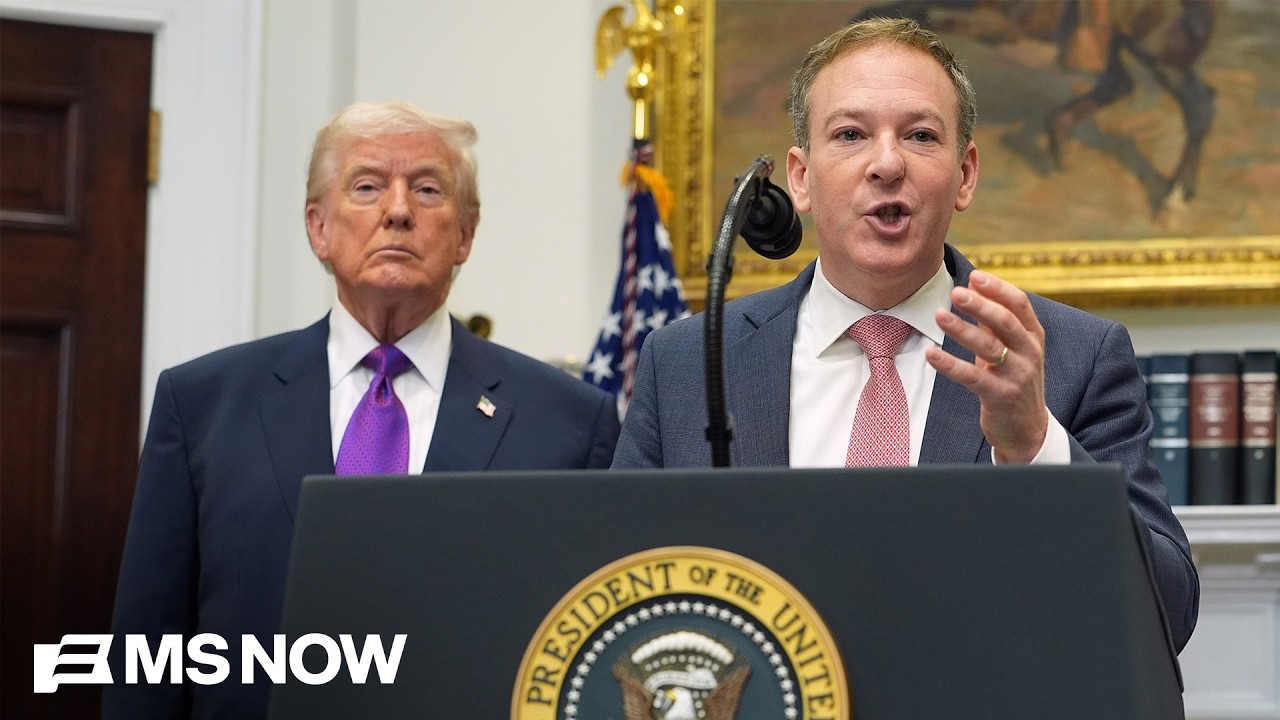
“BIGGEST DEREG IN AM HIST BY FAR”
SO CALLED END FINDING OBAMA ERA; PRICES WENT UP FOR WORSE PRODUCT; NO BASIS IN FACT OR LAW; FF SAVE LIVES; WIND INTERMITTENt MOST COSTLY; DIE NO AC HEATING; RADICal rule --> green new scam mebbe worse than rissia; jobs decimated but coming back bc tariffs; harmed car indist; ford plant wd be closed;
hated start sop feature; ev mandate; had to pay 5 trill$ for pwr stations for ev
car price up 22% biden fo gnscam
#$
CAR START EZIER... DOW
Z HOLY GRAIL OVERREACH; SAVE 1/3 TRILL$; 2400 ON CAR; IDEOL CRUSADE REGU PWR GRAB MOST; TRILLIONS $ STRANGLED, LIMIT CHOICE; LEFTWING WISHLIST EV MANDATE ; abuse? go to church; target am dr; red tape; forced trans to ev; climate partic triphy = startstop; bureaucrats demand; delivers wins cafe duffy ca; jobs;
restores the rule of law?!
...
TIRED OF PLAYING GAMES; EV NO ONE BOUGHT; WE HEARD YOU AND ACTED; COMMITED TO CLEAN AIR LAND AND WATER FOR ALL HARNESS AM GREATNESS? FREEDOM ABD CHOICE, RULE OF LAW VONGR NEVER MADE LAW; NEVER WAVER ON MISSION, GOLDEN AGE OF AM
SPK ONLY OF CAR EMISSION NOT PWR PLANTS?
NO THER PREZ WD DO THIS; 1.3 TRILL SAVINGS
VOUGHT CAMEO
LEE FARM EQUIP JOHN DEER; SMOG NO NEED TO GO TO FINEST SCHOOL TO WORK LAWN MOWER TRMP
WINDMILL ALL MADE IN CHINA GERMANY KILL BIRDS, EYESORE; EUROPE NOT RECOG W/ WIND AND MIGRANTS; MOST EXPENSIVE ENERGY; HOPE NOT 1 BUILT; ENDNGERMENT FOR MILITARY AND AIRLINES
NO ONE DOES MORE FOR HEALTH CARE THAN GOP; DRUG PRICES, BIGGEST EVER
CARS EV NO WORK MULT COMPUTER TO SAVE TINY AMT OF GAS
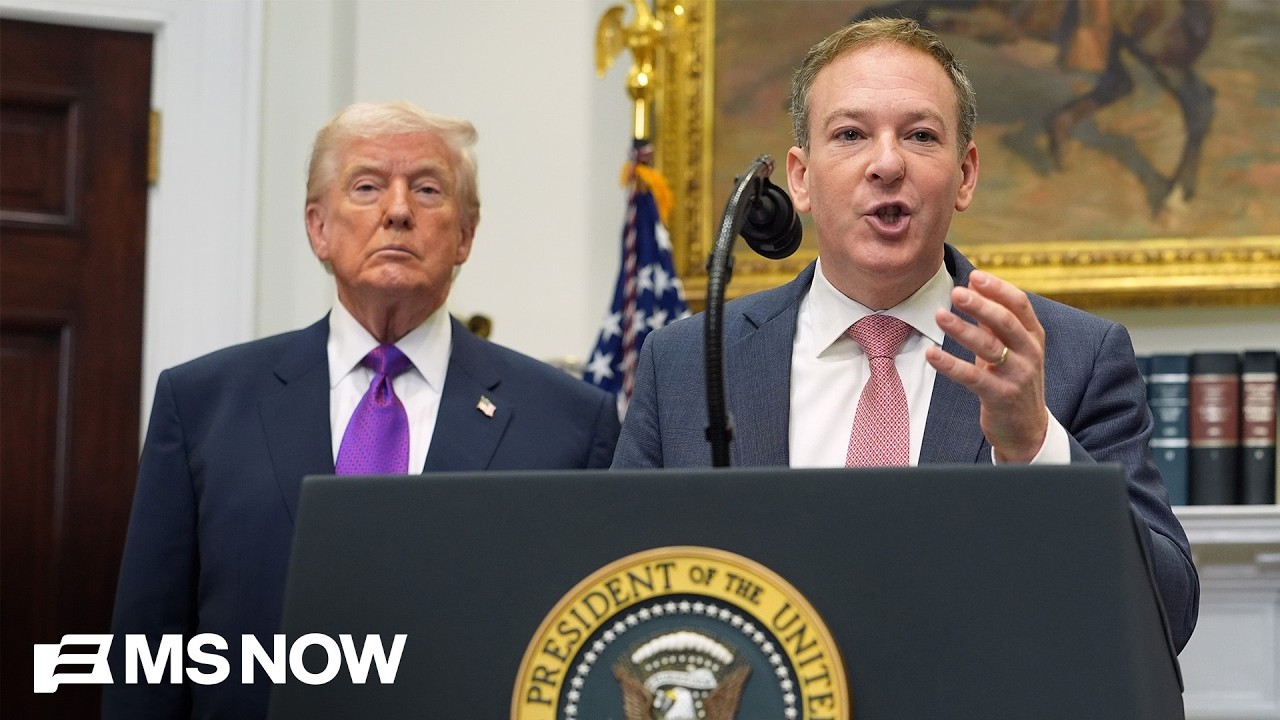
---
---
AN 2 26
President Donald Trump will now have more difficulty withholding money for federal programs appropriated by Congress, thanks to lawmakers from both parties.
The New York Times reported Tuesday that in the government funding package Congress passed last week (which Trump later signed into law) includes language meant to hamstring Trump's attempts to carry out "pocket rescissions," in which he freezes money meant to be disbursed. Language restricting Trump's use of pocket rescissions made its way into all 11 spending bills the president signed, which will last through September 30 of this year.
According to the Times, Republicans in the Senate were more open to restricting executive action withholding spending than their House counterparts. And some more stringent provisions attempting to rein in Trump didn't get enough votes to make it into the final legislation.
Still, the outlet reported that the language "reflects bipartisan frustration with how the White House has attempted to wrest away Congress’s spending powers." And lawmakers aim to use those bills as ammunition in potential legal battles with the Trump administration should the president attempt to withhold Congressionally appropriated money in the future.
"This marks an important milestone and shows that Congress can work together in a bipartisan manner to carry out our Article I responsibilities and deliver results for the people we are honored to represent," said Sen. Susan Collins (R-Maine), who is the chair of the Senate Appropriations Committee.
The Trump administration maintains that despite the language in the bills, the White House never agreed to sign anything that would limit its power over spending in any way. Office of Management and Budget (OMB) communications director Rachel Cauley told the Times: "None of our executive authorities to control spending were compromised by these appropriations bills, which was a red line in our discussions with the Hill."
The Trump administration's pattern of routinely withholding money already appropriated by Congress is a violation of the Impoundment Control Act of 1974, which Congress passed to assert its authority (under Article 1, Section 8 of the U.S. Constitution) during former President Richard Nixon's administration. OMB Director Russ Vought insists that law is illegal.
---
AN 1 26
Loss for Trump as federal judge rules budget chief broke the law to punish blue states
---
an 12 25
Ross Vought is often credited as the architect of Project 2025, and as Donald Trump's director for the Office of Management and Budget, he has helped oversee historically destructive government cuts throughout 2025. In addition to his standing as an "amoral political actor," per a new analysis from The New Republic, what sets him apart from the worst of the White House "hatchet men" is his claim to carry out his actions in the name of his "devout" Christianity.
Writing an extensive breakdown of Vought's tenure as OMB director on Monday, journalist Timothy Noah observed that "conservatives used to think you could be a political hatchet artist or you could serve the Lord." Now, he argued, "they say: Why choose?" This idea is typified by Vought, who has stressed his devout adherence to Christianity throughout his time in politics, suggested that the US is an exclusively Christian nation and written in defense of "Christian nationalism."
"Vought wishes trauma on civil servants and has inflicted same; boasts about turning his think tank into a 'Death Star'; panders to the right’s paranoid streak by claiming Marxists rule America; helps Trump withhold aid to Ukraine illegally after its leader declines to investigate the son of Trump’s 2020 opponent; and impounds congressional appropriations in gleeful defiance of court precedent," Noah wrote. "Pretty sinful, no? Not to Vought. While doing all this Vought proudly declares his deep devotion to the Christian faith."
Vought, he continued, does not practice any form of Christianity devoted to helping the poor or downtrodden, or any sort of "sentimental nonsense about the least among us." Noah highlighted a part of Project 2025 in which Vought decried the US Agency for International Development (USAID) as “a permanent and immiserating feature of the global landscape.”
"That’s a novel way to describe a program to alleviate global poverty," Noah wrote.
According to an October profile of Vought from ProPublica, when it was suggested that the agency's budget be cut in half, he countered that it should be brought as close to zero as possible. An estimate from Boston University estimated that these cuts have been responsible for "640,000 people, 430,000 of them children," with the total deaths estimated later being increased by 38,000.
"... How on earth does the prevailing Christian ethos in Donald Trump’s Washington, as practiced by Russell Vought, align with the Christianity that the goyim have been telling me about my whole life?" Noah wrote in conclusion, suggesting that "Vought would run over his own grandmother to serve his president," and "also do it to please his Creator."
---
MOJO
This story was originally published by theGuardian and is reproduced here as part of the*Climate Desk*collaboration.}:
The Trump administration is breaking up a research center praised as a “crown jewel” of climate research after accusing it of spreading “alarmism” about climate change.
Russell Vought, the director of the White House’s office and management budget, said the National Center for Atmospheric Research (NCAR) in Boulder, Colorado, would be dismantled under the supervision of the National Science Foundation.
“This facility is one of the largest sources of climate alarmism in the country,” he wrote in a social media post. “A comprehensive review is underway & any vital activities such as weather research will be moved to another entity or location.”
The announcement was the latest in a series of climate-skeptic moves by the administration, which has vowed to eliminate what it calls “green new scam research activities.”
It drew fierce condemnation from climate experts, who said the Colorado center was renowned for advances in the study of weather patterns, including tropical cyclones.
Roger Pielke Jr, a senior fellow at the American Enterprise Institute thinktank, told *USA Today*, which first reported the story, that the facility was “a crown jewel of the US scientific enterprise and deserves to be improved not shuttered.”
He added: “If the US is going to be a global leader in the atmospheric sciences, then it cannot afford to make petty and vindictive decisions based on the hot politics of climate change.”
The move was also criticized by Colorado’s governor, Jared Polis, who said it put “public safety at risk.”
“Climate change is real, but the work of NCAR goes far beyond climate science,” he said. “NCAR delivers data around severe weather events like fires and floods that help our country save lives and property, and prevent devastation for families.”
The center employs approximately 830 staff and includes the Mesa Laboratory in Boulder, which Vought said would be shut. It also operates two aircraft for atmospheric research and manages a government-owned supercomputing facility in Wyoming.
The decision to dismantle it is consistent with Donald Trump’s frequent characterisations of climate change as a “con job” or a “hoax.”
The White House has accused the centre of following a “woke direction” and identified several projects that administration officials say are wasteful and frivolous, USA Today reported.
These include a Rising Voices Center for Indigenous and Earth Sciences that seeks to “make the sciences more welcoming, inclusive, and justice-centered,” as well as research into wind turbines, an innovation that Trump has repeatedly denounced.
The administration has already proposed a 30 percent cut to the funding of the National Oceanic and Atmospheric Administration, slashing spending on its climate, weather and ocean laboratories, which work to improve forecasting and better understand weather patterns.
---
an 12 25
Despite being given powers well beyond previous presidents, President Donald Trump has largely outsourced his duties to advisors who are actually running the White House's day-to-day operations, according to a recent analysis.
In a Wednesday op-ed for the New York Times, columnist Jamelle Bouie argued that Trump is mostly "uninterested in anyone except his most devoted fans, and would rather collect gifts from foreign businessmen than take the reins of his administration." Bouie pointed to White House chief of staff Susie Wiles' recent bombshell profile in Vanity Fair, in which she maintained that despite occupying America's highest office, Trump "doesn't know the details" of the "smallish agencies" that his administration decimated earlier this year.
"The president doesn’t know and never will," Wiles said.
Despite Trump being "practically AWOL," Bouie pointed out that he is president at a time when the Supreme Court of the United States (SCOTUS) has dramatically expanded the powers of the executive branch under the philosophy of "unitary executive theory." Under that system, Trump himself is vested with all the powers of the executive branch as outlined in Article II of the U.S. Constitution, which SCOTUS' conservative majority has clarified includes the ability to fire executive branch employees at will — even those at independent agencies.
However, Bouie asserted that the caveat of SCOTUS' new broad definitions of executive power is that Trump is mostly idle, "rarely meets with ordinary Americans" and "is shuttled from one Trump resort to another to play golf and hold court with donors, supporters and hangers-on." He added that SCOTUS' empowering of Trump to act beyond traditional checks and balances has, by default, meant that his cadre of advisors has free reign to run the White House as they see fit.
"[T]here is something ironic at work in this effort to concentrate executive power in the name of constitutional fidelity. It is being done on behalf of a president who is mostly missing from the business of government," Bouie wrote. "The unitary executive lacks an executive. And the president we have isn’t unitary. He has given his newfound power away to a small set of virtually unaccountable advisers, insulated from public outcry and indifferent to public opinion."
These advisors include Office of Management and Budget Director Russ Vought, who Bouie characterized as the "de facto shadow president for domestic affairs," and White House deputy chief of staff Stephen Miller, who the Times columnist called the "shadow president for internal security." Bouie noted that the work of foreign policy — which has always traditionally been seen solely as the president's wheelhouse — is largely being handled by Secretary of State and National Security Advisor Marco Rubio and Defense Secretary Pete Hegseth.
Bouie quoted former President John F. Kennedy, who wrote in the foreword of his advisor Ted Sorensen's 1963 book Decision Making in the White House that the “secret of the presidential enterprise is to be found in an examination of the way presidential choices are made."
"What do we make of a president who chooses not to make these choices?" Bouie wrote.
Click here to read Bouie's New York Times column in full (subscription required).
---
---
AN 12 25
President Donald Trump and his MAGA allies aren't shy about berating users of green energy, from Democrat-controlled states in the U.S. to countries in the European Union (EU). Trump believes that EU countries need to increase their use of fossil fuels, and he attacked the UK (which left the EU) for using wind energy during a meeting with Prime Minister Keir Starmer.}:
Part of the Trump administration's energy policy involves energy grants to individual U.S. states. And according to the Washington Post, government lawyers admitted, in a December 15 court filing, that the decision to cut energy grants was based on partisanship.
Post reporters Meryl Kornfield and Hannah Natanson, in an article published on December 17, explain, "The Trump Administration acknowledged, in a court filing this week, that a decision to cut energy grants during the government shutdown was influenced by whether the money would go to a state that tended to elect Democrats statewide or nationally. Government lawyers also wrote in the filing that 'consideration of partisan politics is constitutionally permissible, including because it can serve as a proxy for legitimate policy considerations.'"
The "remarkably candid admission" in the filing, according to Kornfield and Natanson, "echoes" Trump's "frequent vows to punish cities and states that he sees as his enemies, from withholding disaster relief for Southern California to targeting blue cities with National Guard troops."
The "admission," the Post reporters add, "could also raise the possibility that federal attorneys might make similar arguments in legal challenges to other unilateral cuts implemented by the (Trump) Administration for blue cities and states."
"A coalition of Minnesota clean energy groups and the city of St. Paul sued the Trump Administration last month in the U.S. District Court for the District of Columbia after the Energy Department announced it was slashing 321 grants of about $7.5 billion," Kornfield and Natanson report. "The cuts included projects to kick-start the hydrogen industry in California, upgrade the electricity grid serving Indigenous communities in New Mexico and generate new energy mostly from wind and solar in Minnesota. At the time, Trump's budget director, Russell Vought, touted the cuts on X, declaring 'nearly $8 billion in Green New Scam funding to fuel the Left's climate agenda is being canceled' and listed blue states."
Legal experts interviewed by the Post laid out some reasons why they find Trump allies' actions troubling.
Dan Farber, a law professor at the University of California, Berkeley, told the Post, "It really undermines the idea that you're passing neutral laws that you know are supposed to apply equally to everybody. I find it really startling they would make that concession."
David Super, a law professor at Georgetown University in Washington, DC, told the Post, "I cannot believe that the Supreme Court would want to allow a partisan tit-for-tat to develop with each party pulling grants from its perceived partisan foes, but one can never be entirely certain these days."
*Read Meryl Kornfield and Hannah Natanson's full article for the Washington Post at this link (subscription required).
---
an 11 25
'Desperation': Food bank CEO says some Meals on Wheels recipients haven't eaten 'in weeks'
---
AN 11 25
The Trump administration’s disregard for Congress’s “power of the purse” has raised alarms across Washington, including within his own party. According to a new report from NOTUS, when one top GOP official sought to rein in the president’s monetary power grab, his efforts were swiftly quashed.
As the U.S. Constitution dictates, only Congress has the power to decide how government funds are spent and distributed. Since taking office for his second term, however, President Donald Trump has largely disregarded this rule, refusing to spend certain funds explicitly allocated by Congress, such as $5 billion in previously approved foreign aid payments.
While many Republicans in Congress have gone along with Trump’s withholding of these funds, at least one leading House GOP member attempted to rein things in. Rep. Mario Díaz-Balart (R-FL), vice chair of the House Appropriations Committee, included a provision in a 2026 funding bill for the National Security, Department of State, and Related Programs Subcommittee that would have blunted the tactic Trump has favored for withholding funds, sources close to the matter told NOTUS.
This tactic, known as “pocket rescission,” involves the president requesting that a piece of allocated funding be withheld, giving Congress a certain amount of days to consider the request. This request, however, is made too late in the fiscal year for Congress to respond, and once the calendar ticks over to the next fiscal year, the White House considers the funding officially withheld.
Back in July, Díaz-Balart added a clause to the fiscal bill that would have given Congress 45 extra days to respond to such requests made late in the fiscal year.
The sources that spoke with NOTUS claimed that Russell Vought, director of the White House’s Office of Management and Budget and originator of the pocket rescission strategy, reached out to the GOP congressman to express the Trump administration’s concern over the provision.
Other Republican members of the Appropriations Committee were also reportedly pressured to get the wording out of the bill. These officials then, in turn, applied their own pressure to Díaz-Balart. In short order, the provision disappeared from the bill.
Several GOP committee members, including Rep. Andrew Clyde and Rep. Andy Harris, confirmed that they had conversations with Díaz-Balart about the issue.
For his own part, Díaz-Balart claimed that the original provision was not specifically meant to target Trump or his administration.
“I’ve always believed that Congress has a tendency to always give too much away to the administration — any president, any administration,” the Florida congressman told NOTUS.
===}:
OMFG PUBLIC HEALTH
an 11 25
When President Donald Trump posted a satirical music video on social media in early October depicting his budget director, Russell Vought, as the Grim Reaper lording over Democrats in Congress, public health workers recognized a kernel of truth.
Vought has exerted extraordinary control over government spending this year, usurping congressional decisions on how the nation’s money is used. His push for more layoffs during the government shutdown is only the latest blow, following months of firings, canceled grants, and withheld funds.
By cutting and freezing public health funds, in particular, the Trump administration has already begun to undercut efforts to provide medical care, outbreak response, housing assistance, and research across the U.S., according to health officials, nonprofit directors, and federal agency staffers interviewed by KFF Health News.
Since most federal funds for public health flow to states, Vought is rivaling the Department of Health and Human Services secretary, Robert F. Kennedy Jr., in his ability to upend government-led efforts to keep Americans healthy. In Texas, Centers for Disease Control and Prevention funds to stem a measles outbreak weren’t available until after the crisis had subsided and two children had died. A project to protect Alabamans from raw sewage and hookworm was abandoned. People with HIV have had to delay medical care as clinics scale back hours. Time-dependent surveys on HIV and maternal mortality were halted. Food banks have canceled events. Tobacco prevention programs lapsed. Initiatives to protect older adults at risk of falling have been harried.
No matter what budget Congress ultimately passes for next year, the Trump administration may continue to thwart financial support for such programs in ways that will harm people’s health. “The White House has shown that they are willing to unilaterally exert control over funding,” said Gillian Metzger, a constitutional law professor at Columbia University.
“This is a huge deal,” she added, “because the power of the purse is central to Congress’ ability to shape and direct policy.”
Before he was appointed to lead the White House’s Office of Management and Budget this year, Vought outlined budgetary strategies the executive branch could deploy to wrest power from Congress and federal agencies in Project 2025, the Heritage Foundation’s conservative blueprint.
Vought’s tactics unfolded this year, often below the radar. They include abrupt grant cancellations, extraordinary constraints on how funds can be spent, and excessive layers of review, agency officials say, at every step in the grantmaking process. Getting money out the door has been further complicated by layoffs that have gutted offices overseeing grants on chronic disease prevention, HIV, maternal mortality, and more.
Government employees have described these tactics to members of Congress, said Abigail Tighe, executive director of the National Public Health Coalition, a group that includes current and former staffers at the CDC and HHS. “We want Congress to act, because this is preventing states and communities from doing critical public health work to keep our country safe,” she said. “If they don’t have capacity, we all collectively suffer.”
Democrats on the House and Senate appropriations committees have pushed for transparency, but the extent to which money Congress appropriated for public health in 2024 and 2025 has gone unspent because of the administration’s disruptions is not yet known. “This is a sophisticated strategy to cause money to lapse and then say, ‘If they can’t spend it, they don’t need it,’” said Robert Gordon, a public policy specialist at Georgetown University and a former assistant finance secretary at HHS.
“No one thought this was possible or legal, but that is what’s happening,” he said.
Details on how the administration has subverted health spending have received little attention because many changes have been made quietly — and people who rely on federal funds fear retribution. The Trump administration has defunded and threatened federal offices that hold the government accountable and fired whistleblowers. It has abruptly revoked funds for local governments and organizations.
Vought and spokespeople at the White House and the OMB did not respond to queries from KFF Health News. However, Vought described his intentions in VID] a. He said that federal agencies and Congress had gained more power over spending since the 1970s and that their control became “woke and weaponized” under Presidents Barack Obama and Joe Biden.
“Thankfully, President Trump won,” he said. “And we have now been embarked on deconstructing this administrative state.”
Many Parts, Many Malfunctions
Like a car, the federal budget process has many components that can break down. Through the OMB and its partner, Trump’s Department of Government Efficiency, or DOGE, the administration has intervened at various junctures. “There are so many ways in which money is not operating in the way it is supposed to operate,” said Bobby Kogan, the senior director of federal budget policy at the Center for American Progress, a left-leaning think tank, and a former OMB adviser.
Typically, Congress passes a budget that appropriates money for the next fiscal year to federal agencies. For many public health programs, ranging from housing assistance to cancer screening, agencies then post open calls online for states, local governments, and organizations to apply for funding. Agency experts select winners and send notices of awards — or notices of ongoing funding to groups that previously won multiyear awards.
Next, the OMB, which administers the federal budget, activates money for agencies, like a bank activates a credit card, so that grantees can spend and get reimbursed rapidly. Auditors keep an eye on spending, but the government has in the past limited interruptions so that programs run smoothly.
Early on, the Trump administration canceled billions of dollars in awards granted in 2024 and early 2025 for research and global health. In March, it clawed back $11.4 billion in covid-era funds that Congress had earmarked for health departments that were using the money for disease surveillance, vaccinations, and more.
Although some funds have been restored because of lawsuits, the Supreme Court has allowed other cuts by the administration to stand while the cases move through the courts.
Beyond these “shotgun” cancellations, the administration has taken a quieter, “in-the-weeds, slowing, cutting, conditioning” approach that’s frozen funds for public health, said Matthew Lawrence, a law professor specializing in health policy at Emory University.
By August, the CDC’s center for HIV and tuberculosis prevention had doled out $167 million less than the historical average, according to an analysis by the Center on Budget and Policy Priorities, a think tank focused on reducing inequality. The CDC’s funding for chronic disease prevention lagged by $259 million, the Ryan White HIV/AIDS Program had underspent by $105 million, and funds for mental health at the Substance Abuse and Mental Health Services Administration were more than $860 million behind what was expected.
An unknown amount of Congress’ 2025 funding for research and public health has yet to be awarded and will probably lapse this year, said Joe Carlile, an author of the center’s analysis and an associate OMB director during the Biden administration. The obstructions appear to be concentrated in areas where the White House proposed cutting the federal budget next year. “The administration may be executing their 2026 budget request through administrative controls,” Carlile said.
“This is boring but crazy-high stakes,” he added. “A one-branch veto of spending neuters the power of the purse in the Constitution that Madison said was the fundamental check on the executive branch.”
Incremental Chaos
A key tactic Vought described in Project 2025 occurs when the OMB activates funds for agencies in installments, called apportionments. Vought wrote that “apportioned funding” could “ensure consistency with the President’s agenda.”
Under Vought, the OMB shrank the size of apportionments, HHS and CDC staffers said. It’s illegal for agencies to let grantees withdraw money before the total amount is in the metaphorical bank, so that delayed agencies’ ability to greenlight spending.
The OMB and DOGE also placed conditions on apportionments through memos, footnotes, and spoken directives telling agencies to ensure that spending “aligns with Administration priorities,” according to reports and HHS employees who said that notices of funding opportunities and awards required excessive layers of sign-off. The CDC and other agencies circulated lists of priorities that reflect White House stances, including those targeting diversity, equity, and inclusion efforts; immigration; and transgender rights. Public health efforts have been especially caught up in red tape, since many focus on populations bearing an unequal burden of death, disease, and injury.
Groups that rely on federal funds have largely been unaware of the reasons grants were held up, but they’ve fielded what they viewed as unsettling queries. For example, Kathy Garner, the head of a Mississippi nonprofit, said officials asked her to defend the exclusion of men from a program to shelter women who experienced domestic violence.
Delays were made worse by uncertainty. Grantees said they’ve been unable to reach program officers because tens of thousands of federal workers have been laid off. Agency officials said firings slow funding further.
“Everyone’s inbox is full of letters from grant recipients asking, ‘How do we proceed?’” one high-ranking CDC official told KFF Health News, which granted agency officials anonymity because of their fears of retaliation. “We just say, ‘Please wait.’”
Time was critical as a measles outbreak surged in West Texas early this year. The state asked for federal funding for the response in March, but it didn’t arrive until May, after the outbreak had largely faded in Texas, according to an investigation by KFF Health News. Apportionment control was a key reason, CDC staffers said.
In July, 81 HIV organizations sent a letter to Kennedy. “With every day of delayed FY2025 funding release, the delivery of essential HIV services is compromised,” said the letter, which was reviewed by KFF Health News. Because of delays and uncertainty, it said, HIV clinics had laid off case managers and reduced clinician hours, closed sites, and pared down hotlines that patients call with urgent questions. The funds arrived about a month later, but HIV providers remain shaken.
Lauren Richey, medical director at University Medical Center’s HIV clinic in New Orleans, backed out of hiring a sorely needed dentist she had recruited. “I was afraid to tell someone to move across the country for a job when I wasn’t sure if or when we’d get the funding for their salary,” she said. “The wait is now three to four months for dental services, when it was usually a couple of weeks at most.”
Tamachia Davenport, program director at the St. John AIDS outreach ministry in New Orleans, said that “a lot of us are having to rob Peter to pay Paul.”
When the group didn’t get CDC funds it expected this summer, Davenport had to decide between cutting staff or supplies. Concerned her top employees would take jobs elsewhere, she stopped buying the condoms they distribute throughout the city to prevent the spread of sexually transmitted infections.
Louisiana already has one of the highest rates of HIV, chlamydia, and gonorrhea in the country. Condoms cost far less than treating these diseases. For a person infected by HIV at age 35, such costs exceed $326,000.
Groups focused on cancer, diabetes, and heart disease also report lasting repercussions from delays, as well as ongoing fears that they will happen again. Louisiana State University’s Healthy Aging Research Center canceled some of its workshops to train health workers on caring for people with dementia. “There may be fewer people who have this very specific expertise next year in Louisiana and Mississippi,” said Scott Wilks, the director of the center. “That’s on top of the big shortage we have already.”
Nationwide surveys tallying maternal and infant mortality froze for about five months because of funding delays, causing an irrecoverable gap in data that had been collected continuously since 1987, CDC officials say.
“We are seeing the administration get their way with or without an approved budget,” one said. “It’s such a terrible shame to play with people’s health this way.”
DOGE also inserted itself into grant reimbursements this year, stalling the rapid turnaround that public health groups typically expect to cover salaries, rent, and other monthly costs outlined in budgets that have already been approved. In what’s now labeled Departmental Efficiency Review, itemized expenses must be regularly justified by multiple government officials, according to documents reviewed by KFF Health News.
DOGE posted on its website expense reports covering about a month’s span from April to May. Nearly 230 of the individual expenses filed to federal agencies during that period are for $1 or less. Other entries break down monthly salaries for individual employees and petty costs for postage or monthly subscriptions.
“Public funds deserve scrutiny, but this is different from audit practices I’ve been a part of,” Carlile said.
DOGE also stalled calls for applications for 2025 funding — and some calls never appeared as the fiscal year came to a close on Sept. 30. Among them are programs for groups that provide housing assistance. People will be evicted when these organizations run out of money left over from 2024, said Steve Berg, chief policy officer at the National Alliance to End Homelessness.
Other solicitations came out months behind schedule, leaving groups with a few weeks to put together complicated applications for multimillion-dollar awards, including for Alzheimer’s care, addiction recovery, senior support, and chronic disease management.
“They’ve set projects up to fail,” one HHS official said.
*KFF Health News is a national newsroom that produces in-depth journalism about health issues and is one of the core operating programs at KFF—an independent source of health policy research, polling, and journalism. Learn more about KFF.
---
mapped in bak
no lnx in orig
The Technocrat Engineering a Vast Expansion of Trump's Power
How Russell Vought, an author of Project 2025, is using a once low-profile budget office to decimate federal agencies, fire vast numbers of workers, and test the rule of law.
By Andy Kroll
October 17, 2025
:{“He has centralized decision-making power to an extent that he is the Commander-in-Chief,” a senior official said of Vought.
This article is a collaboration between The New Yorker and ProPublica.*
On the afternoon of February 12th, Russell Vought, the director of the White House Office of Management and Budget, summoned a small group of career staffers to the Eisenhower Executive Office Building for a meeting about foreign aid. A storm had dumped nearly six inches of snow on Washington, D.C. The rest of the federal government was running on a two-hour delay, but Vought had offered his team no such reprieve. As they filed into a second-floor conference room decorated with photos of past O.M.B. directors, Vought took his seat at the center of a worn wooden table and laid his briefing materials out before him.
Vought, a bookish technocrat with an encyclopedic knowledge of the inner workings of the U.S. government, cuts an unusual figure in Trump’s inner circle of Fox News hosts and right-wing influencers. He speaks in a flat, nasally monotone and, with his tortoiseshell glasses, standard-issue blue suits, and corona of close-cropped hair, most resembles what he claims to despise: a federal bureaucrat. The Office of Management and Budget, like Vought himself, is little known outside the Beltway and poorly understood even among political insiders. What it lacks in cachet, however, it makes up for in the vast influence it wields across the government. Samuel Bagenstos, an O.M.B. general counsel during the Biden Administration, told me, “Every goddam thing in the executive branch goes through O.M.B.”
The O.M.B. reviews all significant regulations proposed by individual agencies. It vets executive orders before the President signs them. It issues workforce policies for more than two million federal employees. Most notably, every penny appropriated by Congress is dispensed by the O.M.B., making the agency a potential choke point in a federal bureaucracy that currently spends about seven trillion dollars a year. Shalanda Young, Vought’s predecessor, told me, “If you’re O.K. with your name not being in the spotlight and just getting stuff done,” then directing the O.M.B. “can be one of the most powerful jobs in D.C.”
During Donald Trump’s first term, Vought (whose name is pronounced “vote”) did more than perhaps anyone else to turn the President’s demands and personal grievances into government action. In 2019, after Congress refused to fund Trump’s border wall, Vought, then the acting director of the O.M.B., redirected billions of dollars in Department of Defense money to build it. Later that year, after the Trump White House pressured Ukraine’s government to investigate Joe Biden, who was running for President, Vought froze two hundred and fourteen million dollars in security assistance for Ukraine. “The President loved Russ because he could count on him,” Mark Paoletta, who has served as the O.M.B. general counsel in both Trump Administrations, said at a conservative policy summit in 2022, according to a recording I obtained. “He wasn’t a showboat, and he was committed to doing what the President wanted to do.”
After the pro-Trump riots at the U.S. Capitol on January 6, 2021, many Republicans, including top Administration officials, disavowed the President. Vought remained loyal. He echoed Trump’s baseless claims about election fraud and publicly defended people who were arrested for their participation in the melee. During the Biden years, Vought labored to translate the lessons of Trump’s tumultuous first term into a more effective second Presidency. He chaired the transition portion of Project 2025, a joint effort by a coalition of conservative groups to develop a road map for the next Republican Administration, helping to draft some three hundred and fifty executive orders, regulations, and other plans to more fully empower the President. “Despite his best thinking and the aggressive things they tried in Trump One, nothing really stuck,” a former O.M.B. branch chief who served under Vought during the first Trump Administration told me. “Most Administrations don’t get a four-year pause or have the chance to think about ‘Why isn’t this working?’ ” The former branch chief added, “Now he gets to come back and steamroll everyone.”
At the meeting in February, according to people familiar with the events, Vought’s directive was simple: slash foreign assistance to the greatest extent possible. The U.S. government shouldn’t support overseas anti-malaria initiatives, he argued, because buying mosquito nets doesn’t make Americans safer or more prosperous. He questioned why the U.S. funded an international vaccine alliance, given the anti-vaccine views of Trump’s nominee for Secretary of Health and Human Services, Robert F. Kennedy, Jr. The conversation turned to the United States Institute of Peace, a government-funded nonprofit created under Ronald Reagan, which worked to prevent conflicts overseas; Vought asked what options existed to eliminate it. When he was told that the U.S.I.P. was funded by Congress and legally independent, he replied, “We’ll see what we can do.” (A few days later, Trump signed an executive order that directed the O.M.B. to dismantle the organization.)
The O.M.B. staffers had tried to anticipate Vought’s desired outcome for more than seven billion dollars that the State Department and the U.S. Agency for International Development spent each year on humanitarian assistance, including disaster relief and support for refugees and conflict victims. During the campaign, Trump had vowed to defund agencies that give money to people “who have no respect for us at all,” and Project 2025 had accused U.S.A.I.D. of pursuing a “divisive political and cultural agenda.” The staffers proposed a cut of fifty per cent.
Vought was unsatisfied. What would be the consequences, he asked, of a much larger reduction? A career official answered: less humanitarian aid would mean more people would die. “You could say that about any of these cuts,” Vought replied. A person familiar with the meeting described his reaction as “blasé.” Vought reiterated that he wanted spending on foreign aid to be as close to zero as possible, on the fastest timeline possible. Several analysts left the meeting rattled. Word of what had happened spread quickly among the O.M.B. staff. Another person familiar with the meeting later told me, “It was the day that broke me.”
What Vought has done in the nine months since Trump took office goes much further than slashing foreign aid. Relying on an expansive theory of Presidential power and a willingness to test the rule of law, he has frozen vast sums of federal spending, terminated tens of thousands of federal workers, and, in a few cases, brought entire agencies to a standstill. In early October, after Senate Democrats refused to vote for a budget resolution without additional health-care protections, effectively shutting down the government, Vought became the face of the White House’s response. On the second day of the closure, Trump shared an A.I.-generated video that depicted his budget director—who, by then, had threatened mass firings across the federal workforce and paused or cancelled twenty-six billion dollars in funding for infrastructure and clean-energy projects in blue states—as the Grim Reaper of Washington, D.C. “We work for the President of the United States,” a senior agency official who regularly deals with the O.M.B. told me. But right now “it feels like we work for Russ Vought. He has centralized decision-making power to an extent that he is the Commander-in-Chief.”
At the start of Trump’s second term, Elon Musk’s Department of Government Efficiency, which promised to slash spending and root out waste, dominated the headlines. A gaggle of tech bros, with little government experience, appeared to be marching into federal buildings and, with the President’s blessing, purging people and programs seen as “woke” or anti-Trump. The sight of Musk swinging a chainsaw onstage at a conservative conference captured the pell-mell approach, not to mention the brutality, of the billionaire’s plan to bring the federal government to heel.
But, according to court records, interviews, and other accounts from people close to Vought, DOGE’s efforts were guided, more than was previously known, by the O.M.B. director. Musk bragged about “feeding U.S.A.I.D. into the wood chipper,” but the details of the agency’s downsizing were ironed out by Vought’s office. When DOGE took aim at obscure quasi-government nonprofits, such as the United States Institute of Peace, O.M.B. veterans saw Vought’s influence at work. “I can’t imagine that the DOGE team knew to target all these little parts of the government without Russ pointing them there,” the former O.M.B. branch chief told me. Vought also orchestrated DOGE’s hostile takeover of the Consumer Financial Protection Bureau, crippling a regulator that Republicans had hoped to shutter during Trump’s first term. “DOGE is underneath the O.M.B.,” Michelle Martin, an official with Citizens for Renewing America, a grassroots group founded by Vought, said in May, according to a video of her remarks. “Honestly, a lot of what Elon began pinpointing . . . was at the direction of Russ.”
Vought, who declined to be interviewed for this story, voiced concerns about some of DOGE’s tactics—cancelling budget items that the O.M.B. had wanted to keep, for instance—but he mostly saw the department as a useful battering ram. An Administration official who has worked with Vought and Musk told me that DOGE showed Vought it was possible to ignore legal challenges and take dramatic action. “He has the benefit of Elon softening everyone up,” the official told me. “Elon terrified the shit out of people. He broke the status quo.”
Vought is a stated opponent of the status quo. One of the few prominent conservatives to embrace the label of “Christian nationalist,” he once told an audience that “the phrasing is too accurate to run away from the term. . . . I’m a Christian. I am a nationalist. We were meant to be a Christian nation.” American democracy, he has said, has been hijacked by rogue judges who make law from the bench and by a permanent class of government bureaucrats who want to advance “woke” policies designed to divide Americans and silence political opponents. “The stark reality in America is that we are in the late stages of a complete Marxist takeover of the country, in which our adversaries already hold the weapons of the government apparatus,” Vought said in 2024, during a conference hosted by the Center for Renewing America, a nonprofit think tank that he also founded. “And they have aimed it at us.”
{The central struggle of our time, he says, pits the defenders of this “post-constitutional” order—what he calls the “cartel” or the “regime,” which in his telling includes Democrats and Republicans—against a group of “radical constitutionalists” fighting to destroy the deep state and return power to the Presidency and, ultimately, the people. Vought counts himself as a member of the latter group, which, in his view, also includes right-wing stalwarts such as the political strategist Steve Bannon and Stephen Miller, the architect of Trump’s mass-deportation campaign. “We want the bureaucrats to be traumatically affected,” he said in a private speech in 2023. “When they wake up in the morning, we want them to not want to go to work, because they are increasingly viewed as the villains.”}:
The ultimate radical constitutionalist, Vought says, is Donald Trump. In Vought’s view, Trump, the subject of four indictments during his time out of office, is a singular figure in the history of the American republic, a once persecuted leader who returns to power to defeat the deep state. “We have in Donald Trump a man who is so uniquely positioned to serve this role, a man whose own interests perfectly align with the interests of the country,” Vought said in his 2024 speech. “He has seen what it has done to him, and he has seen what they are trying to do to the country. That is nothing more than a gift of God.” As Bannon put it, sitting onstage with Vought at a closed-door conference in 2023, Trump is “a very imperfect instrument, right? But he’s an instrument of the Lord.”
In Vought’s vision for the U.S. government, an all-powerful executive branch would be able to fire workers, cancel programs, shutter agencies, and undo regulations that govern air and water quality, financial markets, workplace protections, and civil rights. The Department of Justice, meanwhile, would shed its historical independence and operate at the direction of the White House. All of this puts Vought at the center of what Steve Vladeck, a law professor at Georgetown, described to me as the Trump Administration’s “complete disregard” for the law. “The President has no authority to not spend money Congress has appropriated—that’s not a debate,” he told me. “The President has no authority to fire civil servants who are protected by statute—that’s not a debate.” He added, “We are seeing exertions of executive power the likes of which we have never seen in this country.”
Vought, who is forty-nine, has spent his entire adult life in Washington. He met his wife, Mary, on Capitol Hill, where they both eventually worked for Mike Pence, at the time a Republican congressman from Indiana. (The Voughts divorced in 2023.) Yet, after nearly thirty years in the nation’s capital, he still views himself as an outsider. He once described his upbringing, in Trumbull, Connecticut, as “blue collar” and his parents as part of America’s “forgotten men and women.”
Vought’s father, Thurlow, served in the Marines and worked as an electrician. His mother, Margaret, spent more than twenty years as a schoolteacher and administrator. Before they married each other, Vought’s parents had both been widowed in their thirties and left to raise families on their own; Russ was their only child together. In 1981, when Russ was four, one of Thurlow’s daughters died in a car crash. Not long after the accident, Thurlow had a religious awakening. “That completely changed the direction of our immediate family,” one of Vought’s half sisters later wrote on social media.
Vought’s mother helped launch a Christian school, where the curriculum relied heavily on the Bible. One history book the school considered using included the instruction to “Defend the statement that all governmental power and authority come from God.” America was built on Judeo-Christian values, she told a local newspaper, and if the American people gave up on those values “then they’re going to have to pay the price based on sin, sickness, disease and anarchy.”
Vought attended a private Christian high school, then went to Illinois to study at Wheaton College, which is known as the “evangelical Harvard.” He moved to Washington after graduation and, in 1999, landed a job in the office of Phil Gramm, a Republican senator from Texas. Vought, who started in the mailroom, would later say that working for Gramm laid the “conservative foundation” for the rest of his life.
Gramm was an uncompromising budget hawk. He was famous for the “Dickey Flatt test,” named after a printer Gramm knew in Texas. For every dollar of federal spending, Gramm said, lawmakers must ask themselves: Did it improve the lives of people like Dickey Flatt? (In Gramm’s estimation, the answer was often no; every year, he introduced legislation designed to ruthlessly slash the budget.) Years later, when Vought testified before Congress, he said that people like his parents “have always been my test for federal spending. Did a particular program or spending increase help the nameless wagon pullers across our country, working hard at their job, trying to provide for their family and future?”
Under Gramm’s tutelage, Vought developed a reputation as a master of the arcane rules that can get legislation passed or killed. He climbed the ranks of the Republican Party, going on to advise Pence, who was then the leader of the House Republican Conference. But the closer Vought got to the center of congressional power, the more disillusioned he became. In the late two-thousands, when Republican lawmakers, who professed to care about deficits and balanced budgets, voted in favor of bills loaded with corporate giveaways and pork-barrel spending, Vought felt that they were abandoning their principles and duping their constituents. He later recalled of this time, “I would say, ‘If there’s an opinion in this leadership room, I’m telling you it’s ninety-five per cent wrong.’ ” A former Capitol Hill colleague of Vought’s told me, “I think he thought the Republican leadership was a bigger impediment to conservative causes than Democrats were.”
In 2010, Vought quit working for House Republicans and helped launch Heritage Action for America, an offshoot of the influential conservative think tank Heritage Foundation. The foundation was known for dense policy papers and its voluminous “Mandate for Leadership” governing guide. Heritage Action had a different purpose—to strong-arm Republicans in Congress into acting more conservatively.
Vought was instrumental in turning Heritage Action into the interest group that congressional Republicans feared most. He picked fights with Party leaders over agriculture subsidies and greenhouse-gas regulations, and published a scorecard that rated how lawmakers voted on key bills. In Heritage Action’s first year, according to a person familiar with Vought’s work there, he came up with an idea for a mailer that attacked Bob Corker, a Republican senator from Tennessee, for his vote to approve a nuclear-weapons treaty with Russia. The mailer featured a photograph of Corker alongside images of Barack Obama, Vladimir Putin, and the Iranian leader Mahmoud Ahmadinejad. Heritage Action’s tactics so infuriated the Republican leadership that Senator Mitch McConnell called on Heritage donors to stop funding the group. (McConnell did not respond to a request for comment.)
In 2013, Heritage Action announced a campaign to defund the Affordable Care Act. Vought and his colleagues toured the country, whipping up the grass roots, and poured millions of dollars into advertisements and lobbying. They wanted Republicans in the House and the Senate to insist that any spending bill passed to avert a shutdown must also defund Obamacare. The Republican lawmakers who embraced the strategy came to be known as the “suicide caucus,” and their protest led to a sixteen-day government shutdown. In the end, Republican leaders cut a deal to reopen the government, leaving Obamacare intact.
Heritage Action saw the 2016 Presidential election as an opportunity to put a true conservative back in the White House. The group’s C.E.O., Michael Needham, openly supported Senator Ted Cruz, of Texas, who, three years earlier, had helped orchestrate the shutdown. Trump, at least initially, was treated with disdain. During an appearance on Fox News in 2015, Needham called him a “clown” who “needs to be out of the race.”
Vought and Trump couldn’t have been more different: one was a deacon at his Baptist church; the other was a twice-divorced philanderer who had been caught on camera bragging about grabbing women “by the pussy.” But, after Trump won the election, Vought was offered a job as a senior adviser at the O.M.B., where he’d dreamed of working since his days in Phil Gramm’s office. Years later, Vought would say that, at the time, he had no ambition of one day running the agency. He had planned to help with the transition and some of the O.M.B.’s early efforts, then go to seminary to become a pastor. But, he later said in a podcast interview, “God had other plans.”
In March, 2017, Trump signed an executive order that called for a top-to-bottom reorganization of the federal government. Mick Mulvaney, a former congressman, served as Trump’s first budget director, but, inside the O.M.B., Vought took the lead. According to a former senior staffer at the agency, Vought initially pushed for the President’s plan to eliminate U.S.A.I.D. and the Consumer Financial Protection Bureau. He also wanted to fold the Department of Health and Human Services, along with food-stamps programs, into a new Department of Health and Public Welfare. “They wanted to call it that because they think it sounds bad,” a former O.M.B. analyst told me. In one meeting, according to a person in the room, Vought asked, “Why do we do economic assistance abroad at all?” The former O.M.B. analyst said, “There were very few, if any, debates where Russ wouldn’t take the most extreme option available to him, the most conservative, the most budget-cutting.”
Trump’s Cabinet secretaries resisted wholesale cuts. The former senior staffer recalled, “The general counsels at these agencies are calling the White House counsel and saying, ‘We’re not trying to introduce legislation to delete ourselves, are we?’ ” Few of the recommendations in Vought’s final reorganization plan, which was released in 2018, were implemented. But the document now reads like a guide to the second Trump Administration. “I didn’t realize it then,” the former O.M.B. senior staffer told me, “but I was writing the first draft of Project 2025.”
Vought increasingly clashed with the O.M.B.’s staff over proposed cuts to popular programs. Meals on Wheels, the food-delivery program, was a topic of intense debate. Even after O.M.B. staff explained how the program, which received more than nine hundred million dollars in funding from Congress, acted as a lifeline for homebound seniors, Vought and Mulvaney pushed for major cuts that would have hobbled its operations, according to the former O.M.B. senior staffer. The staffer added that it was often hard to reconcile Vought’s deeply held Christian faith—he hosted a prayer session for select colleagues—with his eagerness to cut programs that helped the vulnerable. “It always struck me as a strange thing,” the person said. “There’s compassion, but it only extends to certain people.”
In 2018, Mark Paoletta, a former attorney in the George H. W. Bush White House, joined the O.M.B. as general counsel. Paoletta was best known for publicly defending Clarence Thomas, who, during his Supreme Court confirmation hearing, in 1991, was accused of sexual harassment by his former colleague Anita Hill. Paoletta had worked on Capitol Hill, then entered private practice, where he advised politicians under scrutiny by Congress. Paoletta and Vought quickly forged an alliance. The former O.M.B. branch chief told me that the office’s culture changed after Paoletta arrived. “There was a shift that we were all deep state,” he said. “They thought we were pushing back because we had our own leftist-leaning agenda.” (Paoletta declined to comment.)
It was Vought’s idea to use an obscure budgetary maneuver called a rescission to claw back funds that Congress had already appropriated, according to Paoletta’s remarks at the conservative policy summit. In 2018, at Vought’s urging, Trump sent Congress the largest rescission request in decades, asking lawmakers to roll back more than fifteen billion dollars, including money for U.S.A.I.D.’s Ebola response, the Children’s Health Insurance Program, and an Energy Department loan program for auto manufacturing. O.M.B. employees “looked at us like we were crazy,” Paoletta said. “They just thought it was something they didn’t do.” Once again, Vought’s own party thwarted him: the measure failed by a single vote in the Republican-held Senate.
Vought also encountered resistance inside the White House. When Congress refused to give Trump billions in funding to construct new border fencing, Vought and Paoletta devised a novel strategy. Trump could declare a national emergency at the U.S.-Mexico border, giving him the authority to seize money from other parts of the government. According to Paoletta, John Kelly, the President’s chief of staff, kept the plan from Trump. Paoletta said that Kelly’s message to the O.M.B. was “We don’t want to tell the President he has that authority, because God knows what he’ll do.”
Eventually, Trump badgered Mulvaney, the O.M.B. director, to find him the money for his wall. Mulvaney told the President that he’d been trying to meet with him about the issue, but that Kelly had blocked him. Within days, Trump replaced Kelly with Mulvaney. Vought took over as the acting director of the O.M.B., and money from the Defense Department was tapped to fund the wall. (Kelly did not respond to requests for comment.)
Under Vought, the O.M.B. produced budgets that called for more cuts than any in modern history. Congress all but ignored them. A former staffer in the O.M.B.’s legislative-affairs office recalled that Republicans didn’t believe Trump cared about the sweeping reductions included in his own annual budgets. “They kept saying, ‘The President’s not really pushing this or that cut—that’s a Russ Vought thing, isn’t it?’ ” the legislative-affairs staffer said.
In July, 2019, Trump asked the O.M.B. to freeze hundreds of millions of dollars in security assistance to the government of Ukraine. The request coincided with a phone call Trump had with President Volodymyr Zelensky in which Trump pressured him to investigate Biden and Biden’s son Hunter, who had served on the board of a Ukrainian energy company. The money for Ukraine had already been approved by Congress, but Vought agreed to hold back the funds. Paoletta signed off on a memo authorizing the freeze. Under the law, the move was known as an impoundment. (The Government Accountability Office, an independent nonpartisan agency, later deemed it illegal.)
Any fan of “Schoolhouse Rock!” knows that the first job assigned to Congress in the Constitution is the power of the purse. The President, meanwhile, must “take Care that the Laws be faithfully executed,” according to Article II of the Constitution. Most legal scholars interpret this to mean that the President’s duty is to spend the money Congress appropriates, and that the President does not have the power to withhold funds. In 1969, William Rehnquist, the conservative future Supreme Court Chief Justice, wrote that the impoundment power was “supported by neither reason nor precedent.”
The question of impoundment’s legality came to a head in the nineteen-seventies, when President Richard Nixon withheld billions in congressionally approved funds for environmental-cleanup efforts. Courts undid Nixon’s actions, and Congress eventually passed the Impoundment Control Act of 1974, which outlawed the maneuver, leaving only narrow exceptions—rescissions—that required congressional sign-off. (Democrats are calling for restrictions on the rescission process as part of the current shutdown negotiations.) Over the years, the Impoundment Control Act would come to be viewed as sacrosanct at the O.M.B. That didn’t stop Vought. “I had been personally told, ‘Look, I want the money cut off until we can figure out where it’s going,’ ” Vought later said of the Ukraine funding in an interview with the conservative commentator Tucker Carlson. “It was like all hell broke loose within the bureaucracy.”
The impoundment triggered congressional investigations and, ultimately, Trump’s first impeachment. (Ukraine eventually received the money.) Vought refused to coöperate with investigators, calling the probe a “sham process that is designed to relitigate the last election.” One of the impeachment articles named Vought, saying that the President had pressured him and others not to respond to subpoenas. Trump, for his part, continued to express support for impoundment, calling it the “secret weapon” that could tame the “bloated federal bureaucracy.”
In early 2021, on one of the final days of Trump’s first term, Vought visited him in the Oval Office. Both men felt a sense of unfinished business, Vought would later recall. Only a few months earlier, when Vought was sworn in as the O.M.B. director, Trump had told him that, after three and a half years as President, he had finally got the hang of the job. “Russ, we’ve got to get another term,” Trump said. “We finally figured out how to do this.”
Vought, frustrated by what he saw as years of obstruction by civil servants, had recently pushed through a new policy to vastly expand the number of at-will employees in the government, making them easier to fire. But the COVID-19 pandemic had dashed any chance of leaving the government smaller than he’d found it. Trump had signed trillion-dollar stimulus bills to prop up the American economy; by the time he left office, the national debt had swelled by $7.8 trillion. After the violence on January 6th, a second Trump term looked less likely than ever. Vought, however, had not given up hope.
In the Oval Office, he told Trump that he would soon launch a new political operation that would keep the MAGA movement alive while attacking the policies of the incoming Biden Administration. Trump blessed the venture, with one request. That summer, in the wake of George Floyd’s murder, national protests had forced a racial reckoning in the country. Trump wanted Vought, who as O.M.B. director had scrubbed training materials for federal employees of any references to “white privilege” and “systemic racism,” to find a way for conservatives to push back against the Black Lives Matter movement. “This was an assignment I was given from President Trump,” Vought later recalled. “I’m the budget guy. If I can talk about race, you can talk about race.”
A few days after Trump left office, Vought announced the launch of the Center for Renewing America, a MAGA think tank that aspired to act as an incubator for future Republican Administrations. Its activist arm, Citizens for Renewing America, would mobilize grassroots supporters to pressure elected officials to embrace the think tank’s agenda. The overarching goal, Vought wrote in an op-ed for the Federalist, was to “restore an old consensus in America that has been forgotten, that we are a people For God, For Country, and For Community.”
At the Center for Renewing America, Vought surrounded himself with other radical constitutionalists from the first Trump Administration. He brought on Jeffrey Clark, the Justice Department official who had tried to use his agency to help Trump overturn the 2020 election. (A D.C. disciplinary board recently recommended that Clark, who now works at the O.M.B., lose his law license as punishment for those efforts, an outcome that Clark is appealing and that his lawyer called a “travesty of justice.”) Kash Patel, Trump’s current F.B.I. director, and Ken Cuccinelli, a top immigration official in the first Trump Administration, joined as senior fellows. Working at the center, Cuccinelli explained at the conservative policy summit, allowed him to “stake out the outer boundary of reasonable constitutional law.”
The Center for Renewing America’s ideas included how the President could invoke the Insurrection Act to deploy military troops to American cities to put down protests; how the White House could freeze billions in federal funding without waiting for a vote in Congress; and how agency leaders could defy government unions and fire workers en masse. The think tank also set out to create shadow versions of the O.M.B. and of the Justice Department’s Office of Legal Counsel to anticipate legal challenges and counter internal pushback. In his 2024 address, Vought explained, “I don’t want President Trump having to lose a moment of time having fights in the Oval Office about whether something is legal or doable or moral.”
Vought and his colleagues at the center also worked closely with the House Freedom Caucus to urge other congressional Republicans to use government shutdowns as a way of forcing through major policy changes. One of their first targets was critical race theory, a once obscure academic concept that had become a flashpoint during the 2020 racial-justice protests. According to previously unreported recordings of briefings held by Citizens for Renewing America, Vought said that he had pressured members of the Freedom Caucus to yoke a ban on critical race theory to must-pass bills on raising the debt limit and funding the government. “We have to have a Speaker that goes into these funding fights with a love for the shutdowns,” Vought said during a November, 2022, briefing call, “because they create an opportunity to save the country.”
But Republicans never shut down the government during the Biden Presidency, and Vought grew increasingly frustrated with them for not using more aggressive tactics. On one briefing call, he praised Cori Bush, a progressive Democrat from Missouri, after she camped out for several days on the Capitol steps to protest the end of a pandemic-era moratorium on evictions. Vought called her politics “very, very bad,” but he admired her methods: “We need this from Republicans.”
The centerpiece of Vought’s work during the Biden years was his campaign to popularize the concept of “woke and weaponized” government. The tagline brought together two of Vought’s rallying cries: “woke” policies, like diversity, equity, and inclusion efforts and transgender rights, and a “weaponized” F.B.I. and Justice Department that had allegedly been wielded against the Democrats’ political enemies, including, most notably, Trump. When the Center for Renewing America released a federal budget blueprint in late 2022, calling for nearly nine trillion dollars in cuts in the course of ten years, the word “woke” appeared seventy-seven times across a hundred and three pages.
Jessica Riedl, a budget expert who works for the conservative Manhattan Institute, told me that it was “just silly” to claim, as the Center for Renewing America’s budget did, that Veterans Affairs, the Occupational Safety and Health Administration, and farm subsidies required enormous cuts for being too woke. “It’s a way to dress up spending cuts that aren’t popular on their own merits,” Riedl said. Vought described his framing as an attempt to “change paradigms.” “We have to be able to defund agencies,” he said in the private speech in 2023. “That is why these things have to be indelibly linked, and that is why we are focussing so much on ‘woke and weaponized.’ ”
Any hope that Vought had of implementing his ideas in a second Trump Administration nearly ran aground last summer. He had written a chapter of Project 2025’s eight-hundred-and-eighty-seven-page report, arguing for an expansion of executive power that would put the Justice Department and other traditionally independent agencies fully under Presidential control. Center for Renewing America fellows had written two more chapters in the report. But, as Election Day neared, Project 2025 became a liability for the Trump campaign. Polls showed that a majority of Americans opposed its most aggressive proposals, including removing the abortion drug mifepristone from the market, eliminating the Department of Education, and implementing Vought’s plan to more easily fire nonpolitical federal workers. As criticism of Project 2025 grew, Trump insisted that he knew “nothing” about it, while also claiming that “some of the things they’re saying are absolutely ridiculous and abysmal.”
The month before the election, Politico reported that Donald Trump, Jr., had compiled a list of people who would not be allowed to serve in a second Trump Administration, including a number of leading contributors to Project 2025. But, according to a former Trump campaign official with close ties to the White House, Vought deftly navigated the controversy. “Russ is a consummate team player,” the official told me. “He was the one person at Project 2025 that we could have a conversation with during the course of the campaign.”
A week after Trump’s victory, the President-elect announced his plans for the Department of Government Efficiency. “It will become, potentially, ‘The Manhattan Project’ of our time,” Trump said in a statement. He tapped two of his biggest backers to run it: Elon Musk, who had donated nearly three hundred million dollars to help elect Trump and other Republicans, and the biotech entrepreneur Vivek Ramaswamy, who briefly ran for President on an anti-woke platform. Two days after the announcement, Vought met with Musk and Ramaswamy at Mar-a-Lago. Vought and Musk “hit it off,” according to the Times; both were “on the same wavelength in terms of taking the most extreme action possible.” Soon after the meeting, Trump nominated Vought to run the O.M.B.
One of DOGE’s first targets was the Consumer Financial Protection Bureau. The C.F.P.B. had first been proposed by Senator Elizabeth Warren, who, as a law professor, argued for the creation of a regulator that could protect Americans from predatory mortgages and hidden fees. Created by law in the wake of the 2008 financial crisis, the bureau developed a reputation as an aggressive enforcer of fair-lending and consumer-protection laws. The bureau’s work has led to nearly twenty billion dollars in direct relief to consumers and five billion dollars in civil penalties for alleged wrongdoing. For Vought, the bureau embodied the gross regulatory overreach that he loathed; outside of government, the agency’s biggest foes, Wall Street and Silicon Valley, were major funders of Trump’s second campaign.
On February 7th, Trump named Vought the bureau’s acting director, a role he would perform on top of his duties at the O.M.B. That morning, a small team of DOGE staffers arrived at the C.F.P.B.’s headquarters. According to previously unreported e-mails and depositions, the members of DOGE took orders from Vought as they disabled the C.F.P.B.’s website and decided which of the agency’s employees to fire. Musk weighed in on X: “CFPB RIP.”
Trump had targeted the C.F.P.B. during his first term. “There were days in Trump One where it felt like we were getting punched in the face,” one longtime employee told me. Over time, however, the President seemed to lose interest, and the C.F.P.B.’s last director under Trump, a political appointee named Kathy Kraninger, supported the bureau’s mission. In 2020, under Kraninger, the C.F.P.B. filed the second-highest number of enforcement actions in its nearly ten-year existence.
Current and former C.F.P.B. staff told me that they assumed a second Trump Administration would look like the first one. “Generally, we thought there would be a conservative agenda we’d be handed, and we’d figure out how to enact it,” the veteran employee said. Soon after taking over, Vought informed Jerome Powell, the chairman of the Federal Reserve, which funds the C.F.P.B., that the agency would not need any more money. He barred C.F.P.B. employees from doing most types of work and told them not to go to the office. When confusion arose over what duties, if any, remained for the staff to do, Vought clarified the matter in a February 10th e-mail, telling employees to “stand down from performing any work task.”
In the following weeks, Vought and Paoletta stopped oversight activities, quashed ongoing investigations, and froze active enforcement cases, which included matters involving some of the largest banks in the nation, such as JPMorgan Chase, Bank of America, and Capital One. Rohit Chopra, the bureau’s director under Biden, said that Vought’s actions had put the C.F.P.B. “in a coma.” The bureau’s top enforcement officer resigned in June, writing in a letter to colleagues that the C.F.P.B.’s leadership “has no intention to enforce the law in any meaningful way.”
The final blow came when Vought announced a plan to lay off more than eighty per cent of the C.F.P.B.’s employees. A federal appeals court ruled in August that the mass-firing plan could proceed. It took Vought four months to accomplish what the previous Trump Administration had been unable to do in four years.
The unwinding of the C.F.P.B., however, was quickly overshadowed by another Vought victory. That same month, he completed his assault on foreign aid. Secretary of State Marco Rubio, who had been running what was left of U.S.A.I.D., announced that, with Trump’s approval, he had empowered Vought to officially eliminate the agency. “Russ is now at the helm to oversee the closeout of an agency that long ago went off the rails,” Rubio announced. “Congrats, Russ.”
Four months before the 2024 election, the Center for Renewing America had welcomed a small group of congressional staffers to its headquarters, a few blocks from the Capitol. Some of them worked for the House and Senate Budget Committees, which every year help set spending levels for the federal government. The purpose of the meeting was to brief the staffers on the center’s latest policy fight—an attempt to build the case for the use of impoundment.
At the briefing, Paoletta argued that the Impoundment Control Act was unconstitutional. Spending laws passed by Congress were a ceiling, not a floor, Paoletta argued, according to a person in the room. In that view—which most legal experts dismiss as a fringe position—the White House is not permitted to spend more than a law calls for, but it has the power to spend far less. “Congress passes statutes episodically, and often with conflicting purposes and demands,” Paoletta later wrote in an essay for the Center for Renewing America. “It is left to the President and his subordinates to harmonize their execution in a coherent manner.”
According to Democrats on the House Appropriations Committee, the Trump Administration has since frozen or cancelled more than four hundred and ten billion dollars in funding on everything from energy subsidies for low-income households and Head Start after-school programs to President George W. Bush’s H.I.V.-reduction initiative, PEPFAR, and artists’ grants from the National Endowment for the Humanities. Vought directed the National Institutes of Health to withhold—illegally, according to the Government Accountability Office—an estimated fifteen billion dollars in grants for outside research projects. The N.I.H. also moved to cap funding for so-called indirect costs, which research universities rely on to pay for their buildings, utilities, and administrative staff. Scientists I interviewed said that these cuts would inevitably lead to less medical research, including into a drug that Vought’s ex-wife credited with improving the life of their eleven-year-old daughter, who was born with cystic fibrosis. A scientist who receives government funding to study cystic-fibrosis treatment told me that, without sufficient money for indirect costs, “we probably won’t be able to do the research and will have to relinquish the grants.”
The O.M.B. claims that it is vetting federal spending to insure that the money does not fund “woke” programs. “We can confirm that President Trump and Director Vought are carefully scrutinizing spending that has previously run on autopilot or worse—toward transing our kids, the Green New Scam, and funding our own country’s invasion—just as the president promised,” an O.M.B. spokesperson told the Times in August. But blocking funds is also a way to pressure officials and agencies to comply with the Administration’s demands. “O.M.B. is like a giant funnel that everything has to go through in order to happen,” Lester Cash, a former O.M.B. employee, told me. “You can get agencies to agree to things just to get the funnel to open back up.”
In March, the O.M.B. took down a legally mandated public website that made it possible to track the funding freezes. The move elicited a rare show of bipartisanship. In a letter to Vought, the Democratic and Republican leaders of the House and Senate Appropriations Committees urged him to “restore public access to apportionment data in accordance with statute.” Vought said the information listed on the site was “predecisional” and a risk to national security. The O.M.B. restored the site only when a judge ruled that taking it down was illegal, saying that the government’s position relied “on an extravagant and unsupported theory of presidential power.”
The O.M.B.’s funding freezes have wreaked havoc. On June 30th, the Department of Education told state agencies that congressional appropriations for after-school activities and English-as-a-second-language instruction would not arrive the next day, as planned. The unexpected shortfall affected thousands of school districts, which served millions of students, in all fifty states. The Administration only backed down after both Democrats and Republicans criticized the move. “When something’s been appropriated, signed into law, and people are writing contracts based on the commitment of the federal government, and then they don’t know if they’re going to get it or not, it creates such chaos,” Don Bacon, a Republican House member from Nebraska, told me. “I’m not sure what the O.M.B. director thought he was doing.” (A spokesperson for Vought at the O.M.B. would not comment on the record in response to a detailed list of questions.)
In June, Trump sent a rescission request to Congress, seeking to cancel roughly nine billion dollars in funding for foreign aid and for the Corporation for Public Broadcasting, which supports NPR, PBS, and other public radio and TV stations nationwide. The programs were viewed, the senior agency official told me, as “soft targets,” a test to see if Vought could persuade Republicans to put aside their concerns about undermining Congress’s power of the purse. Unlike in Trump’s first term, Vought’s rescission plan succeeded. The measure, which faced opposition from Democrats and a few Republicans, passed after Vice-President J. D. Vance cast two tie-breaking procedural votes. Jeff Merkley, the top Democrat on the Senate Budget Committee, told me, “You’ve basically said to Congress, ‘Hey, compromise all you want, but we’re going to undo that in the way we want as soon as you’ve signed the bill.’ ”
On the Friday before Labor Day, Vought made his most audacious move yet. The White House sent Congress a new rescissions package, targeting nearly five billion dollars in foreign aid. But this time Vought informed lawmakers that he didn’t need their approval. He asserted that the President could make the request, putting a temporary freeze on the funds, then simply wait for the fiscal year to expire, on September 30th, at which point the money would be cancelled out. Vought called it a “pocket rescission,” but it was impoundment by another name. Susan Collins, a Republican from Maine, who chairs the Senate Appropriations Committee, said it was a “clear violation of the law.”
The Government Accountability Office can sue the O.M.B. over an impoundment or pocket rescission to get the money released. In April, Gene Dodaro, who leads the Government Accountability Office, testified that his office had opened thirty-nine investigations into potential violations of the Impoundment Control Act by the Trump Administration. The O.M.B. has responded by attacking Dodaro’s agency. In one letter, Paoletta said that the O.M.B. would coöperate with the Government Accountability Office only if its demands didn’t get in the way of Trump’s agenda. In another letter, Paoletta told the Department of Transportation to ignore a Government Accountability Office ruling that found that the O.M.B. had illegally impounded money for electric-car development. Vought, for his part, has flatly declared that the Government Accountability Office “shouldn’t exist.”
Vought’s actions could provoke a challenge to the Impoundment Control Act in the Supreme Court. In the meantime, a number of current and former government employees told me that they worried about the long-term consequences of what he has already done: the terminating of vital research projects that could have led to life-saving breakthroughs; the nation’s lost standing as an international leader; the uncertainty cast over the fundamental workings of government. “They’ve given up on the idea that they need to persuade anybody,” Bagenstos, the former general counsel at the O.M.B., said of Vought and Paoletta. They’re “just going to use brute force and dominance.” As the former O.M.B. analyst told me, “They’ve dropped a grenade into the system.”
The government shutdown has illustrated, in the starkest terms, Vought’s expansive theory of executive power and his willingness to ignore Congress. On October 2nd, Trump posted on Truth Social that he would meet with Vought to decide which “Democrat Agencies” to cut on a temporary or permanent basis. A few days later, the O.M.B. released a memo claiming that, seemingly in defiance of a 2019 law, furloughed federal employees were not guaranteed back pay following a shutdown. Then, on October 10th, Vought announced that his campaign of mass firings across the bureaucracy had begun. So far, more than four thousand employees have been laid off, disrupting government services devoted to, among other things, cybersecurity efforts, special-education programs, substance-abuse treatment, and loans for small businesses. A federal judge put a temporary stop to the cuts, but that same day Vought predicted that the total number of firings would be “north of ten thousand.” As one official texted me, “Trauma achieved.” ♦
ProPublica is a nonprofit newsroom that investigates abuses of power. Sign up to get stories like this one as soon as they are published.*}:
Published in the print edition of the October 27, 2025, issue, with the headline “The Shutdown Artist.”
*The New Yorker
Andy Kroll, an investigative reporter at ProPublica, is the author of the book “A Death on W Street.”
---
an pp 10 258 THINGS YOU SHD KNOW
On the second day of the federal government shutdown, President Donald Trump shared an AI-generated video set to the classic song “(Don’t Fear) The Reaper” by Blue Öyster Cult. The star of that video, which quickly went viral, was Russell Vought, the president’s top budget adviser. More than that, Vought is the architect of Trump’s broader plan to fire civil servants, freeze government programs and dismantle entire agencies, and he’s a big reason the second Trump administration has been more effective at accomplishing its goals than the first. In the video shared by Trump, Vought appeared as the scythe-wielding Grim Reaper of Washington, D.C.
Vought’s title is director of the Office of Management and Budget. The OMB directorship is one of the most powerful jobs in Washington, and Vought has used his position to wage a quiet war to change the shape of the entire U.S. government. In Vought’s hands, OMB has acted as a choke point for the funding that Congress approves and agencies rely on to run the government. While he tends to operate behind the scenes as much as possible, his influence in Trump’s second administration is so pronounced that people have described him as akin to a shadow president.
Here are some of the key things you should know about Vought. Read ProPublica’s full investigation here. (Vought declined to be interviewed for the article. A spokesperson for him at OMB would not comment on the record in response to a detailed list of questions.)
1. Vought went from the mail room to becoming the chief antagonist of his own party.
A native of Trumbull, Connecticut, and the son of an electrician father and a mother who spent decades in public education before helping to launch a Christian school, Vought got his first job in D.C. politics working in the mail room for Republican Sen. Phil Gramm of Texas, a fierce budget hawk known for criticizing members of his own party for breaking what he viewed as core conservative principles.
As Vought rose through the GOP ranks, eventually going on to advise then-Rep. Mike Pence, he grew disillusioned with members of his party who claimed to care about balanced budgets and spending cuts yet voted to approve bills loaded with pork-barrel spending and corporate giveaways.
In 2010, he quit Congress and helped launch an offshoot of the Heritage Foundation think tank called Heritage Action for America, which was tasked with strong-arming congressional Republicans to act more conservatively.
“I think he thought the Republican leadership was a bigger impediment to conservative causes than Democrats were,” a former Capitol Hill colleague of Vought’s said.
2. OMB’s massive power supercharges Vought’s influence.
While the Office of Management and Budget is part of the White House, Vought is a member of Trump’s cabinet along with the secretary of defense and attorney general. OMB director has little of the cachet of those jobs, but it plays a vital role. Every penny appropriated by Congress first passes through the OMB. It also reviews all significant regulations proposed by federal agencies, vets executive orders before the president signs them and issues workplace policies for more than 2 million federal employees.
“Every goddam thing in the executive branch goes through OMB,” explained Sam Bagenstos, a former OMB official during the Biden administration.
3. Vought’s early work at OMB helped lead to Trump’s first impeachment.
This isn’t Vought’s first stint as OMB director; he held the same position during the first Trump administration.
In 2019, after the Trump White House pressured Ukraine’s government to investigate then-candidate Joe Biden and his son Hunter, it asked Vought, then acting director, to freeze $214 million in congressionally approved security assistance for Ukraine. He obliged.
This impoundment, later deemed illegal by the Government Accountability Office, would trigger congressional investigations and, ultimately, Trump’s first impeachment. During that process, Vought refused to cooperate with investigators, calling the probe a “sham process that is designed to relitigate the last election.”
After the attempt to freeze the Ukraine funds ultimately failed, Vought and Mark Paoletta, an attorney and close ally of Vought’s, spent the years between Trump’s presidencies developing a legal argument that not only are such impoundments legal, but there is a long history of presidents using the power. (Legal experts have disputed Vought’s version of that history.)
4. Vought played a surprising role in popularizing the phrase “woke and weaponized.”
In 2021, Vought launched the Center for Renewing America, a think tank devoted to keeping the MAGA movement alive and preparing for a second Trump presidency. According to previously unreported recordings obtained by ProPublica, Vought accepted an assignment from Trump to come up with a way for conservatives to counter Black Lives Matter. He popularized the concept of “woke and weaponized” government — a phrase embraced by GOP politicians and activists to disparagingly label policies, people and even agencies that didn’t fit with the MAGA agenda.
“If you’re watching television and the words ‘woke and weaponized’ come out of a politician’s mouth, you can know that this is coming ... from the strategies we’re putting out,” Vought boasted in a recording obtained by ProPublica.
When Vought’s think tank released a federal budget blueprint in 2022, calling for $9 trillion in cuts over 10 years, the word “woke” appeared 77 times across its 103 pages.
5. Vought’s vision for what would become Project 2025 began during Trump’s first term.
In 2017, while an adviser at OMB, Vought played a lead role in trying to implement a Trump executive order that called for a top-to-bottom reorganization of the federal government. A former OMB senior staffer said Vought initially wanted to eliminate the U.S. Agency for International Development and the Consumer Financial Protection Bureau, and to fold the Department of Education and the Department of Housing and Urban Development, along with food stamps programs, into a new Department of Welfare. “They wanted to call it that because they think it sounds bad,” a former OMB analyst said. “There were very few, if any, debates where Russ wouldn’t take the most extreme option available to him, the most conservative, the most budget-cutting.”
Trump’s Cabinet secretaries at the time resisted wholesale cuts, and few of the plans reached fruition. But Vought’s suggestions now read like a guide to the second Trump administration, which has gutted both USAID and the CFPB and is hollowing out the Department of Education.
“I didn’t realize it then,” the former OMB staffer said, “but I was writing the first draft of Project 2025.”
6. Vought’s role shows Project 2025 has indeed shaped the administration.
Vought was a key figure in the work of Project 2025, the coalition of conservative groups that created a roadmap and recruited future appointees for the next Republican administration. He led Project 2025’s transition portion, which included writing some 350 executive orders, regulations and other plans to more fully empower the president. “I don’t want President Trump having to lose a moment of time having fights in the Oval Office about whether something is legal or doable or moral,” Vought said in a private 2024 speech.
During the 2024 campaign, Trump repeatedly claimed to have nothing to do with Project 2025. His campaign aides criticized the initiative, and news reports suggested that Project 2025 leaders would be blacklisted from working in the Trump White House.
But Vought deftly navigated the controversy, and Trump brought him back to OMB. Meanwhile, the administration has moved quickly to fulfill many of Project 2025’s policy objectives. Early on in this month’s government shutdown, when Trump announced that he would soon meet with Vought to decide which “Democrat Agencies” to temporarily or permanently cut, he referred to his budget director as “Russ Vought, he of PROJECT 2025 Fame.”
7. Elon Musk and DOGE often acted at Vought’s direction, insiders say.
Elon Musk, Tesla’s CEO and the world’s wealthiest person, may have grabbed the headlines as his Department of Government Efficiency took a chainsaw to budgets and staffing. But court records, interviews and other accounts from people close to Vought show that DOGE’s efforts were guided, more than previously known, by the OMB director.
“I can’t imagine that the DOGE team knew to target all these little parts of the government without Russ pointing them there,” a former OMB branch chief told ProPublica.
In May, an official with Citizens for Renewing America, a group founded by Vought, credited Vought with steering DOGE’s cuts. “DOGE is underneath the OMB,” the official said, according to a video of her remarks. “Honestly, a lot of what Elon began pinpointing … was at the direction of Russ.”
An administration official who has worked with Vought and Musk told ProPublica that DOGE showed Vought that it was possible to ignore legal challenges and take dramatic action. “He has the benefit of Elon softening everyone up,” the official said. “Elon terrified the shit out of people. He broke the status quo.”
8. Vought has used OMB to try to pressure Democrats into reaching a deal with Republicans to end the shutdown.
Vought has frozen $26 billion in federal funding for infrastructure and clean energy projects in blue states in the days after the federal government shut down on Oct. 1. The government has also followed through on Vought’s earlier threat to fire a massive number of civil servants if the shutdown were not averted.
“We work for the president of the United States,” a senior agency official who regularly deals with the OMB told ProPublica. But right now, he added, “it feels like we work for Russ Vought. He has centralized decision-making power to an extent that he is the commander in chief.”
Kirsten Berg contributed research.
an 10 25
After President Donald Trump returned to the White House almost nine months ago, his administration carried out an aggressive campaign to downsize a range of federal government agencies. And it did so with the help of the Department of Government Efficiency (DOGE), which was led by Tesla/SpaceX/X.com head Elon Musk at the time.
Agencies ranging from the Internal Revenue Service (IRS) to the U.S. Department of Veterans Affairs (VA) to the U.S. Social Security Administration (SSA) were targeted for mass layoffs. Another was the U.S. Department of Energy (DOE).
In a Canary Media article republished by Mother Jones on October 16, journalist Maria Gallucci details the Trump Administration's push to eviscerate the Energy Department's Office of Clean Energy Demonstrations (OCED) — a move that might have killed a lot of job creation.
"The Office of Clean Energy Demonstrations was supposed to be a launchpad for ambitious projects to help America lead the way on cleaner power and manufacturing. Now, it's been reduced to a shell of itself," Gallucci explains. "As the Trump Administration slashes spending and fires workers across the federal government, the U.S. Department of Energy has emerged as one of the hardest-hit agencies — and perhaps no other of its divisions has been singled out as deliberately as OCED…. The situation is best summarized by the budget the White House has requested for OCED for the next fiscal year: $0."
According to Gallucci, this is a "dramatic reversal" from former President Joe Biden's energy policies.
"During the Biden Administration," Gallucci explains, "Congress endowed it with nearly $27 billion to try to scale up cutting-edge technologies that could curb planet-warming pollution from industrial facilities and power plants. Trump officials have, in recent months, hollowed out the office, canceling billions in previously issued awards for everything from low-carbon chemical manufacturing to rural energy resiliency, while also dismissing over three-quarters of its employees…. Experts and insiders warn that the tumult within OCED and the DOE more broadly is eroding the private sector's trust in the federal government and its ability to drive energy innovation."
Advait Arun of the Center for Public Enterprise told Gallucci that the Trump Administration "has really created a chilling effect on the willingness of future early-stage technology developers to work with the Department of Energy."
A former OCED staffer, interviewed on condition of anonymity, told Gallucci, "We are eliminating ourselves as a leader in the clean energy space, especially for the industrial complex. What I'm seeing is China is about to slip right into that position. Just logically and economically, I don't understand the steps that are being taken."
*Read Maria Gallucci's full article at this Mother Jones link.
---
---
10/10/2025 rww
In the years before he was murdered, Turning Point USA founder Charlie Kirk had transitioned the group away from its libertarian leanings and toward a dominionist Christian nationalist ideology and agenda. It appears that the group’s current leadership is continuing that shift.
TPUSA Faith, the group’s religious organizing arm, is hosting a “pastor roundtable” featuring two Christian nationalists, Oklahoma state Sen. Dusty Deevers and author and former Trump administration official William Wolfe, according to a flyer Deevers posted on his X account Wednesday. Both men have connections to extreme Christian nationalist Doug Wilson, who has been in the news recently, both for his claim that women should not have the right to vote and for his efforts to strengthen his influence within the Trump administration.
Right Wing Watch noted recently, “Few elected officials can match Oklahoma state Sen. Dusty Deevers in their desire to see the United States turned into a Christian nationalist theocracy.” Deevers calls the separation of church and state “blasphemous.” In a sermon at Wilson’s Idaho church last year, Deevers declared that it is the duty of civil leaders to “submit” to the authority of Christ. He has called on Christian men to “make offensive war on the gates of hell” and “dominionize” the world.
Wolfe is an ardent Christian nationalist who declared in 2023 that "we are getting close" to a point where Christians will have to "heed the call to arms." Wolfe has charged that Democrats are Marxists and “violent revolutionaries” and claimed that “the Democrats hate God, they hate family, they hate marriage, they hate children, they hate our nation." At the far-right National Conservatism conference this year, he called for a “Protestant Christian Political Manhattan Project.”
Wolfe was a visiting fellow at OMB Director Russ Vought’s Center for Renewing America, which identified Christian nationalism as a priority for the Trump administration. Early in Trump’s second term, he celebrated that the administration was being filled with “people who are our guys.” After meeting with Trump in March, Wolfe declared, “This is our land and we've had it really sort of violently taken away from us by radical leftists who are fundamentally steeped in a Marxist worldview that is anti-God, anti-human, anti-family, all those things.” He has been a cheerleader for the Trump regime’s mass deportation agenda.
Deevers and Wolfe, along with theobro Joel Webbon, were among the drafters of a 2023 document called The Statement on Christian Nationalism and the Gospel. It declared that the United States must formally “acknowledge the Lordship of Christ” in all its laws, “abolish abortion,” outlaw marriage equality, and “recapture our national sovereignty from godless, global entities who present a grave threat to civilization.” The statement affirms that “the Christian Nationalist project entails a national recognition of essential Christian orthodoxy” and supports laws against “public blasphemy.”
The TPUSA roundtable is being co-sponsored by the Center for Baptist Leadership and its parent organization American Reformer. The Center for Baptist Leadership, founded by Wolfe, thinks the Southern Baptist Convention is too liberal. The American Reformer is a group backed by venture capitalists that wants to bring the U.S. back into alignment with what they see as its explicitly Protestant Christian heritage. It’s connected to networks of theobros associated in various ways with Wilson; its advisory board is rich with people connected to the hard-right Claremont Institute.
rww
10/09/2025
by Kyle Mantyla
Nathan J. Robinson @ Current Affairs: The Rise of Nick Fuentes Should Horrify Us All
A neo-Nazi is trying to fill the void left by the failures of the two major parties. Unless Americans are offered a visionary alternative, Fuentes’ toxic ideology may flourish.
Edith Olmstead @ The New Republic: Pizzagate Guy Compares Trump Fighting Antifa to Rise of Hitler
Did MAGA activist Jack Posobiec just accidentally compare President Donald Trump to Adolf Hitler?
Mary C. Curtis @ Roll Call: Where are those ‘Don’t Tread on Me’ flags now?
The outrage on the right is gone, even as their nightmares come true.
J. David Goodman @ The New York Times: Oklahoma’s Republican Governor Criticizes National Guard Deployment in Chicago
Gov. Kevin Stitt, the current chairman of the National Governors Association, broke with Texas, saying, “Oklahomans would lose their mind” if Illinois sent troops to their red state.
Thomas Zimmer @ Democracy Americana: We need to talk about Russell Vought – But Properly
Why certain mainstream outlets insist on sanitizing Vought as a devout “small government” conservative – and what actually animates his war against pluralistic democracy.
David Moye @ HuffPost: Rep. Lauren Boebert Running For Reelection On 'Are Aliens Real?' Platform
One political analyst predicted the pro-ET platform might "raise a few thousand dollars, but she’s also going to get a lot of really weird looks.”
10 25 mma shutdown
fox Business host Larry Kudlow urges Trump to seize on the shutdown to fire up to 500,000 more federal workers 10/07/25
https://www.mediamatters.org/fox-news/fox-business-host-larry-kudlow-urges-trump-seize-shutdown-fire-500000-more-federal-workers)
---
---}:
AN 10 25
“Waste, fraud, and abuse.”
It’s President Donald Trump’s battle cry as he dismantles federal agencies, fires hundreds of thousands of employees, and demoralizes the workers who remain. It’s also another of his false flag operations.
Rather than ferreting out corruption, waste, fraud, abuse, and mismanagement in the federal government, Trump has undermined the very professionals who have that job: inspectors general.
The Role of the IGs
In the wake of procurement scandals and President Richard Nixon’s corrupt abuse of executive power for personal ends, Congress passed the Inspector General Act of 1978 to establish formally the duties and responsibilities of the office. Inspectors general pursue their missions with nonpartisan objectives and have a central role in holding government accountable.
Approximately half of the 70-plus inspectors general are appointed by the president, subject to Senate confirmation. They are the only independent offices within federal agencies designed to protect taxpayer money and root out corruption, fraud, waste, and mismanagement. IGs also investigate whistleblowers’ confidential claims.
Over the almost 50 years of their statutory existence, they have saved taxpayers billions of dollars.
Trump’s Escalating War on Independent IGs
For Trump and his allies, independent inspectors general have been a nuisance and worse. Following acquittal in his first impeachment, he replaced IGs for the intelligence community, State Department, Defense Department, Health and Human Services, and Transportation Department.
In his second term, Trump has moved more broadly and more rapidly. Typically, IGs remained in place when new presidents took office, underscoring their nonpartisan roles. But in violation of the statutory 30-day notice and “for cause” requirements for termination, Trump fired 17 of them during the first week of his second term. He had appointed several of them during his first term.
So the next time Trump and his allies say they’re eliminating “waste, fraud, and abuse” in the federal government, remember that Trump is actually doing the opposite: clearing away key guardrails of accountability.
During post-termination interviews with the New York Times, the fired IGs said that their biggest concern was the “chilling effect” that their abrupt, unlawful, and unjustified terminations would have on others. Professor Timothy Snyder calls it “obeying in advance.” The inspectors general used similar language to describe their fears:
“Self-censorship”
“Why would you want to write a report that will get you fired?”
“Installing someone who has more loyalty to one person than to the mission of the office.”
“If you do the work that you’re intended to do and it’s not popular, then you will be punished.”
“Who will speak truth to power?”
The concerns were justified. Trump doesn’t want anyone speaking truth to his power.
On Tuesday, February 11, the inspector general for the United States Agency for International Development (USAID), Paul Martin, issued a report criticizing Trump’s proposed dismantling of that agency and outlining the disastrous consequences. The next day, Trump fired him.
Final Act of Destruction
On September 28, 2025, Trump’s Office of Management and Budget (OMB) announced that effective October 1 it was defunding the Council of the Inspectors General on Integrity and Efficiency. It was a strategic kill shot because the council is the umbrella agency supporting all of the inspectors general offices.
Beginning on October 1, what had been the website for the council stated only:
Due to a lack of apportionment of funds, this website is currently unavailable.
The same line appeared at numerous Office of Inspector General websites, including the Departments of Agriculture, Education, Justice, Interior and Veterans Affairs, and by those of AmeriCorps, Export-Import Bank of the United States, Federal Trade Commission, International Trade Commission, National Archives and Records Administration, Nuclear Regulatory Commission, Office of Personnel Management, Smithsonian Institution, and Treasury Inspector General for Tax Administration.
Contacting the watchdog website for the National Labor Relations Board’s OIG page resulted in a “404 error.” The Architect of the Capitol’s IG page said “Not found”; another new page offered only hotline information and blamed the change on a “funding issue impacting Oversight.gov functions.”
The council also runs Oversight.gov, which houses over 34,000 reports from most of the OIGs, and operates 28 OIG websites that host legally required hotlines for whistleblowers to report suspected cases of government corruption, waste, fraud, abuse, and mismanagement. That site was down too. The council site’s link to the “Inspectors General directory” stated only: “Not Found—the requested URL was not found on this server.”
Not a Funding Issue
But the so-called “lack of funds” asserted on the inoperative council website was not the result of the simultaneous government shutdown. The council’s budget did not require additional congressional authorization.
Rather, the OMB under the leadership of Director Russell Vought decided not to fund it. Vought, a self-described Christian nationalist, was a primary architect of Project 2025—a 900-page blueprint for expanding executive power (“the unitary executive”) and imposing an ultraconservative social vision. During the 2024 campaign, Project 2025 was so toxic that Trump repeatedly disavowed and claimed to know nothing about it; as president, he’s boasting about working with Vought to implement it.
Asked about its defunding decision, the OMB asserted without evidence that it shut down the IGs because they had “become corrupt, partisan, and in some cases, have lied to the public.”
Republicans Are Concerned?!
Even Senate Republicans were outraged. Sens. Susan Collins (R-Maine), the chairwoman of the Appropriations Committee, and Chuck Grassley (R-Iowa) chairman of the Judiciary Committee, called on the White House to release the funding immediately.
So far, it hasn’t.
So the next time Trump and his allies say they’re eliminating “waste, fraud, and abuse” in the federal government, remember that Trump is actually doing the opposite: clearing away key guardrails of accountability.
And remember that when Republicans in Congress say they are “outraged” at some action Trump has taken, don’t expect them to do anything about it.
---
---
TRUMP EMBRACE MASK OFF SHUTDOWN 10 25
an 10 25
In a late-night social media posting spree, President Donald Trump promoted a meme that declared Democrats are the “party of hate, evil, and Satan.” The attack on his political opposition comes just weeks after the President and his allies blamed Democratic rhetoric for the assassination of conservative commentator Charlie Kirk, despite providing no evidence to support their claims.
The meme the President posted also stated that the Democratic Party is “dead,” and has “no leadership,” “no message,” “no hope,” and, “their only message for America is to hate Trump.”
In an Oval Office address just after Kirk’s assassination, Trump declared:
“It’s long past time for all Americans and the media to confront the fact that violence and murder are the tragic consequence of demonizing those with whom you disagree day after day, year after year, in the most hateful and despicable way possible.”
“For years,” he continued, “those on the radical left have compared wonderful Americans like Charlie to Nazis and the world’s worst mass murderers and criminals. This kind of rhetoric is directly responsible for the terrorism that we’re seeing in our country today, and it must stop right now.”
HuffPost reported on Friday that Trump “presumably” had been in “a snit over the continued partial government shutdown,” and “literally demonized his political opponents while his allies promote lies about Democrats wanting to give health insurance to undocumented migrants.”
Overnight, the President also posted several other memes and videos, including one that The Daily Beast on Friday described as “presumably an AI-generated cover of Blue Öyster Cult’s 1976 hit ‘(Don’t Fear) The Reaper,’ portrays … OMB director and Project 2025 architect Russell Vought as the reaper in question.”
“The visuals, which are also AI-generated, show Vought as the Grim Reaper, cavorting around Washington, D.C., while wielding his scythe. Interspersed throughout are shots of a band led by Trump playing a cowbell—one is famously used on the original track—accompanied by Vance on the drums.”
Trump, who had disavowed any knowledge of Project 2025 throughout his 2024 campaign, on Thursday announced he was meeting “with Russ Vought, he of PROJECT 2025 Fame, to determine which of the many Democrat Agencies, most of which are a political SCAM, he recommends to be cut, and whether or not those cuts will be temporary or permanent.”
---
---
Steve Bannon says Russ Vought will “take a meat axe to the administrative state” in the event of a government shutdown
Steve Bannon: “The folks on Capitol Hill are not — they're not equipped to deal with the problems. ... Russ Vought has thought this thing through for years and years and years, the folks over Heritage helped him with Project 2025.”
Written by Media Matters Staff
:{Published 09/25/25
Video
Citation
From the September 25, 2025, edition of Real America's Voice's War Room
STEVE BANNON (HOST): Prepare for Russ Vought. Russ Vought is going to get eviscerated. He'll go front and center. It's his turn in the barrel starting probably this afternoon with MSNBC, and CNN, New York Times, Washington Post — this guy's cruel, he's a Christian nationalist, he's this, he's that.
Hey, they had every opportunity to work with President Trump and now they're saying, well, the logic — last night it was Stephanie Ruhle that had this guy. Well, the logics worked against it because the president canceled me. Yo, the Democrats came up with demands that the president said there's no need to sit down. If this is what you're demanding, you can't negotiate that, and you've said you're demanding it, so no need to meet.
Remember, the fiscal part of this we still have to get our arms around. It's still, I believe, too much of a Keynesian stimulus. Because the deficit, I think on the 30th, as I've said, I thought it was two trillion. It's going to be 1.9. I think we could get to two if it's all appropriately accounted for.
You've got to deal with that. That has to be dealt with. Russ has got a plan for rescissions, pocket rescissions, impoundment. Because the folks on Capitol Hill are not — they're not equipped to deal with the problems. This is — remember the whole single subject spending bills and appropriations bills. Well, here's where we are.
The best alternative, I know this audience is wildly enthused about that, is a CR that goes to 21st of November, 21 November. That looks like that's not gonna happen. Nobody's around. They're trying to call the president's bluff, and he's gonna bring out the heavy siege guns.
He's got Russ Vought — and Russ Vought, the brother's got a plan. And this is really gonna take a meat axe to the administrative state. Russ Vought has thought this thing through for years and years and years, the folks over Heritage helped him with Project 2025. Many people worked on this.
So I kept telling you essential versus non-essential, and the lovers of big government over the Democratic Party are gonna be shocked at what's determined to be non-essential.
MMA //
09/24/25 11:50 AM EDT
09/24/25 8:28 AM EDT
09/22/25
---
an 725
Trump official bills CFPB $5 million for his security detail while gutting agency’s consumer work
A top Trump White House official who has incessantly bemoaned wasteful government spending has reportedly billed the Consumer Financial Protection Bureau nearly $5 million for his security detail as he guts the agency's ability to fight for Americans scammed by predatory corporations.
Government Executive on Wednesday obtained a memo from the CFPB's deputy chief financial officer showing that the Office of Management and Budget (OMB) and the consumer bureau "are entering into an interagency agreement to pay the costs" of Russell Vought's security.
Vought currently serves as both OMB director and acting director of the CFPB—a longtime target of Trump, congressional Republicans, and corporate forces.
"The memo spelled out that the agreement was 'on a fast track,' despite the funding not being included in the bureau's fiscal 2025 budget," Government Executive noted. "The $4.7 million will cover Vought's security through December, meaning it will draw from both fiscal years 2025 and 2026."
Earlier this year, Vought described the consumer agency's budget—around $820 million for 2025—as "excessive in the current fiscal environment." An OMB spokesperson did not respond when Government Executive asked why CFPB is footing Vought's security bill.
David Dayen, executive editor of The American Prospect, wrote sardonically that Vought—who has helped turn the consumer bureau into a shell of its former self—is "finally getting things done that matter at CFPB."
"And when I say that, I mean his security detail," Dayen added. "At heart, these guys are all kleptocrats."
Don Moynihan, a professor at the University of Michigan's Gerald R. Ford School of Public Policy, wrote that Vought is "simultaneously stopping CFPB from protecting American consumers from scams, while also charging it $5 million for his security team."
While the Trump administration's effort to dismantle the bureau entirely has been held up in court, Vought and Republicans in Congress have succeeded at slashing the consumer agency's budget and grinding its enforcement work to a halt. A pair of advocacy groups noted in a memo released in late May that the Vought-led CFPB has quietly dismissed more than 20 public enforcement actions against corporate wrongdoers.
Supporters of the CFPB, which was established in the wake of the 2008 financial crisis, have described the agency as a "model of efficiency," touting the fact that it has returned tens of billions of dollars to consumers since its creation.
But that's done nothing to slow the Trump administration's assault on the bureau.
The Prospect's Maureen Tkacik and James Baratta wrote earlier this month that for close to half of 2025, the CFPB's roughly 1,500 staffers "have been locked out of their offices and agency computers, while attorneys and judges deliberate over the degree to which Trump's wrecking crew is legally allowed to assassinate the bureau."
"In the meantime, formal entries into the CFPB's consumer complaints database have soared, suggesting that the business of junk fees, predatory terms, and routine swindles is booming," the pair wrote. "All told, 2.5 million complaints have flooded into the CFPB over the past six months, roughly a quarter of the total complaints the agency has recorded since its inception in 2011, with reports of everything from being shut out of bank accounts after a hurricane to scammers impersonating ICE officials who convince consumers to buy them gift cards in order to help them avoid deportation."
"The ability to force financial scammers to return ill-gotten gains to millions of customers is an awesome authority in a political system that makes it so difficult to materially improve people's lives," they added, "so Vought has unsurprisingly dedicated special effort to destroying that power."
A report released earlier this week by the nonprofit Better Markets notes that the Trump administration's regulatory rollbacks at the CFPB have cost American consumers billions in savings and left them more vulnerable to corporate misconduct.
"The magnitude of the rollback and its costs for American consumers is staggering," said Brady Williams, legal counsel at Better Markets. "The Trump CFPB has aligned itself with industry interests, abandoning its mission to protect consumers."
---
an 7 25
Although Donald Trump vehemently denied knowing anything about Project 2025 during the 2024 presidential race, far-right Christian nationalist Russell Vought — a major architect of the Project 2025 agenda — now heads the U.S. Office of Management and Budget (OMB). Project 2025 called for federal government employees to be fired in huge numbers and replaced with an army of MAGA loyalists, and Vought has been pushing Project 2025's recommendations at OMB.
On Thursday morning, June 17, Vought attended a Christian Science Monitor breakfast — where, according to Politico's Katherine Tully-McManus, he openly expressed his disdain for bipartisanship.
Vought told reporters, "The appropriations process has to be less bipartisan…. There is no voter in the country that went to the polls and said, 'I'm voting for a bipartisan appropriations process.' That may be the view of something that appropriators want to maintain."
READ MORE: 'Didn’t you vote to pass this?' GOP rep stumps CNN host after blasting bill he voted for
The previous day, the U.S. Senate passed a rescissions package that includes major cuts to the Corporation for Public Broadcasting (CPB) as well as to foreign aid. And Vought is hoping that more cuts will be forthcoming.
Vought told reporters, "We are willing to send up additional rescissions. I think if this continues to pass, we're likely to send up another rescissions package that would come soon, and we'll be working on that to try to get that across the finish line. We're not there yet."
Politico's Nicholas Wu posted Tully-McManus' reporting on X, formerly Twitter. And Vought's comments against bipartisanship are generating a lot of discussion on the social media platform.
X user Roger Dodger posted, "That is one of the more obscene things I have heard. Just terrible."
READ MORE:'Who in the world would be stupid enough to believe that?' Morning Joe torches Trump
Another X user, Catherine H., sarcastically wrote, "Yeah, because why would you want a unified country?"
X user Scott Plante commented, "Not how democracies work, Russ."
Another X user, Biscuit Salad, wrote, "He is old, and any pretense that the two term president with a decade-long death grip on his party isn't 'the establishment' gets more hilarious every day."
7 25
pass 9b recission 2 gop defect? ! PBS
---
an 6 25 does he know he is lying/wrong? prolly
“One out of every $5 or $6 in Medicaid [payments] is improper.”
Russell Vought stated on June 1, 2025, in an interview on CNN’s “State of the Union.”
Responding to charges that President Donald Trump’s tax and spending bill would cut Medicaid coverage for millions of Americans, Trump administration officials misleadingly counter that it targets only waste, fraud, and abuse.
During an interview on CNN’s “State of the Union,” Russell Vought, the administration’s director of the Office of Management and Budget, framed Medicaid as sagging under the weight of improper payments.
An “improper” payment refers to payments made erroneously to beneficiaries and their providers or without sufficient documentation.
Pressed June 1 by CNN host Dana Bash about concerns that low-income Americans would suffer if the bill becomes law, Vought called such arguments “totally ridiculous.”
“This bill will preserve and protect the programs, the social safety net, but it will make it much more commonsense,” Vought said. “Look, one out of every $5 or $6 in Medicaid [payments] is improper.”
That would mean Medicaid’s improper payment rate is 16% to 20%.
In a 2024 report covering the years 2022, 2023, and 2024, Medicaid’s parent agency — the Centers for Medicare & Medicaid Services — said the rate was about 5.1%.
One conservative group, the Paragon Health Institute, said the agency has been using an incomplete calculation method and that the percentage could be as high as 25%. Other experts told PolitiFact that the actual numbers could be higher than what the federal government reports, although not as high as Paragon’s estimate.
The White House did not respond to an inquiry for this article.
How High Is the Medicaid Improper Payment Rate?
Medicaid and its closely related Children’s Health Insurance program provides health care and long-term care to roughly 83 million lower-income beneficiaries, accounting for about one-fifth of health care spending overall. It is funded through a mix of federal and state money and is administered by states under federal government rules.
Every year, the Centers for Medicare & Medicaid Services publishes official numbers for the share of improper Medicaid payments, and in other federal health insurance programs the agency oversees.
In a 2024 review of payments made in 2022, 2023, and 2024, the agency found that 5.09% of Medicaid payments totaling $31.10 billion were improper.
The 5.09% rate represented a decrease from the 8.58% rate cited in its 2023 report, which was also based on a three-year time span. The 2024 figure represented the third consecutive annual decline.
Are These Numbers Complete?
In March 2025, Brian Blase, a conservative health policy analyst and president of Paragon Health, a health policy think tank, co-authored a report that said the official CMS improper payment rate figures were unrealistically low for eight of the past 10 years, because in some years the agency failed to undergo widespread auditing of its beneficiaries’ Medicaid eligibility.
From 2017 to 2019, during Trump’s first term, Blase served as Trump’s special assistant for economic policy. Before that, he served as a health policy analyst for the Senate Republican Policy Committee and has worked for the Heritage Foundation, a conservative think tank.
The report said if the agency’s analysis had looked at eligibility checks every year, more ineligible beneficiaries and payments on their behalf would have been discovered. The report said this might have increased the improper payment rate as high as 25%, based on the rates found in 2020 and 2021, when a high number of eligibility checks were included in the agency’s methodology.
However, it’s hard to confirm whether lack of eligibility auditing caused higher improper payment rates in 2020 and 2021, said Jennifer Wagner, director of Medicaid eligibility and enrollment at the Center on Budget and Policy Priorities, a liberal think tank.
Wagner said Medicaid enrollment procedures have fluctuated, which could help explain the higher rates in some years rather than others. Using two years of data to generalize about trends across a decade, she said, is not necessarily valid.
Robert Westbrooks, the federal Pandemic Response Accountability Committee executive director who worked in government oversight roles during Democratic and Republican administrations, told PolitiFact it’s plausible that the officially reported improper payment rates for Medicaid could be too low.
However, Westbrooks said pinpointing how much higher the rate is in reality is a speculative process. “I don’t believe anyone can credibly quantify the [difference],” he said.
What Is an Improper Payment?
Health care experts emphasized that improper payments are not the same thing as waste, fraud, or abuse.
CMS maintains official definitions for these terms:
- Fraud: “When someone knowingly deceives, conceals, or misrepresents to obtain money or property from any health care benefit program.”
- Waste: “Overusing services or other practices that directly or indirectly result in unnecessary costs to any health care benefit program. Examples of waste are conducting excessive office visits, prescribing more medications than necessary, and ordering excessive laboratory tests.”
- Abuse: “When health care providers or suppliers perform actions that directly or indirectly result in unnecessary costs to any health care benefit program,” which can include overbilling or misusing billing codes.
By contrast, an improper payment “includes any payment to an ineligible recipient, any payment for an ineligible good or service, any duplicate payment, any payment for a good or service not received, and any payment that does not account for credit for applicable discounts,” KFF, a health information nonprofit that includes KFF Health News, wrote this year.
“Although all fraudulent payments are improper, not all improper payments are fraudulent,” said Jessica Tillipman, associate dean for government procurement law at George Washington University’s law school. “Most providers identify the improper payments and return them knowing how aggressively enforced” the legal provisions are. “When they don’t, they open the door to significant liability.”
CMS said about 79% of improper payments happened when there was insufficient documentation.
This typically involved cases in which a state or provider missed an administrative step, and it did not necessarily indicate fraud or abuse, the agency said. Instead, it could be an accidental oversight or mistake.
In other words, it was rare for ordinary beneficiaries to be scamming the government. “The vast majority of fraud in Medicaid is committed by providers or other actors, not enrollees,” Wagner said.
Our Ruling
Vought said that “one out of every $5 or $6 in Medicaid [payments] is improper.”
The official improper payment rate calculated by the Centers for Medicare & Medicaid Services in 2024 was about 5%, smaller than the 16% to 20% rate Vought described.
A health policy analyst and former Trump adviser said methodological shortcomings in the agency’s analysis could mean the rate is as high as 25%. Although it’s possible the rate is higher than the 5% the government reported, how much higher is speculative.
The statement contains an element of truth but ignores critical facts, namely the federal government’s own data. We rate the statement Mostly False.
Our Sources...
---
senator kickass:
TY channel: 
XO thaT wind and solar are not energy
jb clark omb social cost carbon 86 memo 150 to epa 190 but only 4 harms [nit wildfire], not systemic economic risk cascade mortgage housing price collapse
700 billion subsidy
EPA carbon not pollut; us ff plants more than all but 6 cty
jerome powell fed shut dn our partic in int’l crntrlal banks 180 members gp: 4 min in disband task for on climate risk others refused; 86 own climate risk gp at fed;
yergin orzag 5k word manifsto for aff energy pragmatism; never mentions risk cost
---
---
rww
06/04/2025
by
- Timothy Noah @ The New Republic: Meet Elon Musk’s Puppet Master: Russell Vought
Elon Musk may have “left Washington” last week, but the Department of Government Efficiency won’t miss a step. That’s because Musk was never running DOGE in the first place. I’m not suggesting that Amy Gleason was in charge. Gleason, you may recall, is the government official whom the White House last February named as a sort of papier-mâché acting DOGE administrator as part of its legal sleight of hand to shield Musk from litigation. Gleason is a data expert who worked for Musk, not the other way around. No, I’m talking about Office of Management and Budget Director Russell Vought.
- Zachary Leeman @ Mediaite: Judge Warns Mike Lindell to Stop Posting About and Discussing Defamation Trial on Social Media
MyPillow CEO Mike Lindell was warned by the judge presiding over his defamation trial to stop discussing the proceedings on social media.
- David Edwards @ Raw Story: Mike Lindell's trial attorneys won't argue his vote-rigging claims are true
MyPillow CEO Mike Lindell's attorneys have declined to argue that his election-rigging claims are true at a defamation trial in Colorado this week.
- David Moye @ HuffPost: Marjorie Taylor Greene Freaks Out After She Finally Reads Bill She Voted For
"I would have voted NO if I had known this was in there," she said about a provision in the One Big Beautiful Bill that the House passed last month.
- Hunter Walker @ Talking Points Memo: Internal Docs Raise Questions About Trump IRS Pick Billy Long’s ‘No-Show Jobs’ And ‘Strange’ Schedule Inside A Powerful Agency
It’s not quite clear what is happening with former Missouri Congressman Billy Long and his associates at the federal Office of Personnel Management, where he has been a senior advisor to the director since March.
---
---}:
RWW
06/02/2025
by
- Kim Roberts @ Ministry Watch: Sean Feucht Accused of Moral, Ethical, and Financial Failure by Former Leaders
Five former leaders of groups associated with Sean Feucht have issued a formal statement bringing to light what they call “longstanding and serious moral, ethical, financial, organizational and governance failures” by Feucht and calling for an independent investigation into possible fraud and embezzlement.
- David Edwards @ Raw Story: Mike Lindell claims 'Satan' controls voting machines ahead of defamation trial
MyPillow CEO Mike Lindell said "Satan" was behind allegedly rigged voting machines ahead of his defamation trial.
- David Frum @ The Atlantic: The Trump Presidency’s World-Historical Heist
He is taking self-enrichment to a scale never seen before in America.
- Jake Lahut @ Wired: Trumpworld Is Getting Tired of Laura Loomer. They Hope the President Is Too
Trump advisers tell WIRED that their mutually beneficial arrangements with the notorious right wing influencer may be coming to an end.
- Will Neal @ The Daily Beast: Trump Official Backpedals as Wild ‘Trauma’ Plot Exposed
Office of Management and Budget Director Russell Vought had said he wants government employees “to not want to go to work because they are increasingly viewed as the villains.”
- Tracy Simmons @ Religion News Service: With new campus, Pastor Doug Wilson's Christian Valhalla grows in Idaho
Wilson's expanding infrastructure puts him at the center of a larger debate about the role of faith in public life reaching from small-town Idaho to the highest levels of government.
---
TDB REF
President Donald Trump’s budget chief got cornered for saying government workers deserve to be “in trauma.”
“We want the bureaucrats to be traumatically affected,” Office of Management and Budget Director Russell Vought had said in remarks obtained by ProPublica. “When they wake up in the morning. We want them to not want to go to work because they are increasingly viewed as the villains.”
“We want to put them in trauma,” Vought added.
CNN host Dana Bash took Vought to task for the remarks in an interview Sunday.
“Is that your goal as OMB director?” she asked.
Budget Director Russell Vought was taken to task for saying federal workers ought to be "in trauma."Saul Loeb/AFP via Getty Images
Vought attempted to backpedal, accusing Bash of having “jerry-picked” his quotes.
“What I was referring to there was the bureaucracy,” he said. “We do believe there is weaponized bureaucracy. We do believe that there are people who have been part of administrations that are fundamentally woke and weaponized against the American people.”
Vought's interview comes as Elon Musk has stepped back from his work at the Department of Government Efficiency, which has taken a scythe to the federal workforce.Kevin Dietsch/Getty
Vought went on to further qualify his comments by insisting he believes there are “great people” in his department as well as at the Federal Aviation Authority and the National Institutes of Health, who he says “are doing hard work and important public service activities.”
Trump Asked Musk if DOGE Was BS Then Called Him Half ‘Boy’TROUBLE IN PARADISE
Having chastised Bash for not providing “the full context” of his comments, Vought continued to rail against the "Deep State."
Musk Fends Off Trump Questions in Tense Interview ExchangeDONALD WHO?

“We’re not going to be pushed, receive push-back from the notion that we’re going to dramatically change the deep woke and weaponized administrative state,” Vought said.
His interview with CNN comes as Elon Musk steps back from his role as head of DOGE, which is estimated to have cut up to two million jobs from the federal workforce over the past several months.
As OMB director, Vought has been critical in implementing that initiative’s goals, and is even rumored to be tipped to replace Musk as its chief.
He was also one of the authors of the Heritage Foundation’s notorious Project 2025 report, which offered a blueprint for Trump’s second term that included, among other things, slashing the federal government back to the bone.
REF PP
The Trump Administration’s Legal Battle to Cast Immigration as an “Invasion” — ProPublica
The Trump administration is using the claim that immigrants have “invaded” the country to justify possibly suspending habeas corpus, part of the constitutional right to due process. A faction of the far right has been building this case for years.
When top Trump adviser Stephen Miller threatened on May 9 that the administration is “actively looking at” suspending habeas corpus in response to an “invasion” from undocumented immigrants, he was operating on a fringe legal theory that a right-wing faction has been working to legitimize for more than a decade.
“The Constitution is clear — and that of course is the supreme law of the land — that the privilege of the writ of habeas corpus can be suspended in a time of invasion,” Miller said earlier this month in response to a question about Trump’s threat to suspend habeas corpus, the legal right of a prisoner to challenge their detention. Days after Miller’s remarks, Homeland Security Secretary Kristi Noem issued the same warning when a member of a House panel asked her if the number of illegal border crossings meets the threshold for suspending the right. “I’m not a constitutional lawyer,” Noem said. “But I believe it does.”
Hard-liners have referred to immigrants as “invaders” as long as the U.S. has had immigration. By 2022, invasion rhetoric, which had previously been relegated to white nationalist circles, had become such a staple of Republican campaign ads that most of the public agreed an invasion of the U.S. via the southern border was underway.
Now, however, the claim that the U.S. is under invasion has become the legal linchpin of President Donald Trump’s sweeping anti-immigrant campaign.
The claim is Trump’s central justification for invoking the Alien Enemies Act to deport roughly140 Venezuelans to CECOT, the Salvadoran megaprison, without due process. (The administration cited different legal authority for the remaining deportees.) The Trump administration contends they are members of a gang, Tren de Aragua, that Venezuelan President Nicolás Maduro is directing to infiltrate and operate in the United States. Lawyers and families of many of the deportees have presented evidence the prisoners are not even members of Tren de Aragua.
The contention is also the throughline of Trump’s day one executive order “Protecting the American People Against Invasion.” That document calls for the expansion of immigration removal proceedings without court hearings and for legal attacks against sanctuary jurisdictions, places that refuse to commit local resources to immigration enforcement.
So far, no court has bought the idea that the U.S. is truly under invasion, as defined by the Constitution or the Alien Enemies Act, on the handful of occasions the government has used the argument to justify supercharged immigration enforcement. Four federal judges, including one Trump appointee, have said the situation Trump describes fails to meet the definition of an invasion. Tren de Aragua “may well be engaged in narcotics trafficking, but that is a criminal matter, not an invasion or predatory incursion,” U.S. District Judge Alvin Hellerstein wrote. Indeed, Trump’s own intelligence agencies found that Maduro is not directing the gang. The Supreme Court has not ruled on the question but froze any more deportations without due process on May 16.
The Trump legal push has been in the works for years. After Trump left the White House, two of his loyalists, former Homeland Security official Ken Cuccinelli and his now-two-time budget chief Russell Vought, quietly built a consensus for the invasion legal theory among state Republican officials and ultimately helped persuade Texas to give it a test run in court.
Most legal scholars reject the idea that the wave of undocumented immigration fits the original definition of what an invasion is, but they worry nonetheless. When U.S. District Judge Stephanie L. Haines, a Trump appointee, issued a preliminary ruling earlier this month that allowed Trump to invoke the Alien Enemies Act, she did not label immigrants “invaders.” Instead, she proposed that Tren de Aragua was “the modern equivalent of a pirate or a robber.”
If the Supreme Court ultimately takes up the invasion question, a ruling like Haines’ offers a blueprint for sidestepping the issue while giving Trump what he wants, or for embracing the invasion theory wholesale, legal scholars said.
“All this really comes down to the issue of whether the United States Supreme Court is going to allow a president to behave essentially as an autocratic dictator if he’s prepared to make entirely fictitious factual declarations that trigger monarchical power,” said Frank Bowman, a legal historian and professor emeritus at the University of Missouri School of Law.
Under the Constitution, if the United States is invaded, Congress has the power to call up the militia and can allow the suspension of habeas corpus, the constitutional right that is the core of due process. The states, which are normally forbidden from unilaterally engaging in war, can do so according to the Constitution if they are “actually invaded.”
The Alien Enemies Act, an 18th century wartime law enacted during a naval conflict with France, also rests on the definition of an invasion. It allows the president to expel “aliens” during “any invasion or predatory incursion … by any foreign nation or government.” It has only ever been invoked three times, during the War of 1812 and World Wars I and II.
Habeas corpus has likewise been suspended only a handful of times in the Constitution’s nearly 240-year history, including during Reconstruction, to put down violent rebellions in the South by the Ku Klux Klan; in 1905, to suppress the Moro uprising against U.S. control of the Philippines; and in Hawaii after Pearl Harbor in order to place Japanese Americans under martial law. In each of these cases, the executive branch acted after receiving permission from Congress.
An exception was in 1861, when President Abraham Lincoln unilaterally suspended habeas corpus at the outbreak of the Civil War. This provoked a direct confrontation with Supreme Court Chief Justice Roger Taney, who ruled that only Congress was empowered to take such an extraordinary step. Congress later papered over the conflict by voting to give Lincoln the authority for the war’s duration.
Today, nearly every historian and constitutional scholar is in agreement that, when it comes to suspending habeas, Congress has the power to decide if the conditions are met.
“The Constitution does not vest this power in the President,” future Supreme Court Justice Amy Coney Barrett wrote in 2014. “Scholars and courts have overwhelmingly endorsed the position that, Lincoln’s unilateral suspensions of the writ notwithstanding, the Constitution gives Congress the exclusive authority to decide when the predicates specified by the Suspension Clause are satisfied.” Even then, the Constitution only allows Congress to act in extreme circumstances — “when in Cases of Rebellion or Invasion the public Safety may require it.”
Ilya Somin, a law professor at George Mason University who has closely followed these arguments, argues there is virtually no evidence that the drafters of the Constitution thought of an “invasion” as anything other than the kind of organized incursion that would traditionally spark a war.
“The original meaning of ‘invasion’ in the Constitution is actually what sort of the average normal person would think it means,” Somin said. “As James Madison put it, invasion is an operation of war. What Vladimir Putin did to Ukraine, that’s an invasion. What Hamas did to Israel, that’s an invasion. On the other hand, illegal migration, or drug smuggling, or ordinary crime — that’s not an invasion.”
In 1994, Florida Democratic Gov. Lawton Chiles Jr. filed the first modern-day lawsuit arguing otherwise. The Haitian and Cuban refugee crises had spawned a new wave of anti-immigration sentiment, and hard-liners accused the federal government of owing states billions for handling immigrants’ supposed crimes and welfare claims. Chiles, who died in 1998, took the concept one step further. He filed a $1.5 billion suit claiming the U.S. had violated the section of the Constitution stating the federal government “shall protect each [state] against Invasion.”
Federal courts slapped down his lawsuit — and a spate of copycat suits from Arizona, California, New York and New Jersey — and the legal case for calling immigration an invasion died out.
In the late 2000s, a group of far-right voices began to revive this approach. Ken Cuccinelli was among the first and most strident. He was an early member of State Legislators for Legal Immigration, part of a powerful network of anti-immigration groups that pioneered efforts like ending birthright citizenship. The organization contended that immigrants were “foreign invaders” as described in the Constitution.
Cuccinelli evangelized for the theory as he rose from a state legislator to an official in Trump’s first Department of Homeland Security.
“Under war powers, there’s no due process,” Cuccinelli told Breitbart radio shortly before his appointment in the first Trump administration. “They can literally just line their National Guard up with, presumably with riot gear like they would if they had a civil disturbance, and turn people back at the border. … You just point them back across the river and let them swim for it.”
Cuccinelli got traction after Trump’s reelection loss. He joined a think tank Vought had founded as its immigration point man. During his time in the first Trump administration, Vought became frustrated that the president’s goals were frequently thwarted. He founded the Center for Renewing America, dedicated to a sweeping vision of remaking the government and society — what ultimately became Project 2025.
In remarks to a private audience at his think tank in 2023, Vought, who is now Trump’s budget chief and the intellectual force behind Trump’s unprecedented executive power grab, said he specifically championed the term “invasion” because it “unlocked” extraordinary presidential powers.
“One of the reasons why we were very, so insistent about coming up with the whole notion of the border being an ‘invasion’ because there were Constitutional authorities that were a part of being able to call it an invasion,” Vought said. Documented and ProPublica obtained videos of Vought’s speech last year. Vought and Cuccinelli did not respond to requests for comment.
In 2021 and 2022, Cuccinelli, with Vought’s help, mounted press conferences and privately urged Gov. Doug Ducey of Arizona and Gov. Greg Abbott of Texas to proclaim that their states were being invaded.
After Arizona’s then-attorney general, Mark Brnovich, released a legal opinion in February 2022 proclaiming violent cartels had “actually invaded” and opened the door for Ducey to deploy the state’s National Guard, Vought bragged to his audience that he and Cuccinelli had personally provided draft language for the opinion. In a previous email to ProPublica, Brnovich acknowledged speaking to Cuccinelli but said his opinion was “drafted and written by hard working attorneys (including myself) in our office.”
Ducey never acted on the invasion theory. But Abbott was more receptive. He invoked the state’s war powers, citing the “actually invaded” clause, in a 2022 open letter to President Joe Biden. “Two years of inaction on your part now leave Texas with no choice,” he wrote. Andrew Mahaleris, a spokesperson for Abbott, said the governor “declared an invasion due to the Biden Administration’s repeated failures in upholding its constitutional duty to secure the border and defend states.”
Abbott ordered the banks of the Rio Grande river to be strung with razor wire and a shallow section to be obstructed by a 1,000-foot string of man-sized buoys and blades and signed a law, S.B. 4, giving state authorities the power to deport undocumented immigrants.
When the Justice Department sued, Abbott’s administration argued in legal briefs that its actions were justified in part because his state was under “invasion.” Twenty-three Republican attorneys general filed a brief in agreement.
“In both scope and effect, the wave of illegal migrants pouring across the border is like an invasion,” their brief read. “The Constitution’s text, the principle of sovereignty in the federal design, and the broader constitutional structure all support the conclusion that the States have a robust right to engage in self-defense. Contained within that right is presumptively acts to repel invasion.”
Texas’ invasion argument did not prevail. The 5th Circuit has blocked S.B. 4., and a lower court and a three-judge panel skewered Abbott’s constitutional argument in the buoy case. In 2024, the full 5th Circuit ruled under another law that Abbott was entitled to leave the floating barriers in place. It avoided ruling on Texas’ invasion claim altogether — but not without one judge dissenting. Trump appointee James Ho argued courts have no ability to second-guess executives about which threats rise to the level of an invasion and justify military action.
In his speech, Vought credited “the massive take-up rate” of the invasion legal theory to his and Cuccinelli’s behind-the-scenes efforts. Now the concept is being taken seriously by the president’s top advisers as they threaten to upend a core civil liberty.
“The definition of ‘invasion’ has broad implications for civil liberties — that’s pretty obvious,” Somin said. “They’re trying to use this as a tool to get around constitutional and other legal constraints on deportation and exclusion that would otherwise exist. But they also want to use it to undermine civil liberties” for U.S. citizens.
Molly Redden is covering legal affairs and how the second Trump administration is attempting to reshape the legal system. You can send her tips at molly.redden@propublica.org or via Signal at mollyredden.14.
---
plan got mesed up but also boosted by musk freelanacing on doge; some loyalists never got installed to transform the agy?
We got a pretty clear heads up about what Trump 2.0 could portend for so many facets of American life. The Mandate for Leadership, also known as Project 2025, is perhaps the clearest compilation of goals for Trump’s second term. Now that 100 days have passed of the second Trump administration, we thought it would be a good time to see where things stand. David Graham is a staff writer at The Atlantic and the author of “The Project: How Project 2025 Is Reshaping America.” He joins WITHpod to discuss what has already been done, what’s been most surprising, how he sees the plans playing out and more.
---
firebrand-vought-confirmed-as-white-house-budget-director
Russ Vought, a hard-charging fiscal and social conservative with a passion for downsizing government, became President Donald Trump’s budget director for the second time Thursday when the Republican-controlled Senate confirmed him on a party-line vote.
While the 53-47 outcome was never in real doubt — no Republican ever voiced opposition to him — antipathy toward Vought from Democrats grew into full-throated rage in recent weeks. Democrats said Vought played a key role behind the scenes in efforts including the Trump administration’s funding freeze, penetrating the Treasury’s payment system, and steps toward dismantling the U.S. Agency for International Development.
While they had no power to block Vought’s confirmation, Democrats staged an all-night protest on the Senate floor that continued Thursday up until the evening vote, using every minute of the allotted 30 hours for debate.
“His decisions will reverberate from one end of America to the other, in every city, in every town, every household, and every rural area,” Senate Minority Leader Charles E. Schumer, D-N.Y., said in a floor speech. “And of all people Donald Trump could have picked to lead White House policy, he chose the godfather of the ultra-right.”
With most Democrats seated at their desks during the vote, many tried to argue against Vought and were overruled repeatedly by freshman Sen. Ashley Moody, R-Fla. “No debate is permitted during the vote,” she said while presiding over the chamber.
An aggressive cost-cutter who is eager to slash nondefense spending, Vought has taken heat on the left for his views as a self-described Christian nationalist.
Vought defended that belief in a 2021 Newsweek column, where he defined Christian nationalism as “an orientation for engaging in the public square that recognizes America as a Christian nation, where our rights and duties are understood to come from God and where our primary responsibilities as citizens are for building and preserving the strength, prosperity and health of our own country.”
While the belief system respects the separation of church and state, Vought wrote, it does not tolerate “the separation of Christianity from its influence on government and society.”
Republicans have applauded Vought for his dedication to cutting costs and scaling back government. Trump, in nominating him in November, wrote on his Truth Social site that Vought “knows exactly how to dismantle the Deep State and end Weaponized Government, and he will help us return Self Governance to the People.”
Vought served as director of the Office of Management and Budget in Trump’s first term and began laying the groundwork for a second term by founding the Center for Renewing America, a think tank populated by former administration officials.
In a fiscal 2023 budget blueprint issued by the center, Vought proposed cutting nondefense discretionary programs by $3.5 trillion over a decade, trimming Medicaid by more than $2 trillion and repealing the 2010 health care law’s insurance subsidies, among other reductions.
In a statement after the vote Thursday, Senate Budget Chairman Lindsey Graham, R-S.C., called Vought “highly qualified,” having served in the same capacity during the first Trump administration.
“I believe he is the right man at the right time to get our fiscal house in order,” Graham said.
‘Put them in trauma’
In recent weeks, Democrats seized on a speech Vought made in which he promised to put federal bureaucrats “in trauma.”
“We want their funding to be shut down so that the EPA can’t do all of the rules against our energy industry because they have no bandwidth financially to do so,” he said in speech obtained by ProPublica. “We want to put them in trauma.”
Vought became a target from the moment he was nominated months ago. Democrats never forgave him for holding up aid to Ukraine during Trump’s first term. Their antagonism only grew during last year’s campaign, when Vought helped author Project 2025, the Heritage Foundation’s political playbook for how Republicans should overhaul the government if they take power.
At confirmation hearings earlier this year, Democrats slammed Trump and Vought for their view that a president has the constitutional authority to spend less than Congress has appropriated in some cases, which they said ignores the 1974 law enacted in part to prevent that. They grilled Vought after Trump issued executive orders freezing funding on foreign aid and clean energy investments.
Sen. Jeff Merkley, D-Ore, ranking Democrat on the Budget Committee, questioned whether the pauses in funding are illegal impoundments.
Vought said the executive orders do not meet the definition. Vought said the executive orders “were pauses to ensure that the funding that is in place is consistent and moves in a direction along the lines of what the president ran on, unleashing American energy away from the Green New Deal,” a reference to Democrats’ ambitious and costly push to wean the U.S. away from fossil fuels.
Both theBudget Committee and the Homeland Security and Governmental Affairs Committee approved Vought’s nomination on party-line votes earlier this year.
Before going to work for OMB, Vought was a vice president at Heritage Action, the political arm of the conservative Heritage Foundation think tank. Earlier, he had served as policy director for the House Republican Conference under then-Indiana Rep. and later Vice President Mike Pence. Vought also worked as executive director of the conservative Republican Study Committee, the largest bloc of House conservatives, and as an aide to former Sen. Phil Gramm, R-Texas.
---
OMFG
RWW
03/10/2025
by
Capitol Ministries, a group that runs weekly right-wing Bible studies for members of Congress and did the same for Cabinet members during the first Trump administration, has announced the return of the “White House Cabinet Bible Study.”
According to a March 6 announcement, the first Bible study of the new administration took place early on the morning of President Donald Trump’s first Cabinet meeting and included some governors participating by Zoom.
Capitol Ministries “disciples” public officials with its founder Ralph Drollinger’s very conservative interpretation of scripture and his belief that the Bible mandates support for right-wing economic, social, environmental, immigration, and criminal justice policies. He teaches that the government’s primary job is to “quell evil” and punish sin and teaches that entitlement programs lack “any basis of biblical authority.” Drollinger believes that elections are “first and foremost a spiritual battle.”
According to Drollinger, God only hears and acts on prayers from Christians; prayers of those who “passively or actively reject the Son of God,” he has written, “are worthless and go unheard.”
Drollinger shows little respect or tolerance for Christians who disagree with his interpretation of the Bible. He has suggested that Christian leaders who support marriage equality are “Satan’s pawns.” As Right Wing Watch has reported previously:
He has called the “social Gospel” that motivates millions of liberal American Christians “a perversion of scripture” and “not Christianity whatsoever!” He has called Catholicism “one of the primary false religions of the world.” He urges public officials not to take part in “syncretistic” events like the National Prayer Breakfast, arguing that by participating in events that combine different forms of belief, attendees invite God’s wrath rather than his blessing.
In one Bible study, Drollinger offered Christian lawmakers an explanation for why their “unregenerate” non-Christian colleagues “do not seem to get your biblical argument.” It’s because, Drollinger wrote, “they are spiritually incapable of getting it.” Not only that, “The longer a person rejects Christ, the greater his depravity becomes.”
Secretary of Agriculture Brooke Rollins, former head of the America First Policy Institute, and OMB Director Russell Vought, former head of the Center for Renewing America, are sponsoring Drollinger’s Bible study.
Rollins is closely aligned with Tim Dunn, who Texas Monthly has called “the billionaire bully who wants to turn Texas into a Christian theocracy.” Under Rollins’ leadership, AFPI called its MAGA policy agenda a plan for “restoring a nation under God.” Capitol Ministries’ 2023 annual report includes an endorsement from Rollins in which she wrote that “our Founding Fathers established this great nation by God’s instructions and designed our country’s government based on biblical principles.” She wrote that Capitol Ministries gives her “the strength I need to endure the righteous fight for the soul of this nation.”
Vought has embraced Christian nationalism, and his Center for Renewing America listed Christian nationalism as one of its priorities for the new Trump administration.
Drollinger insists that he is not a Christian nationalist, theocrat, or dominionist because he does not want the church institutionally controlling the government, teaching that the two institutions have different God-ordained roles. He does want public officials to embrace and govern according to his definition of biblical Christianity, hire only “righteous” people to work for them, and refuse to support policies that “compromise biblical absolutes.” In “Oaks in Office,” his handbook for public officials, Drollinger wrote that “the critical and preeminent duty of the Church in an institutionally separated society” is “to evangelize and disciple—to Christianize—the leaders of the State and its citizenry.”
After beginning his work with legislators in California, Drollinger started his congressional Bible studies in 2010. When some of his congressional students joined the first Trump administration, he began holding Bible studies for members of the Cabinet, later expanding to other administration officials. He claimed in 2018 that Trump sent him handwritten notes praising his written studies.
In 2023 Drollinger launched weekly Zoom-based Bible studies with sitting and former governors. Drollinger produces written Bible studies (some translated into multiple languages) that form the basis for in-person gatherings and a weekly radio program that launched on the Salem radio network last year.
Drollinger’s global ambitions extend well beyond Congress and the White House. During the first Trump administration, Secretary of State Mike Pompeo opened doors to help Drollinger take his model to foreign capitals. A 2024 year-end letter from Drollinger boasted that Capitol Ministries held five global training conferences last year in Kathmandu, Nepal; Cape Town, South Africa; Bogota, Colombia; Brussels, Belgium; and Hebron, Kentucky. Its goal is to “plant and develop” ministries in 200 national capitals.
Capitol Ministries is also seeking, with the help of former Texas Gov. Rick Perry, to recruit men – and only men – to lead Bible studies for elected officials in every state capital and every one of the more than 4,000 local government jurisdictions in the U.S.
During Trump’s first term, Secretary of Agriculture Sonny Perdue and NASA Administrator Jim Bridenstine and former Rep. Michele Bachmann helped raise money for Capitol Ministries. Two former members of Congress, Tom Price of Georgia and Trent Franks of Arizona, currently serve on its board of directors.
---
---
OMFG KASH CONFIRMED SAME DAY
TMP 2 25
Remember Jeffrey Clark, the former acting assistant attorney general in the Trump DOJ’s environmental division? He became infamous in the first days of 2021, when Donald Trump tried, unsuccessfully, to install him as attorney general mid-coup attempt. Now, Clark is reportedly back in government, in a top post at the Consumer Financial Protection Bureau. It’s an agency that Trump, Elon Musk and other allies have taken steps to paralyze in recent weeks.
You’ll recall Clark was behind efforts to use the power of the Justice Department to pressure Georgia lawmakers to throw out President Joe Biden’s win in the state not long after the 2020 election. While his name was ultimately dropped as a co-conspirator, Clark was initially indicted in Georgia as part of Fulton County’s racketeering case against Trump and his allies for attempts to overturn the results of the election there. Clark’s law license was also suspended for two years, and he faces threats of disbarment in D.C. for his efforts to help Trump subvert the will of the voters in 2020.
Now, according to new reporting from American Banker, Clark has been installed as a senior adviser to attorney Mark Paoletta, the CFPB’s new chief legal officer. Per American Banker:
Clark and at least five other new hires showed up in the CFPB’s email directory this weekend, according to people familiar with the situation. They are now listed as part of the CFPB’s front office working under acting CFPB Director Russel Vought, who is head of the Office of Management and Budget.
Clark’s placement at the CFPB comes as other Trump loyalists within the bureau push forward with plans to effectively shutter the agency. The ubiquitous Russ Vought took over as acting director earlier this month, and halted all of the agency’s investigations and even closed the building. In the past week, the Trump administration began purging employees.
On Friday, CFPB employees were alerted that they’d been placed on indefinite administrative leave. Those reports emerged just before the Trump administration agreed in court to a temporary pause on terminating staff. U.S. District Judge Amy Berman Jackson on Friday issued an order stating the Trump administration had agreed to not fire more staff, delete agency data or transfer money out of its reserves — at least not until March 3. That’s when Berman Jackson will hold a hearing on a lawsuit that the National Treasury Employees Union filed on behalf of ousted CFPB staff. It is one of a handful of lawsuits that have been filed by former employees and other agency advocates in response to purges.
Musk and his cronies at DOGE have had their sights set on dismantling CFPB for weeks. Musk made those intentions public when he tweeted “CFPB RIP” earlier this month.
It is unclear what role Clark will play in his position at the bureau, which was created in the aftermath of the 2008 financial crisis, the brainchild of Sen. Elizabeth Warren (D-MA), to monitor banking systems and protect Americans from financial scams. But Clark, Paoletta and Vought all worked together both in the first Trump administration, and also at a right-wing think tank they set up that advocates for expanding executive authority, the Center for Renewing America. The group recently published a piece — written by “CRA staff” — advocating for the bureau to be “shut down” and explaining how best to do it.
---
AN 2 25
Trump was able to be elected president a second time partly by mobilizing his base of Christian nationalists. This anti-Democratic group has an “us vs. them” mentality, believing that America is on the verge of an apocalypse and that they are being persecuted. In her new book, "Money, Lies, and God: Inside the Movement to Destroy American Democracy," journalist Katherine Stewart investigates this voter base. Salon published an interview with her Tuesday.
This subculture, Stewart argues, believes America should move past democracy. “They believe the U.S. is not founded on principles, but on a specific religious and cultural heritage,” she said. “They argue America is on the brink of an apocalypse, owing to the rise of equality and what they call ‘wokeness.’ They argue democracy, as a system, isn't sufficient to meet the ‘challenges’ of feminism and equality. They believe the democratic rules no longer apply, because we're facing this absolute apocalypse of equality. They want an authoritarian leader who puts himself above the law, who's going to seize the reins of power and scrap the rule of law in favor of the iron fist.”
One of the three major tenants of this mindset is the belief that the country is nearing an apocalypse.
READ MORE:'A lot of MAGA': 20 million Americans could lose health coverage under new GOP bill
“This is what authoritarian leaders do,” she explained. “Christian nationalism is not just an ideology. It's also not just a political movement. It's a mindset… First is ‘us versus them’ or ‘pure versus the impure,’ or those who properly ‘belong’ in the country, and those who do not. Second, there's a sense of persecution. They claim white conservative Christians are being persecuted more than any other group in society. Third is the sense that we're facing an apocalypse. They share this view with the new right. It's always, ‘If we don't win this election, we're gonna go under the control of the Illuminati and the devil's gonna be controlling us for hundreds of years. So it's any means necessary to ‘save’ us from this terrible fate.”
“Those three ideas,” she continued, “clear the way for the acceptance of an authoritarian leader, someone who doesn't respect the rules, who will punish their enemies, and who will suspend the rule of law. If you look at what's happening in our politics today, you can see it playing out before our eyes. In the first weeks of the Trump presidency, we're seeing a version of Project 2025. They've been telling us for a long time they're going to smash the institutions that safeguard our democracy. That's what they're doing.”
But the members of this group have been “colossally misinformed.”
“Many of these supporters don't recognize that American democracy might be destroyed. Some don't care. They think it's more important to put a strong man in power to demolish the supposedly dangerous radical left. But whether they don't care or don't know, it's because they've been colossally misinformed. That's how they rationalize their choices at the ballot box. And I would have to say this is not just about Trump. Authoritarianism loves a misinformed public. The anti-democratic movement has funded this massive propaganda campaign that has led us to where we are today,” she said.
READ MORE:'Revoltingly un-American': Internet erupts after Trump posts photo crowning himself 'king'
Here is an excerpt from the book, published by Rolling Stone:
“Power has not softened the base of this movement. It’s not just blood that they’re after; they want a show. This is the thing that Trump surely understands best. Policy simply doesn’t matter. You can kill off grandma through vaccine denial, take away health insurance, bust unions, drive up inflation, and reward your billionaire friends with policies that benefit their bloated bottom lines. None of that matters as long as you give the people the pleasure of a good performance, where they can project their frustrations and resentments on the targets they have been trained to hate.”
---
BEEF UP OMB OIRA?
AN 2 25
Trump signed an executive order Tuesday that vastly expands his influence over the federal government. At the heart of the order is the unitary executive theory, a controversial idea that says the president has the sole authority over the Executive Branch. The order makes it so that Trump controls several independent agencies.
“The action is likely to face court challenges and test a once-fringe legal theory,” according to Politico. They later add: “many mainstream legal scholars still believe it is illegal.”
The theory has also come into question in the case of Trump's firings throughout the federal government, including watchdogs and the head of the Consumer Financial Protection Bureau.
The agencies affected by Tuesday’s executive order include the Federal Communications Commission, the Federal Trade Commission and the Securities and Exchange Commission, all of which were set up by Congress to act at least semi-independently.
Project 2025 architect Russell Vought, Trump’s budget chief, is a champion of the unitary executive theory. The executive order places him as supervisor to these agencies, saying he will “establish performance standards and management objectives.”
“The unitary executive theory has always been a dangerous idea given the risk of presidential overreach and abuse of power,” Christopher Wright Durocher, vice president of policy and program at the American Constitution Society, wrote earlier this month. “And Trump is practicing a unitary executive on steroids, brazenly stepping on Congress’s constitutional power and daring a House and Senate controlled by his party to stop him. Congress can and should reclaim its role, and as litigants file suits, the federal judiciary can also weigh in. Without pushback from the other two branches of government, however, there’s no telling how hulking Trump’s unitary executive may become.”
“The most controversial aspect of the UET is the president’s removal power,” according to the Legal Information Institute at Cornell Law School. The theory says that the president can remove subordinate appointees — multiple presidents have used this theory to remove executive officials who the previous president appointed.
READ MORE:'Congress can‘t do anything': Top GOP senator says he has no power to stop Musk and DOGE
The 2021 Supreme Court case Collins v. Yellen established that the president is able to remove agency officials who were appointed by Congress at will. This decision allowed President Joe Biden to remove Federal Housing Finance Agency Director Mark Calabria, a Trump appointee. He later fired Trump appointee Andrew Saul, who was Social Security commissioner.
“Democrats may have rejoiced at President Biden’s decision to remove Trump holdover Andrew Saul as the Commissioner of the Social Security Administration. But they should think twice about the long-term effects of claiming a constitutional power to fire a commissioner appointed to a six-year term without invoking the statutory provision allowing for-cause removal,” Syracuse University College of Law professor David M. Driesen wrote at the time.
“The unitary executive theory, which embraces presidential removal of agency heads for political reasons, provides a pathway to autocracy,” he wrote. He added: “A President with autocratic tendencies can use just about any government power to reward his friends and punish his enemies. President Trump showed this on numerous occasions.”
"This is where the debate is: at what point does the kind of power that Trump wants and the way he exercises his power cross over from a constitutional vision about presidential power to an a-constitutional vision," Bob Bauer, a law professor at New York University and former White House counsel under President Barack Obama told ABC News.
READ MORE:GOP senator slammed after urging Trump work around law to 'make president's job easier'
"He's going to do an enormous amount of damage that the courts can't in all cases readily remediate," he added. "By the time he's finished emptying out some of these agencies and in some cases closing them, putting all that back together again is going to be very challenging."
---
===
AN 2 25
OMG
While President Donald Trump and Tesla and SpaceX CEO Elon Musk are making significant changes to federal agencies, Republicans in both the House and Senate are aiming to let banks ramp up overdraft fees.
That's according to a Tuesday article in Rolling Stone, which reported that Rep. French Hill (R-Ark.) and Sen. Tim Scott (R-S.C.) — who chair the House and Senate Banking Committees, respectively — are introducing a bill to repeal a rule capping overdraft fees implemented by former President Joe Biden's administration. That rule capped overdraft fees at $5, whereas they were previously as high as $35. It also allowed for banks to find ways to control overdrafts without needling customers with excessive daily fees. The legislation Hill and Scott rolled out would deem the rule to "have no force or effect" if passed and signed into law.
Acting Consumer Financial Protection Bureau (CFPB) director Russell Vought (also the director of Trump's Office of Management and Budget) said he was "grateful" to Hill and Scott for introducing the bill. He added: "Passing this important legislation will immediately further President Trump’s deregulatory agenda."
According to the Associated Press, overdraft fees are a significant source of revenue for banks, allowing them to bring in roughly $8 billion annually. CFPB data shows that roughly 70% of overdraft fees were charged to accounts that had between $237 and $439, meaning that those fees disproportionately impact the poorest Americans.
The rule — which Trump and the GOP majorities in the House and Senate are likely to undo — is slated to go into effect in October of this year, and is projected to save bank customers about $5 billion per year, or $225 per household. Sen. Elizabeth Warren (D-Mass.) told Rolling Stone that Trump would be breaking his key campaign promise of lowering costs for working-class Americans if he allowed the rule to be eliminated.
“He is now sidelining the agency that over the last dozen years, has returned $21 billion directly to people who got cheated by giant financial institutions," Warren said. "In other words, his plan is to do nothing on reducing costs, but sure enough, put in place a plan to raise costs for people who are working hardest in our economy.”
Campaign finance data from OpenSecrets shows that both Hill and Scott are favorites of donors in the banking industry. The top two industry contributors to Hill's campaign are securities & investment and commercial banks, respectively. The securities and investment sector is also the #2 industry for Scott's donors.
READ MORE:**Bank overdraft charges may be capped at $3 as new Biden rule ends 'junk fee harvesting'**
Click here to read Rolling Stone's report in its entirety (subscription required).
===
Musk does not read to most people as a religious man. The tech billionaire who is attempting to take over the entire federal government through his "Department of Government Efficiency" (DOGE) was once even regarded as an atheist. "that there's some superconsciousness watching over our every movement." He argued that evolutionary theory was better than a supernatural explanation for making sense of our world. As he ransacks the federal government, trying to push out federal employees and lay waste to the ability of regulatory agencies to do their work, the last thing most people will assume motivates him is Christian fervor.
Over the summer, Musk told Jordan Peterson during an interview that while he's not "a particularly religious person," he would say, "I’m probably a cultural Christian."
For Musk personally, it probably doesn't. But his efforts to evacuate the federal government of the every day, non-political employees nonetheless serve a Christian nationalist agenda, which Musk is no doubt aware of. The secular-seeming brand of DOGE serves a useful propagandistic purpose by concealing how much Musk is following the Project 2025 playbook developed by Christian nationalists for the explicit purpose of remaking America in the fundamentalist image. Musk is the obnoxious, trolling face of the operation, but he works hand-in-glove with the Project 2025 author who called for an "army" of people with a "Biblical worldview" to replace the existing federal workforce. The explicit plan is to replace federal workers who Musk forces out with people who pass "ideological purity tests,"largely based on their eagerness to make America something very much like a theocracy.
While Musk is snagging most headlines with his loud-mouthed antics, his partner in the federal purge operation is Russ Vought, a self-described Christian nationalistwho Trump appointed to head the Office of Management and Budget (OMB). Vought has developed the justification for ignoring the clear language of the Constitution, arguing this is a "post-constitutional" moment, in which law-breaking is justified to impose his theocratic vision on the country. Having Musk cover for Vought is savvy. Polls may show people's approval of Musk sinkingthe more they see of him, but his clownishness and personal success probably soften people's willingness to see him as the threat he is. Vought, however, is every inch a type most Americans know well and loathe: the creepy religious fanatic.
Want more Amanda Marcotte on politics? Subscribe to her newsletter Standing Room Only.
Project 2025 was clear that its primary goal was to "use government power" to "restore the American family," which is defined strictly in terms of male-dominated heterosexual couples with children. In its list of alleged threats to the "family," the playbook lists phrases like "sexual orientation," "gender equality" and "reproductive health." The document goes into elaborate detail about how federal offices can be used to implement this compulsory and narrow heterosexuality, from abortion bans to replacing reproductive health services with abstinence-only lectures to even reimagining child support programs to bully women into remarrying ex-husbands.
The secular-seeming brand of DOGE serves a useful propagandistic purpose by concealing how much Musk is following the Project 2025 playbook developed by Christian nationalists for the explicit purpose of remaking America in the fundamentalist image.
If one looks away from Musk to Trump officials who have legal appointments, the Christian nationalist agenda that Musk is assisting becomes more obvious. Last week, Housing and Urban Development (HUD) Secretary Scott Turner announced the suspension of rules barring discrimination against LGBTQ people in low-income housing and even homeless shelters. The move will especially affect queer teenagers, who are often homeless after being kicked out by right-wing parents. Turner justified putting teenagers on the street by declaring, in his official statement, that this is what "the Lord established from the beginning." Project 2025 called for HUD to end "corrosive progressive ideologies across the department’s programs." Drastically reducing the existing HUD workforce so MAGA apparatchiks could control people's housing access — based no doubt on their prejudices — is outlined in this vision.
The purge at the Department of Justice (DOJ) has largely been covered as part of Donald Trump's "revenge" tour against everyone who tried to hold him accountable for alleged crimes during and after his first term in office. That is absolutely part of it, of course, but it also helps lay the groundwork for the Project 2025 goal of using DOJ powers to force the Christian right's agenda on normal people. Trump's new attorney general, Pam Bondi, has already been hinting in public that she is open to using federal prosecutors to prosecute doctors who mail abortion pills to women in states where clinics have been forcibly shut down. Louisiana is queuing up her first opportunity, by demanding the extradition of a New York-based doctor to their state, where they plan to put her on trial for providing abortion pills to a Louisiana teenager.
Related
Musk took all their power, so Republicans remake Congress into a ministry of disinformation
If Bondi bites, as legal experts Imani Gandy and Jessica Mason Pieklo explained at Rewire News, that opens the door for a broad Christian nationalist agenda outlined in Project 2025 to terrorize people for providing birth control, sex toys, or even sex education materials. The document argues that prosecutors can revive the Comstock Act, a 19th-century law that criminalized the mailing of "obscene" materials, which were broadly defined to cover all of these items. Project 2025 does not hold back from characterizing even basic sex education in this way, defining obscenity so broadly that even providing a "how to use a condom" manual — online or in a paper pamphlet — would be enough to be charged with a crime. Flushing the DOJ of good lawyers, so that they can be replaced with far-right hacks who hate birth control and queer people, is a first step to making this theocratic vision a reality.
If that sounds preposterous, it's worth noting that demonizing contraception and sex ed was central to Musk's illegal efforts to end USAID. He and Trump both repeatedly attacked a program in Mozambique that provided $5 million in contraceptives, though they inflated the number exponentially to make it $100 million and falsely claimed it was going to "Hamas" instead of young women in Africa. They've also suspended HIV-prevention drugs from being distributed overseas to anyone who isn't a pregnant or breastfeeding woman, who are at risk of transmitting the virus to babies. Anyone who isn't a baby is clearly considered deserving of death, because Christian fundamentalists believe you only get the virus through "sin."
Musk's past atheism and tendency to sleep with many different women hasn't stopped him from warming to the Christian right's loathing of sexual freedom. He's started echoing Christian right propaganda that paints the birth control pill as dangerous and unnatural. His friend, fellow tech billionaire Peter Thiel, has heavily invested in publications that promote the far-right Christian view that sex is only for marriage, and within marriage, it's only for procreation. (Thiel exempts himself from following his own prescriptions, as he's married to a man.)
We need your help to stay independent
Subscribe today to support Salon's progressive journalism
Musk isn't ready to say he believes in God, but this shift to the right on sexual health issues is part of his larger embrace of Christian nationalism. Over the summer, he told Jordan Peterson during an interview that while he's not "a particularly religious person," he would say, "I’m probably a cultural Christian." He tried to frame this as a positive thing, with vague claims to believe in "the teachings of Jesus," but as Victor Tangermann of Futurism pointed out, this is ridiculous. Pointing to Musk's "long track record" of treating other people like dirt, hoarding wealth, and stoking discord, Tangermann writes, has nothing to do with the Jesus "who deeply opposed wealth inequality and supported the poor and outcasts." As David French at the New York Times pointed out, the illegal cuts to USAID have taken money from "Christian organizations, including evangelical organizations, that serve poor and marginalized people at home and abroad."
But Musk has indeed embraced the cultural mores of Christian nationalists, whose faith is less about Jesus and more about using power to enforce their racist, sexist, and anti-queer views on the rest of Americans. and has explicitly noted, "the more religious, the less educated, and the poorer, the higher the birth rate." It's not much of a leap to see what his conclusion is: that to drive up birth rates, he needs to make ordinary people poorer, less educated, and more religious. He may not believe in God, but he certainly finds it useful to force right-wing Christianity on others as a means of control.
Read more
about this topic
- Elon Musk's war on Head Start childhood education exposes how "pro-natalists" are really anti-woman
- Project 2025: A blueprint for the Christian nationalist vision for America
- Decoding Project 2025’s Christian Nationalist language
---
AN 2 25
President Donald Trump made numerous executive orders after returning to the White House on January 20, some of which are which are being aggressively challenged in court — from firing more than a dozen inspectors general to an order calling for an end to birthright citizenship (which, Trump's critics say, is flat-out illegal because birthright citizenship is protected by the U.S. Constitution's 14th Amendment).
But Trump and some of his MAGA defenders are pushing a far-right idea known as the "unitary executive theory," which claims that a president has sole authority over the federal government's executive branch.
In an article published by Salon on February 8, three political science scholars — John A. Dearborn of Vanderbilt University in Nashville, Desmond King of Oxford University in England, and Stephen Skowronek of Yale University in New Haven, Connecticut — lay out some flaws with the "unitary executive theory."
READ MORE:Americans' 'legally protected' info now 'exposed' as Trump budget chief gets new powers: union
Trump, according to the scholars, is determined to "test the boundaries of existing law"
"For example, the Office of Personnel Management sent a 'Fork in the Road' e-mail to federal employees designed to incentivize mass resignations," Dearborn, King and Skowronek explain. "Employees at the Department of Justice who had worked on special counsel Jack Smith's investigations were fired, despite their career status and protections from at-will removal. The president also fired several inspectors general, declining to provide the congressionally mandated 30-day notice and detailed reasons for their dismissal."
The scholars continue, "Such rapid-fire actions are already setting up court cases that will determine how much control the president can exercise over the civil service and whether any kind of restrictions on the president's removal power are constitutional."
Dearborn, King and Skowronek note that the "unitary executive theory" is promoted in Project 2025, the Heritage Foundation's 922-page blueprint for a second Trump presidency.
READ MORE:'Not going to be replaced': Reformed white supremacist met with protest from extremists
"Cultivated by the conservative legal movement and now widely shared within it," the scholars write, "this 'theory of the unitary executive' deploys the 'Vesting Clause' of Article II of the Constitution to declare that 'all of the executive power' belongs to the president alone…. No doubt the conservative legal movement believes that in advancing the unitary executive theory, it is espousing the true meaning of the Constitution. In fact, it boasts that it has rediscovered the original meaning. But we should be under no illusions that adopting such decisions would restore Americans' faith in the Constitution."
Dearborn, King and Skowronek continue, "Instead, judicial approval for the president’s actions would fatally undercut the Constitution's power-sharing design. It would turn the Constitution into a warrant for one group of participants to impose its will unilaterally on the rest."
===
an 2 25
The Trump administration's multi-pronged attack on the CFPB continues.
President Donald Trump's new acting director of the Consumer Financial Protection Bureau, Russell Vought, told the agency to cease nearly all its operations in a series of orders on Saturday night and the move is not just a gift to the broader financial industry and large Wall Street banks, say critical observers, but also a major potential gift to billionaire Elon Musk, the world's wealthiest person, who has a major vested interest in the agency's demise.
Vought, the right-wing architect of the anti-government Project 2025 who also now heads the powerful Office of Management and Budget, confirmed Saturday night he had taken control of the agency in an email to staff that called on them to halt most of their work.
"Musk wants to use the government to put more in his pockets. This is a blatant conflict of interest." —Sen. Ed. Markey
According to reporting by NBC News, which obtained a copy of the email,
Employees were instructed to "cease all supervision and examination activity," "cease all stakeholder engagement," pause all pending investigations, not issue any public communications and pause "enforcement actions."Vought also told employees not to "approve or issue any proposed or final rules or formal or informal guidance" and to "suspend the effective dates of all final rules that have been issued or published but that have not yet become effective," among other directives listed in the email.
He said in the email that the directives are effective immediately, unless he approves an exception or a certain activity is required by law.
The agency has been a target for Republicans for years and the party has contested in court its source of funding, which unlike most other agencies is funded by the Federal Reserve as opposed to regular appropriations by Congress. That mechanism, however, was established by Congress when the CFPB was created—an approach that was designed to shield it from political interference—and has withstood all legal challenges, including one before the U.S. Supreme Court last year.
Sen. Elizabeth Warren (D-Mass.), credited with bringing the CFPB to life, said the orders from Vought make clear the Trump administrations intentions.
"Vought is giving big banks and giant corporations the green light to scam families," Warren said Saturday. "The Consumer Financial Protection Bureau has returned over $21 billion to families cheated by Wall Street. Republicans have failed to gut it in Congress and in the courts. They will fail again."
Vought, in his online post, said he also informed Fed Chairman Jerome Powell on Saturday that the agency would be requesting $0 for the upcoming draw period, claiming that no additional funds were needed to fulfill its work.
"The Bureau's current balance of $711.6 million is in fact excessive in the current fiscal environment," Vought claimed. "This spigot, long contributing to CFPB's unaccountability, is now being turned off."
Critics point out that Musk, who has been appointed by Trump to head the Department of Government Efficiency( DOGE), has serious conflicts when it comes to the Trump administration's targeting of the CFPB.
DOGE is not a real department but has claimed sweeping authority to access the sensitive workings of federal agencies—triggering an avalanche of legal challenges as a result. In addition to Vought's statements, the previous CFPB acting director, Treasury Secretary Scott Bessent, last week issued an internal stop work order that was challenged by Democratic lawmakers.
On Friday, as Common Dreamsreported, Musk himself posted "CFPB RIP" on social media next to a picture of a gravestone and his detractors have argued his antagonism is not based solely on his ideological opposition to an agency that has returned over $20 billion to consumers over recent years from bad financial actors.
In an appearance Saturday on MSNBC, Lindsay Owens, executive director of the progressive advocacy group Groundwork Collective, explained that while Vought's targeting of CFPB can be explained by well-documented fealty to various corporate interests—and a desire "to destroy the government from the inside out"—Musk's motivations are likely "more sinister" and closer to home.
Diminishing CFPB's ability to operate as well as getting a look at its trove of files, including the inner workings of those institutions it has been tasked with holding to account, said Owens, is a for Musk to "grease the skids for his new business interest."
"We know that Elon Musk is interested in starting his own payment app—he's partnered with Visa to do that," she explained, "and so he has a real interest in ensuring that the CFPB isn't blocking an effort like that."
Owens said that Musk's interest in the agency goes beyond that as well, because the CFPB has "trade secrets from enforcement actions against some of his likely future competitors."
On Friday, The American Prospect's David Dayen reported on the little-noticed Feb. 3 order that Bessent sent out to CFPB staffers which specifically halted new designation of non-bank entities, including "nondepository institutions," by the agency—a policy that could directly impact Musk's peer-to-peer payment venture he hopes to launch on X in partnership with Visa.
According to Dayen:
By stalling designation of nondepository institutions, Bessent ensures that X will not be designated for CFPB supervision, at least in the near term.The more innocent explanation for the last-minute change is that Bessent was likely uninformed about what the CFPB does, and hastily added supervision later. But the inserted directive specifically bars designation of non-banks in the supervisory process, as a not-so-thinly-veiled shield for Big Tech payment app firms, and in particular the company run by special government employee Elon Musk.
Sen. Ed Markey (D-Mass.) expressed concerns along these grounds on Saturday night.
"Elon wants the CFPB gone so tech billionaires can profit from apps, like X, that offer bank-like services but don't follow financial laws that keep people’s money safe," charged Markey. "Musk wants to use the government to put more in his pockets. This is a blatant conflict of interest."
1 25 judd ymail
Despite media reports, Trump has not offered federal employees a "buyout"
Judd Legum
Jan 30
Anyone who has read reports in the Associated Press, the New York Times, CBS News, CNN, USA Today, the Los Angeles Times, NBC News, or Axios would be under the impression that the Trump administration has offered 2 million federal workers a "buyout" offer — eight months of pay in return for a voluntary resignation.
People who rely on television news were also told that federal workers were offered a buyout.
This is also the preferred narrative of the White House. In a statement, White House Press Secretary Karoline Leavitt said that, under the policy, federal employees who "don’t want to work in the office and contribute to making America great again… are free to choose a different line of work, and the Trump Administration will provide a very generous payout of 8 months."
The problem with this narrative — and the media coverage — is that it is false.
A "buyout" is when an employer agrees to pay an employee a lump sum, often equivalent to the employee's salary for a particular length of time, in exchange for their voluntary resignation. After agreeing to the buyout offer, the employee receives the money, and their obligations to the employer end.
The Trump administration is proposing something very different.
Under the terms of the agreement, which is posted to the Office of Personnel Management (OPM) website, employees agree to resign effective September 30, 2025. Until that date, they remain employees of the federal government but are "exempted from all applicable in-person work requirements." This, of course, is only a valuable concession if an employee is still working. The agreement is called a "deferred resignation," not a "buyout."
The agreement states that, after accepting the deferred resignation offer, "my employing agency will likely make adjustments in response to my resignation including moving, eliminating, consolidating, reassigning my position and tasks, reducing my official duties, and/or placing me on paid administrative leave until my resignation date." Administrative leave allows an employee to collect their salary while not working. But, as the agreement makes clear, that is not guaranteed. There will "likely" be changes to an employee’s official duties, according to the agreement. But they are still an employee of the federal government and are obligated to continue to fulfill whatever responsibilities are assigned to them.
An OPM memo, dated January 28, 2025, states that employees who accept the deferred resignation agreement "should promptly have their duties reassigned or eliminated and be placed on paid administrative leave." What constitutes a "prompt" placement onto paid administrative leave is not defined and will be up to each agency to determine. Further, the agency does not have to "promptly" place an employee on administrative leave if "the agency head determines that it is necessary for the employee to be actively engaged in transitioning job duties." An OPM fact sheet says federal employees who accept the "deferred registration" are not expected to work "except in rare cases determined by your agency."
This is where the policy completely falls apart. It assumes that, for many federal employees, their duties can simply be eliminated or assigned to some other federal employee who is not busy. But there is no basis for this assumption.
Popular Information is an independent newsletter dedicated to accountability journalism since 2018. It is made possible by readers who upgrade to a paid subscription.
Upgrade to paid
The policy appears to be written by allies of Trump, including Elon Musk, who have little to no experience in the federal government. The subject line of the email, "A fork in the road," was the same subject line Musk used when he encouraged Twitter employees to resign. After mass resignations, Musk realized that a bunch of the people who left were performing essential functions and tried to rehire them. "There's no question that some of the people who were let go probably shouldn't have been let go," Musk said.
On X, Musk falsely described the deferred resignation agreement as a "severance offer."
Musk also claimed on X that "[t]hose deciding to take the deferred resignation deal can do anything they want for the next 8 months and are not required to work at all whatsoever." But this is contradicted by the documents distributed by OPM, including the email, the memo, and the fact sheet.
Yesterday, the deferred resignation offer went out to 2 million federal employees, many of whom have decades of experience and are performing tasks that are essential to the functioning of their agencies. It was not targeted at individuals the Trump administration — or anyone else — believes are performing unnecessary or duplicative work. Federal employees who accept this deal do not get a buyout. They are simply gambling that their bosses place them on administrative leave. But there are no guarantees.
Federal employees could find that they agreed to resign in exchange for eight more months of working from home. Even that may not be a real benefit since many federal employees are members of unions that have contractual rights to work from home.
The Trump administration did not offer an actual eight-month buyout since such a proposal would be prohibited by law. As the American Prospect notes, federal law caps payments to incentivize voluntary resignation at $25,000, which is a lot less than most federal employees make in eight months. As a result, the deferred resignation program itself could be deemed illegal if it is viewed as a violation of the Chief Human Capital Officers Act of 2002, which established the cap.
Senator Tim Kaine (D-VA) urged federal employees not to accept the offer, saying it was a trap. "The president has tried to terrorize you for about a week, and then gives you a little sweetheart offer if you resign in the next week," Kaine said on the floor of the Senate. "Don’t be fooled! …If you accept that offer and resign, he’ll stiff you.… That promise is worth nothing."
===
If you’ve been following our emails or checked the news this week, you’re aware that on Tuesday, Trump’s Office of Management and Budget issued a memo freezing virtually all federal spending -- funds allocated by Congress for things like Medicaid, housing assistance, scientific research, food for hungry families, and a million other things.
These were funds that the Constitution does not allow the president to withhold. So before the freeze was set to take effect (and after a tremendous amount of chaos and fear was unleashed), a federal judge blocked it. Then, amidst massive public backlash, and nonstop calls to House and Senate offices (thanks to all of you), the White House backpedaled and rescinded the memo.
We wish that were the end of the story. But it is not. Quickly after the memo was rescinded, Trump’s press secretary volunteered that they were only rescinding the document, not the intent behind it. That statement was confusing, but clear enough about the administration’s illegal intentions that another judge felt the need to issue a second order blocking the funding freeze.
Obviously, the administration bungled this. And clearly, they’re not done trying. That’s why Trump wants Russell Vought at the helm of OMB.
What does Vought have to do with the funding freeze?Well, the entire concept is kind of his "Hot to Go" (or depending on your generation, perhaps his "Free Bird"). Read his academic writings, and he waxes on about the president remaking government by withholding funds from programs that don’t align with his ideological agenda. Watch his Senate hearings, and he croons about the president’s right to do it, Constitution and Supreme Court guidance be damned.
In fact, while serving as OMB Director for a brief time during Trump’s first term, he tried it on a much smaller scale -- freezing funds allocated for Ukraine (an impeachment resulted). The move was later deemed blatantly illegal.
The Office of Management and Budget is often called the "most important agency you’ve never heard of" because it really does hold a lot of power -- coordinating policy across all government, overseeing budgets, and more.
Russell Vought has an even more expansive view of the agency’s power -- he views it the “nerve center” of the federal bureaucracy and believes that under the right leadership (his), it can totally bypass Congress and give Trump king-like powers. He wrote an entire chapter about it in Project 2025 -- the Heritage Foundation blueprint for an autocratic second Trump term. You may recall Trump disavowing the plan on the campaign trail. But surprise, now that he’s president, he’s seeking to install its authors in the highest positions of government.
If Vought is confirmed, chaotic funding freezes like we saw this week will only be the beginning. Together, Trump and Vought will seek to transform the government into a tool of far-right ideology,Christian Nationalism, and political revenge against Trump’s enemies.
We’ll be honest. Vought is not going to be the easiest of Trump’s nominees to block. His MAGA bona fides and extensive experience in Washington give him a lot of cred with Republican senators.
But this week, senators also witnessed his plans put into action -- and the mayhem it caused in their states as millions who rely on government grants nearly had their lives, businesses, and education upended. All senators, especially Republican senators, need to understand that a yes for Vought is a yes for the exact funding freeze that was just rescinded.
No amount of expert questioning during a senate hearing could have better illustrated the danger Vought poses. We all witnessed it. Now, it’s up to us to make sure senators don’t hear the end of it -- and to demand they vote no.
===
mma
Russ Vought’s fingerprints are all over Trump’s new federal funding freeze
The Project 2025 architect has long argued in support of the president’s power to impound — that is, refuse to spend — funds allocated by Congress
Written by John Knefel
Published 01/28/25
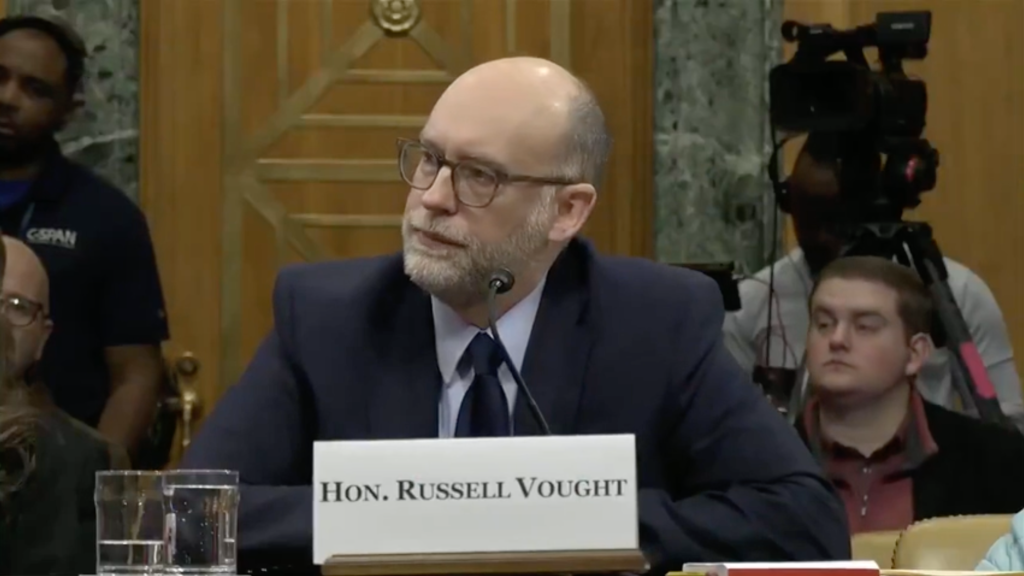
A new memo issued by the Trump administration directing the federal government to temporarily cease disbursing billions of dollars in funds appears to draw on arguments made by Russ Vought, the president’s selectee to run the Office of Management and Budget.
Vought was a primary architect of Project 2025, a sprawling effort organized by The Heritage Foundation to provide policy and staffing recommendations for President Donald Trump’s second term. In addition to that role, Vought is also the founder of the Center for Renewing America, a MAGA-aligned think tank that has spent over a year arguing that the president can unilaterally refuse to spend funds allocated by Congress, an authority known as the impoundment power that was severely curtailed by Congress in 1974.
The new Trump administration memo was issued by Matthew Vaeth, acting director of OMB pending Vought’s confirmation vote. The document calls for federal agencies to “temporarily pause all activities related to obligation or disbursement of all Federal financial assistance.”
“The use of Federal resources to advance Marxist equity, transgenderism, and green new deal social engineering policies is a waste of taxpayer dollars that does not improve the day-to-day lives of those we serve,” the memo states.
Although the two-page memo doesn’t use the term impoundment, law professor Steve Vladeck argued that the Trump administration is claiming “the unilateral power to at least temporarily ‘impound’ tens of billions of dollars of appropriated funds—in direct conflict with Congress’s constitutional power of the purse, and in even more flagrant violation of the Impoundment Control Act of 1974.” The existence of the document was first reported by journalist Marisa Kabas and later confirmed by The Washington Post and The New York Times. (OMB issued a follow-up memo claiming the freeze does “not apply across-the-board” and withheld funds are “not an impoundment under the Impoundment Control Act.”)
The direct effects of the memo are unknown given its scope and vagueness, but they could be detrimental even if the pause is short-lived.
“Experts said the memo as written was poised to bring a rapid halt to scores of federal functions, from assistance to homeless shelters to financial aid for college students,” the Post reported. “Health grants distributed by the Centers for Disease Control and Prevention, and state aid for disaster reconstruction, might face delays.”
The memo appears to exempt Social Security and Medicare recipients, and it says the halt “does not include assistance provided directly to individuals.” It isn’t clear whether Medicaid recipients will be affected, although some early reports indicated that payments had been disrupted.
The New York Times additionally reported that transportation funding and loans to small businesses could also be affected. In a statement to the Times, Diane Yentel, the chief executive of the National Council of Nonprofits, warned: “From pausing research on cures for childhood cancer to halting food assistance, safety from domestic violence and closing suicide hotlines, the impact of even a short pause in funding could be devastating and cost lives.”
HuffPost reported already that some payments for Head Start — which funds preschool for low-income families — are at risk of being delayed. HuffPost also reported that officials at Meals on Wheels, the food program for elderly Americans, are worried they could face funding disruptions.
Vought and his think tank pushed for a radical interpretation of the impoundment power for years prior to Trump’s election.
In June 2023, Vought posted on X (formerly Twitter), “Making Impoundment Great Again!” Days later, the Center for Renewing America’s X account wrote that “the impoundment power is our secret weapon to totally dismantle the WOKE & WEAPONIZED federal bureaucracy.” The CRA post linked to a Real Clear Politics article quoting Vought as saying, “When you think that a law is unconstitutional” — referring to the Impoundment Control Act — the response should be to “push the envelope.”
In July 2023, CRA senior fellow Jeffrey Clark — who as a DOJ attorney attempted to overturn the 2020 election by pushing a fake elector scheme at the end of Trump’s first term — appeared on Steve Bannon’s War Room to argue against the Impoundment Control Act.
“So what I’m working on, essentially, are the constitutional arguments for why that was wrong and various ways in which the Impoundment Control Act is just flatly unconstitutional,” Clark said.
Video
From the July 3, 2023, edition of Real America's Voice's War Room
Vought continued to beat the drum months later.
“The loss of impoundment authority — which 200 years of presidents enjoyed — was the original sin in eliminating the ability for a branch-on-branch to control spending,” Vought said the following February on Fox Business.
Video
From the February 12, 2024, edition of Fox Business' Kudlow
In June 2024, the Center for Renewing America released a white paper arguing that the Impoundment Control Act — passed following President Richard Nixon’s refusal to spend funds for environmental, transportation, and educational priorities — is unconstitutional and a break with legal precedent. The authors of that paper later wrote articles for The Hill and right-wing blog The Federalist making similar claims.
Vought highlighted the centrality of the impoundment power to his think tank’s project. “Why did we found the Center for Renewing America?” he wrote on X. “To write papers like this.”
During Trump’s first term, he attempted to unilaterally withhold roughly $400 billion in foreign aid funding for Ukraine, leading to his first impeachment for violating the impoundment law.
During Vought’s recent confirmation hearing to serve as director of OMB during Trump’s second administration — a job he also held during Trump’s first term — Vought refused to promise to follow the Impoundment Control Act on the grounds that both he and Trump believe it is illegal.
Last August, Vought was filmed in an undercover video claiming that he and his Project 2025 collaborators had written “about 350 different documents that are regulations and things of that nature” in preparation for a possible Trump victory. He said in the video that one of his goals is to “end multiculturalism” in America.
The OMB memo has triggered a massive reaction across the political spectrum. Bannon celebrated the move on War Room, while Senate Democrats are calling for a delay to Vought’s confirmation vote following the news. A former OMB official said the memo read like a “hostage note written directly by Russ Vought.”
===
an 1 25
President Donald Trump set off yet another controversy when, on Tuesday, January 28, he declared a federal government funding freeze. Many Democrats were quick to express their outrage, arguing that he had no right to do that — as the funds in question had already been approved by Congress.
But the following day, a brief memo from the U.S. Office of Management and Budget (OMB) informed federal workers that the freeze had been "rescinded." The memo didn't offer a lot of details but read, "If you have questions about implementing the President's Executive Orders, please contact your agency General Counsel."
White House Press secretary Karoline Leavitt, however, is saying that the freeze has not been rescinded.
READ MORE:**Outraged Trump lashes out at Seth Meyers as explosive Jack Smith report unveiled**
In a Wednesday afternoon, January 29 post on X, formerly twitter, Leavitt wrote, "This is NOT a rescission of the federal funding freeze. It is simply a rescission of the OMB memo. Why? To end any confusion created by the court's injunction. The President's EO's on federal funding remain in full force and effect, and will be rigorously implemented."
MSNBC's Michael A. Cohen tweeted, in response, "Even for the White House, this is impressive lying. The OMB memo is the federal funding freeze. It has been rescinded. Not happening. Trump's EO on federal funding is something different."
Politico's Kyle Cheney, responding to Leavitt's tweet, wrote, "This is causing widespread confusion -- but we may get clarity in an hour when DOJ has to represent to a federal court what is going on here."
The memo announcing the rescinding of the freeze is getting many other reactions on X. And a word that is being used a lot is "chaos."
READ MORE:**GOP lawmakers staying silent as Trump 'runs roughshod over Congress'**
Daily Kos reporter Emily C. Singer tweeted, "After causing chaos to order a blatantly unconstitutional freeze on congressionally appropriated funds, the Trump administration backs down with a whimper."
NBC News' Peter Alexander tweeted a copy of the memo, noting, " Trump’s White House OMB rescinds federal aid freeze."
Rep. Joe Neguse (D-Colorado) posted, "House Republicans spent the past 24 hours shamelessly defending President Trump's unconstitutional funding freeze — only for him to rescind it this morning!"
Bloomberg News noted that the order, before it was rescinded, froze "an array of federal grants, loans and financial assistance in a dramatic reversal."
Democratic activist Ron Smith commented, "We need to put more pressure on him so he can at least start listening to the American people."
Another Democratic activist, Lucas Sanders, wrote, "BREAKING: Donald Trump has officially released a memo rescinding his federal freeze of grants and loans. Thank you to everyone for speaking out."
WCTV Eyewitness News in Tallahassee, Florida posted, "President Trump's budget office Wednesday rescinded an order freezing spending on federal grants, less than two days after it sparked widespread confusion and legal challenges across the country, according to two people familiar with the matter."
Pathfinder Research founder Derek Martin remarked, "This OMB order was so misguided that the Trump admin rescinded it in 48 hours. These people aren't revolutionaries, they're uninformed trolls who got the key to the castle. They won't be able to help you're family because *they don't know how to.*"
The group New York Women for Action tweeted, "CHAOS. Trump White House reverses course, rescinds freeze on federal grants after Americans deluge Washington with angry posts, calls, letters."
Tracie Delgado, a professor at Seattle Pacific University, commented, "Looks like we are back in business. Now that was chaotic."
Documentary filmmaker/historian Dan Manatt wrote, "NOW DEMS: ATTACK! Trump is Emperor of Chaos Trump White House reverses course, rescinds freeze on federal grants."
---==
RWW 1 25
01/28/2025
by
Russ Vought, President Donald Trump’s nominee to lead the Office of Management and Budget, was a key architect of the Project 2025 plan that the new administration has rushed to put into place: assert virtually dictatorial powers over the executive branch and use that power to gut federal agencies’ ability to carry out their mission to protect American workers, consumers, communities, and the environment.
Vought seems to embody the reactionary agenda of right-wing legal activists whose goal is to overturn the New Deal and return the U.S. to an era when states’ rights trumped civil rights, and the federal government had little ability to regulate corporate wrongdoing.
Vought led the OMB during the first Trump administration, where he launched an attack on anti-racism training in the federal government. After Trump lost, Vought created the Center for Renewing America and fueleda manufactured panic against critical race theory as a tool to mobilize right-wing voters. Trump is continuing the strategy with his aggressive dismantling of federal programs to promote broadly shared opportunity and his threats to go after educational and private sector employers that have their own efforts to promote diversity, equity, and inclusion.
Today, as Trump throws the federal government, research institutions, social service agencies, and international collaborations into chaos with broad gag orders and freezes to distributing funds, it is worth recalling that Vought has developed plans for Trump to deploy the military against U.S. citizens who might rise up in protest against the many ways Trump’s policies will harm people and communities.
Vought has justified his plans by claiming that “The stark reality in America is that we are in the late stages of a complete Marxist takeover of the country.” He said that Democratic warnings about Trump’s authoritarianism were an attempt to discourage the military from acting on Trump’s orders to put down anti-Trump protests, just as military leaders resisted Trump’s desire to shoot Black Lives Matter protesters. Vought told undercover journalists that the George Floyd protests were “obviously” not about race but about “destabilizing the Trump administration.”
Vought’s Project 2025 is an agenda, game plan, and personnel operation run by the Heritage Foundation and backed by more than 100 right-wing groups. Project 2025 supporters publicly salivated over the chance for Trump to strip federal employees of civil service protections, allowing them to be fired at will and replaced with cronies and loyalists.
During the presidential campaign, Trump dishonestly distanced himself from Project 2025 to avoid political fallout from the unpopularity of its extreme proposals. An unbothered Vought saw Trump’s posturing as political expedience, not policy.
One year before the election, Right Wing Watch featuredVought’s support for MAGA’s plans for the “ruthless abuse of power by a new Trump White House.” Indeed, “ruthless abuse of power” could be the theme of the new administration’s first week.
ProPublica and Documented obtained videos of Vought speeches at Center for Renewing America events. In a speech last year, he said, “We are writing the actual executive orders. We are writing the actual regulations now, and we are sorting out the legal authorities for all of what President Trump is running on.”
Vought is intent on eradicating any vestige of independence in the executive branch, including a longstanding bipartisan practice of shielding Department of Justice enforcement decisions from political pressure. “You need an attorney general and a White House Counsel’s Office that don’t view themselves as trying to protect the department from the president,” said Vought, embracing a position that would allow a vindictive Trump to turn the DOJ and FBI into weapons of retribution against his political opponents and personal enemies.
Vought had also urged Trump to use recess appointments to bypass the Senate confirmation process, which is at the core of the Constitution’s system of checks and balances, so that Trump could “move as fast and as aggressively as possible with a radical constitutional perspective to be able to dismantle that bureaucracy in their power centers.”
In two days of confirmation hearings this month, Democratic senators asked Vought to affirm that he would abide by federal law known as the Impoundment Act, a law enacted with bipartisan support more than 50 years ago that prevents the president from unilaterally overruling congressional decisions about federal spending. Sen. Gary Peters said that during Trump’s first term, Vought “consistently ignored laws passed by Congress that directed how taxpayer dollars should be spent.”
Contrary to Supreme Court rulings upholding the law, but in line with Project 2025’s expansive view of presidential power, Trump and Vought assert that the Impoundment Act is unconstitutional. “We’ll be developing our approach to this issue and strategy” once in office, Vought said. Democratic Sen. Richard Blumenthal said, “I am astonished that someone in this responsible a position would in effect say that the president is above the law.”
As Sen. Patti Murray pointed out, it’s hard to have confidence in Vought’s willingness to follow the law when the incoming OMB General Counsel, Mark Paoletta, recently tweeted, “Impound, Baby, Impound!” In the same tweet, Paoletta urged Trump to “revive” impoundment authority, which would defy federal law and court rulings.
Vought similarly refused to answer questions about slash-and-burn budget proposals put forward by the Center for Renewing America, or his call for abortion bans with no exceptions, even to save a woman’s life. His own opinions don’t matter, he disingenuously told senators, since he would only be carrying out Trump’s wishes if he is confirmed. He disparagde social safety net programs as a “benefit hammock” that keep people from going to work.
Speaking of disingenuous, Vought told senators “Schedule F is not a tool to fire individuals,” saying that stripping them of civil service protections “does not mean that we have any intent to use that to fire career civil servants.” As Sen. Andy Kim noted in a confirmation hearing, Vought said in an interview with Tucker Carlson that in a second Trump term there “certainly is going to be mass layoffs and firings, particularly at some of the agencies that we don’t even think should exist.”
In reality, Project 2025 and participating groups like American Moment have been recruiting, vetting, and training Trump loyalists in anticipation of replacing civil servants ousted in an ideological purge.
Vought’s contempt for the “deep state” or “administrative state” is well documented. Politico reported that in a speech at a Center for Renewing America event, Vought denounced federal bureaucracies that he said have been weaponized, and laid out his sadistic plans for them:
“We want the bureaucrats to be traumatically affected,” he said. “When they wake up in the morning, we want them to not want to go to work because they are increasingly viewed as the villains. We want their funding to be shut down so that the EPA can't do all of the rules against our energy industry because they have no bandwidth financially to do so."
“We want to put them in trauma.”
If you are wondering how seriously to take Vought’s confirmation hearing testimony, you may want to consider that he also told senators, “This administration has the highest ethical standards.”
The Trump administration’s merciless attacks on the legal personhood of transgender people and their ability to serve in the armed forces reflect the kind of attitude Vought has expressed in criticizing what he called the “transgender sewage that’s being pumped into our schools and institutions.”
Vought also supports Trump team plans for mass deportations. Vought described his take in videos recorded by a Centre for Climate Reporting journalist. When deportations begin, Vought said, “you’re really going to be winning a debate along the way about what that looks like. And so that’s going to cause us to get us off of multiculturalism, just to be able to sustain and defend the deportation, right?” In a paper on immigration, the Center for American Renewal argued that “in the American political context, compatibility means an adherence to a Biblical account of the human person and a Western understanding of man’s relationship with government.”
Another troubling aspect of Vought’s nomination is his ardent “Christian nation-ism” and the Center for American Renewal’s characterization of Christian nationalism as a priority for the new administration.
Vought chatted about Christian nationalism with MAGA activist Charlie Kirk at the 2024 Conservative Political Action Conference, where Vought argued that the country and conservative movement have been too secular and said the Center for Renewing America exists “to renew a consensus in this country that we are a nation under God.”
CNN reported on conversations captured by undercover journalists at the Centre for Climate Reporting:
In the conservative movement, “we’ve been too focused on religious liberty, which we all support, but we’ve lacked the ability to argue we are a Christian nation,” Vought argued….
He said that conservatives should push to have debates over whether to allow mosques to be built in America’s downtowns, and whether Christian immigrants should be prioritized over those of other faiths – ideas that run contrary to First Amendment protections.
“I want to make sure that we can say we are a Christian nation,” Vought added later.
Vought is closely associated with Christian nationalist William Wolfe, a former Trump administration official who worked with Vought at Heritage Action and later served as a vising fellow at Vought’s think tank. In 2023, Vought declared that he was proud to work with Wolfe “on scoping out a sound Christian nationalism.” That same year, Wolfe warned that Christians in the U.S. were “getting close” to a point where they would need to take up arms. Wolfe is among the contributors to “The Statement on Christian Nationalism & The Gospel,” which declared that the United States must formally “acknowledge the Lordship of Christ” in all its laws, “abolish abortion,” outlaw marriage equality, and “recapture our national sovereignty from godless, global entities who present a grave threat to civilization.”
People For the American Way and other civil and human rights and human needs organizations are urging senators to reject Russ Vought’s confirmation. You can add your name to People For’s petition here.
===
By the authority vested in me as President by the Constitution and the laws of the United States of America, it is hereby ordered as follows:
Section 1. Purpose. The United States must grow its economy and maintain jobs for its citizens while playing a leadership role in global efforts to protect the environment. Over decades, with the help of sensible policies that do not encumber private-sector activity, the United States has simultaneously grown its economy, raised worker wages, increased energy production, reduced air and water pollution, and reduced greenhouse gas emissions. The United States’ successful track record of advancing both economic and environmental objectives should be a model for other countries.
In recent years, the United States has purported to join international agreements and initiatives that do not reflect our country’s values or our contributions to the pursuit of economic and environmental objectives. Moreover, these agreements steer American taxpayer dollars to countries that do not require, or merit, financial assistance in the interests of the American people.
Sec. 2. Policy.It is the policy of my Administration to put the interests of the United States and the American people first in the development and negotiation of any international agreements with the potential to damage or stifle the American economy. These agreements must not unduly or unfairly burden the United States.
Sec. 3. Implementation. (a) The United States Ambassador to the United Nations shall immediately submit formal written notification of the United States’ withdrawal from the Paris Agreement under the United Nations Framework Convention on Climate Change. The notice shall be submitted to the Secretary-General of the United Nations, the Depositary of the Agreement, attached as Appendix A. The United States will consider its withdrawal from the Agreement and any attendant obligations to be effective immediately upon this provision of notification.
(b) The United States Ambassador to the United Nations shall immediately submit written formal notification to the Secretary-General of the United Nations, or any relevant party, of the United States’ withdrawal from any agreement, pact, accord, or similar commitment made under the United Nations Framework Convention on Climate Change.
(c) The United States Ambassador to the United Nations, in collaboration with the Secretary of State and Secretary of the Treasury, shall immediately cease or revoke any purported financial commitment made by the United States under the United Nations Framework Convention on Climate Change.
(d) Immediately upon completion of the tasks listed in subsections (a), (b), and (c), the United States Ambassador to the United Nations, in collaboration with the Secretary of State and Secretary of the Treasury shall certify a report to the Assistant to the President for Economic Policy and Assistant to the President for National Security Affairs that describes in detail any further action required to achieve the policy objectives set forth in section 2 of this order.
(e) The U.S. International Climate Finance Plan is revoked and rescinded immediately. The Director of the Office of Management and Budget shall, within 10 days of this order, issue guidance for the rescission of all frozen funds.
(f) Within 30 days of this order, the Secretary of State, Secretary of the Treasury, Secretary of Commerce, Secretary of Health and Human Services, Secretary of Energy, Secretary of Agriculture, Administrator of the Environmental Protection Agency, Administrator of the U.S. Agency for International Development, Chief Executive Officer of the International Development Finance Corporation, Chief Executive Officer of the Millennium Challenge Corporation, Director of the U.S. Trade and Development Agency, President of the Export-Import Bank, and head of any other relevant department or agency shall submit a report to the Assistant to the President for Economic Policy and the Assistant to the President for National Security Affairs that details their actions to revoke or rescind policies that were implemented to advance the International Climate Finance Plan.
(g) The Secretary of State, Secretary of Commerce, and the head of any department or agency that plans or coordinates international energy agreements shall henceforth prioritize economic efficiency, the promotion of American prosperity, consumer choice, and fiscal restraint in all foreign engagements that concern energy policy.
Sec. 4. General Provisions. (a) Nothing in this order shall be construed to impair or otherwise affect:
(i) the authority granted by law to an executive department or agency, or the head thereof; or
(ii) the functions of the Director of the Office of Management and Budget relating to budgetary, administrative, or legislative proposals.
(b) This order shall be implemented in a manner consistent with applicable law and subject to the availability of appropriations.
(c) This order is not intended to, and does not, create any right or benefit, substantive or procedural, enforceable at law or in equity by any party against the United States, its departments, agencies, or entities, its officers, employees, or any other persons.
THE WHITE HOUSE, January 20, 2025.
===
ggl 1 25
[### Putting America First In International Environmental ...

The White House (.gov)
https://www.whitehouse.gov › ... › Presidential Actions](https://www.whitehouse.gov/presidential-actions/2025/01/putting-america-first-in-international-environmental-agreements/)
2 days ago — By the authority vested in me as President by the Constitution and the laws of the United States of America, it is hereby ordered as ...
---
[### Trump Signs Executive Order Directing US Withdrawal ...

U.S. News & World Report
https://www.usnews.com › News › Science News](https://www.usnews.com/news/politics/articles/2025-01-20/trump-says-hes-withdrawing-the-us-from-the-paris-climate-agreement-again)
2 days ago — WASHINGTON (AP) — President Donald Trump signed an executive order Monday directing the United States to again withdraw from the landmark ...
---
[### Trump just declared an 'energy emergency.' Here's what it ...

The Washington Post
https://www.washingtonpost.com › 2025/01/20 › trump...](https://www.washingtonpost.com/climate-environment/2025/01/20/trump-day-one-executive-orders-energy/)
2 days ago — In a Day 1 executive order, President Donald Trump withdrew from the landmark climate accord. Additional orders on energy are expected.
---
[### Trump orders U.S. withdrawal from Paris Agreement ...

NPR
https://www.npr.org › 2025/01/21 › nx-s1-5266207 › t...](https://www.npr.org/2025/01/21/nx-s1-5266207/trump-paris-agreement-biden-climate-change)
1 day ago — President Trump issued a barrage of orders Monday targeting Biden-era initiatives on global warming. The decisions come on the heels of the ...
--
[### Trump signs executive order to withdraw US from Paris ...

WRAL.com
https://www.wral.com › news › state › clean-energy-shift...](https://www.wral.com/news/state/clean-energy-shift-trump-north-carolina-2025/)
2 days ago — Trump's “Drill, baby, drill” agenda, including exiting the Paris Agreement and halting wind leases, threatens North Carolina's clean energy ...
===
January 20, 2025
By the authority vested in me as President by the Constitution and the laws of the United States of America, it is hereby ordered as follows:
Section 1. Purpose and Policy. The previous administration has embedded deeply unpopular, inflationary, illegal, and radical practices within every agency and office of the Federal Government. The injection of “diversity, equity, and inclusion” (DEI) into our institutions has corrupted them by replacing hard work, merit, and equality with a divisive and dangerous preferential hierarchy. Orders to open the borders have endangered the American people and dissolved Federal, State, and local resources that should be used to benefit the American people. Climate extremism has exploded inflation and overburdened businesses with regulation.
To commence the policies that will make our Nation united, fair, safe, and prosperous again, it is the policy of the United States to restore common sense to the Federal Government and unleash the potential of the American citizen. The revocations within this order will be the first of many steps the United States Federal Government will take to repair our institutions and our economy.
Sec. 2. Revocation of Orders and Actions. The following executive actions are hereby revoked:
...
===
AN 12 24
Billionaire Tesla/SpaceX CEO Elon Musk was a major donor to Donald Trump's 2024 campaign, and now that Trump is president-elect, he has picked Musk and MAGA businessman Vivek Ramaswamy to head a proposed new agency called the Department of Government Efficiency (DOGE). Its goals, according to Trump and his transition team, include finding ways to cut federal spending and reducing the United States' federal deficit.
In an article published on December 11, Reuters reporters Andy Sullivan and Ally J. Levine examine possible areas in which Musk and Ramaswamy could recommend "deep cuts." And those cuts, they stress, could be the most painful in red states where Trump enjoyed the strongest support.
"Roughly two out of every three dollars is spent on pension, health care and other programs that provide tangible benefits to U.S. residents, meaning that any cutbacks could cause an outcry," Sullivan and Levine explain. "Consider the Affordable Care Act, the healthcare expansion that was the signature accomplishment of Democratic President Barack Obama. Republicans vowed to roll back 'Obamacare' when Trump was first elected in 2016, but they failed to do so. The program has dramatically grown since then."
READ MORE: Millions will see rise in health insurance premiums if federal subsidies expire
Like Musk and Ramaswamy, Russell Vought — Trump's choice for White House budget director and a major architect of Project 2025 — has, according to Sullivan and Levine, "called for tightening veterans programs." And this, the Reuters reporters note, "could have an outsize effect in Trump country."
A chart published with the article shows that 63 percent of the United States' "total spending on veterans' benefits" is in states that Trump won in the 2024 election — while only 37 percent is in states that went to Vice President Kamala Harris.
"Trump has ruled out benefit cuts to the two biggest safety-net programs, Social Security and Medicare," Sullivan and Levine report. "The two programs, which provide pension and health benefits to seniors, play a bigger role in the states that backed his presidential bid. Other benefit programs aimed at low-income people may be easier for a Republican president like Trump to tackle."
The journalists continue, "Both the Medicaid health plan for the poor and the Supplemental Nutritional Assistance Program, which helps pay for groceries, tend to play a bigger role in Democratic-leaning states. But cutbacks in these areas also would hit hard in poor, conservative states like Louisiana."
READ MORE:['About to cut my mic': Frustrated CNN host told to end segment amid fight with GOP guest
*Read Reuters' full report at this link.
===
===
Trump's nomination of Project 2025 architect means Social Security, Medicare 'are at risk'
Jake Johnson Common Dreams 12 24
Trump's choice of Russell Vought, a Project 2025 architect, to lead the White House budget office was seen as further evidence of the threat the incoming administration poses to Social Security, Medicare, and other critical government programs.
Vought, who currently heads the far-right think tank Center for Renewing America think tank, served as director of the Office of Management and Budget (OMB) during Trump's first term, and he's set to return to the post after playing a central role in crafting the Project 2025 agenda that the Republican president-elect attempted to disavow on the campaign trail.
In remarks to an undercover journalist earlier this year, Vought dismissed the notion that Trump opposed the aims of Project 2025, saying the Republican leader was "very supportive of what we do."
Vought is expected to aggressively pursue federal spending cuts in concert with other actors within and around the incoming Trump administration, including the "government efficiency" commission led by billionaires Elon Musk and Vivek Ramaswamy.
"With the architect of Project 2025 nominated to lead Trump's Office of Management and Budget, there can be no distinction between the two."
During his tenure at OMB and as an outside adviser to Republican lawmakers, Vought advocated massive cuts to Medicaid and federal nutrition assistance, programs that the GOP is targeting as it looks to offset the costs of its proposed tax cuts.
Vought also spearheaded budget proposals from the Trump White House that recommended cuts to Social Security and Medicare, both of which the president-elect vowed to protect during his 2024 campaign.
"Vought oversaw every budget in the first Trump administration that cut Social Security and Medicare," said Tony Carrk, executive director of the watchdog group Accountable.US. "This much is clear: Social Security and Medicare are at risk in the second Trump presidency."
According to Accountable, Vought is one of at least six individuals associated with Project 2025 whom Trump has picked for a spot in the incoming administration.
"With the architect of Project 2025 nominated to lead Trump's Office of Management and Budget," said Carrk, "there can be no distinction between the two."
While Project 2025's sweeping policy document includes little discussion of Social Security, the far-right program's authors have endorsed changes such as raising the retirement age—which would result in across-the-board benefit cuts.
As for Medicare, Project 2025 proposes making privatized Medicare Advantage plans the default enrollment option for U.S. seniors, a change that would be massively profitable for insurance giants and potentially disastrous for patients.
Vought's nomination to lead OMB is expected to bolster Trump administration efforts to slash spending across the federal government. As Punchbowlreported Monday, Vought "is among those Trump allies looking to challenge Congress' authority over spending via impoundment," a strategy that Democratic lawmakers have condemned as unlawful.
Rep. Rosa DeLauro (D-Conn.), the top Democrat on the House Appropriations Committee, told Punchbowl in a statement that Vought "is deeply confused about this and many other points about the Constitution and the Impoundment Control Act of 1974."
"While Trump distanced himself from Project 2025, Vought's nomination makes it crystal clear that Trump lied to the American people," said DeLauro. "Trump's agenda is the Project 2025 manifesto."
===
GOP’s 'plan' to increase social security age started '20 years' ago according to Mark Levin
Maya Boddie an 12 24
===
HCR say we think soc sec safe bc 40 yr norms [but 2025 target?]; just bc it has not changed does not mean it can’t.
===
---
mma
Trump set to appoint Project 2025 architect Russ Vought to Office of Management and Budget
Vought is a leading proponent of “Schedule F,” a plan to potentially fire thousands of federal civil servants and replace them with MAGA acolytes
Written by John Knefel
Published 11/20/24
Updated 11/25/24
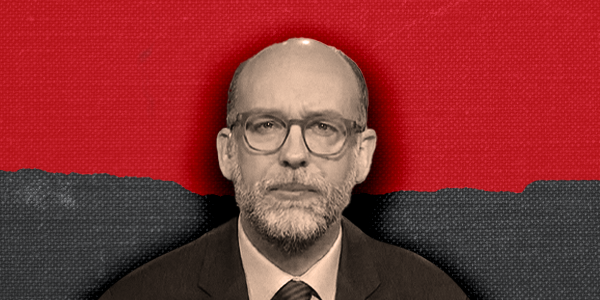
Citation
Molly Butler / Media Matters
Update (11/25/24): On November 22, Trump*announced**Vought's nomination to direct the Office of Management and Budget.
President-elect Donald Trump is planning to appoint Russ Vought, a Christian nationalist who has plotted to remake the federal workforce in MAGA’s image, to serve as his administration’s director of the Office of Management and Budget, according to CBS News. Vought held the same position during Trump’s first term. Since leaving office he has been a leading architect of Project 2025, a sprawling plan to provide staffing and policy options to the next Republican administration.
In his role at Project 2025, Vought was instrumental in ensuring that decimating the ranks of federal civil service became a conservative priority. He wrote the second chapter in Project 2025’s policy book — *Mandate for Leadership* — titled: “Executive Office of the President of the United States.” In it, he argued that “a President today assumes office to find a sprawling federal bureaucracy that all too often is carrying out its own policy plans and preferences—or, worse yet, the policy plans and preferences of a radical, supposedly ‘woke’ faction of the country.”
As part of his anti-woke crusade, Vought has repeatedly defended and promoted Christian nationalism, at one point calling for an “army” of right-wing activists with “biblical worldview” to staff the next Republican administration. He wrote an op-ed for Newsweek in 2021 with the headline “Is There Anything Actually Wrong With 'Christian Nationalism?’” More recently, Politico reported that a document from the Center for Renewing America — a MAGA-aligned think tank Vought founded — listed “Christian nationalism” as a top priority for a second Trump term.
While at the helm of the Center for Renewing America, Vought has been outspoken in his advocacy of Schedule F — a scheme to reclassify career civil servants as political appointees. Trump attempted to implement Schedule F in the waning days of his first term, but its effects were blunted by his loss in 2020. If his incoming administration moves forward with the plan, which seems all but inevitable, as many as 50,000 career staffers could be replaced with MAGA loyalists. (Some other estimates put the number closer to 20,000.)
Vought has championed the use of congressional rules to defund and remove individual government employees for punishment and deploying “ideological purity tests” to ensure federal workers are loyal to Trump.
During a recent interview with former Fox News host Tucker Carlson, Vought argued that the “whole notion of an independent agency should be thrown out.”
Following a broad backlash to Project 2025, Vought was caught on hidden video discussing his work at the initiative and how it might play if Trump returned to the White House.
“Eighty percent of my time is working on the plans of what’s necessary to take control of these bureaucracies, and we are working doggedly on that,” Vought said. “Whether it’s destroying agencies’ notion of independence, that they’re independent from the president.”
In the interview, Vought claimed that he’d been working on “about 350 different documents that are regulations and things of that nature” for a future Trump administration.
“You may say, ‘OK, DHS, we want to have the largest deportation — what are your actual memos that a secretary sends out to do it?’ Like, there’s an executive order, regulations, secretarial memos,” Vought said. “Those are the types of things that need to be thought through so you’re not — you’re not having to scramble or do that later on.”
This early preparation includes creating documents to facilitate the “largest deportation in history” and to deploy the military to “maintain law and order” against civilian protesters. Vought elaborated that the mass deportations were part of a plan to “end multiculturalism” in the country.
As a hardline conservative, Vought has pushed to implement harsh austerity measures throughout the country. The Washington Post reported that Vought advocates for eliminating trillions of dollars of reductions in “anti-poverty programs such as housing, health care and food assistance.” He has called for massive cuts to Medicaid and floated future cuts to Social Security and Medicare.
Toward that end, Vought and his colleagues at the Center for Renewing America are leading proponents of a radical interpretation of executive authority that claims the president can unilaterally refuse to spend money allocated by Congress. Known as the “impoundment” power, Vought and his fellow travelers assert that a 1974 law that mandates presidents spend money Congress has allocated — passed after President Richard Nixon refused to spend federal funds for clean water and schools — is unconstitutional. This theory, if Trump acts on it, would centralize budgeting power within the Oval Office and tilt the balance of power between the president and Congress even further towards the executive branch.
Aside from slashing the United States’ very limited safety net, Vought’s think tank released a budget proposal for fiscal year 2023 that would unleash the FBI against Trump’s declared enemies and “thwart the increasing societal destruction caused by progressive policies at the state and local levels that have defunded police, refused to prosecute criminals, and released violent felons into communities.”
Now, as he reprises his role as the head of OMB, he will wield considerable influence within the Trump administration and will almost certainly play a central role in the likely purge of the federal workforce.
---
an 11 24
As a candidate, Donald Trump insisted he knew nothing about the far-right Heritage Foundation's authoritarian Project 2025 playbook. But as president-elect, Trump is appointing some of its authors to powerful positions in his Cabinet.
On Friday, Trump confirmed previous reports that he would be appointing Russell Vought – president of the Center for Renewing America (CRA) — to be his next director of the Office of Management and Budget (OMB). Vought served in that role in Trump's first administration, and is likely to bring back Trump's controversial "Schedule F" executive order that would make it easier for a president to fire tens of thousands of federal civil service workers and replace them with political loyalists.
After leaving the Trump White House, Vought founded the CRA, which was one of the key partner organizations backing Project 2025. In August, two undercover journalists got Vought to admit in a hidden camera interview that Trump's rhetoric distancing himself from Project 2025 was just for show, and that he has secretly "blessed it" and was "very supportive" of the plan.
READ MORE:Trump's plan to 'aggressively' reshape government would create 'army of suck-ups': report
As Agence France-Presse journalist Bill McCarthy noted in a Friday tweet, Vought is just the latest Project 2025 contributor to join the Trump Cabinet. Brendan Carr, who Trump nominated to chair the Federal Communications Commission (FCC) authored the section of Project 2025 that specifically dealt with the FCC.
Other Project 2025 contributors taking key roles in the Trump administration include Michigan Republican Party chair Pete Hoekstra — who was tapped to be the next U.S. Ambassador to Canada — and former Director of National Intelligence John Ratcliffe, who the president-elect has since nominated to be the next director of the Central Intelligence Agency. Tom Homan, who will be Trump's new border czar, is also listed as a contributor to Project 2025.
Homan's contributions were likely concentrated among Project 2025's recommendations for reforming the Department of Homeland Security (DHS). That section, which was chiefly written by former Trump DHS official Ken Cuccinelli, called for rapidly expanding the DHS' staff and consolidating various border enforcement agencies like Immigration and Customs Enforcement (ICE) and Customs and Border Protection (CBP) to be under one umbrella. At a far-right conference in Washington, D.C. earlier this summer, Homan — who was Trump's ICE chief in his first administration — promised that if he were given a position within the Trump administration, he would assemble "the biggest deportation force this country has ever seen."
“They ain’t seen s— yet. Wait until 2025," Homan said at the National Conservatism conference.
READ MORE:'He is on our side': Org behind Project 2025 boasts repeatedly about close ties to Trump
During the 2024 election cycle, Vice President Kamala Harris repeatedly sought to associate Project 2025 with Trump, causing the Republican nominee to repeatedly distance himself from it on the campaign stump due to the document's overwhelming unpopularity. Notably, Trump transition co-chairman Howard Lutnick — who Trump selected to head the U.S. Department of Commerce — promised to blacklist anyone linked to Project 2025 from serving in his second administration, calling the Heritage Foundation and its sweeping policy document "radioactive."
Trump keeping Project 2025 at arms' length didn't pass muster, however, with CNN finding that more than 140 of Trump's former advisors and staffers helped assemble the document. Heritage itself has also heavily promoted its close relationship with Trump on its website and in its fundraising materials, pointing out that in his first year as president he implemented roughly two-thirds of their policy recommendations.
"President Trump addressed a group of Heritage members. He confirmed, beyond a shadow of a doubt, that he is on our side," a 2017 email from Heritage read.
In June, People magazine published a comprehensive report delving into Project 2025, calling it a "far-right, Christian nationalist vision for America that would corrode the separation of church and state, replace nonpartisan government employees with Trump loyalists and bolster the president's authority over independent agencies."
READ MORE:'Nearly all' voters know about Project 2025 and majority have negative view of it: report
---
ANNO ON 2
MMA 11 24
Trump is planning to appoint Russ Vought, a Christian nationalist who has plotted to remake the federal workforce in MAGA’s image, to serve as his administration’s director of the Office of Management and Budget, according to CBS News. Vought held the same position during Trump’s first term. Since leaving office he has been a leading architect of Project 2025, a sprawling plan to provide staffing and policy options to the next Republican administration.
In his role at Project 2025, Vought was instrumental in ensuring that decimating the ranks of federal civil service became a conservative priority. He wrote the second chapter in Project 2025’s policy book — Mandate for Leadership — titled: “Executive Office of the President of the United States.” In it, he argued that “a President today assumes office to find a sprawling federal bureaucracy that all too often is carrying out its own policy plans and preferences—or, worse yet, the policy plans and preferences of a radical, supposedly ‘woke’ faction of the country.”
As part of his anti-woke crusade, Vought has repeatedly defended and promoted Christian nationalism, at one point calling for an “army” of right-wing activists with “biblical worldview” to staff the next Republican administration. He wrote an op-ed for Newsweek in 2021 with the headline “Is There Anything Actually Wrong With 'Christian Nationalism?’” More recently, Politico reported that a document from the Center for Renewing America — a MAGA-aligned think tank Vought founded — listed “Christian nationalism” as a top priority for a second Trump term.
While at the helm of the Center for Renewing America, Vought has been outspoken in his advocacy of Schedule F — a scheme to reclassify career civil servants as political appointees. Trump attempted to implement Schedule F in the waning days of his first term, but its effects were blunted by his loss in 2020. If his incoming administration moves forward with the plan, which seems all but inevitable, as many as 50,000 career staffers could be replaced with MAGA loyalists. (Some other estimates put the number closer to 20,000.)
Vought has championed the use of congressional rules to defund and remove individual government employees for punishment and deploying “ideological purity tests” to ensure federal workers are loyal to Trump.
During a recent interview with former Fox News host Tucker Carlson, Vought argued that the “whole notion of an independent agency should be thrown out.”
Following a broad backlash to Project 2025, Vought was caught on hidden video discussing his work at the initiative and how it might play if Trump returned to the White House.
“Eighty percent of my time is working on the plans of what’s necessary to take control of these bureaucracies, and we are working doggedly on that,” Vought said. “Whether it’s destroying agencies’ notion of independence, that they’re independent from the president.”
In the interview, Vought claimed that he’d been working on “about 350 different documents that are regulations and things of that nature” for a future Trump administration.
“You may say, ‘OK, DHS, we want to have the largest deportation — what are your actual memos that a secretary sends out to do it?’ Like, there’s an executive order, regulations, secretarial memos,” Vought said. “Those are the types of things that need to be thought through so you’re not — you’re not having to scramble or do that later on.”
This early preparation includes creating documents to facilitate the “largest deportation in history” and to deploy the military to “maintain law and order” against civilian protesters. Vought elaborated that the mass deportations were part of a plan to “end multiculturalism” in the country.
As a hardline conservative, Vought has pushed to implement harsh austerity measures throughout the country. The Washington Post reported that Vought advocates for eliminating trillions of dollars of reductions in “anti-poverty programs such as housing, health care and food assistance.” He has called for massive cuts to Medicaid and floated future cuts to Social Security and Medicare.
Toward that end, Vought and his colleagues at the Center for Renewing America are leading proponents of a radical interpretation of executive authority that claims the president can unilaterally refuse to spend money allocated by Congress. Known as the “impoundment” power, Vought and his fellow travelers assert that a 1974 law that mandates presidents spend money Congress has allocated — passed after President Richard Nixon refused to spend federal funds for clean water and schools — is unconstitutional. This theory, if Trump acts on it, would centralize budgeting power within the Oval Office and tilt the balance of power between the president and Congress even further towards the executive branch.
Aside from slashing the United States’ very limited safety net, Vought’s think tank released a budget proposal for fiscal year 2023 that would unleash the FBI against Trump’s declared enemies and “thwart the increasing societal destruction caused by progressive policies at the state and local levels that have defunded police, refused to prosecute criminals, and released violent felons into communities.”
Now, as he reprises his role as the head of OMB, he will wield considerable influence within the Trump administration and will almost certainly play a central role in the likely purge of the federal workforce.