Agent Orange / Burn pits
7 22 add burn pits
---
an 10 25
The Trump administration is making it more difficult for veterans with a rare but deadly cancer to get their health care needs covered by the government. The new policy, involving breast cancer in men, is laid out in a Department of Veterans Affairs memo obtained by ProPublica.
The previously undisclosed document does not cite any evolving science. Rather, it relies on an order that President Donald Trump issued on his first day in office titled: “Defending Women from Gender Ideology Extremism and Restoring Biological Truth to the Federal Government.”
An agency spokesperson confirmed the change.
“As of Sept. 30, the department no longer presumes service connection for male breast cancer,” press secretary Pete Kasperowicz wrote in a statement to ProPublica. He noted that veterans who’ve previously qualified for coverage can keep it.
But for the roughly 100 male veterans who are newly diagnosed each year, the path will now be significantly harder. They will have to show their cancer was connected to their military service, a burden that has often been hard to meet.
Without VA coverage, experts say, veterans’ care could be delayed or even missed altogether — even as research has shown the rate of breast cancer among men has been increasing and the disease is deadlier than for women. One study also found that breast cancer for men is “notably higher among veterans.”
“Cancer in male veterans should be covered,” said Dr. Anita Aggarwal, a VA oncologist who researched and treated breast cancer for years before retiring recently. “These people have put their lives at risk for us.”
As Aggarwal noted, breast tissue in men and women are similar. “Male breasts don’t produce milk,” Aggarwal said. “But the treatment is the same.” She added that research has linked breast cancer to toxic exposure.
The administration’s new policy rolls back benefits that were created under the Promise to Address Comprehensive Toxics, or PACT, Act, a Biden-era law that ushered in one of the largest expansions of health care and benefits in VA history.
After a long fight by advocates, congressional Democrats and Republicans passed the measure three years ago, making it easier for veterans poisoned by Agent Orange and other toxic substances to get benefits.
Before the law, the VA had frequently been denying the claims. Now, the government would presume many ailments were connected to veterans’ military service, so long as they served in particular areas and had any number of diseases on a VA list.
As a result, more than 200,000 veterans likely exposed to toxic substances during their service have qualified to have their care covered.
The Trump administration’s change means that male veterans who get breast cancer will no longer be able to benefit from that easier path for coverage.
Veterans who have breast cancer said the move left them aghast and puzzled.
Jack Gelman, a 80-year-old former Navy fighter pilot who served in Vietnam, is already facing the fact that his long-dormant breast cancer came back last year. Now he has to grapple with the fact that the government has just made it harder to get his care covered.
“I’m astonished,” Gelman said repeatedly when ProPublica told him about the change. “This is really nickel and diming a very small group of people who should be taken care of.”
Other veterans echoed that. “I don’t care if it’s toenail cancer,” said Kirby Lewis, who was diagnosed with breast cancer about a dozen years ago and is now Stage 4. “If exposure occurs, they should take care of those people.”
Lewis, who served in the Navy for five years during the 1980s, isn’t worried about losing his coverage, which the VA granted him as a result of unrelated heart issues. But he said the administration’s decision risks further stigmatizing men with the disease.
“There’s this machinismo aspect that they don’t want to accept that we have breasts, but we do,” said Lewis, who called the decision “very upsetting.”
The PACT Act gives administrations widespread discretion to cover diseases as science develops. Last year, the VA added three cancers, including male breast cancer.
The law states that “reproductive cancer of any type” be covered. Officials added male breast cancer under that category after a working group of experts reviewed the science. The decision noted “the marked similarity of male and female breast cancer.”
The Trump administration’s memo argues that designation is a mistake. “The Biden Administration falsely classified male breasts as reproductive organs,” Kasperowicz said in his statement to ProPublica.
A former official who was involved in the VA’s decision last year said that while there were discussions about how to interpret “reproductive cancer,” the scientific consensus among VA oncologists was clear. “The evidence showed that male and female breast tissue respond similarly to toxic exposures and share nearly identical biological and mutational profiles,” said the former official, who spoke on condition of anonymity, citing concern for his job prospects in government. “Expanding coverage to male breast cancer was the right call.”
Rosie Torres, who advocated for the PACT Act after her husband became sick, said the current administration is putting politics above patriotism and people. “It shouldn’t matter who signed the bill,” Torres said, referring to Biden. “If you don’t like the ‘reproductive’ word, do it under another category. Don’t remove it. These are peoples’ lives.”
Kasperowicz emphasized that veterans can still get coverage, so long as they show a connection between their illness and their service.
“The department grants disability benefits compensation claims for male Veterans with breast cancer on an individual basis and will continue to do so,” he said in his statement. “VA encourages any male Veterans with breast cancer who feel their health may have been impacted by their military service to submit a disability compensation claim.”
The change follows a wider tumult at the VA, where tens of thousands of staffers have left amid plummeting morale and work edicts such as a return to office.
Secretary Doug Collins has long insisted that care will not be affected. “Veterans benefits aren’t getting cut,” Collins said in February. “In fact, we are actually giving and improving services.”
Advocates and Democrats say they’re concerned that the rollback of presumptive coverage for male breast cancer could presage wider cuts. This year, House Republicans passed a bill to cut a fund for veterans covered under the PACT Act, which they’ve criticized as lacking in oversight. The bill has not passed in the Senate.
Meanwhile, Project 2025, the conservative initiative to create a blueprint for the Trump administration, urges officials to roll back benefits, or as the initiative puts it, to “target significant cost savings from revising disability rating awards.”
The Trump administration has so far not done that. ProPublica asked the VA whether there are any plans to change coverage beyond male breast cancer.
The department did not respond.
---
an 8 23
rocky Mountain Values, a progressive Colorado-based dark money group has launched an ad campaign calling out United States Representative Lauren Boebert's (R-CO) refusal to support legislation that benefits veterans, The Pueblo Chieftain reports.
Per the Chieftain, "The PACT Act funds benefits for millions of veterans _{exposed to toxic substances}_ from burning waste in Iraq and Afghanistan, as well as exposure to other harmful chemicals during other wars. It also funds research into how they were affected."
The new ad, which features a 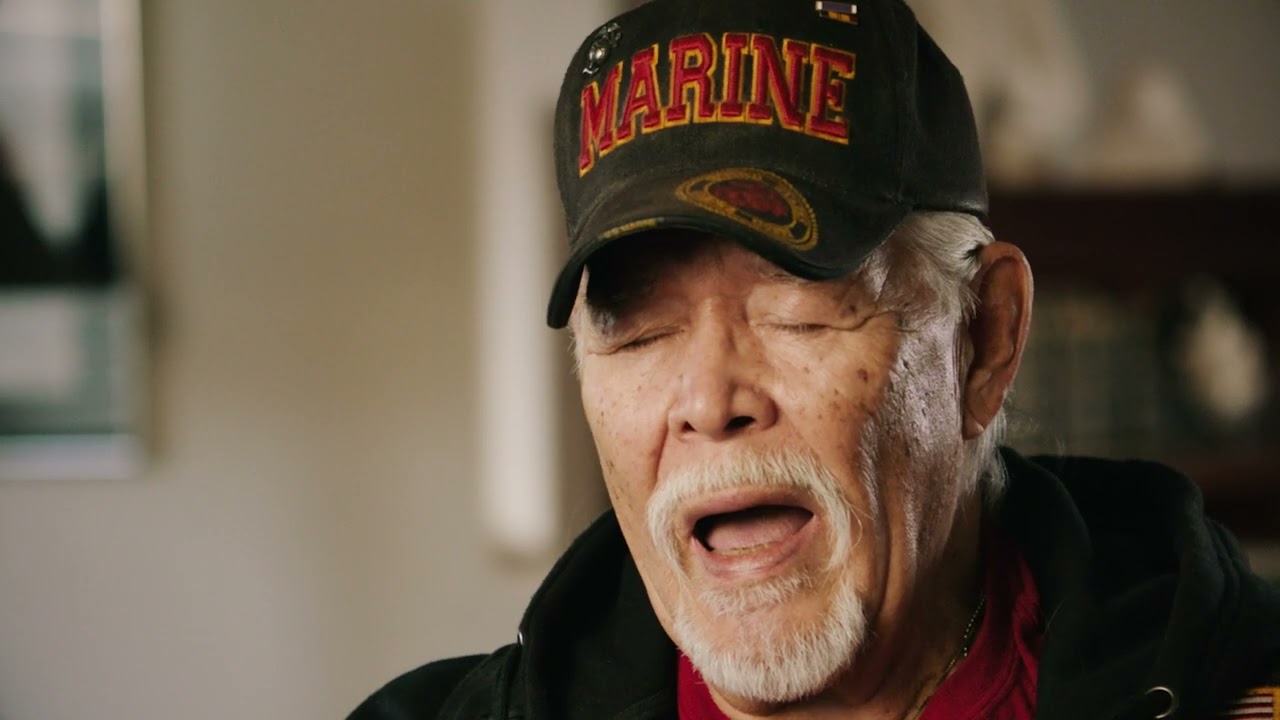 } a "Pueblo veteran attacking Boebert's voting record" on "health care issues," according to the news outlet, comes on the one year anniversary of President Joe Biden's signing of the bill.
READ MORE:**An entire decade of benefits denial for vets after toxic chemical exposure?**
"We have a responsibility to make sure these veterans are taken care of when they return from war," he said in an ad. "Lauren Boebert has voted against veterans' health care many times and she's left them behind."
According to the Chieftain, Boebert previously "told Grand Junction TV station KKCO in a _{statement}_ that then-House Speaker Nancy Pelosi was 'politicizing' the bill by bringing forward another bill instead of similar one that had unanimously passed the Senate on a voice vote."
The MAGA congresswoman's campaign manager Drew Sexton defended Boebert in an email to the news outlet writing that "longtime liberal extremist" Autobee "and progressive, dark-money groups can keep shoveling money into attacking Congresswoman Boebert, but 3rd District voters know better when it comes to her strong record of supporting our veterans."
According to The Chieftain, Biden passed the bill last year "with a final vote of 86-11 in the U.S. Senate, with all 11 dissenting votes coming from Republicans."
Jon Stewart was caught on video getting visibly angry this Monday at a known conspiracy theorist and right-wing activist over the veteran bill he's fighting to get passed.
Jack Posobiec, who helped popularize a conspiracy theory claiming Hillary Clinton was running a child sex trafficking ring out a pizza parlor and who pushed unfounded claims about the murder of former DNC staffer Seth Rich, showed up outside Capitol Hill as Stewart was promoting his lobbying efforts.
While it's not known what exactly precipitated Stewart's anger, the two ended the encounter in a positive note, with Stewart saying he mistook Posobiec for a "troll" and Posobiec saying he actually supports the legislation, known as the PACT Act, that would help thousands of veterans suffering from cancer, respiratory illness and other ailments.
So-called burn pits have been commonly used by the US military in post-September 11 conflicts, and are lit to get rid of everything from plastic bottles to human waste to old tires -- all incinerated with the aid of jet fuel.
But the fumes from these open fires are now suspected of causing a range of illnesses among soldiers who were deployed at such bases, from chronic respiratory ailments to a variety of cancers.
President Joe Biden himself says he thinks these pits were at the root of the brain cancer that claimed the life of his son Beau, who served in Iraq in 2008.
The Department of Veterans Affairs estimates that some 3.5 million US service members were exposed to toxic smoke in Afghanistan, Iraq or other conflict zones, and more than 200,000 veterans have registered on lists of people who came into contact with burn pits.
Watch video below or at this link.
8 22
Last week, United States Senator Marsha Blackburn (R-Tennessee) joined her fellow Republicans in a filibuster of the Promise to Address Comprehensive Toxics Act of 2022 (PACT) which seeks to expand healthcare services for veterans who were exposed to poisonous substances while serving.
On Monday, Blackburn explained in a speech on the floor of the Senate why she voted against the legislation.
"It is not my job to make [Senate Majority Leader] Chuck Schumer's [D-New York] life easier, or those running for election, their life easier. It is my job to be certain that I represent these veterans in Tennessee who have given their commitment to defend this nation," Blackburn said.
READ MORE: Veterans group slams GOP senators for delaying health benefits bill: We 'will hold them accountable'
"They have done it honorably," Blackburn said of servicemembers. "They have done it expecting from the V[eterans] A[dministration] for harms that have come their way and we should make certain that they have access to the care that they need."
According to disability lawyer Michael Hartup, "data from the HAC shows that7.4 percent of veterans in Tennessee live in poverty.The overall unemployment rate for veterans in the state is 4.7 percent, and younger veterans have higher unemployment rates than those from older generations."
Hartup's website notes that "housing is an issue for some Tennesse veterans. Approximately 56,920 veterans live in homes that have serious problems relating to cost, crowding, and/or quality. The Department of Housing and Urban Development estimates that there are 570 homeless veterans in Tennessee."
Tennessee also ranks lowest among states with adequate access to healthcare.
The Rural Health Information Hub explains that "11.4% of Tennessee residents lack health insurance (Kaiser, 2020)." Overall, however, Tennessee is the 40th to 44th healthiest state out of 50, depending on the report being cited, The Tennesseanwrote in an analysis last year.
Watch below or at this link.
vet burn pit cruz fist bump 8-10 in huddle; passed 1 mo ago 84-
https://www.msn.com/en-us/news/politics/these-41-republican-senators-blocked-a-bill-to-expand-healthcare-for-veterans-exposed-to-toxic-burn-pits/ar-AA104Hgl
- 41 Republican senators voted against a bill that would expand healthcare for veterans exposed to burn pits.
- Democratic lawmakers blasted the GOP senators for blocking the bill's passage.
- "It has an immorality to it," House Speaker Nancy Pelosi said.
Senate Republicans on Wednesday blocked a bipartisan bill that would expand healthcare benefits to veterans exposed to toxins from burn pits — an unexpected move that's sparked outrage from Democrats and activists.
The Senate failed to advance the legislation in a 55-42 vote, falling short of the 60 votes needed as 41 Republicans opposed the bill. Senate Majority Leader Chuck Schumer switched his "yes" vote to "no" to allow him to bring up the legislation again in the future.
The bill, known as the PACT Act, represents the most significant extension of healthcare coverage for veterans in years, protecting an estimated 3.5 million former service members who had been exposed to burn pits in war zones. The legislation is projected to cost nearly $280 billion over a decade, according to the Congressional Budget Office.
**Senator Ted Cruz** (R-TX) was caught on camera on the floor of the Senate fist-bumping his fellow GOP senators after they successfully blocked legislation to help veterans who are suffering after being exposed to toxic burn pits.
"Hundreds of thousands of American veterans were exposed to toxic fumes from burn pits on bases in Iraq and Afghanistan," NPR's Mary Louise Kelly reported in January. "So far, though, the Department of Veterans Affairs still denies the vast majority of their claims for respiratory illness and rare cancers. The White House, the VA and Congress have all promised action, but it is not happening fast enough for sick veterans."
This week, it was about to finally happen. But Republicans – many of whom previously voted to pass the bill, blocked it.
"The bill, known as the Honoring Our PACT Act, passed both the House and the Senate with bipartisan support in June, but due to a snag in the bill's language, it needed to go back and pass the House and Senate again," CBS News reports. "On Wednesday evening, 25 Republican senators reversed their support from June and voted no on a procedural vote to advance the legislation."
"President Joe Biden is a strong supporter of the bill," CBS News notes, putting the number of veterans exposed at 3.5 million. "At the State of the Union in March, he called on Congress to take action on burn pits, which he believes may have been a factor in his son's Beau's terminal brain cancer."
"Veterans have come home with a number of illnesses, including terminal cancers, but have been forced to argue to the Department of Veterans Affairs their illnesses were related to burn pit exposure," CBS adds. "The legislation would have removed the burden of proof from veterans and their families by presuming a number of conditions could be related to exposure to toxic fumes from burn pits."
A video that's quickly gone viral on social media captures Senator Cruz gleefully celebrating the GOP's defeat of the legislation that could help millions of veterans, and their families. In it he initiates a fist-bump with Montana Republican Senator Steve Daines.
https://www.alternet.org/2022/07/newsmax-host-squirms-kevin-cramer/
ucsc origins
6/17
https://www.propublica.org/article/veterans-affairs-official-downplays-agent-orange-risks-questions-critics
http://www.propublica.org/series/reliving-agent-orange
The two multinationals that teamed up during the Vietnam War to poison millions of people with Agent Orange herbicide are looking to become one.
German's Bayer has announced a bid to buy St. Louis, Mo.-based Monsanto in a deal that would expand Bayer's GMO and pesticide holdings and add drugs to Monsanto’s global portfolio. Monsanto has rejected the latest bid, but the two are still in talks.
If Monsanto, the most hated GMO company in the world, joins hands with Bayer, one of the most hated Big Pharma corporations on Earth (whose evil deeds date back to World War I and the Nazi era), the newly formed seed-pesticide-drug behemoth would have combined annual sales of $67 billion. That’s a staggering figure. But here’s another, even more alarming: The new mega-chemical/seed company would control 29 percent of the world’s seed market and 24 percent of the pesticide market.
The Bayer-Monsanto merger is the third recent proposed consolidation in the agriculture markets in just months, following on the heels of proposed mergers between chemical and agritoxics titans Dow and DuPont, and ChemChina and Syngenta.
"All of a sudden we have three major transactions at the same time," Matt Arnold, an Edward Jones analyst, told the News Journal. "One would think that would prompt regulators to really dial up the scrutiny and think long and hard about whether that much consolidation is in the best interest of farmers and consumers."
Indeed, reports the Journal, all three proposed mergers face antitrust reviews by agencies in the U.S., Europe and China, reports the Journal, including by the Federal Trade Commission, U.S. Department of Justice, the European Commission and stockholders of the publicly traded companies.
Already shareholders have spoken out, terming the move "arrogant empire-building," reported Reuters. Shareholders also worry that the takeover would dilute Bayer’s core drug business currently flush with sales of its blood-thinner Xarelto and Eylea, a drug to treat blindness.
As noted, this is not the first time Bayer and Monsanto have teamed up. “During the Vietnam war, Bayer was involved in the development of Agent Orange production...carried out at the firm Mobay, founded jointly by Bayer and Monsanto,” says Coalition Against Bayer Dangers. The defoliant herbicide Agent Orange was sprayed over millions of acres in Vietnam for over a decade in Operation Ranch Hand, despite numerous scientific studies and thousands, later millions of medical cases linking the toxic chemical to birth defects and stillbirths in animals and humans.
Bayer: A History of Unsafe Drugs
Bayer and Monsanto both sell controversial toxic agricultural chemicals and GMO seeds. But if Bayer’s bid to take over Monsanto goes through, it would mark Monsanto’s first entry into Big Pharma.
Last year, Bayer was named the ninth largest drug company in the world on the basis of its yearly revenue of $25.47 billion. The drug giant, though, has been beset with drug safety scandals, including deaths, for at least three decades. Here are just a few of the scandals that made the news,...
=
==
sci corruption carlo:
1978 The first lawsuits are filed against Dow Chemicals and Monsanto over their sloppy production of Agent Orange resulting in Vietnam Veteran's dioxin exposures.
| The emerging problem of Agent Orange |
|---|
1977 — 78: The Veterans Administration (VA) initially rejected veterans's claims for treatment and compensation for "Agent Orange diseases", saying that there was no evidence for a linkage between Agent Orange and the diseases for which these claims were made. The Veterans had a problem proving that they had been exposed to Agent Orange/dioxin since no records were apparently kept by the military — and the chemical companies all denied that the substance was dangerous, carcinogenic or mutagenic. Agent Orange was also highly variable in its dioxin concentration which made true exposure to the dioxins impossible. Also, other herbicides such as Agent Blue (which contained arsenic) were also used extensively in Vietnam. 1977 July: (summer) the US Air Force disposed of 2.22 million gallons of Agent Orange believed to contain 23 kilograms of dioxins by the use of high-temperature incineration at sea aboard the incinerator ship, M/T Vulcanus [in compliance with the EPA permit requirements] There can be little doubt that the Air Force knew it was dealing with dangerous chemicals by this time. [Only revealed at a later International Symposium in Arlington] Although this was a dioxin problem, Agent Orange remained a relatively dormant issue in the media until about 1980. It was Love Canal which created the public concerns. |

...
| Military Knowledge of dioxins. |
|---|
In an affidavit filed on May 1, 1980, Lt. Craig Steele (a hygiene officer in Vietnam) stated:
These guidelines were in place from day one. |
....
1980: The first Agent-Orange class-action lawsuit is filed in Pennsylvania against Dow Chemicals and Monsanto. This is a product liability suit over their sloppy production of Agent Orange resulting in Vietnam Veteran's dioxin exposures. Critical research evidence produced at this trial included:
about 100 articles from toxicology journals dating back more than a decade, as well as data about where herbicides had been sprayed, what the effects of dioxin had been on animals and humans, and every accident in factories where herbicides were produced or dioxin was a contaminant of some chemical reaction.

1980:Carlo says he was Principal Investigator this year on ...
1981: The Agent Orange herbicide used in Vietnam became serious news early in the Reagan Administration. Before this time the main concern with dioxins had been from industrial exposures.
Agent Orange herbicide was a combination essentially of two other herbicides 2,4,5,-T and 2,4-D, and it was shown to be seriously contaminated with dioxins [due to lack of care during manufacture]. The returned servicemen maintained that they were having residual serious health impacts and higher rates of birth defects in their children. There was also an Agent Blue used in Vietnam which didn't give the same problems (but it did confuse the scientific issue).
The Veterans Administration and the Department of Defence generally ridiculed these claimsx... until an OTA Advisory Panel under direction from Congress, a couple of scientific Task Forces, and a dozen or so other formal and informal scientific study groups began to investigate the vets' claims. They all fingered dioxins as the likely culprit — especially when gross deformities among Vietnamese babies began to show up on the front pages.
...
1981 Apr:Carlo published a paper on "Routine Surveillance of Reproductive Events"which had been presented to the Department of Health (DHES) on behalf of the Dow Chemical Company,
Carlo is now on the staff of Dow Chemical Company
but still an Adjunct Professor (Occasional Lecturer)
University of Arkansas, Medical Sciences..
1981 June:— June 82: Carlo says he was Adjunct Professor, University of Arkansas for Medical Sciences, Little Rock, Arkansas. during this year. His C/V shows that he was also the Research Leader In Epidemiology with the US Area Medical Department of Dow Chemical USA from early 1981 thru May 1984:
[George Carlo's 1988 C/V as sent to the Tobacco Institute] 

1981 Jul:Carlo paper, "An Epidemic of Cancer? The Evidence in Perspective,"presented to the Department of Health on behalf of the Dow Chemical Company,
1981 Aug - end 1988: The Agent Orange problem had blown up with the Vietnam Veterans. The US Air Force, the Veterans Administration and the Military were all stalling and actively colluding with the chemical companies to discount any possibility that the dioxins in Agent Orange were responsible for the Post-Traumatic Syndrome or for the birth defects in Veteran's childrens.
Eventually the Vets forced the US Congress to create a research program with 'independent oversight', and Congress turned to the bipartisan Office of Technological Assessment.
This panel was generally independent, consisting mainly of academics — but there were also three chemical company representatives, one from each of the main manufacturers — including Dow Chemicals. Carlo claims in his 1988 C/V that he was...
On the committee of the Office of Technology Assessment, US Congress, Agent Orange Advisory Panel.


At a later time Carlo says that
From 1984 thorugh 1992, I sat on the US Congress's Office of Technology Assessment's Agent Orange Advisory Panel. We were responsible for the changes at the Veterans Administration that resulted in compensation being given to Vietnam veterans for chloracne, non-Hodgkins lymphoma, Hodgkins disease and leukemia.
I worked closely with representatives from the Veterans of Foreign Wars and the Vietnam Veterans of America to get that done. I was one of their most vociferous supporters on the panel.
 :{
The Advisory Panel merely advised the OTA on how epidemiology studies on dioxins should be conducted. This was not an easy matter when there were little or no exposure records.
The OTA Advisory Panel did not conducting studies itself, nor were they evalating results, nor advising veterans, nor advising on the toxicity or mutagenicity of dioxins.
The Agent Orange Study Protocol Review Advisory Panel (report to Congress in both 1981 and 82) listed Carlo as member working for the Health & Environmental Sciences division of Dow Chemicals}:
George L. Carlo, Epidemiology, Health and Environmental Sciences, Dow Chemical USA.
 :{[He was later to use the Health & Environmental Sciences name for his first science-for-sale company]
}:
| Dioxin friends |
|---|
In these Agent Orange panel years he met two other scientists who would later figure strongly in his life:
LeVois briefly became Carlo's employee, then a partner in HES on a Philip Morris project. He then moved to San Francisco and worked for the tobacco industry for the rest of his life in semi-partnership with another science-for-sale entrepreneur, Max Layard.
Gough later moved on to a career supporting corporations with environmental and health problems through Republican/libertarian think-tanks: the Cato Iinstitute, Competitive Enterprises Institute, TASSC etc., In 1990, he provided Carlo with back-up in a Melbourne (Aust) dioxin water contamination scandal. Gough was also a close associate of Steve Milloy who ran TASSC and the junkscience.com web site for Philip Morris [Carlo was on the TASSC Advisory Board]. Milloy was also involved with the CEIand the Cato Institute and used both as fronts for tobacco projects. |
1981 Aug 19:A meeting of the Veterans Administration (VA), Air Force, Office of Technical Assessment staff, and some (presumably independent) research scientists and administrators [Carlo is not mentioned] meet to thrash out the reason for their continuing disputes about the dangers of dioxins and the health problems of the returned Veterans.
The spokesman for the VA announced:
I am pleased to announce that the Research and Development arm of the VA Central Office has recently taken steps to launch a series of studies designed to investigate the possible long-term health effects of exposure to Agent Orange and Agent Blue.
Specifically, Research and Development (R&D) is soliciting proposals from VA investigators on the biochemical, toxicological, physiological and/or pharmacological aspects of both herbicides.
[It is obvious that they have been in denial... then spent time stumbling around in the dark. They had major problems because of a lack of basic Vietnam exposure information.]
- "We cannot even complete the design of the overall epidemiological study until we know what we can do in the way of separating the cohorts".[ie identfying exposed and unexposed veterans]
- "We're now in the ninth and final month of a nine-month contract to collect the worldwide literature on all of the fourteen herbicides that were used in Vietnam, to compile an annotated bibliography of the science, the state of knowledge we have about the herbicides, and then to write a narrative report on our best scientific judgement of what this all means."
- We have collected what data there are on each of the industrial accidents [dioxin spills.. and the report] would have a table, a chart that would track the location of the accident, the year it occurred, the chemicals released, the duration of exposure, the organ systems effected — dermal, liver, whatever was reported —and then the reference articles that talked about that industrial accident,
- They planned and organised the 1st International Symposium on Chlorinate Dioxins in Arlington VA 25-29 October 1981
[However to prevent embarrasment, they pretended that the symposium was mainly about waste management]
- The Ranch Hand Study is a 20-year (prospective) epidemiological study of the Air Force personnel (1,200 in total) who flew herbicide orange missions in Vietnam in the years 1962 to 1970.
[Noted: the pilots probably wouldn't or may not have exposure as compared to those who handle the materials [on the ground].
[Warning: This is a 600 page document] 
1981 Sep:Carlo GL and Cook RR: Comments Prepared for the Office of Technology Assessment, Congress of the United States, regarding "Draft Protocol for Epidemiological Studies of Agent Orange." [Not on web]
1981 Nov Congress had recently enacted a law which increased public funding forVeterans Administration hospitals. It was now able to provide treatment for "Agent Orange-related diseases". This, and years of vilification about their lack of support for the Vets, appears to have changed the VA's attitude to dioxin research.
1982 The National Toxicology Program (NTP) published results of a cancer bioassay for 2,3,7,8-TCDD herbicide (the major component of Agent Orange).
An increase in liver tumors was observed at 71 ng/kg-day in female rats and in mice. A decrease in cancer rate was observed in animals receiving lower doses.
[This is a minute dosage in comparison to other toxic chemicals. Also dose-related responses were considered highly significant in toxicology.]
...
1984 Feb 25:The Telegraph newspaper publishes 'Reassuring' Study on Agent Orange Intensifies Dispute."
The US Air Force had just released their "Operation Ranch-Hand" study into cancers and birth problems with (mainly) air-force pilots who ran spraying missions in Vietnam [Note: not the actual handlers of the chemicals — nor the Vietnamese and Cambodians who lived in the drenched environment, eating sprayed food crops.] The report said that
"the veterans, who were sometimes doused with the herbicide, are not suffering from major diseases at any unusually high rates but they — and their offspring — have some hard-to-explain health problems that must be watched.
Dr George Carlo, a scientist at Dow Chemical Co., which manufactured some of the Agent Orange, said the results "should be viewed as reassuring" but said they "underscore the need for further study of the overall Vietnam experience".
 :{The Airforce's "Ranch-Hand I" study is generally rejected by the scientific community as highly dubious. It was also rejected by Congress.
}:
| Carlo re-writes history |
|---|
In referring to this period of his life, Carlo was later charged by some critics as having...
He replied saying...
We were responsible for the changes at the Veterans Administration that resulted in compensation being given to Vietnam Veterans for chloracne, non-Hodgkins lymphoma, Hodgkins disease and leukemia. I worked closely with representatives from the Veterans of Foreign Wars and the Vietnam Veterans of America to get that done. I was one of their most vociferous supporters on the panel. Again, your folks have it backward."
Even as late as April 1993, the Department of Veterans Affairs had only compensated 486 Agent Orange victims, although it had received disability claims from 39,419 soldiers who had been exposed to Agent Orange while serving in Vietnam. This is not a record to boast about. ] See Wikipedia on Agent Orange |


Carlo leaves Dow Chemical in May 1984.
George Carlo & Associates, Inc is his first 'research and advisory' firm.
...
1985 Mar:The Annual Report to Congress of the Office of Technical Assessment (OTA) Advisory Panel says it was advising the OTA on the protocols (techniques) that should be used for a proper Agent Orange study.
Earlier Veterans Administration (VA) and Air Force studies had been superficial wastes of time, and so the OTA's involvement had been mandated by Congress to provide some independent oversight on future studies.
He is one of 14 names on the Agent Orange Study Protocol Review Advisory Paneland now listed as an
George L Carlo
Epidemiologist
George Carlo & Associates.
rather than as a representative of Dow Chemicals.
[Note: The OTA's Health Program at this time was only in the initial stages of evaluating the Agent Orange study protocol and the OTA had a number of other committees providing advice on different aspects of the Agent Orange problem.Carlo's name doesn't turn up on any other OTA report, as far as we can ascertain, however his friend and later associate, Michael Gough is listed as a Senior Associate on the OTA's Special Projects staff.]  :{
Carlo's biog claims that}:
"he served for 10 years on the US Congress' Office of Technology Assessment Agent Orange Advisory Panel, providing advice to Vietnam Veteran's suffering from the effects of the dioxin-laced defoliant program.
 :{[The Panel did not "provide advice to Veterans" in any way, shape or form.]
}:
1985 Mar 25: Elizabeth Whelan's American Council on Science & Health (ACSH)has been set up to provide an 'independent lobby for the chemical and process foods industry.
The ACSH newsletter has run a major story on the possibility that Reye Syndrome might be caused by asprin (salicytate). It admited that the research established some statistical links, especially where the child has influenza or a disease like chicken-pox. But then the article throws cold-water on these findings by spelling out many ways that epidemiological studies can be distorted...without actually saying that these potential defects had acted in these cases.
This is a classical piece of public relations double-speak.
[ The Surgeon General had recommended that the drug asprin be avoided for young children — and this recommendation still holds in 2012
Whelan and ACSH worked for Chemical and Food companies. For the ACSH to be involved in this defence, the pharmacuetical companies must have been splashing money around.] 

[The ACSH report says that the US Public Health Service was planning a major study on asprin-Reye link "during the next flu season", but "The study is not expected for two to four years, with additional time required to analyse the data." This gave the Aspirin producers time to mount their own study. Carlo did one such study.]
1985 Apr:- May 86:. Carlo's 1988 C/V says that during th
...
1986 Admiral Elmo Zumwalt (ex Chief of Naval Operations in Vietnam) begins to champion the VA case against Agent Orange exposure after his Vietnam-exposed son died of Hogkins disease & lymphoma. He also had a severly disabled grandson, This public exposure forces the VA and the US Military to begin taking the problem seriously.
--
1987–90: Michael Gough [a later Carlo associate in dioxins, TASSC and Cato Institute] chaired a Department of Veterans Affairs advisory committee about the possible health effects of herbicides used in Vietnam. [Source his book Politicizing Science]
[This appears to be distinct from Gough's previous employment with the Office of Technical Assessments (OTA)]
1987:Carlo's list of legal and political papers for this year:
- The Health Related Authorities under the Superfund Amendments and Reauthorization Act of 1986: RI/FS, Settlement and Cost-Recovery Aspects.
- Federal Legislation to Compensate Disease Victims: An Evolving Concept.
- The Use of Disparate Impact Statistics to Infer Intent in Disparate Treatment Cases: An Analysis of Watson v. Fort Worth Bank and Trust
- Evaluating US. and USSR Strategies for Managing the Risk of Nuclear War: A Comparison Based on an Environmental Risk Management Mode
- Aspirin, Reyes Syndrome and the Warning Label: Too Late or Too Early? TOZZI cya?
[George Carlo's C/V.] 

...