Bunchberry
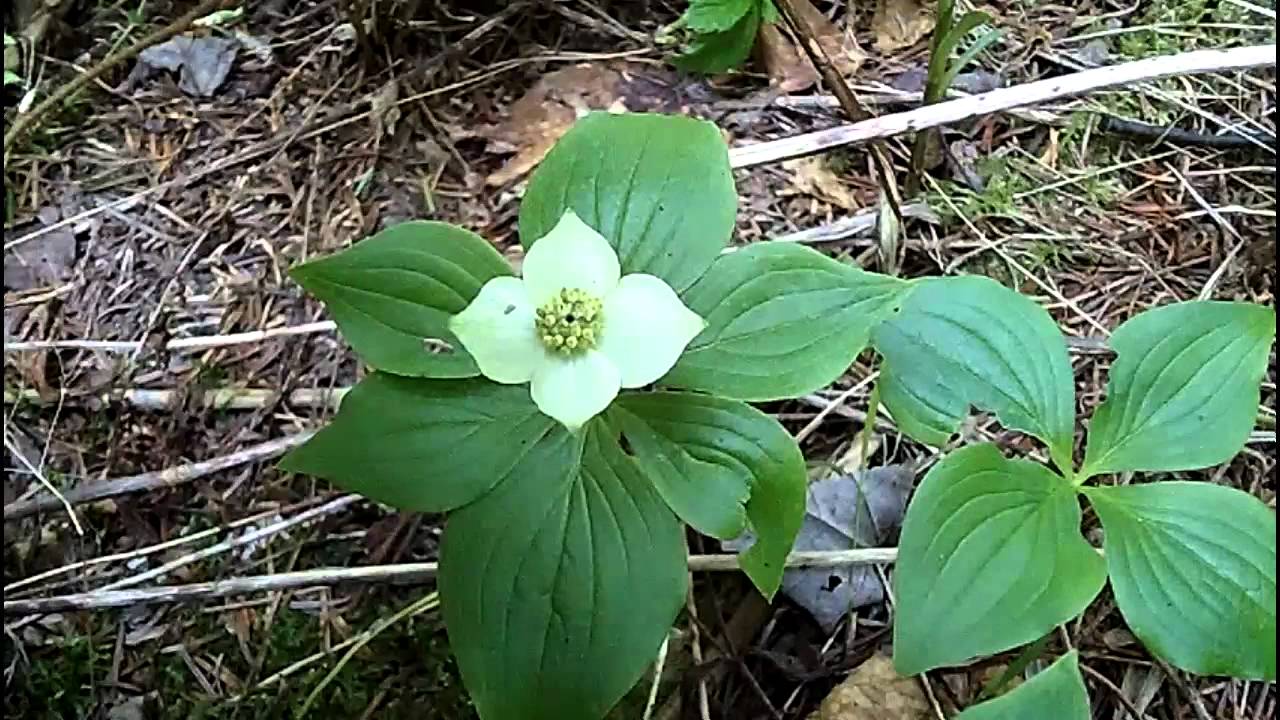
The familiar, bright-red clusters of the Bunchberry (Cornus Canadensis) always attract attention and, although the berries of the more southern species, C. Canadensis, are insipid an dry, with a very large stone, the berries of the more norther C. Suecica, which bears its clusters from the axils of the small opposite leaves, are slightly tart and more palatable.
Cornus canadensis is native to:
- Canada (all provinces)
- Northern U.S.: Alaska, Washington, Oregon, Idaho, Montana, Wyoming, Minnesota, Wisconsin, Michigan, New York, New England
- High-elevation Appalachians (rare, scattered)
Linnaeus describes the use of the latter berries by the Laplanders in making a dessert which might well be prepared from our common Bunchberry, with the addition of lemon juice. The Lapland method of making what Linnaeus described as a “dainty” was to mix the berries with whey, then to boil them until the mass was as thick as a “flummery”. This pudding (preferably with the stones strained off) was eaten with cream.
The Bunchberry can be eaten raw as a trailside nibble while hiking. Although many people find the Bunchberry tasteless; but if one slows down long enough, he will find they have a delicate taste beyond description, a sweetness of the faintest essence.
Despite its lack of powerful taste, packs a good nutritional value. Be careful not to eat the unripened berries, as they may cause stomach upset in some people.
Fruit – raw or cooked. The fruit can be dried for later use. A small berry about 6mm in diameter. The fruit is rich in pectin.
Leaves – can be eaten raw while on trail or boiled and eaten.
Other Uses
Pectin for canning and other pectin based uses.
The following use is for the closely related C. suecica, but it almost certainly also applies to this plants. The fruit is rich in pectin. A good ground-cover plant, succeeding under trees and shrubs.
Medicinal Uses
Tom Brown writes in his Wild Edible and Medicinal Plants book that he “used the bunchberry successfully in the treatment of small localized first- and second-degree burns. The berries can be crushed or lightly chewed, and pressed over the burn like a poultice.