SAM-e
What to Know about SAM-e Supplements
SAM-e Overview from Mayo Clinic
Videos
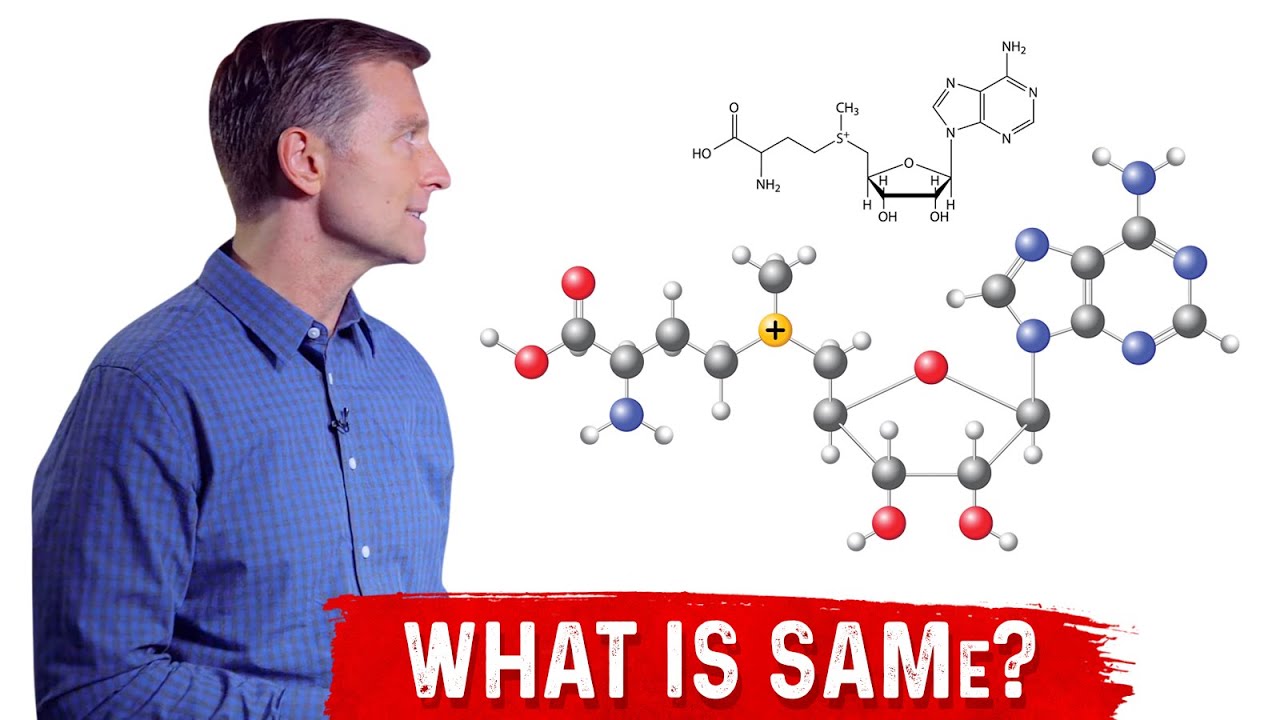
Benefits of SAMe:

Doctor's Best: Sam-E Supplement Review (Mood Enhancer)
Jarrow Formulas SAM-e 200mg Honest Review
What does it mean if you're helped by SAMe?
If I use SAMe for depression, what do I need for nutritional balance?
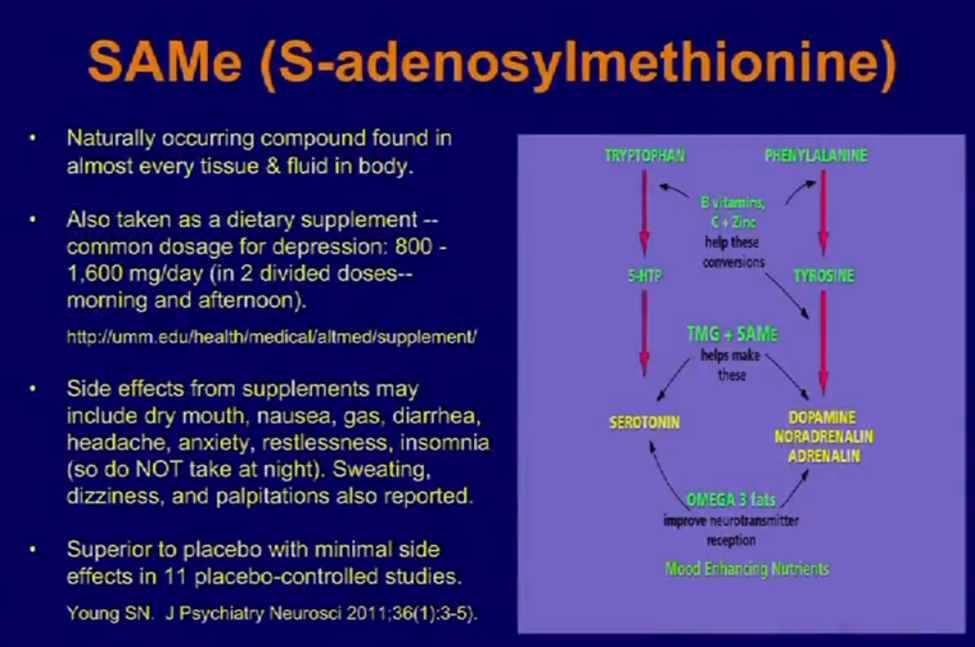
Trimethylglycine / Betaine can increase SAM-e by remethylating homocysteine.
SAMe is a chemical that is found naturally in the body. It can also be made in the laboratory.
SAMe has been available as a dietary supplement in the US since 1999, but it has been used as a prescription drug in Italy since 1979, in Spain since 1985, and in Germany since 1989. Researchers discovered the potential usefulness of SAMe for treating osteoarthritis by accident. They were studying SAMe’s effect on depression when the patients they were following reported an unexpected improvement in their osteoarthritis symptoms.
SAMe is used for depression, anxiety, heart disease, fibromyalgia, osteoarthritis,bursitis, tendonitis, chronic lower back pain, dementia, Alzheimer's disease, slowing the aging process, chronic fatigue syndrome (CFS), improving intellectual performance, liver disease, and Parkinson's disease. It is also used for attention deficit-hyperactivity disorder (ADHD), multiple sclerosis, spinal cord injury, seizures,migraine headache, and lead poisoning.
Some women use SAMe for premenstrual syndrome (PMS) and a more severe form of PMS called premenstrual dysphoric disorder (PMDD).
How does it work?
The body uses SAMe to make certain chemicals in the body that play a role in pain, depression, liver disease, and other conditions. People who don’t make enough SAMe naturally may be helped by taking SAMe as a supplement.
Dose;
In depression, 800 mg twice a day
USES
To treat arthritis
A few studies show that SAM-e is as effective as conventional treatments in treating osteoarthritis.
To treat chronic liver disease
Earlier studies found SAM-e helpful in chronic liver disease, but additional studies are needed to confirm this.
To treat drug-induced liver toxicity
Initial studies suggest that SAM-e may help reduce liver toxicity caused by some drugs, but more studies are needed to confirm safety as well as effectiveness.
To treat depression
Clinical studies produced conflicting results or were poorly designed, and one large study did not find benefit in major depressive disorder. More studies are needed to evaluate this use.
To treat hot flashes
A preliminary study suggests SAM-e is ineffective for this use.
To treat muscle pain
Older studies of SAM-e for fibromyalgia suggest some benefit, but larger studies are needed to confirm this.
To treat AIDS-related spinal cord disease
One study did not show significant benefits in this patient population
To treat Alzheimer’s disease
Studies that evaluate SAM-e without other supplements for Alzheimer’s disease are lacking.
SEIZURE CONTROL
S-adenosylmethionine (SAMe) is best known as a methyl donor in cellular metabolism, but it also has potential neuroprotective roles that could influence seizure control. While evidence is still preliminary, here’s how SAMe might help:
🔬 Mechanistic Pathways Relevant to Seizures
- Methylation & Epigenetic Regulation
- SAMe is the body’s primary methyl donor, supporting DNA, RNA, and protein methylation.
- Epigenetic regulation of genes involved in neuronal excitability, GABA/glutamate balance, and inflammation may help stabilize seizure thresholds.
- Glutathione Synthesis & Antioxidant Defense
- SAMe contributes to cysteine and glutathione production.
- By boosting glutathione, SAMe reduces oxidative stress, which is a known driver of seizure activity and neuronal damage.
- Neurotransmitter Metabolism
- SAMe is involved in the synthesis and regulation of monoamines (dopamine, serotonin, norepinephrine).
- Balanced neurotransmitter metabolism may indirectly support seizure control, especially in comorbid mood disorders.
- Anti-inflammatory Effects
- Through methylation-dependent pathways, SAMe can reduce pro-inflammatory cytokine expression.
- Since neuroinflammation contributes to epileptogenesis, this mechanism may be protective.
🧪 Evidence Landscape
- Preclinical Studies
- Animal models suggest SAMe supplementation can reduce oxidative stress and protect neurons during excitotoxic events.
- Some studies show improved resilience against seizure-inducing agents, though results are not consistent across all models.
- Human Data
- SAMe is widely studied for depression, liver disease, and osteoarthritis.
- No large-scale clinical trials yet confirm its efficacy in epilepsy. Its role remains theoretical and exploratory.
⚖️ Risk–Benefit Snapshot
| Dimension | Potential Benefit | Risks / Gaps |
|---|---|---|
| Mechanistic Strengths | Epigenetic regulation, antioxidant defense, anti-inflammatory effects | Indirect action (not a direct GABAergic agent) |
| Evidence Base | Preclinical neuroprotection, strong data in oxidative stress | No epilepsy-specific human trials |
| Safety Profile | Generally well tolerated, used clinically for depression/liver disease | High doses may cause GI upset, insomnia, or interact with antidepressants |
| Clinical Utility | Possible adjunct for drug-resistant epilepsy with oxidative stress/inflammation | Needs controlled trials before clinical adoption |
📌 Key Takeaway
SAMe could help control seizures indirectly by reducing oxidative stress, modulating inflammation, and influencing gene expression. It is not a frontline antiseizure agent, but may one day serve as an adjunctive therapy—especially in epilepsy subtypes linked to oxidative stress or metabolic dysfunction.
Per Sloan-Kettering:
Clinical Summary:
SAM-e is endogenously produced in the human body from adenosine triphosphate and methionine . It is involved in the formation of monoamine neurotransmitters such as serotonin and norepinephrine . Decreased SAM-e levels in cerebrospinal fluid are thought to contribute to the etiologies of depression and Alzheimer’s disease . SAM-e levels may also be decreased in chronic liver disease and AIDS-associated myelopathy . In the United States, SAM-e is marketed as a supplement to enhance mood, brain and neural function, joint mobility, and liver detoxification. It is also a prescription drug in other countries.
Preclinical data suggest that SAM-e may have antidepressive, neuroprotective , anti-inflammatory , and chondroprotective effects. Other models suggest liver injury can be exacerbated by depleted SAM-e levels, and that supplementation may have hepatoprotective effects.
In humans, data on whether SAM-e is an effective adjunct for major depressive disorder are mixed , and a large trial did not find benefit with SAM-e over escitalopram or placebo for major depressive disorder . Another study suggests benefit compared with escitalopram or placebo , but its therapeutic potential may be greater in men . A Cochrane review cites an absence of quality evidence , while a meta-analysis suggests adjunctive potential . Other preliminary data suggest SAM-e may improve memory related cognitive symptoms in depressed patients . However, studies that suggest cognitive benefits for patients with Alzheimer’s disease do not evaluate SAM-e in isolation.
Although results are mixed, a few clinical trials of SAM-e for osteoarthritis suggest benefit comparable with NSAIDs . For hot flashes, SAM-e was ineffective compared with historical placebo . It also did not significantly improve neurological measures in patients with AIDS-associated myelopathy . Preliminary trials suggest some benefit in fibromyalgia patients , but larger studies are needed.
Some trials have suggested benefit with oral SAM-e in patients with chronic liver disease . Addition of oral SAM-e to injected pegylated interferon alpha (pegIFN alpha) and oral ribavirin improved viral response in patients with chronic hepatitis C . Postoperative intravenous SAM-e therapy improved residual liver function in patients with cirrhosis . However, in patients with hepatitis C cirrhosis at elevated risk for hepatocellular carcinoma, oral SAM-e did not improve liver function, or reduce injury or oxidative stress . A small open-label study suggests oral SAM-e may be useful as adjunctive palliative therapy in patients with advanced biliary tract carcinoma . Other preliminary analyses suggest protective effects with SAM-e against chemotherapy-induced liver toxicity . Additional confirmatory studies are needed to assess efficacy and safety.
While generally well-tolerated, the therapeutic value of SAM-e in chronic liver disease is limited or yet to be determined. Because it is poorly absorbed, enteric-coated tablets are preferred. Outside the United States, parenteral formulations are used to treat fibromyalgia , osteoarthritis, and tendonitis as well as depression. However, patients with bipolar disorder or taking serotonergic medications including antidepressants should discuss any use of this supplement with their treating physician, as cases of mania and serotonin syndrome have been reported.
Mechanism of Action
SAM-e is endogenously produced from adenosine triphosphate and the amino acid methionine. It is a major, ubiquitous methyl donor to a wide variety of molecules , including catecholamines and other biogenic amines, fatty acids, neurotransmitters, nucleic acids, polysaccharides, porphyrins, proteins and membrane phospholipids. Homocysteine is formed through the transsulfuration pathway and is catabolized to cysteine and indirectly to glutathione.
In preclinical models, SAM-e protected against amyloid-beta-induced cellular injury by inhibiting oxidative stress and neuroinflammation . It also increased the endogenous antioxidant glutathione and potentiated antioxidant enzyme activity. Supplementation with SAM-e restores hepatic glutathione (GSH) deposits and attenuates liver injury . The mechanism by which SAM-e might treat depression is unknown, but increased synthesis of neurotransmitters such as serotonin, norepinephrine, and dopamine, may increase responsiveness of neurotransmitter receptors and fluidity of cell membranes in the production of phospholipids.
ARTICLES/STUDIES
- Neuropharmacology of S-adenosyl-L-methionine.
- Pharmacologic aspects of S-adenosylmethionine. Pharmacokinetics and pharmacodynamics
Alzheimer’s
- A multi-vitamin/nutrient formula has therapeutic value in moderate-stage to later-stage Alzheimer's disease.
- S-Adenosylmethionine Attenuates Oxidative Stress and Neuroinflammation Induced by Amyloid-beta Through Modulation of Glutathione Metabolism.
Depression
- S-Adenosylmethionine (SAMe) monotherapy for depression.
- S-adenosylmethionine blood levels in major depression: changes with drug treatment
- Is S-Adenosyl Methionine (SAMe) for Depression Only Effective in Males? A Re-Analysis of Data from a Randomized Clinical Trial.
- S-adenosyl methionine (SAMe) for depression in adults.
- Adjunctive Nutraceuticals for Depression: A Systematic Review and Meta-Analyses
- Adjunctive S-adenosylmethionine (SAMe) in treating non-remittent major depressive disorder: An 8-week double-blind, randomized, controlled trial()
- A double-blind, randomized, placebo-controlled clinical trial of S-adenosyl-L-methionine (SAMe) versus escitalopram in major depressive disorder.
Hepatoprotective
S-adenosylmethionine in liver health, injury, and cancer.
Neuroprotective
- S-Adenosylmethionine (SAMe) for Neuropsychiatric Disorders: A Clinician-Oriented Review of Research
- The clinical potential of ademetionine (S-adenosylmethionine) in neurological disorders.
Osteoarthritis
- S-adenosylmethionine in the treatment of osteoarthritis. Review of the clinical studies
- Osteoarthritis: the clinical picture, pathogenesis, and management with studies on a new therapeutic agent, S-adenosylmethionine.
- Double-blind controlled clinical trial of oral S-adenosylmethionine versus piroxicam in knee osteoarthritis
- A randomized, double blind, placebo controlled trial of intravenous loading with S-adenosylmethionine (SAM) followed by oral SAM therapy in patients with knee osteoarthritis.
- Double-blind, placebo-controlled cross-over study of intravenous S-adenosyl-L-methionine in patients with fibromyalgia
- S-adenosyl-L-methionine in the treatment of Alzeheimer’s disease.
- S-adenosyl-L-methionine. A review of its pharmacological properties and therapeutic potential in liver dysfunction and affective disorders in relation to its physiological role in cell metabolism
- Role of S-adenosyl-L-methionine in the treatment of depression: a review of the evidence
- S-adenosylmethionine is decreased in the cerebrospinal fluid of patients with Alzheimer’s disease.
- S-adenosyl-L-methionine — a new therapeutic agent in liver disease?
- S-adenosyl-L-methionine for the treatment of chronic liver disease: a systematic review and meta-analysis
- Effects of S-adenosylmethionine augmentation of serotonin-reuptake inhibitor antidepressants on cognitive symptoms of major depressive disorder.
- A comprehensive review on the efficacy of S-Adenosyl-L-methionine in Major Depressive Disorder.
- S-adenosylmethionine (SAMe) therapy in liver disease: a review of current evidence and clinical utility
- Treatment of AIDS-associated myelopathy with L-methionine: a placebo-controlled study
- S-adenosyl-methionine and betaine improve early virological response in chronic hepatitis C patients with previous nonresponse.
- A Phase II Randomized, Controlled Trial of S-Adenosylmethionine in Reducing Serum alpha-Fetoprotein in Patients with Hepatitis C Cirrhosis and Elevated AFP.
- A multi-vitamin/nutrient formula has therapeutic value in early-stage Alzheimer's disease
- Sam-e appears to be well tolerated and effect in the treatment of depression in Parkinson's disease.
- Sam-e improves symptoms in primary fibromyalgia.
- Sam-e significantly improves osteoarthritis symptoms and depression.
- Comparative clinical trial of S-adenosylmethionine versus nabumetone for the treatment of knee osteoarthritis: an 8-week, multicenter, randomized, double-blind, double-dummy, Phase IV study in Korean patients
- Phase II evaluation of S-adenosyl-L-methionine (SAMe) for the treatment of hot flashes
- Evaluation of S-adenosylmethionine in primary fibromyalgia. A double-blind crossover study
- Palliative treatment for advanced biliary adenocarcinomas with combination dimethyl sulfoxide-sodium bicarbonate infusion and S-adenosyl-L-methionine.
- Italian double blind multicenter study comparing S-adenosylmethionine, naproxen and placebo in the treatment of degenerative joint disease.
- Sam-e supplementation reduces aggressive behavior and improves quality of life in patients with schizophrenia.
- Sam-e works as good as Piroxicam, but sustained clinical improvement longer.
- Beneficial effects of S-adenosyl-L-methionine on post-hepatectomy residual liver function: a prospective, randomized, controlled clinical trial.
- .S-adenosyl methionine (SAMe) versus escitalopram and placebo in major depression RCT: efficacy and effects of histamine and carnitine as moderators of response.
- Sam-e works like NSAIDs against inflammation in osteoarthritis, but is more tolerable.
- S-adenosylmethionine attenuates hepatic lipid synthesis in pigs fed alchohol with a folate deficient diet.
- S-adenosylmethionine may have a therapeutic role in the treatment of hemochromatosis.
- S-adenosylmethionine reduces the progress of the Alzheimer-like features induced by B-vitamin deficiency in mice.
- A number of complementary/alternative therapies may have therapeutic potential in treating postpartum depression.
- Arginine and S-adenosylmethionine may contribute to nerve regeneration.
- Deficiency of dietary sources of methyl groups (e.g. methionine, choline, b12, folate, sam-e) reduce DNA methylation in the liver which leads to liver cancer.
- S-Adenosylmethionine is an attractive agent for both chemoprevention and treatment of liver cancer.
- Sam-e's potential to encourage remyelination may be of value in Multiple Sclerosis.
- Sam-e protects against azoxymethane-induced colonic abberations and suppressed human colon cancer cells.
- Sam-e treats depression in postmeopausal women.
- S-adenosylmethionine holds promise as a treatment for multiple neuropsychiatric conditions
- S-adenosylmethionine and superoxide dismutase 1 synergistically counteract Alzheimer's disease features progression.
- Effect of S-adenosylmethionine on experimental osteoarthritis in rabbits.
- Oral S-adenosylmethionine in primary fibromyalgia. Double-blind clinical evaluation
- Oral S-adenosylmethionine in the symptomatic treatment of intrahepatic cholestasis. A double-blind, placebo-controlled study
- S-adenosylmethionine (AdoMet) supplementation for treatment of chemotherapy-induced liver injury