Classical Complement Pathway
Return to Immune System Menu
The classical pathway can be activated by direct association of C1q with the microbial pathogen surfaces. It can also be initiated by binding of C1q to antigen-antibody complexes during an adaptive immune response.
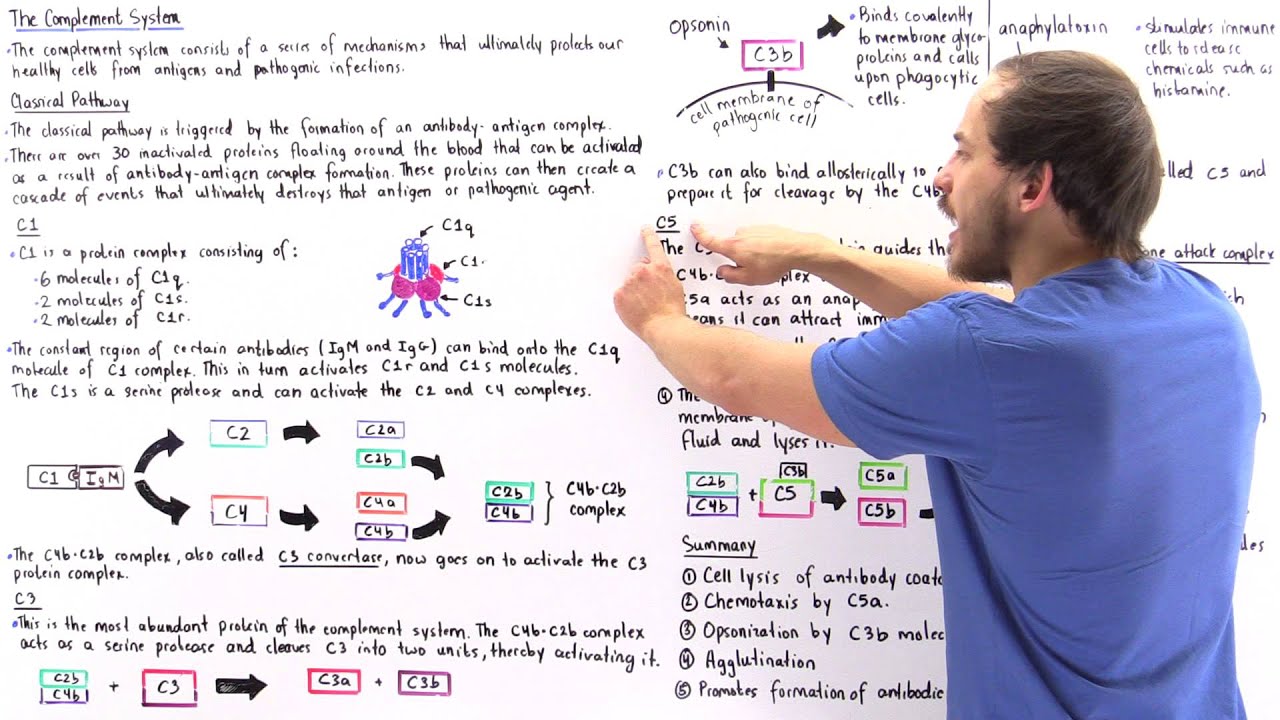
The classical complement pathway is a crucial component of the immune system, playing a significant role in the body's defense against pathogens. It is one of the three pathways that activate the complement system, the others being the lectin and alternative pathways. The classical pathway is primarily triggered by antibodies bound to antigens, making it an essential part of the adaptive immune response.
Overview of the Complement System
The complement system is a complex network of proteins that work together to enhance the ability of antibodies and phagocytic cells to clear pathogens from an organism. It is part of the innate immune system but also interacts with the adaptive immune system. The system consists of over 30 proteins, including serum proteins, serosal proteins, and cell membrane receptors. These proteins are synthesized mainly by the liver and circulate in the blood in an inactive form.
Activation of the Classical Pathway
The classical complement pathway is activated when the first component, C1, binds to antibodies that are attached to antigens. This typically occurs with immunoglobulin G (IgG) or immunoglobulin M (IgM) antibodies. The binding of C1 to the Fc region of these antibodies initiates a cascade of proteolytic reactions that lead to the activation of other complement proteins.
Key Steps in Activation
- C1 Complex Formation: The C1 complex is composed of three subcomponents: C1q, C1r, and C1s. C1q binds to the Fc region of antibodies, while C1r and C1s are serine proteases that become activated upon binding.
- C4 and C2 Activation: Activated C1s cleaves C4 into C4a and C4b. C4b binds to the pathogen surface and then binds C2, which is subsequently cleaved by C1s into C2a and C2b. The C4b2a complex, also known as C3 convertase, is formed on the pathogen surface.
- C3 Convertase Formation: The C3 convertase cleaves C3 into C3a and C3b. C3b binds to the pathogen surface, opsonizing it for phagocytosis and further amplifying the complement cascade.
- C5 Convertase Formation: The C3 convertase binds another C3b to form C5 convertase (C4b2a3b), which cleaves C5 into C5a and C5b. C5b initiates the formation of the membrane attack complex (MAC).
- Membrane Attack Complex (MAC) Formation: C5b binds to C6, C7, C8, and multiple C9 molecules to form the MAC, which creates pores in the pathogen's membrane, leading to cell lysis and death.
Functions of the Classical Pathway
The classical complement pathway serves several critical functions in the immune response:
- Opsonization: C3b and C4b act as opsonins, marking pathogens for phagocytosis by immune cells such as macrophages and neutrophils.
- Cell Lysis: The formation of the MAC results in the lysis of pathogen cells, effectively killing them.
- Inflammation: The small fragments C3a and C5a act as anaphylatoxins, promoting inflammation by increasing vascular permeability and attracting immune cells to the site of infection.
- Immune Complex Clearance: The pathway helps in the clearance of immune complexes from the circulation, preventing their deposition in tissues and subsequent inflammation.
Regulation of the Classical Pathway
The classical complement pathway is tightly regulated to prevent damage to host tissues. Several regulatory proteins are involved in this process:
- C1 Inhibitor (C1-INH): Inhibits the activation of C1r and C1s, preventing the initiation of the cascade.
- Decay-Accelerating Factor (DAF): Accelerates the decay of C3 convertase, reducing the amplification of the cascade.
- Factor I: Cleaves C3b and C4b, inactivating them and preventing further complement activation.
- CD59: Inhibits the formation of the MAC on host cells, protecting them from lysis.
Clinical Significance
Dysregulation or deficiencies in the classical complement pathway can lead to various diseases. For instance, a deficiency in C1-INH can result in hereditary angioedema, characterized by recurrent episodes of severe swelling. Additionally, improper clearance of immune complexes can contribute to autoimmune diseases such as systemic lupus erythematosus (SLE).
Understanding the classical complement pathway is essential for developing therapeutic interventions for diseases involving complement dysregulation. Research continues to explore ways to modulate this pathway to treat conditions like autoimmune diseases, infections, and inflammatory disorders.