Herniated Disc
VIDEOS:
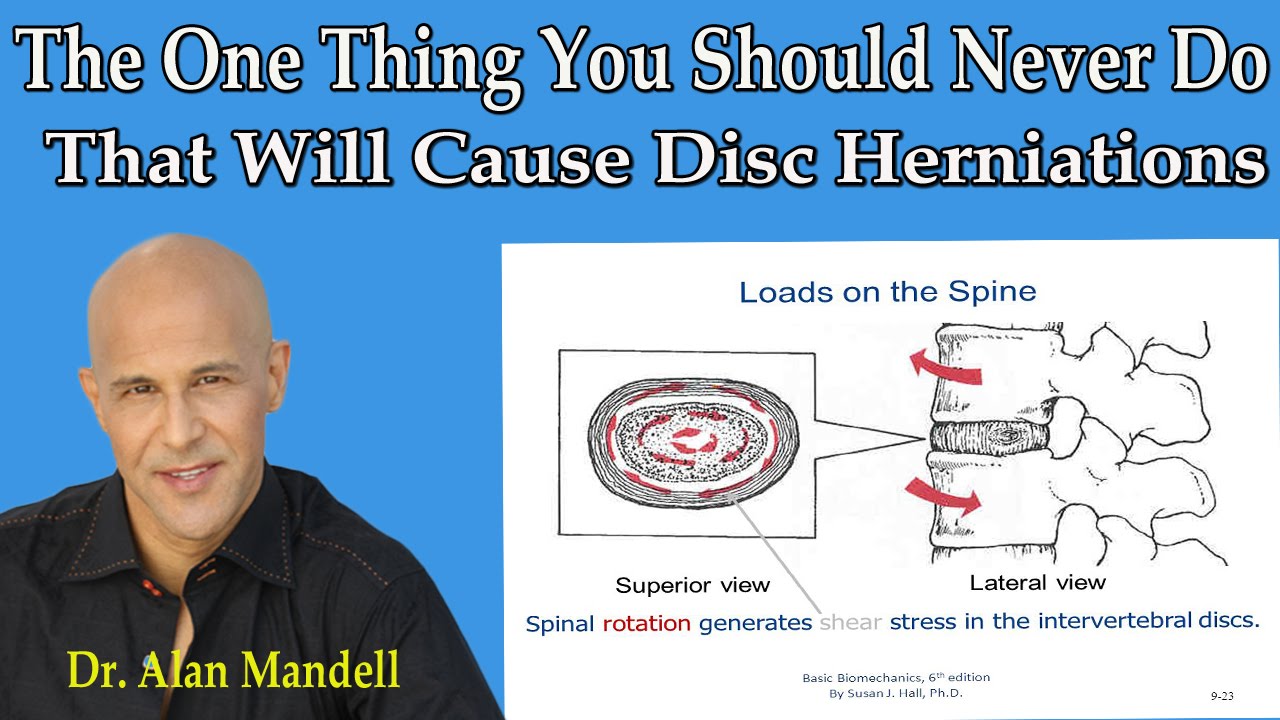
The One Thing You Should Never Do That Will Cause Disc Herniations
Why You Have a Disc Herniation or Bulge
Biomechanics How Tight Hamstrings Cause Disc Herniations
Coccydynia (Coccyx Pain, Tailbone Pain) What You Need to Know
A Spinal disc bulge or herniation, what's the difference?
Hot spinal discs, Can an inflamed disc heal?
Can My Herniated , Bulging Disc or Sciatica Heal, How Long
7 Exercises for Back Pain Using the McKenzie Method
McKenzie Exercises for Sciatica and Low Back Pain
Best Positioning Tips for Sciatica (Herniated Disc)
Sciatica & Herniated Disc Cure from the MASTER
Herniated Disc, Prolapse Disc, Bulging Disc (# 1 Effective Exercise) Dr Mandell
Self-Decompression for Lower Back Pain, Herniated Disc, Pinched Nerve
Exercises
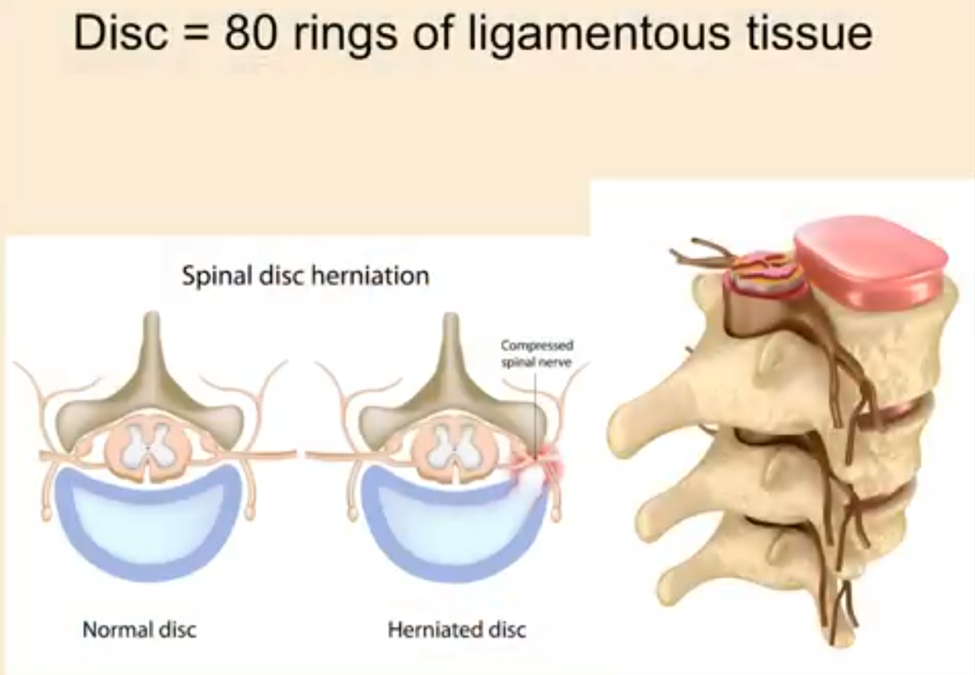
A herniated disk refers to a problem with one of the rubbery cushions (disks) between the individual bones (vertebrae) that stack up to make your spine.
A spinal disk is a little like a jelly donut, with a softer center encased within a tougher exterior. Sometimes called a slipped disk or a ruptured disk, a herniated disk occurs when some of the softer "jelly" pushes out through a crack in the tougher exterior.
A herniated disk can irritate nearby nerves and result in pain, numbness or weakness in an arm or leg. On the other hand, many people experience no symptoms from a herniated disk. Most people who have a herniated disk don't need surgery to correct the problem.
You can have a herniated disk without knowing it — herniated disks sometimes show up on spinal images of people who have no symptoms of a disk problem. But some herniated disks can be painful. Most herniated disks occur in your lower back (lumbar spine), although they can also occur in your neck (cervical spine).
The most common signs and symptoms of a herniated disk are:
- Arm or leg pain. If your herniated disk is in your lower back, you'll typically feel the most intense pain in your buttocks, thigh and calf. It may also involve part of the foot. If your herniated disk is in your neck, the pain will typically be most intense in the shoulder and arm. This pain may shoot into your arm or leg when you cough, sneeze or move your spine into certain positions.
- Numbness or tingling. People who have a herniated disk often experience numbness or tingling in the body part served by the affected nerves.
- Weakness. Muscles served by the affected nerves tend to weaken. This may cause you to stumble, or impair your ability to lift or hold items.
When to see a doctor
Seek medical attention if your neck or back pain travels down your arm or leg, or if it's accompanied by numbness, tingling or weakness.
Articles/Studies
- Knowledge Therapy for Herniated Disc
- Long term follow-up of cervical intervertebral disc herniation inpatients treated with integrated complementary and alternative medicine: a prospective case series observational study
- "Ozone oxidative post-conditioning reduces oxidative protein damage in patients with disc hernia."
- Acupuncture has therapeutic value in supporting nerve block treatment for lumbar disc herniation.
- Auricular acupuncture may have therapeutic value in relieving pain in patients with lumbar disc hernia.
- Chiropractic manipulation has a therapeutic effect on pain relief for acute back pain and sciatica with disc protrusion.
- Electroacupuncture and continuous traction is therapeutic in the treatment of lumbar disc herniation.
- Manipulative reduction for lumbar intervertebral disc herniation can remarkably relieve lumbar pain and improve clinical curative effect.
- Moxibustion on temperature-sensitive points is a effective therapy for lumbar disc herniation, with stable therapeutic effect and low recurrence rate.
- Oxygen and ozone treatments are safe and efficacious in the treatment of herniated lumbar discs
- Thiocitic (syn. Lipoic acid) and Acetyl-L-carnitine reduce sciatic pain caused by a herniated disc.
- Electroacupuncture combined with acupoint-injection can effectively relieve the pain of the patients with intervertebral disc herniation.
- Red sage (danshen) and magnesium sulfate injection appears to reduce autoimmune sensitivity in rabbits with lumbar intervertebral disc herniation.
- Shikonin significantly inhibited the inflammatory response and apoptosis of human primary NP cells, possibly through the NF‐κB pathway.
- Spontaneous regression of herniated cervical disc: A case report and literature review.