St. John's Wort
Not to be confused with: The plant can be mistaken for other Hypericum species such as Hypericum barbatum, Hypericum hirsutum Hypericum maculatum, Hypericum montanum, and Hypericum tetrapterum
See also : Hypericum (genus)
Videos
Overview
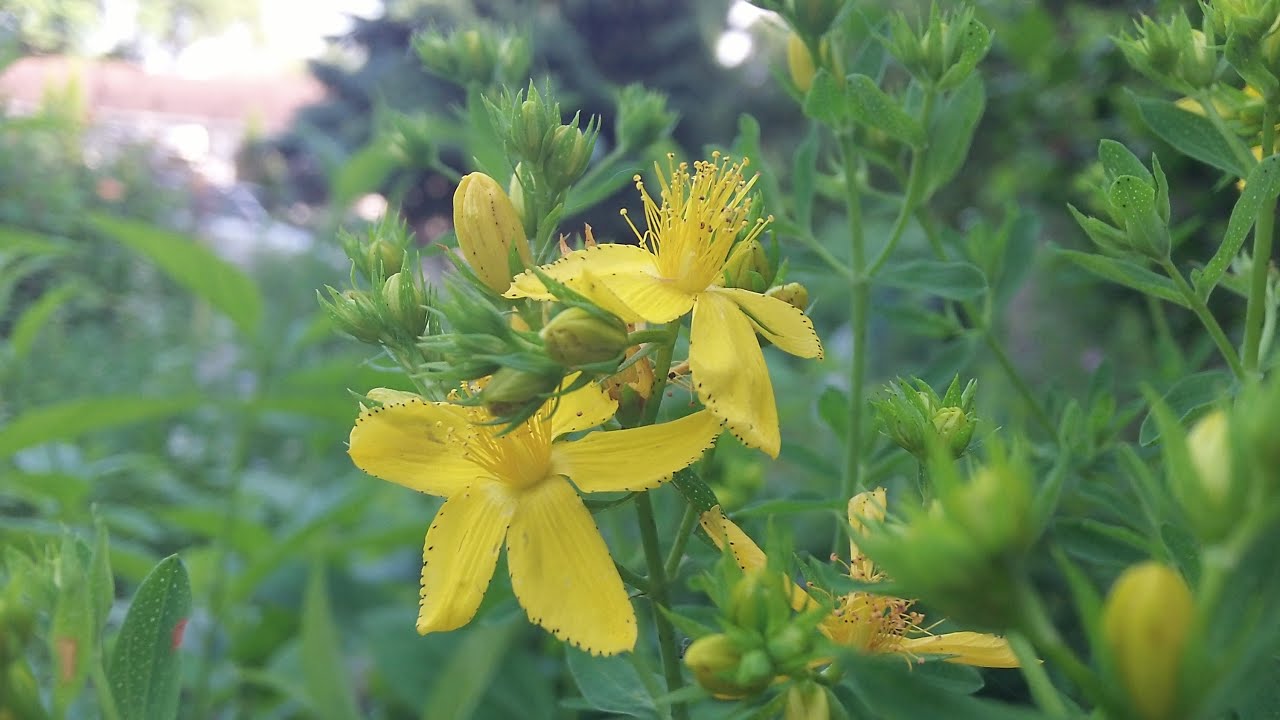
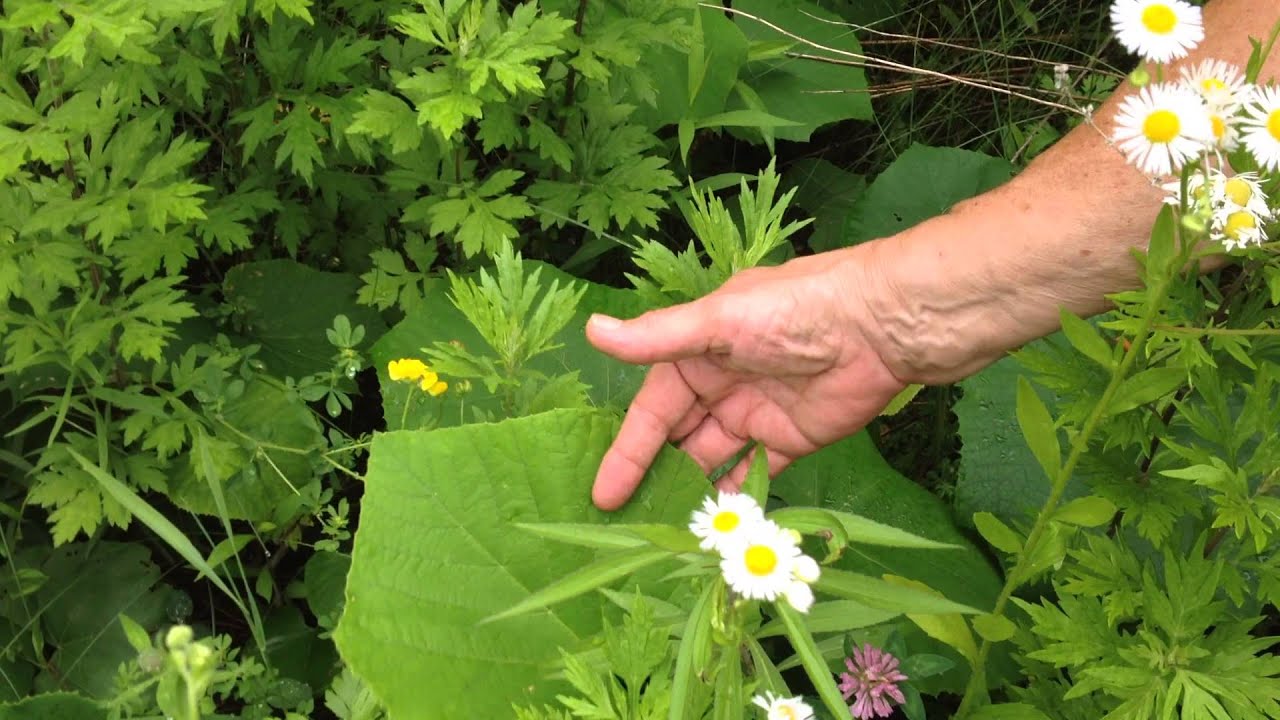
Although now St. John’s Wort is a cosmopolitan invasive weed, it is originally from Europe and Asia. St. John’s Wort is a herbaceous perennial that has a low-growing, creeping habit, preferring sunny meadows and fields, but also doing well in disturbed soils. The leaves have little oil glands on the leaves, that look like perforations, or dots, when held up to the light, leading to the specific name of “perforatum”. The flowers are about an inch across and a sunny yellow in color with five sepals and petals and many stamens.
Medicinal Parts: the fresh buds and flowers separated from the inflorescences, the aerial parts collected during the flowering season and dried, and the entire fresh flowering plant. . The plant material is harvested at flowering time.
Qualities: a bit bitter & sweet & astringent, cool, dry; relaxing, restoring, astringing, stimulating
Properties Antidepressant, antiseptic, antiviral, digestive tonic, nervine, vulnerary
TROPISM; lungs, intestines, kidneys, bladder, nerves, blood
Ground ;Sanguine krasis, Tough/Shao Yang biotypes; all three constitutions
Identification cues
- Growth habit: Herbaceous perennial, often forming a low, spreading or creeping clump; commonly found in sunny meadows, pastures, roadsides, and other disturbed, well-drained ground.
- Stems: Erect, slender, branching toward the upper portion; typically two longitudinal ridges are visible on the stem, a useful distinction from some similar Hypericum species.
- Leaves: Opposite, sessile, narrow to elliptic, and dotted with numerous translucent oil glands. Hold a leaf up to the light: the glands create the characteristic “perforated” appearance. Black marginal or surface dots may also be present.
- Flowers: Bright, golden-yellow, about 2–3 cm across, with five petals and five sepals; numerous prominent stamens form a conspicuous brush-like center. Petal margins often show fine black dots.
- Flowering clue: The fresh flowers may release a reddish-purple stain when crushed, especially in the darker glandular tissue—an important field clue, though not a substitute for careful identification.
- Overall field mark: The combination of opposite perforated leaves, five-petaled yellow flowers with many stamens, and a two-ridged stem is strongly characteristic of Hypericum perforatum.
- Caution: Confirm identification with a regional flora or experienced botanist before harvesting; other Hypericum species can look similar.
Constituents:
Volatile oil (incl. germacrene, sesquiterpenes), tannins, flavonoids, resins, glycosides (incl. rutin, pholbaphene, rhodan), red pigment (hypericin), carotenes, pectin, polyphenolic flavonoid derivative (hyperoside)
The major characteristic constituents include 0.05–0.30% naphthodianthrones (hypericin, pseudohypericin, hyperforin, adhyperforin); 2–4% flavonoids (hyperoside, quercitrin, isoquercitrin, rutin); and 7–15% catechin tannins
- Listing on Duke's Database
- Analysis of the hypericin and pseudohypericin content of commercially available St John's Wort preparations.
- Nitrogen nutrition modulates oxidative stress and metabolite production in Hypericum perforatum.
Effects
Saint-John’s-wort has been used for over 1,000 years to treat depression. It is an official herb in the pharmacopoeias of Czechoslovakia, Poland, Romania, and Russia. It’s an antidepressant because it inhibits serotonin re-uptake. It helps heal physically damaged nerves and benefits anxiety, mild to moderate depression, fear, irritability, and melancholy. It helps heal physically damaged nerves, breaks up Qi stagnation, and calms and lifts the spirit. It works best on depression related to anxiety and intestinal problems.
It also promotes tissue repair, deters infection, and helps relieve pain. It can help heal damaged nerves when used internally or externally.
It's anti-viral only against enveloped viruses such as Epstein-Barr and Human Herpes Virus-6.
Saint-John’s-wort’s action results in part from its ability to block the re absorption of serotonin, and it might also enhance the body’s receptivity to light. One of its components, hypericin, increases serotonin and melatonin metabolism. Another component, hyperforin, inhibits the uptake of dopamine, serotonin, noradrenaline, gamma-aminobutyric acid (GABA), and L-glutamate, thereby allowing these neurotransmitters to persist longer in the body, which contributes to emotional stability. It has been known to restore zest to the elderly who may feel lonely and uncared for.
Tissue State Relevance
Hypericum perforatum (St. John’s Wort) maps most strongly to Wind/Tension and Heat/Excitation tissue states, with secondary relevance to Dry/Atrophy and Damp/Stagnation.
This mapping is grounded directly in the pharmacology documented in the retrieved sources, especially its neurotransmitter‑modulating, anti‑inflammatory, and antimicrobial actions.
Wind / Tension — Primary relevance
St. John’s Wort is best known for its antidepressant and anxiolytic effects, mediated by:
- Modulation of serotonin, dopamine, norepinephrine, GABA, and glutamate systems National Center for Biotechnology Information
- Hyperforin‑driven effects on neurotransmitter reuptake medxy.ai
- Neuroprotective activity reducing oxidative neural stress medxy.ai
These actions directly address neural irritability, anxiety, agitation, and mood‑linked tension, making Wind/Tension its clearest tissue‑state match.
Tissue‑state interpretation:
H. perforatum calms agitated, over‑firing, dysregulated neural states.
Heat / Excitation — Primary relevance
Multiple sources document strong anti‑inflammatory activity:
- Inhibition of NF‑κB, MAPK, and other inflammatory pathways medxy.ai
- Antibacterial and antiviral effects (including wound‑healing uses) National Center for Biotechnology Information
- Phototoxic hypericin acting as a reactive oxygen modulator en.wikipedia.org
These actions cool hot, reactive, inflamed tissues, especially in skin, nerves, and mucosa.
Tissue‑state interpretation:
Useful for irritated, inflamed, over‑activated tissues, including neuroinflammation.
Dry / Atrophy — Secondary relevance
St. John’s Wort supports trophic repair through:
- Neuroprotective antioxidant activity (catechins, flavonoids, hyperforin) medxy.ai
- Traditional use for wound healing and tissue regeneration National Center for Biotechnology Information
These actions help tissues under degenerative, atrophic, or oxidative stress, though this is not its primary signature.
Damp / Stagnation — Secondary relevance
There is mild relevance here due to:
- Antibacterial and antiviral activity (reducing pathogen‑driven dampness) National Center for Biotechnology Information
- Some hepatic enzyme induction affecting metabolic clearance (though clinically problematic) National Center for Biotechnology Information
This places St. John’s Wort in a damp‑modulating but not damp‑clearing role.
Cold / Depression — Not indicated
Although it treats clinical depression, its tissue‑state energetics are not warming or activating.
It does not counter cold, collapsed, low‑vitality tissues and may worsen them by:
- Increasing metabolic clearance of other drugs (CYP induction) National Center for Biotechnology Information
- Causing photosensitivity and fatigue in some individuals mayoclinic.org
Tissue‑State Summary Table
| Tissue State | Relevance | Mechanistic Basis | Pattern Expression |
|---|---|---|---|
| Wind / Tension | Primary | Neurotransmitter modulation; neuroprotective effects | Anxiety, agitation, neural irritability |
| Heat / Excitation | Primary | Anti‑inflammatory pathways; antimicrobial activity | Hot, reactive inflammation; irritated nerves |
| Dry / Atrophy | Secondary | Antioxidant repair; wound‑healing | Degenerative dryness; neural atrophy |
| Damp / Stagnation | Secondary | Antimicrobial; metabolic enzyme induction | Pathogen‑linked dampness; mild metabolic stagnation |
| Cold / Depression | Not indicated | No warming action; may worsen low vitality | Cold, collapsed tissues |
UsesTCM & Western Uses
Approved by Commission E;
- Anxiety
- Depressive moods
- Inflammation of the skin
- Blunt injuries
- Wounds and burns
Internally used for psychovegetative disturbances, depressive moods, anxiety and nervous unrest. Beneficial for PMS and menopausal anxiety and Seasonal Affective Disorder with Lemon Balm.Externally, the oily Hypericum preparations are used for treatment and post-therapy of acute and contused injuries and for first-degree burns. Beware of photosensitivity reactions to topical use of the oil. Some recommend the oil for use as a sunscreen, others caution us to avoid using as a sunscreen.
Edible Uses
Edible flowers, fresh leaves in salads
Wildcrafting: St. John's Wort Lesser Known Uses
Specific Indications: Rolla Thomas: It is claimed that it exerts a marked influence in relieving irritation in nerves of the spine, and in punctured or lacerated wounds of the extremities, preventing tetanus. Relieves the excruciating pain of such injuries.
1.CIRCULATES THE QI AND LOOSENS CONSTRAINT; STRENGTHENS AND RESTORES THE NERVE; CALMS AND LIFTS THE SPIRIT AND RIDS DEPRESSION
Qi constraint with nerve deficiency: nervous or emotional unease, tension or unrest with chronic weakness, nervous exhaustion or depression
kidney Qi constraint; intestinal cramps and colic, kidney or sacral pain, agitated depression, insomnia
uterus Qi constraint: irregular & variable menstruation as to cycle and flow, PMS
bladder Qi constraint: suppressed or scanty dribbling urination, irritation, bedwetting, painful sacrum
- STIMULATES THE LUNGS, EXPELS PHLEGM AND RELIEVES WHEEZING; DREDGES THE KIDNEYS, HARMONIZES AND PROMOTES URINATION, EXPELS STONES
lung phlegm damp: full distended chest, wheezing, shortness of breath, coughing up thin white phlegm
CHRONIC BRONCHITIS
Kidney Qi stagnation; headaches, skin rashes, painful pussy urine, nervousness, malaise
URINARY SAND AND STONE
BEDWETTING
3. CREATES ASTRICTION, DRIES MUCOUS DAMP, ARRESTS DISCHARGE AND STAUNCHES BLEEDING
HEMORRHAGE from all internal organs; blood in urine or stool, from mouth or nose
INTERMENSTRUAL BLEEDING
CHRONIC DIARRHEA, dysentery due to intestines damp cold
MUCOUS CYSTITIS, LEUCORRHEA,
- RESOLVES CONTUSION AND PROMOTES TISSUE REPAIR, RESTRAINS INFECTION AND RELIEVES PAIN
TRAUMATIC INJURIES, bruises, strains, concussions, sprains, punctures, shaking trauma (e.g. travel)
NERVE INJURY of any kind
SPINAL PAIN, soreness or burning sensation
MUSCULAR soreness, cramping, neuralgia, sciatica
WOUNDS, sores, ulcers (internal & external)
ANIMAL BITES and stings
CHILDREN'S INFECTIOUS DISEASES
SKIN blemishes, dry flaky skin
BREAST ENGORGEMENT, TUMORS, lumps
A scientific review of its remarkable antibacterial and antioxidant properties
5. RESOLVES FEVER AND REDUCES INFLAMMATION
REMITTENT FEVER in Shao Yang stage
BURNS, INFLAMMATIONS, neuritis, sunstroke
Pharmacokinetics
Effect of St. John's wort (Hypericum perforatum) on cytochrome P-450 2D6 and 3A4 activity in healthy volunteers
Single-dose pharmacokinetics of hypericin and pseudohypericin were determined in 12 healthy male volunteers. After a single dose of 300, 900 or 1800mg extract (equivalent to 250, 750 or 1500mg hypericin, respectively, and 526, 1578 or 3156mg pseudohypericin, respectively), plasma levels of the hypericins were measured by high-performance liquid chromatography for up to 3 days. The median plasma levels were 1.5, 4.1 and 14.2 ng/ml for hypericin, and 2.7, 11.7 and 30.6 ng/ml for pseudohypericin, for the three stated doses, respectively.
The median half-life of hypericin was 24.8–26.5 hours and 16.3–36.0 hours for pseudohypericin. The median lag-time of absorption was 2.0–2.6 hours for hypericin and 0.3–1.1 hours for pseudohypericin. During long-term dosing (900mg daily), a steady state was reached after 4 days. The mean maximum plasma level during the steady state was 8.5ng/ml for hypericin and 5.8ng/ml for pseudohypericin
A randomized, placebo-controlled clinical trial was performed to evaluate the pharmacokinetics and dermal photosensitivity of hypericin and pseudohypericin in 13 healthy volunteers after administration of a single dose of either a placebo or 900, 1800 or 3600 mg of the extract (equivalent to 0.00, 2.81, 5.62 and 11.25mg total hypericin [combined hypericin and pseudohypericin], respectively). The maximum total hypericin plasma levels observed at 4 hours after administration were 0, 28, 61 and 159 ng/l, respectively. Before and 4 hours after drug intake, the subjects were exposed to increasing doses of solar simulated irradiation on small areas of their backs. No dose-related increase in light sensitivity was observed. In the multiple-dose analysis, 50 healthy volunteers received 600mg extract of the herb three times during 1 day only. A slight increase in solar-simulated irradiation sensitivity was observed.
In a randomized, four-way crossover study without controls involving six healthy volunteers, the pharmacokinetics of hyperforin were determined after administration of single doses of 300, 600, 900 or 1200mg of an alcohol extract containing 5% hyperforin. The maximum plasma level of hyperforin (150ng/ml) was reached 3.5 hours after administration of 300mg of the extract.
The hyperforin half-life and mean residence time were 9 and 12 hours, respectively. The pharmacokinetics were linear up to 600mg of the extract. Increasing the dose to 900 or 1200mg of extract resulted in values for maximum clearance and area under the curve lower than those expected from linear extrapolation of data from the lower doses (110). The pharmacokinetics of hyperforin were studied in nine healthy volunteers, as part of a double-blind, randomized, placebo-controlled study of 54 subjects. The subjects received either a single dose of 900 mg of an alcohol extract containing 5% hyperforin, or 300 mg of an alcohol extract containing 5% hyperforin three times daily for 8 days. No accumulation of hyperforin in the plasma was observed. On the basis of the area under the curve values from the multiple-dose study, the estimated steady-state plasma concentration of hyperforin was approximately 100ng/ml.
(WHO-VOL2 pg 163)
NOTES -- HOLMES
Like many plants that were used by a large variety of healers, and whose uses are lost in the mists of prehistory, St. John's wort has come down to us with a legacy of magical and talismanic uses--witness names such as Touch and heal; Devil's router ; Witch's herb.
Throughout history and up to comparatively recently, medical practitioners who chose to use plant remedies had definite preferences. Some preferred more rational uses, such as those offered by Galenic medical usage. Besides this, innumerable hybrid practices such as Monastic medicine also came and went. Iatromathematics or medical astrology of the fifteenth and sixteenth centuries, for instance, was influenced by both the Neoplatonic and the Wiccan traditions (not unlikely partners, by any means). It should come as no surprise, therefore, to learn that as late as 1673 an M.D. such as BARTHOLOMEUS CARRICHTER wrote that "if a person be possessed of an evil spirit, St. John's wort leaves should be given with food and taken," judiciously adding that "the best time to pick the entire herb is when the sun enters the sixth degree of Leo." Clearly, the use of plants such as St. John's wort in the context of ritual and imagery offers some proof that wise women healers did not rely on toxic substances such as Henbane, Deadly nightshade and frog's skin to produce healing (as they did, in contrast, for the Wiccan craft)
About Wicca:
{ Note, Holmes is using the term Wicca, which is not a term used historically... the terms "Wicca" and "Wiccen" were first used by Charles Cardell to refer to pagan religions in a 1958 article in Lightmagazine and the religion we call Wicca was credited to Gerald Gardner. He's referred to as the "Father of Wicca" though Wicca itself wasn't the term used at the time. Gardner is credited with founding Wicca in the 1950s, drawing from various influences including folklore and older pagan traditions. )
St. John's wort is a gentle remedy especially suited to children and the elderly and combines easily and well. Like Horsetail, its use is very much polarized between treating very acute conditions and very chronic ones. For the former this Woundwort is one of the best burn, inflammation, pain and nerve injury remedies --cooling, healingand relieving pain.The exquisite Compound oil of Hypericum,given in the Reformiete Deutsche Apotheck of 1573, includes balsamic resins such as Myrrh, Gums and Aloes and is a silent witness to this from the past.
In chronic conditions, on the other hand, St. John's wort scores where nerve deficiency has led to Qi constraint with low level tension, restlessness, spasms- and especially, depression. Here it restores the nervous system as a trophorestorative, causing inner freeing, relaxation and eventually lifting depression. Like Skullcap, it is thus also an important botanical for lifting the spirits.
Like Arnica and Calendula, Hypericum is an excellent first aid remedy both in tincture and homeopathic form.