Disc Problems
Why does disc degeneration occur?

Disc problems are a common issue within the realm of spinal disorders, affecting millions of people worldwide. These problems can lead to significant discomfort and disability, impacting daily activities and overall quality of life.
Anatomy of the Spine
The human spine is a complex structure composed of 33 vertebrae, intervertebral discs, ligaments, and muscles. The intervertebral discs are located between the vertebrae and act as shock absorbers, providing flexibility and support to the spine. Each disc consists of a tough outer layer called the annulus fibrosus and a gel-like center known as the nucleus pulposus.
Common Types of Disc Problems
Disc problems can manifest in various forms, each with distinct characteristics and implications:
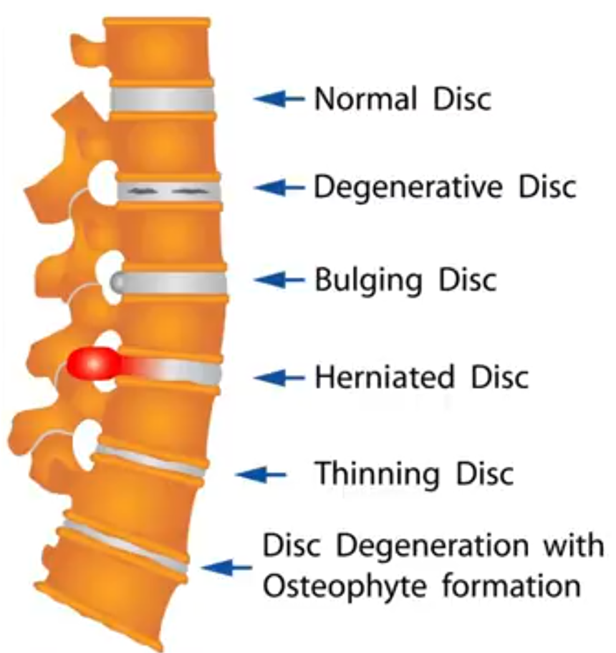
- Herniated Disc: Also known as a slipped or ruptured disc, this condition occurs when the nucleus pulposus protrudes through a tear in the annulus fibrosus. This can compress nearby nerves, leading to pain, numbness, or weakness.
- Degenerative Disc Disease: This is a natural part of aging where the discs lose hydration and elasticity, leading to reduced disc height and potential nerve compression. It can cause chronic pain and stiffness.
- Bulging Disc: Unlike a herniated disc, a bulging disc involves the disc protruding outward without a rupture. It can still press on nerves and cause discomfort.
- Discitis: An infection of the intervertebral disc space, discitis can cause severe back pain and fever. It often requires medical intervention to prevent complications.
Causes and Risk Factors
Several factors can contribute to the development of disc problems:
- Age: As people age, the discs naturally degenerate, increasing the risk of disc-related issues.
- Injury: Trauma or injury to the spine can lead to disc herniation or other problems.
- Genetics: A family history of disc problems can predispose individuals to similar issues.
- Lifestyle: Poor posture, lack of exercise, and obesity can strain the spine and contribute to disc degeneration.
- Occupational Hazards: Jobs that involve heavy lifting, repetitive motions, or prolonged sitting can increase the risk of disc problems.
Symptoms of Disc Problems
The symptoms of disc problems can vary depending on the location and severity of the issue. Common symptoms include:
- Back Pain: Persistent or intermittent pain in the back, which may worsen with movement.
- Radiating Pain: Pain that extends to the arms or legs, often described as sharp or shooting.
- Numbness or Tingling: A sensation of pins and needles in the affected area.
- Muscle Weakness: Weakness in the muscles served by the affected nerves.
- Limited Mobility: Difficulty bending, twisting, or performing daily activities.
Diagnosis
Diagnosing disc problems typically involves a combination of medical history, physical examination, and imaging tests. Common diagnostic tools include:
- X-rays: To assess the alignment and integrity of the spine.
- MRI (Magnetic Resonance Imaging): Provides detailed images of the discs and surrounding tissues.
- CT Scan (Computed Tomography): Offers cross-sectional images of the spine.
- Discography: An invasive test that involves injecting dye into the disc to identify pain sources.
Treatment Options
Treatment for disc problems can range from conservative measures to surgical interventions, depending on the severity and impact on the patient's life:
- Conservative Treatments:
- Rest and activity modification
- Physical therapy to strengthen muscles and improve flexibility
- Pain management with medications such as NSAIDs or corticosteroids
- Heat or ice therapy to reduce inflammation
- Surgical Treatments:
- Discectomy: Removal of the herniated portion of the disc
- Spinal fusion: Joining two or more vertebrae to stabilize the spine
- Artificial disc replacement: Replacing the damaged disc with an artificial one
Prevention
Preventing disc problems involves maintaining a healthy lifestyle and taking proactive measures to protect the spine:
- Exercise Regularly: Engage in activities that strengthen the core and improve flexibility.
- Maintain Good Posture: Practice proper posture when sitting, standing, and lifting.
- Healthy Weight: Maintain a healthy weight to reduce stress on the spine.
- Ergonomic Work Environment: Ensure your workspace supports good posture and reduces strain.