Dendritic Cells
Return to Cardiovascular System Menu
Return to Immune System Menu
See also: Monocytes ; MHCII - Major histocompatibility complex II; APC Antigen Presenting Cells; MHC
Videos
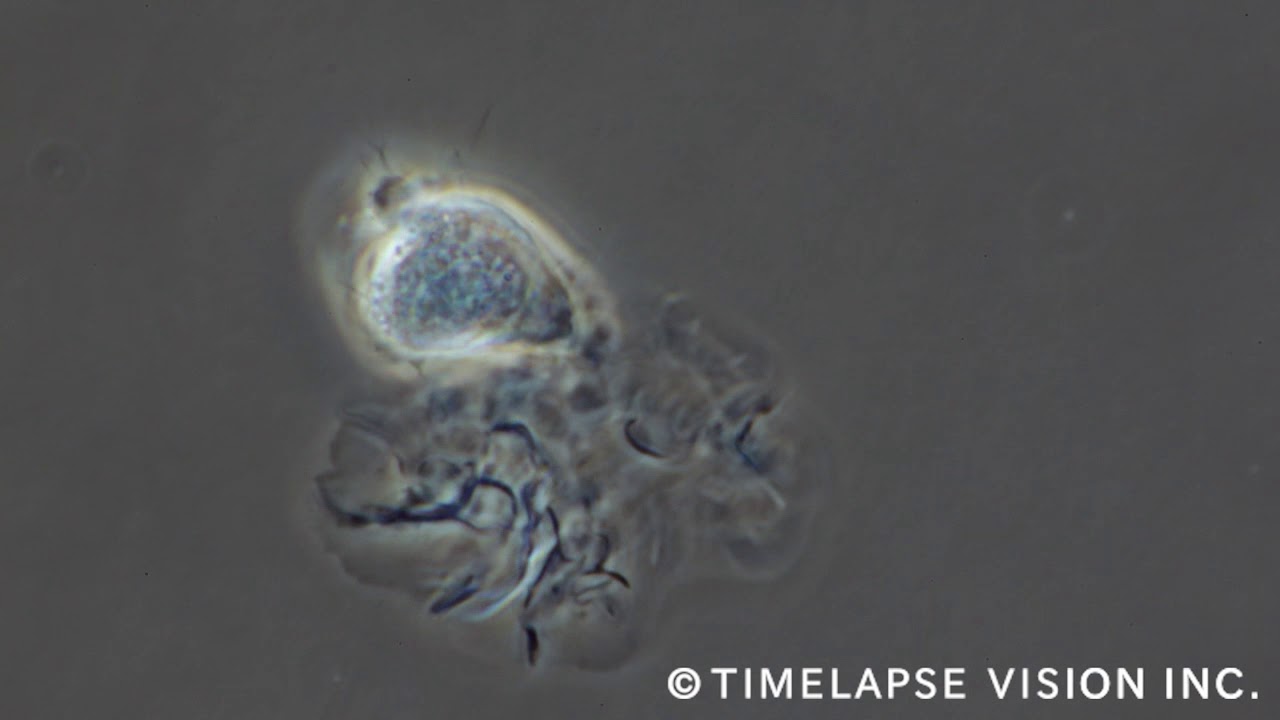
Dendritic Cells and Antigen Presentation:
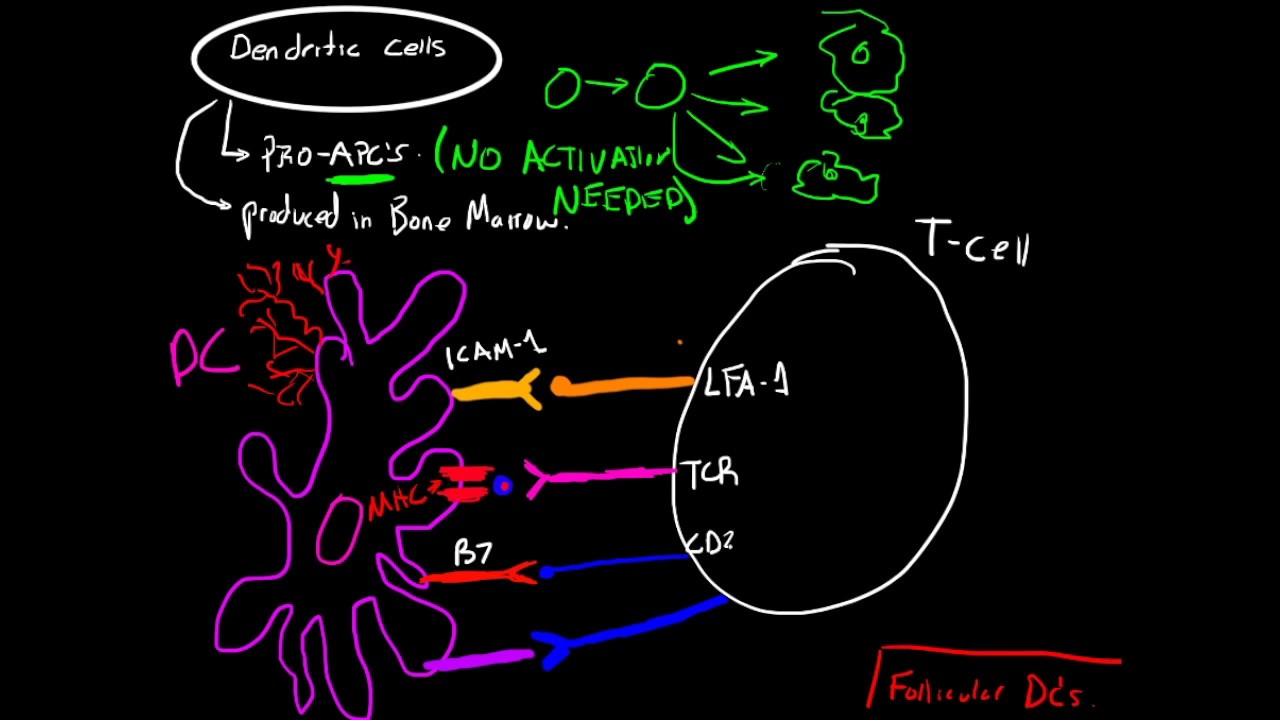
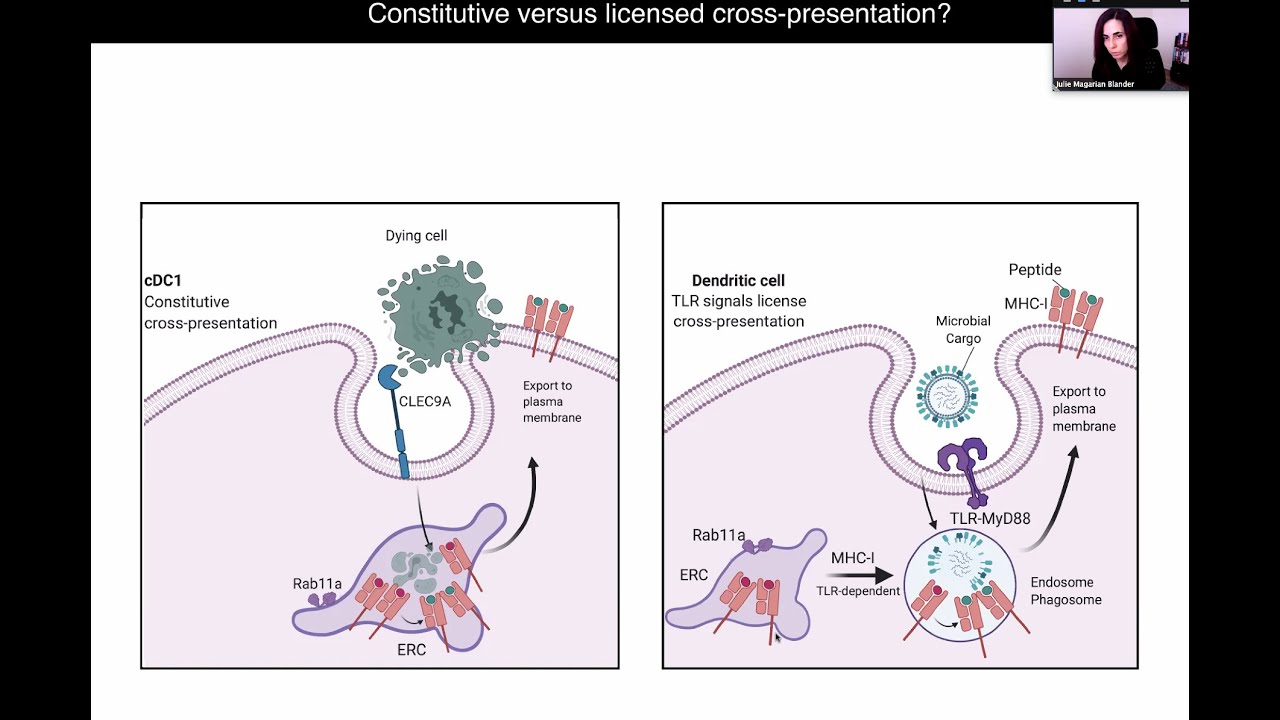
Regulation of the Cell Biology of Antigen Presentation in Dendritic Cells by Dr. Julie Blander
Ralph Steinman, Nobel prize winner, speaks about dendritic cells and immune-based vaccines
Dendritic cells : The professional antigen presenter
Follicular dendritic cells
Immediately under the layer of epithelial cells are the dendridic cells - these can defend us and also understand what's going on in the gut lumen, they have "periscopes" to extend into the lumen to see who is here. Based on what they detect, they prepare the rest of the army for peace or war.
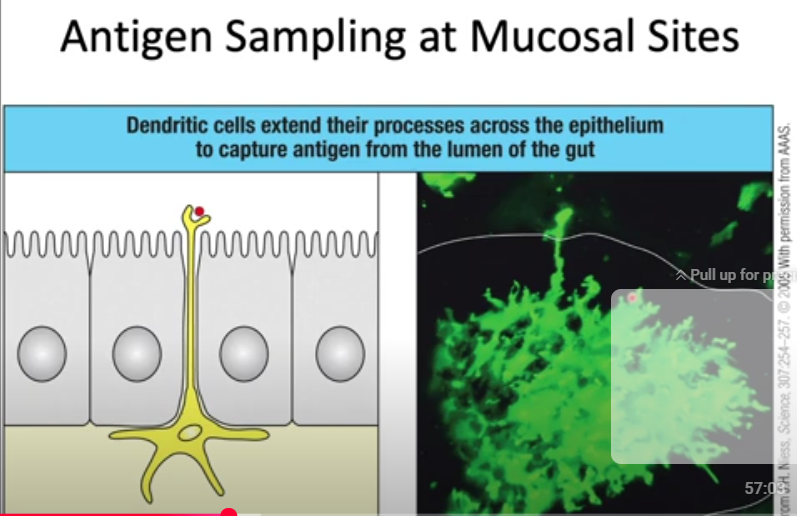
They are capable of moving through lymphatic channels to lymph nodes containing T and B cells.
Antigen presentation is their main process, they are professional phagocytes also performing phagocytosis. They help regulate T-regs and certain bacteria like Lactobacillus and Bifidobacteria (through short-chain fatty acid production) are important for activating them to this purpose.They are created by blood monocytes.
Crosstalk between pattern recognition receptors (PRRs) expressed by dendritic cells orchestrates T helper (TH) cell differentiation through the induction of specific cytokine expression profiles, tailored to invading pathogens. C-type lectin receptors (CLRs) have an important role in orchestrating the induction of signaling pathways that regulate adaptive immune responses.
They express IL-33 and PAR-2(https://app.thebrain.com/brain/dd6c98d5-b9fd-0fa3-fafa-f409b4017a4c/dc6b6d3c-f500-45a9-81e0-cff2999f9a2c). Once activated they can release IL-6, IL-10 and IL-7. Histamine regulated dendritic cells. They interact with Myeloid derived suppressor cells (MDSC)
Polysaccharides derived from C. cicadae mycelium promoted maturity of dendritic cells, thus inducing anti-tumor immune responses
Pine Cone Extract:
It has been demonstrated (Bradley, 2003) that the active component of pinecone extract is capable of promoting the rapid differentiation of human peripheral blood mononuclear cells (PBMC) into mature dendritic cells.
Pine cone extract (PCE) has shown to promote, in a dose-dependent manner, the rapid differentiation of human peripheral blood mononuclear cells (PBMC) into mature dendritic cells. This is important because dendritic cells are recognized as the most potent antigen presenting cells of the immune system. Their ability to uptake, process, and present antigen to T cells is central to the development of immune responses against bacterial- and viral-infected cells, cancer cells and vaccine antigens.
Hyaluronan fragments, not the native high-molecular weight molecule, can induce inflammatory responses in macrophages and dendritic cells in tissue injury and in skin transplant
Reishi interacts with dendritic cells. Ganoderma lucidum** polysaccharides can induce human monocytic leukemia cells into dendritic cells with immuno-stimulatory function
When you have activation of macrophages and dendritic cells, they possess an enzyme, alpha hydroxylase, that's capable of turning 25-hydroxyvitamin D3 into calcitriol (the active form), which then binds the VDR and turns on over 1,000 genes responsible for regulation of the innate immune system.
Fungal Infections: elimination of fungi by an immune response occurs via the innate immune cells such as antigen presenting cells, monocytes and dendritic cells.
Vagal activities are involved in antigen-specific immune inflammation in the intestine The intestinal vagus nerve in mice expresses a high-affinity IgE receptor. An antigen-specific immune response can activate the vagus nerve in the intestine and induces the release of transmitters to modulate dendritic cell phenotypes that facilitate the development of skewed Th2 polarization in the intestine.
Lipoxins: In the initial phases of many acute inflammatory responses, damaged tissues, invading pathogens, and other local events cause nearby cells to make and release arachidonic acid-derived pro-inflammatory metabolites such as: leukotrienes (LTs), e.g. LTB4, LTB4, LTC4, LTD4, and LTE4; hydroxyeicosatetraenoic acids (HETEs), e.g. 5-HETE and 12-HETE; and oxoeicosanoids (oxo-ETE), e.g. 5-oxo-eicosatetraenoic acid (5-oxo-ETE) and 12-oxo-ETE. These metabolites proceed to act directly or indirectly to recruit circulating leukocytes, tissue macrophages, and tissue dendritic cells to the disturbed tissue site. The consequential congregation of the various cell types promotes transcellular pathways in forming specialized pro-resolving mediators (SPMs), including the LXs, which then proceed to stimulate cellular and tissue responses that trend to reverse the actions of the pro-inflammatory mediators, dampen and reverse the inflammatory response, and initiate tissue repair.
The role of CD40 and CD40L in Dendritic Cells
Lactobacillus plantarum GUANKE modulate anti-viral function of dendritic cells in mice.
Inflammatory Bowel Disease: Pterostilbene** reduces colonic inflammation by suppressing dendritic cell activation and promoting regulatory T cell development.
Intestinal lamina propria dendritic cells maintain T cell homeostasis but do not affect commensalism
Sesamolin** promotes cytolysis and migration activity of natural killer cells via dendritic cells.
Polysaccharide from **black currant** stimulates dendritic cells through TLR4 signalling.
Ficus carica** polysaccharides promote the maturation and function of dendritic cells
Berberine** induces dendritic cell apoptosis and has therapeutic potential for rheumatoid arthritis.
Lactobacillus plantarum OLL2712 induces IL-10 production by intestinal dendritic cells.