Osteosarcoma
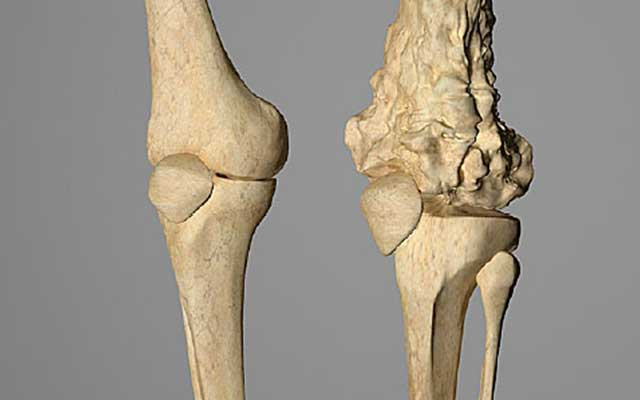
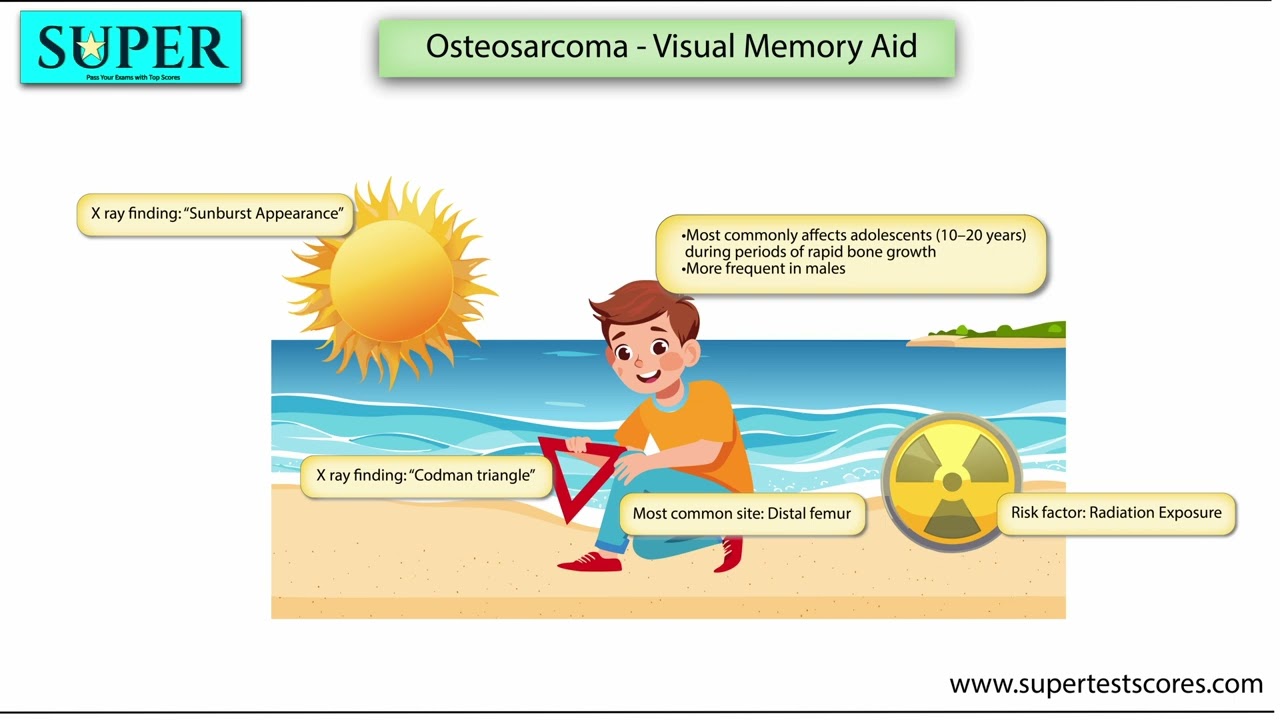
Osteosarcoma is the most common type of cancer that develops in bone. Like the osteoblasts in normal bone, the cells that form this cancer make bone matrix. But the bone matrix of an osteosarcoma is not as strong as that of normal bones. Most osteosarcomas occur in children and young adults
It's the most common primary bone malignancy in children.
It's most often found in the long bones, usually the legs, but it can start in any bone. It can also occur in soft tissue outside the bone, but this is rare.
Osteosarcoma is most common in children, adolescents, and young adults. About 800 new cases of osteosarcoma are reported each year in the U.S., and about 400 of these cases are in children and teens.
The earliest and most common signs of osteosarcoma are pain and swelling. Other symptoms include:
- A bump
- Redness and warmth at the site of the tumor
- Anemia
- Fever
- Exhaustion
- Unexplained weight loss
If osteosarcoma is diagnosed and treated before it has spread outside the area where it started, the 5-year relative survival rate for people of all ages is 76%. If the cancer has spread outside of the bones and into the regional lymph nodes, the 5-year relative survival rate is 64%.
Treatment for osteosarcoma includes limb-sparing surgery. Many people who have osteosarcoma will need physical therapy for several months after surgery.
More about Osteosarcoma from Cancer.org
Videos:

What happened to my arm?

Osteosarcoma
Orthopedic Oncology Course - Malignant Bone Forming Tumors (Osteosarcoma)
Osteosarcoma (Bone Cancer) : Causes, Diagnosis, Symptoms, Treatment, Prognosis
Treatment for Osterosarcoma at Boston Children's Hospital
Early Detection and Treatment of Osteosarcoma
Articles/Studies
Risk Factors
- Serum Antibodies Against Simian Virus 40 Large T Antigen, the Viral Oncoprotein, in Osteosarcoma Patients
- Cisplatin-resistant osteosarcoma cell-derived exosomes confer cisplatin resistance to recipient cells.
Prevention/Treatment
- Evaluation of Apoptosis and Autophagy Inducing Potential of *Berberis aristata, Azadirachta indica*, and Their Synergistic Combinations in Parental and Resistant Human Osteosarcoma Cells.
- The synergistic anticancer effect of CBD and doxorubicin in osteosarcoma.
- ***Citrus aurantium* Naringenin** Prevents Osteosarcoma Progression and Recurrence in the Patients Who Underwent Osteosarcoma Surgery by Improving Antioxidant Capability
- **Cinnamaldehyde** inhibits the function of osteosarcoma.
- The synergistic anticancer effect of **artesunate combined with allicin** in osteosarcoma cell line in vitro and in vivo.
- **Alantolactone** inhibits proliferation, metastasis and promotes apoptosis of human osteosarcoma cells by suppressing Wnt/β-catenin and MAPKs signaling pathways
- Shilajit potentiates the effect of chemotherapeutic drugs and mitigates metastasis induced liver and kidney damages in osteosarcoma.
- **Oridonin** synergizes with Nutlin-3 in osteosarcoma cells by modulating the levels of multiple Bcl-2 family proteins.
- **Oridonin** prevents epithelial-mesenchymal transition and TGF-β1-induced epithelial-mesenchymal transition by inhibiting TGF-β1/Smad2/3 in osteosarcoma.
- **Oridonin** exerts anticancer effect on osteosarcoma by activating PPAR-γ and inhibiting Nrf2 pathway.
- **Oridonin** inhibits the proliferation, migration and invasion of human osteosarcoma cells.
- Anti-tumour potential and selectivity of **caffeic acid phenethyl ester** in osteosarcoma cells.
- **Piceatannol** suppresses the proliferation and induced apoptosis of osteosarcoma cells.
- **Arbutin** suppresses osteosarcoma progression via miR-338-3p/MTHFD1L and inactivation of the AKT/mTOR pathway.
- These observations confirmed the suppressive effect of **punicalagin** against osteosarcoma malignancies.
- **Punicalagin** suppresses osteosarcoma growth and metastasis by regulating NF-κB signaling.
- **Ginsenoside Rg3** Suppresses Proliferation and Induces Apoptosis in Human Osteosarcoma
- Safety and Pharmacokinetics of **Withaferin-A** in advanced stage high grade Osteosarcoma: A phase I trial.
- **Oleanolic acid** induces osteosarcoma cell apoptosis by inhibition of Notch signaling.
- Cytotoxic effects of **delphinidin** in human osteosarcoma cells
- **Naringenin** induces ROS-mediated ER stress, autophagy, and apoptosis in human osteosarcoma cell lines.
- Crude extract of ***Rheum palmatum*** inhibits migration and invasion of U-2 OS human osteosarcoma cells by suppression of matrix metalloproteinase-2 and -9
- **Chrysanthemulide A** induces apoptosis in human osteosarcoma cells.
- **Cucurbitacin E** can be considered to be a promising anti-cancer agent for osteosarcoma.
- Molecular mechanisms underlying the inhibitory effects of **bovine lactoferrin** on osteosarcoma.
- **Magnolol** induces apoptosis in osteosarcoma cells via G0/G1 phase arrest and p53-mediated mitochondrial pathway.
- **Magnolol** may induce apoptosis and inactivate ERK/NF-B signal transduction in osteosarcoma cells.
- **Diosgenin** could be helpful for the treatment of patients with osteosarcoma.
- **Paeoniflorin** has a promising therapeutic potential in for osteosarcoma.
- **7,8-Dihydroxyflavone** suppresses proliferation and induces apoptosis of human osteosarcoma cells.
- This study provides comprehensive evidence that **cordycepin** inhibits osteosarcoma cell growth and invasion.
- **Asiatic acid** induces mitochondrial apoptosis via inhibition of JAK2/STAT3 signalling pathway in human osteosarcoma.
- Asiatic acid** inhibits osteosarcoma cell migration and invasion
- **Aloin** induced apoptosis by enhancing autophagic flux through the PI3K/AKT axis in osteosarcoma.
- Piperlongumine** induces ROS mediated apoptosis by transcriptional regulation of SMAD4/P21/P53 genes and **synergizes with doxorubicin** in osteosarcoma cells.
- Theabrownin** inhibits the cytoskeleton‑dependent cell cycle, migration and invasion of human osteosarcoma cells.
- Theabrownin** triggers DNA damage to suppress human osteosarcoma U2OS cells by activating p53 signalling pathway.
- Potential anticancer properties and mechanisms of **thymoquinone** in osteosarcoma and bone metastasis.
- **Luteolin** attenuates the chemoresistance of osteosarcoma.
- Chrysin** sensitizes osteosarcoma cells against TRAIL-induced apoptosis.
- **Formononetin** inhibits osteosarcoma cell proliferation and promotes apoptosis.
- Bisdemethoxycurcumin** suppresses human osteosarcoma U‑2 OS cell migration and invasion.
- Berberine** inhibits the growth of osteosarcoma through modulating MMP/NM-23 and MAPK/JNK signal pathways.
- Piperine** improves the sensitivity of osteosarcoma cells to **doxorubicin**.
- Curcumol** synergizes with cisplatin in osteosarcoma.
- Escin** induces caspase-dependent apoptosis and autophagy through the ROS/p38 MAPK signalling pathway in human osteosarcoma cells.
- β-Aescin** shows potent antiproliferative activity in osteosarcoma cells.
- Investigating the synergy of **Shikonin and Valproic acid** in inducing apoptosis of osteosarcoma cells.
- Lupeol** inhibits osteosarcoma progression by up-regulation of HMGA2 via regulating miR-212-3p.
- Allicin affects immunoreactivity of osteosarcoma cells through lncRNA CBR3-AS1.