Skin Microbiota / microbiome
Return to Integumentary System Menu

Protects you from pathogens
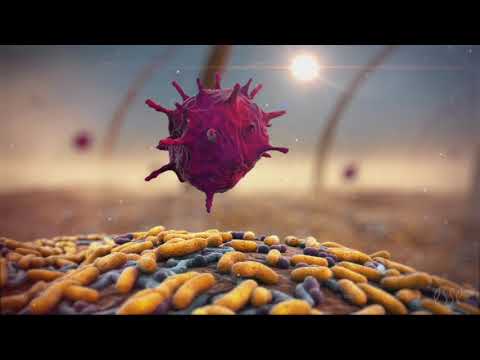
Life on your skin:

The Skin's Microbiome Link to Health & Cosmetic Issues | Dr. Trevor

How to Fix Your Skin Microbiome
The skin microbiota, also known as the skin microbiome, is a complex community of microorganisms that reside on the skin's surface. This diverse ecosystem includes bacteria, fungi, viruses, and mites, all of which play crucial roles in maintaining skin health and overall well-being. The skin microbiota is an essential component of the body's first line of defense against pathogens and environmental stressors.
Composition of the Skin Microbiota
The skin microbiota is composed of a variety of microorganisms, each contributing to the skin's health in different ways:
- Bacteria: The most abundant microorganisms on the skin, with Staphylococcus, Corynebacterium, and Propionibacterium being the most common genera.
- Fungi: Yeasts such as Malassezia are prevalent and play a role in skin conditions like dandruff and seborrheic dermatitis.
- Viruses: Although less studied, viruses such as bacteriophages can influence bacterial populations on the skin.
- Mites: Tiny arachnids like Demodex mites are part of the normal skin flora and can affect skin health.
Functions of the Skin Microbiota
The skin microbiota serves several important functions:
- Barrier Protection: The microbiota acts as a physical barrier, preventing the colonization of harmful pathogens by competing for space and nutrients.
- Immune System Modulation: It helps modulate the immune system, promoting a balanced immune response and preventing overreactions that can lead to inflammation.
- Skin Health Maintenance: By producing antimicrobial peptides and other substances, the microbiota helps maintain the skin's pH and integrity.
- Nutrient Production: Some microorganisms synthesize essential nutrients, such as vitamins, that contribute to skin health.
Factors Influencing the Skin Microbiota
Several factors can influence the composition and function of the skin microbiota:
- Genetics: An individual's genetic makeup can determine the types of microorganisms that thrive on their skin.
- Environment: Climate, humidity, and exposure to pollutants can affect the skin microbiota.
- Lifestyle: Diet, hygiene practices, and the use of skincare products can alter the microbial community on the skin.
- Age: The skin microbiota changes throughout a person's life, with significant differences observed between infants, adults, and the elderly.
Skin Microbiota and Skin Disorders
An imbalance in the skin microbiota, known as dysbiosis, can contribute to various skin disorders:
- Acne: An overgrowth of Propionibacterium acnes can lead to inflammation and acne development.
- Eczema: Dysbiosis is often observed in eczema, with reduced microbial diversity and an increase in Staphylococcus aureus.
- Psoriasis: Alterations in the skin microbiota have been linked to psoriasis, although the exact mechanisms are still under investigation.
Maintaining a Healthy Skin Microbiota
To support a healthy skin microbiota, consider the following practices:
- Use gentle, microbiome-friendly skincare products that do not disrupt the natural balance of microorganisms.
- Avoid over-cleansing, which can strip the skin of its natural oils and beneficial microbes.
- Maintain a balanced diet rich in nutrients that support skin health, such as omega-3 fatty acids, vitamins, and antioxidants.
- Stay hydrated to support the skin's natural barrier function.
- Minimize exposure to environmental pollutants and harsh chemicals.
Future Research and Implications
The study of the skin microbiota is a rapidly evolving field, with ongoing research exploring its potential in treating skin disorders and improving skin health. Advances in microbiome research may lead to the development of targeted therapies that restore microbial balance and enhance skin resilience.
Articles/Studies
NIH scientists find microbes on the skin of mice promote tissue healing, immunity
A Focus on Pathogens and Their Association with Skin Disease
Compartmentalized Control of Skin Immunity by Resident Commensals
Microbial ecology of the skin in the era of metagenomics and molecular microbiology.
Human immune system shapes skin microbiome
NIH scientists find microbes on the skin of mice promote tissue healing, immunity
Skin Microbiome and Inflammatory Dermatologic Conditions (April 2018)
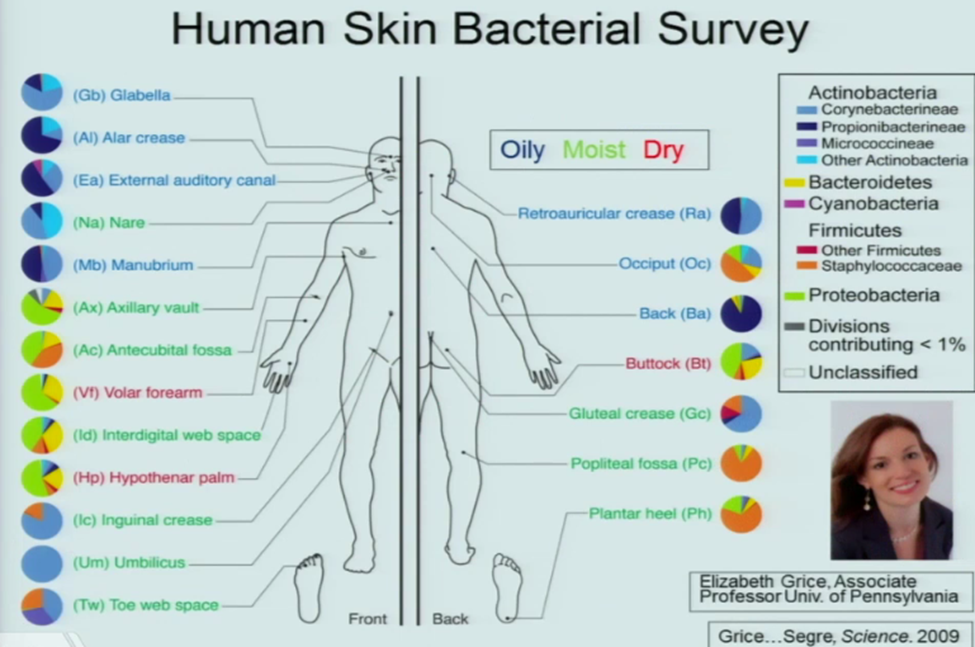
On the oily skin sites there's a preponderance of proprion bacterium. The moist sites have more of the proteobacteria. Dry sites have a greater diversity. Skin microbial communities are specific to the individual host and stable over time.
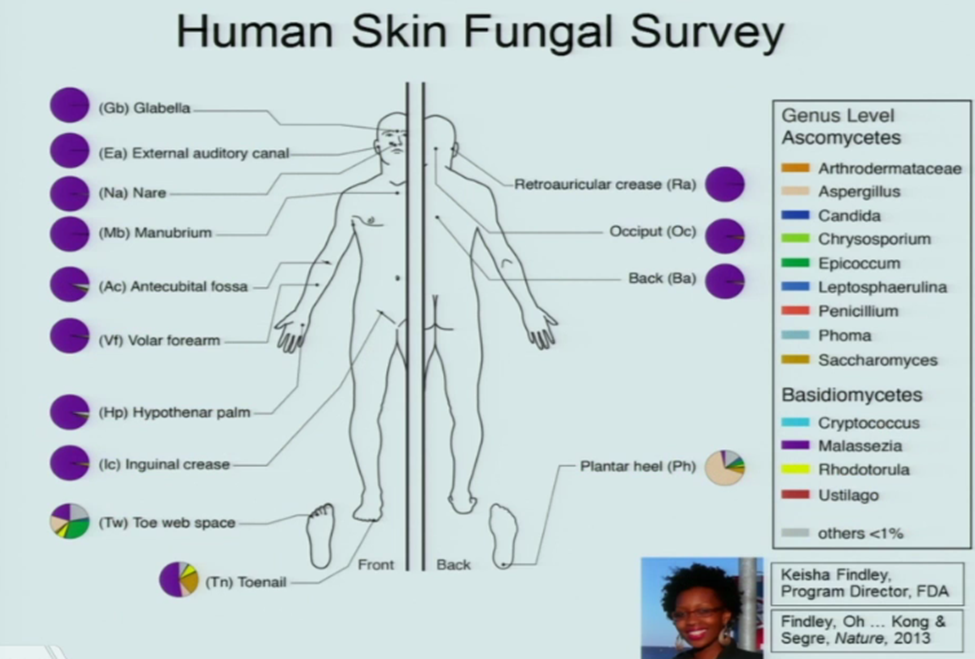
There is less diversity in the skin fungal communities, it's dominated by Malassezia.
Looking at the relative abundance of the kingdoms living on the skin:

Its been shown that whether or not you get sunburned from the same dose of radiation depends a lot on TLR activation which depends a lot on the skin microbiome.
What Is the Right Way to Wash Your Hands?
Despite regular washing and contact with bacteria-laden objects, our personal milieu of skin microbes remains highly stable over time, reports a metagenomics study published May 5 in Cell. The authors say this knowledge could be applied to better understand a wide range of human skin disorders through the development of prebiotic, probiotic, and microbial transplantation approaches.
Human skin is an ecosystem composed of a wide range of habitats for bacteria, fungi, and viruses. While most of these microbes are harmless or beneficial, some have been linked to skin disorders such as acne, psoriasis, and eczema. Studying the variability of microbial communities across skin sites has been key to understanding, for instance, why eczema tends to affect moist sites such as the bends of the arms and legs, while psoriasis commonly occurs on dry, exposed sites such as the elbows and knees. However, it has not been clear how microbial communities found across skin sites change over time and how these changes may affect human health.
In a recent metagenomic study, senior study authors Heidi Kong of the National Cancer Institute and Julie Segre of the National Human Genome Research Institute found that bacterial, fungal, and viral communities not only show a strong preference for inhabiting specific skin sites, but also serve as microbial fingerprints that are highly unique to individuals. In the new study, they expanded upon this work by examining the longitudinal stability of these skin microbial communities. The researchers took skin samples from 12 healthy individuals at three successive time points, spanning from 1 month to 2 years, and performed metagenomic shotgun sequencing across 17 skin sites.
Surprisingly, skin microbial communities remained highly stable over time, despite typical exposure to external perturbations such as routine contact with other individuals, clothing, and environments. Rather than acquiring prevalent microbes from the environment, individuals retained their own unique microbial signatures. However, the stability of skin microbial communities varied across individuals and microbial strains, with some showing more changes than others. Read more here.
Complement, an evolutionarily conserved arm of the innate immune system, was shown to maintain diversity of the skin microbiota in a mouse model, and, conversely, the skin microbiota regulated complement at the gene expression level (Chehoud et al. 2013)
:{The microbiome is also fundamental in adaptive immune system equilibrium at the skin, and skin T-cell function and the local inflammatory milieu appear to be autonomously controlled by the commensal skin microbiota (Naik et al. 2012). These and other findings have contributed to the mounting evidence
suggesting that the commensal skin microbiota is intricately involved in both innate and adaptive skin immunity.}:
Interestingly, greater microbial diversity characterized skin microbiota, as compared with gut or oral microbiota of the same individuals. Key findings of these and other studies show that skin bacterial communities are generally diverse between individuals (Gao et al. 2007; Grice et al. 2008) and may be influenced by ethnicity, lifestyle, and/or geography, as suggested by a study comparing cutaneous microbiota colonizing South American Amerindians and U.S. residents (Blaser et al. 2013). Subject sex, handedness, and time since last hand washing also appear to affect bacterial community composition (Fierer et al. 2008).
The human skin microbiota is established immediately after birth, and delivery mode seems to influence the neonate’s first skin microbiota.
Fungi
:{Although bacteria represent a major focus of past and present microbiome studies, the fungal microbiota is also thought to play a significant role in skin health and disease. Cultivation based
studies identified the major component of the skin fungal community as Malassezia (formerly known as Pityrosporum) genus, consisting primarily of seven of the 14 known species (Gaitanis et al. 2012). These findings have been confirmed by molecular community analysis...the predominant commensal species were Malassezia globosa and Malassezia restricta, with Malassezia furfur (the dominant species identified by culturing methods).}:
Viruses
:{One of the most extensively studied human skin viruses is the human papillomavirus (HPV).
Although it was originally thought that certain strains were found only in skin cancer lesions, PCR quantification of HPV marker genes revealed that healthy skin is also a habitat for a broad spectrum of HPV strains (de Villiers et al. 1997; Astori et al. 1998)...Follow-up studies have confirmed the ubiquity and diversity of HPV types throughout human populations (Antonsson et al. 2003a,b;Forslund 2007).}:
The other major group of commensal human skin viruses is the human polyomaviruses (HPyVs). Although originally studied in the context of cancer, they, like the papilloma viruses, have been found on healthy human skin (Schowalter et al. 2010). There are many types of HPyVs...
:{The other viral component of the microbiome is the bacteriophage, about which little is known in the skin...skin swabs from five healthy patients and one patient with a previousMerkel cell carcinoma
lesion indicate that two families dominate cutaneous bacteriophage communities, the Microviridae and Siphoviridae (Foulongne et al. 2012).}:
In the skin, bacteriophage communities have been suggested as mediators of resistance gene transfer between bacteria (Nakaminami et al. 2007; Varga et al. 2012). However, more research is required to understand these complicated interactions between bacteria and skin bacteriophage communities.
Source: Cold Spring Harb Perspect Med 2013;3:a015362
Here's a graphic showing the different kinds of bacteria growing on different parts of the body: https://www.researchgate.net/profile/Pascal_Simonet/publication/259448101/figure/fig3/AS:297279798956034@1447888435301/Fig-3-Topographical-distribution-of-bacteria-on-skin-by-Grice-et-al-The-skin.png
