Lavender EO
(see the listing for lavender herb)
A profile of lavender essential oil
Antioxidant, analgesic and anti-inflammatory effects of lavender essential oil
7 Healing Uses For Lavender Essential Oil (video)
Constituents
Contains: linalyl acetate (25–46%), linalool (20–45%), terpinen-4-ol (1.2– 6.0%), lavendulyl acetate (> 1.0%), 1,8-cineole (1,8-cineol, cineol, cineole, eucalyptol) (< 2.5%), 3-octanone (< 2.5%), camphor (< 1.2%), limonene (< 1.0%), and α-terpineol (< 2.0%)
Seasonal variations in the composition of the essential oils of Lavandula angustifolia
(using English Lavender)
Uses
Anxiety
Some oral lavender formulations have been shown to relieve anxiety. Animal studies suggest that inhaled lavender can either enhance calmness or increase nervousness, depending on whether the animal had calm or nervous personalities.
Cancer treatment
Basic studies have identified some properties in lavender that may be helpful against cancer, but no studies have been conducted in humans. A compound called POH that may have come from lavender or other plants was developed as a nasal spray and showed some benefit in palliative care patients with recurrent gliomas.
Cancer symptom control
Lavender did not reduce anxiety during radiation treatment. Two studies that used lavender aromatherapy along with massage did not find an increased benefit because of the use of lavender. A hospital that allowed the use of aromasticks found that lavender was among the most popular, did not disturb others, and improved breathing and relaxation. Because lavender has weak hormonal effects, long-term oral or topical use should be avoided in patients with hormonal cancers.
Depression
Several studies show that lavender can aid in the treatment of depression
Insomnia
Several studies show that lavender can improve sleep. For one study of lavender aromatherapy with massage in cancer patients, the massage itself was thought to be responsible for the benefits.
Migraines
One study showed that inhaling lavender oil may reduce migraine headaches.
Pain
A few studies show that lavender oil is effective in treating chronic pain, but the effects are not long-lasting. In two studies with children, inhaling lavender lowered heart rate and pain medication use. Other types of pain relieved with the use of lavender include patients in labor and those who have suffered burns.
Spasms
One study showed inhaled lavender relieved menstrual cramps and emotional symptoms, but the effects did not last long.
Clinical Summary
Derived from the flowering tops of the plant, lavender oil is used in lotions and perfumes, in aromatherapy, as a topical treatment, and as an oral supplement for a wide variety of symptoms. Preclinical data show that lavender has anxiolytic , anticonvulsant , neuroprotective , cardioprotective , antimicrobial , anti-inflammatory , and antioxidant effects. Lavender oil inhalation reversed spatial memory loss in dementia models.
Clinical studies have shown benefits of oral lavender preparations against depression and anxiety . Findings of lavender aromatherapy indicate improvements in preoperative anxiety , reduction in postoperative analgesics and autonomic response to pain . It was also reported to reduce pain and anxiety in burn patients , and pain from labor or renal colic . Studies using inhaled lavender found improvements in sleep quality , post-acute-stress memory and physiologic function , dysmenorrhea and emotional symptoms , premenstrual syndrome , menopause flushing , reduced migraine frequency , and agitation and falls in older individuals .
Inhaled lavender was also shown effective in improving symptoms of dementia compared to dermal application . Aromatherapy massage with lavender affected psychological and physiological improvements in patients with acute coronary syndrome.
Preclinical findings suggest anticancer effects of lavender against various cancer cell lines . Animal studies that employed the monocyclic terpene perillyl alcohol (POH), derived from several herbs including lavender, showed tumor inhibition and regression . But clinical trials did not find effectiveness of inhaled lavender for lowering anxiety during radiotherapy ; or for enhancing the benefits of massage with lavender oil.
Mechanism of Action
Anti-inflammatory and analgesic effects of lavender are attributed to 1,8-cineole . Other major constituents include linalool and linalyl acetate, which may relax blood vessels and induce anxiolytic effects . Exposure to linalool odor has been reported to induce anxiolytic effects without motor impairment in a murine model.
Lavender oil also has broad-spectrum antibacterial activity . It reversed bacterial resistance to piperacillin in multi-drug-resistant E.coli via alterations of outer membrane permeability and bacterial quorum sensing inhibition ; and prevented immediate-type allergic reactions by inhibiting mast cell degranulation . Antimicrobial activity was synergistic or additive when combined with other essential oils, with the most favorable combinations being cinnamon or sweet orange oil against C. albicans and S. aureus, respectively.
In addition, lavender has depressive effects on the central nervous system . In animal models, it displayed neuroprotective effects by attenuating neuronal damage, upregulating catalase (CAT), superoxide dismutase (SOD), and glutathione peroxidase (GSH-Px) activities, and the glutathione (GSH)/glutathione disulfide (GSSG) ratio . Activity in stroke models include increased endogenous antioxidant defense, oxidative stress inhibition, and increased vascular endothelial growth factor (VEGF) expression . In an Alzheimer’s disease model, lavender extract improved spatial performance by diminishing beta-amyloid production in the hippocampus . In mice with anosmia, anxiolytic effects with lavender inhalation were likely due to serotonergic mechanisms rather than olfactory activation . However, whether lavender alleviates or exacerbates anxiety may actually be determined by genetic influences on temperament as these behaviors were amplified after exposure to lavender inhalation in calm versus nervous sheep . Antiepilepticeffects are due to suppression of nitric oxide level in the brain . Cardioprotective effects against myocardial infarction are attributed to lavender’s antioxidant properties . In wound healing models, lavender oil accelerated re-epithelialization and wound closure via enhanced epidermal growth factor (EGF) secretion .
In young women with premenstrual syndrome, lavender inhalation increased the high frequency component of heart rate variability, reflecting parasympathetic nervous system activity . Although lavender reduced anxiety during urodynamic assessments by increasing gamma-aminobutyric acid inhibitory effects in the amygdala, blood pressure increases were attributed to potential diuretic activity . A positron emission tomography study revealed anxiolytic effects may occur via reduced serotonin-1A receptor binding . Effects on preoperative anxiety were attributed to both the use of lavender aroma as well as the placebo effect of added attention to patients An aqueous lavender extract inhibited lymphocyte proliferation in Hodgkin’s lymphoma cell lines via apoptosis . In addition, lavender extracts and essential oil exhibited cytotoxicity in malignant cells, upregulated Bax expression, and induced PARP cleavage in HeLa cells, and caused a sub-G1 peak in treated cells compared with controls . Perillyl alcohol (POH), derived from botanicals including lavender, may affect transforming growth factor (TGF)-beta and/or Ras signaling pathways and Na/K-ATPase inhibition . Lavender oil has weak estrogenic and antiandrogenic activities that could alter estrogen and androgen signaling pathways.
World Health Organization:
Uses supported by clinical data
Inhalation therapy for symptomatic treatment of anxiety, restlessness and to induce relaxation . Externally in balneotherapy for the treatment of circulation disorders.
Uses described in pharmacopoeias and well established documents
Symptomatic treatment of insomnia, and as a carminative for the treatment of gastrointestinal disorders of nervous origin.
Uses described in traditional medicine
Orally as a cholagogue, diuretic and emmenagogue; externally for the treatment of burns, diarrhea, headaches, sore throats and wounds
Placing a drop of lavender essential oil on the edge of the mattress of a teething baby can help calm him or her.
Dosage
(Unless otherwise indicated)
Essential oil by inhalation, 0.06–0.2 ml three times per day ; internally, 1–4 drops (approximately 20–80.0 mg) on a sugar cube per day
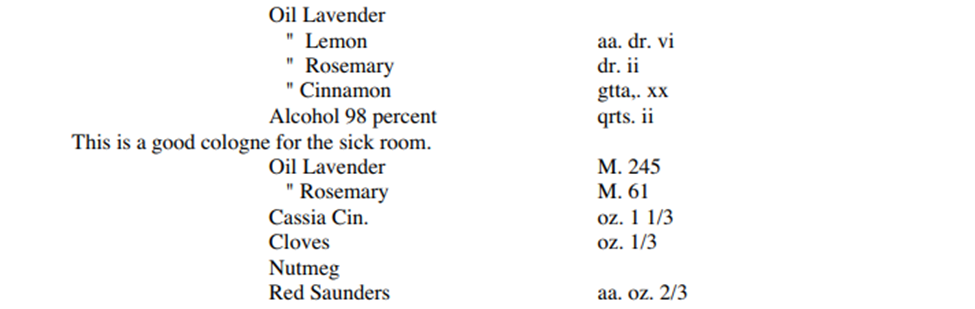
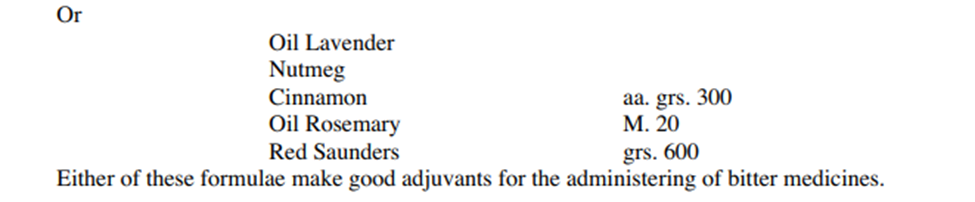
Physio-Medical Therapeutics, Materia Medica and Pharmacy BY T. J. LYLE, A.M.M. 1897