Cupmoss
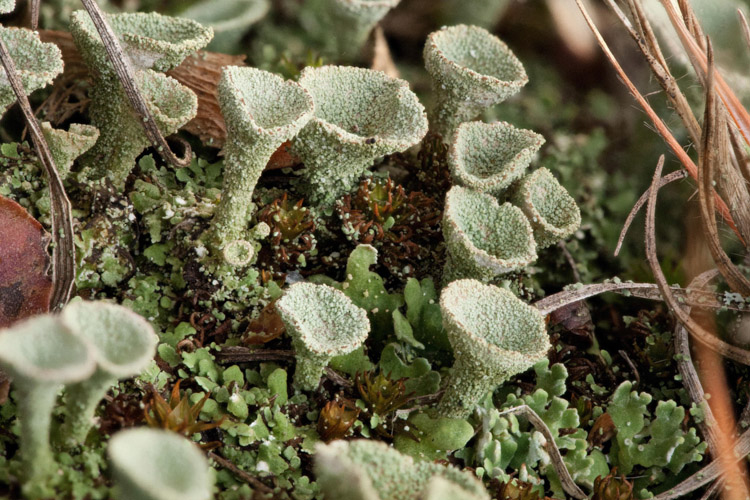
Medicinal Parts: The wineglass-shaped scyphi of Cladonia pyxidata.
Constituents
Lichen acids: including fumaroprotocetraric acid, barbatic acid, psoromic acid
Mucilages
Effects
Cupmoss has the effect of an expectorant and antitussive
Uses
Used for coughs, bronchitis, and also in the treatment of whooping cough. It is used internally as an infusion with honey.
CHARACTERISTICS
Cupmoss is easily recognizable due to its distinctive morphology. Here are some key features:
- Thallus: The primary body of the lichen, known as the thallus, is typically gray-green and forms a crustose base on the substrate.
- Podetia: The most striking feature of Cupmoss is its podetia, which are stalk-like structures that rise from the thallus. These podetia are often cup-shaped at the top, giving the lichen its common name.
- Reproductive Structures: The cups on the podetia often contain reproductive structures called apothecia, which are small, disk-like fruiting bodies that produce spores.
- Size: The podetia can vary in height, usually ranging from 1 to 3 centimeters.
Habitat
Cupmoss is a versatile lichen that can be found in a variety of habitats. It is commonly seen in:
- Forests: Often growing on the forest floor, on decaying wood, or on the bark of trees.
- Rocky Areas: Frequently found on rocks and boulders, where it can withstand harsh conditions.
- Open Areas: Can also be seen in open, sunny areas such as meadows and heathlands.
This lichen is widely distributed across the Northern Hemisphere, including North America, Europe, and Asia. It thrives in both temperate and boreal climates.
Ecological Role
Cupmoss plays several important roles in its ecosystem:
- Soil Formation: By breaking down rocks and organic matter, Cupmoss contributes to soil formation and stabilization.
- Nutrient Cycling: It helps in the cycling of nutrients, particularly nitrogen, by fixing atmospheric nitrogen through its symbiotic relationship with cyanobacteria.
- Habitat: Provides a microhabitat for various small organisms, including insects and other invertebrates.
- Indicator Species: As a lichen, Cupmoss is sensitive to air pollution and can serve as an indicator of environmental health.
Uses
While Cupmoss is not widely used in commercial applications, it has some notable uses:
- Traditional Medicine: In some cultures, lichens, including Cupmoss, have been used for their medicinal properties, such as treating wounds and respiratory issues.
- Dyes: Historically, lichens have been used to produce natural dyes for textiles.
- Ecological Research: Cupmoss is often studied in ecological and environmental research due to its sensitivity to pollutants and its role in nutrient cycling.
Conservation
Like many lichens, Cupmoss faces threats from environmental changes and human activities:
- Air Pollution: Lichens are highly sensitive to air pollutants such as sulfur dioxide and nitrogen oxides, which can inhibit their growth and reproduction.
- Habitat Destruction: Deforestation, urbanization, and other forms of habitat destruction can reduce the available habitat for Cupmoss.
- Climate Change: Changes in temperature and precipitation patterns can affect the distribution and health of lichen populations.
Conservation efforts for lichens like Cupmoss often focus on monitoring air quality, protecting natural habitats, and raising awareness about the ecological importance of lichens.