Fox Grape
Constituents
- Fractionation of Monomeric and Polymeric Anthocyanins from Concord Grape (*Vitis labrusca* L.) Juice by Membrane Ultrafiltration
- Bioactive potential of Vitis labrusca L. grape juices from the Southern Region of Brazil: Phenolic and elemental composition and effect on lipid peroxidation in …
- Phenolic compounds and fatty acids in different parts of Vitis labrusca and V. vinifera grapes
- Biogenic amines in wine and juice from new cultivars of vitis labrusca.
Vitis labrusca, also known as the "fox grape," is a North American grape species that has been traditionally used for its medicinal and nutritional properties. Some potential medicinal and nutritional uses of Vitis labrusca, along with supporting scientific studies, are:
Medicinal uses:
Antioxidant
Antioxidant and anti-inflammatory effects: Vitis labrusca contains a variety of flavonoids and other polyphenolic compounds that have been found to have antioxidant and anti-inflammatory effects. A study published in the Journal of Agricultural and Food Chemistry found that an extract from Vitis labrusca seeds had potent antioxidant activity in vitro and was able to reduce inflammation in mice.
- Supercritical Fluid Extraction of Phenolic Compounds and Antioxidants from Grape (*Vitis labrusca* B.) Seeds
- Evaluation of antioxidant activity of grapevine leaves extracts (*Vitis labrusca*) in liver of Wistar rats
Cancer
Anticancer effects: Some studies have suggested that Vitis labrusca may have anticancer effects. A study published in the Journal of Agricultural and Food Chemistry found that an extract from Vitis labrusca seeds was able to induce apoptosis (cell death) in human breast cancer cells in vitro .
- Suppression of oncoprotein Her-2 and DNA damage after treatment with flavan-3-*ol Vitis labrusca*extract
- Cytotoxicity of iodine-131 radiopharmaceutical in tumor and non-tumor human cells and radioprotection by integral juices of *Vitis labrusca* L.
- Evaluation of antiproliferative and anti-inflammatory effects of non-pomace sediment of red grape juices (itis labrusca*L.) in healthy and cancer cells after in vitro …
Cardiovascular
- *Vitis labrusca* Extract (HP01) Improves Blood Circulation and Lipid Metabolism in Hyperlipidemic Rats
- Protective Effect of *Vitis labrusca* Leaves Extract on Cardiovascular Dysfunction through HMGB1-TLR4-NFκB Signaling in Spontaneously Hypertensive Rats
- Acute consumption of organic and conventional tropical grape juices (*Vitis labrusca**L.) increases antioxidants in plasma and erythrocytes, but not glucose and …
- Anti-Atherogenic Effects of a Phenol-Rich Fraction from Brazilian Red Wine (*Vitis labrusca* L.) in Hypercholesterolemic Low-Density Lipoprotein Receptor Knockout …
- Antithrombotic activity of Vitis labrusca extract on rat platelet aggregation
Hepatoprotective
- Hepatoprotective, cardioprotective, and renal-protective effects of organic and conventional grapevine leaf extracts (*Vitis labrusca*var. Bordo) on Wistar rat tissues
- Antioxidant and hepatoprotective effects of an organic grapevine leaf (*Vitis labrusca*L.) extract in diabetic rats
Immune System
Macrophage stimulating polysaccharide purified from peels of grape (*Vitis labrusca*)
Neuroprotective:
- Phenolic content of grapevine *leaves**(**Vitis labrusca**var. Bordo) and its neuroprotective effect against peroxide damage
- Vitis labrusca extract effects on cellular dynamics and redox modulations in a SH-SY5Y neuronal cell model: a similar role to lithium
- Vitis labrusca leaf extract prevents pentylenetetrazol-induced oxidative damage but not seizures in rats
Wound Healing:
Botanical Information
- Scientific name: Vitis labrusca L.
- Family: Vitaceae (Grape family)
- Growth form: Woody, deciduous climbing vine; long‑lived perennial
- Native range: Eastern North America (from southern Canada through the eastern and central United States)
- Habitat: Forest edges, thickets, fence rows, streambanks, disturbed ground; often in sunny openings or along woodland margins where it can climb into trees
- Climbing method: Tendrils opposite the leaves that coil around supports (shrubs, trees, fences, trellises)
- Longevity: Individual vines can persist for many decades, forming extensive tangles and thick “cables” up into the canopy
Leaves
- Large, broadly heart‑shaped (cordate), often 10–20 cm (4–8 in) across
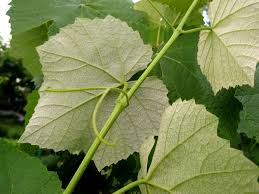
- Surface usually dull green above, with a distinctive whitish, grayish, or rusty‑tomentose (downy) underside that feels fuzzy to the touch
- Margins coarsely toothed; leaves may be shallowly 3‑lobed but are often unlobed compared to many other wild grapes
- Petioles (leaf stalks) long; leaves arranged alternately along the stem and always opposite a tendril or flower/fruit cluster
Stems & Bark
- Young stems green to reddish; older stems become brown and woody
- Bark on mature vines shreds or peels in long strips
- Vines can become quite thick with age, sometimes several inches in diameter, often twisting around tree trunks
Flowers
- Small, greenish, 5‑petaled; not showy
- Borne in branched clusters (panicles) opposite a leaf
- Bloom period typically late spring to early summer, depending on latitude
Fruit
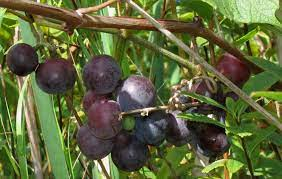
- Berries in clusters (bunches), usually loose rather than tightly packed
- Individual berries relatively large for wild grapes, often 10–20 mm across
- Ripe color: deep blue‑purple to almost black, usually with a noticeable whitish bloom (natural waxy coating)
- Flesh soft and juicy; thick, often “slip‑skin” type where the skin can be easily separated from the pulp
- Characteristic strong, “foxy” aroma and flavor (the origin of the common name “fox grape”)
Identification Tips (Field ID)
1. Leaf Underside & Texture
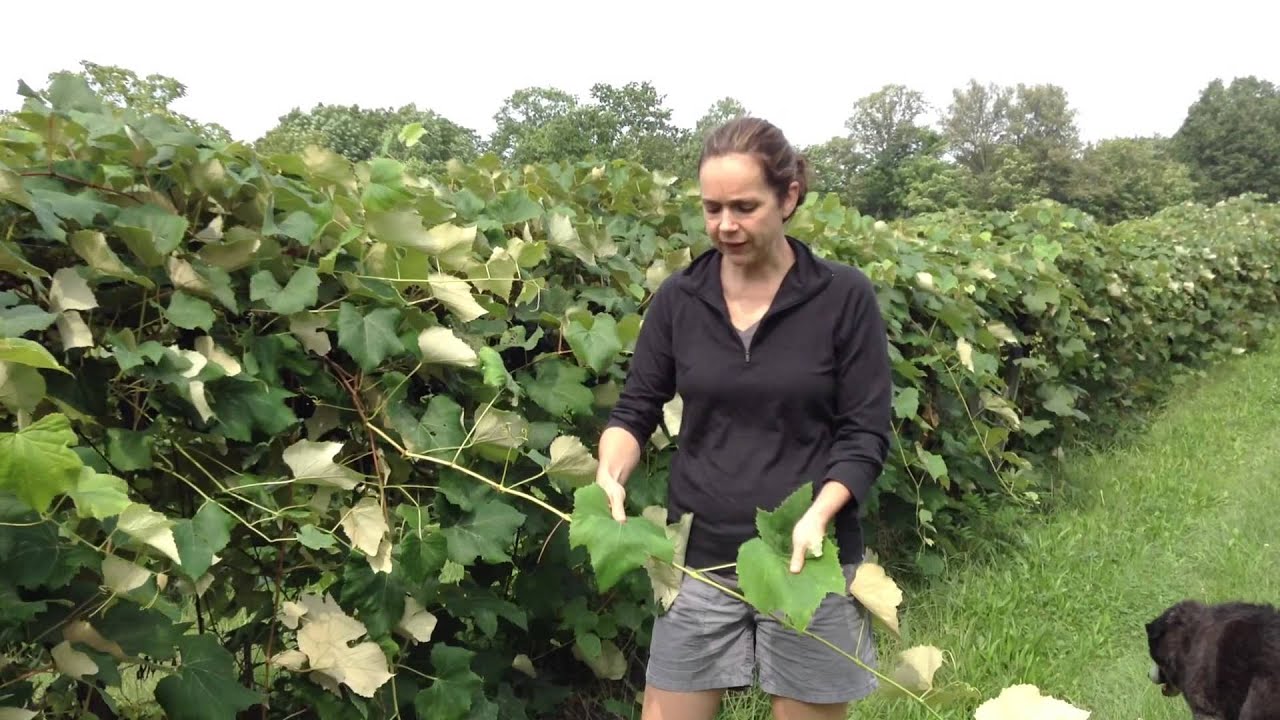
- Turn the leaf over: Vitis labrusca typically has a very pale, whitish or gray‑rusty, fuzzy underside.
- The leaf often feels soft or velvety beneath your fingers.
- Compare with Vitis vinifera and some other wild grapes, which usually have smoother, greener undersides.
2. Leaf Shape & Size
- Look for large, broadly heart‑shaped leaves with coarse teeth.
- Lobing is usually less pronounced than in some other wild grape species; many leaves are simply heart‑shaped rather than deeply 3‑lobed.
3. Tendrils & Climbing Habit
- Tendrils are opposite the leaves and used to climb.
- Vines frequently scramble over shrubs or ascend trees, often forming heavy curtains of foliage along edges and openings.
4. Bark & Old Vines
- On older plants, the bark becomes shreddy and peeling, in long strips.
- Large, rope‑like vines twisting around trees or running along old fences are common.
5. Fruit Characters (When in Season)
- Clusters are looser than many cultivated table grapes.
- Berries are relatively large wild grapes, dark purple‑black with a whitish bloom when ripe.
- Flavor and smell: classic strong “Concord/foxy” grape aroma when crushed.
6. Habitat Cues
- Common along forest margins, roadsides, hedgerows, and streambanks in the eastern U.S.
- Often found where there is good sun exposure but access to trees or structures for climbing.
7. Distinguishing from Similar Species (General Pointers)
- Compared to riverbank grape (Vitis riparia): fox grape leaves are usually larger, thicker, and fuzzier beneath, with a more pronounced whitish cast.
- Compared to many cultivated Vitis vinifera varieties: fox grape has a stronger “foxy” aroma, thicker slip‑skin, and very pale, downy leaf undersides.
You can refine these ID notes further by adding local look‑alikes (e.g., Vitis riparia, Vitis aestivalis) and your own photos or key diagnostic traits you notice in the field.
Arkansas Look‑Alikes and Comparison
The following native grapes in Arkansas can be confused with Vitis labrusca (fox grape): V. aestivalis, V. cinerea, V. riparia, and V. rupestris. Below are quick field distinctions.
Quick Comparison Summary
| Species | Common Name | Leaf Underside | Leaf Shape & Texture | Typical Habitat | Fruit & Flavor Notes |
|---|---|---|---|---|---|
| :-: | :- | :- | :- | :- | :- |
| Vitis labrusca | Fox grape | Whitish to gray, fuzzy (tomentose) | Large, broadly heart‑shaped, coarsely toothed; often slightly or not lobed; thick, soft | Forest edges, hedgerows, old fields, woodland margins | Large, dark purple‑black berries, loose clusters; strong “foxy”/Concord‑like flavor, slip‑skin |
| Vitis aestivalis | Summer grape | Underside usually paler than top, may be slightly hairy, but not as densely whitish‑fuzzy as labrusca | Medium to large leaves; often more evenly 3‑lobed; teeth finer; texture somewhat firmer | Dry to mesic woods, thickets, rocky slopes, fencerows | Dark berries in tighter clusters; flavor often more neutral/wine‑like, less “foxy” |
| Vitis cinerea | Graybark grape | Leaf undersides dull greenish‑gray, may be thinly pubescent but lacking thick, pale felt | Leaves can be somewhat triangular‑ovate, often shallowly 3‑lobed; margins less coarsely toothed | Bottomlands, streambanks, moist woods | Fruits often in relatively tight clusters; flavor more tart/astringent; bark on mature vines distinctly gray (hence “graybark”) |
| Vitis riparia | Riverbank grape | Underside mostly green, sometimes only lightly hairy; not conspicuously whitish | Typically more deeply 3–5‑lobed, with sharper teeth; leaves thinner than labrusca | Streambanks, river margins, moist thickets; often right at water’s edge | Smaller, dark berries in tight clusters; very tart/acrid; used as rootstock; little or no “foxy” aroma |
| Vitis rupestris | Sand/Rock grape | Underside usually greenish, nearly glabrous or only slightly hairy | Leaves often smaller, sometimes more rounded or wedge‑shaped, with less pronounced lobing; tough, coriaceous | Rocky or sandy river bars, outcrops, disturbed rocky ground; can form low, scrambling thickets | Small berries in small, tight clusters; strong, often tart flavor; low, bushy habit can help distinguish |
Field Tips for Separating Vitis labrusca from These Species in Arkansas
- Check the leaf underside and feel
V. labrusca: noticeably whitish/gray and fuzzy, soft to the touch.
Others (especially riparia, cinerea, rupestris): undersides are more green or gray‑green and not densely felted.
- Look at leaf size and lobing
V. labrusca: large, broad, heart‑shaped leaves, coarsely toothed; many leaves only shallowly 3‑lobed or not lobed.
V. riparia & often V. aestivalis: more deeply and neatly 3‑ to 5‑lobed, with sharper, finer teeth.
V. rupestris: leaves tend to be smaller and tougher, sometimes nearly round or wedge‑shaped.
- Smell and taste (if you are confident it’s a grape)
V. labrusca: classic “foxy”/Concord‑type aroma when you crush the fruit or even a bit of the skin; slip‑skin berries.
The others generally lack this strong foxy smell and have more neutral, tart, or wine‑like flavors.
- Note habitat and growth form
V. labrusca: common along edges, fencerows, old fields, woodland margins—not strictly tied to rivers.
V. riparia: strongly associated with riverbanks, streams, and moist low areas.
V. rupestris: watch for rocky or sandy river bars and outcrops, often forming more low, shrubby or sprawling patches rather than only high‑climbing vines.
- Bark and vine appearance
V. labrusca: older stems often thick, rope‑like, and shreddy, climbing high into trees.
V. cinerea: look for mature vines with distinct gray bark and more bottomland settings.