Eucalyptus Leaf
See also Eucalyptus (genus)
Videos
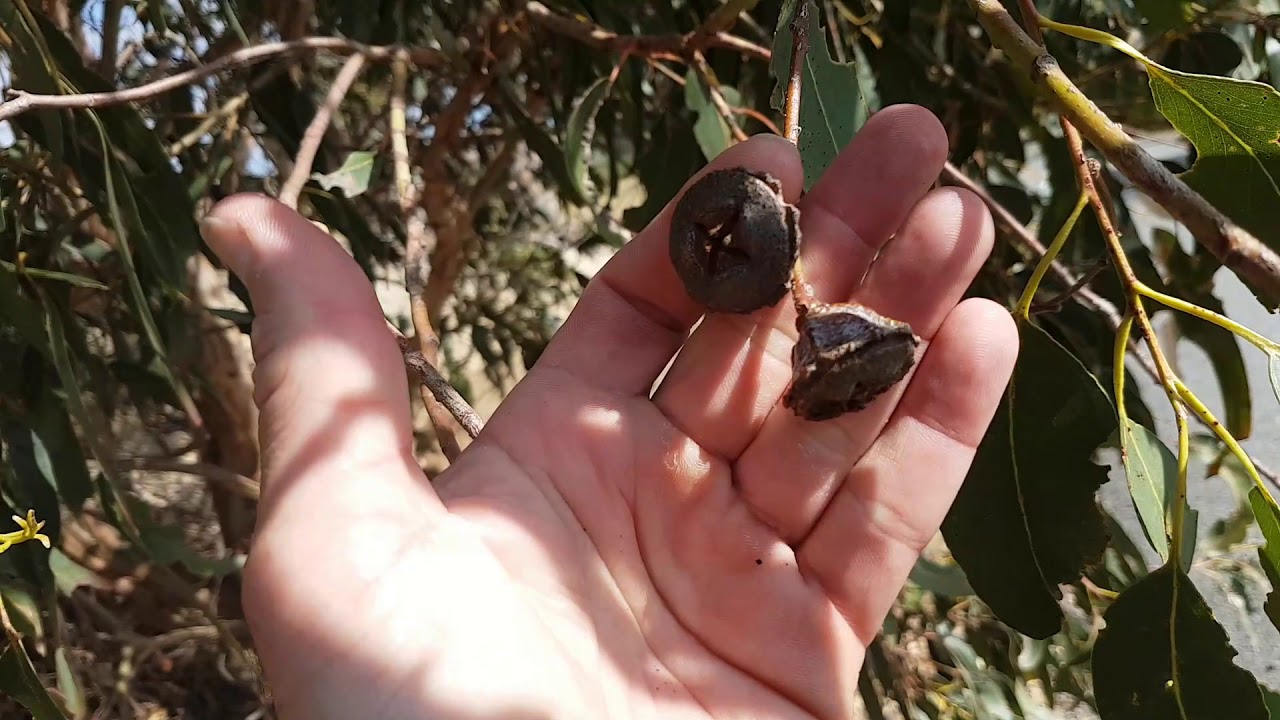

Overview
The leaves of eucalyptus are an underutilized expectorant, helpful for damp coughs, lingering bronchitis, damp asthma, and some cases of COPD. The oil can be diffused and inhaled, and applied topically as an analgesic in arthritis.
Qualities: pungent, a bit bitter, cool, dry and moist, stimulating, dispersing, restoring, astringing
Properties Antibacterial, antimicrobial, expectorant
Tropism: respiratory system, head, pancreas, immune system, blood, stomach, intestines
Ground: Sanguine krasis, Charming/Yang Ming Earth biotype; all three constitutions for symptomatic use
Constituents:
(E. globulus) essential oil (incl. 1.8 cineole [eucalyptol] 54-85%, eudesmol, terpineole, cymene, pinene, camphene, valeric aldehydes, sequiterpenes [ledol, aromadendrene,phellandrene, viridiflorol]), tannin, bitter, flavonoids (incl. rutin, hyperosides, eucalyptin), polyphenolic acids (incl. ferulic/gallic/caffeeic/protocatechuic acids), bitter resin
Dried leaves contain 1–3% (v/w) essential oil (fresh leaves contain 0.4–1.6%), the major constituent of which is 1,8-cineole (54–95%). In addition, there are moderate amounts of other monoterpenes, including a-pinene (2.6%), p-cymene (2.7%), aromadendrene, cuminaldehyde, globulol and pinocarveol.
Gas chromatography and gas chromatography–mass spectroscopy of the oil indicated the presence of more than 70 components, 48 of which were identified. The concentration of a-terpeneol was estimated to be 28%. The leaves are rich in tannins and ellagitannins, and also contain 2–4% triterpenes (ursolic acid derivatives), a series of phloroglucinol-sesquiterpene-coupled derivatives (macrocarpals B, C, D, E, H, I and J) and flavonoids (rutin, quercetin, quercitrin and hyperoside)
Tissue State Relevance
1. Heat/Excitation → Strongly Indicated
Eucalyptus leaves contain high levels of volatile oils (notably 1,8‑cineole) as documented in the anatomical and oil‑chemistry study of Eucalyptus saligna ScienceDirect.
These oils are cooling, anti‑inflammatory, and reduce oxidative stress, which aligns directly with Heat/Excitation.
Energetic match:
- Cools hot, inflamed respiratory tissues
- Reduces irritation and inflammatory excitation
- Clears heat associated with infection
2. Damp/Relaxation → Strongly Indicated
Eucalyptus is drying and aromatic, helping disperse damp stagnation in the lungs and sinuses.
Its volatile oils break up mucus and improve airflow.
Energetic match:
- Dries damp, boggy respiratory tissues
- Opens airways and resolves phlegm
- Restores tone to relaxed mucosa
3. Wind/Tension → Moderately Indicated
The heat‑stress study on Eucalyptus parramattensis shows leaves increase xanthophyll de‑epoxidation and zeaxanthin levels to protect tissues from photo‑oxidative damage pmc.ncbi.nlm.nih.gov.
This demonstrates a tension‑reducing, protective antioxidant response.
Energetic match:
- Reduces irritation‑driven tension
- Supports respiratory tissues under stress
- Eases constriction from inflammation
4. Dry/Atrophy → Low–Moderate (Context‑Dependent)
Eucalyptus is drying, so it does not help atrophic dryness of mucosa.
However, its antioxidant leaf chemistry (xanthophyll cycle activation) suggests some protective benefit under desiccation stress, as seen in Eucalyptus viminalis during dehydration events Oxford Academic.
Energetic match:
- Protects tissues under oxidative stress
- But may worsen dryness in already atrophic lungs
5. Cold/Depression → Low
Eucalyptus is not warming.
It does not stimulate metabolism or circulation; instead, it cools and disperses.
Energetic mismatch:
- May deepen cold respiratory states
- Best paired with warming expectorants if used here
6. Stagnation/Constriction → Moderate
Its volatile oils open bronchi, increase airflow, and move stuck mucus, making it helpful for respiratory stagnation.
Energetic match:
- Moves stagnation in airways
- Breaks up thick, stuck phlegm
- Not a primary mover for systemic stagnation
Summary Table
| Tissue State | Relevance | Rationale |
|---|---|---|
| Heat/Excitation | High | Cooling, anti‑inflammatory volatile oils |
| Damp/Relaxation | High | Drying, aromatic, mucus‑resolving |
| Wind/Tension | Moderate | Antioxidant protection reduces irritability |
| Dry/Atrophy | Low–Moderate | Protective but drying; may worsen atrophy |
| Cold/Depression | Low | Cooling; lacks metabolic activation |
| Stagnation/Constriction | Moderate | Opens airways; moves stuck mucus |
TCM & Western Herbal Uses
Eucalyptus and its oil have shown antibiotic (antibacterial, antifungal, insecticidal, and anticaries) actions in treatment of sounds, contaminated clothing or blankets, and skin. Although recommended as a decongestant and analgesic, it has not been shown to be effective.It is used primarily for respiratory tract disorders such as colds and bronchitis. Eucalyptus has also demonstrated expectoran activity and possibly some antioxidant, antineoplastic, and anti-inflammatory effects. Antidiabetic activity has been reported in animals.
Specific Indications Rolla Thomas: Sensations of coldness and wight in bowels; cold extremities; cold pespiration; Perspiration during chills.
Promotes expectoration, resolves phlegm heat/dryness and relieves coughing; tonifies lung Yin and soothes the bronchi
lung phlegm heat: full cough, sore throat, expectoration of copious purulent yellow-green sputum or with fetid bloody pus BRONCHITIS (acute and chronic), emphysema, pneumonia, lung abscess
lung phlegm dryness: coughing up plugs of sputum, difficult cough, wheezing ALLERGIC ASTHMA (esp. after flu, TB , pneumonia, etc.)
lung Yin deficiency: low afternoon fever, dry mouth and throat, cough with sticky or bloody sputum LUNG TB
Promotes sweating, dispels wind heat and reduces fever: Promotes eruptions, opens the sinuses and relieves pain
lung wind heat: sore throat, cough, aches and pains, possible fever COLD & FLU ONSET (esp. with fever)
head damp heat: nasal and head congestion with pain, watery nasal discharge SINUSITIS, rhinitis, post-nasal drip, otitis media , REMITTENT FEVERS (Shao Yang stage, incl. malaria, thyphus, cholera)
ERUPTIVE FEVERS (incl. measles, chickenpos, scarlet fever)
wind/damp/heat obstruction: joint and muscle aches, pains and redness ACUTE RHEUMATISM, ARTHRITIS, NEURALGIA, neuritis, myalgia HEADACHE, migraine
Antibacterial and antifungal activity
An ethanol–water extract of Folium Eucalypti inhibited the growth in vitro of Staphylococcus aureus at a concentration of 25mg/ml . An aqueous leaf extract inhibited the growth in vitro ofEscherichia coli, Staphylococcus aureus, Bacillus subtilisand Enterococcus faecalis(MIC 0.07–1.30mg/ml) . A methanol extract of the leaves inhibited the growth in vitro ofEscherichia coli, Staphylococcus aureus, Pseudomonas aeruginosaand Candida albicans (MIC 1.25–10.00mg/ml). fluid extract of the leaves inhibited the growth in vitro of Mycobacterium tuberculosis(MIC 6.25mg/ml) . A methanol–water extract of the leaves inhibited the growth in vitro of Candida albicans (WHO-VOL2 pg 110)
Antiviral activity
An aqueous leaf extract inhibited the replication of influenza virus A2 (Mannheim 57), vaccinia virus and herpes simplex virus type 2 in vitro at a concentration of 0.1% (WHO-VOL2 pg 110)
Antimalarial activity
Intragastric administration of a hexane leaf extract to mice (100mg/kg body weight) did not inhibit the growth of Plasmodium berghei. Furthermore, administration of an aqueous (3.48 g/kg body weight) or chloroform (264mg/kg body weight) leaf extract to chickens by gastric lavage did not inhibit the growth of P. gallinaceum . An ethanol–water extract of the leaves inhibited the growth in vitro of P. falciparum at a concentration of 75mg/ml (WHO-VOL2 pg 110)
Physio-Medical Therapeutics, Materia Medica and Pharmacy BY T. J. LYLE, A.M.M. 1897-
This is an evergreen which grows vigorously in Australia and California. The leaves contain numerous pellucid glands filled with an essential oil which is quite diffusive, having a strong, penetrating, disagreeable odour.
This odour assists respiration and neutralizes marshy miasms. The tree is of very rapid growth and has been very frequently planted for the latter purpose. The bark, flowers and fruit are covered with glands containing the oil, which is denominated eucalyptol. This is an antiseptic in fevers and catarrhal affections, in odontalgia, in gonorrhoea and gleet, in gastric ulceration and in diphtheria.
Articles/Studies
- Insights into Eucalyptus genus chemical constituents, biological activities and health-promoting effects
- The pharmacological and therapeutic importance of Eucalyptus species grown in Iraq
- Eucalyptus honey: Quality parameters, chemical composition and health-promoting properties
- Beneficial and healthy properties of Eucalyptus plants: A great potential use
- Nutraceuticals in leaves of Eucalyptus citriodora and Eucalyptus camandulensis
Acne
Eucalyptus globulus extracts inhibit Propionibacterium acnes-induced inflammation signaling
Antimicrobial
- Antimicrobial activities of eucalyptus leaf extracts and flavonoids from Eucalyptus maculata
- Effects of Eucalyptus camaldulensis exracts on Trichimonas vaginalis growth in vitro
- Antibacterial effects of Eucalyptus globulus leaf extract on pathogenic bacteria isolated from specimens of patients with respiratory tract disorders
- Antibacterial activity and synergistic effects between Eucalyptus globulus leaf residues (essential oils and extracts) and antibiotics against several isolates of respiratory infections
- Biological properties of Eucalyptus L sps. extracts against microbial pathogens: an updated review
Antioxidant
Diabetes
Hyperglycemia
Liver Effects
Oral Health
Effect of eucalyptus extract chewing gum on periodontal health: a double‐masked, randomized trial