Otitis Media
SEE EAR, INFLAMMATION OF MIDDLE
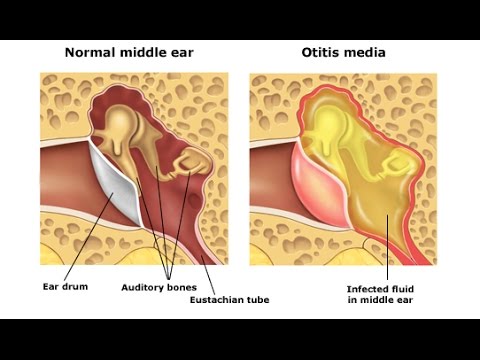
Acute Otitis Media (Causes, Pathophysiology, signs and symptoms, treatment and complications)

Chronic suppurative otitis media
Acute Otitis Media and Otitis Media with Effusion for USMLE Step 2
Inflammation of the middle ear, or otitis media, can be divided into suppurative or acute otitis media (AOM), and inflammation accompanied by effusion, termed non-suppurative or secretory otitis media or otitis media with effusion (OME). Viral upper respiratory tract infection is most commonly associated with the onset of AOM, although the major infection present is bacterial. Symptoms can include pain, purulent discharge from the ear, hearing loss, vertigo, tinnitus and fever. Examination will demonstrate a red, dull, bulging or perforated ear drum.
Recurrent AOM is common, affecting between 10% and 20% of children up to 12 months of age. Young children have immature immunity and short, poorly functional Eustachian tubes (the latter results in poor middle ear ventilation). Chronic otitis media with discharge from the ear can result from ineffectively treated acute or recurrent otitis media. The infection is clearly bacterial.
OME is an enigmatic disorder that also usually occurs in children. Examination of the ear drum shows that it is associated with increased frequency of respiratory infections. Medical treatment can involve the use of grommets to drain the middle ear cavity. The overuse of antibiotics is probably ill advised, although bacterial infection may play a role in some patients with this disorder.
An Eyebright tincture from the fresh plant will open up the Eustachian tubes in children, allowing the inner ear to drain, preventing earaches. The dried leaf is almost entirely ineffective for allergies and Eustachian tub issues.
Treatment
The treatments of acute and chronic otitis media are like the treatments of acute and chronic sinusitis respectively (with the exclusion of the topical treatment).
OME
OME should be regarded as an allergic disorder, as well as possibly a vicarious elimination. A dairy-free, low-salt diet should be tried or otherwise a full elimination diet. However, the presence of microorganisms that contribute to the inflammation or the malfunction of the Eustachian tube should also be considered. If adenoids are implicated, then the OME should be treated similarly to tonsillitis. The following herbs are emphasized during OME treatment:
- Antiallergic and decongestant herbs such as Albizia, Scutellaria baicalensis and Nigella
- Upper respiratory anticatarrhal herbs such as Euphrasia, Solidago, Hydrastis, *Plantago lanceolata* and *Glechoma hederacea.*
- Depurativeand lymphatic herbs such as cleavers and poke
- Immune-enhancing herbs, particularly Echinacea root and Astragalus, to correct the presence of allergy and possibly infection.
- Chewing on a goldenseal tablet (or root) (difficult for children due to its bitterness) will accentuate its mucous membrane trophorestorative and antibacterial effects on the upper respiratory tract.
Example liquid formula for AOM:
| Echinacea purpurea/angustifolia root | 1:2 | 35ml |
|---|---|---|
| *Sambucus nigra* flower | 1:2 | 25ml |
| *Pelargonium sidoides* | 1:5 | 20ml |
| Euphrasia officinalis | 1:2 | 25ml |
| Total | 105ml |
Adult dose is 5ml. with warm water five to six times a day for acute AOM and 5ml three times a day as a preventative for recurrent AOM. Children’s dose should be calculated from the application of an appropriate dosage rule.
Source: Bone & Mill
Articles/Studies
Plasma vitamin D level might play an important role on the progression of acute otitis media.
Homeopathic Ear Drops as an Adjunct in Reducing Antibiotic Usage in Children With Acute Otitis Media
Guggul may have therapeutic value in the treatment of otitis media.
Impact of Habitual yogurt intake in mother-child dyads on incidence of childhood otitis media.