Dandelion Leaf
See also: Common Dandelion
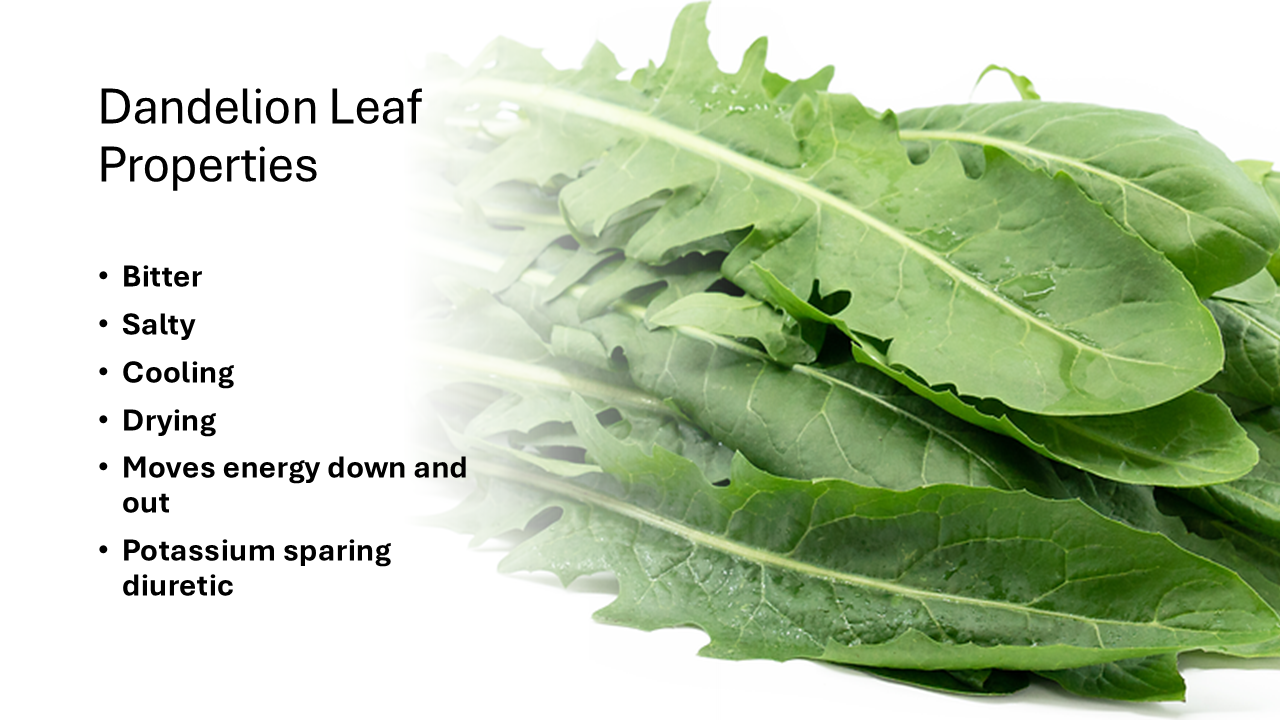
Primary tastes: Bitter, salty, lightly pungent/green
The bitterness comes from sesquiterpene lactones; the salty note from its high mineral content (especially potassium).
Energetic implications: cooling, drying, draining; classic for hot, damp, puffy tissue states.
Leaves are very high in vitamin A, vitamin E, vitamin C. They have a lot of minerals, a lot of B vitamins in them, high in potassium and magnesium, and very high calcium. This plant not only has calcium, it also has vitamin K in it, making it really good for bone density.
The leaf can be used to treat anorexia, appetite loss, bedwetting, breast cancer, candida, debility, fatigue, flatulence, hangover, high cholesterol, hypertension, hypochondria, insomnia, nervousness, and obesity.
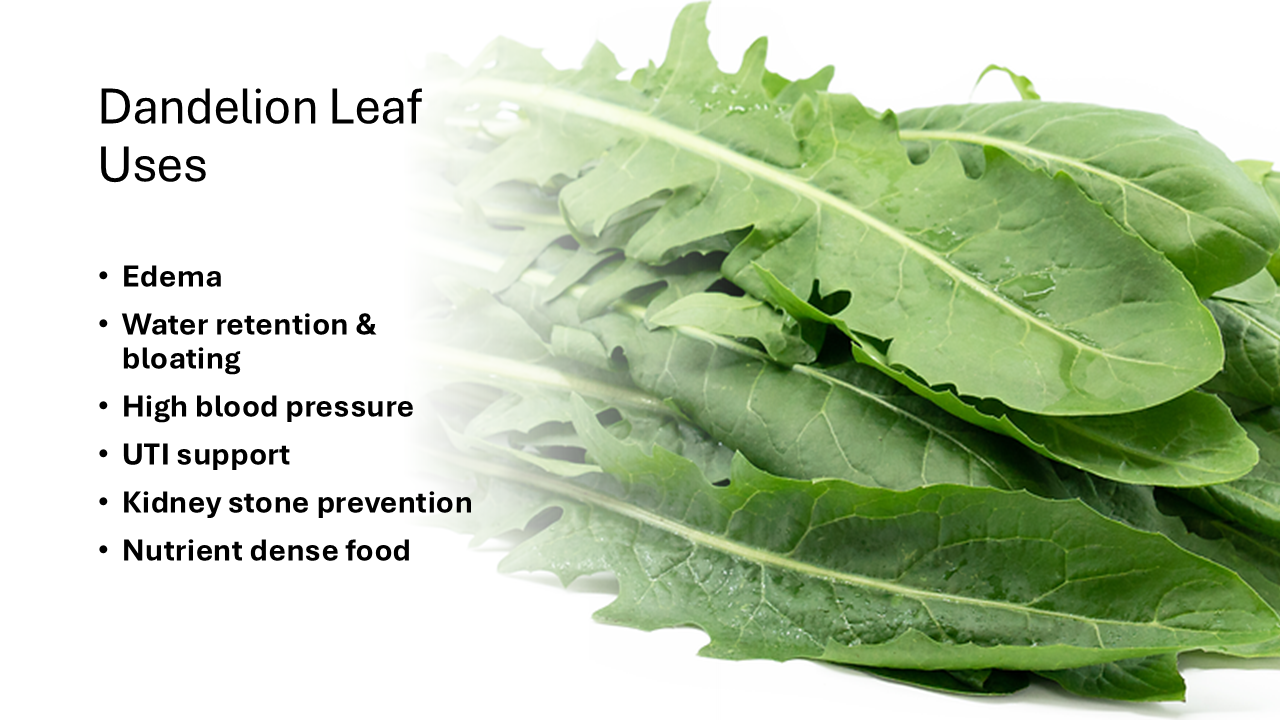
The leaf is the part of the plant that serves as a diuretic, its higher potassium content (among other things) make the remedy a good diuretic. Its used for all types of fluid congestion with edema as well as in hypertension.
Their diuretic effect is due to how they affect secretion or re-absorption of fluids through the kidneys.
Don’t wash the leaves too much because they have a beautiful bofilm on them that is part of their medicine.
ARTICLES
Anti-Inflammatory
- Anti-inflammatory activity of Taraxacum officinale
- Dandelion leaves have an anti-inflammatory effect on lipopolysaccharide-induced inflammation.
COVID-19
Digestive System
The potential of dandelion in the fight against gastrointestinal diseases: A review. T. coreanum Nakai, T. mongolicum and T. officinale are the most commonly used species for folkloric uses, with the whole plant, leaves and root of dandelion being used more frequently. GI-protective substances of dandelion include taraxasterol, taraxerol, caffeic acid, chicoric acid, chlorogenic acid, luteolin and its glucosides, polysaccharides, inulin, and β-sitosterol. Dandelion products and derived constituents exhibit pharmacological effects against GI disorders, mainly including dyspepsia, gastroesophageal reflux disease, gastritis, small intestinal ulcer, ulcerative colitis, liver diseases, gallstones, acute pancreatitis, and GI malignancy. The underlying molecular mechanisms may include immuno-inflammatory mechanisms, apoptosis mechanism, autophagy mechanism, and cholinergic mechanism, although interactions of dandelion's constituents with GI health-related biological entities (e.g., GI microbiota and associated biological modulators) or other ingested bioactive compounds shouldn't be ignored.
Hepatoprotective
- Protective effect of dandelion leaf water extracts on APAP-induced liver injury in rats and its mechanism.
- Dandelion extracts pretreatment protects against acetaminophen-induced hepatic injury.
- Dandelion leaf extract protects against liver injury induced by methionine- and choline-deficient diet in mice.
LPS Lung Injury
Taraxacum officinale protects against lipopolysaccharide-induced acute lung injury in mice
Preparation & Dose
The fresh juice, infusion or tincture of the fresh or freshly dried leaf. The freeze dried extract is the next best thing to the juice itself. Also, eat the leaves in salads. Dandelion leaves can be harvested at any time from spring to autumn, although they are seldom at their best in dry summer weather. Avoid after a strong downpour when soil-splash is a problem. Fine comminution is recommended to achieve a 1:2 tincture of this invaluable but bland herb.
Standard Infusion 4-8 ounces of infusion 3 times daily
Juice 10-20 ml three times a day; large standard doses otherwise
Tincture Fresh leaf (1:2, 95% alcohol); dried leaf (1:5, 30% alcohol); 2-5 ml 3 times daily
Cautions:
One case report suggests that individuals on lithium should avoid use of herbs with diuretic properties (such as dandelion) due to risk of dehydration and subsequent lithium toxicity.
Dandelionmay increase the effects of insulin and antihypertensives; avoid concurrent use