Dornier
Claude (Claudius) Honoré Désiré Dornier (born in Kempten im Allgäu on 14 May 1884 – 5 December 1969) was a German-French airplane designer and founder of Dornier GmbH. His notable designs include the 12-engine Dornier Do X flying boat, for decades the world's largest and most powerful airplane. He also made several other successful aircraft.
Biography[
The son of a French wine importer and his German wife, Claude Dornier was born in Bavaria where he grew up and attended school, with science being his chief interest. Dornier then moved to Munich, where he graduated in 1907 from the Technical University.
As a young engineer, Dornier first worked on strength calculations at the Nagel Engineering Works in Karlsruhe. In 1910 he joined Luftschiffbau Zeppelin in Friedrichshafen on the Bodensee, where his abilities quickly attracted Count Ferdinand von Zeppelin's attention. Soon appointed as the Count's personal scientific advisor, Dornier began working on improving the strength of light metal sections, and later on aircraft engineering and giant metal flying boats[1] and was responsible for the development of the first stressed skin all-metal monocoque aircraft designs, including the Zeppelin-Lindau D.I, which was the first such aircraft to enter production.[2]
After political pressure he joined the Nazi Party in 1940 and during the Second World War his company created many aircraft for the German armed forces. After the war during the denazification of Germany, Claude Dornier was classified as a "Follower" (Group IV).[3]
Dornier received the Ludwig-Prandtl-Ring from the Deutsche Gesellschaft für Luft- und Raumfahrt (German Society for Aeronautics and Astronautics) for "outstanding contribution in the field of aerospace engineering" in 1959.
His son, Claudius Dornier Jr. [de], was also an aircraft designer.
In 1987 Dornier was inducted into the International Air & Space Hall of Fame at the San Diego Air & Space Museum.[4]
https://en.wikipedia.org/wiki/Dornier_Flugzeugwerke
Dornier Flugzeugwerke was a German aircraft manufacturer founded in Friedrichshafen in 1914 by Claude Dornier. Over the course of its long lifespan, the company produced many designs for both the civil and military markets.
History[
[
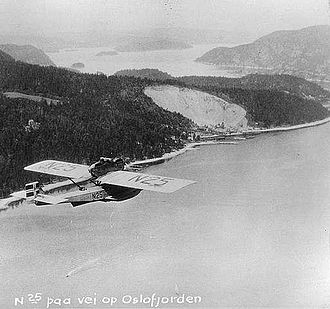
Dornier Wal flown by Roald Amundsen on his first attempt to reach the North Pole.
[
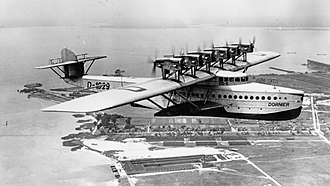
DornierDo X - largest and heaviest aircraft of its era.
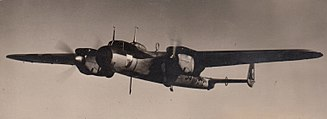
Dornier Do 17 "flying pencil" bomber
Originally Dornier Metallbau, Dornier Flugzeugwerke took over Flugzeugbau Friedrichshafen production facilities (Weingarten, Warnemünde, and the former Zeppelin shed at Manzell) when it failed in 1923.
Dornier was well known between the two world wars as a manufacturer of large, all-metal flying boats and of land based airliners. The record-breaking 1924 Wal (English: Whale) was used on many long distance flights and the Do X set records for its immense size and weight. Dornier's successful landplane airliners, including the Komet (Comet) and Merkur (Mercury), were used by Lufthansa and other European carriers during the 1920s and early 30s.
Dornier built its aircraft outside Germany during much of this period due to the restrictions placed on German aircraft manufacturers by the Treaty of Versailles: locations included Altenrhein, Switzerland, 12 km from Zeppelin's Lindau (Bodensee) location. Foreign factories licence-building Dornier products included CMASA and Piaggio in Italy, CASA in Spain, Kawasaki in Japan, and Aviolanda in the Netherlands. Once the Nazi government came to power and abandoned the treaty's restrictions, Dornier resumed production in Germany.
The success of the Wal family encouraged the development of derivatives, and of more advanced successors, such as the Do 18, and Do 24 which saw service in several armed forces, including German, into World War II.
Dornier's most important World War II military aircraft design was the Do 17, nicknamed The Flying Pencil. It first flew in 1934 as a mailplane for Lufthansa but due to its narrow fuselage (hence its nickname) it was not commercially viable and was passed over.
Dornier then developed it further as a military aircraft, with a prototype bomber flying in 1935, and in 1937 it was used in by the German Condor Legion during the Spanish Civil War. Production continued in Germany and it was developed to fill multiple roles for the Luftwaffe. As a medium bomber it saw service during the early part of World War II, particularly during the Battle of Britain. It was later developed into a nightfighter to counter the RAF bomber offensive. Dornier developed the similar looking Do 217 from the Do 17 but it was a larger and completely new design. Dornier also developed the fastest piston-engined fighter of the war, the twin-engined Do 335, which was too late to see service.
After WWII, aircraft production was again forbidden in Germany, and Dornier relocated to Spain and then to Switzerland where the firm provided aeronautical consultancy services until returning to Germany in 1954. Post-war, Dornier re-established itself with successful STOL Do 27 and Do 28 utility planes. In 1974 it joined a joint venture with French aircraft manufacturers Dassault-Breguet to develop the Alpha Jet.
In 1983, Hindustan Aeronautics Limited (HAL) acquired a production licence for the Dornier 228 and manufactured the aircraft for the Asian market. By 2013 a total of 117 Dornier 228 aircraft had been produced by HAL with plans to build 20 more during 2013-14.[1]
In 1985, Dornier became a member of the Daimler-Benz group, integrating its aeronautic assets with the parent company. As part of this transaction, Lindauer Dornier GmbH was spun off, creating a separate, family-owned firm, concentrating on textile machinery design and manufacturing. The rest of the company was split into several subsidiaries for defence, satellites, medtech[clarification needed] and aircraft.
In 1996, the majority of Dornier Aircraft was acquired by Fairchild Aircraft, forming Fairchild Dornier. This company became insolvent in early 2002. Production of its 328 Jet was acquired by US company Avcraft. Asian groups continued to show interest in its 728 version in August 2004, but production was not restarted. Dornier 228 production was taken over by Swiss manufacturer RUAG, who then sold it off to General Atomics in 2020.[2] Other subsidiaries became part of the EADS.
The medtech division was sold to an investment company and now bears the name Dornier MedTech. Dornier Medtech manufactures medical equipment, such as the Dornier S lithotriptor, HM3, Compact Delta to treat kidney stones. Dornier MedTech also manufactures laser devices for a wide range of applications.[3]
Dornier Seaplane Company[
The Dornier family have a spin-off company and project, the Dornier Seastar. It is a turboprop-powered amphibious aircraft built largely of composite materials. This was developed by Claudius Dornier Jr. [de], and later by his son Cornado by Dornier Seawings.
Dornier Technologie[
Claude's grandson, Iren Dornier [de], founded Dornier Technologie in 1996 to manufacture the Dornier S-Ray 007.
Dornier aircraft projects[
Letter designations (before 1933)[
(Does not include designations for aircraft built while Dornier was with Zeppelin-Lindau)
- Dornier Gs Precursor to Wal destroyed by Military Inter-Allied Commission of Control (1919)
- Dornier Do A Libelle (I 1921, III redesignated Do 12)
- Dornier Spatz Landplane version of Do A (1922)
- Dornier Do B Merkur Development of Do C (1926)
- Dornier Do C Komet (I 1921, II 1922, III 1926)
- Dornier Do C 2, 3, 4 Fighter unrelated to earlier Do C, redesignated Do 10 (C 2 ?, C 3 1931, C 4 1932)
- Dornier Do D (1929)
- Dornier Do E (1924)
- Dornier Do F (1932, redesignated Do 11, 13, 23)
- Dornier Do G Grief (Cancelled 1920 project)
- Dornier Do H Falke (1922 development of Dornier-Zeppelin D.I)
- Dornier Do I (1923 twin engine long range reconnaissance aircraft)
- Dornier Do J Wal (1922)
- Dornier Do K (K 1 1929, K 2 1929, K 3 1931)
- Dornier Do L Delphin (I 1920, II 1921, III 1927)
- Dornier Do N Design for Japanese as Kawasaki Ka 87 (1926)
- Dornier Do O Wal Custom built version of Do J (1924)
- Dornier Do P (1930)
- Dornier Do R.2 and R.4 Superwal (1924)
- Dornier Do S (1930)
- Dornier Do T (Komet/Merkur converted to Air Ambulance)
- Dornier Do U (Cancelled civil variant of Do Y)
- Dornier Do X (1929)
- Dornier Do Y (1930, redesignated Do 15)
Additional unbuilt projects include 3 different Schneider Trophy racers from 1924, 1928 and 1931 and a large multi-engine seaplane similar to the Do X with engines buried in the wings.
1933-1945[
- Dornier Do 10
- Dornier Do 11
- Dornier Do 12
- Dornier Do 13
- Dornier Do 14
- Dornier Do 15
- Dornier Do 16
- Dornier Do 17
- Dornier Do 18
- Dornier Do 19
- Dornier Do 20 Project
- Dornier Do 22
- Dornier Do 23
- Dornier Do 24
- Dornier Do 26
- Dornier Do 29 (1934)
- Dornier Do 212
- Dornier Do 214 Project
- Dornier Do 215
- Dornier Do 216 Project
- Dornier Do 217
- Dornier Do 247 Project
- Dornier Do 317
- Dornier Do 335
- Dornier Do 635
- Dornier P.59 Project
- Dornier P.85 Project
- Dornier P.184 Project
- Dornier P.232 Project
- Dornier P.247 Project
- Dornier P.252 Project
- Dornier P.254 Project
- Dornier P 256
- Dornier P.273 Project
1945-present[
- Dornier Do 25 Prototype for Do 27
- Dornier Do 27
- Dornier Do 28 - developed from Do 27
- Dornier Do 29
- Dornier Do 31
- Dornier Do 32
- Dornier 128
- Dornier Do 132
- Dornier 228 - developed from Do 28
- Dornier Do 231
- Dassault/Dornier Alpha Jet
- Dornier 328
- Fairchild Dornier 328JET
- Fairchild Dornier 428JET
- Fairchild Dornier 728 family
- Dornier Aerodyne
- Dornier Seawings Seastar
- Dornier S-Ray 007
- Dornier LA-2000 (Study for astealth strike aircraftwith full delta wing similar to A-12 Avenger)[4]
Dornier Automobile Projects[
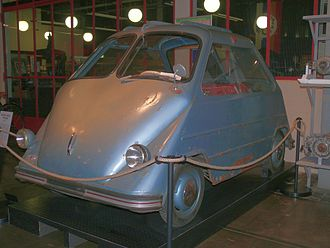
- Dornier Delta
- Dornier Delta II, developed for Hymer
Dornier Faint Object Camera[
Main article: Faint Object Camera

Space Shuttle mission STS-109 remove FOC during an EVA
Dornier GmbH built the Faint Object Camera for the Hubble Space Telescope, which was used from 1990 to 2002. The ESA funded the unit, which actually consists of two complete and independent camera systems designed to provide extremely high resolution, exceeding 0.05 arcseconds. It is designed to view very faint UV light from 115 to 650 nanometers in wavelength.[5] It was the last original instrument on the Hubble when it was replaced by the Advanced Camera for Surveys in 2002.
Missile projects[
Spacecraft[
- AMC-5 (satellite)
- Project 621 (rocket)
See also[


References...
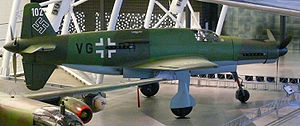
Dornier Do 335 Pfeil ("Arrow") is a heavy fighter built by Dornier for Germany during World War II. The two-seater trainer version was called Ameisenbär ("anteater"). The Pfeil's performance was predicted to be better than other twin-engine designs due to its unique push-pull configuration and the lower aerodynamic drag of the in-line alignment of the two engines. It was Nazi Germany's fastest piston-engined aircraft of World War II.[2][] TheLuftwaffe was desperate to get the design into operational use, but delays in engine deliveries meant that only a handful were delivered before the war ended.
Design and development[
The origins of the Do 335 trace back to World War I when Claude Dornier designed a number of flying boats featuring remotely driven propellers and later, due to problems with the drive shafts, tandem engines. Tandem engines were used on most of the multi-engine Dornier flying boats that followed, including the highly successful Do J Wal and the gigantic Do X. The remote propeller drive, intended to eliminate parasitic drag from the engine entirely, was tried in the innovative but unsuccessful Do 14, and elongated, tubular drive shafts as later used in theDo 335 saw use in the rear engines of the four-engined, twinned tandem-layout Do 26 flying boat.
There are many advantages to this design over the more traditional system of placing one engine on each wing, the most important being power from two engines with the frontal area (and thus drag) of a single-engine design, allowing for higher performance. It also keeps the weight of the twin powerplants near, or on, the aircraft centerline, increasing the roll rate compared to a traditional twin.
In addition, a single engine failure does not lead to asymmetric thrust, and in normal flight there is no net torque, so the plane is easy to handle. The four-surface set of cruciform tail surfaces in the Do 335's rear fuselage design included a ventral vertical fin–rudder assembly that projected downwards from the extreme rear of the fuselage, to protect the rear propeller from an accidental ground strike on takeoff. The presence of the rear pusher propeller also mandated the provision for an ejection seat for safe escape from a damaged aircraft, and designing the rear propeller and dorsal fin mounts to use explosive bolts to jettison them before an ejection was attempted – as well as twin canopy jettison levers, one per side[3] located to either side of the forward cockpit interior just below the sills of the five-panel windscreen's sides, to jettison the canopy from atop the cockpit before ejection.[4]
In 1939, Dornier was busy working on the P.59 high-speed bomber project, which featured the tandem engine layout. In 1940, he commissioned a test aircraft, closely modeled on the airframe of the early versions of the Dornier Do 17 bomber but only 40% of the size of the larger bomber, with no aerodynamic bodies of any sort on the wing panels (the original Do 17 had twin engine nacelles on its wings) and fitted with a retractable tricycle landing gear to validate his concept for turning the rear pusher propeller with an engine located far away from it, through the use of a long tubular driveshaft. This aircraft, the Göppingen Gö 9, showed no unforeseen difficulties with this arrangement, but work on the P.59 was stopped in early 1940 when Hermann Göring[] ordered the cancellation of all projects that would not be completed within a year or so.
In May 1942, Dornier submitted an updated version with a 1,000 kg (2,200 lb) bombload as the P.231, in response to a requirement for a single seat, Schnellbomber-like high-speed bomber/intruder. The P.231 proposal was selected as the winner after beating rival designs from Arado, Junkers, and Blohm & Voss. A development contract was awarded, by the RLM issuing the Dornier firm the airframe approval number *8-335*, for what would become known as the Do 335. In autumn 1942, Dornier was told that the Do 335 was no longer required, and instead a multi-role fighter based on the same general layout would be accepted. This delayed the prototype delivery as it was modified for the new role.

Oberpfaffenhofen at the war's end, including unfinished two-seat versions
The use of a nose-mount annular radiator for the forward engine (much like a Jumo 211-powered Ju 88, or Jumo 213-powered Focke-Wulf Fw 190D-9) and a ventral-fuselage mount airscooped radiator installation for cooling the rear engine made the aircraft look distinctive. When fitted with DB 603A engines delivering 1,750 PS (1,290 kW; 1,730 hp) it had a pair of the largest inverted V12 aircraft engines mass-produced during the Third Reich's existence. The Do 335 V1 first prototype, bearing the Stammkennzeichen (factory radio code) of CP+UA, flew on 26 October 1943 under the control of Flugkapitän Hans Dieterle, a regular Heinkel test pilot and later primary Dornier test pilot. However, several problems during the initial flight of the Do 335 would continue to plague the aircraft through most of its short history. Issues were found with the weak landing gear and with the main gear's wheel well doors, resulting in them being removed for the remainder of the V1's test flights. The Do 335 V1 made 27 flights, flown by three different pilots. During these test flights the second prototype, V2 (Werk Nr 230002) CP+UB, was completed and made its first flight on 31 December 1943, again under the control of Dieterle.
New to the V2 were upgraded DB 603A-2 engines, and several refinements learned from the test flights of the V1 as well as further windtunnel testing. On 20 January 1944, the Do 335 V3 (W.Nr. 230004), CP+UC was completed and flown for its first time by Werner Altrogge. The V3 was powered by the new pre-production DB 603G-0 engines which could produce 1,900 PS (1,400 kW) at take-off and featured a slightly redesigned canopy which included twin rear-view mirrors in blisters, one in each of two matching side panels of the well-framed, eleven-panel main canopy's openable section.
Following the flights of the V3, in mid January 1944, RLM ordered five more prototypes (V21–V25), to be built as night fighters. By this time, more than 60 hours of flight time had been put on the Do 335 and reports showed it to be a good handling, but more importantly, very fast aircraft, described by Generalfeldmarschall Erhard Milch himself as "...holding its own in speed and altitude with the P-38 and it does not suffer from engine reliability issues". The Do 335 was scheduled to begin mass construction, with the initial order of 120 preproduction aircraft to be manufactured by Dornier-Werke Friedrichshafen (DWF) to be completed no later than March 1946. This number included a number of bombers, destroyers (heavy fighters), and several yet to be developed variants. At the same time, Dornier-Werke München (DWM) was scheduled to build over 2,000 Do 335s in various models, due for delivery in March 1946 as well.
On 23 May 1944, Hitler, as part of the developing Jägernotprogramm (Emergency Fighter Program) directive, which took effect on 3 July, ordered maximum priority to be given to Do 335 production. The main production line was intended to be at Manzell, but a bombing raid in March destroyed the tooling and forced Dornier to set up a new line at Oberpfaffenhofen. The decision was made, along with the rapid shut-down of many other military aircraft development programs, to cancel the Heinkel He 219 night fighter, which also used the DB 603 engines (in well-unitized installations), and use its production facilities for the Do 335 as well. However, Ernst Heinkel managed to delay, and eventually ignore, its implementation, continuing to produce examples of the He 219A.
At least 16 prototype Do 335s were known to have flown (V1–V12, W.Nr 230001-230012 and Muster-series prototypes M13–M17, W.Nr 230013-230017) on a number of DB603 engine subtypes including the DB 603A, A-2, G-0, E and E-1. The first preproduction Do 335 (A-0s) starting with W.Nr 240101, Stammkennzeichen VG+PG, were delivered in July 1944. Approximately 22 preproduction aircraft were thought to have been completed and flown before the end of the war, including approximately 11 A-0s converted to A-11s for training purposes. One such aircraft was transferred to the Royal Aircraft Establishment at Farnborough, and later, after a rear-engine fire burnt through the elevator controls during a flight, crashed onto a local school.[5]
Flight tests[
[ ](https://en.wikipedia.org/wiki/File:Dornier_Do_335_A_%2815083492358%29.jpg)
lignite-derived synthetic fuel,[6] and two underwing hardpoints for additional bombs, drop tanks or guns. It had a maximum speed of 763 km/h (474 mph) at 6,500 m (21,300 ft) with MW 50 boost, or 686 km/h (426 mph) without boost, and climbed to 8,000 m (26,000 ft) in under 15 minutes. Even with one engine out, it reached about 563 km/h (350 mph).[
Delivery commenced in January 1945. When the United States Army overran the Oberpfaffenhofen factory in late April 1945, only 11 Do 335 A-1 single-seat fighter-bombers and two Do 335 A-12 trainers had been completed.
French ace Pierre Clostermann claimed the first Allied combat encounter with a Pfeil in April 1945. He describes leading a flight of four Hawker Tempests from No. 3 Squadron RAF over northern Germany when they came across an unknown aircraft whose description matched the Do 335's, flying at maximum speed at treetop level. Detecting the British aircraft, the German pilot reversed course to evade. Two pilots fired on the Dornier but Clostermann, despite the Tempests' considerable low altitude speed, decided not to attempt to chase it as it was obviously much faster.[7]