Bentham S
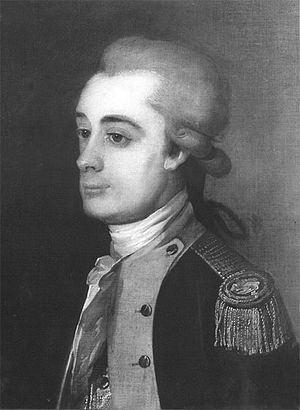
Achievements: Pioneered the use of shell-firing guns on warships
Born: January 11, 1757, England
Died: May 31, 1831, London, England. Aged 74
Field & Discipline: Engineering; Armaments; Military
Language: English
Father: Jeremiah Bentham
Mother: Alicia Grove
Siblings: Jeremy Bentham
Spouse: Mary Sophia Fordyce
Children: Unknown number, of whom: George (botanist)
Education: Westminster School, London; Royal Academy, Portsmouth
Major Work: None
Life & Times:
At 14 Bentham became a shipwright's apprentice and after qualifying as a shipwright, studied mathematics at the Royal Academy in Portsmouth. At 22, he left England for St. Petersburg, where [worked for] Potemkin* sent him on an 18-month trip throughout Russia to look for ways to exploit the country's vast resources. He presented his report to [commissioned by] Catherine the Great* in 1782.
In 1783, Potemkin commissioned Bentham to build frigates to fight the Turks in the Black Sea. At the end of 1784, Bentham was given a military title and a battalion of men, most of whom he trained to become shipwrights and mechanics. To keep an eye on everything, he developed a plan of "central observation" with all workshops radiating from his own office (a system his brother [brother was] Jeremy Bentham* later adopted for his panopticon prison building.)
Bentham's shipbuilding was so successful that he was commissioned to build a large number of yachts and barges to transport the imperial court down the Dnieper for Catherine's the Great’s tour of southern Russia. In 1786, he was given a 10-year contract to improve a number of Russian industries and became involved in other commercial transactions, including the import of English cloth and the supply of steel tools to the admiralty in the Crimea.
In 1787, Potemkin ordered Bentham to the port of Kherson to supervise the equipping of a naval force against the Turks. The force was mainly river barges and boats, unable to carry any gun larger than a three-pounder, but Bentham soon created devices and mechanisms that allowed his rag-tag collection of small vessels to carry major weaponry. He developed a way to fit guns without recoil, making it possible to use cannon weighing up to 48 pounds and 13-inch mortars. In 1787, a skirmish proved how effective Bentham's system was, and in 1788. Bentham took part in a naval battle between the Russians and a much larger Turkish force, which resulted in the withdrawal of the Turks. Bentham was awarded the military cross of St. George, given a sword of honor with a gold hilt, and promoted to brigadier-general.
When jealousies within the naval ranks developed, Bentham asked to be transferred with his regiment to Siberia, where he interested himself in commercial enterprise and opened up trade with Japan and China. In Tobolsk, at the end of 1789, he set up an expedition to open an arctic route to Arkangel. He then set up headquarters at Kiakhta, on the border of China and Mongolia.
In 1791, Bentham returned to England, where he stayed for 16 years, serving as inspector-general of naval works. One of his improvements was a steam-dredging machine. He also oversaw the building and equipping of the Arrow class of war sloops, which were armed with non-recoil large-caliber guns, and which played a vital part in naval actions during the war with France. He appointed [commissioned] Marc Isambard Brunel* as manager at Portsmouth dockyard and backed Brunel's new way of making ships' blocks. In 1805, he went back to Russia to negotiate the building of a number of ships for the British government. Returning to England in 1807, he found his job as inspector-general had disappeared, but that he had been made a commissioner of the navy.
In 1810, Bentham became involved in discussions over [a rival was] Rennie*'s scheme for an arsenal at Sheerness. He submitted a plan of his own in 1812, but it was rejected. His office as commissioner was abolished the same year. In 1815, after the war with France, he settled near Angouleme in France and lived there until 1827, when he returned to London.
Assessment: His non-recoil system for guns on ships was instrumental in the development of explosive-shell weapons for warships
Oneliner: Samuel Bentham, naval artillery pioneer
Bibliography:
- Bentham, M.S., The Life of Brigadier-General Sir Samuel Bentham, KSG, Longman, Green, Longman and Roberts, London, 1862.
- Christie, Ian R., The Benthams in Russia, 1780-91, Berg Publishers Ltd., Oxford, 1993.