Rennie J
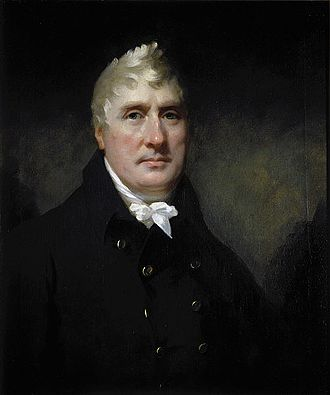
Name: John Rennie
Achievements: Designed London’s Waterloo Bridge
Born: June 7, 1761; Phantassie, East Lothian, Scotland
Died: October 4, 1821; London, England. Aged 60
Field & Discipline: Engineering; Civil Engineer
Language: English
Father: James Rennie
Mother: Jean Rennie (maiden name also Rennie)
Siblings: Marion; Janet, Jean; George (well-known agriculturist); Agnes; Henrietta;
William; James
Spouse: Martha Ann Mackintosh
Children: George; John; William; Anna; Jane; James; 3 others died in infancy
Education: Parish school at Prestonkirk; Dunbar High School; Edinburgh University
Major Work:
New London Bridge
Life & Times:
At 18 , Rennie was working on his own. His first contract was to design Know Mill on the Phantassie estate for his brother George. By age 19, Rennie had accepted a large project at Invergowrie, near Dundee, as millwright, and soon had more commissions than he could manage.
But Rennie was ambitious, and keenly felt a need for further education, particularly in mathematics and the sciences. He enrolled in Edinburgh University and studied for three years, paying his tuition by working each vacation as a millwright.
Two of Rennie's teachers were eminent men: Professor of Chemistry [taught by] Black*, who discovered latent heat; and Professor of Natural Philosophy Robison, who made many contributions to the science of electricity, and was a powerful influence on Rennie.
Leaving Edinburgh University in 1783, with letters of introduction from Robison, he visited steam engine inventor [worked for] Watt* and formed an association that lasted until Watt's death in 1819.
Back in Scotland in 1784 he got a contract to build his first bridge, over the Water of Leith, in Midlothian.
In the same year, Rennie accepted a job with James Watt and his partner [worked for] Boulton* in London. Watt and Boulton had agreed to provide steam power for the planned Albion Flour Mills in Blackfriars, and asked Rennie to work for them.
The building was to house two of the largest and most powerful steam engines yet built in England. Rennie was entrusted with designing and constructing all the milling machinery to be powered by these two engines. His major innovation was to make the driving shafts and gears of the mechanism in metal, rather than wood, as had been the custom.
Albion Mills opened in February, 1788, and was an immediate financial success. It became a showplace, not only for engineers, but for the general sightseer in London. In 1791, as a mechanical engineer, Rennie started work on the Kennet and Avon Canal, his first civil-engineering job in England. His task was to build a number of swing-bridges over the 57-mile-long canal. He defied convention and set these bridges on circular metal races containing four-inch ball-bearings, the first known use of ball-bearings anywhere.
In the mid-1790s, Rennie worked on extensive drainage projects in the Lincolnshire fens, where he set up pumping stations using Watt engines. He also constructed or improved many docks and harbors. It was during the building of Hull Docks in 1803 that Rennie invented the dredging machine, consisting of an endless chain of spiked buckets powered by a steam engine.
Rennie also built the London and East India Docks on the Thames, improved naval dockyards at Plymouth, Portsmouth, Chatham, and Sheerness (beating [rival was] Samuel Bentham* to the job) , and began the breakwater that shelters Plymouth Sound, a project that was completed by his son, Sir John Rennie, in 1848.
Rennie's name became embroiled in a controversy over the Bell Rock Lighthouse, considered an engineering miracle. The argument was over whether Rennie or [collaborated with] Robert Stevenson*, the grandfather of author Robert Louis Stevenson, should be given the credit for it.
Robert Louis Stevenson argued the case for his grandfather in his "Family of Lighthouse Builders', published in 1892. Completed in 1810, the lighthouse is the oldest sea-surrounded lighthouse in the world. It stands on Bell Rock, 12 miles out to sea, near the entrance to the Firths of Forth and Tay, off the east coast of Scotland. In 1800, Stevenson, then Engineer to the Commissioners of Northern Lights, submitted plans for a stone tower. The plans were rejected by the House of Lords because it did not believe there was an engineer good enough to carry it out. Rennie was called in, and from 1803 to 1810, when the lighthouse was completed, Rennie and Stevenson closely collaborated, though Rennie radically changed the design. The construction is now known as Stevenson's lighthouse.
Rennie earned a reputation as a builder of bridges. In 1810, he was commissioned by a committee that had turned down designs from [rival was] Thomas Young* to build a bridge in London over the Thames. Rennie's Waterloo Bridge, following the lines of a bridge he had built at Kelso, Scotland, had nine elliptical masonry arches and was surfaced with "macadam", six years before John Macadam used the technique at Bristol. Opened in 1817, it became known as the finest bridge in Europe.
In 1819, Rennie completed the London Southwark Bridge, composed of three cast-iron arches. Rennie's New London Bridge was started shortly after he died in 1821. It was completed 10 years later. (In 1964, it was moved to Lake Havasu City, AZ).
Extra Connections: His sister Janet was the grandmother of [sister was grandmother of] Carnegie.*
He helped [installed steam power for] Whitbread* install steam power
Assessment: One of the foremost British engineers of his time.
Oneliner: John Rennie, designer of London’s Waterloo Bridge
Bibliography:
- Biographical Dictionary of Scientists: Engineers and Inventors.
- Boucher, Cyril T. G., John Rennie, 1761-1821, Manchester: Manchester University Press, 1963.
- Encyclopedia Britannica.
- Reyburn, Wallace, Bridge Across the Atlantic: The Story of John Rennie, London: Harrap, 1972.