Brown, Capability
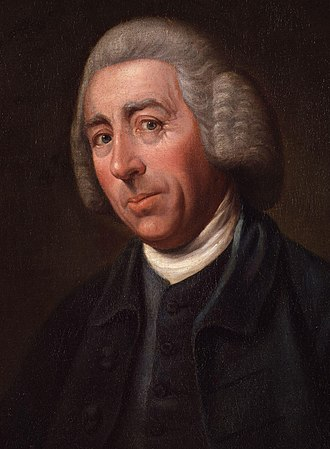
Nickname/Alias: "Capability" Brown
Achievements: Major landscape gardener
Born: August, 1715, Kirkharle, Northumberland, England
Died: February 6, 1783, London, England. Aged 67
Field & Discipline: Architecture; Agriculture; Landscape Gardener; Architect
Language: English
Father: William Brown
Mother: Unknown
Siblings: Five, among whom: John; George; 3 sisters
Spouse: Bridget Wayet
Children: Bridget; Lancelot; John; Margaret; Thomas
Education: Schools at Kirkharle and Cambo, Northumberland
Major Work:
Blenheim Park
Life & Times:
In February, 1741, at 26, Brown was hired as gardening superintendent by Richard Cobham, Viscount of Stowe, who put him in charge of 30 gardeners. The Stowe estate in Buckinghamshire was probably the most famous garden in England at the time. It had originally been designed by [succeeded] Charles Bridgeman*, then redesigned by architect/painter [worked under] Kent*, who created an Italian-type landscape (complete with ruins) that looked like the paintings of Poussin and Claude.
Brown worked at Stowe, under the broad direction of Kent, for nearly nine years. Interested in both architecture and large-scale landscaping, Brown invented a tree-moving machine, which did away with the crane and pulleys of earlier methods, and became an important part of his trade.
In his last few years at Stowe, Brown developed the landscaping style that made him famous. When Cobham decided to create his last great garden feature, the Grecian Valley, he chose Brown to design and build the area. The final garden was dominated by belts of trees, giving way to lawns which then swept down to a lake. When Cobham died in 1749, Brown, now with three young children, remained at Stowe for another two years, also accepting commissions at Warwick Castle and the house and gardens at Croome Court, Worcestershire (his first major architectural work).
In autumn, 1751, Brown moved his family to Hammersmith, then a small riverside village near London, to set up as an independent designer. Over the next four years, he worked on six major projects, most notably Kirtlington Park (Oxfordshire) and Petworth House (West Sussex), and by this time had developed his "natural style".
Using neither carved stone nor architectural shapes, he limited himself to the use of turf, large areas of reflecting water, a few species of trees used singly, in clumps, or in loose belts, and the undulations of the ground. He made simple harmonious patterns without obvious symmetry, as in his design of the park and lake at Petworth House, landscaped from 1751 to 1757.
During the 1750s Brown's practice grew quickly, and by the end of the decade he had worked on about 20 landed estates, most notably [worked for] Anson's* Moor Park in Hertfordshire and, from 1755, Burghley in Northamptonshire. In 1756, actor [employed by] Garrick* employed him at Hampton.
The following year, he was commissioned both by Viscount Weymouth (to redesign the vast gardens at Longleat), and by George Grenville (to landscape the large Wotton estate in Buckinghamshire.) At Wotton, Brown created two miles of inter-connected lakes, canals and artificial rivers along with his trademark great lawn, which swept down to the water's edge across undulating grass, full of curve and movement.
By 1760, he had begun to design not just garden buildings, such as bridges and pagodas, but also country houses, in the classical style of the day, such as: Croome Court and menagerie (1755 and 1772), Claremont House (1766-72), and Cadland (1782).
In 1764, Brown was appointed Royal Gardener at Hampton Court, and the following year, received probably his most famous commission: to alter the park at the Duke of Marlborough's Blenheim Palace at Woodstock.
When Brown began work, the grounds already contained several interesting features: the architect [succeeded] Vanbrugh*'s great palace and monumental bridge, the Column of Victory, the Grand Avenue, and the Great Park, but they were widely separated. Brown created lakes beside Vanbrugh's bridge and almost totally erased the earlier geometric plantations, planting clumps of trees which, more than 200 years later, still frame Blenheim's splendid vistas.
Brown was not only a great landscape designer, but also a phenomenally successful businessman. By 1767 he was the owner of an estate of over 2,000 acres at Fenstanton in Huntingdonshire, close to the estate of the Earl of Sandwich, who became a close friend. By the time he died at 67, he had worked on some 170 major commissions.
Because of his influence, almost all the English gentry now had their homes set within a cultivated park, an open landscape of grass and irregularly scattered trees. Open turf appeared to flow up to walls. Linear planting was shunned. All blocks of woodland, an important feature of Brown's designs, had curvilinear outlines. Though everything looked "natural", Brown took painstaking care with the way his landscapes were laid out, paying attention to the effects of color, perspective, light and shade. Buildings were used to lend variety to a scene or to focus a vista.
But Brown's pastoral style began to lose favor, even in his lifetime. In 1772, architect [criticized by] Sir William Chambers* called his work "gardens which differ little from common fields." Brown's style was overtaken by the picturesque in the 19th century.
Extra Connections: He was employed by the Duke of [employed by] Bridgewater* and [employed by] Clive* of India
Assessment: "Improved" a greater acreage of ground than any other landscape architect had done before
Oneliner: Capability Brown, perhaps the greatest landscape gardener
Bibliography:
- Dictionary of National Biography.
- Encyclopedia Britannica.
- Hinde, Thomas, Capability Brown: The Story of a Master Gardener, London: Hutchinson, 1986.