Chambers W
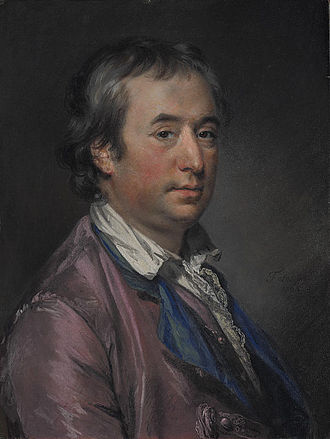
Name: William Chambers
Achievements: The architecture of the Royal Botanical Gardens, Kew, England.
Born: Christened February 23, 1723; Gothenborg, Sweden
Died: March 8, 1796; London, England (Aged 70).
Field & Discipline: Architecture
Language: English
Father: Father: John Chambers
Mother: Sara Chambers
Siblings: Unknown
Spouse: Catherine More
Children: Unknown
Education: Unknown
Major Work:
“Treatise of Civil Architecture” (1759)
Life & Times:
Chambers was the son of a Scottish merchant living in Sweden. His father returned to the family estate in Yorkshire, England when Chambers was two years old. At the age of seventeen, Chambers returned to Gothenburg and entered the Swedish East India Company. He sailed for Bengal in April 1740 as a cadet in the service of the staff responsible for selling goods at the various ports of call. He returned in 1842 and spent six months in Sweden before leaving on another voyage in 1743. On this voyage he first began to study mathematics and architecture.
He spent two years based in Gothenburg from 1745 and at the beginning of 1748 sailed for Canton. He studied Chinese architecture and gardens, and the ship’s captain recorded that the Swedish botanist [work related to] Linnaeus* had been informed of Chamber’s studies. He returned to Europe in July 1749, having made up his mind to study architecture.
He spent a year at the Ecole des Arts in Paris and in the autumn of 1750 went to Italy to continue his studies. He spent five years there and was taught drawing by the French draughtsman [taught by] Clerisseau* in 1751-2. In 1751 he married an Englishwoman at the house of a friend where the artist [knew] Piranesi* had his shop. Chambers was well-off, which set him apart from other architectural students in Rome, like [a rival of] Adam,* who appears to have begun his rivalry with Chambers at this time. Adam said that Chambers was thought by visiting English aristocrats to be a coming man in architecture.
Chambers returned to England in 1755 and two years later published “Designs for Chinese Buildings, Furniture, Dresses, Machines and Utensils.” It was the first informed discussion of Chinese architecture, but as Chinoiserie was then becoming less fashionable in England it had little impact at the time. His future career was confirmed in 1757 when, through the patronage of the Earl of [a patron was] Bute*, Chambers was appointed tutor in architecture to George, Prince of Wales, and architect to Augusta, Dowager Princess of Wales.
One of Augusta’s homes was at Kew and she wanted to enhance her gardens there. Over the next six years, Chambers designed several buildings for the gardens, including the now famous pagoda. [worked with] Smeaton* supplied a water pump. As Bute had foreseen, Kew Gardens (as they are now known) became an important botanical center. [work related to] John Hill*, the botanist, a protegee of Bute, was later appointed Superintendent of Kew.
Chambers wanted to establish a serious architectural practice and in 1759 published “Treatise on Civil Architecture”. The book, which was really a treatise on decorative aspects, has a preface emphasizing the civilizing influence of architecture. The substance of the book is on the five Orders (Tuscan, Doric, Ionic, Roman and Corinthian) and their related parts, with instructions on how to space them, and on their superimposition, when used on gates, doors, balustrades etc.
The following year Chambers’ pupil became King George III and Chambers, together with Adam, was created Architect to the King. In 1763 the king paid for the publication of a work, recording Chambers’s work at Kew, titled: “Plans, Elevations Sections, And Perspective Views of the Gardens and Buildings at Kew”. By now Chambers was well-established at court and was becoming wealthy.
He was given many royal commissions such as the remodelling of Buckingham House (where Adam, less favored by the king only got to design one ceiling and one chimney-piece). In 1768 Chambers designed the Observatory at Richmond and the royal State Coach.
In domestic architecture, Chambers did not build any great houses, nor was he employed on their interiors. He was associated with building neo-Palladian villas and his interiors were always restrained, with elegant ornamentation. He was a skillful designer and draughtsman, and he designed objects to be produced in silver and ceramic by the manufacturer [work related to] Boulton* and the potter [work related to] Wedgwood*. His designs for chimney-pieces were sculptural and he invented an antique-style chimney-piece with a panel raised above the mantle. His ceilings were equally reserved in character and he incorporated paintings very sparingly.
Nevertheless, in 1768 the king appointed him Treasurer to the newly formed Royal Academy. Chambers had been one of the prime movers in the establishment of the Academy and he agreed with the appointment of [painted by] Sir Joshua Reynolds* (who had painted a portrait of Chambers some years earlier) as Academy president. In 1769 Chambers was made Comptroller of the Works, which virtually made him head of the architectural profession.
In 1772 Chambers published his “Dissertation on Oriental Gardening” in which he attacked [attacked] Capability Brown* for his style of natural landscape gardening. He designed a few public buildings of moderate size and then in 1775 was charged with the restoration of Somerset House (on the Strand, London), designated for societies and other official bodies including the Royal Academy of Arts, the Royal Society and the Society of Antiquaries.
The project occupied him for the next twenty years of his life and a whole generation of craftsmen received training during its renovation ([employed] Telford* was employed as a stone-cutter). The success of Somerset House owed much to Chambers’ management of the project. In 1782, Chambers was made Comptroller and Surveyor General.
Extra Connections: He designed a house for [commissioned by] Clive of India*
Assessment: The English leading architect in the late eighteenth century.
Oneliner: William Chambers, major eighteenth-century architect
Bibliography:
- Harris, John and Snodin, Michael, Sir William Chambers, Architect to George III, Yale University Press, New Haven and London, 1997.