Barcode
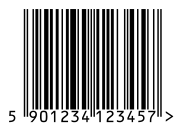
ALTERNATIVE NAME/S: none
DETAILS: In 1948, Bernard Silver* and Norman Joseph Woodland* started developing a method to automatically read product information in an effort to speed up the checkout process in stores. The first code was based on that developed by Samuel Morse*
On October 7, 1952, US Patent 2,612,994 was issued to Woodland and Silver for what is essentially the barcode system we know today. In 1969, the National Association of Food Chains asked Logicon, Inc., to develop an industry-wide standardized barcode system. In 1970, the Universal Grocery Products Identification Code (UGPIC) was issued and is still in use.
Barcodes are read by sweeping a small spot of light across the printed bar code symbol, starting at the white space before the first bar and ending in the white space following the last bar. The sweep of light must stay within the symbol area, so the bar heights are chosen to make it easy to keep the sweep where it can work – the longer the barcode, the taller the bars.
A barcode reader consists of an electronic device that "reads" the width and sequence of the white spaces and dark (usually black) bars. This optical image is then transformed into electrical signals and passed on to a decoder that transforms the electrical signals into ASCII representations that can be used by cash registers and other equipment.
There are various types of barcode readers, ranging from contact wands which must actually touch the barcode in order to read it to handheld scanners that can read barcodes up to 30 feet away (useful in warehouse situations).
ONELINER: The barcode
OTHER CONNECTIONS: None
BIBLIOGRAPHY: "Bar Code History Page." BarCode 1, c1995-2004, Adams Communications.
http://www.adams1.com/pub/russadam/history.htmlAccessed March 27, 2004.
A barcode or bar code is a method of representing data in a visual, machine-readable form. Initially, barcodes represented data by varying the widths, spacings and sizes of parallel lines. These barcodes, now commonly referred to as linear or one-dimensional (1D), can be scanned by special optical scanners, called barcode readers, of which there are several types. Later, two-dimensional (2D) variants were developed, using rectangles, dots, hexagons and other patterns, called matrix codes or 2D barcodes, although they do not use bars as such. 2D barcodes can be read using purpose-built 2D optical scanners, which exist in a few different forms.
2D barcodes can also be read by a digital camera connected to a microcomputer running software that takes a photographic image of the barcode and analyzes the image to deconstruct and decode the 2D barcode. A mobile device with an inbuilt camera, such as smartphone, can function as the latter type of 2D barcode reader using specialized application software (The same sort of mobile device could also read 1D barcodes, depending on the application software).
The barcode was invented by Norman Joseph Woodland and Bernard Silver and patented in the US in 1952.[1] The invention was based on Morse code[2] that was extended to thin and thick bars. However, it took over twenty years before this invention became commercially successful. UK magazine Modern Railways December 1962 pages 387–389 record how British Railways had already perfected a barcode-reading system capable of correctly reading rolling stock travelling at 100 mph (160 km/h) with no mistakes. An early use of one type of barcode in an industrial context was sponsored by the Association of American Railroads in the late 1960s.
Developed by General Telephone and Electronics (GTE) and called KarTrak ACI (Automatic Car Identification), this scheme involved placing colored stripes in various combinations on steel plates which were affixed to the sides of railroad rolling stock. Two plates were used per car, one on each side, with the arrangement of the colored stripes encoding information such as ownership, type of equipment, and identification number.[3] The plates were read by a trackside scanner located, for instance, at the entrance to a classification yard, while the car was moving past.[4] The project was abandoned after about ten years because the system proved unreliable after long-term use.[3]
Barcodes became commercially successful when they were used to automate supermarket checkout systems, a task for which they have become almost universal. The Uniform Grocery Product Code Council had chosen, in 1973, the barcode design developed by George Laurer. Laurer's barcode, with vertical bars, printed better than the circular barcode developed by Woodland and Silver.[5] Their use has spread to many other tasks that are generically referred to as automatic identification and data capture (AIDC).
The first successful system using barcodes was in the UK supermarket group Sainsbury's in 1972 using shelf-mounted barcodes [6] which were developed by Plessey.[6] In June 1974, Marsh supermarket in Troy, Ohio used a scanner made by Photographic Sciences Corporation to scan the Universal Product Code (UPC) barcode on a pack of Wrigley's chewing gum.[7][5] QR codes, a specific type of 2D barcode, have recently become very popular due to the growth in smartphone ownership.[8]
Other systems have made inroads in the AIDC market, but the simplicity, universality and low cost of barcodes has limited the role of these other systems, particularly before technologies such as radio-frequency identification (RFID) became available after 1995.
History
In 1948 Bernard Silver, a graduate student at Drexel Institute of Technology in Philadelphia, Pennsylvania, US overheard the president of the local food chain, Food Fair, asking one of the deans to research a system to automatically read product information during checkout.[9] Silver told his friend Norman Joseph Woodland about the request, and they started working on a variety of systems. Their first working system used ultraviolet ink, but the ink faded too easily and was expensive.[10]
Convinced that the system was workable with further development, Woodland left Drexel, moved into his father's apartment in Florida, and continued working on the system. His next inspiration came from Morse code, and he formed his first barcode from sand on the beach. "I just extended the dots and dashes downwards and made narrow lines and wide lines out of them."[10] To read them, he adapted technology from optical soundtracks in movies, using a 500-watt incandescent light bulb shining through the paper onto an RCA935 photomultiplier tube (from a movie projector) on the far side. He later decided that the system would work better if it were printed as a circle instead of a line, allowing it to be scanned in any direction.
On 20 October 1949, Woodland and Silver filed a patent application for "Classifying Apparatus and Method", in which they described both the linear and bull's eye printing patterns, as well as the mechanical and electronic systems needed to read the code. The patent was issued on 7 October 1952 as US Patent 2,612,994.[1] In 1951, Woodland moved to IBM and continually tried to interest IBM in developing the system. The company eventually commissioned a report on the idea, which concluded that it was both feasible and interesting, but that processing the resulting information would require equipment that was some time off in the future.
IBM offered to buy the patent, but the offer was not accepted. Philco purchased the patent in 1962 and then sold it to RCA sometime later.[10]
Collins at Sylvania[]
During his time as an undergraduate, David Jarrett Collins worked at the Pennsylvania Railroad and became aware of the need to automatically identify railroad cars. Immediately after receiving his master's degree from MIT in 1959, he started work at GTE Sylvania and began addressing the problem. He developed a system called KarTrak using blue, white and red reflective stripes attached to the side of the cars, encoding a four-digit company identifier and a six-digit car number.[10] Light reflected off the colored stripes was read by photomultiplier vacuum tubes.[11]
The Boston and Maine Railroad tested the KarTrak system on their gravel cars in 1961. The tests continued until 1967, when the Association of American Railroads (AAR) selected it as a standard, Automatic Car Identification, across the entire North American fleet. The installations began on 10 October 1967. However, the economic downturn and rash of bankruptcies in the industry in the early 1970s greatly slowed the rollout, and it was not until 1974 that 95% of the fleet was labeled. To add to its woes, the system was found to be easily fooled by dirt in certain applications, which greatly affected accuracy. The AAR abandoned the system in the late 1970s, and it was not until the mid-1980s that they introduced a similar system, this time based on radio tags.[12]
The railway project had failed, but a toll bridge in New Jersey requested a similar system so that it could quickly scan for cars that had purchased a monthly pass. Then the U.S. Post Office requested a system to track trucks entering and leaving their facilities. These applications required special retroreflector labels. Finally, Kal Kan asked the Sylvania team for a simpler (and cheaper) version which they could put on cases of pet food for inventory control.
Computer Identics Corporation[]
In 1967, with the railway system maturing, Collins went to management looking for funding for a project to develop a black-and-white version of the code for other industries. They declined, saying that the railway project was large enough, and they saw no need to branch out so quickly.
Collins then quit Sylvania and formed the Computer Identics Corporation.[10] As its first innovations, Computer Identics moved from using incandescent light bulbs in its systems, replacing them with helium–neon lasers, and incorporated a mirror as well, making it capable of locating a barcode up to a meter (3 feet) in front of the scanner. This made the entire process much simpler and more reliable, and typically enabled these devices to deal with damaged labels, as well, by recognizing and reading the intact portions.
Computer Identics Corporation installed one of its first two scanning systems in the spring of 1969 at a General Motors (Buick) factory in Flint, Michigan.[10] The system was used to identify a dozen types of transmissions moving on an overhead conveyor from production to shipping. The other scanning system was installed at General Trading Company's distribution center in Carlstadt, New Jersey to direct shipments to the proper loading bay.
Universal Product Code[]
Main article: Universal Product Code
In 1966, the National Association of Food Chains (NAFC) held a meeting on the idea of automated checkout systems. RCA, who had purchased the rights to the original Woodland patent, attended the meeting and initiated an internal project to develop a system based on the bullseye code. The Kroger grocery chain volunteered to test it.
In the mid-1970s, the NAFC established the Ad-Hoc Committee for U.S. Supermarkets on a Uniform Grocery-Product Code to set guidelines for barcode development. In addition, it created a symbol-selection subcommittee to help standardize the approach. In cooperation with consulting firm, McKinsey & Co., they developed a standardized 11-digit code for identifying products. The committee then sent out a contract tender to develop a barcode system to print and read the code. The request went to Singer, National Cash Register (NCR), Litton Industries, RCA, Pitney-Bowes, IBM and many others.[13] A wide variety of barcode approaches was studied, including linear codes, RCA's bullseye concentric circle code, starburst patterns and others.
In the spring of 1971, RCA demonstrated their bullseye code at another industry meeting. IBM executives at the meeting noticed the crowds at the RCA booth and immediately developed their own system. IBM marketing specialist Alec Jablonover remembered that the company still employed Woodland, and he established a new facility in Raleigh-Durham Research Triangle Park to lead development.
In July 1972, RCA began an 18-month test in a Kroger store in Cincinnati. Barcodes were printed on small pieces of adhesive paper, and attached by hand by store employees when they were adding price tags. The code proved to have a serious problem; the printers would sometimes smear ink, rendering the code unreadable in most orientations. However, a linear code, like the one being developed by Woodland at IBM, was printed in the direction of the stripes, so extra ink would simply make the code "taller" while remaining readable. So on 3 April 1973, the IBM UPC was selected as the NAFC standard. IBM had designed five versions of UPC symbology for future industry requirements: UPC A, B, C, D, and E.[14]
NCR installed a testbed system at Marsh's Supermarket in Troy, Ohio, near the factory that was producing the equipment. On 26 June 1974, Clyde Dawson pulled a 10-pack of Wrigley's Juicy Fruit gum out of his basket and it was scanned by Sharon Buchanan at 8:01 am. The pack of gum and the receipt are now on display in the Smithsonian Institution. It was the first commercial appearance of the UPC.[15]
In 1971, an IBM team was assembled for an intensive planning session, threshing out, 12 to 18 hours a day, how the technology would be deployed and operate cohesively across the system, and scheduling a roll-out plan. By 1973, the team were meeting with grocery manufacturers to introduce the symbol that would need to be printed on the packaging or labels of all of their products. There were no cost savings for a grocery to use it, unless at least 70% of the grocery's products had the barcode printed on the product by the manufacturer. IBM projected that 75% would be needed in 1975. Yet, although this was achieved, there were still scanning machines in fewer than 200 grocery stores by 1977.[16]
Economic studies conducted for the grocery industry committee projected over $40 million in savings to the industry from scanning by the mid-1970s. Those numbers were not achieved in that time-frame and some predicted the demise of barcode scanning. The usefulness of the barcode required the adoption of expensive scanners by a critical mass of retailers while manufacturers simultaneously adopted barcode labels. Neither wanted to move first and results were not promising for the first couple of years, with Business Week proclaiming "The Supermarket Scanner That Failed" in a 1976 article.[15][17]
On the other hand, experience with barcode scanning in those stores revealed additional benefits. The detailed sales information acquired by the new systems allowed greater responsiveness to customer habits, needs and preferences. This was reflected in the fact that about 5 weeks after installing barcode scanners, sales in grocery stores typically started climbing and eventually leveled off at a 10–12% increase in sales that never dropped off. There was also a 1–2% decrease in operating cost for those stores, and this enabled them to lower prices and thereby to increase market share. It was shown in the field that the return on investment for a barcode scanner was 41.5%. By 1980, 8,000 stores per year were converting.[16]
Sims Supermarkets were the first location in Australia to use barcodes, starting in 1979.[18]
Industrial adoption
In 1981, the United States Department of Defense adopted the use of Code 39 for marking all products sold to the United States military. This system, Logistics Applications of Automated Marking and Reading Symbols (LOGMARS), is still used by DoD and is widely viewed as the catalyst for widespread adoption of barcoding in industrial uses.[19]
Use[]
[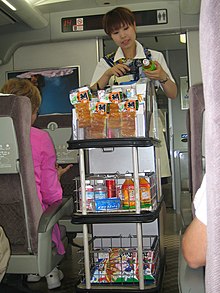
Snack vendor on the Shinkansen train scans a barcode.
[

Barcode on a patient identification wristband

Barcoded parcel
Barcodes are widely used around the world in many contexts. In stores, UPC barcodes are pre-printed on most items other than fresh produce from a grocery store. This speeds up processing at check-outs and helps track items and also reduces instances of shoplifting involving price tag swapping, although shoplifters can now print their own barcodes.[20] Barcodes that encode a book's ISBN are also widely pre-printed on books, journals and other printed materials. In addition, retail chain membership cards use barcodes to identify customers, allowing for customized marketing and greater understanding of individual consumer shopping patterns. At the point of sale, shoppers can get product discounts or special marketing offers through the address or e-mail address provided at registration.
Barcodes are widely used in the healthcare and hospital settings, ranging from patient identification (to access patient data, including medical history, drug allergies, etc.) to creating SOAP Notes[21] with barcodes to medication management. They are also used to facilitate the separation and indexing of documents that have been imaged in batch scanning applications, track the organization of species in biology,[22] and integrate with in-motion checkweighers to identify the item being weighed in a conveyor line for data collection.
They can also be used to keep track of objects and people; they are used to keep track of rental cars, airline luggage, nuclear waste, registered mail, express mail and parcels. Barcoded tickets (which may be printed by the customer on their home printer, or stored on their mobile device) allow the holder to enter sports arenas, cinemas, theatres, fairgrounds, and transportation, and are used to record the arrival and departure of vehicles from rental facilities etc. This can allow proprietors to identify duplicate or fraudulent tickets more easily. Barcodes are widely used in shop floor control applications software where employees can scan work orders and track the time spent on a job.
...