Harrison, James
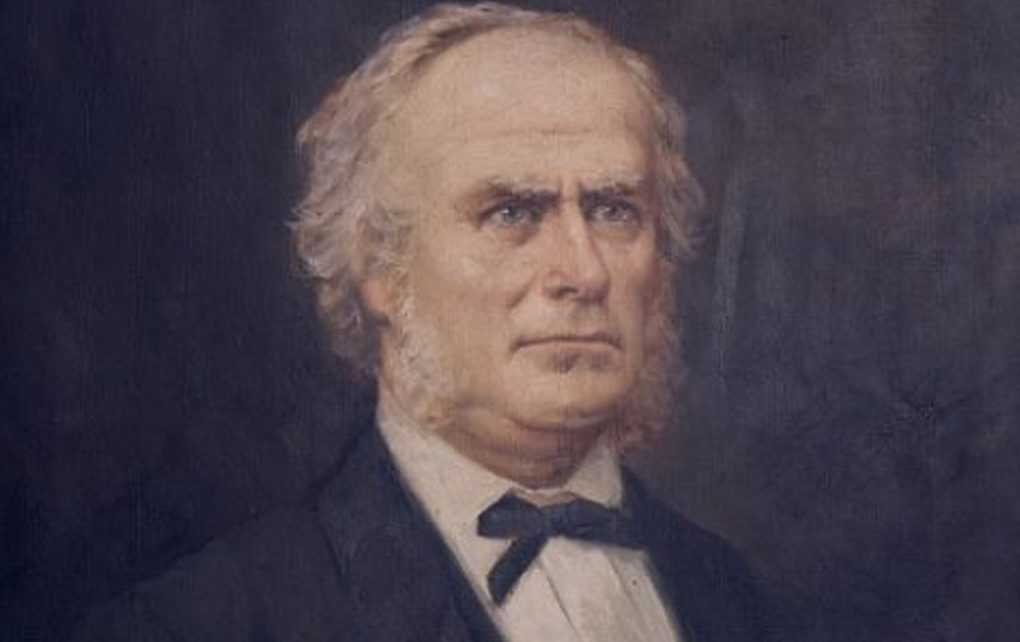
Name: James Harrison
Achievements: Early experimenter in export of frozen meat from Australia
Born: 1816, Glasgow, Scotland
Died: September 3, 1893; Geelong, Australia (Aged 77)
Field & Discipline: Business; Refrigeration
Language: English
Father: Unknown
Mother: Unknown
Siblings: Unknown
Spouse: Unknown
Children: Unknown
Education: Unknown
Life & Times:
James Harrison emigrated to Australia in 1837. In 1840 he settled at Geelong where he earned his living by becoming a journalist. For some time he was editor of the “Melbourne Age.”
He is said to have been the first to realize the opportunities in exporting fresh meat from Australia to Europe. In 1850 he began to develop an ice-making process and built an ice factory at Rodney Point in Victoria. Harrison’s machine involved the compression of ether and improved on the machine invented in 1834 by Jacob Perkins and based on the compression system and the expansion of volatile fluids.
At the same time that Harrison was developing his machine, [work related to] Gorrie* in America had developed an ice-making machine involving the compression of air.
In 1851, a brewing firm at Bendigo, Australia installed a refrigerator “of the Harrison type” which was the first in the world of such machines. In 1855 Harrison received an Australian patent for his machine.
He corresponded with [corresponded with] Faraday* in England about scientific problems associated with freezing and in 1857 made a visit to London. In London he manufactured a large refrigeration machine, which he transported back to Australia.
In 1860 one of Harrison’s refrigerating machines was installed in a paraffin factory in England; this machine was probably the first refrigerating plant ever applied to a manufacturing process. Harrison was still pursuing his idea of exporting meat and he experimented in its preservation. In 1873 he exhibited his cold-making machine at Melbourne.
Later in the year, poultry, fish, carcasses of sheep, and sides of beef which had been frozen for six months by Harrison were consumed at a public banquet. He was now ready to go ahead with exporting meat and in July 1873 twenty tons of mutton and beef were loaded on to the SS Norfolk, bound for London.
Unfortunately, Harrison’s machinery broke down on the voyage and the meat went bad. Harrison appears to abandoned his plans for frozen meat export and it was Gorrie’s cold-air refrigerating machine which became the freezing system of freezing prominently associated with the early stage of frozen-meat export trade. Harrison returned to London where he spent several years occupied in scientific studies.
Assessment: Harrison is credited with being the first person to realize the opportunity for exporting frozen meat from Australia to Europe.
Oneliner: James Harrison, early refrigeration pioneer
Bibliography:
- Critchell, James Troubridge and Raymond, Joseph, A History of the Frozen Meat Trade, Constable & Co. Ltd., London, 1912.
James Harrison (engineer) - Wikipedia
ADB: Before 1870, as his finances recovered, Harrison began pioneering work on the refrigeration of ships for the export of meat, while competitors were still thinking only of direct freezing. In 1873 he won a gold medal at the Melbourne Exhibition by proving that meat kept frozen for months remained perfectly edible and that it might be shipped to England for 7s. a ton. As a result he was given £2500 for an experiment: in July the Norfolk sailed with twenty-five tons of beef and mutton. Unfortunately lack of funds for adequate machinery, rough handling and ignorance that beef should only be chilled made the cargo unusable.