von Linde, Carl
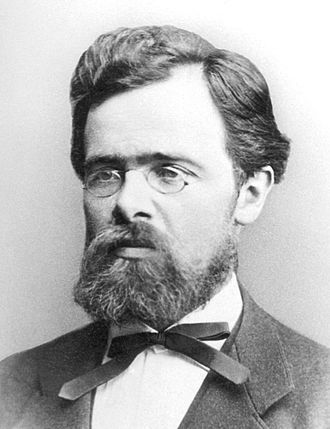
Nickname/Alias: born: Karl Paul Gottfried Linde; Karl von Linde
Achievements: One of the earliest discoverers of practical mechanical refrigeration
Born: June 11, 1842; Berndorf, Germany
Died: November 16, 1934; Munich, Germany (Aged 92)
Field & Discipline: Engineering; Refrigeration
Education: Gymnasium, Kemptem; Eidgenossische Polytechnikum, Zurich
Life & Times:
Linde had a classical education but soon discovered a passion for technology. He studied science and engineering at technical school in Switzerland where one of his teachers was [taught by] Clausius*. In his twenties, he got practical experience at a locomotive and machine factory and in 1866 was appointed head of the technical department of a firm of locomotive manufacturers in Munich.
When the technical school at Munich was opened two years later, he was appointed to the teaching staff and in 1872 became professor of theoretical engineering. Linde conducted practical experiments and lectured on subjects which included the theory of steam engines, locomotive motion, crank motion, water wheels, hot air engines, steamships and turbines. Among his students was [taught] Diesel*.
In 1870 he began research on refrigeration. At that time there were a number of patents for cold-making machines and machines for making artificial ice. Twenty years earlier in America, [work related to] Gorrie* had produced artificial ice by the compressed air method, and others were experimenting with cooling induced by the expansion of volatile fluids. Linde was interested in developing a process which would directly cool liquids as well as making ice.
Between 1873-77 he investigated heat theory and the behavior of gases at low temperatures. When a gas is compressed and then allowed to expand, under certain conditions, it will absorb heat from objects around it and so cool them. To maintain the low temperature in a refrigerated space, it is necessary to have a continual extraction of heat from something which is already colder than its surroundings. Linde experimented with the compression and expansion of methyl ether before developing the first successful compressed-ammonia [developed] refrigerator* in 1876 (following on earlier work by [work related to] Gorrie* and [work related to] Cullen*)
Unlike some earlier prototypes, Linde’s refrigerator was reliable and economical to run. He resigned from the technical school in order to develop his process industrially, and he founded his own company in Weisbaden. Linde refrigeration machines were a great success commercially and factories across Europe made Linde machines. Diesel worked at one such factory in Switzerland and his first attempts to make an ideal heat engine involved the compression of ammonia. Over a thousand Linde refrigerators were in operation by the time Linde retired from active management of his company in 1891.
He resumed part-time teaching which he devoted mainly to the theory of refrigeration machines. He wanted time to pursue further researches into the behavior of gases at low temperatures, an area in which scientists were already making advances.
The Dutch physicist, [work related to] Onnes*, for example, was conducting experiments into obtaining low temperatures, working on the liquefaction of air, and was also interested in the practical application of his theories to food preservation and ice-making. Linde was instrumental in the founded of the first laboratory for applied physics in Germany at the Munich Technical School.
He succeeded in developing a reliable process of liquefying gases in large quantities and in 1895 set up a large-scale plant for the production of liquid air. In 1902 he developed a process for separating pure liquid oxygen from pure liquid air which was of great significance for industry where it is used in the oxyacetylene torches employed in metal working.
The following year Linde succeeded in the production of pure nitrogen and in 1909 established a process for producing hydrogen from water gas.
Extra Connections: His work related to that of [work related to] James Harrison*
Assessment: Linde’s work formed the basis for the modern technology of refrigeration.
Oneliner: Von Linde, refrigeration pioneer
Bibliography:
Dictionary of Scientific Biography.
Carl Paul Gottfried Linde (11 June 1842 – 16 November 1934) was a German scientist, engineer, and businessman. He discovered **a refrigeration cycle**and invented the first industrial-scale air separation and gas liquefaction processes. These breakthroughs laid the backbone for the 1913 Nobel Prize in Physics that was awarded to Heike Kamerlingh Onnes.[1]^(https://en.wikipedia.org/wiki/Carl_von_Linde#cite_note-1) Linde was a member of scientific and engineering associations, including being on the board of trustees of the Physikalisch-Technische Reichsanstalt and the Bavarian Academy of Sciences and Humanities. Linde was also the founder of what is now known asLinde plc, the world's largest industrial gases company,and ushered the creation of the supply chain of industrial gases as a profitable line of businesses. He was knighted in 1897 as Ritter von Linde. Carl von Linde invented the first reliable and efficient compressed-ammonia refrigerator in 1876.**^[2]^**
Contents
·
·
·
·
·
·
·
Biography
Early years
Born in Berndorf [de], Bavaria[3]^(https://en.wikipedia.org/wiki/Carl_von_Linde#cite_note-3) as the son of a German-born minister and a Swedish mother, he was expected to follow in his father's footsteps but took another direction entirely. Von Linde's family moved to Munich in 1854, and eight years later he started a course in engineering at the Swiss Federal Institute of Technology in Zürich, Switzerland, where his teachers included Rudolf Clausius, Gustav Zeuner and Franz Reuleaux.
In 1864, he was expelled before graduating for participating in a student protest, but Reuleaux found him a position as an apprentice at the Kottern cotton-spinning plant in Kempten. Linde stayed only a short time before moving first to Borsig in Berlin and then to the new**Krauss**locomotive factory in**Munich**, where he worked as head of the technical department. Von Linde married Helene Grimm in September 1866; their marriage lasted 53 years and they had six children.[4]^(https://en.wikipedia.org/wiki/Carl_von_Linde#cite_note-Idea-4)
In 1868 Linde learned of a new university opening in Munich (the *Technische Hochschule*) and immediately applied for a job as a lecturer; he was accepted—at the age of 26—for the position. He became a full professor of mechanical engineering in 1872, and set up an engineering lab where students such as Rudolf Diesel studied.
Middle years
In 1870 and 1871, Linde published articles in the Bavarian Industry and Trade Journal describing his research findings in the area of**refrigeration**. Linde's first refrigeration plants were commercially successful, and development began to take up increasing amounts of his time. In 1879, he gave up his professorship and founded the Gesellschaft für Lindes Eismaschinen Aktiengesellschaft ("Linde's Ice Machine Company"), now Linde plc, in Wiesbaden, Germany. After a slow start in a difficult German economy, business picked up quickly in the 1880s. The efficient new refrigeration technology offered big benefits to the breweries, and by 1890 Linde had sold 747 machines. In addition to the breweries, other uses for the new technology were found in slaughterhouses and cold storage facilities all over Europe.
In 1890, Linde moved back to Munich where he took up his professorship once more, but was soon back at work developing new refrigeration cycles. In 1892, an order from the**Guinness**brewery in**Dublin**for a**carbon dioxide**liquefaction plant drove Linde's research into the area of low-temperature refrigeration, and in 1894 he started work on a process for the liquefaction of air. In 1895, Linde first achieved success,[5]^(https://en.wikipedia.org/wiki/Carl_von_Linde#cite_note-Profile-5) and filed for patent protection of his process (not approved in the US until 1903). In 1901, Linde began work on a technique to obtain pure oxygen and nitrogen based on the fractional distillation of liquefied air. By 1910, coworkers including Carl's son Friedrich had developed the Linde double-column process, variants of which are still in common use today.
After a decade, Linde withdrew from managerial activities to refocus on research, and in 1895 he succeeded in liquefying air by first compressing it and then letting it expand rapidly, thereby cooling it. He then obtained oxygen and nitrogen from the liquid air by slow warming. In the early days of oxygen production, the biggest use by far for the gas was the**oxyacetylene torch**, invented in**France**in 1903, which revolutionized metal cutting and welding in the construction of ships, skyscrapers, and other iron and steel structures.
In 1897, Linde was appointed to the Order of Merit of the Bavarian Crown and ennobled in accordance with its statutes.
In addition to Linde's technical and engineering abilities,he was a successful entrepreneur. He formed many successful partnerships in Germanyand internationally, working effectively to exploit the value of his patents and knowledge through licensing arrangements.
In 1906, Linde negotiated a stake in Brin's Oxygen Company, renamed The BOC Group. in exchange for rights to Linde's patents in the UK and other countries, and held a board position until 1914.[6]^(https://en.wikipedia.org/wiki/Carl_von_Linde#cite_note-Stokes-6) Linde also formed the Linde Air Products Company in the USA in 1907, a company that passed through US Government control to Union Carbide in the 1940s and on to form Praxair. In 2005 Linde, plc bought the BOC Group, and in 2019 Linde plc merged with Praxair, thus combining all three companies founded by Linde.
Later years and death
From around 1910 Linde started transferring responsibility for the company's operation to his sons Friedrich and Richard and to his son-in-law Rudolf Wucherer. He continued with supervisory board and advisory duties until his death.
Carl von Linde died in Munich in November 1934 at the age of 92.
Key inventions
Linde's first refrigeration system useddimethyl etheras the refrigerant and was built by Maschinenfabrik Augsburg (now**MAN AG**) for theSpaten Breweryin 1873. He quickly moved on to develop more reliable**ammonia**-based cycles. These were early examples of**vapor-compression refrigeration**machines, and ammonia is still in wide use as a**refrigerant**in industrial applications.
His apparatus for the liquefaction of air combined the cooling effect achieved by allowing a compressed gas to expand (the Joule–Thomson effect first observed by James Prescott Joule and Lord Kelvin) with a counter-current heat exchange technique that used the cold air produced by expansion to chill ambient air entering the apparatus. Over a period of time this effect gradually cooled the apparatus and air within it to the point of liquefaction.[7]^(https://en.wikipedia.org/wiki/Carl_von_Linde#cite_note-WOC-7)
Linde followed development of air liquefaction equipment with equipment that also separated air into its constituent parts using distillation processes.[8]^(https://en.wikipedia.org/wiki/Carl_von_Linde#cite_note-Linde-8)
Linde's inventions and developments spurred development in many areas of cryogenics,[9]^(https://en.wikipedia.org/wiki/Carl_von_Linde#cite_note-Gorak-9) physics, chemistry and engineering.
Patents
·
CH10704 – 31 January 1896 – Gasverflüssigungs-maschine (Machine for the liquefaction of gas) (in German) – Switzerland
·
GB189512528 – 16 May 1896 – Process and Apparatus for Liquefying Gases or Gaseous Mixtures, and for Producing Cold, more particularly applicable for Separating Oxygen from Atmospheric Air – UK
·
US727,650 – 12 May 1903 – Linde oxygen process – USA
·
US728,173 – 12 May 1903 – Equipment for Linde oxygen process – USA
·
US795,525 – 25 July 1905 – Equipment for Linde oxygen and nitrogen process—USA
Awards
·
Wilhelm Exner Medal, 1922
See also
·
·
·
·
Timeline of low-temperature technology
·
German inventors and discoverers
References
1.
**^** *"The Nobel Prize in Physics 1913 - Award Ceremony Speech"*. The Nobel Foundation. Retrieved 12 November 2017.
2.
**^** *"Step into German - German(y) - The TOP 40 German Inventions - Goethe-Institut"*. www.goethe.de. Retrieved 19 October 2017.
3.
**^** *"Carl von Linde | German engineer"*. Encyclopedia Britannica. Retrieved 24 March 2019.
4.
**^** *"Carl von Linde"*. The Great Idea Finder. Retrieved 29 November 2016.
5.
**^** *"Carl von Linde"*. Science History Institute. Retrieved 21 March 2018.
6.
**^** Stokes, Raymond (2015).*Building Upon Air: A History of the International Industrial Gases Industry from the 19th to the 21st Centuries*. Cambridge University Press: Cambridge.*ISBN* *978-1107033122*.
7.
**^** *"Carl von Linde – developer of refrigerators & gas separation technology"*. World of Chemicals. Retrieved 29 November 2016.
8.
**^** *"125 Years of Linde A Chronicle"*(PDF). The Linde Group. Retrieved 29 November 2016.
9.
**^** Gorak, Andrzej; Schoenmakers, Hartmut (2014).*Distillation Operation and Applications*. Academic Pr.*ISBN* *9780123868763*. Retrieved 29 November 2016.
Further reading
·
Carl von Linde: "Aus meinem Leben und von meiner Arbeit" (Memoirs: "From my life and about my work"), first published 1916, reprinted by Springer 1984, ISBN 3-486-23411-0.
·
*"Carl von Linde"*. Encyclopædia Britannica.
External links
Linde AG (Homepage)
·
Newspaper clippings about Carl von Linde in the 20th Century Press Archives of the ZBW
Language: German
Father: Friedrich Linde
Mother: Franziska Linde
Siblings: 8
Spouse: Helene Grimm
Children: 6
Research Notes:
Restrictions on beer-making:"Linde was born in the village of Berndorf, in Franconia, in 1842, at a time when warm-weather brewing was strictly forbidden in his native Bavaria; no one was allowed to brew beer between Saint George’s Day (April 23) and Michael’s Day (September 29). This was to avoid warm fermentations, which provided ideal habitats for noxious airborne bacteria to proliferate and caused yeasts to produce undesirable fermentation flavors." / "Summer brewing prohibition had been in force since 1553 and was only lifted in 1850, by which time Bavarian brewers had learned to pack their fermentation cellars with ice they had laboriously harvested in the winter from frozen ponds and lakes. There had to be a better way to keep beer cold…and that was just the challenge for a budding mechanical engineering professor like Linde, who had joined Munich’s Technical University in 1868
Bad weather / good timing: "Amild winter in 1883/1884 had a favourable effect:There was a shortage of natural ice, which was needed for temperature-controlled fermentation with bottom-fermented yeast." http://scihi.org/carl-von-linde/
An interesting approach to business start-ups.Nothing at all like today's tech start-ups. At this link, you'll see that he wasn't very interested in building companies around his inventions in as much as helping others start companies that he could then supply with new machines and engineering assistance.
Making paraffin to making beer:In 1873, a competitionfor a cooling plant for the crystallization of paraffin was an incentive for the university teacher to build a cooling machine that allowed fermentation at a constant temperature when brewing beer.http://scihi.org/carl-von-linde/
William Thomson’s (Lord Kelvin) discovery that a gas would change temperature as it is compressed or expanded. He designed a two-chamber system that used dimethyl ether as a refrigerant. As the liquid DME would evaporate into its gas phase, the temperature would go down and pull heat energy from that chamber’s surroundings. A compressor would force the gaseous DME back to its liquid state and heat would be released in the other chamber’s surroundings. His first commercial system was installed in Munich’s Spaten Brewery in 1873.
In the cycle, the ammonia gas is compressed using the compressor, which causes it to heat up as it is pressurized. As it is pressurized, it travels up into the coils, typically located in the back of the refrigeration unit. In the coils, the heat id dissipated, which causes the ammonia to condense and turn into a liquid, which is still at high pressure.
The pressurized ammonia then travels through the expansion valve, which is essentially a small hole that opens up into a lower pressure area. When this occurs, the ammonia quickly begins to boil. It is important to note that liquid ammonia boils at -27F, which means it will be much colder than the surrounding area.
The very cold ammonia cools the air around it, the inside of a refrigerator in many cases. While the ammonia begins to warm, the air gets colder. The ammonia continues to travel through the refrigerated area slowly becoming warmer as it goes. Finally, it will be sucked back into the compressor where it will begin the cycle again.
The brewing industry was extremely interested in Linde’s machine. Brewing requires cool temperatures which were only really available in the winter months or in deep cellars with expensive ice blocks. This device would allow them to brew year-round at a much lower cost. Orders began to pour in.
Linde left his teaching job to become head of his own company selling his refrigeration systems. He began selling to slaughterhouses, dairies, candy companies and any other industrial facility that benefitted from maintaining a constant temperature inside its factory. While these systems were being built, he opened several ice houses that produced and sold block ice. His company was quickly a success.
The nitrogen is important too (plus more stuff):"This development would have astonished Linde, to whom the nitrogen was not only a troublesome impurity, but the more so on account of its being present to the extent of four fifths of the whole raw material." https://www.nature.com/articles/149630a0 (pdf is attached to this email)
ships and railroad cars and even cooling systems for living spaces. A man made ice rink with Linde cooling was displayed at the Bavarian Industry and Trade Exhibition in Nuremberg in 1896.
Liquid Air (Liquid Air, Power & Automobile Co. -- Alternative fuel auto.):https://en.wikipedia.org/wiki/Liquid_Air
https://en.wikipedia.org/wiki/Liquid_Air#/media/File:Liquid_Air,_Power_&_Automobile_Co_1900.jpg

Was Diesel's professor:In 1872 he became full professor of mechanical engineering and managed to set up an engineering lab. There, Rudolf Diesel became one of his students.[5]
http://scihi.org/carl-von-linde/
In 1897 he was knighted, and from then on could append the honorific “von” to his surname. Other honors include:"In 1895 he became a member of the board of trustees of the Physikalisch-Technische Reichsanstalt and in 1896 a member of the Bavarian Academy of Sciences. He joined the Göttingen Association for Applied Physics and Mathematics – the intellectual forerunner of the Kaiser Wilhelm Society – in 1898. Linde was awarded the Order of Merit of the Bavarian Crown by Prince Regent Luitpold in 1897 and was elevated to personal nobility on the basis of the order’s statutes. In 1907 he received the Order of Maximilian. In 1916 he was the first laureate of the Siemens Ring. In 1918 he was awarded the Order of Pour le Mérite for Science and the Arts.
http://scihi.org/carl-von-linde/
Brochure of current company, including bio of Carl von Linde.: https://www.the-linde-group.com/en/images/chronicle_e%5B1%5D14_9855_tcm14-233340.pdf
1898 + Daimler and othrs: joint stock co to build Zepps.