Griffith DW
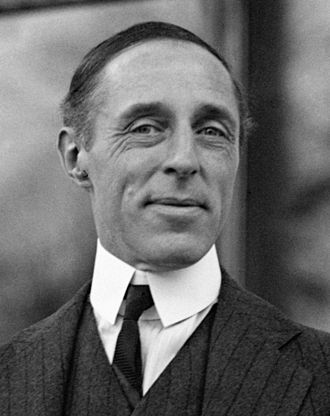
David Llewellyn Wark Griffith AKA DW
Achievements: Pioneer U.S. motion-picture director, who developed many of the basic techniques of film making.
Born: January 22, 1875; Floydsfork, Oldham County, Kentucky
Died: July 23, 1948; Hollywood, California (Aged 73)
Field & Discipline: Art; Motion Pictures; Director
Education: Local primary schools; secondary school in Louisville
Major Work:
“The Birth of a Nation” (1915)
Life & Times:
In 1895, Griffith joined an amateur acting company touring Kentucky and Indiana. Within five years he was touring nationally in various companies, playing bit parts under a variety of stage names.
While working as an actor in New York, Griffith began to submit story ideas to motion picture studios. He first sold treatments for one-reel films to [sold treatments to] Porter*, the director of the Edison Film Company, and then to the Biograph Company, both located in New York.
Griffith appeared in one film for the Edison Company, “Rescued from an Eagle's Nest,” under Porter's direction, and in several films for the Biograph Company. After they had bought a number of his synopses, in June 1908 the Biograph Company hired Griffith to direct. His first film “The Adventures of Dollie,” in 1908 and his other early films were successful enough to make Griffith the company's principal director.
In the next five years Griffith made nearly 500 films for Biograph, mostly in 12-minute one-reel format. He explored the use of three cinematic techniques important to the development of film-making: dynamic editing (joining separate shots for metaphorical reasons), parallel editing (using alternate shots of separate actions to suggest they were taking place simultaneously), and the last-minute rescue scene.
Several of these films also used on-location shooting, such as “The Musketeers of Pig Alley” (1912), one of the first films about urban crime. Griffith also made a number of
progressive films, such as “A Corner of Wheat” (1909), illustrating the plight of the American poor.
During his Biograph period, Griffith together with camera operators G.W. “Billy” Bitzer and Arthur Marvin, claimed to have invented the close-up, the long shot and parallel montage. Griffith also made effective use of the fade-out and fade-in, and the use of special masks to produce a picture in other than the standard rectangular image.
He also introduced to the screen young actors and actresses who were to become the movie stars, including Mary Pickford, Lillian and Dorothy Gish, Mack Sennett, and Lionel Barrymore.
Griffith left Biograph in 1913 to work for Reliance-Majestic, a production company owned by the Mutual Film Corporation. In 1912 Frank Woods had written a treatment for a motion picture based on Thomas Dixon's popular novel and play “The Clansman,” but it did not find production money until Griffith adapted the project in 1914. A complete script was never written for the film, but with the help of Wood and other assistants, Griffith researched the Civil War and Reconstruction periods to make his film historically and socially accurate.
At its release in Los Angeles on February 8, 1915, the film, retitled “The Birth of a Nation,” on which the future director [hired] Stroheim* worked as a stunt man, was the longest (twelve reels) and most expensive ($110,000) motion picture shot in the United States at that time.
Griffith and Billy Bitzer (who shot the film almost entirely on his own with a single camera) developed innovative ways to capture the huge battlefield scenes, using aerial shots, mobile camera, and various other techniques.
Public protests about the film prompted Griffith to defend himself in a pamphlet on the right of self-expression, entitled “The Rise and Fall of Free Speech in America” (1916) and he became a committed opponent of censorship. His next major film, “Intolerance” (1916), even longer and more ambitious than “The Birth of a Nation,” was, in part, a response to his critics.
“Intolerance” combined four separate stories: the fall of ancient Babylon to the hordes of Cyrus, the St. Bartholomew's Day Massacre of the Huguenots in 16th-century France, the Crucifixion of Jesus, and a contemporary story dealing with a wrongfully condemned man.
The film had an enormous impact on future film makers, especially directors in the Soviet Union. Most notable of these was [influenced] Eisenstein*, who studied Griffith's films, and who visited him in New York in 1930.
Most of Griffith's profits from “The Birth of a Nation” were invested (and lost) in the making of “Intolerance,” but in 1917 he signed with Adolph Zukor to make films for the Artcraft Corporation. Then, in 1919 he, [in business with] Chaplin*, [in business wit Pickford* and [in business with] Fairbanks, Sr.* formed the independent distribution company, United Artists Corporation.
Griffith directed eighteen films between 1917 and 1924, the most notable being “Hearts of the World” (1918), a hugely successful propaganda film about the First World War. This was followed by “Broken Blossoms” and Griffith's adaptation of the stage melodrama “Way Down East” (1920), which featured rescue scenes shot on an ice flow during a winter storm, that constitute some of the most daring footage in motion picture history.
Griffith was subsequently employed as a director by Paramount Pictures (1925-26) and as contract director by United Artists. In 1927 he became a director for Joseph Schenck's Art Cinema Corporation.
His first sound film, “Abraham Lincoln” (1930), with Walter Huston in the title role, was once again set during the American Civil War, but the film was considered slow and was not a success. His last film, “The Struggle” (1931), a grim study of the degeneration of an alcoholic husband, was a complete failure and was withdrawn by United Artists after a brief run.
In 1932 Griffith resigned the presidency of D.W. Griffith, Inc., the company he had founded in 1916 and the following year he finally sold his interests in United Artists.
In 1940-41 the Museum of Modern Art mounted the first retrospective of his films, and in 1945, the University of Louisville awarded him an honorary doctorate. Throughout the 1940s he continued to live in Hollywood, and he died in Los Angeles.
Extra Connections: Performer and director Charlie Chaplin called Griffith "The Teacher of Us All". Filmmakers such as Alfred Hitchcock,[35] Lev Kuleshov,[36] Jean Renoir,[37] Cecil B. DeMille,[38] King Vidor,[39] Victor Fleming,[40] Raoul Walsh,[41] Carl Theodor Dreyer,[42] Sergei Eisenstein,[43] and Stanley Kubrick have praised Griffith.
He made Lady of the Pavements (1929), a part sound film, and only two full-sound films: Abraham Lincoln (1930) and The Struggle (1931). Neither was successful, and after The Struggle, he never made another film.
In 1936, director Woody Van Dyke, who had worked as Griffith's apprentice on Intolerance, asked Griffith to help him shoot the famous earthquake sequence for San Francisco, but Griffith was not given any film credit. Starring Clark Gable, Jeanette MacDonald and Spencer Tracy, it was the top-grossing film of the year.[28]
In 1939, the producer Hal Roach hired Griffith to produce Of Mice and Men (1939) and One Million B.C. (1940). He wrote to Griffith: "I need help from the production side to select the proper writers, cast, et cetera, and to help me generally in the supervision of these pictures."[29]
Assessment: D.W. Griffith was one of the most important film directors of all time and his creative influence has been felt world-wide.
Oneliner: DW Griffith, great early movie director
Bibliography:
- American National Biography.
- Schickel, Richard, D.W. Griffith: An American Life, 1984.
Sandbox (extensive)
Father: Jacob Wark Griffith
Mother: Mary Perkins Oglesby
Siblings: 6
Spouse: 1) Linda Arvidson Johnson (m. 1906, divorced 1936); 2) Evelyn Majorie
Baldwin (m. 1936, divorced 1947)
Children: None