Dreiser T
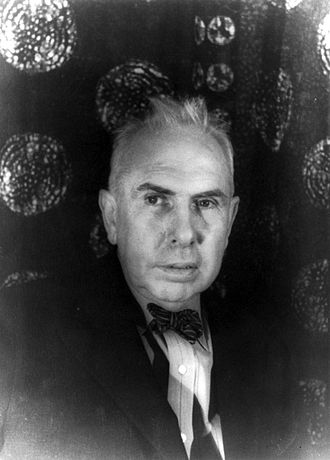
NAME: Dreiser, Theodore
ACHIEVEMENTS:
Major 20th century American novelist
NICKNAME/ALIAS:
None
DATE AND PLACE OF BIRTH:
27 August 1871, Terre Haute, IN.
DATE AND PLACE OF DEATH AND AGE AT DEATH:
28 December 1945, Hollywood, CA. Aged 74
DISCIPLINE: Writer
FIELD: Literature
LANGUAGE: English
EDUCATION:
Various German-American schools
University of Indiana for one year
MAJOR WORK:
"Sister Carrie" (1900 )
"An American Tragedy" (1925)
LIFE AND TIMES:
In 1892 Dreiser got a job as a reporter on the Chicago "Globe". He moved to a better job on the St Louis "Globe Democrat" and also worked as feature writer, drama critic and investigative reporter on newspapers in Pittsburgh and New York. His brother, Paul, who had changed his name to Dresser and become a successful song writer, got Dreiser a job at his publishers. He edited their house magazine, "Ev'ry Month", and also wrote reviews, editorials and a column in which he gave his views on the issues of the day.
From 1898 as a writer for the magazine "Success" he interviewed the achievers of his day, including the inventor Edison*, the industrialist Carnegie* and the literary editor Howells*.
In 1899, he wrote "Sister Carrie". The novel told the story of a naive girl who goes to a big city and loses her virtue. In the novel, Dreiser created the character of George Hurstwood, a member of the privileged and wealthy elite who becomes a tramp on the Bowery and after committing suicide is given a pauper's burial. It was written in a naturalist style and the way in which Dreiser told the girl's story offended many people. Dreiser revealed the hypocrisy at the heart of the American value system. At the end of the novel the fallen girl is alone and lonely but Dreiser presents this as a fact of life in a big American city.
In 1900, when “Carrie” was published by Doubleday, Page and Company, the president of the company returned from holiday, read the novel and disapproved of it. The company fulfilled their contract by printing the book but made no effort to promote it and fewer than 500 copies were sold. The book was criticized by some as being obscene. Dreiser sank into despair and contemplated suicide and was unable to work for three years, after which he went back to journalism.
By 1910 he was the editor of three women's magazines and writing short stories, plays, poems and travel books as well as novels. He had begun "Jennie Gerhardt" before the publication of "Sister Carrie" but had abandoned it when he was ill. His friend, the writer and critic Mencken* encouraged him to go back to the novel and in 1911 "Jennie Gerhardt" was published. Mencken promoted Dreiser's work in the magazine he edited but the new novel was met with the same criticism as "Sister Carrie."
Dreiser moved into Greenwich village, where an artistic community was establishing itself. He allied himself with radicalism in politics and literature, and supported radical causes like the birth control movement. He contributed to leftwing political journals and to literary and arts magazines.
In 1912 and 1914 he produced two minor novels, "The Financier" and "The Titan" , the first of which had to be published by an English firm after his American publishers thought the leading character's promiscuity made it too risky a venture. "The Genius" (1915) is an autobiographical novel in which Dreiser compares the search for sexual satisfaction with the desire for financial success.
In 1919 he met an actress called Helen Richardson, who became his constant companion, and settled for a time with her in Hollywood before returning to New York to work on his most successful novel: "An American Tragedy". After nearly four years work, he finished the book and it was published in 1925. The novel was a critical success and a bestseller. Although it was banned in Boston, it was generally acclaimed as the Great American Novel.
The film rights were sold and the first film appeared in 1931. There was a later remake in 1951 entitled "A Place in the Sun". Dreiser was making real money for the first time in his life and he took an apartment in a fashionable district and built himself a country home at Mount Kisco, New York.
In 1927 he was invited to Russia where the tenth anniversary of the Bolshevik Revolution was being celebrated. During the 30’s Dreiser took an active role in supporting leftwing causes. He became chairman of the National Committee for the Defense of Political Prisoners and when he tried to investigate reports of abuse against striking miners he was indicted for criminal syndicalism.
He wrote "Tragic America", a non-fiction book in which he attacked large corporations, organised religion, the American education system and the wealthy unemployed In 1933 he became involved in a controversy about anti-Semitism. He spoke at an international peace conference in Paris in 1938. The last six years of his life were spent in California. Controversial to the last, Dreiser joined the Communist party in 1945.
ASSESSMENT: Dreiser is regarded as one of the most important naturalist writers in American literature whose novel, "Sister Carrie" has been called the first American novel of urban life.
EXTRA CONNECTIONS: Film director Eisenstein* suggested an adaptation of his “American Tragedy.”
ONELINER: Theodore Dreiser, author of the Great American Novel
BIBLIOGRAPHY:
Swanberg, W. A., Dreiser, Charles Scribner's Sons, New York, 1965.
PARENTS:
Father: Johann Paul Dreiser
Mother: Sarah Schanab
SIBLINGS: 9
SPOUSE:
- Sara White
- Helen Richardson
CHILDREN: None