Howells WD
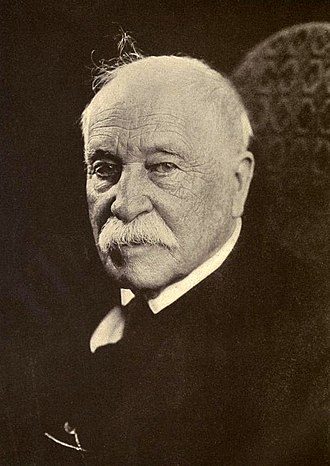
Name: William Dean Howells
Achievements: Major American literary figure
Born: March 1, 1837; Martins Ferry, Ohio
Died: May 11, 1920; New York, NY (Aged 83)
Field & Discipline: Literature; Editor; Critic; Novelist
Language: English
Father: William Cooper Howells
Mother: Mary Dean
Siblings: Samuel; John; Joseph; Henry; Annie; Aurelia; Victoria
Spouse: Elinor Mead
Children: John Mead; Winifred; Mildred
Education: Unknown - largely self-taught
Major Work:
“A Modern Instance” (1882).
“The Rise of Silas Lapham” (1885).
“A Hazard of New Fortunes” (1890).
“A Shadow of a Dream” (1890).
“The Quality of Mercy” (1892).
“Literary Friends and Acquaintance” (1900).
Life & Times:
Howells began his professional career as a legal reporter working on a Cincinnati paper and then, in 1856, moved on to Columbus, where he took a job with the Republican “Ohio State Journal.” He was by this time writing verse, influenced by the works of Cervantes, Pope and Heine, as well as criticisms and fiction, and soon his work was appearing in the country’s leading literary magazines, including “Atlantic Monthly.”
In 1860, his campaign biography of [wrote biography of] Lincoln* sold so well that he could afford to take a trip to New England. In Cambridge, Massachusetts, he met James Russell Lowell, the editor of “Atlantic Monthly” and then he went to on to Concord where, through introductions from Lowell, he met [met] Nathaniel Hawthorne*, [met] Emerson* and [met] Henry Thoreau*. Howells made a brief visit to New York, where he was intrigued by the poet [met] Whitman*.
When Lincoln became president, he gave Howells the job of US Consul in Venice. In 1862, he travelled to Italy via England, which he disliked intensely. During his four years in Venice, he found that the job of Consul was not time-consuming, and spent most of his time writing and studying in his palace on the Grand Canal.
He had a bias toward realism in his writing, strengthened when he came across the works of [influenced by] Goldoni*, the eighteenth century playwright who wrote about everyday life and social manners.
When he returned to New York in 1866 Howells began working on the “Nation” and at the same time, very quickly wrote his memoirs of Italy: “Venetian Life,” published within months of his return. In the same year, he was given the job of assistant editor of “Atlantic Monthly.”
Howells moved with his family to Cambridge, Massachusetts, where his circle of close friends included the novelist [a pal of] Henry James*, the psychiatrist [a pal of] William James*, and the poet [a pal of] Longfellow*.
He was given the job of finding new writers for the “Atlantic” and was put in charge of book reviews. Among the first of the new writers recognised by Howells were Henry James and [a fan of] Twain*, whom he greatly admired when they met in 1869.
In the series of book reviews, many of which he wrote himself, he encouraged debate not just on literary and aesthetic subjects, but philosophical and scientific topics as well, such as [promoted theory of] Charles Darwin*’s theories on natural selection.
In 1871 he wrote “Suburban Sketches,” an observation of contemporary mores, followed a year later by two novels: “Their Wedding Journey” and “A Chance Acquaintance,” both about middle-class Americans.
Howells’ writing standards improved as he learned from some of the foreign authors he reviewed, such as [influenced by] Turgenev*. He began to produce new novels at the rate of one a year and, in 1881, he resigned from the journal in order to write more.
In his novels of this period -- “A Modern Instance” (1882), “The Rise of Silas Lapham” (1885) and “Indian Summer” (1886) -- Howells wrote in a more serious manner about social and moral issues. This was partly due to his discovery in 1885 of the Russian novelist, [a fan of] Tolstoy*, of whom he became a firm admirer.
In 1885, Howells signed a contract to write one novel a year for serialization in “Harper’s Monthly.” He was also given a monthly column: “The Editor's Study,” which he wrote from 1886 to 1892. Through the column, he gained a reputation as a
pro-modernist and a champion of international literary realism.
Some of the foreign writers he introduced to the American public were the French realist [promoted] Zola*, the Russians [promoted] Dostoyevsky* and Ivan Turgenev, the Swedish playwright [promoted] Ibsen* and the [promoted] English writers Thomas Hardy* and [promoted] Shaw*.
Among contemporary American writers, he admired Henry James, Stephen Crane and the poet Emily Dickinson.
His supportive attitude towards the common man became clear when he published his pro-labor “Annie Kilburn” in 1888 and, two years later, “A Hazard of New Fortunes,” in which he wrote about poverty, labor, capitalism and socialism.
In 1891, Howells moved to New York to edit “Cosmopolitan” magazine, but six months later, disagreeing with the values of its millionaire owner, resigned. He then expanded his existing job with “Harper’s,” which later included writing the magazine's famous column: “Easy Chair” from 1900 to 1920.
Between 1890 and 1900, Howells wrote thirteen more novels, as well as poetry, criticism, memoirs and essays, and he recruited new novelists such as Edith Wharton and Stephen Crane.
What is considered to be his best criticism and poetry was written during the first two decades of the twentieth century, as he actively supported the pre-modernist movement and became increasingly anti-imperialist and pro-feminist. Among his novels of this period, the most significant are “The Kentons” (1902), “The Son of Royal Langbrith” (1904) and “The Leatherwood God” (1916).
Howells was a Christian socialist whose ideals were greatly influenced by Russian writer Leo Tolstoy.[21] He joined a Christian socialist group in Boston between 1889 and 1891[22] and attended several churches, including the First Spiritual Temple and the Church of the Carpenter, the latter being affiliated with the Episcopal Church and the Society of Christian Socialists.[23] These influences led him to write on issues of social justice from a moral and egalitarian point of view, being critic of the social effects of industrial capitalism.[24][25][26] He was, however, not a Marxist.[27]
Extra Connections: Knew [knew] Harte*.
Met [met] Forbes-Robertson*
Liked work by [liked work by] Bellamy*
He visited [visited] Chicago Expo 1893*
He admired the writing of SW [liked the writing of] Mitchell*
He was particularly outraged by the trials resulting from the Haymarket Riot, which led him to portray a similar riot in A Hazard of New Fortunes and to write publicly to protest the trials of the men allegedly involved in the Haymarket affair. In his public writing and in his novels, he drew attention to pressing social issues of the time. He joined the Anti-Imperialist League in 1898, in opposition to the U.S. annexation of the Philippines.
In 1860, he visited Boston, Massachusetts and met with writers James T. Fields, James Russell Lowell, Oliver Wendell Holmes, Sr., Nathaniel Hawthorne, Henry David Thoreau, and Ralph Waldo Emerson. He became a personal friend to many of them, including Henry Adams, William James, Henry James, and Oliver Wendell Holmes, Jr.[6]
In 1860 Howells wrote Abraham Lincoln's campaign biography Life of Abraham Lincoln and subsequently gained a consulship in Venice. He married Elinor Mead on Christmas Eve 1862 at the American embassy in Paris. She was a sister of sculptor Larkin Goldsmith Mead and architect William Rutherford Mead of the firm McKim, Mead, and White. McKim, Mead & White was an American architectural firm that came to define architectural practice, urbanism, and the ideals of the American Renaissance in fin de siècle New York. The firm's founding partners Charles Follen McKim (1847–1909), William Rutherford Mead (1846–1928) and Stanford White (1853–1906) were giants in the architecture of their time, and remain important as innovators and leaders in the development of modern architecture worldwide.
In 1906, White was shot and killed at the Madison Square Theatre by Harry Kendall Thaw, in front of a large audience during a musical theatre performance. Thaw was a wealthy but mentally unstable heir of a coal and railroad fortune who had become obsessed by White's alleged drugging and rape of, and subsequent relationship with, the woman who was to become Thaw's wife, Evelyn Nesbit, which had started when she was about 16, four years before her 1905 marriage to Thaw. By the time of the killing, Nesbit was a famous fashion model who was performing as an actress in the show. With the elements of a sex scandal among the wealthy and the public killing, the resulting sensational trial of Thaw was dubbed "The Trial of the Century" by contemporary reporters.[1][2] Thaw was ultimately found not guilty by reason of insanity.[3]
Assessment: Howells was a major literary figure who played an important role in introducing Americans to foreign literature and the pro-modernist movement. He also took a large part in setting up the National Association for the Advancement of Colored People.
Oneliner: WD Howells, influential 19th century literary figure
Bibliography:
- Brooks, Van Wyck, Howells, His Life and World, J M Dent & Sons Ltd., London, 1959.
- Lynn K S, William Dean Howells: an American Life, 1971.
- American National Biography, Oxford University Press, New York, 1999.
William Dean Howells - Wikipedia