Virtual Reality
Virtual reality (VR) is a simulated experience that can be similar to or completely different from the real world. Applications of virtual reality can include entertainment (i.e. video games) and educational purposes (i.e. medical or military training). Other, distinct types of VR style technology include augmented reality and mixed reality.
Currently standard virtual reality systems use either virtual reality headsets or multi-projected environments to generate realistic images, sounds and other sensations that simulate a user's physical presence in a virtual environment. A person using virtual reality equipment is able to look around the artificial world, move around in it, and interact with virtual features or items. The effect is commonly created by VR headsets consisting of a head-mounted display with a small screen in front of the eyes, but can also be created through specially designed rooms with multiple large screens. Virtual reality typically incorporates auditory and video feedback, but may also allow other types of sensory and force feedback through haptic technology.
Contents
o 6.2Children in virtual reality
o 6.4Conceptual and philosophical concerns
Etymology
"Virtual" has had the meaning of "being something in essence or effect, though not actually or in fact" since the mid-1400s.[1]^(https://en.wikipedia.org/wiki/Virtual_reality#cite_note-etymonline.com-1) The term "virtual" has been used in the computer sense of "not physically existing but made to appear by software" since 1959.[1]^(https://en.wikipedia.org/wiki/Virtual_reality#cite_note-etymonline.com-1)
In 1938, French avant-garde playwright Antonin Artaud described the illusory nature of characters and objects in the theatre as "la réalité virtuelle" in a collection of essays, Le Théâtre et son double. The English translation of this book, published in 1958 as *The Theater and its Double*,[2]^(https://en.wikipedia.org/wiki/Virtual_reality#cite_note-Artaud_1958-2) is the earliest published use of the term "virtual reality". The term "artificial reality", coined by Myron Krueger, has been in use since the 1970s. The term "virtual reality" was first used in a science fiction context in The Judas Mandala, a 1982 novel by Damien Broderick.
Forms and methods
Further information:Immersion (virtual reality)and*Reality–virtuality continuum
One method by which virtual reality can be realized is simulation-based virtual reality. Driving simulators, for example, give the driver on board the impression of actually driving an actual vehicle by predicting vehicular motion caused by driver input and feeding back corresponding visual, motion and audio cues to the driver.
With avatar image-based virtual reality, people can join the virtual environment in the form of real video as well as an avatar. One can participate in the 3D distributed virtual environment as form of either a conventional avatar or a real video. A user can select own type of participation based on the system capability.
In projector-based virtual reality, modeling of the real environment plays a vital role in various virtual reality applications, such as robot navigation, construction modeling, and airplane simulation. Image-based virtual reality systems have been gaining popularity in computer graphics and computer vision communities. In generating realistic models, it is essential to accurately register acquired 3D data; usually, a camera is used for modeling small objects at a short distance.
Desktop-based virtual reality involves displaying a 3D virtual world on a regular desktop display without use of any specialized positional tracking equipment. Many modern first-person video games can be used as an example, using various triggers, responsive characters, and other such interactive devices to make the user feel as though they are in a virtual world. A common criticism of this form of immersion is that there is no sense of peripheral vision, limiting the user's ability to know what is happening around them.

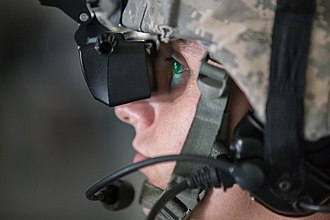
A Missouri National Guardsman looks into a VR training head-mounted display at Fort Leonard Wood in 2015
A head-mounted display (HMD) more fully immerses the user in a virtual world. A virtual reality headset typically includes two small high resolution OLED or LCD monitors which provide separate images for each eye for stereoscopic graphics rendering a 3D virtual world, a binaural audio system, positional and rotational real-time head tracking for six degrees of movement. Options include motion controls with haptic feedback for physically interacting within the virtual world in an intuitive way with little to no abstraction and an omnidirectional treadmill for more freedom of physical movement allowing the user to perform locomotive motion in any direction.
Augmented reality (AR) is a type of virtual reality technology that blends what the user sees in their real surroundings with digital content generated by computer software. The additional software-generated images with the virtual scene typically enhance how the real surroundings look in some way. AR systems layer virtual information over a camera live feed into a headset or smartglasses or through a mobile device giving the user the ability to view three-dimensional images.
Mixed reality (MR) is the merging of the real world and virtual worlds to produce new environments and visualizations where physical and digital objects co-exist and interact in real time.
A cyberspace is sometimes defined as a networked virtual reality.[3]^(https://en.wikipedia.org/wiki/Virtual_reality#cite_note-3)
Simulated reality is a hypothetical virtual reality as truly immersive as the actual reality, enabling an advanced lifelike experience or even virtual eternity.
History

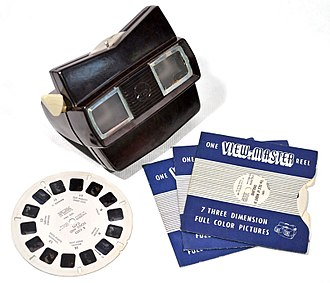
View-Master, a stereoscopic visual simulator, was introduced in 1939
The exact origins of virtual reality are disputed, partly because of how difficult it has been to formulate a definition for the concept of an alternative existence.[4]^(https://en.wikipedia.org/wiki/Virtual_reality#cite_note-4) The development of perspective in Renaissance Europe created convincing depictions of spaces that did not exist, in what has been referred to as the "multiplying of artificial worlds".[5]^(https://en.wikipedia.org/wiki/Virtual_reality#cite_note-Baltru%C5%A1aitis_1977-5) Other elements of virtual reality appeared as early as the 1860s. Antonin Artaud took the view that illusion was not distinct from reality, advocating that spectators at a play should suspend disbelief and regard the drama on stage as reality.[2]^(https://en.wikipedia.org/wiki/Virtual_reality#cite_note-Artaud_1958-2) The first references to the more modern concept of virtual reality came from science fiction.
20th century
Morton Heilig wrote in the 1950s of an "Experience Theatre" that could encompass all the senses in an effective manner, thus drawing the viewer into the onscreen activity. He built a prototype of his vision dubbed the Sensorama in 1962, along with five short films to be displayed in it while engaging multiple senses (sight, sound, smell, and touch). Predating digital computing, the Sensorama was a mechanical device. Heilig also developed what he referred to as the "Telesphere Mask" (patented in 1960). The patent application described the device as "a telescopic television apparatus for individual use...The spectator is given a complete sensation of reality, i.e. moving three dimensional images which may be in colour, with 100% peripheral vision, binaural sound, scents and air breezes."[6]^(https://en.wikipedia.org/wiki/Virtual_reality#cite_note-6)
In 1968, Ivan Sutherland, with the help of his students including Bob Sproull, created what was widely considered to be the first head-mounted display system for use in immersive simulation applications. It was primitive both in terms of user interface and visual realism, and the HMD to be worn by the user was so heavy that it had to be suspended from the ceiling. The graphics comprising the virtual environment were simple wire-frame model rooms. The formidable appearance of the device inspired its name, The Sword of Damocles.
1970–1990
The virtual reality industry mainly provided VR devices for medical, flight simulation, automobile industry design, and military training purposes from 1970 to 1990.[7]^(https://en.wikipedia.org/wiki/Virtual_reality#cite_note-7)
David Em became the first artist to produce navigable virtual worlds at NASA's Jet Propulsion Laboratory (JPL) from 1977 to 1984.[8]^(https://en.wikipedia.org/wiki/Virtual_reality#cite_note-Creative_Computing_March_1982-8) The Aspen Movie Map, a crude virtual tour in which users could wander the streets of Aspen in one of the three modes (summer, winter, and polygons), was created at the MIT in 1978.

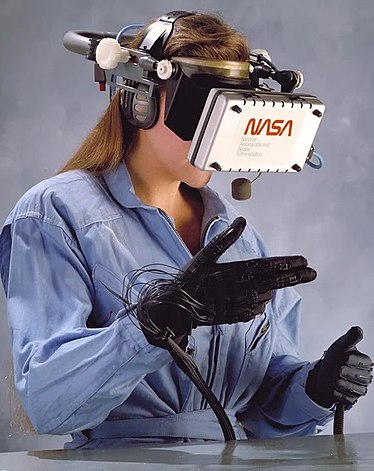
NASA Ames's 1985 VIEW headset
In 1979, Eric Howlett developed the Large Expanse, Extra Perspective (LEEP) optical system. The combined system created a stereoscopic image with a field of view wide enough to create a convincing sense of space. The users of the system have been impressed by the sensation of depth (field of view) in the scene and the corresponding realism. The original LEEP system was redesigned for NASA's Ames Research Center in 1985 for their first virtual reality installation, the VIEW (Virtual Interactive Environment Workstation) by Scott Fisher. The LEEP system provides the basis for most of the modern virtual reality headsets.[9]^(https://en.wikipedia.org/wiki/Virtual_reality#cite_note-9)

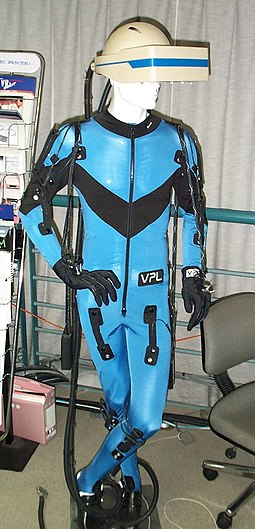
A VPL Research DataSuit, a full-body outfit with sensors for measuring the movement of arms, legs, and trunk. Developed circa 1989. Displayed at the Nissho Iwai showroom in Tokyo
By the 1980s, the term "virtual reality" was popularized by Jaron Lanier, one of the modern pioneers of the field. Lanier had founded the company VPL Research in 1985. VPL Research has developed several VR devices like the DataGlove, the EyePhone, and the AudioSphere. VPL licensed the DataGlove technology to Mattel, which used it to make the Power Glove, an early affordable VR device.
Atari founded a research lab for virtual reality in 1982, but the lab was closed after two years due to the Atari Shock (North American video game crash of 1983). However, its hired employees, such as Tom Zimmerman, Scott Fisher, Jaron Lanier, Michael Naimark, and Brenda Laurel, kept their research and development on VR-related technologies.
In 1988, the Cyberspace Project at Autodesk was the first to implement VR on a low-cost personal computer[10]^(https://en.wikipedia.org/wiki/Virtual_reality#cite_note-10) [11]^(https://en.wikipedia.org/wiki/Virtual_reality#cite_note-11) . The project leader Eric Gullichsen left in 1990 to found Sense8 Corporation and develop the WorldToolKit virtual reality SDK,[12]^(https://en.wikipedia.org/wiki/Virtual_reality#cite_note-12) which offered the first real time graphics with Texture mapping on a PC, and was widely used throughout industry and academia.[13]^(https://en.wikipedia.org/wiki/Virtual_reality#cite_note-13)[14]^(https://en.wikipedia.org/wiki/Virtual_reality#cite_note-14)
1990–2000
The 1990s saw the first widespread commercial releases of consumer headsets. In 1992, for instance, *Computer Gaming World* predicted "affordable VR by 1994".[15]^(https://en.wikipedia.org/wiki/Virtual_reality#cite_note-engler1992-15)
In 1991, Sega announced the Sega VR headset for arcade games and the Mega Drive console. It used LCD screens in the visor, stereo headphones, and inertial sensors that allowed the system to track and react to the movements of the user's head.[16]^(https://en.wikipedia.org/wiki/Virtual_reality#cite_note-Horowitz-16) In the same year, Virtuality launched and went on to become the first mass-produced, networked, multiplayer VR entertainment system that was released in many countries, including a dedicated VR arcade at Embarcadero Center. Costing up to $73,000 per multi-pod Virtuality system, they featured headsets and exoskeleton gloves that gave one of the first "immersive" VR experiences.[17]^(https://en.wikipedia.org/wiki/Virtual_reality#cite_note-17)

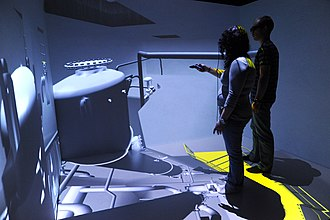
A CAVE system at IDL's Center for Advanced Energy Studies in 2010
That same year, Carolina Cruz-Neira, Daniel J. Sandin and Thomas A. DeFanti from the Electronic Visualization Laboratory created the first cubic immersive room, the Cave automatic virtual environment (CAVE). Developed as Cruz-Neira's PhD thesis, it involved a multi-projected environment, similar to the holodeck, allowing people to see their own bodies in relation to others in the room.[18]^(https://en.wikipedia.org/wiki/Virtual_reality#cite_note-18)[19]^(https://en.wikipedia.org/wiki/Virtual_reality#cite_note-Arkansas_Online_Niera-19) Antonio Medina, a MIT graduate and NASA scientist, designed a virtual reality system to "drive" Mars rovers from Earth in apparent real time despite the substantial delay of Mars-Earth-Mars signals.[20]^(https://en.wikipedia.org/wiki/Virtual_reality#cite_note-20)
In 1992, Nicole Stenger created Angels, the first real-time interactive immersive movie where the interaction was facilitated with a dataglove and high-resolution goggles. That same year, Louis Rosenberg created the virtual fixtures system at the U.S. Air Force's Armstrong Labs using a full upper-body exoskeleton, enabling a physically realistic mixed reality in 3D. The system enabled the overlay of physically real 3D virtual objects registered with a user's direct view of the real world, producing the first true augmented reality experience enabling sight, sound, and touch.[21]^(https://en.wikipedia.org/wiki/Virtual_reality#cite_note-Rosenberg_1992-21)[22]^(https://en.wikipedia.org/wiki/Virtual_reality#cite_note-22)
By 1994, Sega released the Sega VR-1 motion simulator arcade attraction,[23]^(https://en.wikipedia.org/wiki/Virtual_reality#cite_note-23)[24]^(https://en.wikipedia.org/wiki/Virtual_reality#cite_note-24) in SegaWorld amusement arcades. It was able to track head movement and featured 3D polygon graphics in stereoscopic 3D, powered by the Sega Model 1 arcade system board.[25]^(https://en.wikipedia.org/wiki/Virtual_reality#cite_note-25) Apple released QuickTime VR, which, despite using the term "VR", was unable to represent virtual reality, and instead displayed 360 photographic panoramas.
Nintendo's Virtual Boy console was released in 1995.[26]^(https://en.wikipedia.org/wiki/Virtual_reality#cite_note-26) A group in Seattle created public demonstrations of a "CAVE-like" 270 degree immersive projection room called the Virtual Environment Theater, produced by entrepreneurs Chet Dagit and Bob Jacobson.[27]^(https://en.wikipedia.org/wiki/Virtual_reality#cite_note-27) Forte released the VFX1, a PC-powered virtual reality headset that same year.
In 1999, entrepreneur Philip Rosedale formed Linden Lab with an initial focus on the development of VR hardware. In its earliest form, the company struggled to produce a commercial version of "The Rig", which was realized in prototype form as a clunky steel contraption with several computer monitors that users could wear on their shoulders. The concept was later adapted into the personal computer-based, 3D virtual world program *Second Life*.[28]^(https://en.wikipedia.org/wiki/Virtual_reality#cite_note-28)
21st century
The 2000s were a period of relative public and investment indifference to commercially available VR technologies.
In 2001, SAS Cube (SAS3) became the first PC-based cubic room, developed by Z-A Production (Maurice Benayoun, David Nahon), Barco, and Clarté. It was installed in Laval, France. The SAS library gave birth to Virtools VRPack. In 2007, Google introduced Street View, a service that shows panoramic views of an increasing number of worldwide positions such as roads, indoor buildings and rural areas. It also features a stereoscopic 3D mode, introduced in 2010.[29]^(https://en.wikipedia.org/wiki/Virtual_reality#cite_note-29)
2010–present
In 2010, Palmer Luckey designed the first prototype of the Oculus Rift. This prototype, built on a shell of another virtual reality headset, was only capable of rotational tracking. However, it boasted a 90-degree field of vision that was previously unseen in the consumer market at the time. Distortion issues arising from the lens used to create the field of vision were corrected for by software written by John Carmack for a version of *Doom 3*. This initial design would later serve as a basis from which the later designs came.[30]^(https://en.wikipedia.org/wiki/Virtual_reality#cite_note-30) In 2012, the Rift is presented for the first time at the E3 video game trade show by Carmack.[31]^(https://en.wikipedia.org/wiki/Virtual_reality#cite_note-Gamereactor_YouTube_2012-31)[32]^(https://en.wikipedia.org/wiki/Virtual_reality#cite_note-BI_FB_Oculus_2018-32) In 2014, Facebook purchased Oculus VR for what at the time was stated as $2 billion[33]^(https://en.wikipedia.org/wiki/Virtual_reality#cite_note-33) but later revealed that the more accurate figure was $3 billion.[32]^(https://en.wikipedia.org/wiki/Virtual_reality#cite_note-BI_FB_Oculus_2018-32) This purchase occurred after the first development kits ordered through Oculus' 2012 Kickstarter had shipped in 2013 but before the shipping of their second development kits in 2014.[34]^(https://en.wikipedia.org/wiki/Virtual_reality#cite_note-Wired_Oculus_Mar2014-34) ZeniMax, Carmack's former employer, sued Oculus and Facebook for taking company secrets to Facebook;[32]^(https://en.wikipedia.org/wiki/Virtual_reality#cite_note-BI_FB_Oculus_2018-32) the verdict was in favour of ZeniMax, settled out of court later.[35]^(https://en.wikipedia.org/wiki/Virtual_reality#cite_note-Variety_Zenimax_FB_2018-35)
In 2013, Valve discovered and freely shared the breakthrough of low-persistence displays which make lag-free and smear-free display of VR content possible.[36]^(https://en.wikipedia.org/wiki/Virtual_reality#cite_note-36) This was adopted by Oculus and was used in all their future headsets. In early 2014, Valve showed off their SteamSight prototype, the precursor to both consumer headsets released in 2016. It shared major features with the consumer headsets including separate 1K displays per eye, low persistence, positional tracking over a large area, and fresnel lenses.[37]^(https://en.wikipedia.org/wiki/Virtual_reality#cite_note-37)[38]^(https://en.wikipedia.org/wiki/Virtual_reality#cite_note-38) HTC and Valve announced the virtual reality headset HTC Vive and controllers in 2015. The set included tracking technology called Lighthouse, which utilized wall-mounted "base stations" for positional tracking using infrared light.[39]^(https://en.wikipedia.org/wiki/Virtual_reality#cite_note-verge-gdcsteamvr-39)[40]^(https://en.wikipedia.org/wiki/Virtual_reality#cite_note-verge-valvevr-40)[41]^(https://en.wikipedia.org/wiki/Virtual_reality#cite_note-41)
The Project Morpheus (PlayStation VR) headset worn at gamescom 2015
In 2014, Sony announced Project Morpheus (its code name for the PlayStation VR), a virtual reality headset for the PlayStation 4 video game console.[42]^(https://en.wikipedia.org/wiki/Virtual_reality#cite_note-42) In 2015, Google announced Cardboard, a do-it-yourself stereoscopic viewer: the user places their smartphone in the cardboard holder, which they wear on their head. Michael Naimark was appointed Google's first-ever 'resident artist' in their new VR division. The Kickstarter campaign for Gloveone, a pair of gloves providing motion tracking and haptic feedback, was successfully funded, with over $150,000 in contributions.[43]^(https://en.wikipedia.org/wiki/Virtual_reality#cite_note-43) Also in 2015, Razer unveiled its open source project OSVR.
 (https://en.wikipedia.org/wiki/File:Samsung_Gear_VR_%2815060788240%29.jpg)
Smartphone-based budget headset Samsung Gear VR in dismantled state
By 2016, there were at least 230 companies developing VR-related products. Amazon, Apple, Facebook, Google, Microsoft, Sony and Samsung all had dedicated AR and VR groups. Dynamic binaural audio was common to most headsets released that year. However, haptic interfaces were not well developed, and most hardware packages incorporated button-operated handsets for touch-based interactivity. Visually, displays were still of a low-enough resolution and frame rate that images were still identifiable as virtual.[44]^(https://en.wikipedia.org/wiki/Virtual_reality#cite_note-Wired_Magic_Leap_Apr2016-44)
In 2016, HTC shipped its first units of the HTC Vive SteamVR headset.[45]^(https://en.wikipedia.org/wiki/Virtual_reality#cite_note-45) This marked the first major commercial release of sensor-based tracking, allowing for free movement of users within a defined space.[46]^(https://en.wikipedia.org/wiki/Virtual_reality#cite_note-Wareable_Vive_Aug2016-46) A patent filed by Sony in 2017 showed they were developing a similar location tracking technology to the Vive for PlayStation VR, with the potential for the development of a wireless headset.[47]^(https://en.wikipedia.org/wiki/Virtual_reality#cite_note-DT_SonyVR_Feb2017-47) The Oculus Rift S was released on 20 March 2019.
Virtual Reality is a fast-growing industry, it was estimated that over 200 million headsets will have been sold by end of 2020, with the market value for both VR hardware and software reaching well over $20 billion by then.[48]^(https://en.wikipedia.org/wiki/Virtual_reality#cite_note-48)
Technology
See also:*Immersive technology*
Software
The Virtual Reality Modelling Language (VRML), first introduced in 1994, was intended for the development of "virtual worlds" without dependency on headsets.[49]^(https://en.wikipedia.org/wiki/Virtual_reality#cite_note-W3_VRML_archive-49) The Web3D consortium was subsequently founded in 1997 for the development of industry standards for web-based 3D graphics. The consortium subsequently developed X3D from the VRML framework as an archival, open-source standard for web-based distribution of VR content.[50]^(https://en.wikipedia.org/wiki/Virtual_reality#cite_note-W3D_Brutzman_2016-50) WebVR is an experimental JavaScript application programming interface (API) that provides support for various virtual reality devices, such as the HTC Vive, Oculus Rift, Google Cardboard or OSVR, in a web browser.[51]^(https://en.wikipedia.org/wiki/Virtual_reality#cite_note-51)
Hardware
Paramount for the sensation of immersion into virtual reality are a high frame rate (at least 95 fps), as well as a low latency
Modern virtual reality headset displays are based on technology developed for smartphones including: gyroscopes and motion sensors for tracking head, body, and hand positions; small HD screens for stereoscopic displays; and small, lightweight and fast computer processors. These components led to relative affordability for independent VR developers, and lead to the 2012 Oculus Rift Kickstarter offering the first independently developed VR headset.[44]^(https://en.wikipedia.org/wiki/Virtual_reality#cite_note-Wired_Magic_Leap_Apr2016-44)
Independent production of VR images and video has increased alongside the development of affordable omnidirectional cameras, also known as 360-degree cameras or VR cameras, that have the ability to record 360 interactive photography, although at relatively low resolutions or in highly compressed formats for online streaming of 360 video.[52]^(https://en.wikipedia.org/wiki/Virtual_reality#cite_note-CNET_May_2016-52) In contrast, photogrammetry is increasingly used to combine several high-resolution photographs for the creation of detailed 3D objects and environments in VR applications.[53]^(https://en.wikipedia.org/wiki/Virtual_reality#cite_note-RE7_80.lv-53)[54]^(https://en.wikipedia.org/wiki/Virtual_reality#cite_note-otherboard_March_2016-54)
To create a feeling of immersion, special output devices are needed to display virtual worlds. Well-known formats include head-mounted displays or the CAVE. In order to convey a spatial impression, two images are generated and displayed from different perspectives (stereo projection). There are different technologies available to bring the respective image to the right eye. A distinction is made between active (e.g. shutter glasses) and passive technologies (e.g. polarizing filters or Infitec).[*^citation ^needed*(https://en.wikipedia.org/wiki/Wikipedia:Citation_needed "Wikipedia:Citation needed")]
Special input devices are required for interaction with the virtual world. These include the 3D mouse, the wired glove, motion controllers, and optical tracking sensors. Controllers typically use optical tracking systems (primarily infrared cameras) for location and navigation, so that the user can move freely without wiring. Some input devices provide the user with force feedback to the hands or other parts of the body, so that the human being can orientate himself in the three-dimensional world through haptics and sensor technology as a further sensory sensation and carry out realistic simulations. This allows for the viewer to have a sense of direction in the artificial landscape. Additional haptic feedback can be obtained from omnidirectional treadmills (with which walking in virtual space is controlled by real walking movements) and vibration gloves and suits.
Virtual reality cameras can be used to create VR photography using 360-degree panorama videos. 360-degree camera shots can be mixed with virtual elements to merge reality and fiction through special effects.[*^citation ^needed*(https://en.wikipedia.org/wiki/Wikipedia:Citation_needed "Wikipedia:Citation needed")] VR cameras are available in various formats, with varying numbers of lenses installed in the camera.
Applications
Main article:*Applications of virtual reality*
Apollo 11 astronaut Buzz Aldrin previewing the Destination: Mars VR experience at the Kennedy Space Center Visitor Complex in 2016
Virtual reality is most commonly used in entertainment applications such as video games and 3D cinema. Consumer virtual reality headsets were first released by video game companies in the early-mid 1990s. Beginning in the 2010s, next-generation commercial tethered headsets were released by Oculus (Rift), HTC (Vive) and Sony (PlayStation VR), setting off a new wave of application development.[55]^(https://en.wikipedia.org/wiki/Virtual_reality#cite_note-55) 3D cinema has been used for sporting events, pornography, fine art, music videos and short films. Since 2015, roller coasters and theme parks have incorporated virtual reality to match visual effects with haptic feedback.[44]^(https://en.wikipedia.org/wiki/Virtual_reality#cite_note-Wired_Magic_Leap_Apr2016-44)
In social sciences and psychology, virtual reality offers a cost-effective tool to study and replicate interactions in a controlled environment.[56]^(https://en.wikipedia.org/wiki/Virtual_reality#cite_note-:3-56) It can be used as a form of therapeutic intervention. For instance, there is the case of the virtual reality exposure therapy (VRET), a form of exposure therapy for treating anxiety disorders such as post traumatic stress disorder (PTSD) and phobias.[57]^(https://en.wikipedia.org/wiki/Virtual_reality#cite_note-57)[58]^(https://en.wikipedia.org/wiki/Virtual_reality#cite_note-58)[59]^(https://en.wikipedia.org/wiki/Virtual_reality#cite_note-59)
Virtual reality programs are being used in the rehabilitation processes with elderly individuals that have been diagnosed with Alzheimer's disease. This gives these elderly patients the opportunity to simulate real experiences that they would not otherwise be able to experience due to their current state. 17 recent studies with randomized controlled trials have shown that virtual reality applications are effective in treating cognitive deficits with neurological diagnoses.[60]^(https://en.wikipedia.org/wiki/Virtual_reality#cite_note-60) Loss of mobility in elderly patients can lead to a sense of loneliness and depression. Virtual reality is able to assist in making aging in place a lifeline to an outside world that they cannot easily navigate. Virtual reality allows exposure therapy to take place in a safe environment.
In medicine, simulated VR surgical environments were first developed in the 1990s.[61]^(https://en.wikipedia.org/wiki/Virtual_reality#cite_note-61)[62]^(https://en.wikipedia.org/wiki/Virtual_reality#cite_note-62)[63]^(https://en.wikipedia.org/wiki/Virtual_reality#cite_note-63) Under the supervision of experts, VR can provide effective and repeatable training at a low cost, allowing trainees to recognize and amend errors as they occur.[64]^(https://en.wikipedia.org/wiki/Virtual_reality#cite_note-64) Virtual reality has been used in physical rehabilitation since the 2000s. Despite numerous studies conducted, good quality evidence of its efficacy compared to other rehabilitation methods without sophisticated and expensive equipment is lacking for the treatment of Parkinson's disease.[65]^(https://en.wikipedia.org/wiki/Virtual_reality#cite_note-65) A 2018 review on the effectiveness of mirror therapy by virtual reality and robotics for any type of pathology concluded in a similar way.[66]^(https://en.wikipedia.org/wiki/Virtual_reality#cite_note-66) Another study was conducted that showed the potential for VR to promote mimicry and revealed the difference between neurotypical and autism spectrum disorder individuals in their response to a two-dimensional avatar.[67]^(https://en.wikipedia.org/wiki/Virtual_reality#cite_note-67)
Immersive virtual reality technology with myoelectric and motion tracking control may represent a possible therapy option for treatment-resistant phantom limb pain. Pain scale measurements were taken into account and an interactive 3-D kitchen environment was developed bases on the principles of mirror therapy to allow for control of virtual hands while wearing a motion-tracked VR headset.[68]^(https://en.wikipedia.org/wiki/Virtual_reality#cite_note-68) A systematic search in Pubmed and Embase was performed to determine results that were pooled in two meta-analysis. Meta-analysis showed a significant result in favor of VRT for balance.[69]^(https://en.wikipedia.org/wiki/Virtual_reality#cite_note-69)
VR can simulate real workspaces for workplace occupational safety and health purposes, educational purposes, and training purposes. It can be used to provide learners with a virtual environment where they can develop their skills without the real-world consequences of failing. It has been used and studied in primary education,[70]^(https://en.wikipedia.org/wiki/Virtual_reality#cite_note-70) anatomy teaching,[71]^(https://en.wikipedia.org/wiki/Virtual_reality#cite_note-71)[72]^(https://en.wikipedia.org/wiki/Virtual_reality#cite_note-72) military,[73]^(https://en.wikipedia.org/wiki/Virtual_reality#cite_note-73)[74]^(https://en.wikipedia.org/wiki/Virtual_reality#cite_note-Virtual_Reality_Simulator-74) astronaut training,[75]^(https://en.wikipedia.org/wiki/Virtual_reality#cite_note-75)[76]^(https://en.wikipedia.org/wiki/Virtual_reality#cite_note-76)[77]^(https://en.wikipedia.org/wiki/Virtual_reality#cite_note-77) flight simulators,[78]^(https://en.wikipedia.org/wiki/Virtual_reality#cite_note-78) miner training,[79]^(https://en.wikipedia.org/wiki/Virtual_reality#cite_note-79) architectural design,[*^citation ^needed*(https://en.wikipedia.org/wiki/Wikipedia:Citation_needed "Wikipedia:Citation needed")] driver training[80]^(https://en.wikipedia.org/wiki/Virtual_reality#cite_note-Virtual_Reality_Training-80) and bridge inspection.[81]^(https://en.wikipedia.org/wiki/Virtual_reality#cite_note-omer-81) Immersive VR engineering systems enable engineers to see virtual prototypes prior to the availability of any physical prototypes.[82]^(https://en.wikipedia.org/wiki/Virtual_reality#cite_note-seu-82) Supplementing training with virtual training environments has been claimed to offer avenues of realism in military[83]^(https://en.wikipedia.org/wiki/Virtual_reality#cite_note-:1-83) and healthcare[84]^(https://en.wikipedia.org/wiki/Virtual_reality#cite_note-84) training while minimizing cost.[85]^(https://en.wikipedia.org/wiki/Virtual_reality#cite_note-85) It also has been claimed to reduce military training costs by minimizing the amounts of ammunition expended during training periods.[83]^(https://en.wikipedia.org/wiki/Virtual_reality#cite_note-:1-83)
In the engineering field, VR has proved very useful for both engineering educators and the students. A previously expensive cost in the educational department now being much more accessible due to lowered overall costs, has proven to be a very useful tool in educating future engineers. The most significant element lies in the ability for the students to be able to interact with 3-D models that accurately respond based on real world possibilities. This added tool of education provides many the immersion needed to grasp complex topics and be able to apply them.[86]^(https://en.wikipedia.org/wiki/Virtual_reality#cite_note-86) As noted, the future architects and engineers benefit greatly by being able to form understandings between spatial relationships and providing solutions based on real-world future applications.[87]^(https://en.wikipedia.org/wiki/Virtual_reality#cite_note-87)
The first fine art virtual world was created in the 1970s.[88]^(https://en.wikipedia.org/wiki/Virtual_reality#cite_note-88) As the technology developed, more artistic programs were produced throughout the 1990s, including feature films. When commercially available technology became more widespread, VR festivals began to emerge in the mid-2010s. The first uses of VR in museum settings began in the 1990s, seeing a significant increase in the mid-2010s. Additionally, museums have begun making some of their content virtual reality accessible.[89]^(https://en.wikipedia.org/wiki/Virtual_reality#cite_note-89)[90]^(https://en.wikipedia.org/wiki/Virtual_reality#cite_note-90)
Virtual reality's growing market presents an opportunity and an alternative channel for digital marketing.[91]^(https://en.wikipedia.org/wiki/Virtual_reality#cite_note-91) It is also seen as a new platform for e-commerce, particularly in the bid to challenge traditional "brick and mortar" retailers. However, a 2018 study revealed that the majority of goods are still purchased in physical stores.[92]^(https://en.wikipedia.org/wiki/Virtual_reality#cite_note-92)
In the case of education, the uses of virtual reality have demonstrated being capable of promoting higher order thinking, promoting the interest and commitment of students, the acquisition of knowledge, promoting mental habits and understanding that are generally useful within an academic context.[93]^(https://en.wikipedia.org/wiki/Virtual_reality#cite_note-93)
Concerns and challenges
Health and safety
There are many health and safety considerations of virtual reality. A number of unwanted symptoms have been caused by prolonged use of virtual reality,[94]^(https://en.wikipedia.org/wiki/Virtual_reality#cite_note-94) and these may have slowed proliferation of the technology. Most virtual reality systems come with consumer warnings, including: seizures; developmental issues in children; trip-and-fall and collision warnings; discomfort; repetitive stress injury; and interference with medical devices.[95]^(https://en.wikipedia.org/wiki/Virtual_reality#cite_note-Oculus_Rift_Warnings-95) Some users may experience twitches, seizures or blackouts while using VR headsets, even if they do not have a history of epilepsy and have never had blackouts or seizures before. One in 4,000 people, or .025%, may experience these symptoms. Since these symptoms are more common among people under the age of 20, children are advised against using VR headsets. Other problems may occur in physical interactions with one's environment. While wearing VR headsets, people quickly lose awareness of their real-world surroundings and may injure themselves by tripping over, or colliding with real-world objects.[96]^(https://en.wikipedia.org/wiki/Virtual_reality#cite_note-96)
VR headsets may regularly cause eye fatigue, as does all screened technology, because people tend to blink less when watching screens, causing their eyes to become more dried out.[97]^(https://en.wikipedia.org/wiki/Virtual_reality#cite_note-97) There have been some concerns about VR headsets contributing to myopia, but although VR headsets sit close to the eyes, they may not necessarily contribute to nearsightedness if the focal length of the image being displayed is sufficiently far away.[98]^(https://en.wikipedia.org/wiki/Virtual_reality#cite_note-98)
Virtual reality sickness (also known as cybersickness) occurs when a person's exposure to a virtual environment causes symptoms that are similar to motion sickness symptoms.[99]^(https://en.wikipedia.org/wiki/Virtual_reality#cite_note-Kiryu2007-99) Women are significantly more affected than men by headset-induced symptoms, at rates of around 77% and 33% respectively.[100]^(https://en.wikipedia.org/wiki/Virtual_reality#cite_note-Munafo_et_al_2016-100)[101]^(https://en.wikipedia.org/wiki/Virtual_reality#cite_note-Park_et_al_2016-101) The most common symptoms are general discomfort, headache, stomach awareness, nausea, vomiting, pallor, sweating, fatigue, drowsiness, disorientation, and apathy.[102]^(https://en.wikipedia.org/wiki/Virtual_reality#cite_note-102) For example, Nintendo's Virtual Boy received much criticism for its negative physical effects, including "dizziness, nausea, and headaches".[103]^(https://en.wikipedia.org/wiki/Virtual_reality#cite_note-103) These motion sickness symptoms are caused by a disconnect between what is being seen and what the rest of the body perceives. When the vestibular system, the body's internal balancing system, does not experience the motion that it expects from visual input through the eyes, the user may experience VR sickness. This can also happen if the VR system does not have a high enough frame rate, or if there is a lag between the body's movement and the onscreen visual reaction to it.[104]^(https://en.wikipedia.org/wiki/Virtual_reality#cite_note-104) Because approximately 25–40% of people experience some kind of VR sickness when using VR machines, companies are actively looking for ways to reduce VR sickness.[105]^(https://en.wikipedia.org/wiki/Virtual_reality#cite_note-105)
Children in virtual reality
The relationship between virtual reality and its underage users is controversial and unexplored. In the meantime, children are becoming increasingly aware of VR, with the number in the USA having never heard of it dropping by half from Autumn 2016 (40%) to Spring 2017 (19%).[106]^(https://en.wikipedia.org/wiki/Virtual_reality#cite_note-106)
Valeriy Kondruk, CEO of VR travel platform Ascape, says the app downloads in March 2020 increased by 60% compared to December 2019 and doubled in comparison with January 2020. According to Kondruk, normally, the busiest month for VR companies is December, which is associated with winter holidays and people spending more time at home.[107]^(https://en.wikipedia.org/wiki/Virtual_reality#cite_note-107)
In early 2016, virtual reality headsets became commercially available with offers from, for example, Facebook (Oculus), HTC and Valve (Vive) Microsoft (HoloLens), and Sony (Morpheus). At the time and to this day, these brands have different age instructions for users, e.g. 12+ or 14+, this indicates a completely self-regulatory policy.[108]^(https://en.wikipedia.org/wiki/Virtual_reality#cite_note-108)
Studies show that young children, compared to adults, may respond cognitively and behaviorally to immersive VR in ways that differ from adults. VR places users directly into the media content, potentially making the experience very vivid and real for children. For example, children of 6–18 years of age reported higher levels of presence and “realness” of a virtual environment compared with adults 19–65 years of age.[109]^(https://en.wikipedia.org/wiki/Virtual_reality#cite_note-109)
Studies on VR consumer behavior or its effect on children and a code of ethical conduct involving underage users are especially needed, given the availability of VR porn and violent content. Related research on violence in video games suggests that exposure to media violence may affect attitudes, behavior, and even self-concept. Self-concept is a key indicator of core attitudes and coping abilities, particularly in adolescents.[110]^(https://en.wikipedia.org/wiki/Virtual_reality#cite_note-110) Early studies conducted on observing versus participating in violent VR games suggest that physiological arousal and aggressive thoughts, but not hostile feelings, are higher for participants than for observers of the virtual reality game.[111]^(https://en.wikipedia.org/wiki/Virtual_reality#cite_note-111)
Experiencing VR by children may further involve simultaneously holding the idea of the virtual world in mind while experiencing the physical world. Excessive usage of immersive technology that has very salient sensory features may compromise children’s ability to maintain the rules of the physical world, particularly when wearing a VR headset that blocks out the location of objects in the physical world. Immersive VR can provide users with multisensory experiences that replicate reality or create scenarios that are impossible or dangerous in the physical world. Observations of 10 children experiencing VR for the first time suggested that 8-12-years-old kids were more confident to explore VR content when it was in a familiar situation, e.g. children liked playing in the kitchen context of 'Job simulator'; and that children enjoyed breaking rules by engaging in activities they are not allowed to do in reality, such as setting things on fire.[112]^(https://en.wikipedia.org/wiki/Virtual_reality#cite_note-112)
Privacy
The persistent tracking required by all VR systems makes the technology particularly useful for, and vulnerable to, mass surveillance. The expansion of VR will increase the potential and reduce the costs for information gathering of personal actions, movements and responses.[44]^(https://en.wikipedia.org/wiki/Virtual_reality#cite_note-Wired_Magic_Leap_Apr2016-44)
Conceptual and philosophical concerns
In addition, there are conceptual and philosophical considerations and implications associated with the use of virtual reality. What the phrase "virtual reality" means or refers to can be ambiguous. Mychilo S. Cline argued in 2005 that through virtual reality, techniques will be developed to influence human behavior, interpersonal communication, and cognition.[113]^(https://en.wikipedia.org/wiki/Virtual_reality#cite_note-113)[114]^(https://en.wikipedia.org/wiki/Virtual_reality#cite_note-114)[115]^(https://en.wikipedia.org/wiki/Virtual_reality#cite_note-115)
Virtual reality in fiction
Main article:Virtual reality in fiction*
See also
References...
Research notes:
The Display of the Future Might Be in Your Contact Lens
Mojo Vision's prototypes can enhance your vision or show you your schedule—right from the surface of your eyes.
COURTESY OF MOJO VISION
A GLANCE TO the left. A flick to the right. As my eyes flitted around the room, I moved through a virtual interface only visible to me—scrolling through a calendar, looking up commute times home, and even controlling music playback. It's all I theoretically need to do to use Mojo Lens, a smart contact lens coming from a company called Mojo Vision.
The California-based company, which has been quiet about what it's been working on for five years, has finally shared its plan for the world's "first true smart contact lens." But let's be clear: This is not a product you'll see on store shelves next autumn. It's in the research and development phase—a few years away from becoming a real product. In fact, the demos I tried did not even involve me plopping on a contact lens—they used virtual reality headsets and held up bulky prototypes to my eye, as though I was Sherlock Holmes with a magnifying glass.
A Future with Less Screens
Mojo Vision is all about "invisible computing." The company, whose founders include industry veterans from the likes of Apple, Google, Amazon, and Microsoft, wants to reduce our reliance on screens. Instead of pulling out your phone to check why it buzzed in the middle of a conversation, look to the corner of your eye to activate an interface that will tell you in a split second.
"We want to create a technology that lets you be you, lets you look like you; doesn't change your appearance; it doesn't make you act weird walking down the street," said Mike Wiemer, cofounder and chief technology officer at Mojo Vision. "It's very discreet and frankly, substantially, most of the time it doesn't show you anything."
Making smart contact lenses is no simple task, though—even Alphabet's Verily subsidiary had to refocus its Smart Lens program after hitting a few snags. You need to have the right sensors at the right sizes, the power to make it all work, and a display and image sensor, too. These sensors range from custom wireless radios to motion sensors for eye tracking and image stabilization.
PHOTOGRAPH: JULIAN CHOKKATTU
The folks at Mojo Vision showed me prototype contact lenses with an embedded display—the screen was, amazingly, about the size of a dot from an ink pen. They say it's the "smallest, densest display ever made," but they didn't have a version with all the sensors inside yet. I looked through the prototype, and as expected I saw text hovering over the real world. It's not dissimilar from my experience using augmented reality eyewear like Google Glass or Focals, the smart eyeglasses from North—except Focals projects its interface to the glasses, whereas Mojo Vision's contacts have the display integrated into the contact lens.
At the moment, the lens receives power via a wearable you wear on your wrist, which also handles much of the computing. Eventually, Wiemer said, he thinks the team might drop the wearable in favor of a smartphone-based solution.
Using Apps on a Contact Lens
Nevertheless, the possibilities are wide-reaching. I donned an HTC Vive Pro virtual reality headset outfitted with eye-tracking technology to get an early experience of what wearing Mojo Lens will be like.
If you're looking straight ahead while wearing the lens, you won't see anything visually disrupting. But peek to a corner in any direction and you'll see icons pop up, ranging from a calendar, weather, notifications, music playback, and more. Stare at the arrow next to these icons to expand them even further to see more details—like a three-day forecast, for example—or all your calendar events for the day. It took me about a minute to figure out how to navigate the interface; it could all change at any moment, but it's promising to see just how simple it is to use.
One of my favorite demo apps is Speech. Using only my eyes, I opened a prewritten speech, scrolled through it, and read it aloud. This app alone opens up a myriad of possibilities. Imagine sitting in a taped interview but, instead of looking at notes, you can pull up your next question with a flick of your eye without having to look down. Or if you're filming a video, you may not need to shoot multiple takes because the script is in the dead center of your eye. Who needs teleprompters?
To those around you, it can be obvious when you're using the contact lens. To pull up the interface you need to look at the corner of your eye—something that's noticeable when someone is staring at you straight on, but it's far more invisible than taking out your phone, or checking your watch. Alerts and notifications will also pop up sparingly, though I expect there'd be a way to control all of that down the road.
The lens will sit right on the cornea, and Ashley Tuan, vice president of medical devices at Mojo Vision, tells me it will be just like wearing normal contacts. The team calculated the lumens projection on the retina and found that everything is "way under the regulation," in terms of safety standards.
"It's a new form factor, but you as the wearer of this product, you just see content," Wiemer assured me. "Just as you would see content if you held up a mobile phone or you put on a pair of glasses that made that content appear in the world—from the perspective of your body and your retina—it's just light on your retina, just like light on your retina right now. The safety implications of this are something that we obviously paid a lot of attention to, but it's a very safe product."
They'll Still Fix Your Vision
Mojo Vision is positioning its contact lens for consumers and businesses, but first it's focusing on people who are visually impaired or have low vision—or vision poor enough that glasses cannot fix it. That's because all contact lenses, smart or dumb, need to clear the Food and Drug Administration (FDA) in the US. Mojo Vision has been granted the Breakthrough Device Designation, which allows companies to fast-track development, assessment, and review for products that could help people with life-threatening or debilitating conditions—though the FDA maintains it preserves "the statutory standards for premarket approval."
To show off the capabilities of helping people with low vision, the team threw me into a dark hotel room filled with stop signs and various other items. I was handed a stick with a prototype Mojo Lens and held it close to my eye. This one had an image sensor connected to it. Despite standing in almost pitch darkness, I could make out people in the room and the edges of the bed, and I could even read the stop sign with ease. It was almost like using night vision. The image sensor showed me the real world, but the lens increased the contrast, highlighted edges, magnified objects, and performed a few other tricks to help me see in the dark. Ideally, it will help visually impaired users navigate their surroundings a lot easier. It was impressive.
Mojo Vision is partnering with the Vista Center for the Blind and Visually Impaired in Palo Alto, California, to connect with the nonprofit's clients and get input for the lenses during development. The company will also work with FDA experts to meet safety regulations.
If you don't suffer from low vision, have a seat. If it takes a few years to get clearance on a device that works for the visually impaired, it will take a few more to make a smart contact lens for everyone else.
VR
1. User protection
Users may require at least some physical protection, depending on the nature of the headset. If deprived of real-time sensory feedback, users could end up walking into walls or fail to recognize key dangers in their immediate surroundings. There are already some suggested resolutions for this, including using a circular walking arc to simulate straight-line walking without ever walking past an intended boundary, but they still need time for development.
2. User isolation and social effects
Already, we’ve seen the rise of technology capable of forming physical addiction. Though rare, some individuals are so consumed by social media and/or video games that they isolate themselves from society to an unhealthy degree. When entire, immersive worlds are available to explore, who’s job will it be to prevent that from happening?
3. Pornographic content
There’s already some evidence that excessive exposure to pornography could influence harmful behavior toward women. If users engage with pornographic content in an even more realistic environment, with a first-person style of interaction, what effects could that have on violent crime? The problem becomes even more complicated when you introduce the possibility of simulated interactions with real-world people, or the possibility of virtual sexual acts that are illegal in the real world.
4. Virtual crimes
Speaking of crimes, how are we going to manage the execution of crimes in a virtual world? Today’s video game culture is separated by the veil of screens and controllers; titles like Grand Theft Automay allow a person’s avatar to kill and steal, but using thumb gestures to control an onscreen character is much different than executing a stabbing motion or pulling the trigger yourself in a hyper-realistic environment.
5. Real–world applications
After spending too much time in a virtual environment, it may be difficult for users to return to the real world and behave the same way they did before the virtual experience. They may be desensitized to certain types of violence or interactions, which could damage their social relationships. They may also overestimate their physical abilities, attempting a jump they can’t make or trying a skill they’ve only perfected in a VR environment.
6. In-game trauma
It may not be necessary to experience an event in physical reality to experience the effects of Post-Traumatic Stress Disorder (PTSD). For games that require tough moral decisions, or experiences that simulate a harrowing ordeal, participants may be forced to deal with lasting psychological consequences. How are VR developers going to prevent this, or manage it when it occurs?
7. VR as torture
What if you could inflict trauma on someone in a virtual environment? Would that count as torture? The answer isn’t black-and-white, but it’s a question we need to explore — and one that’s been raised by philosophers.
Military personnel may view VR as a kind of ethical alternative to torture, putting people through horrible experiences without ever inflicting any physical harm. You could make an easy case that this is immoral behavior, but who’s responsible for controlling or stopping it?
8. Virtual travel
VR could help people explore the world, introducing them to new countries and locations they might otherwise never get to visit. But what about sites that severely restrict visitors? Is it ethical to allow someone to remotely visit a site that’s considered holy? Or allow someone to peek around an ex’s apartment? What kind of limits are we going to impose for virtual travel?
9. User privacy
As with most new technologies, we also need to think about user privacy. Users will be able to take more actions and interact with more types of content than ever before, engaging in behaviors they may avoid in the real world. Who is responsible for ensuring users’ privacy, and how could this data be used? Should it be allowed to be given to advertisers, or remain in the individual’s control.
So without any clear, objectively “correct” answers, how are VR engineers supposed to go about answering these questions?
Virtual Reality: Ethical Challenges and Dangers
By Ben Kenwright on January 14th, 2019 in Editorial & Opinion, Ethics, Magazine Articles, Social Implications of Technology, Societal Impact
Physiological and Social Impacts
According to Moore’s Law, there is a correlation between technological advancement and social and ethical impacts [13]. Many advances, such as quantum computing [22], 3D-printing [11], flexible transparent screens [1], and breakthroughs in machine learning and artificial intelligence [17] have social impacts. One area that introduces a new dimension of ethical concerns is virtual reality (VR). VR continues to develop novel applications beyond simple entertainment, due to the increasing availability of VR technologies and the intense immersive experience. While the potential advantages of virtual reality are limitless, there has been much debate about the ethical complexities that this new technology presents [9], [19]. Potential ethical implications of VR include physiological and cognitive impacts and behavioral and social dynamics. Identifying and managing procedures to address emerging ethical issues will happen not only through regulations and laws (e.g., government and institutional approval), but also through ethics-in-practice (respect, care, morals, and education).
Including Ethics in the Design
Integrating ethics and moral sensitivity into design is referred to as “anticipatory technology ethics” by Brey [4] and “responsible research and innovation” by Sutcliffe [23]. These researchers emphasize the vital importance and responsibilities that designers have on technologies and their capacities, as well as designers’ moral obligations to the public. These obligations may include a wider long-term view, taking into account social involvement, environmental impacts, and other repercussions. Moral responsibilities related to technology have long been a subject of debate. For example, guidelines presented by Keith Miller [12] and other researchers on the topic of moral responsibilities emphasize that people who design, develop, and deploy a computing artifact (hardware or software) are accountable for that artifact, and for the foreseeable effects of that artifact.
Traditional moral responsibilities in the physical world do not necessarily translate to virtual worlds created by designers.
However, it is unclear how to predict the impact of virtual reality technologies (i.e., foreseeable effects). There is also a question of “foreseeable use” versus “intended use.” Hardware engineers may develop virtual reality technologies that are then used for unintended purposes in applications and by software developers.
In the wake of society’s exposure to VR, and due to today’s powerful computer systems, designers are able to create and develop complex interactive virtual worlds. These immersive environments offer numerous opportunities — both good and bad. But organizations and designers are not obligated to obey ethical restraints. There is also the element of hackers, and the issue of immoral exploitation of the technologies. These ethical questions arise partly because VR technologies are pervasive and difficult to classify and identify, and because it is difficult to predict their short- and long-term impacts. VR technologies also raise questions about legal responsibility, for example if software and hardware are used incorrectly or in unethical ways (see Figure 2 for an outline of the ethical challenges connected with VR technologies).
So as VR has hit the mainstream, much debate has arisen over its ethical complexities. Traditional moral responsibilities do not always translate to the digital world. One aspect we argue is essential to ethical responsibility for virtual reality is that VR solutions must integrate ethical analysis into the design process, and practice dissemination of best practices. In the digital era, organizations and individuals need to uphold ethical and professional responsibilities to society and the public. Creativity should be combined with diligence. Decision making, ethics, and critical thinking should go hand in hand throughout the development process. Development needs to include future predictions, forecasting impact, evaluating and elaborating on possible consequences, and identifying any issues with openness and transparency.
Benefits and Applications of VR
VR technologies are commonplace in today’s marketplace, with key players including, Google, Microsoft, Oculus, Sony, and Samsung seeking to push the limits and applications of VR. VR first appeared in the 1980s, but then faded away. This time VR is here to stay [3].
Related to VR, we need to acknowledge the importance of active real experience. Active real experience is a fundamental element within VR (i.e, the illusion of “real”). Real, or close-to-reality, experiences have an impact on the user by providing “positive” experience. VR with these touted benefits include games, films, education, training, simulations, communications, medical (i.e, rehabilitation), and shopping.
Due to the availability and flexibility of VR technologies, the number of virtual reality users is forecast to reach 171 million by 2018, with the VR market set to continually grow at an extraordinary rate [20]. In 2018 [21], the value of the global consumer virtual reality market is estimated to be U.S. $4.5 billion (see Figure 1).

Figure 1.Number of active virtual reality users worldwide beginning in 2014, in millions [20]. Forecasts for the future are based on previous trends.

Figure 2.Ethical questions and challenges around VR technologies.
Need for Investigation
Currently, there is a lack of information on the short- and long-term physiological impacts of VR. There is also not enough known about who and what types of individuals are using VR (age, types of experience, attitudes, and levels of digital sophistication). Many questions relate to individual attributes, and to what degree the user needs to possess “critical reasoning” abilities.
The intersection of ethics and virtual reality has to date focused primarily on individual issues, for example, specific content, or blood or violence. While these dilemmas are important, many other subtler ethical issues relating to virtual reality demand the attention of designers, scientists, engineers, and related communities. Designers, programmers, and testers usually focus on specific areas, yet they could be involved in contributing to solutions to ethical issues, or they could be responsible for inputting ethical concerns. Frequently, designers must make decisions based on the lens of their knowledge and experiences. But designers’ scope of knowledge does not always encompass the wide range of areas that might impact the public related to physiological, social, or ethical aspects.
Ideally, consumers should be entitled to know what “tests” have been done to ensure public safety, including physical and mental safely, for young and old, in all situations and environments. In addition, any “possible” problems or “neglected” issues should be explicitly stated as a matter of public and moral obligation, not just for legal purposes. Of course, this might be challenged by managerial decisions — any “questioning” or “refusal” (or even public announcement without permission due to NDAs) might impact the individual’s career. Hence, regulators need to step in and ensure “designers” are accessible and the facts are not compromised. Prevention is better than “correction.” We want to avoid reacting to a disaster after it has happened. We want to solve the problem before it manifests itself, using forward thinking, preventative measures to create a safer more reliable future-proof technology or solution.
There is also debate about corporations “waiting” for regulators and legal liabilities to push them towards more moral, safer designs. This attitude can cause significant harm to the public.
Complex Intercoupled System of Components
We need to look VR solutions as a whole, and not just at individual components such as specific components, interactions, or sounds. The interrelated and synergistic operation of the system can have a broader impact on the user. VR combines multiple senses (audio, visual, touch, and movement) each of which influences the immersive experience.
Passive and active involvement of the user, where a user may sit back and “watch” or experience the situation “autonomously” is one possible experience. Another can be more active involvement, where the user is required to “hammer” home the activity or action. The complexities of designing a VR solution involves millions of lines of code and a myriad of three-dimensional content elements that provide texture and geometry, not to mention sounds and specialist hardware like headsets and head-tracking tools. While software testing has always been challenging [15], [25], testing the physiological, ethical, and social aspects introduces a new level of difficulty. Challenges of addressing specific scenarios and the complexity of the system are compounded by the new levels of freedom in VR – by the variety of uncertainties and situations that are possible.
VR designs need to account for human interfaces, environmental perceptions, levels of freedom, user-user interactions (social/networking), coordination, and control. Different users and developers will use the hardware/software in different ways, creating multiple outcomes and choices. Strong trends towards online solutions, with user-user interactions and communication increase the possible complexity, and also may lead to “swarms” of virtual users – another area where further research is needed.
We anticipate that before long, swarms of virtual users will be able to interact and communicate. We need to ensure this is done safely. Close coupled interactions of multiple users will also raise questions of privacy and hacking, i.e., of possible intentional tampering or non-legitimate accessing of user resources.
Over-Trusting
The public and users have a predisposition to trust technologies from big brands, often involving acceptance without questioning. While VR solutions possess the power to entertain, engage, and tantalize users, they also have the power to cause significant physiological trauma. There are worrying concerns about over-trusting new technologies. Some questions, designers and users need to ask themselves are:
- Is it possible, for example, for the VR system to be “hacked” without the user knowing (i.e., modifying/injecting changes into the user’s virtual world).
- How much does “age” impact the experience in terms of digital awareness, overall experience, mental sensitivity, etc.?
- How will a user respond to unforeseen troubles? (For example, will they jerk, fall over, scream, harm themselves?)
Interestingly, with regard to the last point, if a person is immersed and believes they are really acting out the experience, they will react as they would in a real situation (i.e., behaviors could emerge). The user would be actively and cognitively engaged with the virtual environment. The ways that VR intertwines user’s psychological and behavioral aspects must be taken into account by the designers.
Regulations
As VR developers and manufacturers pursue significantly different design pathways, it makes it difficult for regulators to keep up and to develop rules and regulatory standards for safety. Among the crucial divides relates to the “applications” of VR, that is, to the type of interfaces, uses, the people who use them, etc. Of course, companies seek competitive advantage and are less interested in sharing information that might injure trade secrets. There needs to be a balance achieved between openness, reliability, and corporate rivalry and profit. Arguably, standards for VR technologies would need to have a specialized set of safety features, beyond traditional engineering tests and approaches to evaluate safety.
While some issues could be evaluated using traditional standards, such as violence and types of content, the immersion aspect of VR introduces additional risk factors that need to be accounted for, including aspects related to VR’s training and manipulation of the mind. Designers will also need to take into account approaches and solutions to reduce risks and harm. They need to insure that users are not left free to expose or harm themselves without guidance.
Relevant professional communities need to become collectively involved in developing rules and guidelines around the design process. Importantly, designers need to incorporate ethical thinking when creating innovative and creative solutions using virtual reality that incorporate safety and impact considerations. Each designer should look upon their creation or design and consider her or his ethical obligations. Designers, testers, and managers need to take a “value-sensitive” approach, and contemplate the implications of what they are creating.
Traditional moral responsibilities in the physical world do not necessarily translate to virtual worlds created by designers.
How would we “demonstrate” that a virtual reality technology is safe? This also leads onto questions of levels of safety and risk, and to consideration of ratings. There may also need to be “warnings” emphases, about possible side effects. Also there is the question of how the design will impact others, and questions of social factors. For example, could the technology incite or promote unlawful behavior?
Risks to Children
Studies have shown children are most vulnerable when it comes to VR technologies, as they are highly susceptible and can more easily confuse what is real and what is not real, i.e., they likely may be less able or unable to distinguish between the real world and the virtual world [18]. For example, in a study by Segovia and Bailenson [18], young elementary children watched their virtual doppelganger swimming with orcas. When these kids were questioned a week later, they said they believed their virtual experience to be real. In recent studies [2], young children would connect with “virtual characters” (avatars). Children would see the “avatar” in VR as more real (compared to characters or avatars on other mediums, such as television). The avatar in the virtual environment would be more influential compared to the television equivalent, making it more difficult for the children to inhibit their actions or not follow the avatar’s commands. And it is not only young children who internalize VR scenarios – these scenarios also impact young adults.
While VR solutions possess the power to entertain and engage, they also have the power to cause significant physiological trauma.
For example, elder adolescents have been found to be particularly sensitive to being socially excluded in a virtual environment. What this means is that parents need to be particularly careful about the type of VR content they allow their children to view (see Figure 3). Note that the majority of research has been done on young adults, with little understanding of what happens to younger children when they are exposed to virtual worlds [5], [18].

Figure 3.Psychological Factors – Stages of learning and human development impact how our environment and experiences change as we get older.
Post-Traumatic Stress Disorder (PTSD)
Post-traumatic stress disorder (PTSD) is commonly caused by a directly witnessed real-life event that is life threatening or violent in nature. Current clinical diagnosis of PTSD excludes exposures that occur through electronic media, including movies and pictures [6], [8], [16]. However, given the increasing ability to stimulate the range of senses beyond sight and sound, due to the immersive and interactive nature of VR, one has to wonder if at some point these experiences will result in the brain’s fear centers getting rewired in a similar way to that seen in PTSD. One could hypothesize that if a person felt that their VR experience was real (i.e., if they really felt they were at risk of harm), and if they did not have a way of voluntarily ending the experience, they could experience rewiring of fear circuitry of their brain in a manner similar to PTSD. They would then perhaps have a range of PTSD like symptoms.
Desensitization
Funk et al. [7] believe repeated exposure to real-life and to entertainment violence could alter cognitive, affective, and behavioral processes, possibly leading to desensitization. The study showed a relationship between real-life and media violence exposure and desensitization as reflected in related characteristics. One-hundred-fifty fourth and fifth graders completed measures of real-life violence exposure, media violence exposure, empathy, and attitudes towards violence. Regression analyses indicated that only exposure to video game violence was associated with (lower) empathy. Both video game and movie violence exposure were associated with stronger pro-violence attitudes. The active nature of playing video games, intense engagement, and the tendency to be translated into fantasy play may explain negative impact, though causality was not investigated in the present design.
Not all Bad
There are “dangers” with anything – however, we must not forget the huge benefits of combining VR with games, in education, rehabilitation, training, and of course, entertainment [10], [14], [24]. VR is a technology – how we use VR, for good or bad, is up to us.
And VR is not the only issue affecting a user’s mental health. Many other factors outside VR influence the individual’s mental health, e.g., work, social life, or family.
VR and games also offer a means of escape. Virtual reality lets our imagination go to new heights because anything is possible. Virtual Reality helps us to test the information learned in a “real-life” situation so that we are able to evaluate – simulate – theoretical knowledge in a practical implementation. With VR we can simulate how machinery works and responds, and we can replicate soft skills such as human actions and behaviors. Another huge area is how virtual reality impacts learning, making learning fun, exciting, and visual.
Summary
There has been and continues to be rapid growth in Virtual Reality technologies. It is estimated that there will be 300+ million VR users worldwide by 2020. There remains room for debate around the topic of ethical responsibilities for these technologies. While it can be argued that makers cannot be held 100% responsible for their designs, each company and individual designer should demonstrate reasonable caution, through monitored trials and testing. Designers should not ignore possible mental health and safety issues, or physiological impacts or social and ethical factors. Steps to address these issues might include interactive testing using human and automated users.
We suggest adding additional investigation and analysis testing stages to the development of virtual reality technologies in efforts to protect the public. These tests might not focus on physical health and safety concerns, but rather on physiological and social influences. Currently, no such trials related to physiological or social factors are required, monitored, or enforced. But a large number of virtual reality applications are already on the market, suggesting that technological and economic forces may overrun efforts to protect the public good. The fact that VR is already available does not mean there is no need to address this issue, and it should not be left until it is too late.
The growth of VR technologies leads to an increase in new products and accelerated development of VR in industries such as education, healthcare, household management, tourism, and video games, impacting social and economic sectors. On one hand, there will be huge opportunities for new and innovative VR applications, beyond entertainment uses. On the other hand, there are numerous challenges and ethical issues that need to be addressed. More research needs to be done to investigate the psychological impact of VR, especially on young children, both in the short and long term. However, if the VR economy is to continue to grow while maintaining sustainable healthy new developments, it must be supported by scientific research to investigate the social and ethical issues around these technologies.
ACKNOWLEDGMENT
As major technology firms race to roll out augmented reality products, Stanford researchers are learning how it affects people's behavior -- in both the physical world and a digitally enhanced one.
In a new study led by Jeremy Bailenson, a professor of communication in the School of Humanities and Sciences, researchers found that after people had an experience in augmented reality (AR) -- simulated by wearing goggles that layer computer-generated content onto real-world environments -- their interactions in their physical world changed as well, even with the AR device removed. For example, people avoided sitting on a chair they had just seen a virtual person sit on. Researchers also found that participants appeared to be influenced by the presence of a virtual person in a similar way they would be if a real person were next to them. These findings are set to publish May 14 in PLOS ONE.
"We've discovered that using augmented reality technology can change where you walk, how you turn your head, how well you do on tasks, and how you connect socially with other physical people in the room," said Bailenson, who co-authored the paper with graduate students Mark Roman Miller, Hanseul Jun and Fernanda Herrera, who are the lead authors.
Their findings mirror much of the research Bailenson has done on virtual reality (VR). While VR attempts to simulate a real-life environment and take the user out of the present setting, AR technology layers digital information atop the user's physical surroundings.
In recent years, many technology companies have focused on developing augmented reality goggles and other products, shifting away from their previous emphasis on virtual reality, Bailenson said.
Bailenson said today's AR goggles can project a realistic, 3D version of an actual person in real time onto the physical surroundings of the goggles-wearer. This allows for groups of people across the world to make eye contact and communicate nonverbally in other nuanced ways -- something that video conferencing struggles to achieve.
"AR could help the climate change crisis by allowing realistic virtual meetings, which would avoid the need for gas to commute or flying to meetings in person," Bailenson said. "And this research can help bring attention to the possible social consequences of AR use at a large scale, so the technology can be designed to avoid these issues before becoming ubiquitous."
Researching AR effects
To examine how AR affected the way people behaved in social situations, researchers recruited 218 participants and conducted three studies. In the first two experiments, each participant interacted with a virtual avatar named Chris who would sit on a real chair in front of them.
The first study replicated a traditional psychology finding known as social inhibition. Just as people complete easy tasks with ease and struggle with more challenging ones when they have a person watching them in the real world, the same held true when an avatar was watching study participants in augmented reality, the researchers found.
Study participants completed easy anagrams faster but performed poorly on the complex ones when avatar Chris was visible in their AR field of vision.
Another study tested whether participants would follow accepted social cues when interacting with avatar Chris. This was measured by tracking whether participants would sit on the chair that avatar Chris previously sat on.
Researchers found that all participants who wore the AR headset sat on the empty chair next to Chris instead of sitting right on the avatar. Of those participants who were asked to take off the headset before choosing their seat, 72 percent still chose to sit in the empty chair next to where Chris sat previously.
Social connections affected
"The fact that not a single one of the subjects with headsets took the seat where the avatar sat was a bit of a surprise," Bailenson said. "These results highlight how AR content integrates with your physical space, affecting the way you interact with it. The presence of AR content also appears to linger after the goggles are taken off."
In the third study, researchers examined how AR affects the social connection between two people who are having a conversation while one of them wears an AR headset. Researchers found that those wearing AR goggles reported feeling less socially connected to their conversation partner.
Bailenson said that additional studies, which he and his team are now working on, are needed to further examine the effects of augmented reality.
"This paper scratches the surface of the social-psychological costs and benefits of AR use, but much research is needed to understand the effects of this technology as it scales," the researchers wrote.
This research was supported by two National Science Foundation grants.