David Brewster
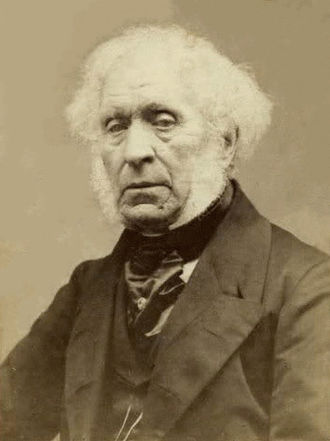
NAME: Brewster, Sir David
ACHIEVEMENT(S): Significantly contributed to the study of optics and invented (though was unable to patent) the popular toy, the Kaleidoscope
NICKNAME/ALIAS: None
DATE AND PLACE OF BIRTH: December 11, 1781, Jedburgh, Scotland
DATE/PLACE OF DEATH/AGE AT DEATH: February 10, 1868, Allerby, Melrose, Scotland. Aged 86
DISCIPLINE: Optics
FIELD: Physics
LANGUAGE: English
PARENTS: James Brewster; Margaret Key
SIBLINGS: Grisel; James; George; Patrick
SPOUSE: 1) Juliet Macpherson, daughter of James Macpherson, Member of Parliament for Belleville; 2) Jane Kirk Purnell
CHILDREN: 1) By Juliet Macpherson: Margaret Maria; James; Charles Macpherson; David Edward; Henry Craigie. 2) By Jane Purnell: one daughter
EDUCATION: Jedburgh Grammar School, Scotland; Edinburgh University
MAJOR WORK: Brewster's Law: the polarization of a beam of reflected light is greatest when the reflected and refracted rays are at right angles to each other
LIFE AND TIMES:
In 1813, at 42, Brewster submitted his first major scientific paper, "Some Properties of Light" to the Royal Society. A second paper published the same year, "Treatise on New Philosophical Instruments" concerned new apparatuses for astronomers. In 1814, he visited the Continent, where he met eminent scientists <met> Arago*, <met> Biot*, <met> Berthollet*, <met> Laplace* and <met> Poisson*. Back in Great Britain, he submitted further papers to the Royal Society on polarized light, a subject that would occupy him for many years.
In 1815, Brewster discovered the law of physics that bears his name: the polarization of a beam of reflected light is greatest when the reflected and refracted rays are at right angles to each other. For this, the Royal Society awarded him the Copley medal in 1815, and also elected him a Fellow. In the same year, he invented the kaleidoscope, using refracting lenses, but because of some patent technicality, others cashed in on his invention and he never made any money from it. His treatise on the kaleidoscope was published in 1819.
Brewster and mineralogist <worked with> Jameson* became co-editors of "The Edinburgh Magazine" in 1817, changing its name to the "Edinburgh Philosophical Journal". When Jameson left in 1819, Brewster changed the name again to "Edinburgh Journal of Science".
Brewster did considerable research into the polarization of light reflected by metals. He established the new fields of optical mineralogy and photo-elasticity. By 1819, he had classified most crystals and minerals on the basis of their optical properties. He noted that heat and pressure could cause uncrystallized and crystallized materials to become doubly refracting, and was able to produce equations to predict this.
In 1816, Brewster began research into the eye, establishing that there was an ordered fibrous structure in the lens. During the 1820s, with a view to improving colored eyeglasses and microscopy, he studied color in the optical spectrum. In his work on absorption spectroscopy on organic substances, he observed that color fell into red, yellow and blue regions.
Out of this he developed the non-chromatic microscope illuminator, which he used in other studies of absorption spectra. In the debate over how many colors were in the spectrum, Brewster worked out that there were three spectra: red, yellow and blue all of equal length. His work on the color spectrum was superseded by that of <superseded by> Helmholtz* and <superseded by> Maxwell*.
By 1820, Brewster became convinced that science in Britain was in decline and he joined a movement to stop it. In 1821, he co-founded both the Edinburgh School of Arts and the Royal Society for Arts. Ten years later, he was prominent in the founding of the British Association for the Advancement of Science.
Brewster's failure to make any money out of his two major inventions (the kaleidoscope and the polyzonal lens, invented in 1811 and used in lighthouses,) left him in financial difficulties. A stint as university professor was unsuccessful. For a few years, he managed the estate his sister-in-law had inherited from her father, the “discoverer” of the ancient “Ossian” epic poem (a fake): <son-in-law of> Macpherson*.
In 1836, in Bristol to attend the sixth meeting of the British Association, Brewster was the guest of <a pal of> Fox Talbot*, who had just begun to experiment with photography. Brewster became interested and decided to work on the chemistry of light. Although he never practiced photography, he wrote on it, and about 30 years later, was presented with a medal from the Photographic Society.
In 1838 Brewster was hired as Principal of the University of St. Andrews, where he pressed for academic reform so vocally that in 1843 the faculty tried to have him fired. When he did leave, many years later, it was generally agreed that the university was much improved through his efforts.
In the late 1830s, Brewster began writing biographies, eventually publishing books on <wrote about> Newton*, <wrote about> Galileo*, <wrote about> Tycho Brahe* and <wrote about> Kepler*. He also provided numerous articles for the "Encyclopedia Britannica".
Brewster's career spanned more than six decades and he continued to be active through his 70’s. He published "More Worlds than One" in 1854, at 73, and "History of Stereoscope" in 1856. In 1859, he was made Principal of Edinburgh University, and later Vice-chancellor. In 1868, just before he died at 86, he published a scientific paper "On the Motion, Equilibrium and Forms of Liquid Films".
ASSESSMENT: Figured prominently in the new field of optics, assisted in the explosive growth of scientific publishing, and helped establish new scientific institutions
EXTRA CONNECTIONS: His work relates to that of <work related to> Kelvin*, <work related to> W. Sanderson*, <work related to> RJ Hauy*, <work aided> Marie Curie*.
Invented the <inventor of> kaleidoscope*
He worked with <worked with> Bulwer-Lytton*
ONELINER: David Brewster, physicist and inventor of the kaleidoscope
BIBLIOGRAPHY:
Morrison-Law, A.D. and Christie, J.R.R. (eds.), Martyr of Science: Sir David Brewster 1781-1868, Royal Scottish Museum, Edinburgh, 1984.