Tolstoy, Ilya
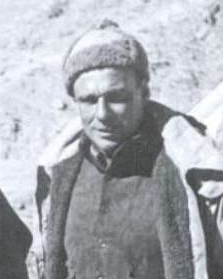
Ilya Andreyevich Tolstoy (3 February 1903 Tula Governorate – 28 October 1970 New York City), count, U.S. Army Colonel. President F. D. Roosevelt's envoy in Tibet. He was one of the founders of Marineland of Florida, of the Bahamas National Trust, and he served on the Caribbean Conservation Commission. He was a grandson of Leo Tolstoy.
Life
Count Ilya Tolstoy was born in 1903 at Toptivovo, Tula, Russia. His father was Count Andrey Lvovich Tolstoy, son of writer Leo Tolstoy, and his mother was Olga Diterichs, daughter of General of the Infantry Konstantin Diterichs (and sister of General Mikhail Diterikhs). Tolstoy attended the Moscow School of Agriculture, before joining the Imperial Cavalry and serving in Tashkent. In 1917 – 1918 he worked for the Russian Department of Agriculture in Turkestan.
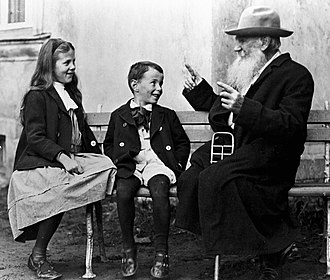
Tolstoy emigrated to the United States in 1924. Aged 21. He studied at the William Penn College and Iowa State University, Ames.
In 1927, Tolstoy became associated with the explorer and naturalist, William Douglas Burden, an associate and trustee of the American Museum of Natural History. He was inducted into the Explorers Club in New York in 1931.[1]^(https://en.wikipedia.org/wiki/Ilya_Andreyevich_Tolstoy#cite_note-1) Tolstoy was one of the pioneers of underwater photography and one of the founders and owners of the world's first oceanarium, Marineland of Florida with William Douglas Burden, Cornelius Vanderbilt Whitney and Sherman Pratt.[*^citation ^needed*(https://en.wikipedia.org/wiki/Wikipedia:Citation_needed "Wikipedia:Citation needed")]
Founder of the first dolphinarium in the world. USA Army Colonel. President F. D. Roosevelt's envoy in Tibet.
A grandson of the great novelist, Leo Tolstoy, ilia Tolstoy was born at Toptivovo, Tula, Russia, to Andrey L. Tolstoy and Olga Diterichs, daughter of Czarist officer, General K. K. Diterichs. Following schooling in Odessa and the Moscow School of Agriculture, he was a cornet in the Imperial Cavalry and served at Tashkent. He later joined the Lieb Guards Dragoon for the White Army during the revolution. A taste for horses and exploration developed early in life. In 1915, at the age of only twelve, he was assistant to the Director of Cavalry Training Command, and traveled on horseback from Samarkand to Pewhawar.
In 1917-18 he worked for the Russian Department of Agriculture and was on assignment in Turkestan. Between 1922 and 1924 he was active on the Volga, assisting with famine relief. Unsympathetic to the new Soviet regime, Tolstoy emigrated to the United States in 1924 and took further training at William Penn College followed by studies in animal husbandry at the University of Iowa, Ames.
In 1927, Tolstoy became associated with the explorer and naturalist, William Douglas Burden, an associate and trustee of the New York Museum of Natural History. It was in connection with Burden's production of the film, The Silent Enemy, that Tolstoy undertook a venture into the Canadian barren lands of Keewatin in search of the caribou. Following this expedition, Tolstoy spent time in Alaska assisting in the planning of the new Mount McKinley National Park. He was inducted into the Explorers Club in New York in 1931.
Throughout the 1930s he was involved in several film ventures and expeditions to Central and South America, and he did important work in the development of underwater photography. His greatest adventure came during World War II when, as a U.S. Army Colonel, he and Colonel Brook Dolan ventured to Tibet in the service of "Wild Bill" Donovan, the head of the American Office of Strategic Services.
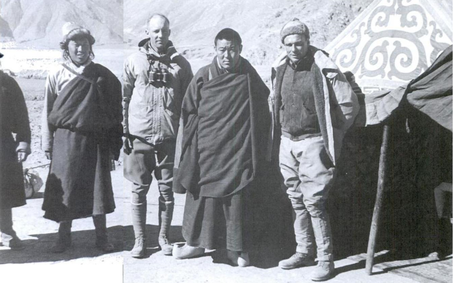
The details of this venture were published in the National Geographic Magazine (August, 1946). Tolstoy's interests in conservation were many. He was one of the founders of Marineland in Florida, of the Bahamas National Trust, and he served on the Caribbean Conservation Commission. He was also active in supporting the Tolstoy Foundation in New York State, established by his Aunt, Alexandra Tolstoy, and in work in support of Tibet and Tibetan refugees....Tolstoy died on 28 October 1970 in New York and was buried in the cemetery of the Novo-Diveevo Cemetery, Nanuet, New York, USA.