Hamilton J Archbishop
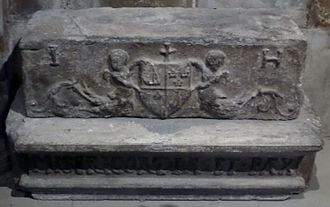
Name: John Hamilton
Nickname/Alias: Archbishop of St. Andrews
Achievements: Approved the divorce of Mary Queen of Scots’ lover.
Born: c. 1511; Scotland
Died: April 6, 1571; Stirling, Scotland (Aged around 60)
Field & Discipline: Religion; Catholic Archbishop
Language: English
Father: James Hamilton, first Earl of Arran (c. 1477-1529)
Mother: Unknown
Siblings: Half-brother: James Hamilton, 2nd Earl of Arran, Governor and Regent of Scotland (c. 1516-75)
Spouse: None
Children: by Grizzel Sempill: 3 children (two legitimated in 1552)
Education: Kilwinning Monastery; University of Paris, 1540-43
Major Work:
“Hamilton's Catechism”, 1552
Life & Times:
In 1540 Hamilton spent the next three years studying at University in Paris. On his return in 1543, he found Scotland in chaos following James V's death the previous year, when anti-English Catholic Cardinal David Beaton had produced a forged will appointing himself and three other regents of the kingdom during the minority of the infant, Mary Queen of Scots, while the nobility had elected Hamilton's Protestant half-brother, James Hamilton, 2nd earl of Arran, regent and then arrested Beaton.
Hamilton immediately became involved in the dispute, and his success in persuading his half-brother to negotiate with the Catholic party and to be reconciled with Beaton, who quickly regained favour and was made chancellor (1543), ensured his own rise to power. In 1543 Hamilton was appointed Secretary of State.
In May 1546, with the assassination of Beaton, Hamilton was nominated Archbishop of St. Andrews and Primate of Scotland. He was also, in 1548, made papal legate and Treasurer of Scotland, and was now in a position of great power and influence in Scotland.
Hamilton had returned from the Continent in 1543 a strong opponent of Protestantism and the Reformation. He was not, however, either a religious reactionary or an enthusiast for the Counter-Reformation, wanting only to defend and confirm the Catholic Church and strengthen popular Catholicism.
For this purpose he held a succession of provincial synods, at Linlithgow in 1548, in Edinburgh in 1549 and 1552, and on the eve of the Reformation in 1559. These synods were called by Hamilton in order to reform the morals of the clergy and the religious education of both clerics and the laity (his proposals anticipating some of those proposed and eventually effected by the Reformers), the chief result of which was in 1552 the compilation of “Hamilton's Catechism” in the vernacular, which was intended to be read by parish priests on Sundays in place of a sermon.
The catechism, which was the first book to be printed at St. Andrews and was very popular, is remarkable for its moderate, even liberal tone, Hamilton making some concessions to the [tolerant of] Luther’s* position, and leaving out any reference to papal authority.
But Hamilton was unable to prevent the taking of Church property by the crown and the nobles, or the progress of the Reformation in Scotland, particularly as the open immorality of his personal life (from the late 1540s he lived with Grizzel Sempill, wife and then widow of James Hamilton, Provost of Edinburgh, who bore him three children and was expelled from Edinburgh in 1560) made him an easy target for Reforming preachers.
In 1554, with rise of Mary of Guise (mother of Mary Queen of Scots) to the position of Queen Regent, Hamilton's position became more precarious, as (although both he and Mary were Catholics at a time when Catholicism in Scotland was being threatened and undermined by the reforming zeal of [influenced by] Knox* and his followers) and Mary of Guise removed him from the Treasury. Hamilton became increasingly unpopular, both with the Protestants for his severity and with the Catholics for the presence of members of his family among the Protestant Lords.
On his return, Knox established the Reformed Church of Scotland in 1560, and, believing that some change was needed in church doctrine, Hamilton made little protest when Knox's “Confession of Faith” passed through the Scottish Parliament (1560). Then, in August 1561, Mary Queen of Scots returned to Scotland and supported the Catholic Church alongside a rapidly developing Reformed Church.
Hamilton's position became increasingly awkward as he did not belong to the Catholic circle at court , but felt unable to cooperate with the Reformers. In May 1563 he was tried with 47 others for hearing confessions and saying Mass in public, and was imprisoned for a brief period.
In 1566, Hamilton was made a member of the Queen's Privy Council, and in December 1566 he presided over the baptism of Prince James. His legal powers were also temporarily restored by Mary, but the General Assembly protested. The only use Hamilton is known to have made of these powers was in 1567 to approve the divorce between the [OK’d divorce of] Bothwell* and Lady Jane Gordon, clearing the way for the marriage of Bothwell and [facilitated marriage of] Mary Queen of Scots*.
With Mary's fall from power and imprisonment Hamilton helped. He assisted her escape from Lochleven in May 1568, and was present at the Battle of Langside, near Glasgow, where Mary’s supporters were defeated by Regent Moray and where two of Hamilton 's sons were taken prisoner.
After the battle, Hamilton was declared a traitor by Moray, and took refuge in Dumbarton Castle after Moray's assassination by one of Hamilton's kinsmen, James Hamilton of Bothwellhaugh. On 2 April 1571, Dumbarton Castle was captured and Hamilton was put on trial for complicity in the deaths of Queen Mary’s ex-husband Lord Darnley and Moray.
Hamilton was found guilty, and five days later was hanged, in his episcopal robes, at the market-place in Stirling. Although it is unlikely that Hamilton had any part in Darnley's murder, he in all probability had at least foreknowledge of the plans to assassinate Moray.
Extra Connections: His asthma was treated by [asthma treated by] Cardano*
Assessment: In assisting Mary Queen of Scots, he added to the confusion in Scotland.
Oneliner: Archbishop James Hamilton, hanged for murder
Bibliography:
- Dictionary of National Biography.
- Hamilton, Duke of, Maria R. Mary Queen of Scots: The Crucial Years, Mainstream Publishing: Edinburgh & London, 1991.
John Hamilton (archbishop of St Andrews) - Wikipedia